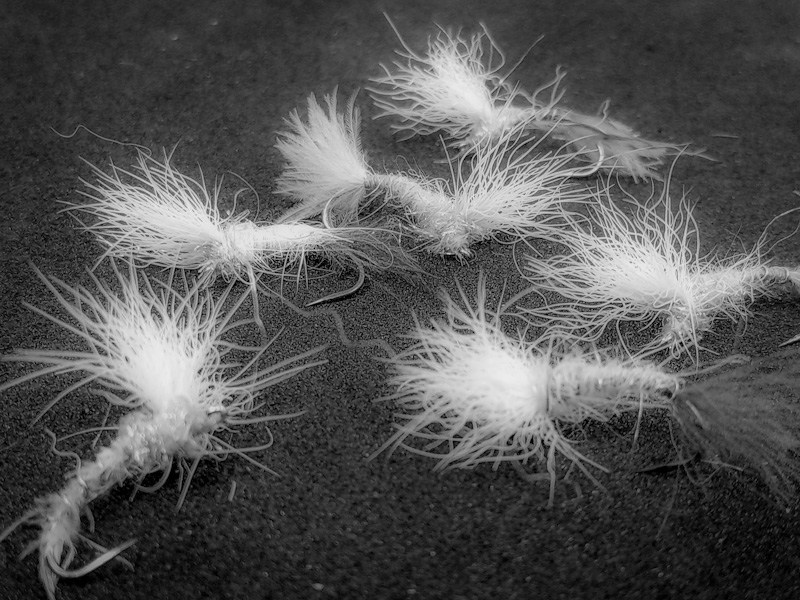
” If these flies listened to music it would be grunge”
Usual style fly tied in PMD colors. Tied on Emerger hooks, size 16. A Snowshoe Hare wing, dubbed body, and CDC for shuck. I saliva the body and shuck so they sit low and/or break the surface, and cast them to trout boiling/ bulging in the riffles. The wing is easy to see and floats well. A simple pattern originated in the East; not far from where I grew up. Works out West too! Cotton candy for trout on the feed…
 trout on dries
More like elegance in simplicity. I love the fly design aspects of this game.
Do the bodies of these hanging mole/Usual/Klinkhamer styles actually penetrate the meniscus for you? Mine usually just lie flat on the surface. Saliva does have some remarkable properties though – an old friend often spoke of bottling it and selling it next to Gink! Gross!
Greg: Great point and I laughed at friend’s business thoughts on saliva. You’ll notice on past posts that a lot of my simple klinks have fairly slender bodies (usually just thread up to thorax)and wire wraps on them to address your point (floating on side). Even with ties like that I use saliva esp if they have a shuck. I check them and they break surface…usually!
In regards to dubbed body ones like Usual in recent post and no wire ribbing, as you know more challenging. They do break surface more readily once fished for a bit and bodies become saturated. I often drag a fresh fly below surface several times and add saliva to try and ensure it dangles properly before casting to a sighted fish…wing/ tuft material has been treated of course. As I fish a fly for awhile I can usually see that my tuft of material is becoming less visible or pronounced; sitting lower and lower; and I know the fly body is saturated, dangling and behaving the way I hoped it would…and hopefully trout on emergers respond.
Try some light wire ribbing over dubbing or thread and if you don’t want that segmented look then light ribbing first and dubbing or thread over it.
Heavier emerger hook might also help…DK. I find those hooks marketed as klinks are too light flimsy…although at times that’s what I have left over and I tie with them.
Thanks for commenting.
Bob
Greg, some of the Usuals I tied yesterday do have wire ribbing on them…fine, goldish wire. That should help pull them under once soaked…
I tried some cripple style on a small jig hook, thinking the kinked eye would promote the hanging attitude. Didn’t make much difference for me but I admit to giving up too easily on them and going back to my favorite cut wing parachute style or floating nymph. But as you mentioned a thread body with wire rib, maybe those in combination with a “behind the eye” knot that better locks the jig hook in position might be with trying for me. And probably doesn’t need the hackle collar.
Had a day on the Upper Delaware on Thursday where I could’ve used a few more/different arrows in the quiver. Thank you for the inspiration!
Hope you’re getting some rain. I was beginning forget what that wet stuff falling from the sky was here in Pennsylvania.
Greg: The jig hook idea is interesting/ creative…floating nymph always a good choice on challenging fish. We could all use more arrows in our quiver. Last spring on missouri river I caught some great trout but some days in riffles when dozens of fish munching just subsurface my success rate with my emergers not all that great…but caught some beauties with them but not super consistently.. Got frustrated at times and moved down river to flat water where trout also taking on surface. Much greater success then.
I have fished Delaware several times…challenging river. Where I fish tailwaters slightly easier..most days. Check out blog: Jim’s wanderings, dry flies, trout, tarpon…..great pics of successful patterns by someone who fishes tough water and catches great trout. I also like Ritter’s flies from your region.
Okay , have a great season…I guess right now is one of the best times for your region.
We received tons of rain in sw alberta…so all is good. North of me a different story so far. Alberta is a big place.
Bob