life ignites

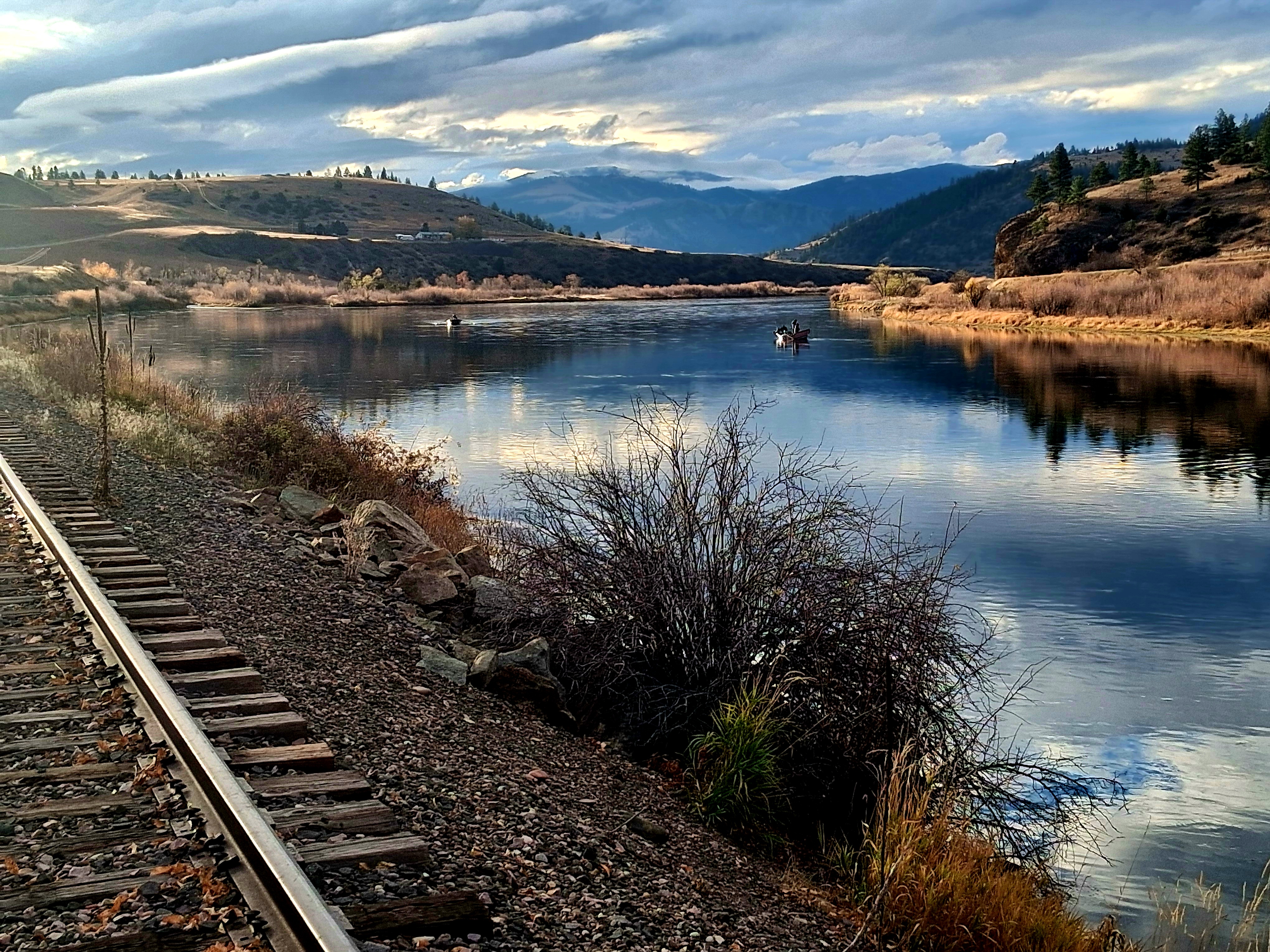
AT MY LATITUDE DAYS are noticeably getting shorter. Mornings cooler. The sun archs lower. Shadows are longer late afternoon. Some trees are coloring and shedding their leaves. September has arrived in the Rocky Mountains.
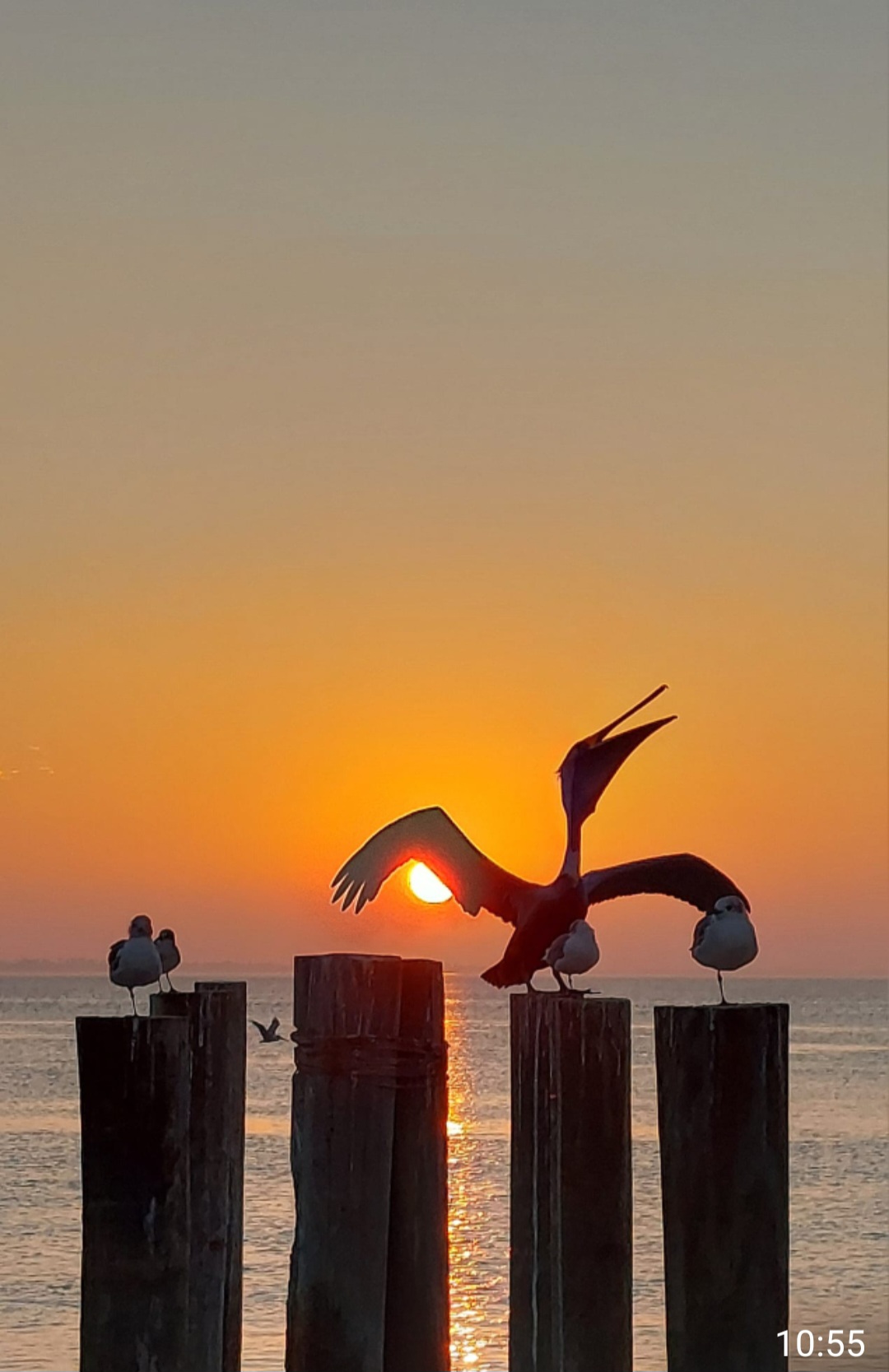
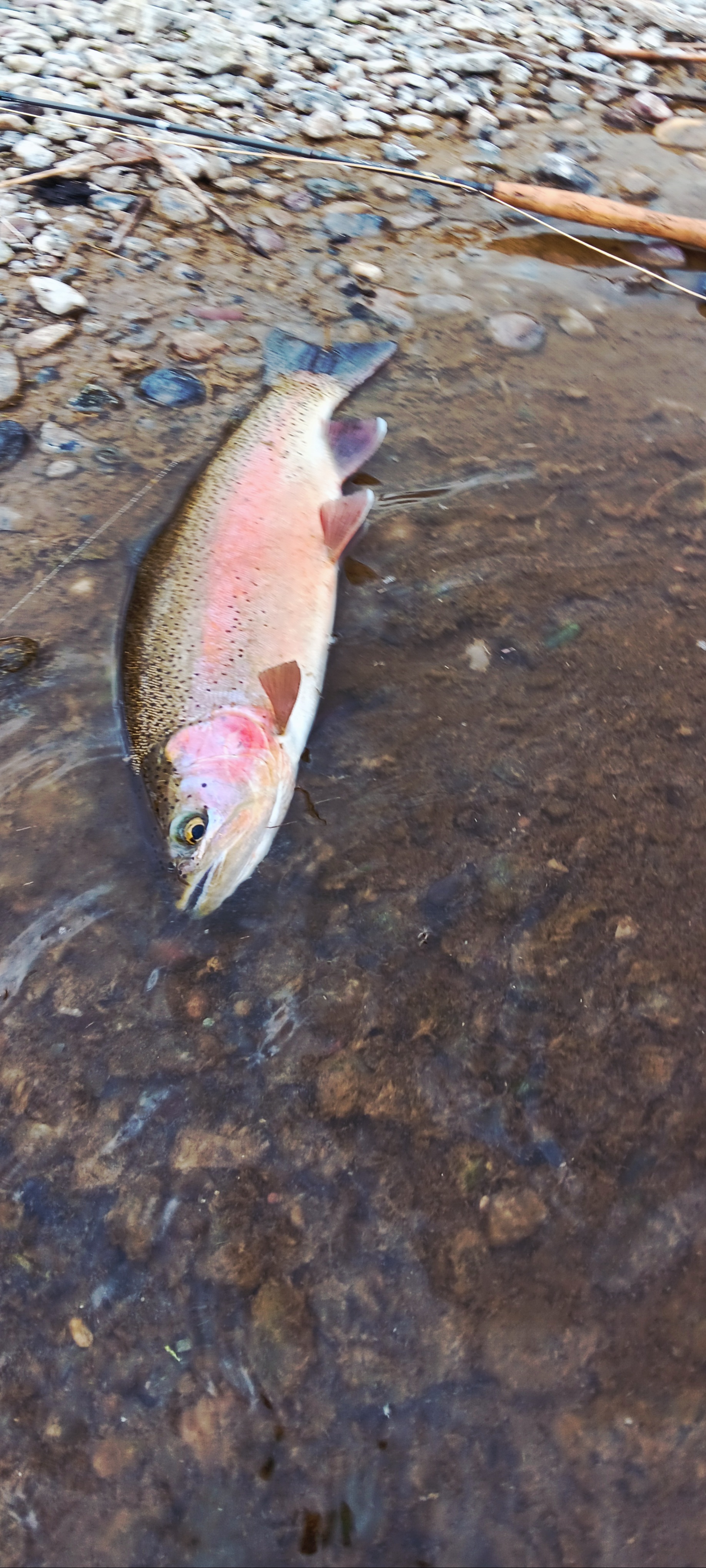
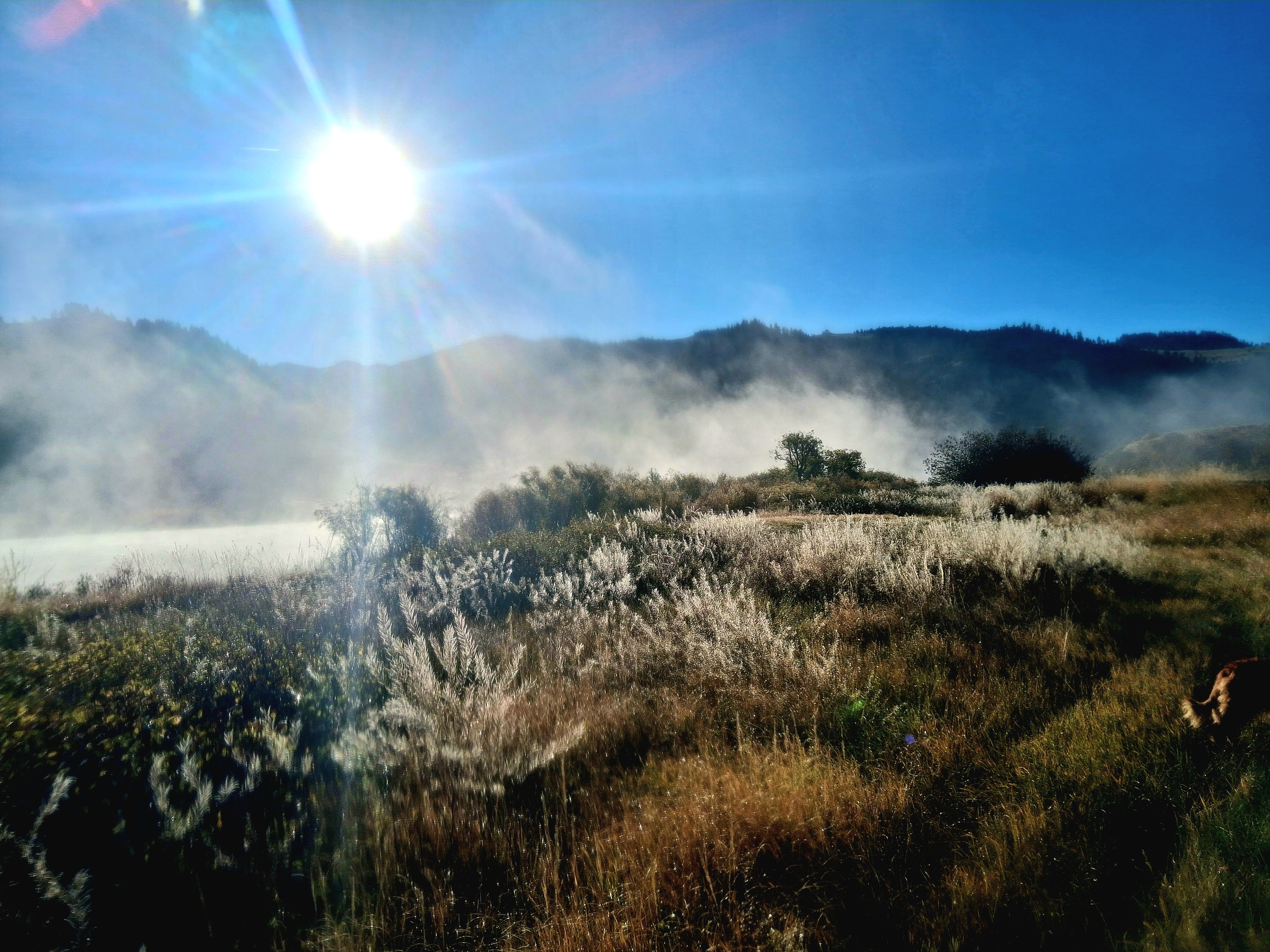
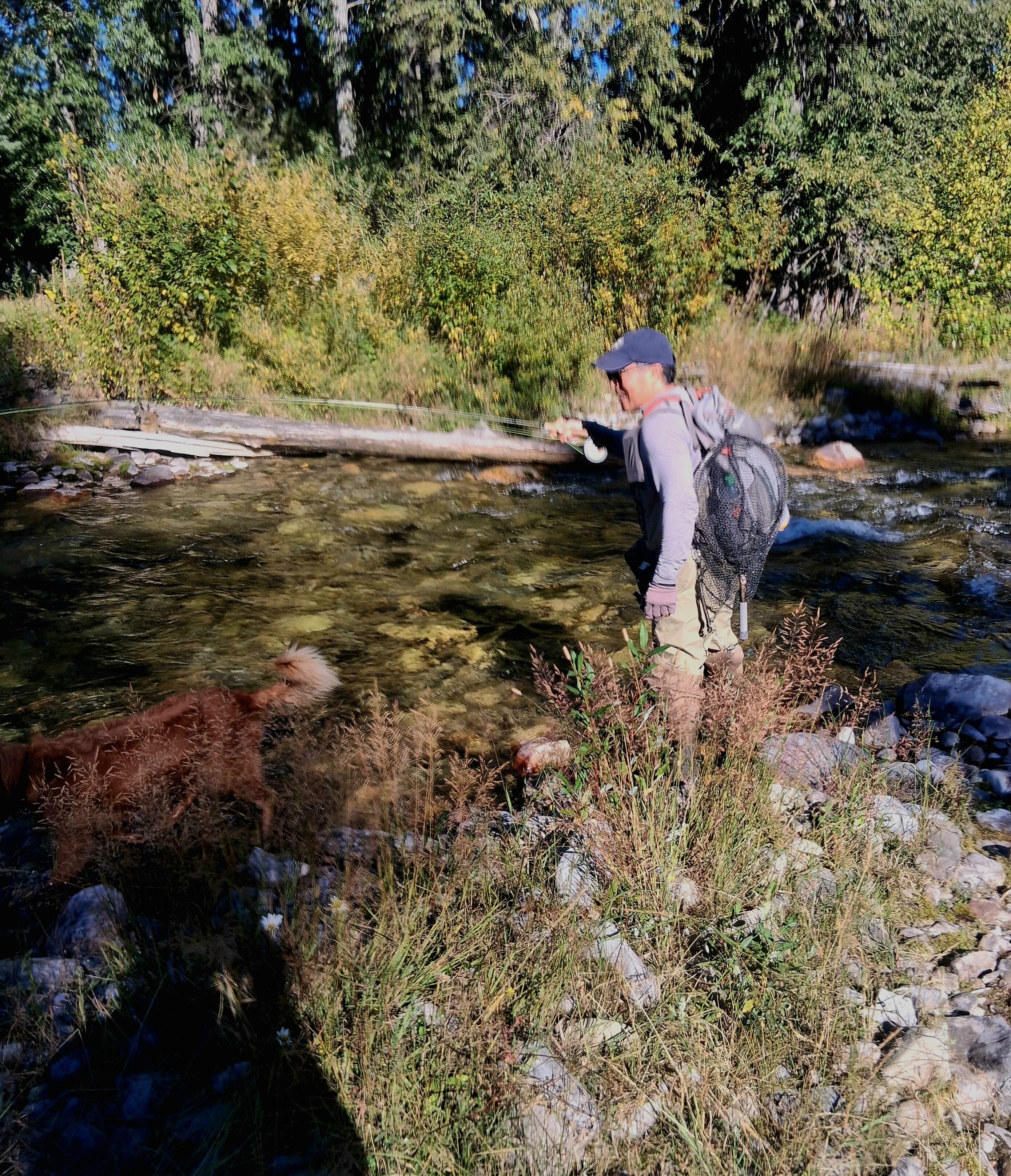
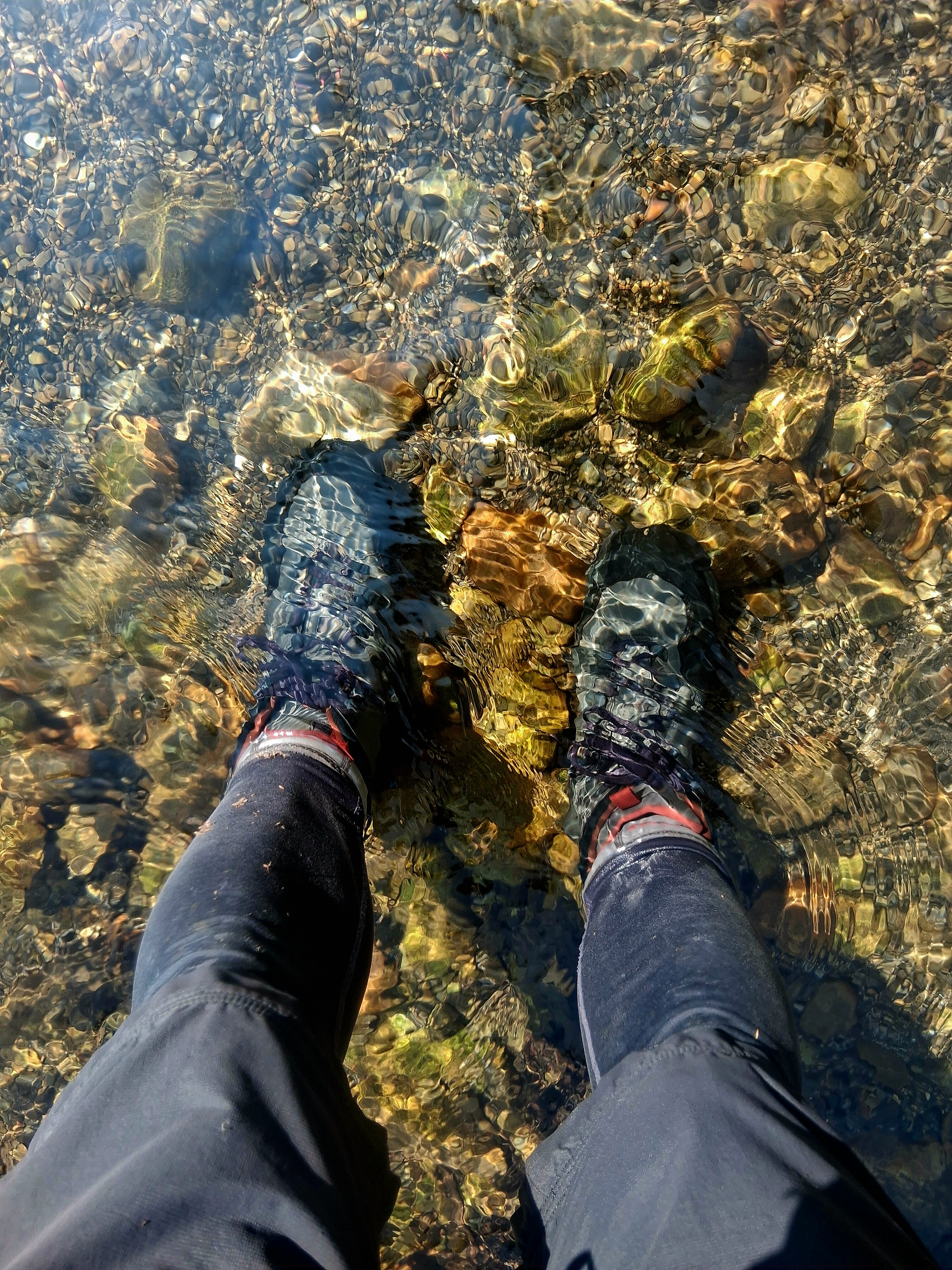
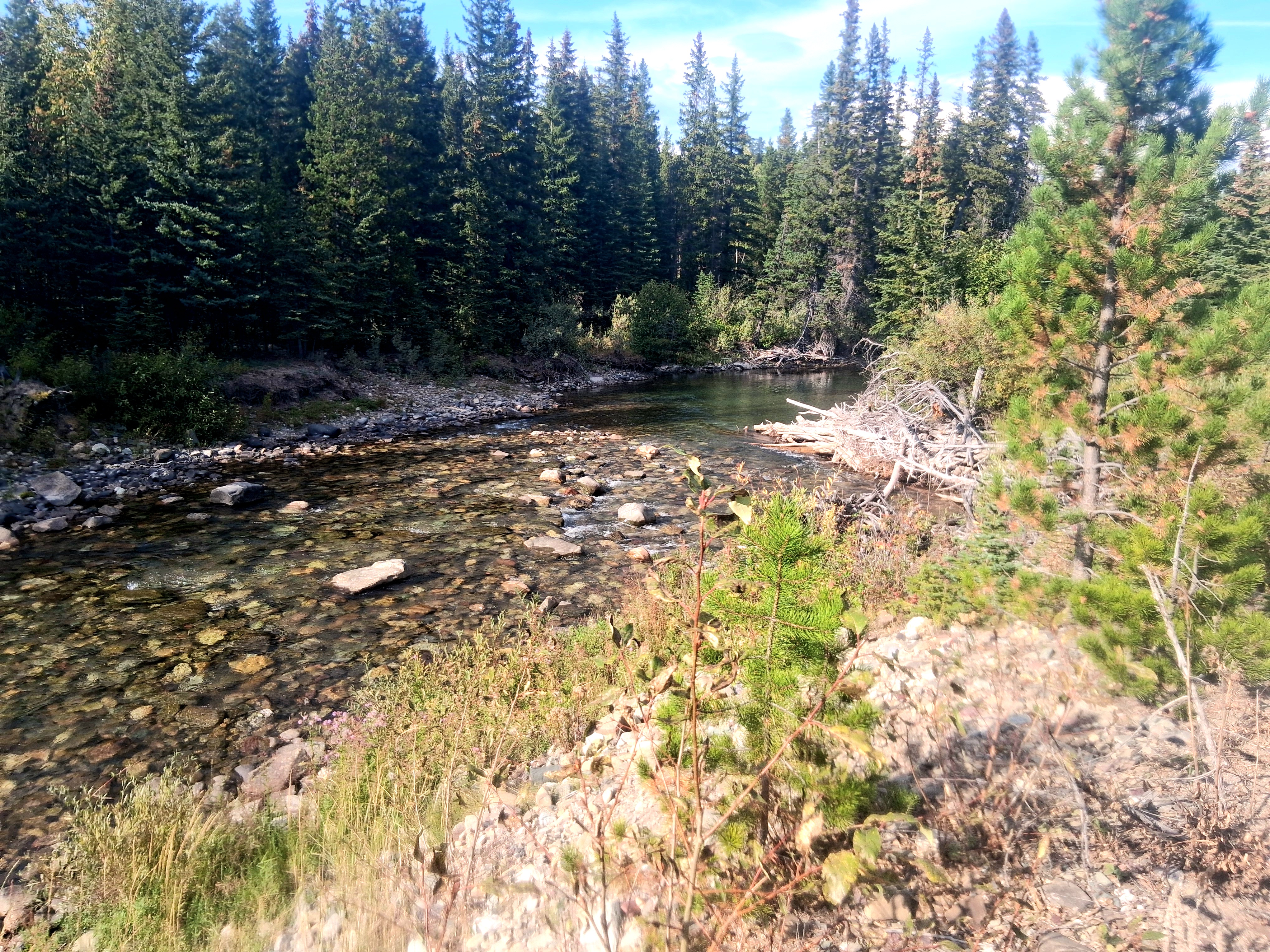
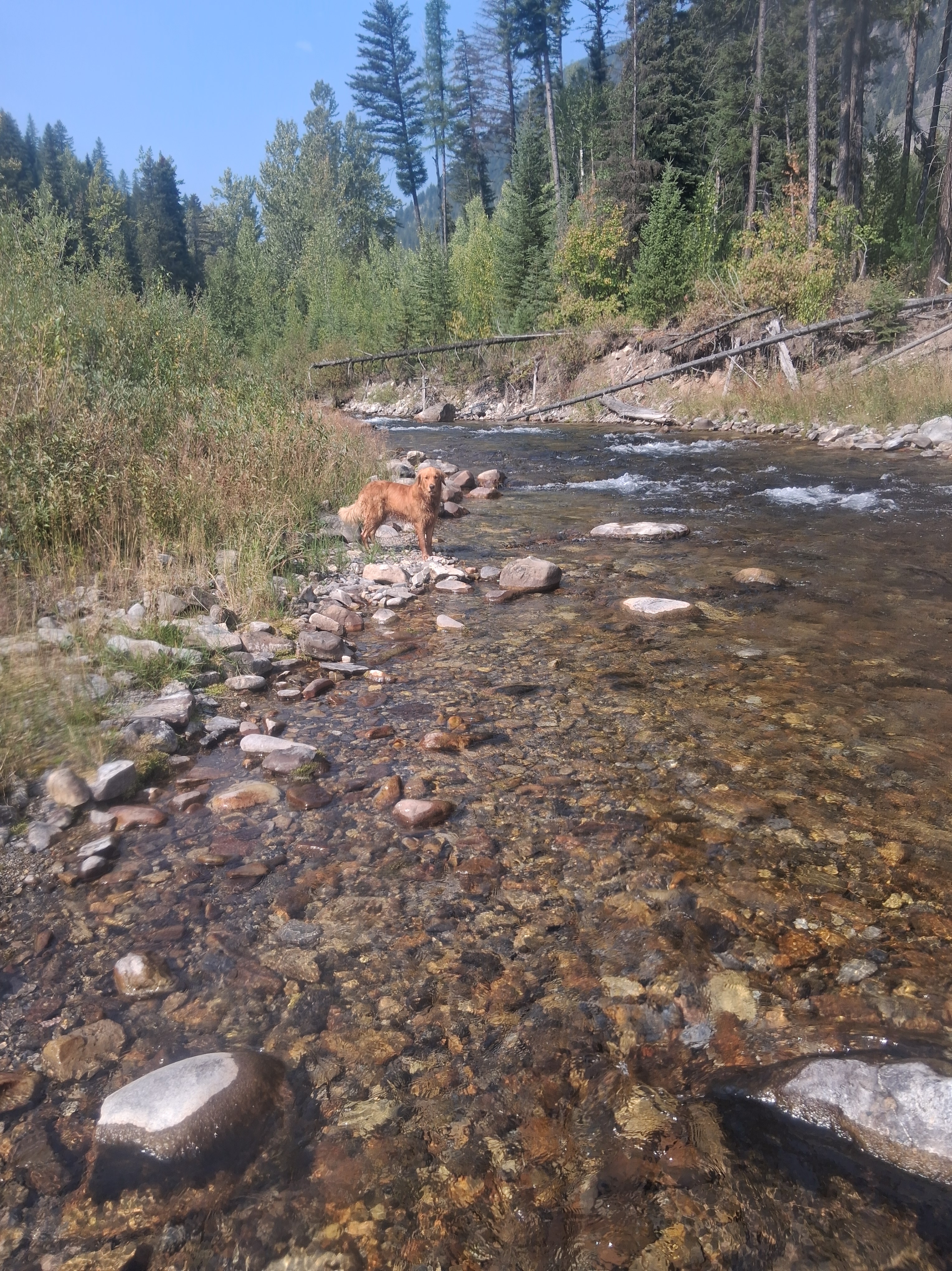
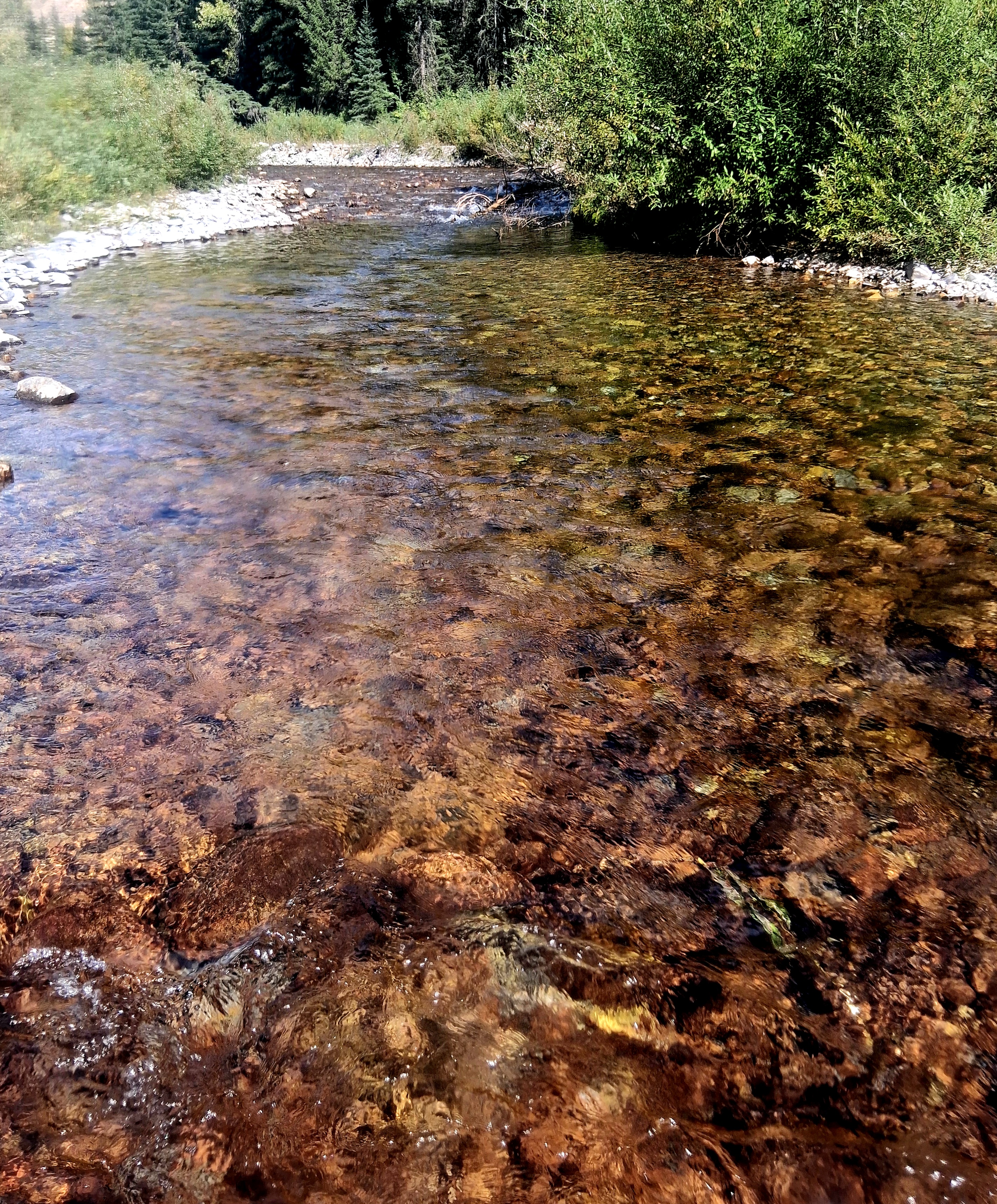
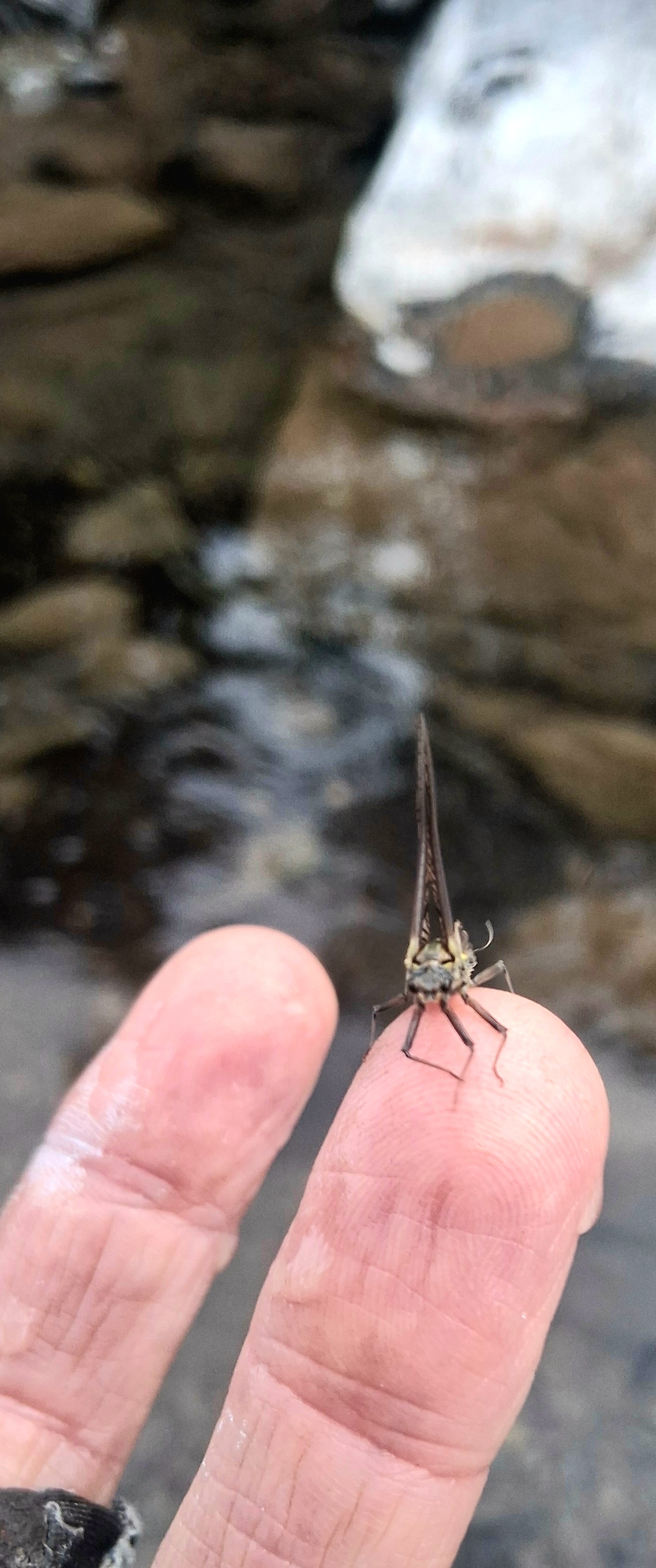
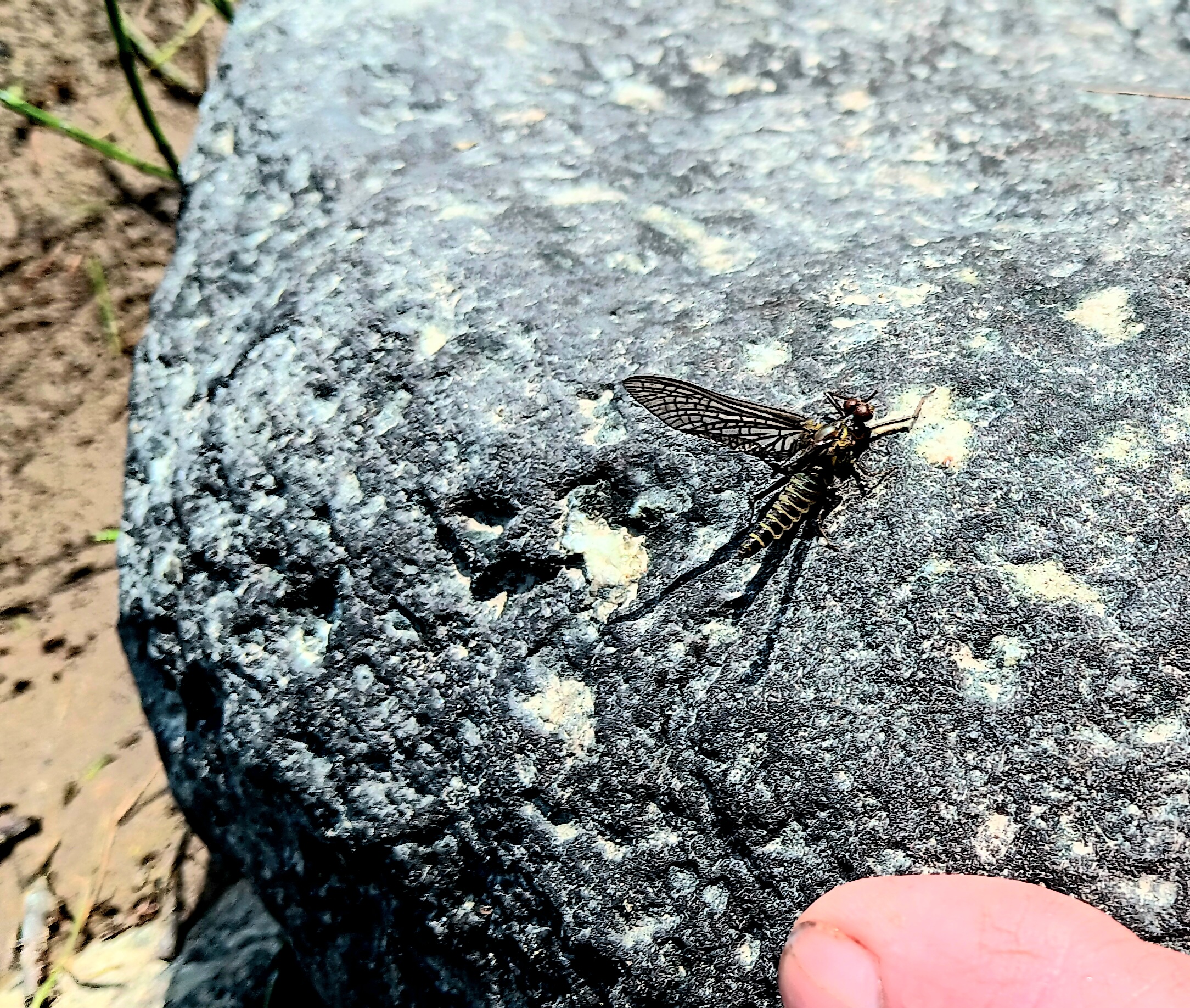
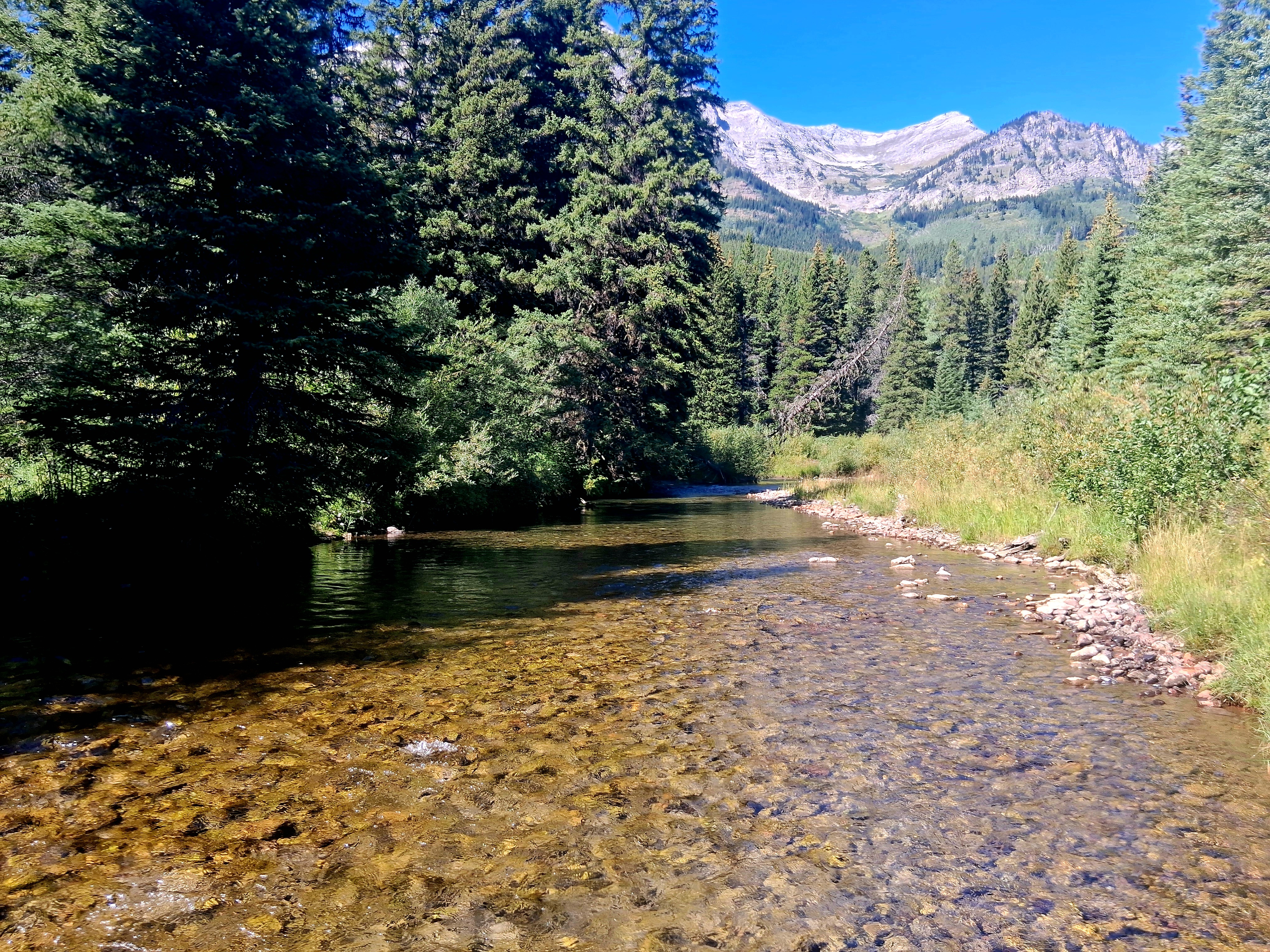
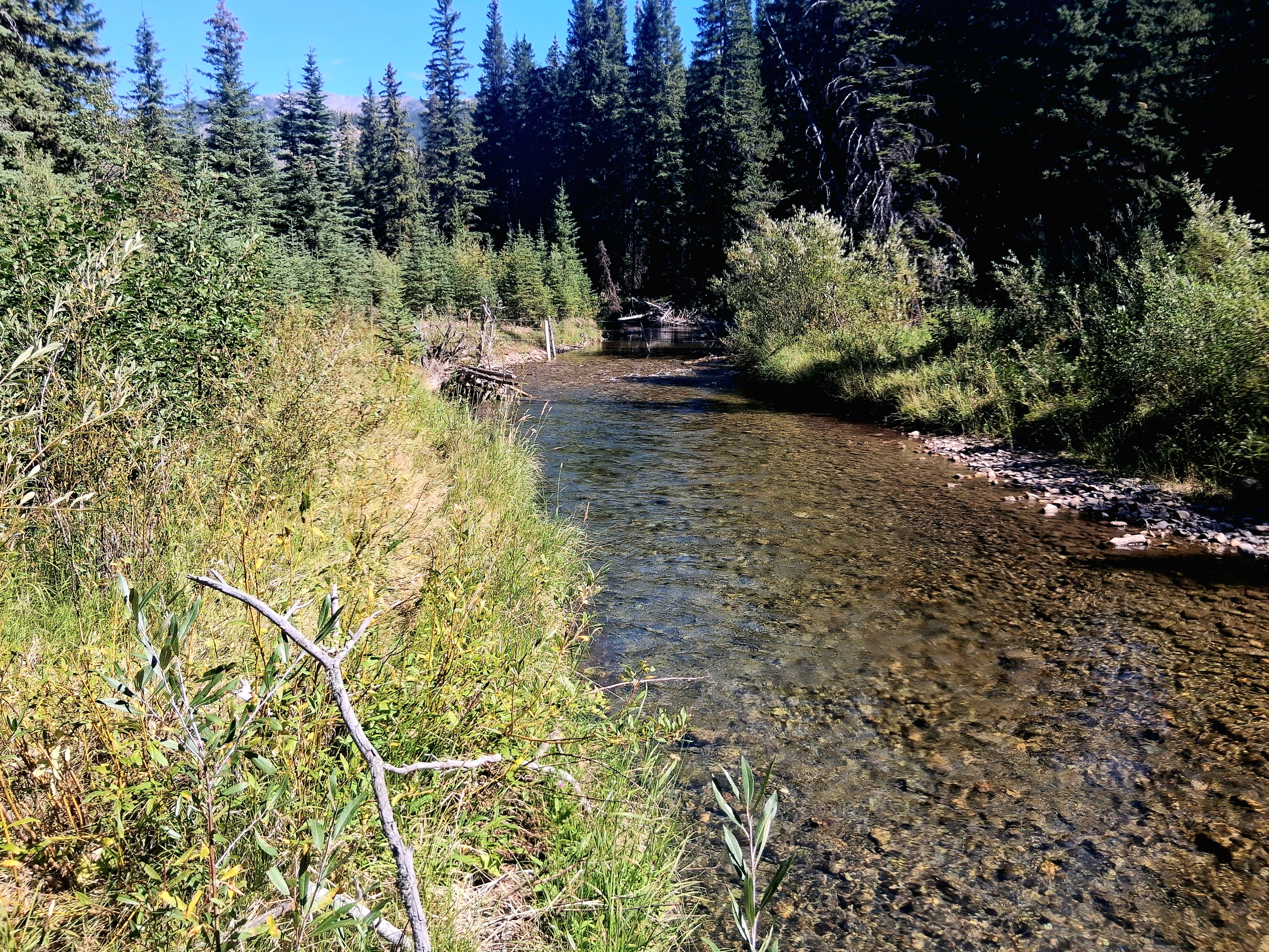
It was 46f (water temperature) at 11:30 am on a nearby mountain stream the other day. It always runs cold. It’s cold in July. It’s cold in August. Same in September. By mid afternoon the creek probably was a few degrees warmer. Maybe it hit the 50f mark, probably not. Some hatches especially the larger Drakes are only suppose to emerge when the water temperature climbs above 50f and into the mid fifties. In the stream I was on Drakes can pop below 50f, some of the large ones and definitely the smaller, Flavs (Flavilinea Drunella). In my experience it just takes sunlight to flood the river bottom. That seems to be the trigger. That’s the spark that gets a really good hatch going in a frigid flow. With the mid-day sunlight the submerged rock clinging nymphs then let go and make their way to the surface. And trout wake-up and begin chasing their ascent, and start feeding on those riding on the surface. The river comes alive. Witnessing it is always special as is searching for the best that the stream has to offer when life ignites…

creeks, drakes & trout

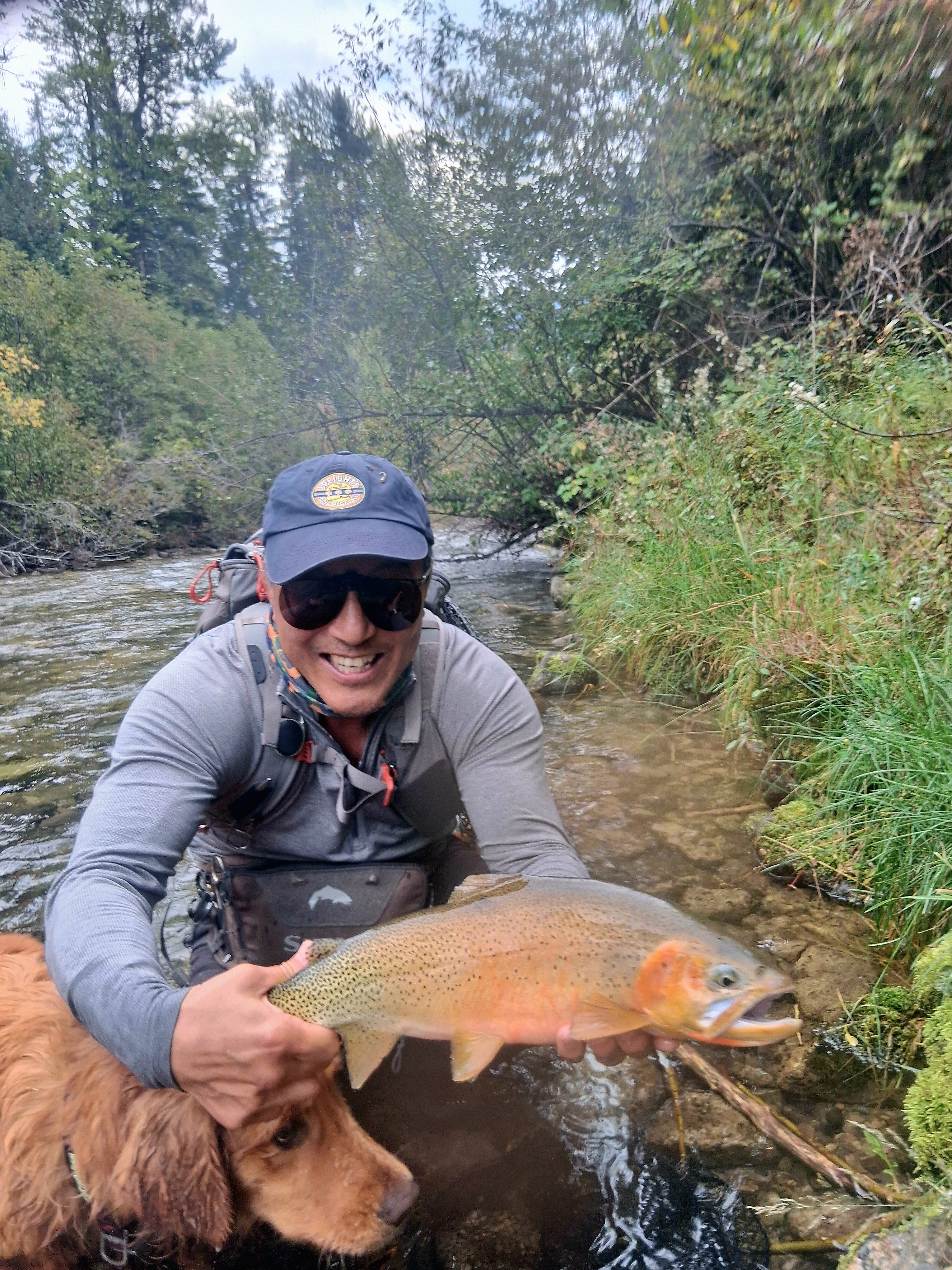
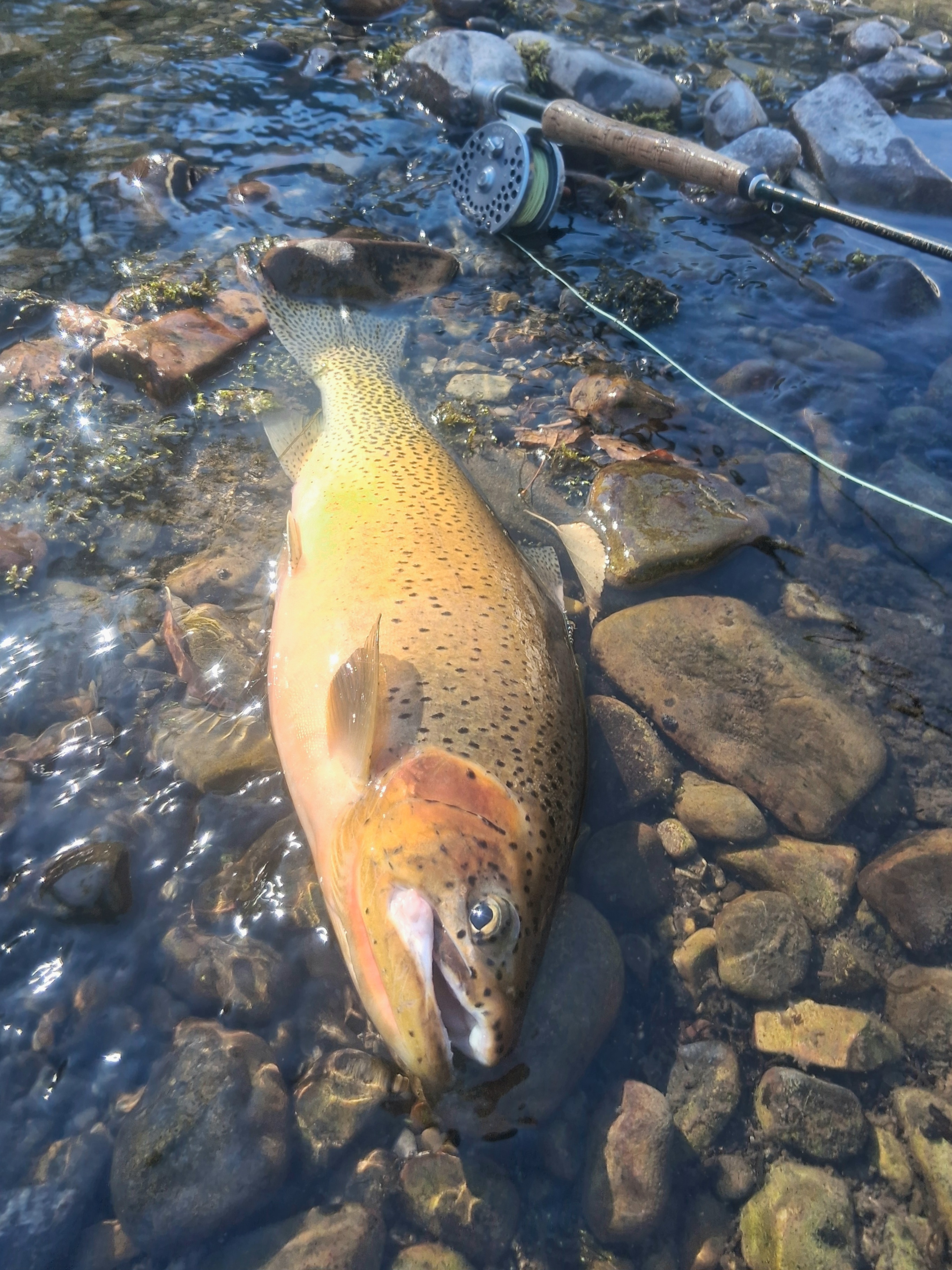
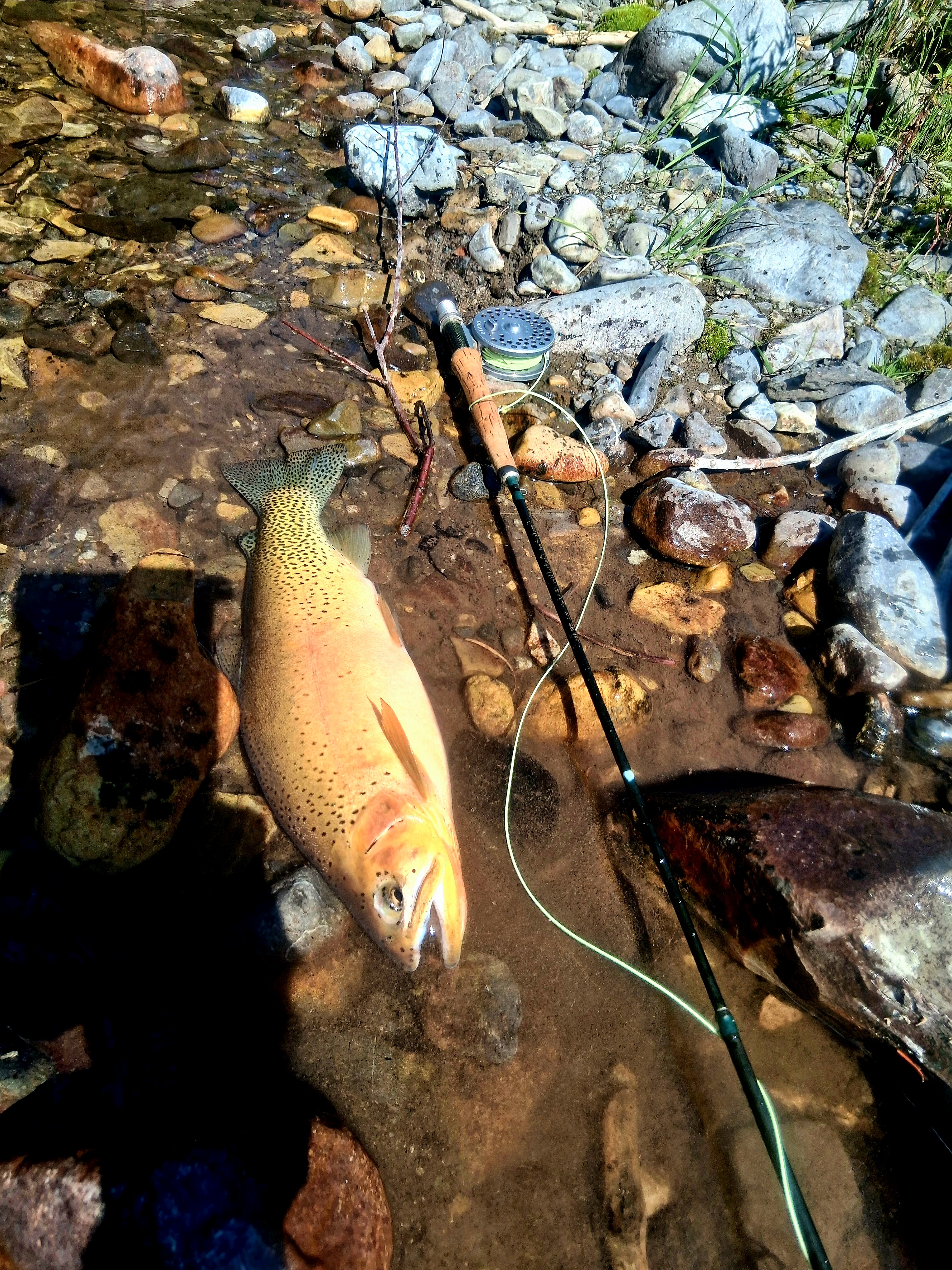
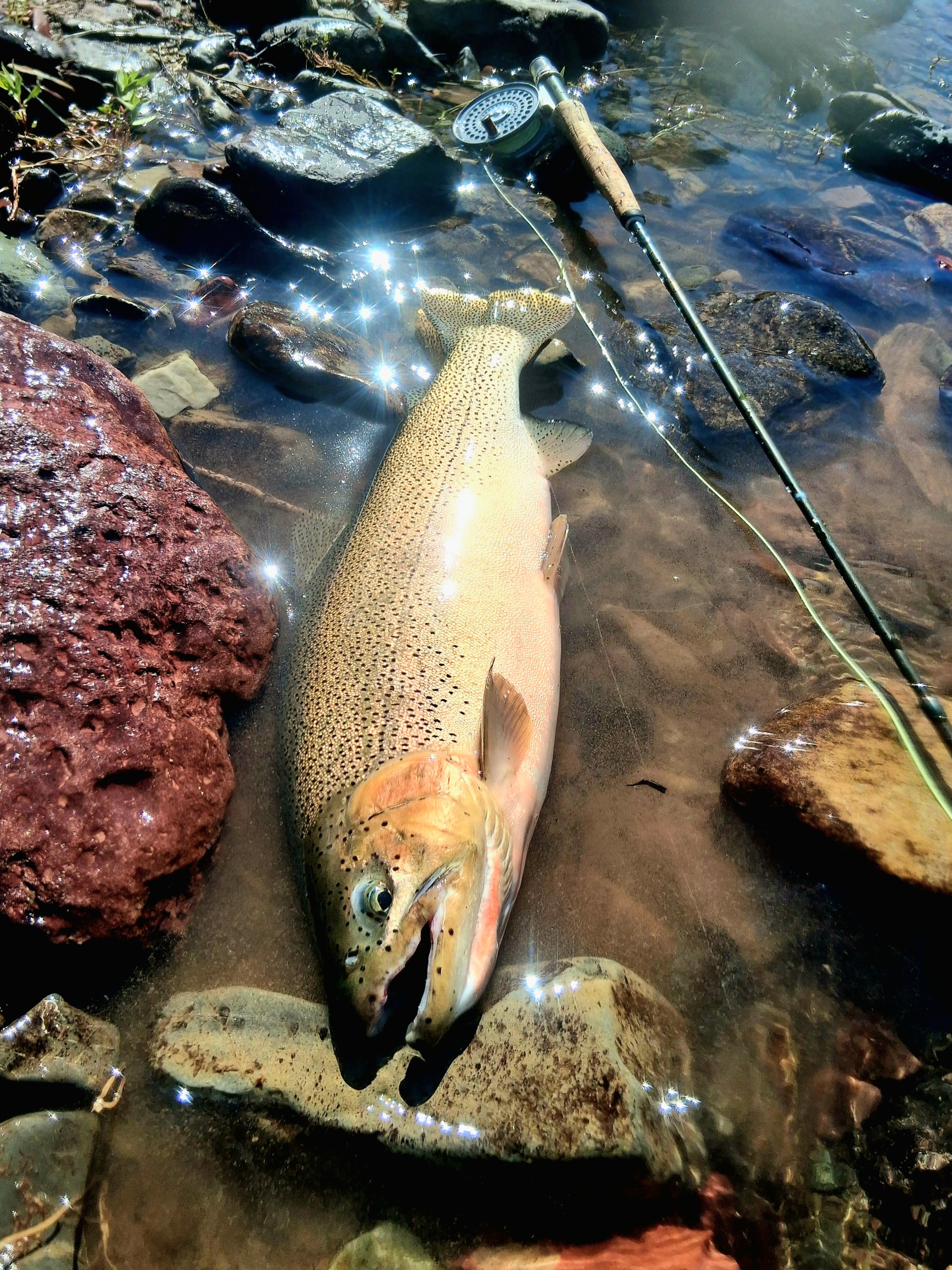
CLEAR MOUNTAIN CREEKS. I’ve been out on them the past few weeks treasure hunting. A fair amount of stream miles/kms covered while walking the cold flows over uneven stones. The smaller version of the Green Drake (Flavs) family (Mayfly) were around on some of the streams. A few of the bigger Drakes too. Cutthroat trout are always willing to take them on the surface. The hatch never gets ignored. Survival in mountain streams requires that trout feed when opportunity knocks. And this relatively large mayfly means calories and thick healthy fish. Some streams have Drakes. Mysteriously others just a valley or a few miles away do not. The fish in those rivers are not as robust; not as wide.

Some gems found while treasure hunting…

comparaduns/haystacks, a simple pattern

pierre

“We fish for hours only to hold a trout for seconds”– Unknown

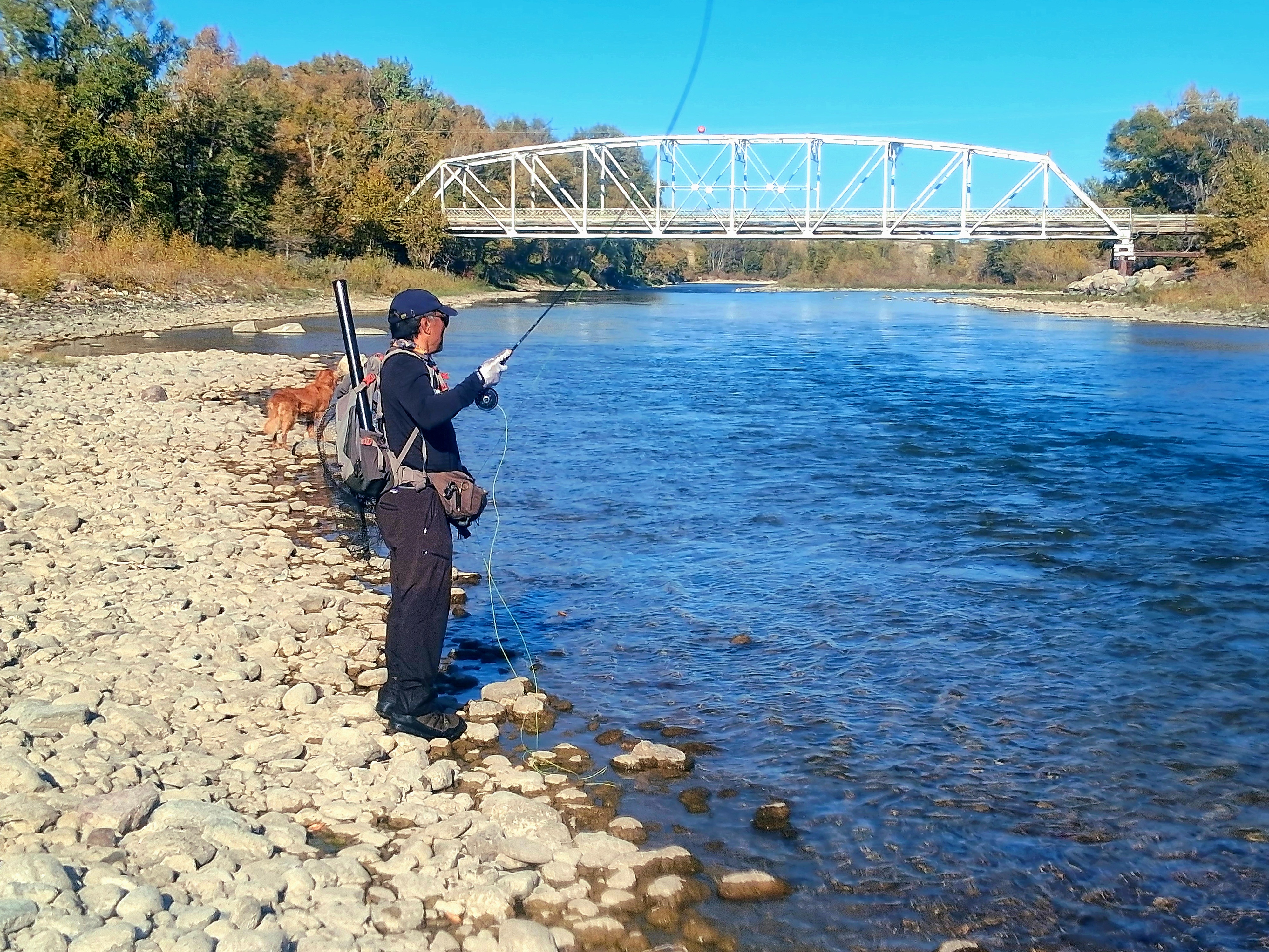
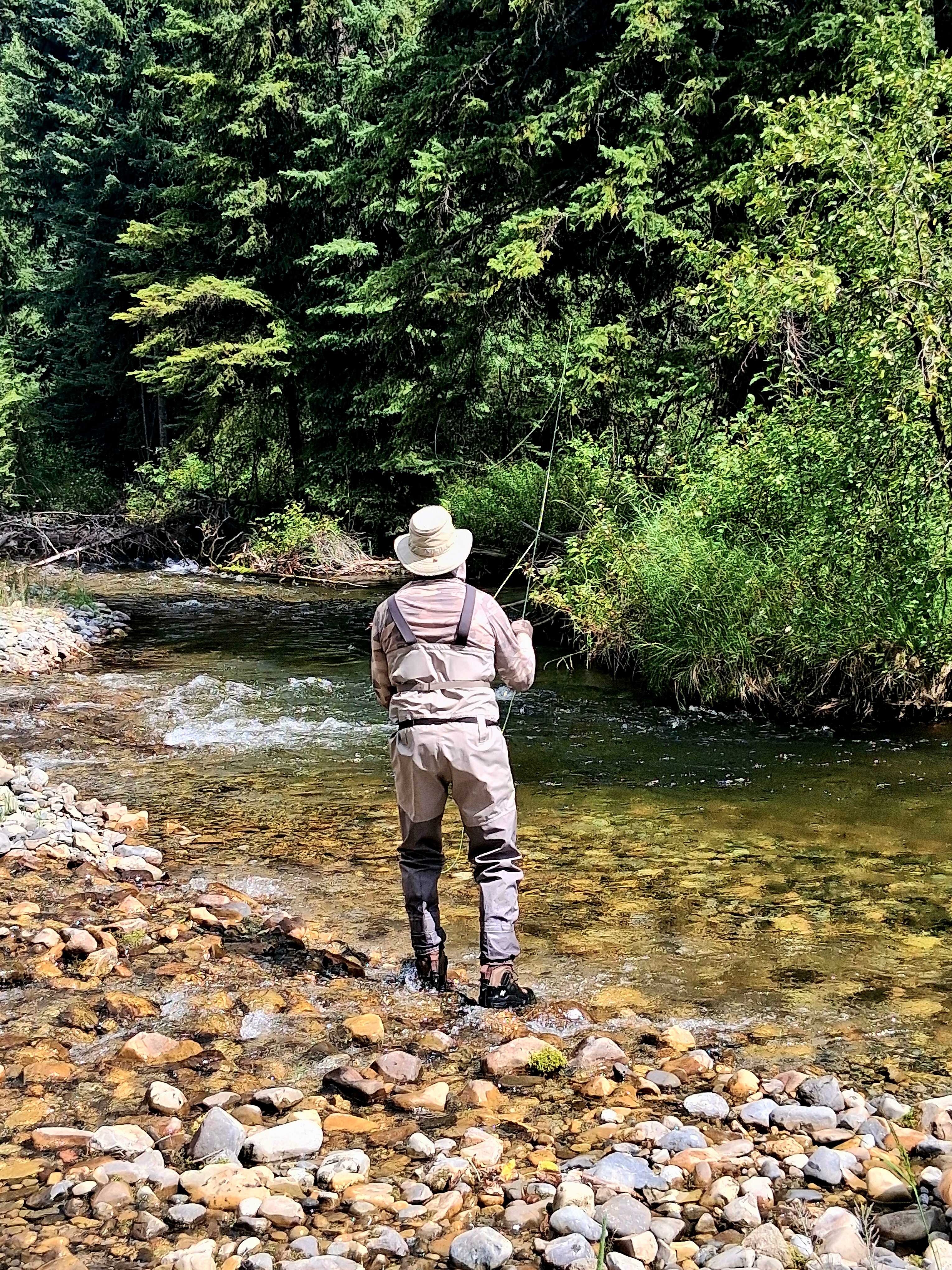
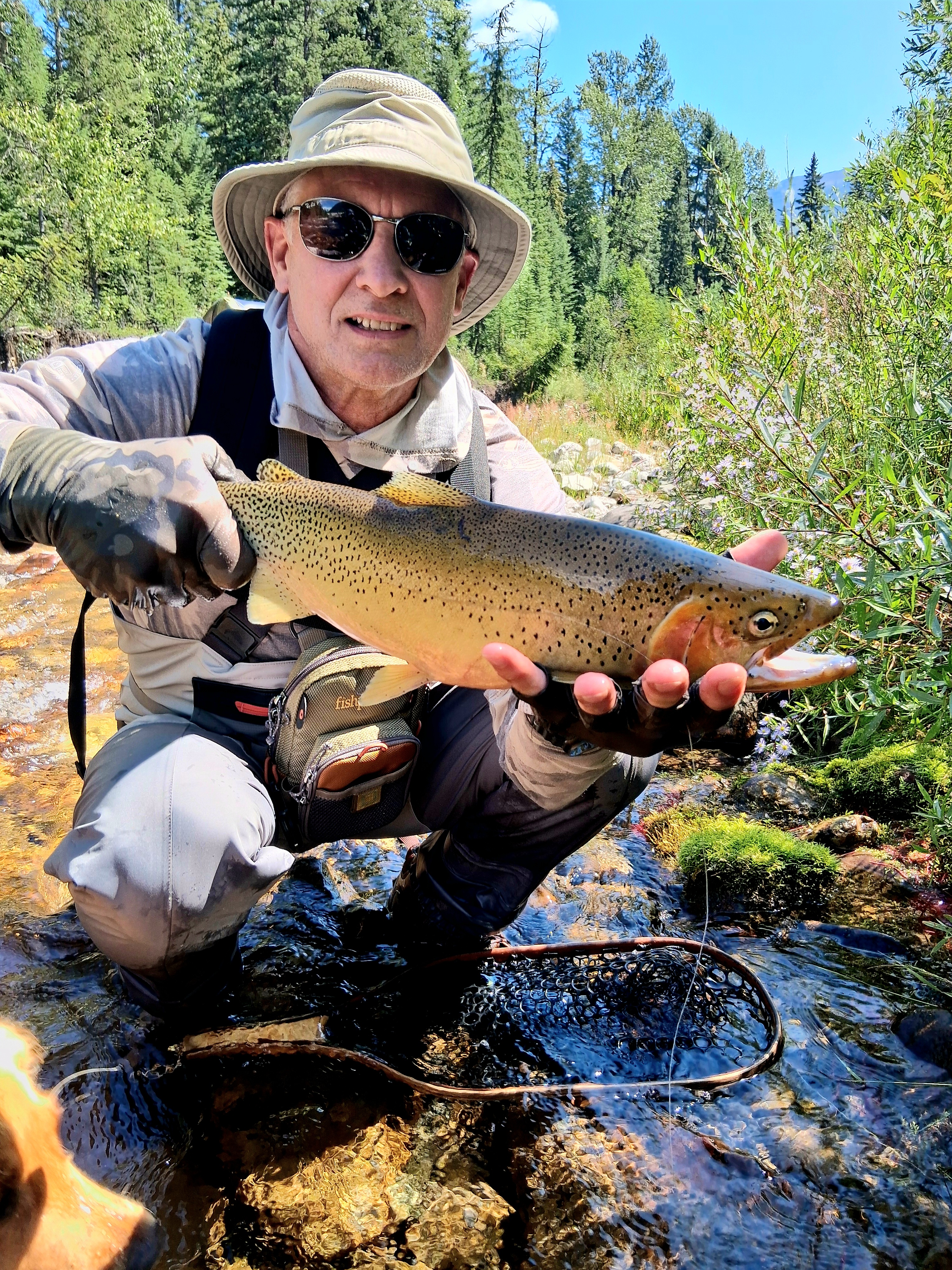
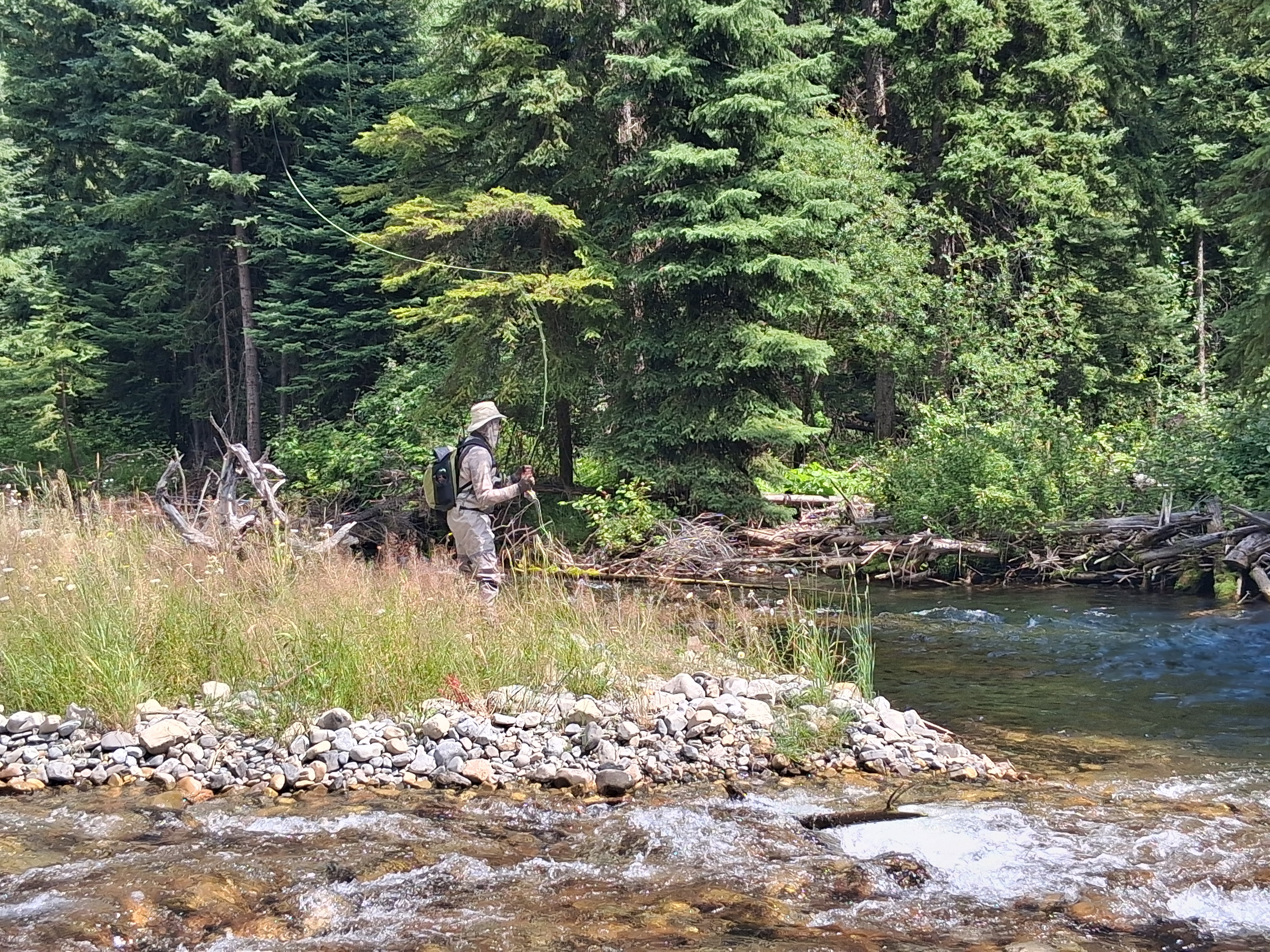
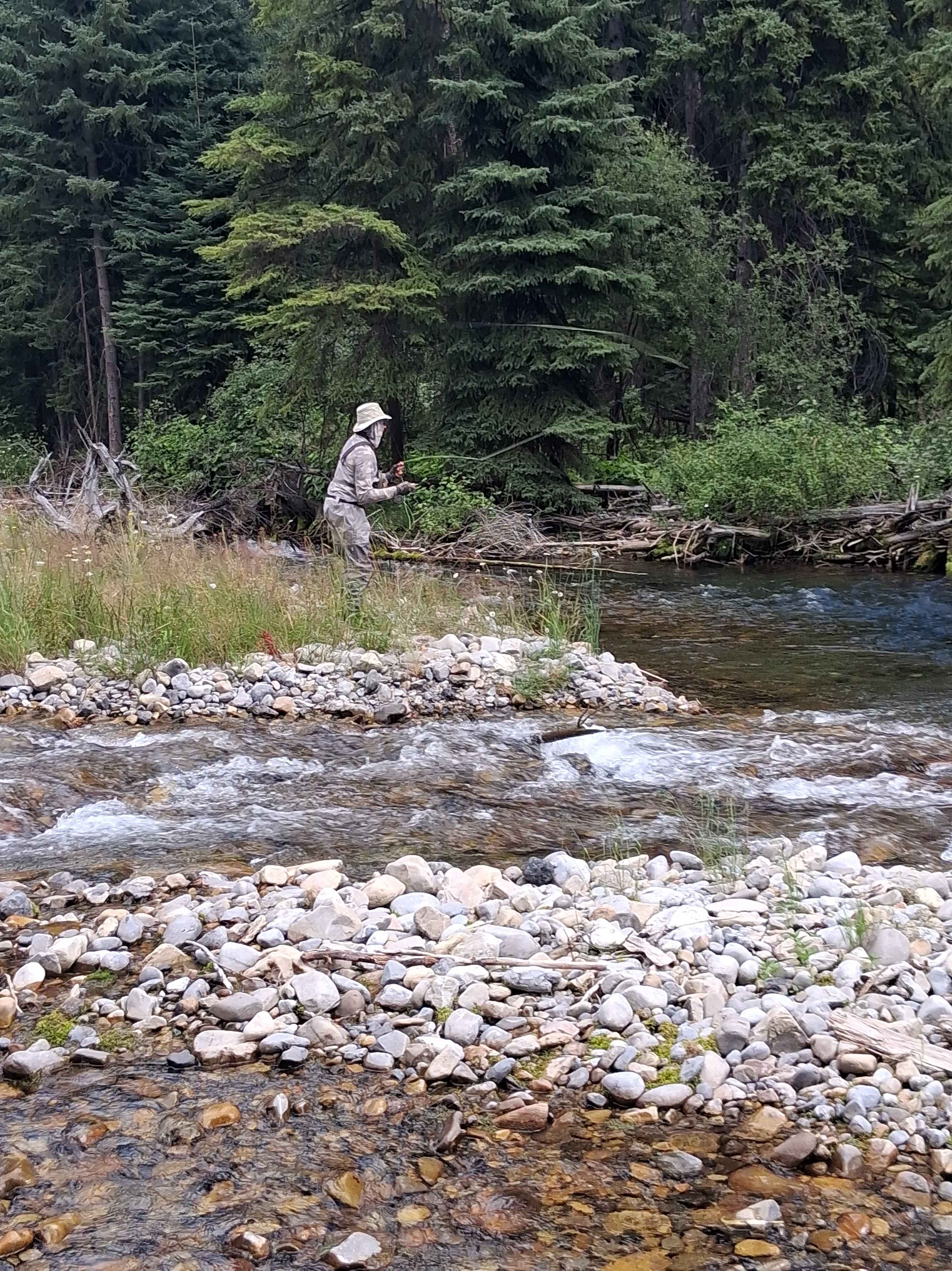
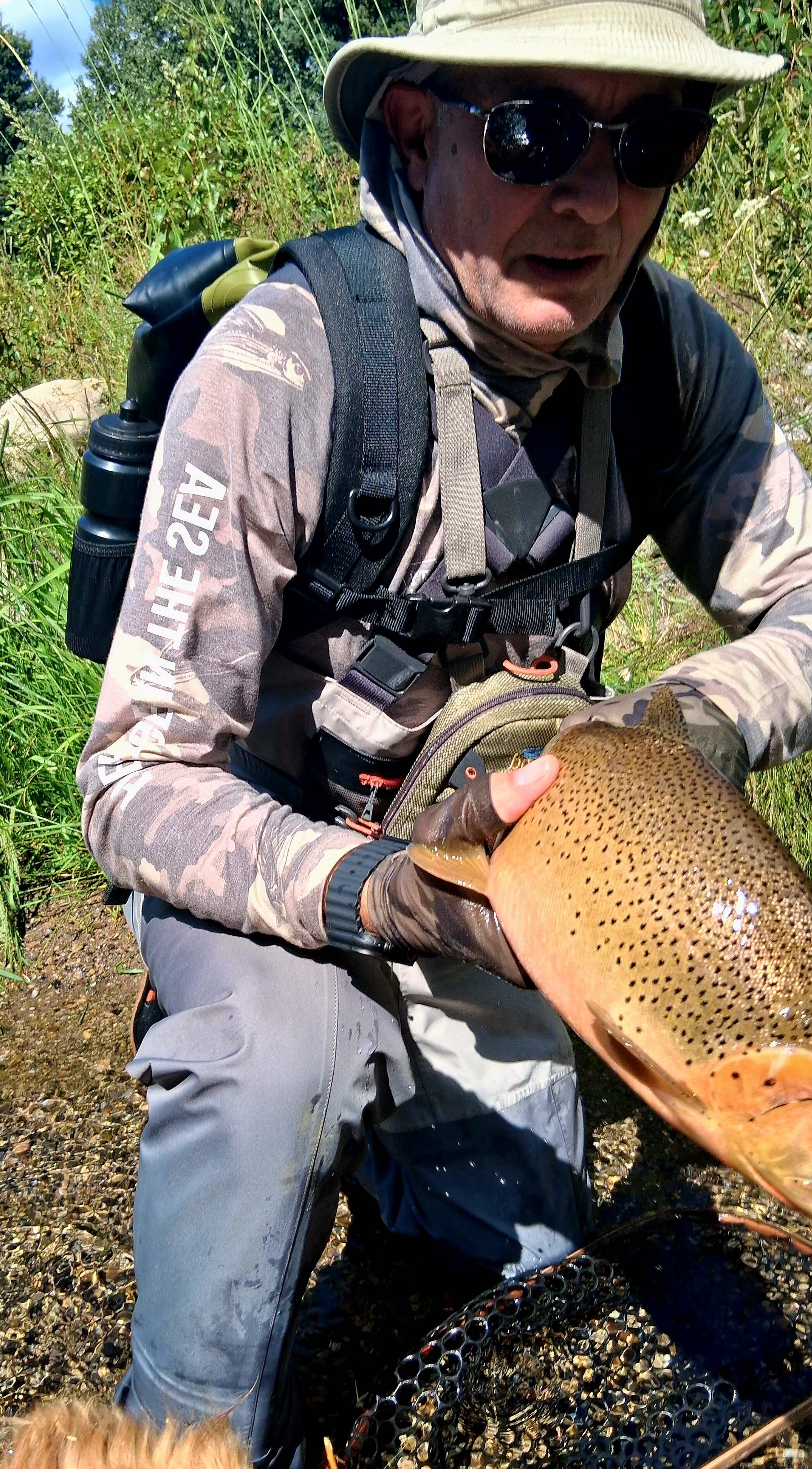
RECENTLY FRIENDS FROM the Montreal area visited the region. Pierre had experience fishing lakes but never trout streams in the Rocky Mountains. We spent four days combing a few freestone rivers. He said he did not have a lot of experience casting a fly rod. With some basic tips, however, within one-half of a day he was able to consistently get the fly where he wanted to and in front of trout. He even threw tight loops into the wind. In short order he became a natural at casting, wading rivers and reading the water. His athleticism and calm, patient manner and positive attitude were a real advantage. And with all of that came great success. Some beautiful Cutthroat trout were caught on dry flies, admired and released. It was an easy and enjoyable hosting/guiding experience for me. It was a breeze. A great guy to spend a day with on the river. I hope he returns to visit again. Some images captured on our outings…

The Originals

Original: “Present or existing from the beginning; first or earliest”.

COOL FOR AUGUST. Overall a cool summer here. And a fair amount of rain. That’s bad for campers. That’s good for trout. Everywhere else in the northern hemisphere it seems to be cooking.

Stream banks, intact ones, great spot to search for trout

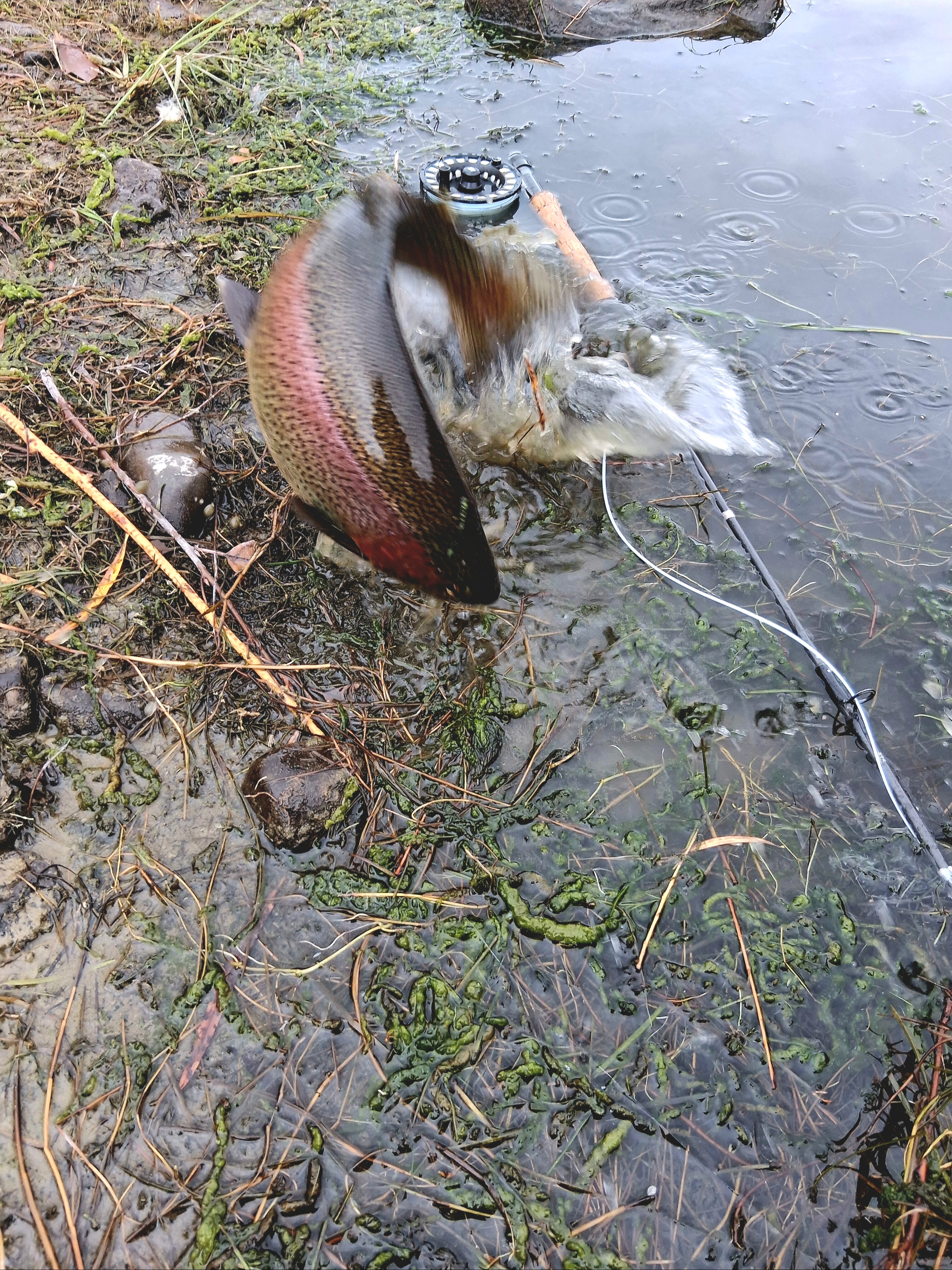
I visited a local stream up in the mountains. Clear water up there. Water like air. I was hoping for a hatch. I’m always hoping for a hatch. The conditions looked perfect. It never happened. Just a few Drakes. More as the day progressed. The odd rise. I would have got skunked if I didn’t know the river section I was on well. I walked more than I fished. Last time I was on the river it was late spring, early summer. Today I connected with a few good ones. My reel sang. I believe a reel with a good sound helps me play/ land fish. It’s the feedback.

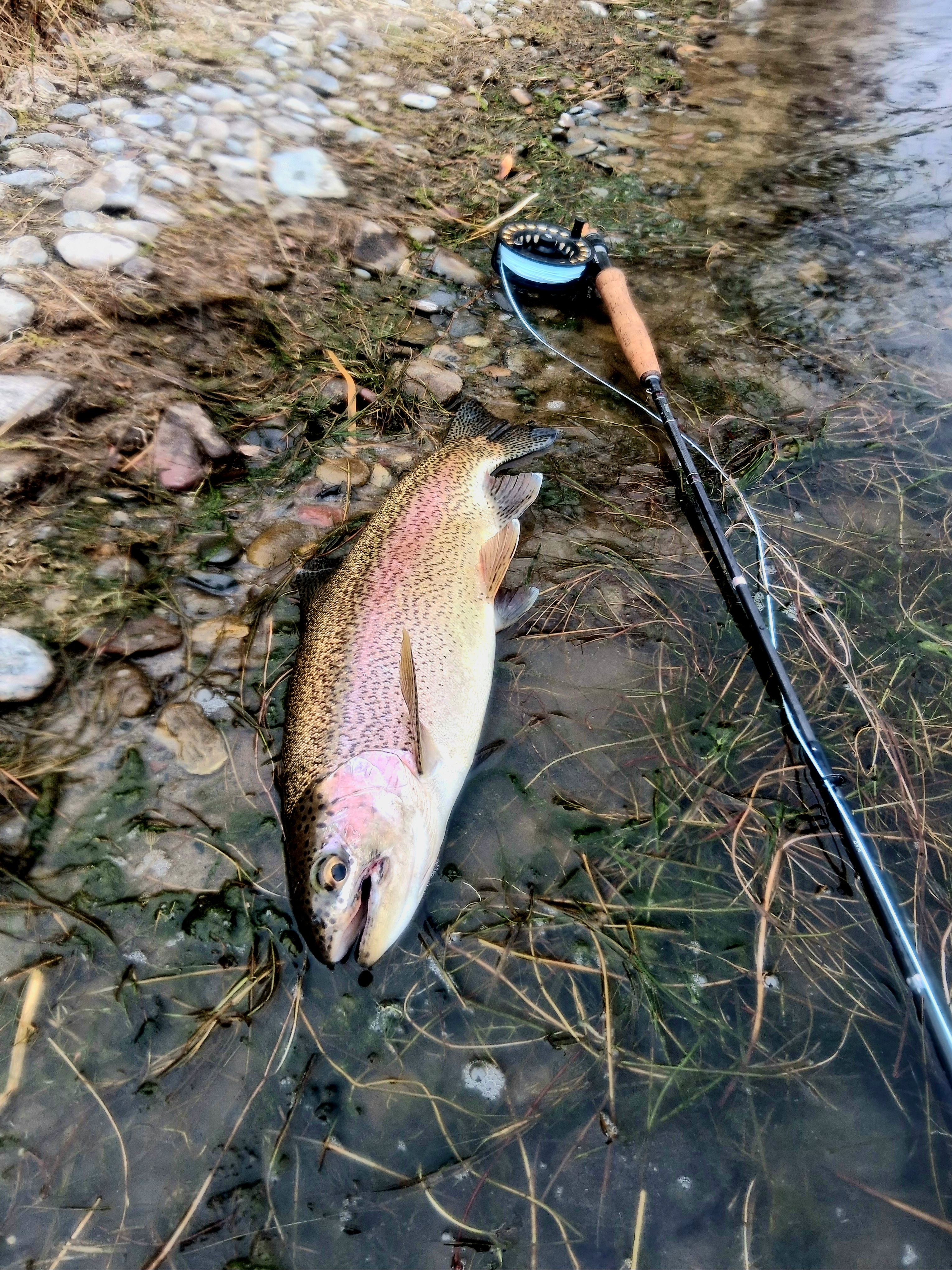
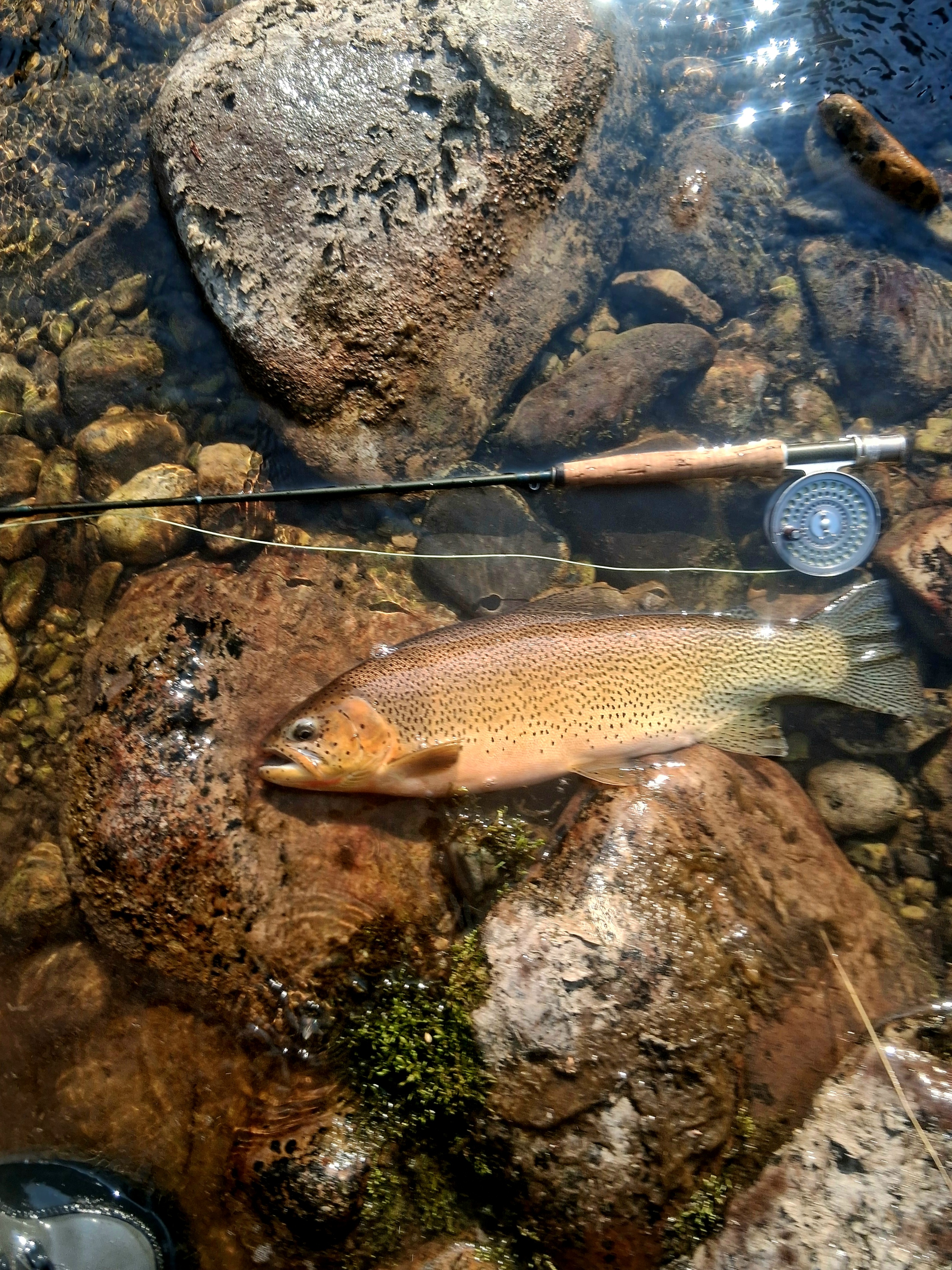
I casted barbless dry flies. Makes for an easy release on the native trout. A couple of beautiful ones came to hand. Cutthroats with a strong, pronounced slash. The originals…”existing from the beginning”.

Slight undercut

small fly

Here’s a photo of a brown trout I caught a few weeks ago on a size 18 Pmd. Basically the fly was pale yellow thread, a small puff of light dun cdc for the wing to keep it afloat and to see it as it tracked to the fish, and a tiny amount of yellow dubbing below the wing to accentuate the thorax. A quick simple tie. The fly sits low/ flush in water. The trout was on the feed. Eating regularly; eating aggressively. Therefore in my mind a very makeable sizeable fish on what anglers would describe as technical water. I presented something similar to what he was eating: similar size, color and footprint/ impression on the water’s surface. No other anglers were around. The trout probably hadn’t been casted to that day. That makes things easier. And it was a low light, overcast day. All I had to do was make a good cast and get a good drift and hope my fly impression would past the test. I always get anxious casting directly from behind a fish; having to cast my leader over it. So instead I spent some time circumventing the trout, crossing the river and making a long down and across cast. I’ll choose that every time if the river and trout position gives me a chance to do so.

I got lucky that day: an aggressively feeding trout, a good hatch, no angling pressure, low light, a passable fly impression, and the small fly held…

This is where…

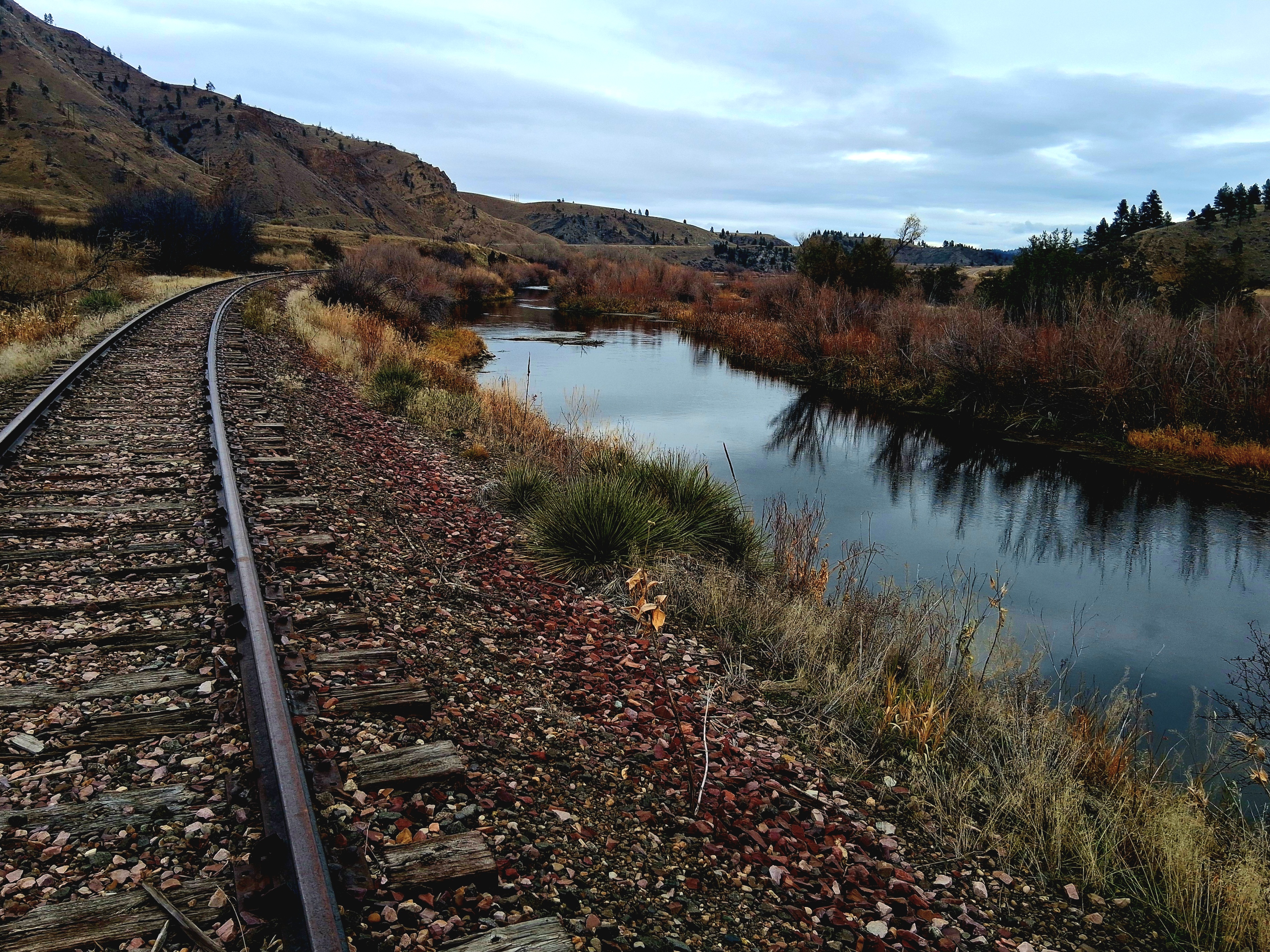
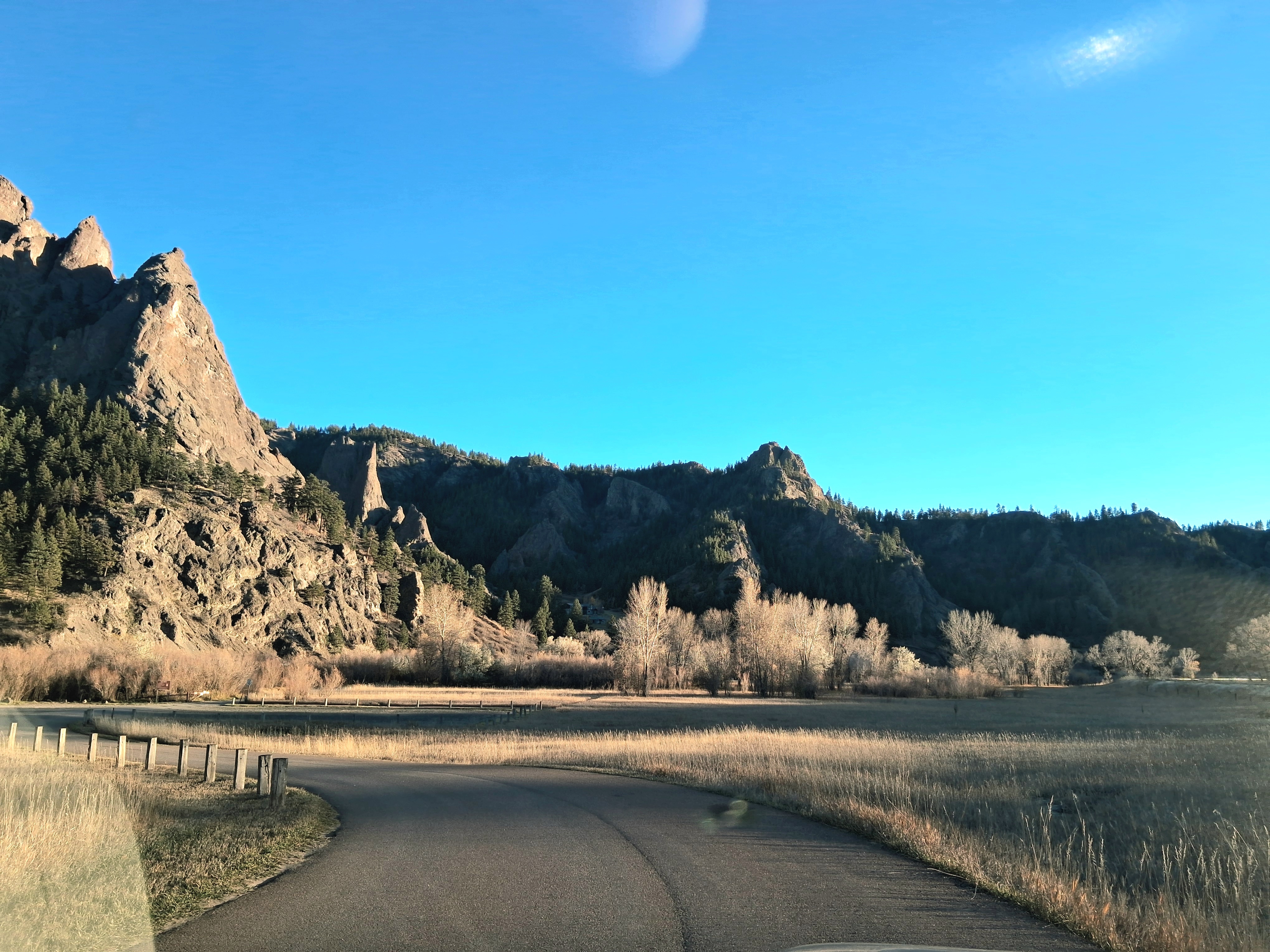
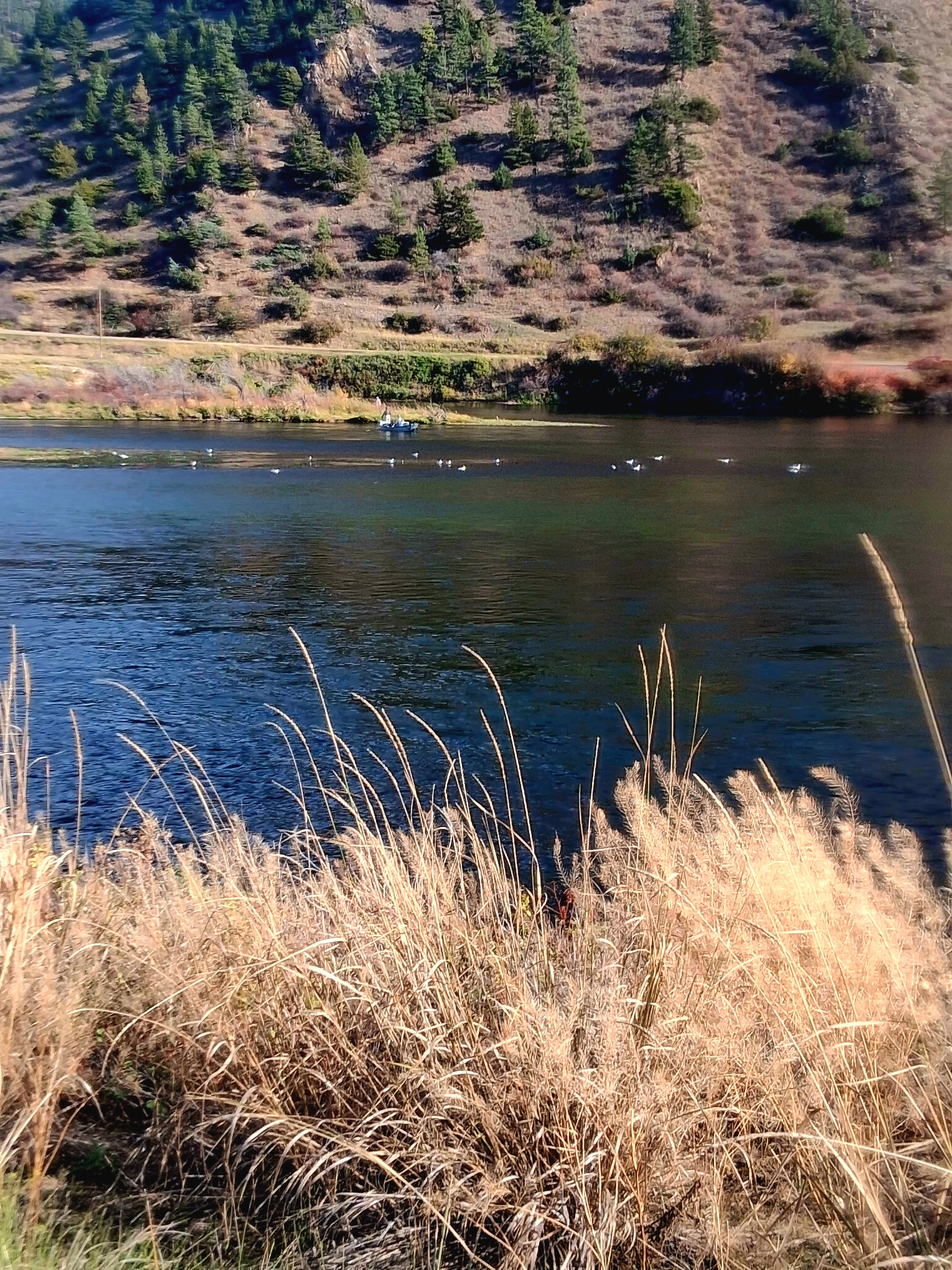
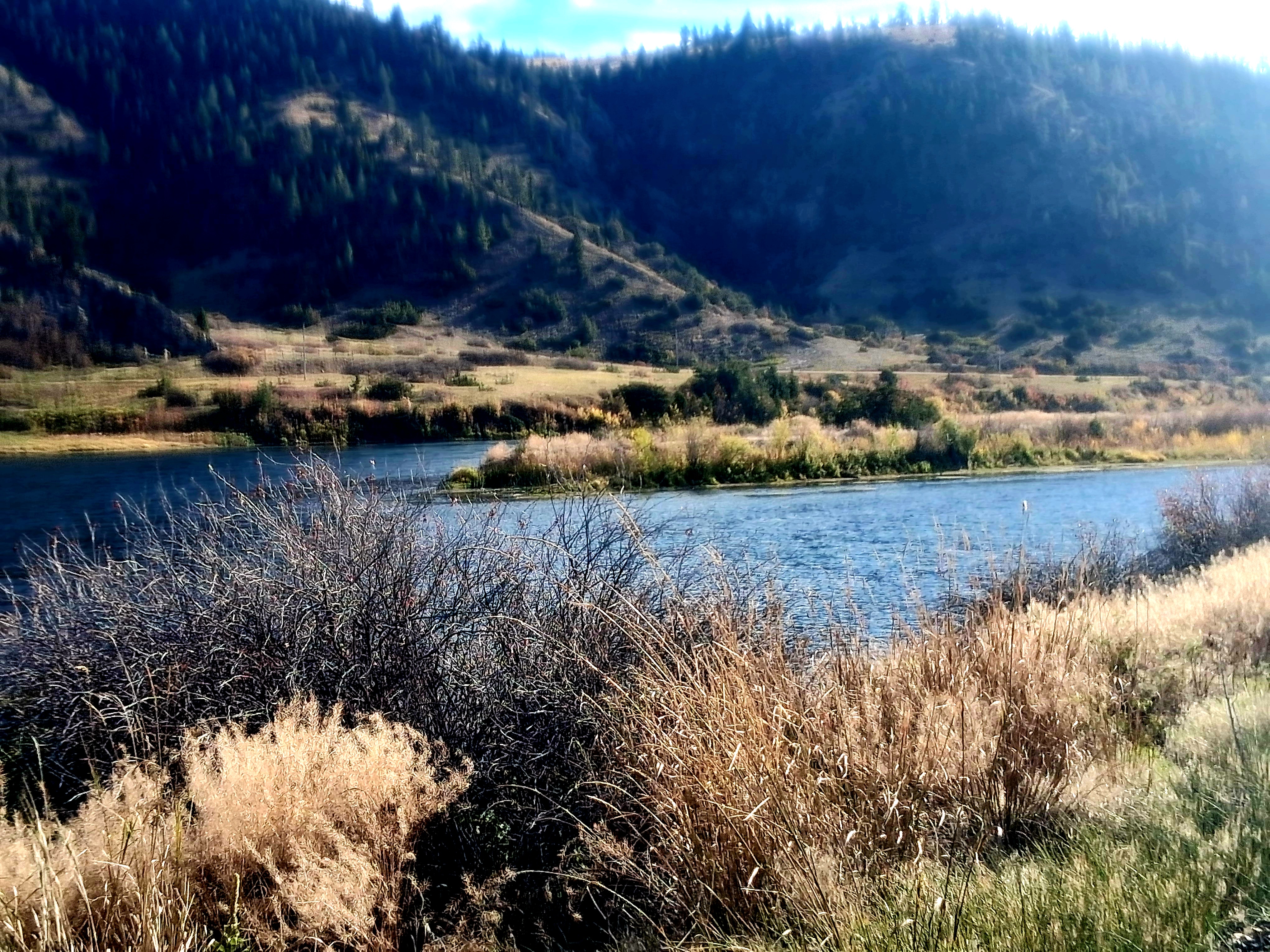
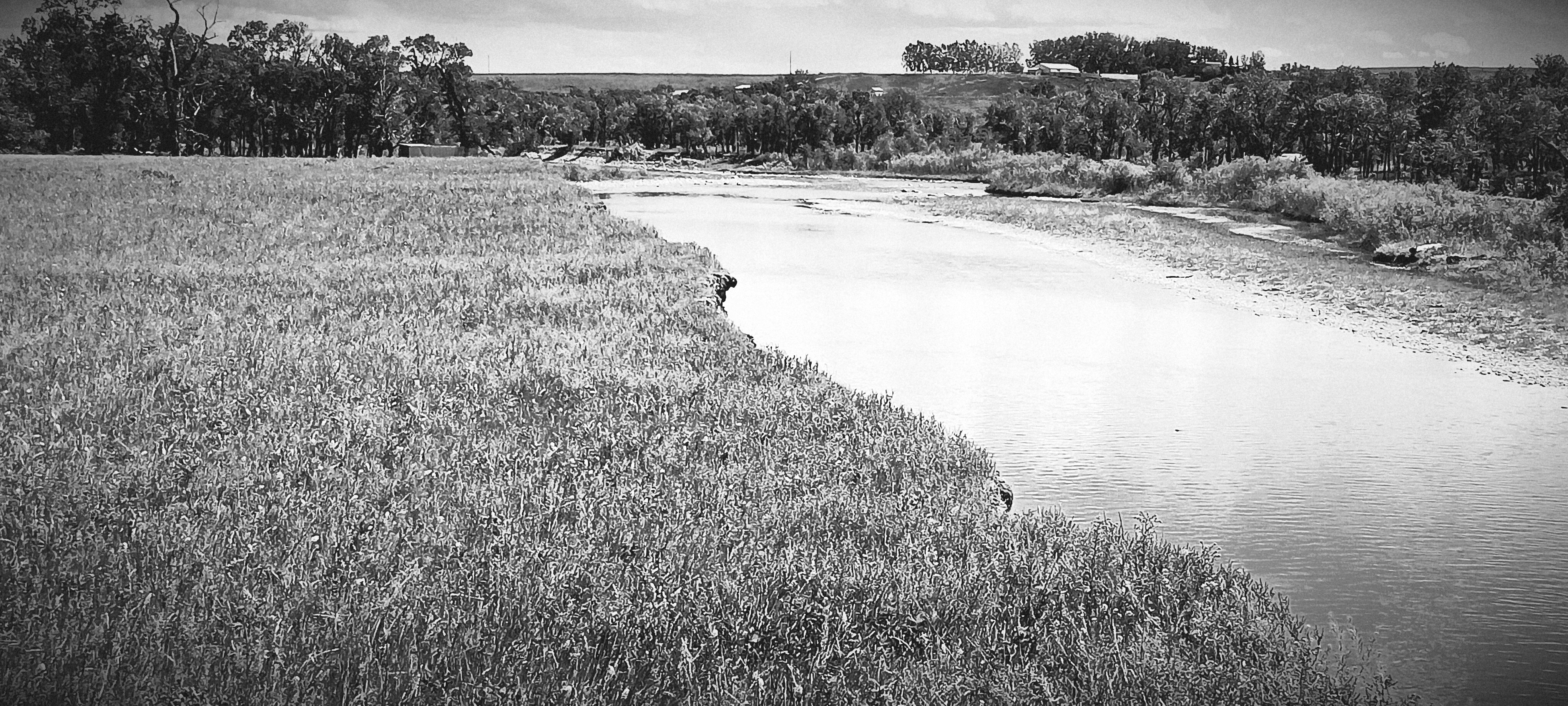
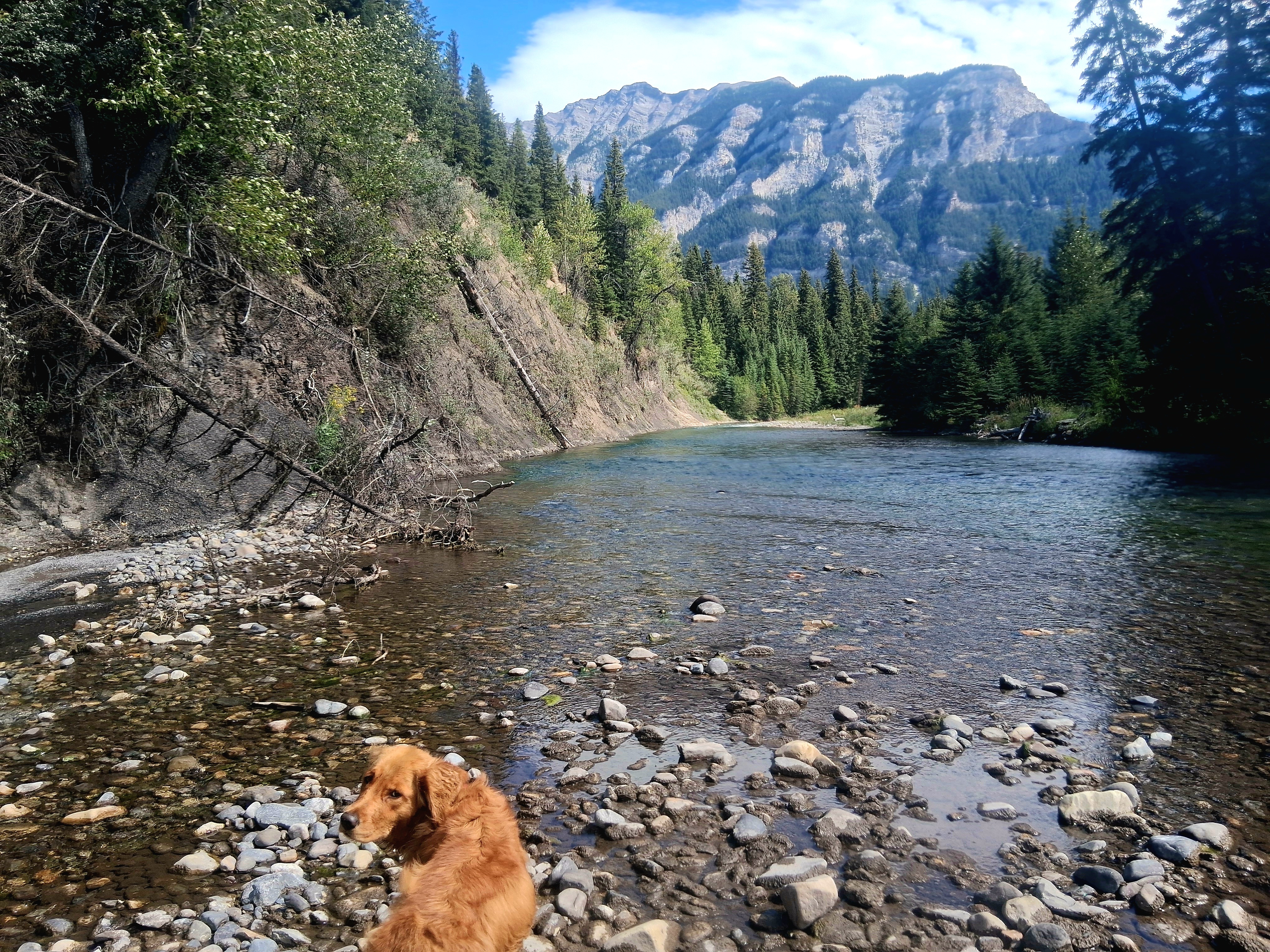
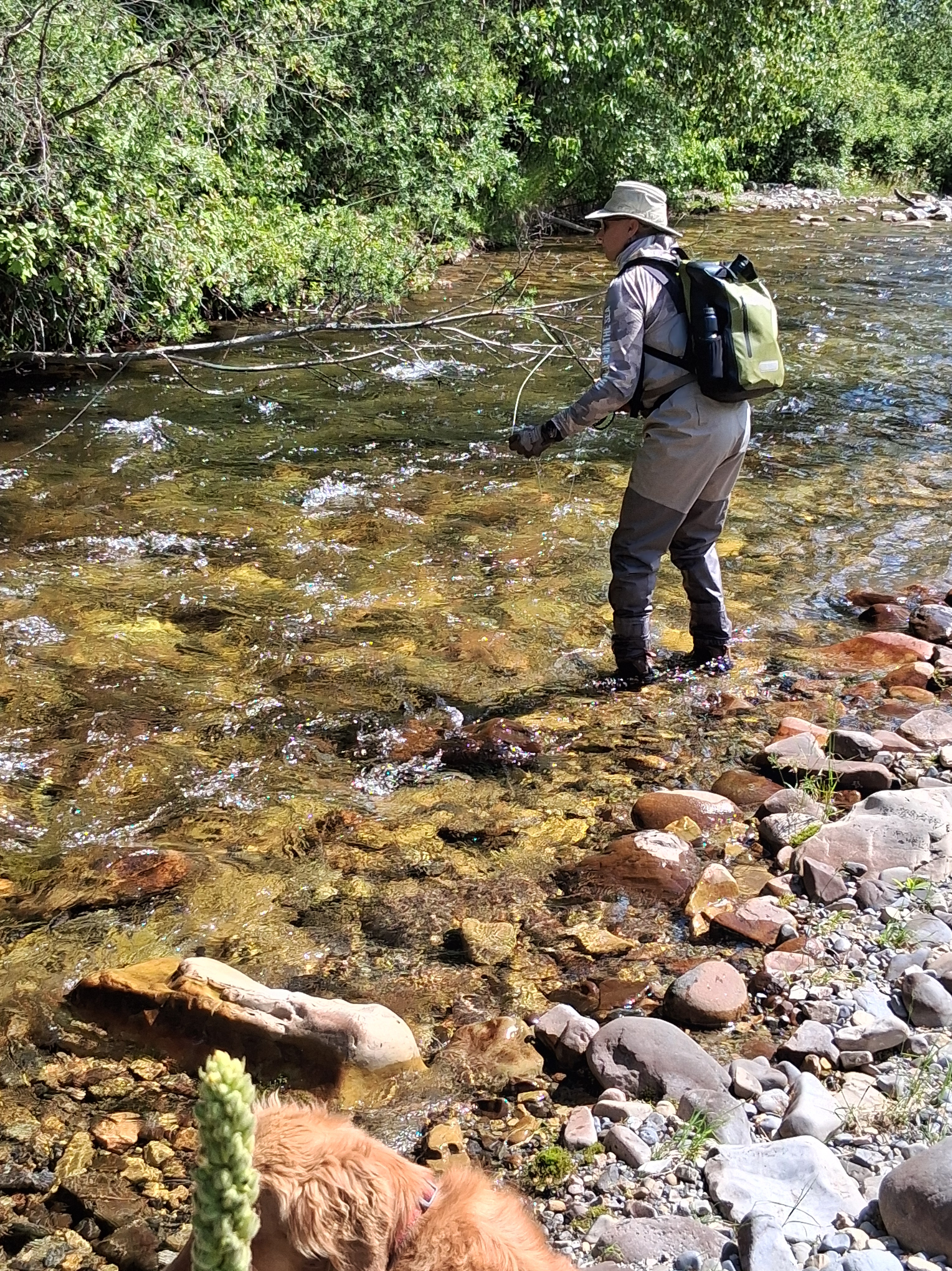
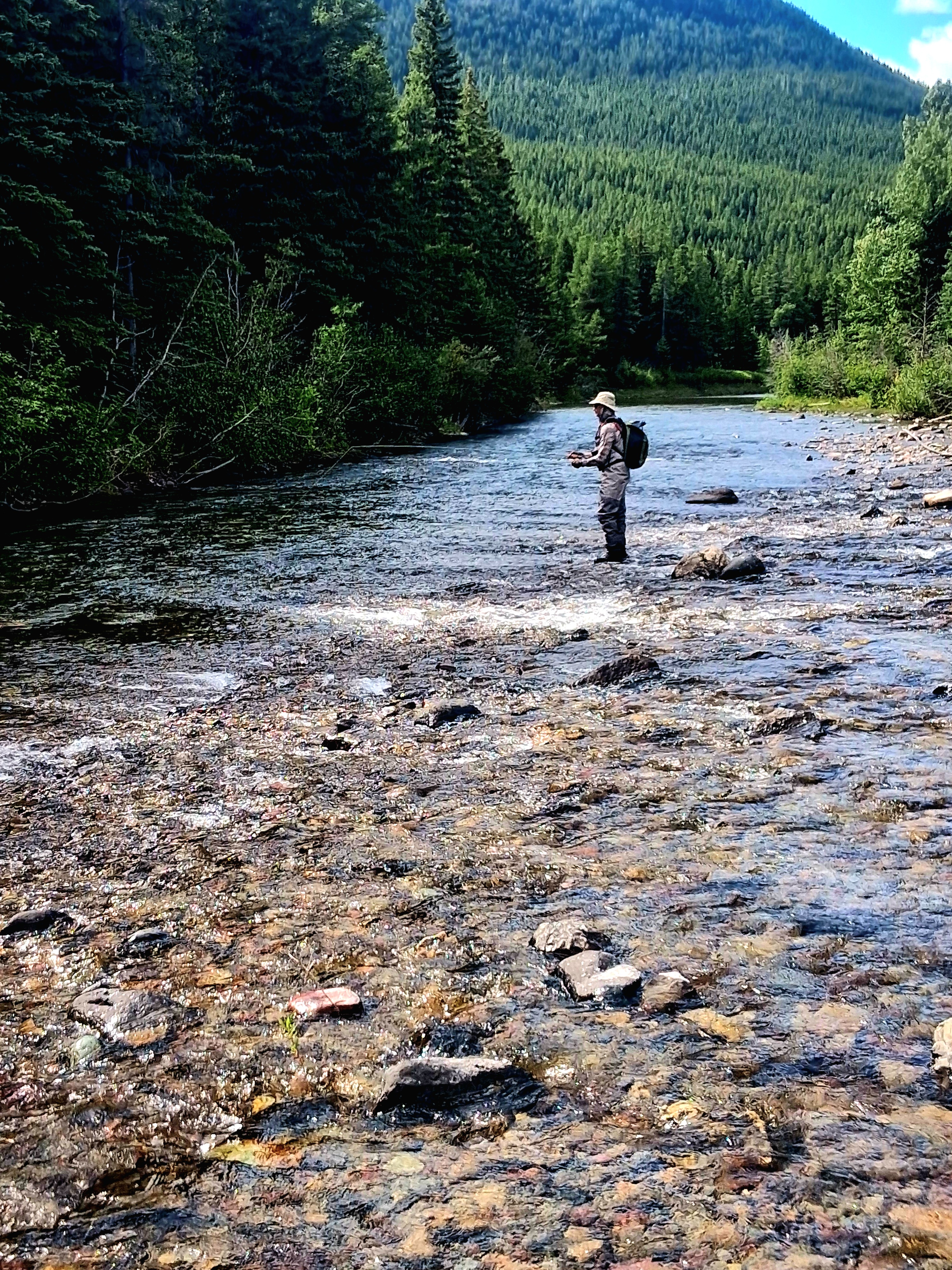
This is where I covered many miles of river the other day. Mostly along its bouldery edge. Walking on round rocks all day is an art. I usually take shortcuts between river pools on the softer ground through the Cottonwood forests, meadows and brush in the river valley in order to get a break from the boulders. However, I didn’t this time as it’s wild berry season. There’s a bumper crop of Saskatoons this year. And bears love to feast on them.

The pools on this river are far apart and there’s not much fishable water between them, so you have to cover ground. You keep telling yourself “maybe the next distant pool has a good fish in it” and you rock-hop onward. The river holds a few quality trout so that’s the incentive to keep going mile after mile. It’s kind of like fishing New Zealand. There can be great reward for your effort, or sometimes not. That’s the deal.

I spotted a few fish with the sun overhead but mostly “fished the water” (prospected). I tossed a large black foam beetle. I had to twitch it to get the best one of the day to take notice and rise off of the bottom.

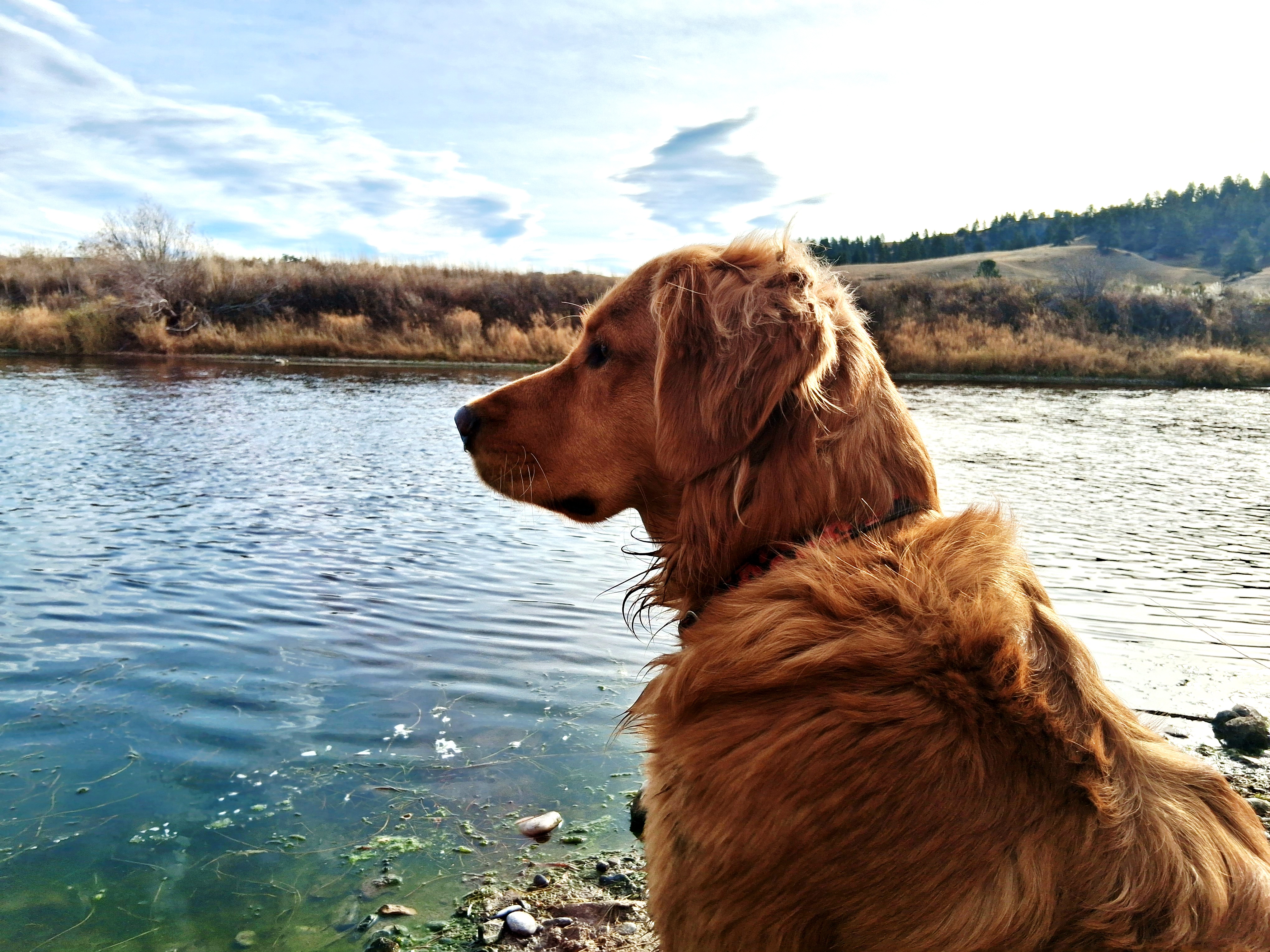
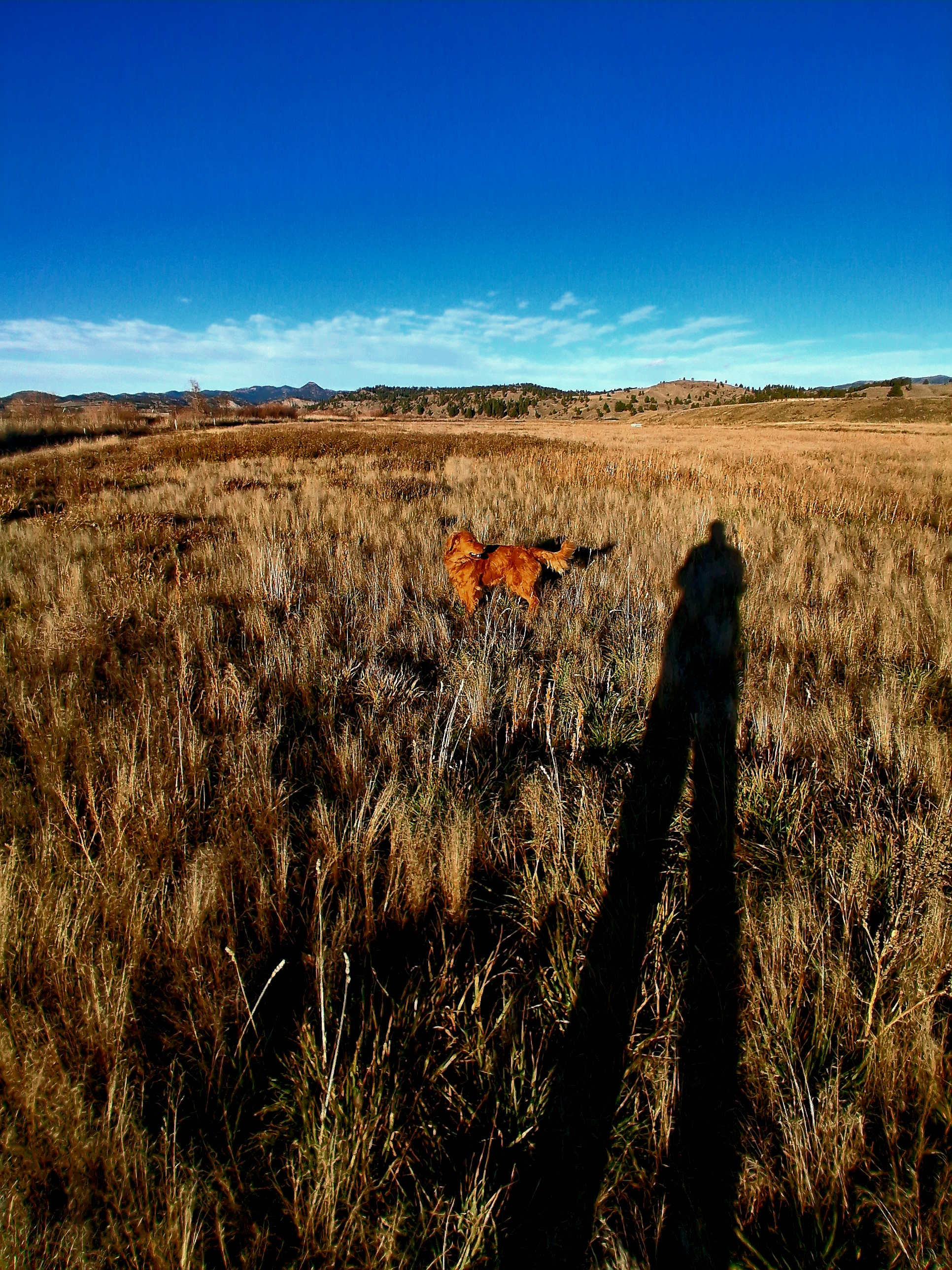
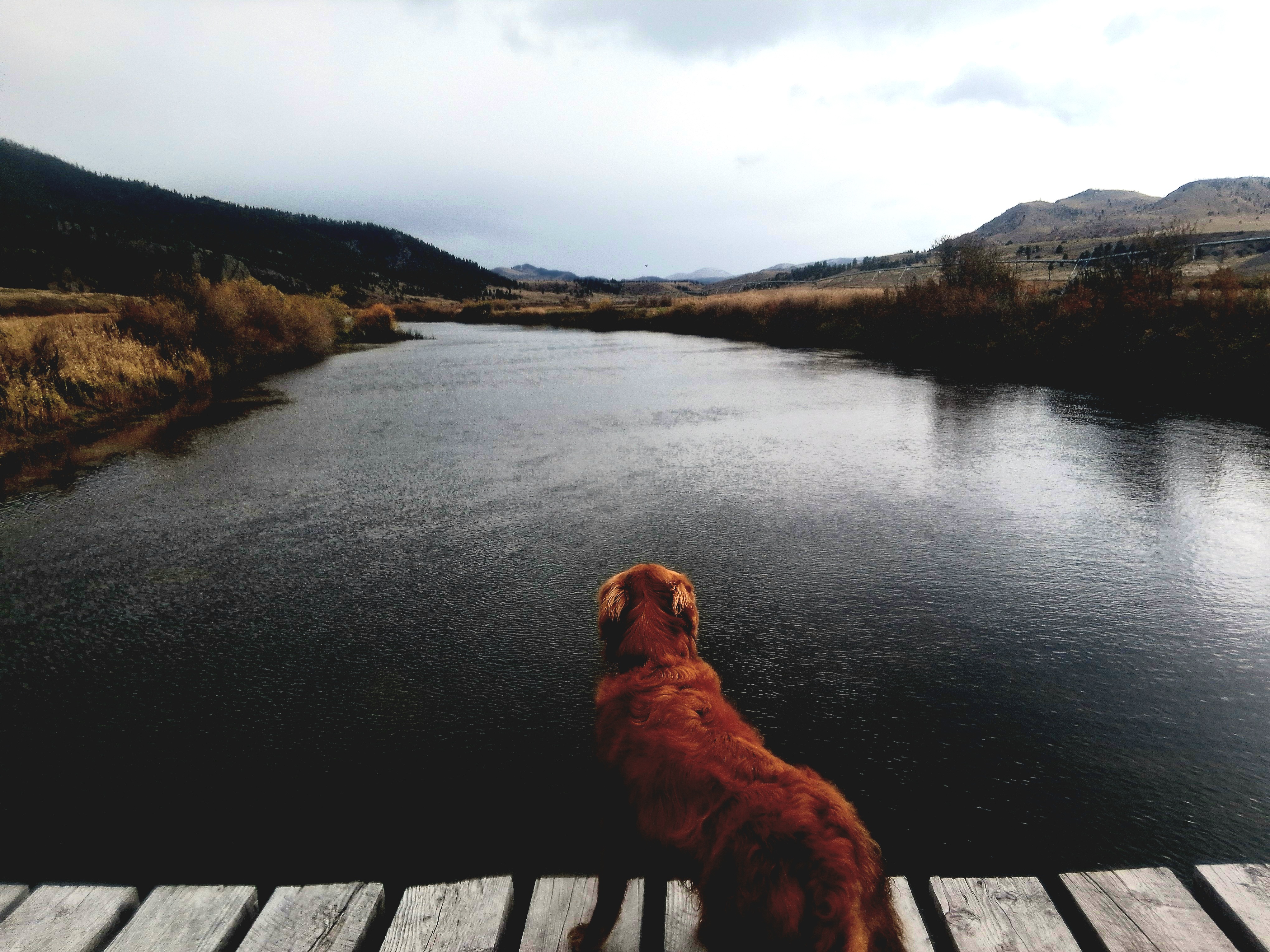
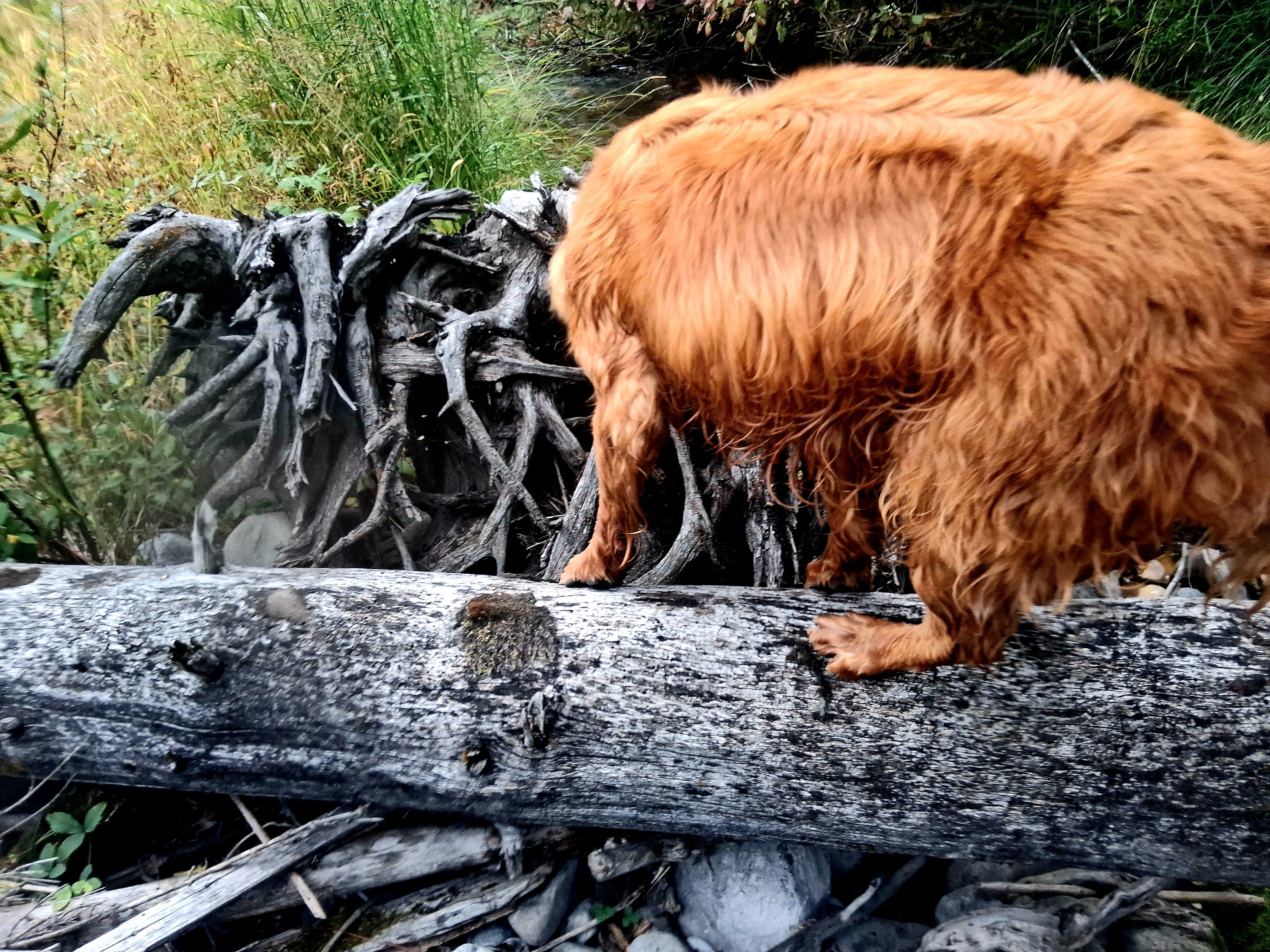
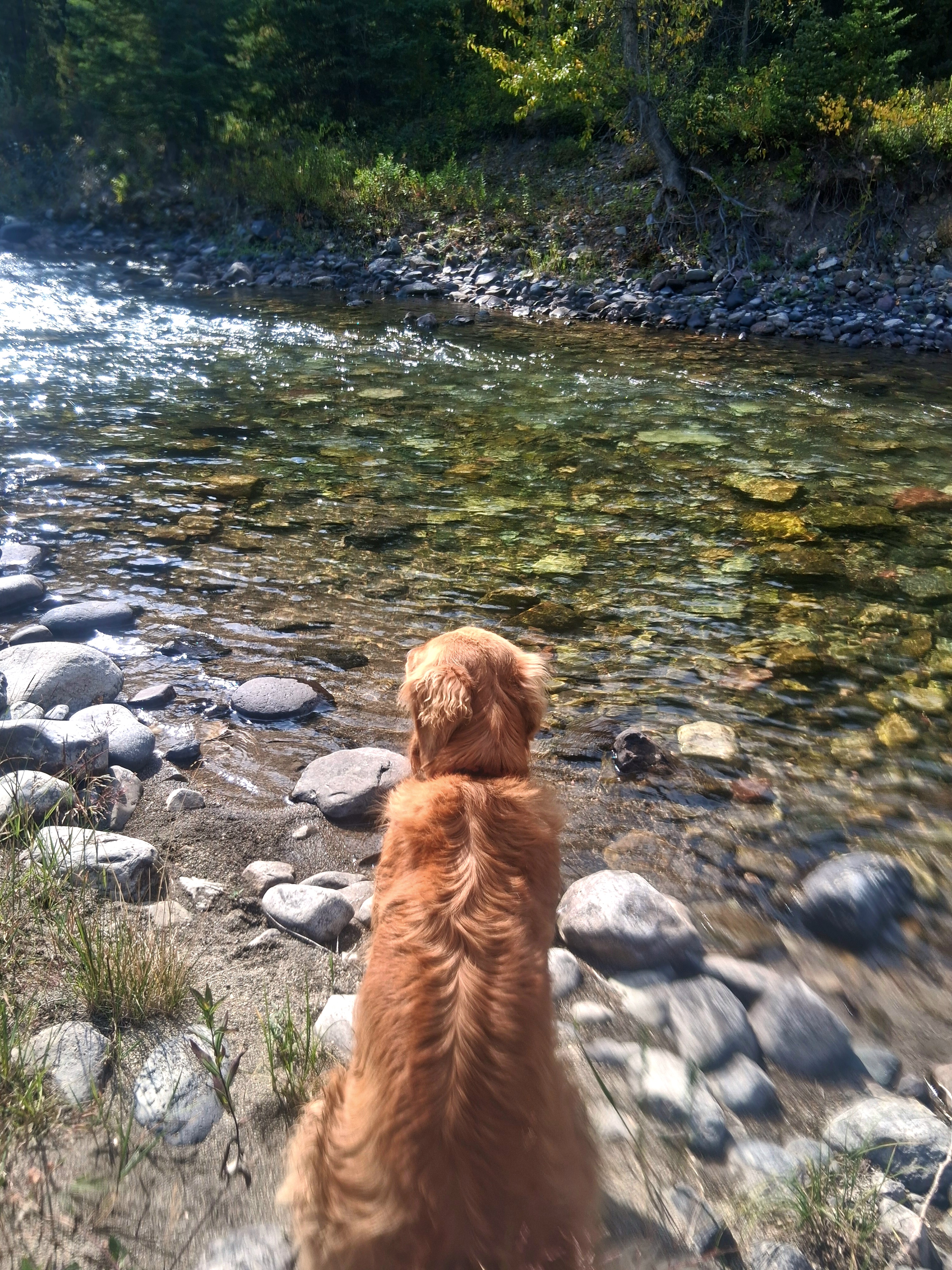
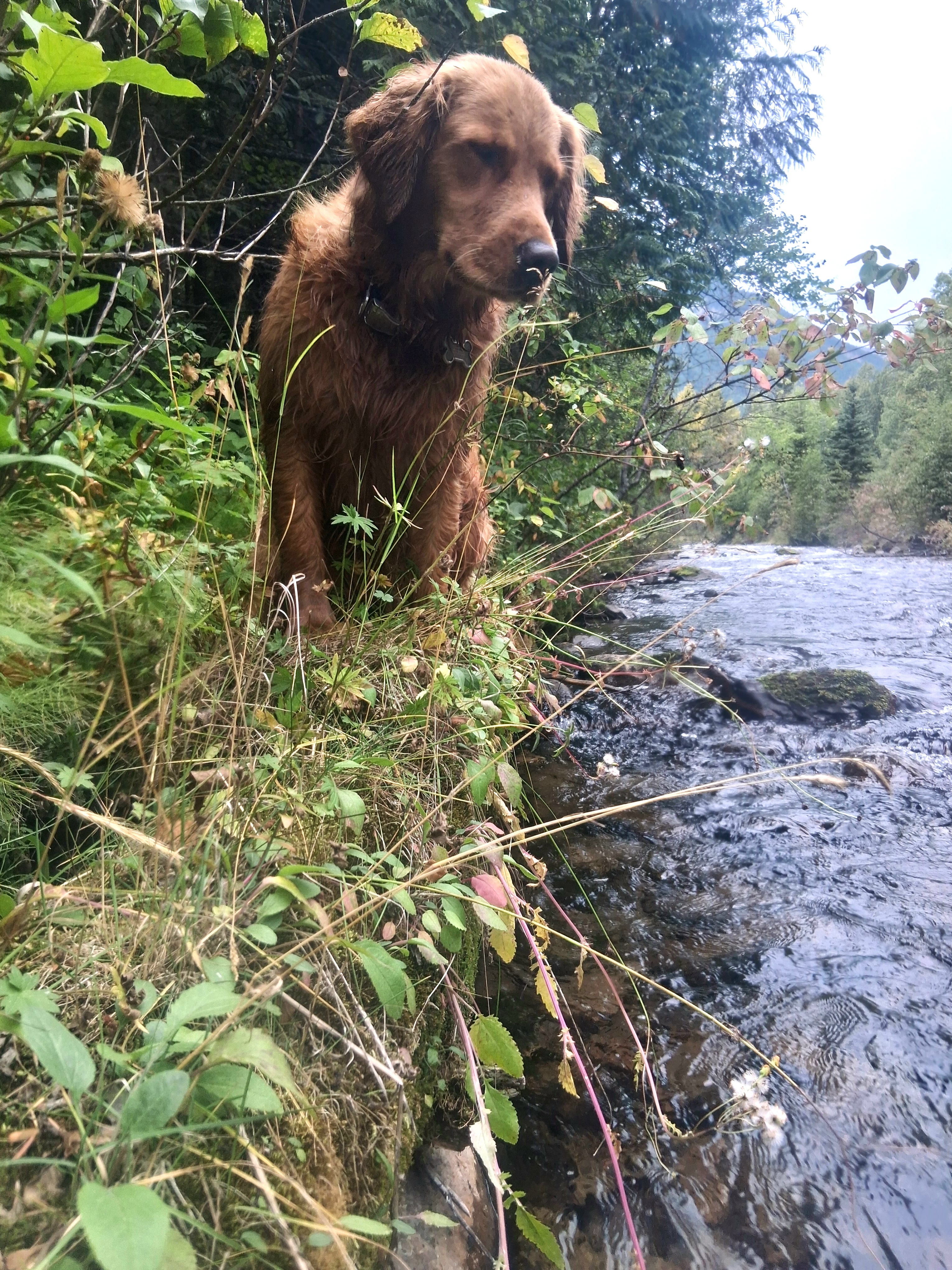
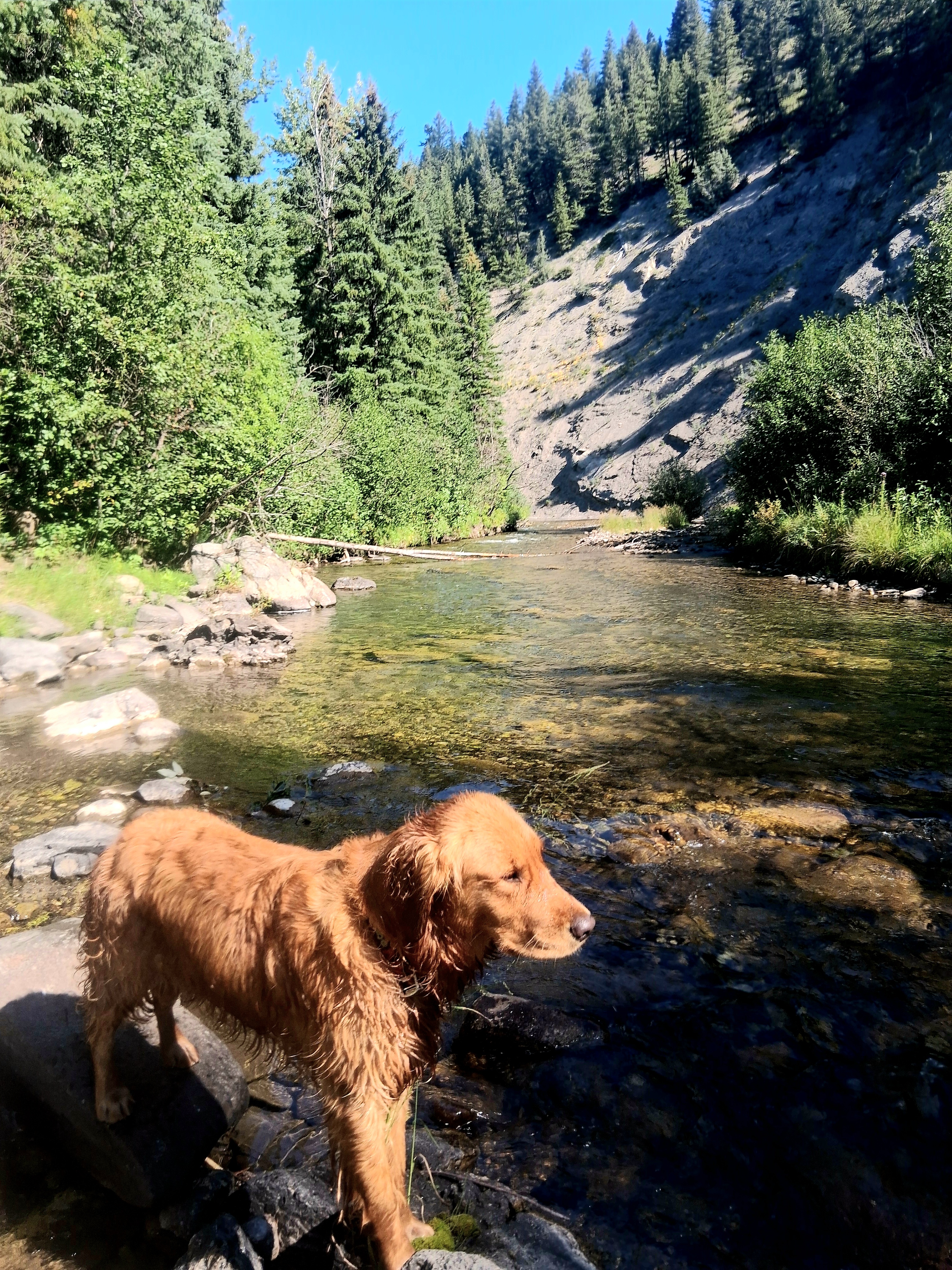
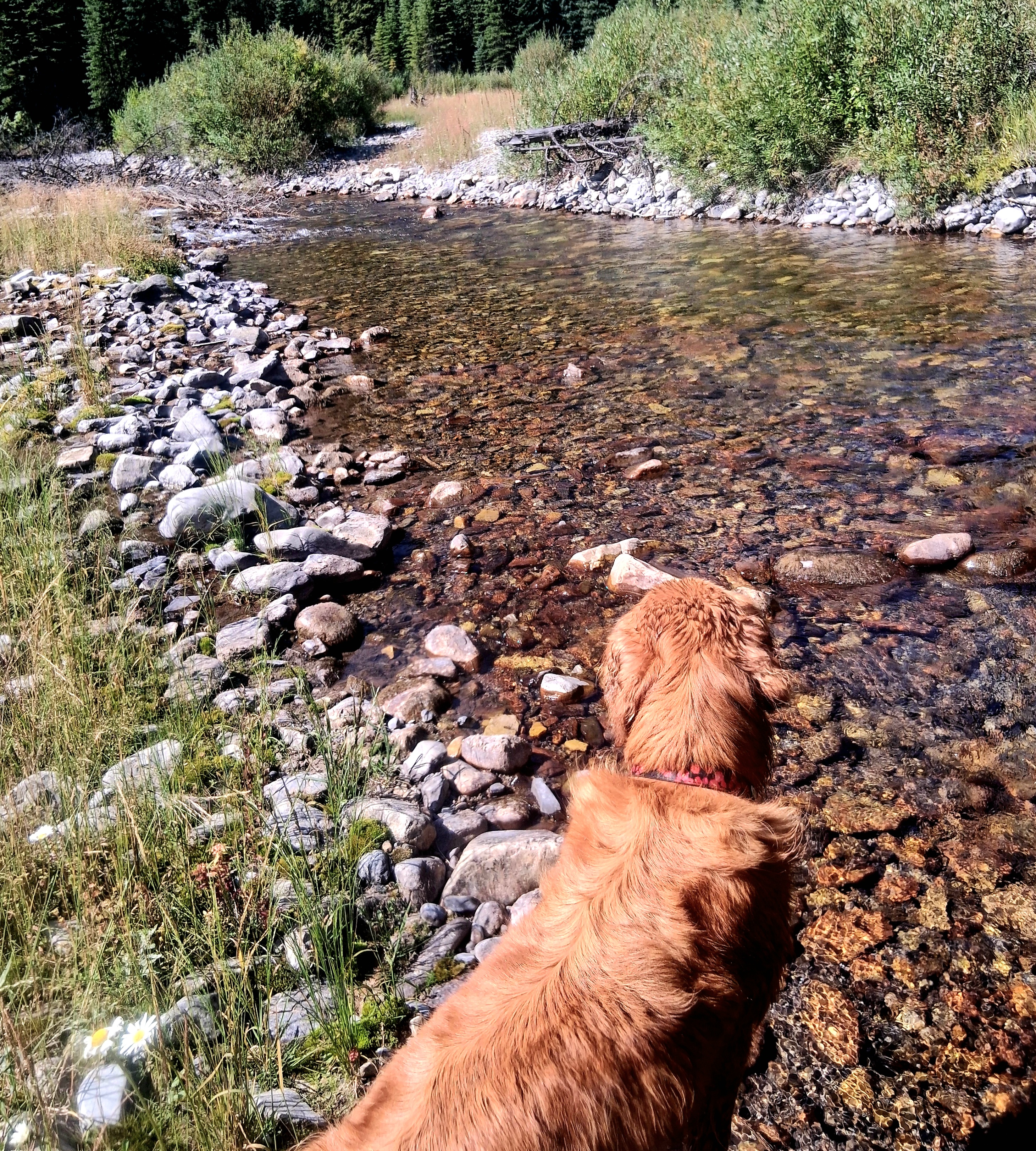
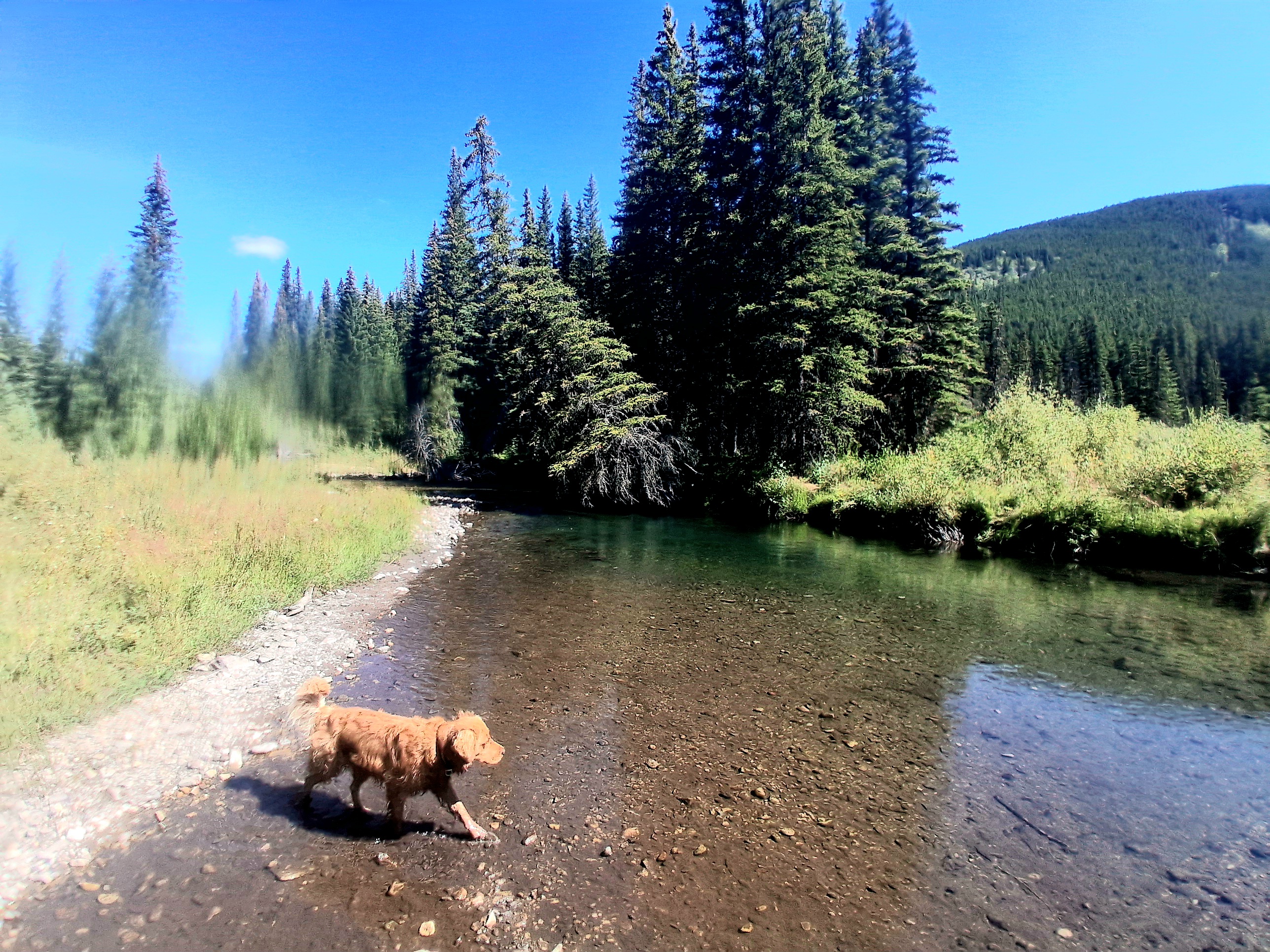
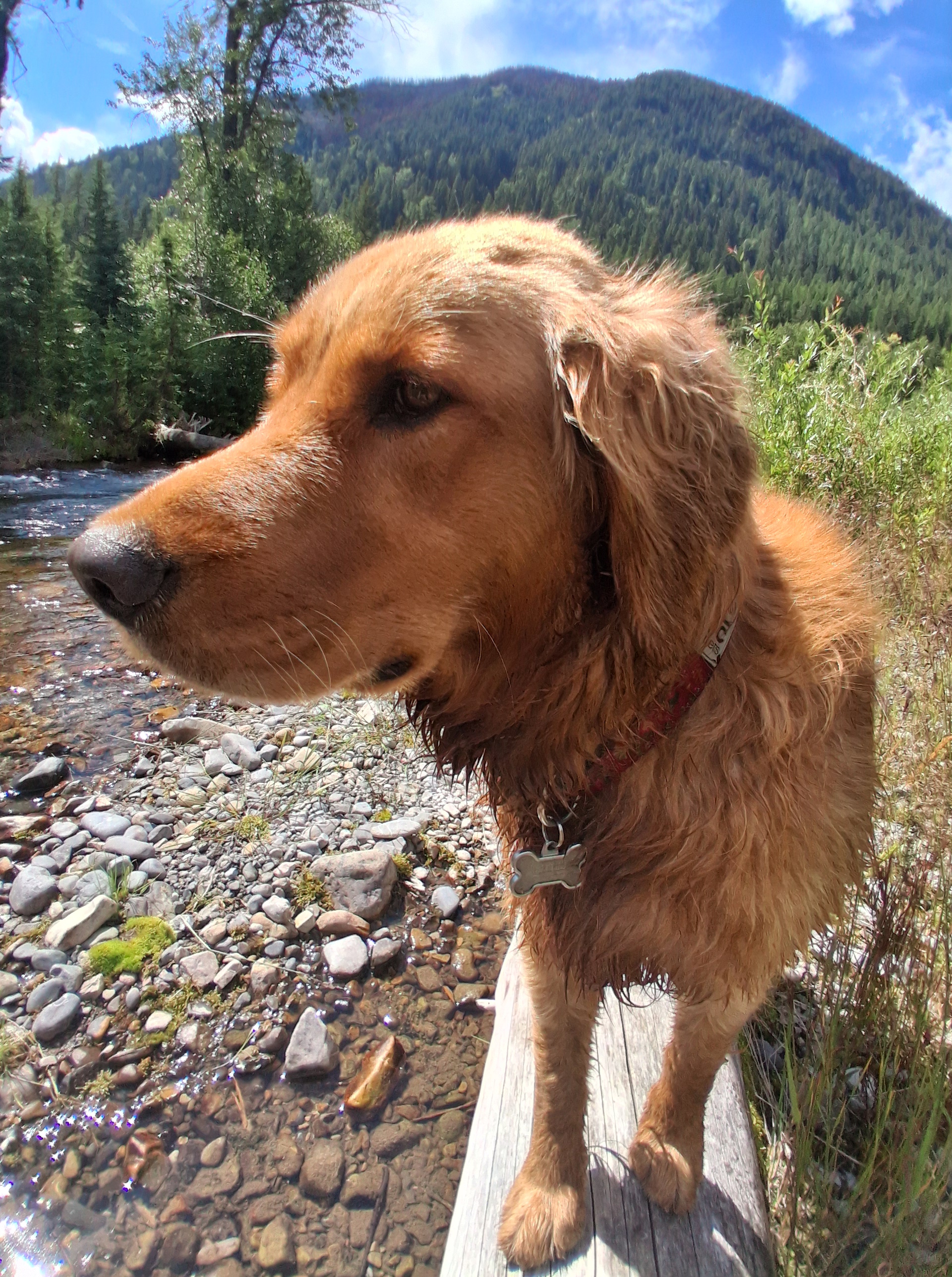
Before I know it my water bottle is empty, lunch and snacks are all gone, my shadow lengthens, and Harper, my dog, curls-up and naps riverside. It’s the sign(s) that it’s time to turn around and head back downstream; back to my vehicle.

While walking back I remind myself this is where Dinosaurs once roamed. This has long been the home of the Blackfoot. This is where giant prairie Grizzly bears wandered. This is where Buffalo once lived and travelled freely.

This is where I spent my day…

Breezy and 6c

Wake up early; dark and dreary out; going to be that way all day; it’s July; should be sunny and oven hot; instead it’s breezy and 6c; there could be snow up high where the peaks pierce the sky; October has bullied and pushed July aside; July is catching its breath and when the bell rings it will come back.

It could be a good brown trout day deep down in a river valley with the heavy sky and low light; could be; maybe; going to layer up as it’s October in July; you have to go to find out…

Brown trout caught on size 16/18 Pale Morning Duns dry flies.

“It might happen”

” When preparation meets opportunity, luck happens”.

roman with a fine brown trout

Nine days of wandering around rivers. We went east, west and south. We never went north. It’s kind of a gong-show up there anyway. Too many campers, too many camping riverside, too many 4-wheelers, too many anglers, too many casting treble hooks, too many mangled fish, too many… For six of the nine days there were few bugs around; no real hatch. The insect apocalypse theory remained intact. It was mediocre dry fly angling in the beautiful sunny weather. Then the Weather Network and Environment Canada predicted a few days of cooler weather, cloud cover, rain or at least thundershowers. I checked a third source, AccuWeather. It reported the same. All weather sources were aligned and it meant a very strong possibility of daytime low-light conditions with precipitation. I thought, “It might happen”: the chance of a solid daytime hatch and fish up. Trout generally feel safer rising for insects when the dimmer switch has been dialed down.

brown trout

So on the first cloudy day I put on my rain jacket and headed for a river where I felt there was potential; where “It might happen”. I had not been on the one I selected for a month. Around mid-day birds started swooping and darting over the river. It looked like a hatch was developing and then shortly after it exploded. The main insect: Pale Morning Duns (Pmd’s). And the trout responded. They were up everywhere. Boils and bulges at the head of pools and sipping fish eating duns in the mid and lower pool sections. I got lucky. I got more than lucky as the event lasted for 3 or 4 hours.

rainbow trout

On the next cloudy day I returned with a friend, Roman. It was cooler and wetter. There was also thunder and some lightning. We got there just before noon. We waited and waited. There were showers all afternoon. We walked from pool to pool in order to stay warm. I wondered if it was ever going to occur. An old Yiddish adage came to mind, “Man plans, and God Laughs”. Then at around 3-3:30 pm, three hours after our arrival, the birds started working the river, Pmd’s began to emerge and fish started to rise. Big guys and gals. A repeat performance. Just delayed and briefer probably because of the cooler weather. The fish continued to surface even when the sun occasionally broke through late day. The brown trout glowed golden in the late afternoon light. After being wet all afternoon we appreciated the sun’s warmth. Then when the river became fully illuminated by the sun, it all stopped. The trout disappeared: “Now you see me now you don’t”. Like magic.

photo by roman

fast water carry, photo by roman

If you fish a lot you know it doesn’t always happen this way. Some rivers are easier to predict than others but in the end when dealing with Nature there are many uncertainties; many unknowns. Sometimes everything seems perfect but you don’t get a solid hatch, you just get wet…but that’s all part of it.

rainbow

harper, photo roman

So, “It might happen” ended up “happening” and we caught and released some wonderful trout on size 16, 18 Pale Mornining Duns…here are a few images…

pmd flies

some color

Roaming around

” Aye, aye! and I’ll chase him round Good Hope, and round the Horn, and round the Norway Maelstrom, and round perdition’s flames before I give him up”.

Captain Ahab, Moby Dick/ The Whale—Herman Melville

Oh boy! I’ve been on a bug search. Looking for insects. Looking for a good solid hatch. Looking for some rising fish. The two go together: bugs and surfacing trout. It has been tough out there. I’ve been roaming from river to river. Looking. Some yellow sallies are around; some pmds; some big stones; some bwo’s when cloudy; some drakes. “Some” but not “much” of anything. Kind of sparse (hatches), thin and weak I’d say. And then some inclement weather rolled in. Some low clouds and rain. I picked another river. One I’ve been waiting to get on. Waiting for the flow to drop. Waiting for the right moment. And I got lucky. Around mid-day bugs started to hatch. Big guys. Big drakes riding the surface, wings up, like the old time tall ships with their towering masts. A spectacular event. Maybe 1.5 hours long. Not bad. And with it the best in the river (trout) showed themselves and I managed a few good ones on dries. Then I continued to walk the river and watched familiar locations and spotted several more robust trout rise perfectly to intercept the big bugs. By then watching was good enough. Reverence for this special river.

Some photos while roaming around searching the past few weeks; hiking streamside paths; crossing rivers….and a few special trout.

always investigate little pools off of main flow

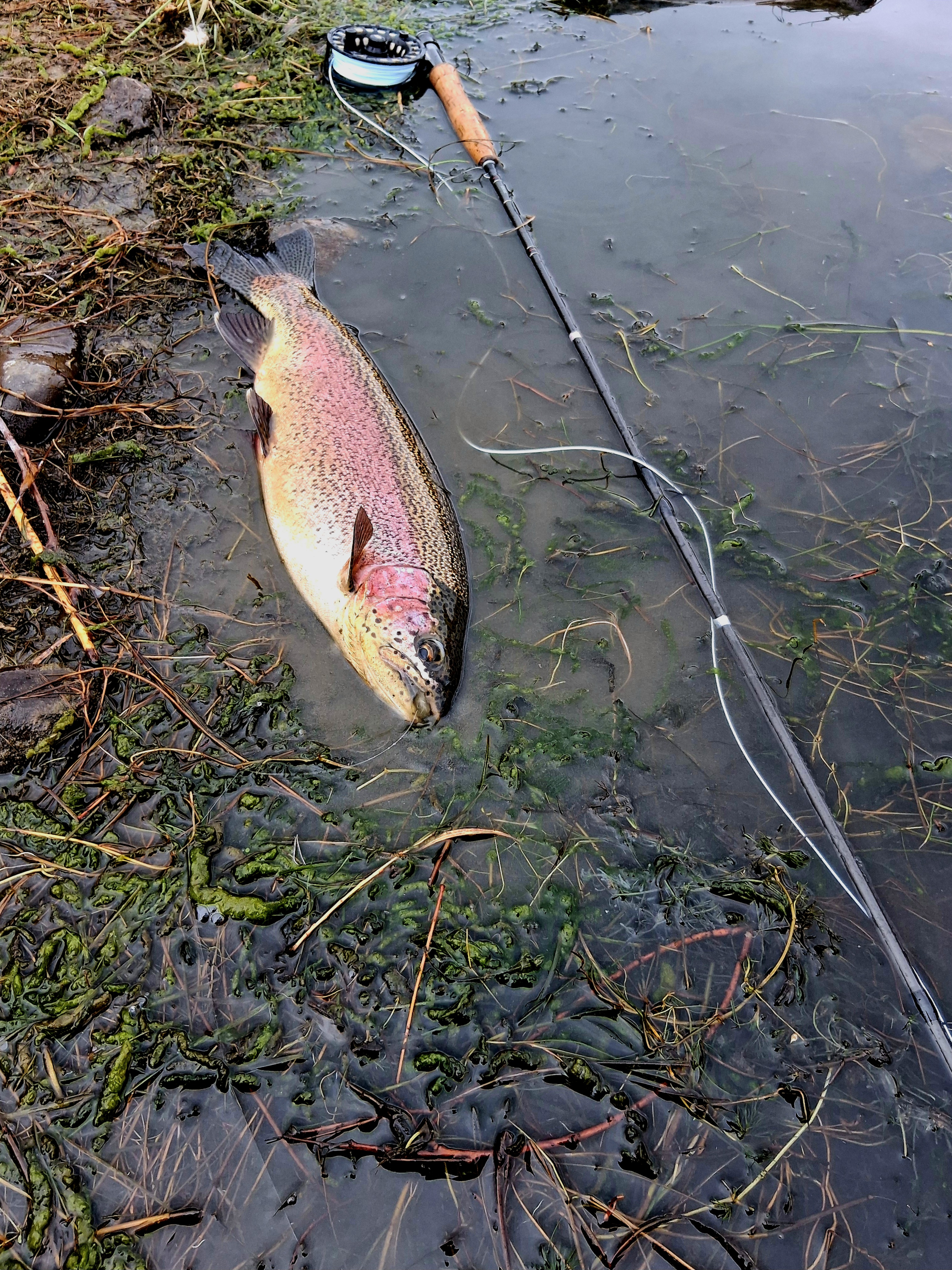
tailwater bow, fly: beetle

riverside wild flowers

some color

Tailwater tour

There are three tailwater rivers in my region. On Opening Day I visited two of them to see what kind of shape they are in. Due to another low snowpack year the reservoirs that feed them are low. Early season fishing will be okay but late season it might get ugly: minimal flows, and if reservoirs come close to bottoming-out then silt will be in the water which will affect the sight-fishing.

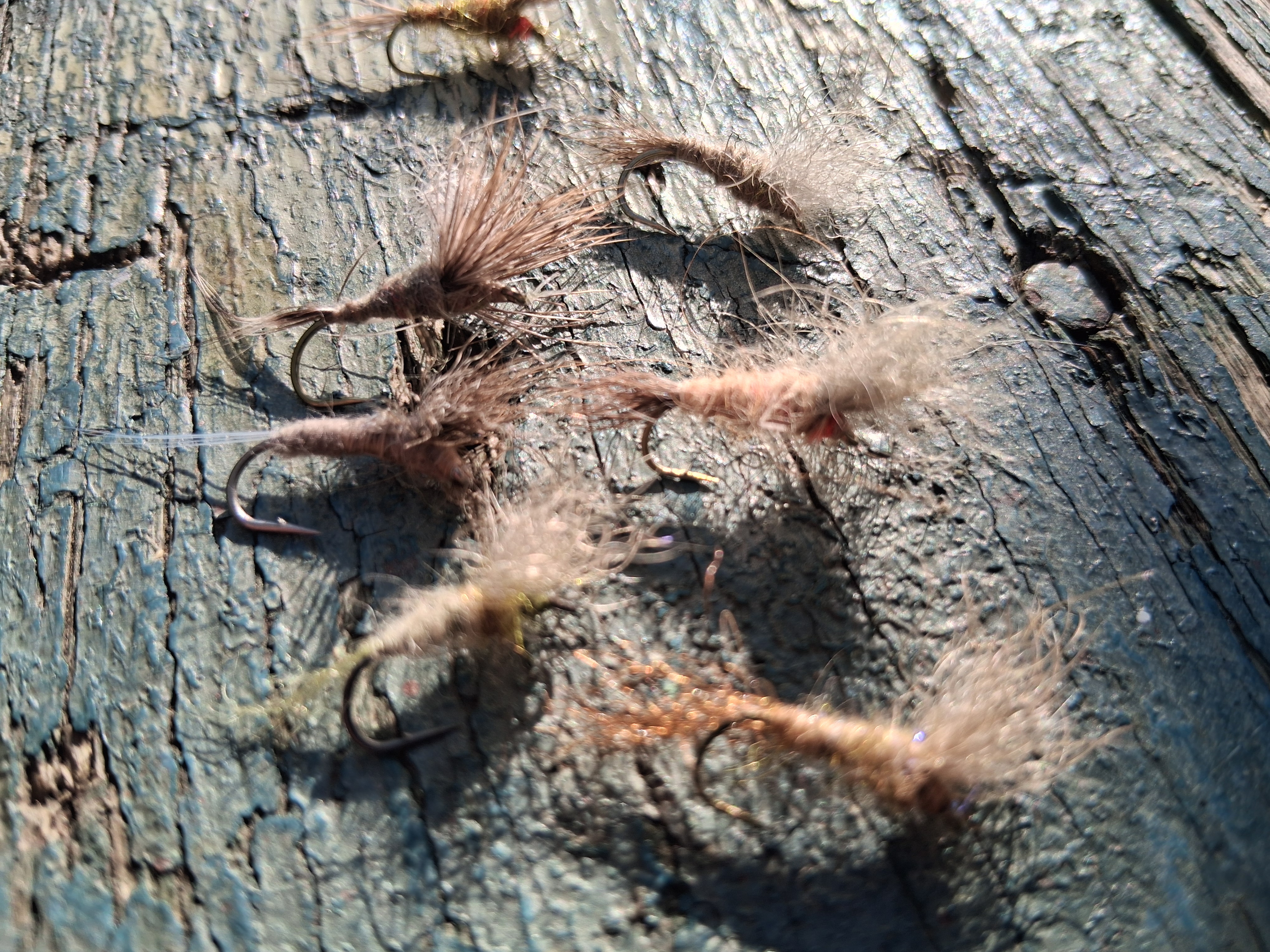
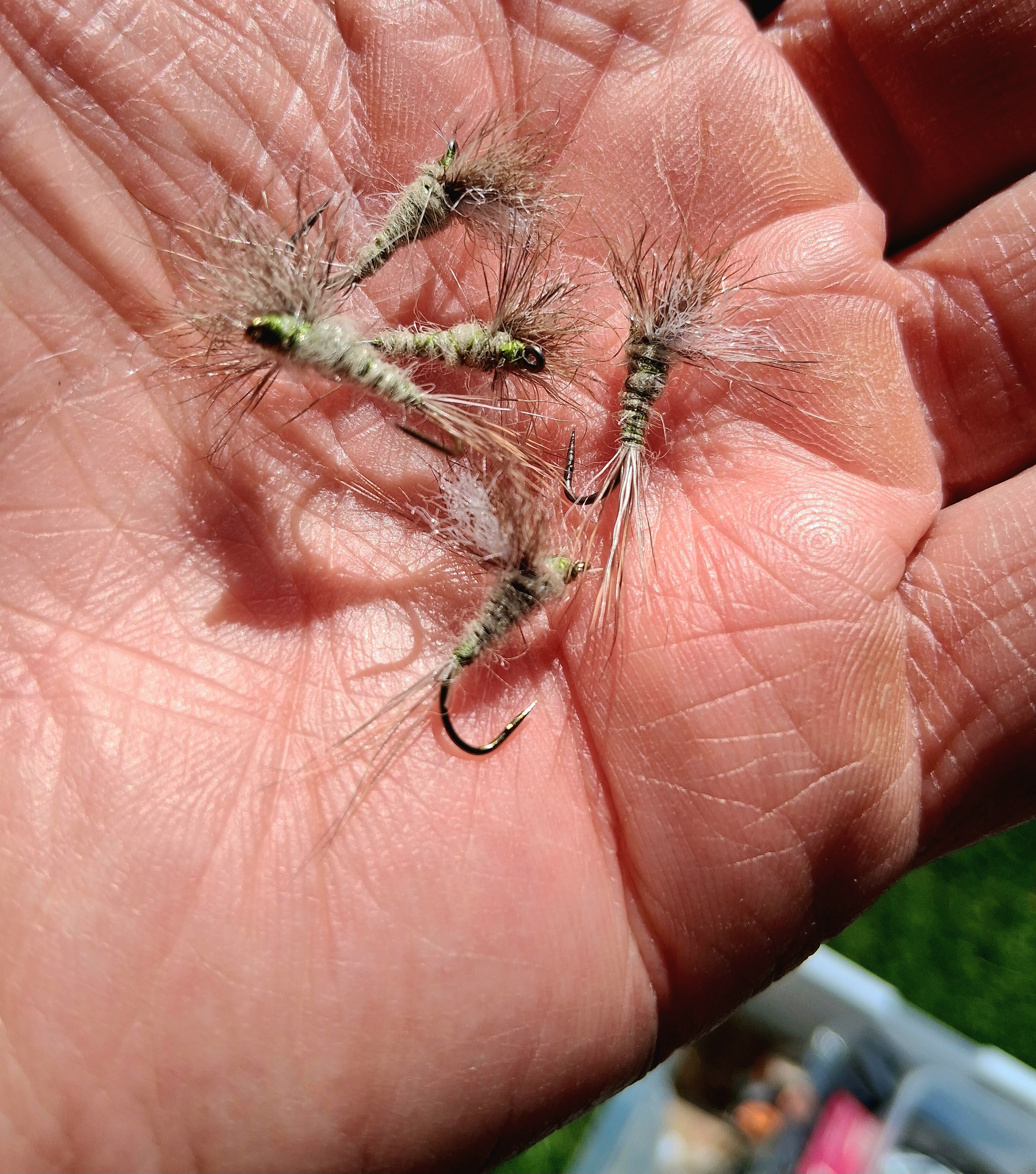
One tailwater had no insects so I went to the other. PMD’s started in the afternoon on the second river and there were some large Caddis flies skittering on the surface. Both hatches were weak but there was just enough activity to get a few decent rising fish. The water was low and clear and the fish concentrated. I caught a couple of decent Brown trout on dry flies. One cooperated for a photo, the other didn’t. Here’s a photo of one and the type of flies I used. One pattern breaks the surface and dangles (emerger/dry). The tuft of white is simply Snowshoe Rabbit to keep the head of the fly afloat so it can be seen when riding in the current/riffles while the body hangs (unseen) below. Instead of rabbit I also tie them with polypropylene, deer hair or CDC. Some people use foam. The other pattern has the hackle clipped on the bottom and therefore it sits or rides low on/in the water. Kind of a Quigley cripple pattern. That’s the inspiration. Both are easy, quick flies to tie.

Opening Day… always special no matter how many you have experienced.