Redfish flies. There are hundreds of shrimp, crab, and baitfish patterns out there. Not unlike the immense number and variety of trout flies. They come in all sizes, shapes and colors. There are many regional differences and preferences. There are different patterns for murky water vs clear. Fly design can also vary based on the type of bottom the Redfish are feeding on such as Oyster beds; thick dense grass; sparse shoal grass; mud; pothole areas; sand. And there are different head weights depending on the depth an angler will be fishing. Some patterns have rubber legs to create action, some realistic eyes, and so on…
On past trips to a Redfish destination I copied some of the fly patterns used in the region I was visiting. On my most recent trip, I had patterns that I have had some success with and confidence in.
fly tying fur
Redfish generally aren’t know to be picky eaters… that is until they are. I’ve had many follow my moving fly until I had no more fly line to strip and was down to my leader. I’m sure clear water feeding fish are harder to dupe than fish in cloudy, muddy water; same with calm vs choppy water; light conditions can be a factor such as the quality of the light (brightness) or the angle of the Sun’s rays; food presence or lack of can influence their feeding behavior; as does Tide phase and water temperature, which can change quickly in the ultra shallow bay that I fish; competition from other Redfish (those searching and feeding in schools vs solitary fish) influence feeding; as well as innumerable other factors that I’m simply not aware of. It’s all part of Nature’s mystery. And it’s the mystery that keeps you coming back.
On rare calm mornings in the super transparent shallows slow moving Redfish and stationary feeders (head down) often wouldn’t eat my larger flies or bulky ones. Small and sparse flies seemed best along with soft landings and careful wading. Some of those fish seemed focused on small crabs.
walking back from the bay
When I had to deal with high wind on the flats (most days) I found patterns tied with silly legs often got fouled on the hook. On those days I clipped the legs off. Shrimp eyes that I made with melted monofilament and that protruded slightly from the shrimp body and hook bend, often picked up shoal grass filaments/ blades dislodged from the shallows by fierce wind even though most flies that I tied had preventative weed guards. So I nipped the eyes off too. A fly with a weed strand (s) hitch-hiking on it was always rejected.
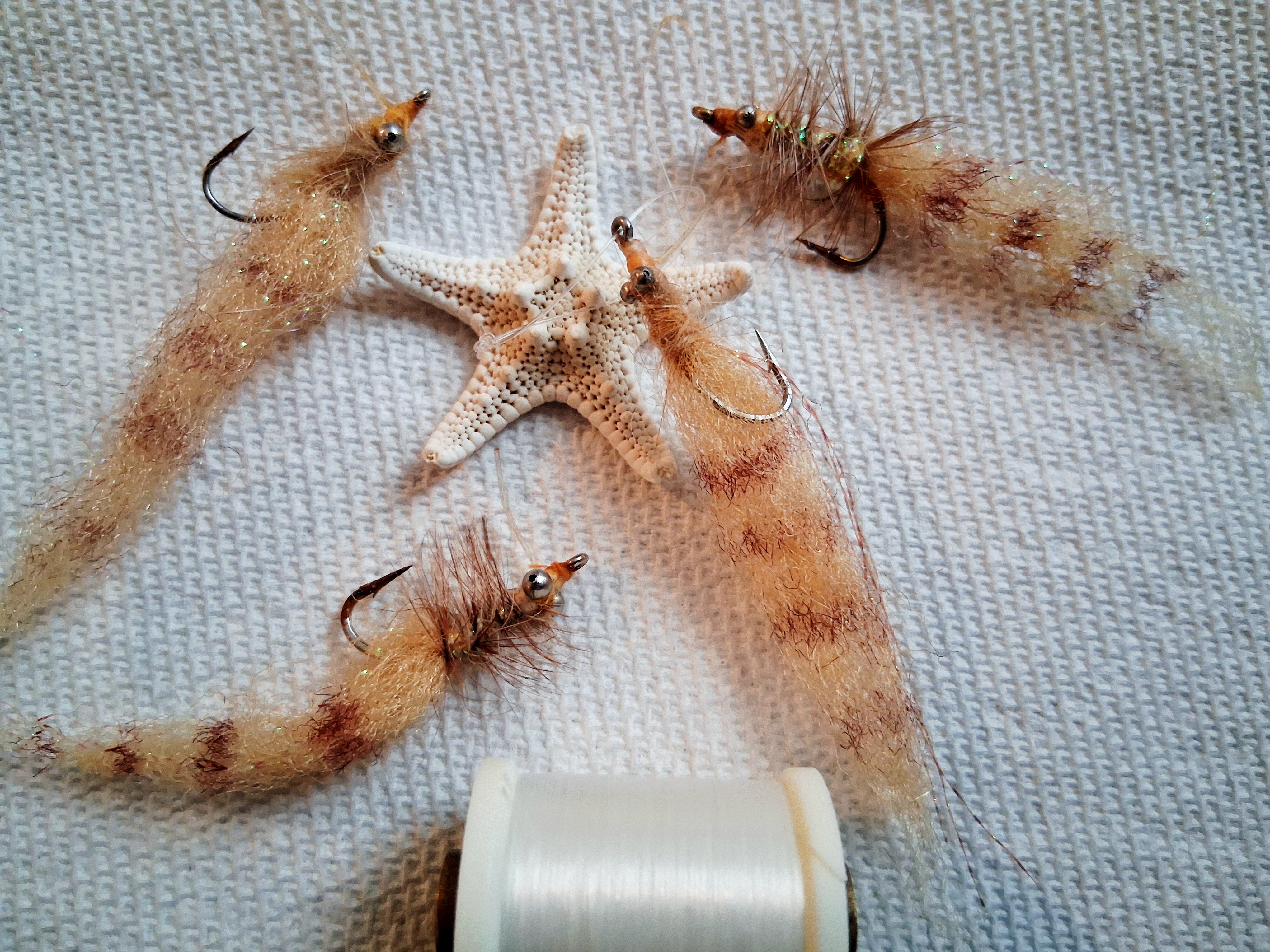
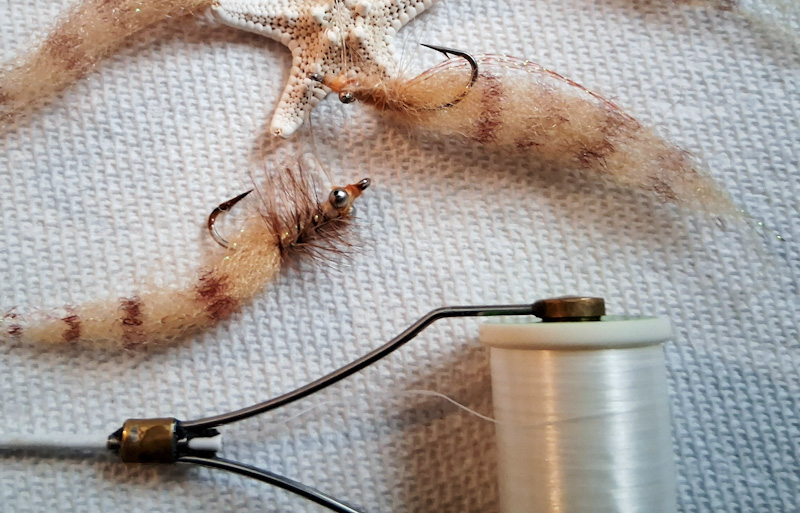
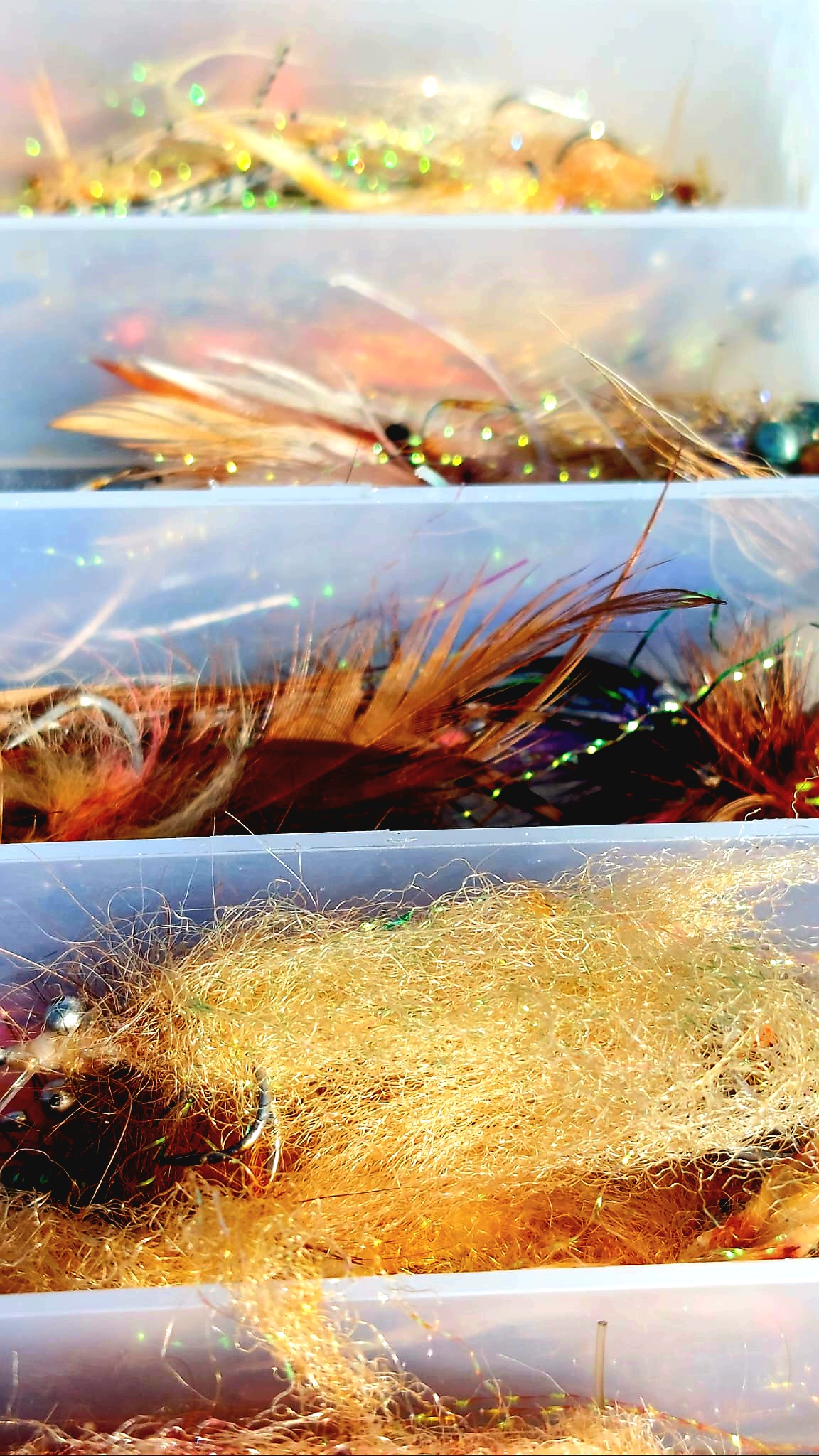
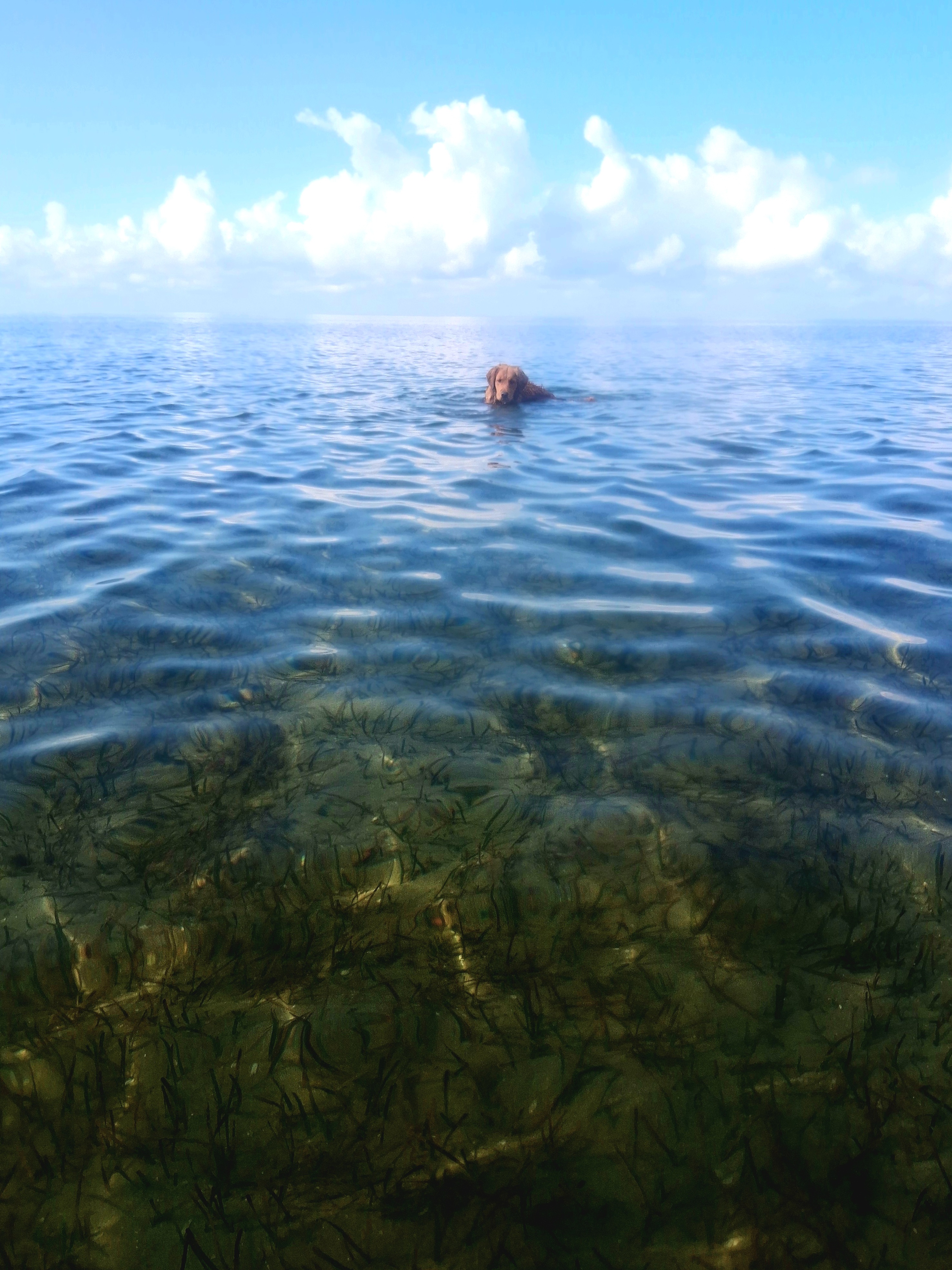
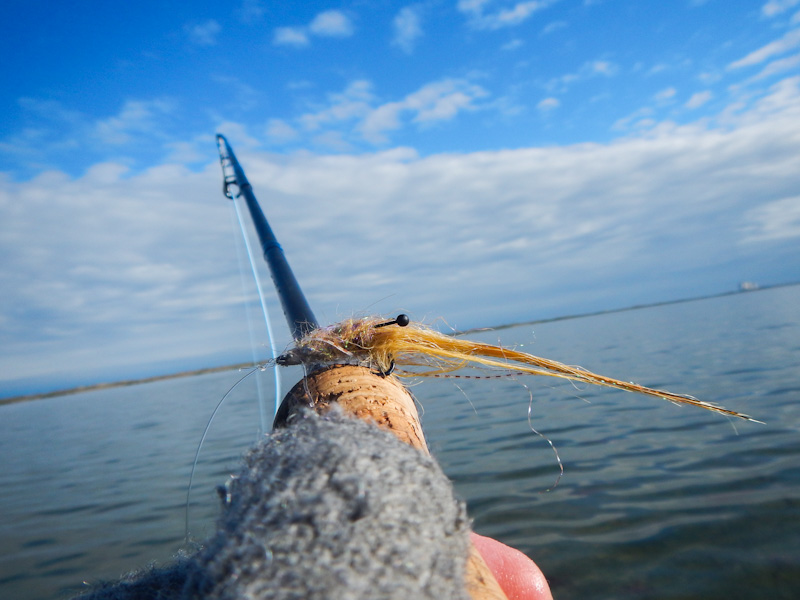
So as the trip progressed I kept my tied shrimp patterns simple. Most of the fish I caught were on two similar flies (see photo): Both had a body of EP fibers, color tan, which in the water look translucent as advertised by the product maker ( EP: Enrico Puglisi Flies); a few strands of crystal flash were added; some Sharpie drawn bars on the side of the EP body; at the head of the fly behind the hook eye I dubbed in some golden retriever hair (endless supply from Harper) to match the EP body; then some light weight as I was fishing knee to thigh deep water such as small or medium bead chain, sometimes a large size in wind ruffled water. On a couple of flies I wrapped some hackle at the head (Seaducer style) of the fly to try and soften the landing in the shallows. I don’t know if it really made a difference but I caught some of my best Reds on it. Both are very easy, quick ties. Just what you want when you are on the road/ travelling.
I HIKE THE SAND DUNES TOWARDS THE BAY IN THE MORNINGS with a fly rod, fly box, some leader material, nippers and a knapsack with lunch and water for the day, and most importantly optimism. My equipment is basic. It’s pretty much the same as when I fish for trout except the rod I’m using is slightly heavier, a saltwater 7 weight. I’m on a barrier island along the Gulf of Mexico. I’m here searching for Redfish on the clear sandy saltwater flats on the bayside of the island. I’m fishing on foot in knee deep water. It’s my 6th trip to the region.
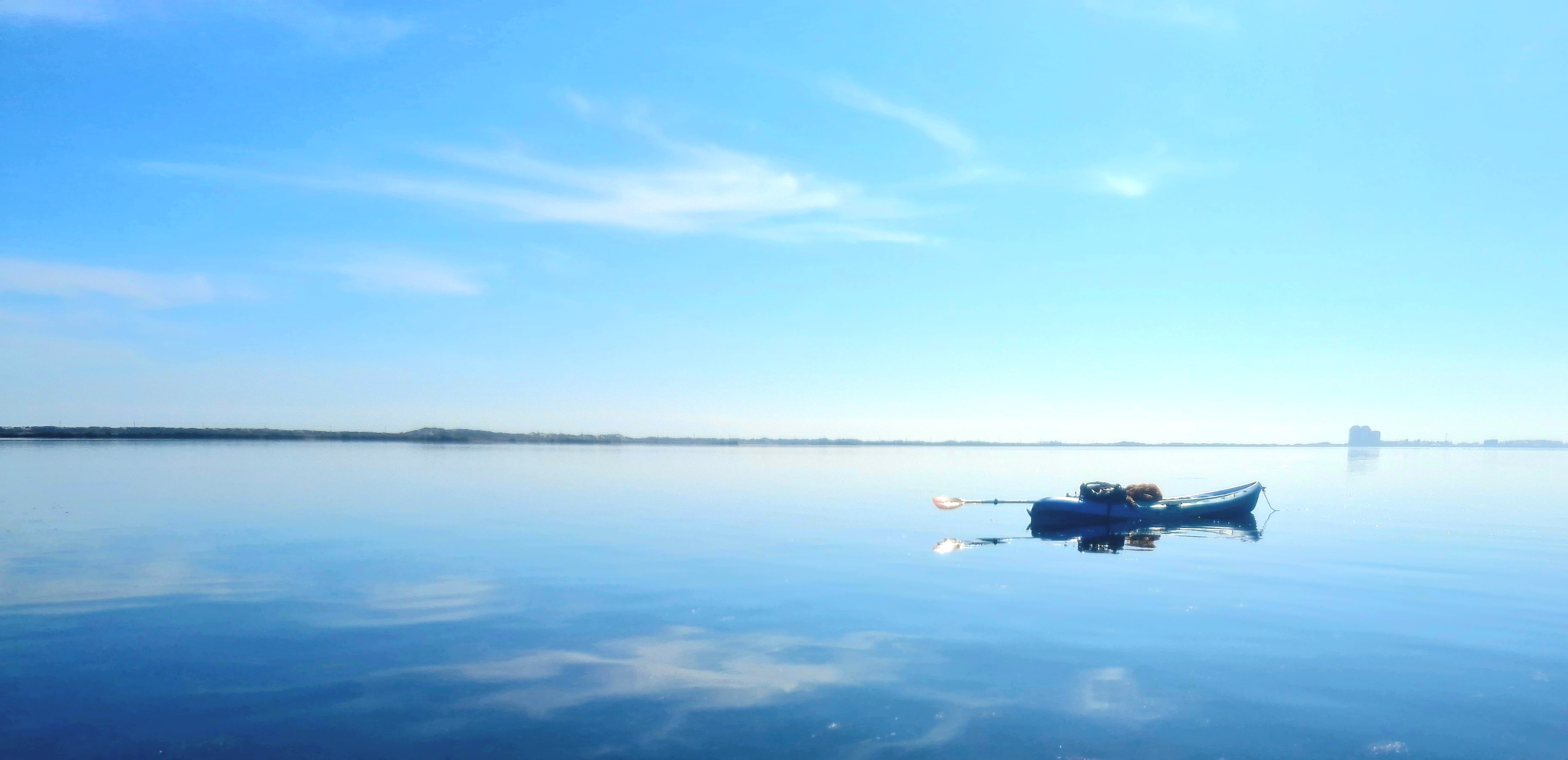
used a kayak (home base) on occasion while wading
It’s Winter Solstice time and daylight is brief. The sun arcs low, close to the horizon. With the short days angling time and opportunity pass quickly. Most days are warm but conditions are often variable. With the short-lived days and fickle maritime weather it can make sight-fishing challenging, especially when it gets cloudy and windy. The worst is when a big blow from the north blasts through.
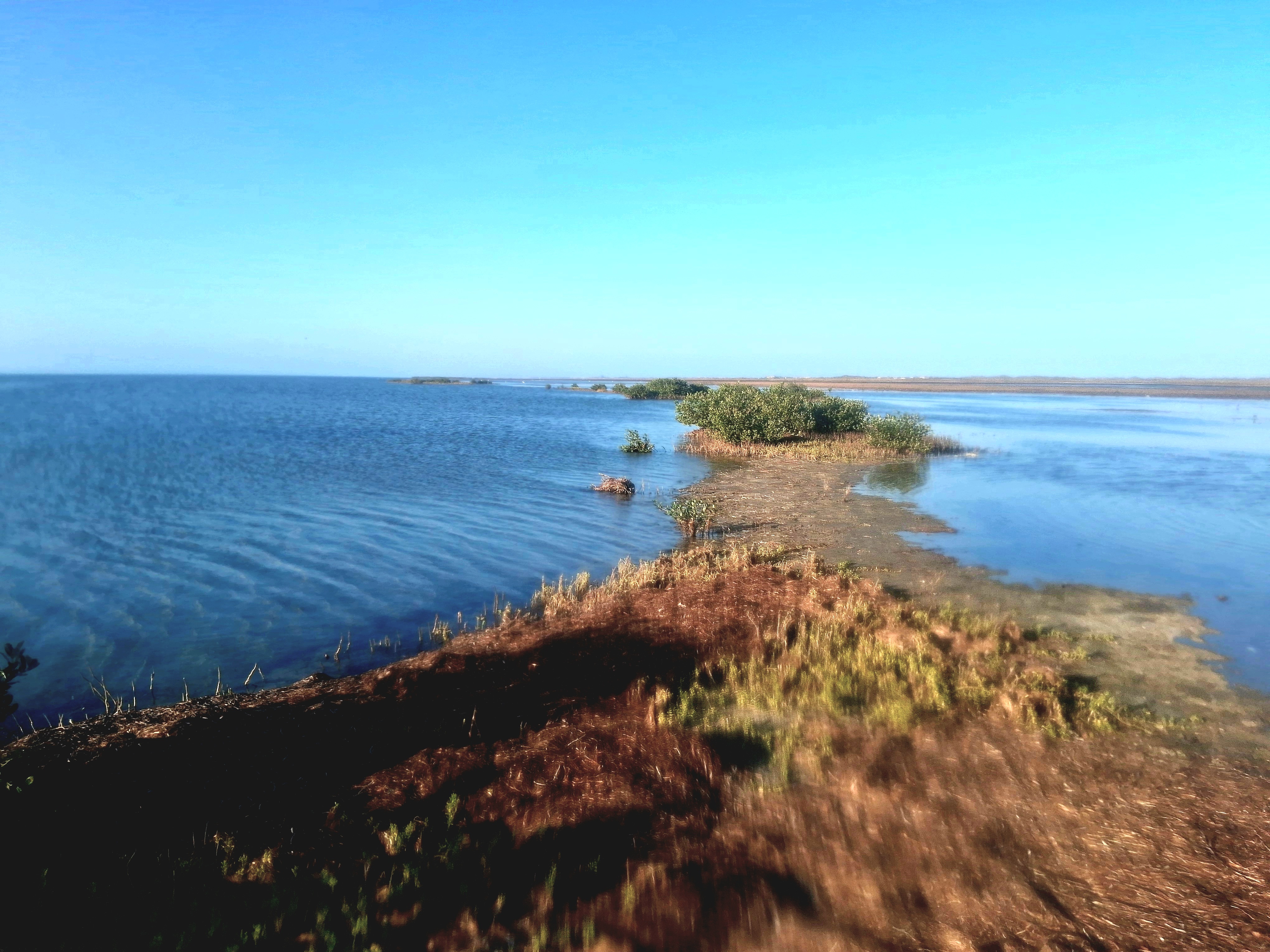
my foot path to horizon
The best time to spot a Redfish on the sand flats is when the light is good and when there is a significant tide. Moving water, in or out, always seems good. With it Sheepshead, Sea Trout and baitfish like Mullet, Lady fish and small Silverside minnows show up. And Redfish often tag along. That’s when the sand flats come alive. That’s when pelicans and other bird life begin working the water. That’s when you see Mullet jumping. That’s when you see schools of Ladyfish pushing water, their sides reflecting the sunlight on those rare perfect days. That’s when the bay is full of activity and energy. That’s when you want to be out there wading the knee deep water, hopefully standing right in the middle of it all. Stand still long enough and you end up becoming part of it, and with the sun fully illuminating the shallows you can see everything. It’s like looking into an aquarium and just as mesmerizing. That’s when you have your best chance to spot a good one.
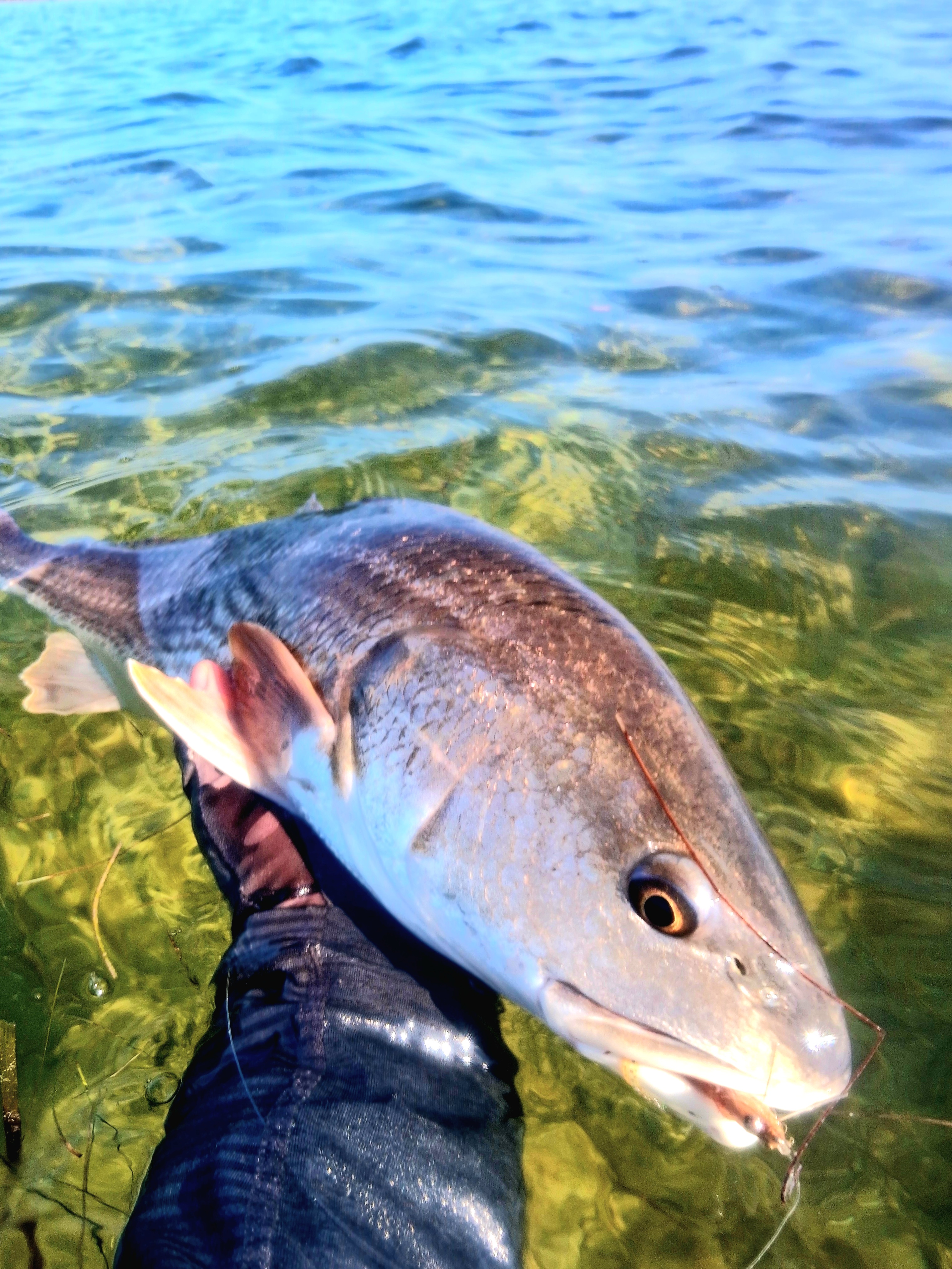
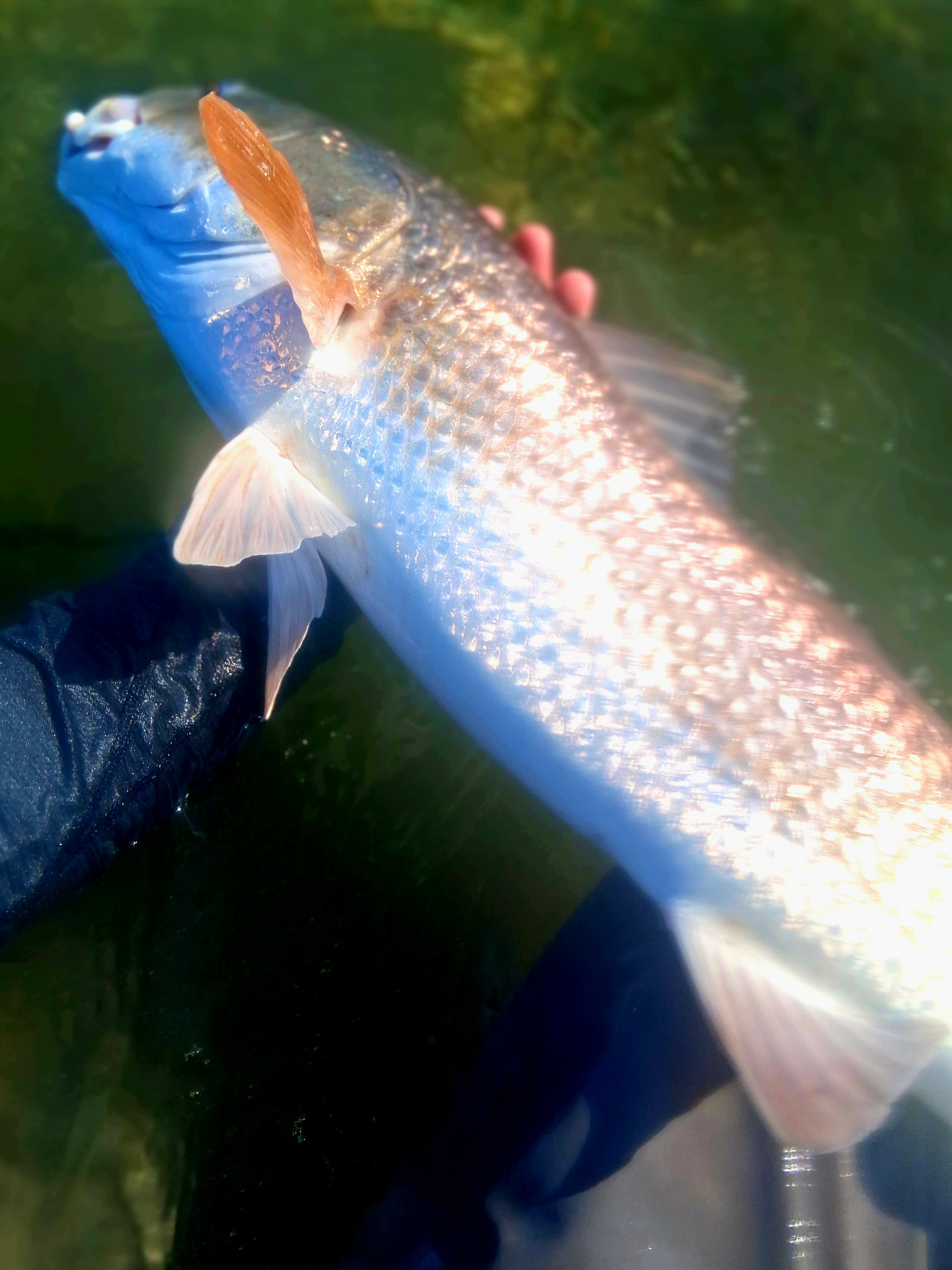
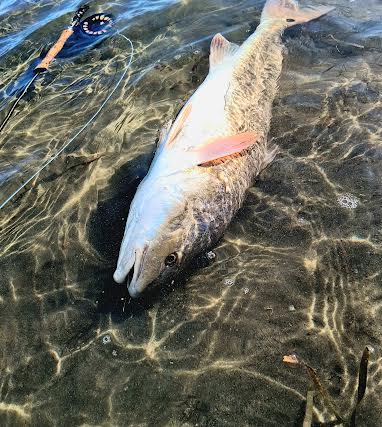
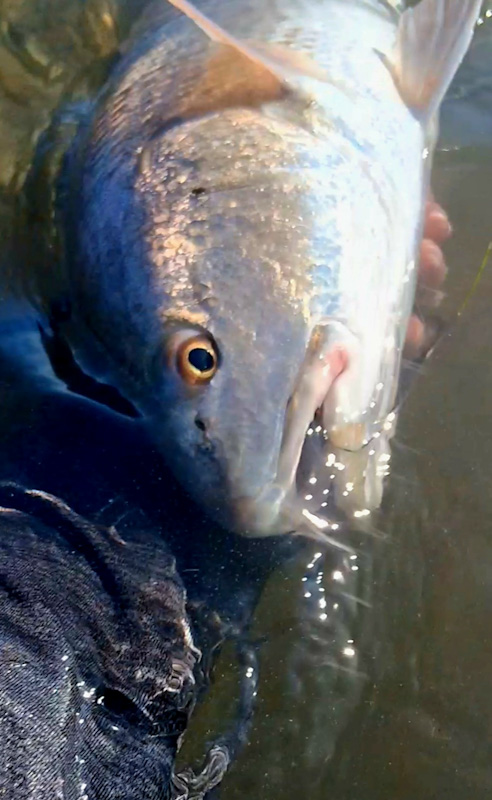
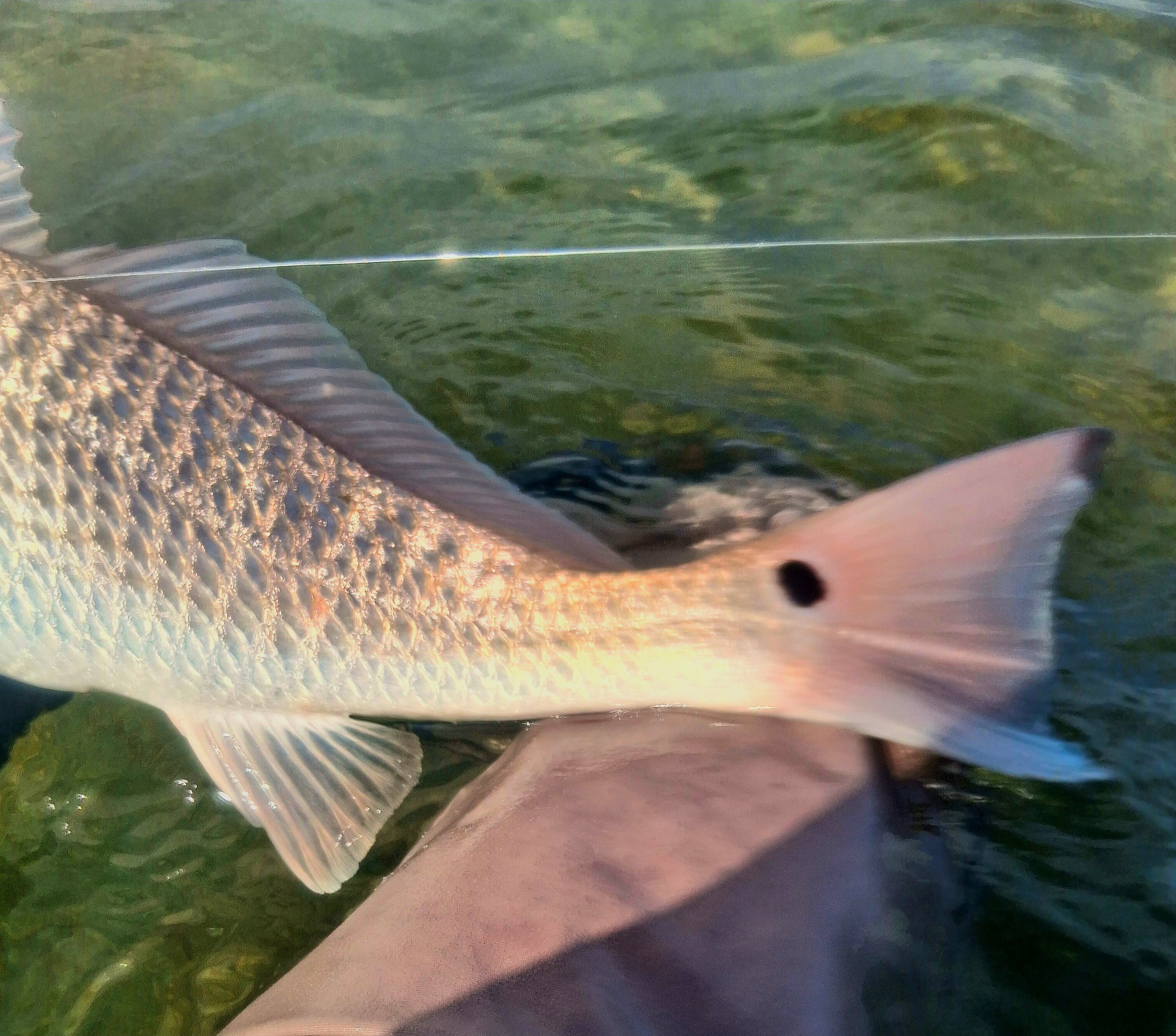
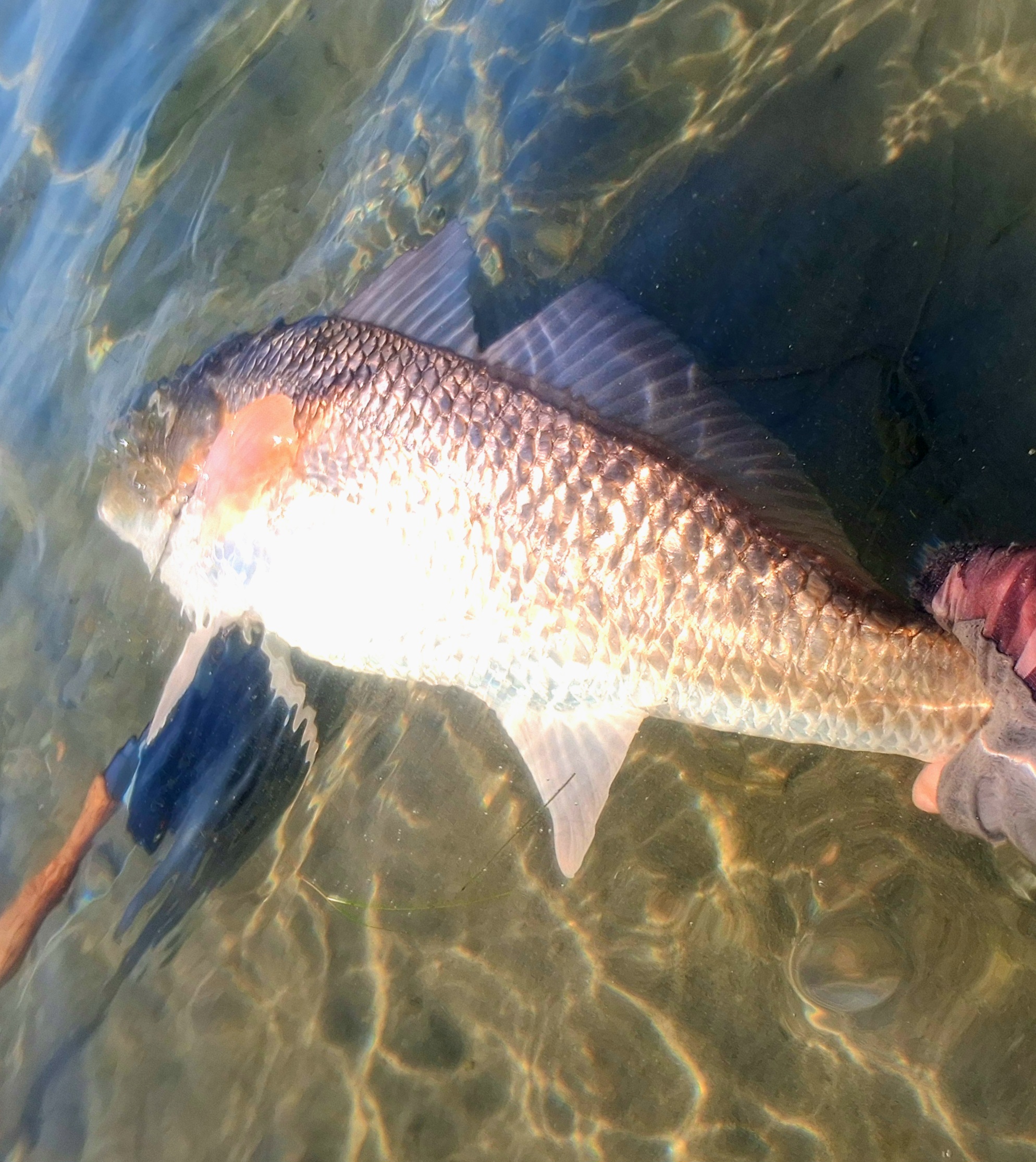
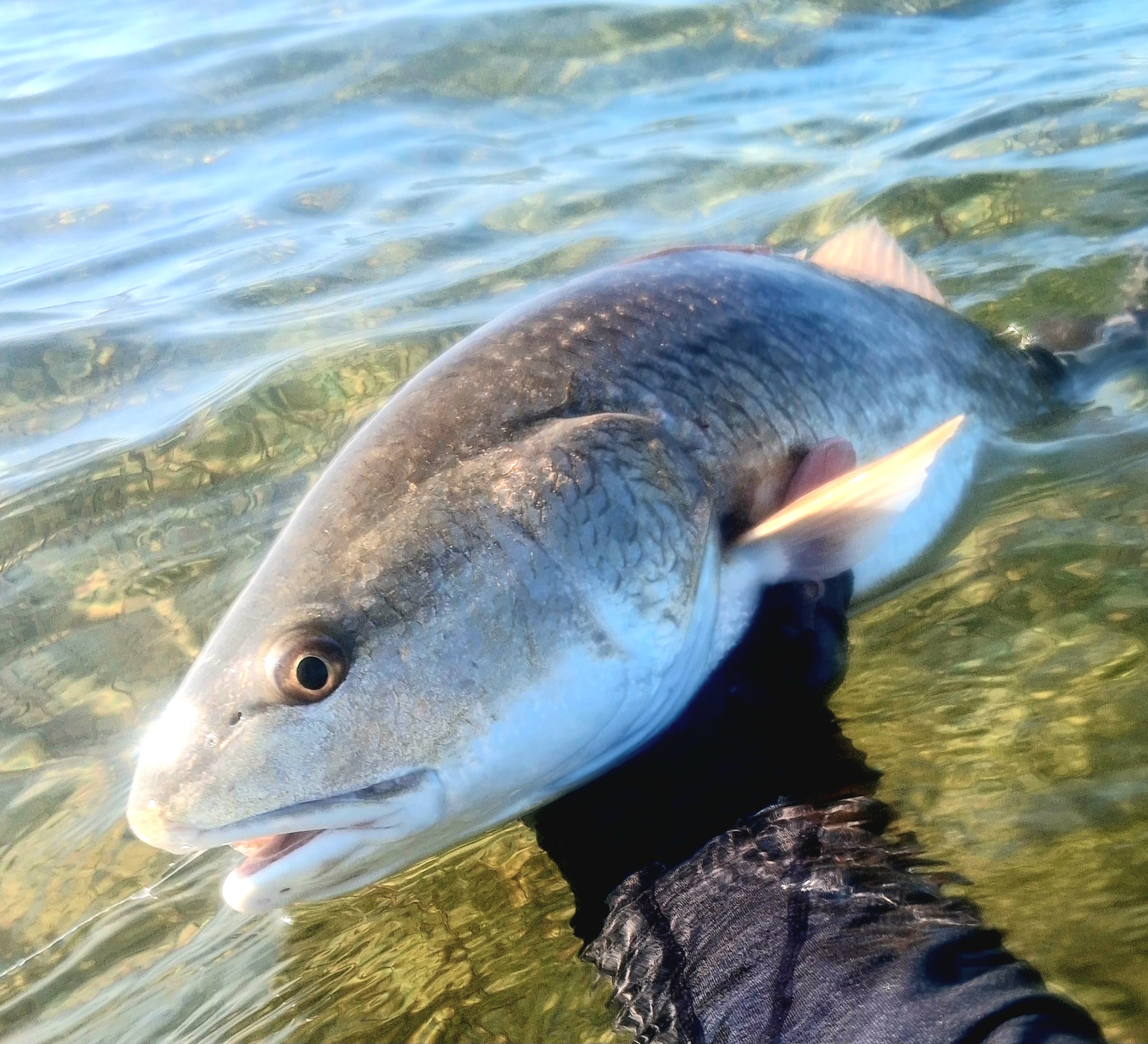
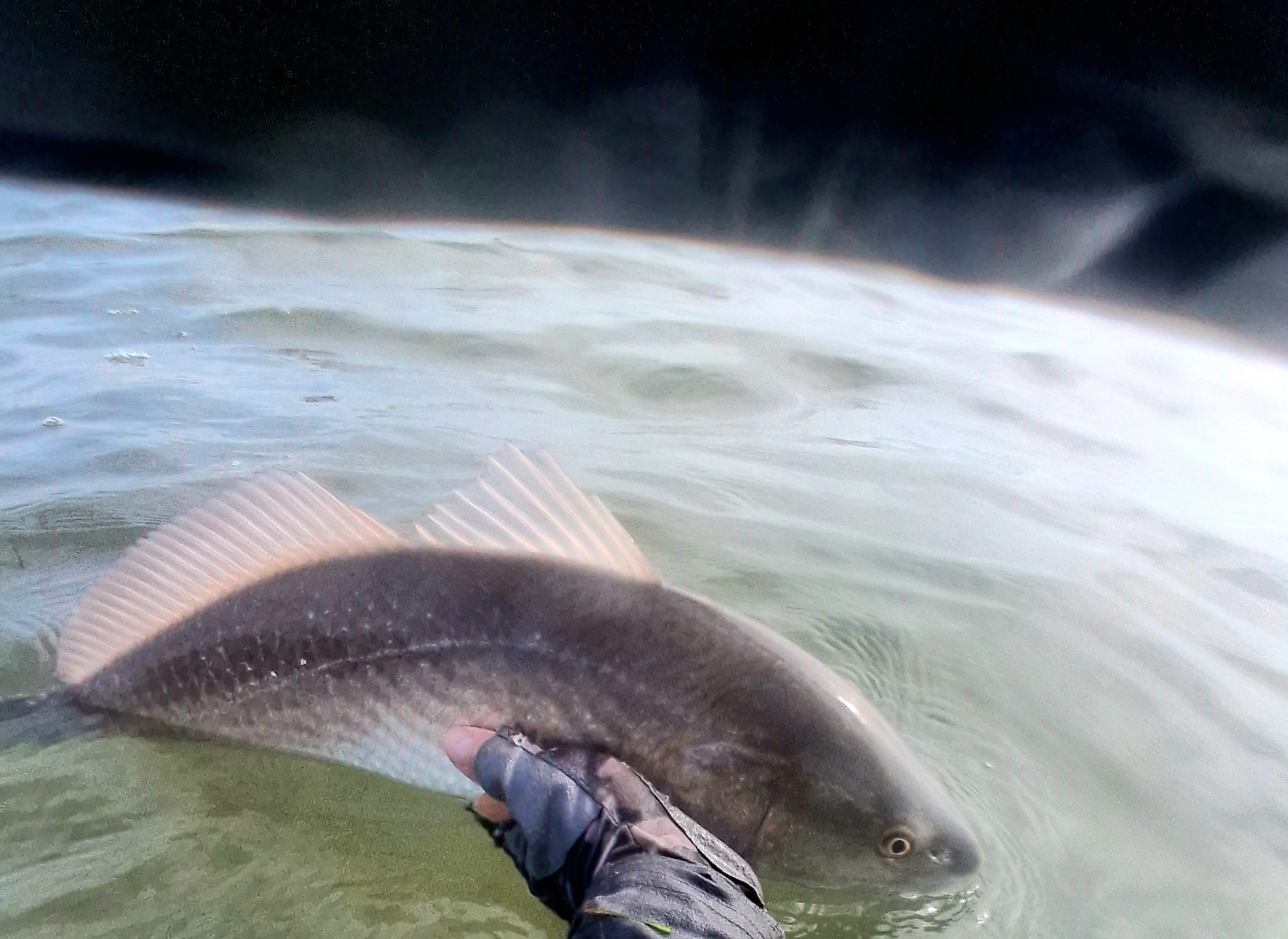
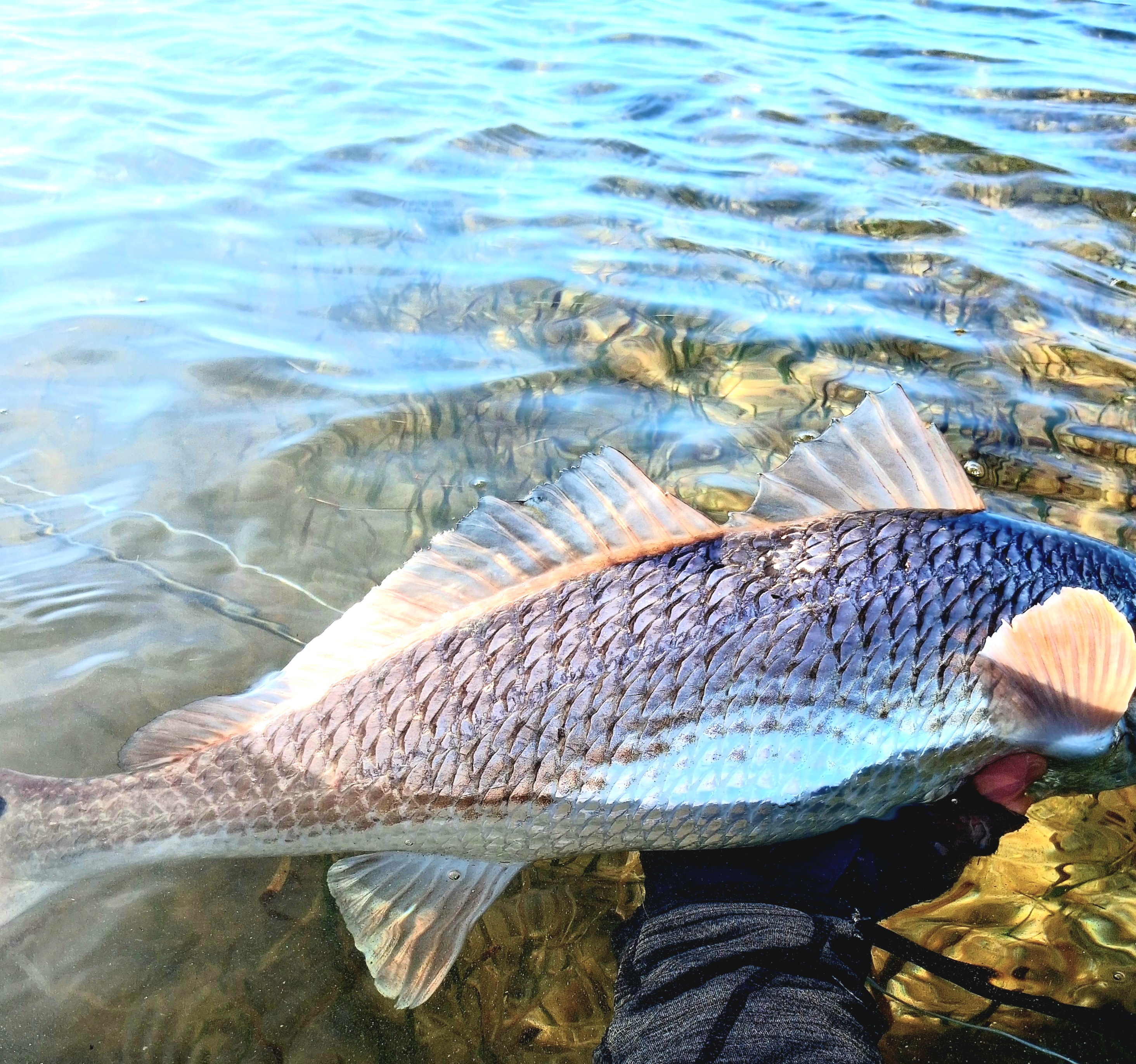
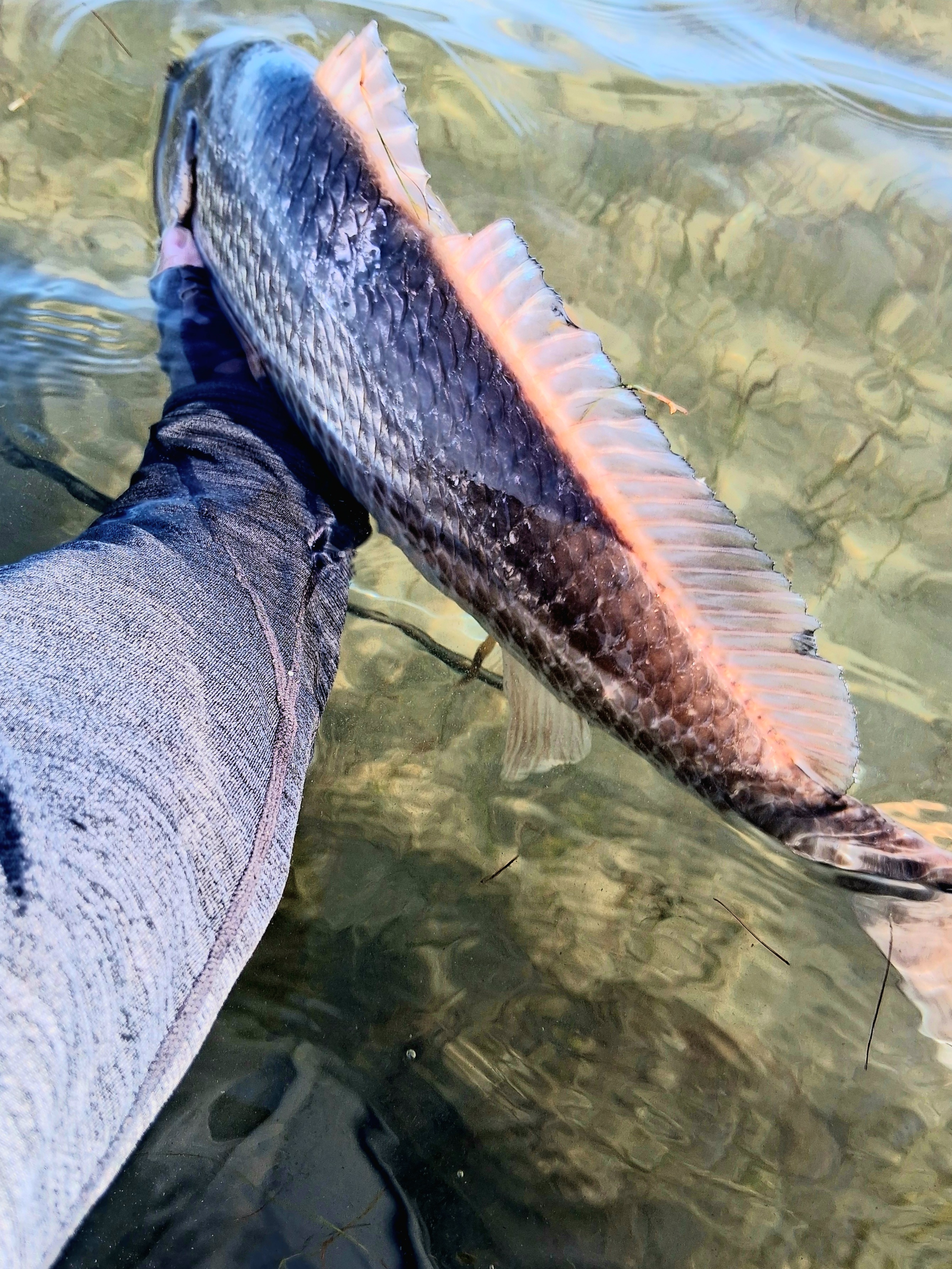
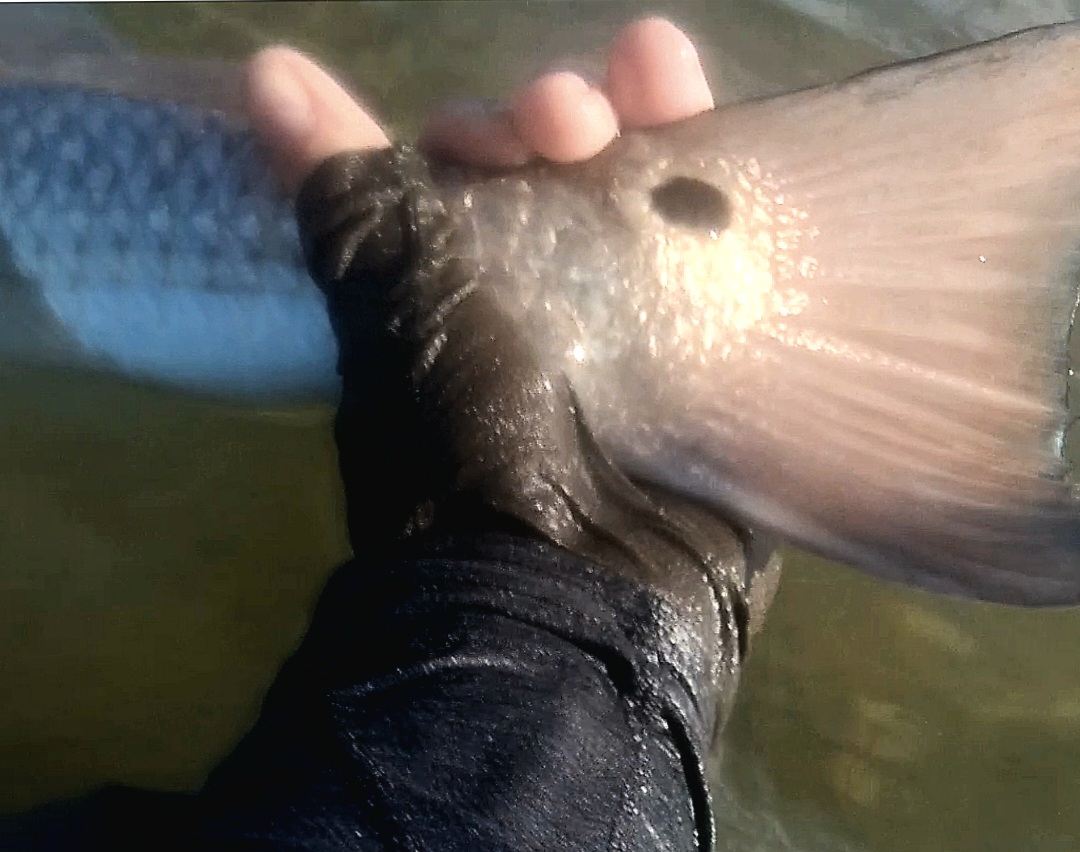
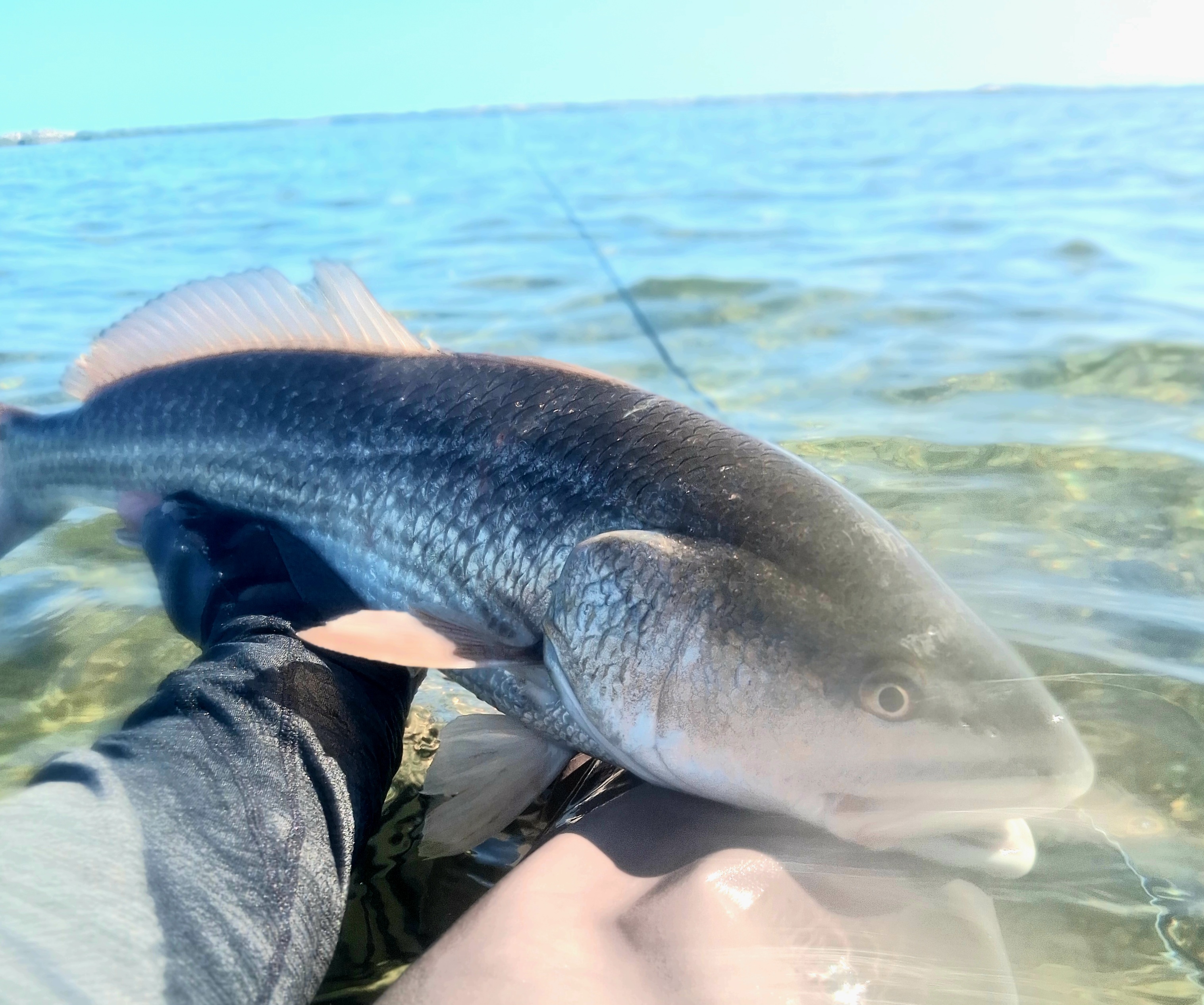
redfish
When Redfish do make an appearance they are usually on the move. When they prowl the shallows they are always alert; always hypervigilant. Spot one and you’ve got to be quick and fairly accurate with your cast. You’ve just seconds to react. And you rarely get a second chance with the same fish on the flats. Make a casting mistake and it is gone. If it sees you it’s Adios!
As quickly as fish come in on the sand flats they can disappear. Sometimes they don’t show-up but that’s rare. There are usually a few that pass through at some point in the day. It’s a big bay that I’m fishing and fish move around and there are no guarantees that they will visit the area that I choose to wade. Successful sight-fishing here is a commitment. It’s always a challenge. You have to put in your time and stay focused and alert when searching. Concentration is essential. Spotting fish in a variety of conditions is a skill. Like anything, you get better at it the more you do it. You have to believe the Reds are out there and that at some point they will come in to feed on the crustaceans and small baitfish that inhabit the sand flats. I know that if keep showing-up, I will cross paths…
photo by r dewey
hiking to the bay
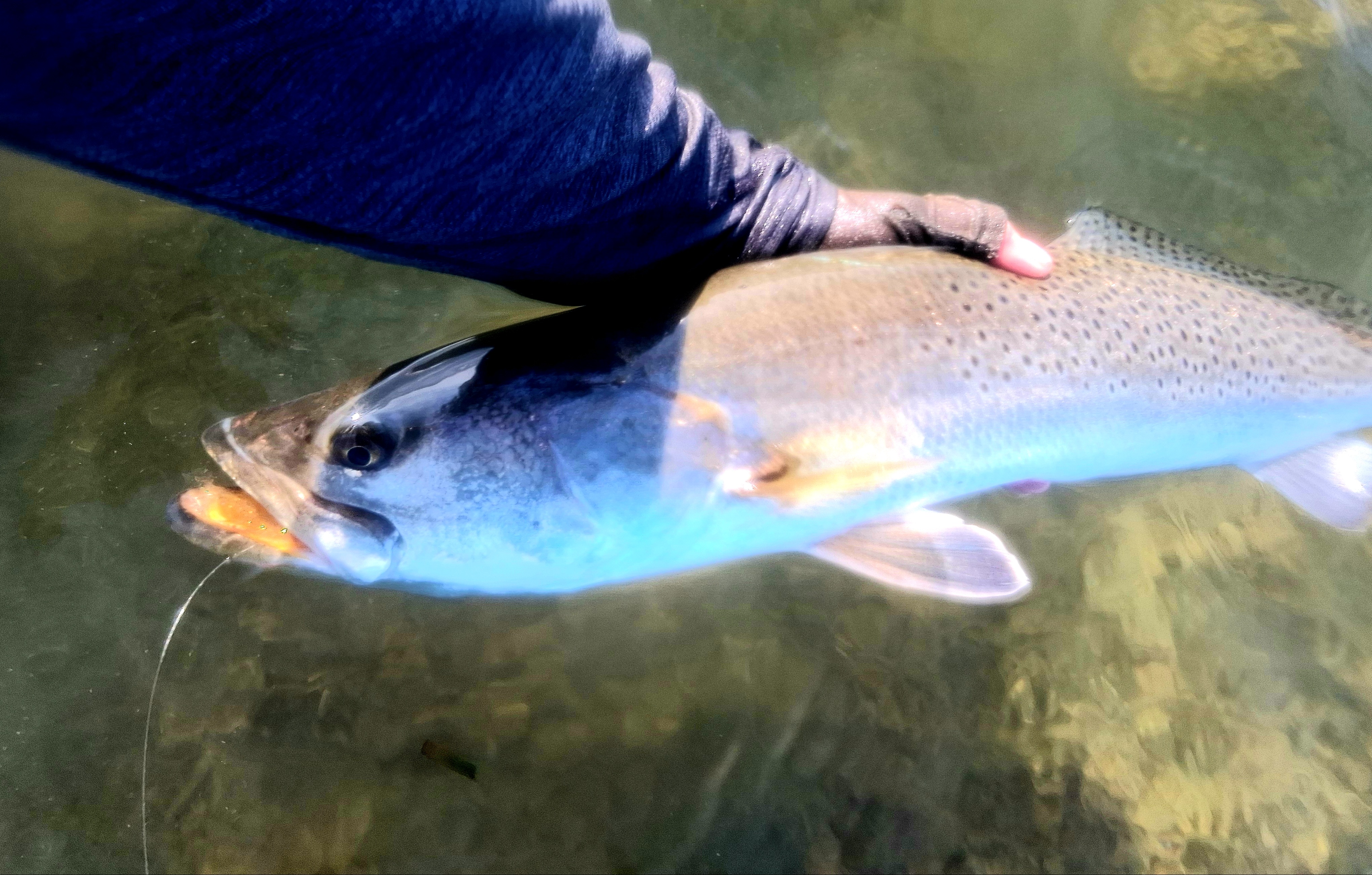
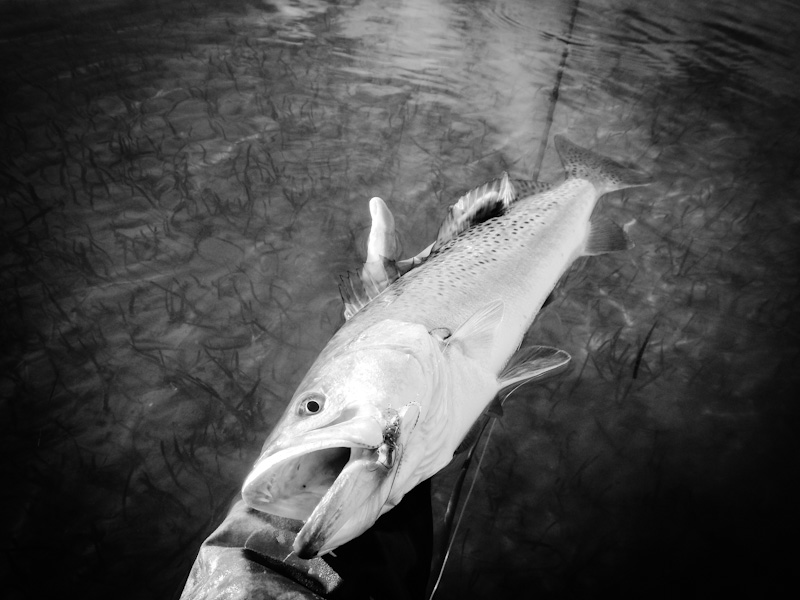
sea (speckled) trout
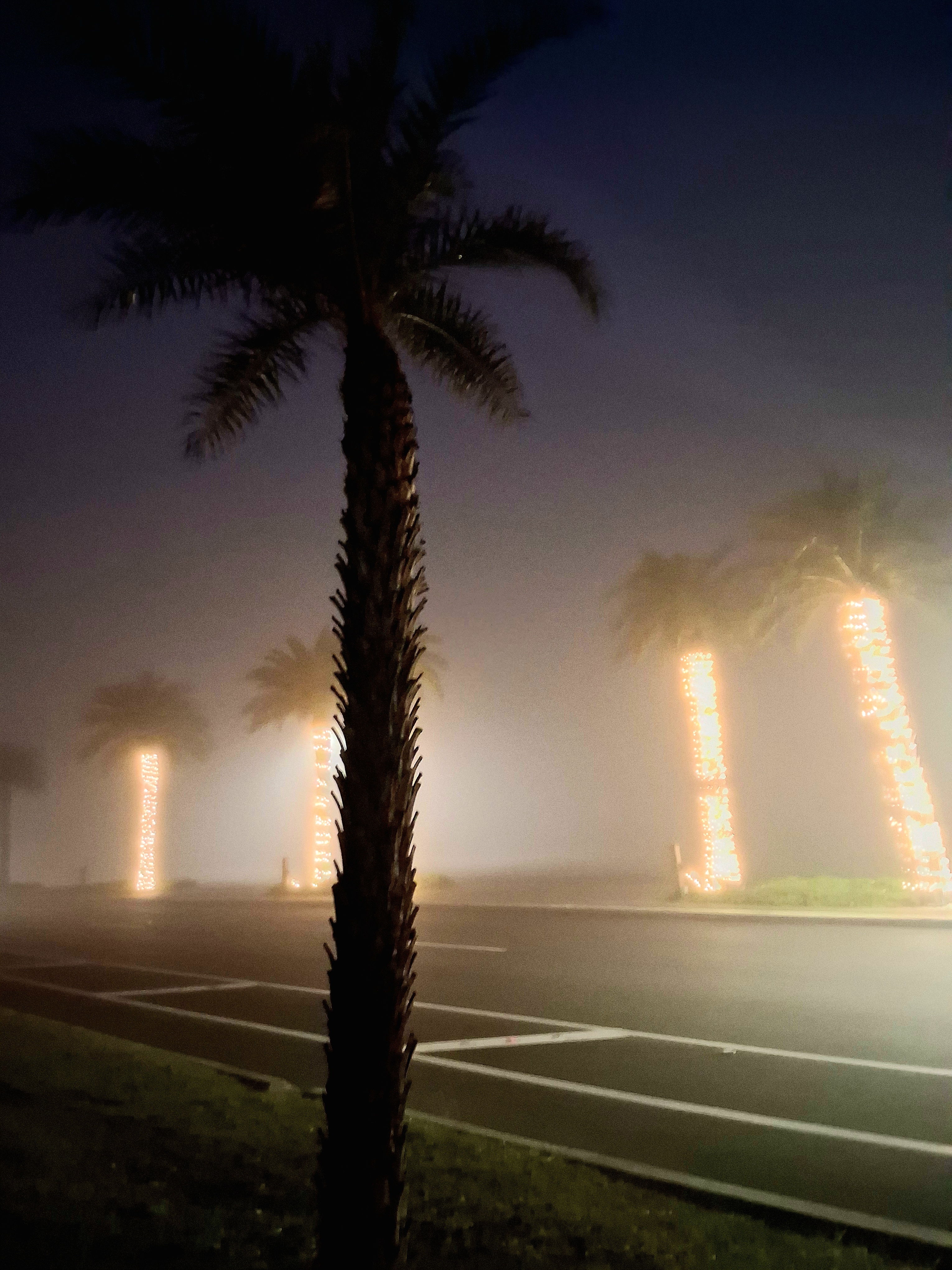
early morning high humidity
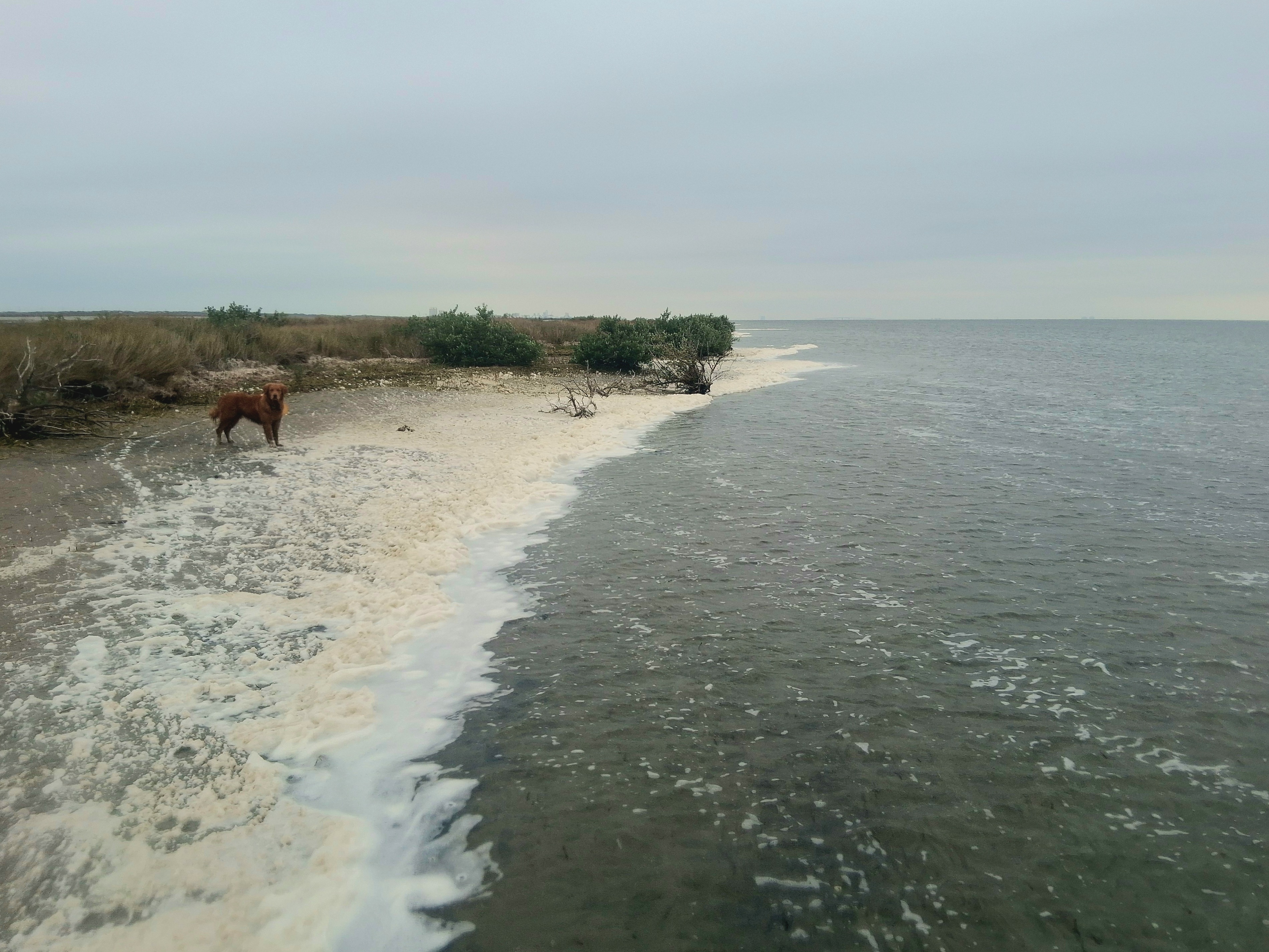
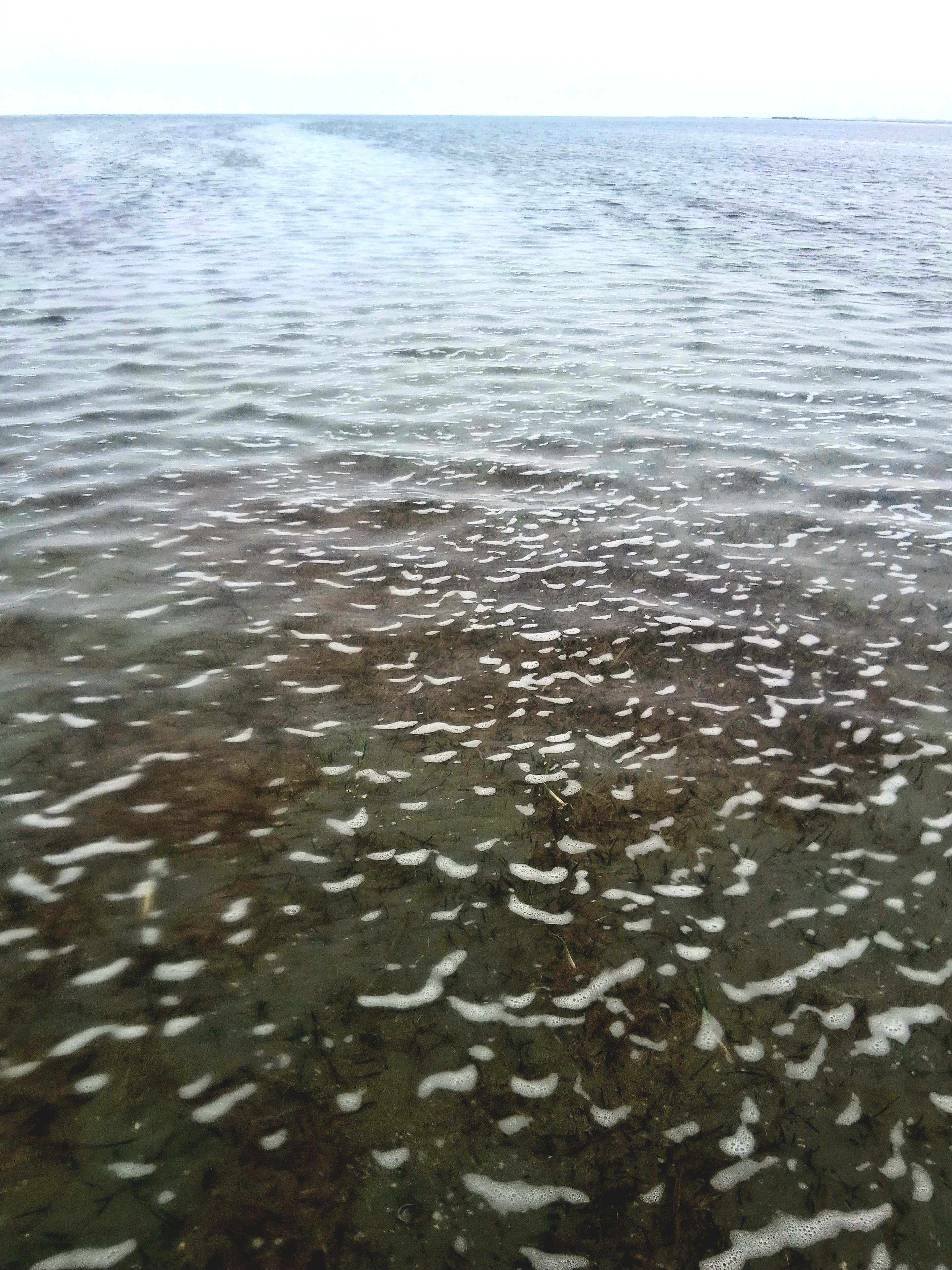
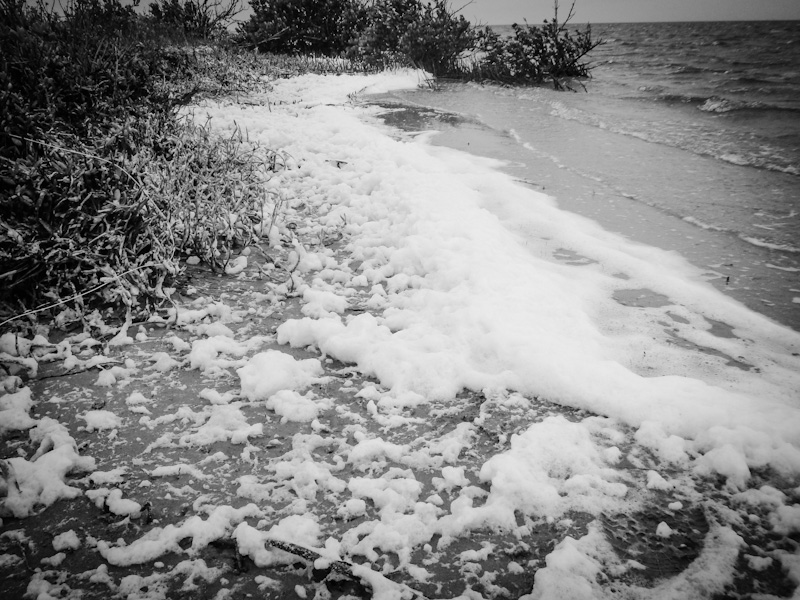
wind foam
challenging sight fishing conditions
wind foam blocking my search
fly box
rare perfect sight-fishing morning
harper
Postscript
Photographing fish alone with my phone (in a plastic waterproof sleeve, high humidity) while standing in water several hundred yards out in a windy bay is always challenging and with many images the clarity is not always the best.
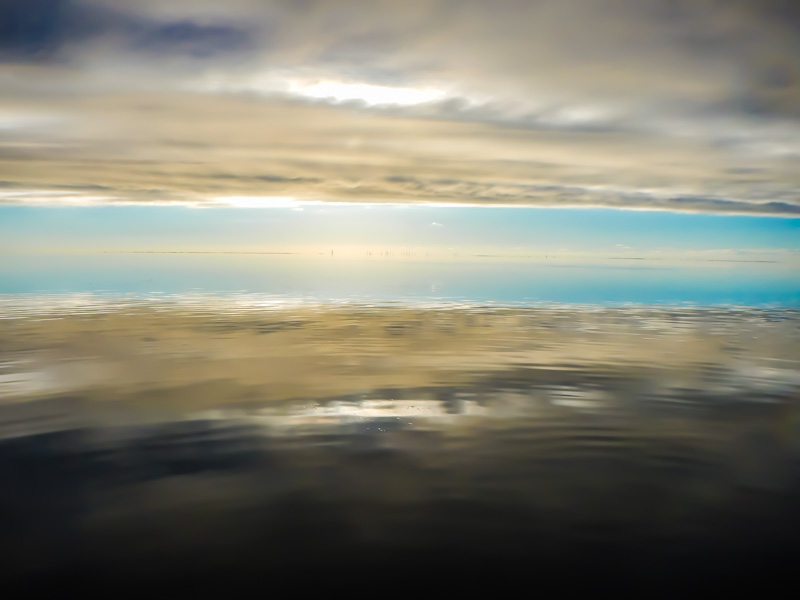
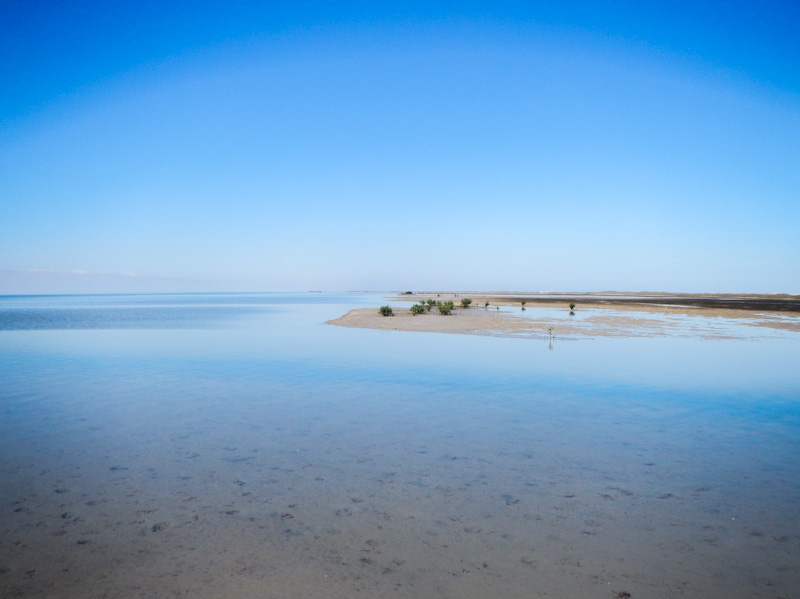
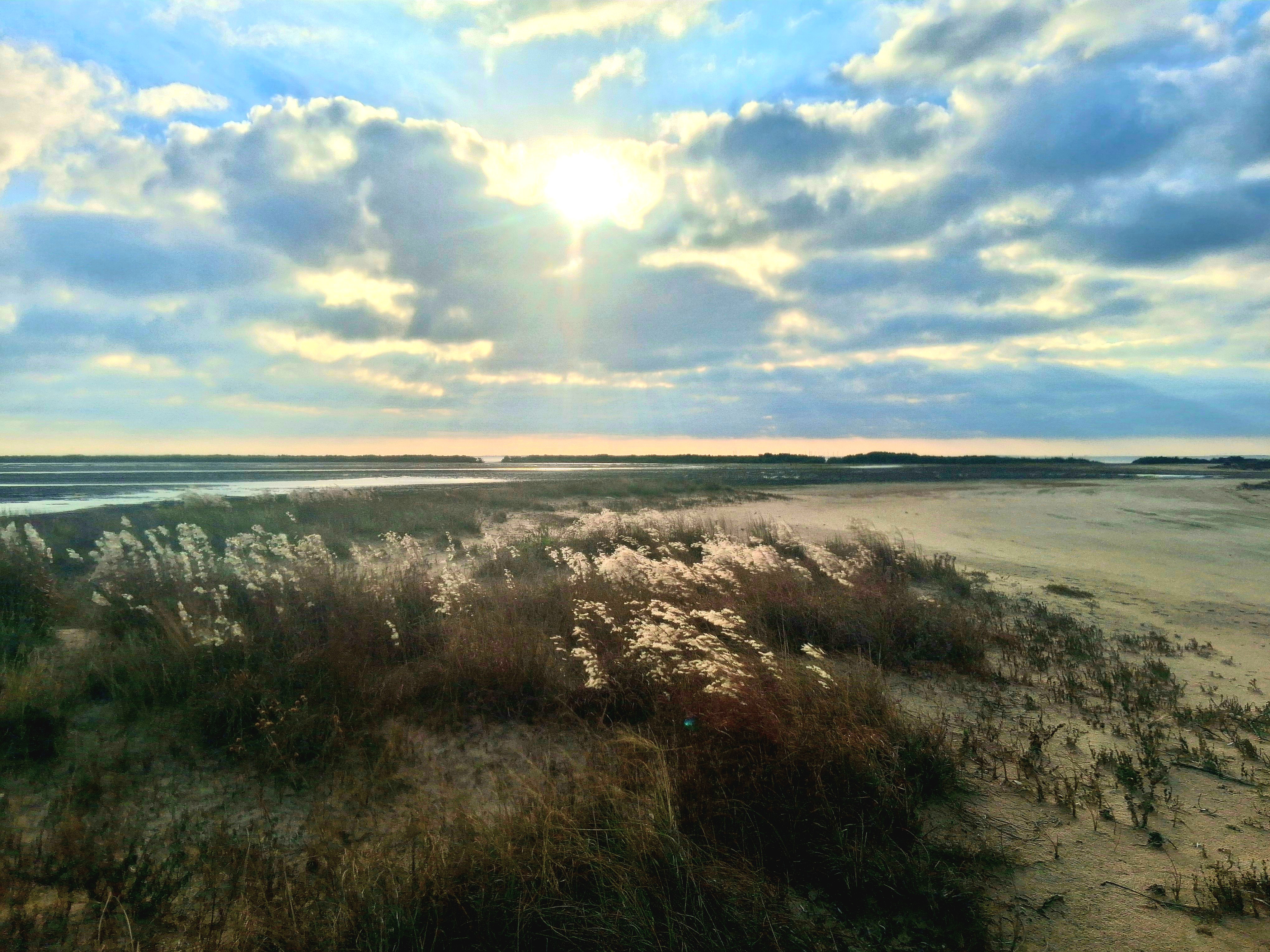
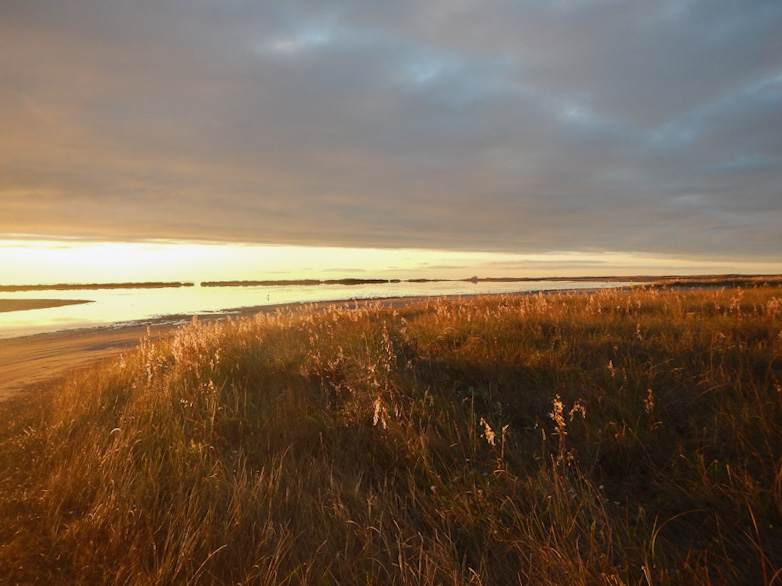
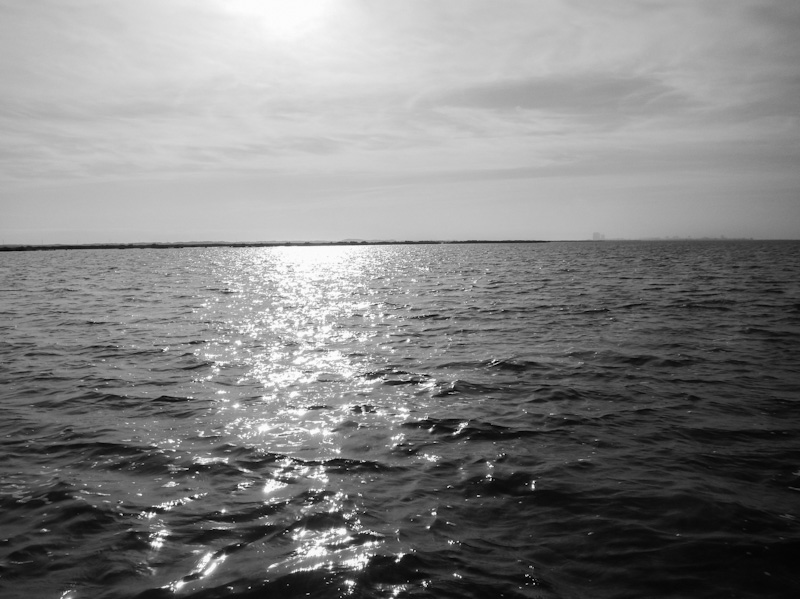
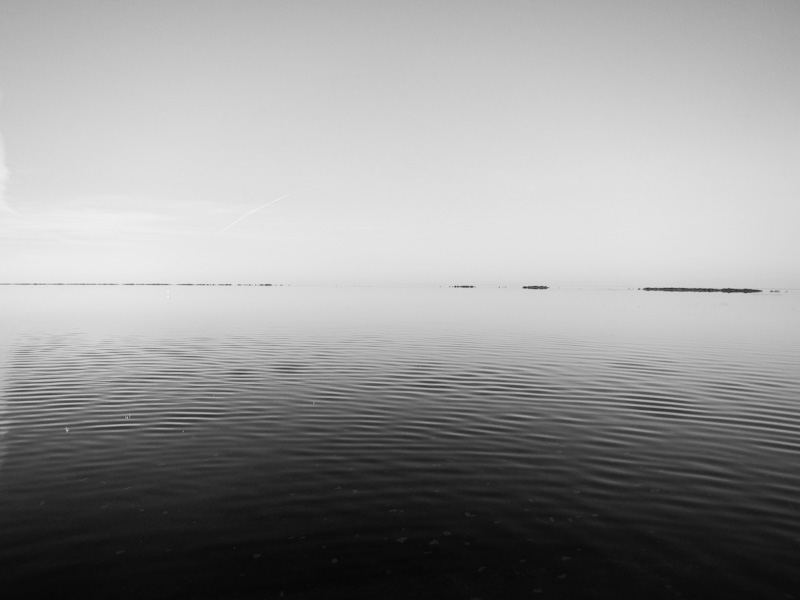
Out on the Laguna, cloud reflection, shoreline in distance, middle of photo
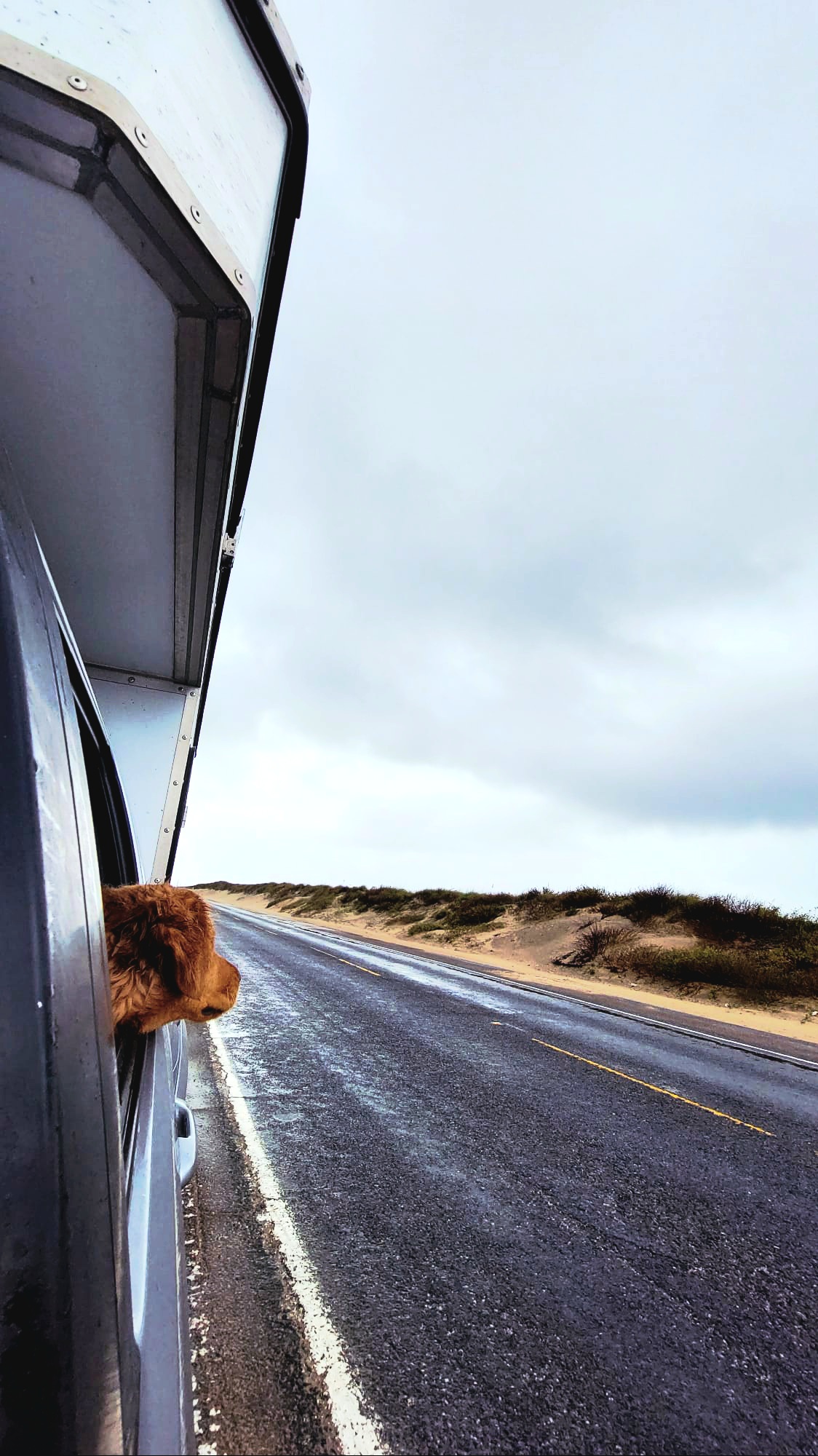
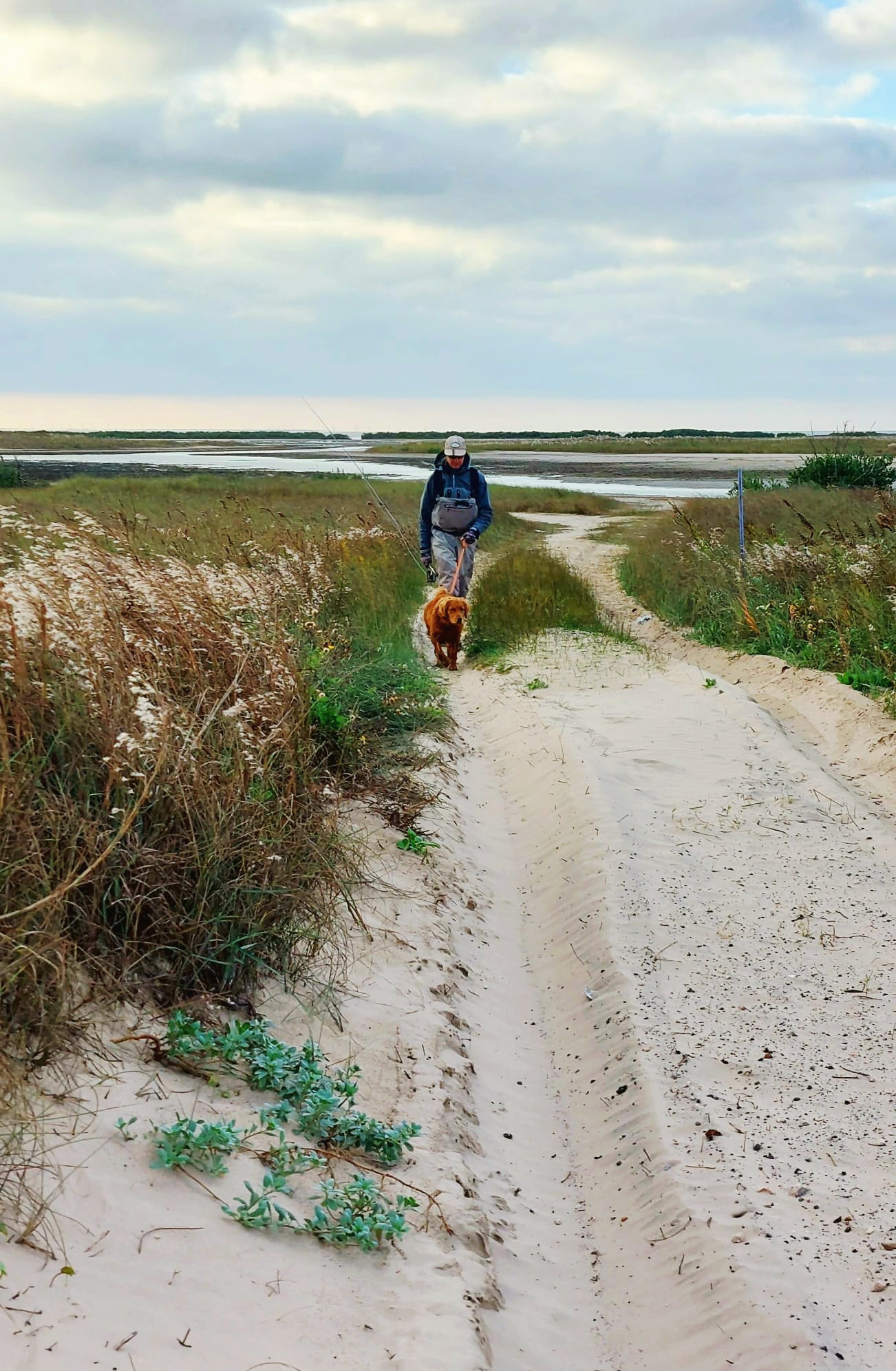
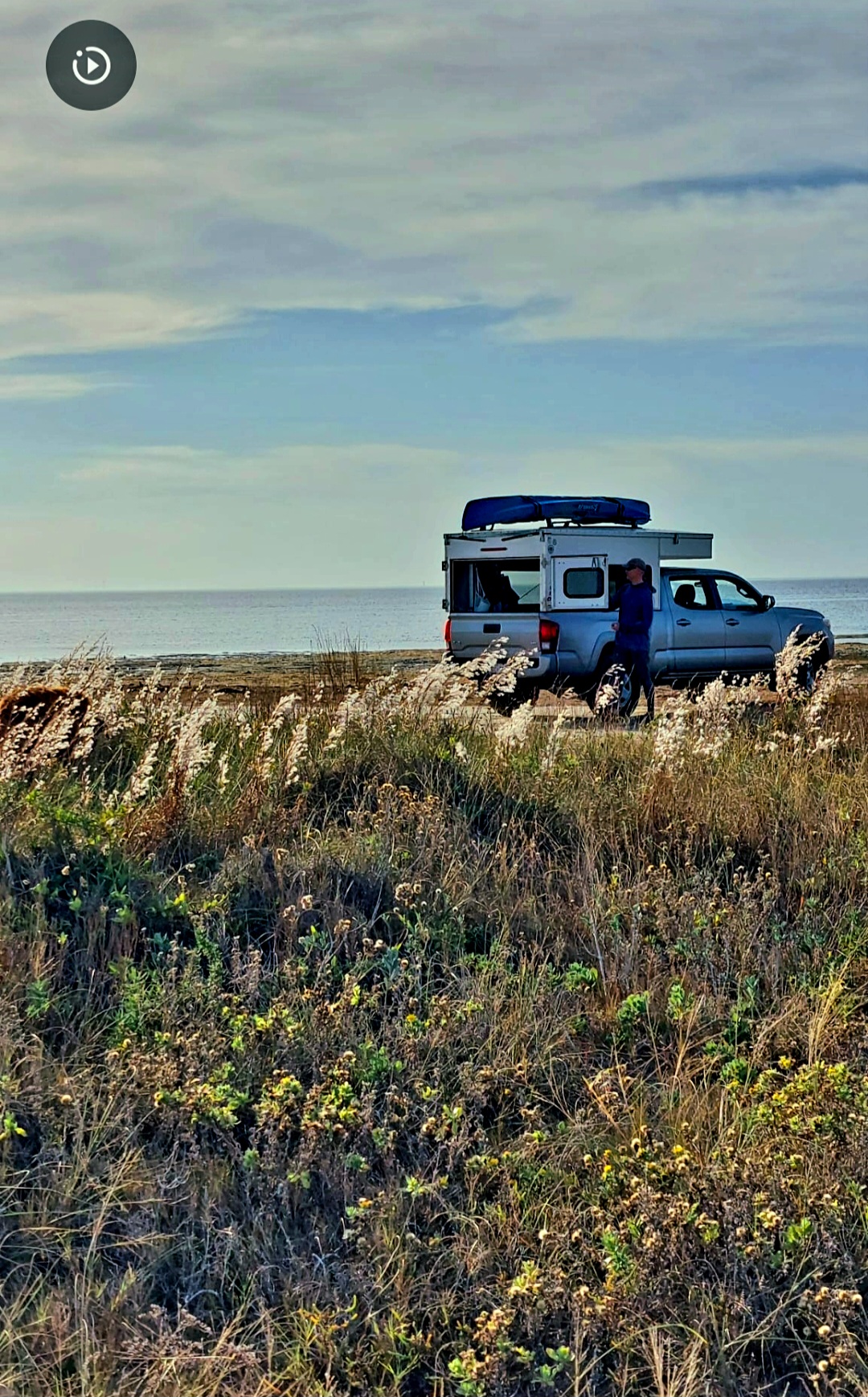
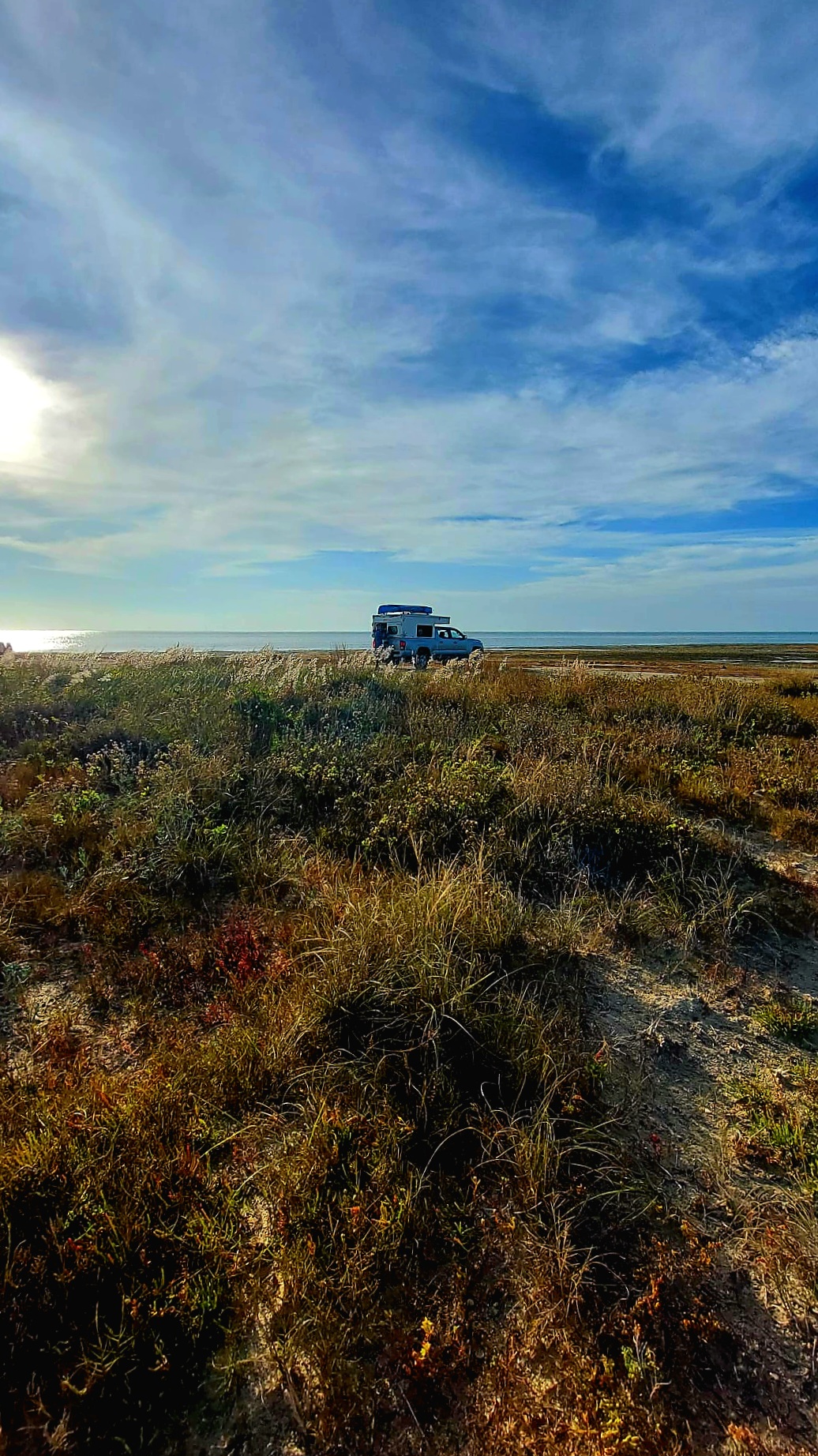
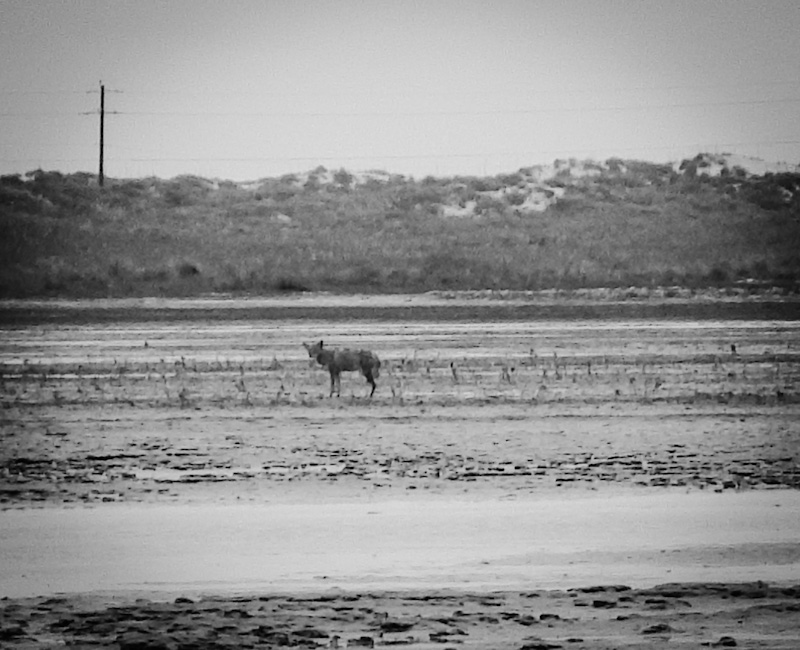
Each morning I’d take the beach road north out of town almost to where it ends. I’d park my rental and then make the twenty to thirty minute hike over the sand dunes and then on to the broad tidal zone leading to the Bay/Laguna. The grassy sections of the dunes held sand flies so I passed through quickly. The wide open tidal zone never had biting insects, nor the Laguna. This zone was either flooded or dry depending on the tidal cycle and wind direction. While walking I’d look for scavenging Coyotes and the small local Deer. I always wonder how they survive on the long thin band of sand they call home. I was on a barrier island along the Gulf of Mexico.
walk to the Laguna
coyote on tidal plain
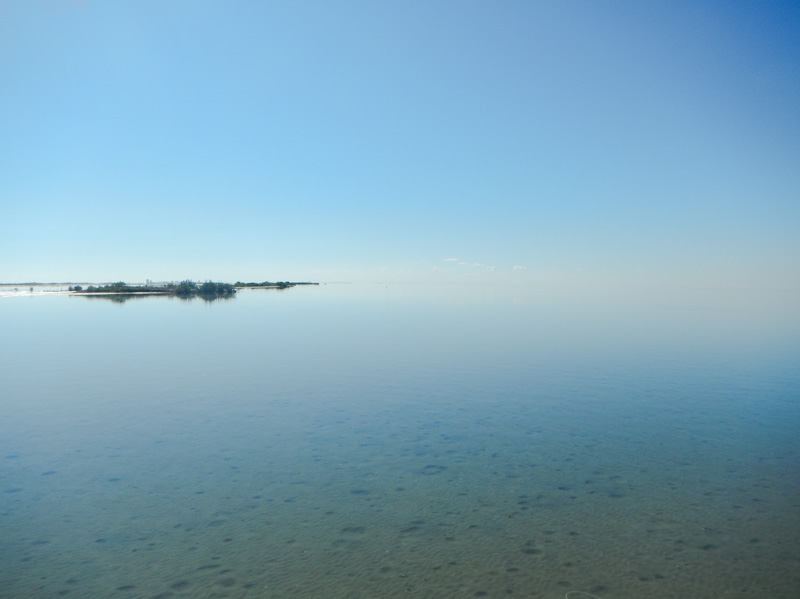
Once at the edge of the Laguna/Bay I’d pass through a thin line of mangroves and then enter the water. The bay in front of me was one big clear sand flat and shallow, just inches to calf-deep for miles. The bottom was a light tan color and firm. Most areas were fairly barren. Some spots had sparse fine shoal grass growth. Much, much further out there were thicker weed beds. Redfish at times showed-up and prowled the sand shallows in search of food: shrimp, crabs, sea worms and other things. It’s a perfect location to look for them. It’s ideal sight-fishing water. It’s why I made the long journey here.
I’d always arrived at the Laguna early. The sun, if it was out, was usually just cresting the high dunes to the east and as I walked out into the shallows it was at my back. I’d wade westward as that’s the direction that I’d see best. On good weather days the visibility improved and expanded as the morning progressed and the sun climbed the sky. Fishing skiffs were always skimming northward in the mornings, sometimes a mile or more away. I’d always hear them before I’d see them. Several minutes later their boat wake would reach me and push up against my legs. Energy travels a long distance in the ultra shallow Laguna. Boat energy, my energy. A reminder to wade cautiously.
typical bay skiff in town
mixed sky, glare
shrimp fly
The sand shallows always looked promising, especially on the calmer, sunny days. On this trip, however, most days were not sunny. The long range weather forecast looked favorable before I booked my trip and left home. However, weather prediction is often imperfect and seaside climate can be unpredictable and ever-changing. Out of fourteen angling days I had three full sun days. Not a great percentage. However, you have the angling day that you wake-up to. Cloud cover, high wind, some occasional light rain, it didn’t matter…I layered-up and waded the shallows and searched for Redfish. I wore waders during inclement conditions. I happily wet-waded on the warm sunny days.
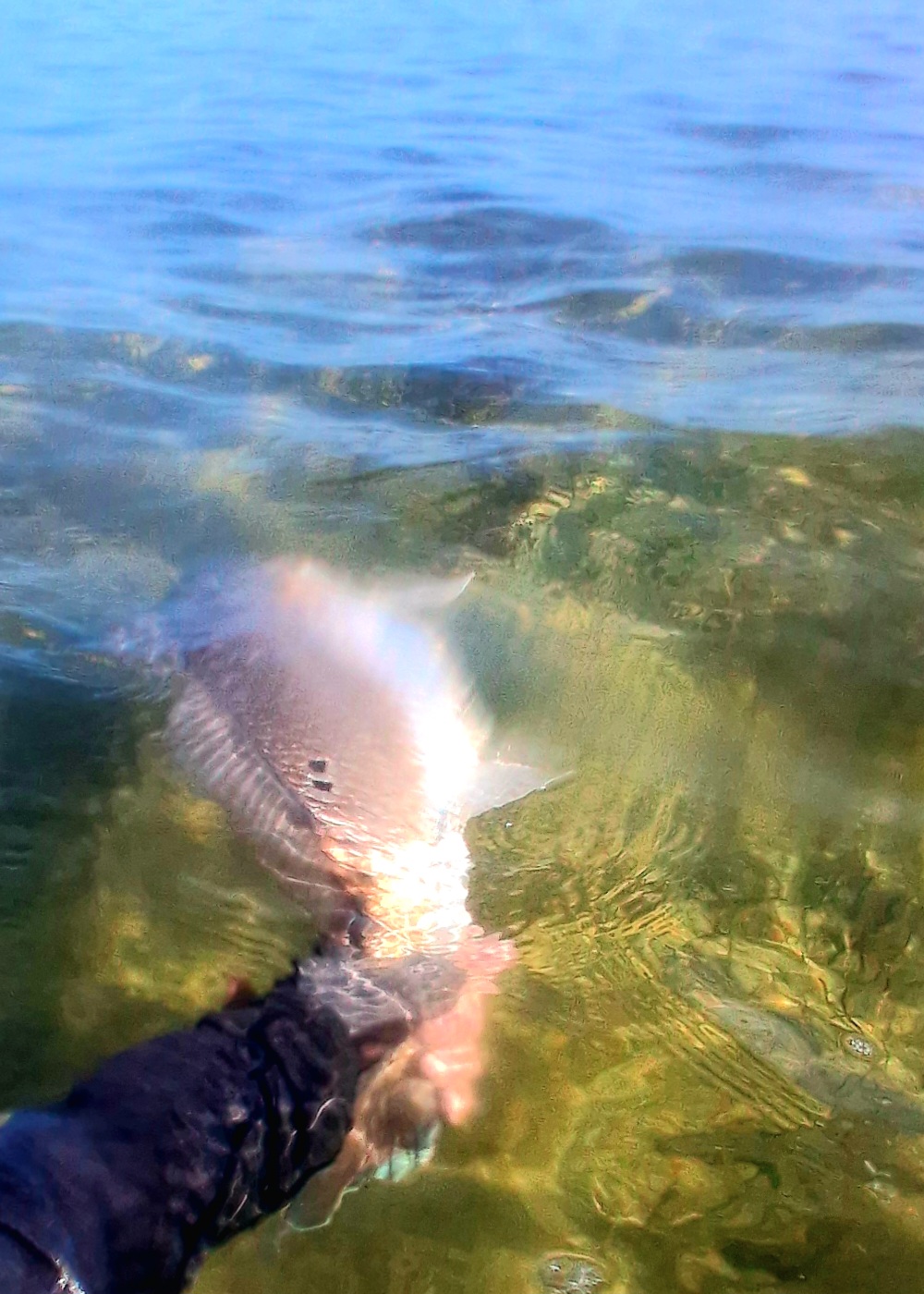
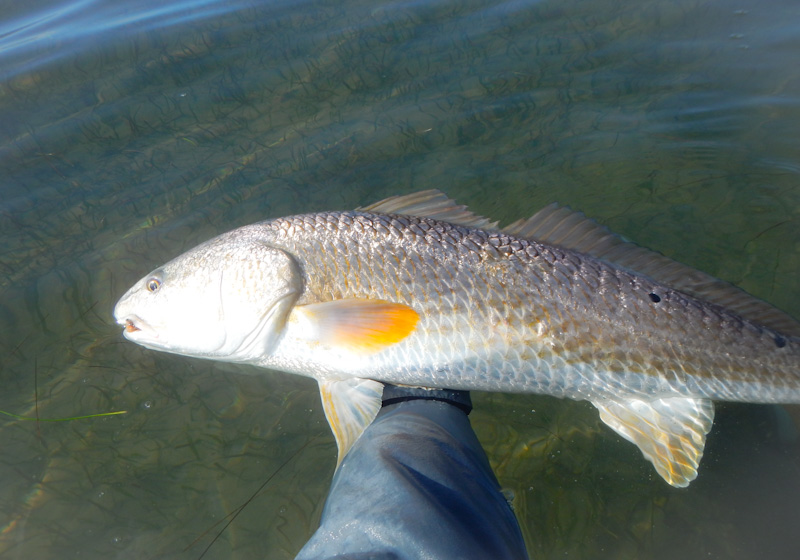
redfish
Sight-fishing in cloud glare and wind is always challenging. At times it was impossible to see beyond two or three rod lengths. In the tough conditions I caught a few but missed and spooked several fish. On many days on this trip and in the past, I left the Laguna late afternoon frustrated with not being able to see well. I knew great fish were coming in on the sand daily but I had little chance of spotting them. But that’s all part of any angling trip. You have to surrender to and accept what you can’t control, hope things change and appreciate it fully when it does. I tried to do that.
wind foam
gear for the day
When the sun did appear it illuminated the sand. Everything became visible. Everything was revealed. It was confirmation as to why I had come here. It was like flicking on the light switch in a dark room. That’s when there was opportunity. That’s when I had a chance to spot a good one. I’d look for shape; a shape that contrasted with the light colored bottom and above all I watched for movement. Movement catches your eye. Movement gives them away. If I managed myself well when the light was good: stayed alert, concentrated intensely, methodically scanned the water, moved slowly (all the shallow water tactics), then I knew I had a chance to spot one. Then it was up to me to make a good cast. In the clear twelve inches of water my fly impression needed to land “near” the Redfish but not “on” it. Too close and a Redfish in skinny water and on high alert, would bolt.
On a good day, when I could see well, I’d always spot Redfish in the sandy shallows. Never many but some. In high glare windy conditions less. Sometimes I’d see none. All fish spotted on this trip were good ones. I’ve heard of great numbers of schooling and tailing redfish on the richer weed thick westside of the bay but I’ve never witnessed that on the eastside sand flats when I’ve waded them in late Fall and Winter time. Maybe it is just the time of year that I come here. There were no surface disturbances to give their location away. When I’d spot them most were on the move; combing the sand.
Days passed quickly on the sand. By mid-afternoon I’d see best wading eastward, back to shore. By late afternoon the sight-fishing day came to an end. I’d hear the skiffs returning from their journey north. Once again, their wake managed to find me. Some had music blasting: usually heavy Rock, sometimes Rap, sometimes bar brawling Country. I guess song selection was dependant on the age of the captain. I never heard Sinatra.
looking back to shore
It was my third visit to the barrier island. I’ve now spent a total of two months sight-fishing the sand flats. It’s still all new to me: Redfish behavior, their environment, the tides… that’s good. It’s a new angling journey. When I review things at the end of each trip I’m reminded how weather always rules the day and how demanding but rewarding ultra-shallow saltwater fly-fishing can be when on foot. The Laguna is as intriguing, spirited and challenging a fly fishing location as anywhere I’ve been. When the sun lights-up the sand it is simply beautiful and mesmerizing out there, and full of possibility.
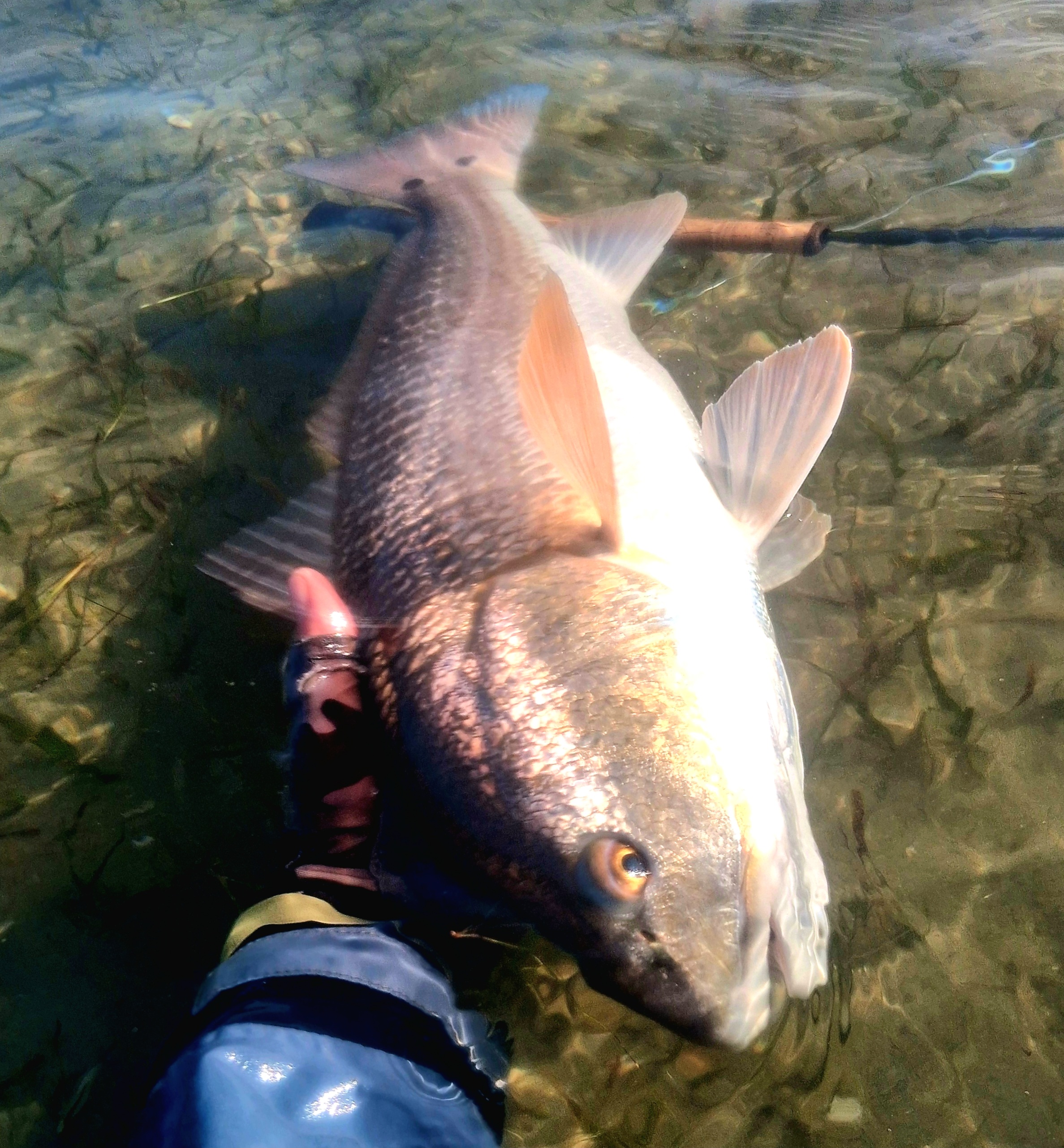
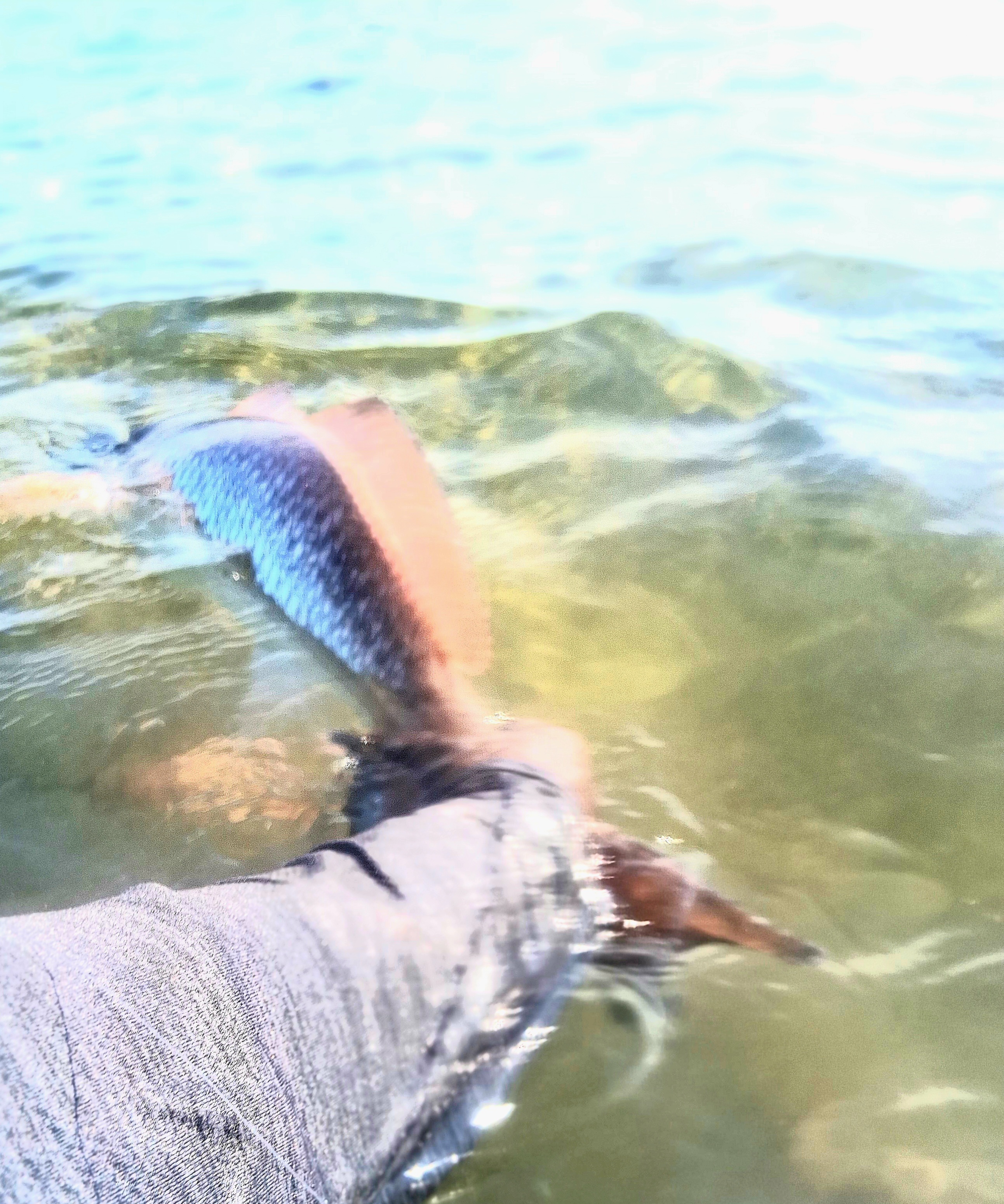
All redfish were released safely back to the Laguna..
cooler day
sea trout
POSTSCRIPT
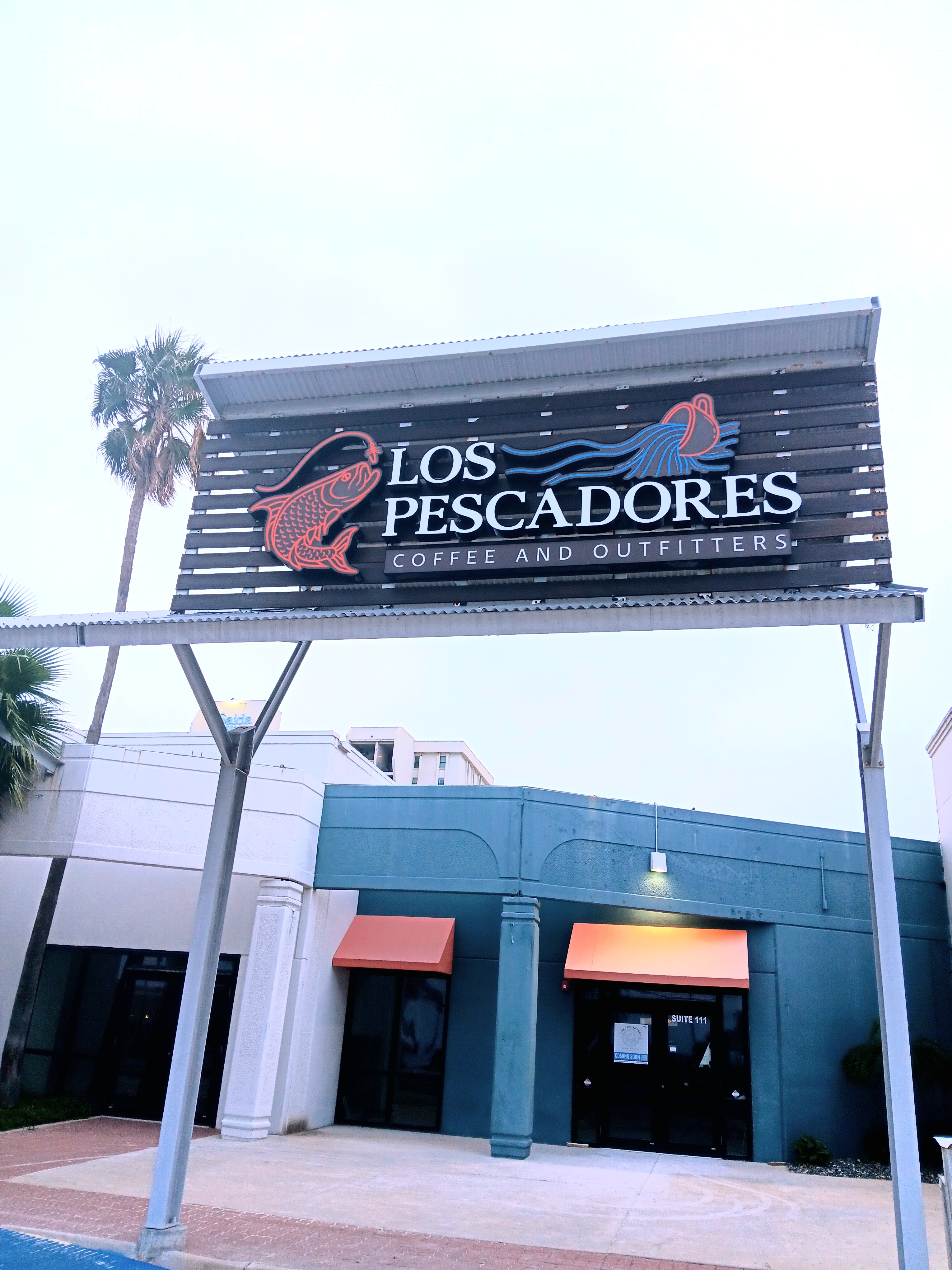
Prior to this trip I had read that a Coffee/ Fly Shop (Los Pescadores Coffee and Outfitters) would be opening on the island probably sometime in the second half of 2024. Their website said that although their storefront was not open yet, an angler could order online and have items mailed, or if in town arrange a curbside pick-up. I had tied many flies for my trip but wanted to purchase some regional redfish patterns, so I arranged a pick-up. I got to meet the owner of the business, Daniel, and the future fly shop manager and guide, Alex. Both super guys. They showed me the space they had rented, spoke about their plans for the coffee and fly shop and overall business. They had a great fly selection and offered angling and location tips on the region. Alex has a skiff, guides and catches impressive fish. Whenever I visit an angling destination it’s a bonus to know there is a Fly Shop nearby. I’ll drop by again. Here is the link: https://www.lospescadores.com/
















 trout on dries