Heavy weather means low light. Summertime hatches seem to get more intense during these low fronts. Insects, especially Mayflies, ride the surface longer, especially when it remains calm. Without the sun and wind, emerging wings take longer to dry and therefore “Lift-off” gets prolonged.
Trout, even cautious big ones, seem more willing to risk rising for tiny morsels in low light. Below, some nice low light rainbow trout caught sight-fishing with small Pale Morning Dun dry flies, hook size 16 and 18. Low fronts, low light…your signal to head to the river with your rain jacket and dry flies.


 trout on dries
I didn’t realize your pmds went this late into the season. Our sulfurs are pretty much done here in the east and this year they got down to 22s and even 24s (almost microscopic) by the end. I would have guessed olives by now especially in low light. Curious about what you like about the hackle stacker tie v more traditional parachutes or sparkle duns?
Rick: The Pmds last all summer and well into September, sometimes to the end of September, if weather stays mild. This only happens on my two local tailwaters and especially one of them. I think it is the consistent water temperature and flow. The Pmds do get smaller as season progresses. Size 18 leaning more to 20 now. During inclement weather they still hatch along with Olives.
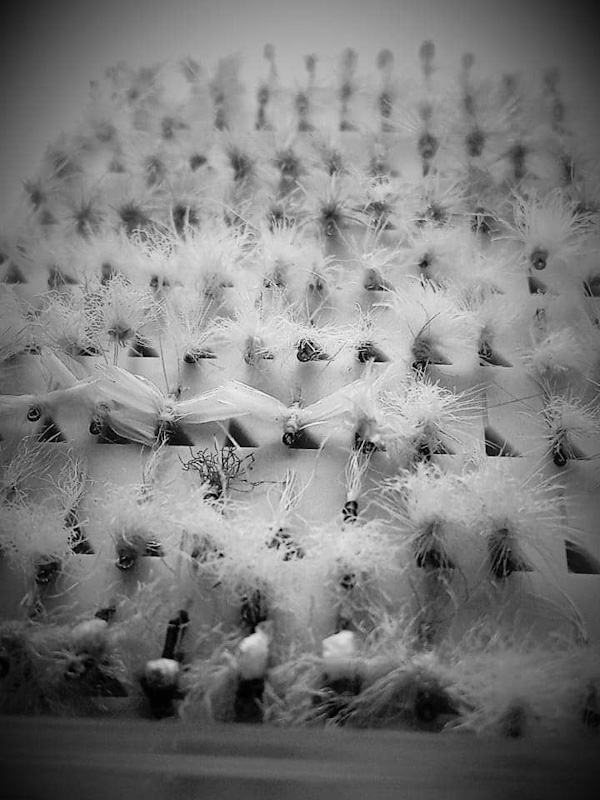
Re: Fly Patterns. I tie all 3 that you mentioned and use them. The hacklestacker pattern has simply duped some challenging fish for me on aforementioned tailwaters. Because it has often worked I keep using it on difficult fish and get reinforced sometimes so keep going to it…confidence in it on flat water. Probably no better than many other patterns anglers use. A weakness is they are hard to see in comparison to parachutes with a post. Another fly that I go to with fish that reject many patterns is i take one of my cdc flies and clip the cdc wing down short to body…looks like a floating nymph. That has worked many times on flat water in clear conditions with picky fish. Sometimes less on the hook seems better.
That said, I follow people online that fish super hard flat water and fool many fish with completly different looking patterns.
Thanks for commenting.
Bob