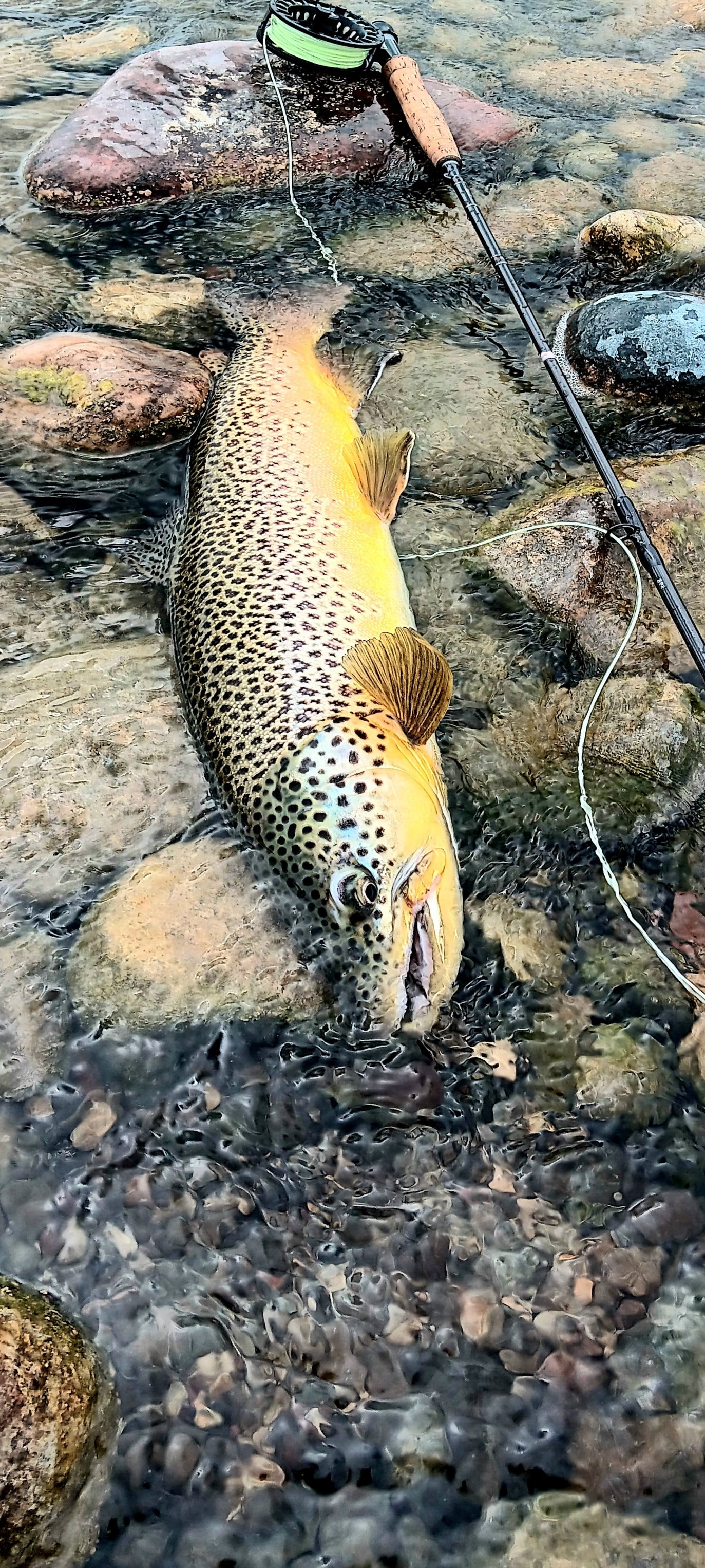
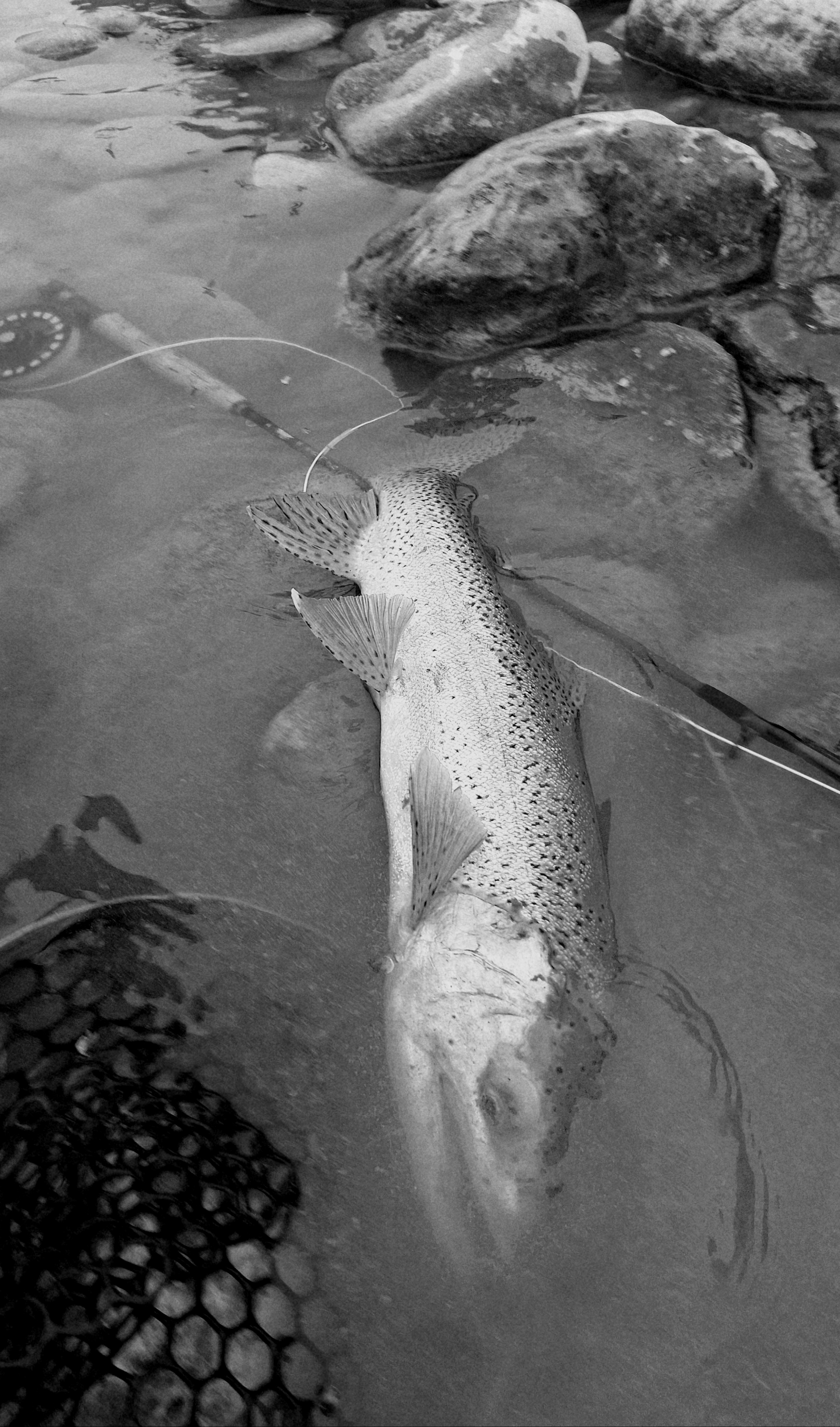
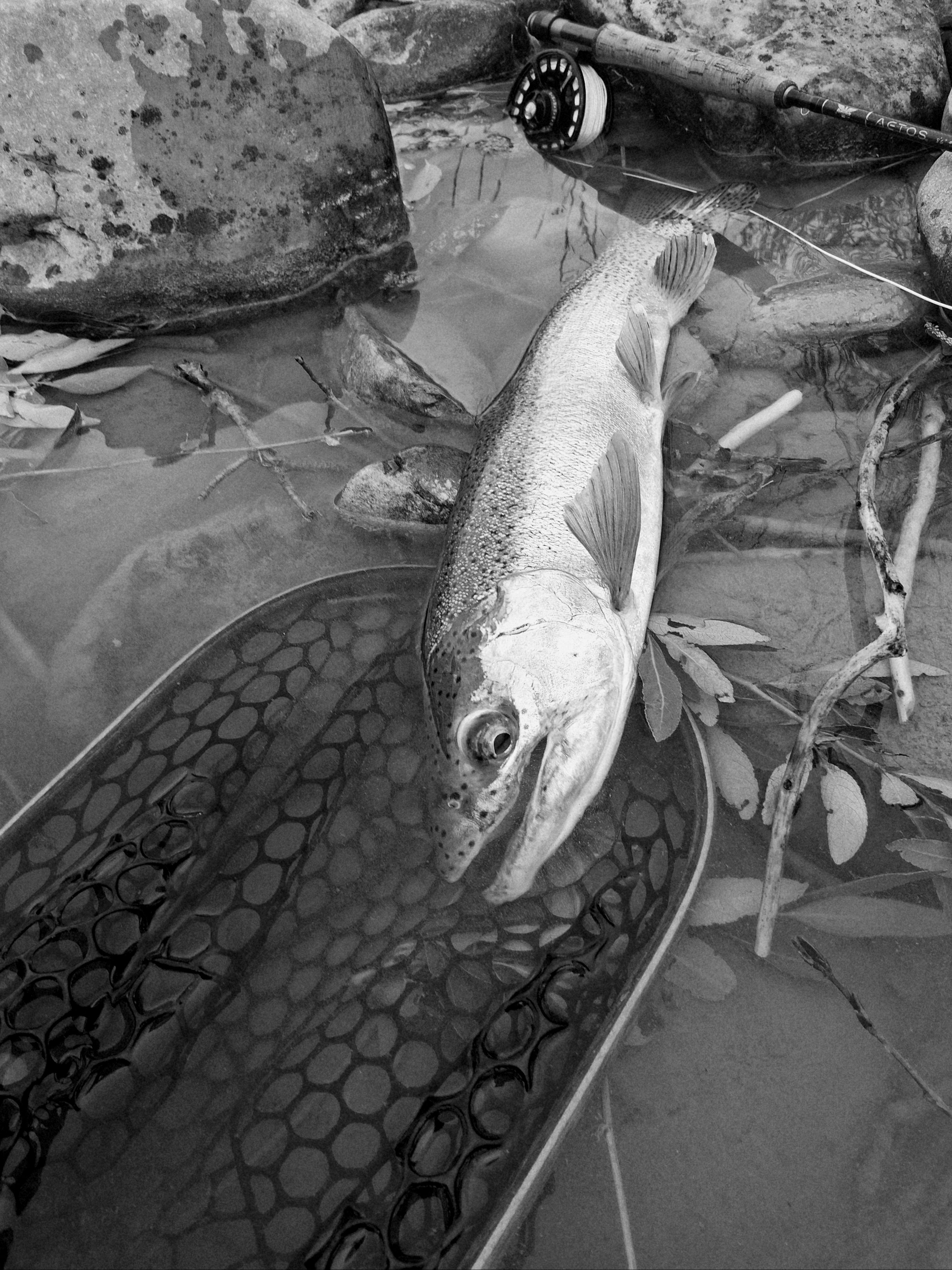
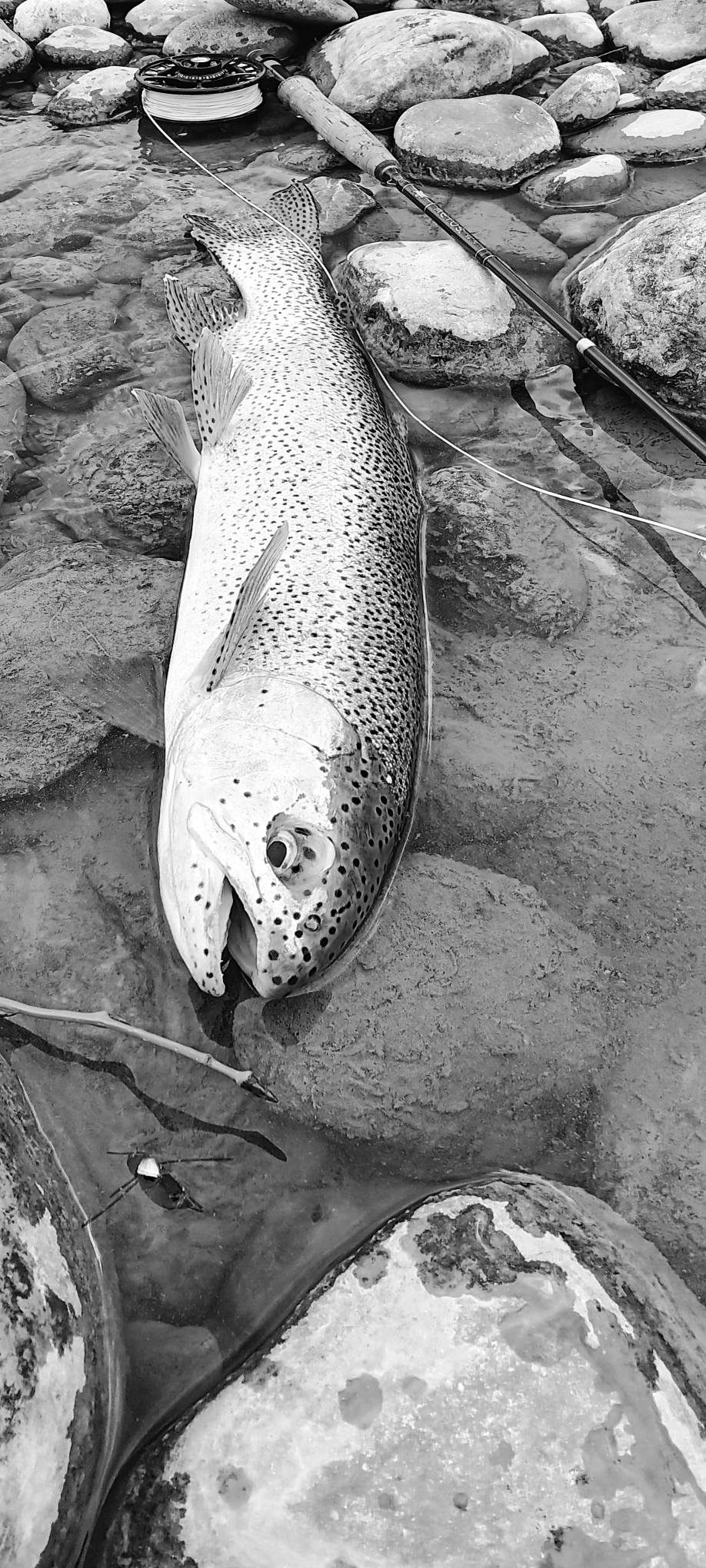
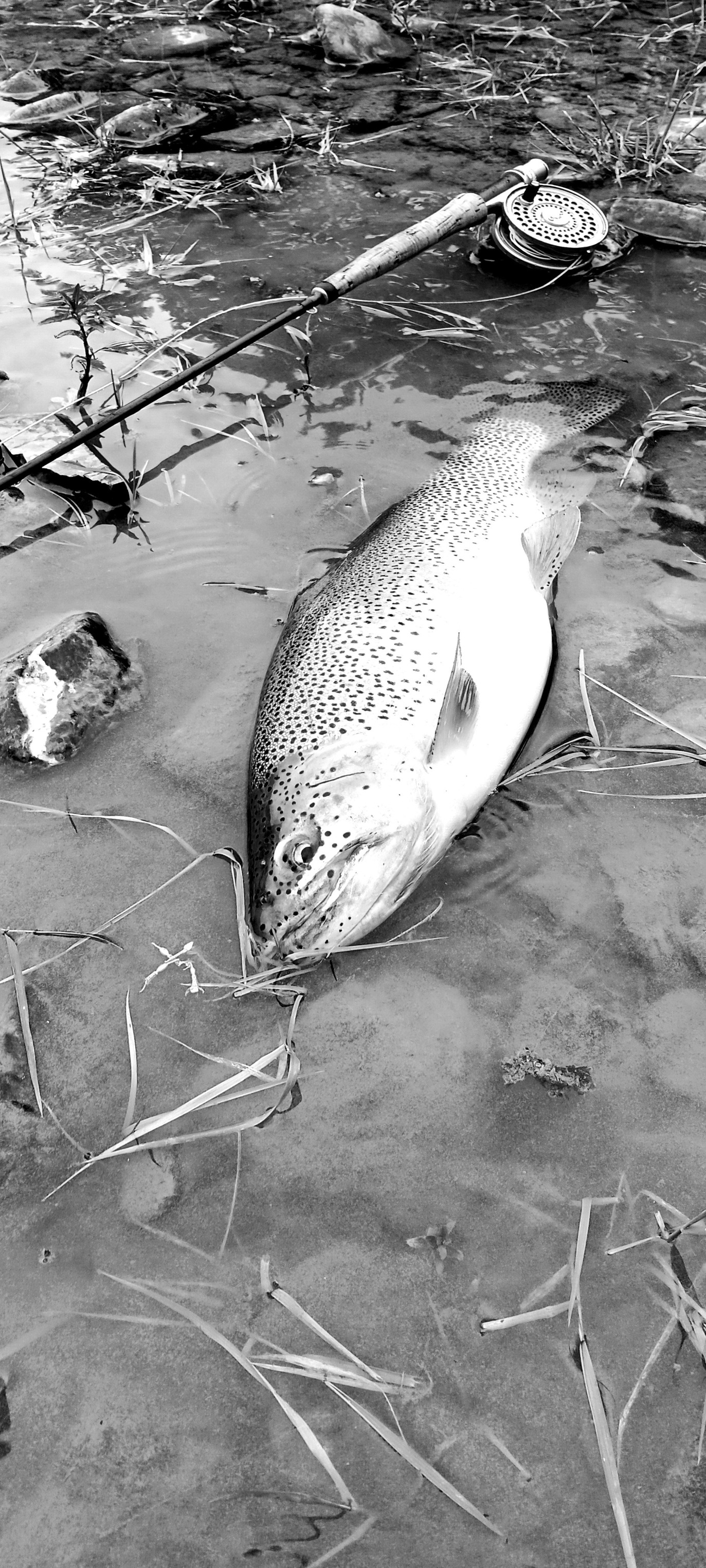
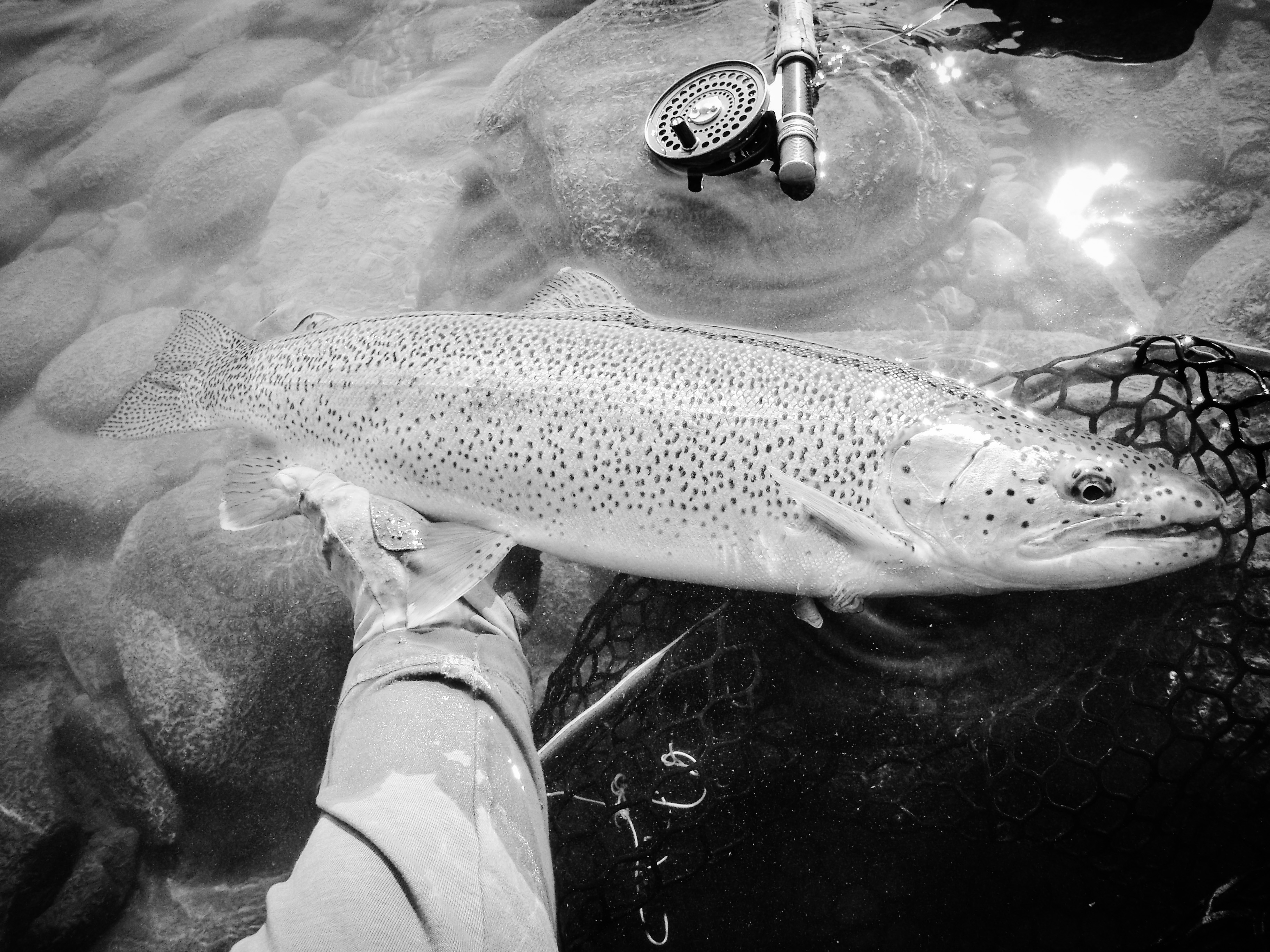
Here’s a photo of a brown trout I caught a few weeks ago on a size 18 Pmd. Basically the fly was pale yellow thread, a small puff of light dun cdc for the wing to keep it afloat and to see it as it tracked to the fish, and a tiny amount of yellow dubbing below the wing to accentuate the thorax. A quick simple tie. The fly sits low/ flush in water. The trout was on the feed. Eating regularly; eating aggressively. Therefore in my mind a very makeable sizeable fish on what anglers would describe as technical water. I presented something similar to what he was eating: similar size, color and footprint/ impression on the water’s surface. No other anglers were around. The trout probably hadn’t been casted to that day. That makes things easier. And it was a low light, overcast day. All I had to do was make a good cast and get a good drift and hope my fly impression would past the test. I always get anxious casting directly from behind a fish; having to cast my leader over it. So instead I spent some time circumventing the trout, crossing the river and making a long down and across cast. I’ll choose that every time if the river and trout position gives me a chance to do so.
I got lucky that day: an aggressively feeding trout, a good hatch, no angling pressure, low light, a passable fly impression, and the small fly held…
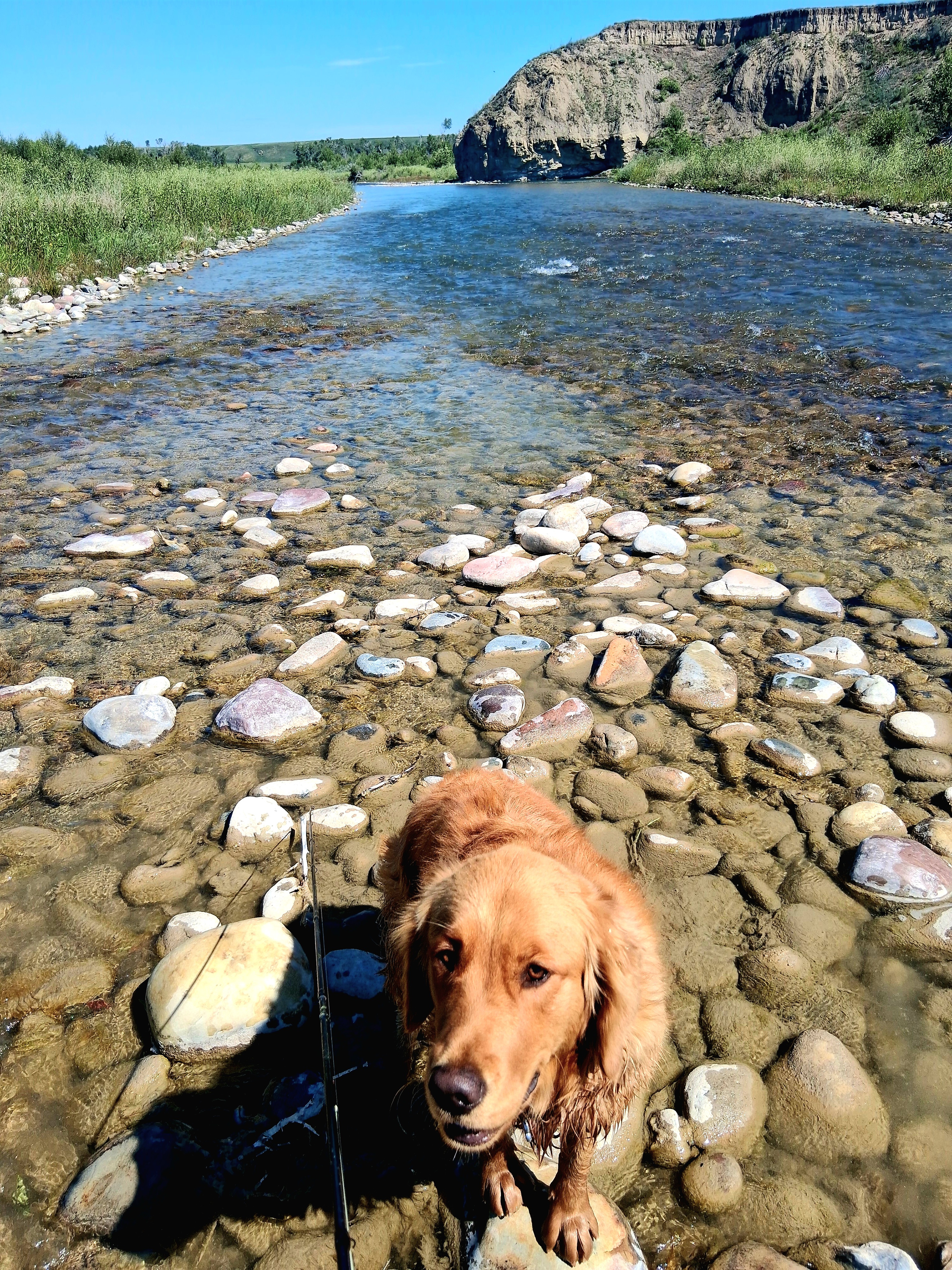
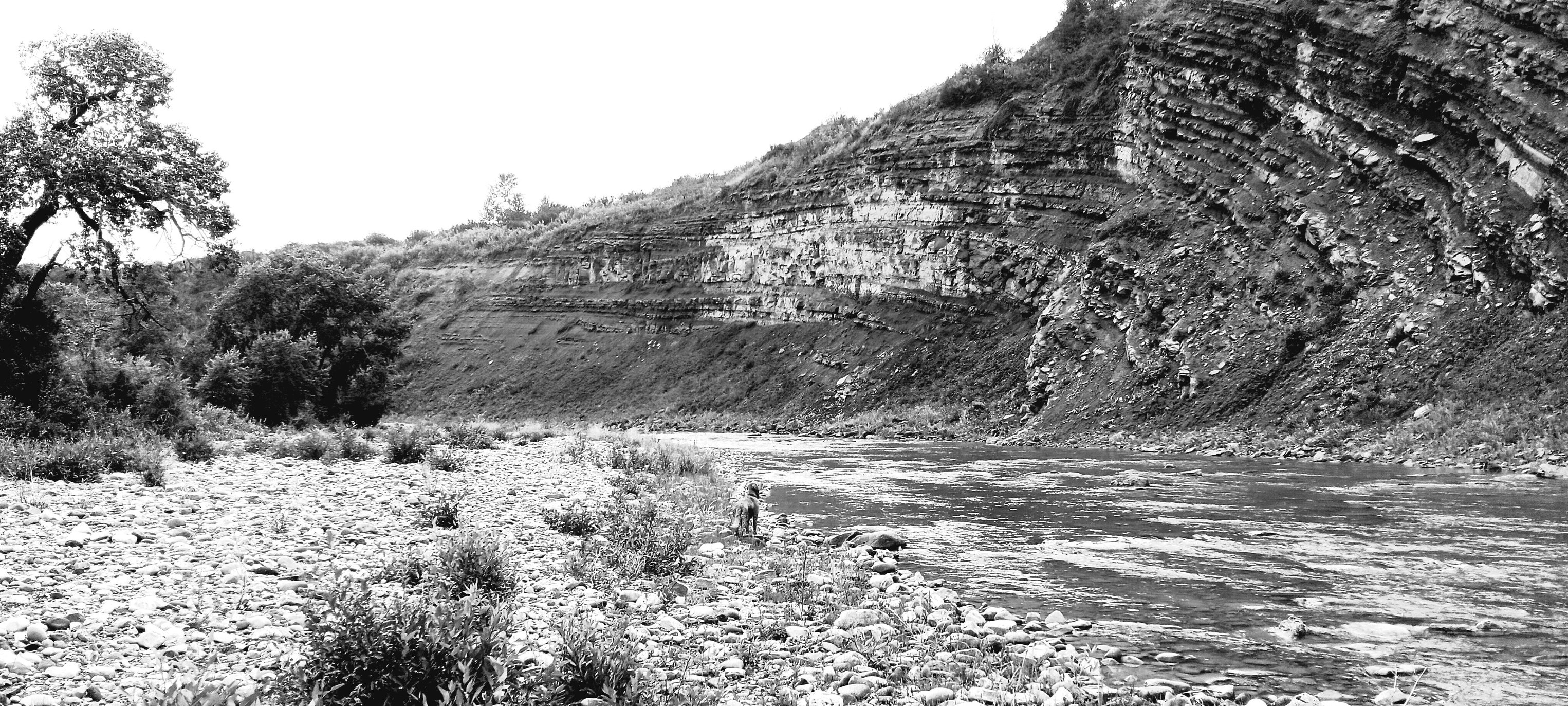
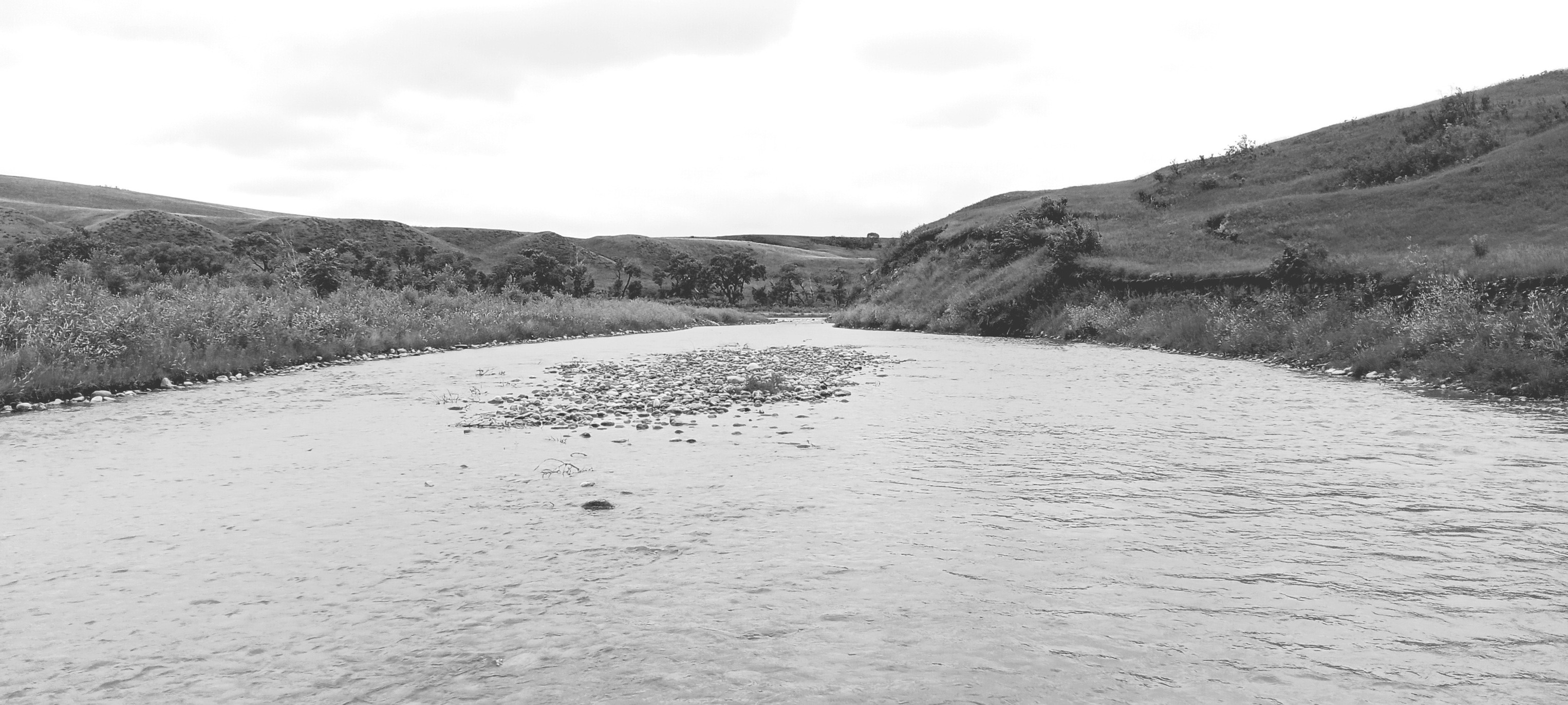
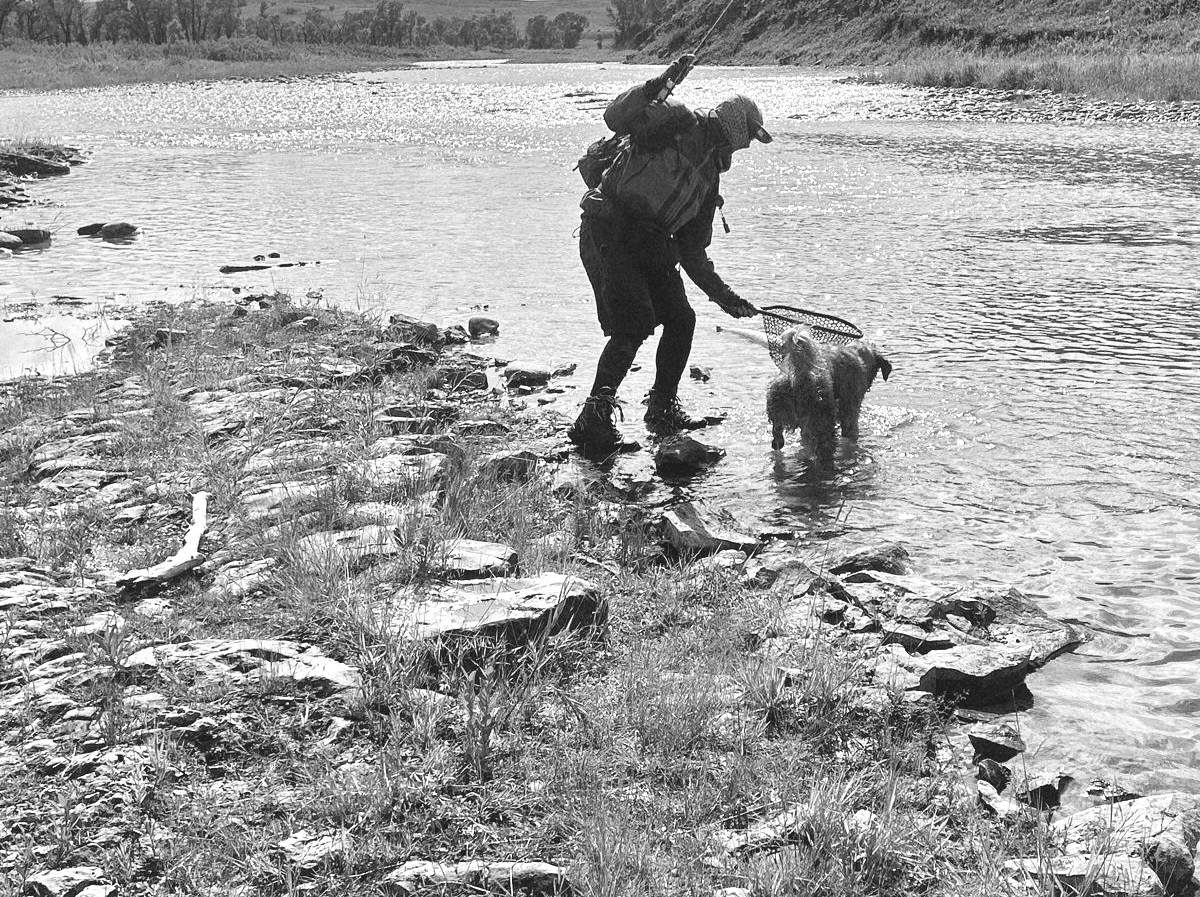
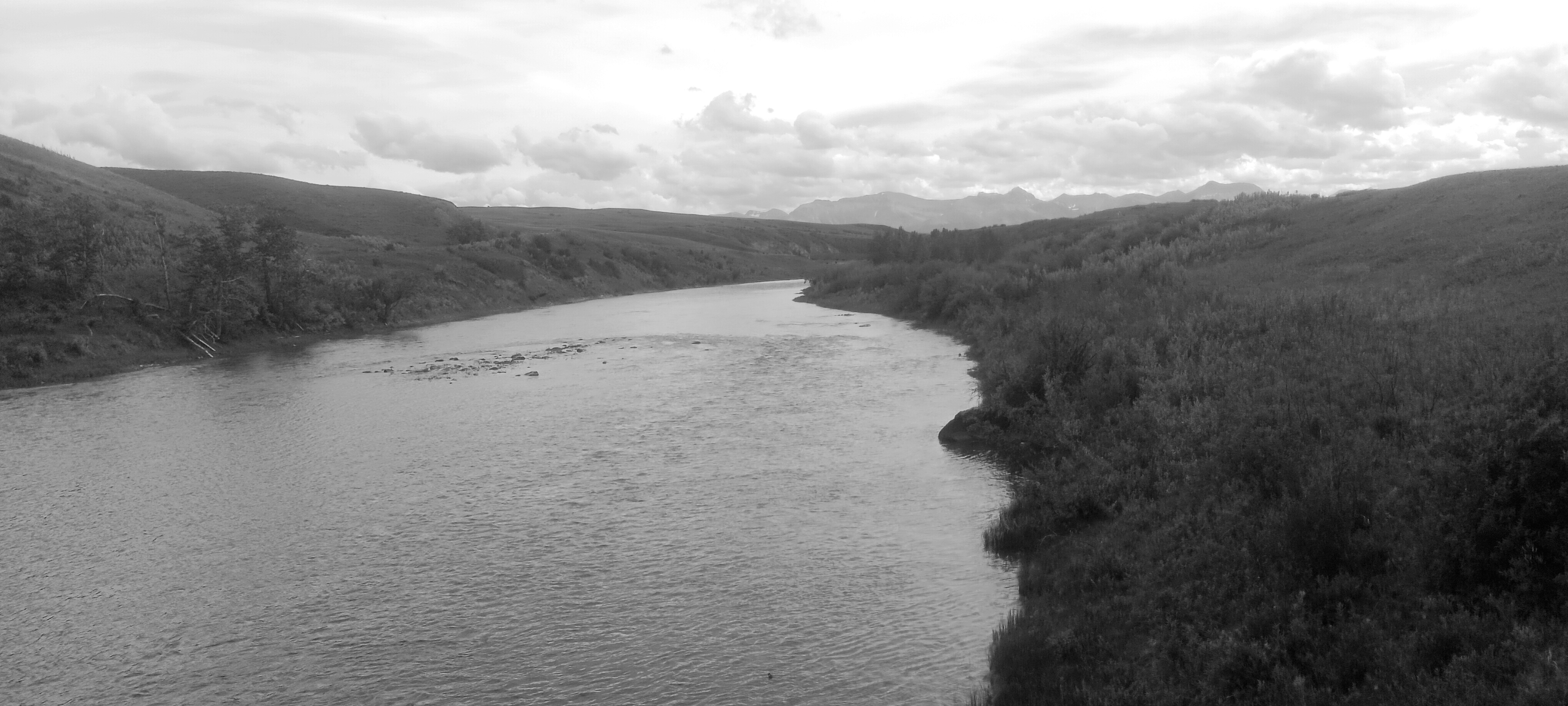
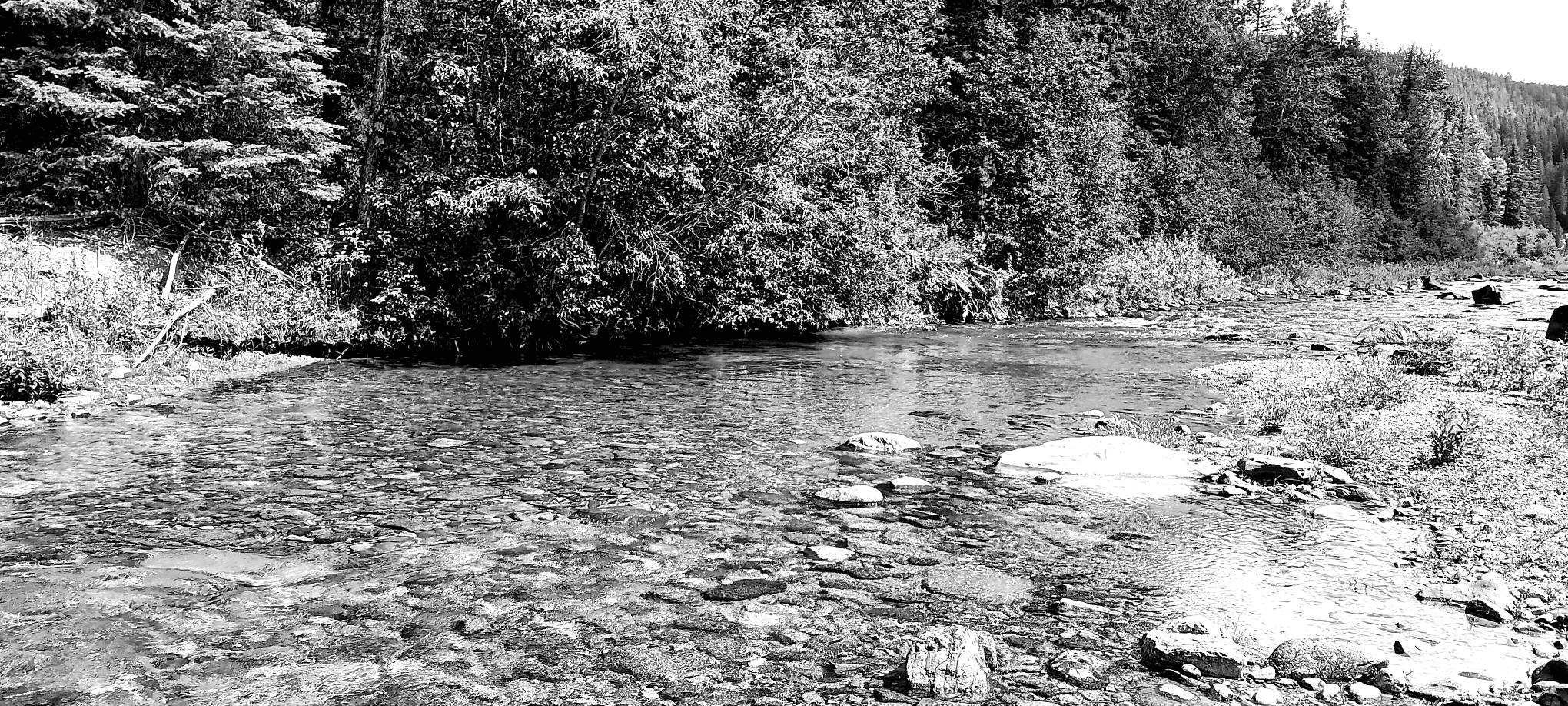
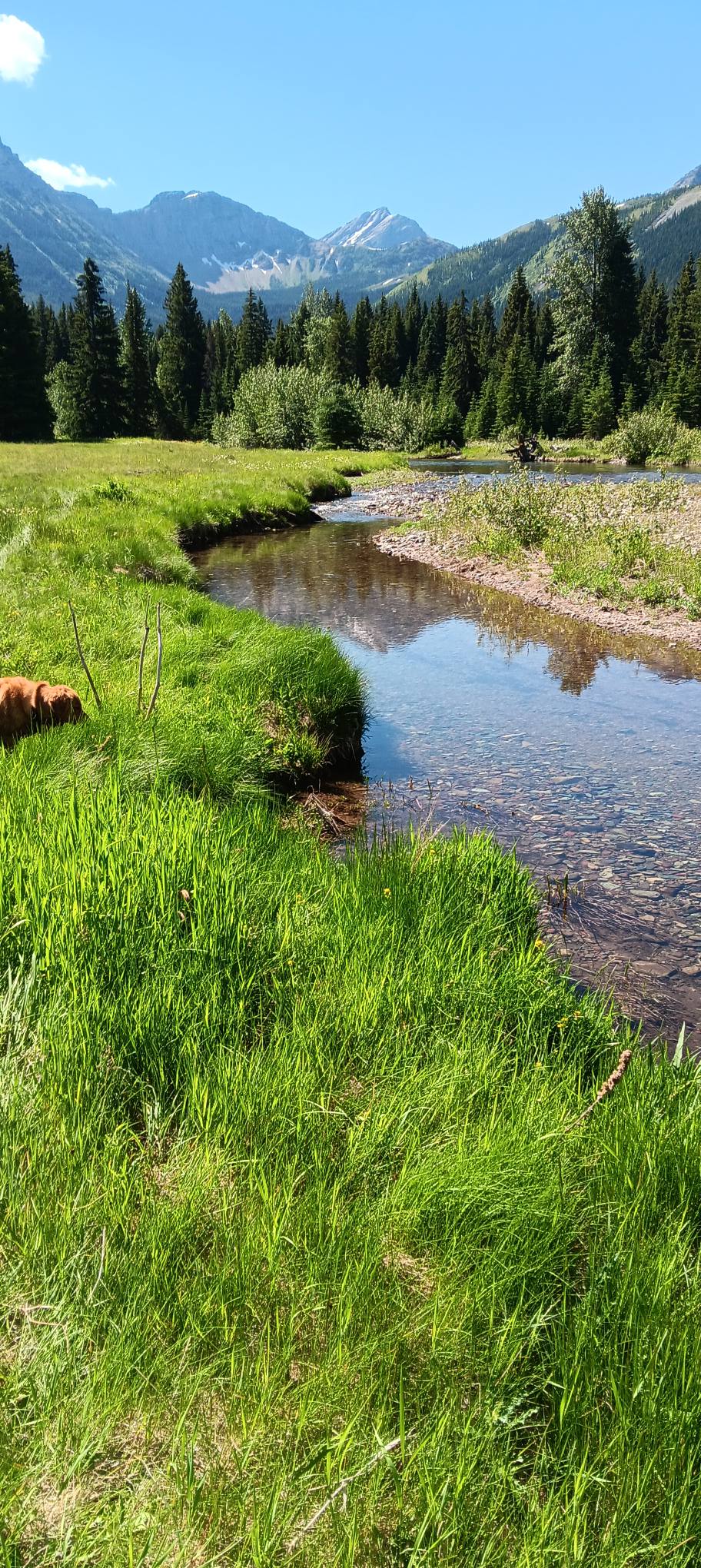
This is where I covered many miles of river the other day. Mostly along its bouldery edge. Walking on round rocks all day is an art. I usually take shortcuts between river pools on the softer ground through the Cottonwood forests, meadows and brush in the river valley in order to get a break from the boulders. However, I didn’t this time as it’s wild berry season. There’s a bumper crop of Saskatoons this year. And bears love to feast on them.
The pools on this river are far apart and there’s not much fishable water between them, so you have to cover ground. You keep telling yourself “maybe the next distant pool has a good fish in it” and you rock-hop onward. The river holds a few quality trout so that’s the incentive to keep going mile after mile. It’s kind of like fishing New Zealand. There can be great reward for your effort, or sometimes not. That’s the deal.
I spotted a few fish with the sun overhead but mostly “fished the water” (prospected). I tossed a large black foam beetle. I had to twitch it to get the best one of the day to take notice and rise off of the bottom.
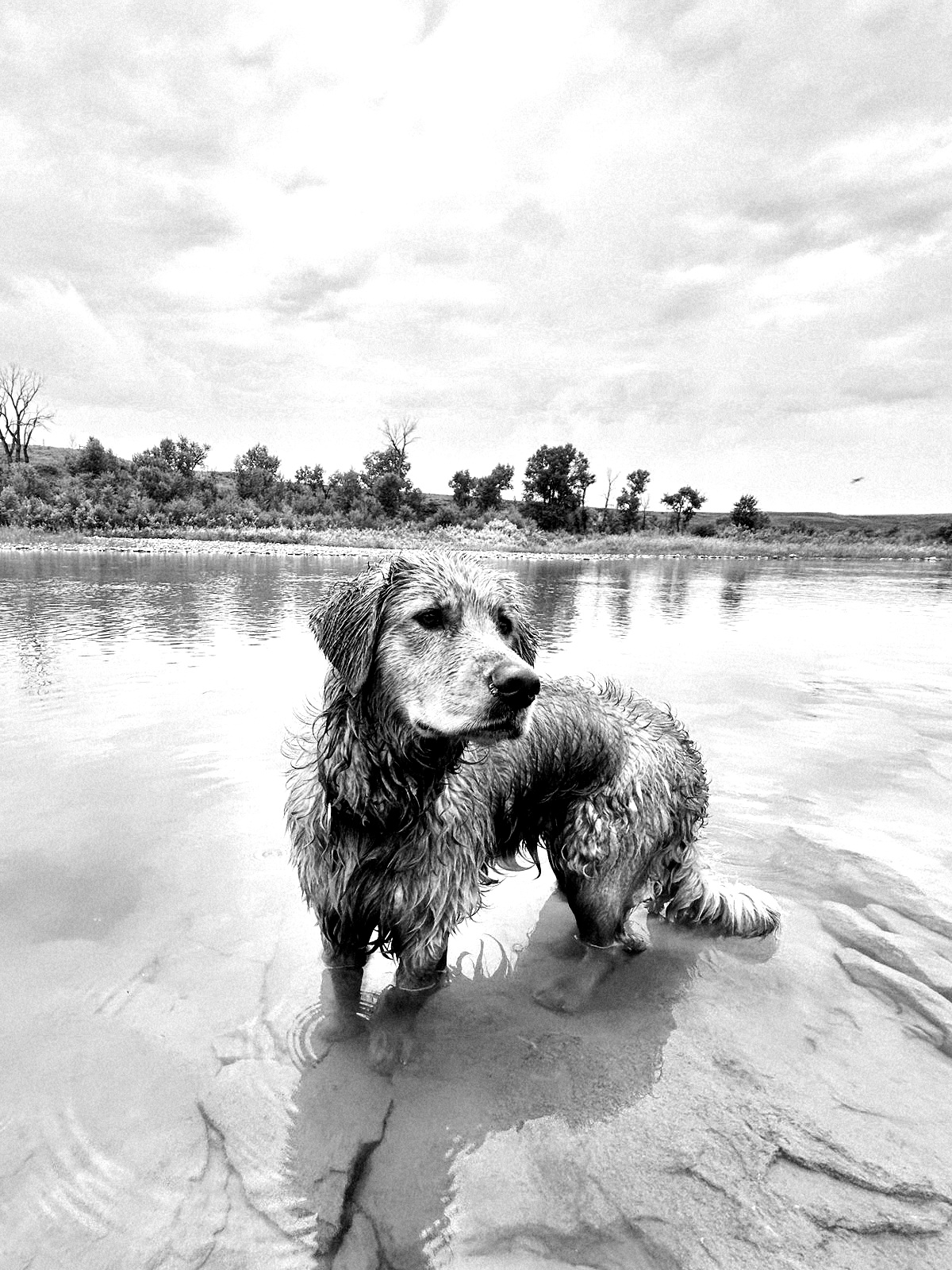
Before I know it my water bottle is empty, lunch and snacks are all gone, my shadow lengthens, and Harper, my dog, curls-up and naps riverside. It’s the sign(s) that it’s time to turn around and head back downstream; back to my vehicle.
While walking back I remind myself this is where Dinosaurs once roamed. This has long been the home of the Blackfoot. This is where giant prairie Grizzly bears wandered. This is where Buffalo once lived and travelled freely.
Wake up early; dark and dreary out; going to be that way all day; it’s July; should be sunny and oven hot; instead it’s breezy and 6c; there could be snow up high where the peaks pierce the sky; October has bullied and pushed July aside; July is catching its breath and when the bell rings it will come back.
It could be a good brown trout day deep down in a river valley with the heavy sky and low light; could be; maybe; going to layer up as it’s October in July; you have to go to find out…
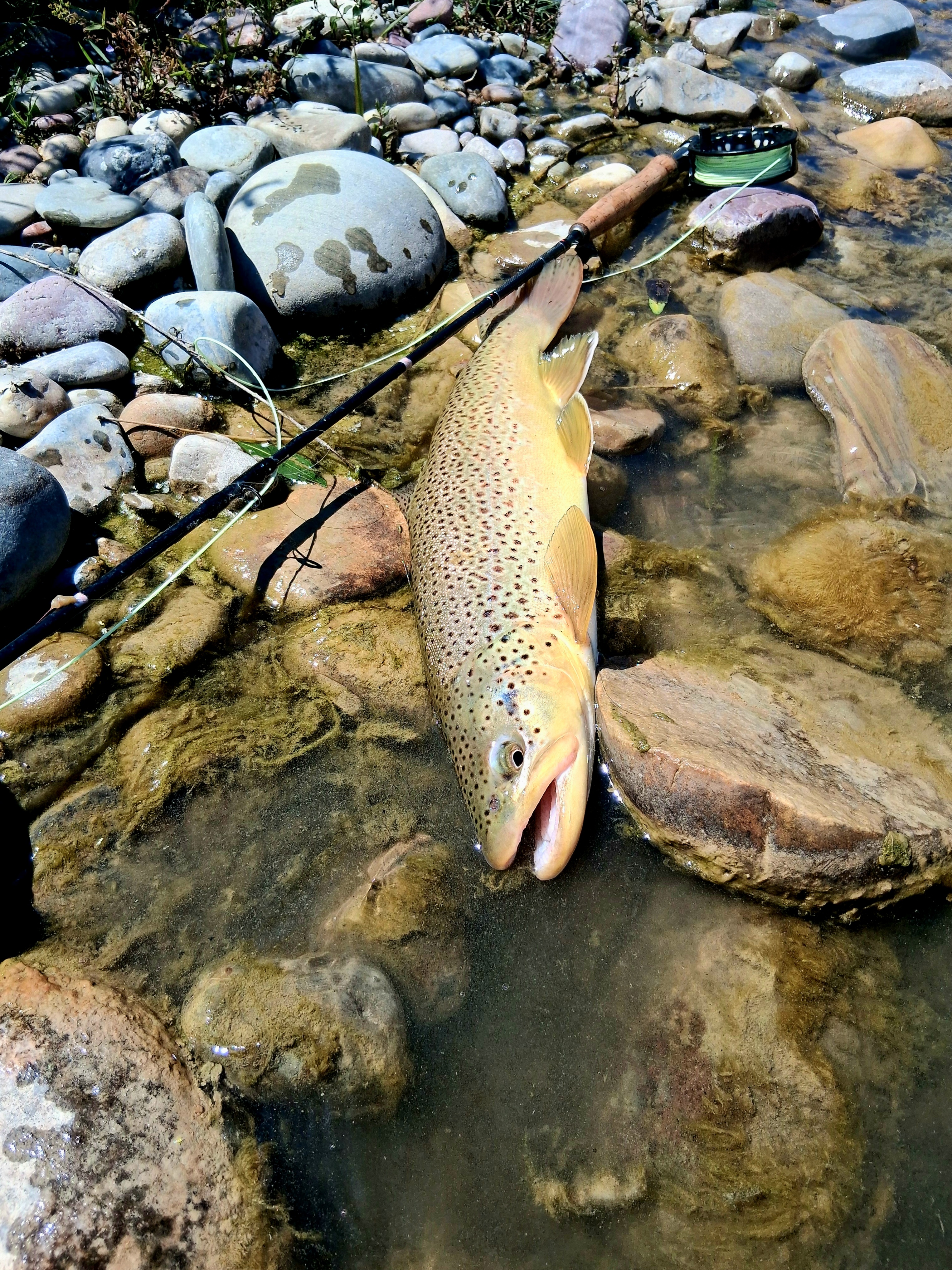
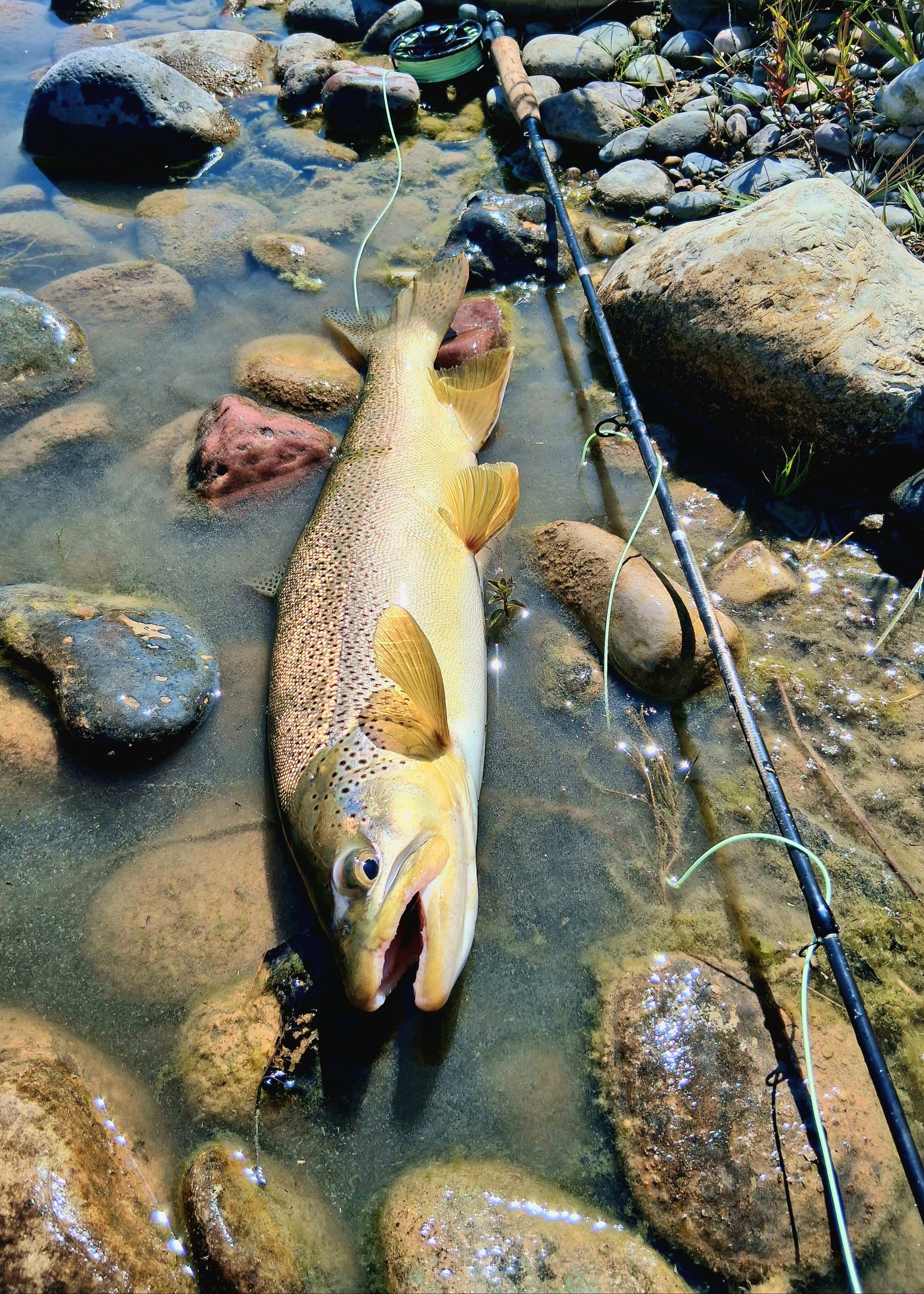
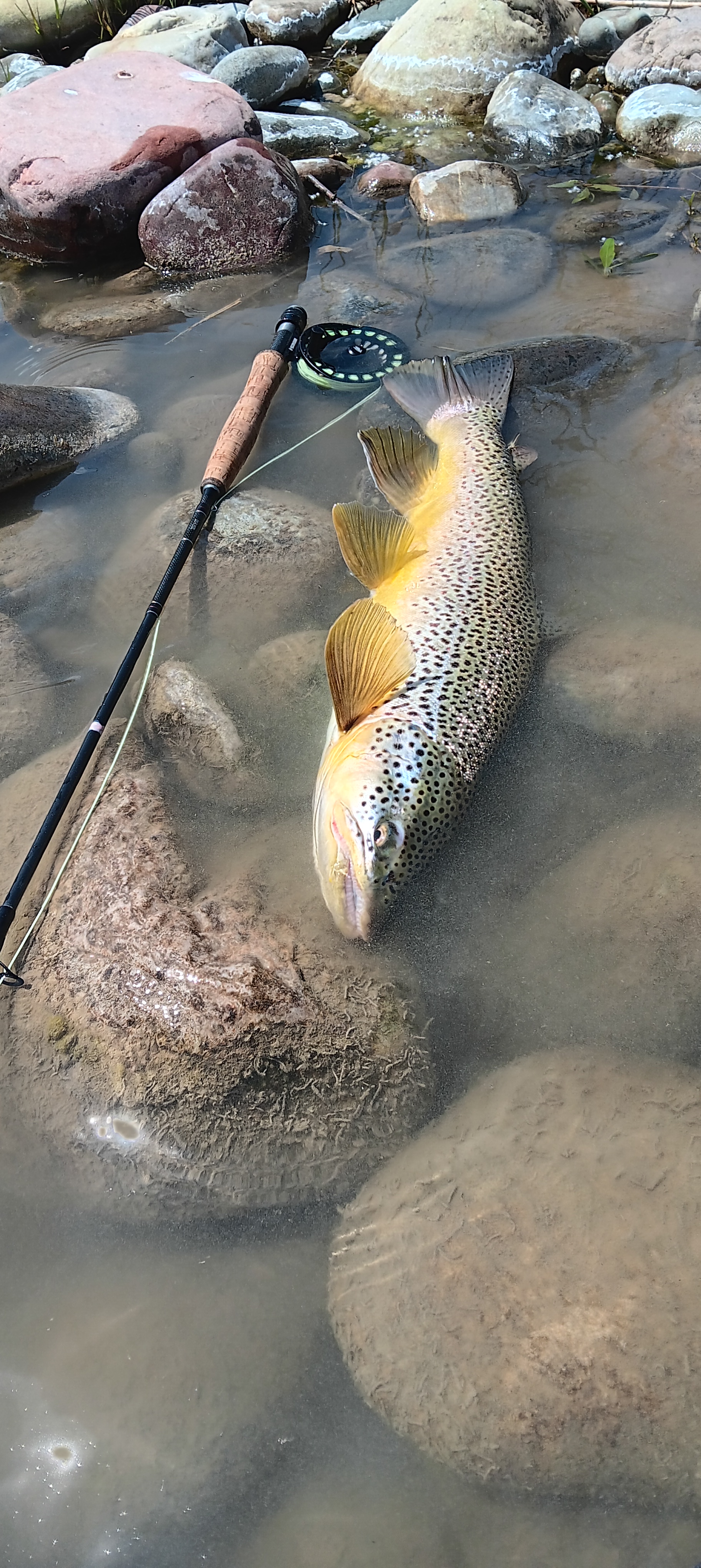
Brown trout caught on size 16/18 Pale Morning Duns dry flies.
” When preparation meets opportunity, luck happens”.
roman with a fine brown trout
Nine days of wandering around rivers. We went east, west and south. We never went north. It’s kind of a gong-show up there anyway. Too many campers, too many camping riverside, too many 4-wheelers, too many anglers, too many casting treble hooks, too many mangled fish, too many… For six of the nine days there were few bugs around; no real hatch. The insect apocalypse theory remained intact. It was mediocre dry fly angling in the beautiful sunny weather. Then the Weather Network and Environment Canada predicted a few days of cooler weather, cloud cover, rain or at least thundershowers. I checked a third source, AccuWeather. It reported the same. All weather sources were aligned and it meant a very strong possibility of daytime low-light conditions with precipitation. I thought, “It might happen”: the chance of a solid daytime hatch and fish up. Trout generally feel safer rising for insects when the dimmer switch has been dialed down.
brown trout
So on the first cloudy day I put on my rain jacket and headed for a river where I felt there was potential; where “It might happen”. I had not been on the one I selected for a month. Around mid-day birds started swooping and darting over the river. It looked like a hatch was developing and then shortly after it exploded. The main insect: Pale Morning Duns (Pmd’s). And the trout responded. They were up everywhere. Boils and bulges at the head of pools and sipping fish eating duns in the mid and lower pool sections. I got lucky. I got more than lucky as the event lasted for 3 or 4 hours.
rainbow trout
On the next cloudy day I returned with a friend, Roman. It was cooler and wetter. There was also thunder and some lightning. We got there just before noon. We waited and waited. There were showers all afternoon. We walked from pool to pool in order to stay warm. I wondered if it was ever going to occur. An old Yiddish adage came to mind, “Man plans, and God Laughs”. Then at around 3-3:30 pm, three hours after our arrival, the birds started working the river, Pmd’s began to emerge and fish started to rise. Big guys and gals. A repeat performance. Just delayed and briefer probably because of the cooler weather. The fish continued to surface even when the sun occasionally broke through late day. The brown trout glowed golden in the late afternoon light. After being wet all afternoon we appreciated the sun’s warmth. Then when the river became fully illuminated by the sun, it all stopped. The trout disappeared: “Now you see me now you don’t”. Like magic.
photo by roman
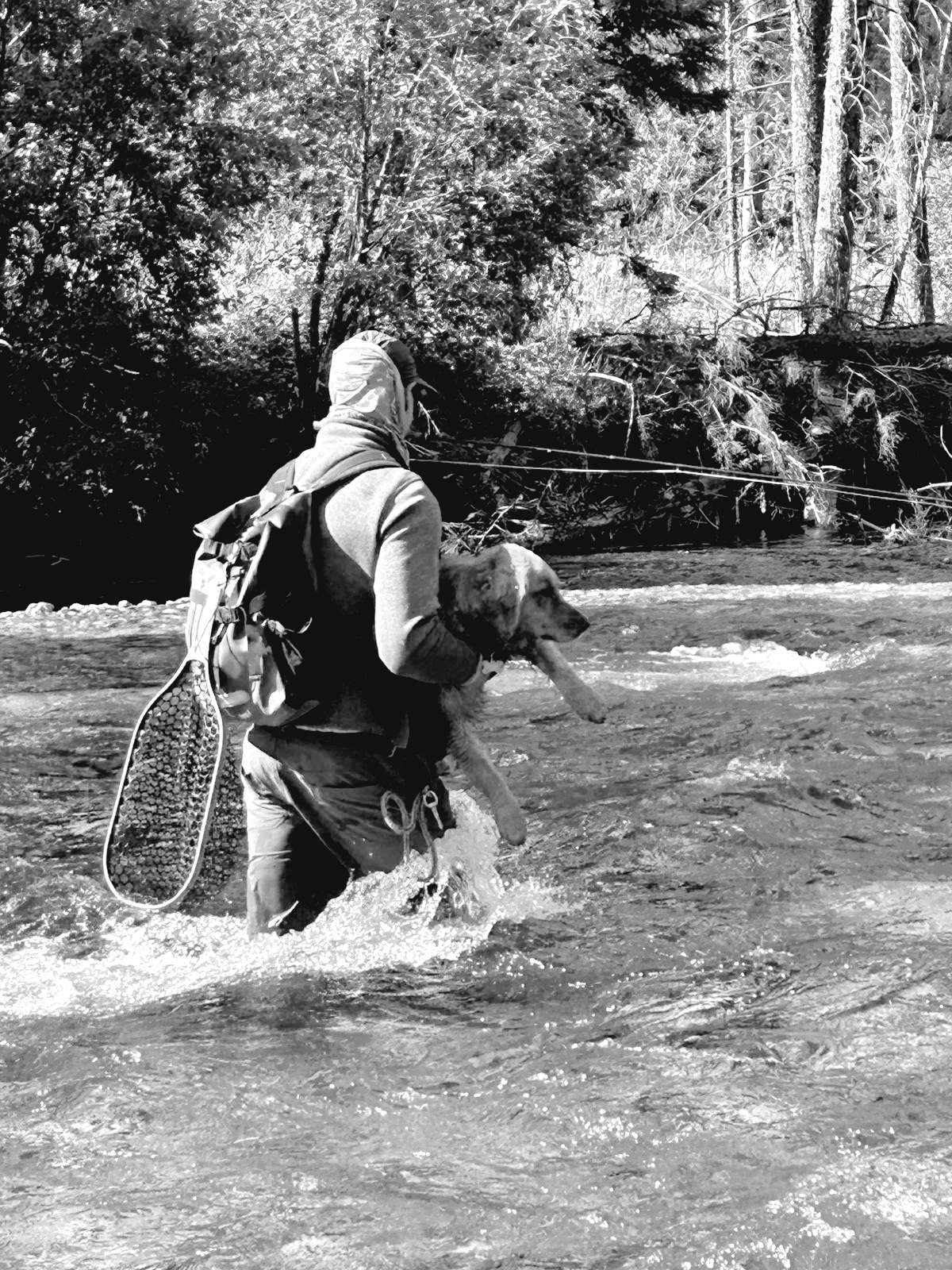
fast water carry, photo by roman
If you fish a lot you know it doesn’t always happen this way. Some rivers are easier to predict than others but in the end when dealing with Nature there are many uncertainties; many unknowns. Sometimes everything seems perfect but you don’t get a solid hatch, you just get wet…but that’s all part of it.
rainbow
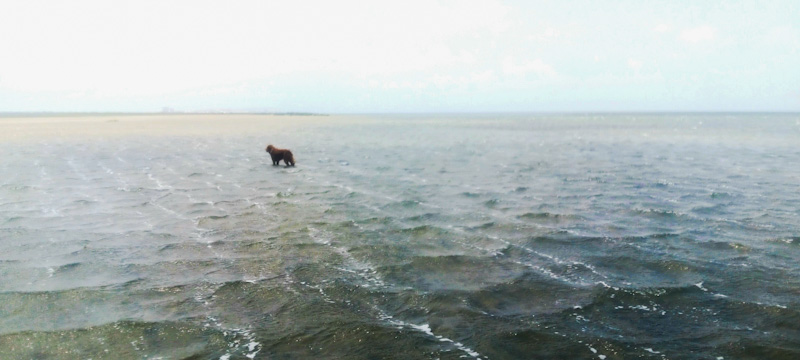
harper, photo roman
So, “It might happen” ended up “happening” and we caught and released some wonderful trout on size 16, 18 Pale Mornining Duns…here are a few images…
” Aye, aye! and I’ll chase him round Good Hope, and round the Horn, and round the Norway Maelstrom, and round perdition’s flames before I give him up”.
Captain Ahab, Moby Dick/ The Whale—Herman Melville
Oh boy! I’ve been on a bug search. Looking for insects. Looking for a good solid hatch. Looking for some rising fish. The two go together: bugs and surfacing trout. It has been tough out there. I’ve been roaming from river to river. Looking. Some yellow sallies are around; some pmds; some big stones; some bwo’s when cloudy; some drakes. “Some” but not “much” of anything. Kind of sparse (hatches), thin and weak I’d say. And then some inclement weather rolled in. Some low clouds and rain. I picked another river. One I’ve been waiting to get on. Waiting for the flow to drop. Waiting for the right moment. And I got lucky. Around mid-day bugs started to hatch. Big guys. Big drakes riding the surface, wings up, like the old time tall ships with their towering masts. A spectacular event. Maybe 1.5 hours long. Not bad. And with it the best in the river (trout) showed themselves and I managed a few good ones on dries. Then I continued to walk the river and watched familiar locations and spotted several more robust trout rise perfectly to intercept the big bugs. By then watching was good enough. Reverence for this special river.
Some photos while roaming around searching the past few weeks; hiking streamside paths; crossing rivers….and a few special trout.
There are three tailwater rivers in my region. On Opening Day I visited two of them to see what kind of shape they are in. Due to another low snowpack year the reservoirs that feed them are low. Early season fishing will be okay but late season it might get ugly: minimal flows, and if reservoirs come close to bottoming-out then silt will be in the water which will affect the sight-fishing.
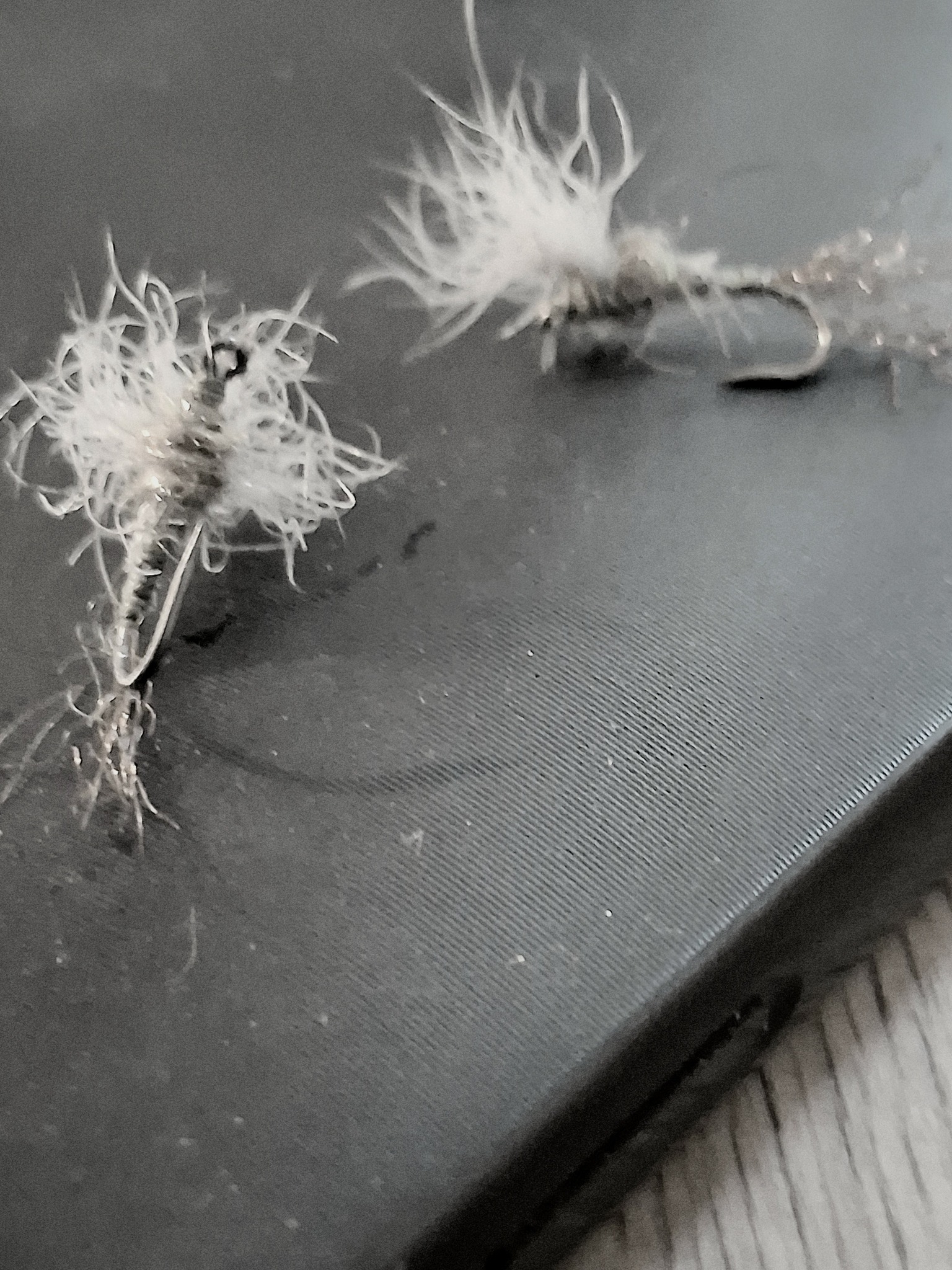
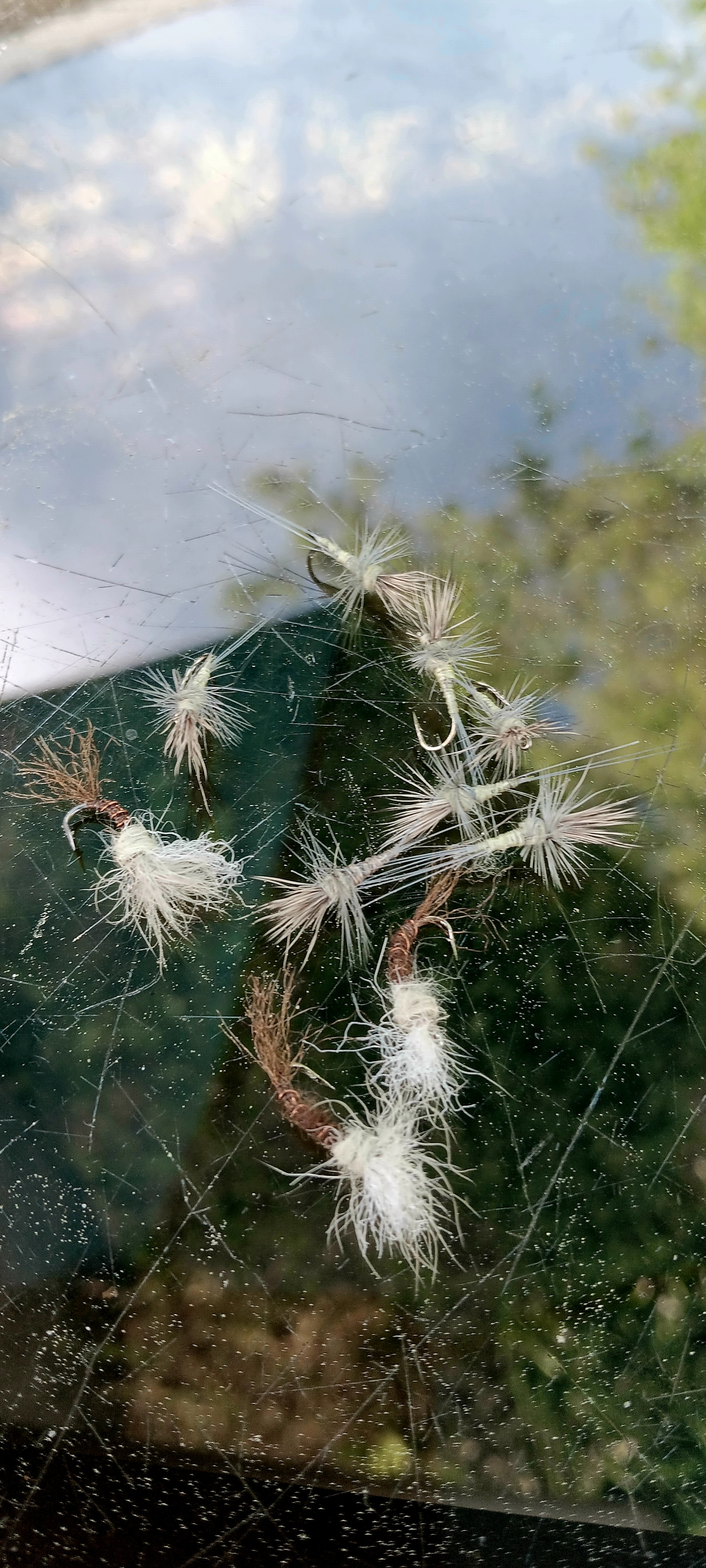
One tailwater had no insects so I went to the other. PMD’s started in the afternoon on the second river and there were some large Caddis flies skittering on the surface. Both hatches were weak but there was just enough activity to get a few decent rising fish. The water was low and clear and the fish concentrated. I caught a couple of decent Brown trout on dry flies. One cooperated for a photo, the other didn’t. Here’s a photo of one and the type of flies I used. One pattern breaks the surface and dangles (emerger/dry). The tuft of white is simply Snowshoe Rabbit to keep the head of the fly afloat so it can be seen when riding in the current/riffles while the body hangs (unseen) below. Instead of rabbit I also tie them with polypropylene, deer hair or CDC. Some people use foam. The other pattern has the hackle clipped on the bottom and therefore it sits or rides low on/in the water. Kind of a Quigley cripple pattern. That’s the inspiration. Both are easy, quick flies to tie.
Opening Day… always special no matter how many you have experienced.
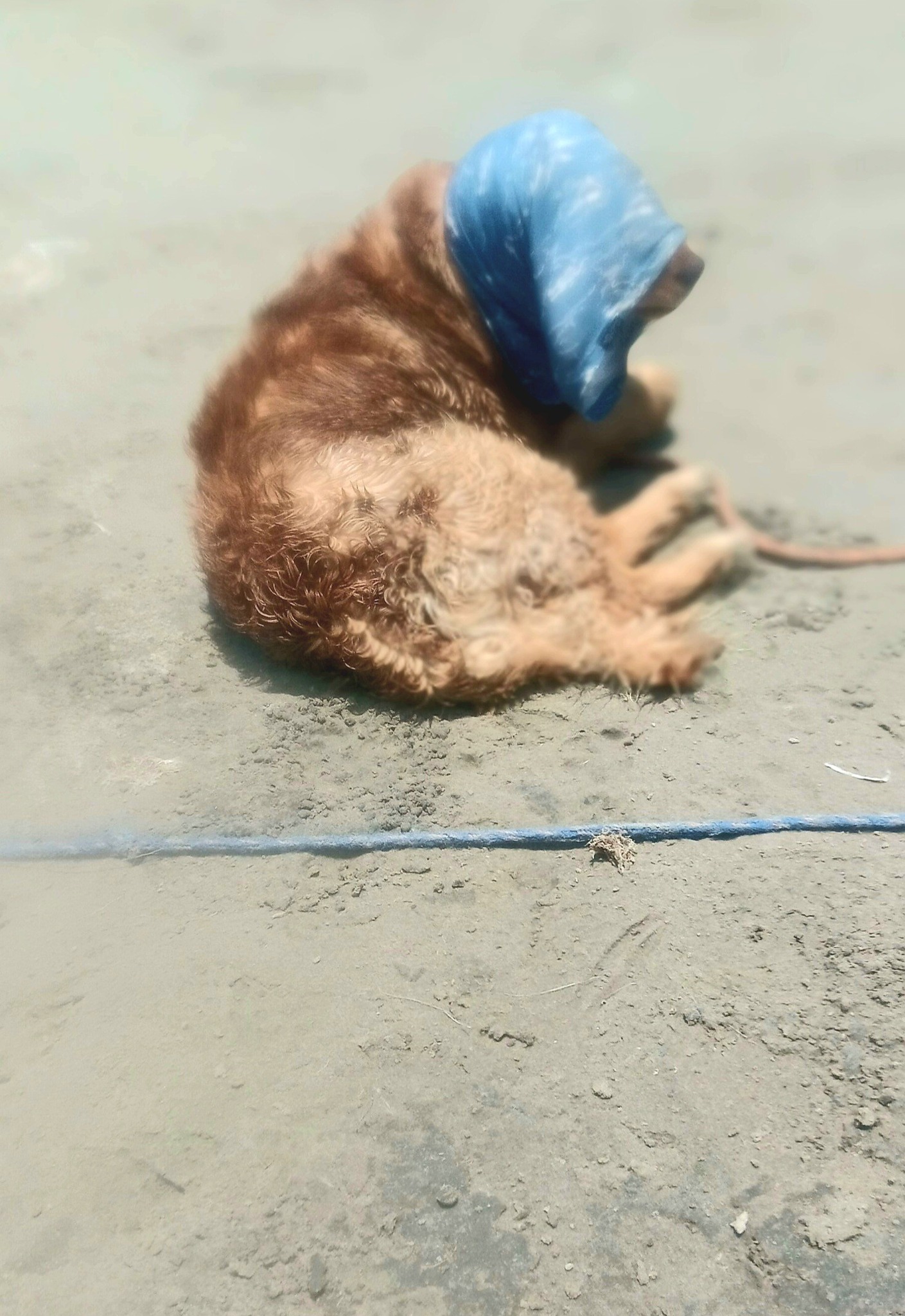
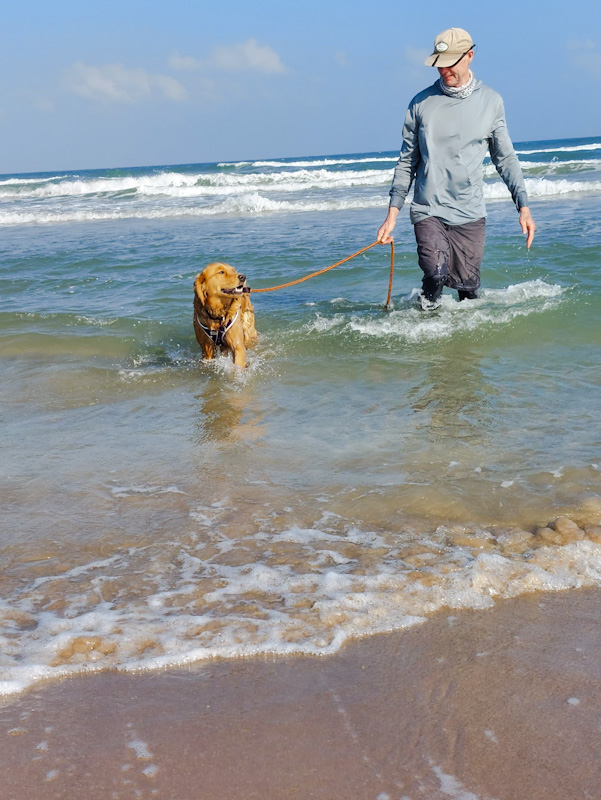
It’s 90 F in the shade; humidity also in the 90’s; I’m on a barrier island, coastal Gulf of Mexico, fly fishing the bayside; the calm side; the flat water side; I’m angling on foot in a foot of water; searching the clear sandy shallow flats for Redfish; my dog, Harper has been roasting in the heat in her fur coat; the panting has never stopped since the heat wave hit; after 3 weeks out here I can tell she wants to go home; she is not enjoying our outings like before; chasing shore birds, minnows, dueling with crabs is getting old; the giant cicada like insects that hang-out in the shoreline sea weed and jump on her when she walks by are bothering her; as are the early and late day horseflies; she barks at them; I’ll have to return home soon; I don’t want to leave; I’m good in the heat; when I lived in Montreal and fished with a friend, Ray in the Adirondacks on sweltering July and August days he’d often say, ” I think you’re a Camel, you walk all day and I never see you drink water!”; on this trip I’m constantly hydrating.
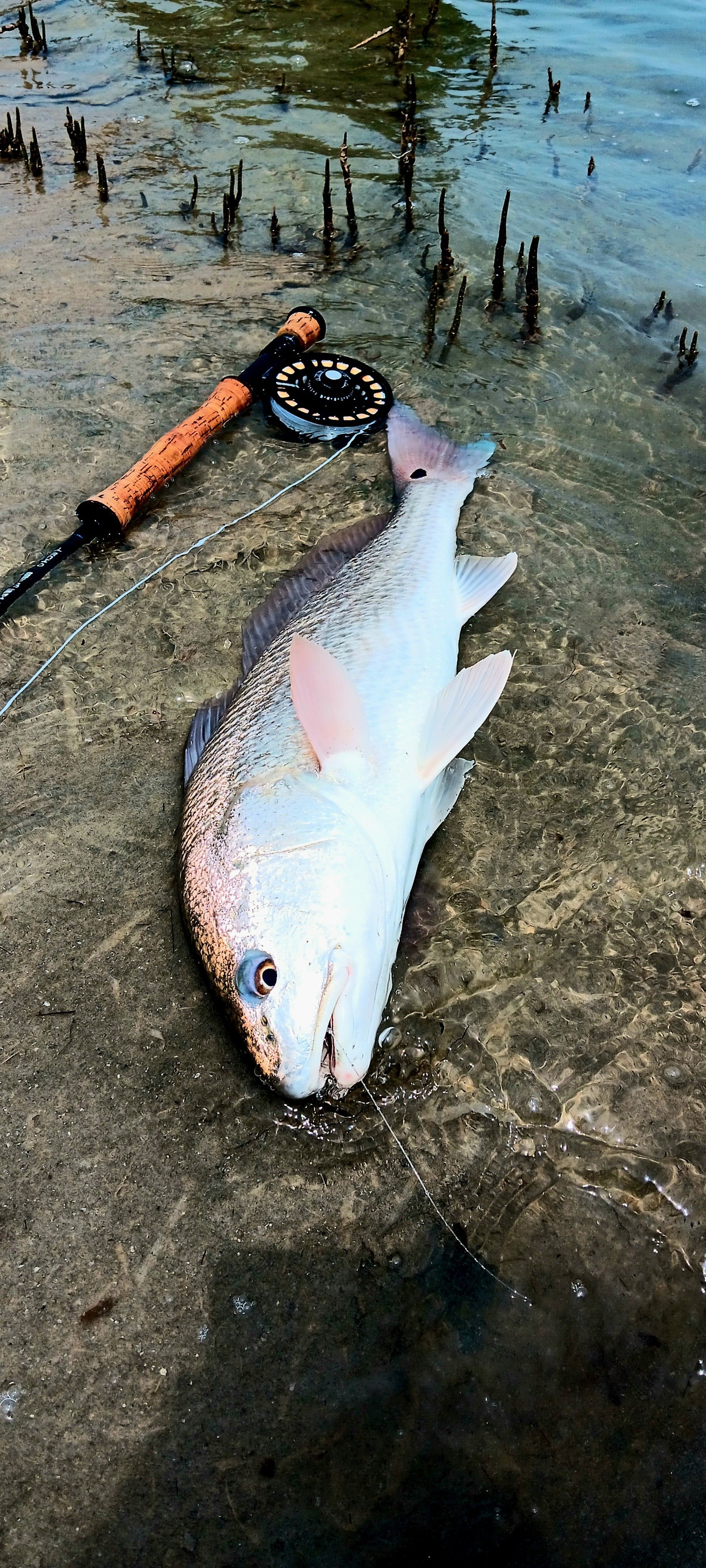
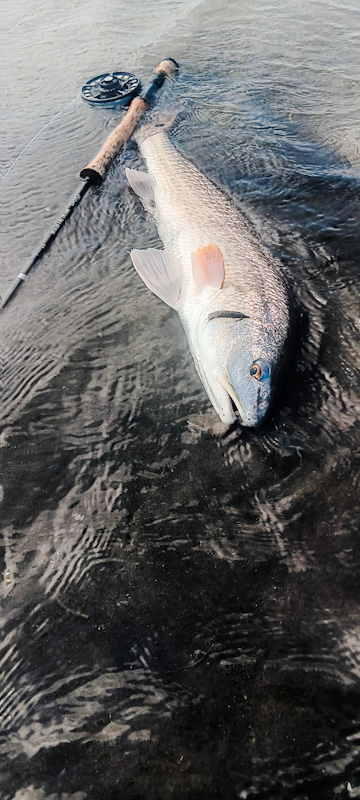
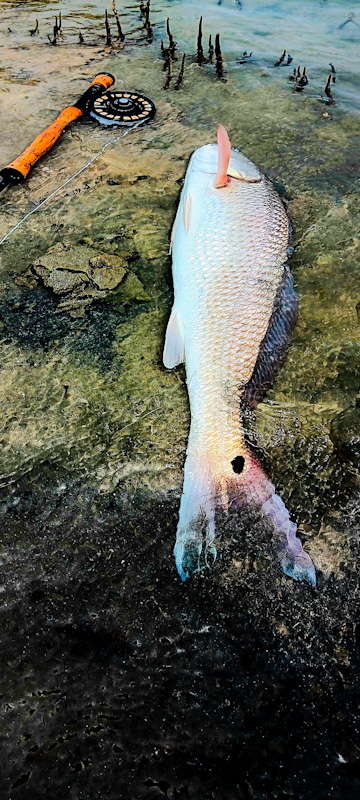
redfish
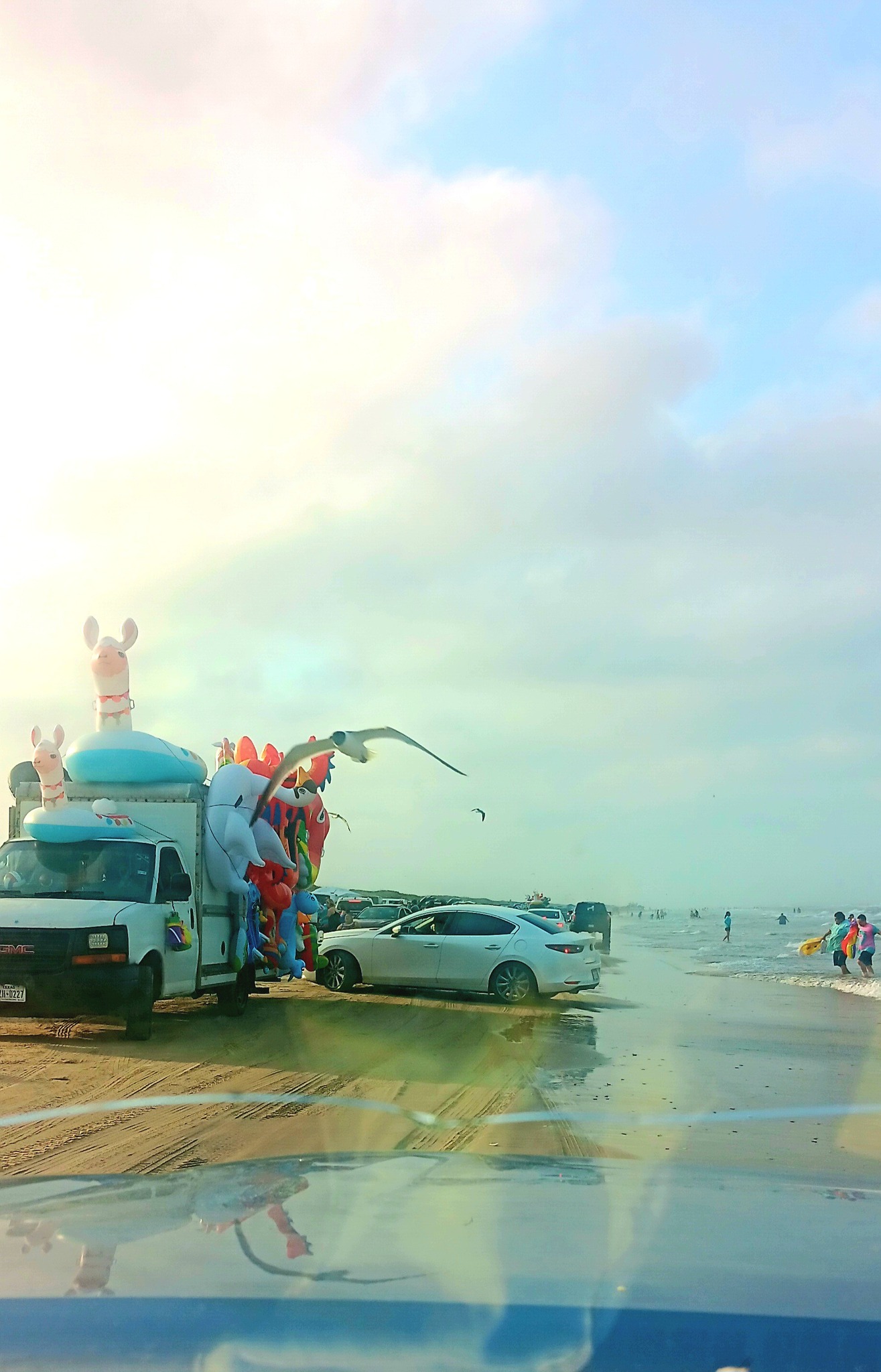
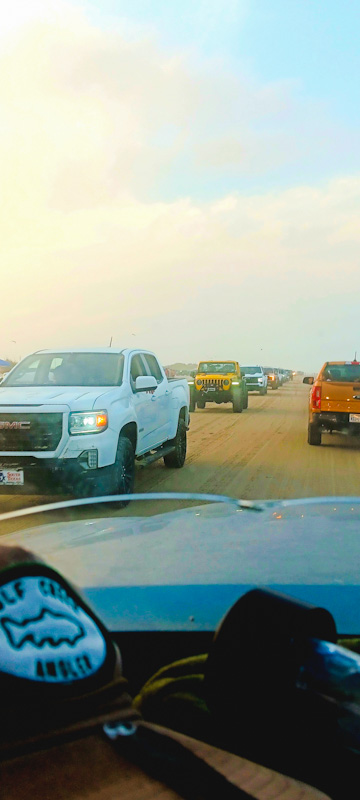
The island I’m on is busy on weekends; there’s a giant Rocket blast-off in a few days; preparation for an eventual trip to Mars; people are in town to witness the launch; the occasional futuristic cyber truck roams main street; it’s also beach season here and locals from the nearby valley/mainland are here for the ocean breeze and to party; they drive up and down the beach all day and night; I hear ground shaking Hispanic Rap, traditional Mexican music with a lot of Horns and the Accordion and regular Country blasting from vehicles; each truck passing competes with the other to be King of Decibels; at night they do donuts in the sand and spin their tires; I’m beach camping; after a night or two of witnessing it all I purchase several garden solar lights and stick them in the sand around my truck camper; I want the night-time riders to see me; I don’t want someone high or drunk in a oversized big-wheeled pick-up to plow into me in the dark; weekdays are quieter; after a few days I drive the beach much further north away from town where there’s less sand traffic; but there’s still some.
long weekend
memorial weekend
Sometimes vehicles get stuck in the sand; I’ll offer to help push or dig-out but I will not tow; I’m 2300 miles away from home; I know no one; my vehicle is my home; it’s my space capsule; my ticket back from Mars to Alberta; I won’t gamble with that; when asked I explain that I don’t tow; they understand and they know someone will eventually come along and pull them out; County police patrol the beach night and day and will call a tow truck if requested.
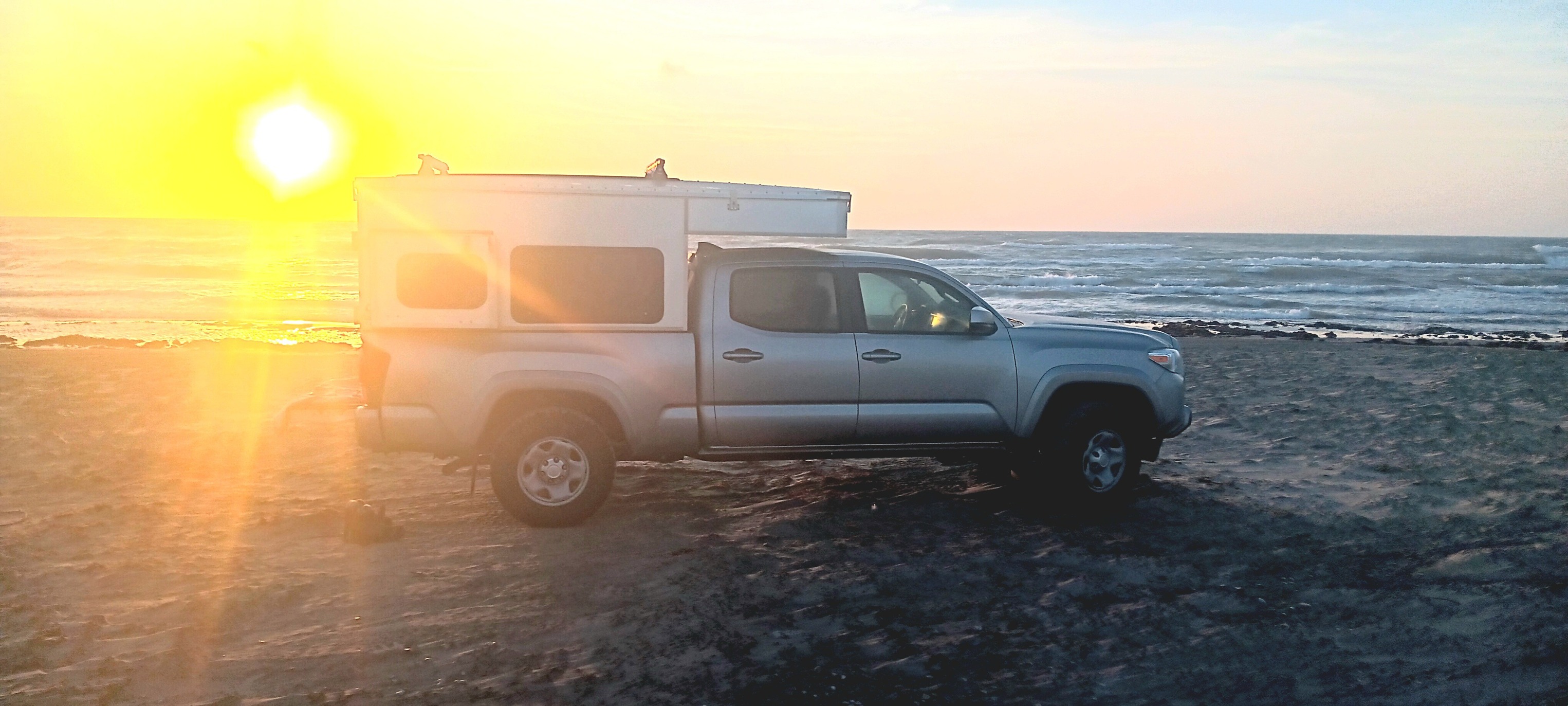
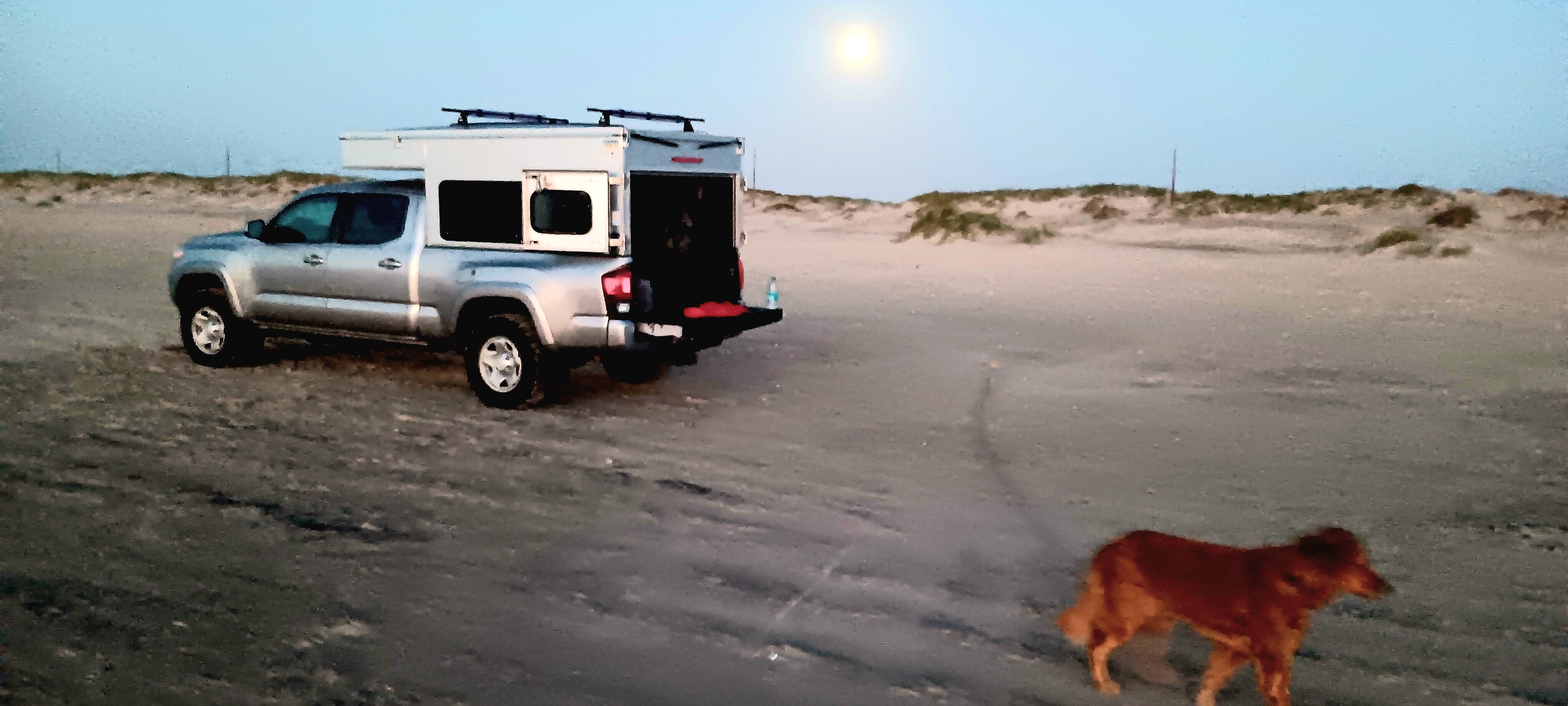
When beach camping I pay attention to the tides; the moon phase and the wind; the high water mark; these details help me park a safe distance from the surf; I often tuck myself back-up against the dunes to be furthest from the water; the sand tends to be softer there and I have to be careful that I don’ t get stuck; I always exit the same way I drive in; I tell myself, “if I got in, I can get out”; I can also air-down my tires if in a jam; most of the night prowling trucks tend to stay closer to the surf on the hardened sand.
sunrise, weekday quiet
It’s turtle nesting season here; I feel the poor creatures don’t have a chance with the beach traffic and night-time shenanigans; the nearby turtle rescue center volunteers place small florescent flags in the sand to mark the egg laying locations when found; I see them checking the beach at night with flashlights and head lamps; sadly the beach traffic seems oblivious to their markers.
windswept days
often windy even on bay
everyone gets a sun buff
Coyotes often prowl the sand dunes and mud flats where I fish on the bayside; they call out to my dog; she stays close to me but is wary of them; they are persistent, bold and annoying; one day I chase three back onto the flats; I know they’ll come back; they do but keep their distance; eventually they get bored and leave; as they slink away I yell “I fish in grizzly bear country back home and you simply don’t measure-up”; the heat can affect you in funny ways!
pestering coyotes
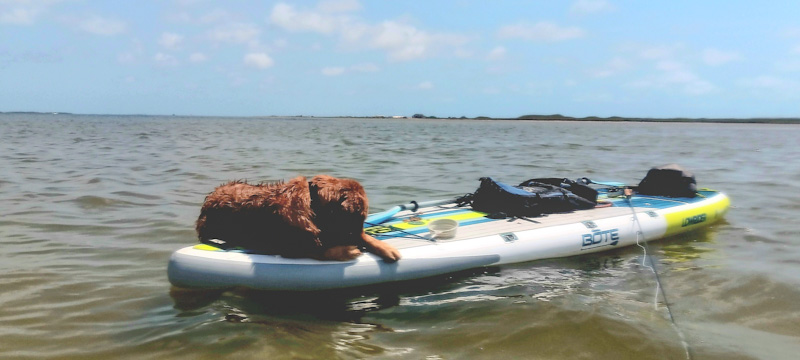
There are a lot of nasty creatures around here. One day after stepping out of my truck my feet felt like they were burning; they felt on fire; inadvertently I had stepped on a colony of fire ants; my efforts to knock them off were futile; I ended up sprinting to the bay and drowning them; aggressive horse flies also stalk Harper and I in the morning and evening when walking to and from the bay; there are even wild boar; once I’m out on the bay all is good; all is tranquil; no rattlesnakes; no coyotes; no ants; no horseflies; if it’s not windy I pump-up my paddle board and anchor it in the shallows; in a foot or two of water; after a cooling dunk I place Harper on it, and a backpack with our water, food and fishing gear; the board is our floating island where the coyotes won’t bother us and the biting insects are left behind; I search for Redfish within eye-shot of the board and if I see nothing paddle parallel to the coast, anchor and search the new spot; I’m rarely successful angling on the board; I spook a lot of fish that way; I do much better when I leave it and slow walk the shallows.
rare storm
true color
casted my own flies
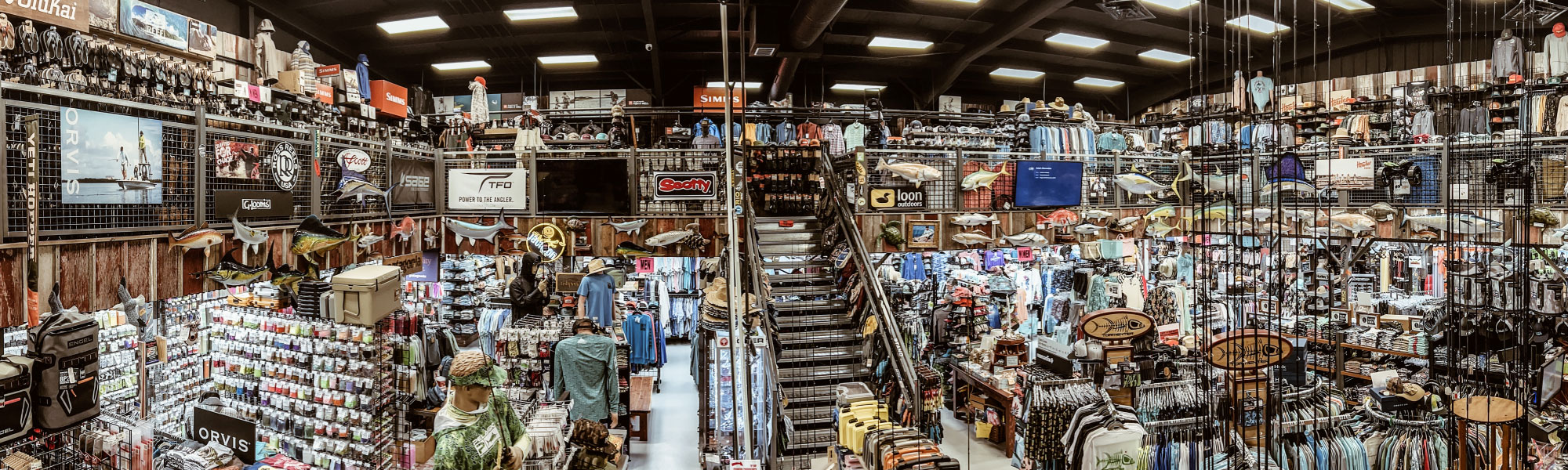
On a windy day, which there were many, my medium-sized bead chain eye fly strikes my rod tip on the forward cast; the tip folds over then breaks off; I have a back up but I want a back up for my back up!; I know that the new fly shop in town that opened last year unfortunately closed; I call a large outdoor store on the mainland; to my surprise they don’t sell fly rods; I check the internet and the nearest place that supposedly has fly rods is in Corpus Christi three hours north; it’s call Roy’s Bait and Tackle; it sounds like a place where I could probably buy squid and shrimp bait, some 100 lbs test line, a fish gaff hook and an outboard motor but I’m not convinced they sell fly rods. I call to check and I am informed they do; they have all the brands; they open at 9 am; the next morning I hit the road at 6 am; it a cooler day and therefore good travelling weather; it’s also suppose to be cloudy and rainy with the possibility of some severe thunderstorms; on the way up to Corpus I pass through several what seem to be world ending electrical storms and heavy rain; windshield wipers need to be on high speed; I travel at 80 km as any faster and I’m hydroplaning; I find Roy’s; they have a huge fly fishing section; one of the best I’ve ever seen; a Disneyland for a fly angler; I buy a back up for my back up; I can now cast again in the west Texas wind with authority; with no fear; I learned long ago when fly fishing Baja beaches for Roosterfish that you have to be aggressive when casting, even in the wind; opportunity only comes a long every so often in the Salt; and when it does you have to be quick and you have to go for it.
Roy’s Bait and Tackle, fly shop side
At Roy’s I ask several questions about the National park on the north end of he barrier island that I’ve been on; they are extremely helpful and inform me of wade fishing access spots on the bayside; from past research the names sound familiar; the park is pristine; it’s a different scene than the carnival in the south; I camp on the beach and then 2 nights in a basic campground with showers; it’s quiet here; on the bay I find Black Drum on the sand flats every afternoon; big guys; I’ve caught them before; I catch several mid-sized ones but are stumped by the large ones tailing in the afternoon light; I hit them with everything I’ve got; many fly patterns are tried but I can’t seem to “match the hatch”.
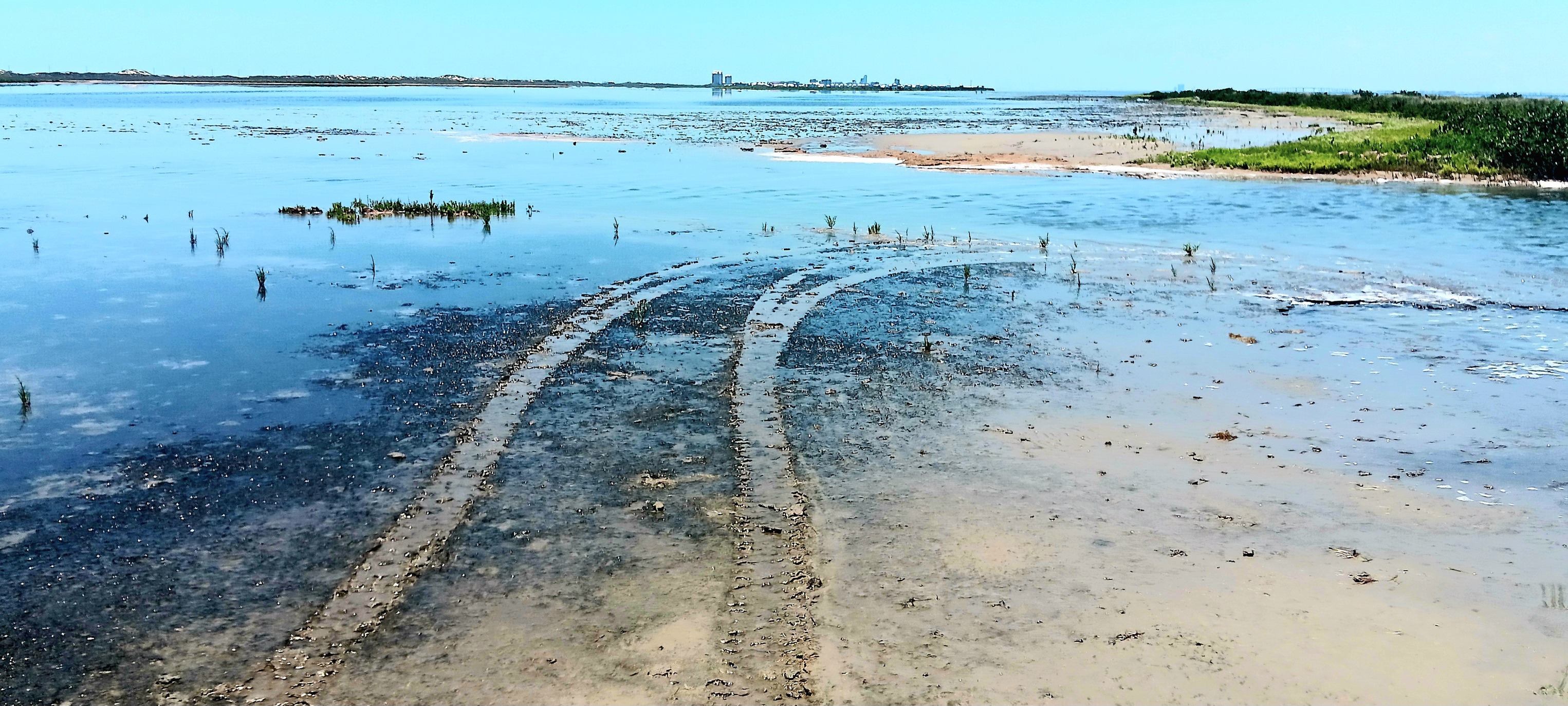
driving mud/salt flats close to bay
A few says later I decide to return home; it’s a four day drive; first night-time stop, Lubbock, Tx, and it’s 100F; I grab a KOA cabin with Air Conditioning; the next night it’s Fort Collins, CO. and it’s 46F and Harper’s panting stops. While driving I think about the coyotes; the ants; the horse flies; the heat wave; the west Texas wind; the weekend beach spectacle and traffic; the mission to Mars; the challenging Black Drum; Roy’s Bait and Tackle fly fishing wonderland; and camping for over three weeks on the World’s longest barrier island. I stood in the middle of it all with Harper, fished with my eyes and caught and released some wonderful Redfish in the slightest of water…a great angling adventure.
“Fish the way you love to and go find water that favors and honors that…”
AS I DROVE DOWN INTO THE COULEE I could see grey smokey-like clouds hovering and shifting over the river. They were tiny Mayflies. Tricos to be exact. I had witnessed this hatch before, here and elsewhere, and knew it was going to be a morning of possibility. It was 7:30 am when I arrived riverside. No one was around. It was August. A couple of big rainbows were up gorging themselves in the cool morning water on the dense hatch and spinner fall. Catching one was all timing. First I had to gain control of my excitement and shaking hands. Then I had and get the fly right in front of a large mouth when it opened and gulped, then pray the tiny hook would catch and hold. Here’s a rainbow caught that day on a size 20 Trico dry fly.
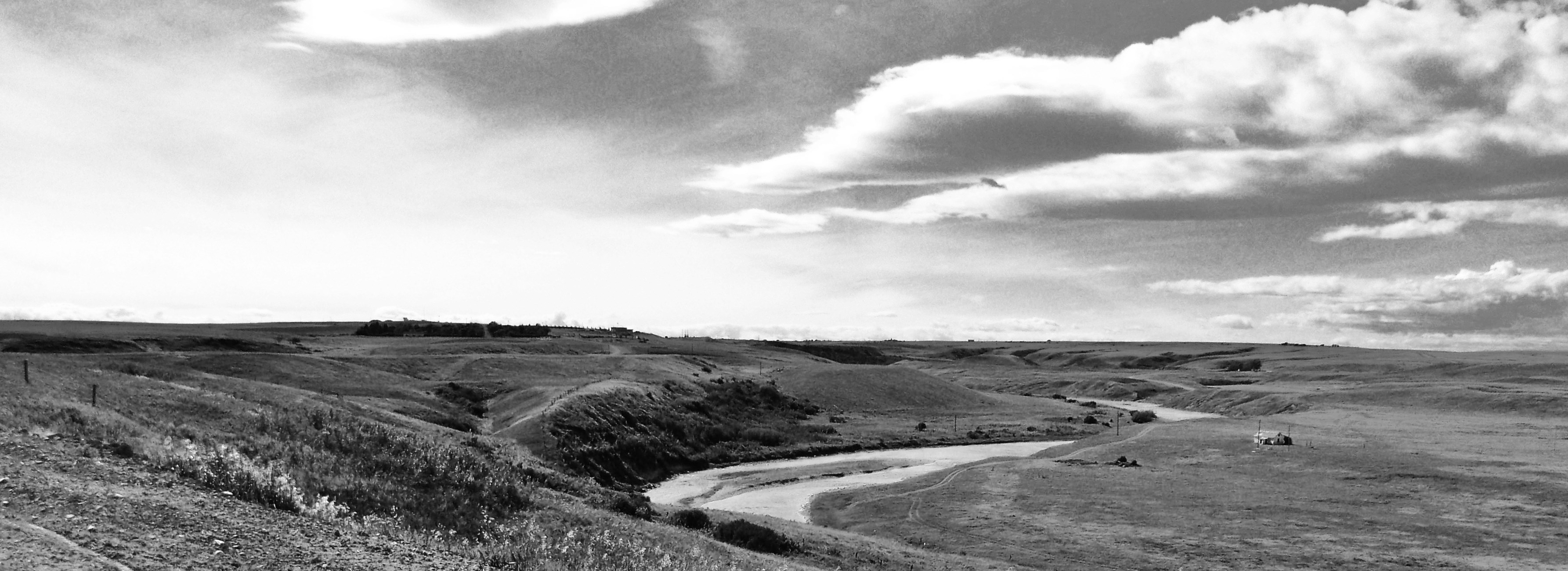
That was about a decade ago. I had fished the Coulee river intensely for 5 or 6 seasons in a row and considered it the best large wild trout, walk/ wade river I had ever been on in North America. Some rivers had better hatches. Some more rising fish. Some had way more trout per mile. This was the best sight-fishing river. It rivaled some of the rivers I’d experienced on a few trips to New Zealand. On most days the river required a lot of walking and searching to find a few special fish, especially when there were few insects around. I always felt I had to fish well in order to make a connection in the wide open terrain. There were few places to hide from the wary trout.
On most days I’d walk the cattle and deer trails along the ridges and hills of the coulee and search for rainbows in the clear water below. Their dark backs would contrast well with much of the river bottom and they were often easy to spot. In areas where they were more camouflaged I’d look for movement. That would give them away. It was one river that I preferred to fish in full sun.
When I approached one of the many river’s pools I’d watch for trout prowling the shallow edges where they often looked for hatch leftovers and terrestrials like ants, beetles, crickets and in late summer, grasshoppers blown in from the riverside grass. They were big confident fish that didn’t seem to mind the skinny water even though there were often Pelicans and Osprey around. Of course they were always on high alert and never too far from the safety of deeper water. Their cycling patterns were repetitive and often predictable. I’d watch their routes then drop down from my elevated perch on a slope or ridge and try to intercept them along their hunting path. If I stayed low and used the sun’s angle to my advantage I usually wouldn’t be seen. A black beetle on a long leader often enticed them. Most trout would accelerate towards my foam impression once spotted. When they didn’t notice it a small twitch sometimes pulled them over to inspect the slight disturbance which suggested a living thing. Some when approaching slowed down, paused and hovered millimeters from my fly before eating. Some nudged it with their nose. This would usually result in a rejection. I recall one pausing and eyeing my fly at close range then it turned away, circled, then returned to inspect it once again, and ate it. I remember saying to myself, “I’m watching them think”. The river offered some of the most visually engaging angling that I had ever experienced.
Unfortunately the river no longer fishes as well. In recent years I have returned every summer a few times to check it out and hope it is again, what it once was. Hope that it has recovered. But it has not. Repetitive years of drought, low snow pack and significant agricultural water extraction/ diversion have hurt it. The flow, controlled by a dam, remains minimal just about all season long. Basically the river has been choked-off. As a result the water is often warm and is rarely clear. There’s a thick sludge along many of its banks. There are still some fish around but not like there once was. Places I always use to spot trout are often barren. Anglers who nymph the well oxygenated flows at the head of the river’s shrinking pools still catch some quality fish but I’m not into that.
I’m lucky to have witnessed it when it was a remarkable sight-fishery. There was always a chance of a great trout down in the coulee…reel backing required.
Here’s a presentation I enjoyed on The Fly Culture Podcast with Pete Tyjas about surface and subsurface trout feeding behavior that is based on observation using technology (video/film) and therefore factual. For Dries it is flies that portray vulnerability (spent flies/spinners; emergers; stillborn/ cripple; stuck-in-the-shuck flies, drowned looking flies; etc.) to a trout that get selected more often, sometimes solely. These are dry flies that sit/ride low, “in the film”. Good flat-water anglers have long known this. Hayes and Stazicker confirm and add to the knowledge base.
Make your ties look vulnerable…fish the ones that are soggy and look beaten-up!
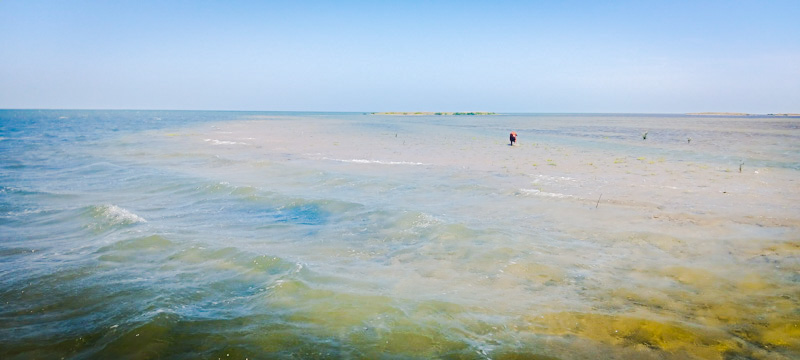
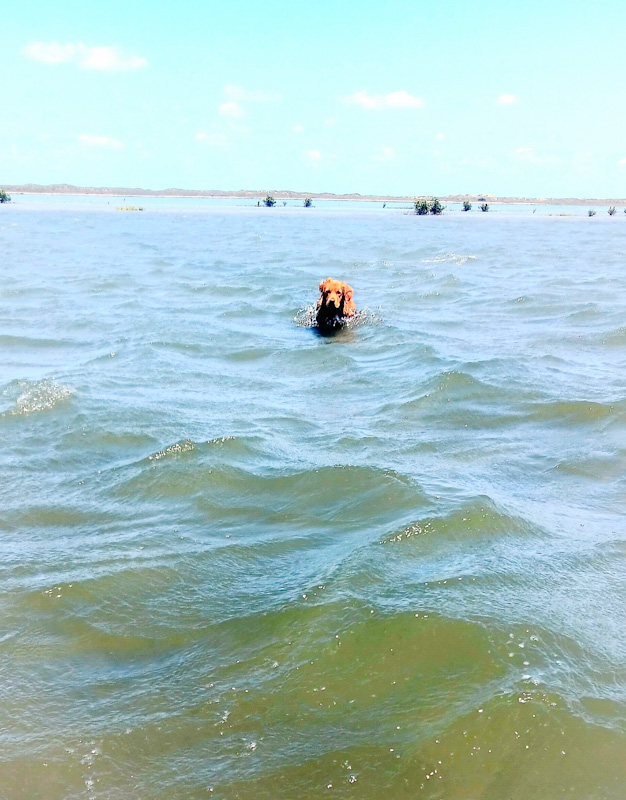
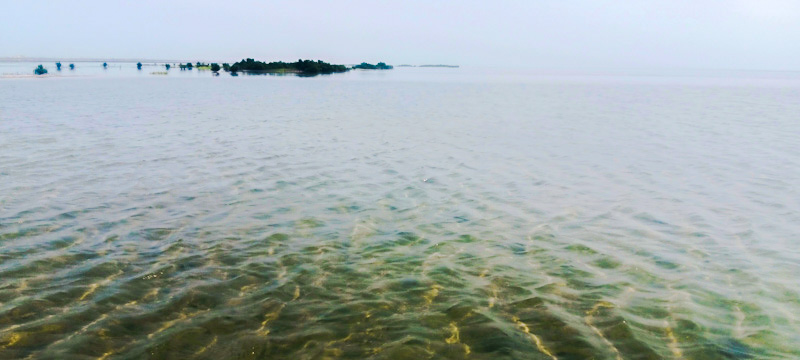
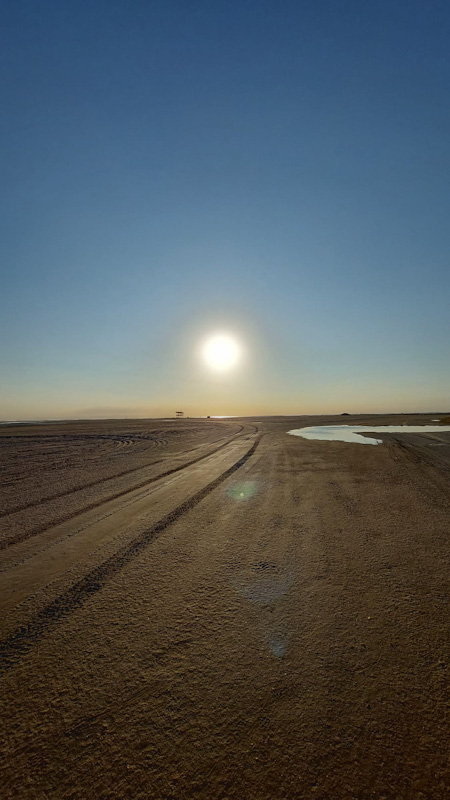
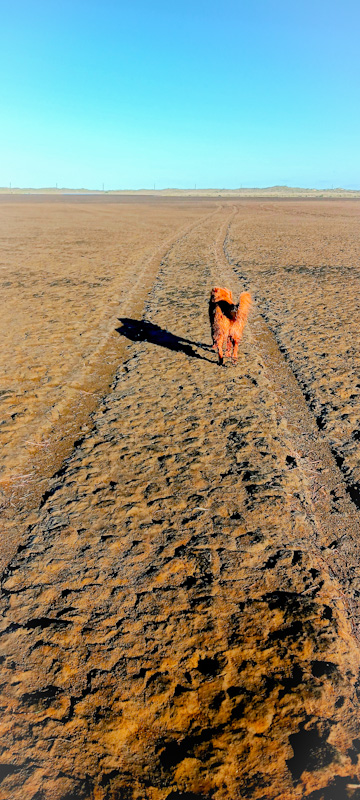
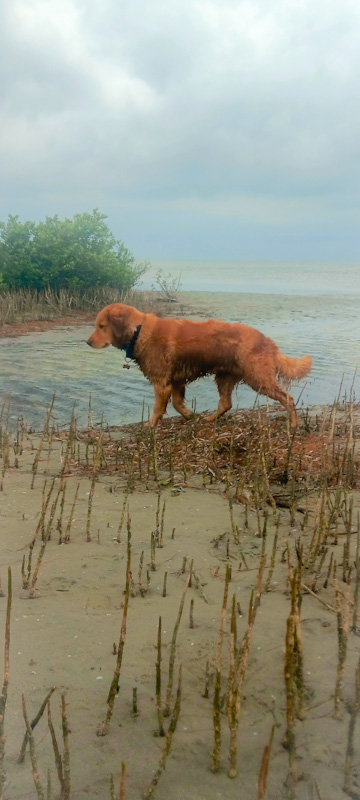
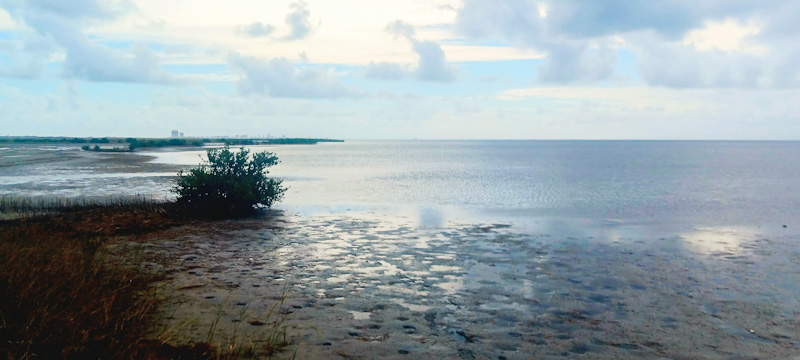
I’TS HUMID HERE. AND WARM. HOURS WALKING the soothing saline water and soft sand is a striking contrast to a full summer and fall season of pursuing trout in cold water on bouldery streams. It’s easier on the body. It’s a nice change. As I cross the tidal flats in the morning light to the Laguna/ Bay, Harper chases rabbits through the sand dune vegetation growing on the nearby mounds, hills and ridges. There are spiny Cacti out there but she always seems to avoid them. No yelps; no injuries so far. There are also island deer and coyote around. I often see their tracks. Occasionally I see them. I keep alert for the coyotes, especially if a few of them are scavenging the bay area together, in case they try to target Harper. It’s wild out here. I rarely see another angler or anyone else. I have the place to myself. I’m on a long thin windswept barrier island along the Gulf of Mexico.
tidal flat to bay
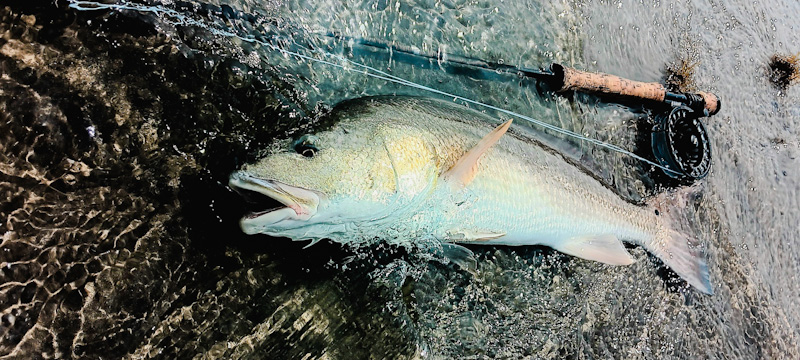
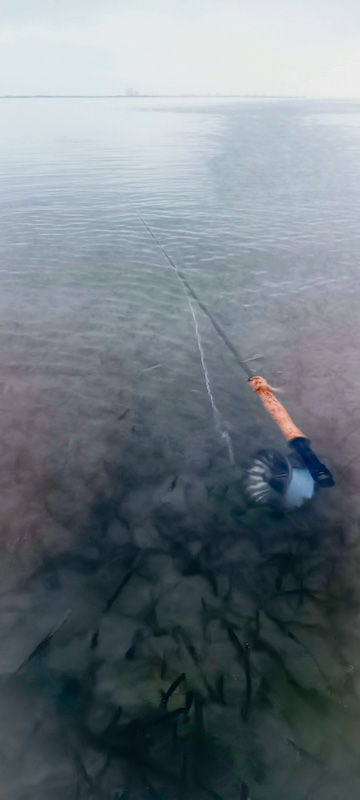
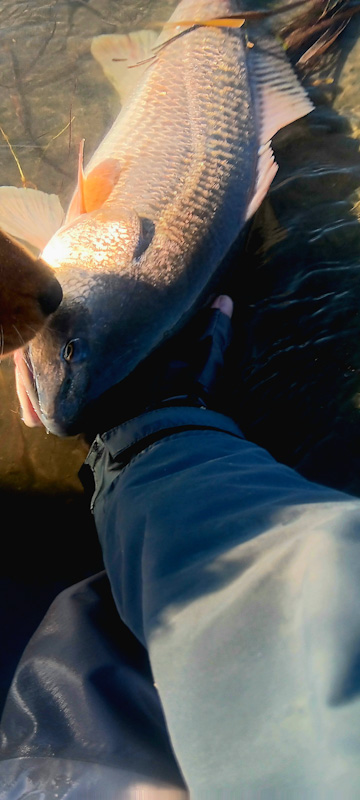
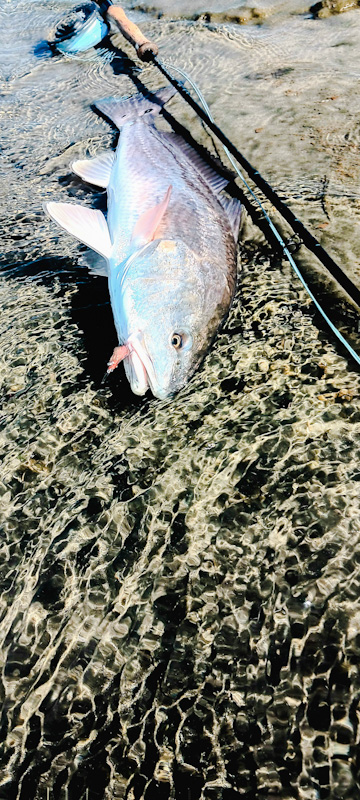
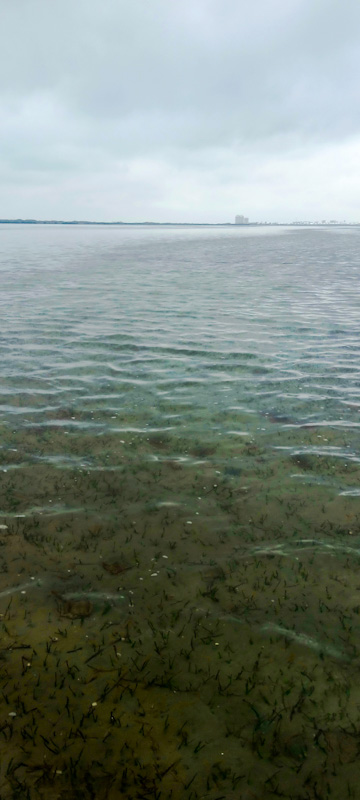
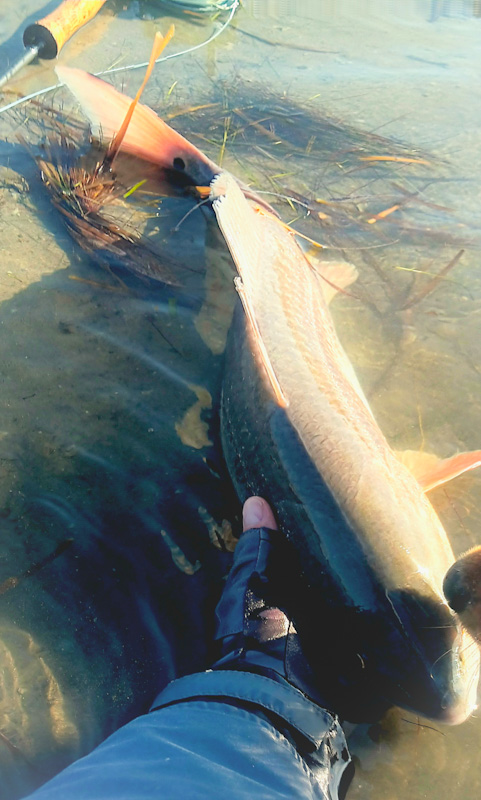
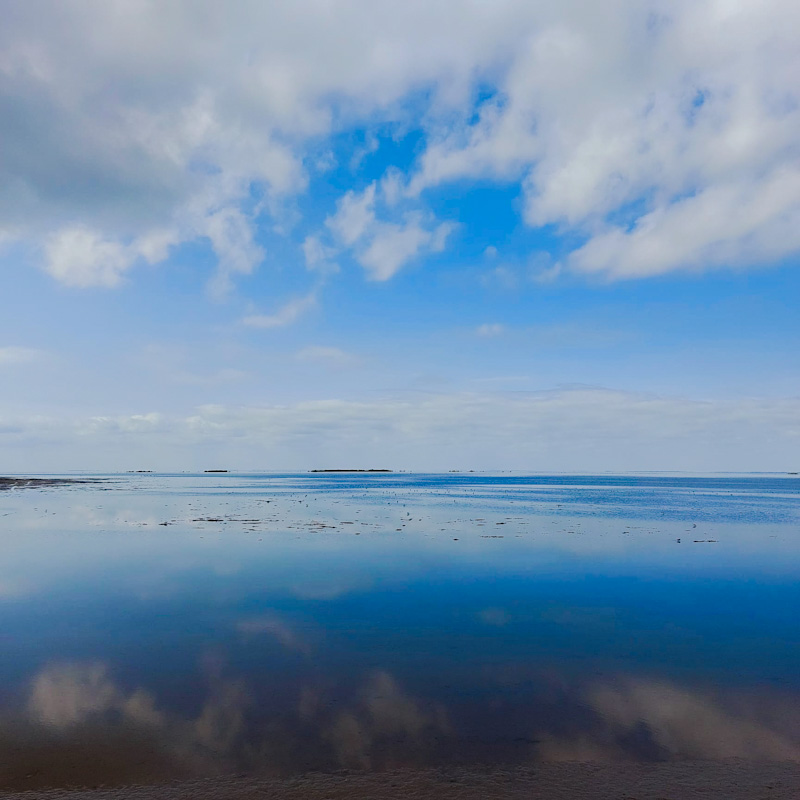
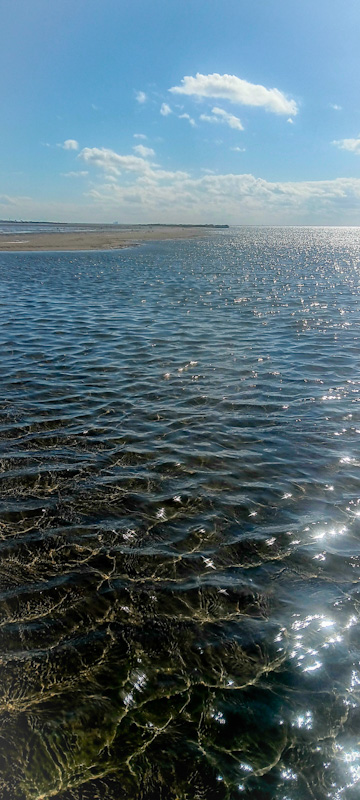
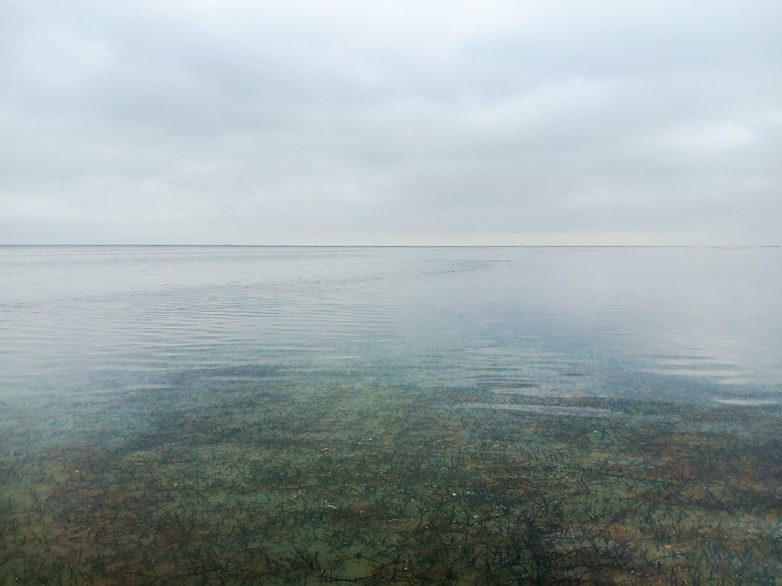
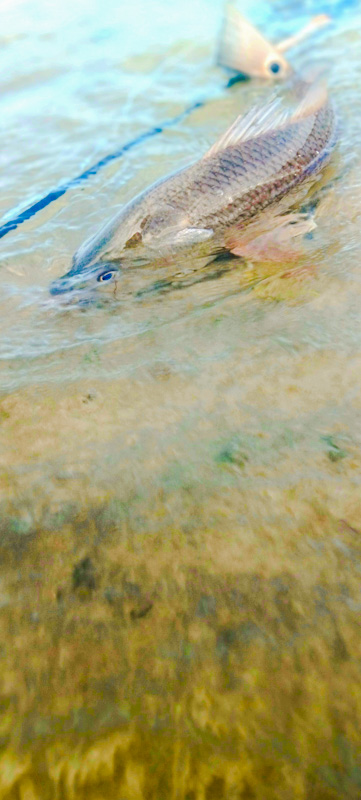
I’m sight-fishing the ultra-shallow Laguna/Bay on the west side of the island. It’s my fourth trip and I’ve now spent a cumulative three and one half months walking the bay’s clear sand flats searching for Redfish. The angling is always challenging in the fall and winter months. On many days I have to deal with high wind, sometimes cloud cover and the glare that goes along with it. And there are no obvious clues on how to fish the bay as it is relatively uniform with little bottom structure, or change in depth, and no obvious channels/ fish corridors at least on the side of the bay that I’m on. However, there are subtleties to the fishery that I’ve learnt which improve my chances of finding fish. Understanding the tides help, even though they are minimal, and paying attention to parts of the flats that have small patchy areas of sparse sea grass that poke through the sand and feel spongy (biomass) under foot. These patches hold more crustaceans than the barren sand.
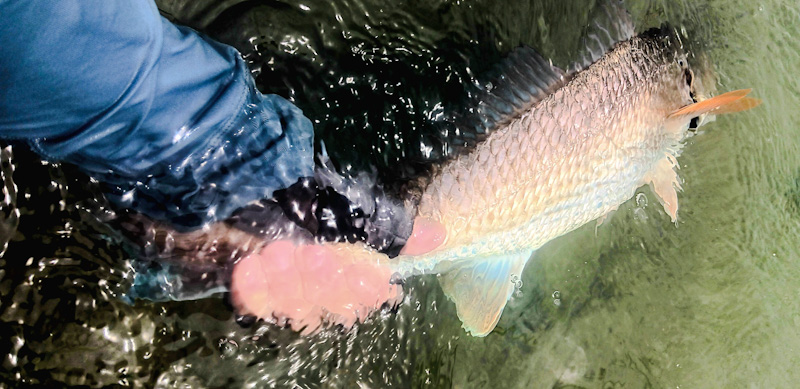
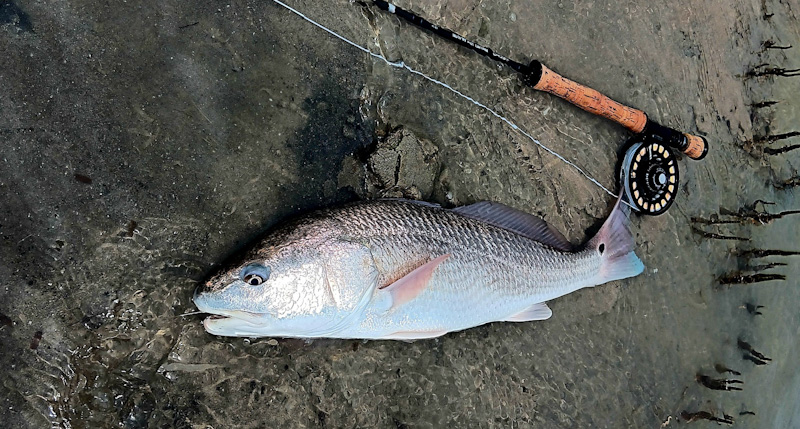
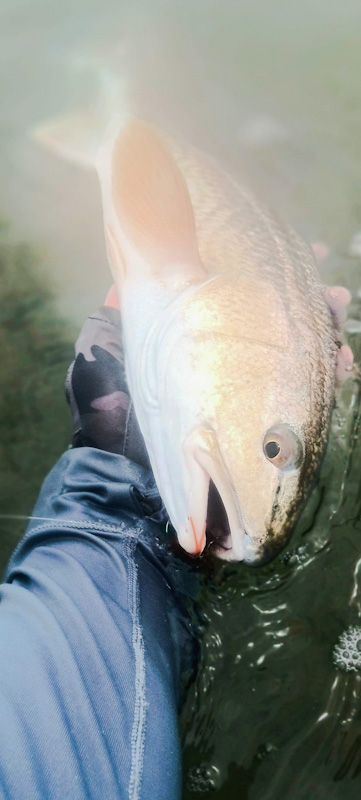
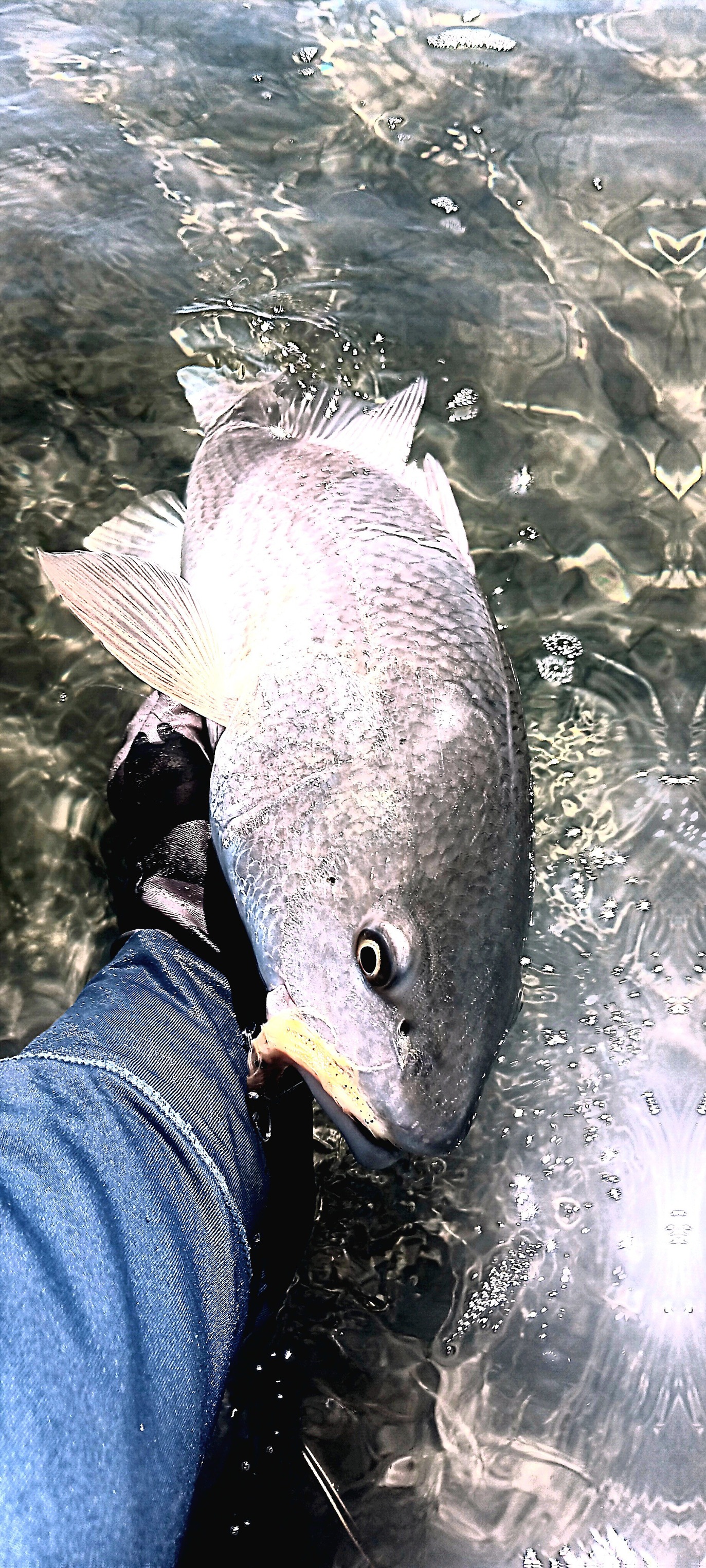
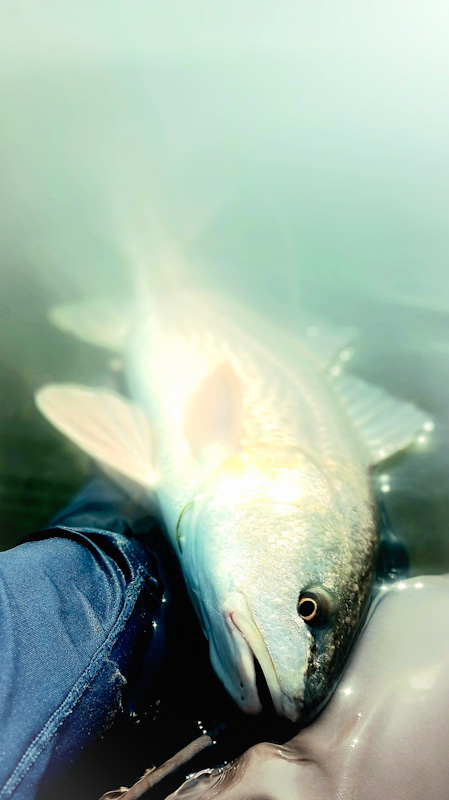
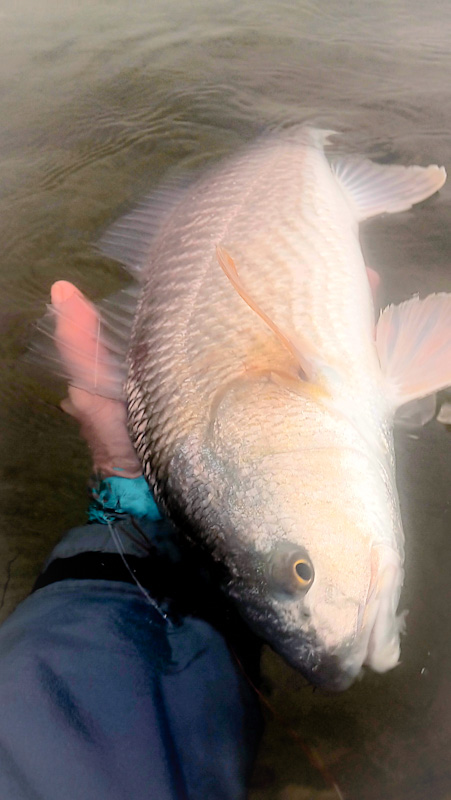
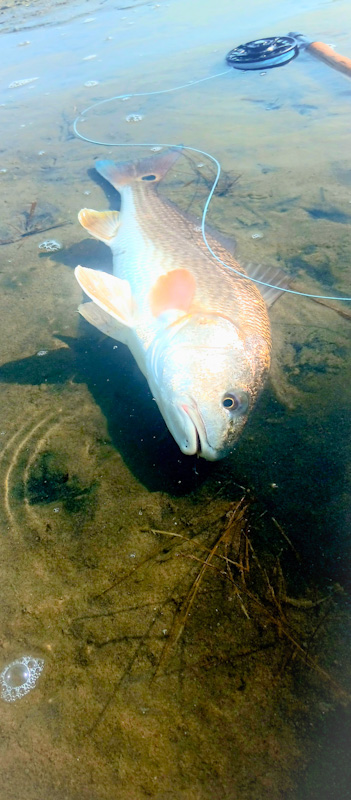
redfish
Generally the Redfish either show up on the flats to feed, or they don’t. My best opportunity to spot one is when the light is right. Full sun is always best, no or few clouds, and low wind. When the light is right I have a good chance to make a connection(s).
photo: r dewey
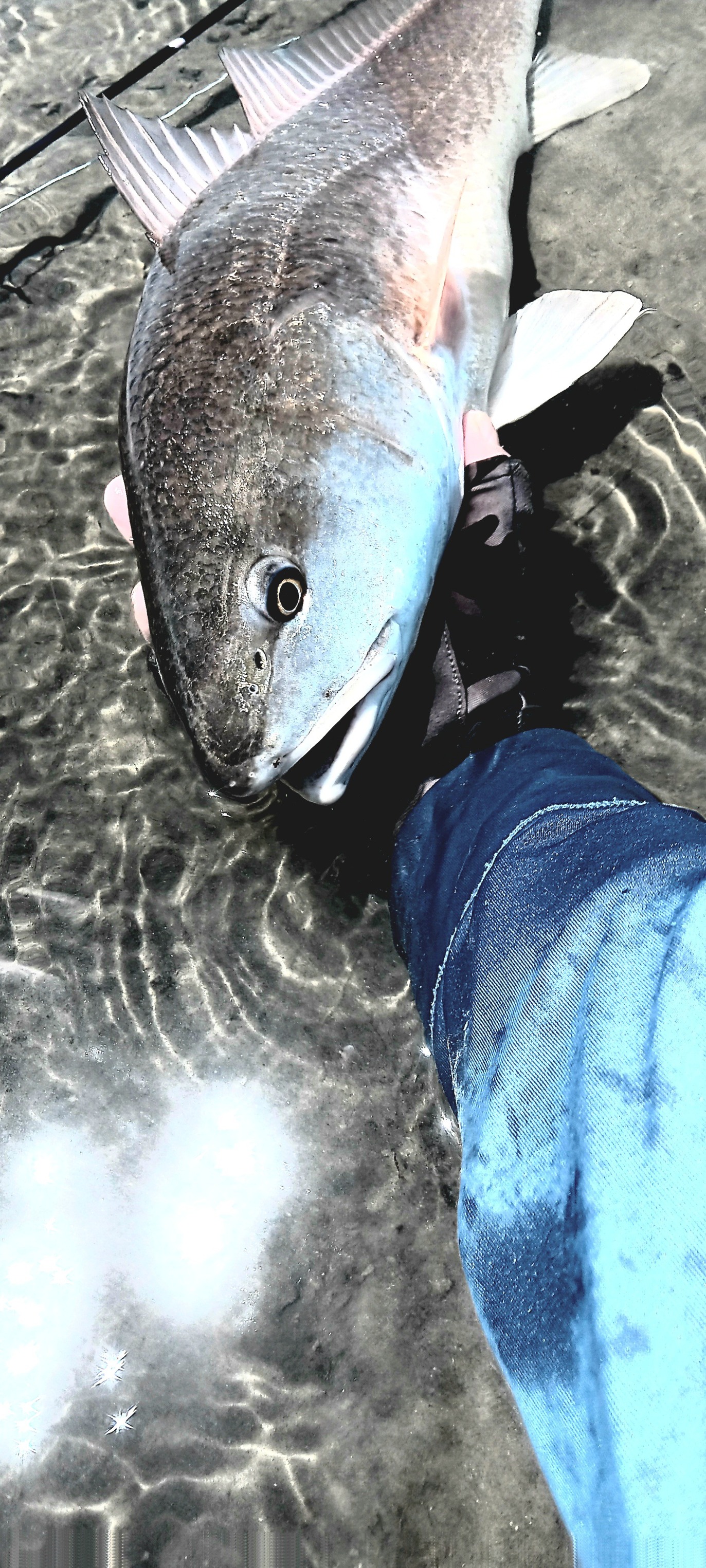
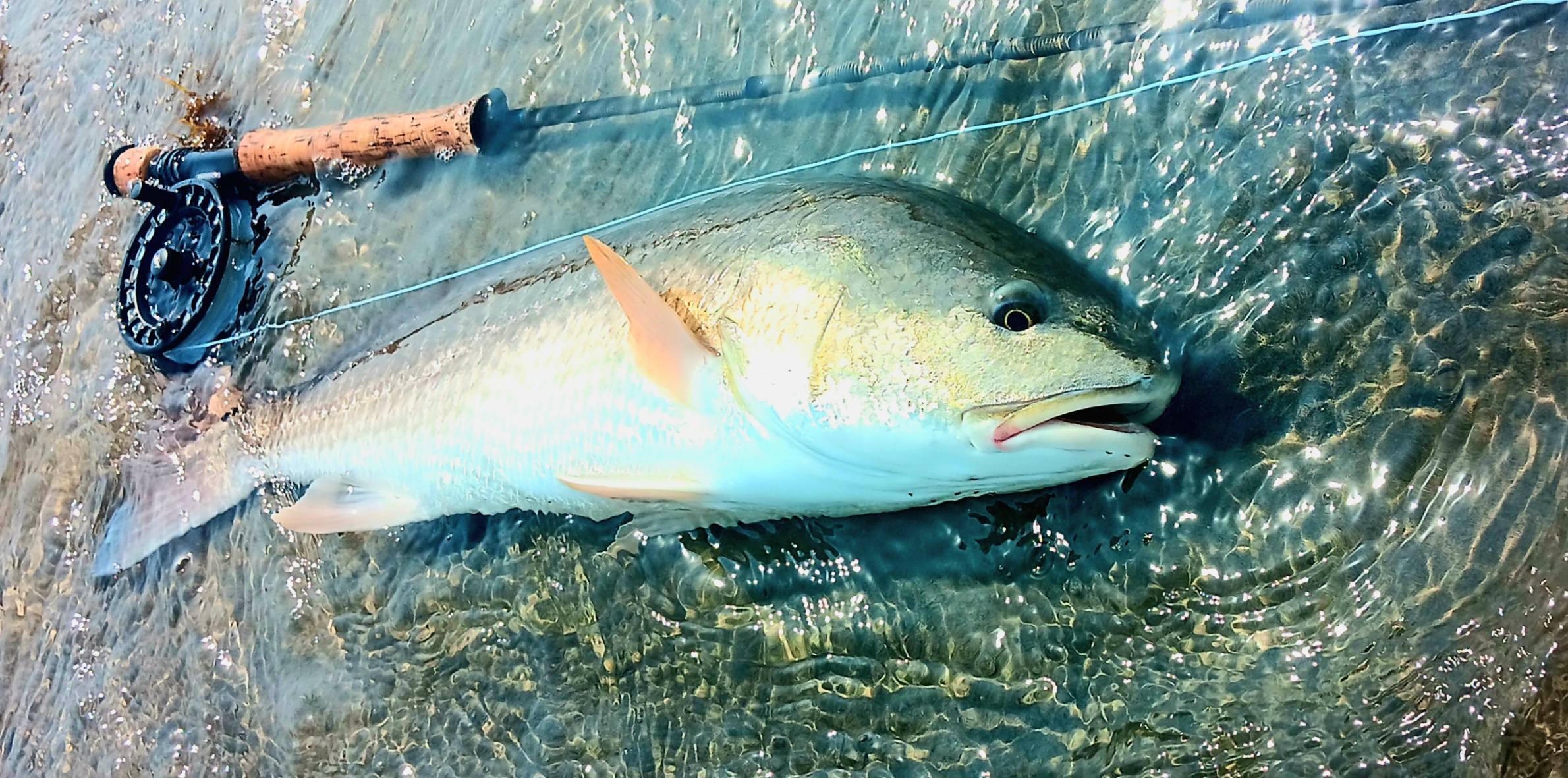
The bay holds Redfish in the 20 to 30 inch range. Cautiously pursing them in clear knee deep water or less with light tackle and on foot is always engaging and thrilling. Concentration is imperative and speed when one is spotted as they are often on the move. I cast a 7wt on blustery days and a 5wt trout rod when it’s calm. My shrimp and small crab fly patterns are tied with little or no weight as I’m fishing just inches of water. They cast easily… like dry flies.
island dunes and wind, photo r dewey
When the light begins to wane and sight-fishing becomes impossible I leave the sand flat and make the long trek eastward across the tidal flats back to my car. Harper revs up as we’re are on the move again. She taunts the large blue crabs holding in the tidal pools along the way. Then it’s sprints into the dune vegetation and shadows in the late afternoon light in search of rabbits. We’ve come full circle…




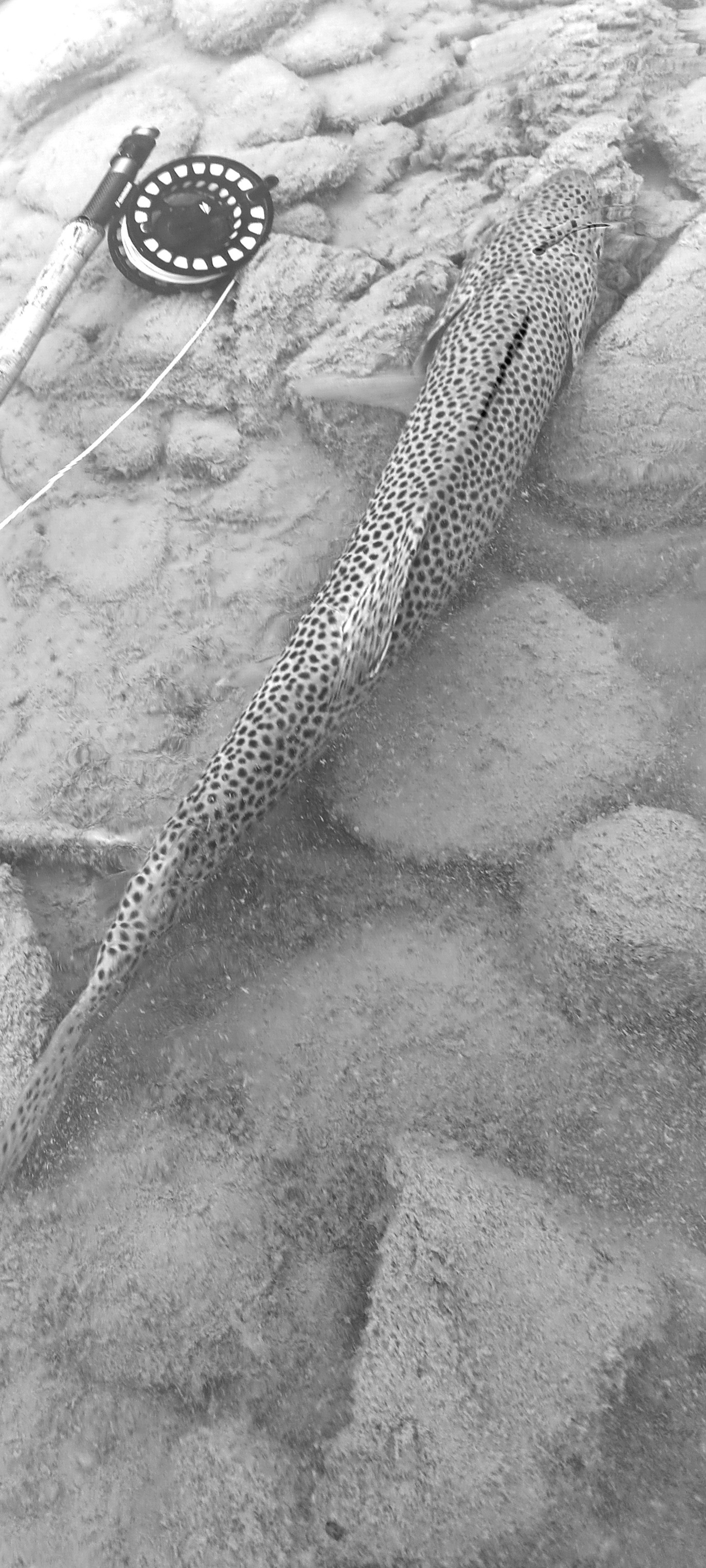
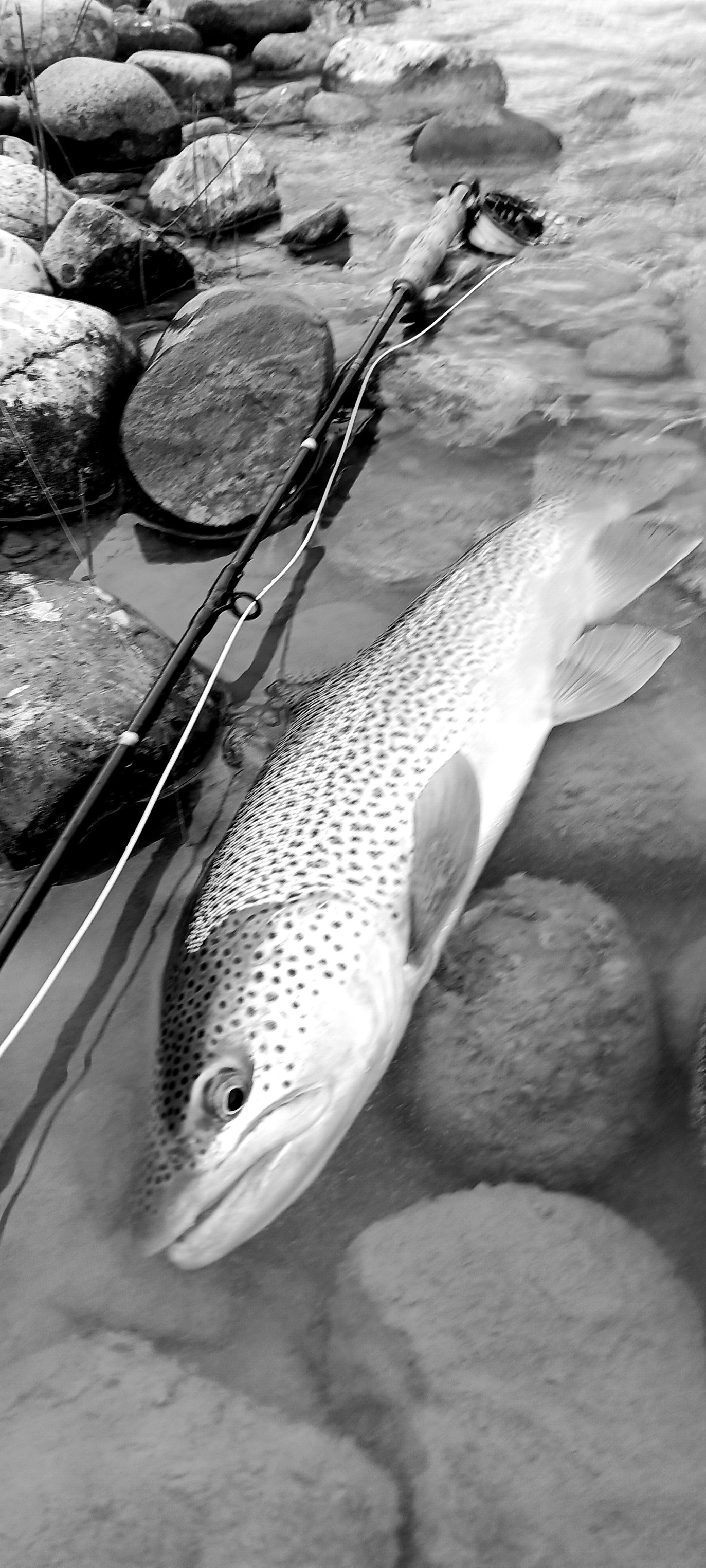
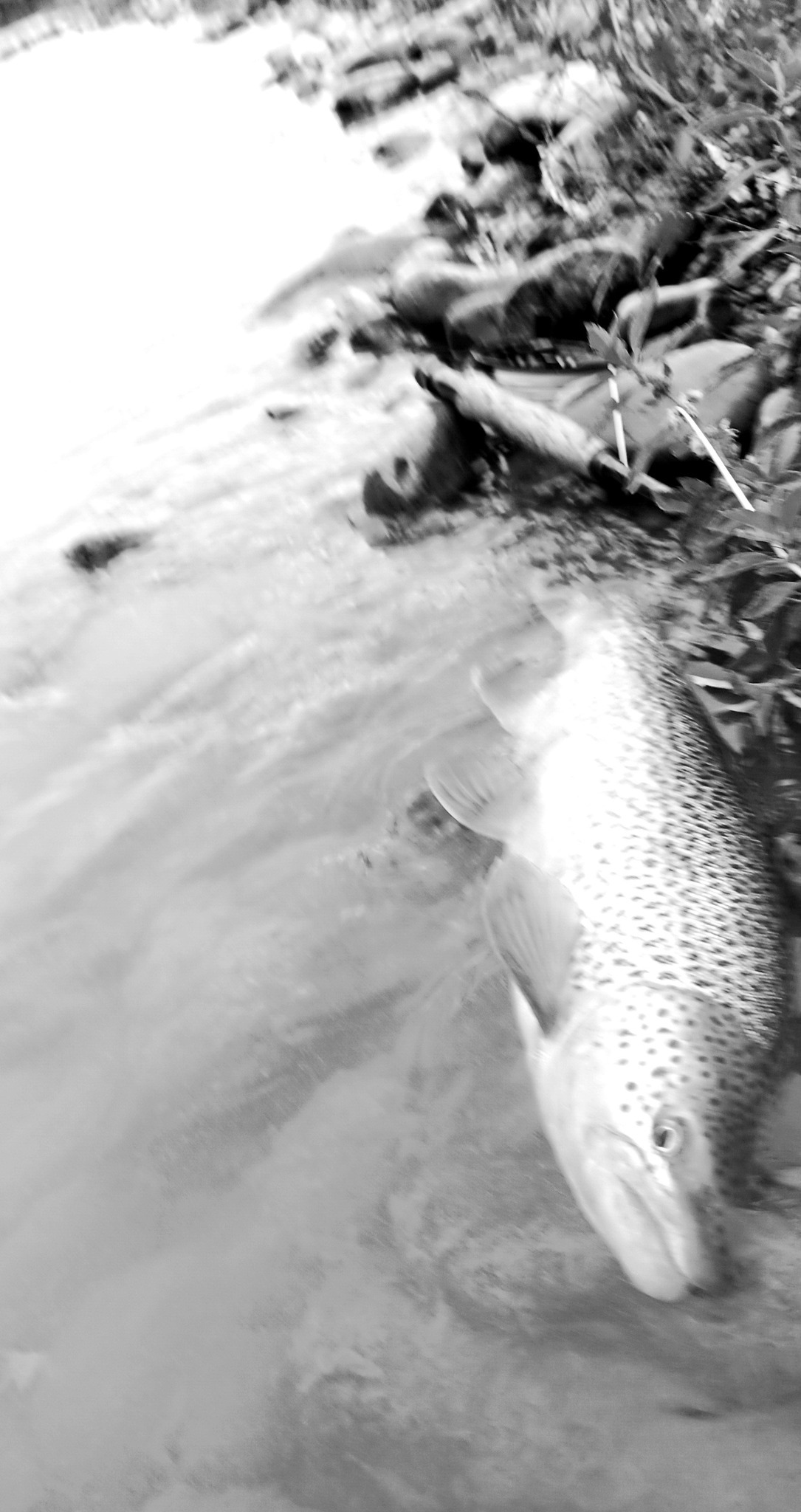
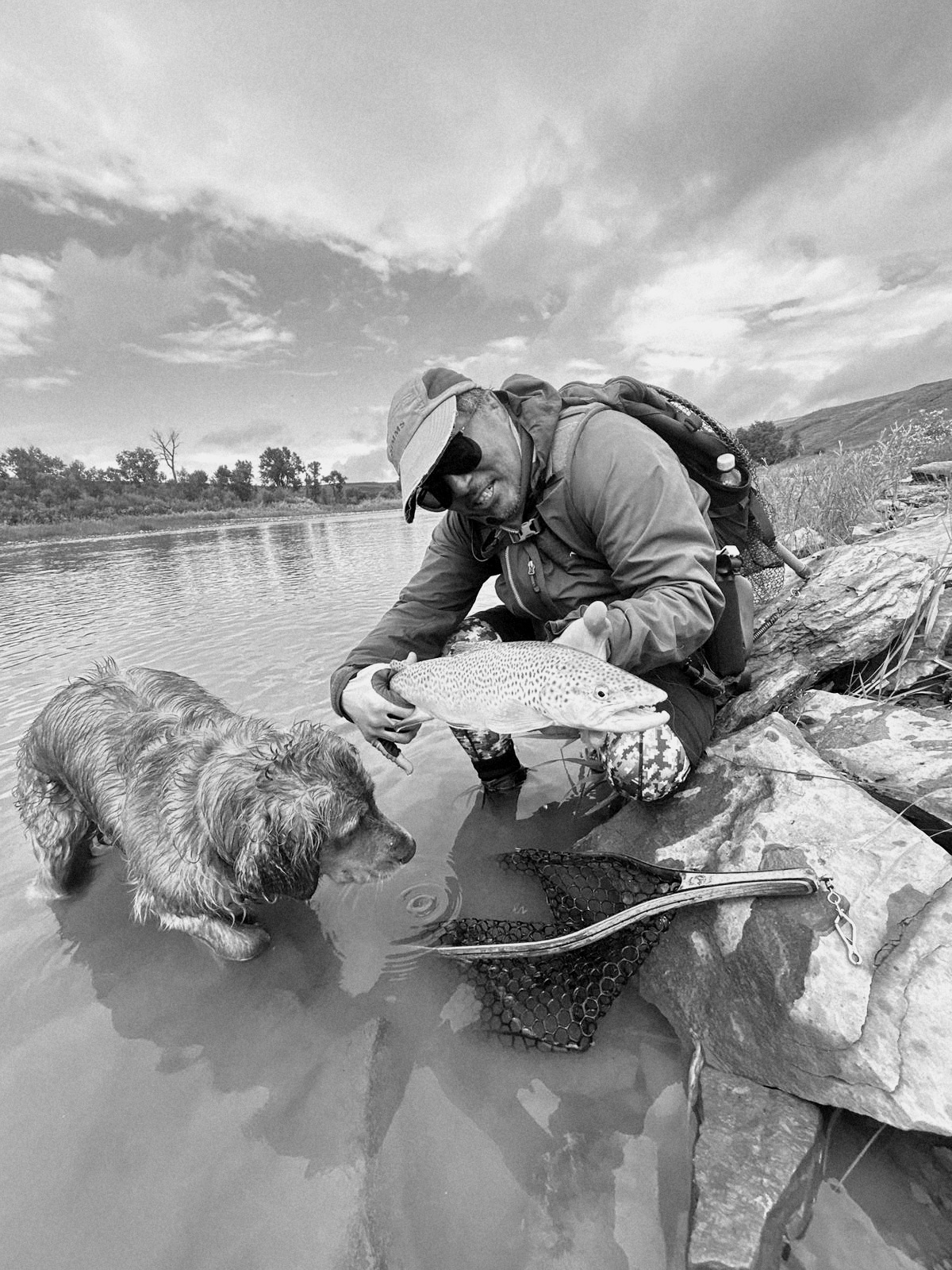



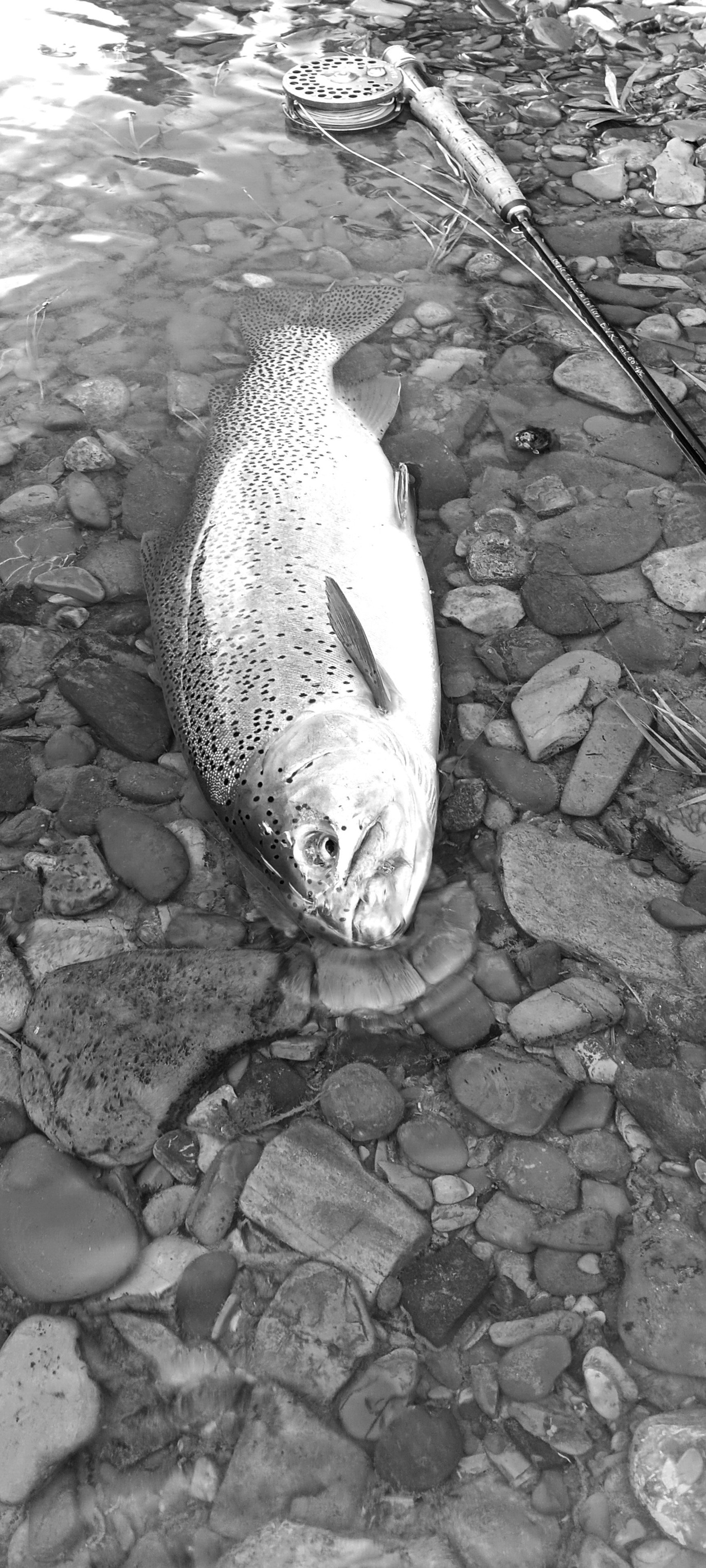








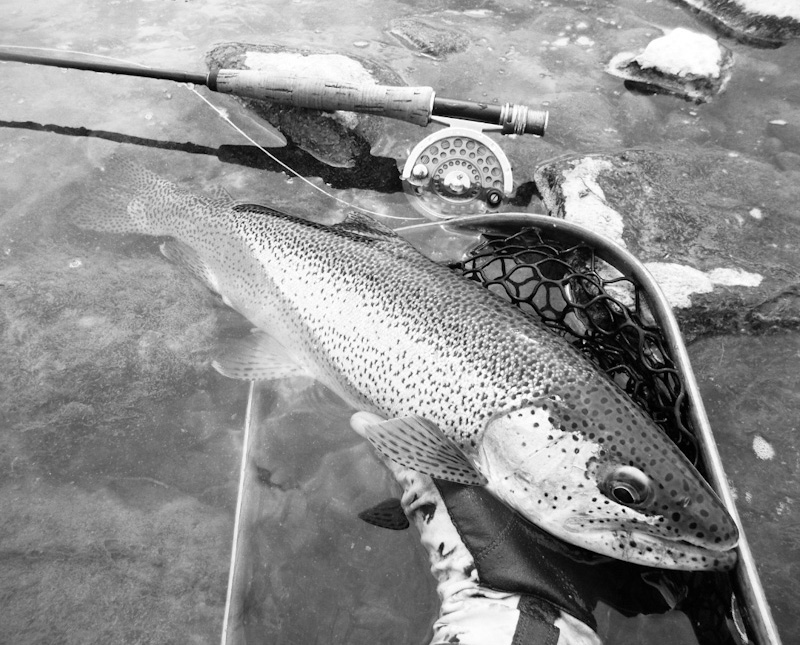
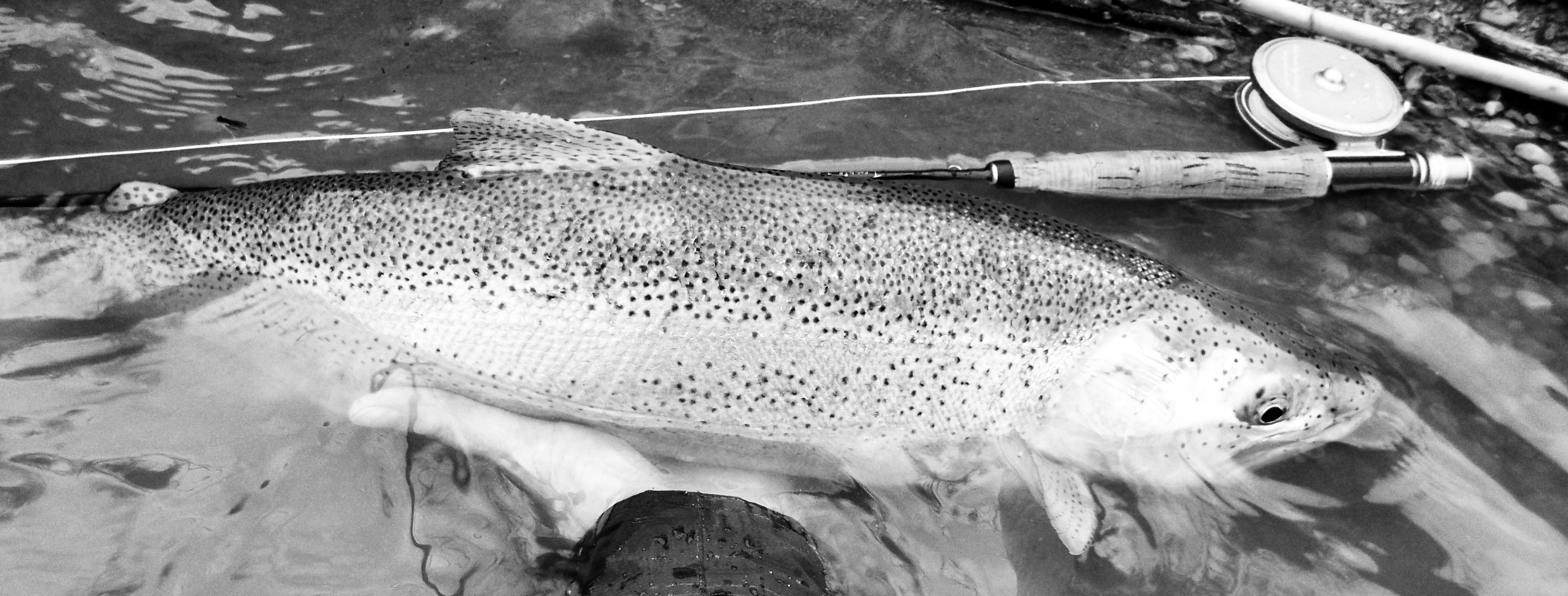












 trout on dries