I WAS PURPOSELY IN A TOUGH STRETCH of river. In order to explore it I had to get into the water and deal with the current as the riverside brush/growth in most places was too thick to walk. On top of that it was dark and ominious looking in the woods. Harper my dog could make her way under and through the growth. I could not. So I stayed in the river and forded the quick flow where possible always searching for the path of least resistence. While doing so I looked for a pocket or river edge with slower water and some depth. A place where a trout could hold. I inched forward hoping for such a location and one quality fish. Maybe one that had never been caught before.
I eventually located a likely spot, a possibility, along a bank with some overhanging branches. The drake hatch the day before down river on an easier section occured at 3-3:30 pm. It was about 2:30 pm. I studied the water upstream. It was all fast and turbulent as far as I could see. So I decided to sit, eat my lunch and wait for the hatch. The hatch would tell me if a Cutthroat was in there. I could prospect it with a fly impression right away and possibly entice something to rise but this season I’ve had my fill of that. I was on a regional river that would have the rarest of events: a genuine, solid hatch. A big fly hatch to boot! No, I wouldn’t cast blindly. I’d fish with my eyes, not my arm. I’d wait until the large mayflies started emerging to see if a fish was holding there. If there was one it would rise and glow golden in the warm afternoon light. I’d take advantange of what the river would offer…
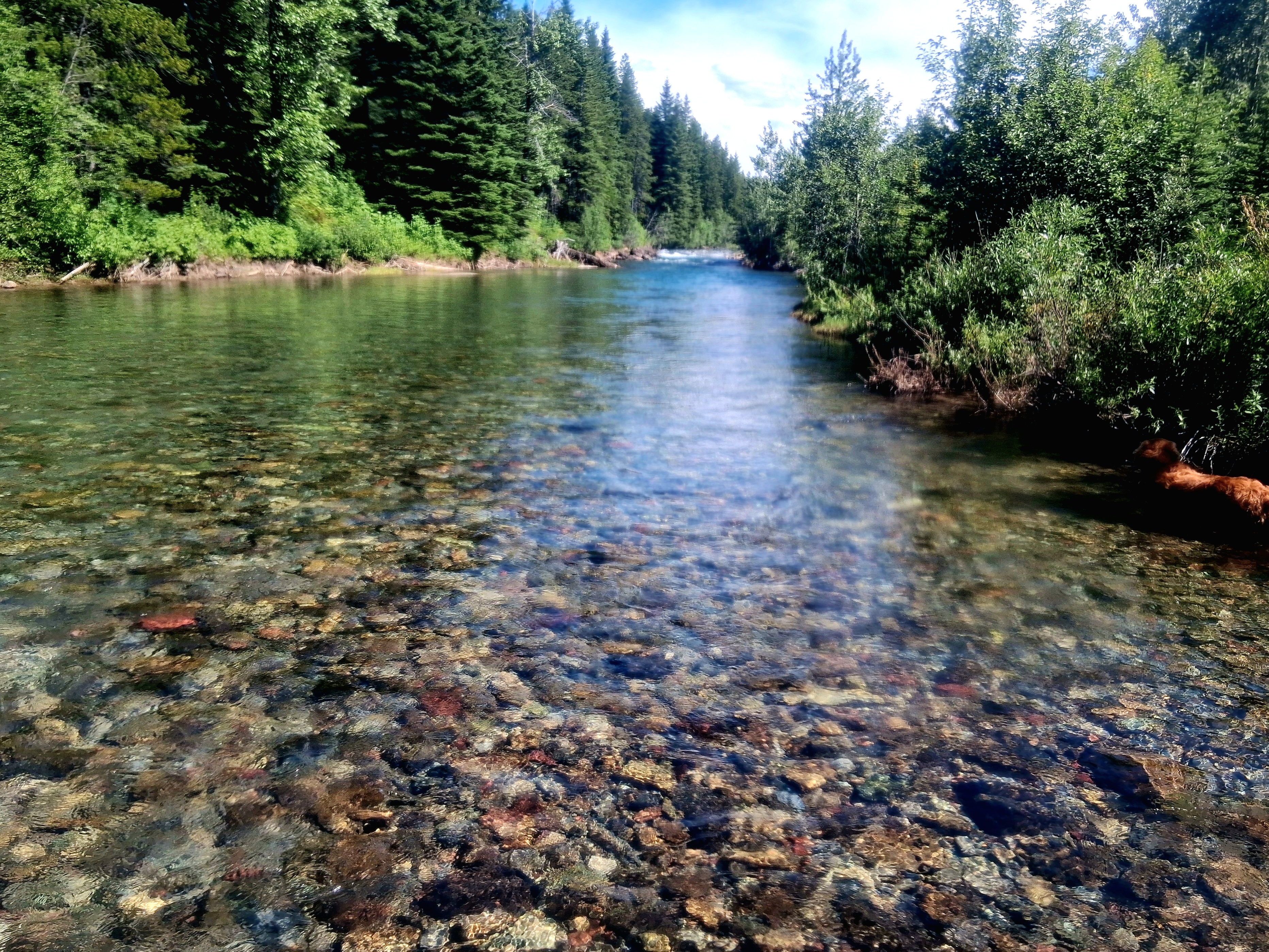
There are two streams that I fish that remain clear when it rains; even after a deluge. In contrast, the dozen or so other rivers that I frequent become seriously turbid even with moderate precipitation; they silt-up. The ones that remain remarkably clear are up in the mountains where all the terrain around them is intact. Where most of the land is probably is as it was 200 years ago.
big river pool
The forest that these rivers run through are thick and diverse, and intact. And the forest floor is covered in leaves, moss, fungi, an endless variety of plants, degrading wood and numerous other types of rich organic material, and a complex intertwined root system below it all. When you hike to the river through the forest the ground is soft and spongy. It holds water well. It absorbs and filters the rainfall and melting snow. The forest floor is a vegetative buffer for the stream. The (riverside) riparian zone is also intact. It is treed, has brush and willows, moss covers some of the ground and again a healthy root system exists holding much of the soil/ banks together, even in high water and run-off.
intact bank
When I wade these two rivers I see little or no silt. The river beds are clean. I can see every stone, pebble, every single detail…no sediment covers/blankets the bottom. On the other rivers it is thick in many places; they look like they need to be vacuumed.
early season fast water ties with palmered hackle body for added flotation but clipped on bottom so fly still sits low
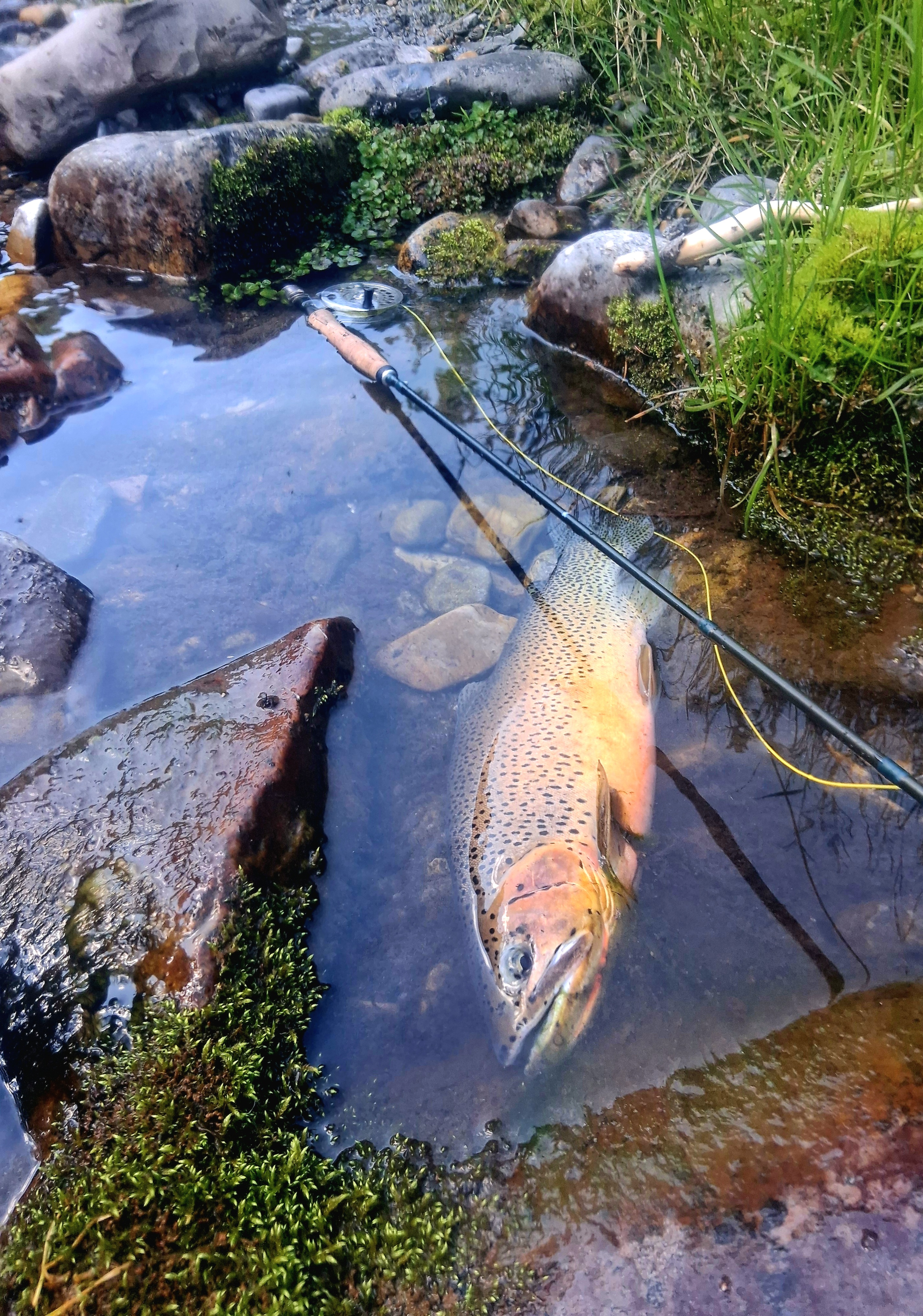
These two pristine rivers hold Cutthroat trout. A regional native fish. They are colorful, untamed and robust. They are extremely healthy just like the rivers they inhabit. Their population generally isn’t high. These freestone rivers tend to be fast and turbulent and there are only so many pockets and pools for them to hold in. It is a challenging environment and their feeding season is brief. In spite of this some miraculously manage to survive and even thrive, and these rivers can hold some real gems. Here’s one of those miracles that I came across a few days ago. It was holding in a crystalline flow in one of the Last Old Places…
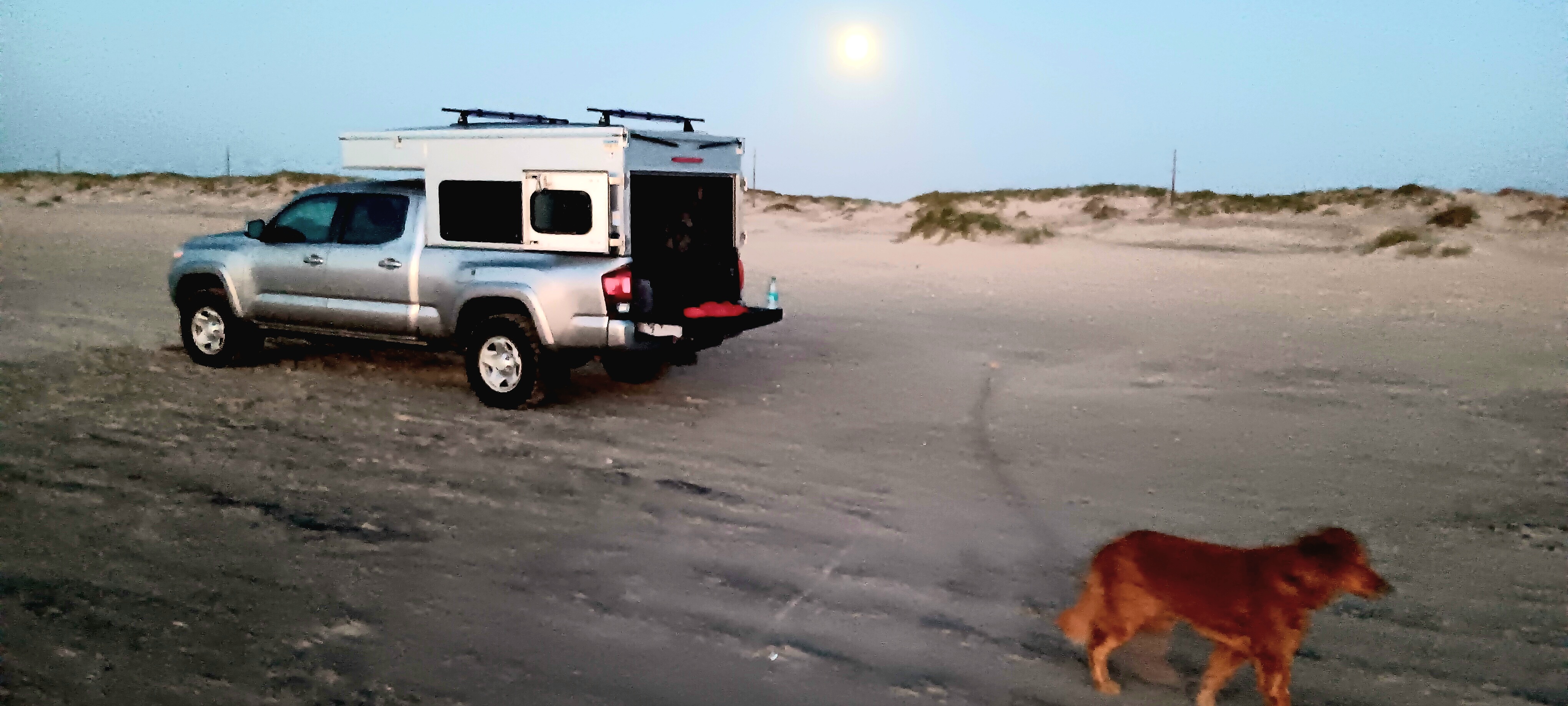
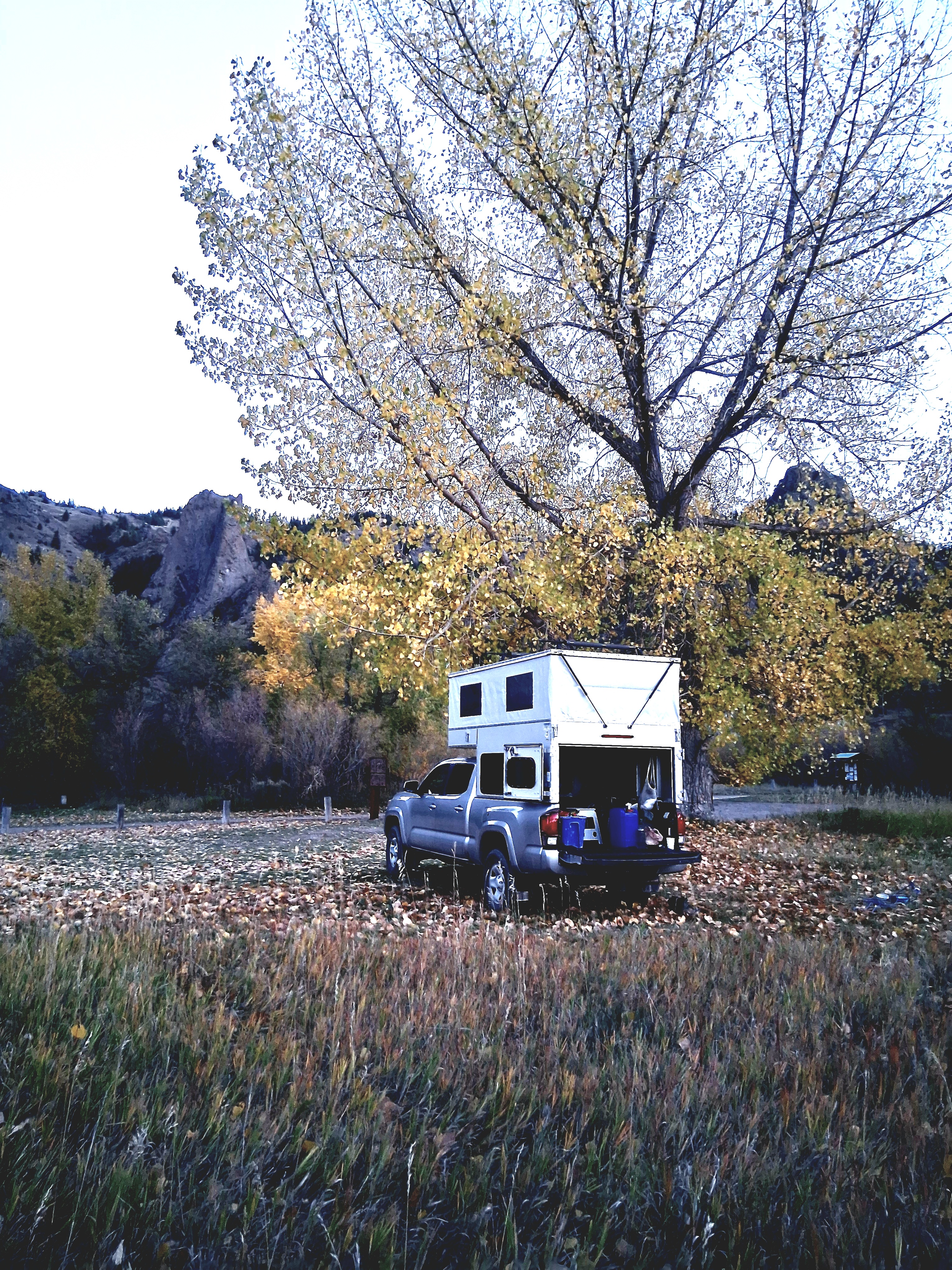
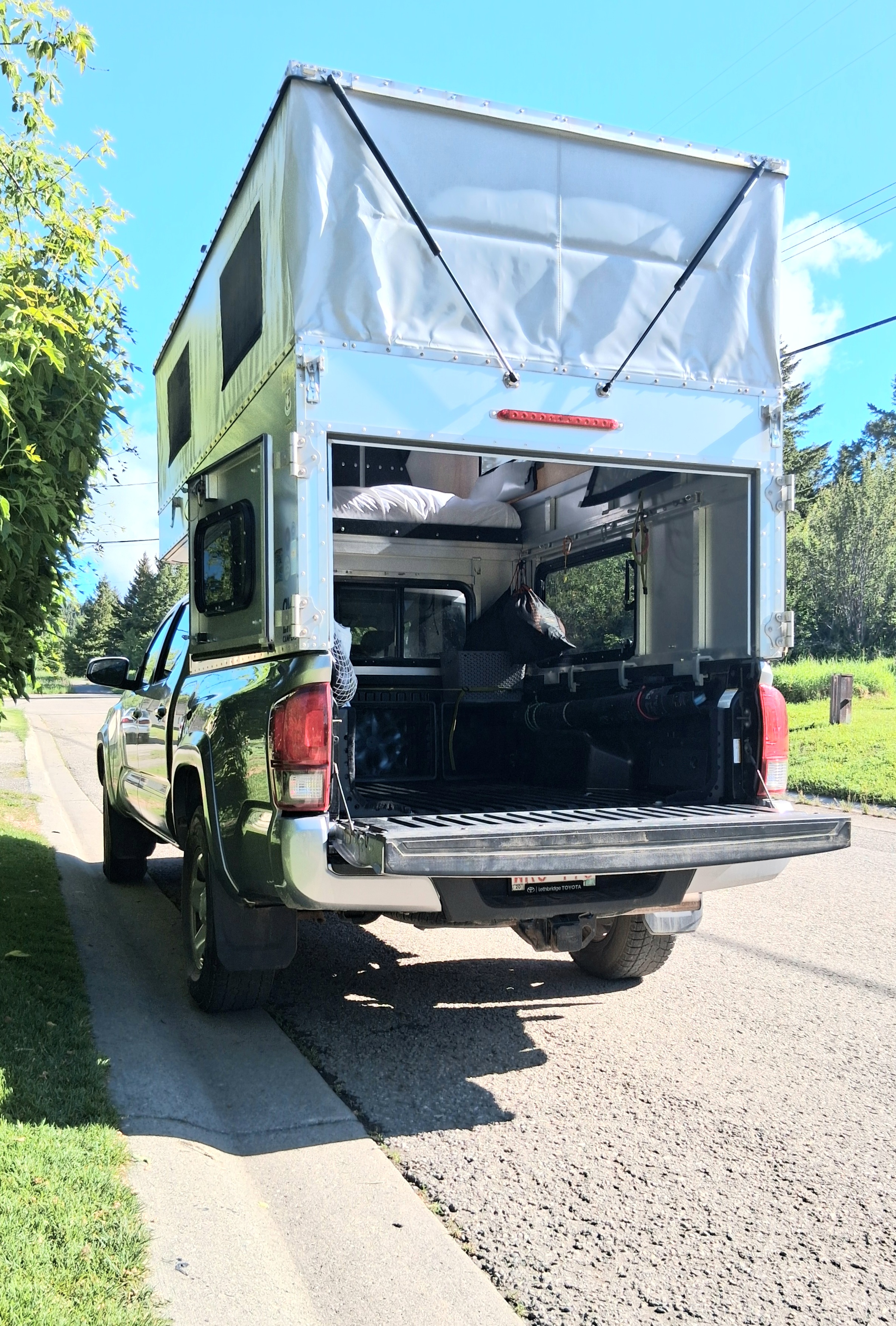
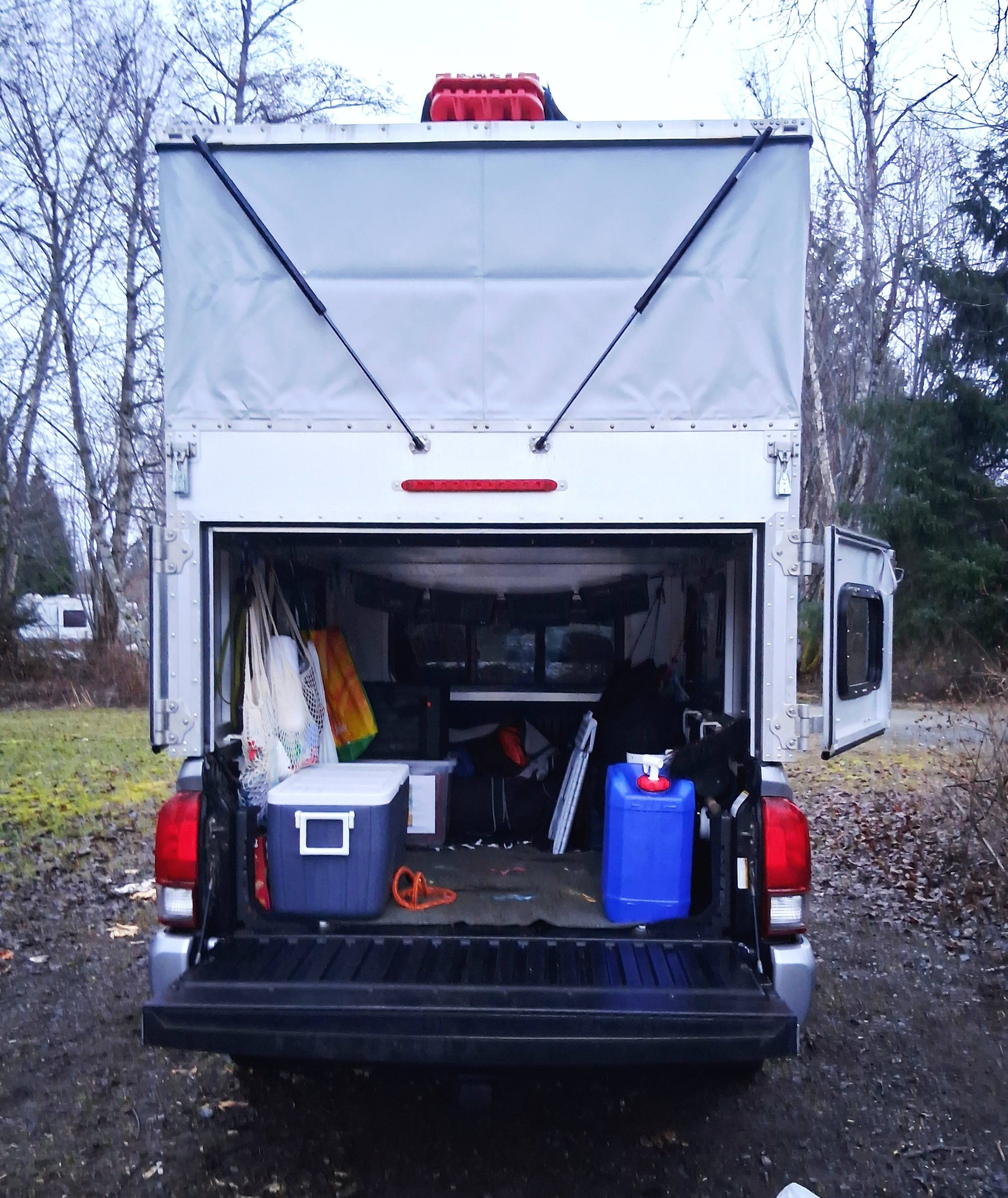
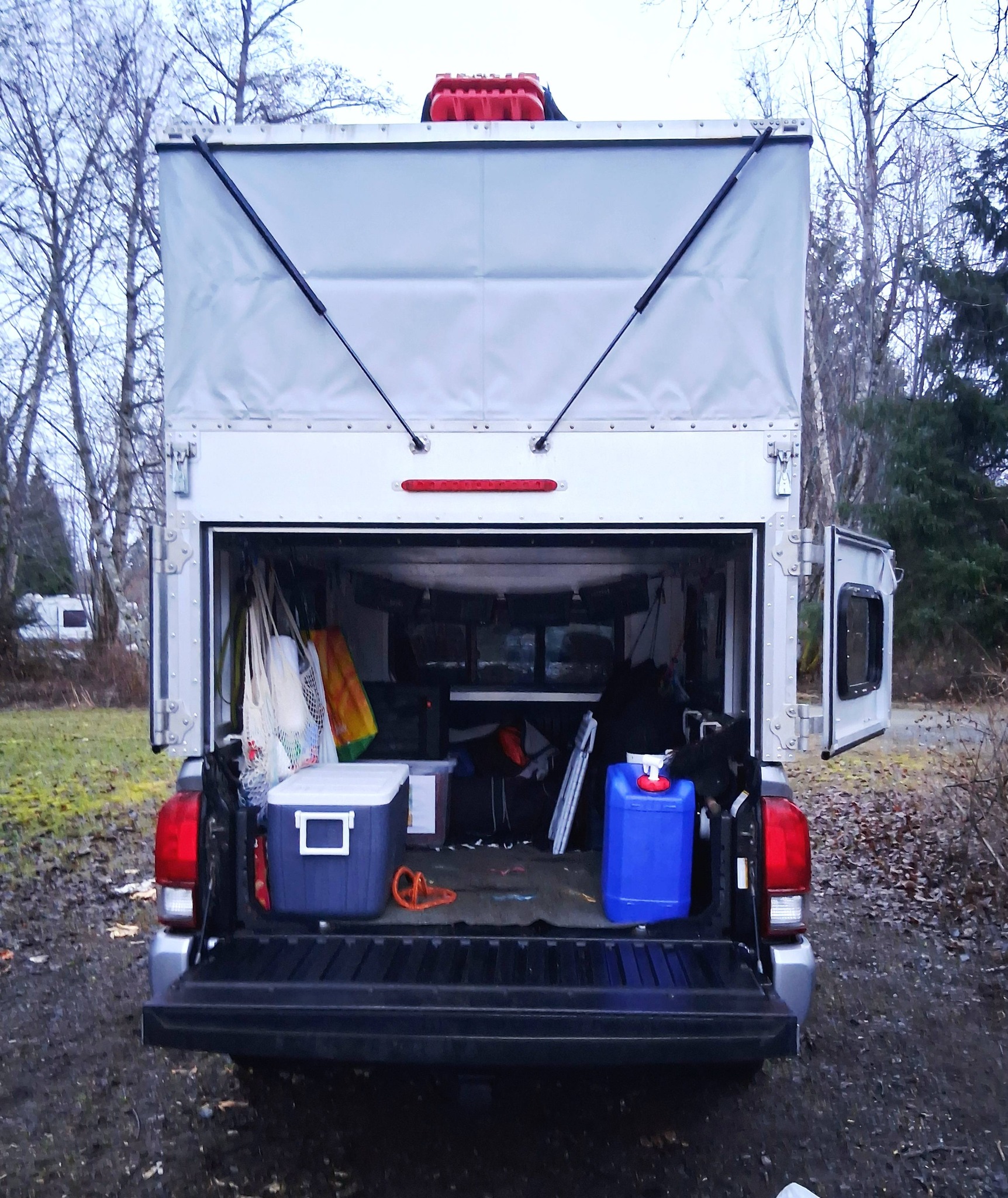
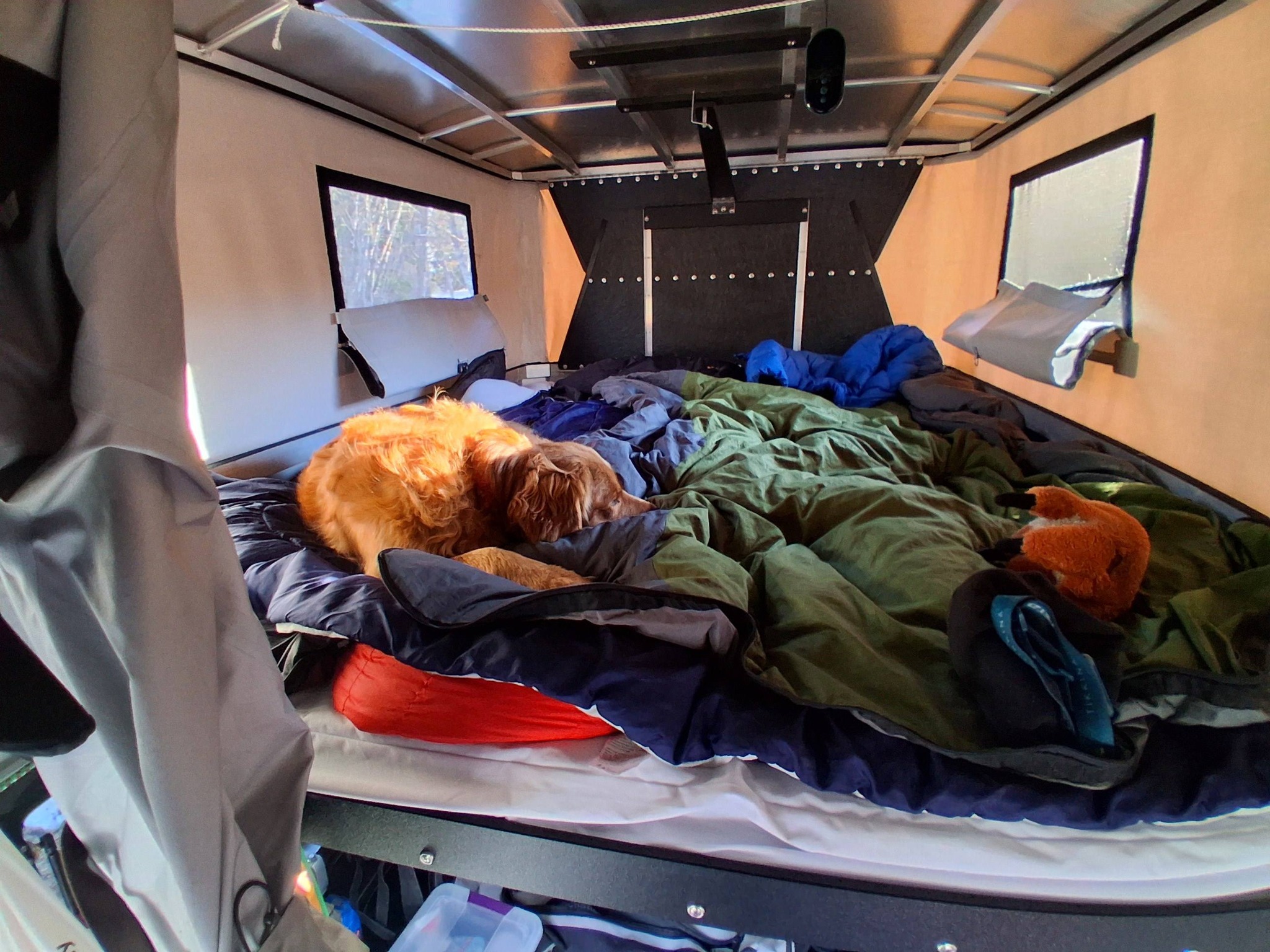
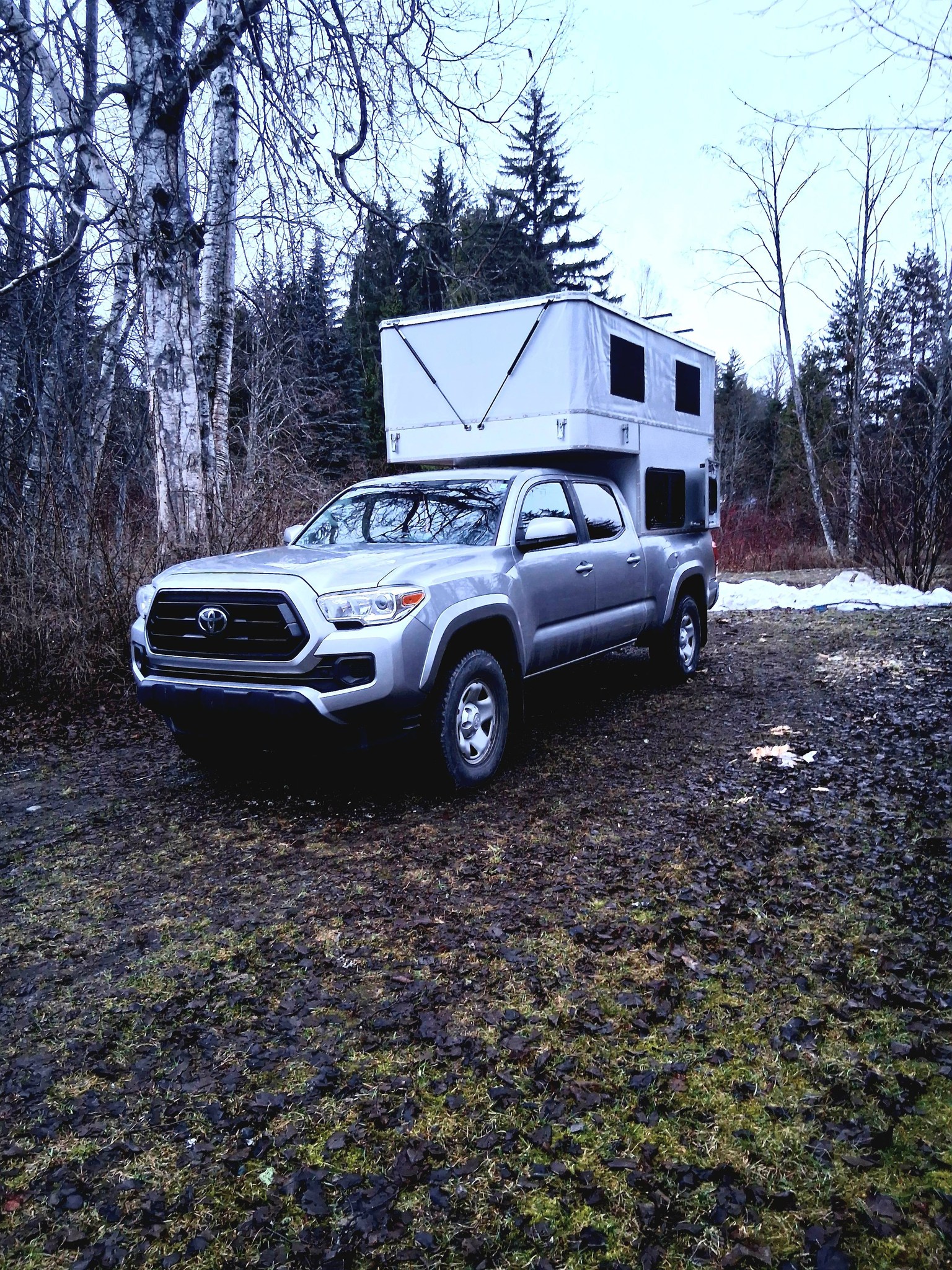
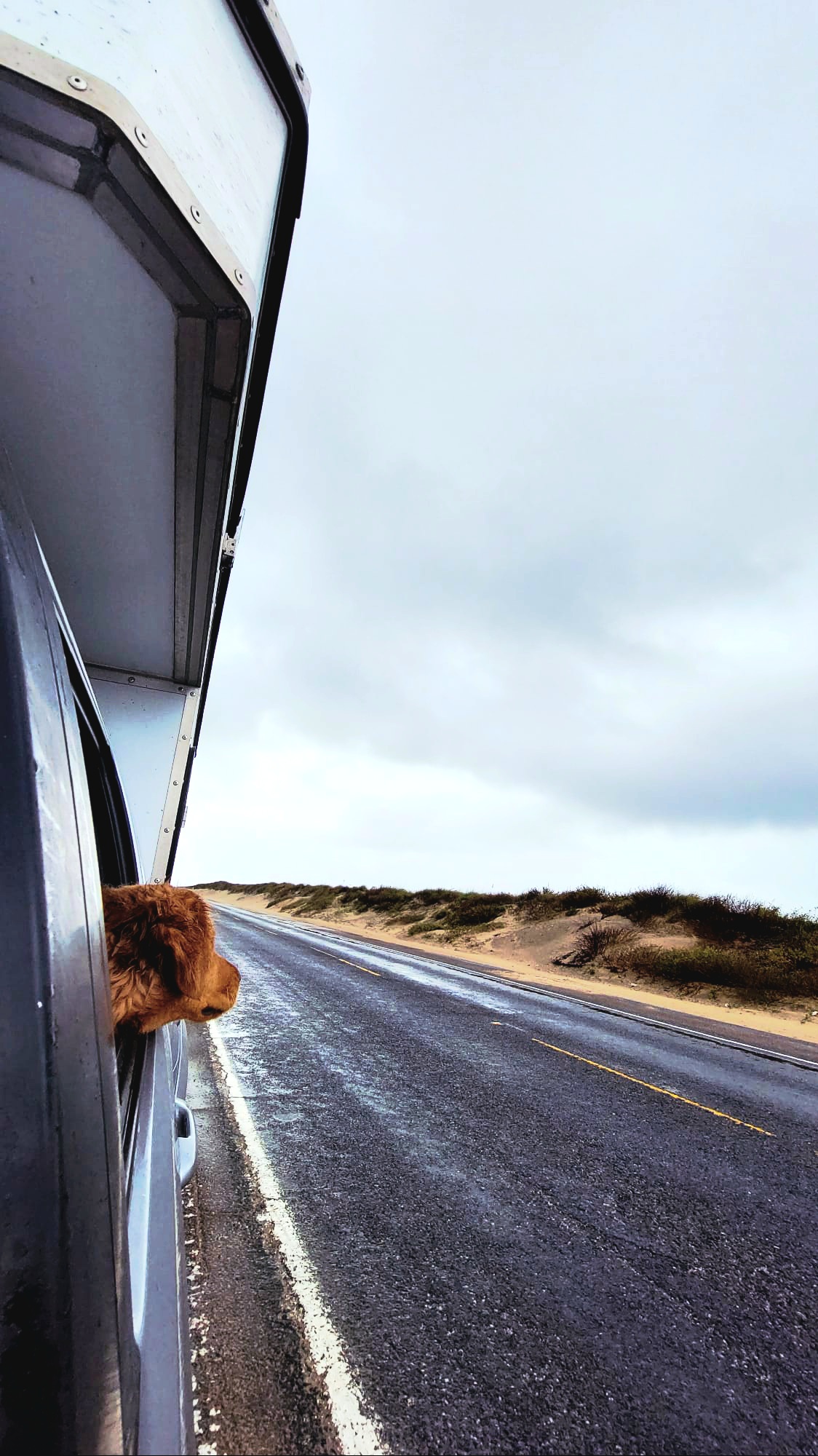
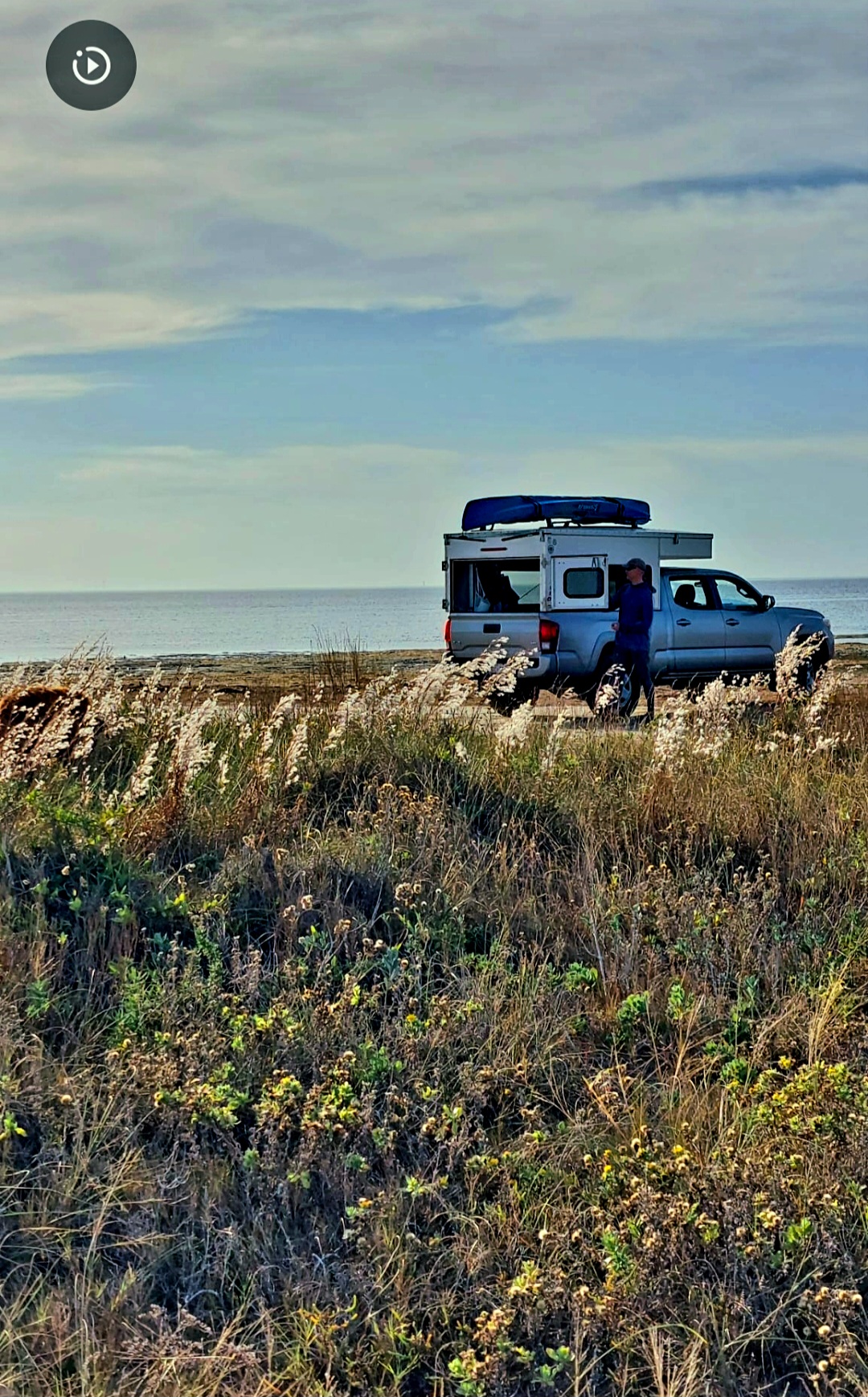
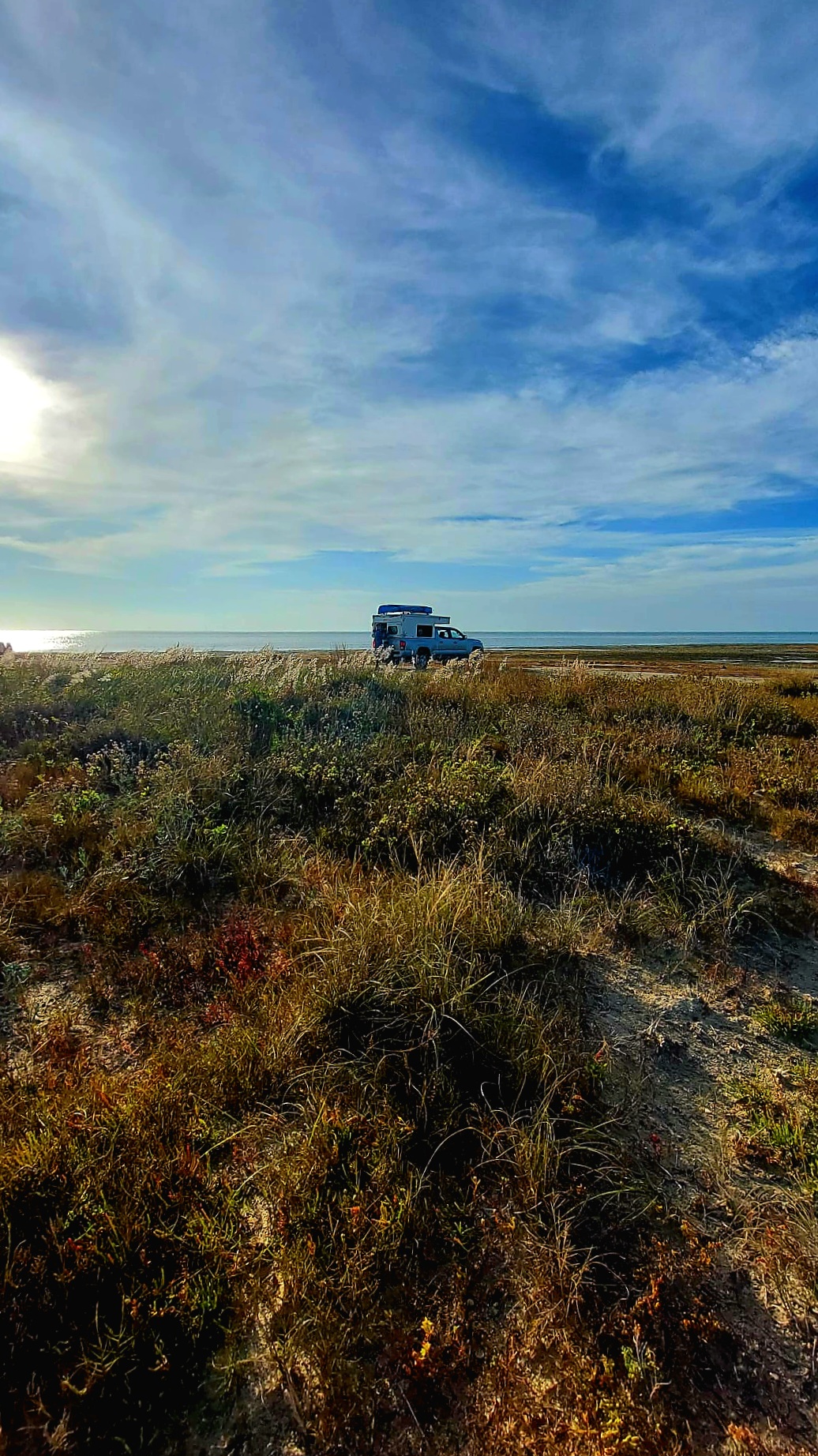
I drive a Tacoma with an Ovrlnd Camper on the back. Yes, it’s spelled Ovrlnd, not Overland. Quirky name. They build them from scratch in their Flagstaff shop. They are passionate about their product(s) and are people who actually do long road trips. The campers are cleverly simple. They have an old school boxy look which attracted me to them as well as the rear barn door feature and weight. The design provides excellent interior space and they have a pop-up top. Ovrlnd has been tweaking and refining them for years, so they are reliable and durable. Everything works as it should and because of their simplicity there is little that can break down. They are aluminum and super light. The one on my six foot truck bed weighs approximately 300lbs. Perfect for a light truck model like mine. I often forget that the camper is on the back.
When I left full time work I wanted a set up so I could go just about anywhere on fly fishing trips for extended periods of time. I already owned a pick-up truck and therefore was looking for some type of camper to accompany it. There are a fair amount of options out there but not many were light-weight and suitable for my vehicle. Ovrlnd campers “fit the bill”.
With the truck and camper combo that I have I’ve been to a variety of destinations for weeks on end: along logging roads in a coastal British Columbia (BC) rainforest region in search of Steelhead; the mountainous BC Kootenay region for Cutthroat trout; beach camping on a barrier island along the Gulf of Mexico while pursuing Redfish on nearby tidal flats; high desert spring creek fishing for Trout in central Idaho; central and southern Montana also for Trout; and fishing at home in Alberta along the backroads of the eastern slopes of the Rocky Mountains.
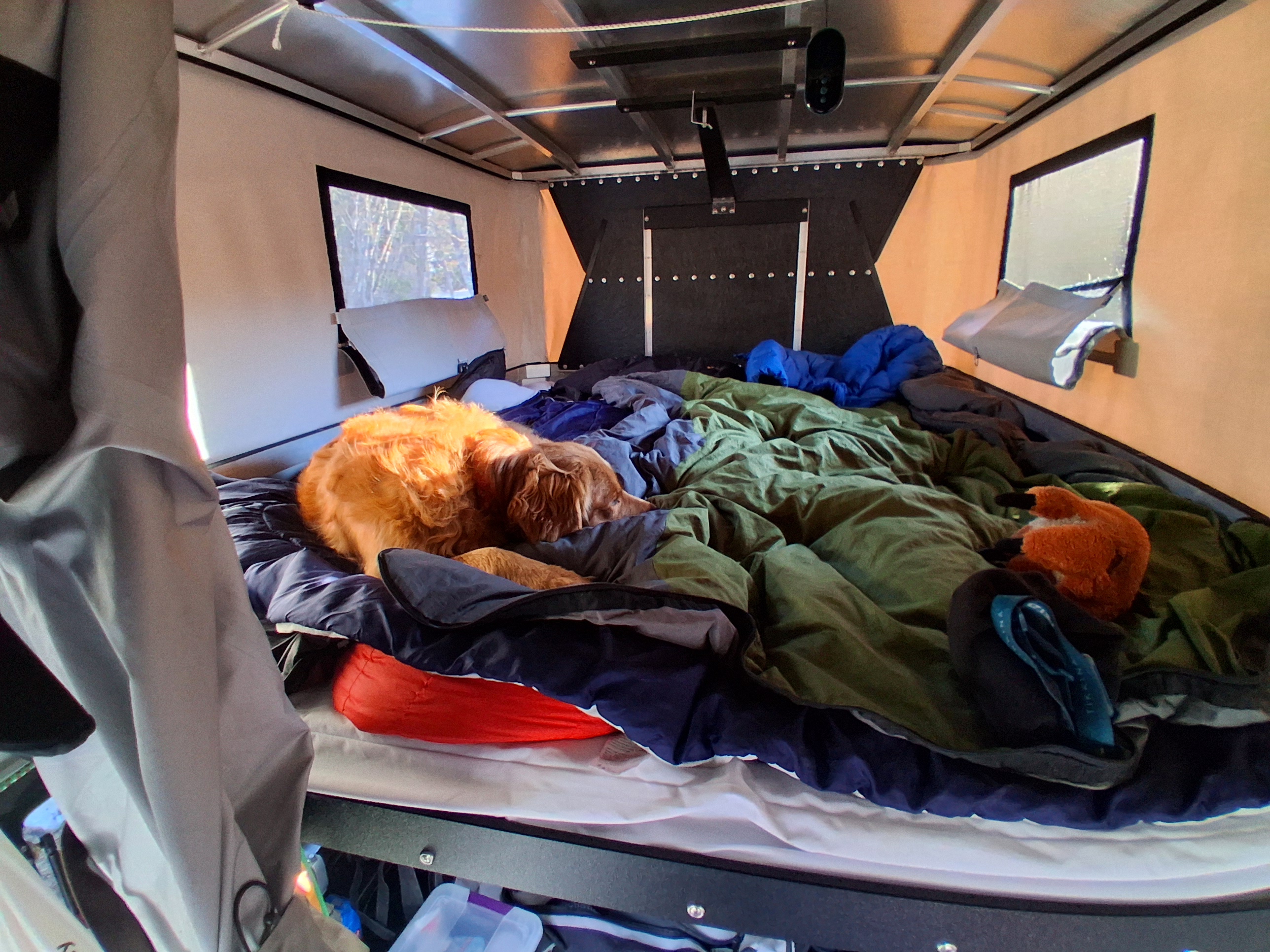
The camper has an anodized finish and a queen size bed platform which slides out once you pop the top. Unlike my Roof Top Tent it makes little noise when camping in high wind regions. It sets up easily and since it’s a shell you can do anything you want with the big interior. I’ve intentionally done little to mine: just wall carabiners to hang things from; some stacked crates to stuff gear in.
Shell campers are not for everyone. It depends on your needs, wants, and expectations. If you have a truck, are into outdoor adventure, want something super light-weight, nimble and well-made, and like travelling the dusty back roads or seaside beaches (where permitted), this minimalist camper could be just the ticket. I’ve been totally pleased with mine. And customer service with Ovrlnd has been excellent.
It was their shoulders, the top of their heads or noses that were breaking the surface. Rarely did I see a mouth gulp or sip the Olives or Pale mayflies. They were mainly on Emergers. It made for challenging angling. I stuck to one fly. No dropper. Low riding and surface piercing patterns: a soggy Usual, Klinks, some soft hackles. Many drifts were ignored/ rejected. Luckily many chances and with that some success.
Everything was green. And the warm sun mixed in with the occasional shower/spring storm made for some amazing lighting on the land and water. It was spellbinding. And the daily weather transitions often kick-started or augmented the hatches.
heavy sky brown trout
What was suppose to be a fairly long trip turned into a short five day one as my car engine indicator light came on and stayed on. Kind of unnerving. I was advised to put duct tape over the light so as it wouldn’t bother me and to keep on trucking and fishing. In spite of that “sound advice” I decided to make a premature run for home. I didn’t want to get stranded on some muddy back road, with poor or no cell coverage in the middle of nowhere. Frustrating as heck as the river was alive. It was buzzing. And the wind was never an issue. And because of that I got to explore and fish the lower river more.
On the drive home from this place I always say to myself: “It’s the best hatch river I’ve ever been on”. It’s also incredibly beautiful.
“Eighty percent of success is showing up” –Woody Allen
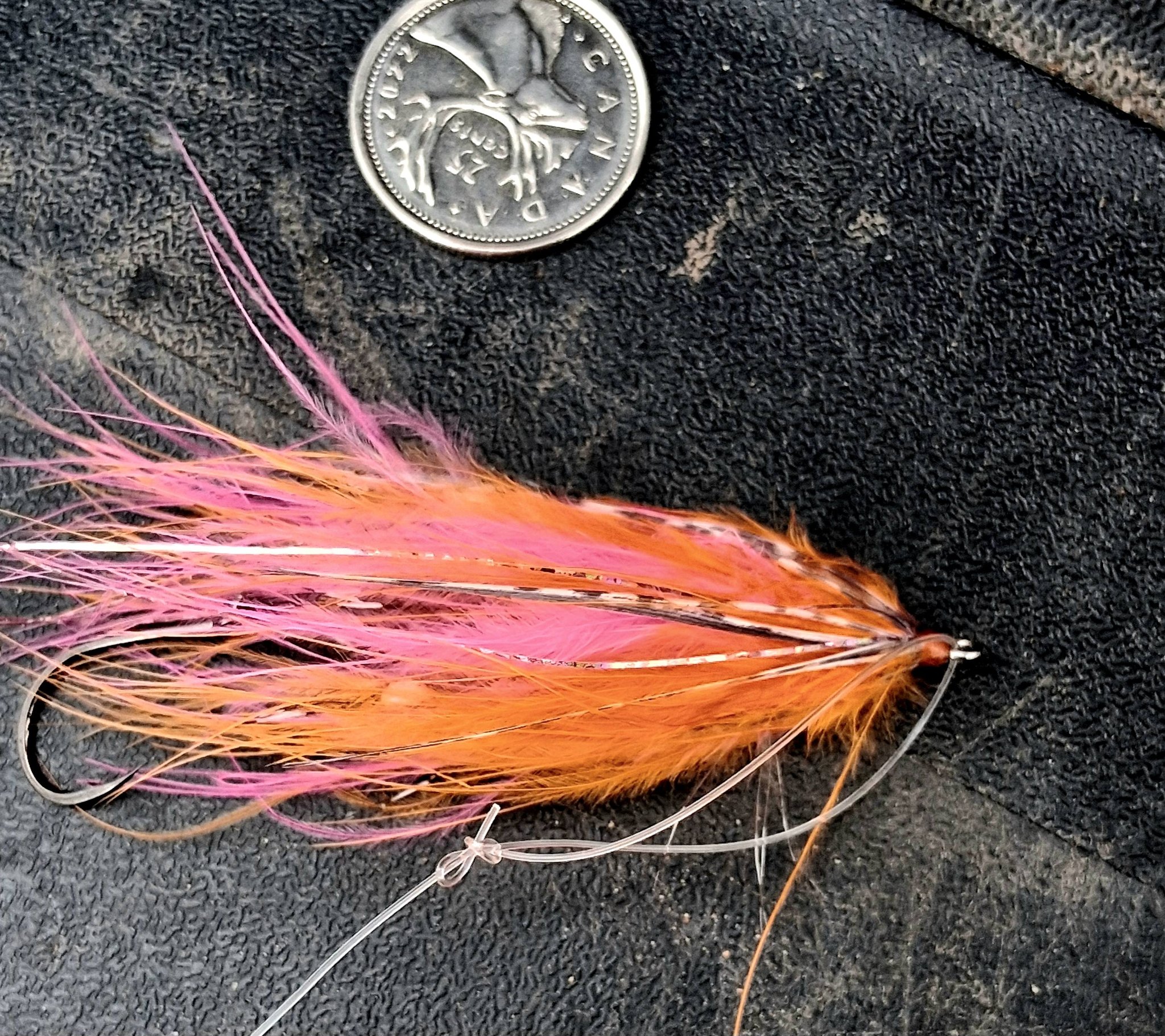
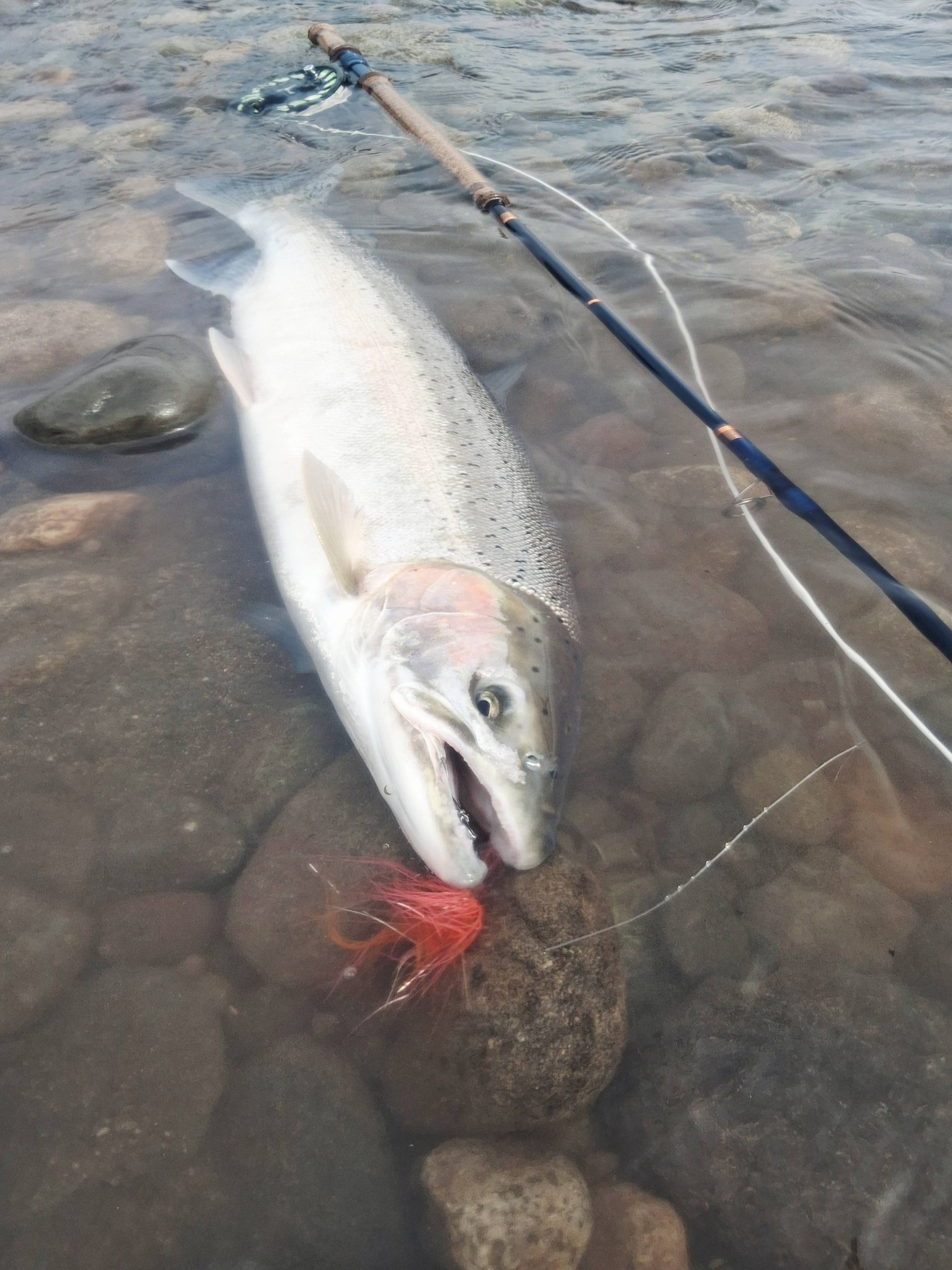
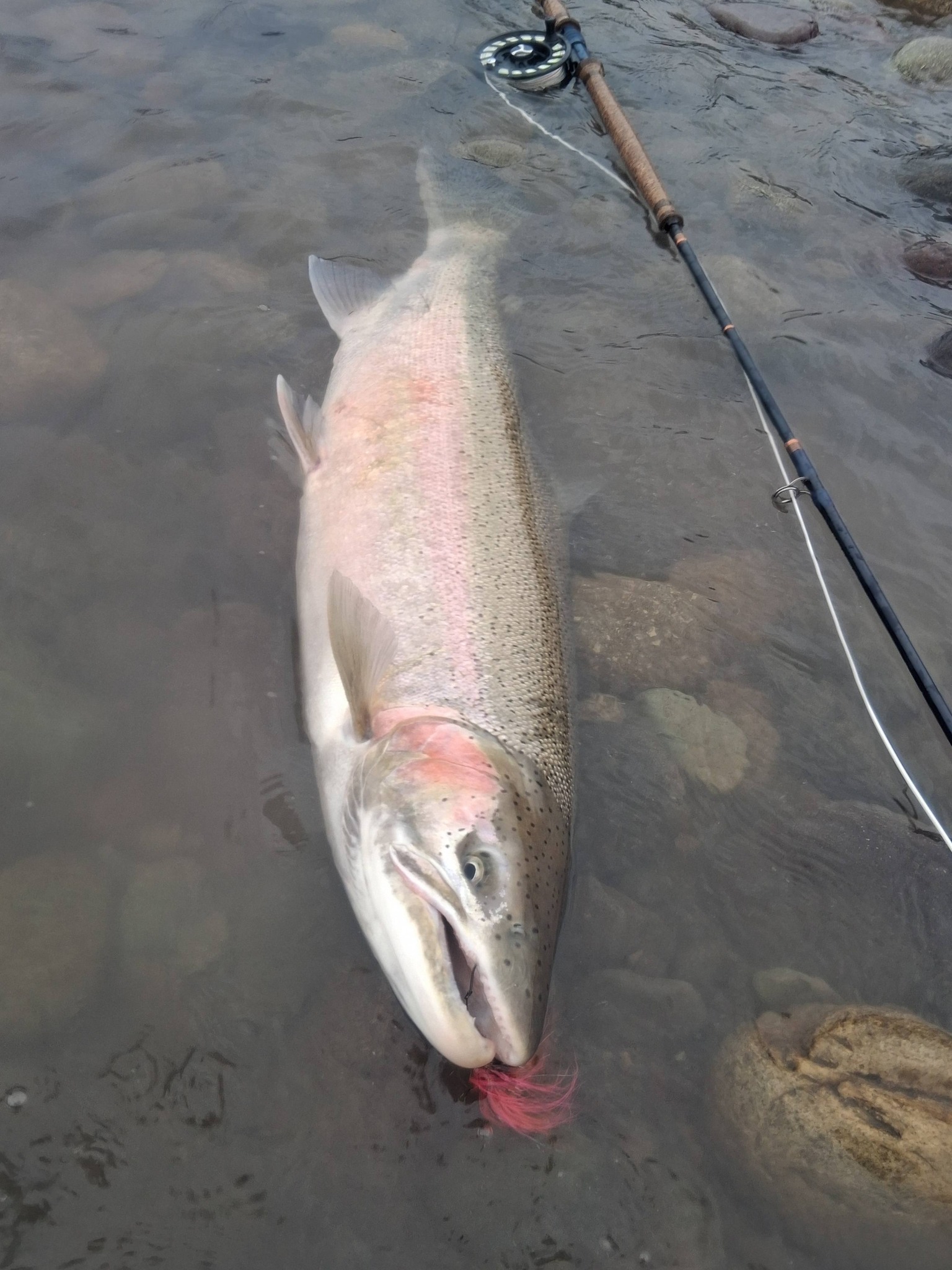
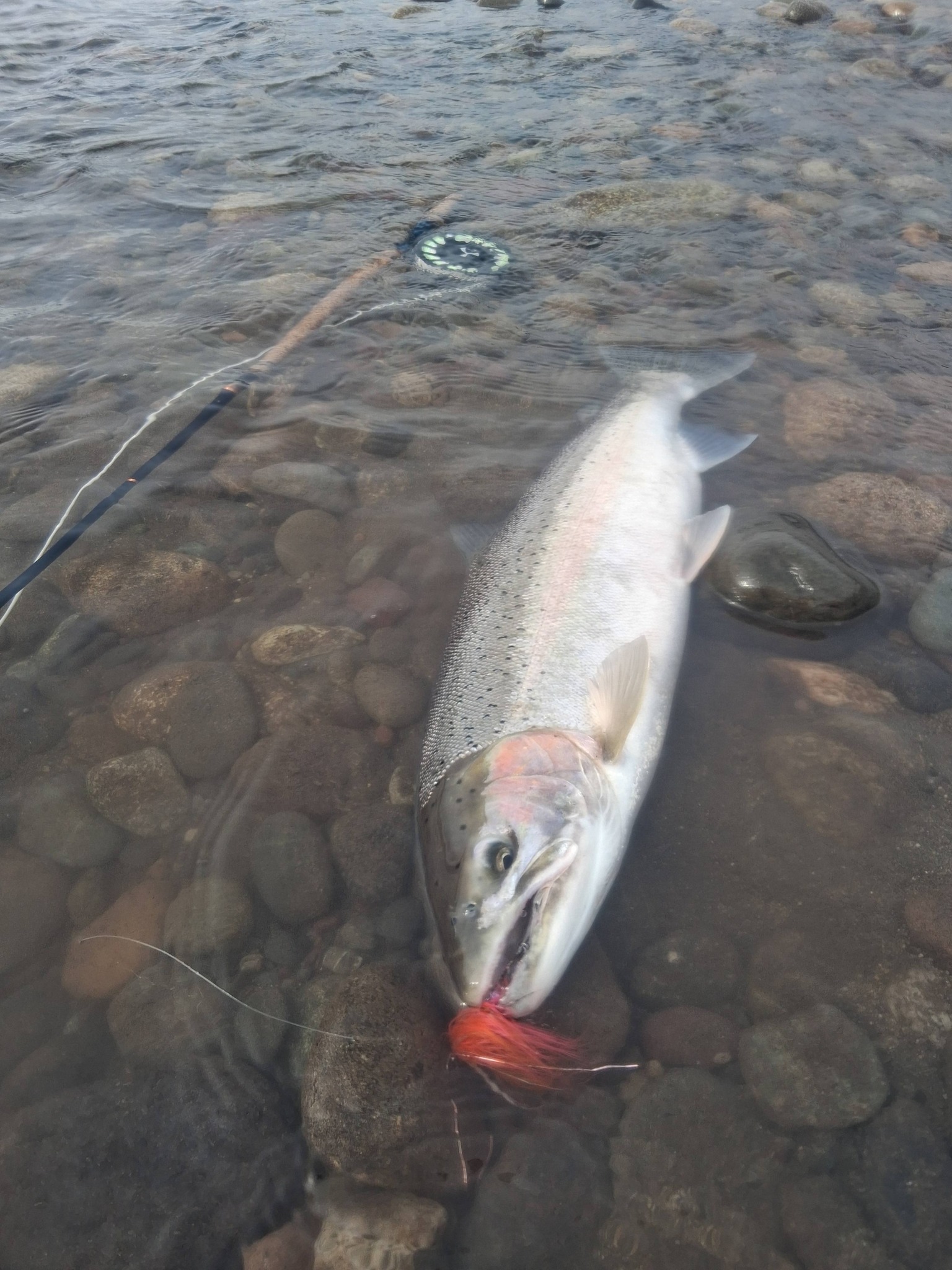
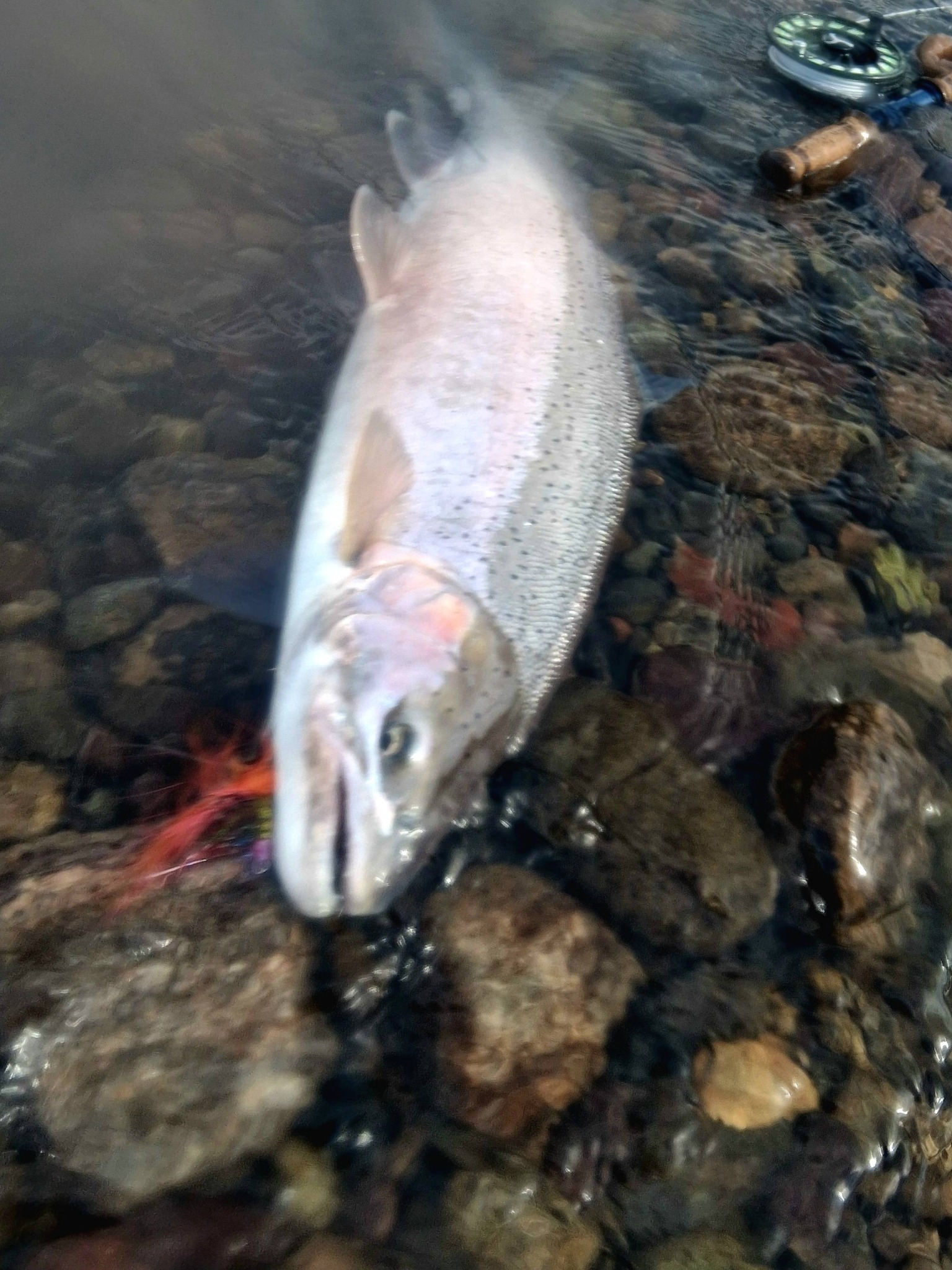
“It’s the brightest fly I’ve ever tossed. It’s orange and pink. It’s like a flame. A three inch flame. I’m a flame thrower. Even the icy, glacier fed big river I’m on can’t extinguish it. It continues to burn bright as I direct it to swing repetitively and methodically through each run that I fish. Occasionally a Seal surfaces and eyes me. It reminds me that saltwater is not far off. I’m a mere 30 miles from the pacific coast”– Bob
the flame
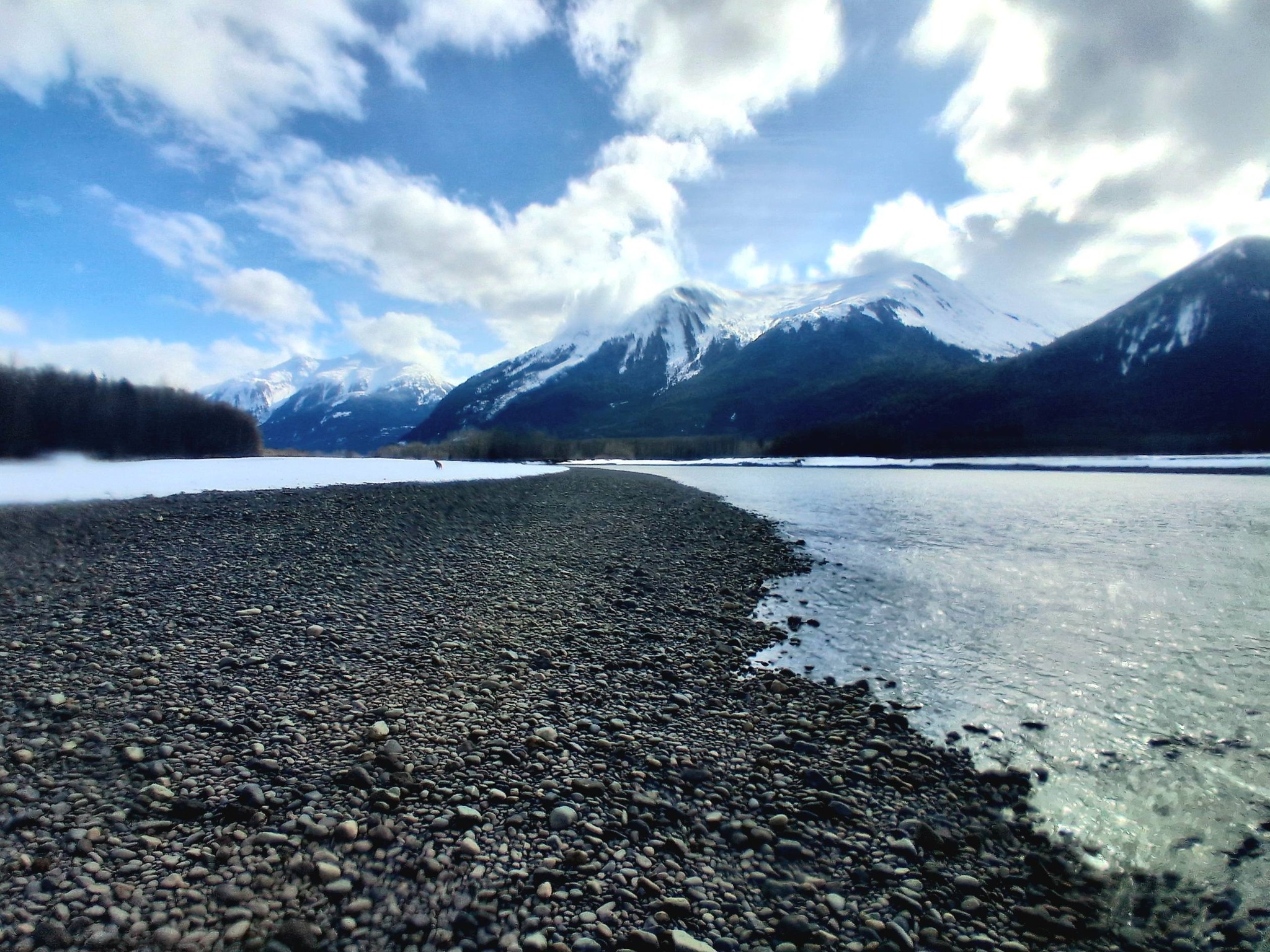
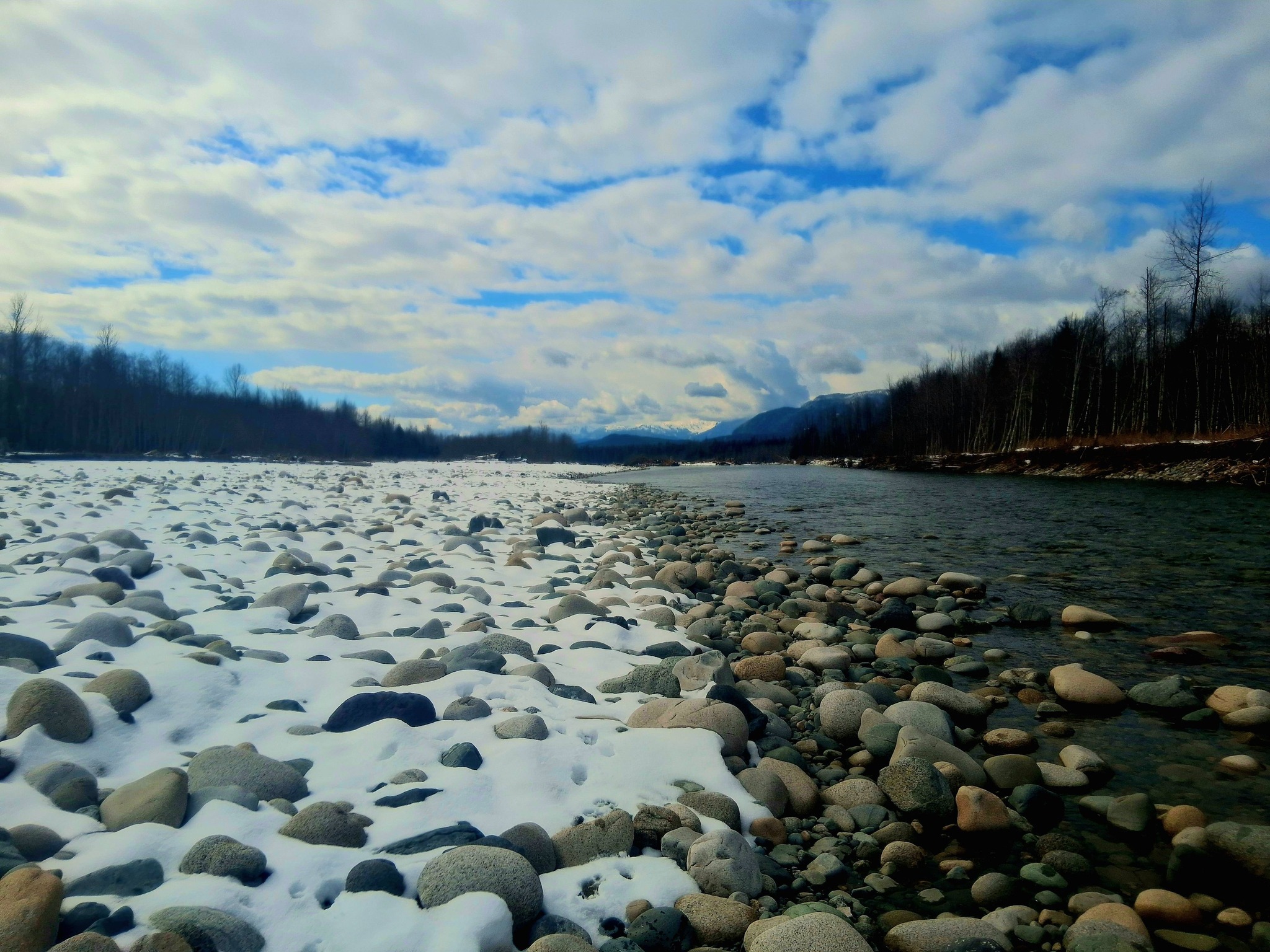
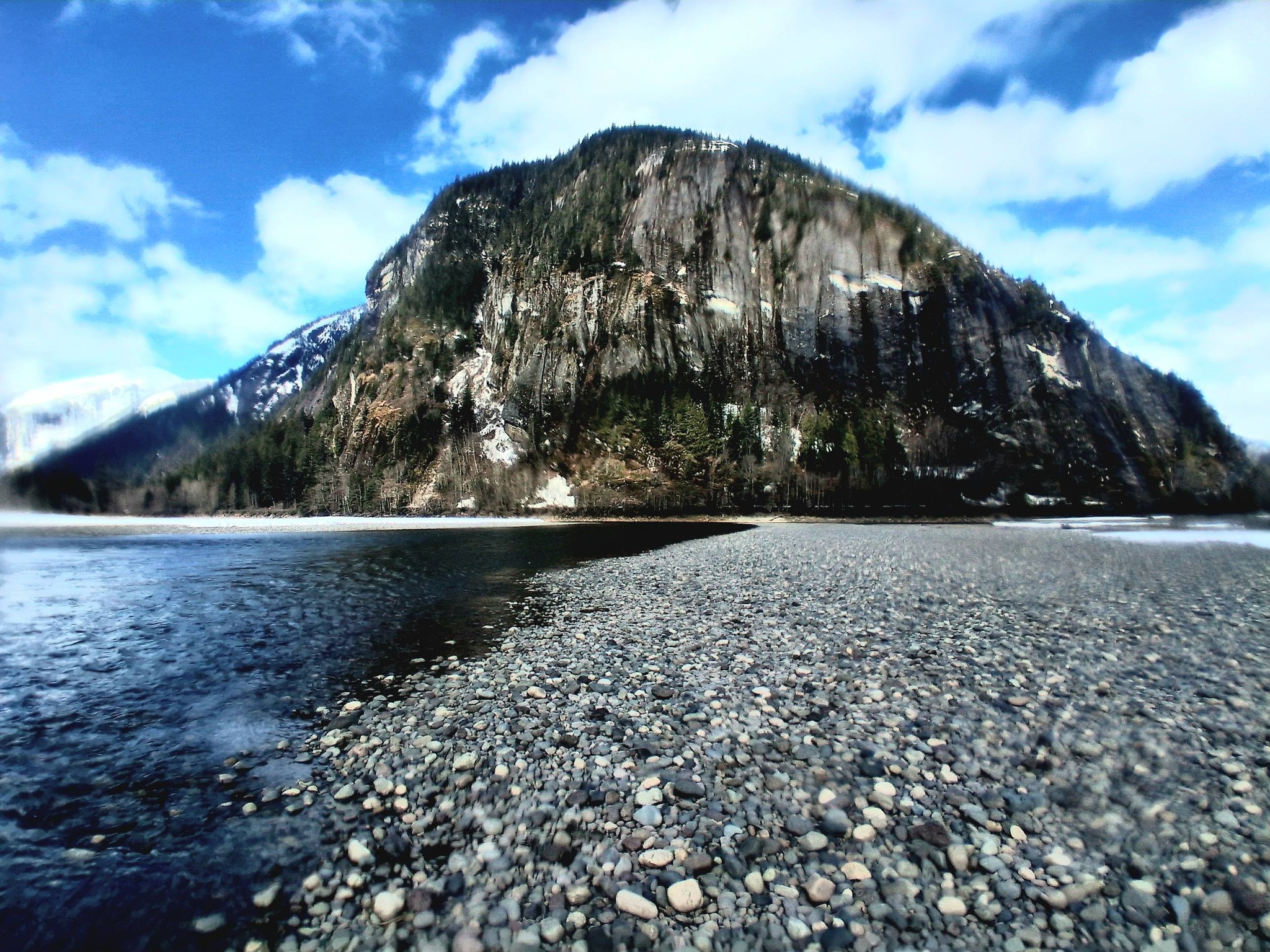
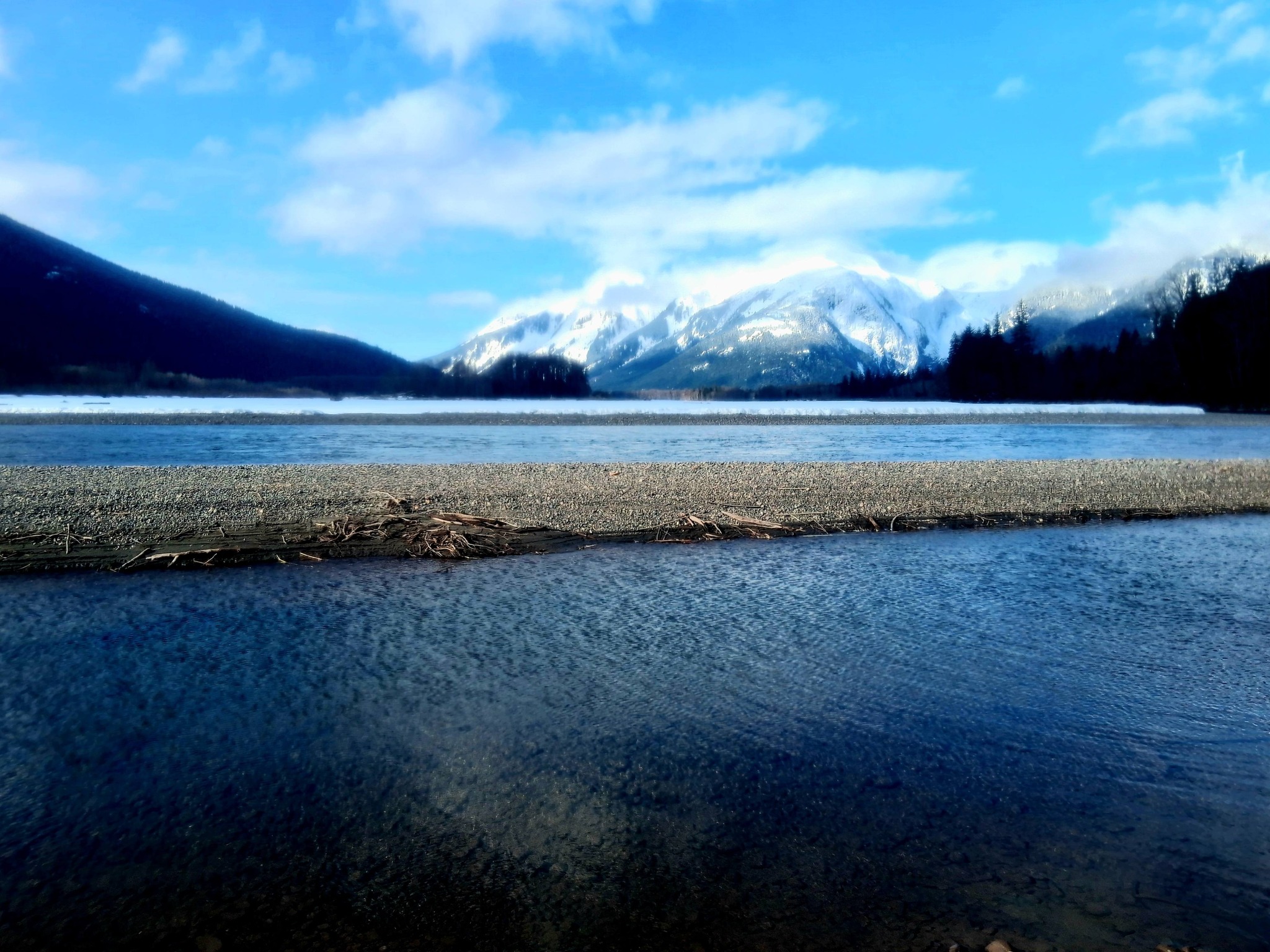
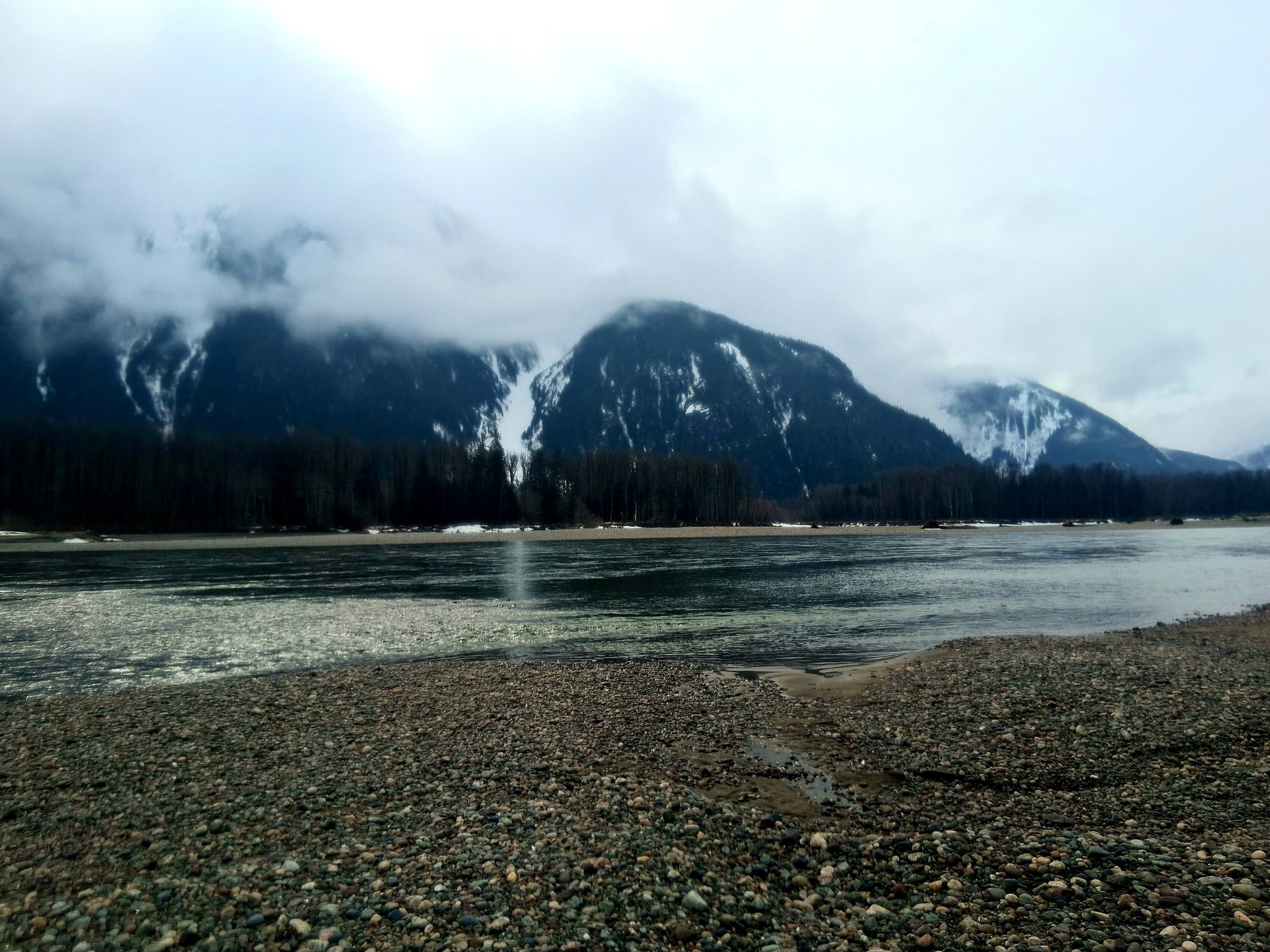
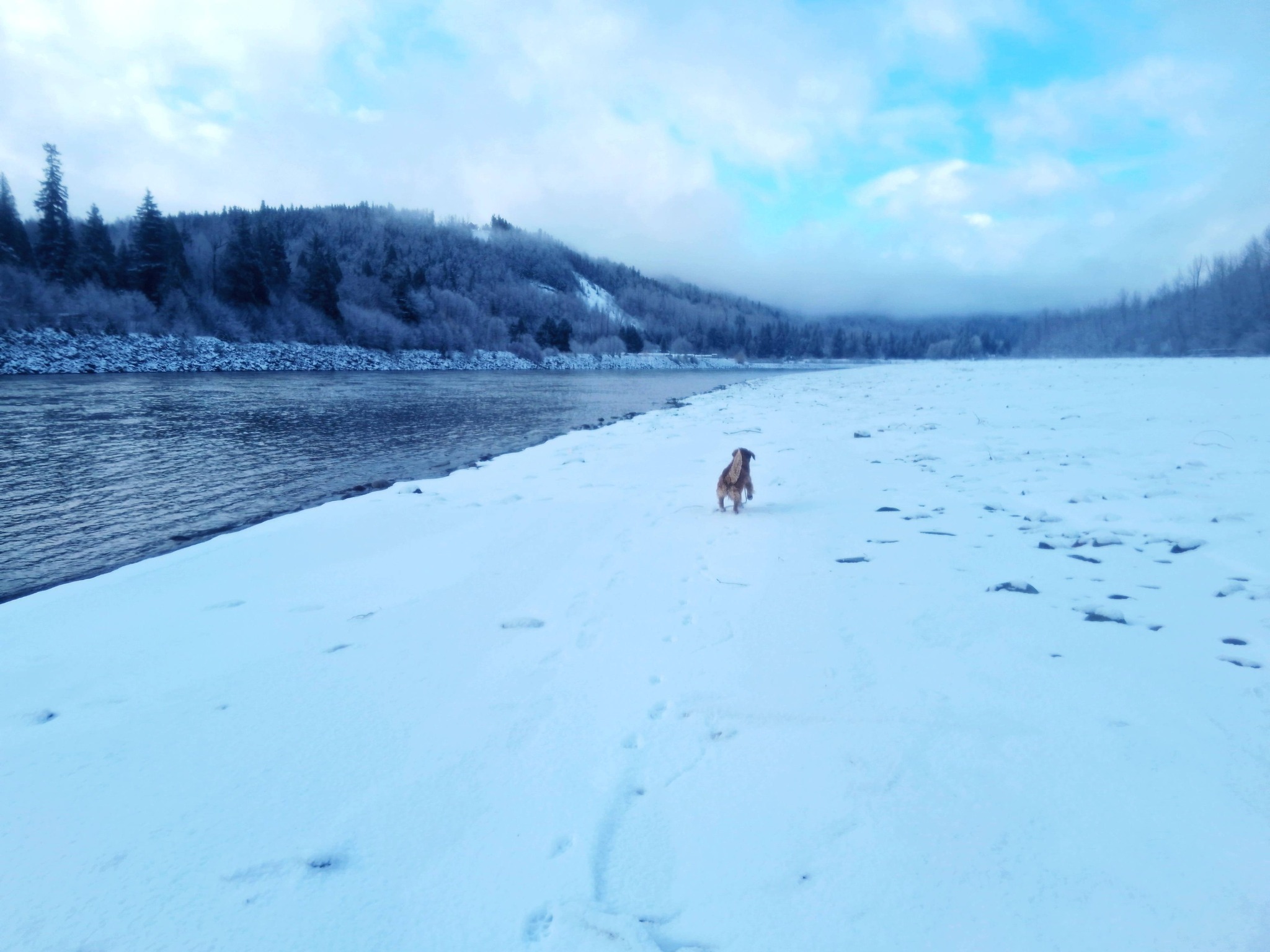
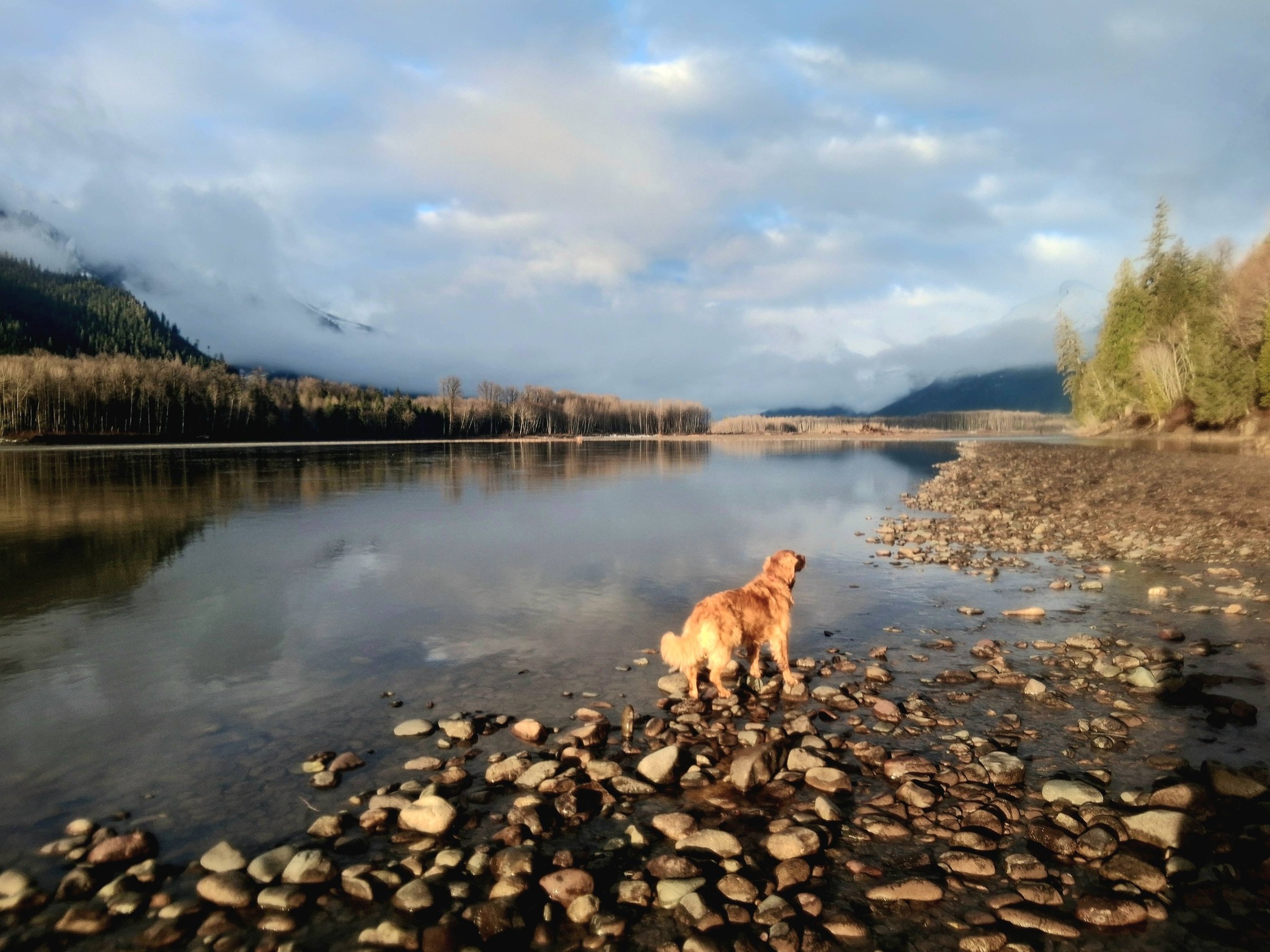
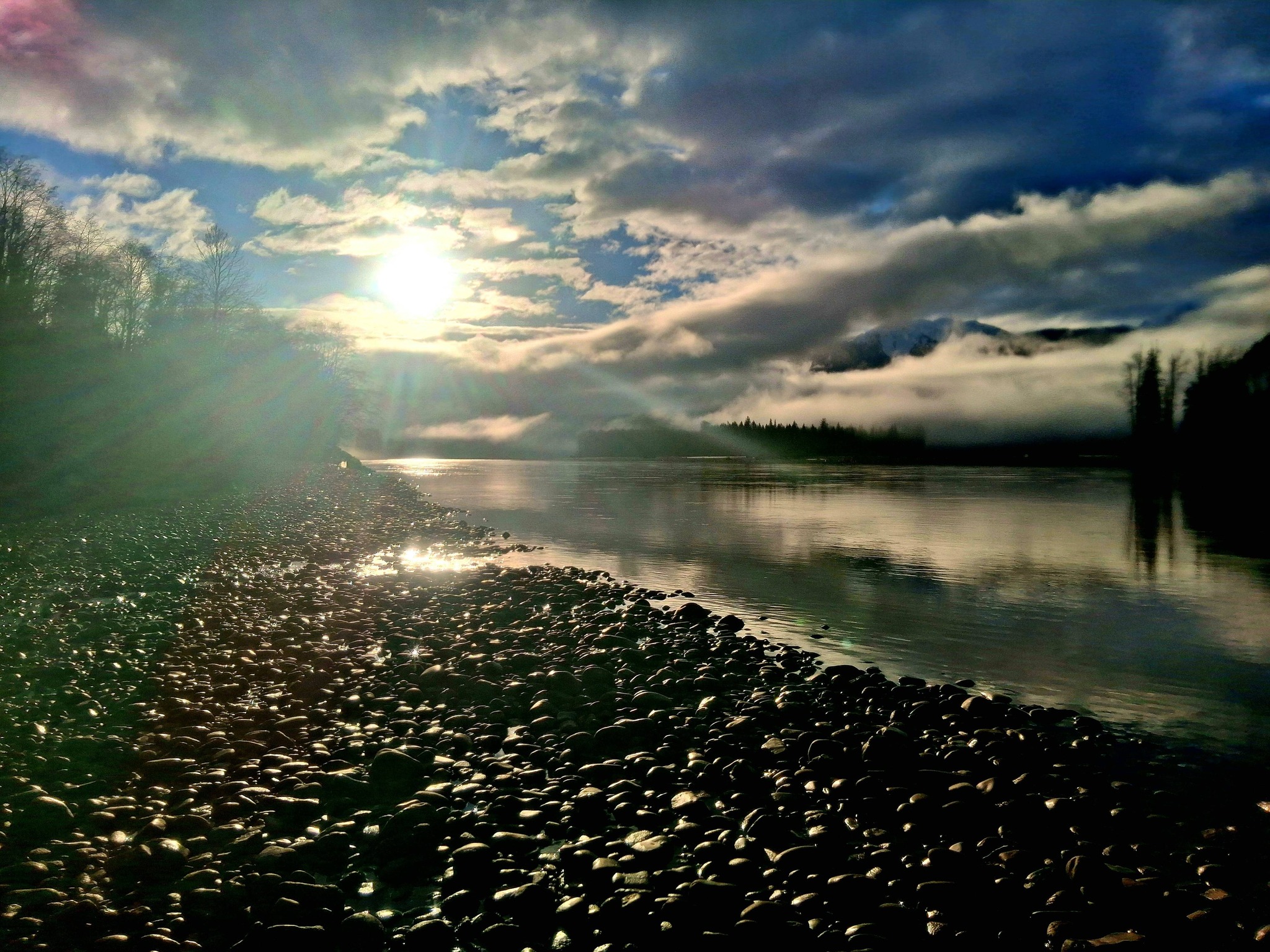
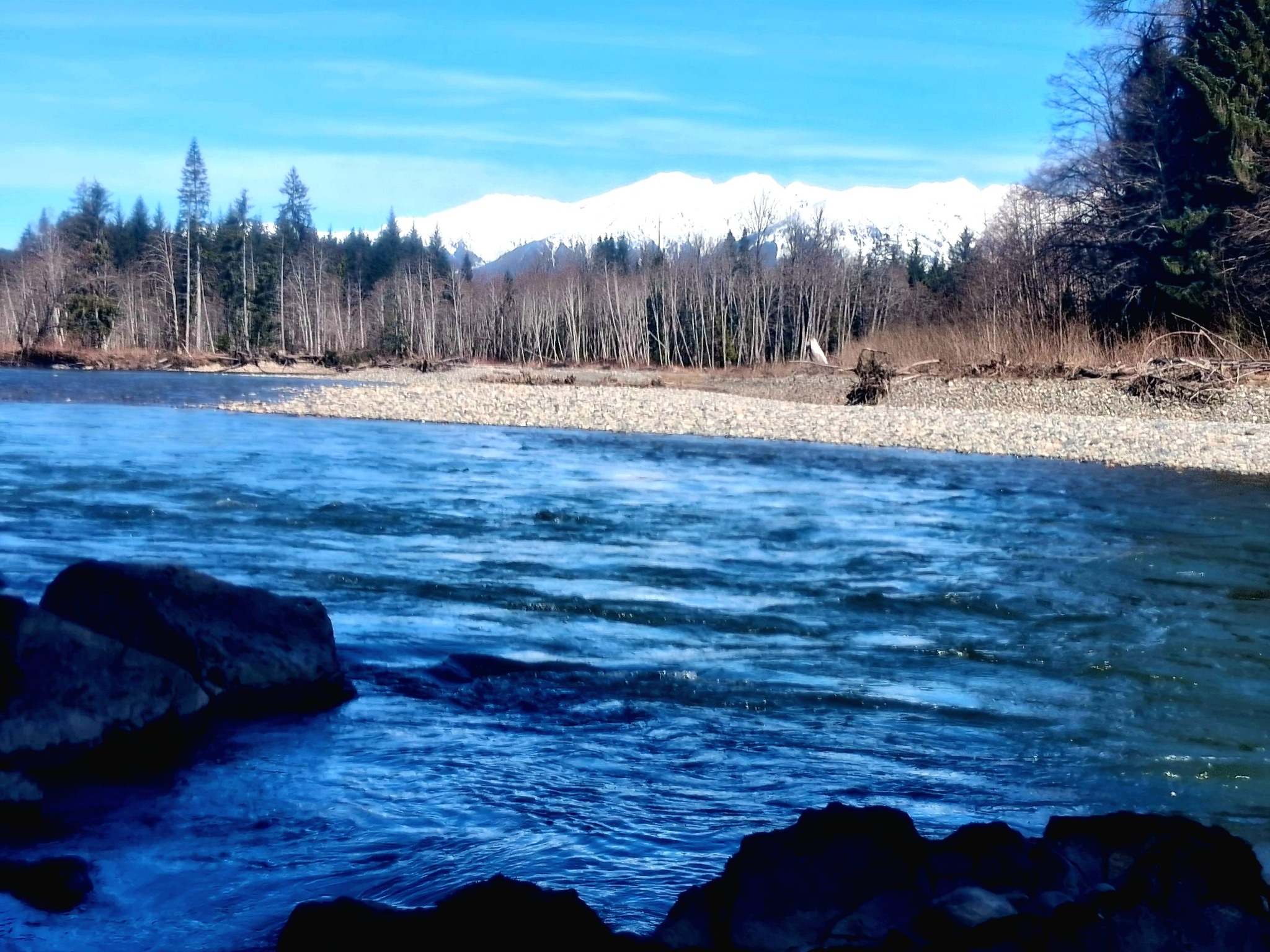
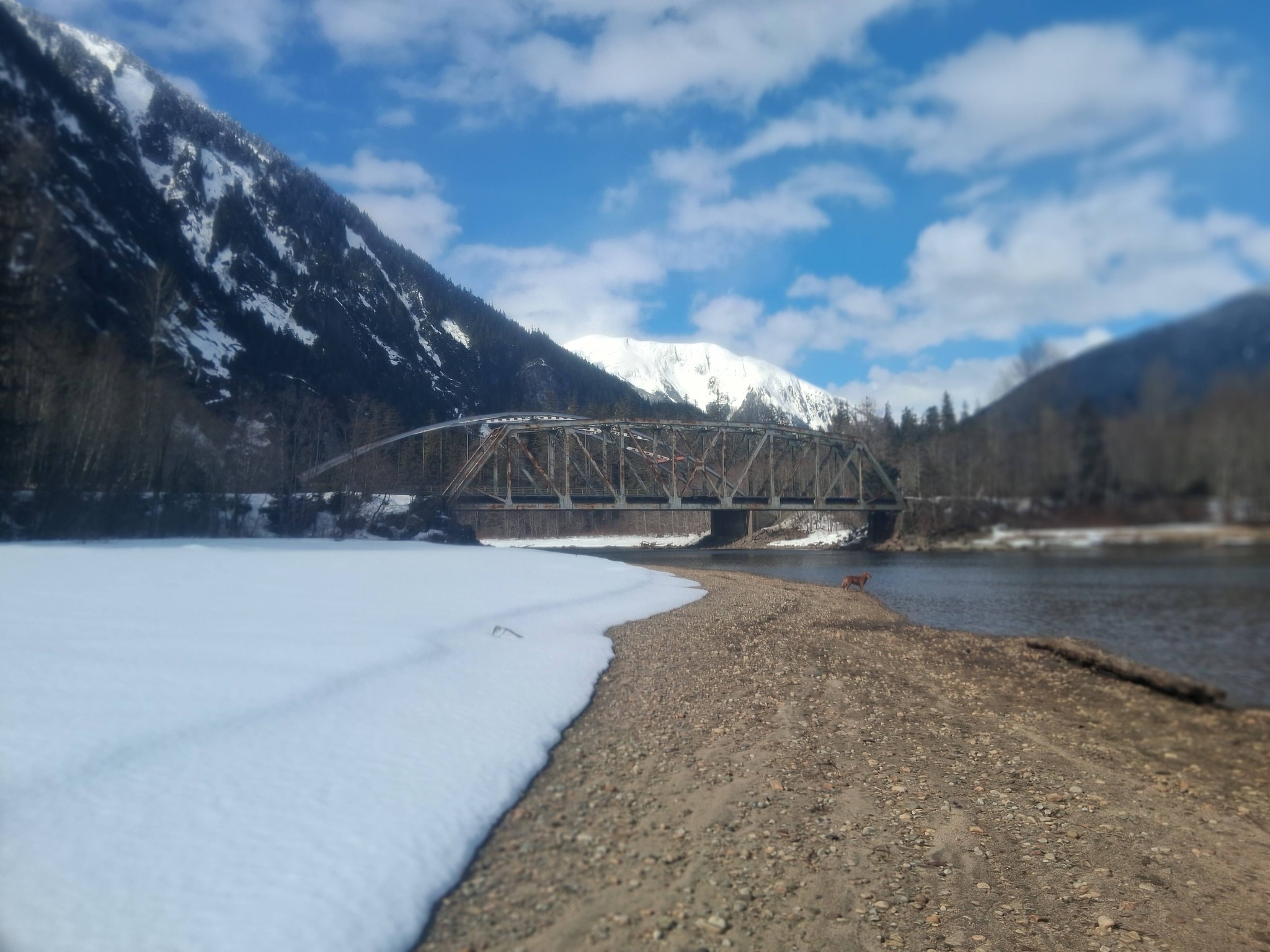
I arrived at the big river the last week of March and fished into the second week of April. When I got here snow was still in the river valley; deep in shaded areas and more sparse where the sun could get to it. The high peaks fringing both sides of the river valley had unbelievable snow pack. More than I’ve ever witnessed in any mountain range. Also the whitest. The moisture from the nearby ocean fuels a lot of precipitation: rain when warm and if cold enough snow, especially at elevation. Temperature the first week was often slightly sub-zero in the morning. On a few days it was iced-up rod guides until noon, especially if there was a breeze. Afternoons were usually above zero, in the 4 to 10c range. The big river was low and clear, and open; no ice cover. That was important and why I made the two day journey here as my intention was to explore it on foot: walk/wading.
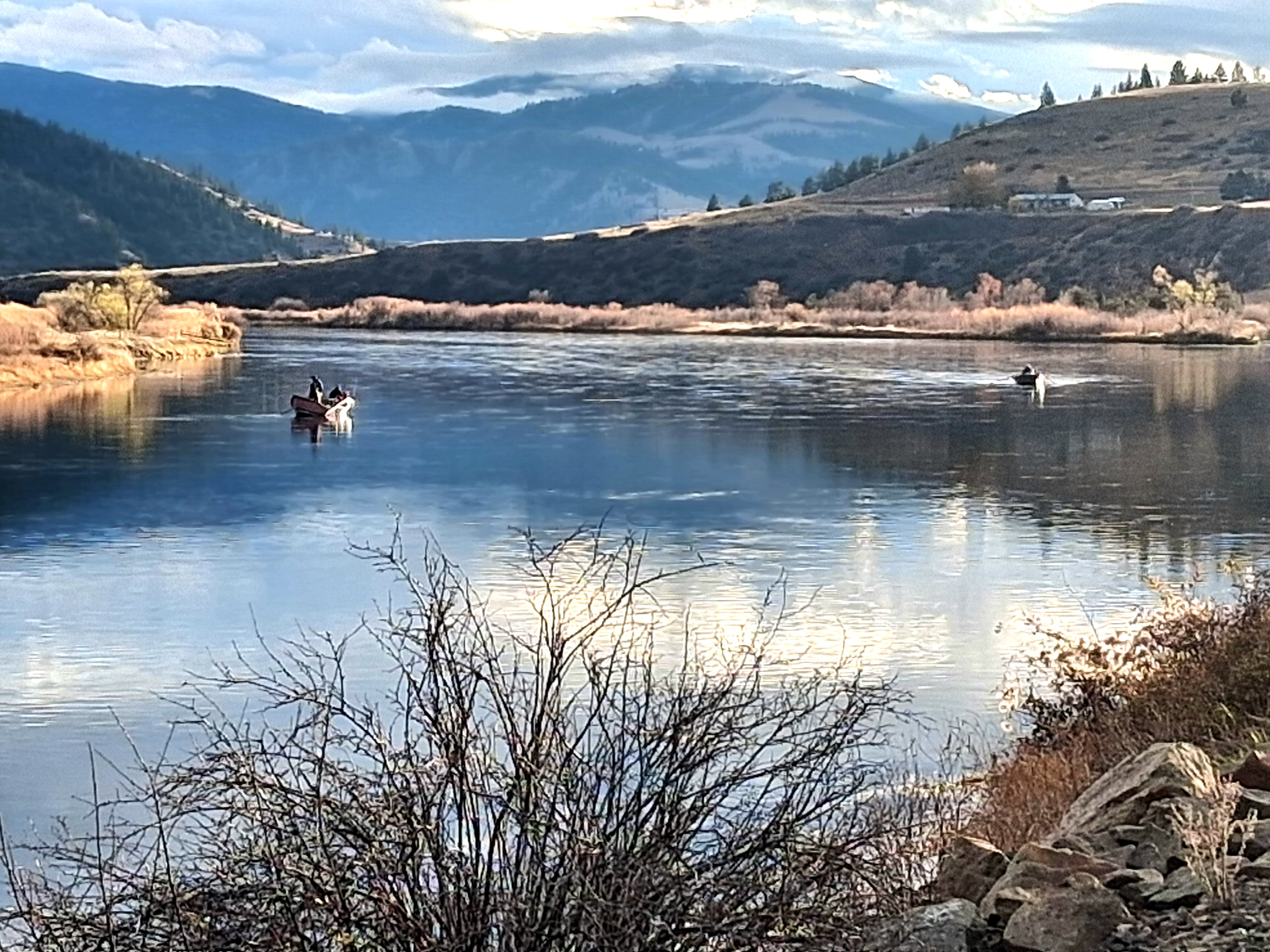
the big river
I was here to fish the brief late winter, early spring Steelhead run. I had read the run was not as prolific as the famous late Summer, Fall one but that what it lacked in the number of fish returning it often made up in the size; the quality of the fish. I had also read that the fish came in and “did their thing” and then quickly returned to the ocean. Most don’t take up residence. They are on the move and simply resting on occasion. My job was to try an intercept one along their travel path while they were on their quick journey up river and then back to the salt. Unlike the Fall run, no Salmon accompany them.
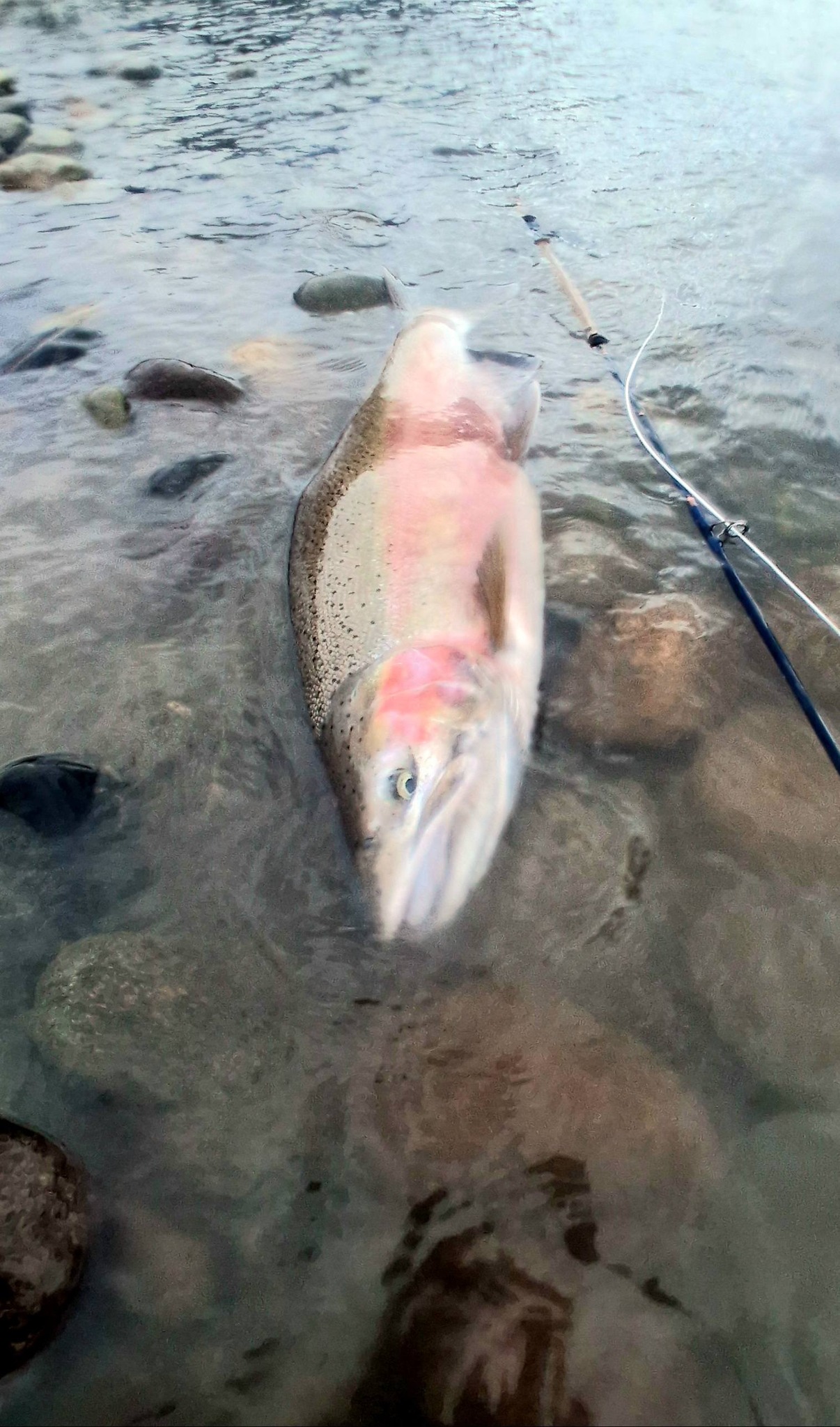
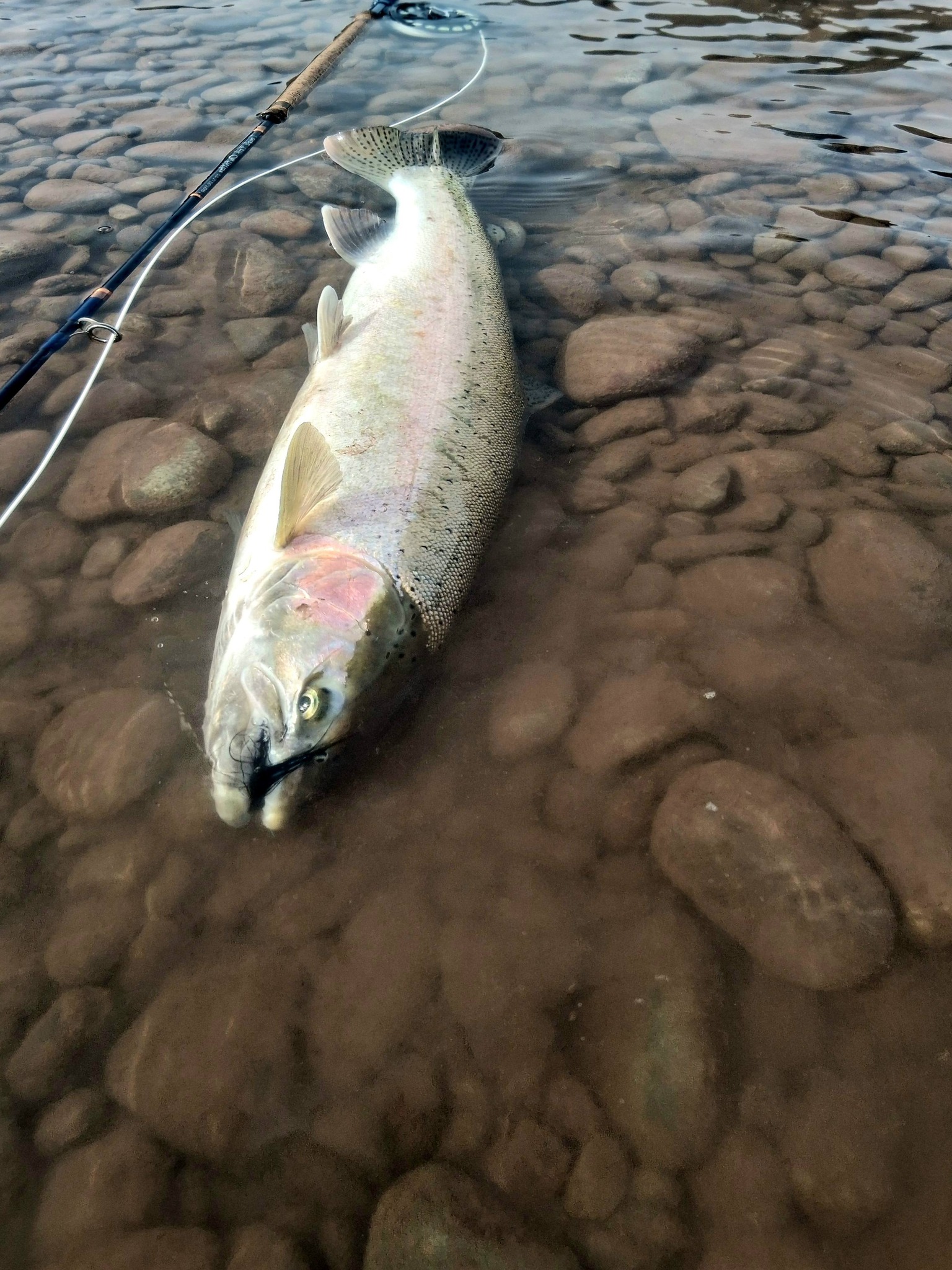
steelhead that had wintered in river
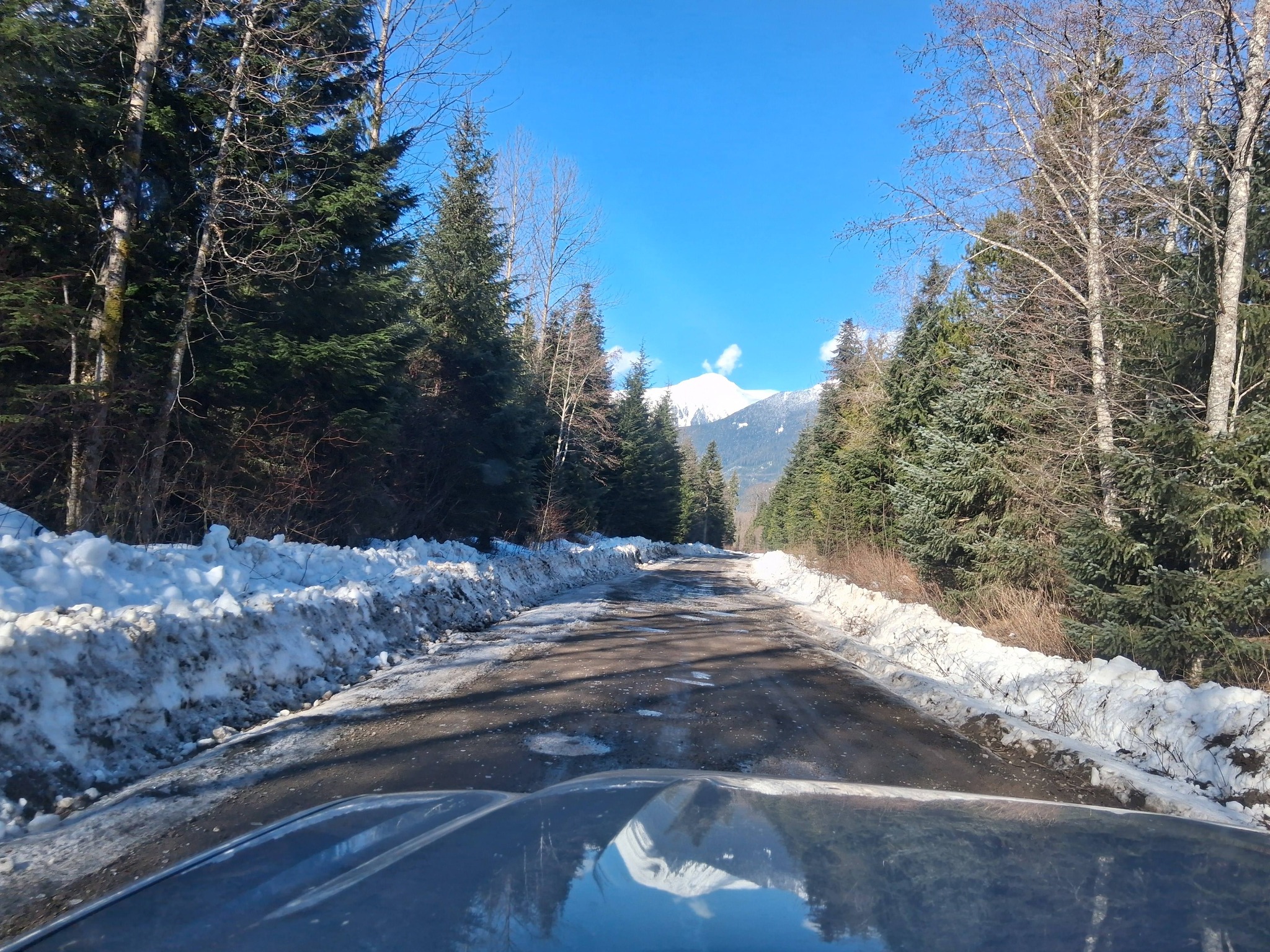
Finding foot access to the big river was not easy. It was the most challenging part of the trip. I had read that before coming here and it was true. Satellite shots were helpful but not always. Most anglers access the river’s many runs and prime spots via power boats. I found the local fly shop not all that helpful regarding information on river access even though I frequented it often, bought a lot of flies, leader material and sink tips. Finding car pull-overs (parking) was challenging, especially the first week as high plowed snow banks went to the edge of most roads. There were the ever present transport and logging trucks on my tail and I had to avoid several avalanche zones. When hiking to the river often there was thick riverside brush and dense willow growth to cope with; sometimes knee to hip deep snow; there were many huge impenetrable log jams; there were multiple side channels to traverse to get to main runs and some too deep to cross; there were huge islands to circumvent; and a myriad of other adversities to figure out as it was my first time to the region. I’d often spot good casting water from a distance, trek towards it but simply could not get to it. I spent a lot of time looking for access and good water to swing a fly on. Eventually I found several angling spots that I coveted and could rotate through during an angling week always hoping a fish would show-up; be present on one of them. A few were relatively easy access and nice to have when I wanted a light day. Most of the time I made my way to and hung-out on huge freestone/sand shoals/bars or the side of an island that had open terrain and an impressive long run. It was nice to spend a day at these locations. There was no back-casting limitations. I could overhand “beach cast” my two-handed rod.
Days on the big river passed quickly. Casting the two-hander repetitively became somewhat meditative. With time I started to wonder if there were any fish in the river. I had to remind myself that there were; some were out there; just “stick with it’. Sometimes I had to pep talk myself into making that “one more cast”. Then on my seventh day my line tightened up on something that was not a rock or a stick. It was alive and powerful. You gotta have faith…
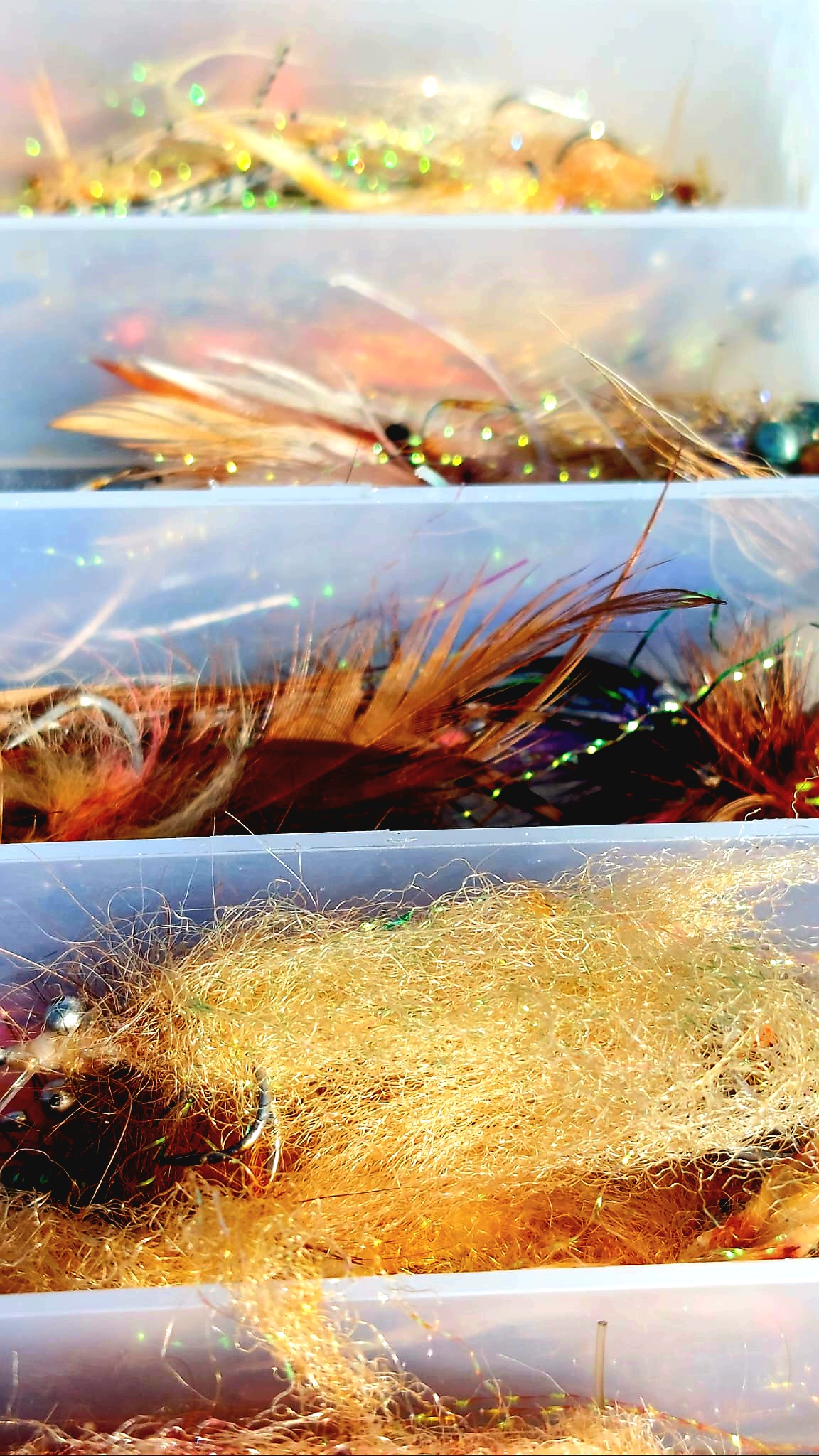
Redfish flies. There are hundreds of shrimp, crab, and baitfish patterns out there. Not unlike the immense number and variety of trout flies. They come in all sizes, shapes and colors. There are many regional differences and preferences. There are different patterns for murky water vs clear. Fly design can also vary based on the type of bottom the Redfish are feeding on such as Oyster beds; thick dense grass; sparse shoal grass; mud; pothole areas; sand. And there are different head weights depending on the depth an angler will be fishing. Some patterns have rubber legs to create action, some realistic eyes, and so on…
On past trips to a Redfish destination I copied some of the fly patterns used in the region I was visiting. On my most recent trip, I had patterns that I have had some success with and confidence in.
fly tying fur
Redfish generally aren’t know to be picky eaters… that is until they are. I’ve had many follow my moving fly until I had no more fly line to strip and was down to my leader. I’m sure clear water feeding fish are harder to dupe than fish in cloudy, muddy water; same with calm vs choppy water; light conditions can be a factor such as the quality of the light (brightness) or the angle of the Sun’s rays; food presence or lack of can influence their feeding behavior; as does Tide phase and water temperature, which can change quickly in the ultra shallow bay that I fish; competition from other Redfish (those searching and feeding in schools vs solitary fish) influence feeding; as well as innumerable other factors that I’m simply not aware of. It’s all part of Nature’s mystery. And it’s the mystery that keeps you coming back.
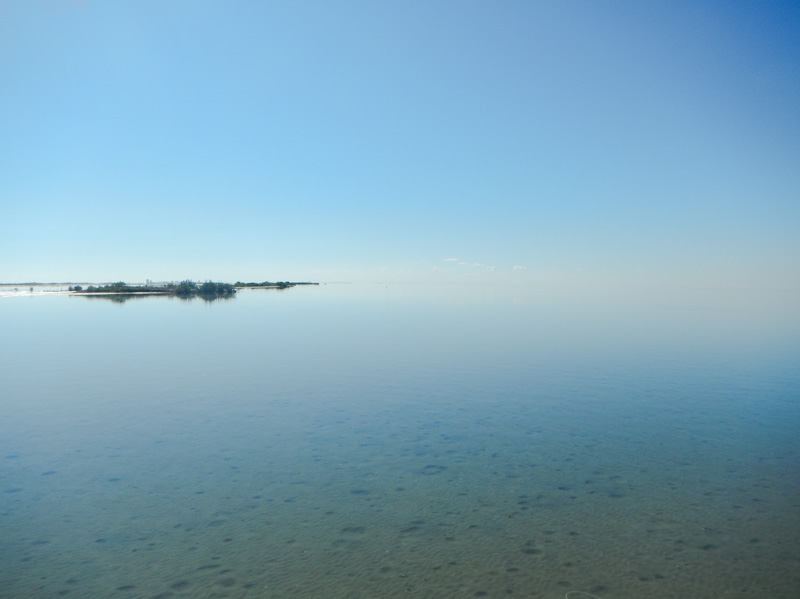
On rare calm mornings in the super transparent shallows slow moving Redfish and stationary feeders (head down) often wouldn’t eat my larger flies or bulky ones. Small and sparse flies seemed best along with soft landings and careful wading. Some of those fish seemed focused on small crabs.
walking back from the bay
When I had to deal with high wind on the flats (most days) I found patterns tied with silly legs often got fouled on the hook. On those days I clipped the legs off. Shrimp eyes that I made with melted monofilament and that protruded slightly from the shrimp body and hook bend, often picked up shoal grass filaments/ blades dislodged from the shallows by fierce wind even though most flies that I tied had preventative weed guards. So I nipped the eyes off too. A fly with a weed strand (s) hitch-hiking on it was always rejected.
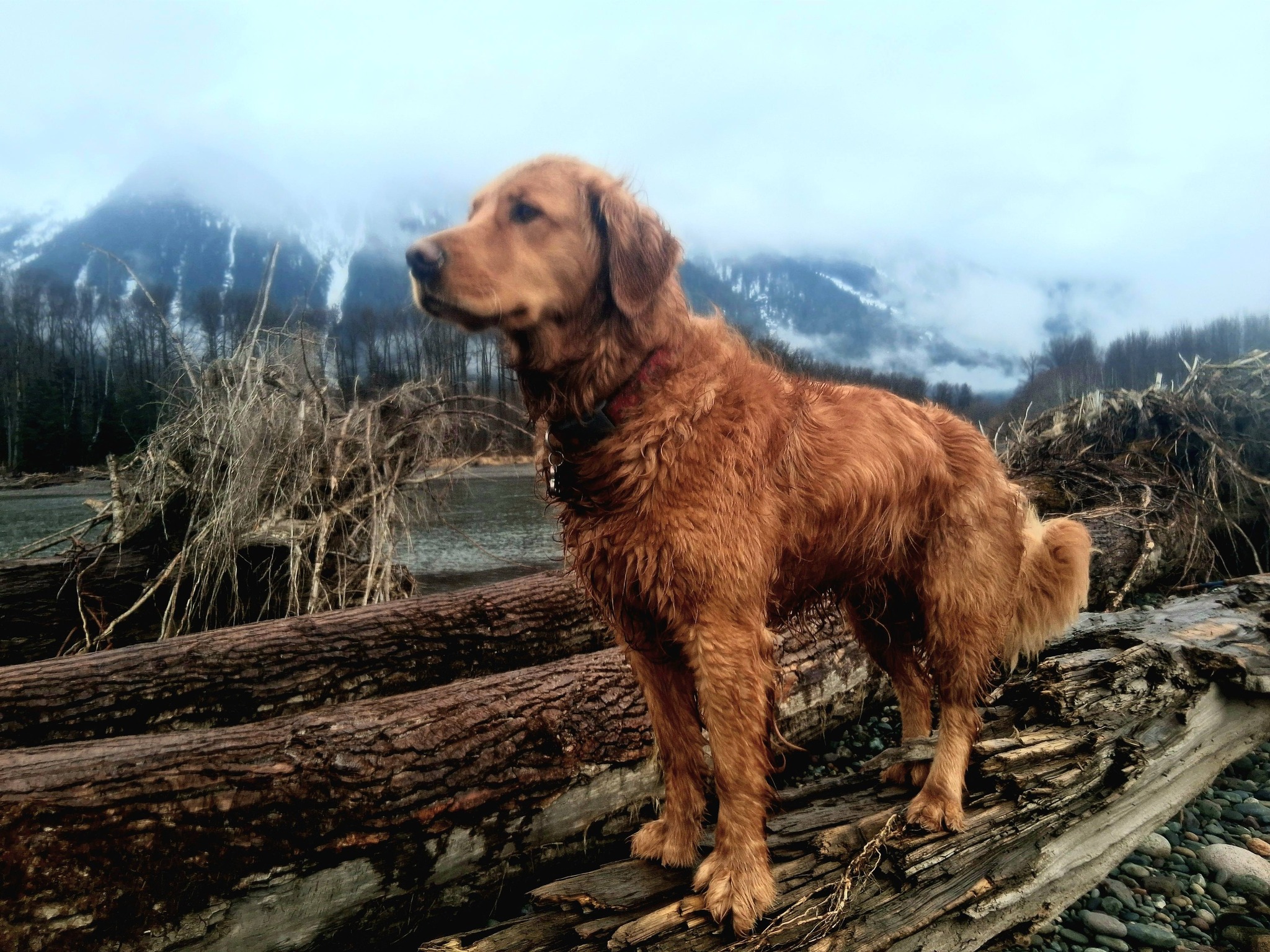
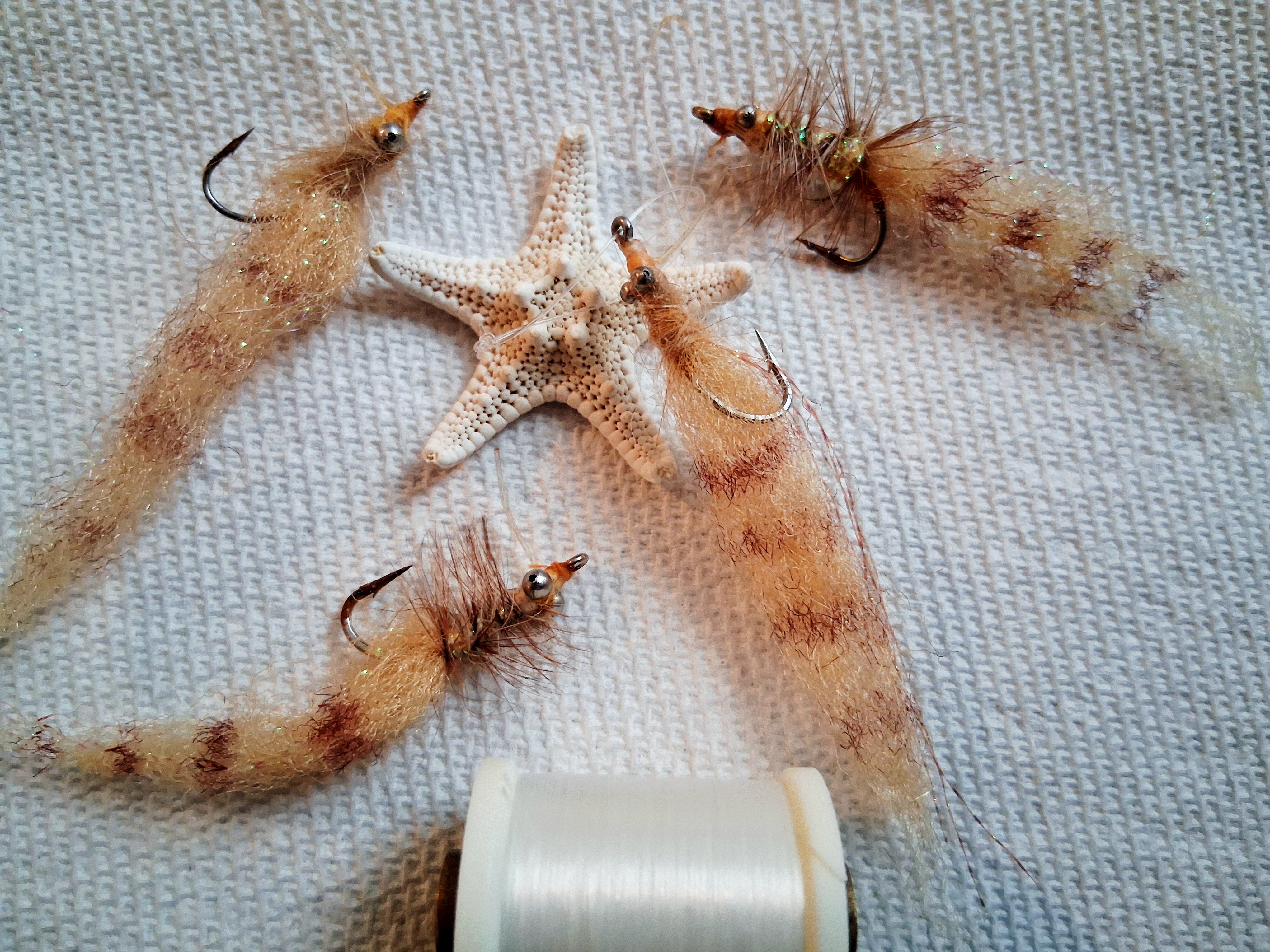
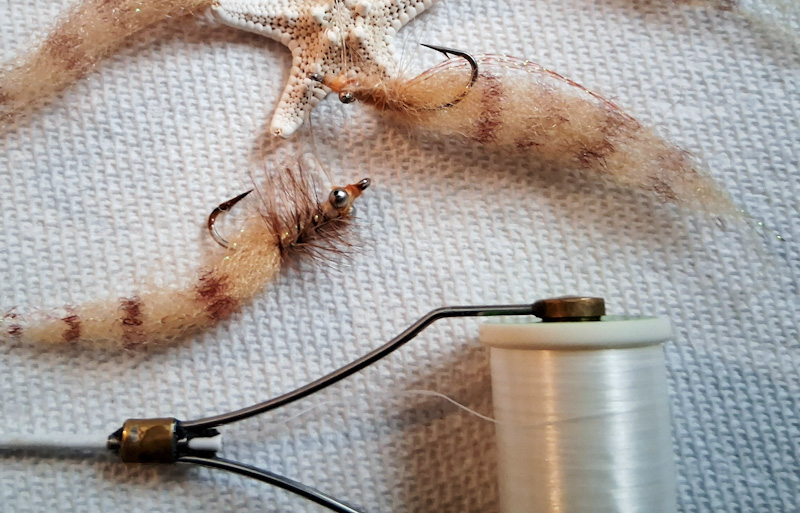
So as the trip progressed I kept my tied shrimp patterns simple. Most of the fish I caught were on two similar flies (see photo): Both had a body of EP fibers, color tan, which in the water look translucent as advertised by the product maker ( EP: Enrico Puglisi Flies); a few strands of crystal flash were added; some Sharpie drawn bars on the side of the EP body; at the head of the fly behind the hook eye I dubbed in some golden retriever hair (endless supply from Harper) to match the EP body; then some light weight as I was fishing knee to thigh deep water such as small or medium bead chain, sometimes a large size in wind ruffled water. On a couple of flies I wrapped some hackle at the head (Seaducer style) of the fly to try and soften the landing in the shallows. I don’t know if it really made a difference but I caught some of my best Reds on it. Both are very easy, quick ties. Just what you want when you are on the road/ travelling.
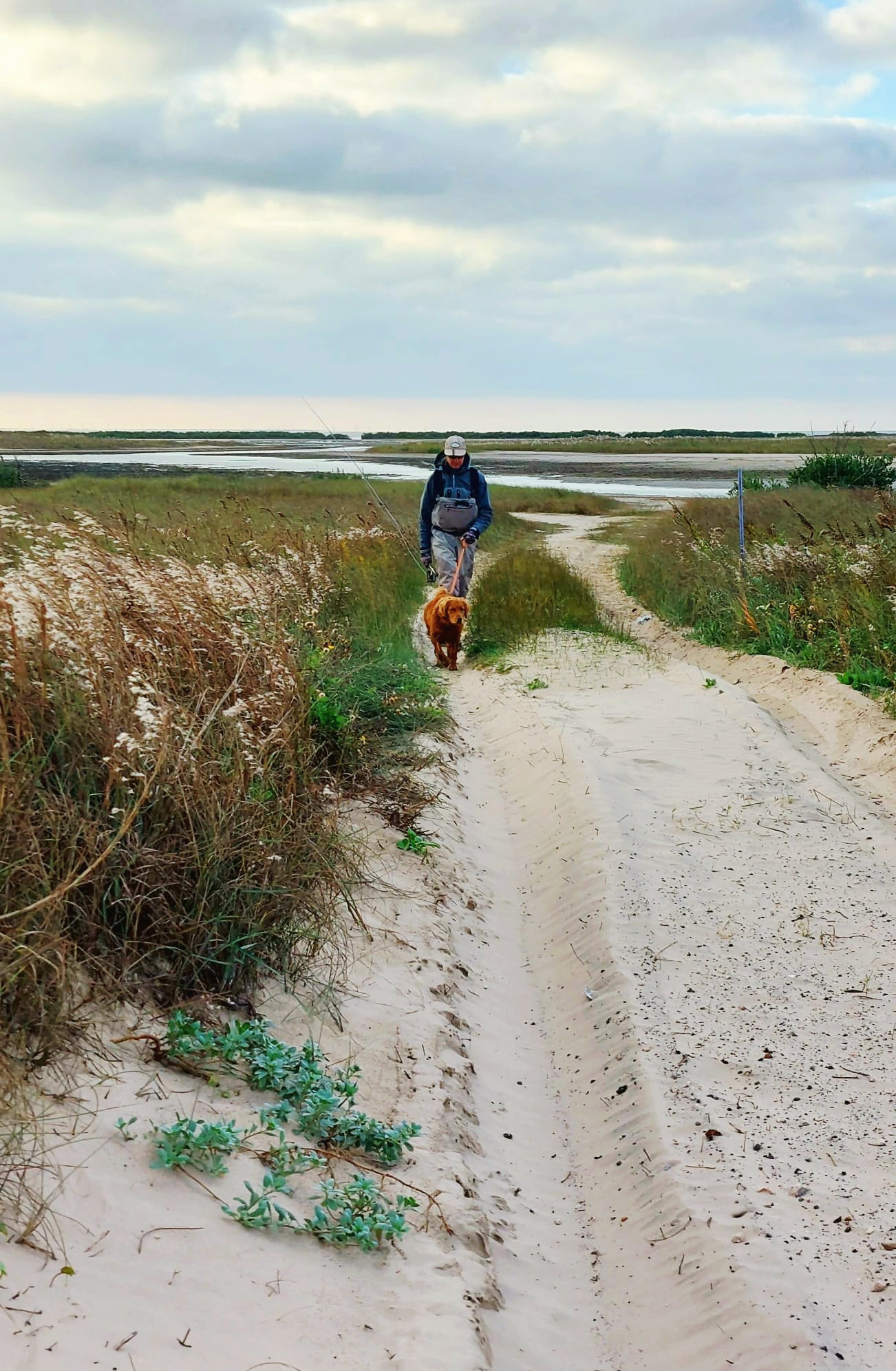
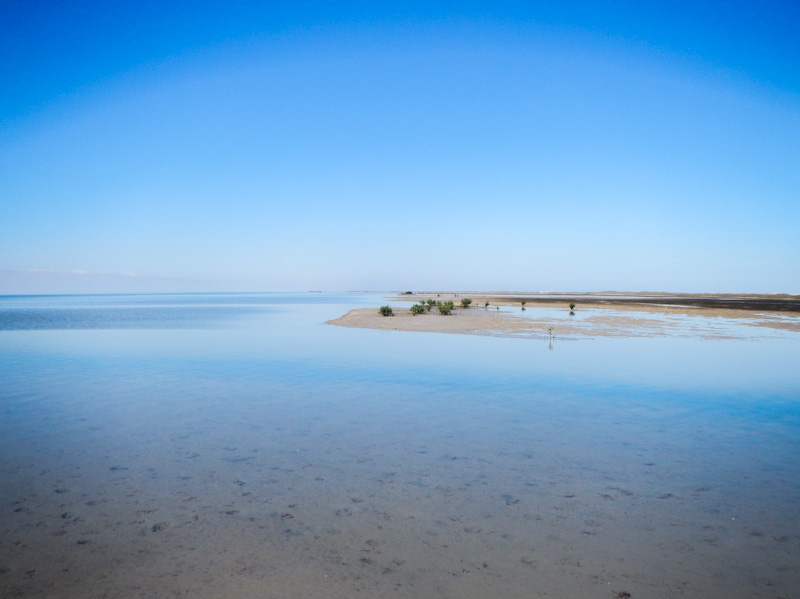
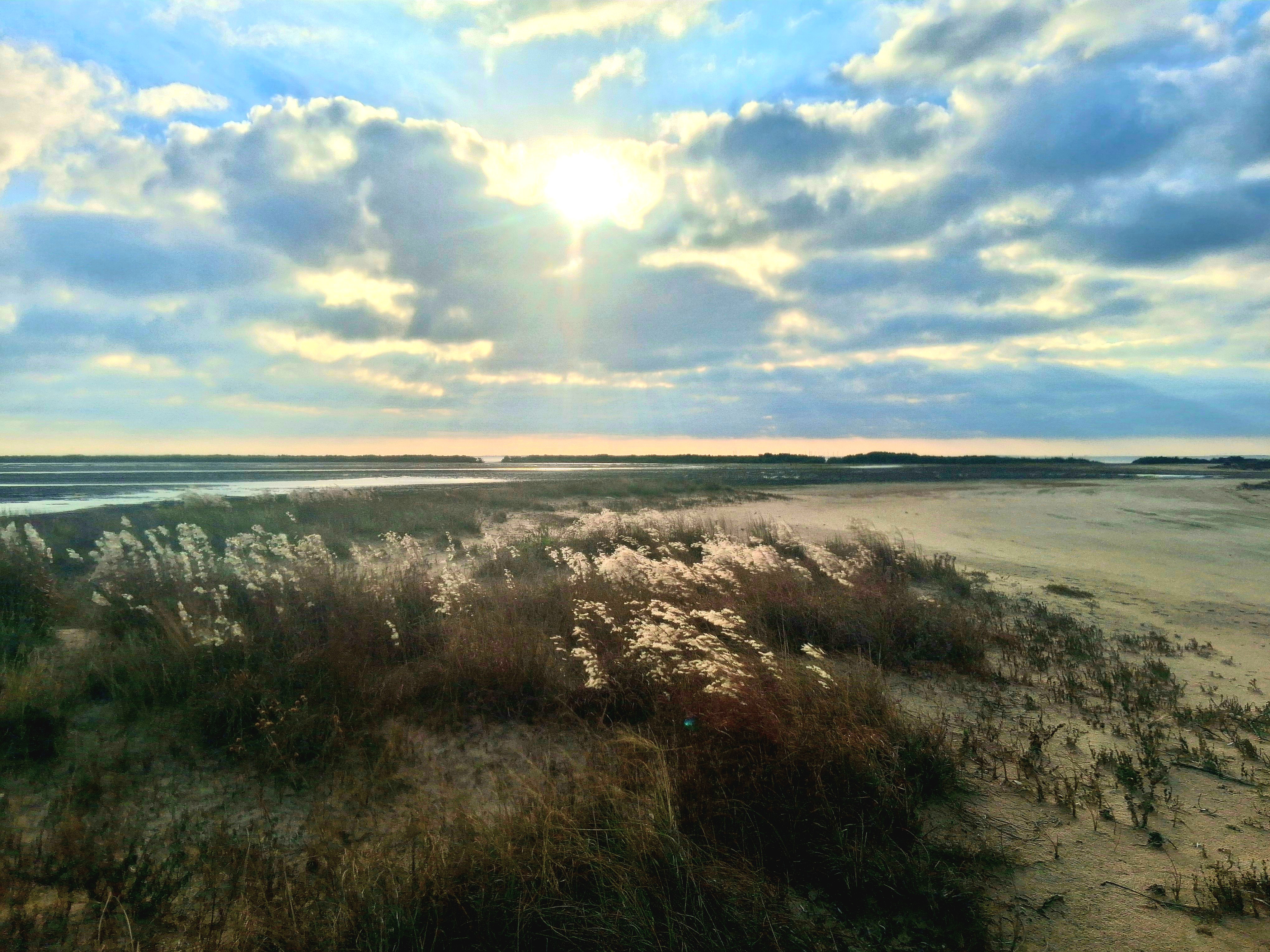
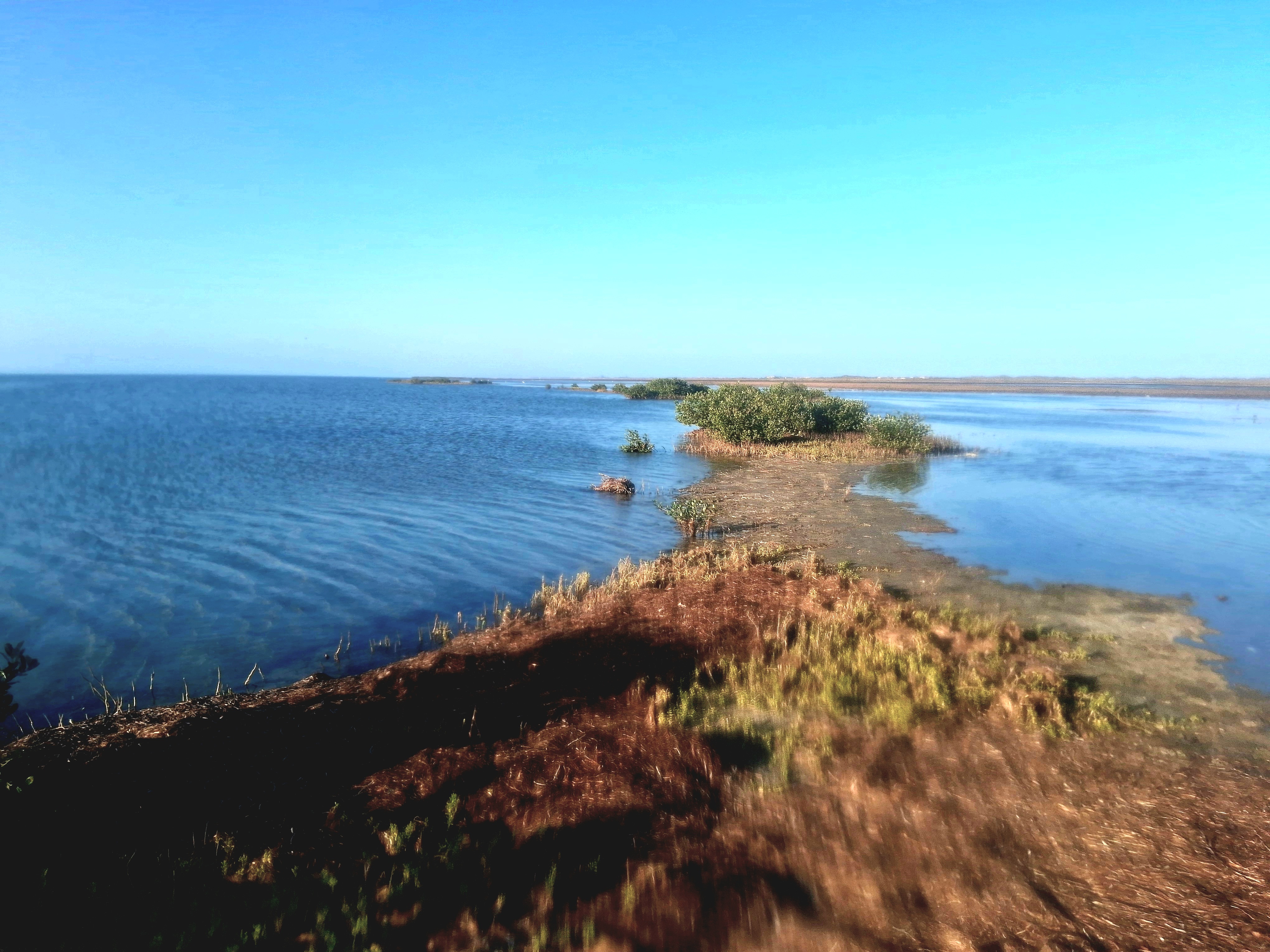
I HIKE THE SAND DUNES TOWARDS THE BAY IN THE MORNINGS with a fly rod, fly box, some leader material, nippers and a knapsack with lunch and water for the day, and most importantly optimism. My equipment is basic. It’s pretty much the same as when I fish for trout except the rod I’m using is slightly heavier, a saltwater 7 weight. I’m on a barrier island along the Gulf of Mexico. I’m here searching for Redfish on the clear sandy saltwater flats on the bayside of the island. I’m fishing on foot in knee deep water. It’s my 6th trip to the region.
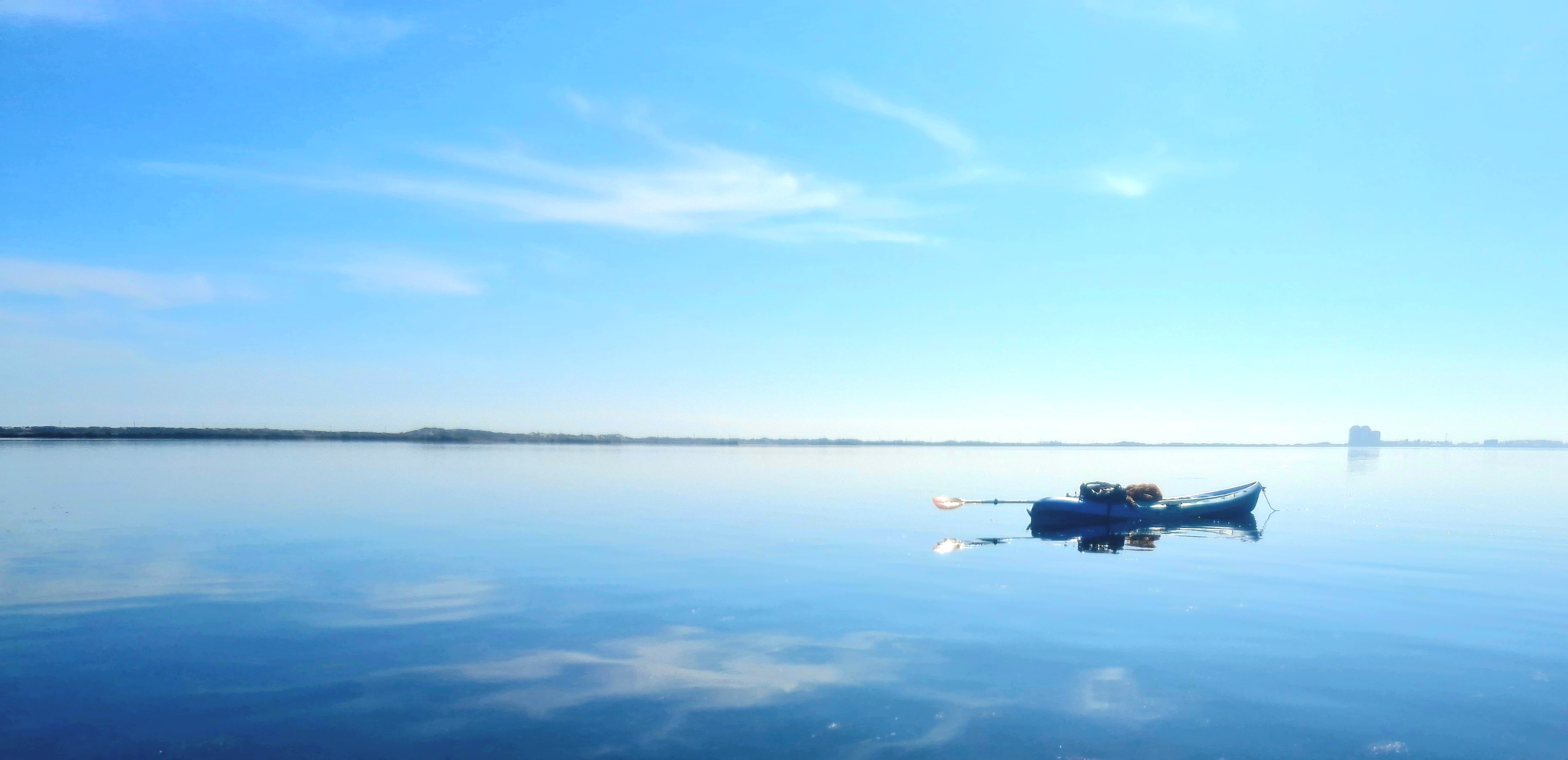
used a kayak (home base) on occasion while wading
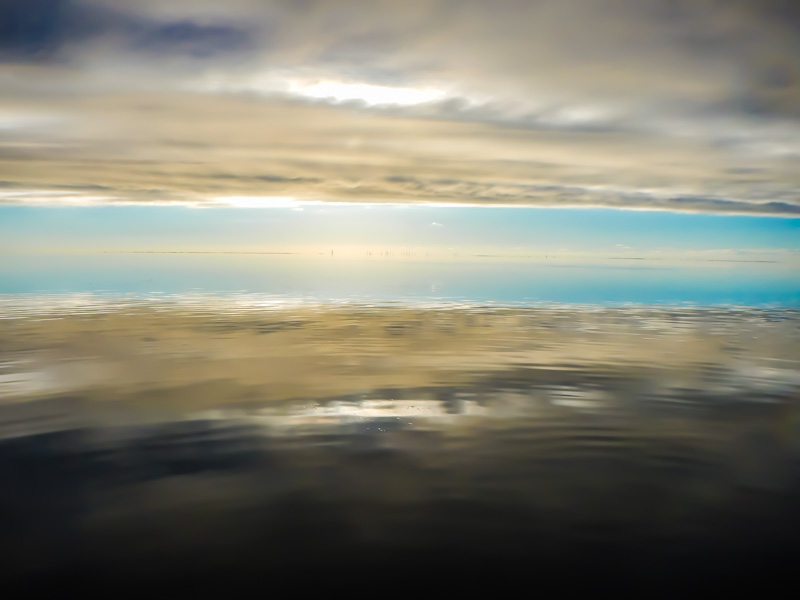
It’s Winter Solstice time and daylight is brief. The sun arcs low, close to the horizon. With the short days angling time and opportunity pass quickly. Most days are warm but conditions are often variable. With the short-lived days and fickle maritime weather it can make sight-fishing challenging, especially when it gets cloudy and windy. The worst is when a big blow from the north blasts through.
my foot path to horizon
The best time to spot a Redfish on the sand flats is when the light is good and when there is a significant tide. Moving water, in or out, always seems good. With it Sheepshead, Sea Trout and baitfish like Mullet, Lady fish and small Silverside minnows show up. And Redfish often tag along. That’s when the sand flats come alive. That’s when pelicans and other bird life begin working the water. That’s when you see Mullet jumping. That’s when you see schools of Ladyfish pushing water, their sides reflecting the sunlight on those rare perfect days. That’s when the bay is full of activity and energy. That’s when you want to be out there wading the knee deep water, hopefully standing right in the middle of it all. Stand still long enough and you end up becoming part of it, and with the sun fully illuminating the shallows you can see everything. It’s like looking into an aquarium and just as mesmerizing. That’s when you have your best chance to spot a good one.
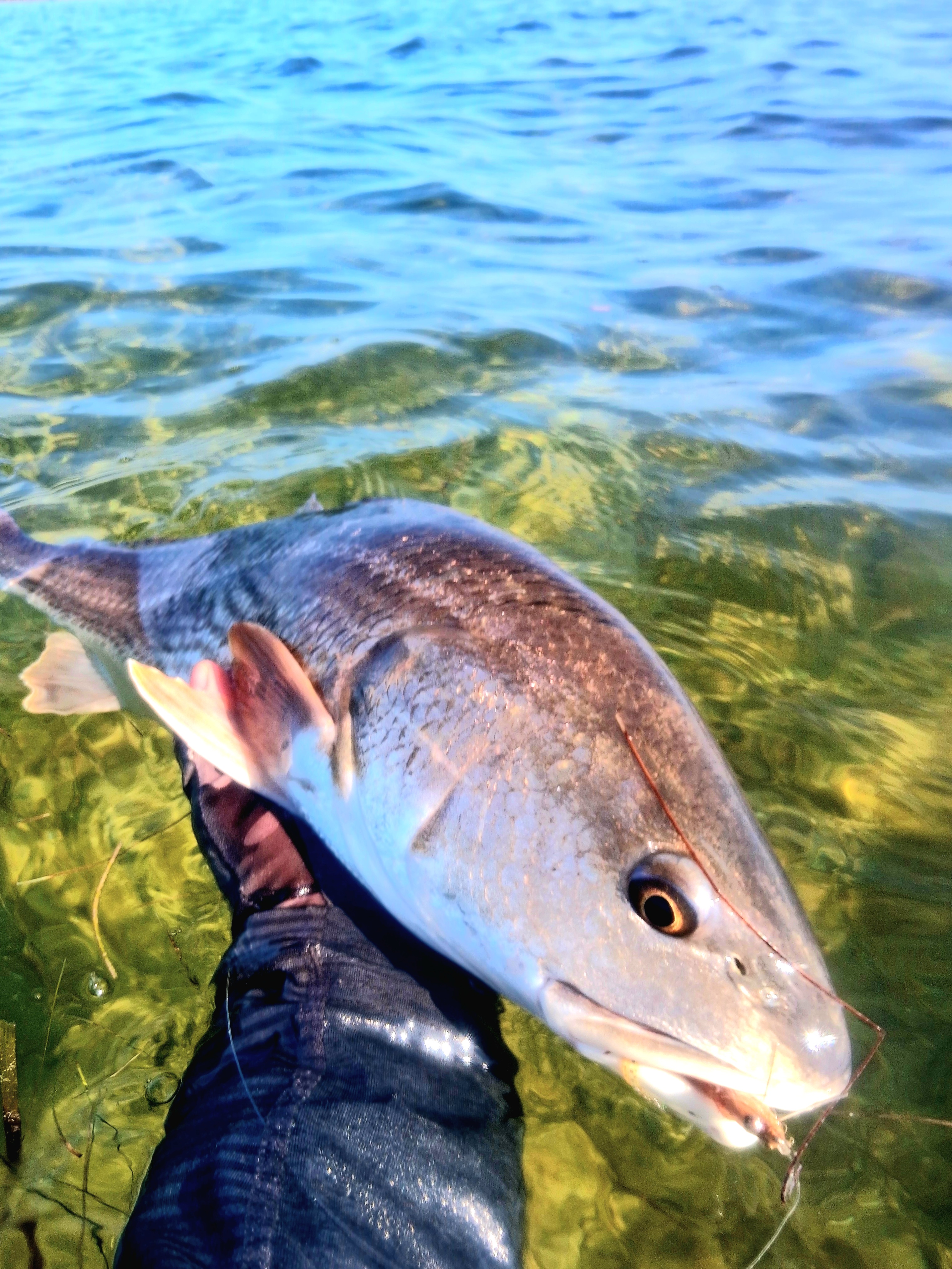
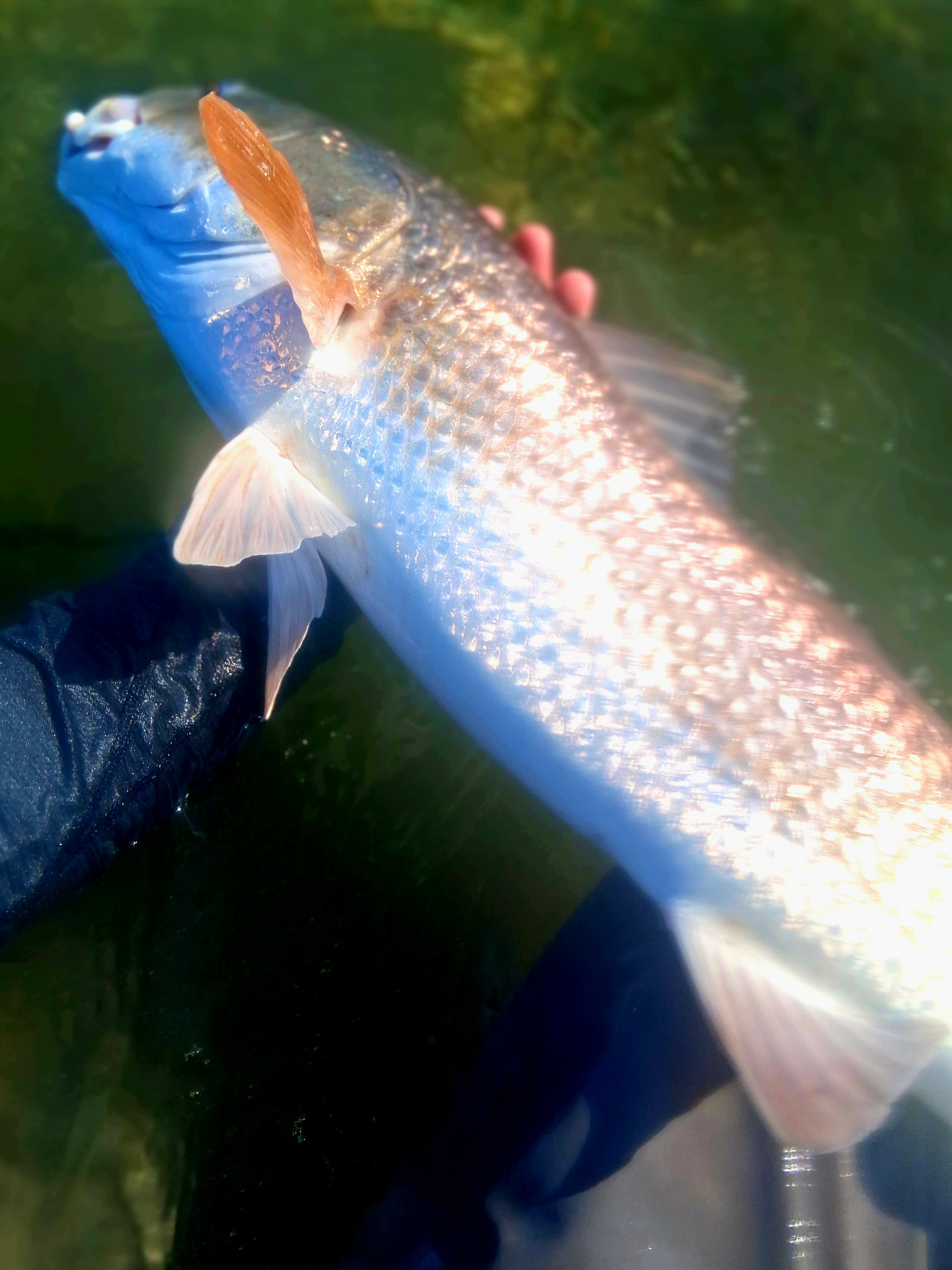
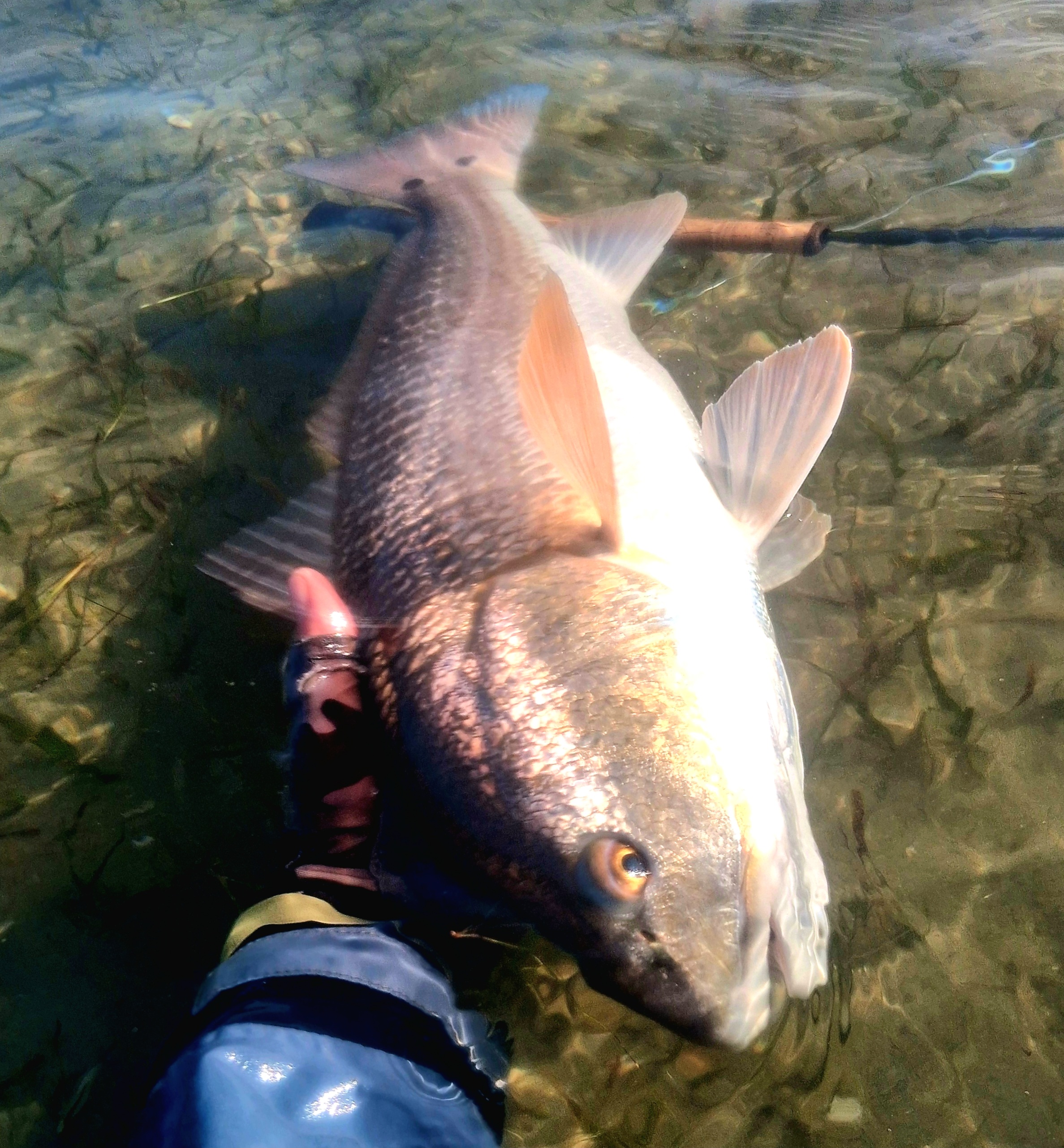
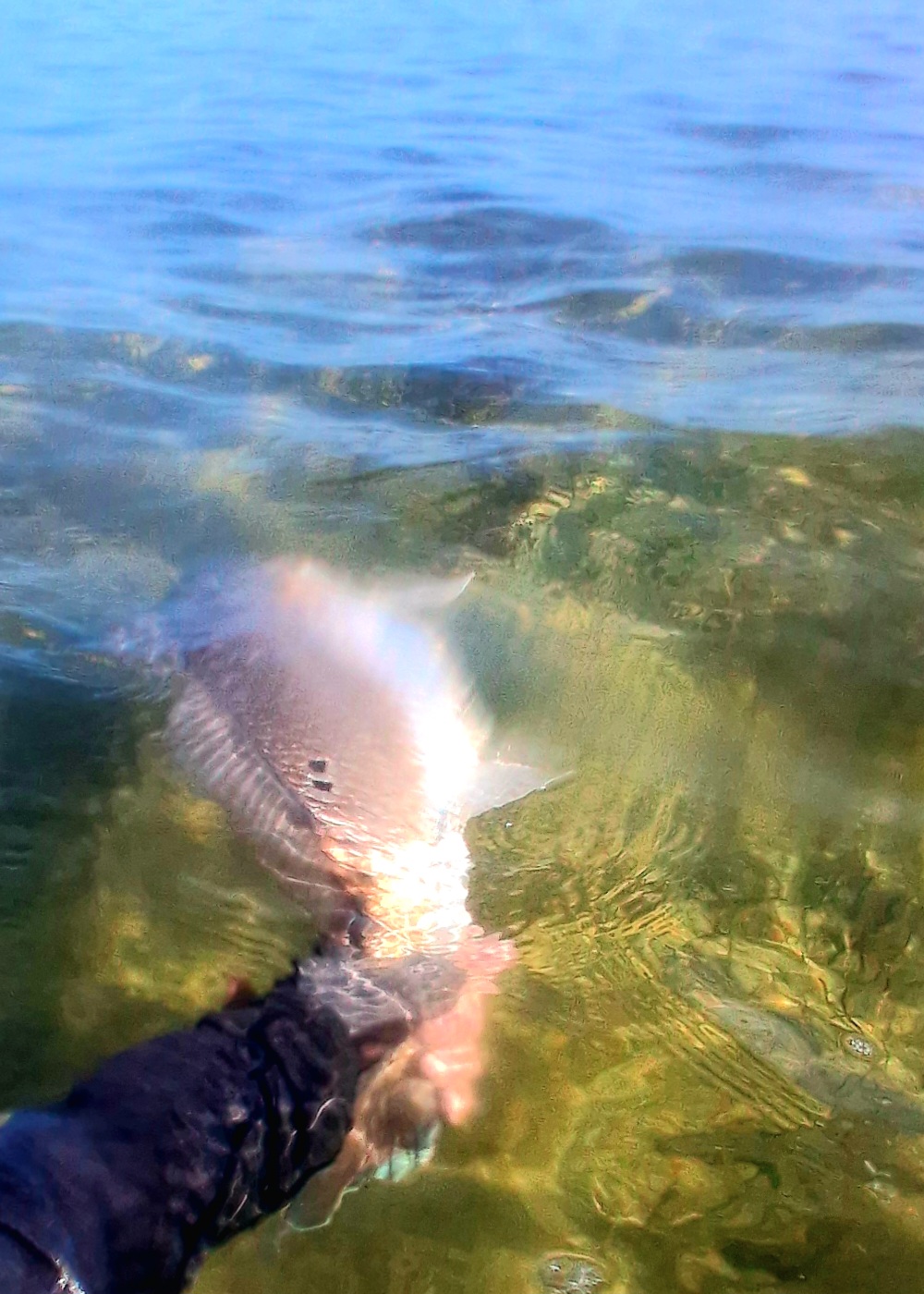
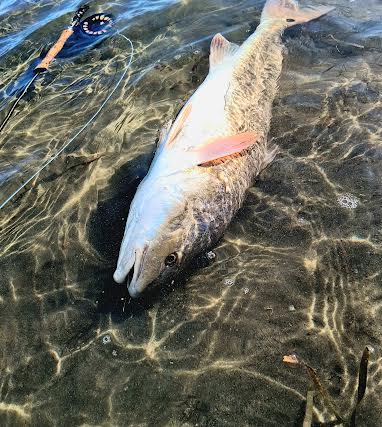
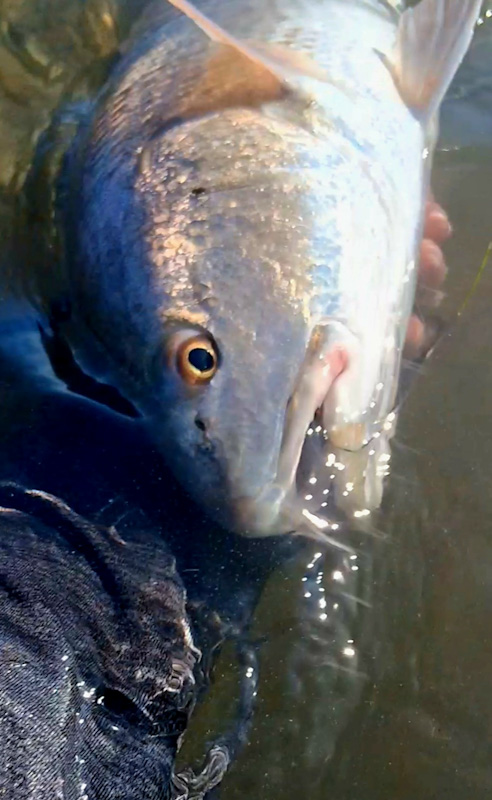
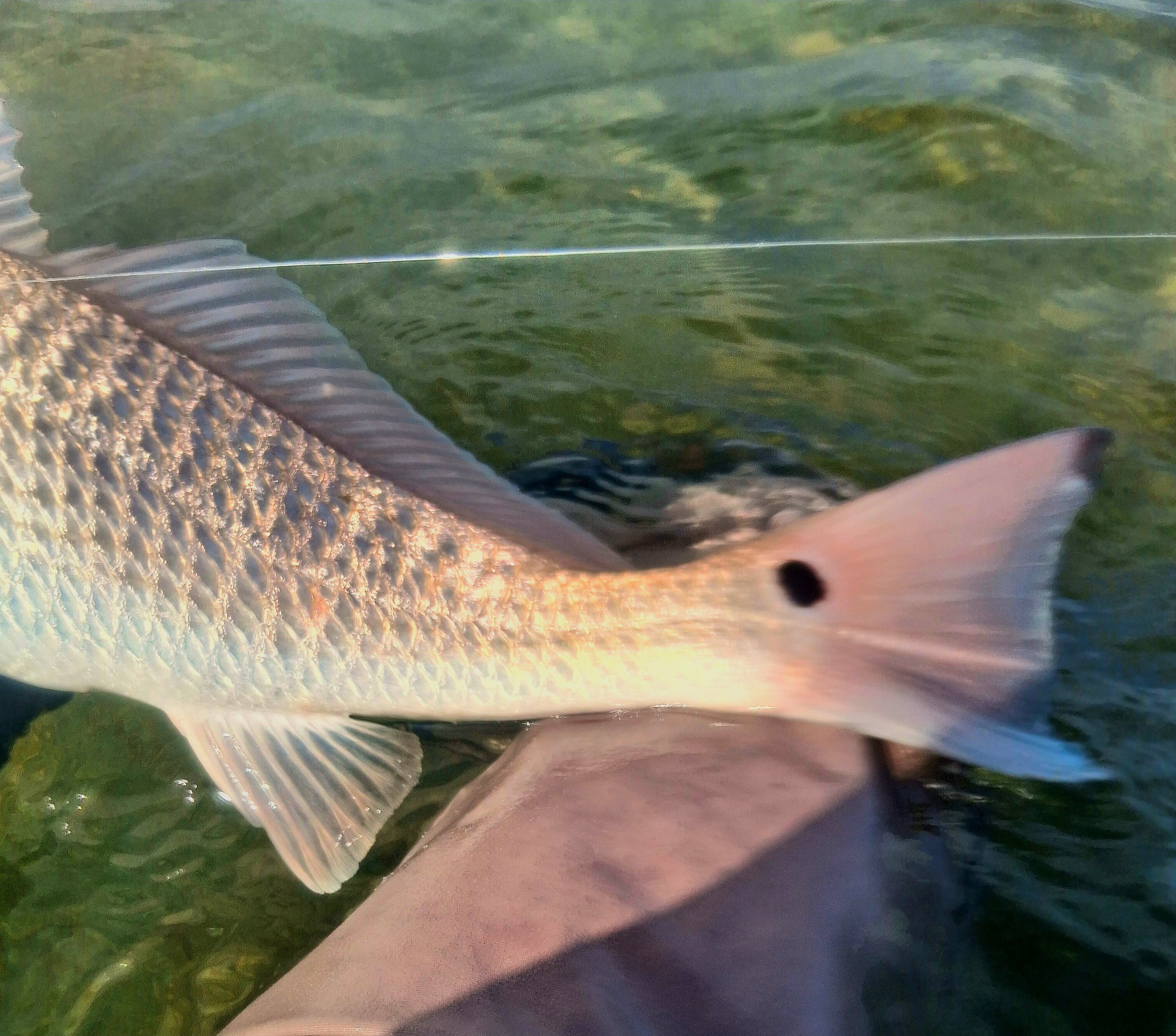
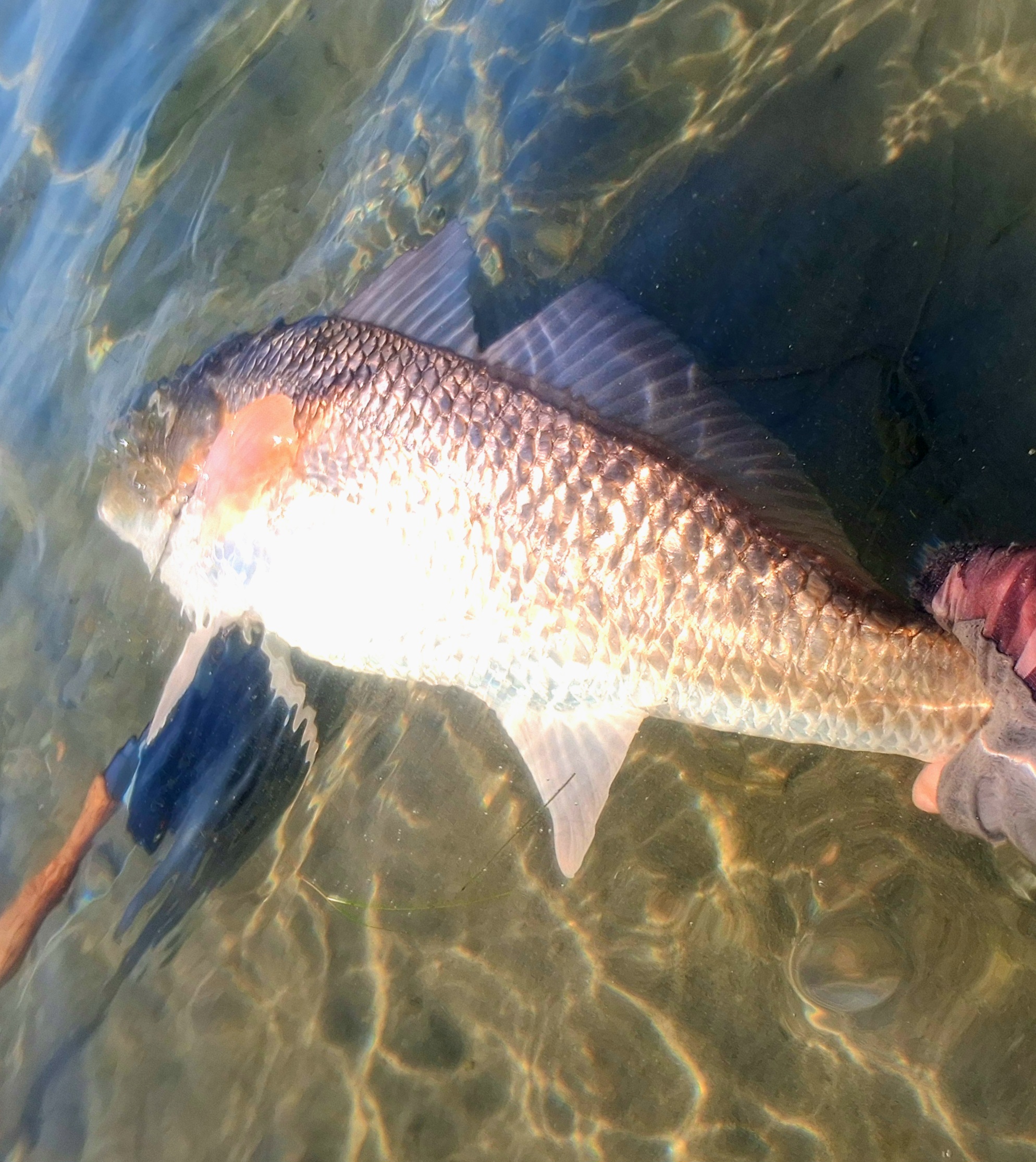
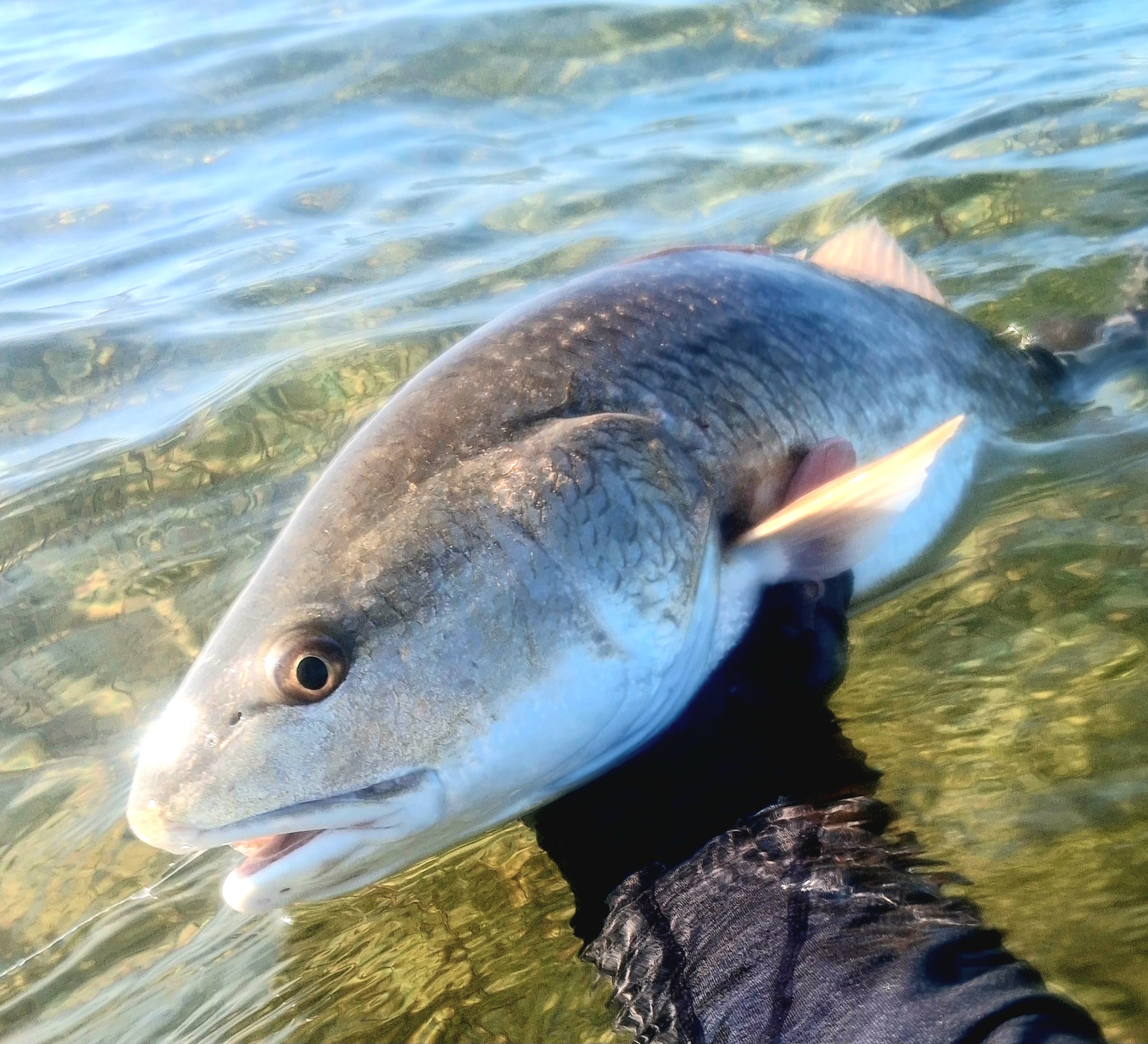
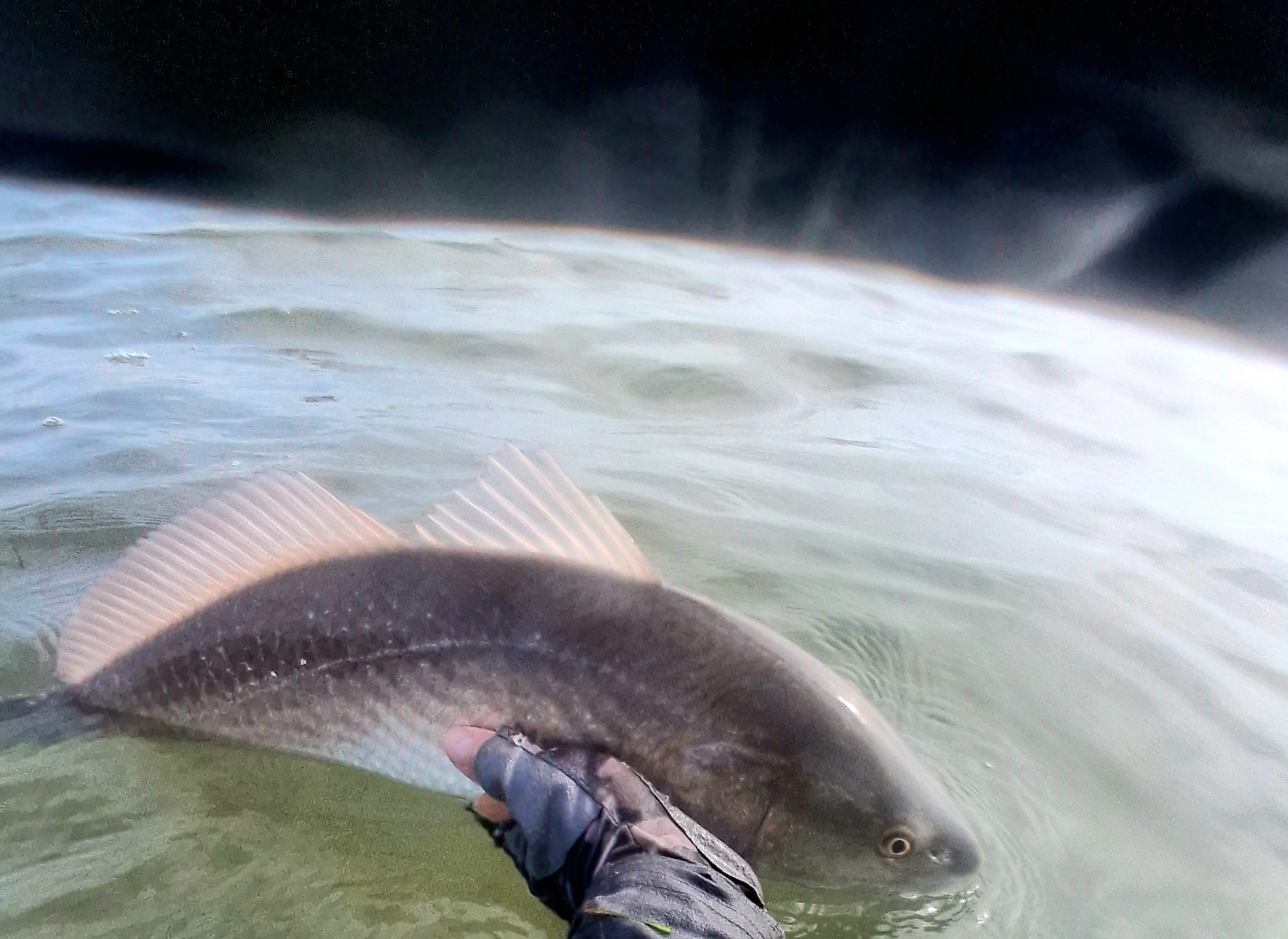
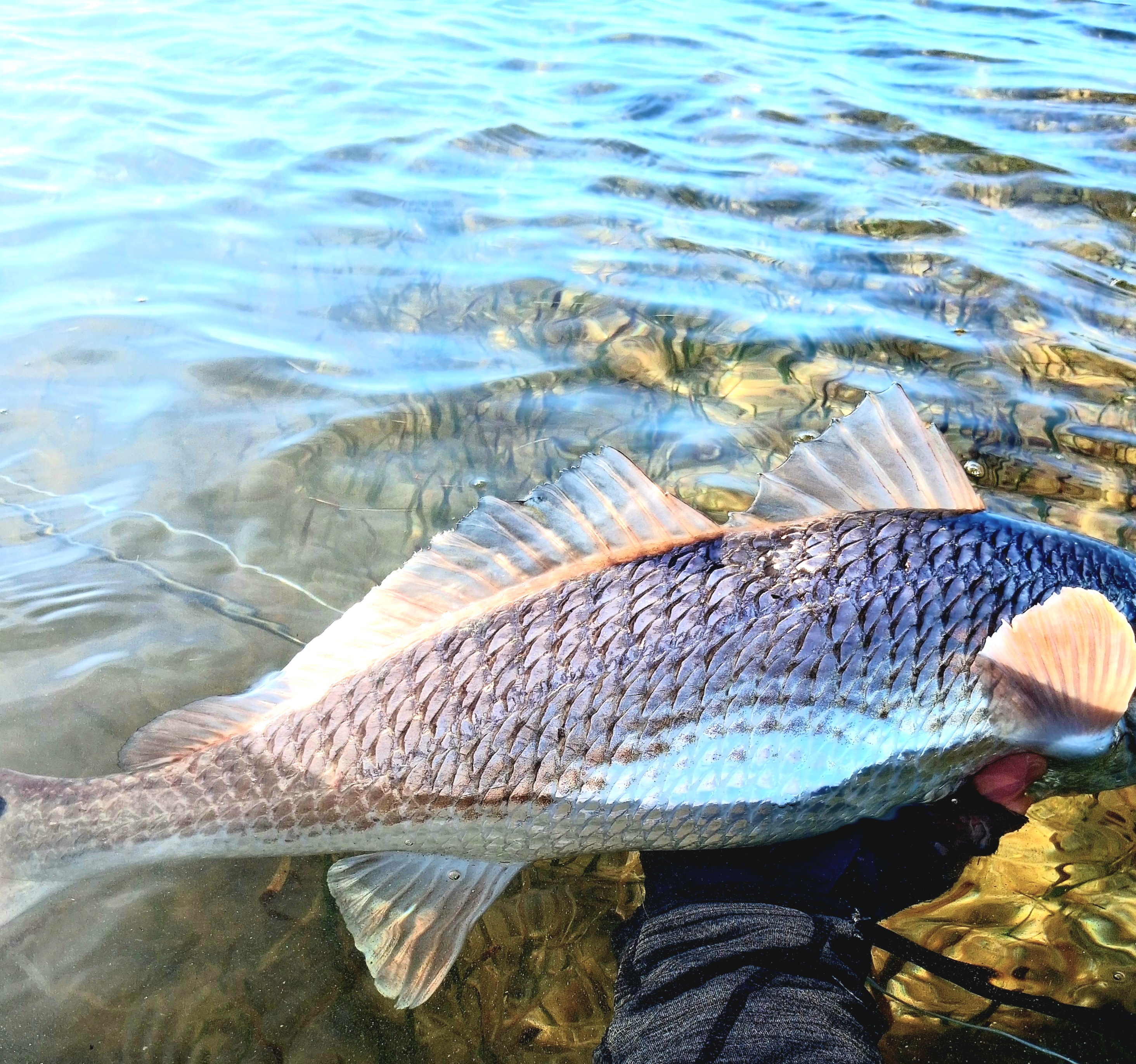
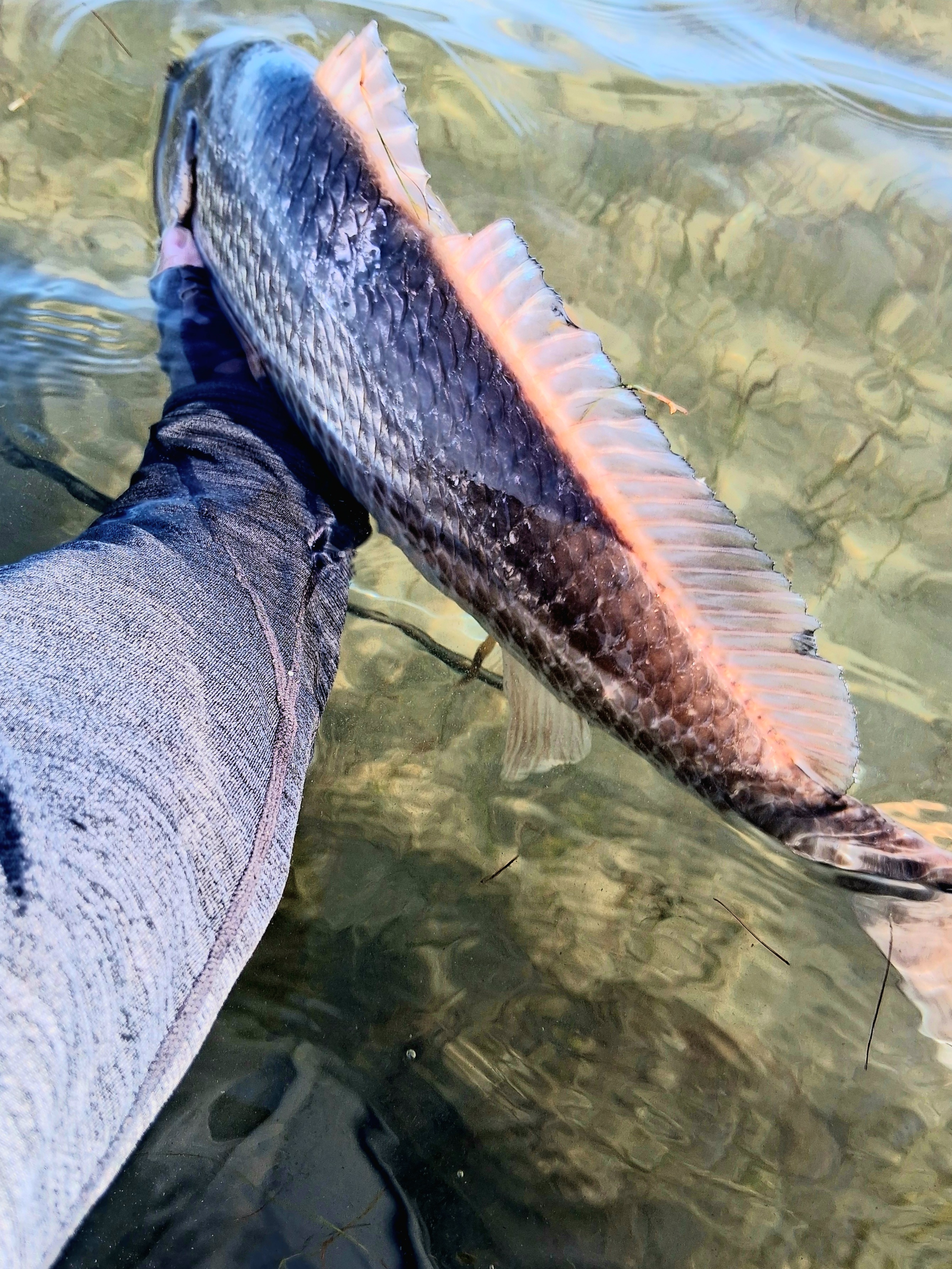
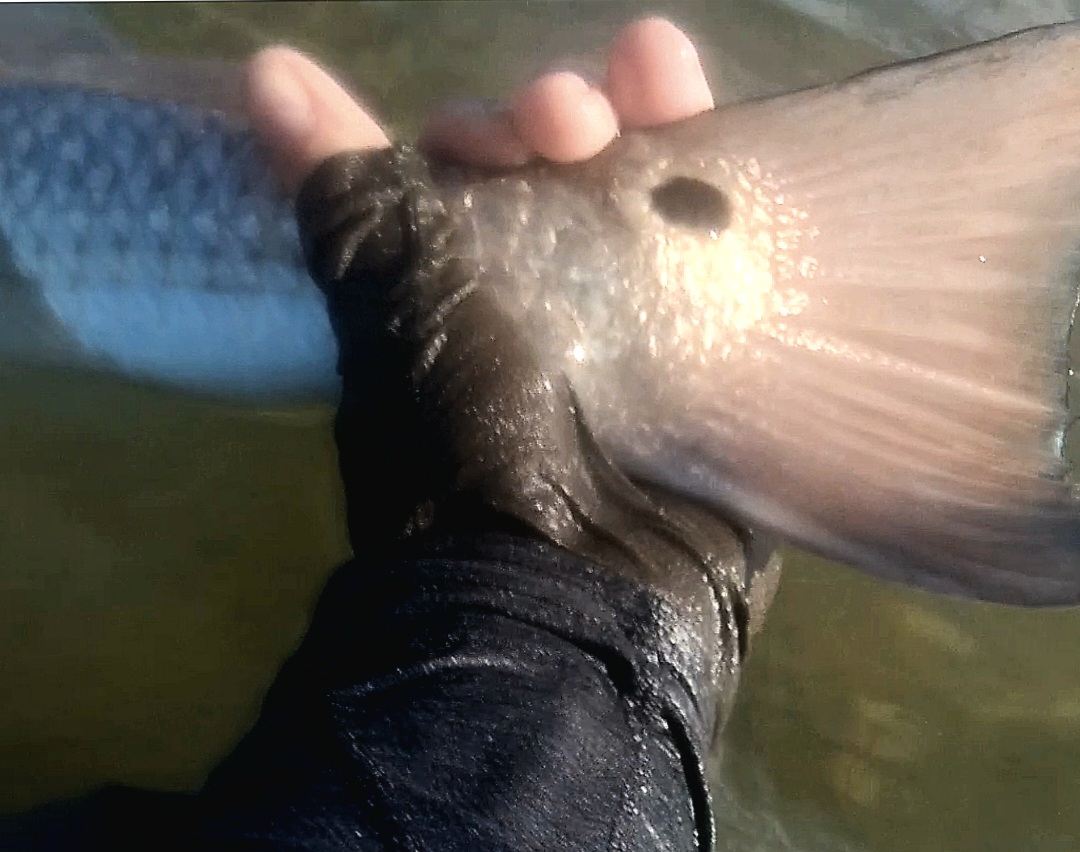
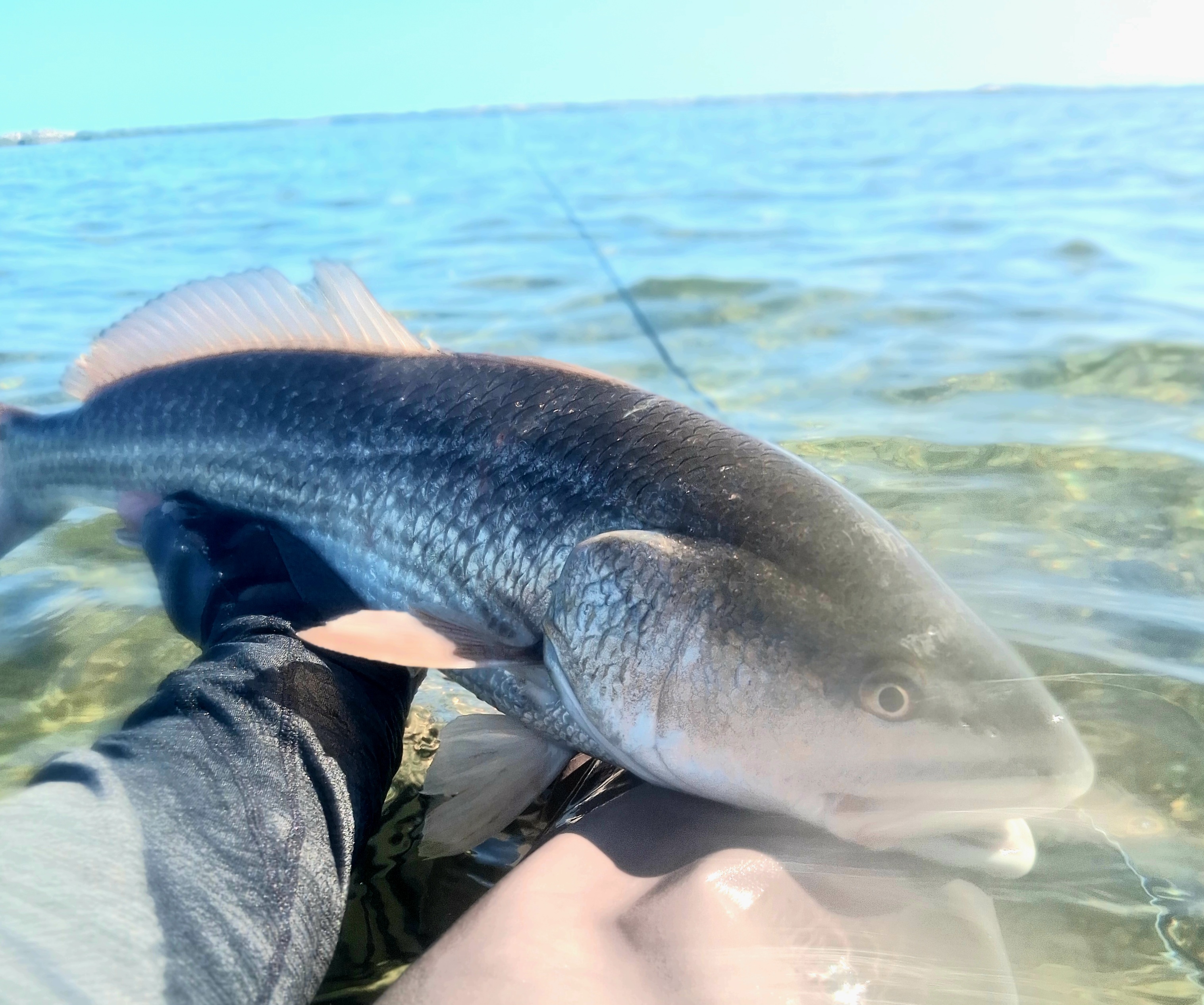
redfish
When Redfish do make an appearance they are usually on the move. When they prowl the shallows they are always alert; always hypervigilant. Spot one and you’ve got to be quick and fairly accurate with your cast. You’ve just seconds to react. And you rarely get a second chance with the same fish on the flats. Make a casting mistake and it is gone. If it sees you it’s Adios!
As quickly as fish come in on the sand flats they can disappear. Sometimes they don’t show-up but that’s rare. There are usually a few that pass through at some point in the day. It’s a big bay that I’m fishing and fish move around and there are no guarantees that they will visit the area that I choose to wade. Successful sight-fishing here is a commitment. It’s always a challenge. You have to put in your time and stay focused and alert when searching. Concentration is essential. Spotting fish in a variety of conditions is a skill. Like anything, you get better at it the more you do it. You have to believe the Reds are out there and that at some point they will come in to feed on the crustaceans and small baitfish that inhabit the sand flats. I know that if keep showing-up, I will cross paths…
photo by r dewey
hiking to the bay
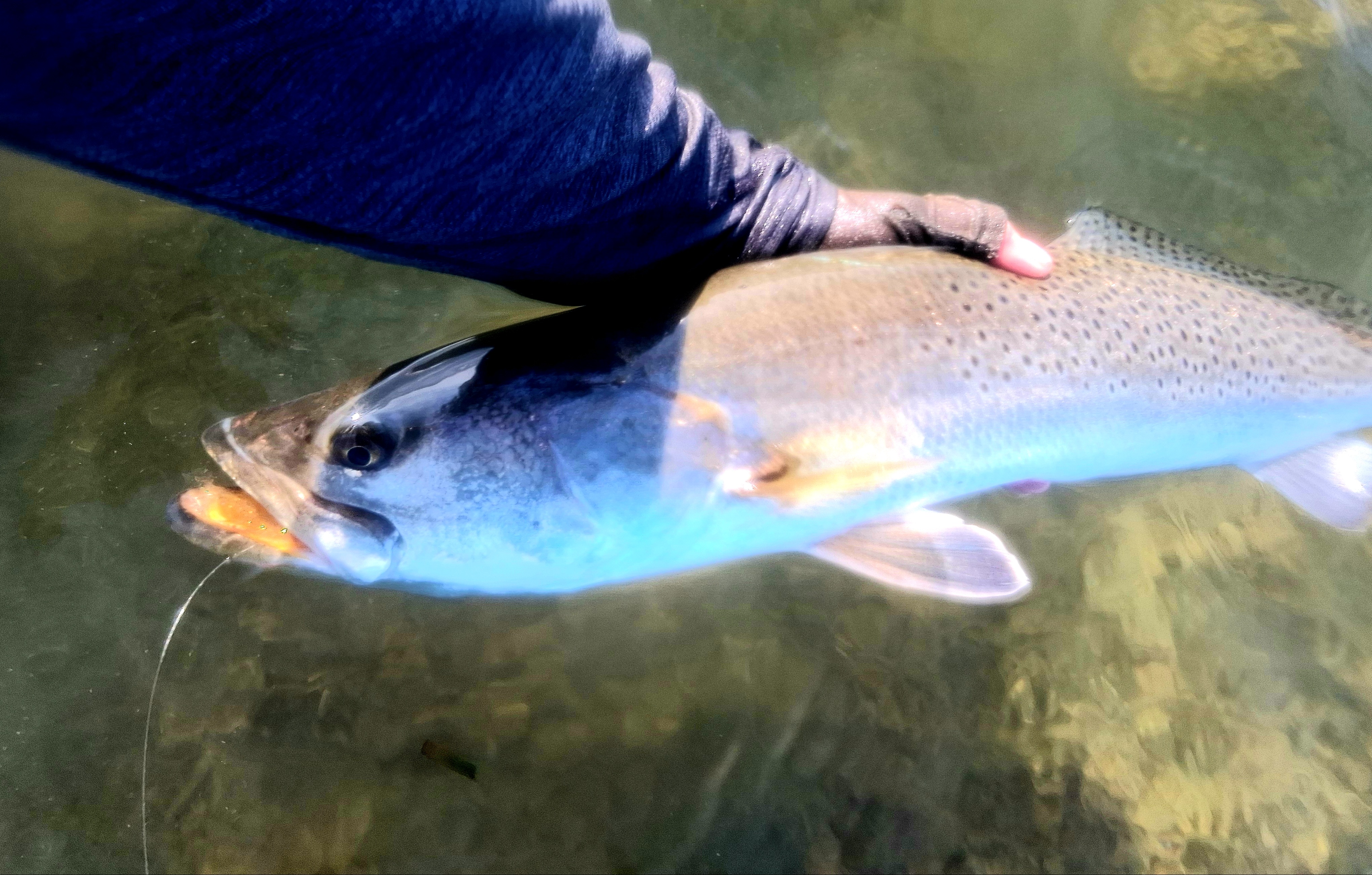
sea (speckled) trout
early morning high humidity
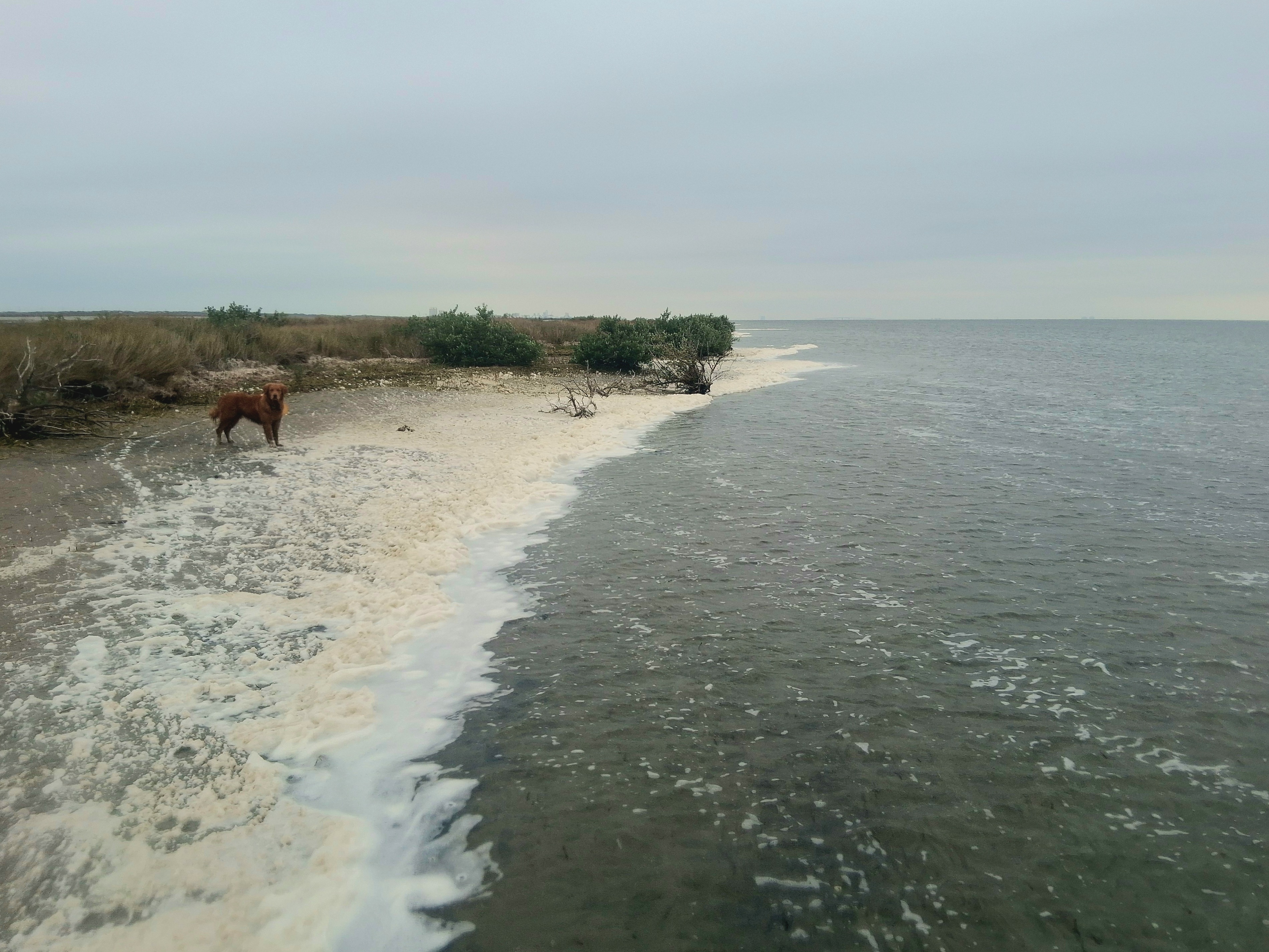
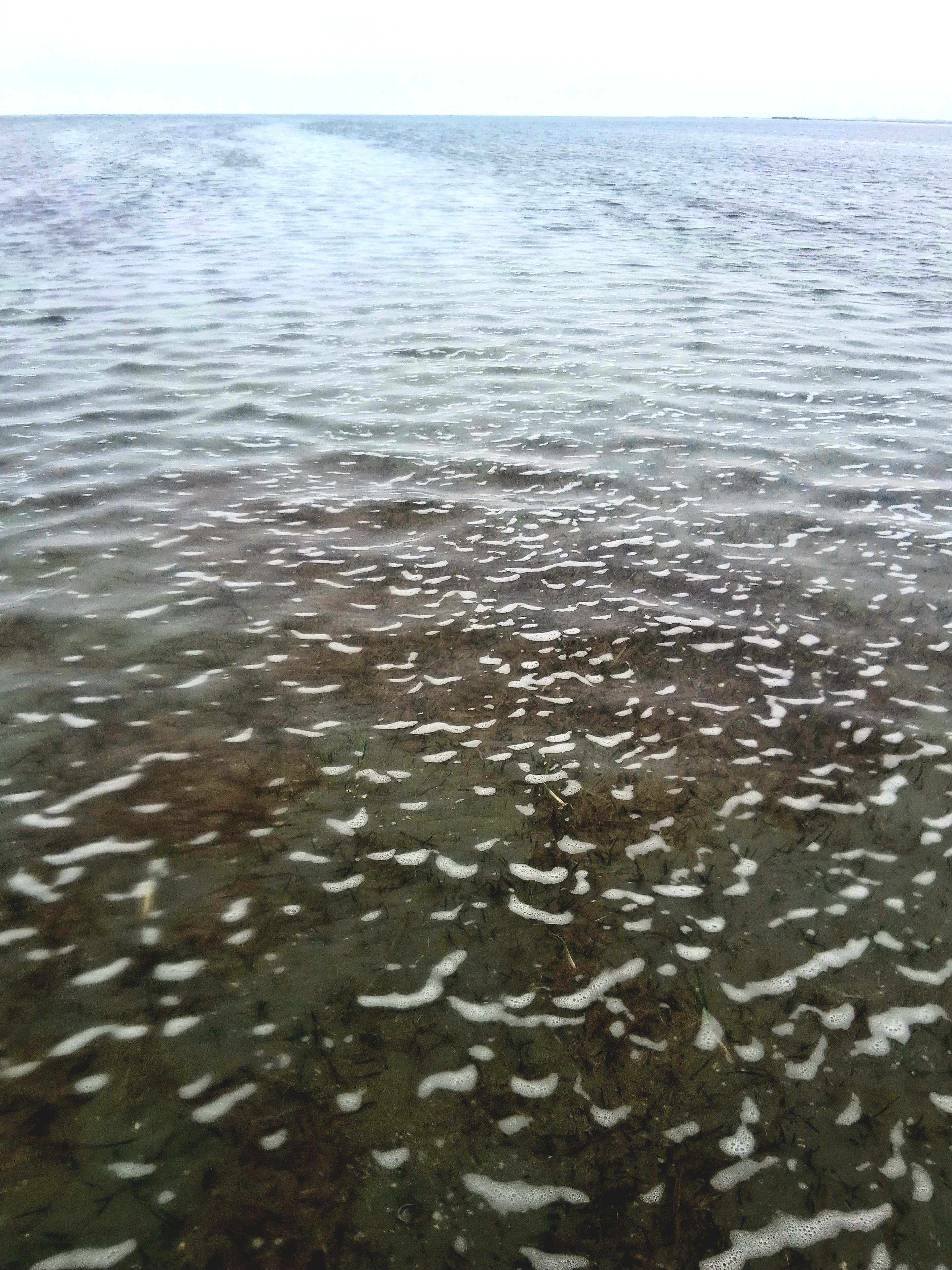
wind foam
challenging sight fishing conditions
wind foam blocking my search
fly box
rare perfect sight-fishing morning
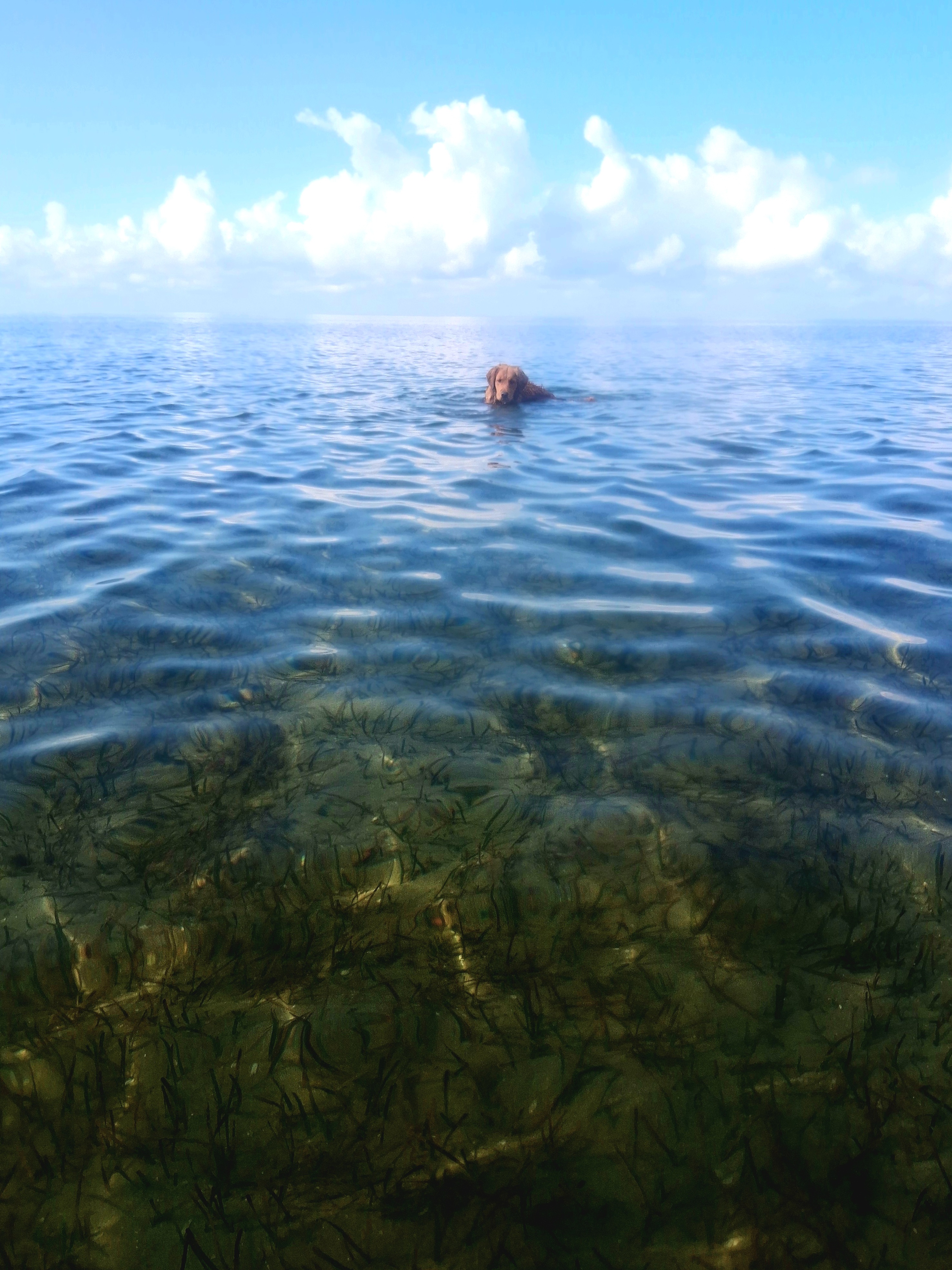
harper
Postscript
Photographing fish alone with my phone (in a plastic waterproof sleeve, high humidity) while standing in water several hundred yards out in a windy bay is always challenging and with many images the clarity is not always the best.
“The Blue Jays won the bat flip contest hands down. Some of the best ones I’ve seen since Jose Bautista was at the plate. They showed-up, stood tall, faced the payroll Goliaths of the league and slugged it out inning by inning…best attitude, team spirit, comradery and most enthusiastic, loud and appreciative fans…all players winners in my mind…the most entertaining team I’ve seen in a long time “. — Bob
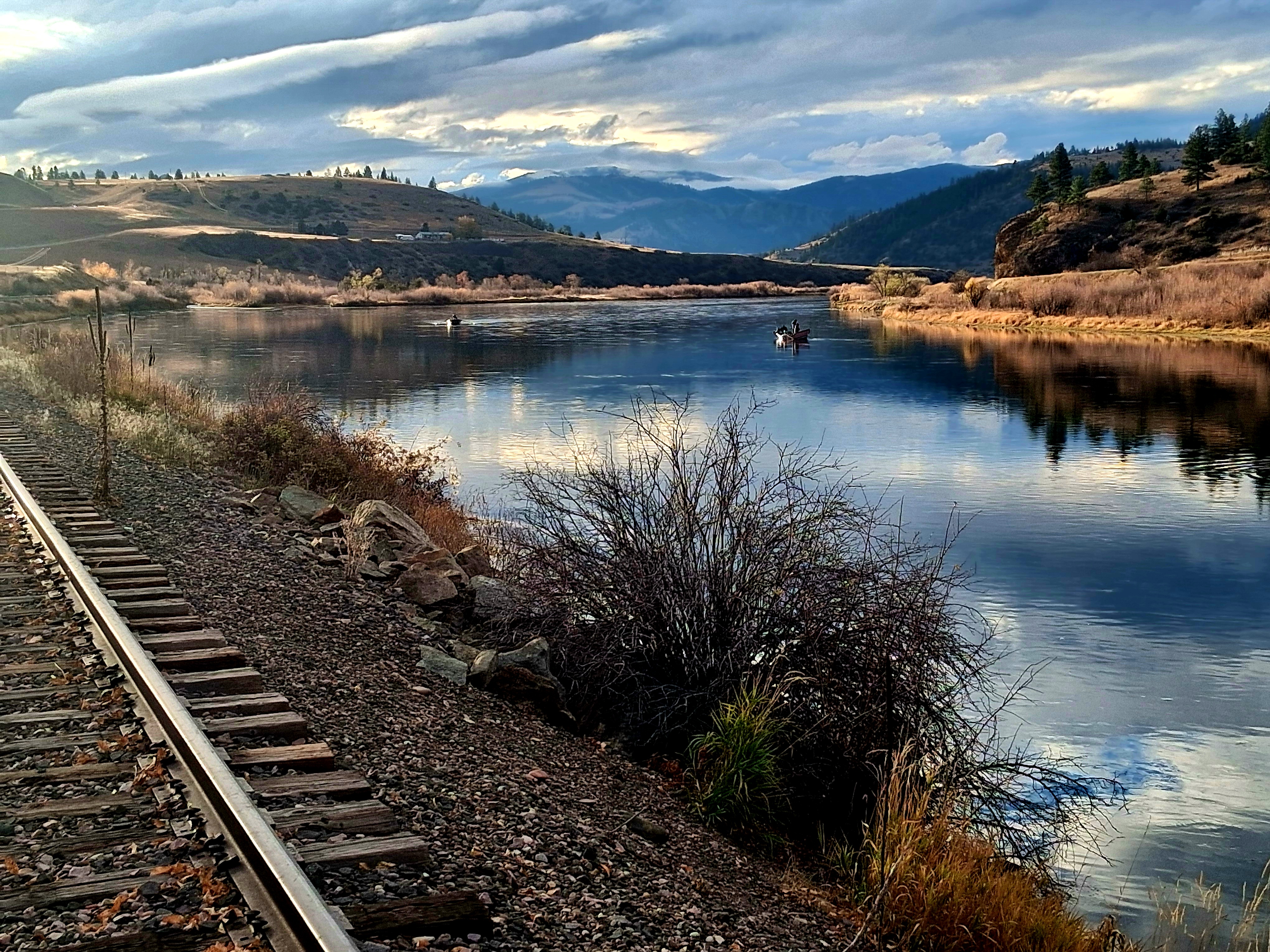
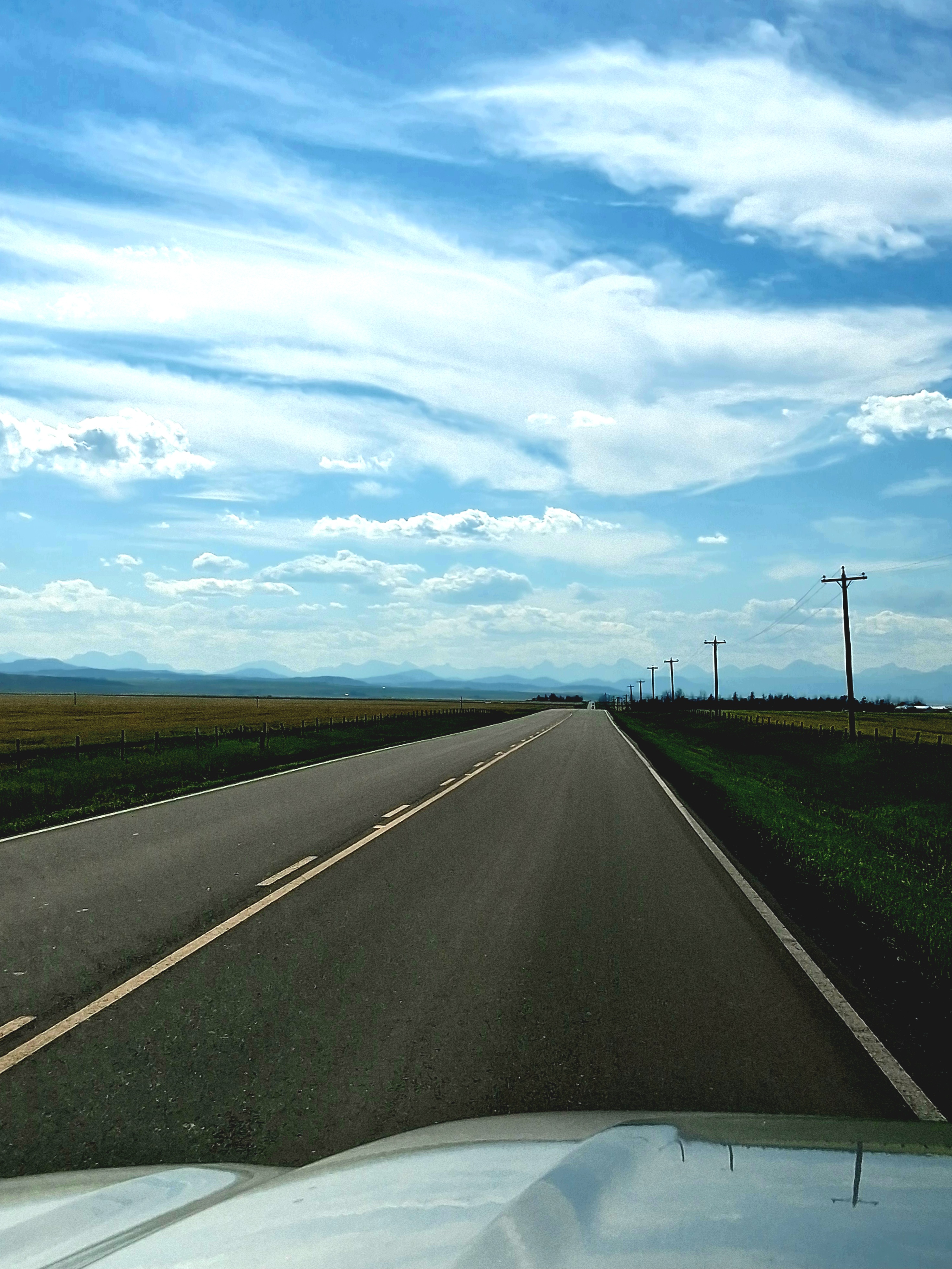
Road trip. Fishing, not Baseball. Last one for the trout season. It’s been sunny and blowing for weeks along the eastern slopes. The two conditions often go together in Autumn. The upcoming weather prediction was for 2 or 3 days of calm and overcast skies. A perfect set-up for a late season Blue Winged Olive (BWO) hatch. So I decided to take advantage of the incoming low front and drove due south in full sun and high wind, and woke up next morning under a heavy sky and best of all calm.
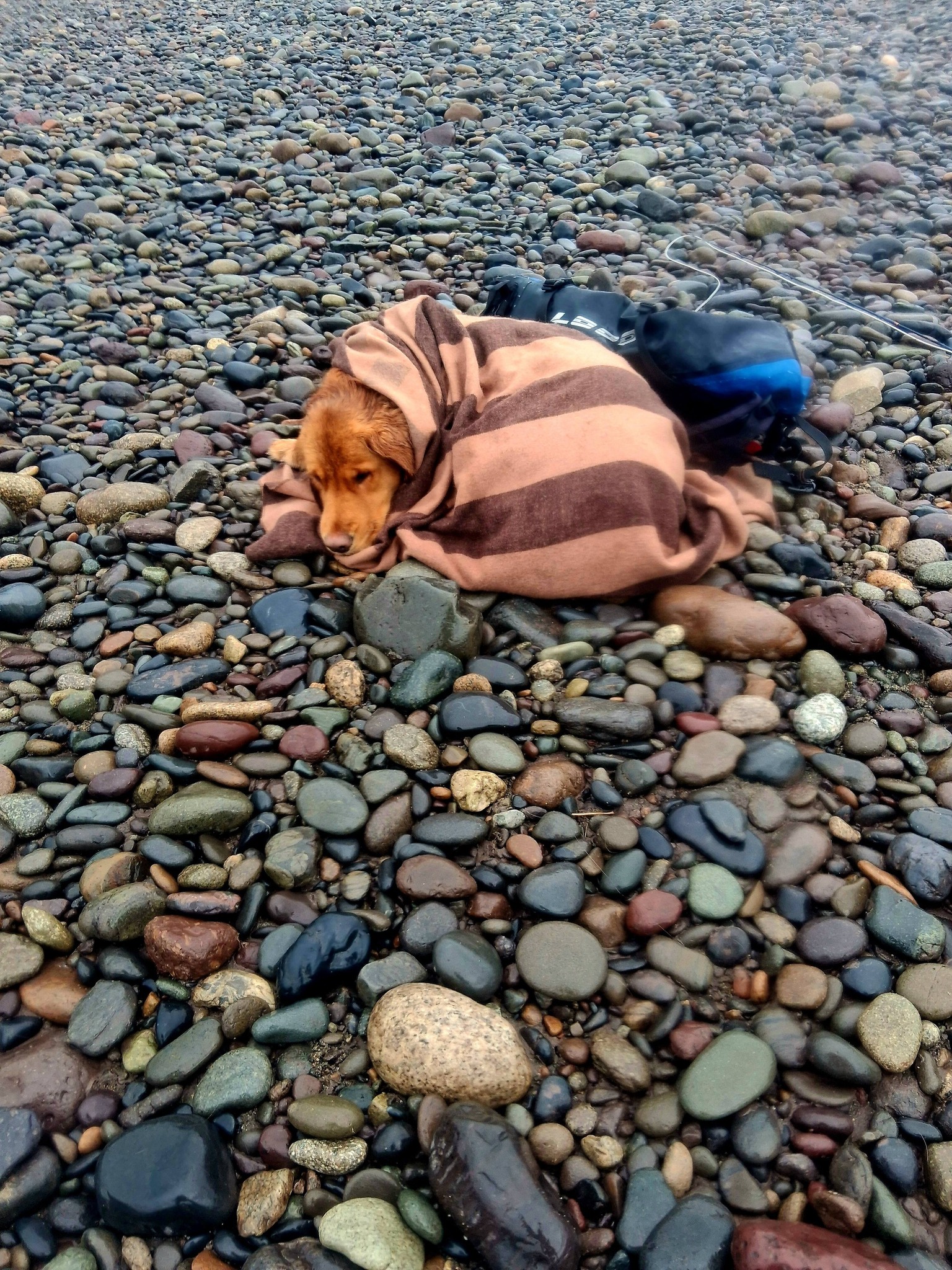
The riverside campground where I stayed in mid-canyon was empty. Harper was left off leash as there was no one around to bother. She chased squirrels and some deer, and nosed the fire pits. Fortunately no skunks showed up when it got dark. Most mornings it was 32f or slightly above. In the afternoon it was 40s or low 50s f. There were a few anglers around and some floaters. The fly shops were open but quiet. A great time to look at angling stuff. Local restaurants were closed.
The night is long at this time of year and daylight short, and dry fly opportunities brief. One or two hours in the afternoon, maybe slightly more, depending on the intensity of the hatch. My first day I experienced a weak hatch. The second day it drizzled a bit, was colder and the sky ominous looking. The hatch was strong. The river section I was on came alive, and I connected with size 18 and 20 parachute BWO dries. Rising trout on November 4th. It was a good day. So good I flipped my fly rod in the air.
” Black: the absence of light; the absorption of light”.
The clouds rolled in. Just for one day. So I took advantage of it as the dry fly season is winding down in my region. Soon local Brown trout will be on redds. Maybe some already are. With the overcast sky I was hoping some trout could be found rising to Olive and Mahogany mayflies. There were quite a few bugs on the water in the afternoon but unfortunately it was windy. I didn’t see a lot of fish surfacing but did find one decent one feeding just off of the edge of a current line. It ate a size 18 Olive tied with a black wing. The black wing allowed me to see the small fly from some distance even in the low light, high glare conditions. I was able to get the tiny impression on target.
When fishing wide open places I tie at least one third of my small dries/emergers with a black wing or post. I can’t fish what I can’t see. Flies that become invisible once casted are useless. When tying dry flies for rivers that tend to produce a lot of small bugs I pay attention to size, color, attitude (how it sits) in the water but just as importantly, or more so, visibility. I need to see where the fly lands to know if my cast is accurate; I need to see it tracking (drift) to the fish; and I need to see the trout’s response if I’m going to fish effectively. Put simply, I need to see it…
When I glance over various online fly tying forums I see many exquisitely crafted fly patterns (beyond my skill level) but many would be hard or impossible to see on a lot of the rivers that I fish. Maybe these tyers fish a lot of small water with streamside foliage and shadows that darken the water and therefore their dry fly patterns, even small ones, contrast well and show-up. A lot of the tailwater rivers I fish are not like that. They are broad and flow in wide open terrain and their hatches are generally small mayflies and caddis. And the dry fly fishing is usually best on overcast days which often means a grey, silvery surface and eye straining glare. That’s when a black wing or post can be helpful.
Surprisingly it’s hard to find fly shops even in big broad river destinations that have small fly patterns in their bins with black wings or posts. Most have some High Vis patterns in fluorescent colors but my eyes simply don’t pick them up as well in extreme glare as solid black.
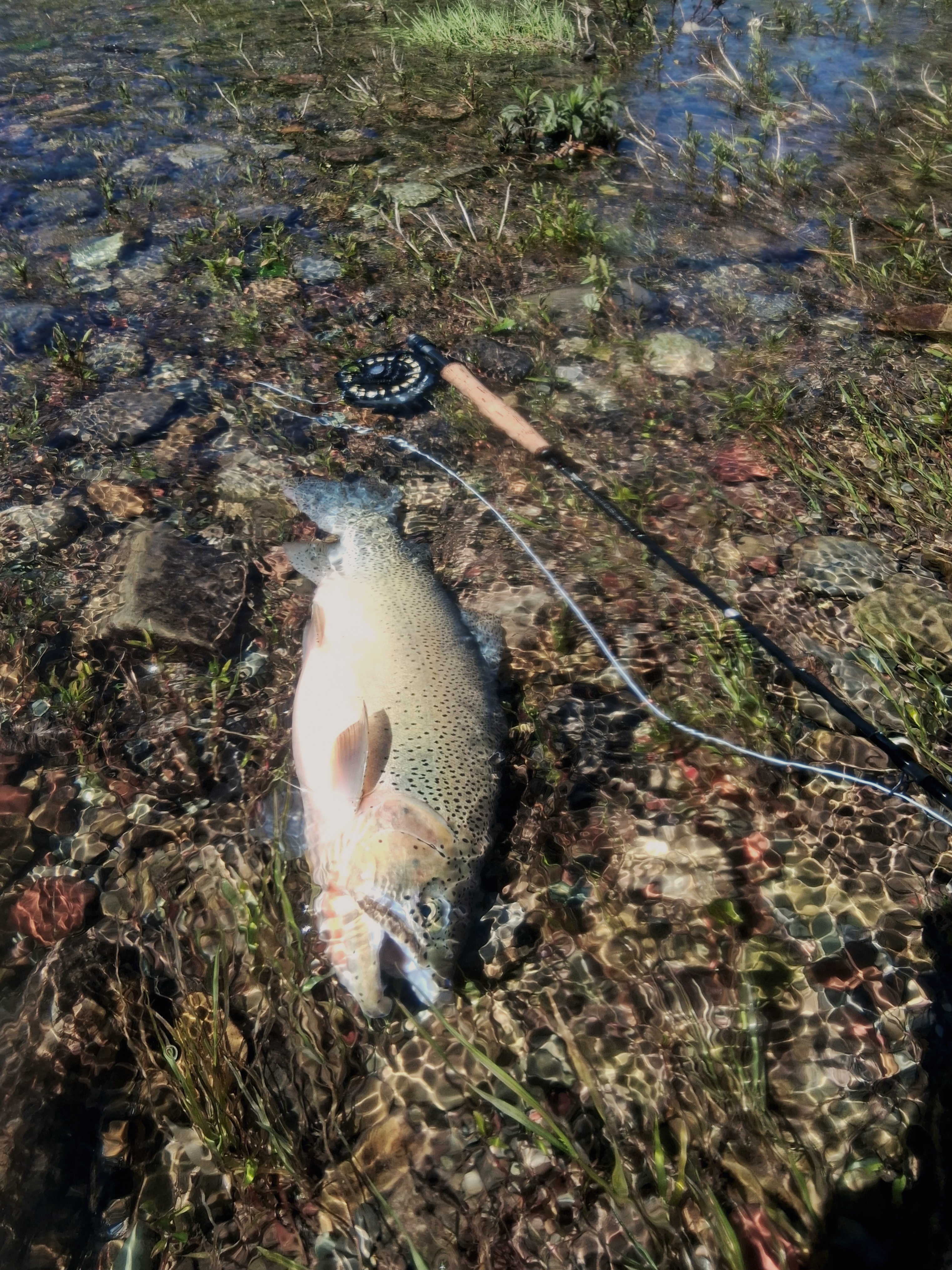
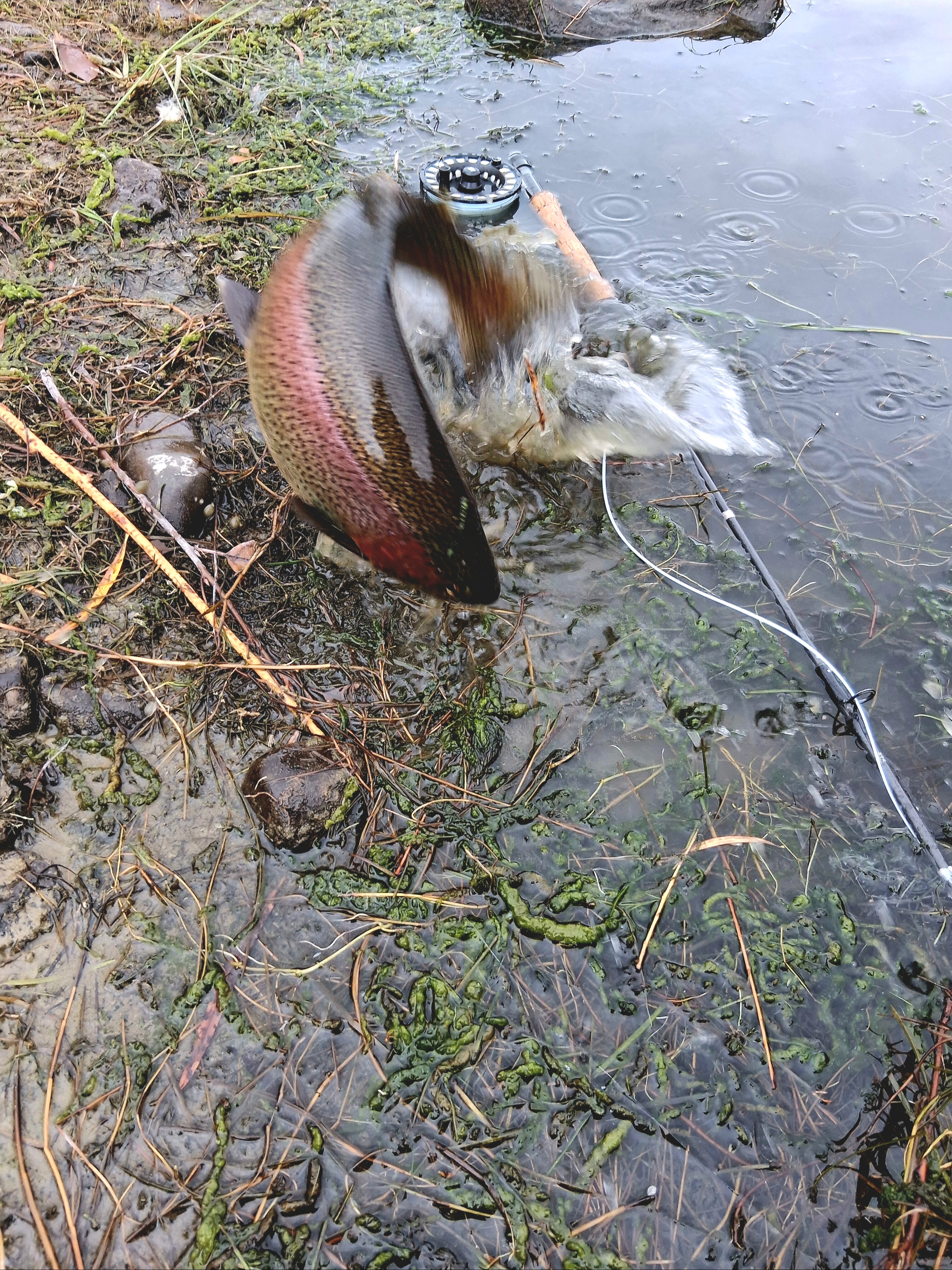
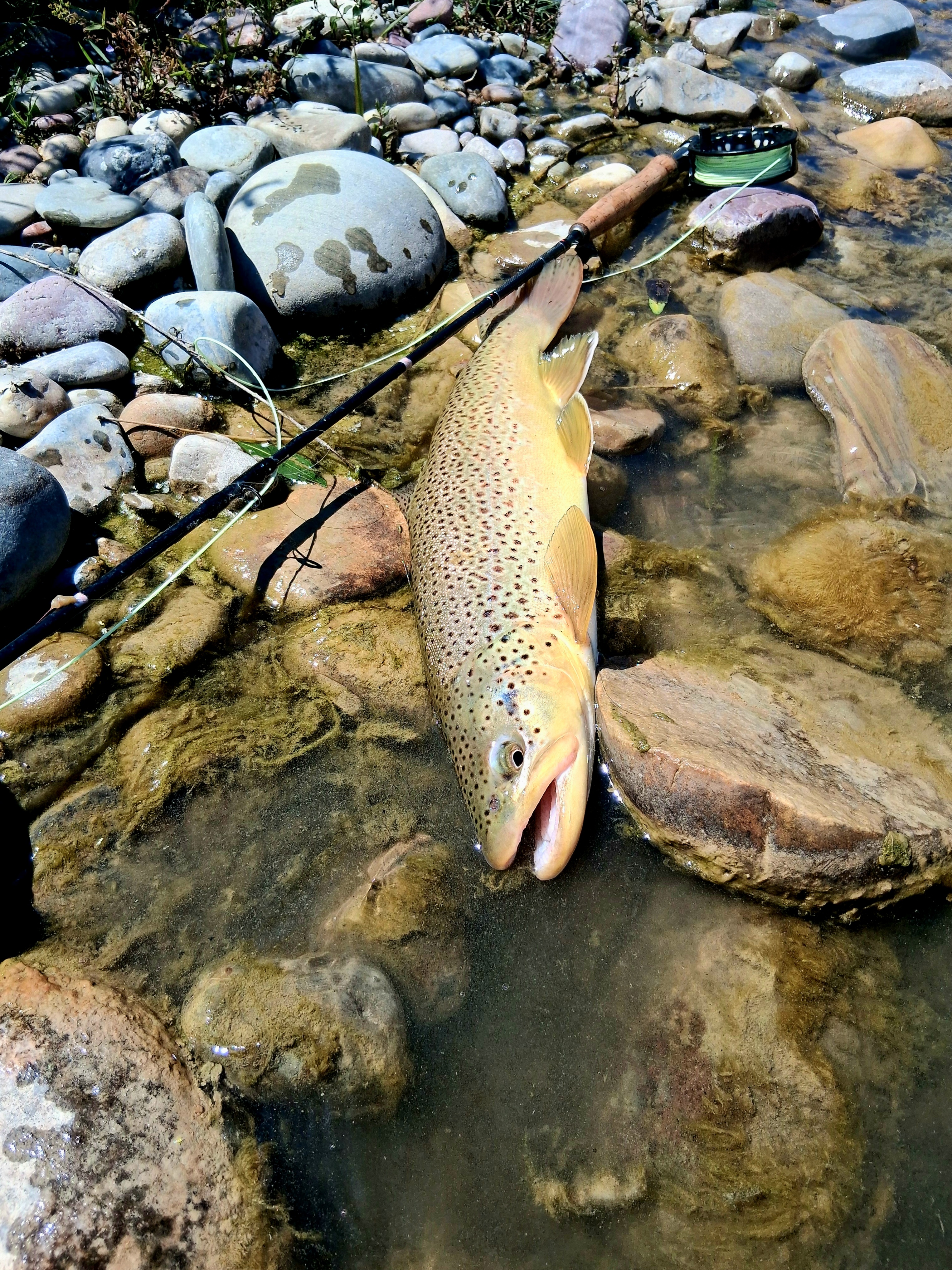
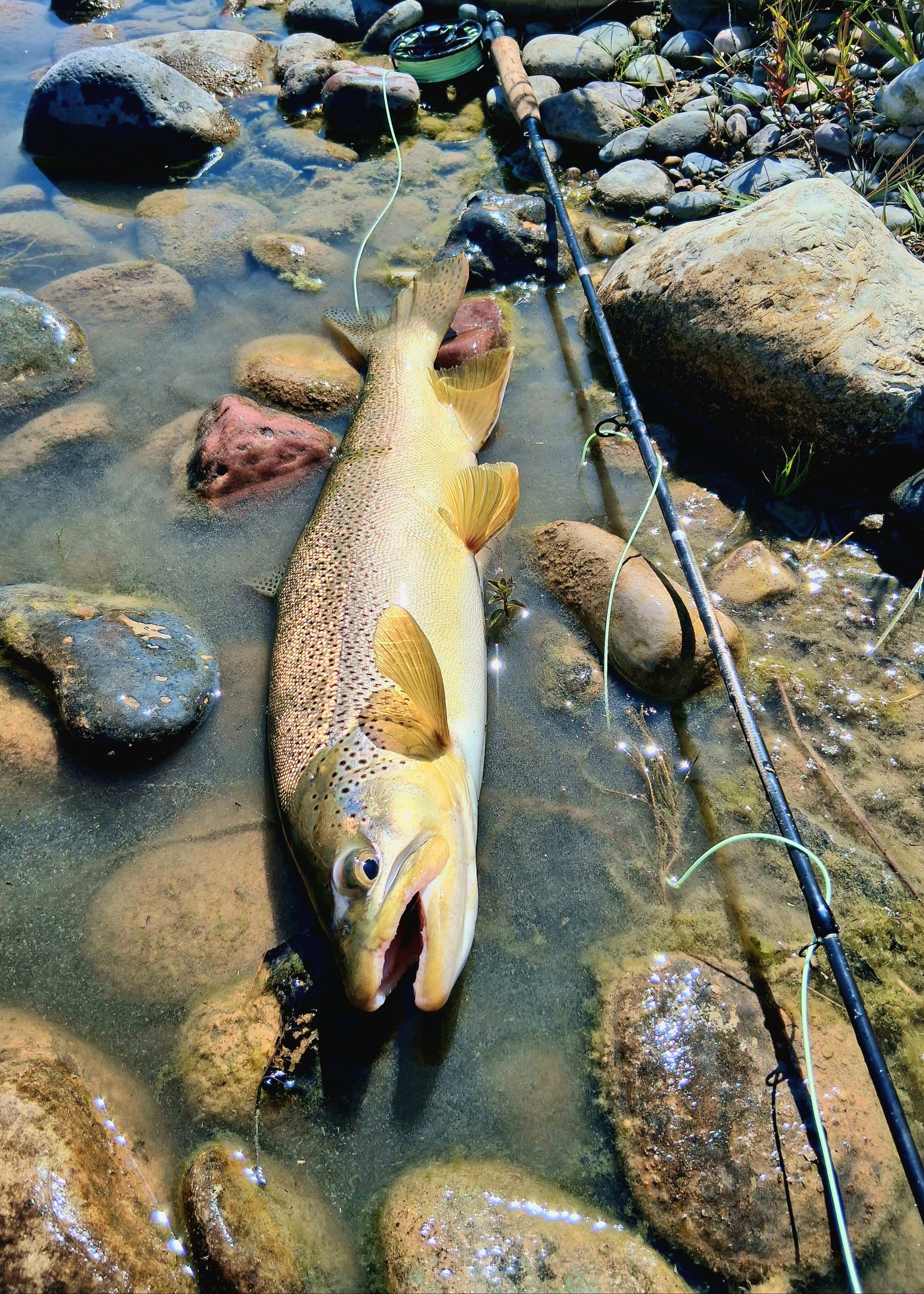
Here’s an Autumn colored Brown trout that I caught on a size 18 Olive pattern with a black polypropylene wing.
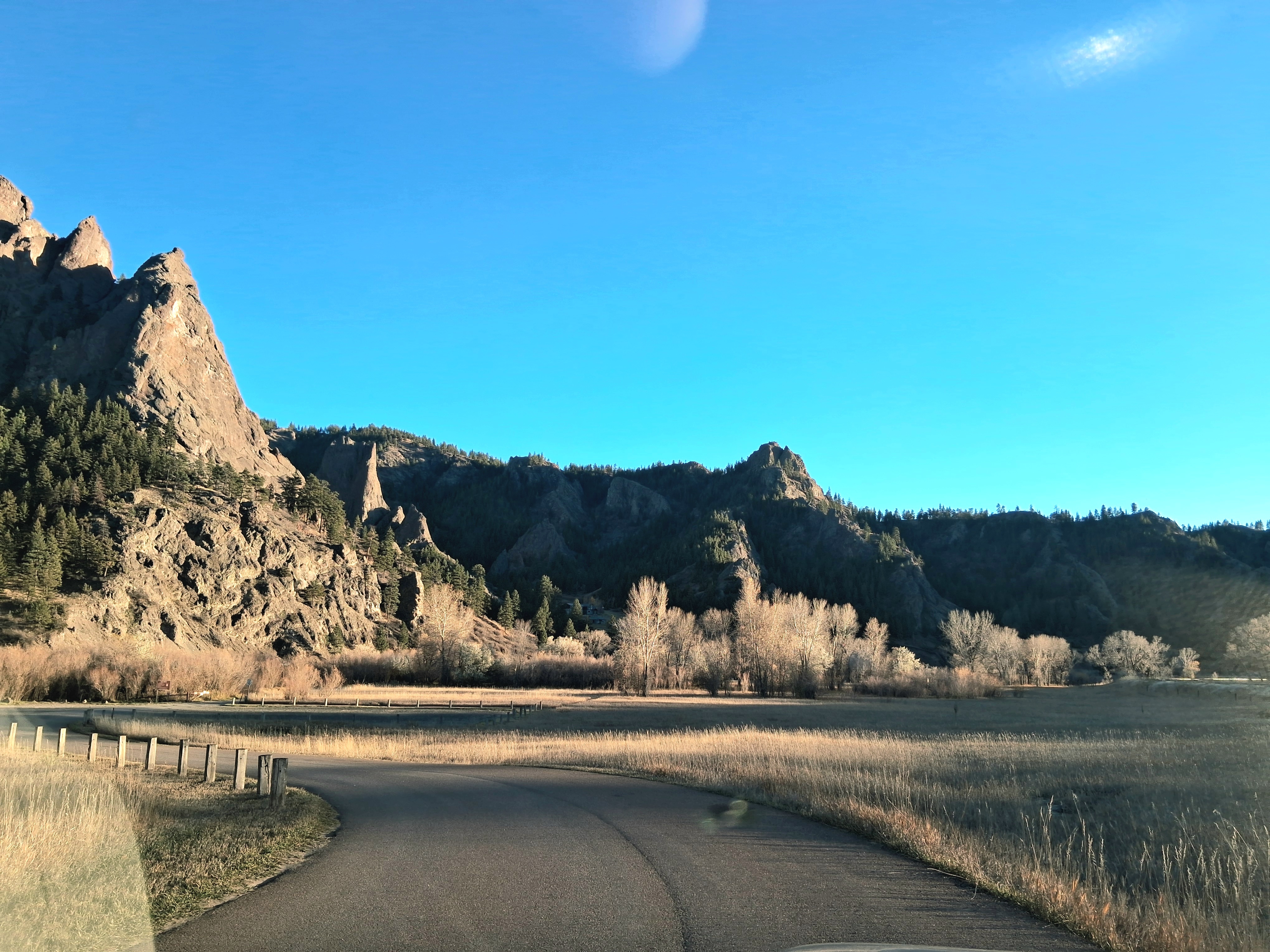
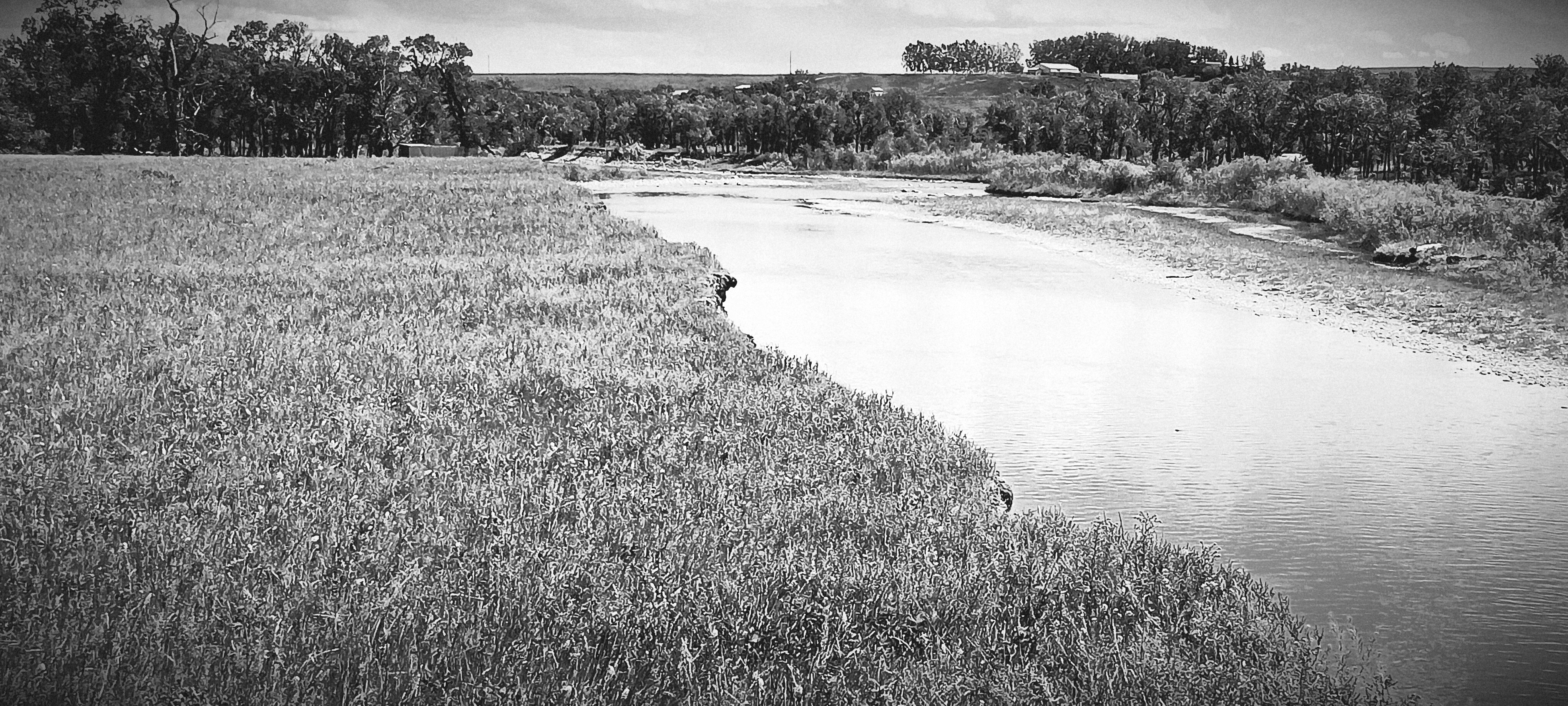
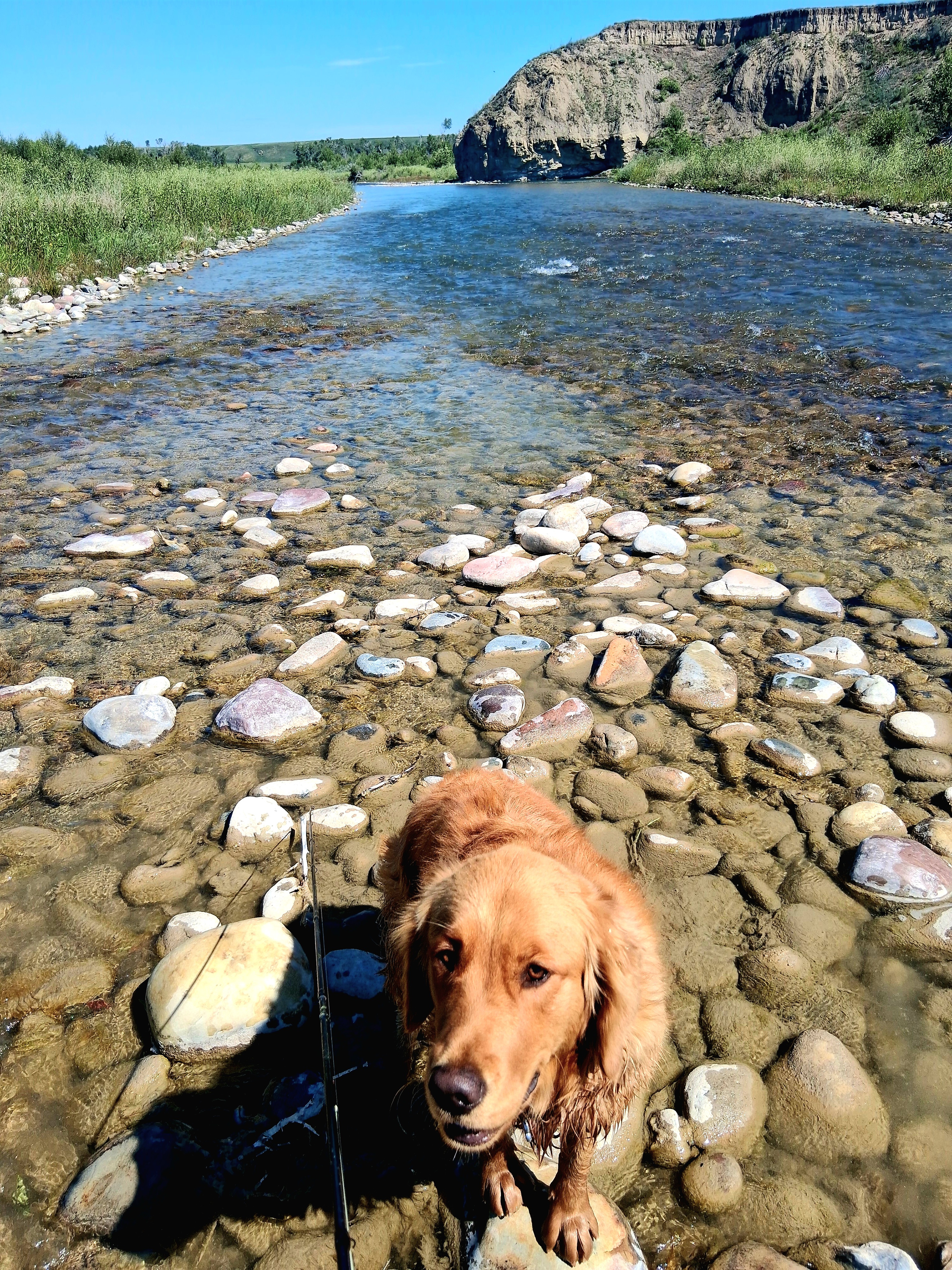
This is where I covered many miles of river the other day. Mostly along its bouldery edge. Walking on round rocks all day is an art. I usually take shortcuts between river pools on the softer ground through the Cottonwood forests, meadows and brush in the river valley in order to get a break from the boulders. However, I didn’t this time as it’s wild berry season. There’s a bumper crop of Saskatoons this year. And bears love to feast on them.
The pools on this river are far apart and there’s not much fishable water between them, so you have to cover ground. You keep telling yourself “maybe the next distant pool has a good fish in it” and you rock-hop onward. The river holds a few quality trout so that’s the incentive to keep going mile after mile. It’s kind of like fishing New Zealand. There can be great reward for your effort, or sometimes not. That’s the deal.
I spotted a few fish with the sun overhead but mostly “fished the water” (prospected). I tossed a large black foam beetle. I had to twitch it to get the best one of the day to take notice and rise off of the bottom.
Before I know it my water bottle is empty, lunch and snacks are all gone, my shadow lengthens, and Harper, my dog, curls-up and naps riverside. It’s the sign(s) that it’s time to turn around and head back downstream; back to my vehicle.
While walking back I remind myself this is where Dinosaurs once roamed. This has long been the home of the Blackfoot. This is where giant prairie Grizzly bears wandered. This is where Buffalo once lived and travelled freely.

















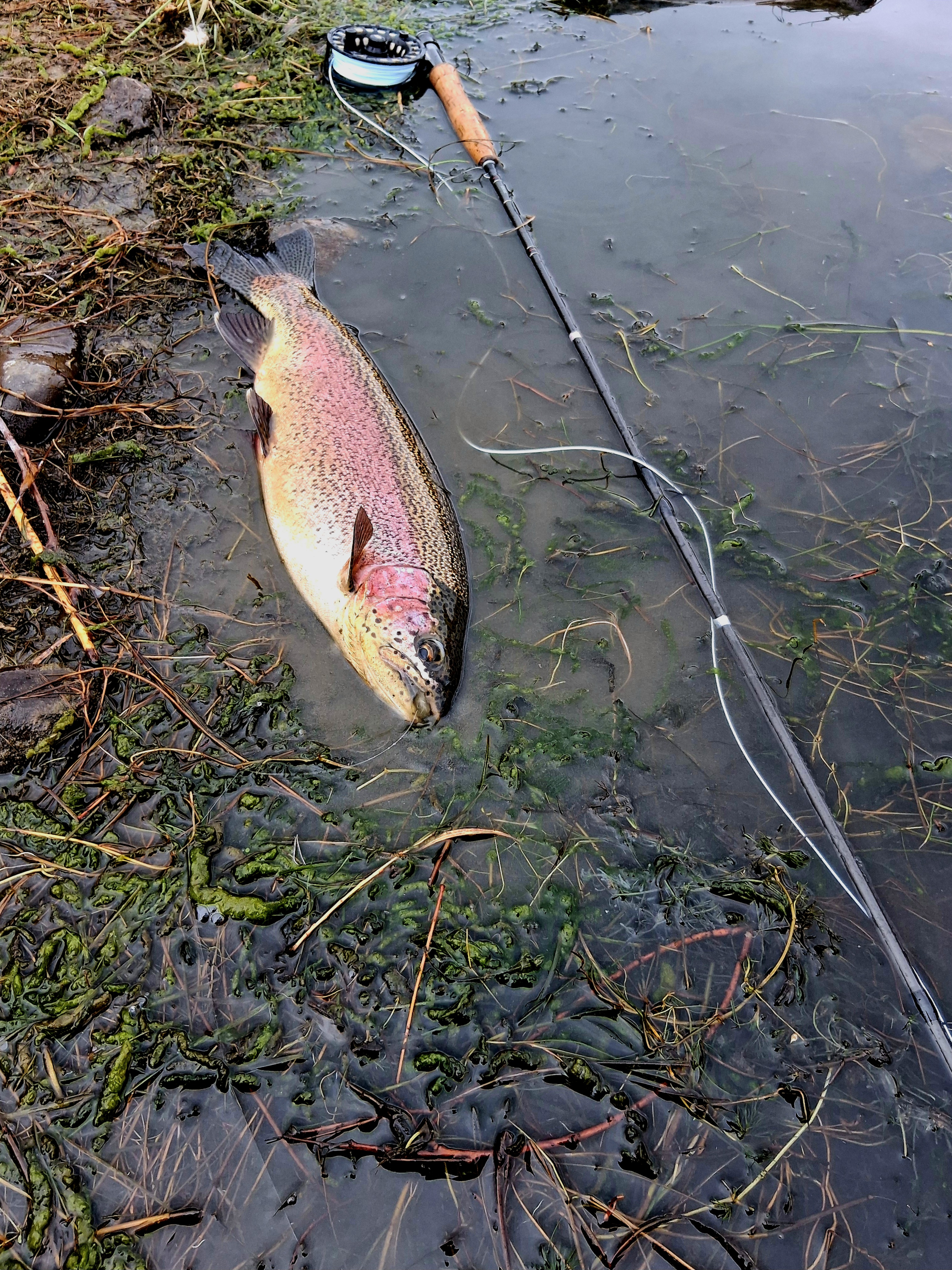


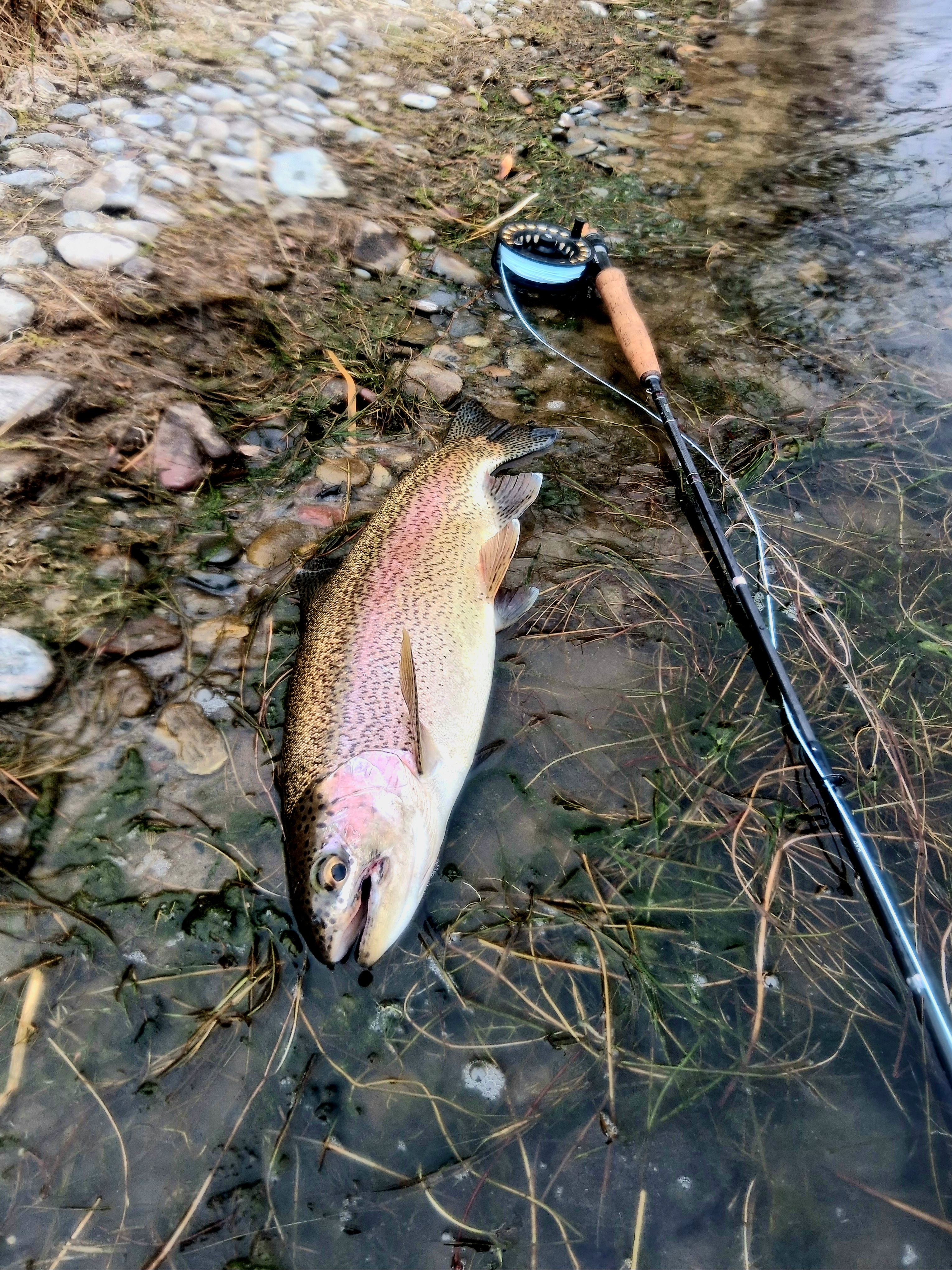





 trout on dries