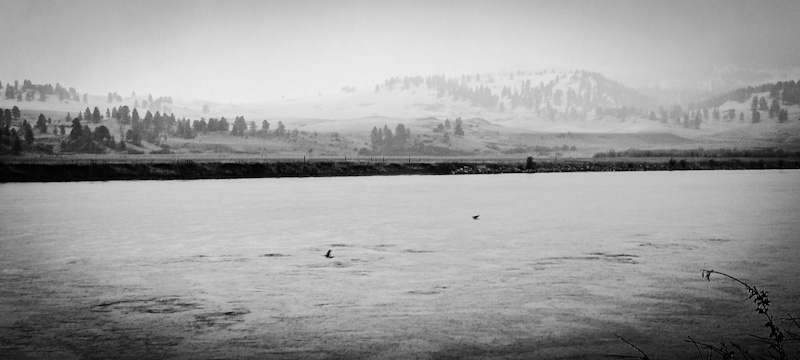
Confidence is a fickle thing. Here one day, gone tomorrow. One day a baseball pitcher is “nibbling the corners” and striking everyone out, and the next outing he can’t find home plate. He wonders: “What happened…where did it all go?” Angling confidence can also be fleeting. One day you’re finding fish, casting accurately and landing everything, and the next outing you can’t even spot a minnow in your favorite pool, or as they say in some places out west, a “minner”. This past Friday I was on the Missouri river. The Blue Winged Olives were everywhere. It was a perfect Baetis day, overcast and occasional drizzle, and yet I couldn’t find a riser. The bugs were piling up in “tried and true” locations but the trout were illusive. The only explanation in my mind was the high flow rate. It was double what it was last year. May is generally an outstanding dry fly month on the Missouri.

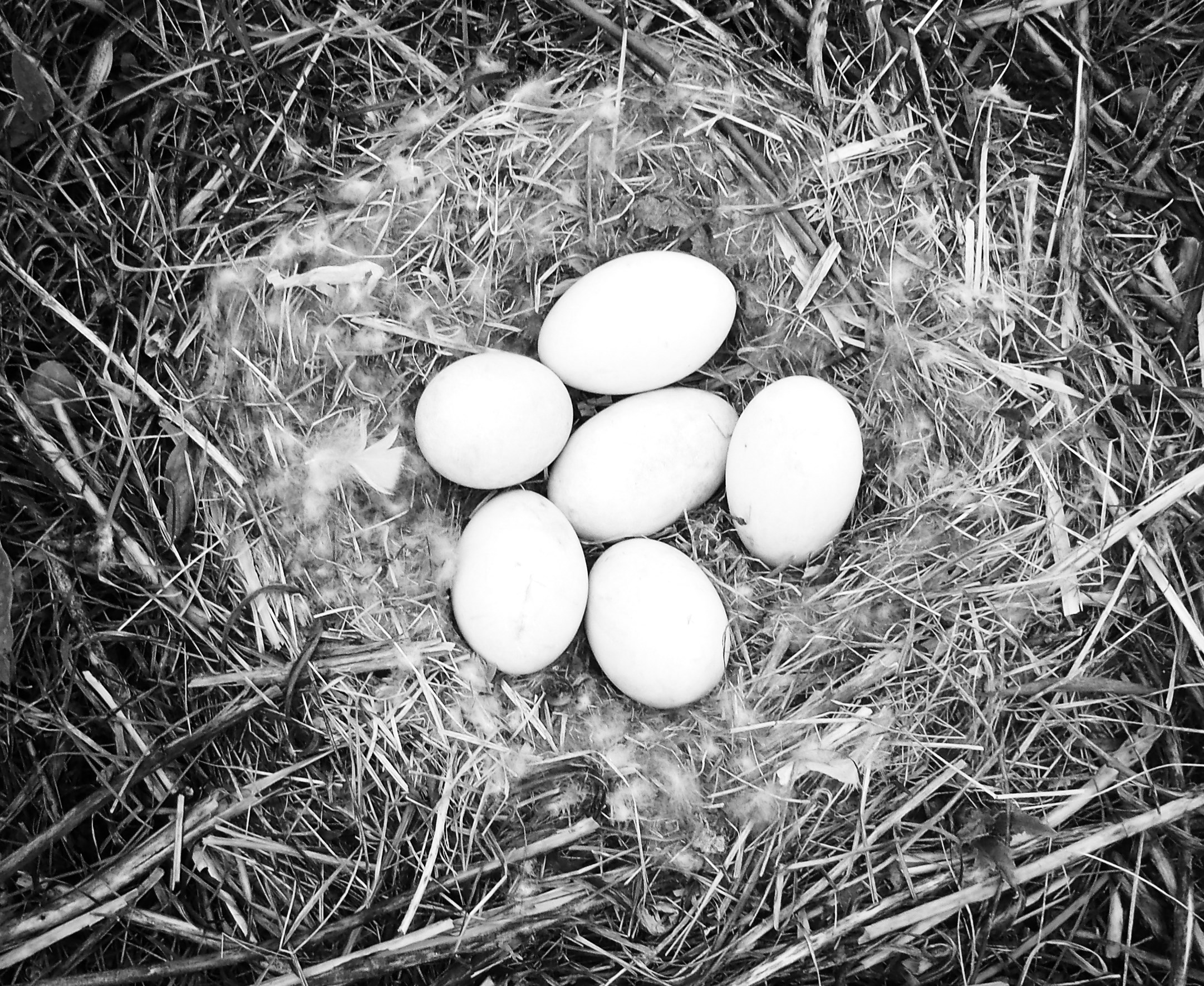
goose eggs
With the high water I was also cut-off from much of the river. For the angler on foot the options were limited. I was prepared for the tough conditions. The Internet reports said the nymphing was good, the streamer fishing improving and the dry fly angling slow. When interpreting a fishing report “slow” means “poor”. I was prepared for “poor” and high flows and therefore had a back up plan. The next day I got up real early and drove further south to fish a spring creek I had heard about with the strange name, Darlington Ditch! I had read it was small water and very shallow. Shallow seemed a perfect alternative to the big flow I had been on. Maybe I could sight fish!
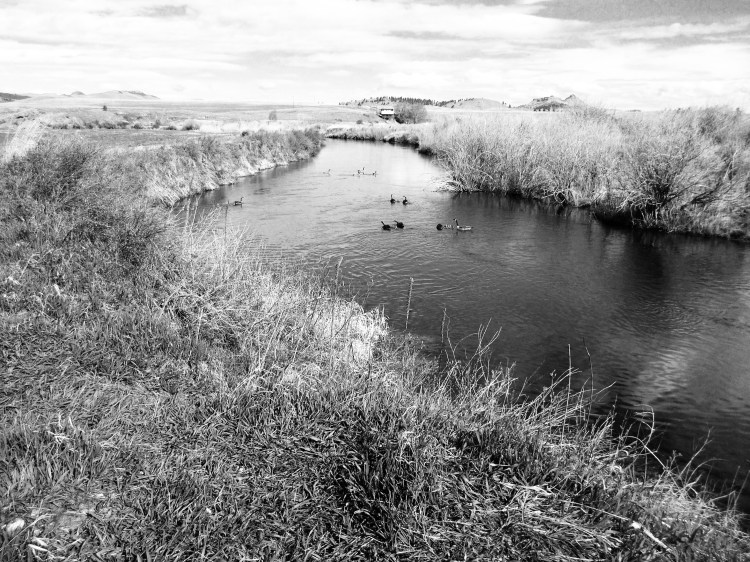
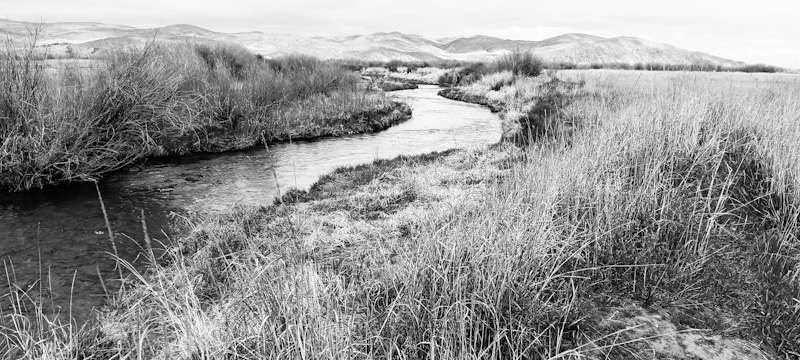
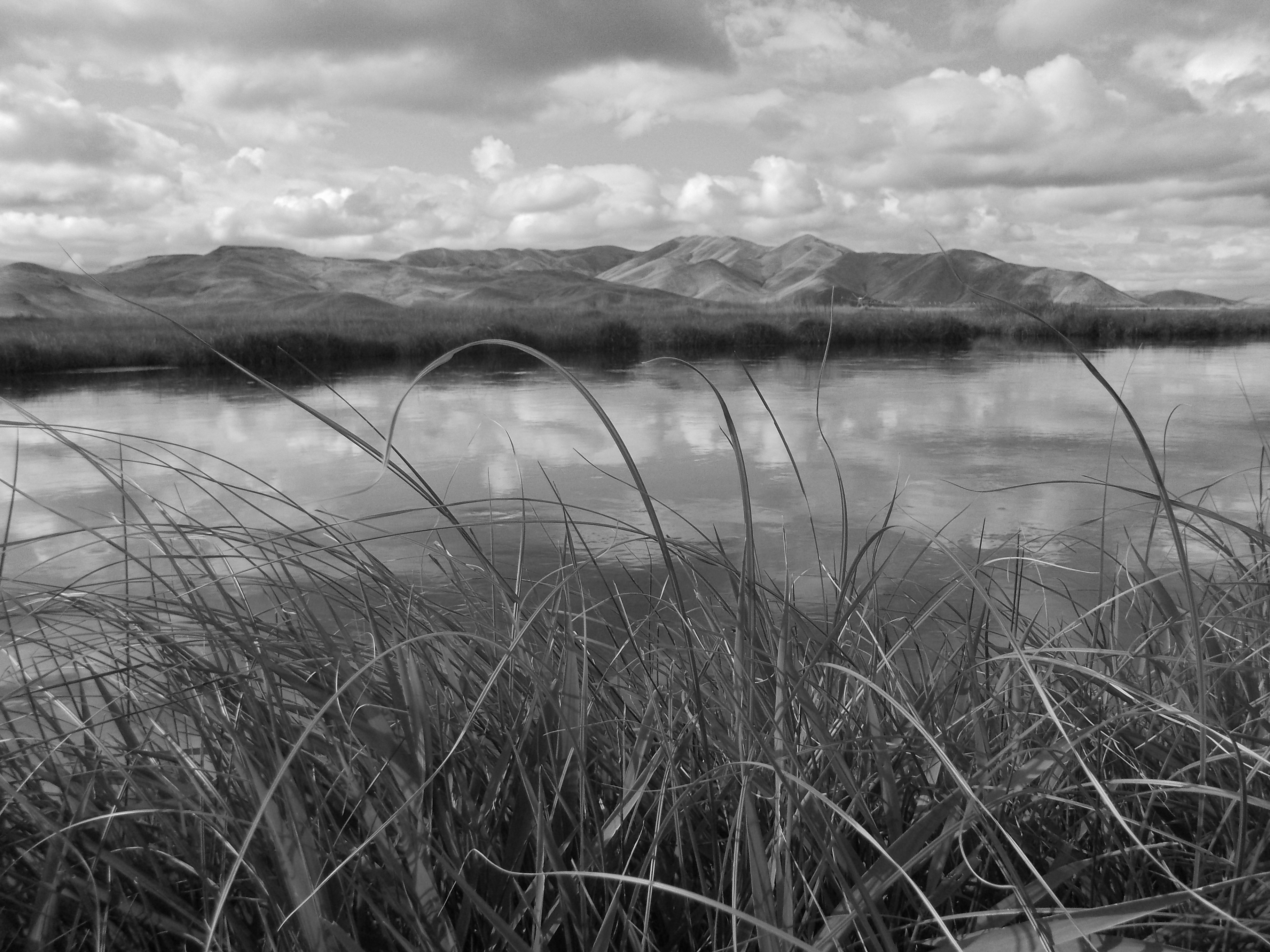
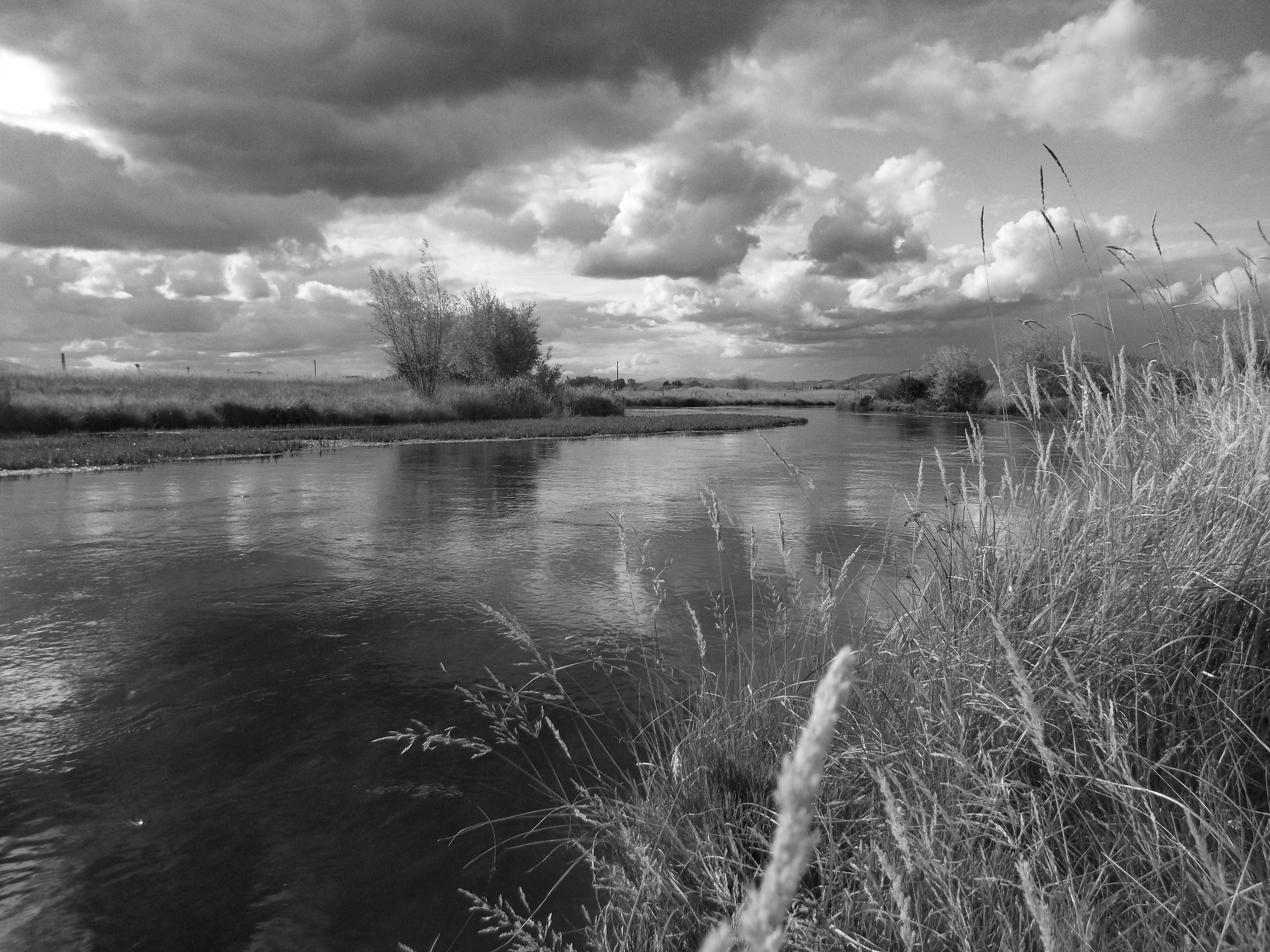
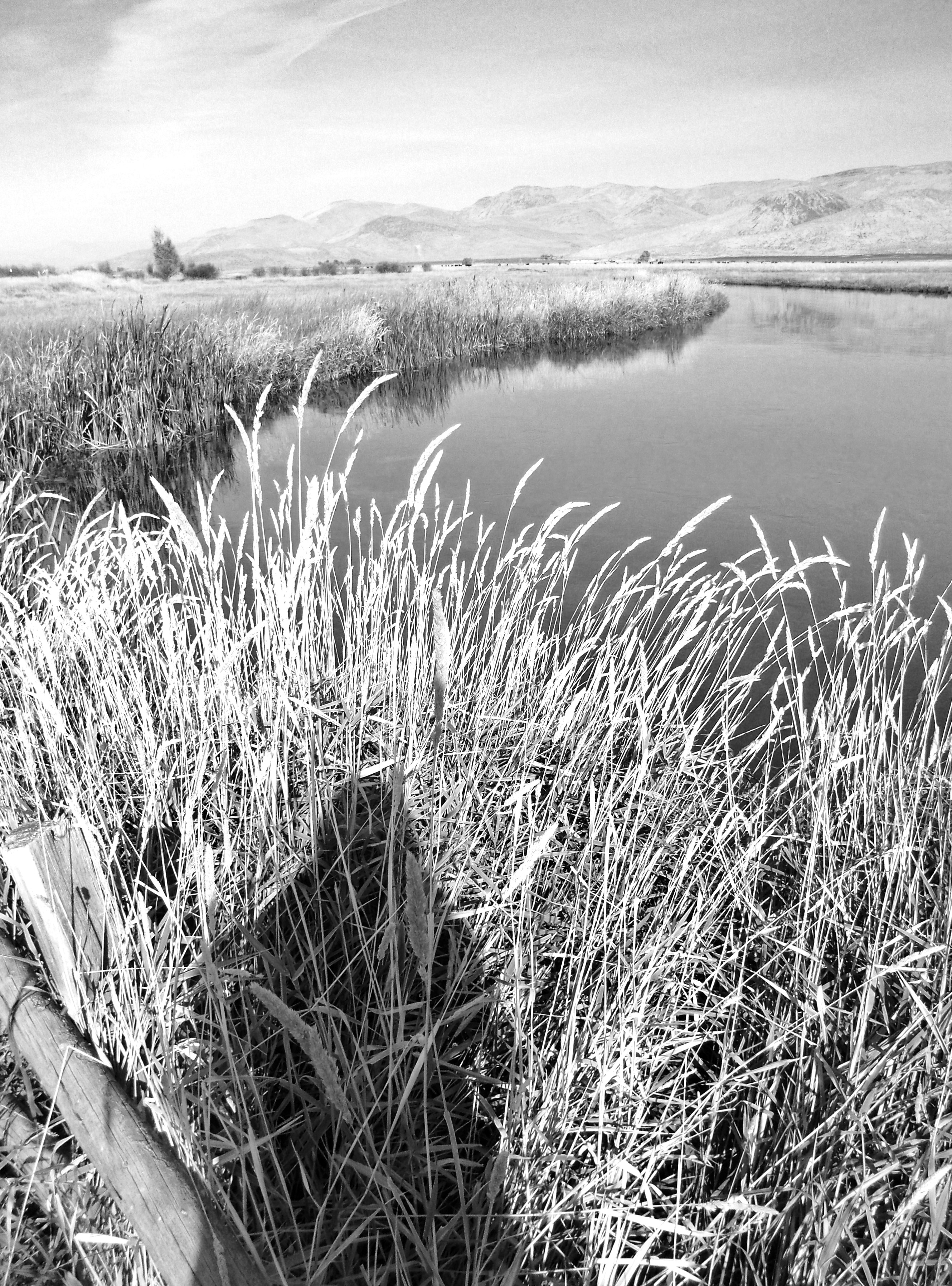
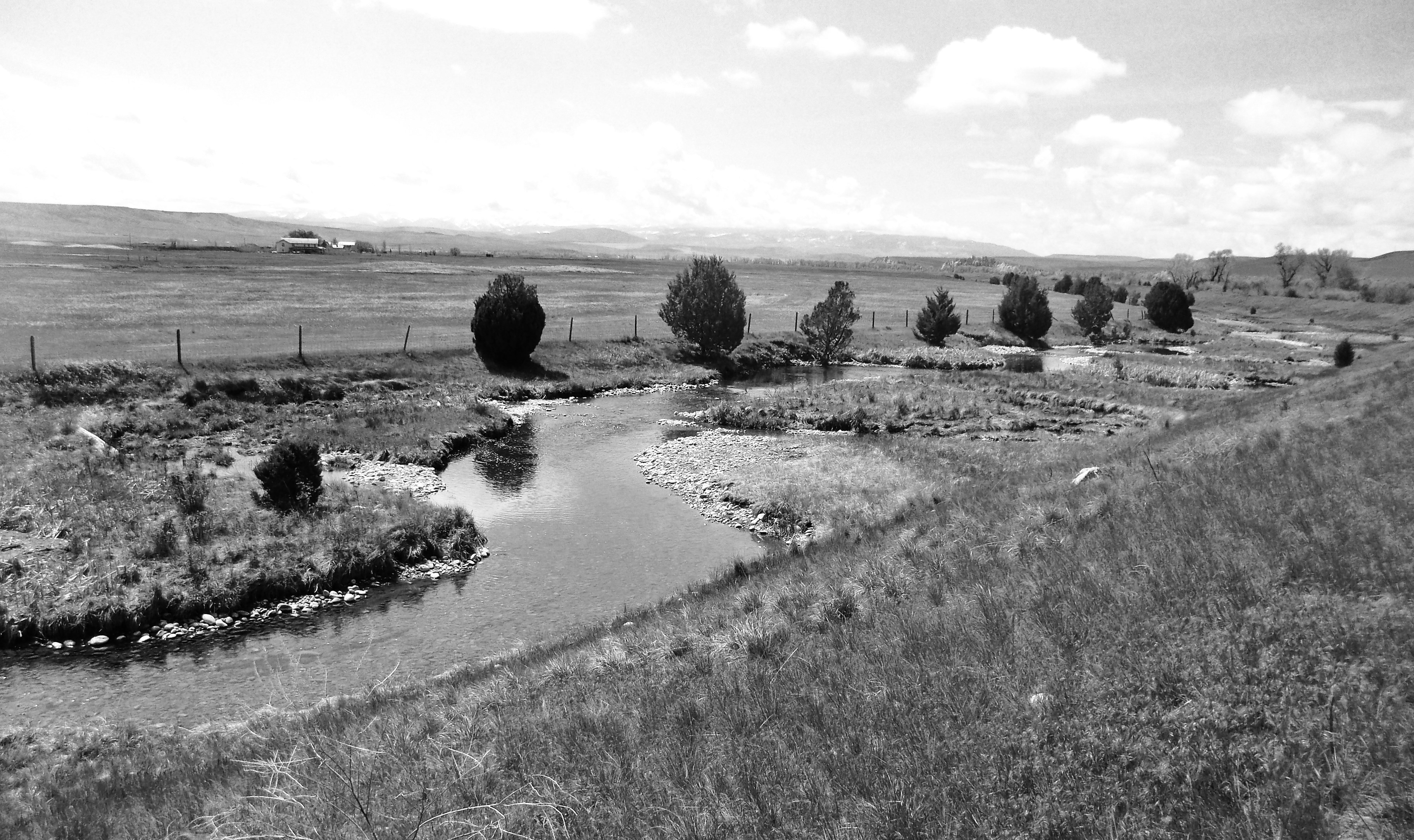
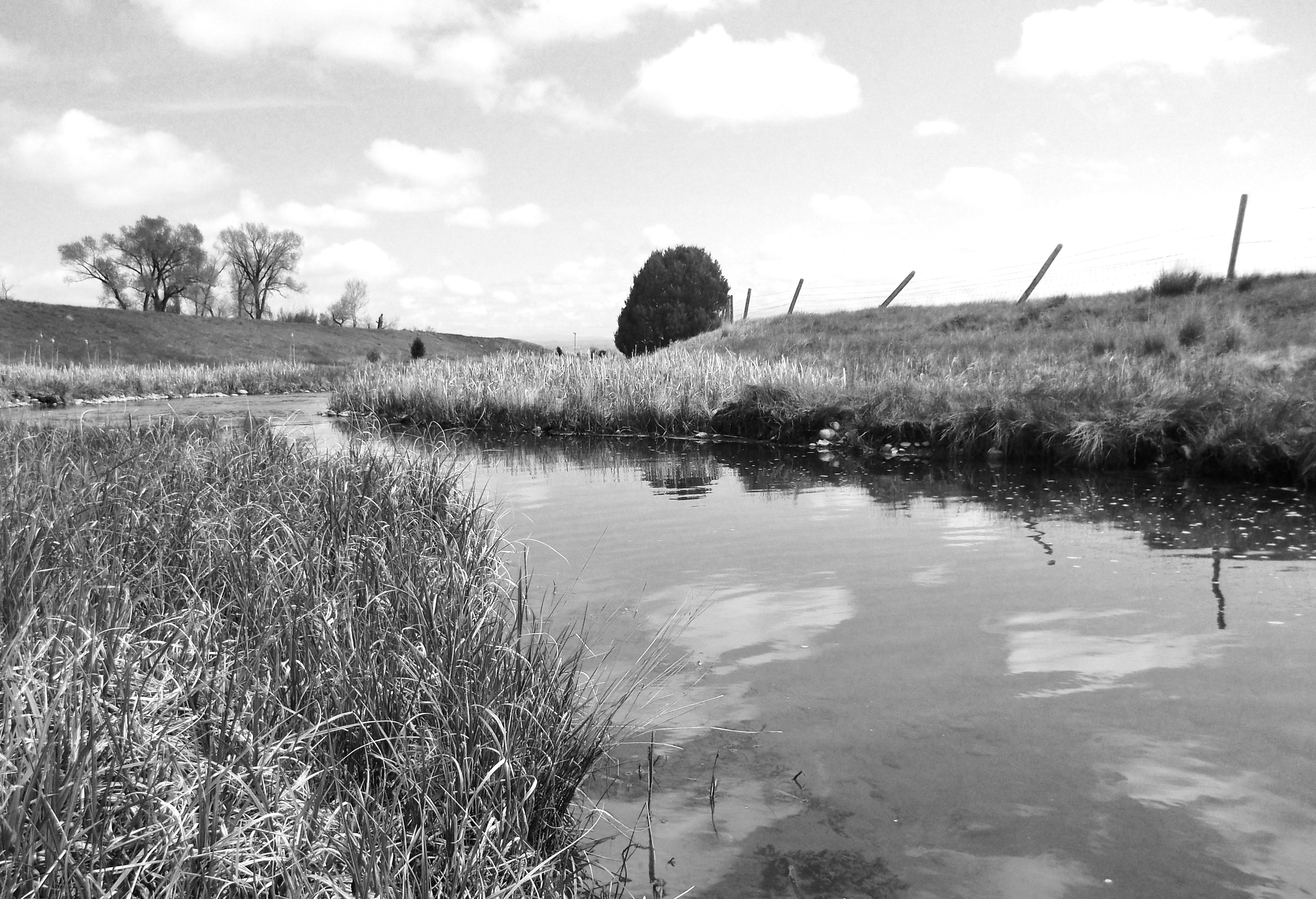
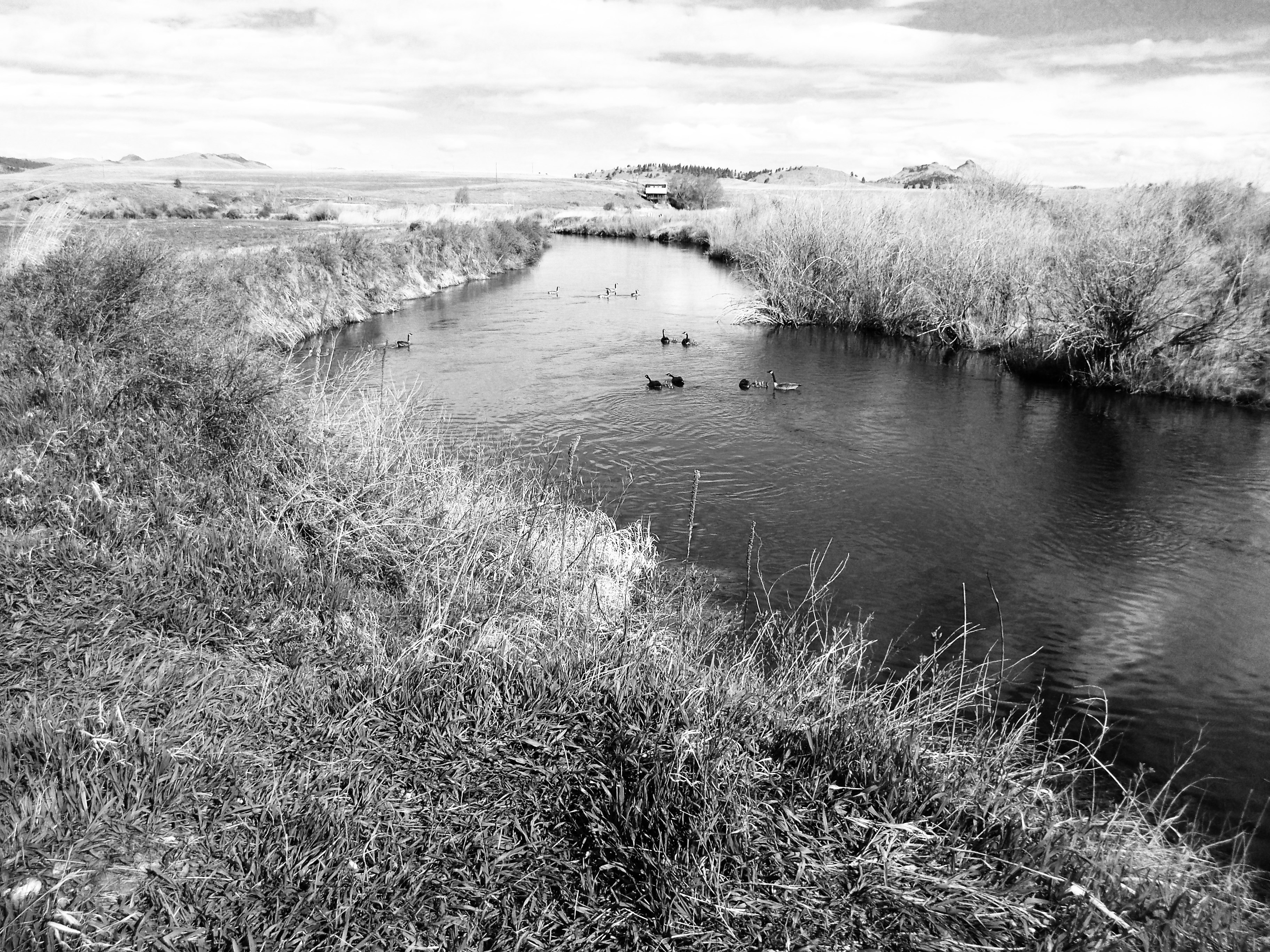
 The Ditch runs parallel to the Madison river. From what I understand a dike or levee was built between the river and the creek to protect the ranching/farming valley from flooding when the Madison (big water) is in full run-off. When the dike was built the creek probably got altered a fair amount and straightened-out. And it stayed that way for many years. I found the Ditch. It was small, clear and looked promising. The morning was still, warm and sunny. I was in the beautiful Madison river valley and decided to walk the creek and sight fish.
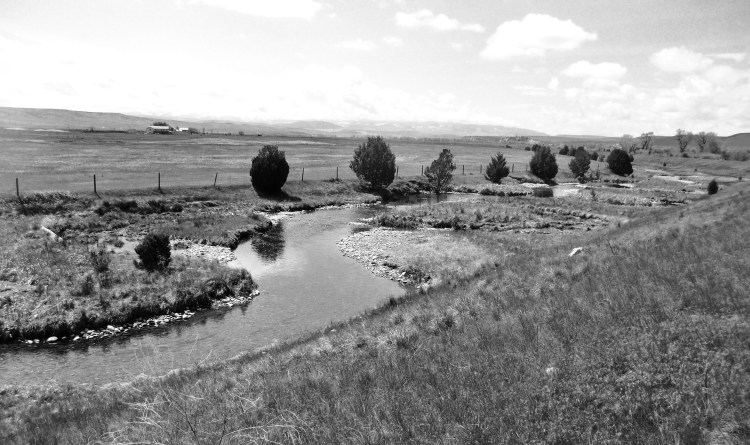
the ditch
At the anglers parking area the Ditch looked like it had recently been renovated: a stream restoration project. I figured I’d walk beyond where the work had been done to where it was more natural looking and untouched. After walking a mile or so I climbed the dike and from my elevated point looked further upstream. To my surprise the restoration work went on and on, and on. It looked like the whole creek had been re-shaped. I had spotted some trout so I decided to fish the creek.
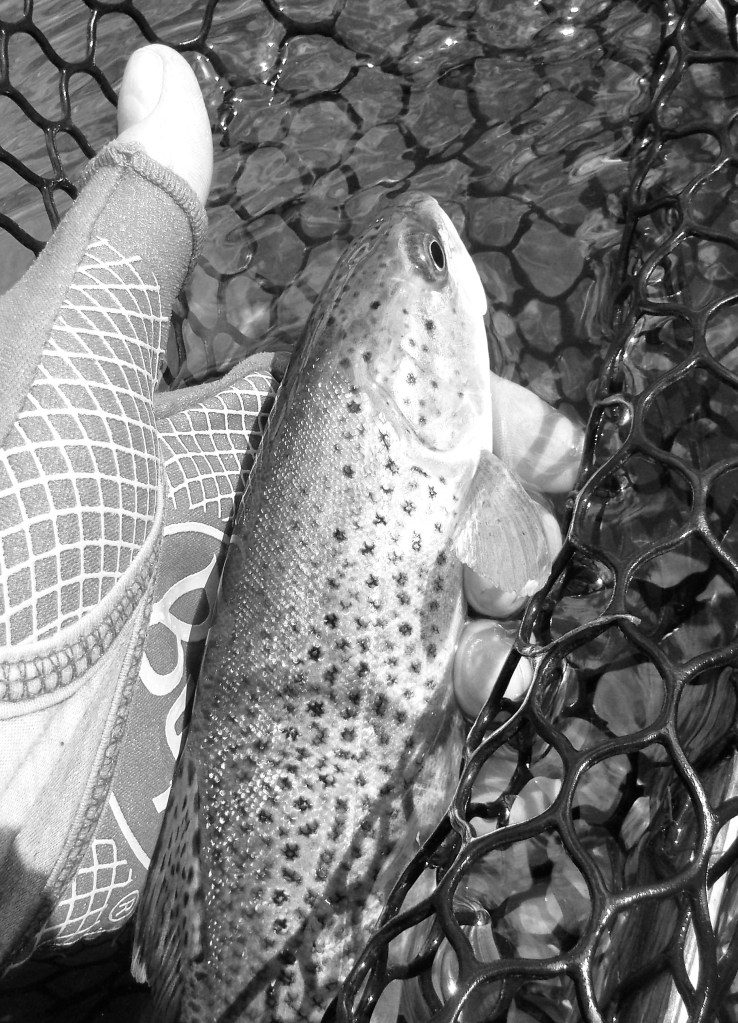
ditch brown
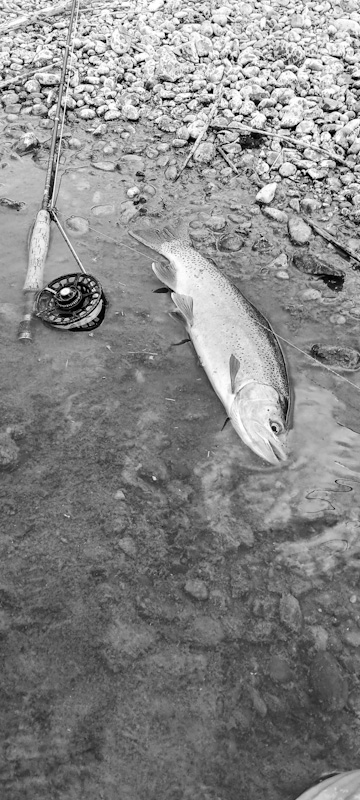
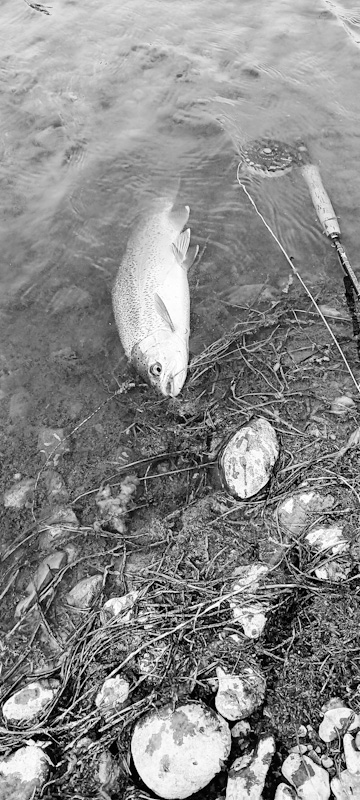
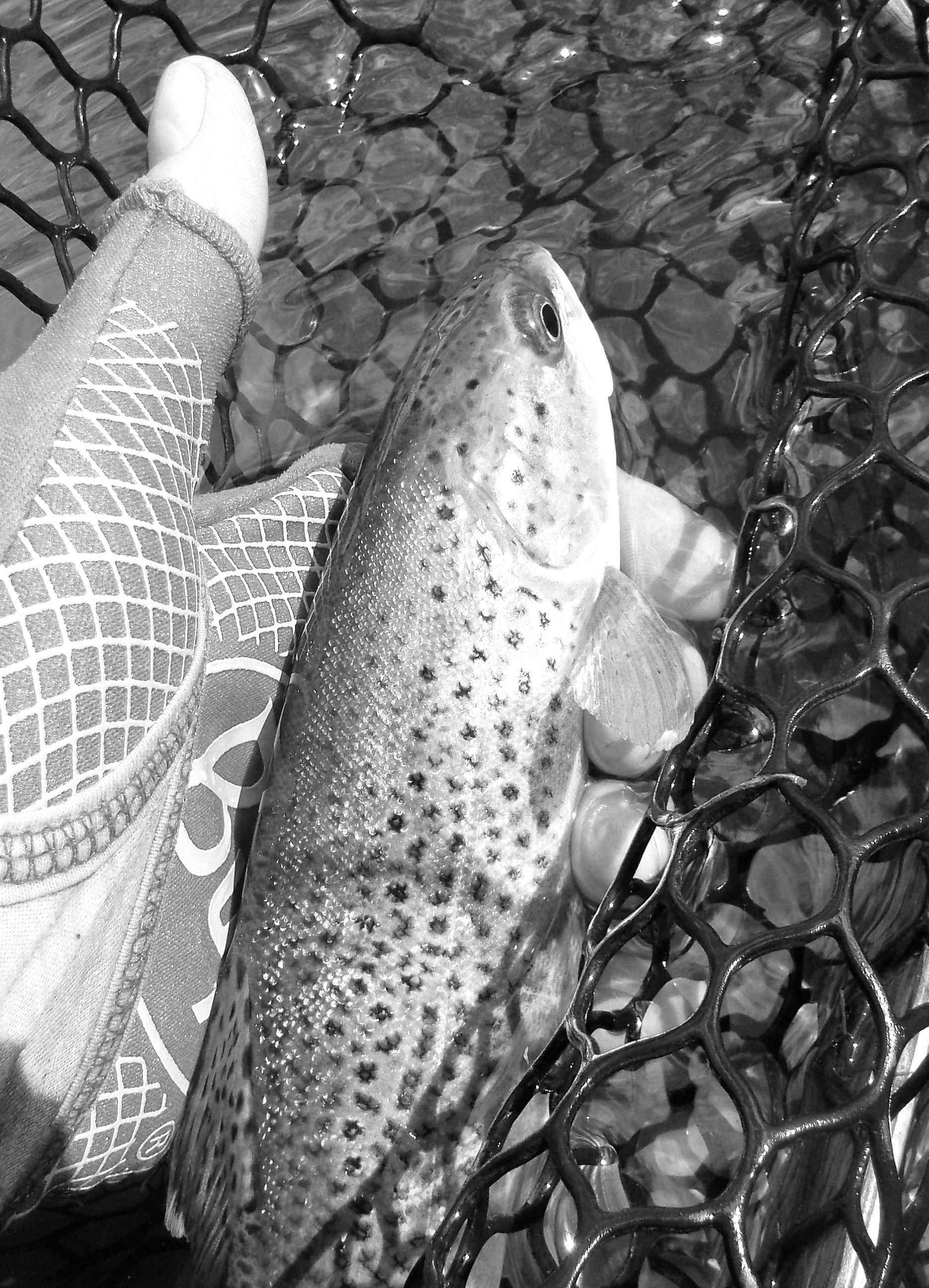
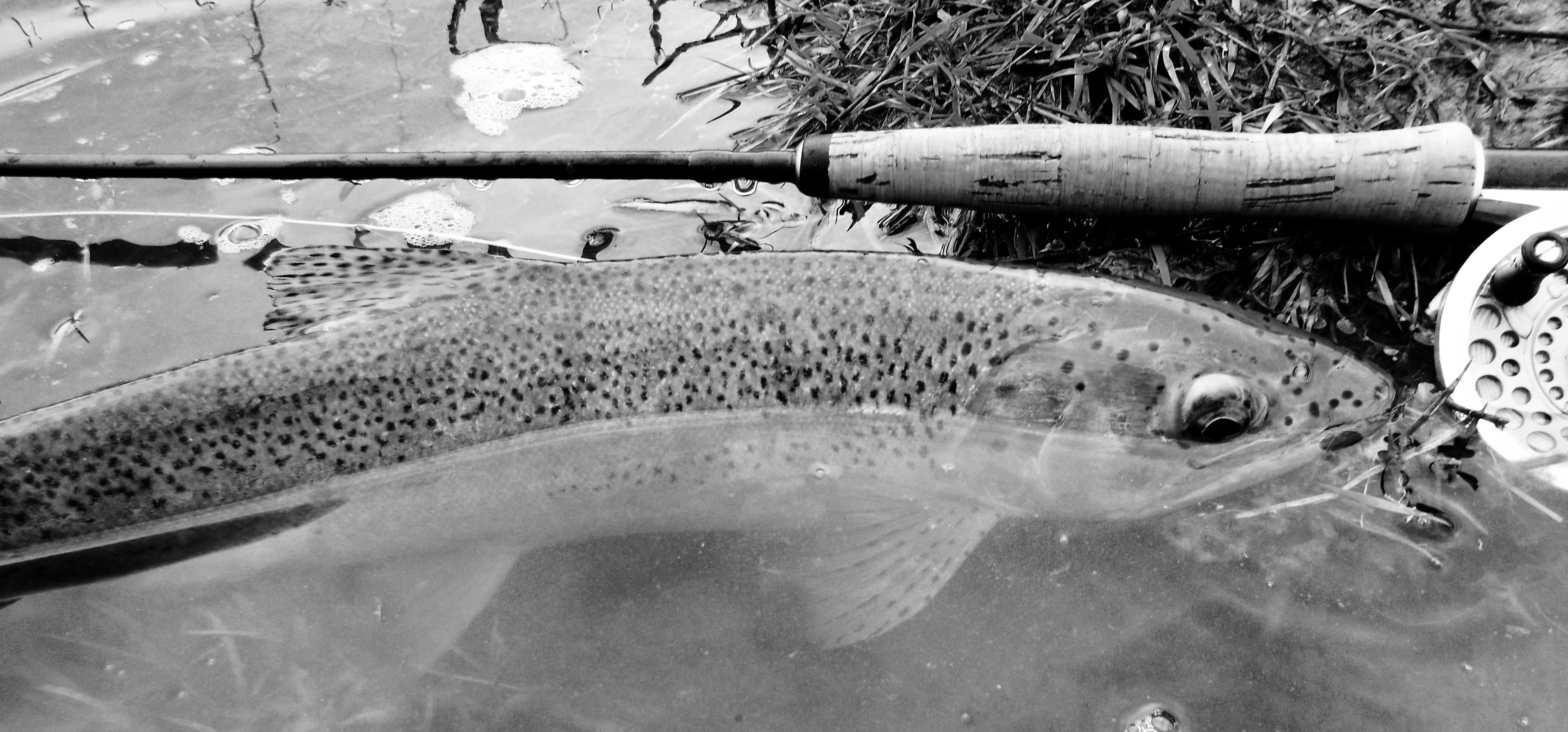
Before casting I took out a new can of spray sunscreen. I had difficulty twisting the top to the On position. It wouldn’t rotate and during my struggle spray shot out with the force and volume of a garden hose set on Jet. It blasted my left eye. I quickly dunked my face in the creek and open my eyes to flush them and continued doing this all morning. Eventually the burning subsided and I became more confident I wasn’t going to go blind. I managed several trout on dry flies: browns and rainbows. I caught nothing big but the trout were healthy looking and colorful. I have read that the creek can hold some fairly large fish.

the ditch
I wondered how the recent project had affected the trout as clearly a large excavator had done much of the work. The Pools had either been created or dredged and rocks had been placed on outer bends to provide structure. The renovation architects had shaped the creek in ongoing repetitive symmetrical S-curves. I knew some work had been done when I viewed the creek on Google Maps but I didn’t expect it had just happened, probably in the past year. The project had to have been quite intrusive and probably also affected the insect population.

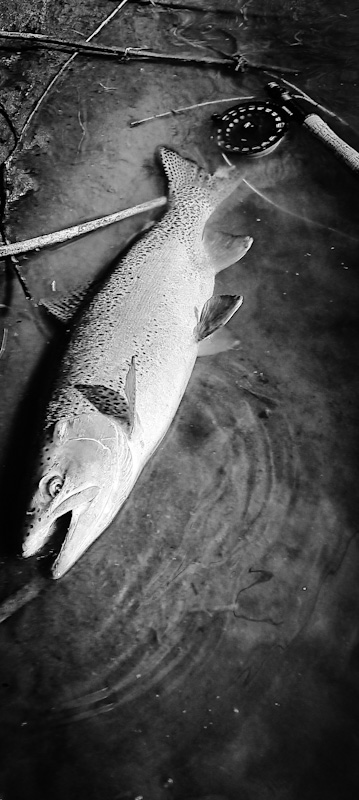
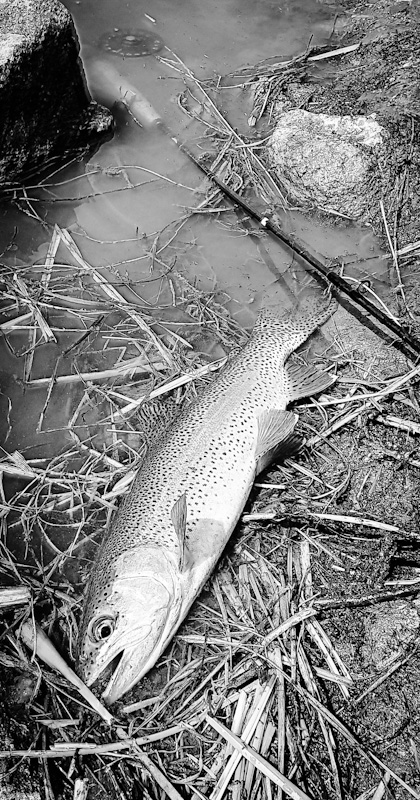
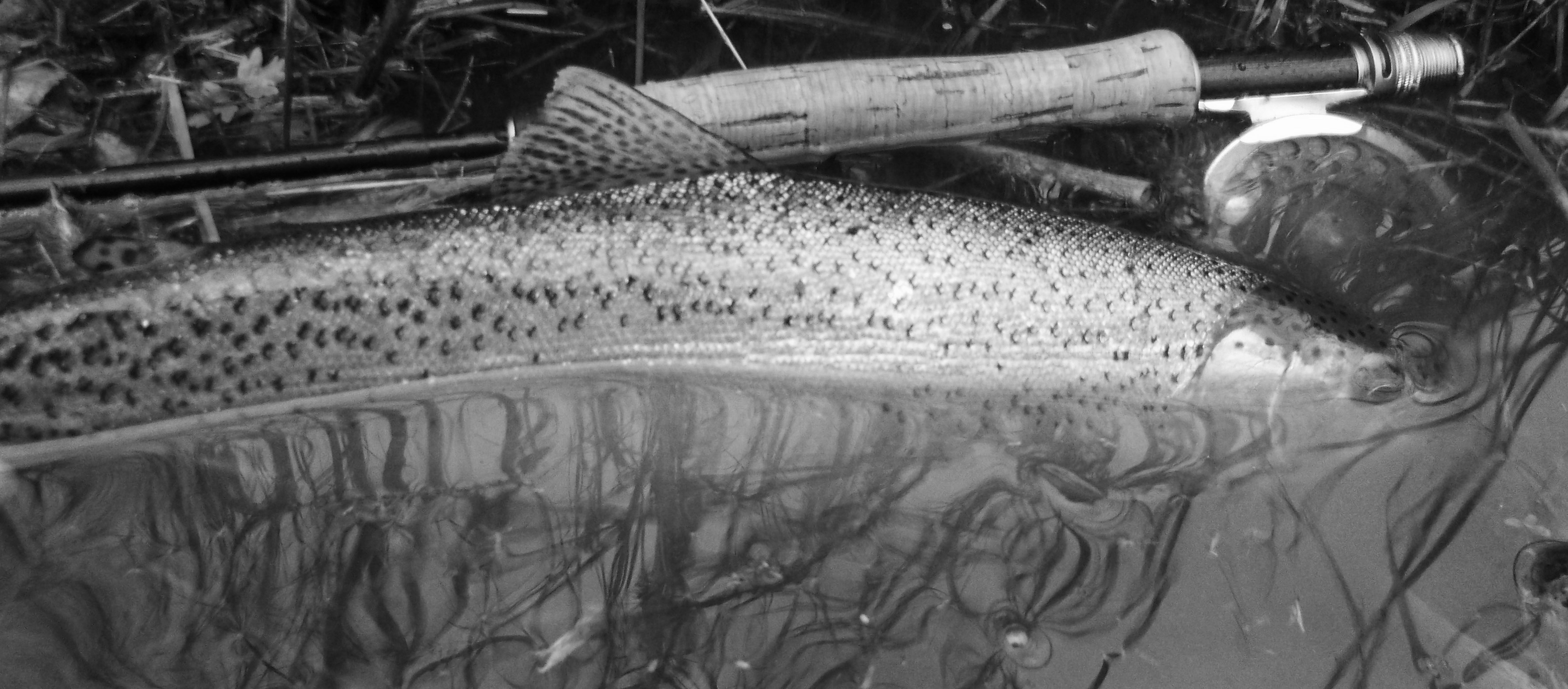
missouri bow

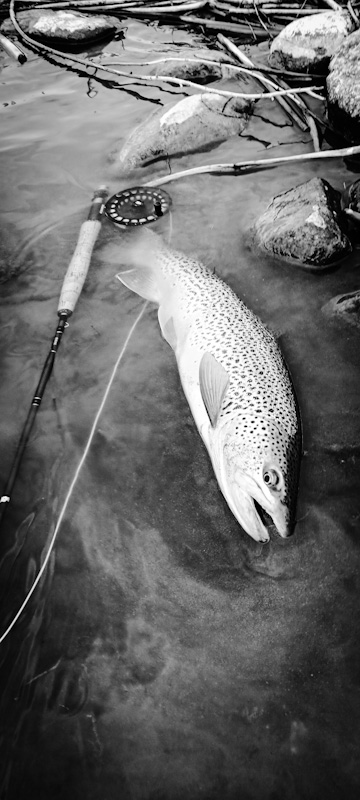
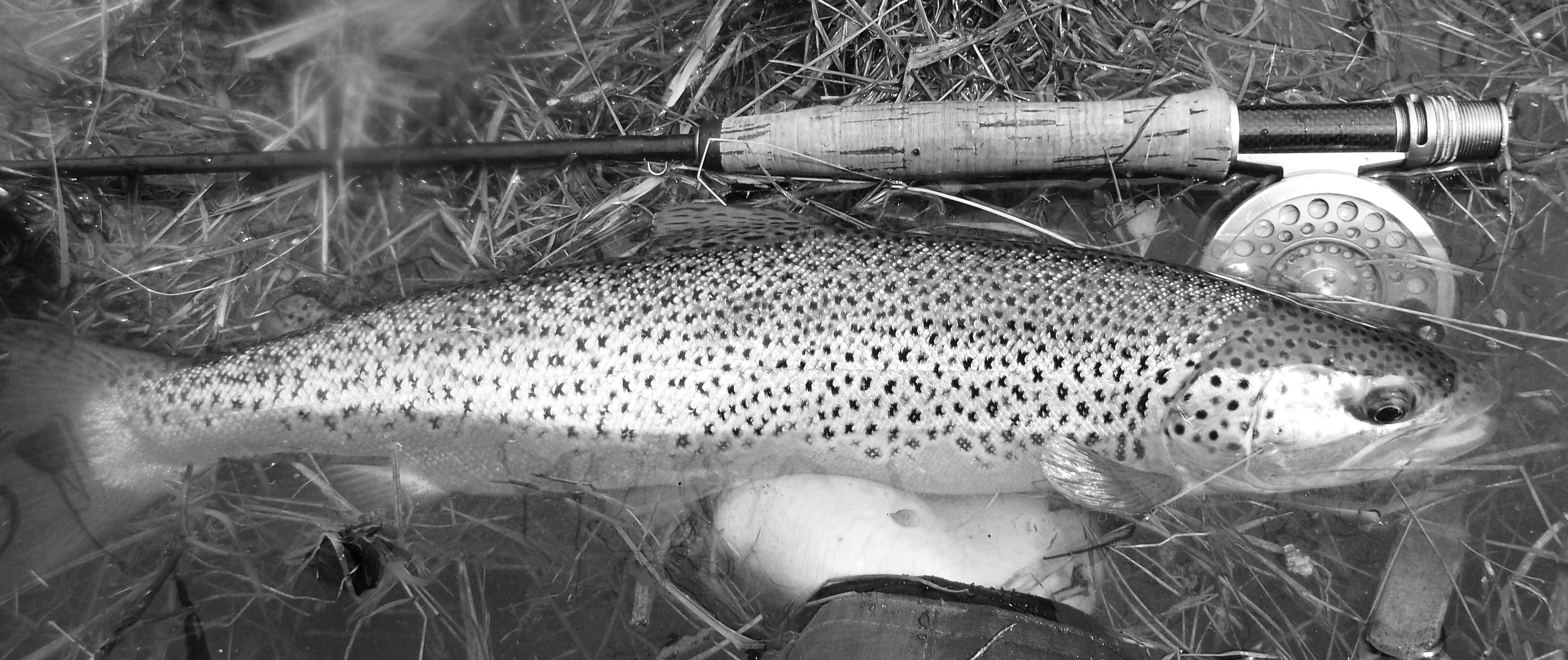
missouri brown
I have been on a number of rivers that have had sections restored or mitigated: the lower Crowsnest river in southwest Alberta; I was on Nelson spring creek in Paradise Valley the season after it was altered. Restoration companies understand the science of stream improvement and can make a fishery more productive but in my mind they often miss the mark on the aesthetic or artistic part of stream design. Sometimes their creations seem strikingly artificial (obvious) and repetitive. I would think subtle or small alterations could improve trout habitat just as effectively but they often seem to “Go big”. Maybe they need to consider having an artist on board during the early stages of stream re-design to create something more aesthetic and in tune with the landscape. I’m ok with S-curves as most spring creeks meander. What I have some difficulty with is carbon copy S-curve after S-curve going off into infinity. It seems a bit much. That said, I appreciate the work they did on the Ditch and that they felt there was value in doing it. In a couple of seasons I think the Ditch, once nature takes over and it matures, will be a great place to fish for those who love small stream angling. It will also, in its own way, be beautiful. I’ll definitely go back.
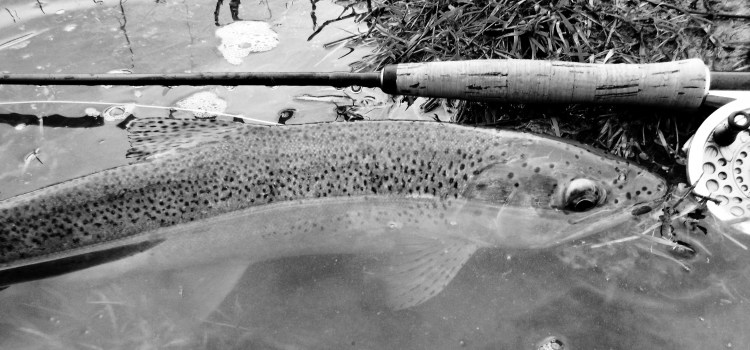
missouri bow
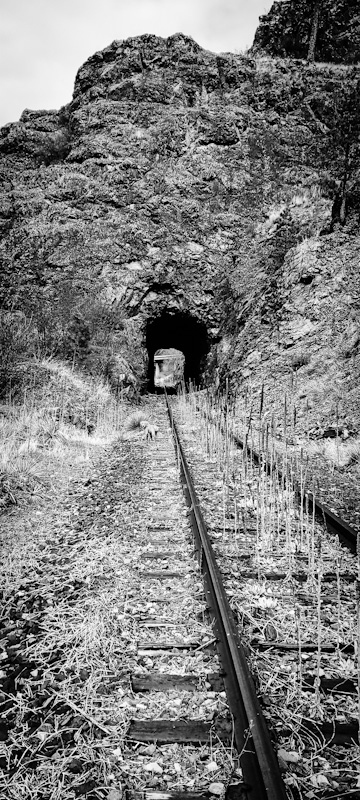
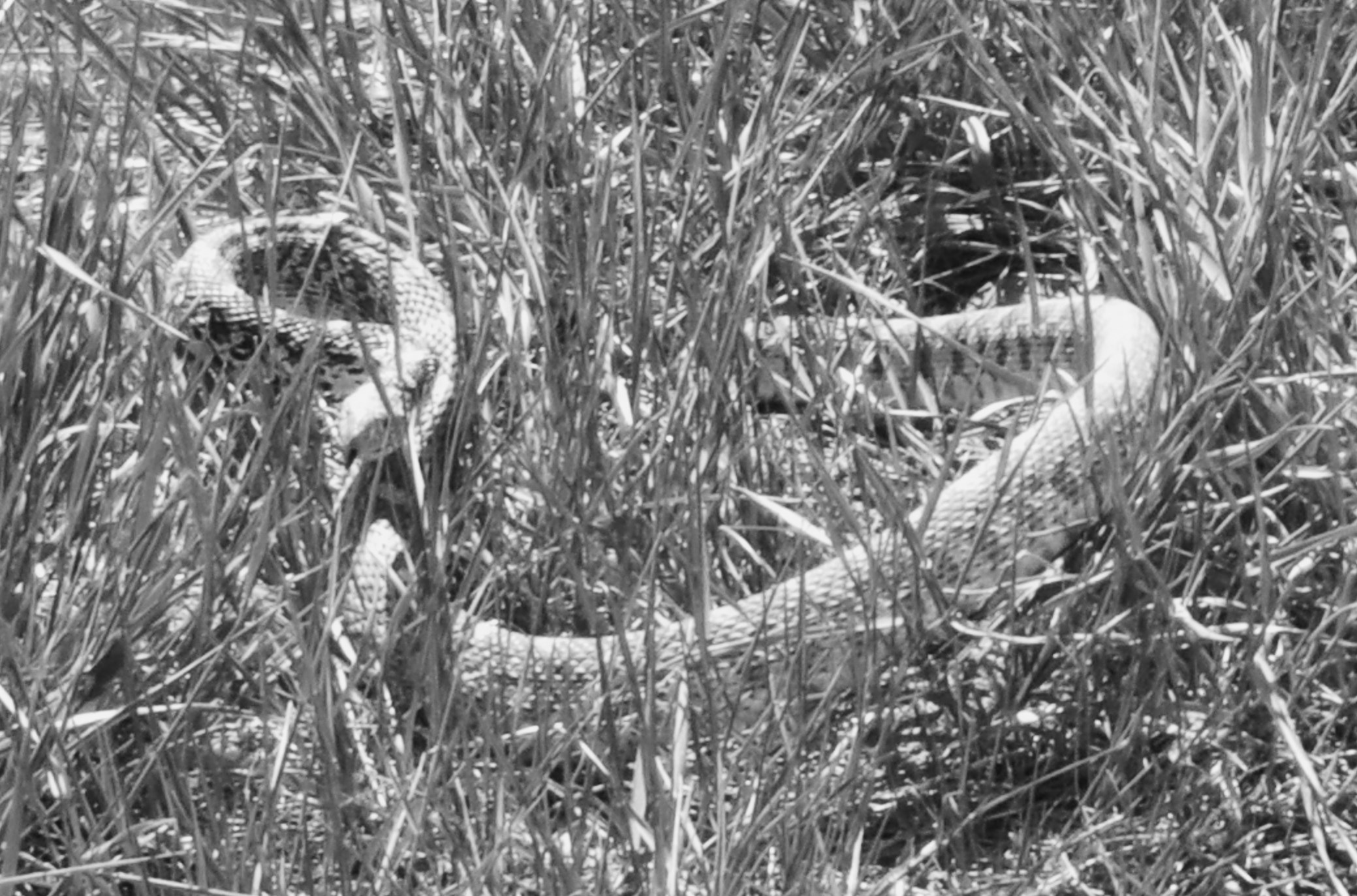
After a morning on the Ditch I decided to walk the top of the dike back to my car. While strolling along and taking in the surroundings I heard a terrifying sound that went right through me. It was a fusion of hissing, screeching, buzzing and a rattle. Think of the sound the Raptors made in Jurassic Park. I stopped and turned. There was a five foot rattlesnake staring at me and coiled. I had just walked by it. A foot more to my right and it would have probably struck me. I’ve seen other rattlesnakes in Montana usually while walking train tracks. This was the closest I had come to one.

rattlesnake
I wondered what I would have done if I got bit. Prairie rattlers generally are not lethal unless you are one of the unfortunate ones who react badly to the venom. I’ve survived two scorpion bites in Baja but that is another story. I guess if I was John Wayne I simply would have sucked the venom out of my leg (not advisable), shot the snake and cooked it over an open fire.
Given I was in the middle of nowhere and I’m not John Wayne, I probably would have panicked and driven a break neck speed to the nearest hospital in either Butte or Bozeman… probably Bozeman…better coffee shops. If I made it to the emergency room my skinny body would probably have been transformed into something resembling the Michelin Tire Man with a runny red left eye or one of those characters from the Eddie Murphy movie: the Clumps. Of course, by that time I’d also probably be delirious and singing something like, “Home on the Range”.
The next morning I returned to the Missouri and spent a full day on it. In the afternoon I spotted four good fish rising and connected with them using an emerger pattern. They were selective.
Somehow I got home intact from my adventure. And even though fishing was “slow” I managed some nice trout on dries… “Not a discouraging word was heard…”
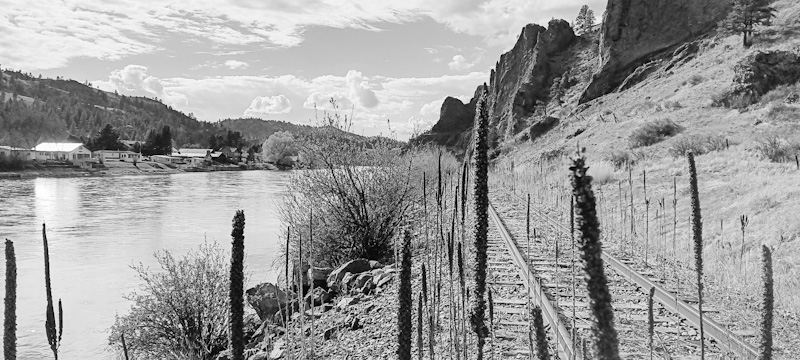
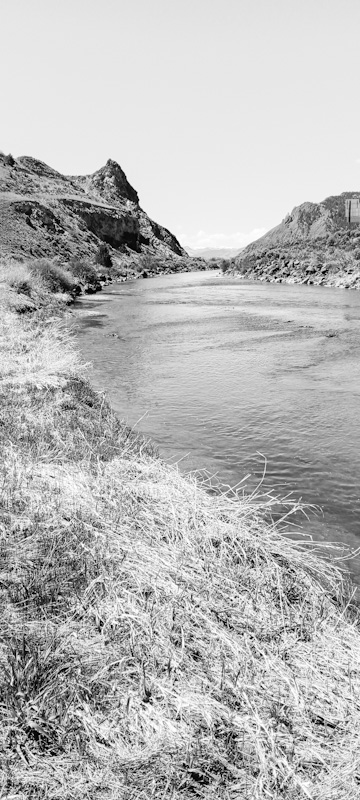
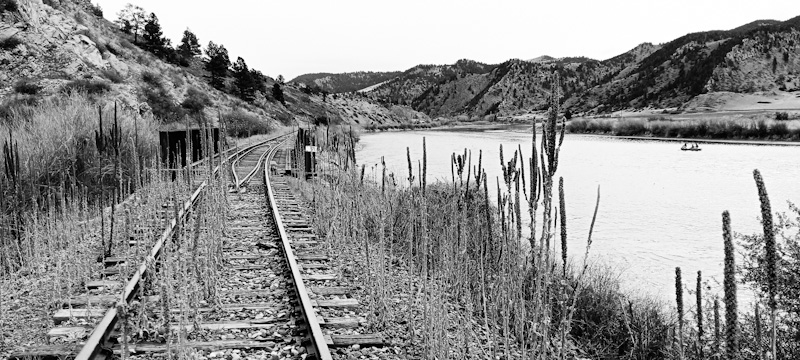
missouri side channel
















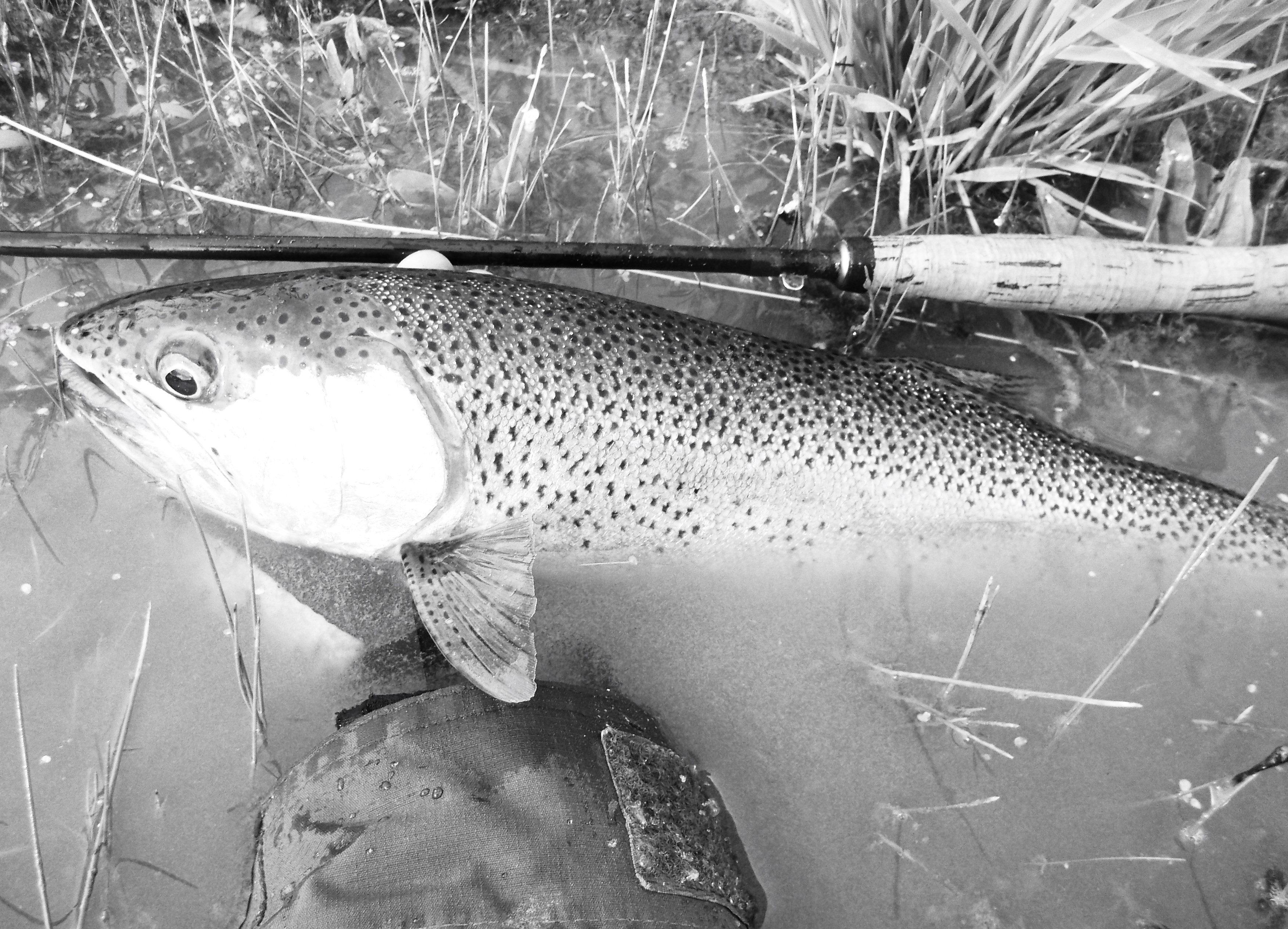


 trout on dries