Visible flies

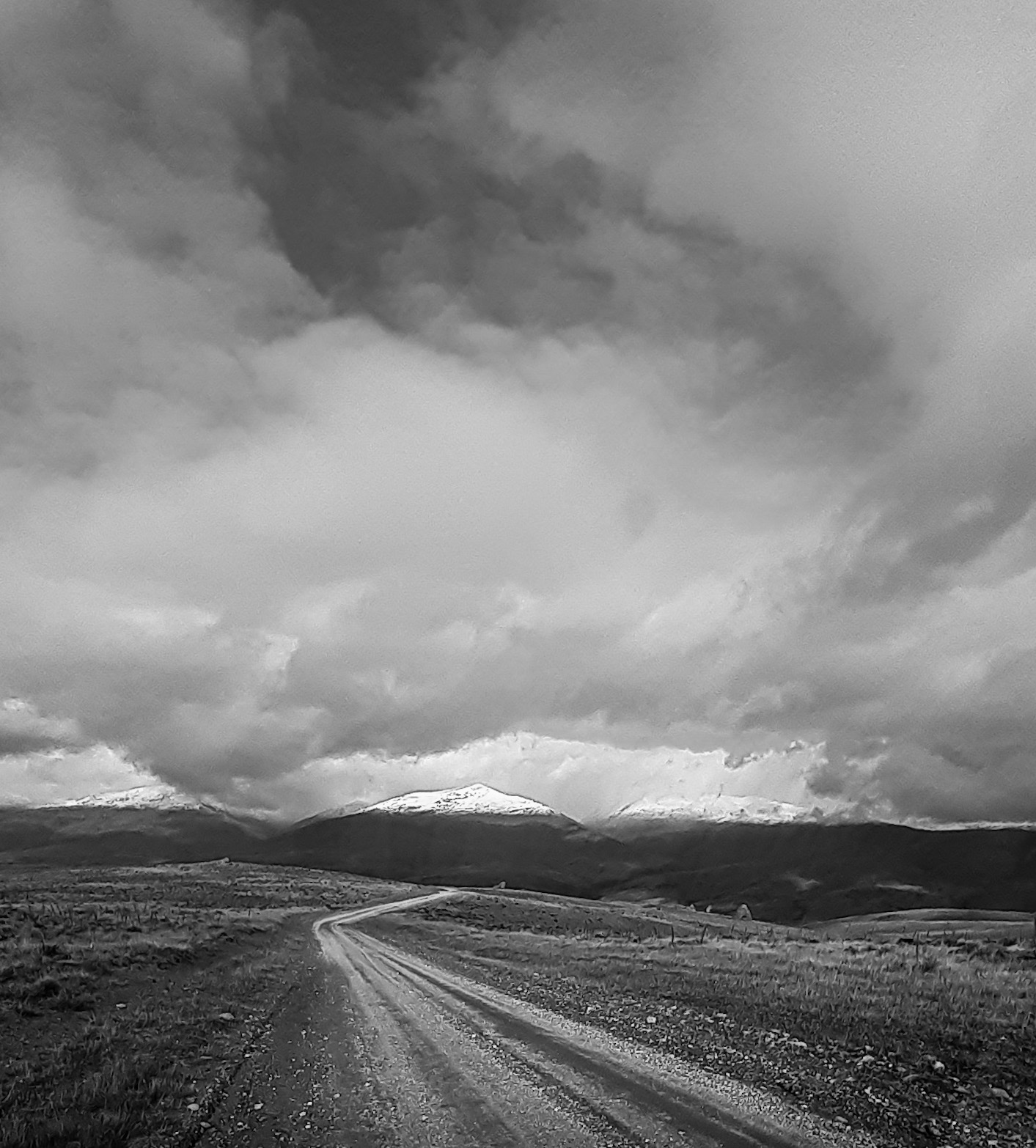
” Black: the absence of light; the absorption of light”.

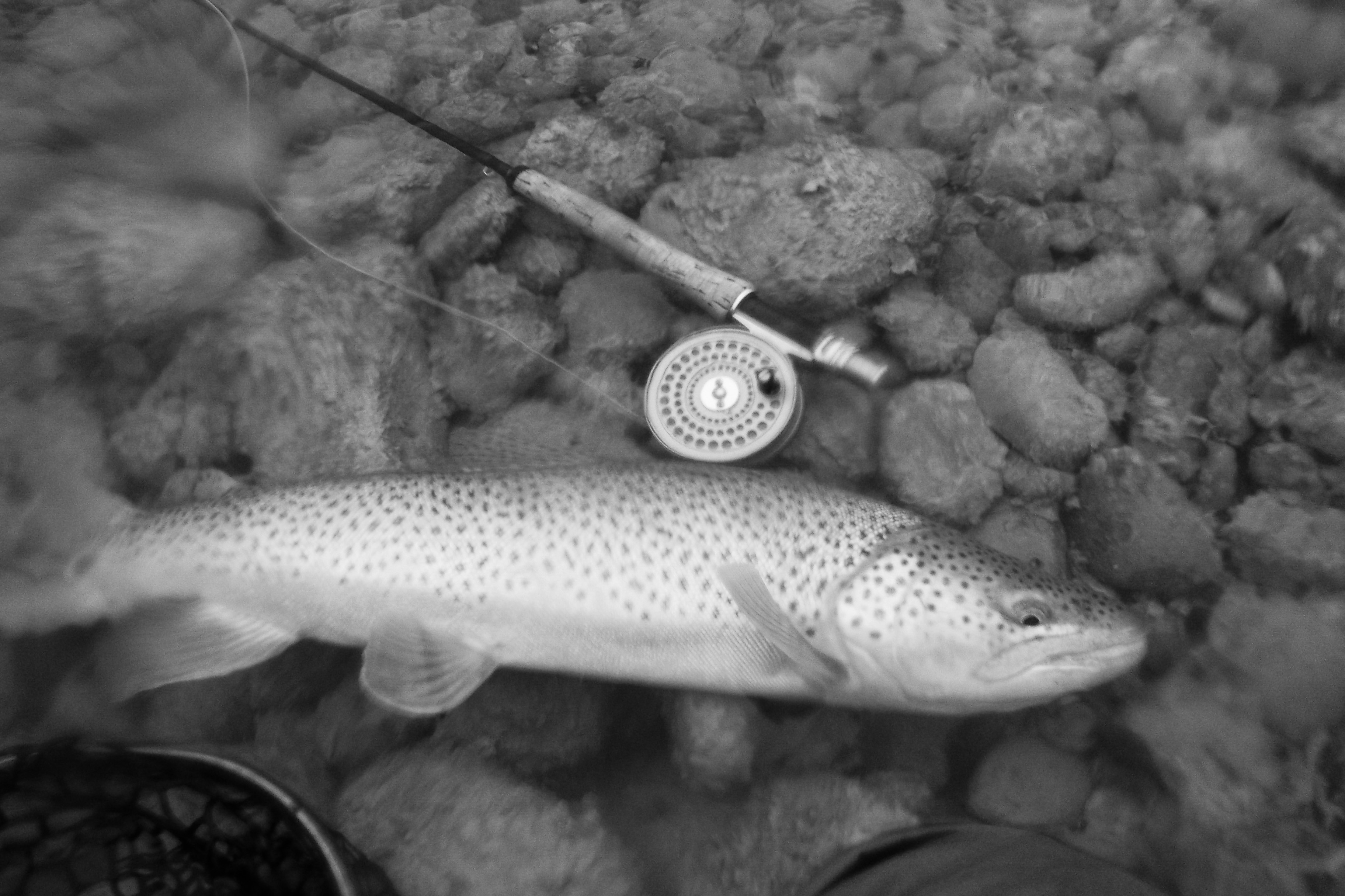
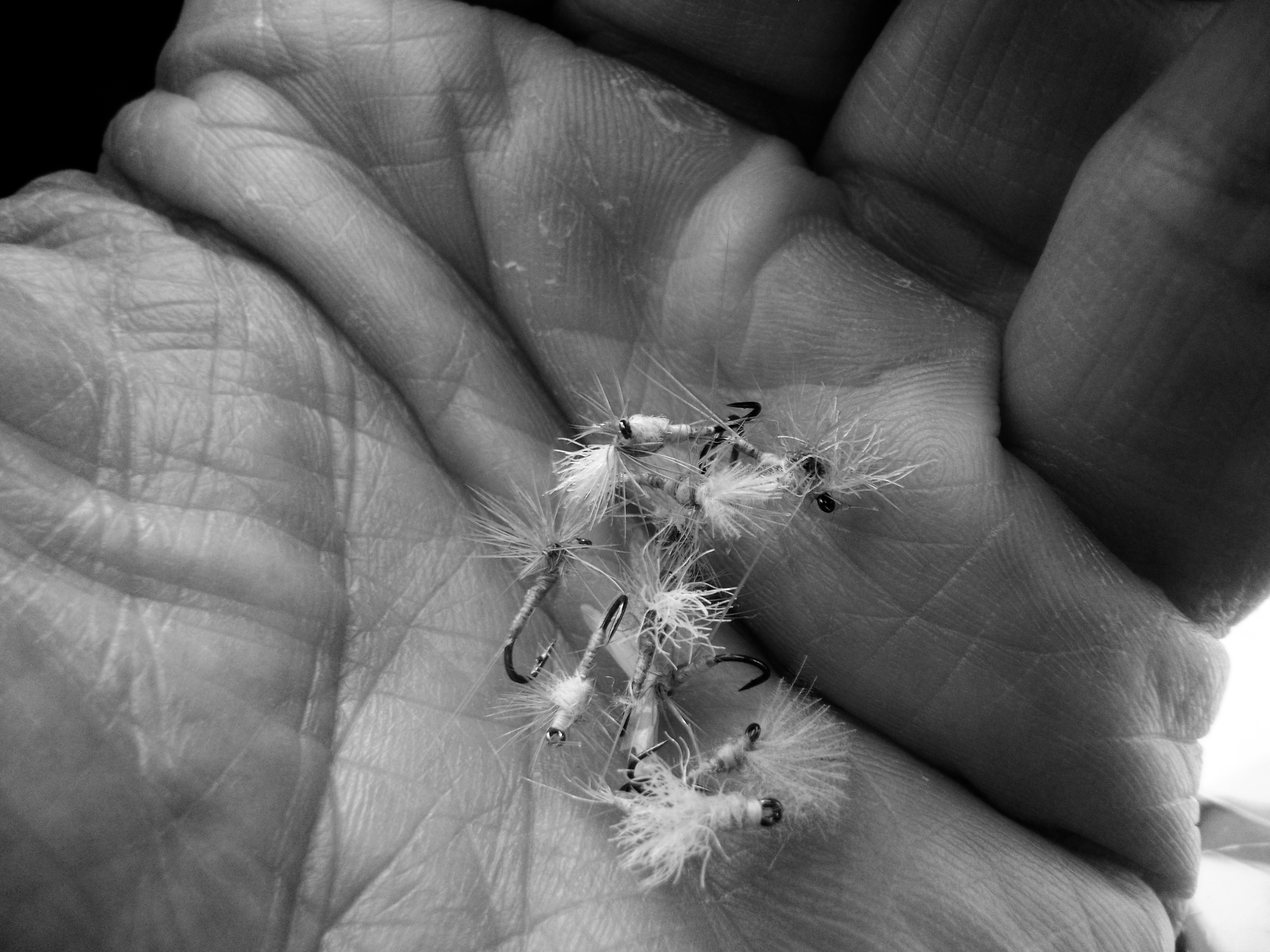
The clouds rolled in. Just for one day. So I took advantage of it as the dry fly season is winding down in my region. Soon local Brown trout will be on redds. Maybe some already are. With the overcast sky I was hoping some trout could be found rising to Olive and Mahogany mayflies. There were quite a few bugs on the water in the afternoon but unfortunately it was windy. I didn’t see a lot of fish surfacing but did find one decent one feeding just off of the edge of a current line. It ate a size 18 Olive tied with a black wing. The black wing allowed me to see the small fly from some distance even in the low light, high glare conditions. I was able to get the tiny impression on target.

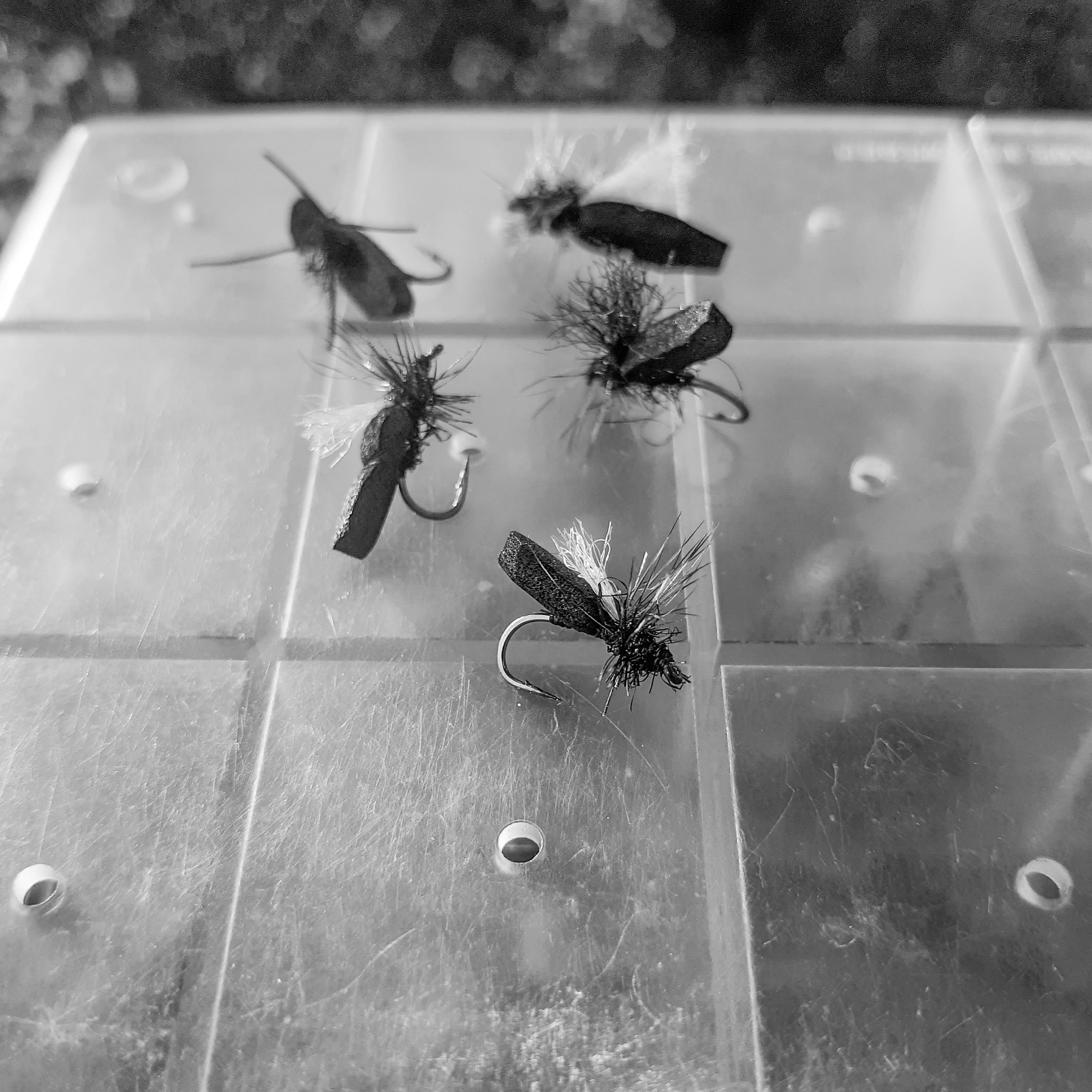
When fishing wide open places I tie at least one third of my small dries/emergers with a black wing or post. I can’t fish what I can’t see. Flies that become invisible once casted are useless. When tying dry flies for rivers that tend to produce a lot of small bugs I pay attention to size, color, attitude (how it sits) in the water but just as importantly, or more so, visibility. I need to see where the fly lands to know if my cast is accurate; I need to see it tracking (drift) to the fish; and I need to see the trout’s response if I’m going to fish effectively. Put simply, I need to see it…

When I glance over various online fly tying forums I see many exquisitely crafted fly patterns (beyond my skill level) but many would be hard or impossible to see on a lot of the rivers that I fish. Maybe these tyers fish a lot of small water with streamside foliage and shadows that darken the water and therefore their dry fly patterns, even small ones, contrast well and show-up. A lot of the tailwater rivers I fish are not like that. They are broad and flow in wide open terrain and their hatches are generally small mayflies and caddis. And the dry fly fishing is usually best on overcast days which often means a grey, silvery surface and eye straining glare. That’s when a black wing or post can be helpful.

Surprisingly it’s hard to find fly shops even in big broad river destinations that have small fly patterns in their bins with black wings or posts. Most have some High Vis patterns in fluorescent colors but my eyes simply don’t pick them up as well in extreme glare as solid black.

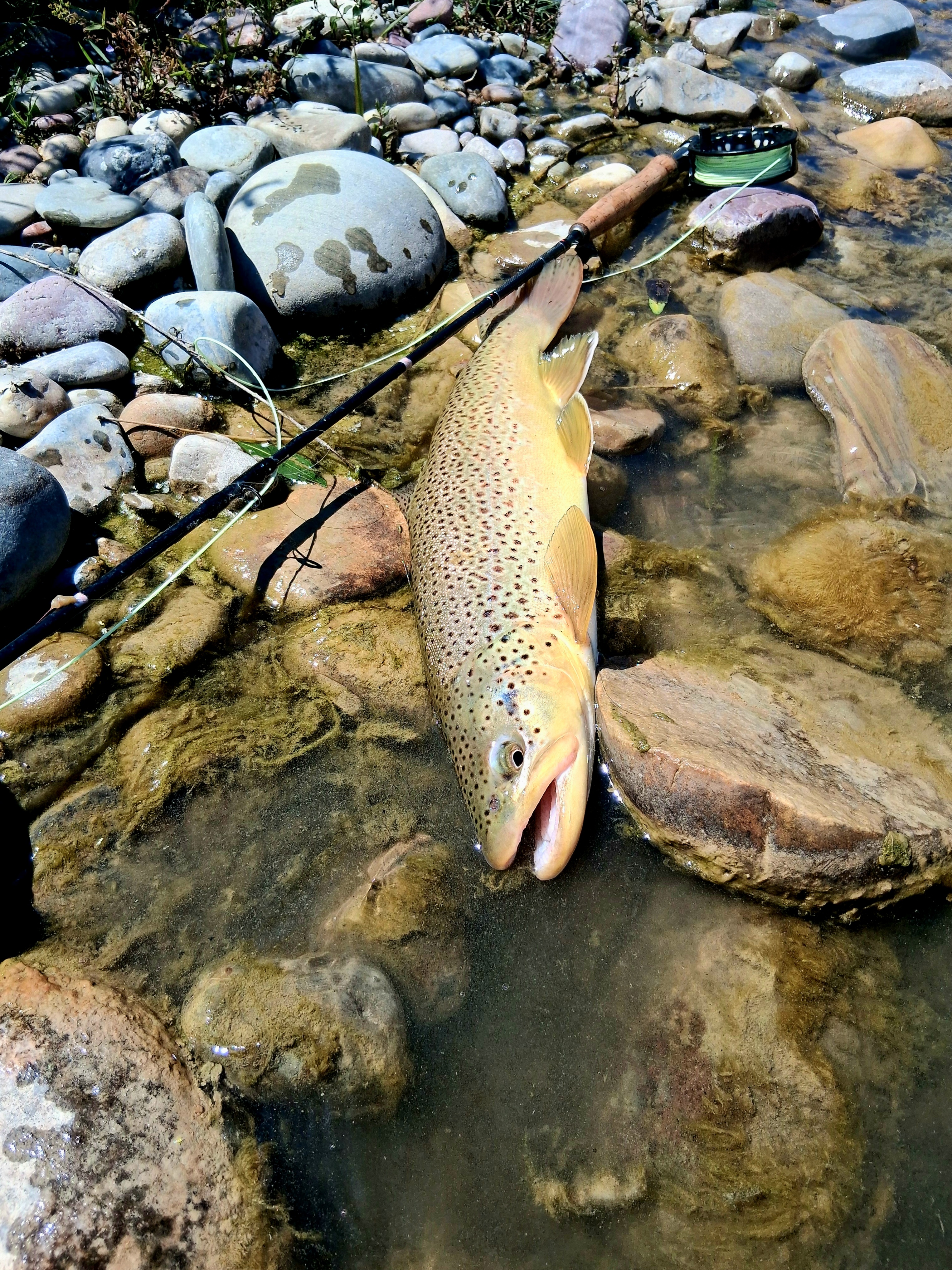
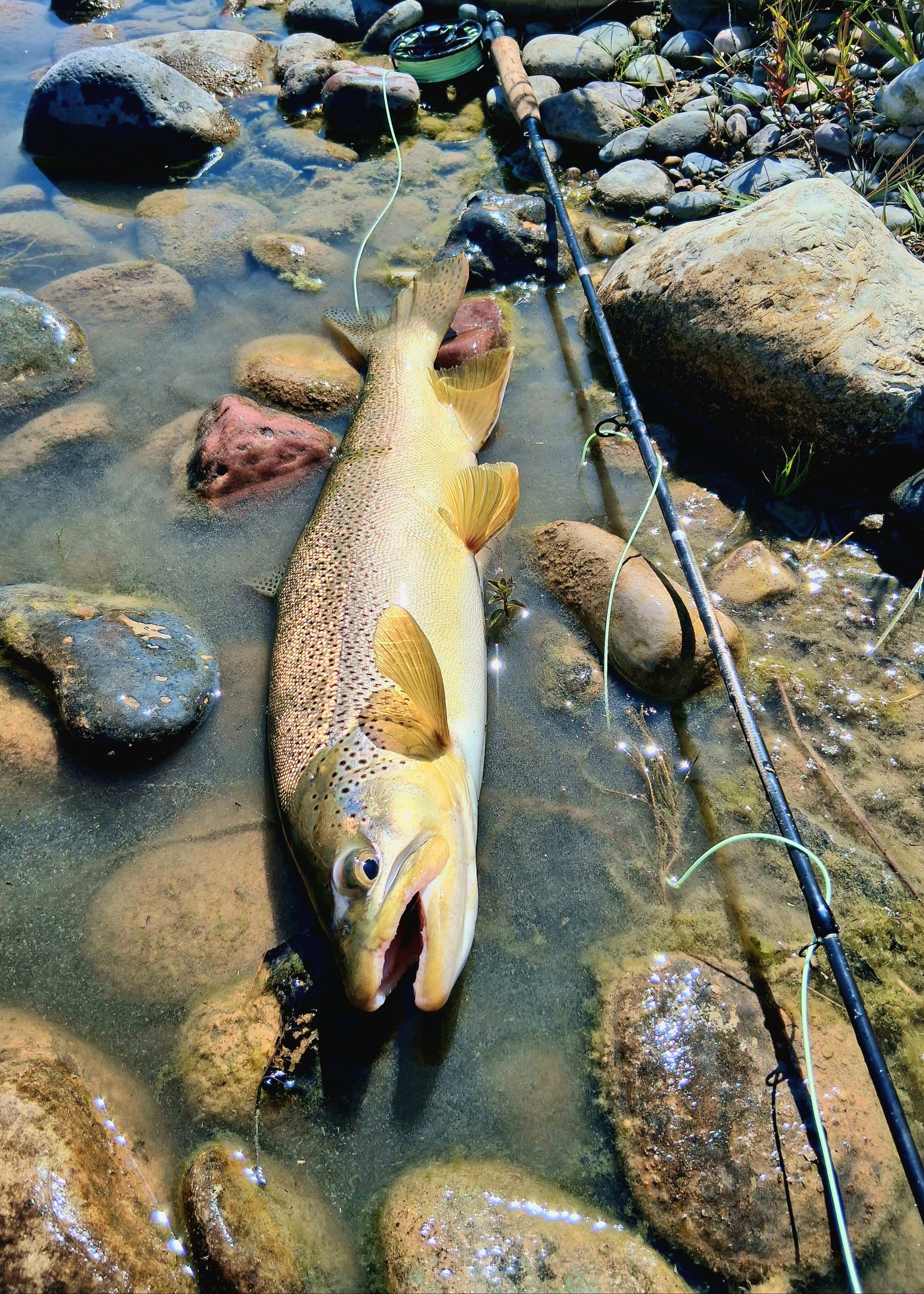
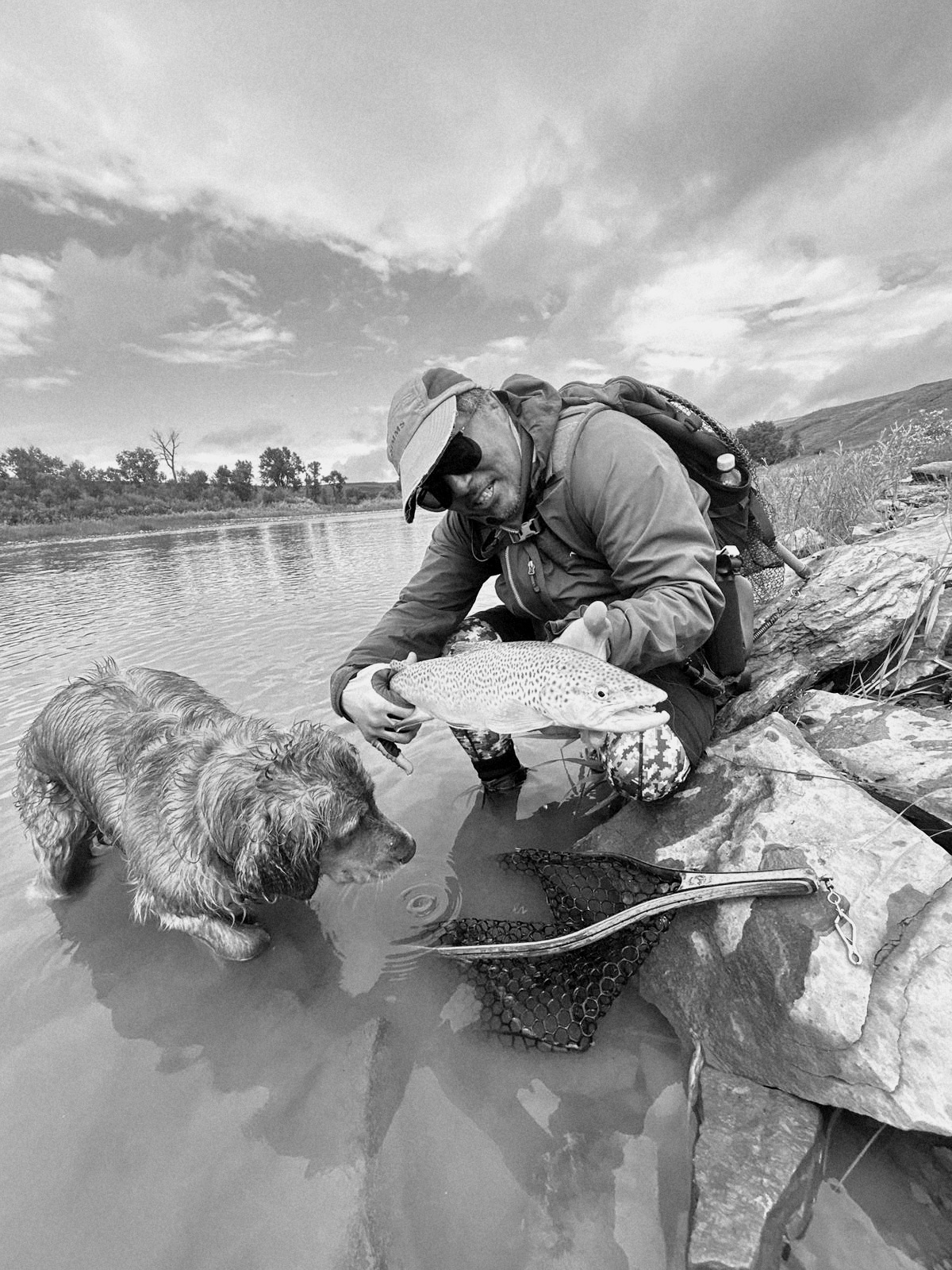
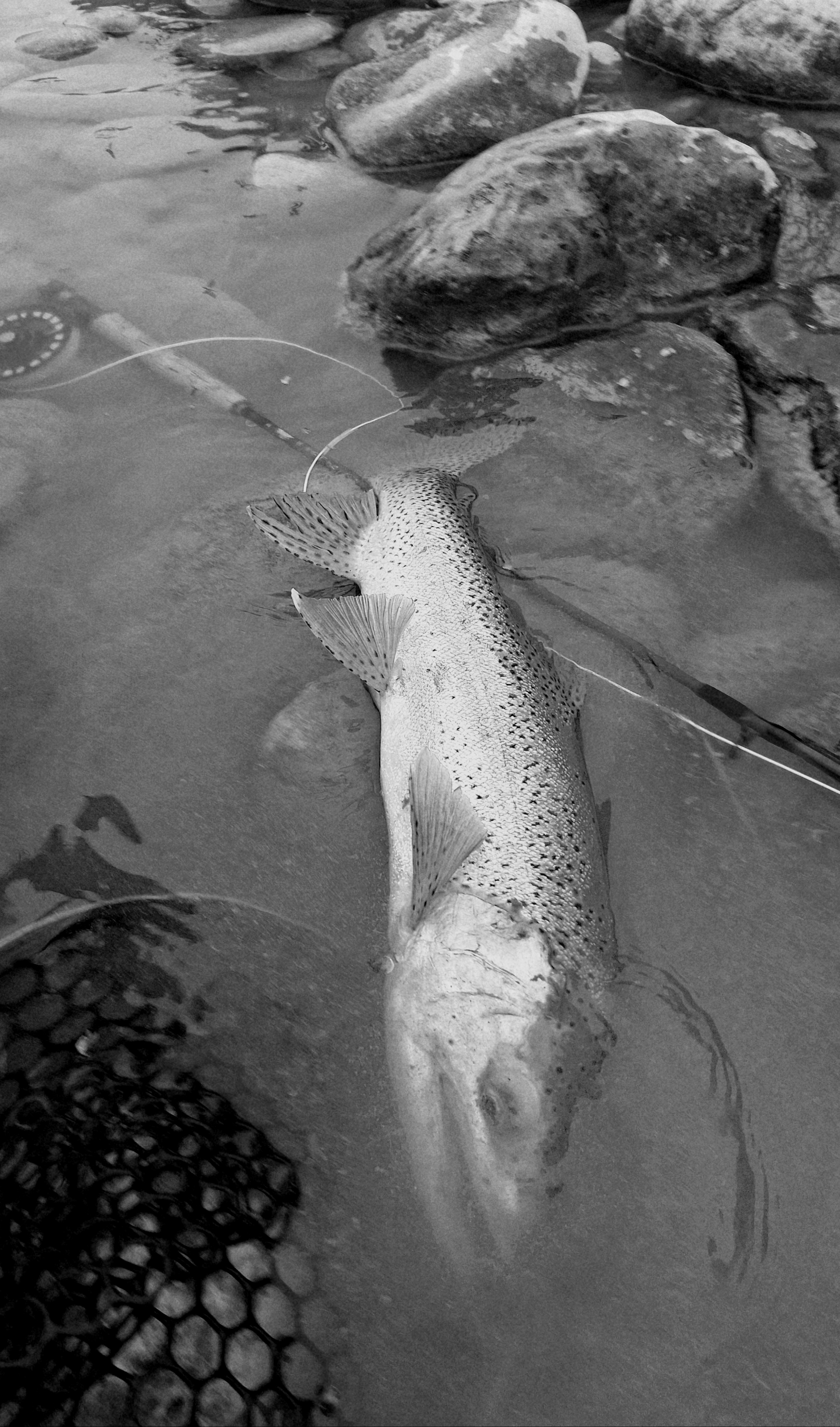
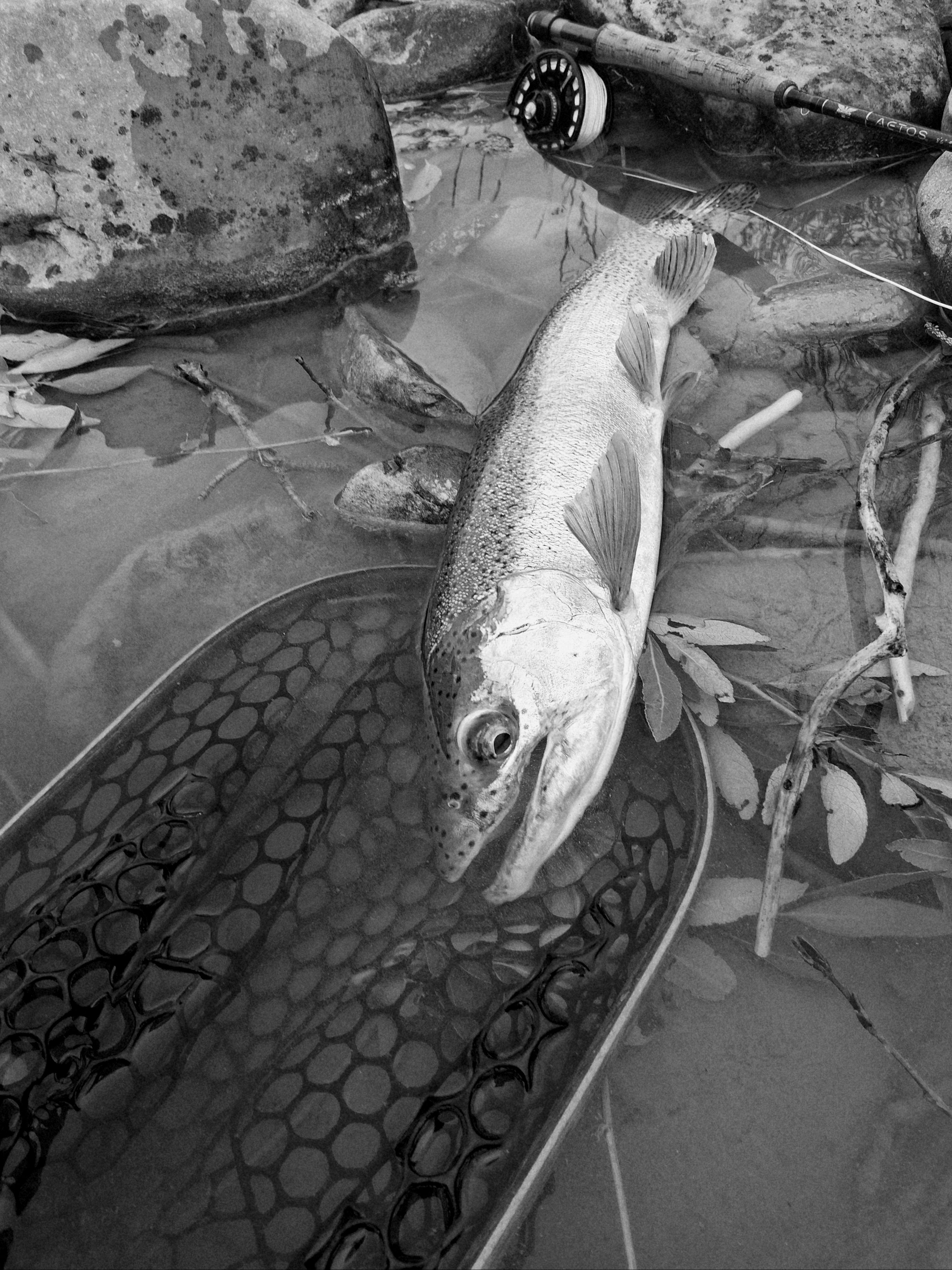
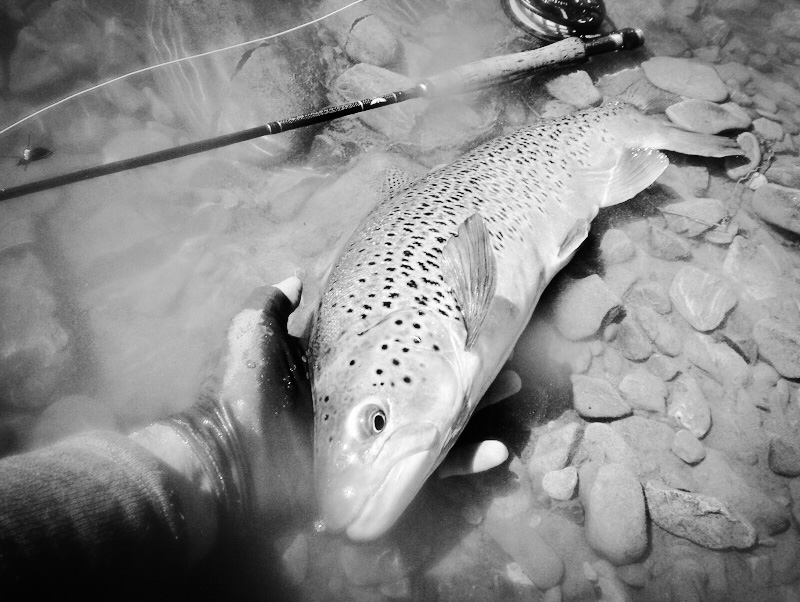
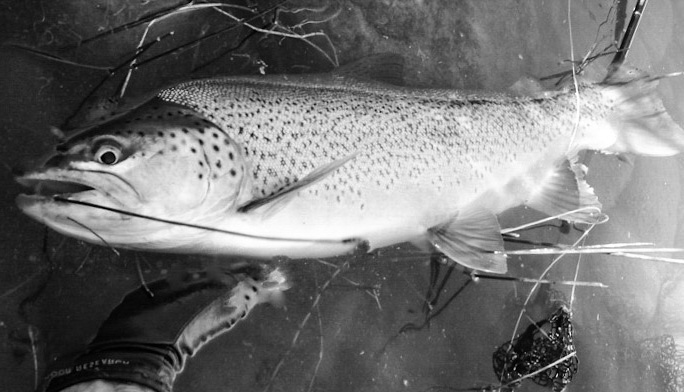
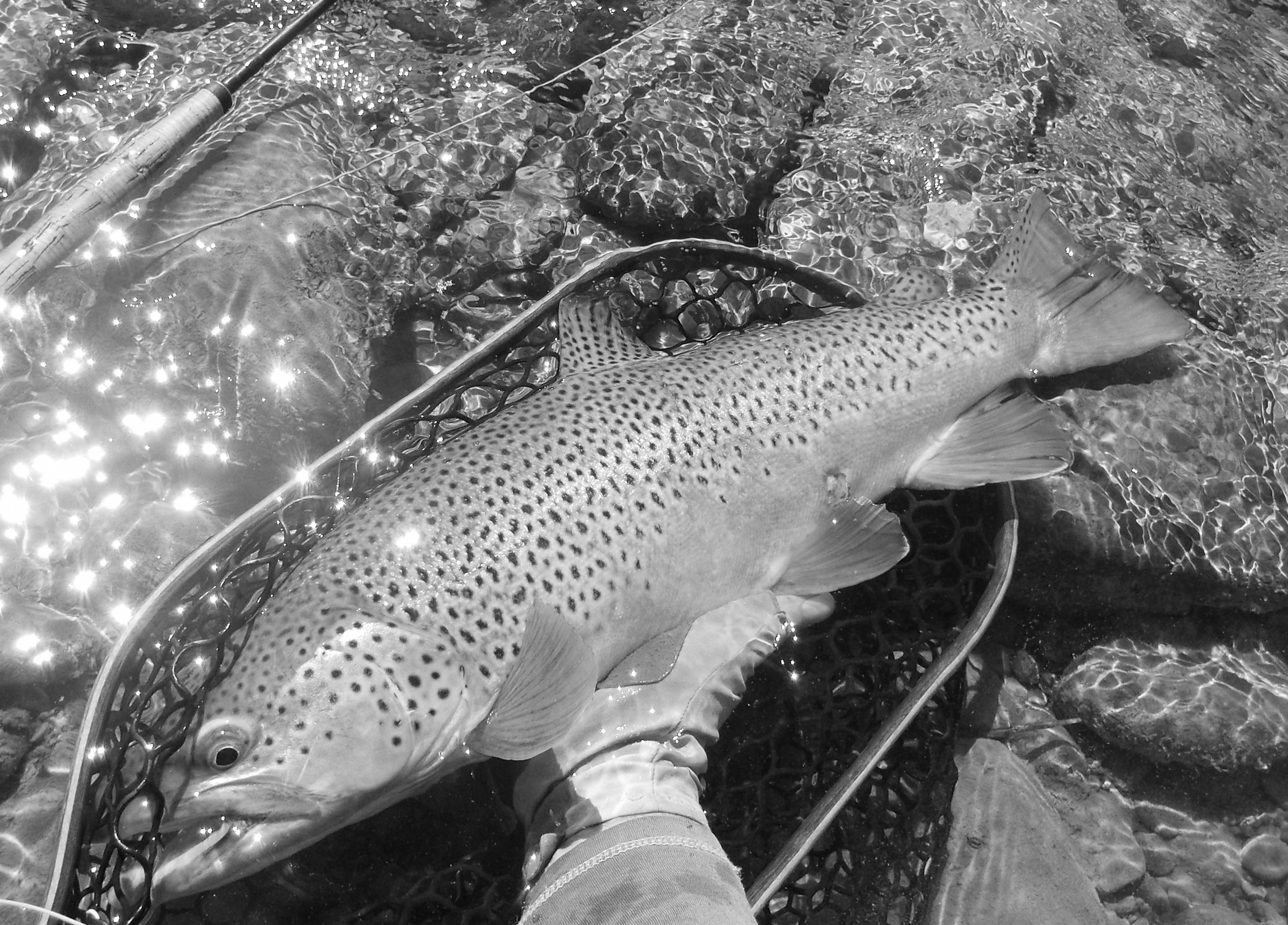
Here’s an Autumn colored Brown trout that I caught on a size 18 Olive pattern with a black polypropylene wing.

This is where…

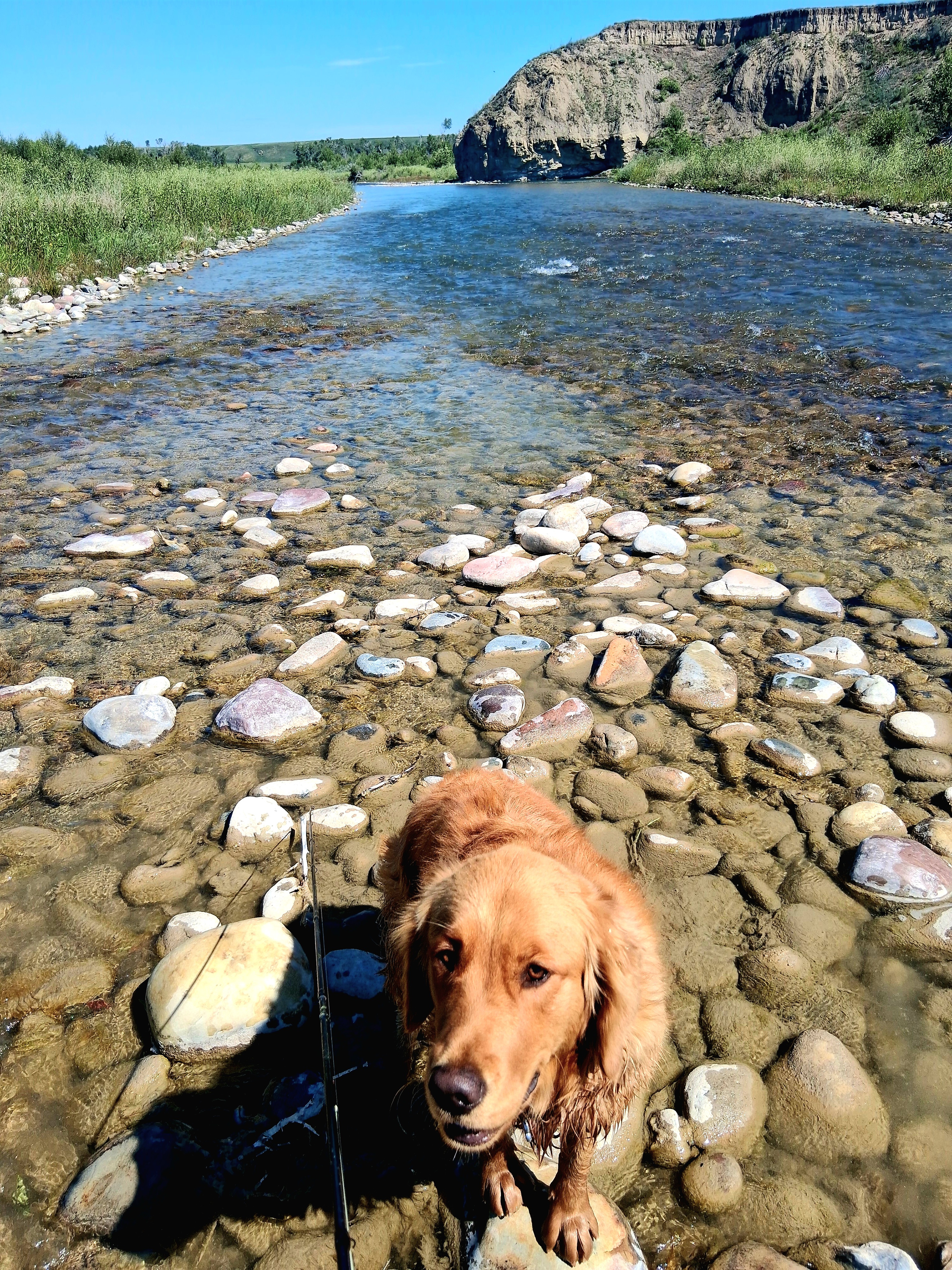
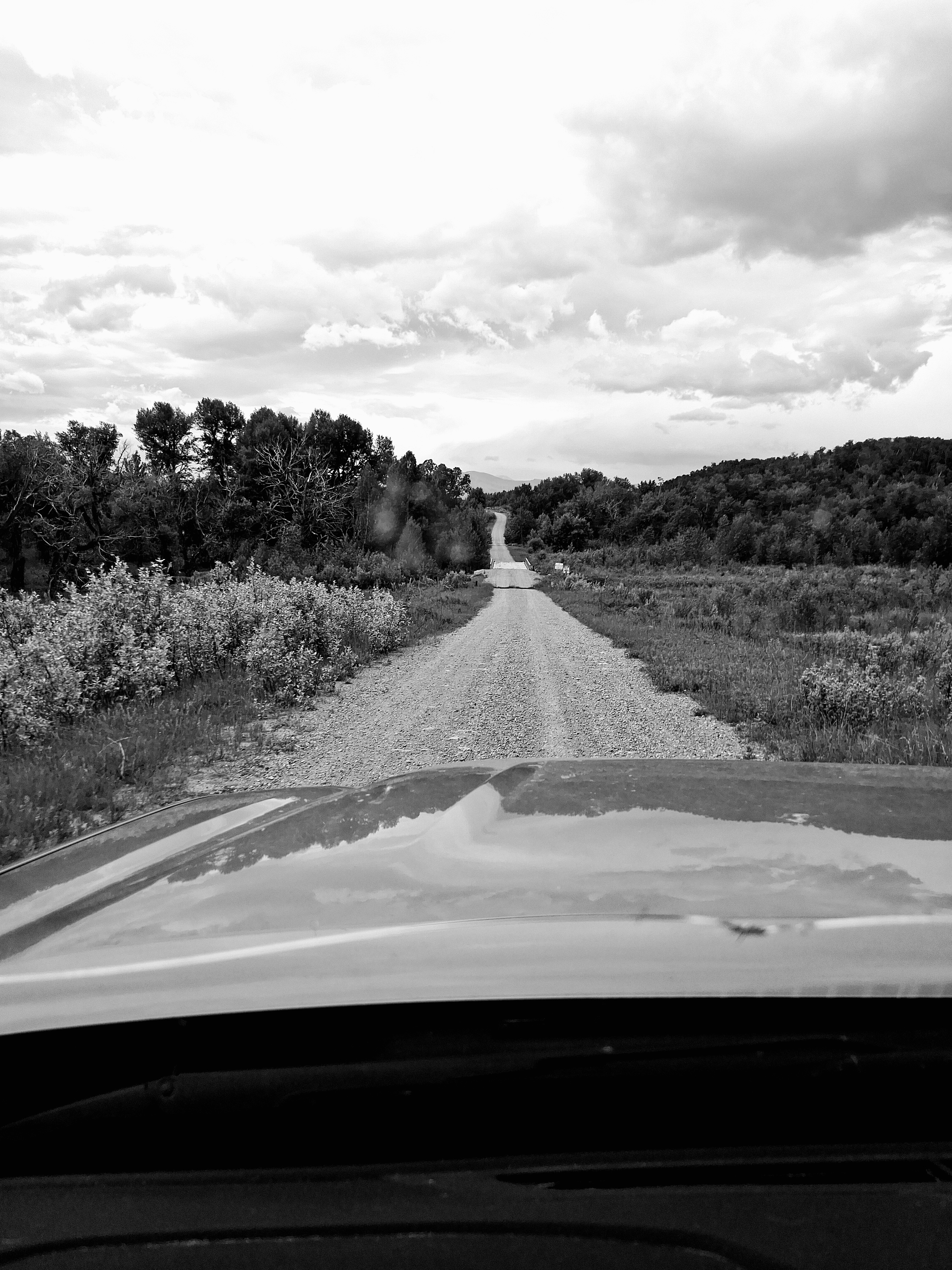
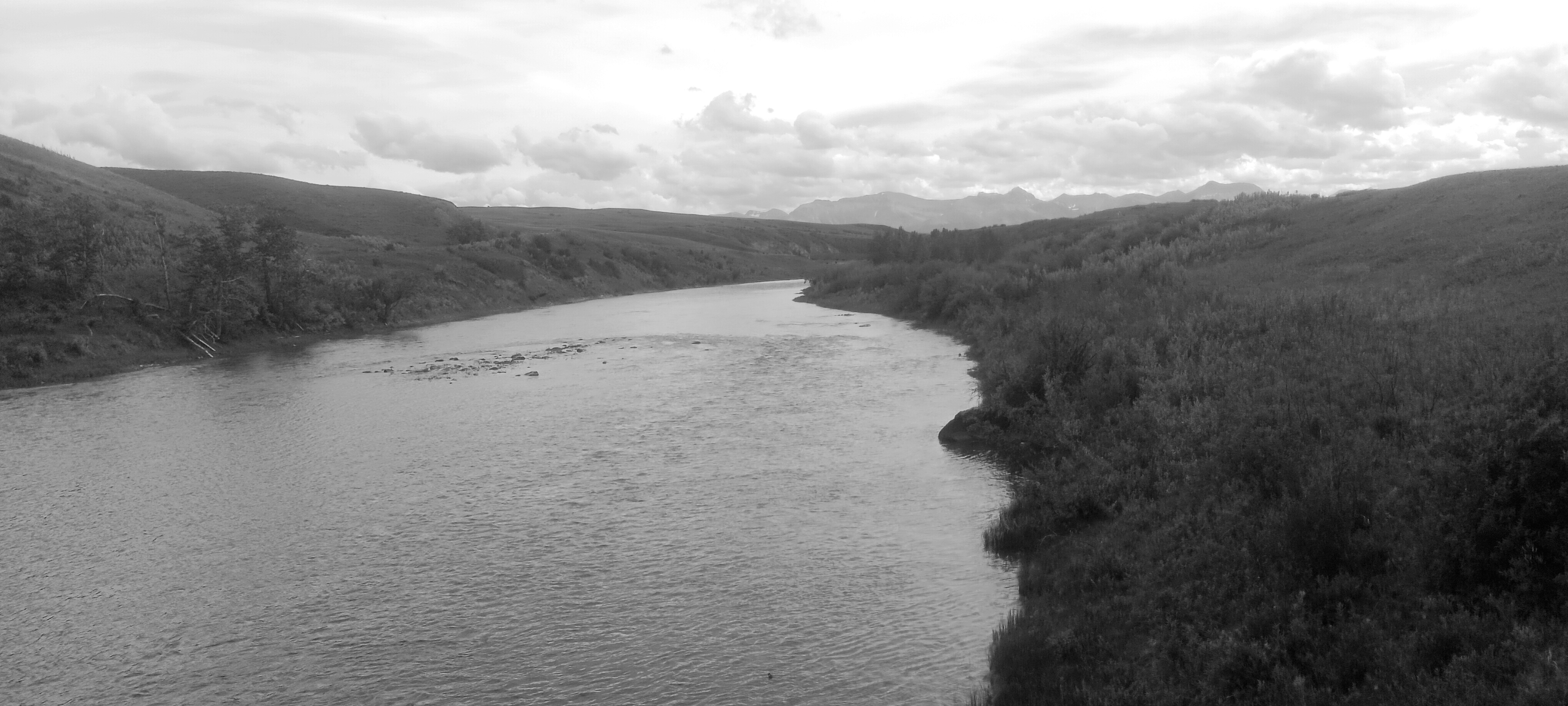
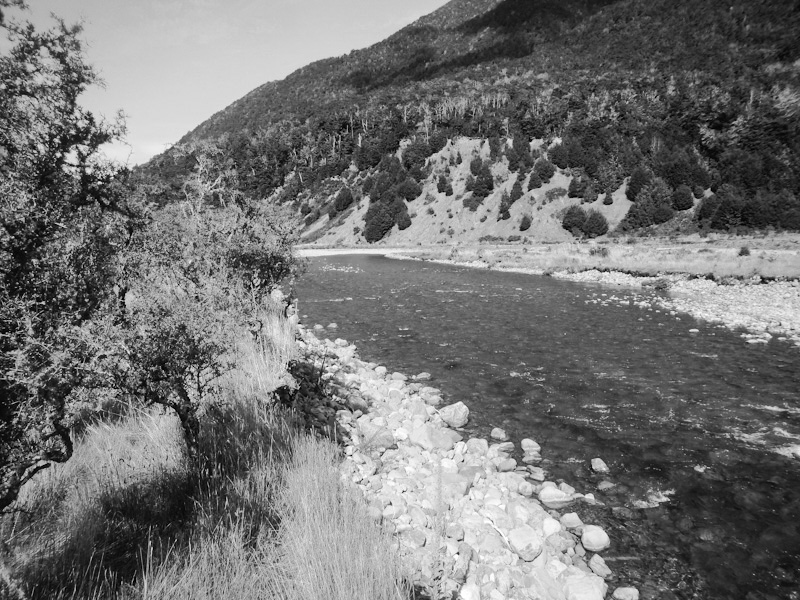
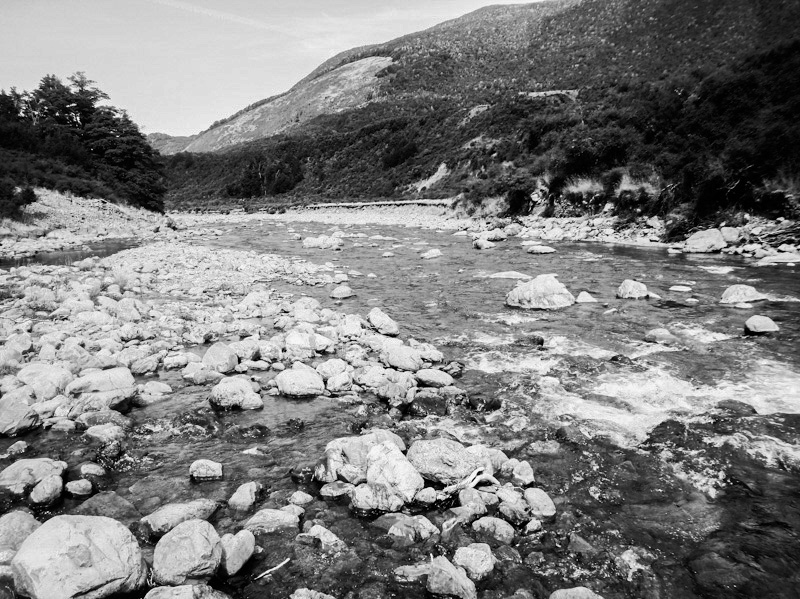
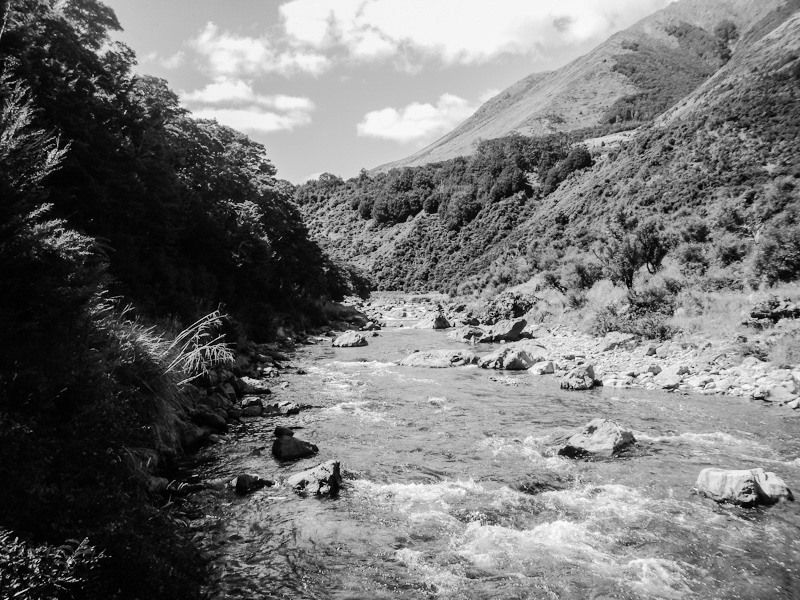
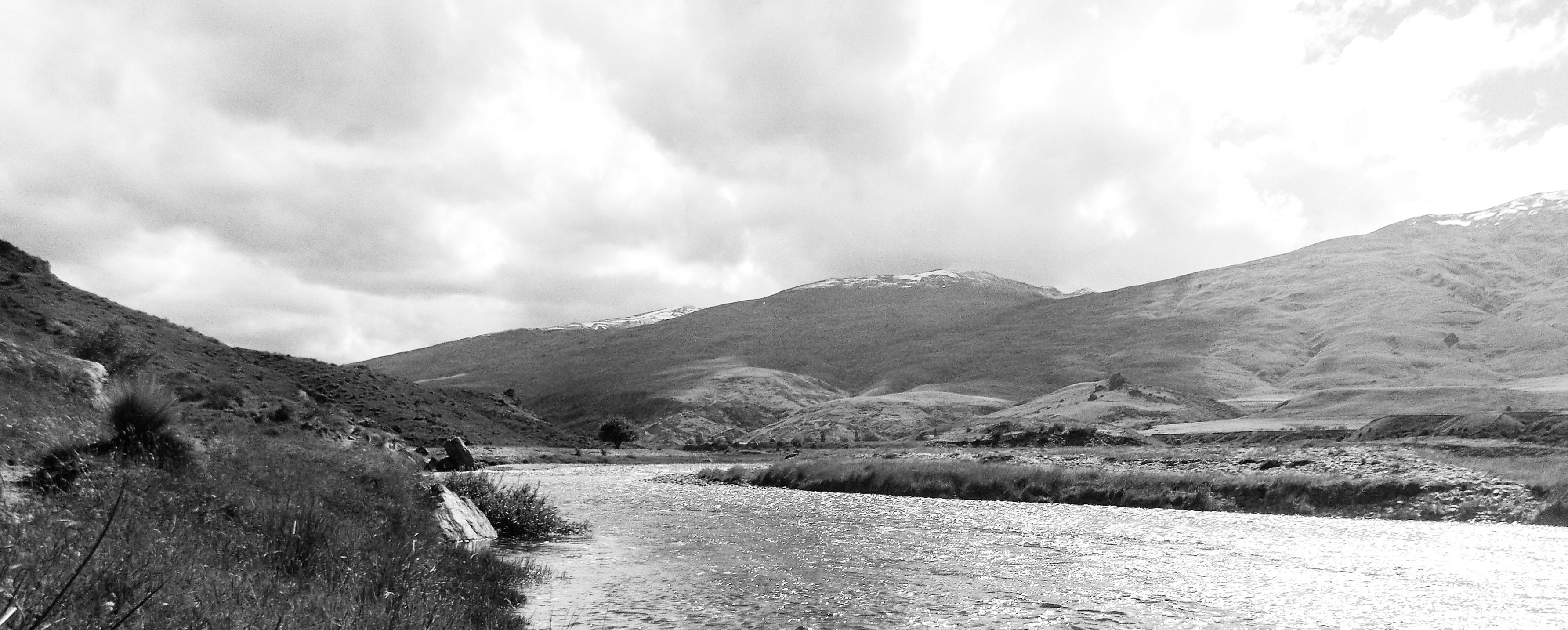
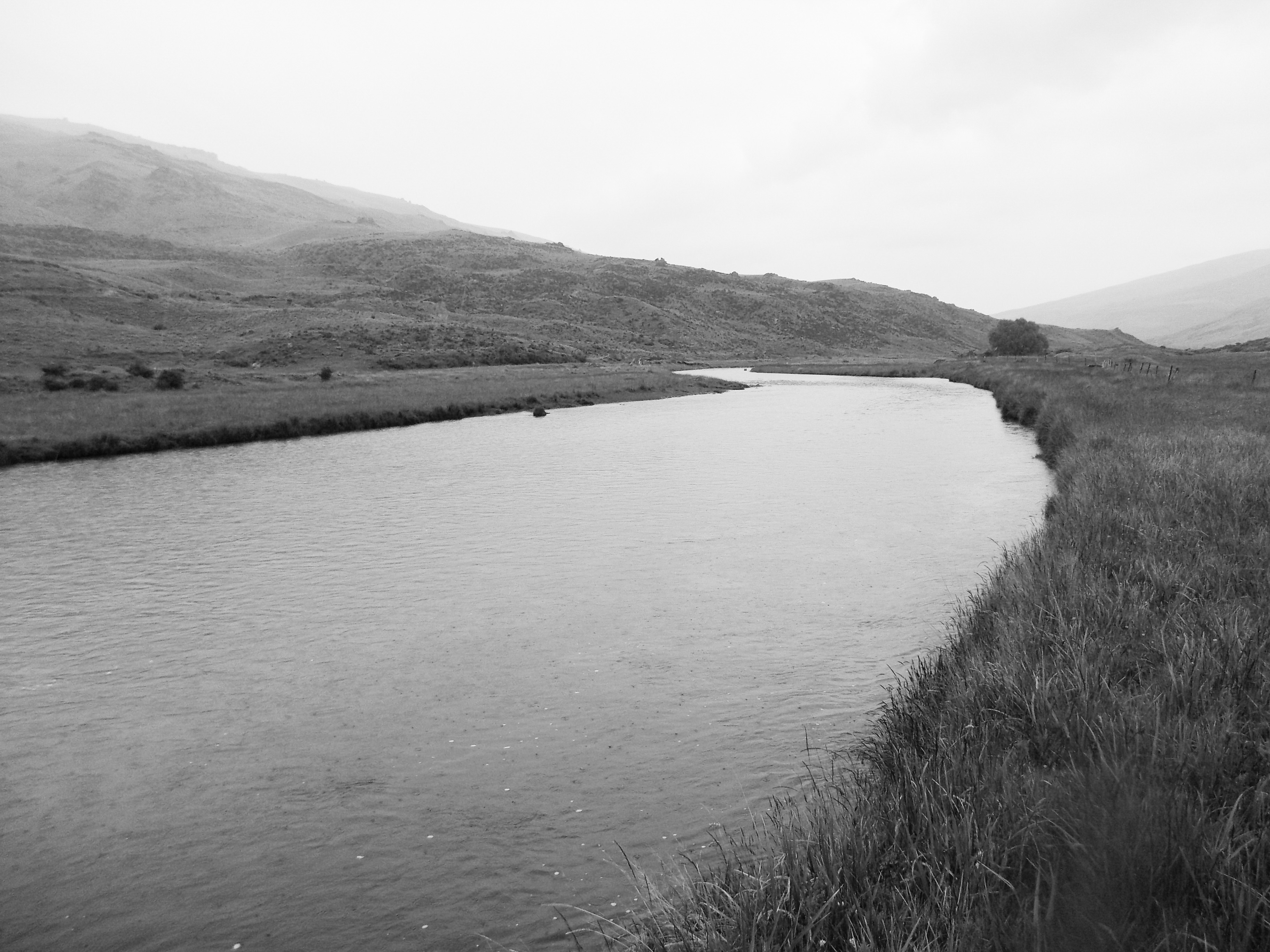
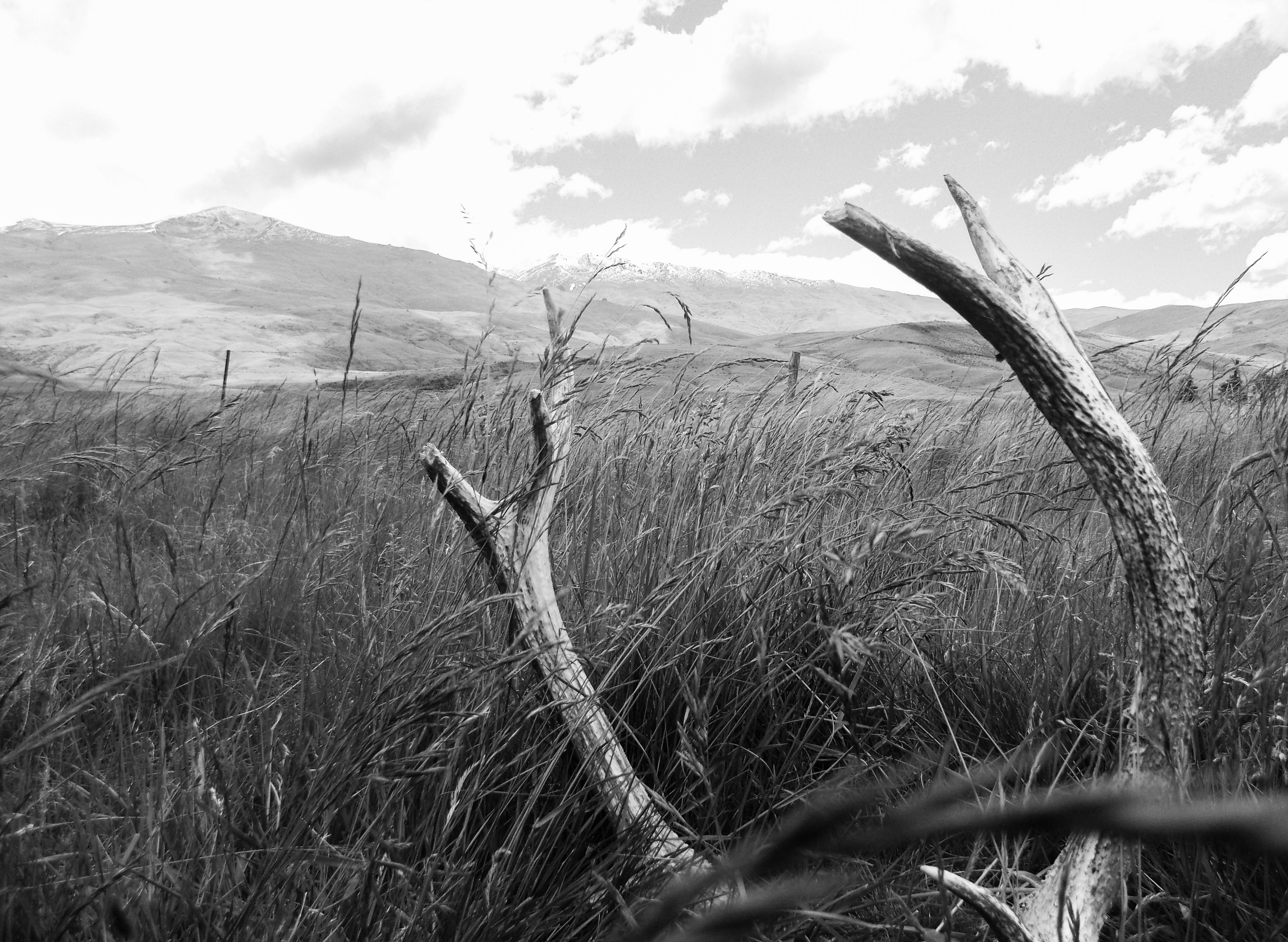
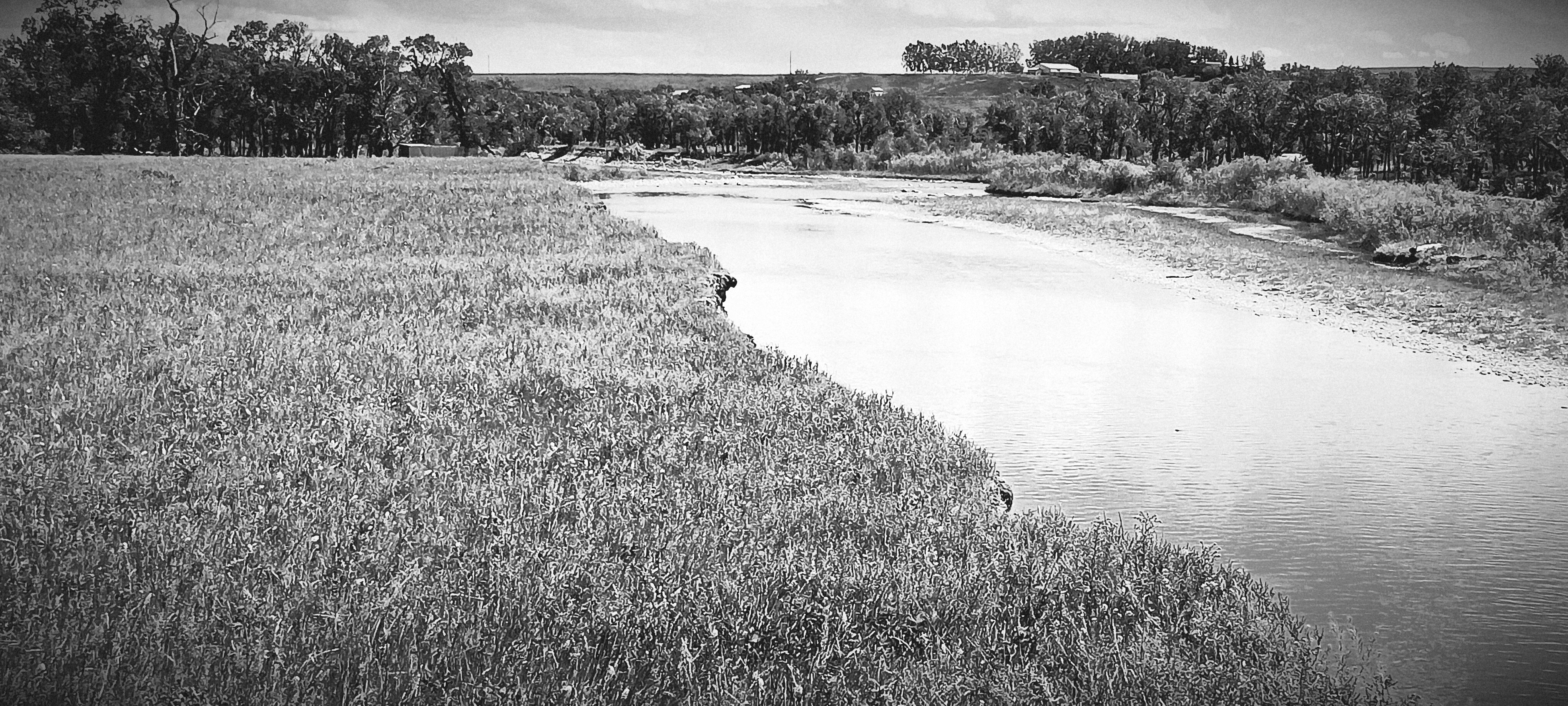
This is where I covered many miles of river the other day. Mostly along its bouldery edge. Walking on round rocks all day is an art. I usually take shortcuts between river pools on the softer ground through the Cottonwood forests, meadows and brush in the river valley in order to get a break from the boulders. However, I didn’t this time as it’s wild berry season. There’s a bumper crop of Saskatoons this year. And bears love to feast on them.

The pools on this river are far apart and there’s not much fishable water between them, so you have to cover ground. You keep telling yourself “maybe the next distant pool has a good fish in it” and you rock-hop onward. The river holds a few quality trout so that’s the incentive to keep going mile after mile. It’s kind of like fishing New Zealand. There can be great reward for your effort, or sometimes not. That’s the deal.

I spotted a few fish with the sun overhead but mostly “fished the water” (prospected). I tossed a large black foam beetle. I had to twitch it to get the best one of the day to take notice and rise off of the bottom.

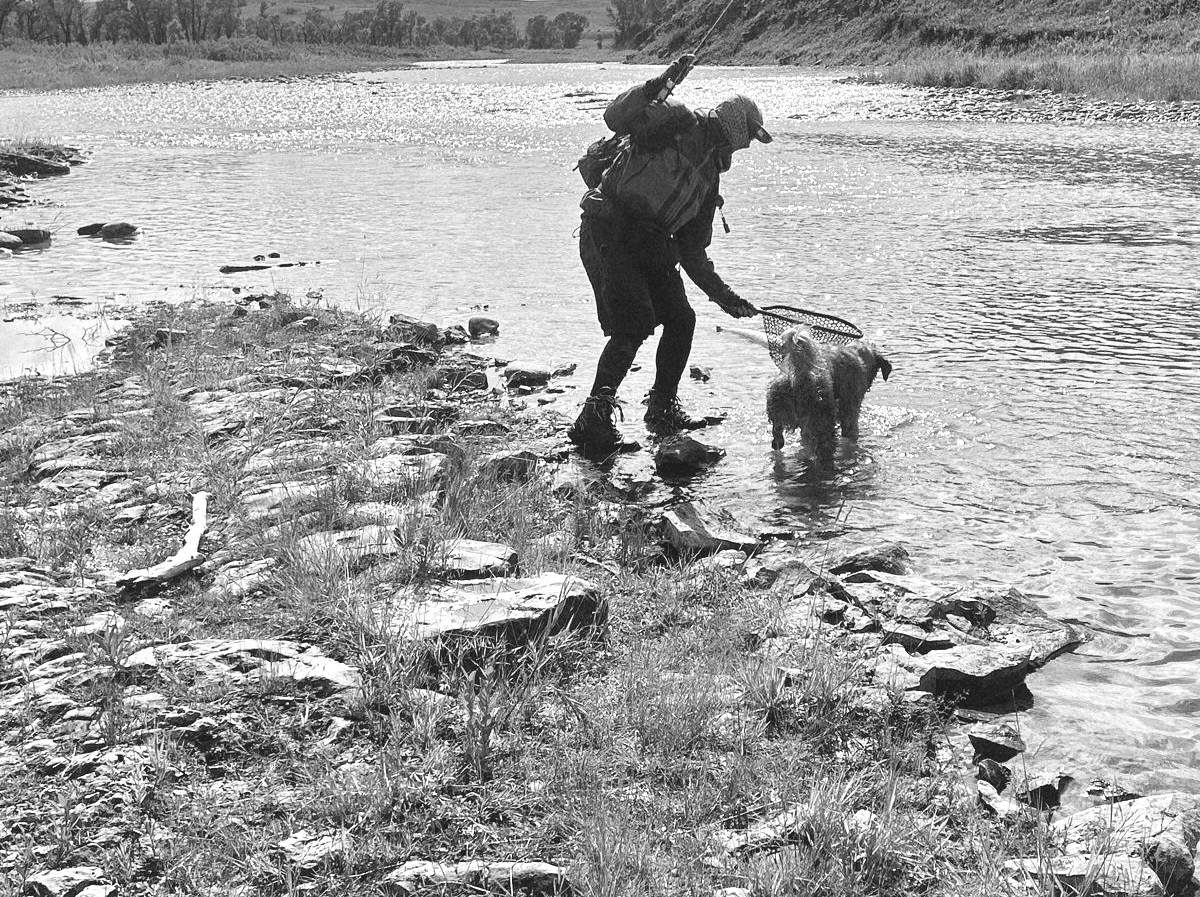
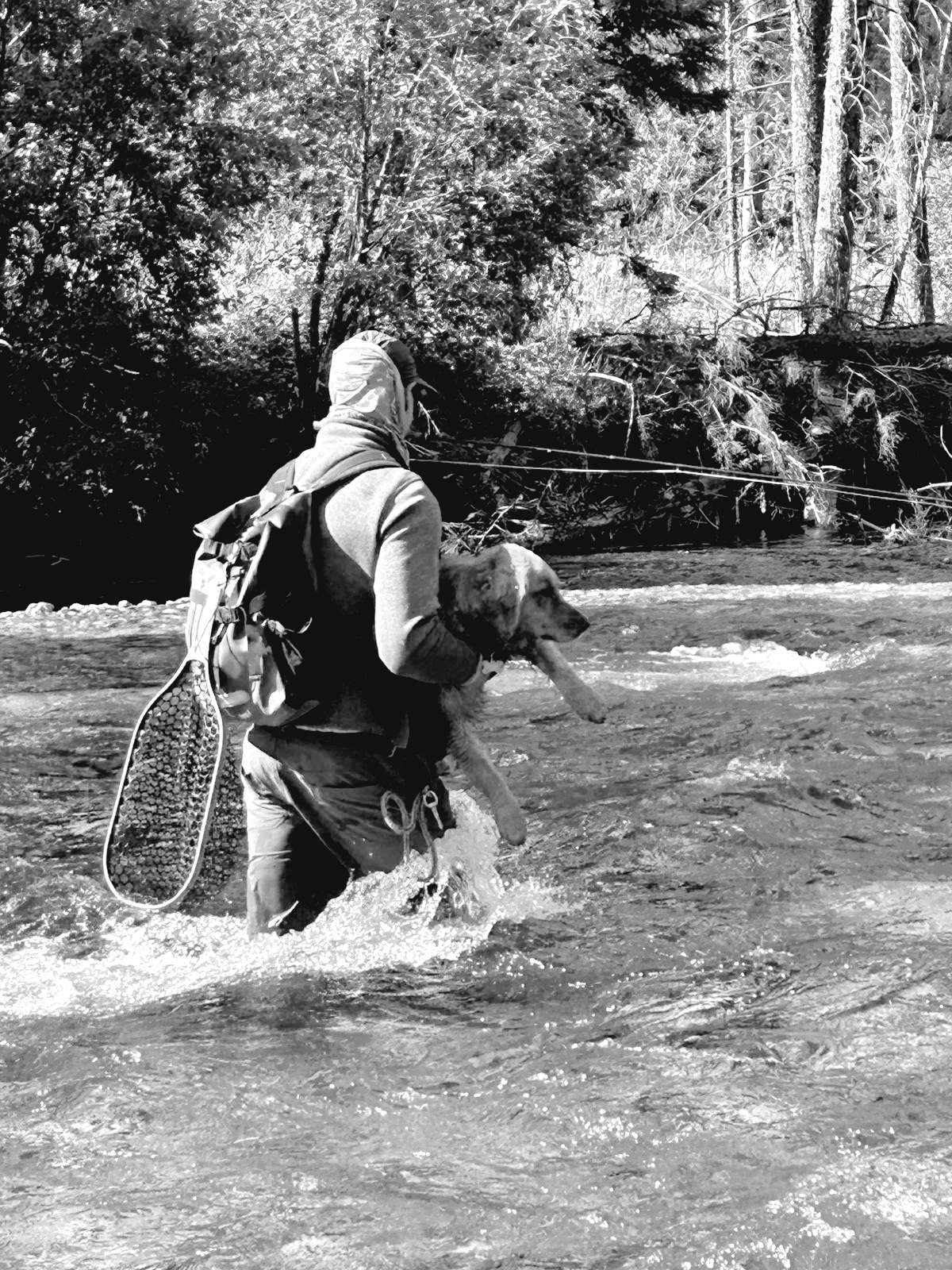
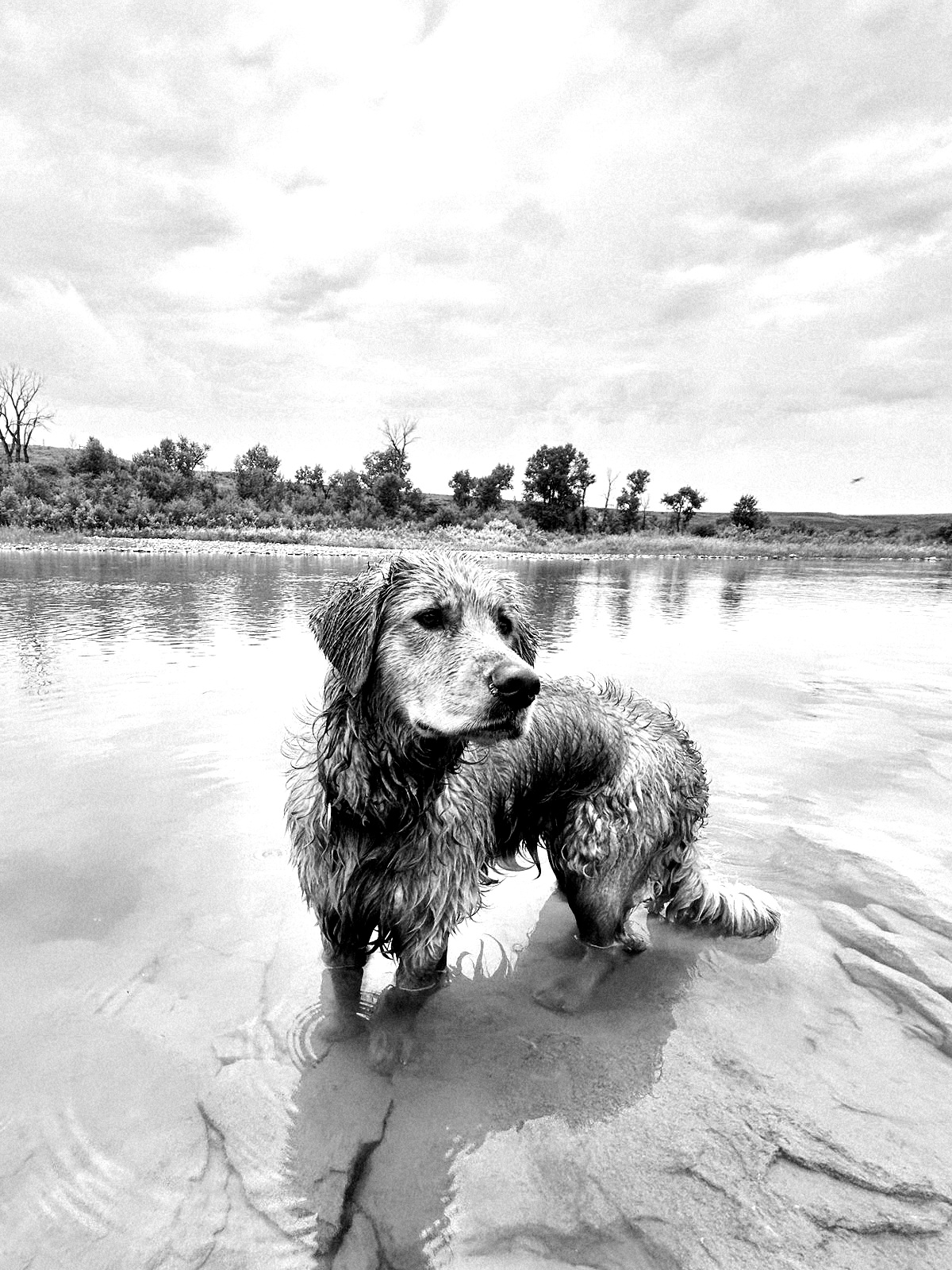
Before I know it my water bottle is empty, lunch and snacks are all gone, my shadow lengthens, and Harper, my dog, curls-up and naps riverside. It’s the sign(s) that it’s time to turn around and head back downstream; back to my vehicle.

While walking back I remind myself this is where Dinosaurs once roamed. This has long been the home of the Blackfoot. This is where giant prairie Grizzly bears wandered. This is where Buffalo once lived and travelled freely.

This is where I spent my day…

“It might happen”

” When preparation meets opportunity, luck happens”.

roman with a fine brown trout

Nine days of wandering around rivers. We went east, west and south. We never went north. It’s kind of a gong-show up there anyway. Too many campers, too many camping riverside, too many 4-wheelers, too many anglers, too many casting treble hooks, too many mangled fish, too many… For six of the nine days there were few bugs around; no real hatch. The insect apocalypse theory remained intact. It was mediocre dry fly angling in the beautiful sunny weather. Then the Weather Network and Environment Canada predicted a few days of cooler weather, cloud cover, rain or at least thundershowers. I checked a third source, AccuWeather. It reported the same. All weather sources were aligned and it meant a very strong possibility of daytime low-light conditions with precipitation. I thought, “It might happen”: the chance of a solid daytime hatch and fish up. Trout generally feel safer rising for insects when the dimmer switch has been dialed down.

brown trout

So on the first cloudy day I put on my rain jacket and headed for a river where I felt there was potential; where “It might happen”. I had not been on the one I selected for a month. Around mid-day birds started swooping and darting over the river. It looked like a hatch was developing and then shortly after it exploded. The main insect: Pale Morning Duns (Pmd’s). And the trout responded. They were up everywhere. Boils and bulges at the head of pools and sipping fish eating duns in the mid and lower pool sections. I got lucky. I got more than lucky as the event lasted for 3 or 4 hours.

rainbow trout

On the next cloudy day I returned with a friend, Roman. It was cooler and wetter. There was also thunder and some lightning. We got there just before noon. We waited and waited. There were showers all afternoon. We walked from pool to pool in order to stay warm. I wondered if it was ever going to occur. An old Yiddish adage came to mind, “Man plans, and God Laughs”. Then at around 3-3:30 pm, three hours after our arrival, the birds started working the river, Pmd’s began to emerge and fish started to rise. Big guys and gals. A repeat performance. Just delayed and briefer probably because of the cooler weather. The fish continued to surface even when the sun occasionally broke through late day. The brown trout glowed golden in the late afternoon light. After being wet all afternoon we appreciated the sun’s warmth. Then when the river became fully illuminated by the sun, it all stopped. The trout disappeared: “Now you see me now you don’t”. Like magic.

photo by roman

fast water carry, photo by roman

If you fish a lot you know it doesn’t always happen this way. Some rivers are easier to predict than others but in the end when dealing with Nature there are many uncertainties; many unknowns. Sometimes everything seems perfect but you don’t get a solid hatch, you just get wet…but that’s all part of it.

rainbow

harper, photo roman

So, “It might happen” ended up “happening” and we caught and released some wonderful trout on size 16, 18 Pale Mornining Duns…here are a few images…

pmd flies

some color

Tailwater tour

There are three tailwater rivers in my region. On Opening Day I visited two of them to see what kind of shape they are in. Due to another low snowpack year the reservoirs that feed them are low. Early season fishing will be okay but late season it might get ugly: minimal flows, and if reservoirs come close to bottoming-out then silt will be in the water which will affect the sight-fishing.

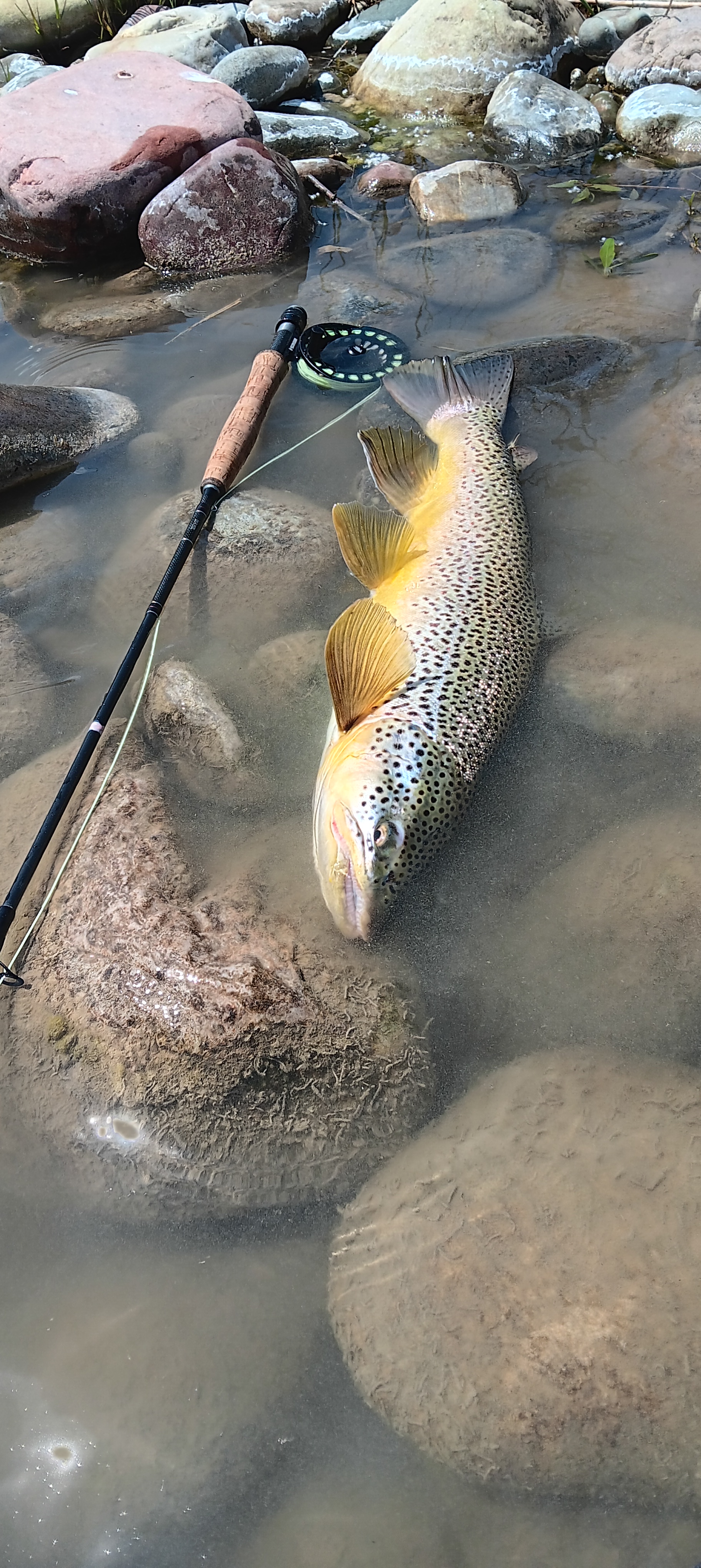
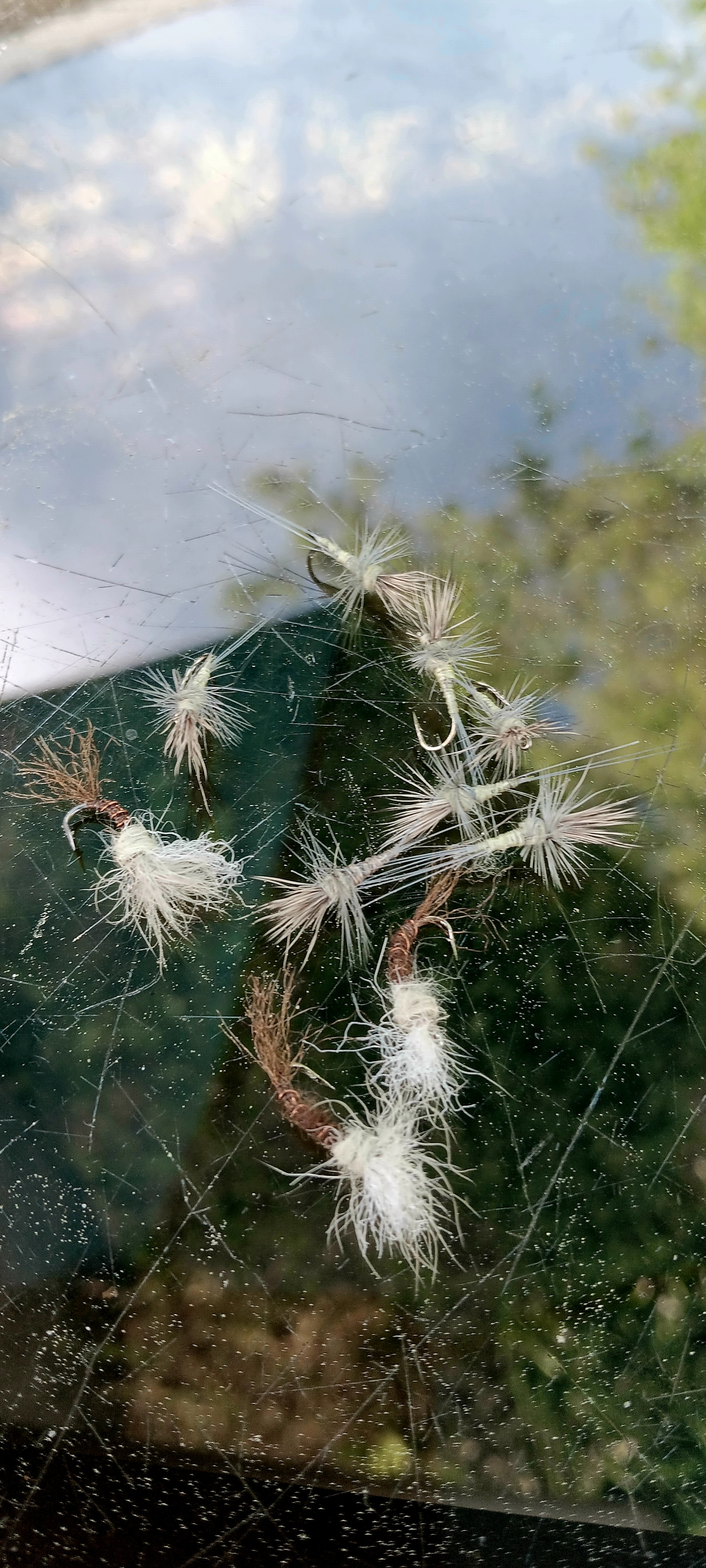
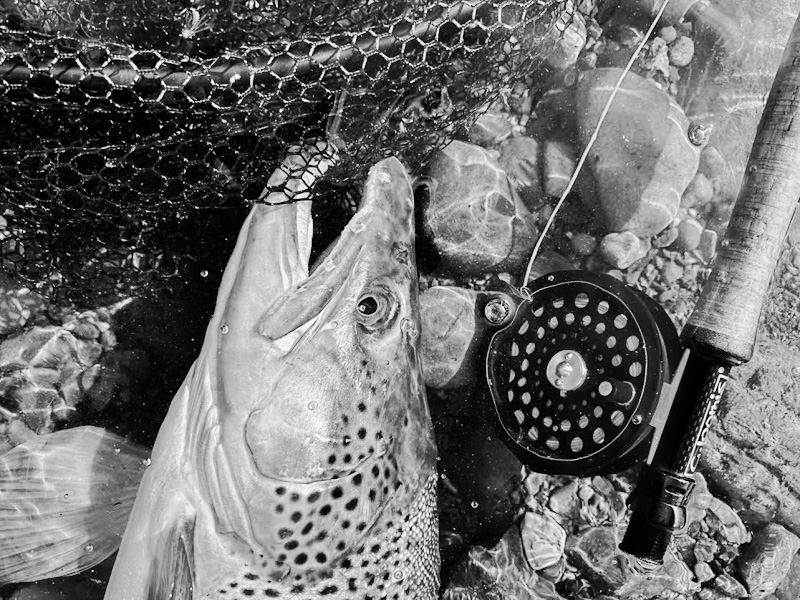
One tailwater had no insects so I went to the other. PMD’s started in the afternoon on the second river and there were some large Caddis flies skittering on the surface. Both hatches were weak but there was just enough activity to get a few decent rising fish. The water was low and clear and the fish concentrated. I caught a couple of decent Brown trout on dry flies. One cooperated for a photo, the other didn’t. Here’s a photo of one and the type of flies I used. One pattern breaks the surface and dangles (emerger/dry). The tuft of white is simply Snowshoe Rabbit to keep the head of the fly afloat so it can be seen when riding in the current/riffles while the body hangs (unseen) below. Instead of rabbit I also tie them with polypropylene, deer hair or CDC. Some people use foam. The other pattern has the hackle clipped on the bottom and therefore it sits or rides low on/in the water. Kind of a Quigley cripple pattern. That’s the inspiration. Both are easy, quick flies to tie.

Opening Day… always special no matter how many you have experienced.

open road

Stetson named one of their hats, Open Road. Probably paying homage to the wide open West. Here are some images while fly fishing out on the Open Road… eleven days, three rivers in search of brown trout, a growing pup and a roof top tent on my truck. No Stetson or Cowboy boots. Instead, a ball cap and aging Simms wading boots. All trout caught on foot, with my eyes and on dries…

brown trout on small beetle
sage brush
mastering an angler ladder
a spring creek

checking out the hatch
5lbs plus brown, I’m in creek up to my suspenders, hoisted him on grass bank, quick shot.
angling crossroads

tailwater brown trout

tailwater brown trout

brown trout camo
calm creek
true color

some rainbows on the way home

Self-Guided Fly Fishing New Zealand-5th Trip

Photo by Roman

Sight-fishing in New Zealand is simply the best. Endless Rivers with clear water and robust challenging brown trout and some rainbows too. All you have to do on most flows is be willing to walk, sometimes significant distances, and search for them. You use your legs, and you use your eyes. If you are pretty good at spotting trout you’ll probably find one or two in a day, occasionally several. It depends on the river. Fish numbers on average tend to be low in comparison to home (North America). You have to cover water in order to find them but at the same time you have to go slow or you might scare the few fish that inhabit the water that you have selected. Choosing where to fish in New Zealand can be overwhelming as there is so much water: rivers, streams, lakes and ponds. In the past I’ve used John Kent’s book: South Island Trout Fishing Guide. Anglers consider it the Bible. Even though I have an older and well travelled edition (2002) I find its description of rivers and their fish populations amazingly accurate. There are newer (updated) editions which can be purchased and of course there is a lot of information online. Maybe too much…

The fish I encountered on most rivers were wary. This is often the case if you go late in the fishing season (as I did) when there has been angling pressure for over several months. The trout season in New Zealand is a long one: from October 1st to the end of April. One river I fished this year in the North Canterbury region had some of the most cautious/vigilant trout that I’ve ever pursued. Stumble or slip a bit when wading into casting position even in rumbling fast water 30 feet behind a fish and their lateral line would detect it. They’d respond by moving-up into the deep fast flow at the head of a pool for cover. Crawl down a bank in order to get behind a good fish and a rock rolls and careens off of another, even at great distance from the targeted trout, Adios fish! Slap your line a bit when trying to punch your fly into a fierce wind and fish gone…bye-bye! Unforgiving. 

There was a noticeable absence of terrestrials on this trip, including Cicadas, even though it was late Summer, early Fall. I became aware of this as I spent a lot of time crawling on my knees and belly streamside in order to avoid detection while stalking fish. Getting trout to take a surface offering was at times challenging. Sometimes a strange New Zealand dry fly pattern called a Blue Blow fly or Blue Bottle fly did the trick. I also caught a few on beetles and ants but not consistently. On some rivers the fish were “locked into” feeding on nymphs. I saw very few mature mayflies or caddis on the surface in spite of angling a variety of rivers and rising fish were a rarity especially higher up on some flows (not unusual). New Zealand is always challenging. It’s why I come here to sight-fish. It’s the walking. It’s the hunt. It’s demanding. Each connection very special.

Roman with great brown caught on willow grub


Very few fly shops in NZ, South I, this had some basics: flies, tippet, a line or two.

Some imagines. Some connections made by Roman, a friend, and I on a thirteen day self-guided angling adventure in beautiful New Zealand, South Island… 

brown caught on ant, photo by Roman

searching upper river, photo by Roman

canal sipping brown on ant

swing bridge crossing river

working dogs in town on back of pick-up

Roman’s, beefy 7.5 lbs plus brown, best of trip, photo by Roman

Roman’s brown, check out girth, photo by Roman

many miles of tough walking and wading

small creek near campground/holiday park

brown on beetle

intact banks, good place to hunt for large trout

they are always thick…

freestone water

big head on one of Roman’s great browns, photo by Roman

Some color:


Ankle Deep

Ankle deep water… that’s where I have been angling the last several years. That’s where I search for fish. It’s in the thin water, the skinny water, the almost nothing water. Just a foot or so deep, sometimes just inches. Catching them in the clear nothing is never easy. In the shallows absolutely nothing goes unnoticed. Angling mistakes get magnified. Your mantra: Stay low, go slow. Sunlight helps you search the shallows for that elusive shadow that is gliding in from the deep to feed.

The shallower the better. The closer the better. The more visual the better. The more challenging the better.

Ankle deep…

Here’s a fine brown trout caught in the shallows on a simple (flat) black ant pattern (size 16) I tie. Local rivers have dropped and most are clear. Trout are starting to look up and take dries…

Doves and a Brown Trout

Doves were behind me in amongst the riverside willows and cottonwoods. Cooing while foraging the river valley floor. I never saw them. I never looked for them. I just listened while watching the water for trout. Their distinctive sound gave them away. Unmistakable. A mourning sound some say. A soothing sound I say.

It was the first real calm after days of howling wind. And with the stillness; with the low ceiling and low light; with the threat of drizzle; and with the sound of Doves, there was the possibility of rising trout. Maybe even a good one.

Doves behind me. Possibilities in front of me…

a brown trout on a dry fly

a wet dog (abby) on gravel bar mid river
a classic reel

places


Places. Special places. We all have them. They resonant with us for personal reasons. Many of mine are places with water, clear water, and fish. Places like the Salmon river in Malone, New York; a stream below an old covered bridge in Powerscourt, Quebec; a particular side channel on the Missouri river in Montana; coastal La Ribera, Baja; a Snook beach along the gulf coast, Florida; the Crowsnest River, Alberta. Some of the best brief, and not so brief, moments in my life have been standing, toes wet, in the middle of these places. Another such place is a river in New Zealand (NZ) that I wrote about it in my blog two years ago: https://troutondries.com/2017/11/18/high-plateau/.

In the High Plateau post I said there are rivers in NZ where I have caught bigger fish and rivers where I have seen more fish but in my mind the high plateau is still the most special. It’s the austere beauty of the place; it’s the wide open, wind swept, rolling grassland terrain the color of wheat, yellow ochre, and my golden retriever; it’s the long slow flat pools and bends; it’s the fact that I have to use all of my angling skills and sometimes fish to almost perfection in order to make a connection there; it’s the extreme wariness of the trout in the wide open land where an angler has no place to hide; it’s the challenge of the place…
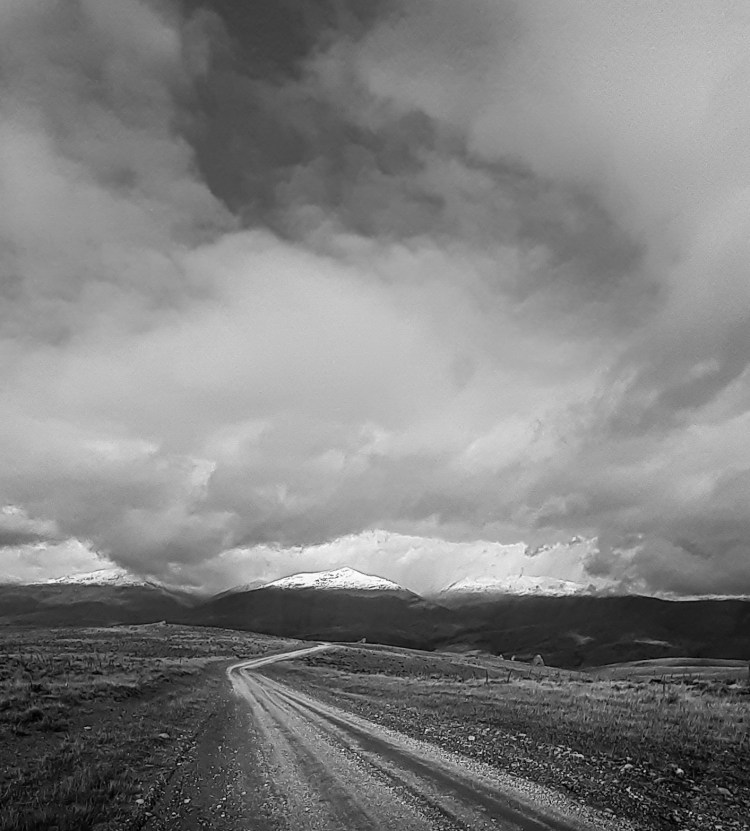
This year I was fishing six hours away from the high plateau at the opposite end of the South Island.  Due to flooding and road closures I was unable to visit it the first week. However, every day I checked its flows. I checked and re-checked morning and night. They were always high; less than ideal. The river would drop. My optimism would rise. Then the flow would spike and all hope would be dashed. The route up to the high plateau is also a scary, switchback dirt road with no guard rails. With the heavy rain the region had been experiencing I knew it would be muddy and slick. I’ve driven it before in wet weather. I wondered whether I could make it up there. All year I had planned to return. I even rented a more expensive AWD vehicle to make the journey. I hoped to fish the sections I’ve been on in the past and then cover a few spots that I have never tried. Man plans, God laughs…

On my second week of the NZ trip I decided to venture south to the high plateau knowing that my chances due to conditions (continued rain) of catching a good one on a dry fly would be slim to none. And that proved true. I made the long drive crossing one raging river after another on the way down. The large glacier fed lakes I circumvented were white-capped, ocean like looking in temperament, and threatening to flood the roads and tourist towns on their edge. The wind blew, the clouds were low, and I drove through storm after storm. I got a tiny cabin rental at a holiday park for the night and then early the next morning I tackled the muddy, slippery switchback road up to the plateau. What normally takes me thirty minutes took one hour. But I got there. I brought along extra food, water, warm cloths, and my sleeping bag in case I got stuck and had to wait for things to dry out. My first day there it rained. It was cold for summertime. Snow collected on the hills that fringed the river valley. Surprisingly, water clarity wasn’t too bad but it was much higher and faster than when I fished it in other years. Many pools I had fished in the past weren’t really pools due to the higher flow. I knew of one exceptionally big and long pool, with a back eddy, where I thought I might find some slow, flat water and possibly a rising or cycling fish if  insects showed.

On the east side of the pool there is high ground. I’ve sat up there and watched the whole pool when conditions were ideal: blue skies and sun. No such luck my first day. I still went up. I could see into the water on my side of the river so I sat there and watched. Wild Hare grazed above and below me, most not noticing my presence. Eventually I spotted movement in the eddy: a large yellow toned trout feeding mainly below but occasionally rising. It was in the curl back of the eddy facing downstream. Sometimes, however, it would turn around and face and feed upstream. Its behavior suggested there was food but not enough for it to stay in just one tight feeding position. Due to its unpredictable movement approaching and fishing to it would be tricky. However, it was feeding and therefore I had a chance. And a chance is what it is all about.

cold on the plateau


When I dropped down from my perch I lost sight of the trout because of the grey skies and reflection. I had to wait for a rise. I chose an upstream position as most of the time the trout was looking downstream. I stayed real low, hugged the ground and waited for the a rise and then placed a small ant pattern nearby. I watched my impression and studied the mercurial surface for floating insects. There were some dark mayflies. Slightly larger than a Blue Winged Olive (BWO). I spotted a few even larger mayflies. Some but not a lot.
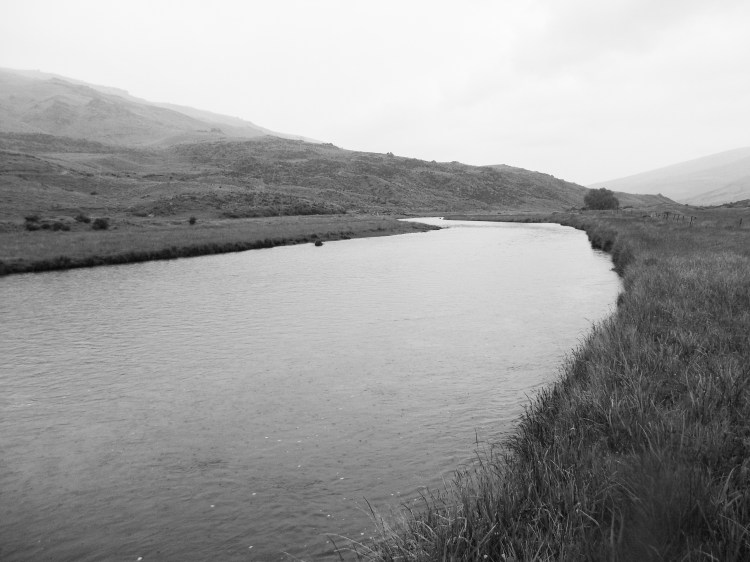
There was no response to my ant pattern so I let it drift back, gently picked it up and put on a size 14 BWO, tied parachute style with a black post for visibility. I waited for the fish to rise again and then tossed my second offering. I did this two or three times and then the rises stopped. I waited awhile then went back up to my perch to see if I could spot the fish again. After some time I located it. It was still in the eddy but down deep. I waited and watched but it never surfaced again. Eventually it disappeared. I had my chance. Day one.
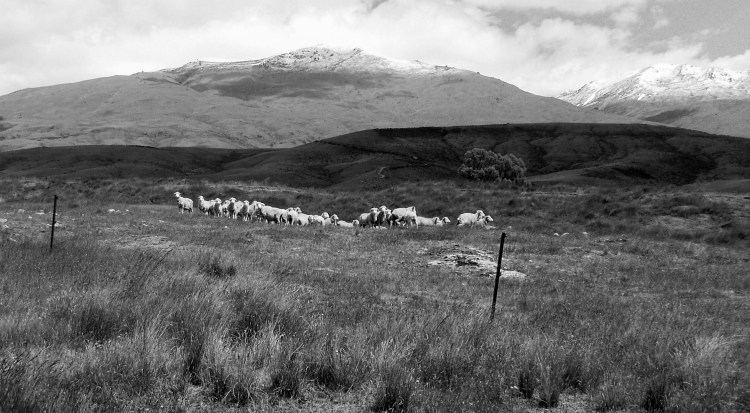
I drove the slick winding descent home to my cabin and that night dried all of my gear with the little electric heater provided. Next morning it was sunny and I waited awhile for the road to hopefully dry-out. By mid-morning I made the journey back up to the plateau. This time it was a mix of sun and cloud. The wind was howling when I got up to the river. Flows were even higher due the previous day’s heavy rain. There was a car at the bridge so I drove on. As I passed through a large sheep station another car caught up to me. When I stopped to open a station gate the occupants of the car, anglers, asked me where I planned to fish. I told them. They said they’d fish the beat below me. I drove to the same location as the day before, however, there was a shiny pick-up truck with two long rod holders on its roof at the parking area. I arrived too late. In past seasons I’ve rarely seen another angler on the river. I usually have the water to myself. It’s one of the attractions of the place. Not so today. I would have to fish the top beat, which meant fast pocket water and rapids. With all the rain and high water it wasn’t a good sight-fishing option. I spent a fruitless morning on it and then drove the road back downstream at noon to see if the other anglers were still around. Their cars were gone so I jumped on one of the lower beats but saw nothing the rest of the day. That was day two.

On the way back to my car I spotted a rabbit that obviously had been crushed by an ATV. The nearby large sheep station appears to have been promoting tourism: a high end farm-stay type of business. I noticed they had half a dozen high performance looking ATV’s parked in a straight row outside of the guest accommodations. I had observed many tire tracks along the river something I had not seen in past seasons. Why they’d allow their guests to drive riverside, I don’t know. There are endless opportunities in the nearby hills. Tire tracks and ruts along a river are always disappointing to see. I’ve seen this scenario before at home. Mud ruts form, get deeper and grow, and fill with standing water. Subsequent riders follow the same path. The gouges don’t heal. They become permanent. The place starts looking used, abused and just plain ugly.


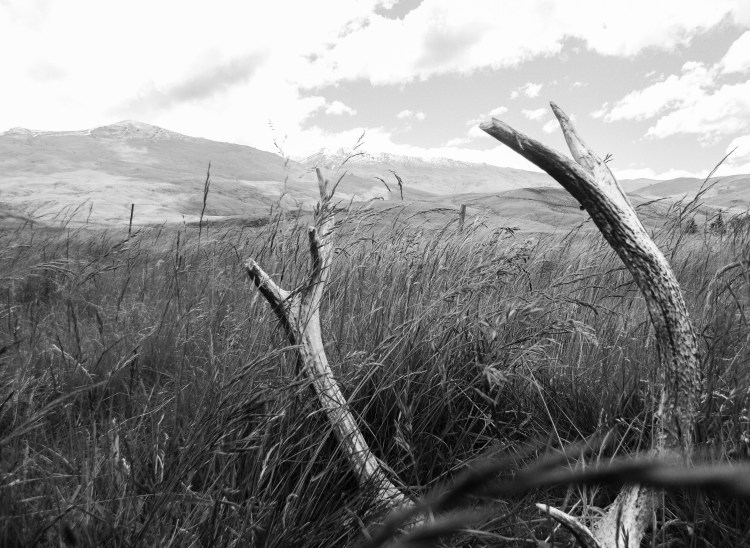
The third day I got up early and got to the big pool at 7:30-8:00 am. I had the place to myself. No cars anywhere. I had seen spinners hovering along the river the first rainy day I fished it and wondered if there was a morning or mid morning spinner fall. No such luck. The clouds were back but thankfully no rain. I watched the pool all morning. The same bugs hatched in the early afternoon but the fish never made an appearance. The flow was still high. I hung in until late afternoon, watched and when cold walked and checked the other nearby pools above and below but saw nothing. I thought maybe the great trout had been caught the day before and was down deep recovering; maybe it had been harassed and moved briefly elsewhere; I don’t know? I simply couldn’t find it again…

If you fly fish a lot you know that many days are like this, unlike what is generally reported in angling social media, videos, etc. People display their successes (I’m no different), rarely the times when they get ‘blanked”. When sight-fishing sometimes you simply just don’t see much; you don’t have a lot of opportunity; and you don’t catch. Sometimes you simply walk a lot; much more than you want to. Sometimes you get cold, wet, your nose runs and your fingers freeze, or you get blown off the water by extreme wind. It’s all part of it. I could have thrown streamers or chucked weighted nymphs and possibly improved my chances up on the High Plateau. Maybe. Maybe not. But that’s not why I traveled to the plateau.

If you’ve fished for a long time you probably have a fairly rigid set of parameters which you operate by. You try catching in a certain way, pick water that matches your angling style, often fish certain specific/select flies that you like. Your way or choices are no better than any other way people fly fish or fish in general. It is just the place that you’ve come to. It is where you are after a long refinement process. It’s what you seek. It’s what you look for when you head out for a day on the water.
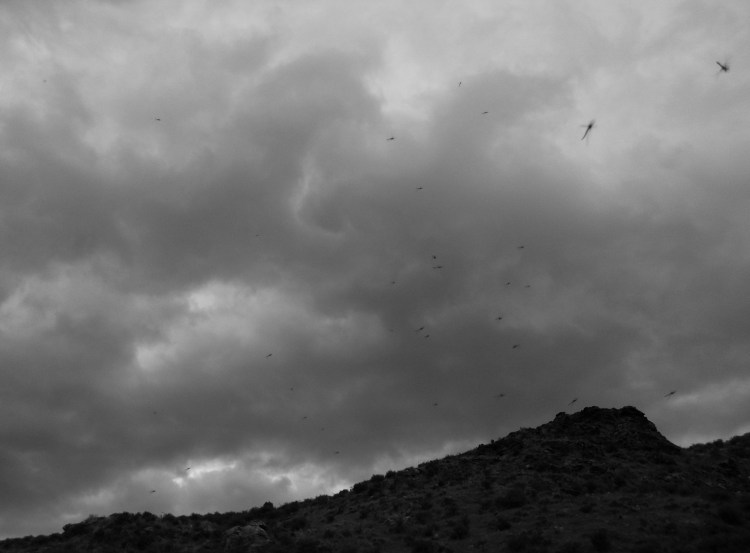
spinners in the sky

Periods of heavy rain were predicted for the next day and the day after. The flow on the river I had fished my first week, six hours north, was dropping and so I decided to make the drive back there late that afternoon. I was, however, satisfied with my return to the high plateau. I got back. I got back and in spite of all the weather adversity I had one good opportunity with one of the river’s large wild brown trout. One opportunity was enough.

The high plateau! Still the ultimate challenge. Still the best place I ever fished. I hope to return some day.

It’s good to have places…


small flies

It’s September and it’s still all about small flies on the tailwater rivers I’ve been fishing all summer long. The occasional trout will grab a big fly like a grasshopper or dragonfly but most of the surface feeding is on the small stuff: PMD’s mainly, some size 18 and 20’s. This hatch is waning.

It has been mostly blue skies lately. No complaints as warm weather is always welcomed. Fishing is better on days with a mixed sky. Trout feed more actively when clouds block the sun and then vanish when the full light returns. Lately I spend as much time watching the sky as I do the river. Here’s a few trout spotted in early September.

size 18 Pmd’s