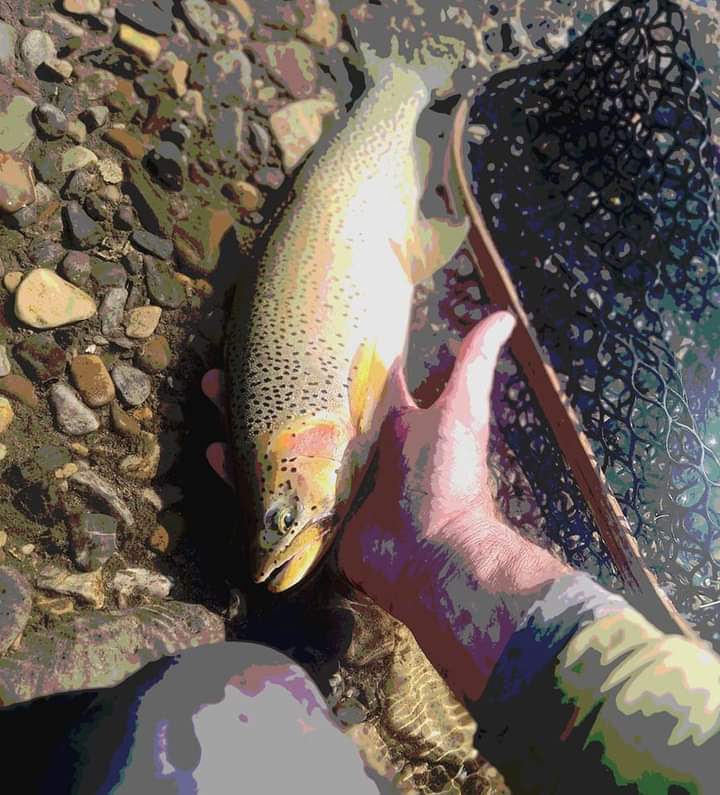
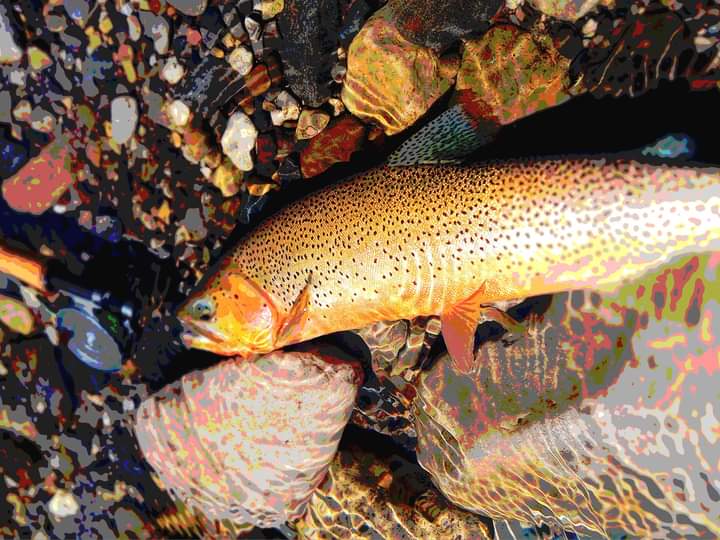
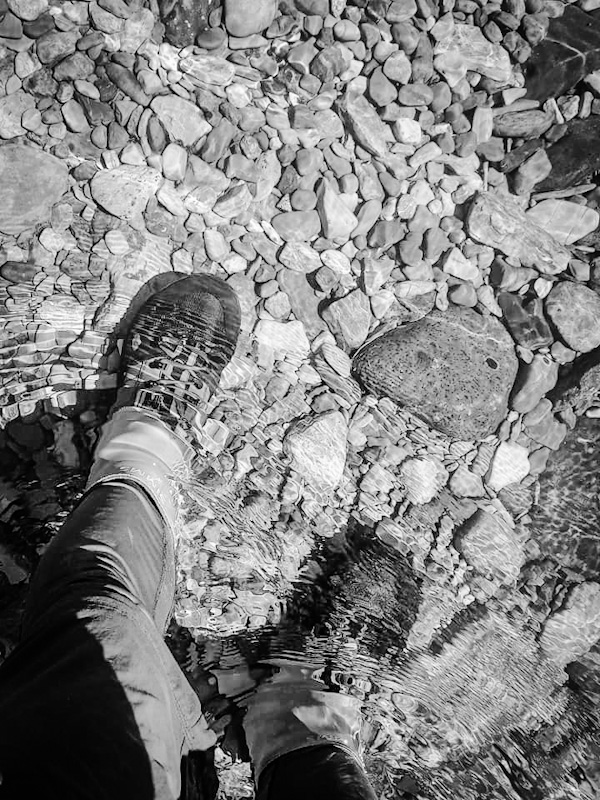
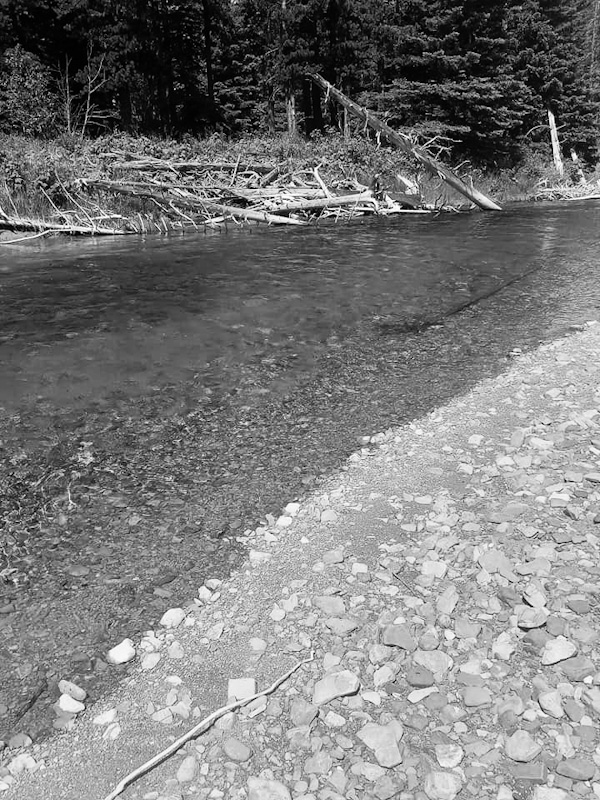
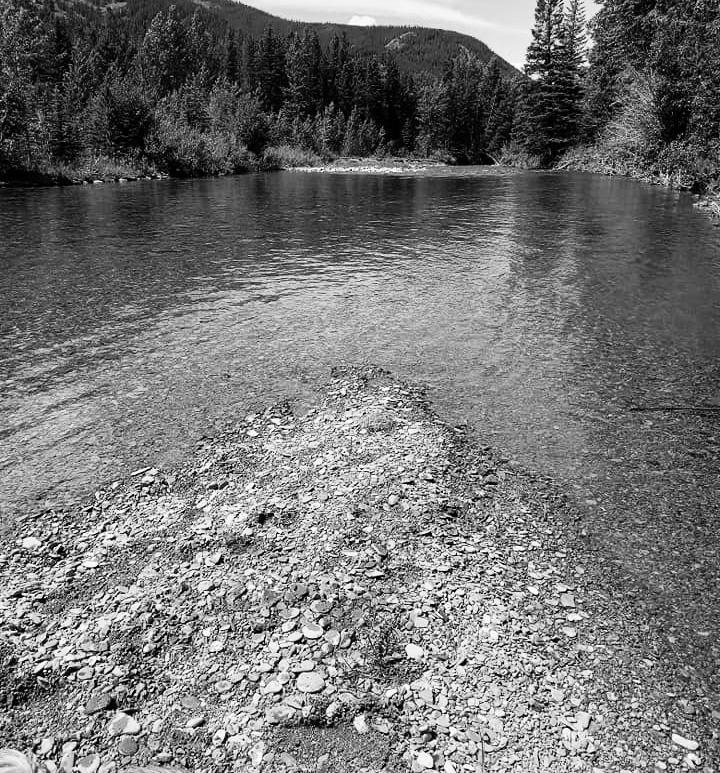
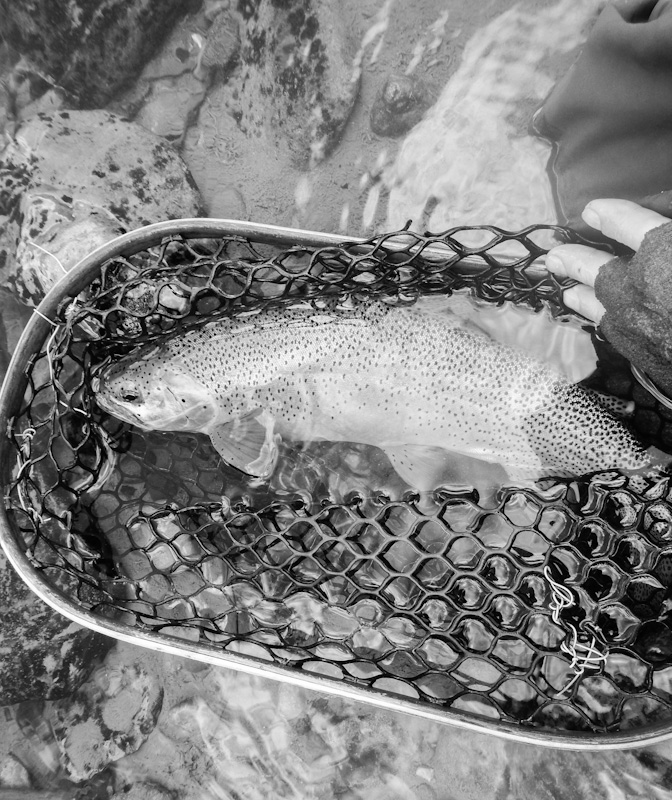
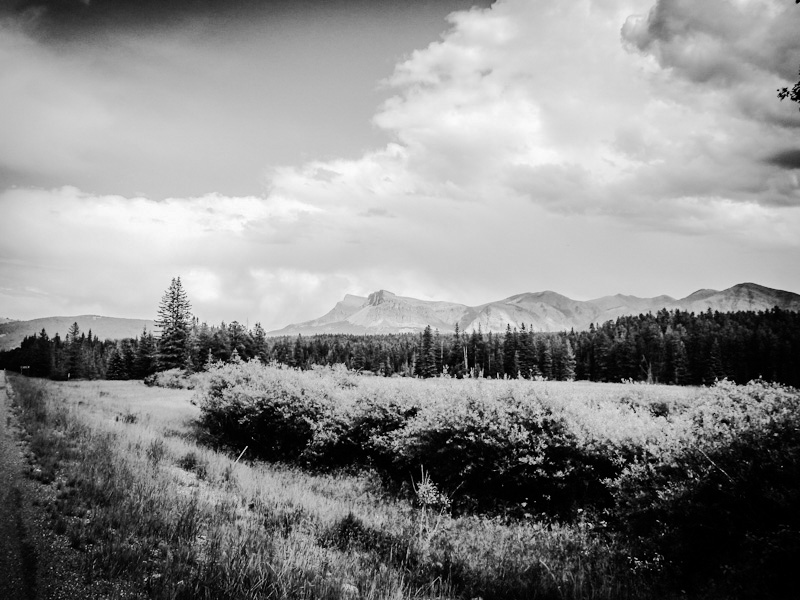
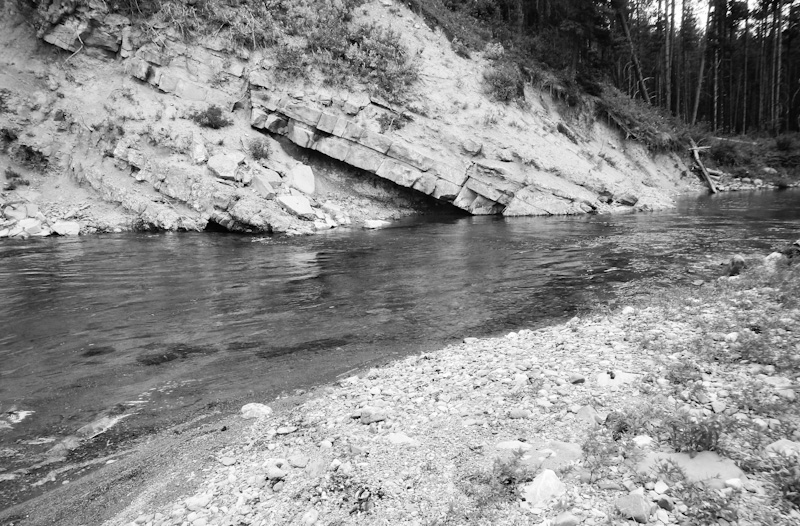
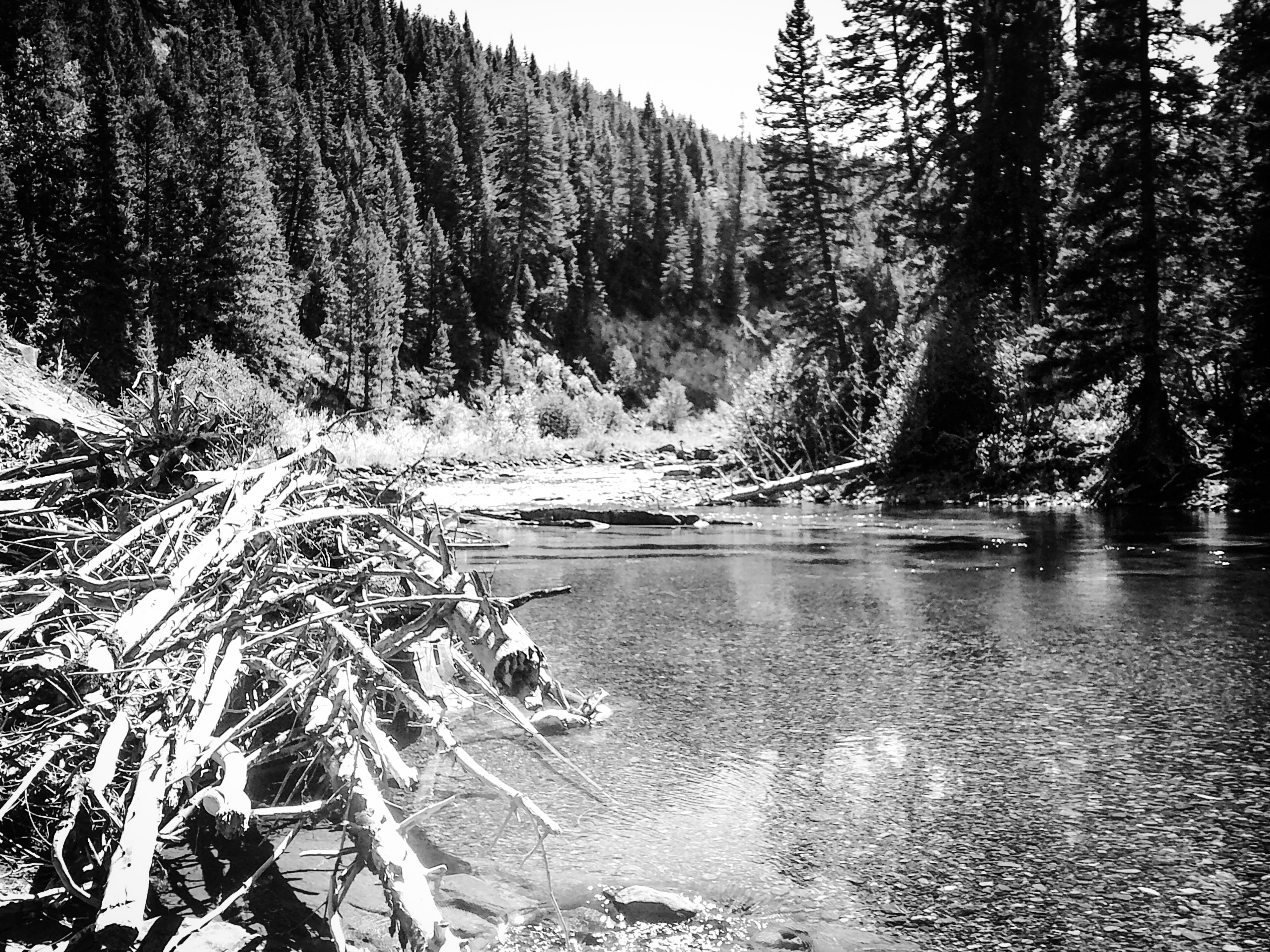
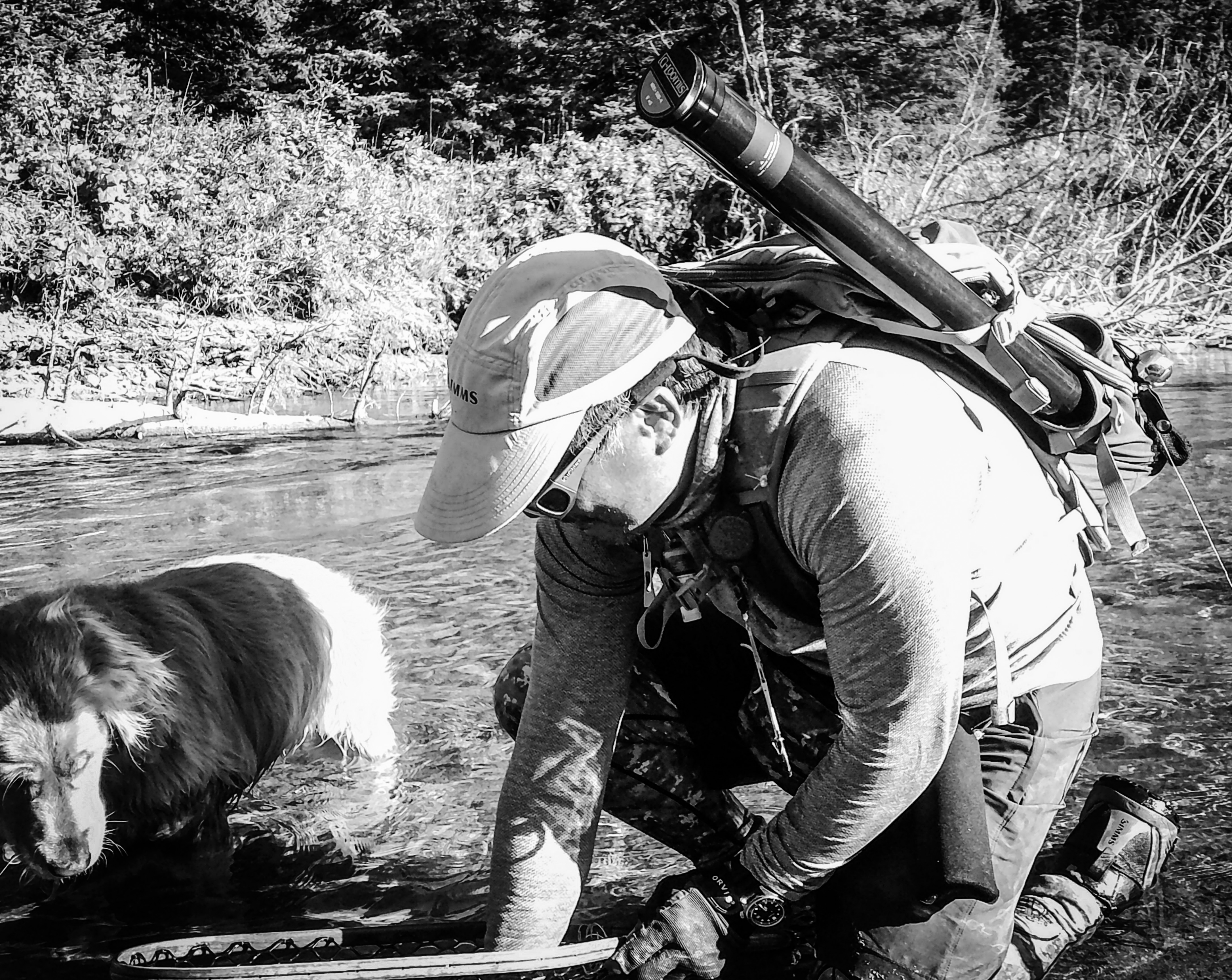
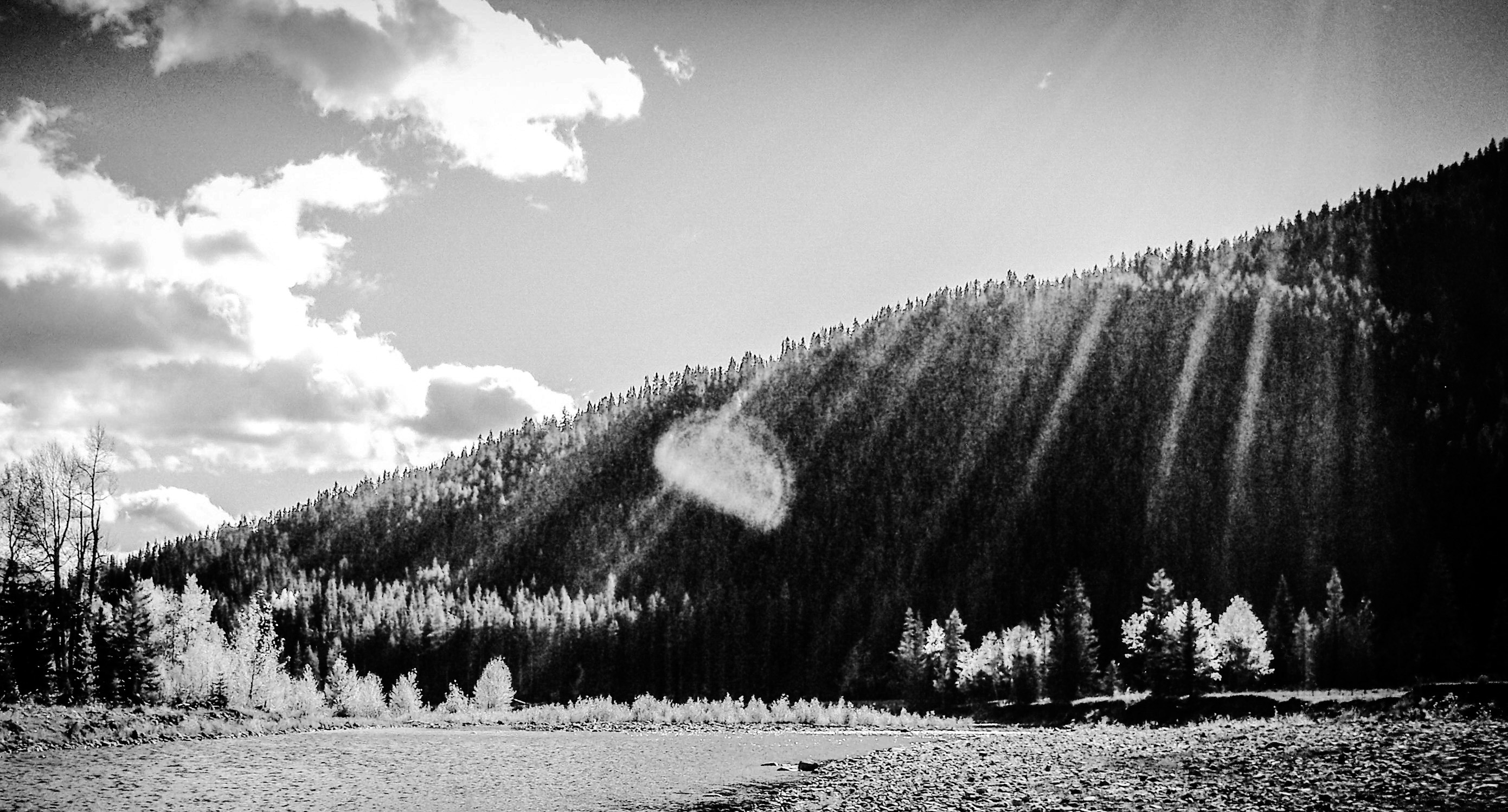
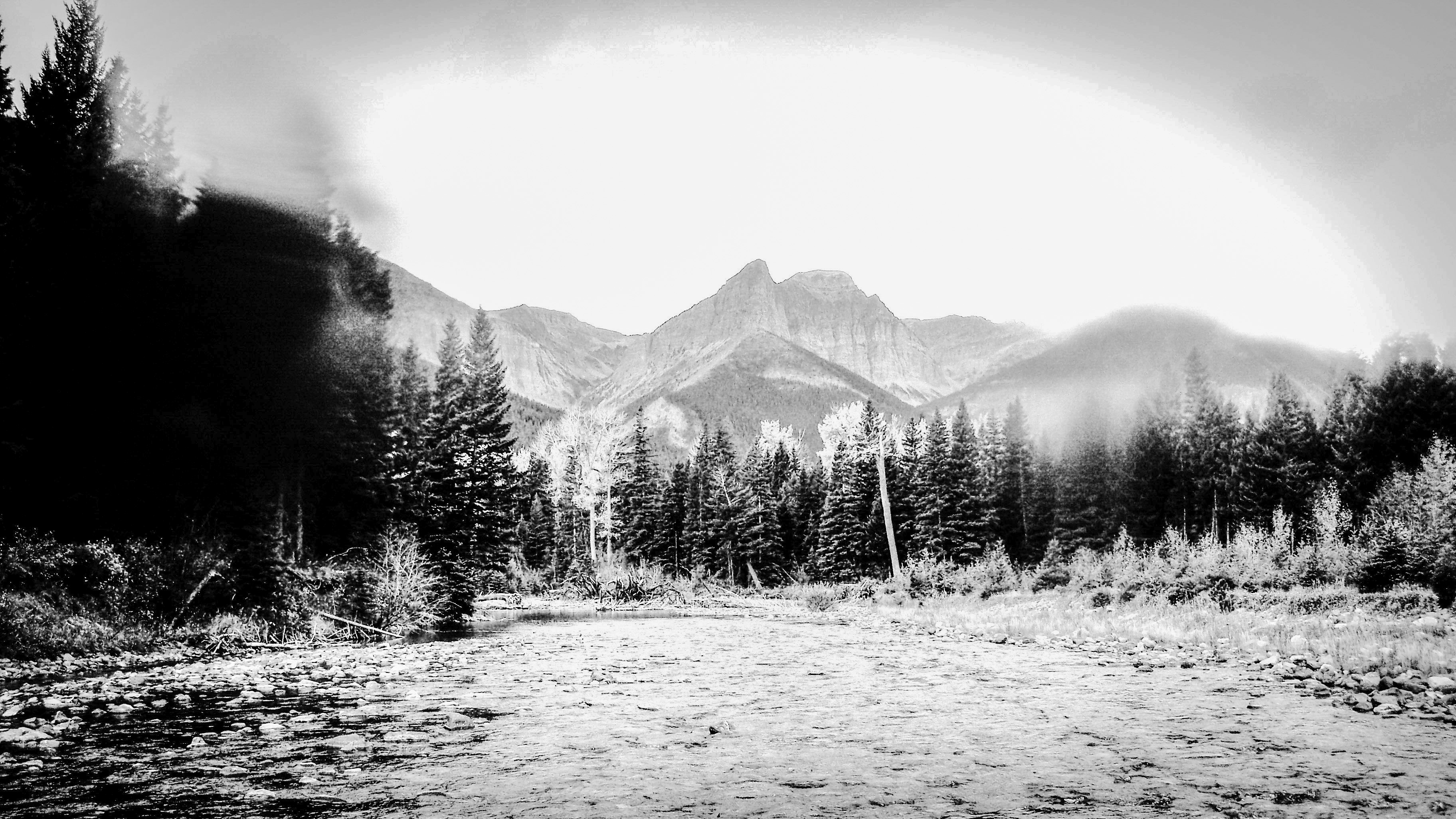
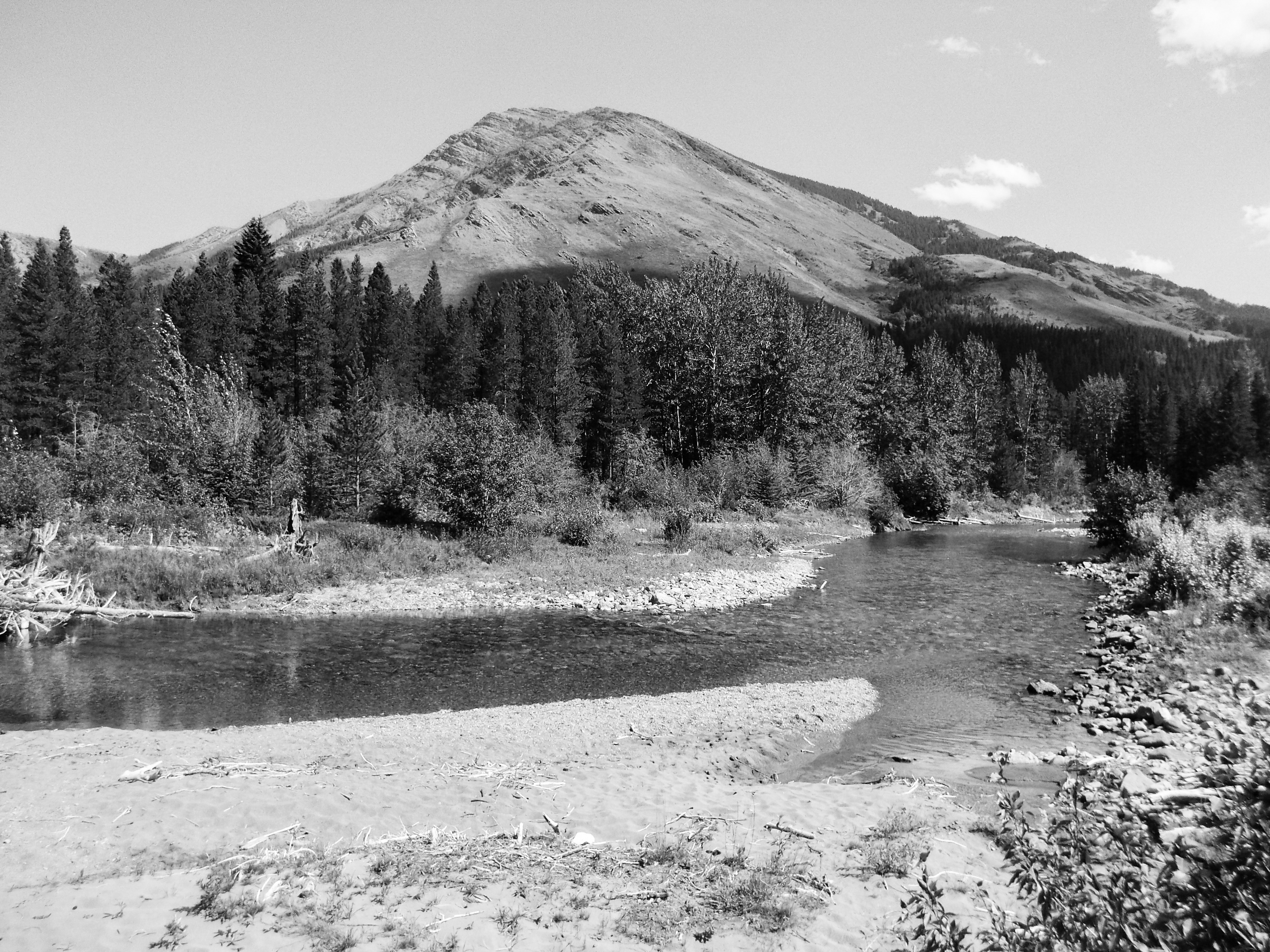
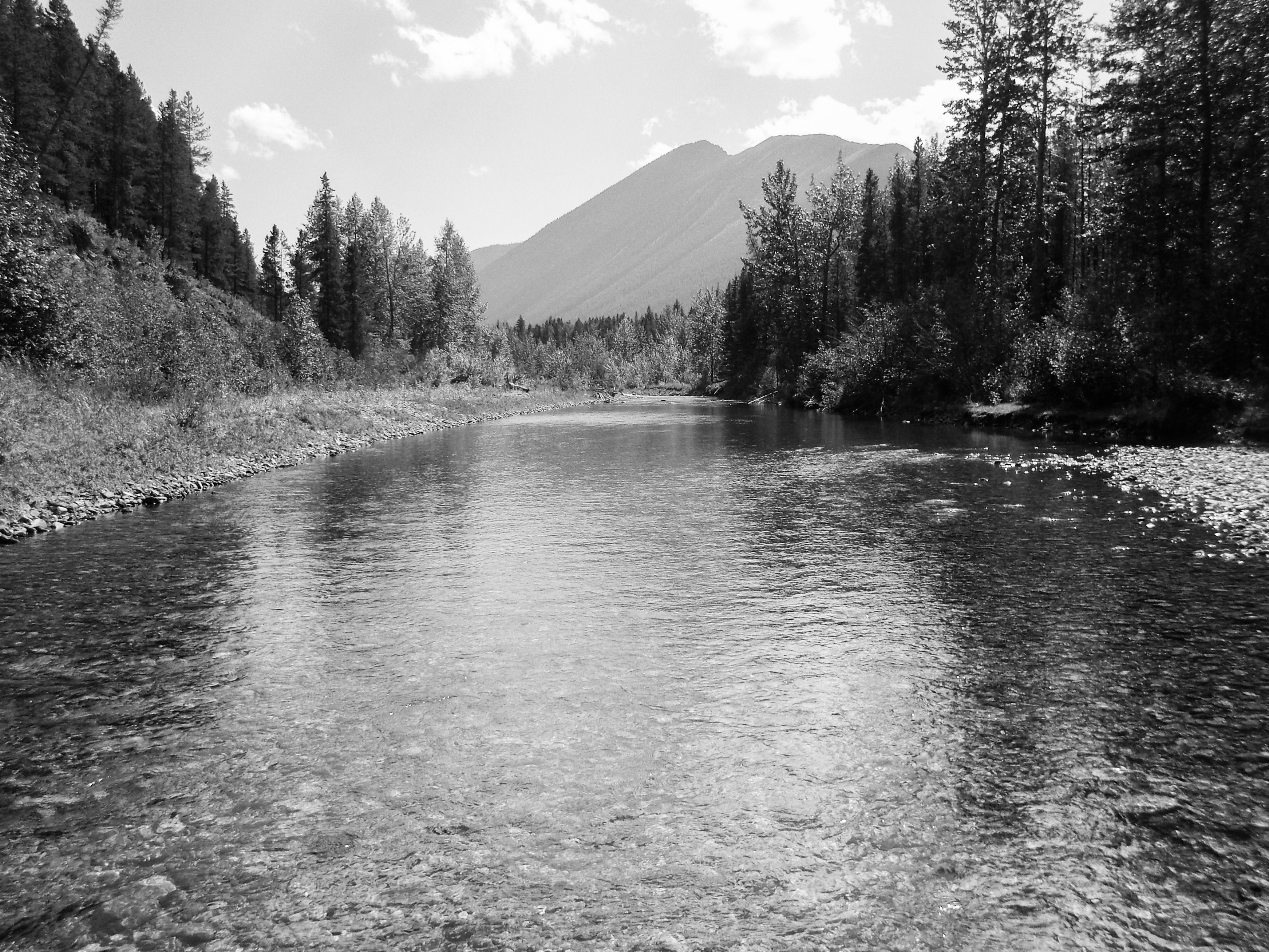
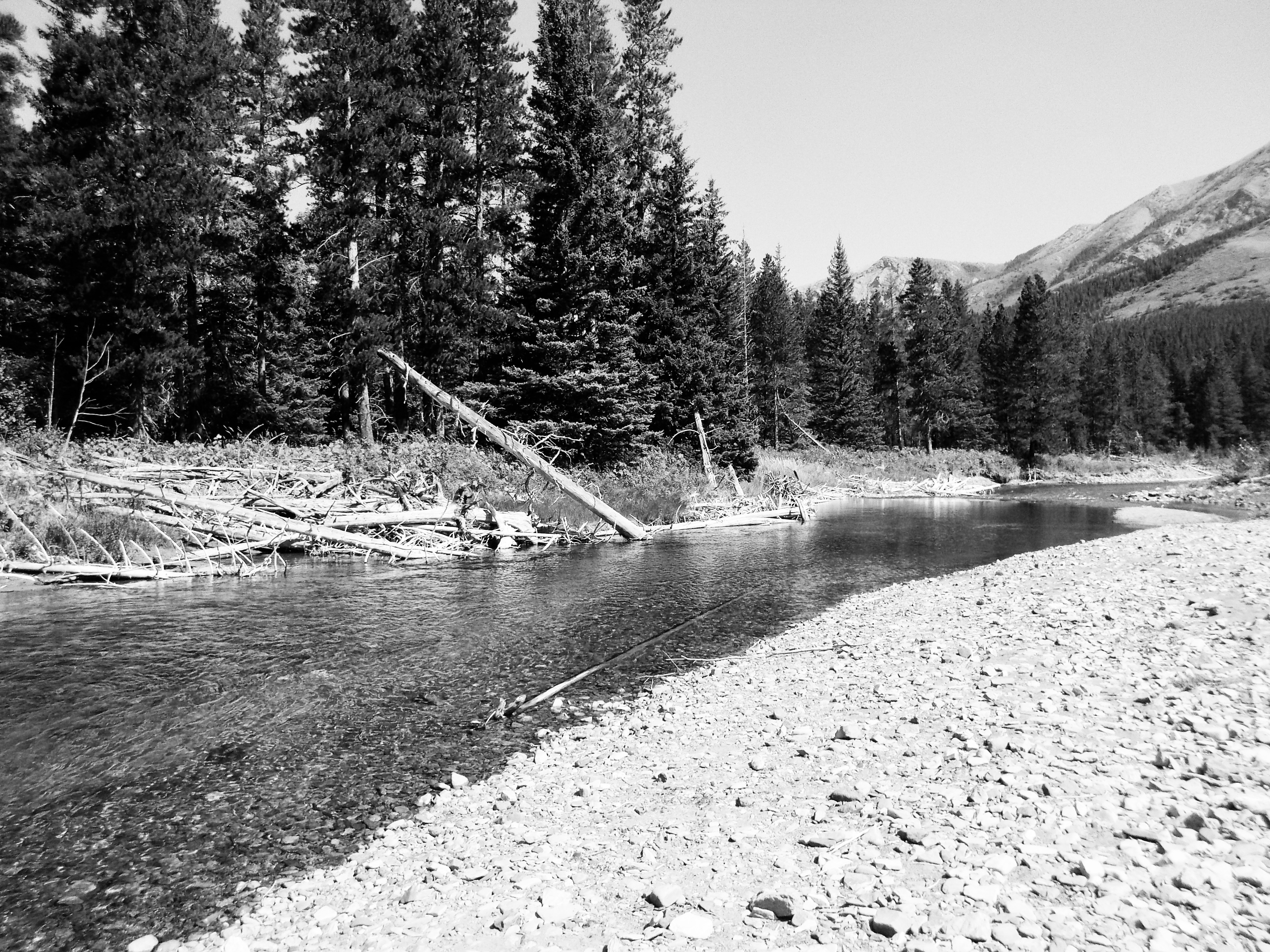
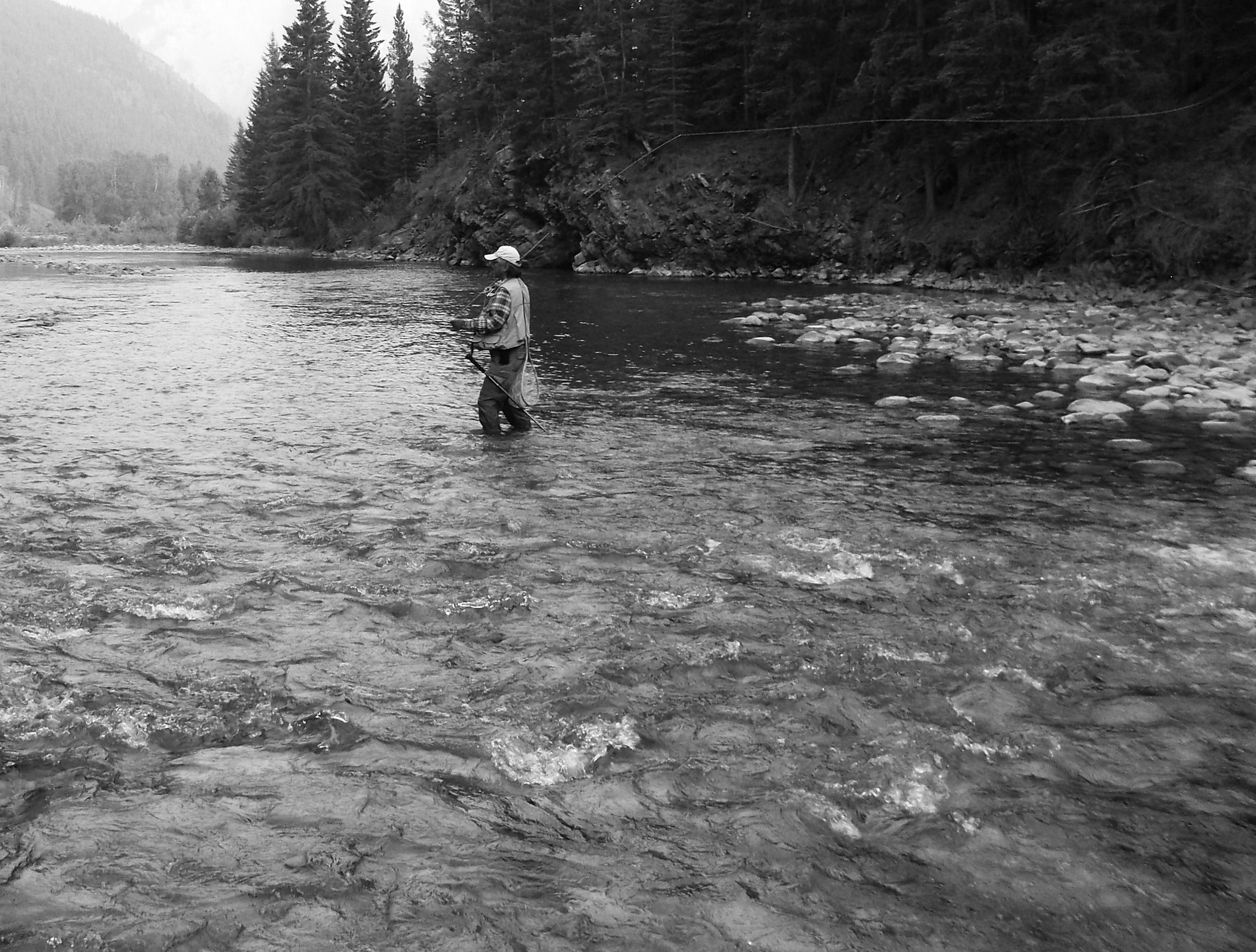
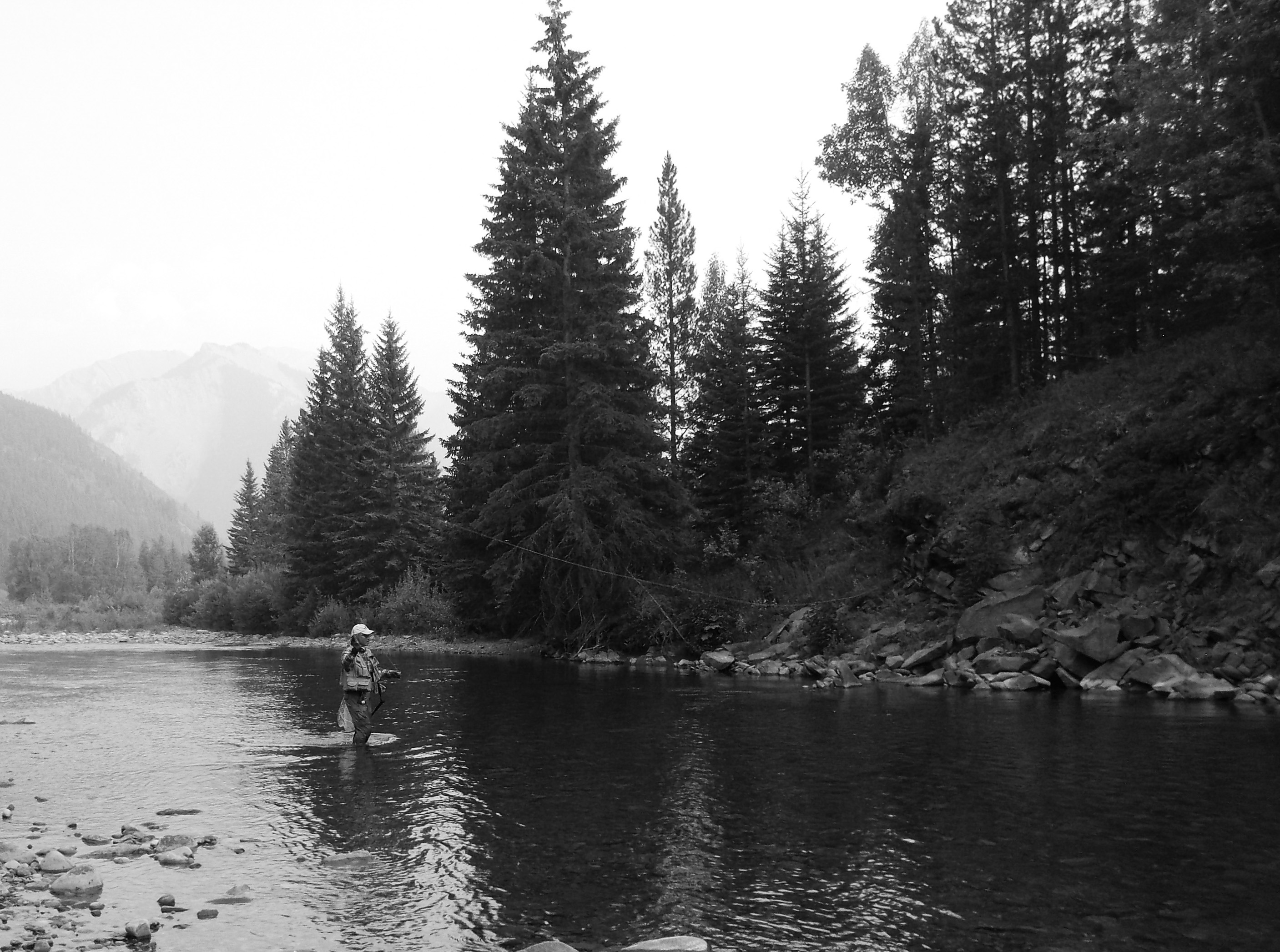
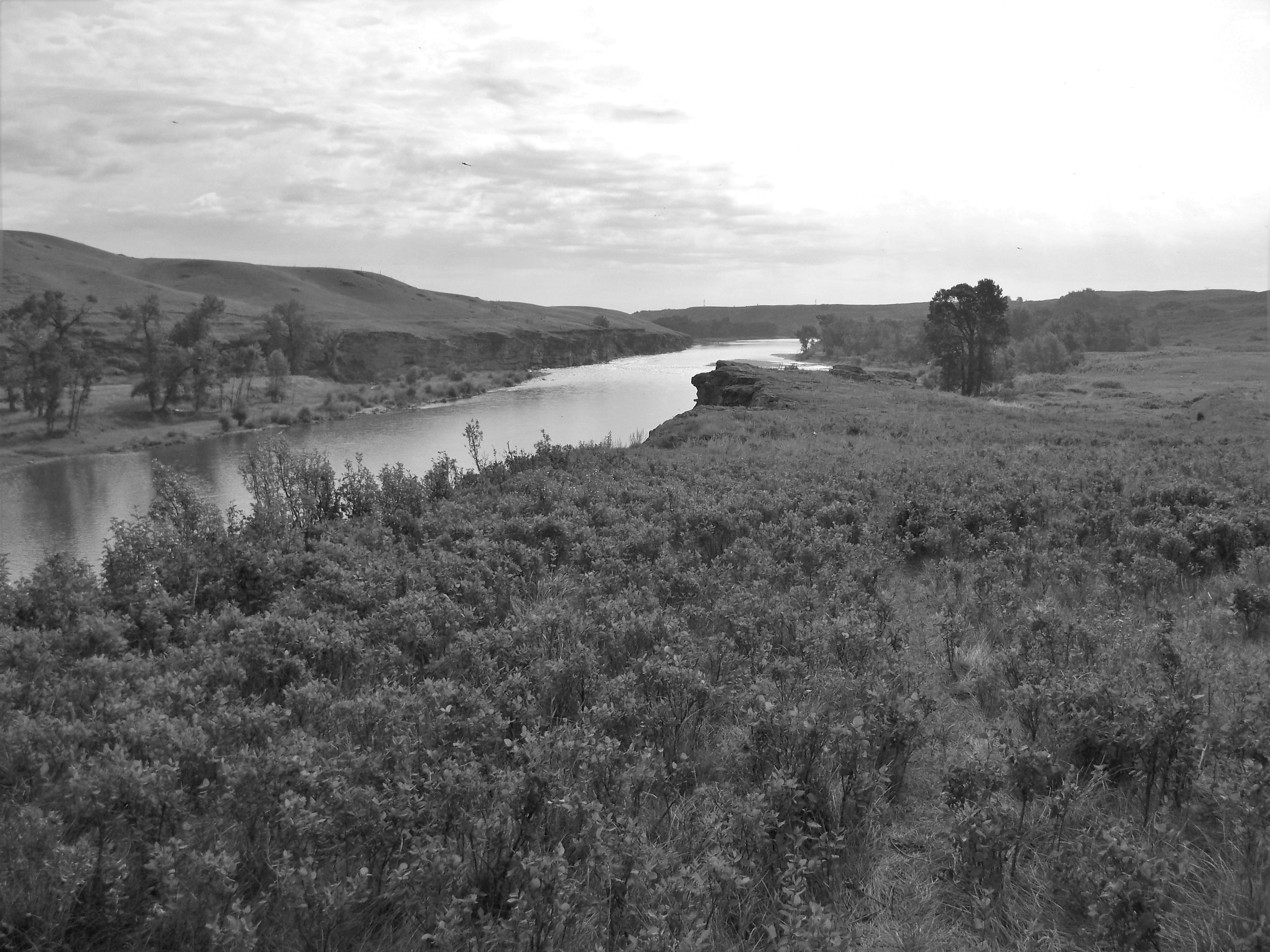
Late June in SW Alberta. A Cutthroat stream. Clear water. Cold water. The weather was suppose to be mainly sunny today but for the most part it was a mixed sky. Mainly cloudy with some sunny breaks. It made wet wading chilly. My feet quickly became numb. River temperature was 49f in the shallows. It felt much colder in the deeper water when I crossed sections of the river when making my way upstream. Sunny breaks heated the riverside sand and fine dry gravel beds. I knelt down in these soft spots absorbing the heat radiating from the ground and watched a number of pools for rising trout. I only saw two slight surface disturbances all afternoon. Fine Cutthroat they were.
There were a variety of bugs but not a lot of anything. The sum total of PMDs, Drakes, Yellow Sallies and the odd Golden Stone was not enough to entice many fish off of the bottom. Not enough for the river to come alive. Hopefully that will change in several days when the water temperature breaks through the 50f mark. I’ll come back then.
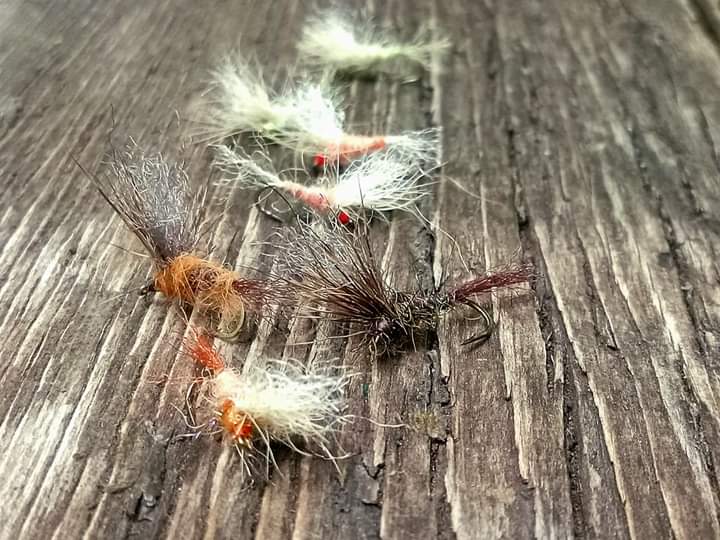
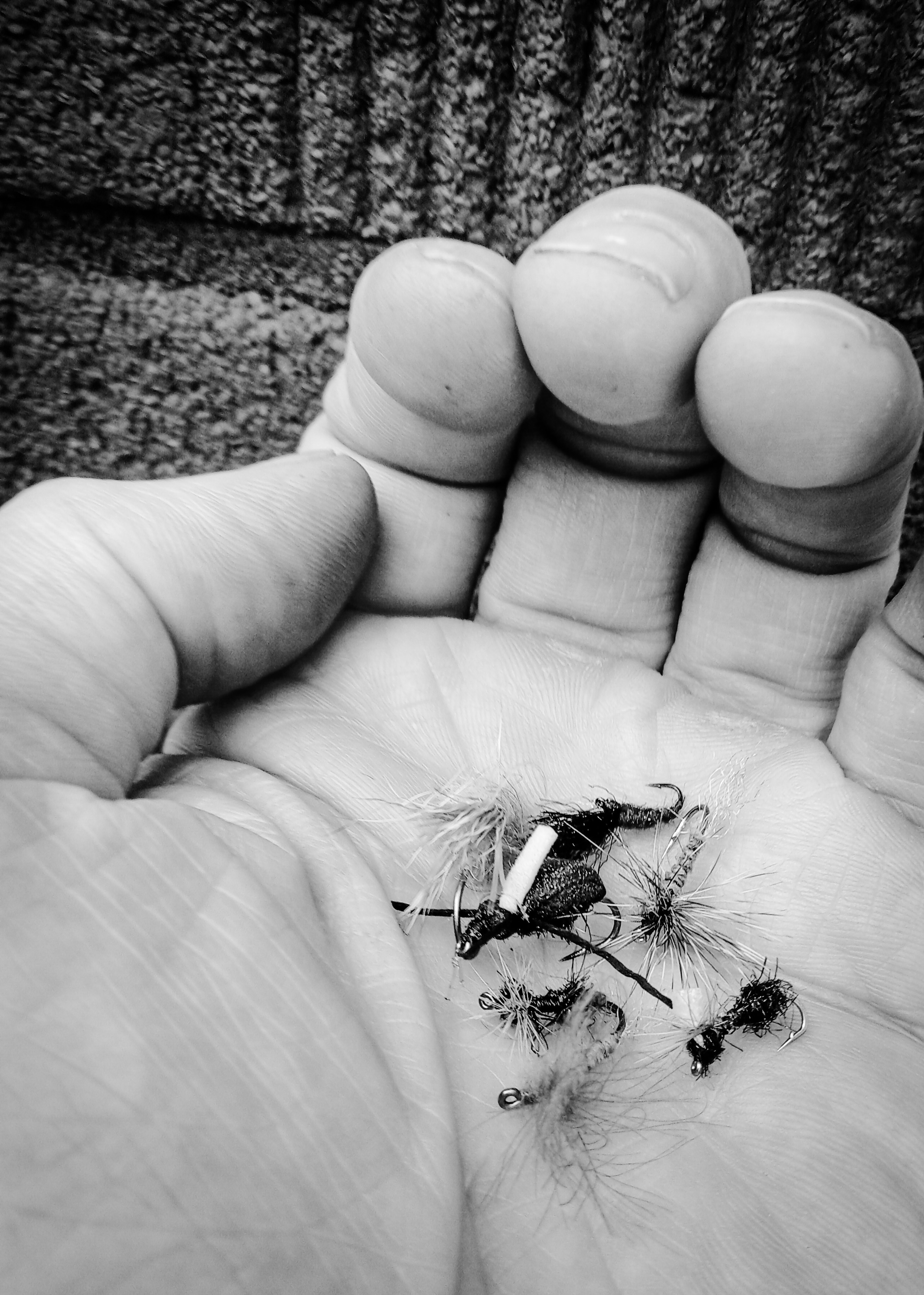
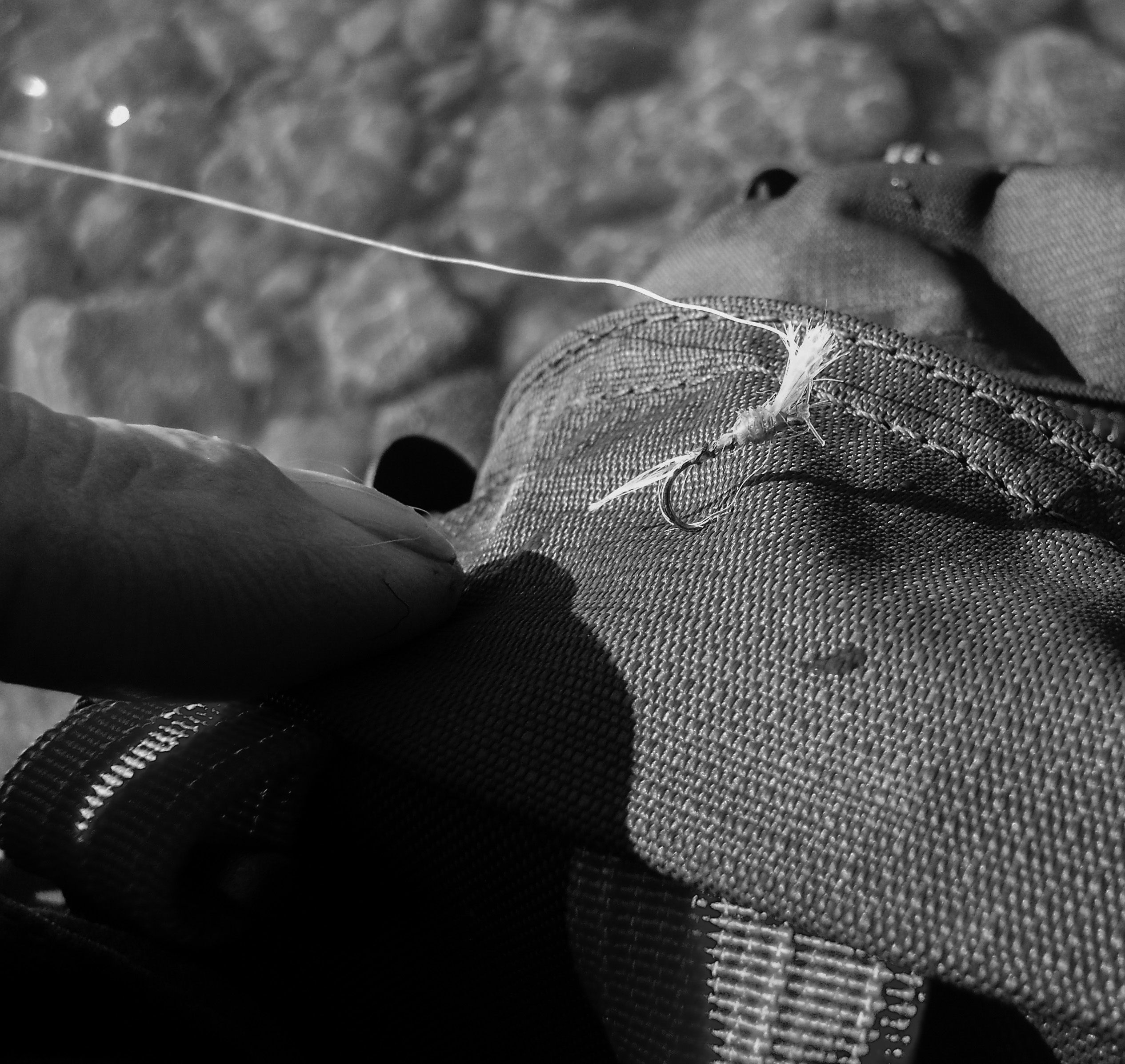
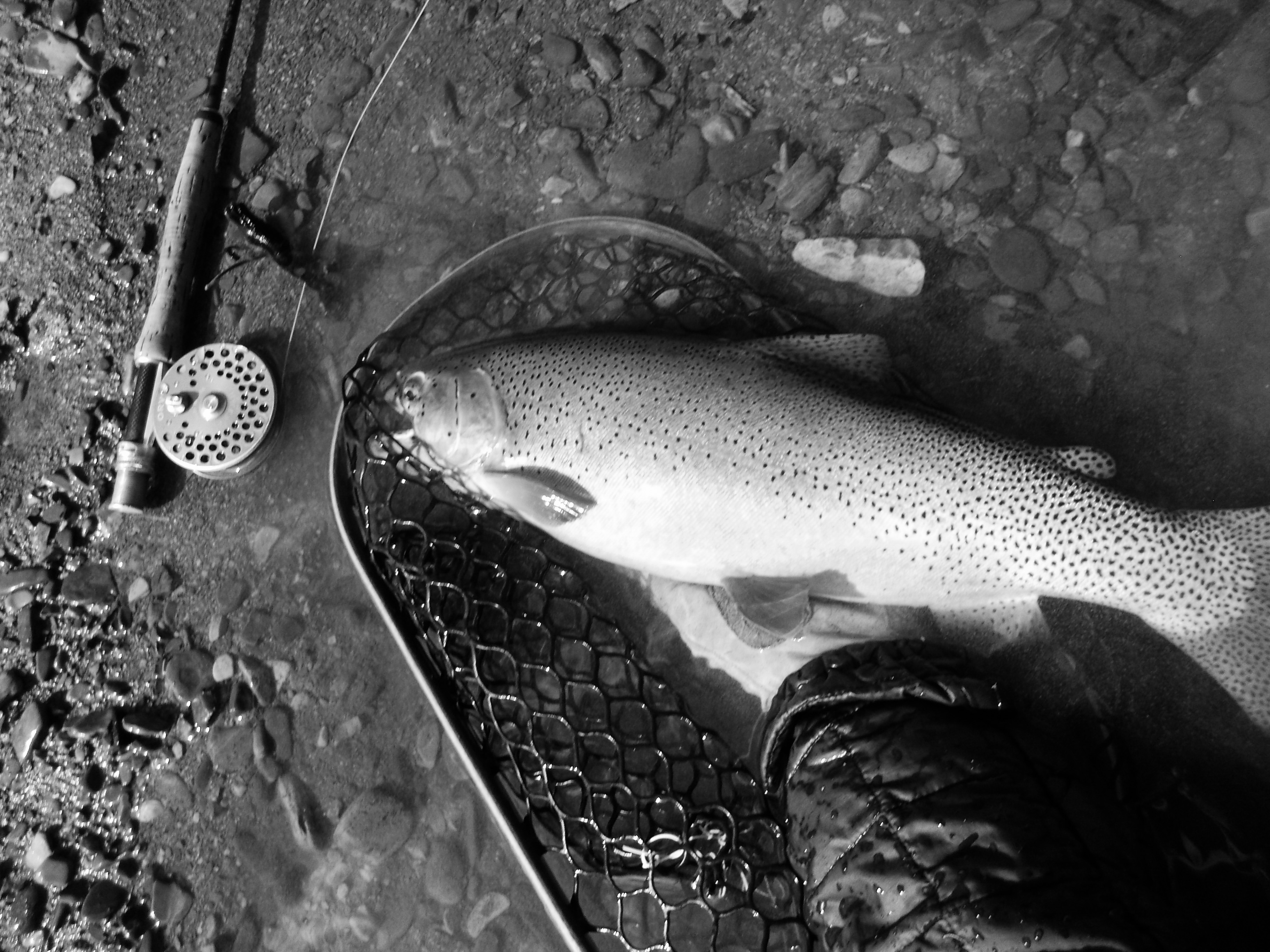
I covered a mile or so searching the clear water. The Cutthroat were caught on a size 12 Drake dry tied on an emerger hook; body of the fly breaking the surface. The river was low for this time of year. All rivers are low. I fished barbless for a quick hook release. I’ll do that all season. Alberta once had a barbless policy. No more.
“Once there were brook trout in the streams in the mountains. You could see them standing in the amber current where the white edges of their fins wimpled softly in the flow. They smelled of moss in your hand. Polished and muscular and torsional. On their backs were vermiculate patterns that were maps of the world in its becoming. Maps and mazes. Of a thing which could not be put back. Not be made right again. In the deep glens where they lived all things were older than man and they hummed of mystery.”
Cormac McCarthy, The Road
Cormac McCarthy. One of my favorite writers. I’ve read most of his novels. My favorite, Suttree, and then the border trilogy: All the Pretty Horses; The Crossing; Cities of the Plain. He recently died at age 89, probably writing to the end.
The past few days I visited some mountain streams that are “older than man” and casted dries to Cutthroat, Cuttbows and Rainbow trout.
“WELL THAT FLY DIDN’T WORK and he’s still rising. Change fly! Let’s go smaller. Nope, no response. Try again. Wow, same response. Change fly! Let’s try an ant. Nice cast. He’s looking. Closing in. Nope. He rejected it the last second. Wow, tough fish. Throw the ant again. Hmm. No go. Change fly! Let’s tie on a Klink/Emerger. No response to that. Change fly! I see some Drakes in the flow but the fish is ignoring most of them… but not all. Try this CDC version. Nope, he didn’t even move over to take a look. Toss it again. Change fly! I have a Drake Emerger pattern. Let’s try that. No luck. Maybe we need to rest the fish. Let’s go upstream. We’ll come back later. Hopefully he’ll still be rising then…wow, picky Cutthroat. Hard to walk away. Look at him still feeding. Some naturals passing overhead. He only rises to some; not others. Passing on the Duns, sometimes…maybe he’s mainly cueing in on Emergers. Well he just took a Dun but then let several others drift overhead. He ignores some, then eats the odd one. Yikes, challenging trout…we will come back.”
Cutthroats. Simply beautiful. Some say they are easy to catch. Sometimes that’s true. Sometimes, however, they are as challenging as any other trout. It depends on the river. It depends on how much food is in the flow. It depends on angling pressure. It depends on water clarity. It depends…
Late season low water can make things extra challenging. You have to try and stay out of sight; and don’t move too fast; and don’t drag that dry fly; and don’t do this, or that, or they’ll disappear. They’ll go hide in a log-jam. Remember, Cutthroats have been around for several million years. They’ve survived. They’re always on alert…
one of Roman’s best
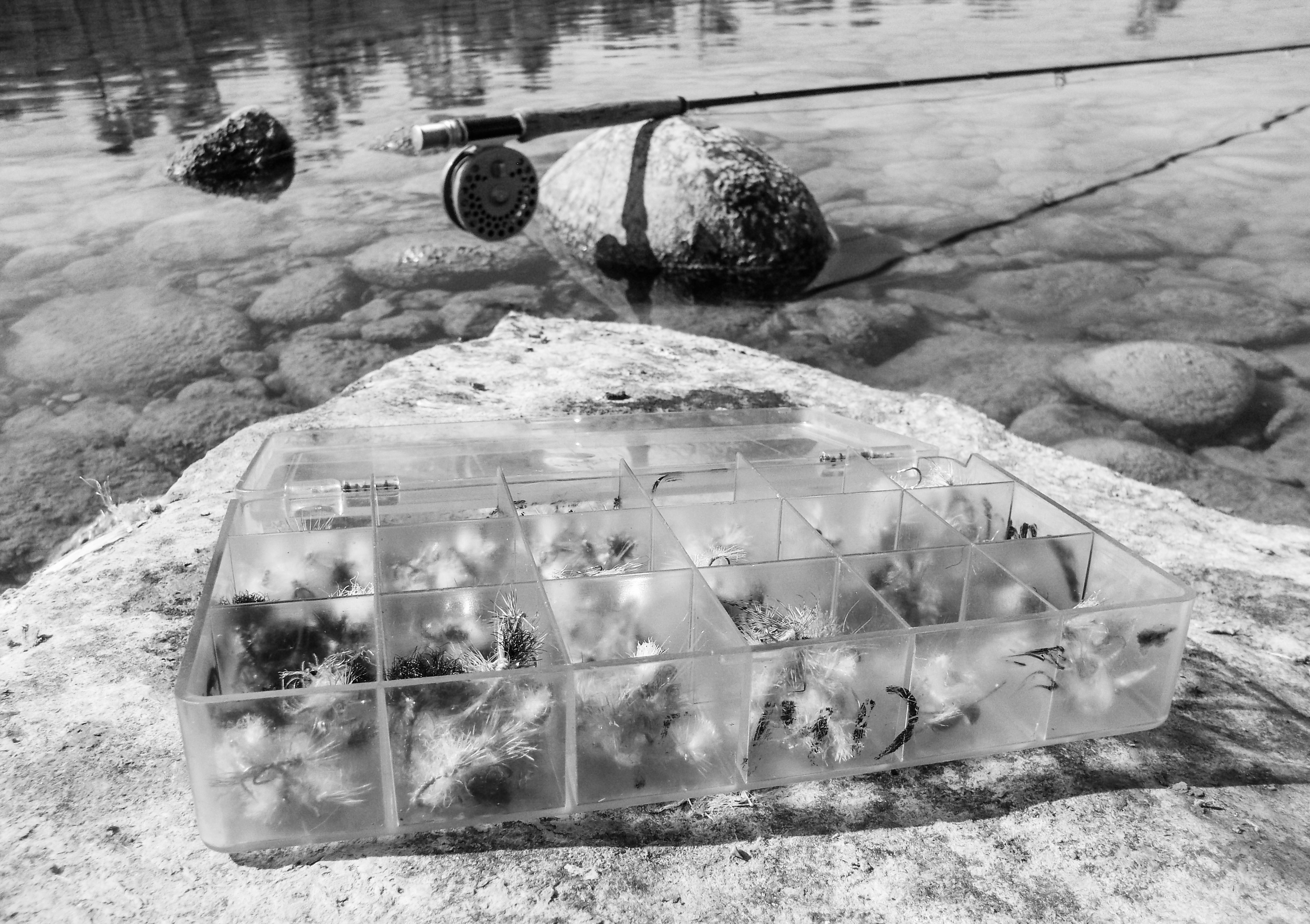
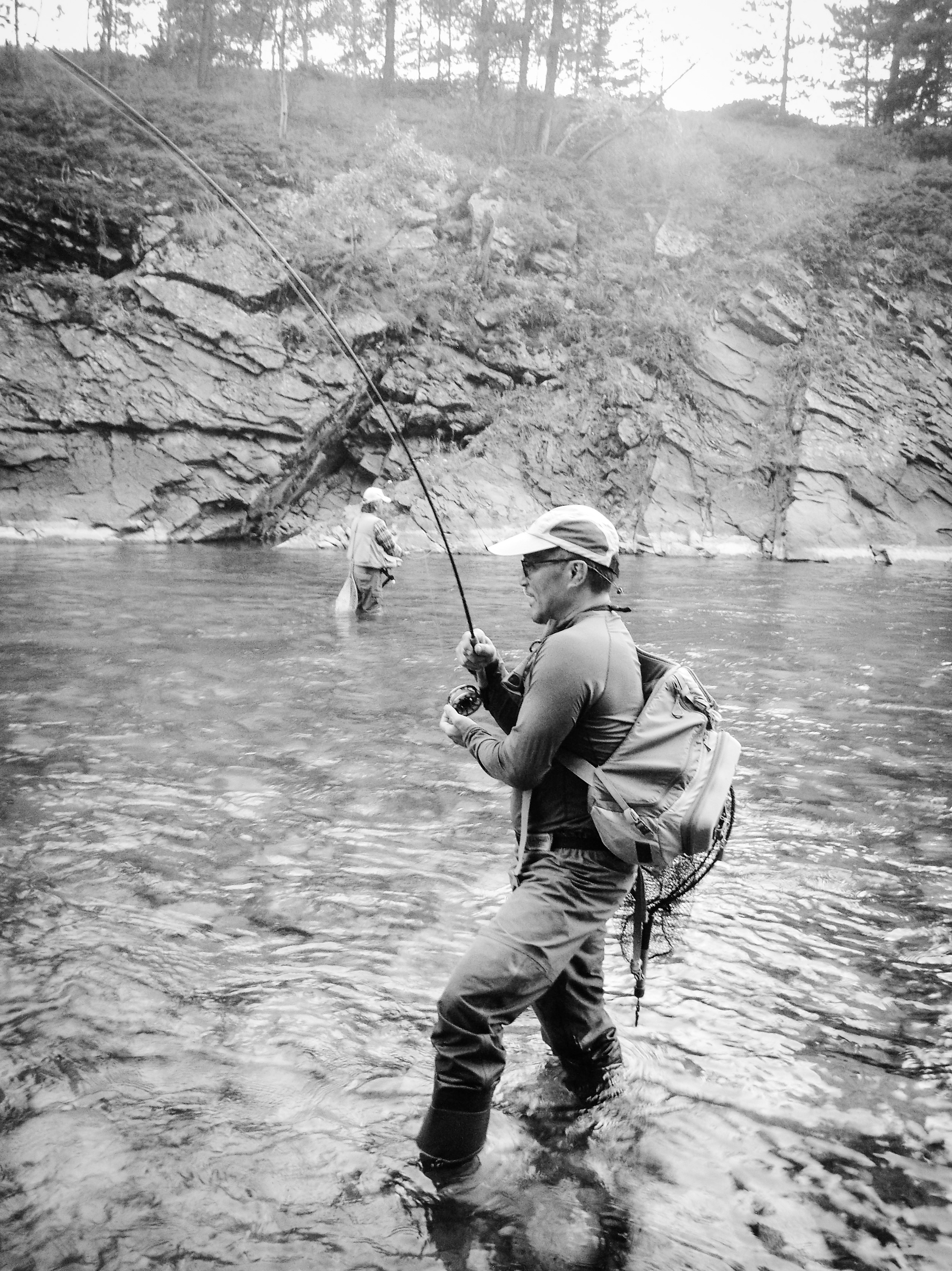
I recently spent four days fishing with a good friend, Roman, on different sections of one stream. A clear, pristine cutthroat stream. We pulled-up fish in the faster water on dry flies and came across several fish rising occasionally in slow water. The slow, flat water fish often required multiple fly changes in order to be fooled and a few tough customers couldn’t be enticed. With our fly selection we went big, we went small, we went slim, we went chubby, we tried low-riding patterns, emergers, terrestrials of varying sizes, a nymph dropper, lighter tippet…We caught many but a few couldn’t be fooled.
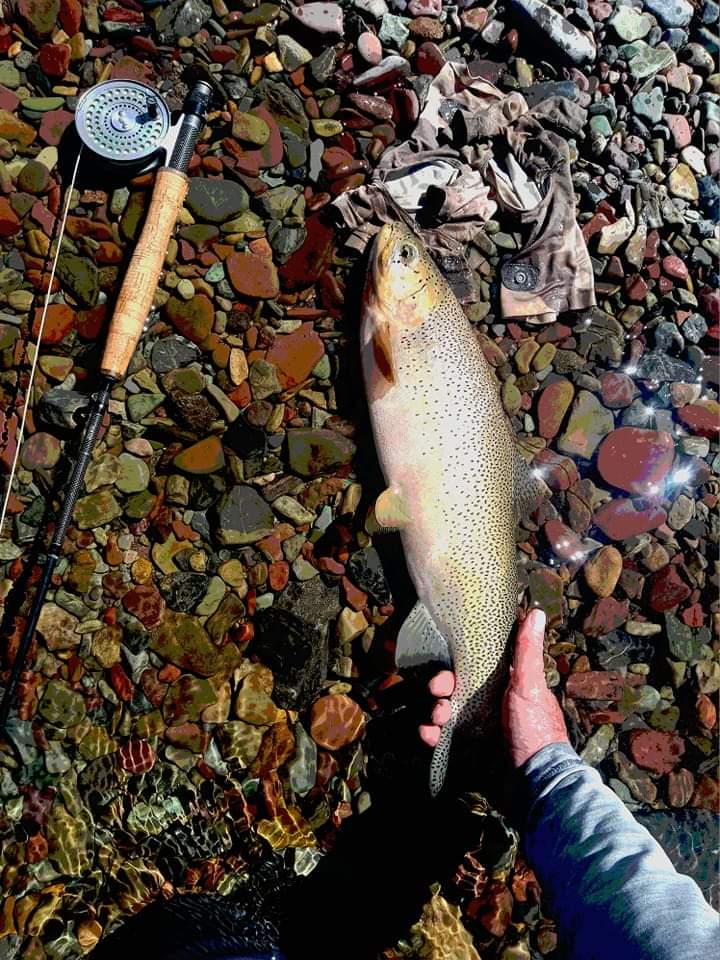
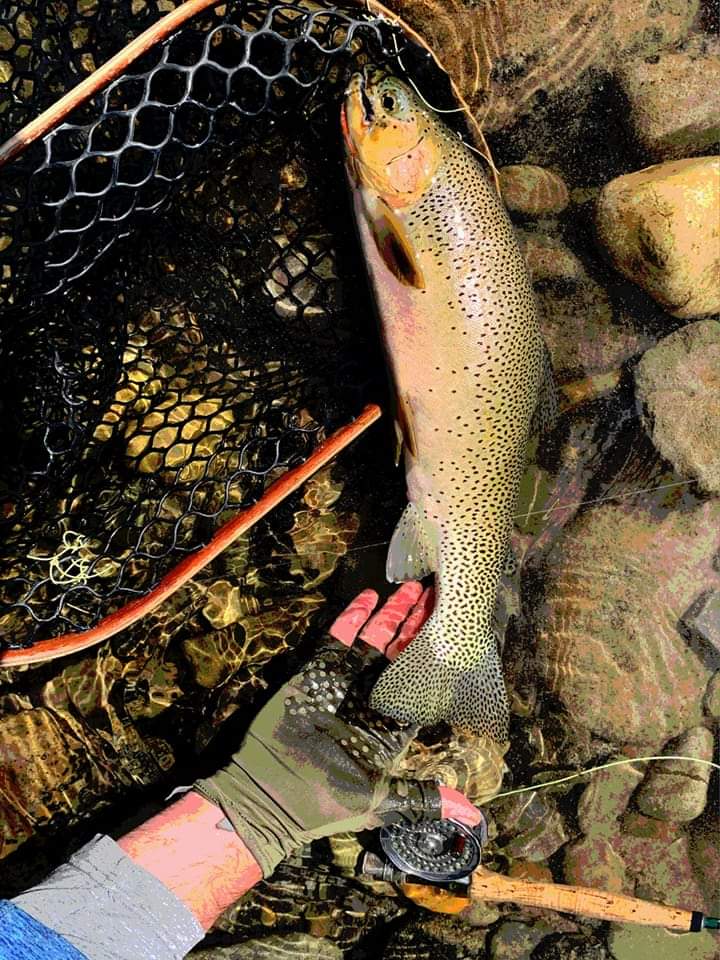
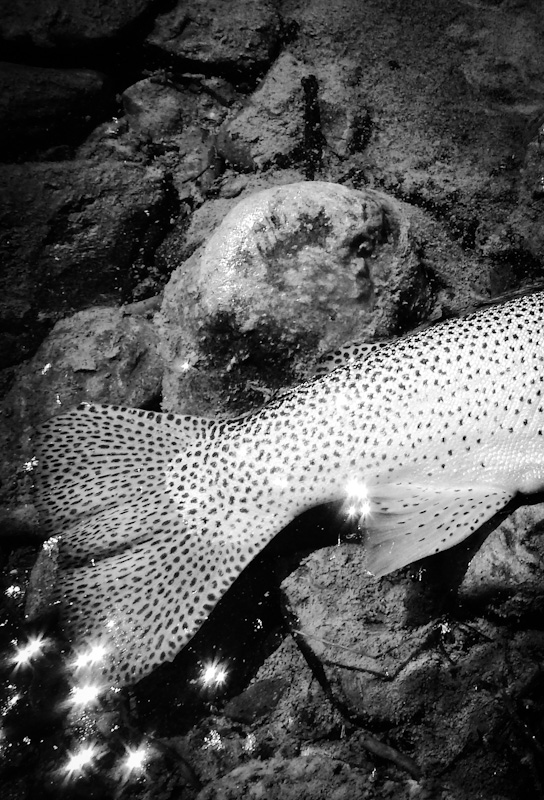
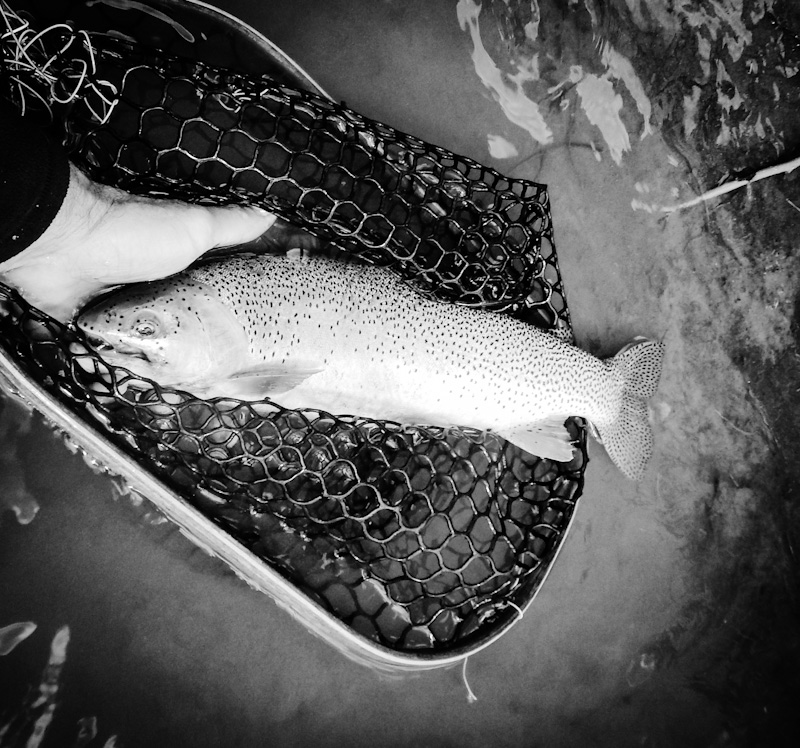
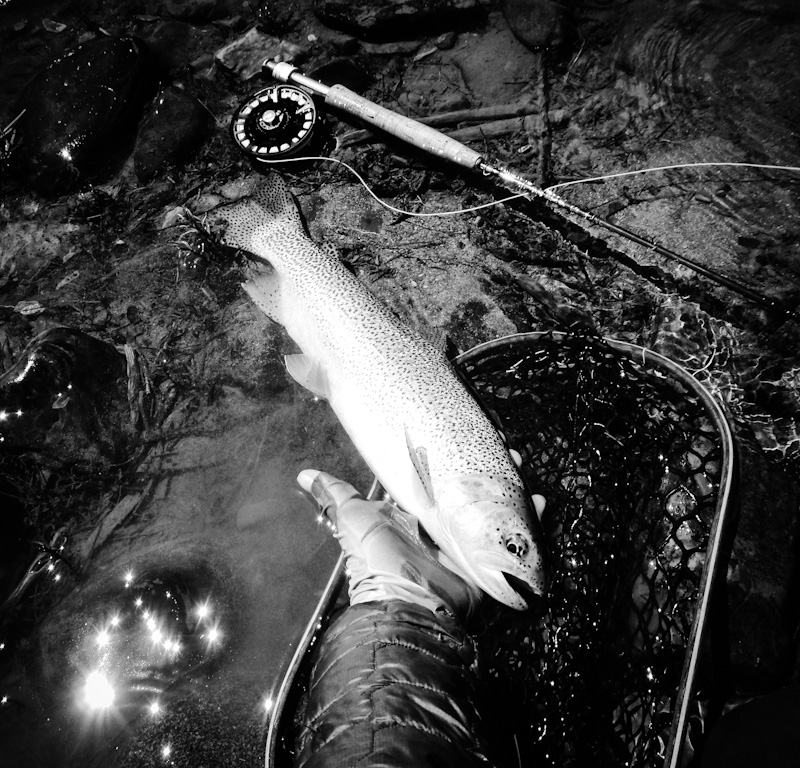
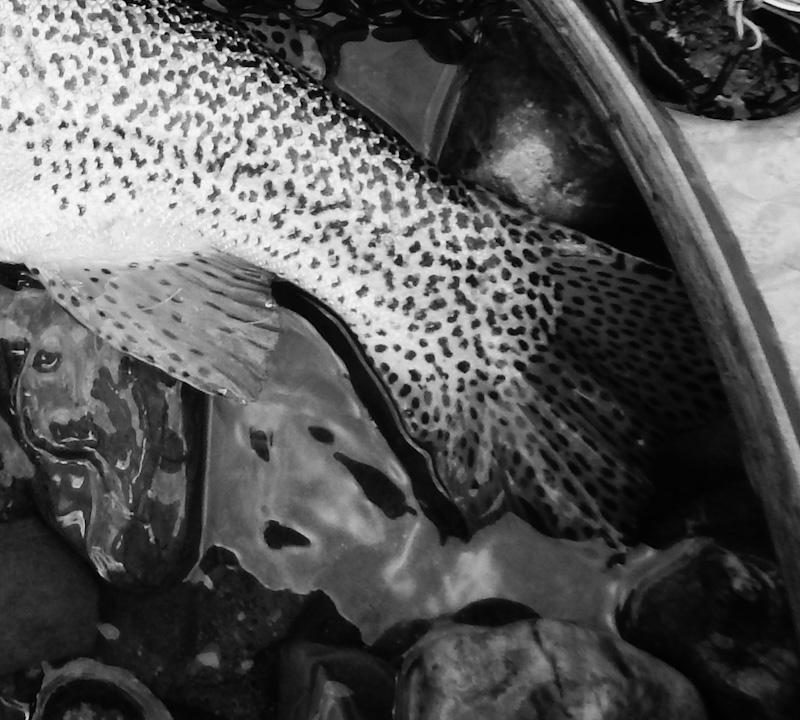
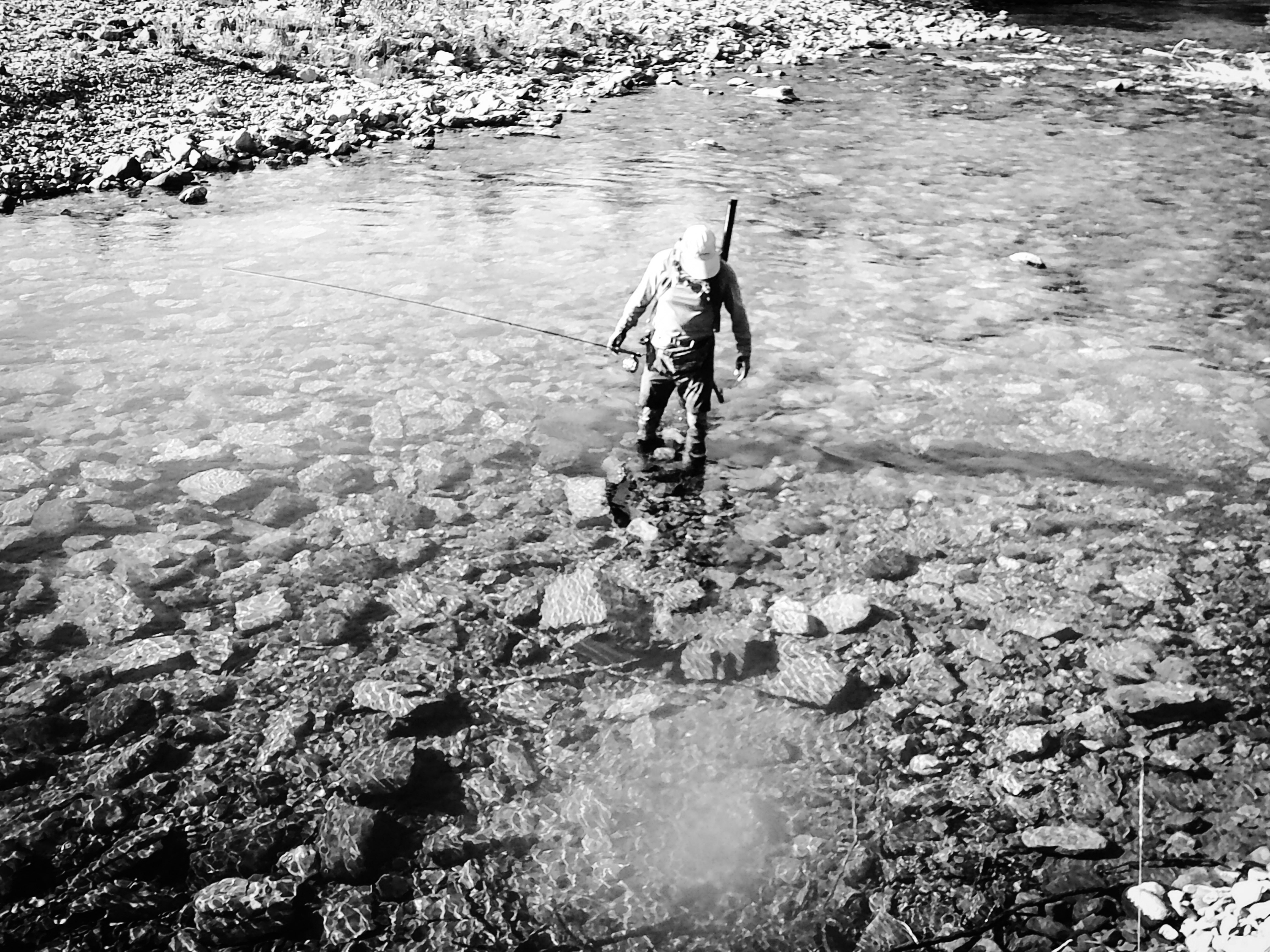
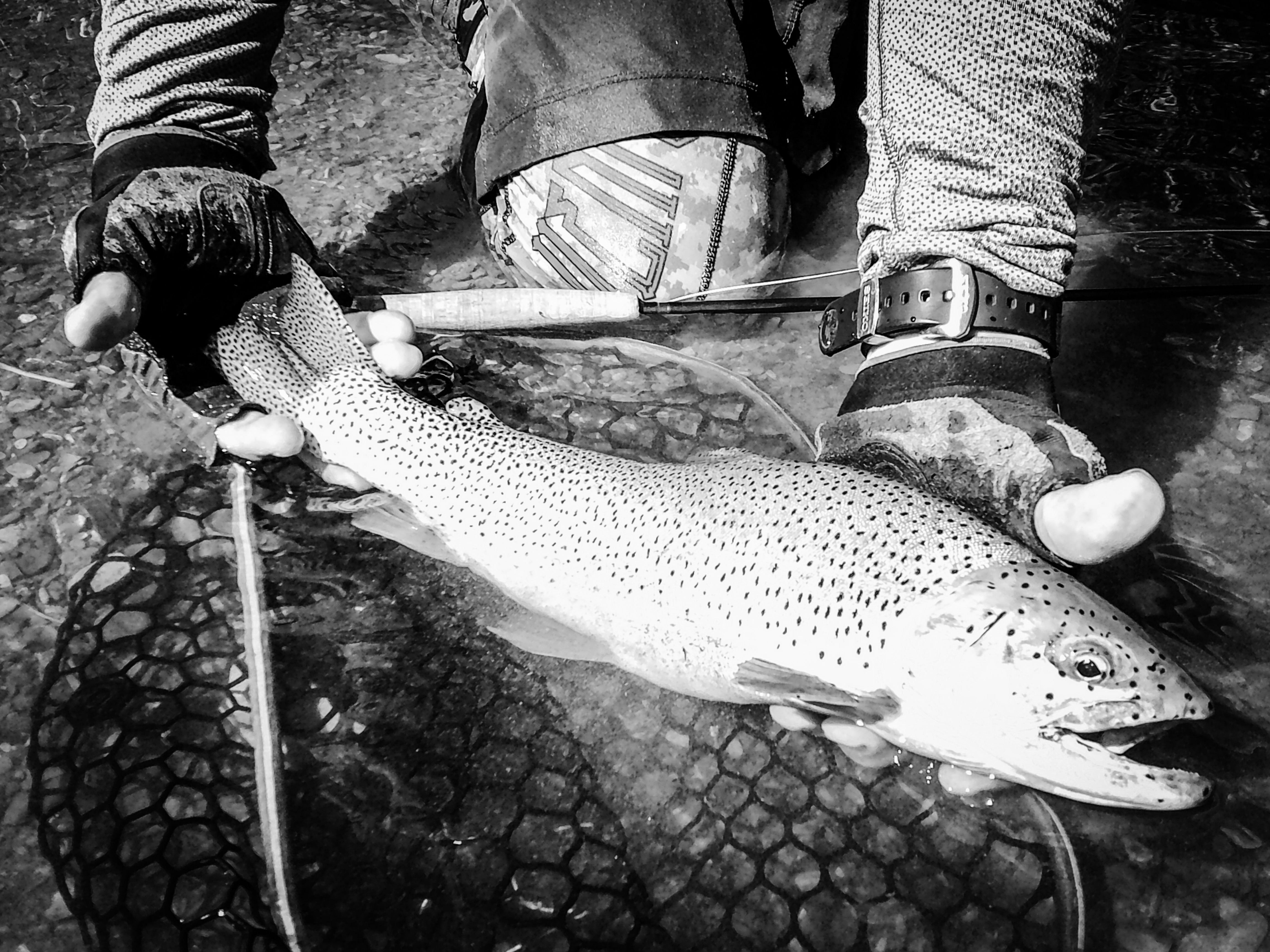
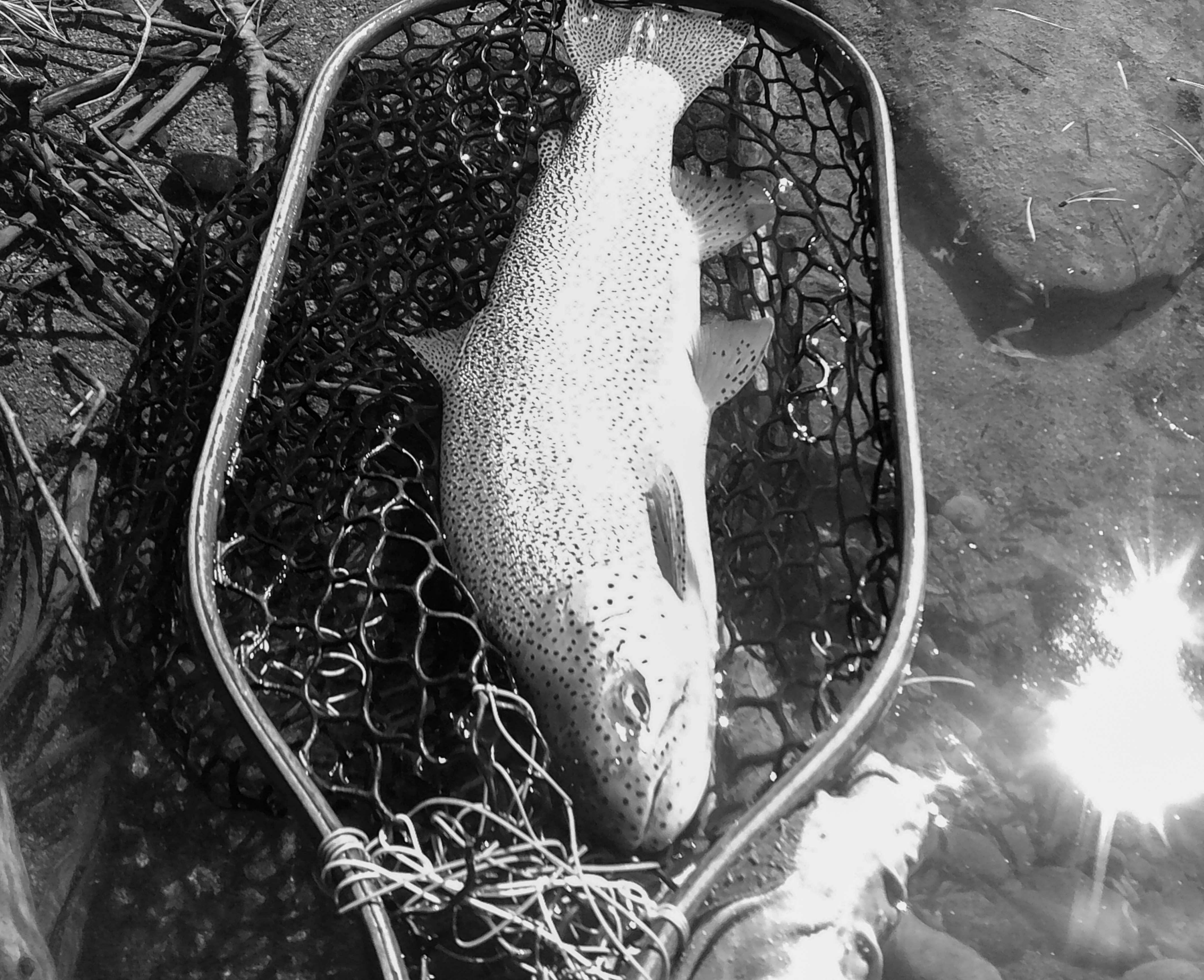
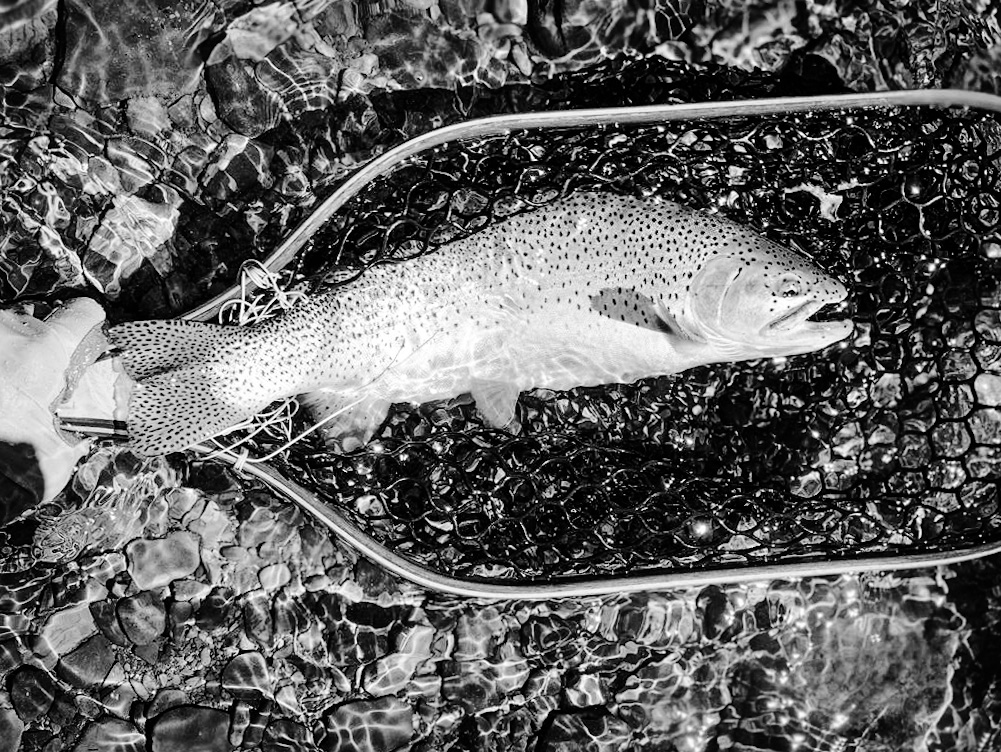
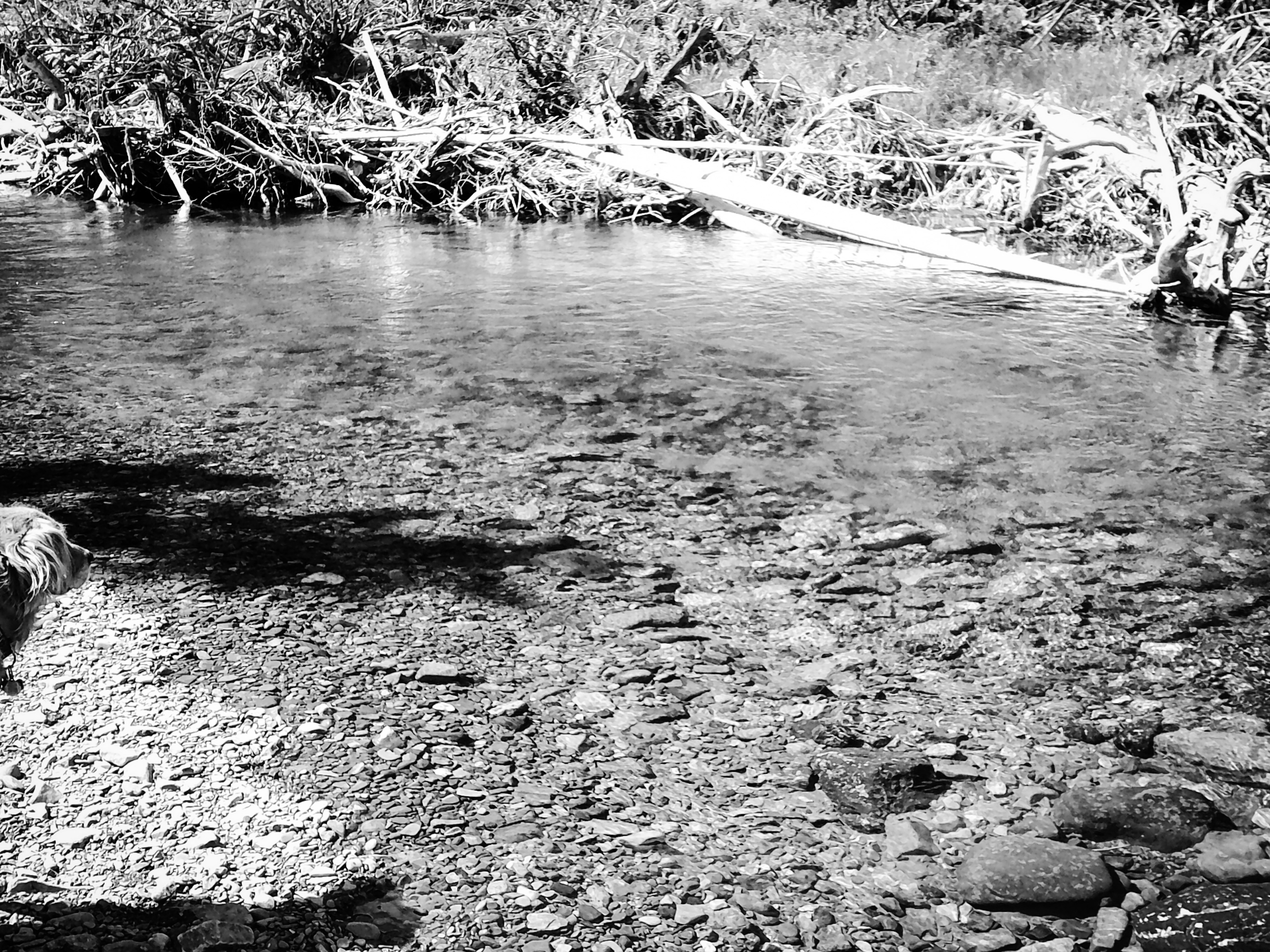
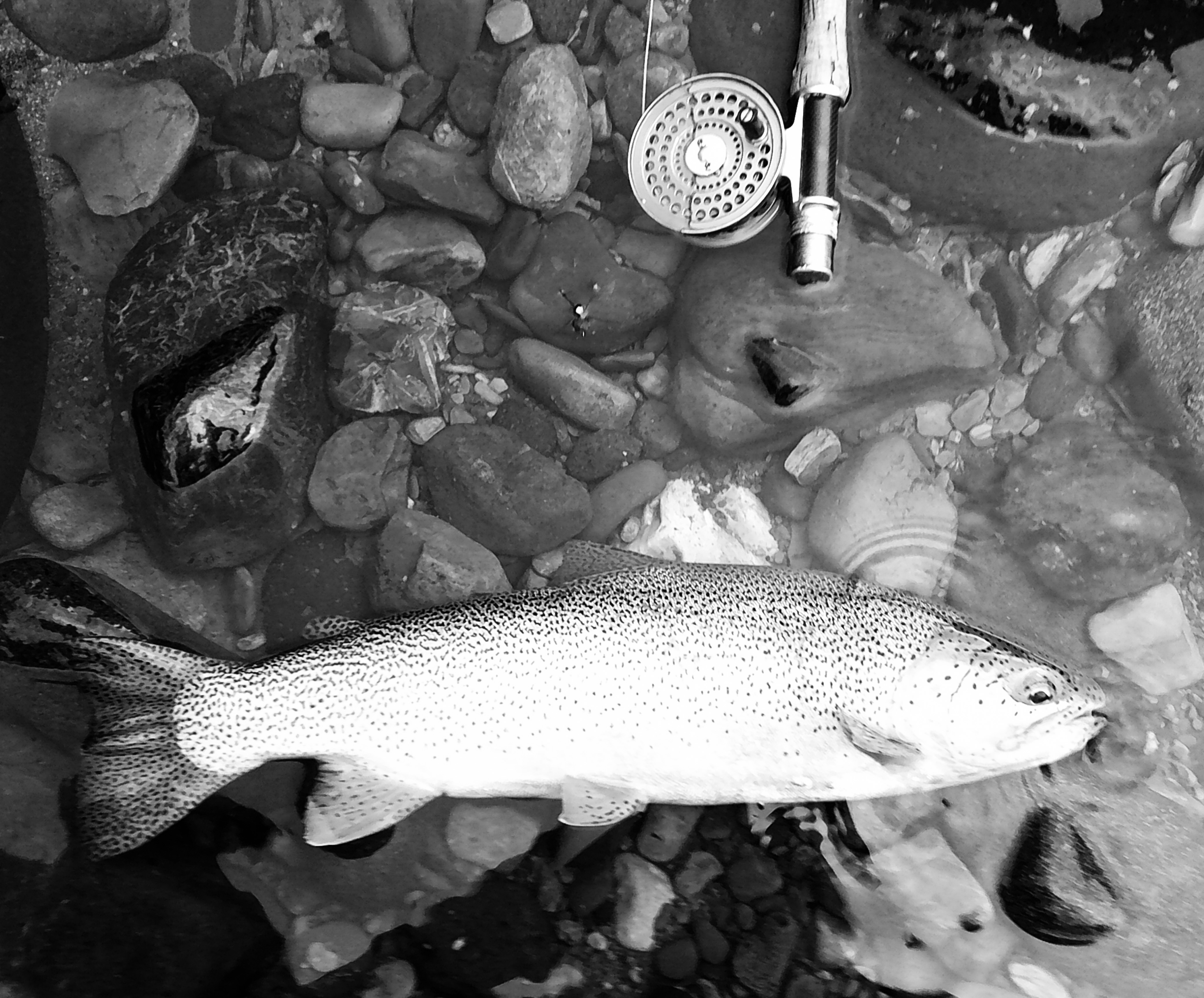
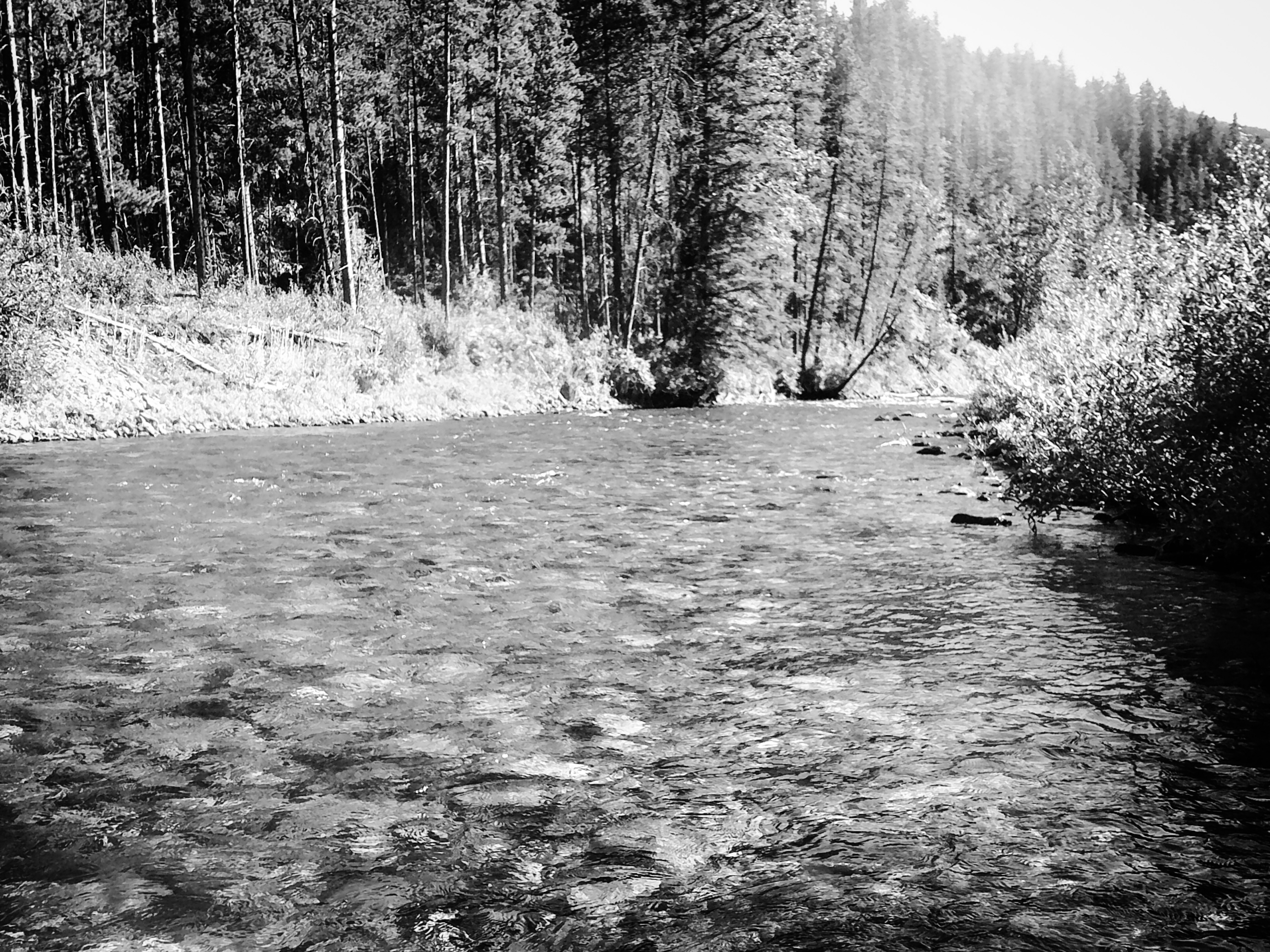
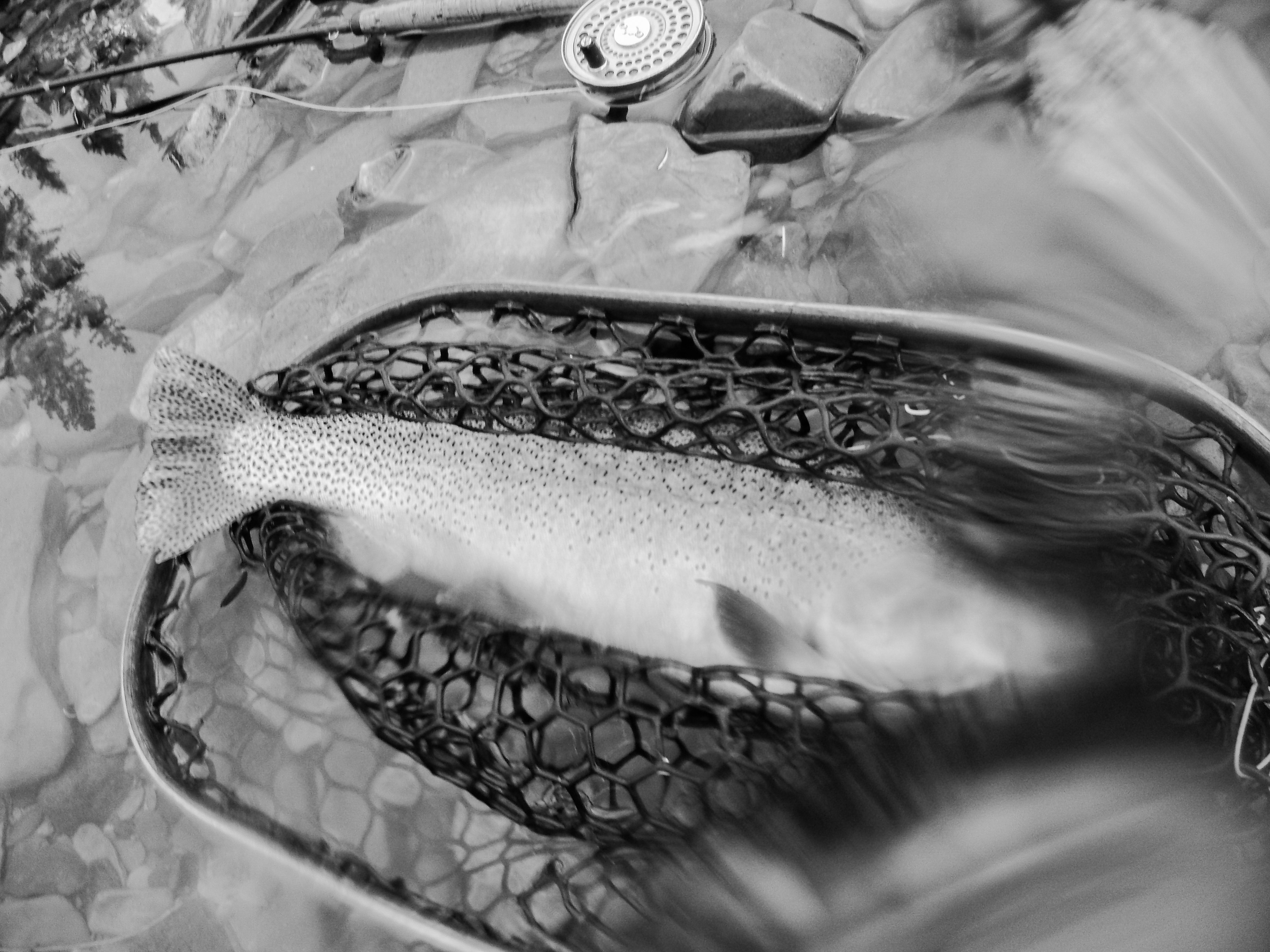
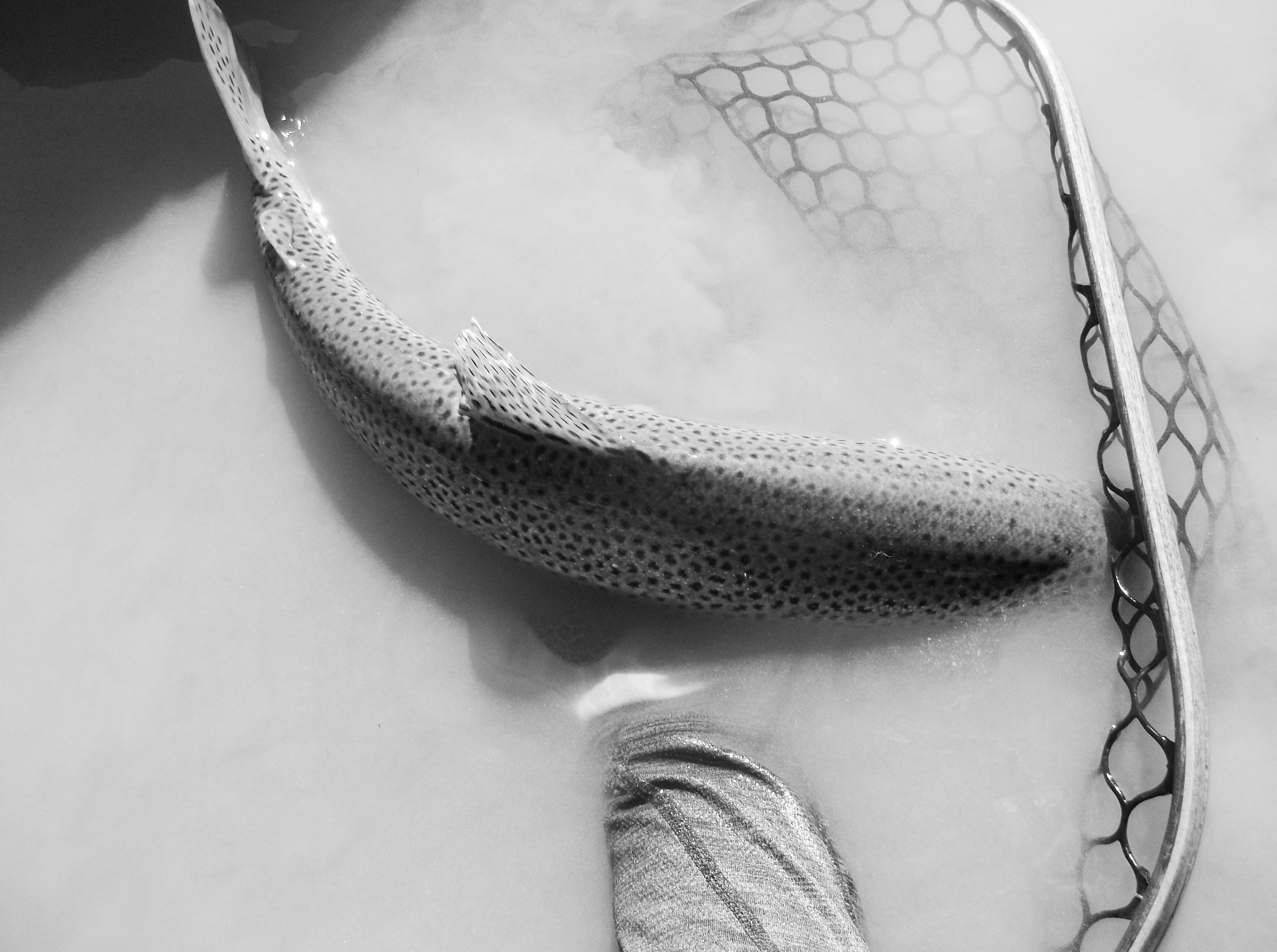
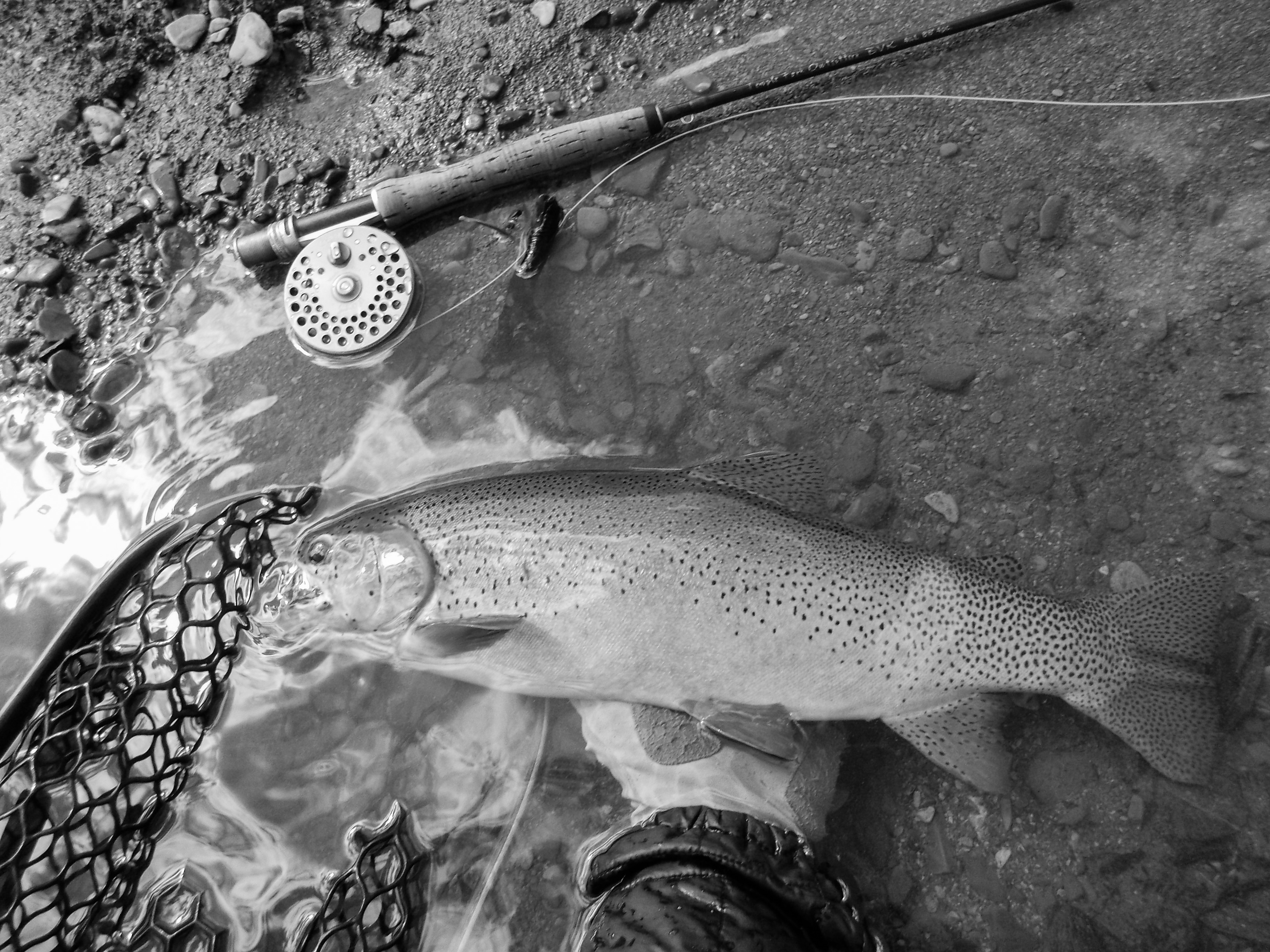
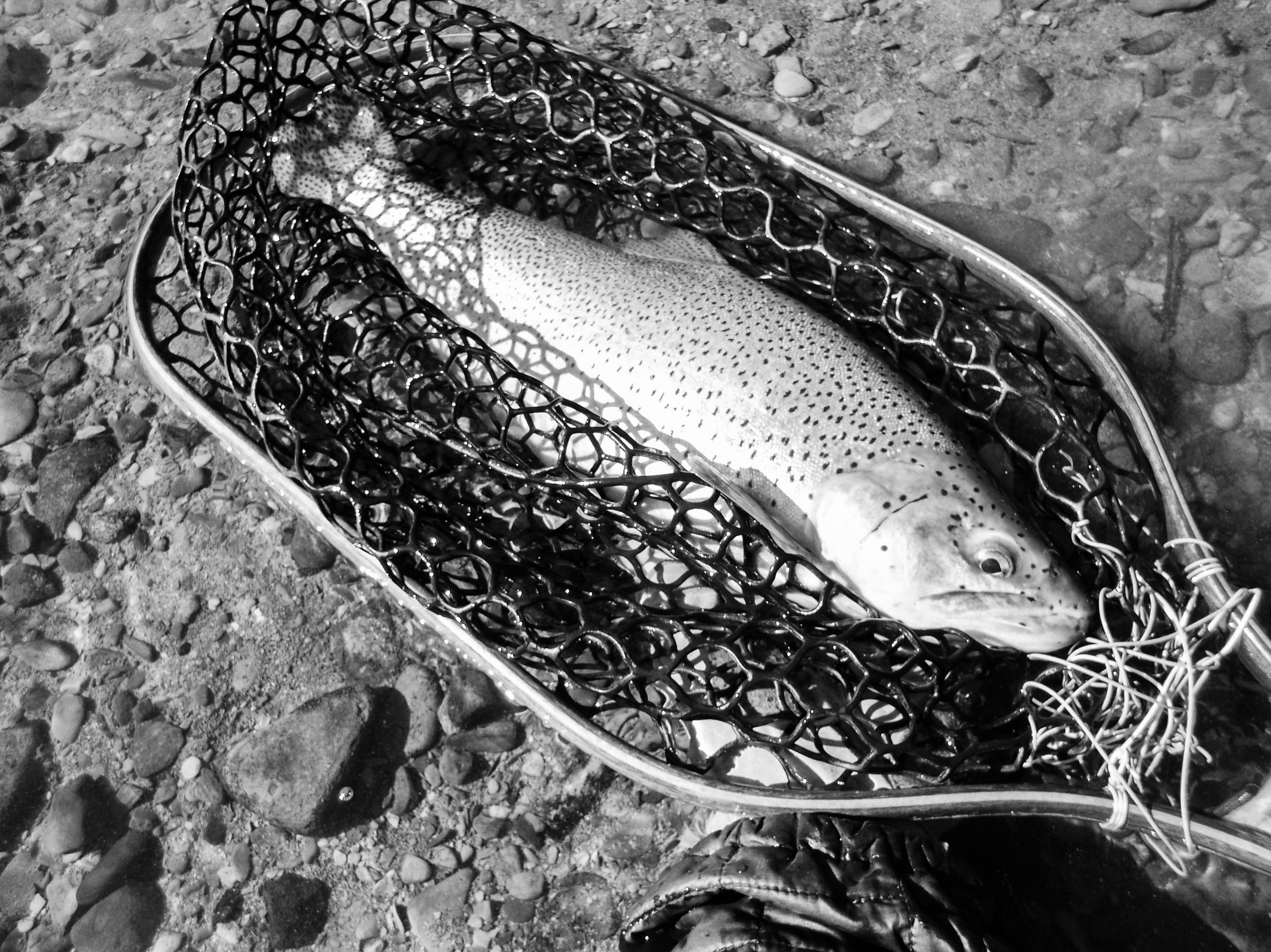
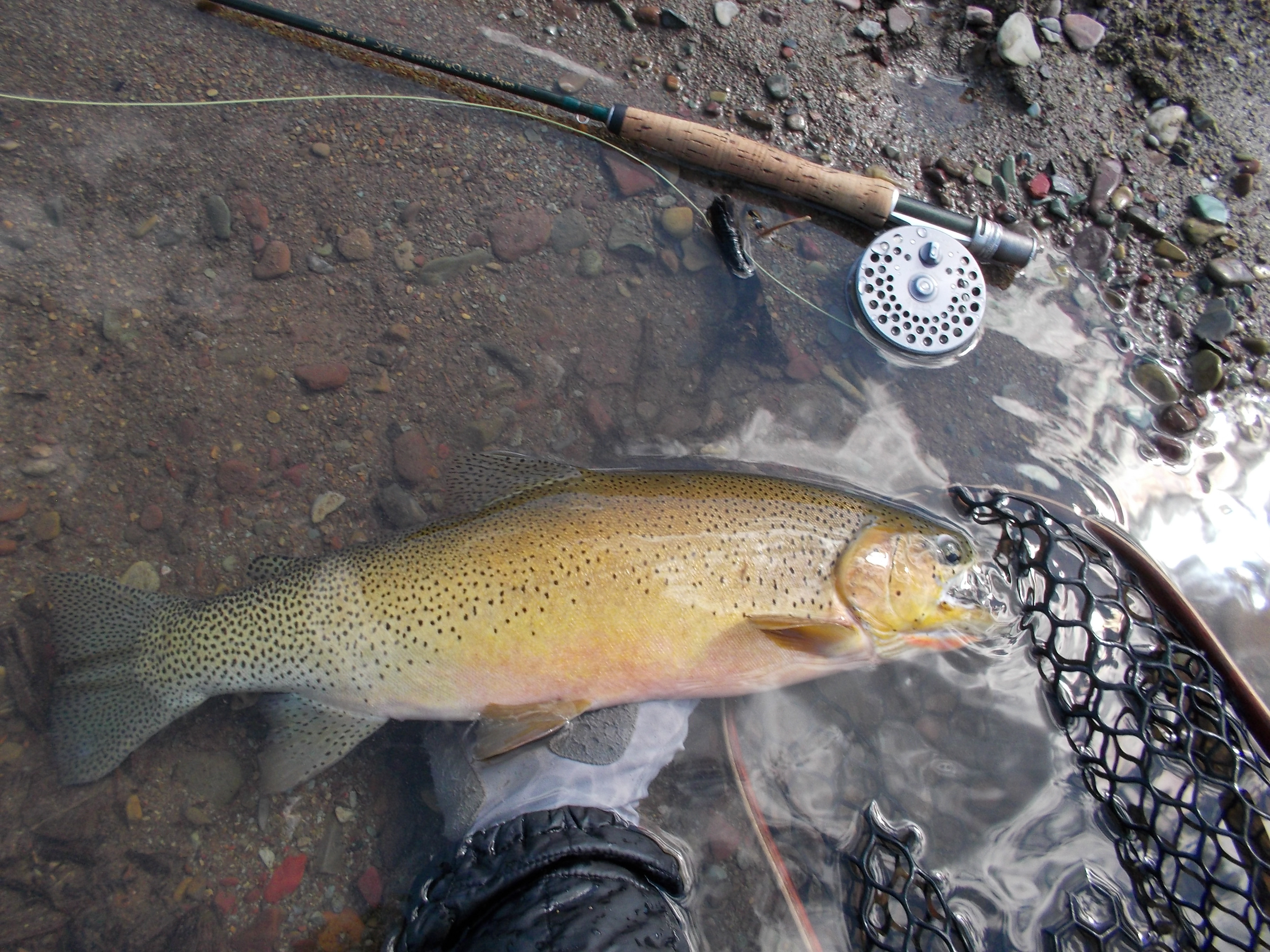
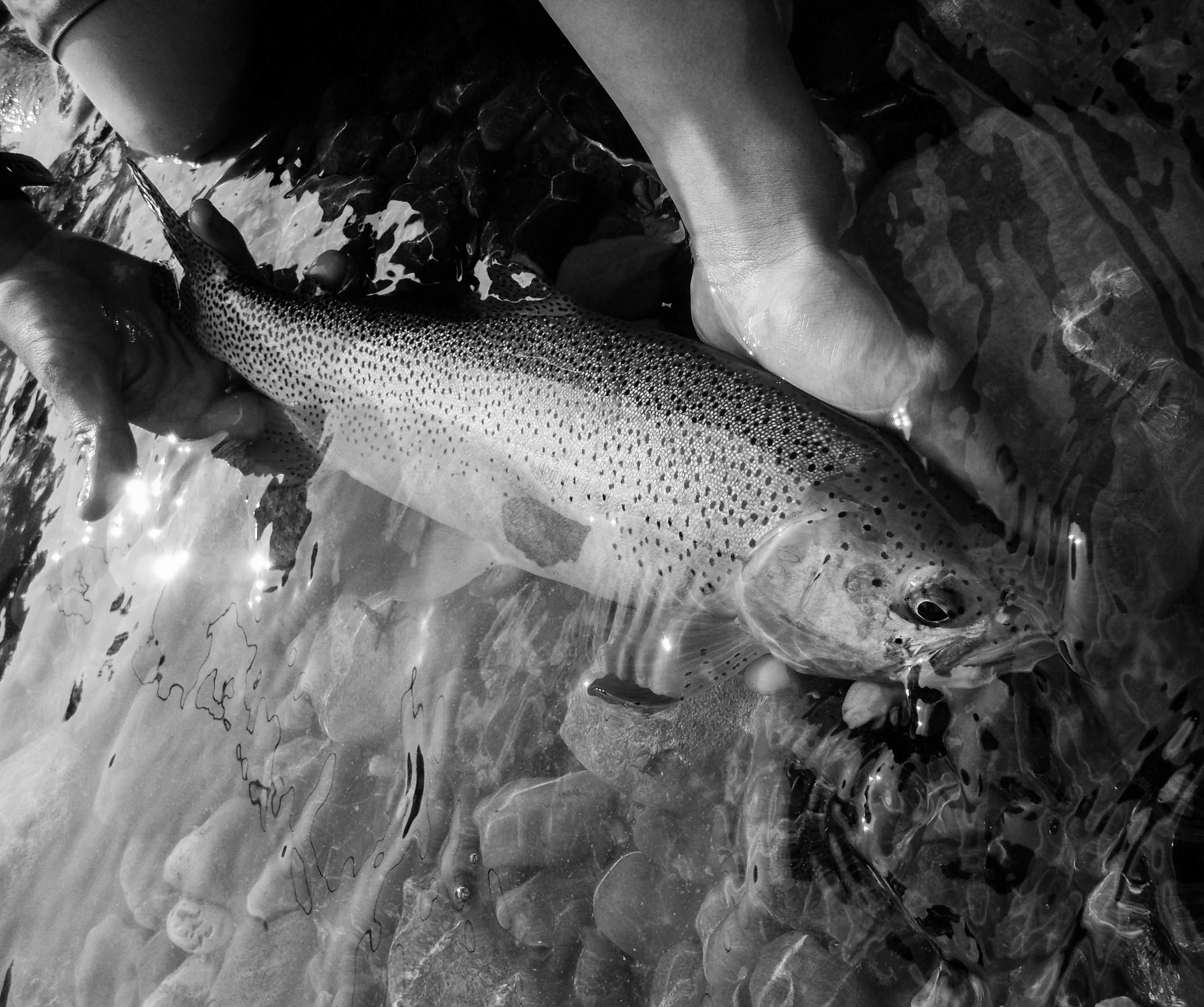
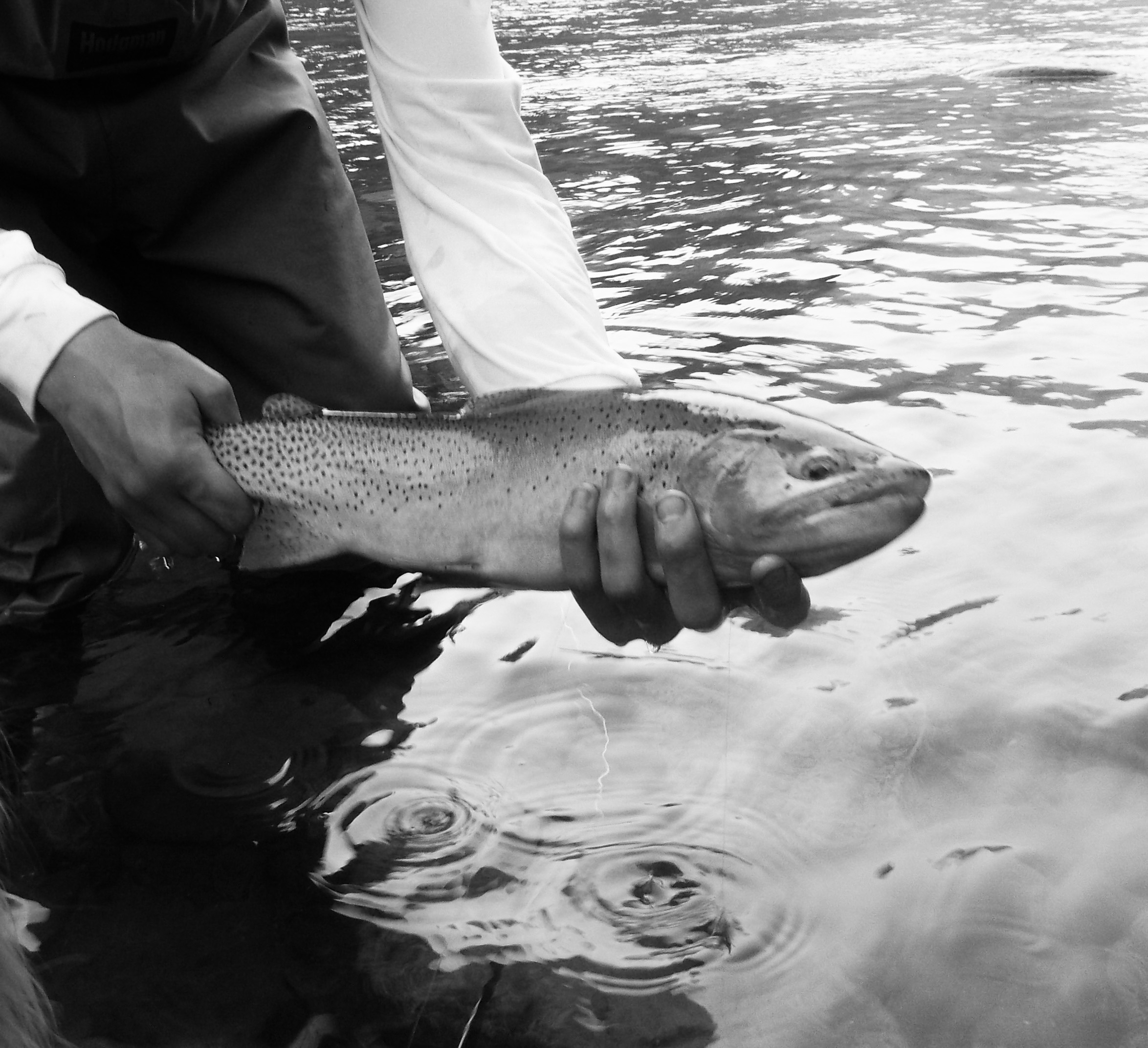
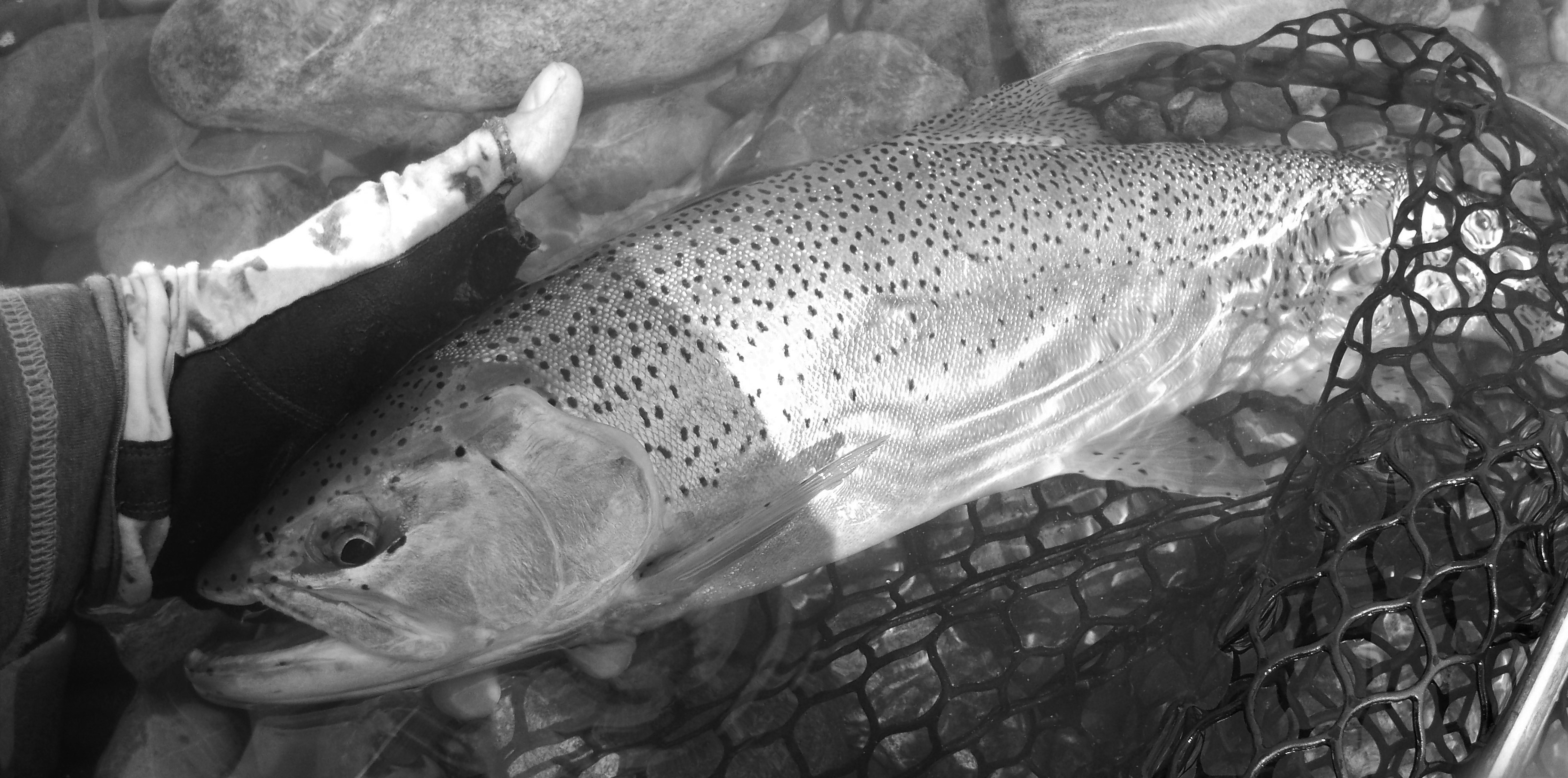
Some say Cutthroats are easy. Sometimes that’s true. Sometimes, however, they are as hard and challenging as any other trout. Here are some photos from our four days of walking clear water in pursuit of this beautiful trout. All Cutthroats were taken on dries. All released…
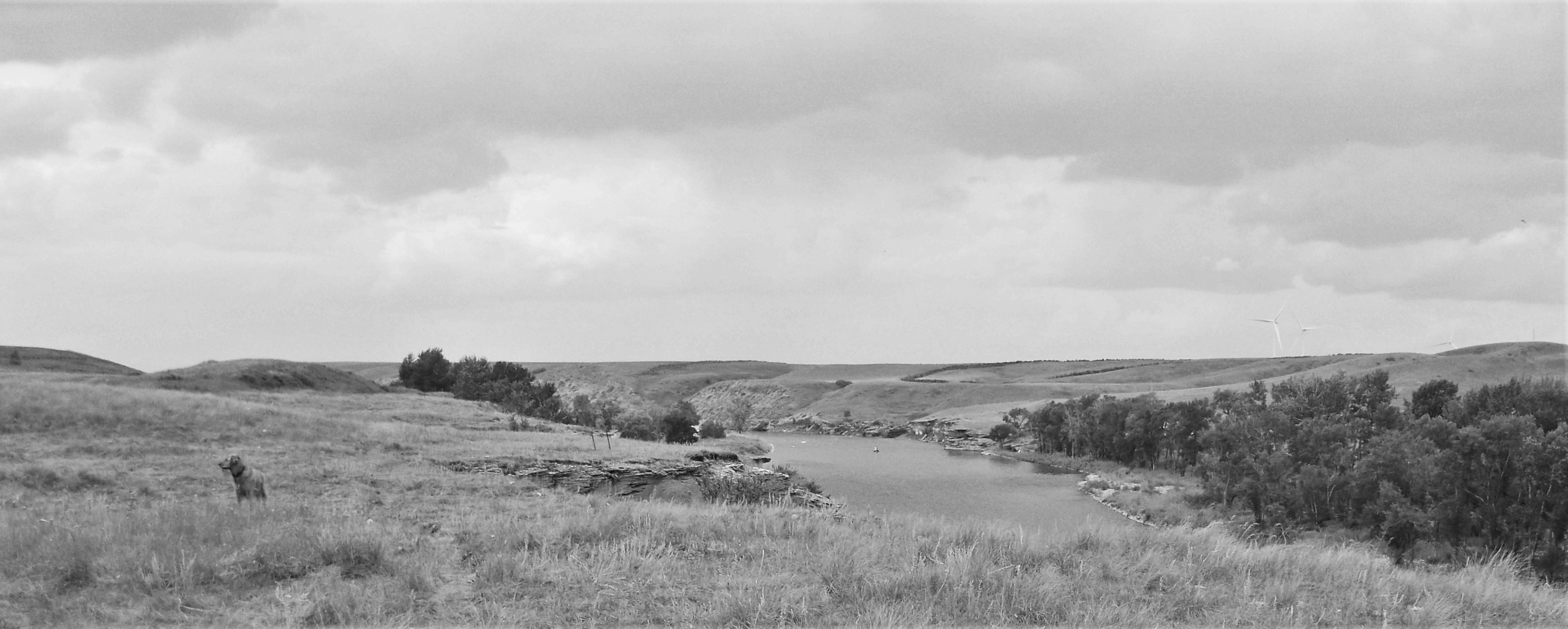
Crisp in the mornings. Sun is arcing low. Noticeable long shadows mid-afternoon. Still windy. Still mainly hanging out in the mountains trying to escape the wind. Still fishing dry flies. Did spend one half day on a tailwater river out on the Plains sight-fishing a slightly sheltered back bay.
When you head out to a river for a day or evening of angling you often have a set of parameters that you operate by. For some people these criterion are broad. For some they are very narrow. The longer you’ve been at something like fly fishing, or any other pursuit, the more you have probably refined the way you practice it; the way you go about it; the path you chose to take. Over time you focus more intensely on some things and discard much of the rest.
Here are some fine trout fooled with small dry flies: mostly ants, beetles and pmd’s in contrasting landscapes and rivers. Some wide flat flows in open austere terrain and smaller clear ones in a treed mountainous landscape. Trout, from the Plains to the Rockies…
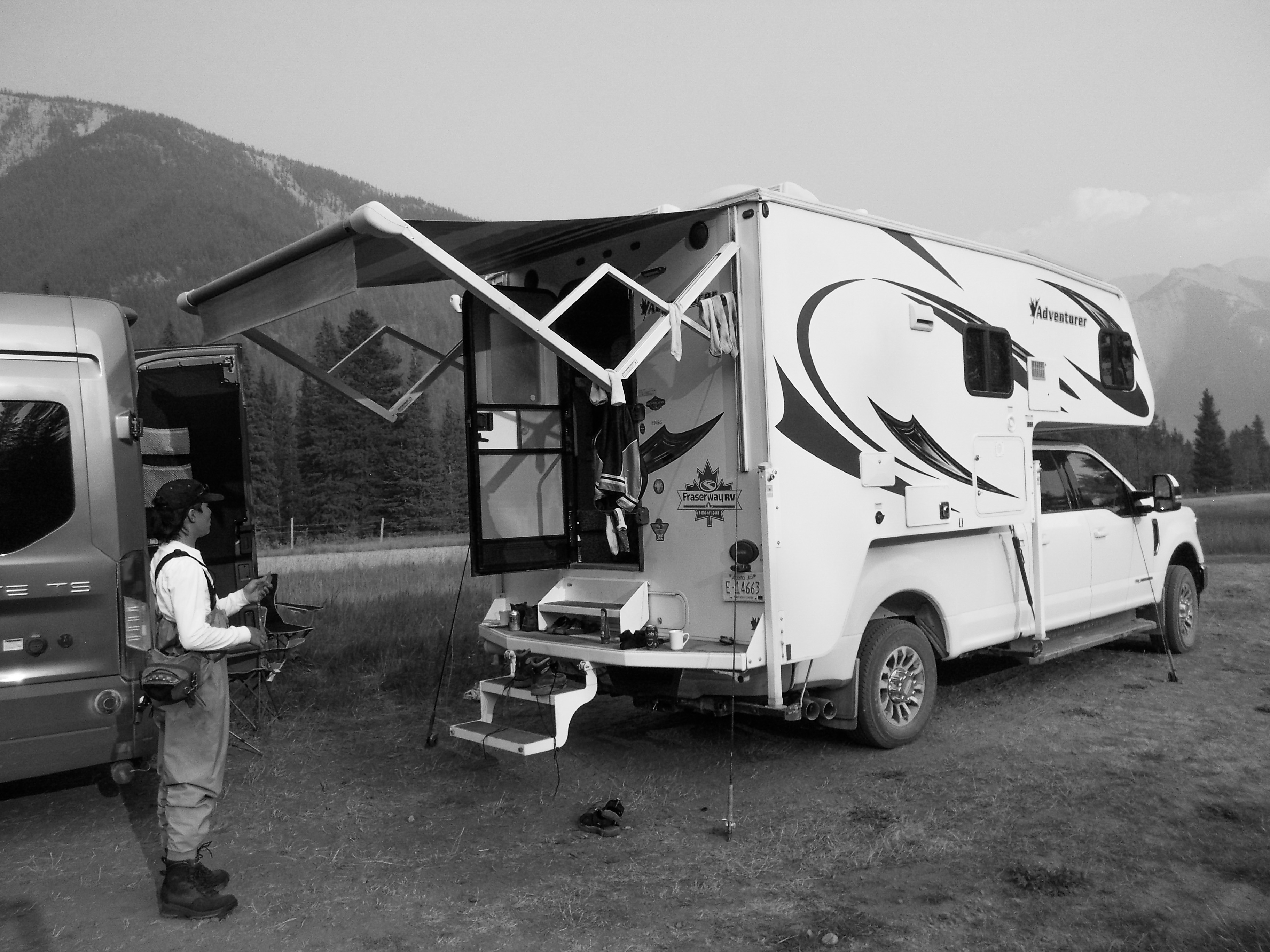
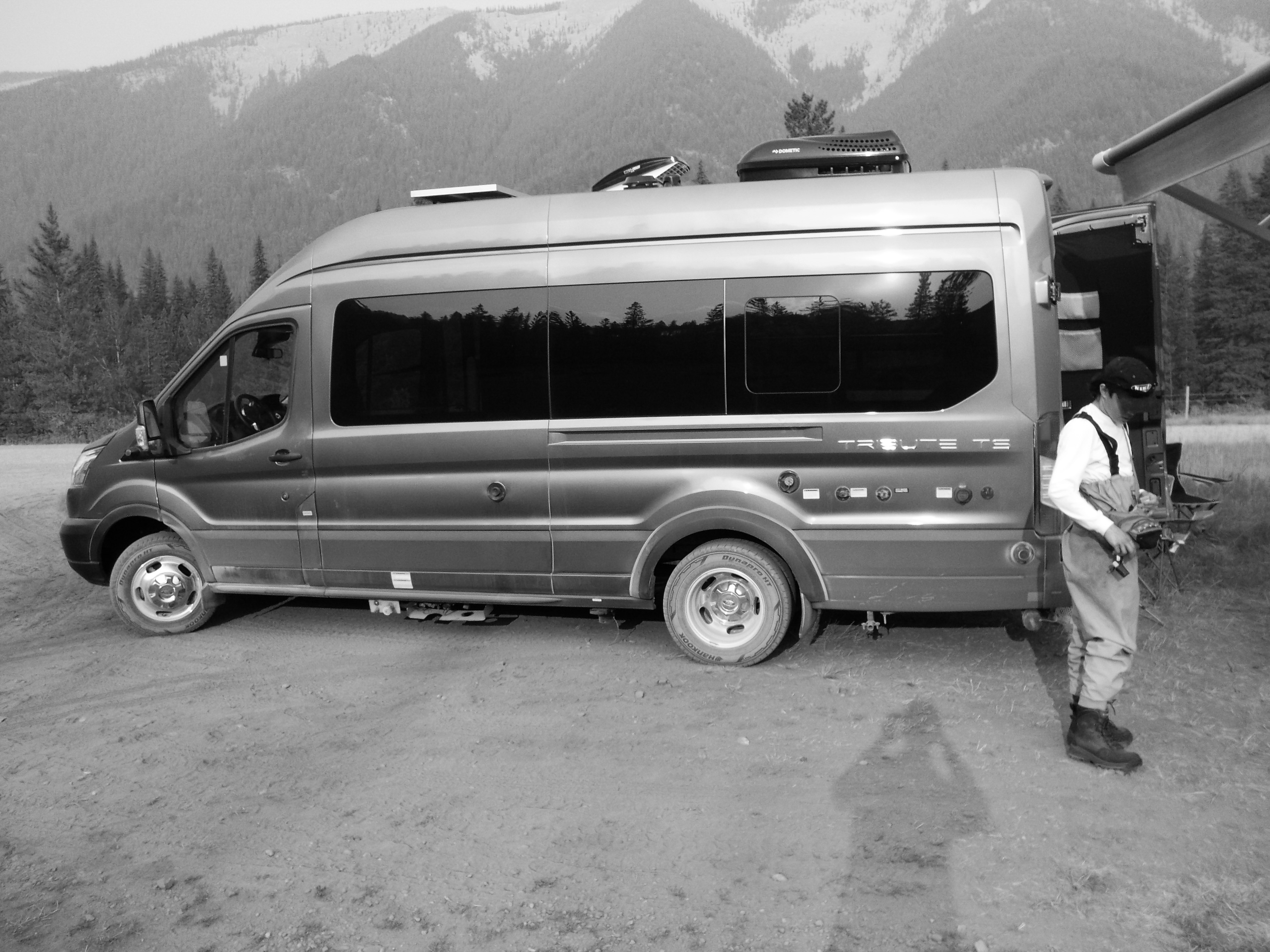
Some friends recently showed up in town. They drove a dusty campervan and a truck camper. After a brief pit stop on main street for supplies and several cinnamon buns and strong coffee, they went up into the mountains in pursuit of cutthroats. Town folk breathed a sigh of relief when they headed to the smokey high country. Up along the Continental Divide the visitors threw tight loops all day and wrangled with some beefy cutts and rainbows in the emerald rivers. Their ammo: foam terrestrials and pale morning duns. They showed no mercy. All caught. Then after a week they holstered their fast action bug launchers and just as quickly as they arrived, they left. A dusty trail was seen heading east…
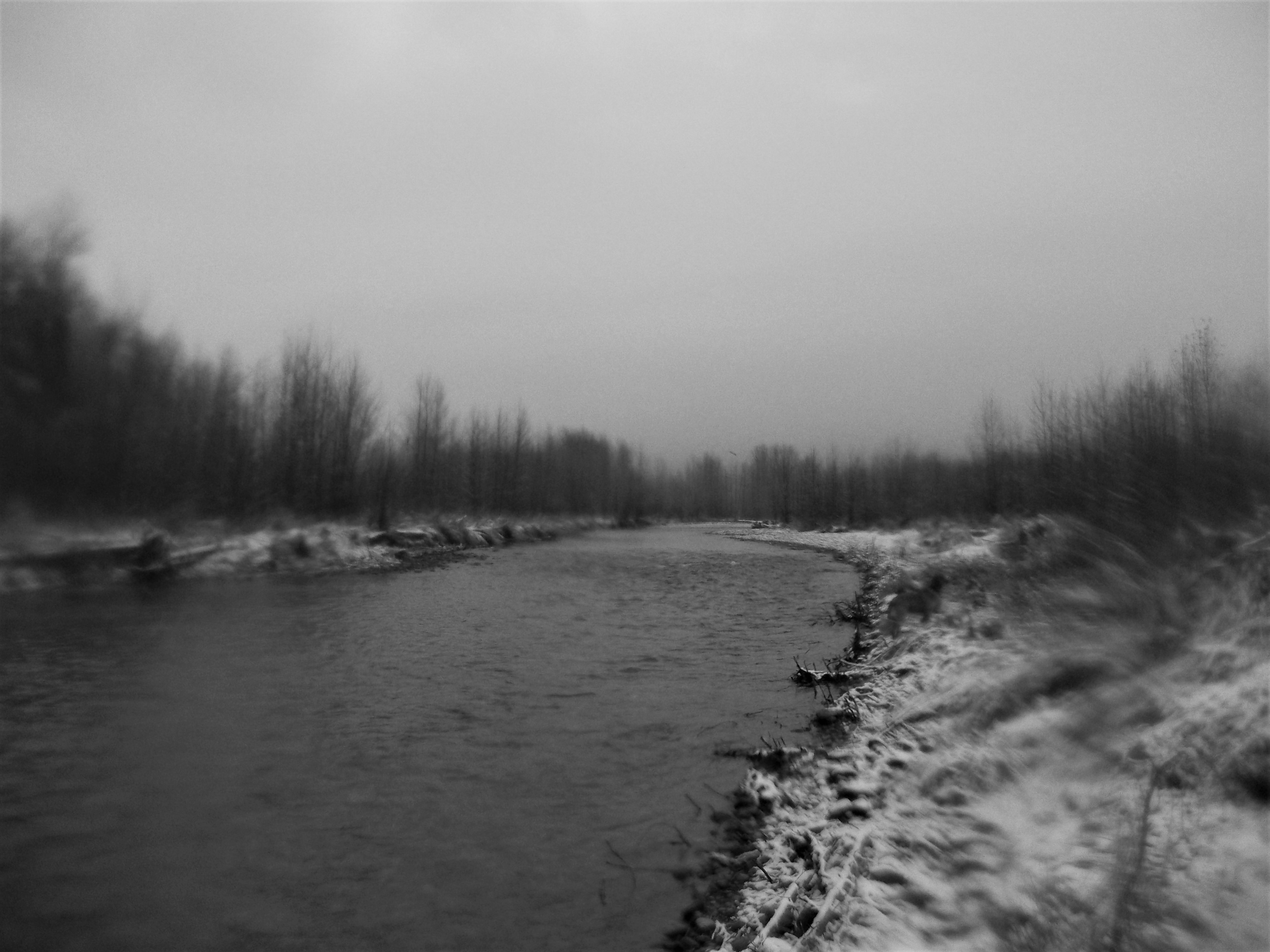
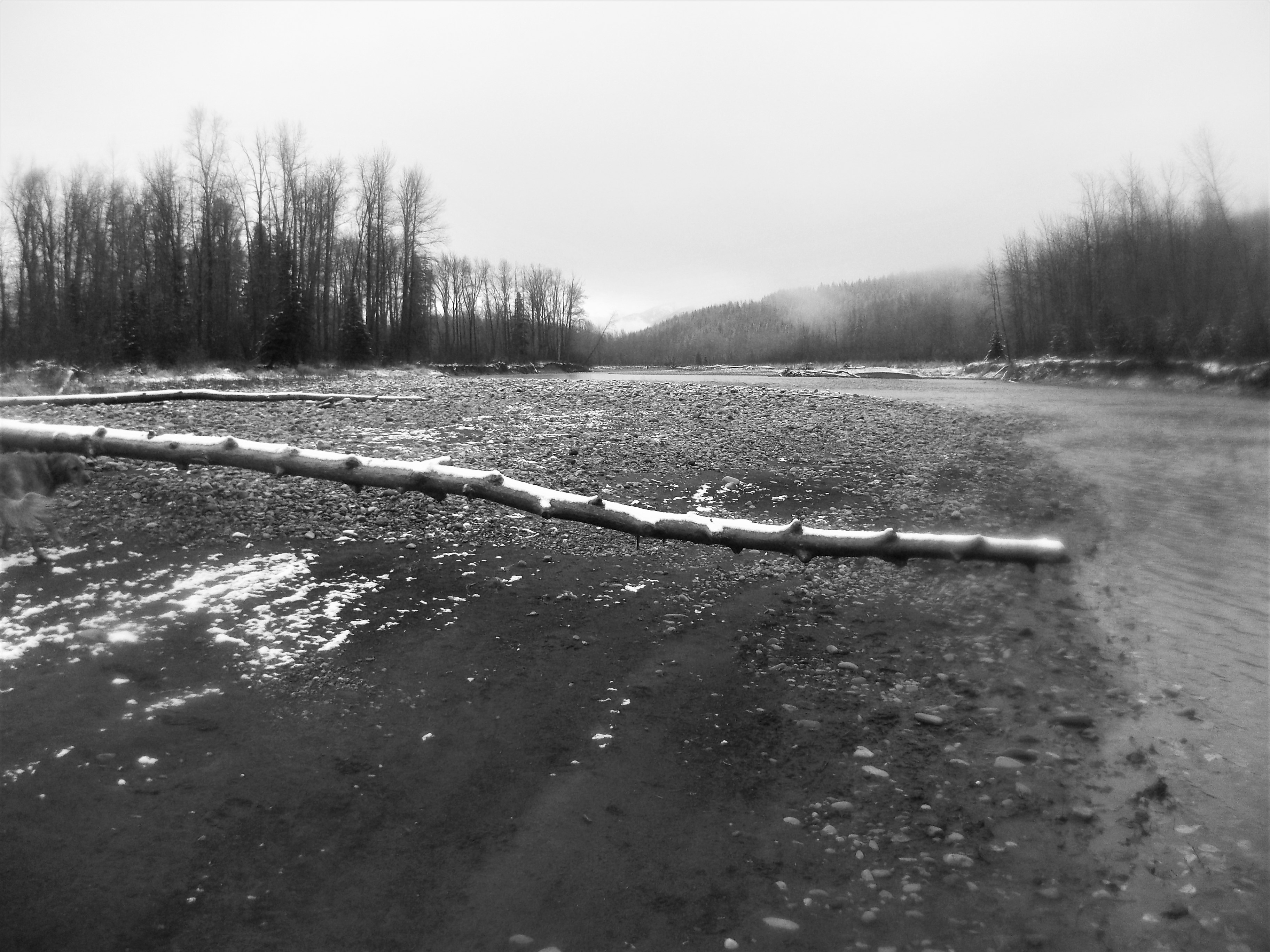
Late October. It’s closing down. Hard to find rising fish. On Saturday saw a couple of trout surfacing inconsistently on my local river late in the day when the wind died down. Missed them. No other opportunities that day. On Sunday changed it up and took a drive through the mountains into British Columbia. Fished the Elk river in Fernie in the afternoon. Hoped for BWO’s. Hoped for some rising Cutthroats. Found some. Nothing big. Caught several. Missed several. Not a great hatch. Actually quite weak. As I said, it’s closing down. I had to search slow collector areas; back eddies, etc., in order to find some rising fish. Only saw one other angler as I worked my way upstream. It was a young boy and his grandmother. He was fishing. She was supervising. They were standing above at a deep, clear, calm pool next to a huge log-jam, spotting cutthroats and occasionally catching one. When they saw me they said, “We didn’t think there would be anybody else foolish enough to be out today”. With a big smile the boy showed me a photo of a Cutthroat he had just landed. A great fish. He didn’t know what fly he caught it on. I checked. It was a small parachute Adams.
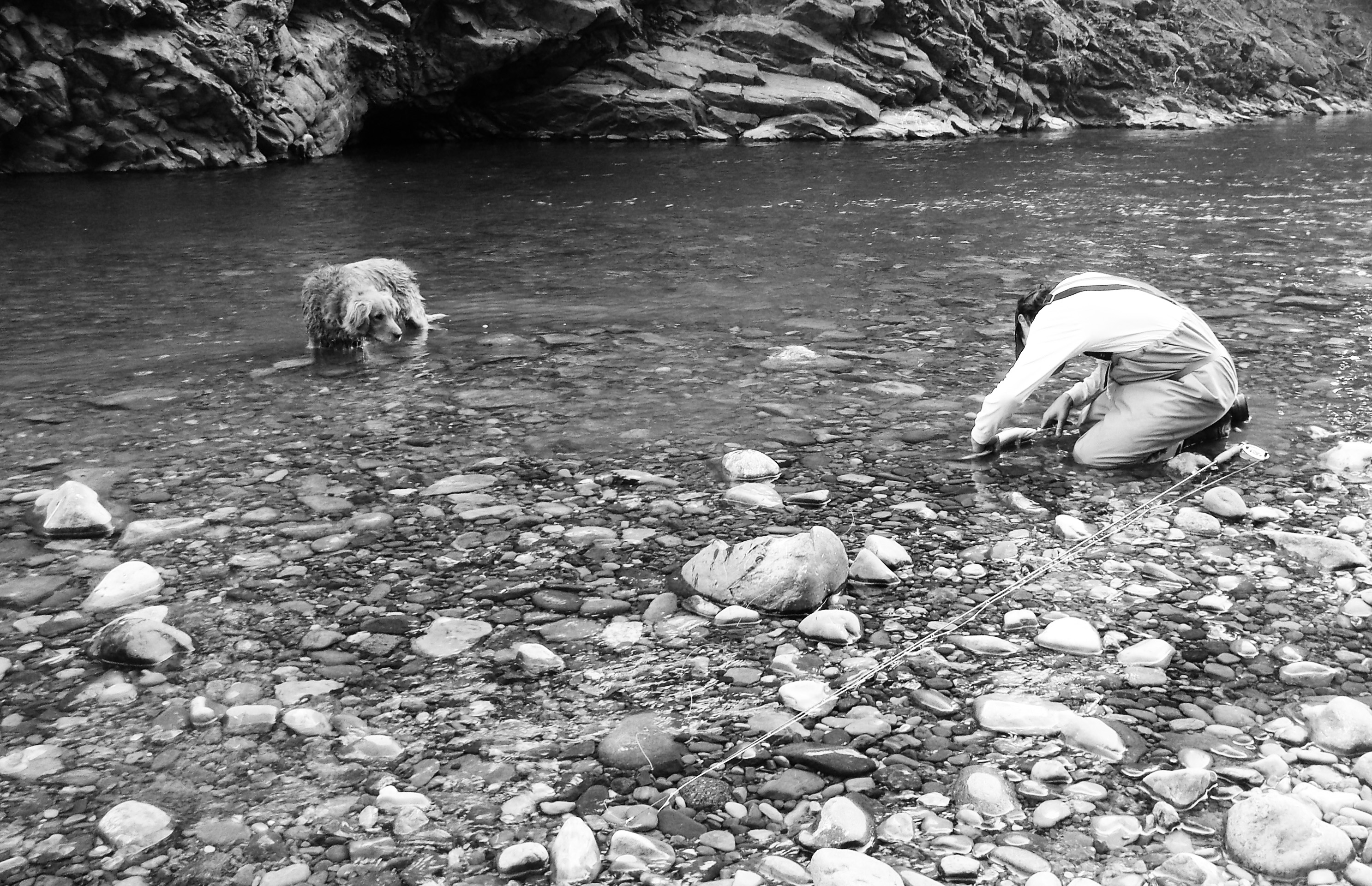
I went just upstream of them and fished a slow area. Two fools casting dry flies in late October in the rain, sleet and snow. Two fools, a grandmother and a wet dog.
The flow has finally dropped on a local tailwater river. There are now many more targets for the dry-fly angler. Many of the softest feeders I spotted in the shallows were Cutthroats and the hybrid, Cutt-Bows. They were often much more demanding and discriminating than the other risers. It’s mainly small flies hatching, Pmd’s size 18, 16. Challenging at times…with the slower water many rise to duns.
“I’m gonna win. There’s no way I’m goin’ down. I don’t go down for nobody”.
-1940’s Boxer, Jake LaMotta
A local tailwater river that I frequently dry-fly on has a healthy population of sizeable rainbow trout. This is not surprising as they are the predominant trout species in my region. It also has a good population of brown trout. Also not surprising.
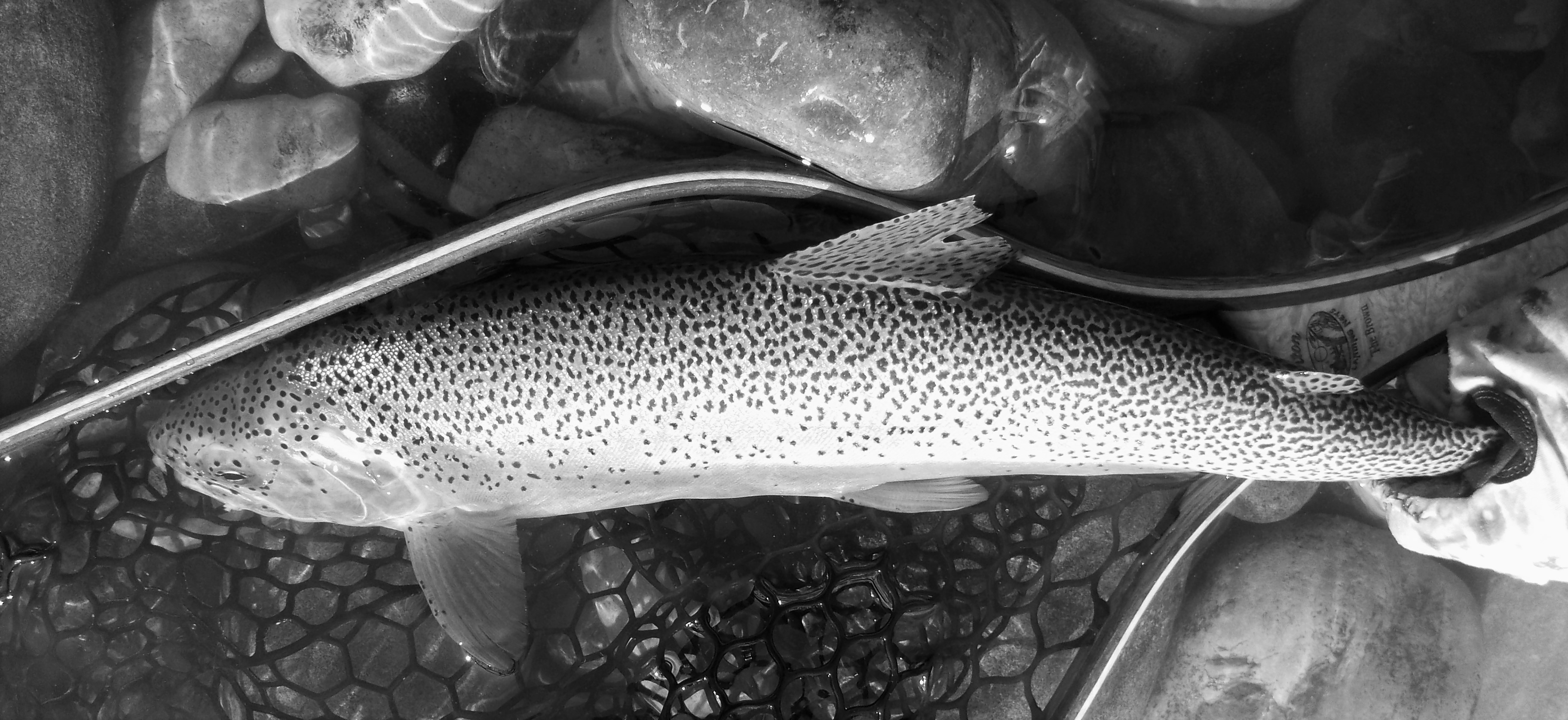
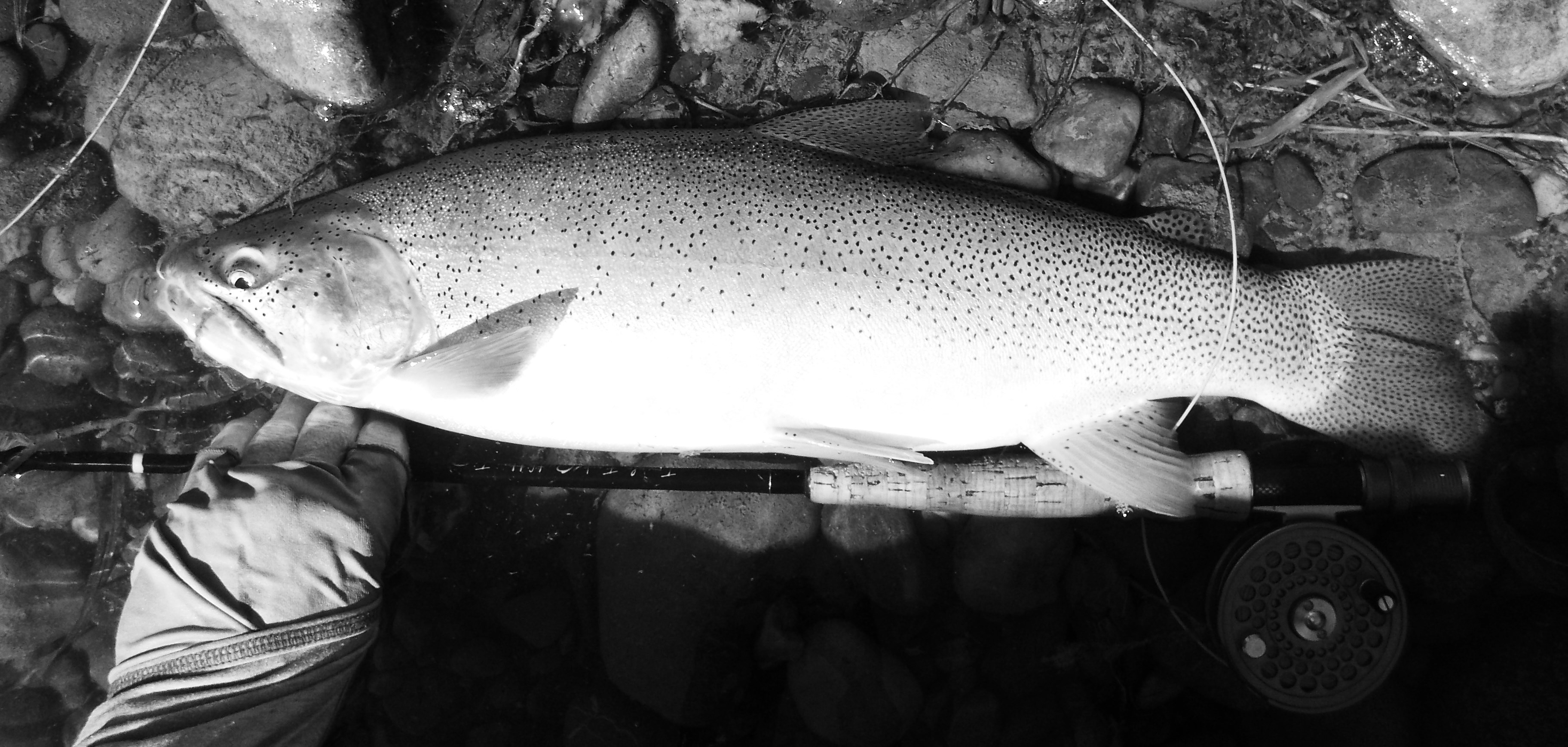
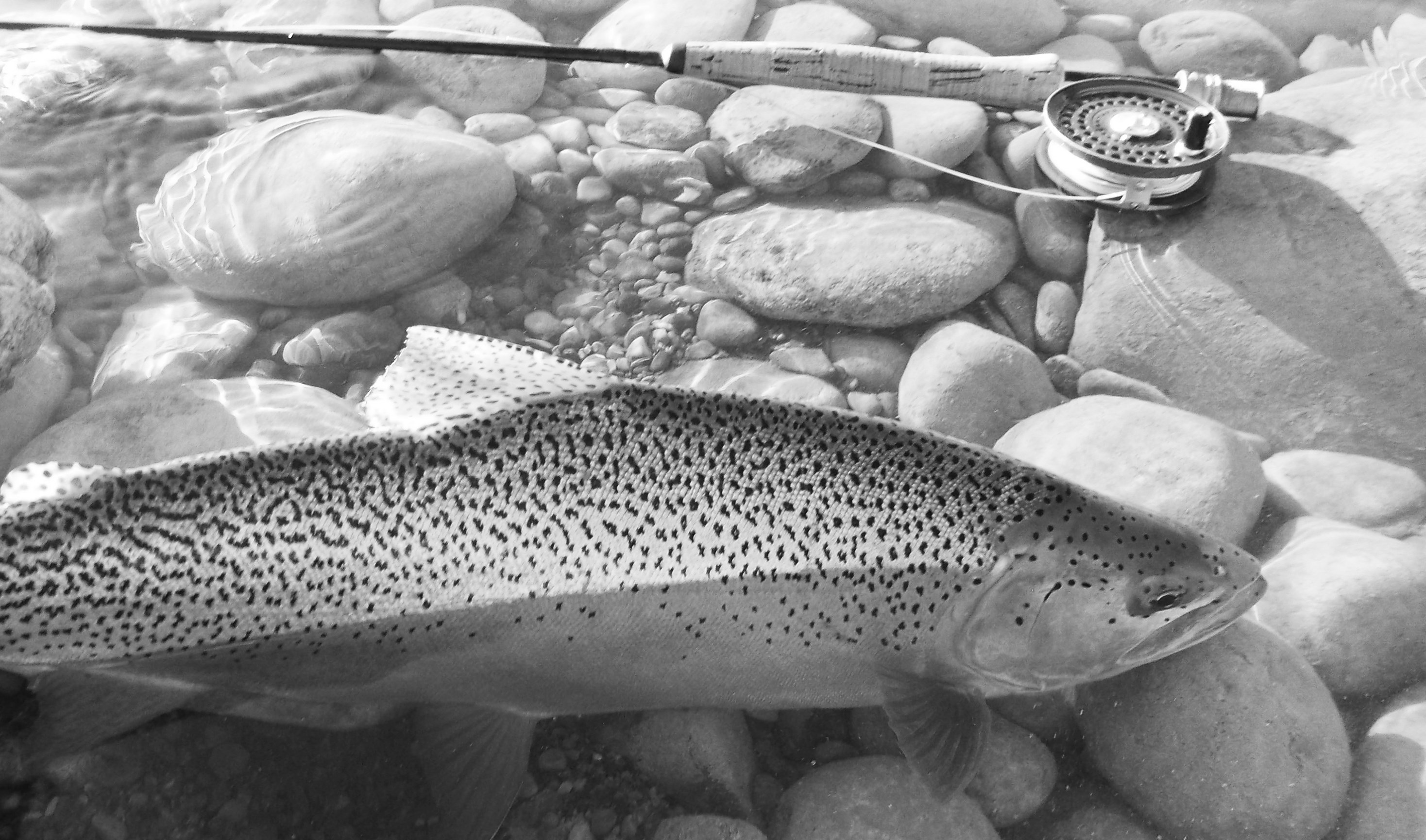
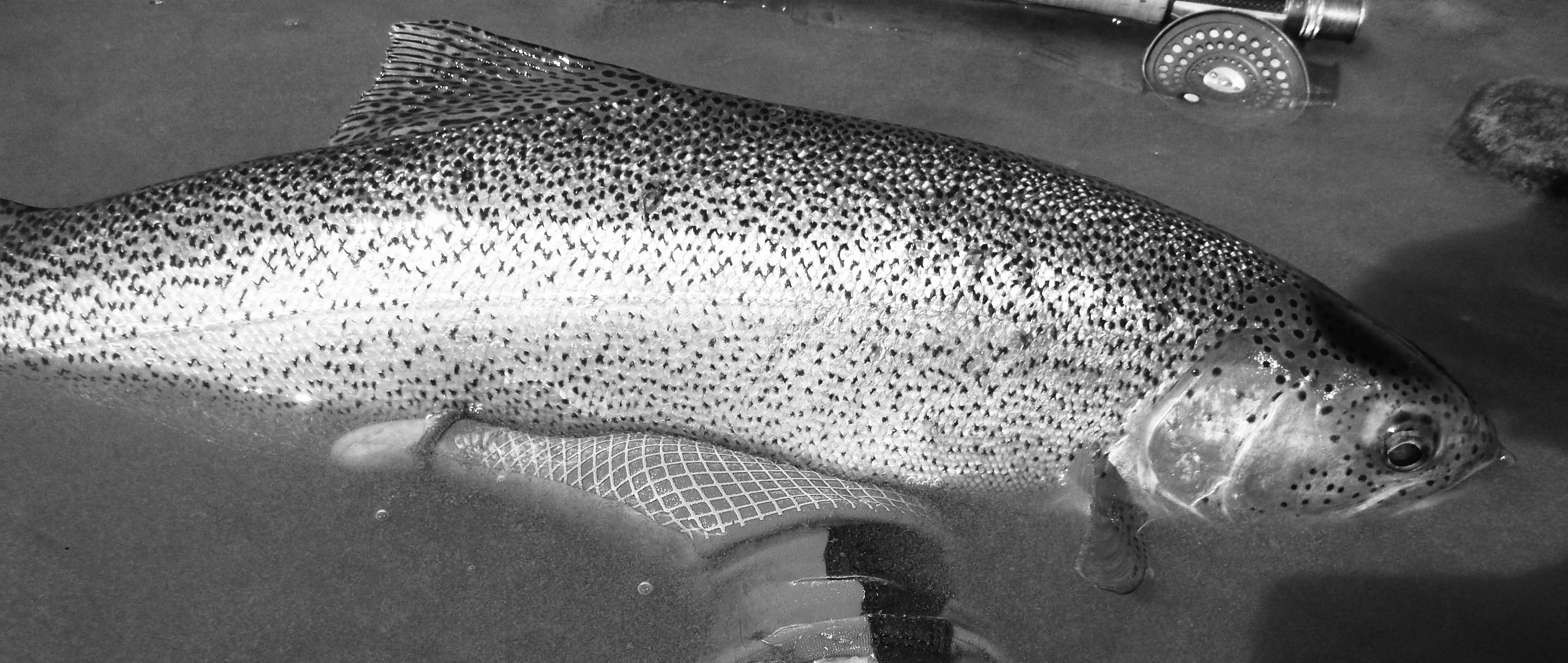
What is surprising is that in spite of this river section being a fair distance from the mountains and the water quality being far from pristine, it has some very healthy Cutthroat and the hybridized Cuttbow trout. These fish can be quite large but what is extraordinary is that they are especially robust. Hook into one on a broad section of the river and they race for the horizon, and can take you into your backing.
I go there when I expect a hatch and look for surface disturbances. It is “technical” water: whether it is rainbows, browns or cutthroat, or a hybridized version, you have to pay attention to what the fish are focused on (eating) and also their rise forms to figure out whether you fish on top, in the film, or have to go slightly subsurface. I sometimes get the subsurface feeders to tip up and take a dangling, klinkhammer style fly, or a helpless easy floating target such as a cripple pattern. Some people have success using soft hackles in this situation.
The river has very impressive rainbows and brown trout but I consider the cutthroat and their hybridized brethren to be the “Raging Bulls” of this neighbourhood. Think Jake LaMotta… they just don’t give up.
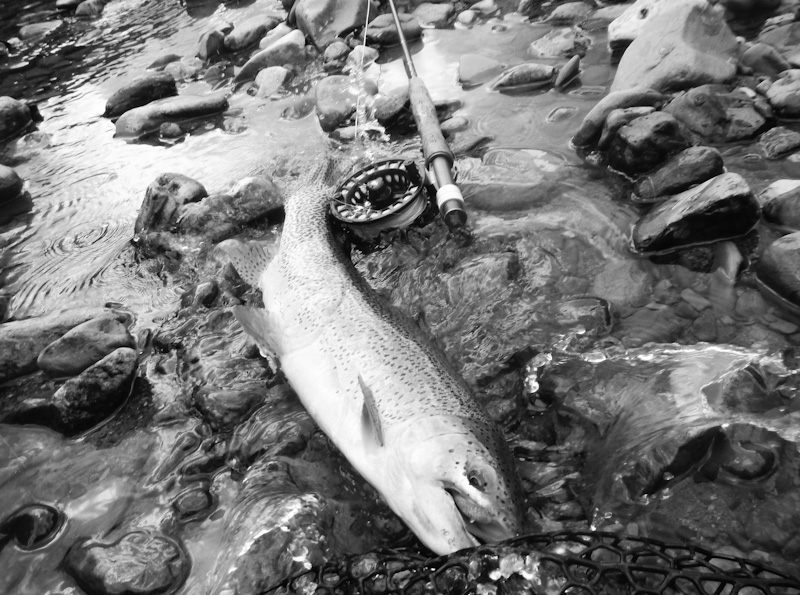
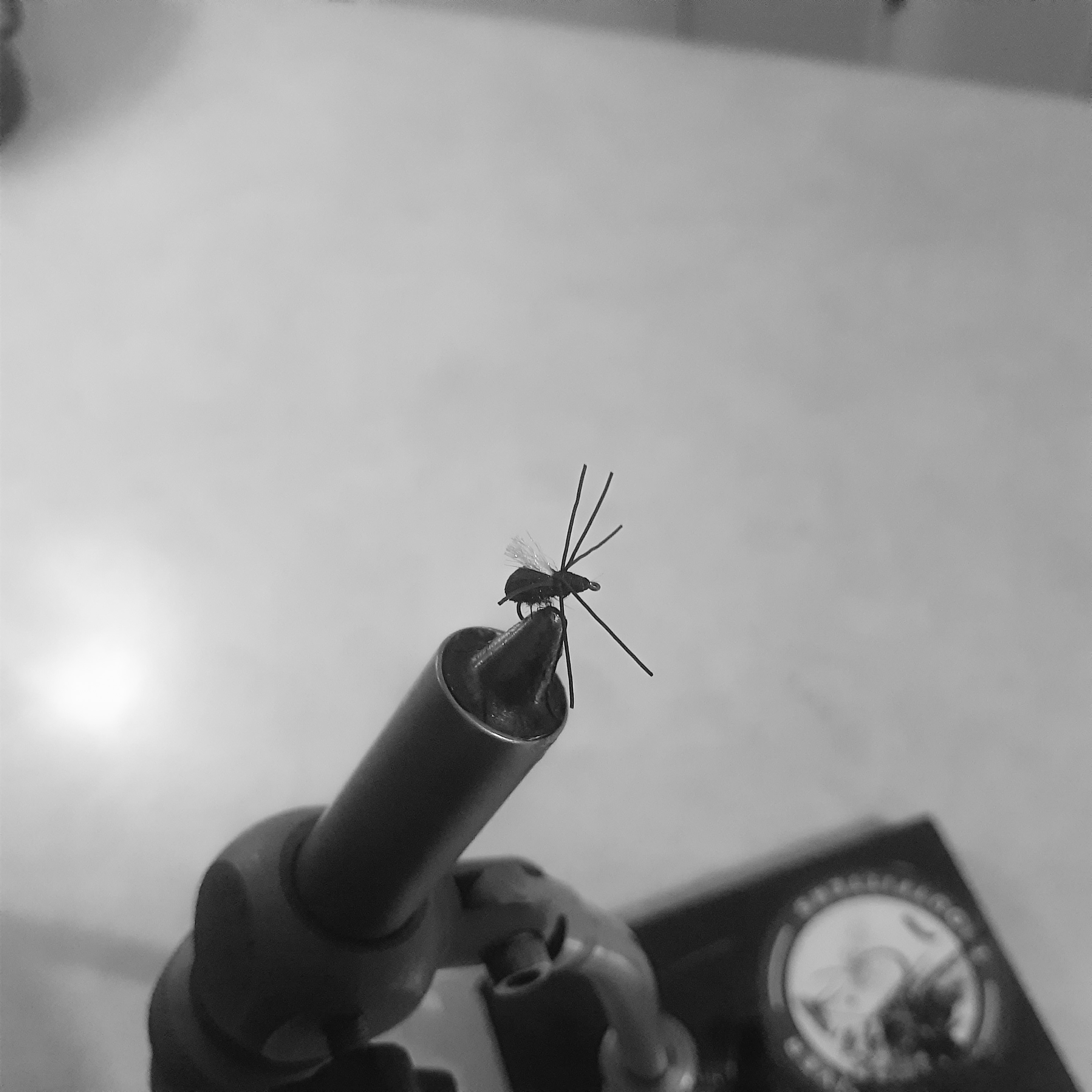
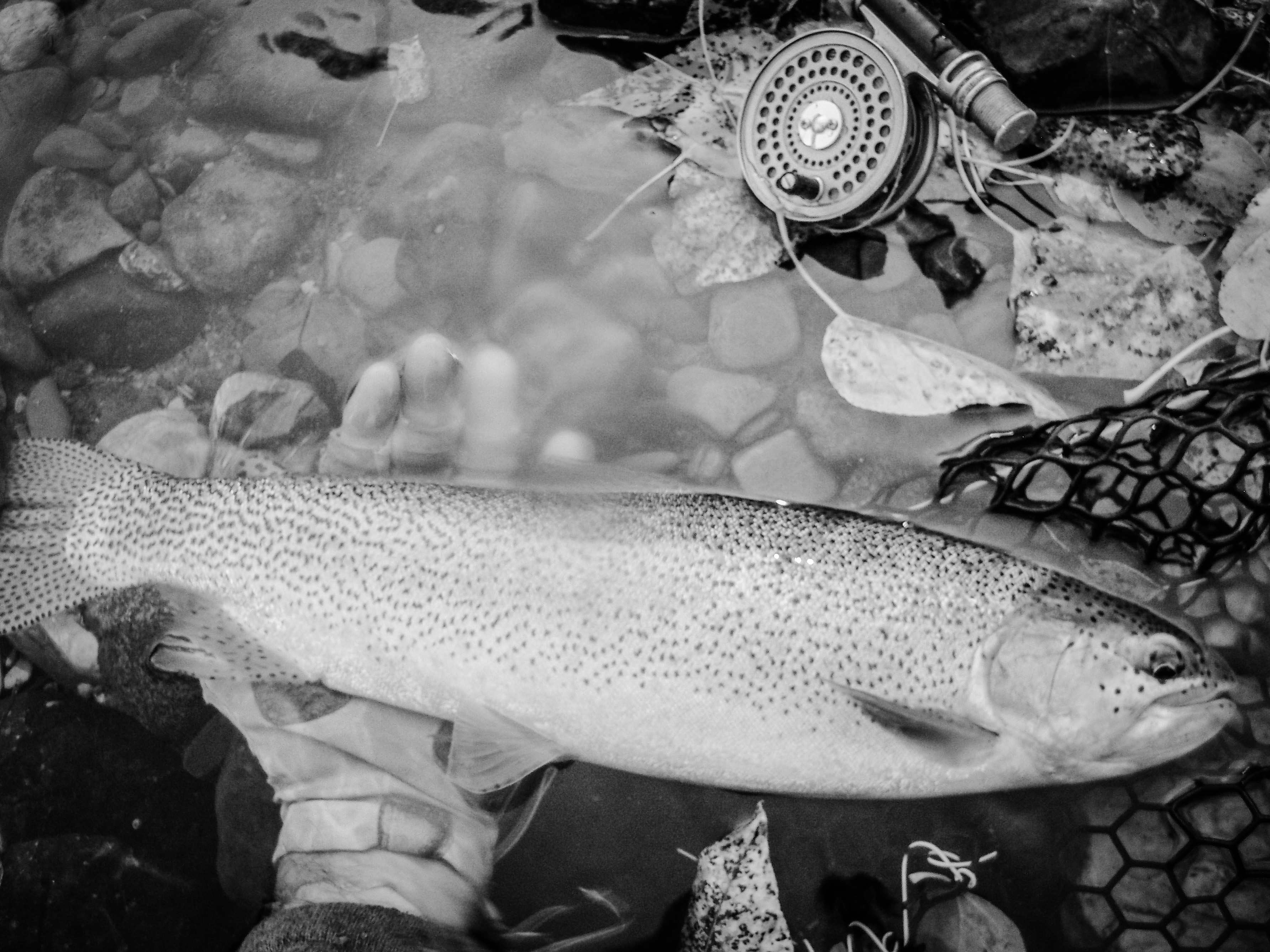
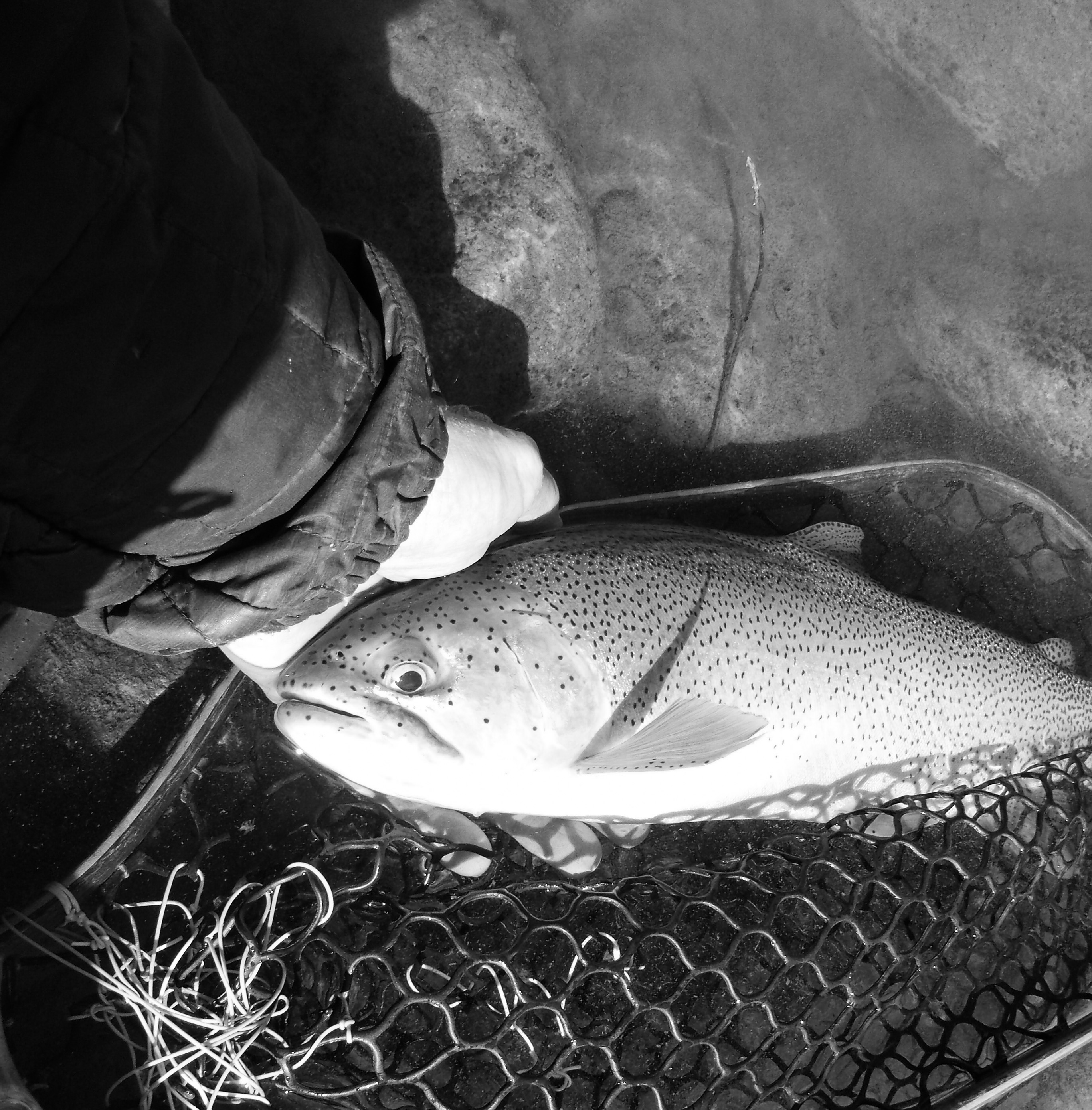
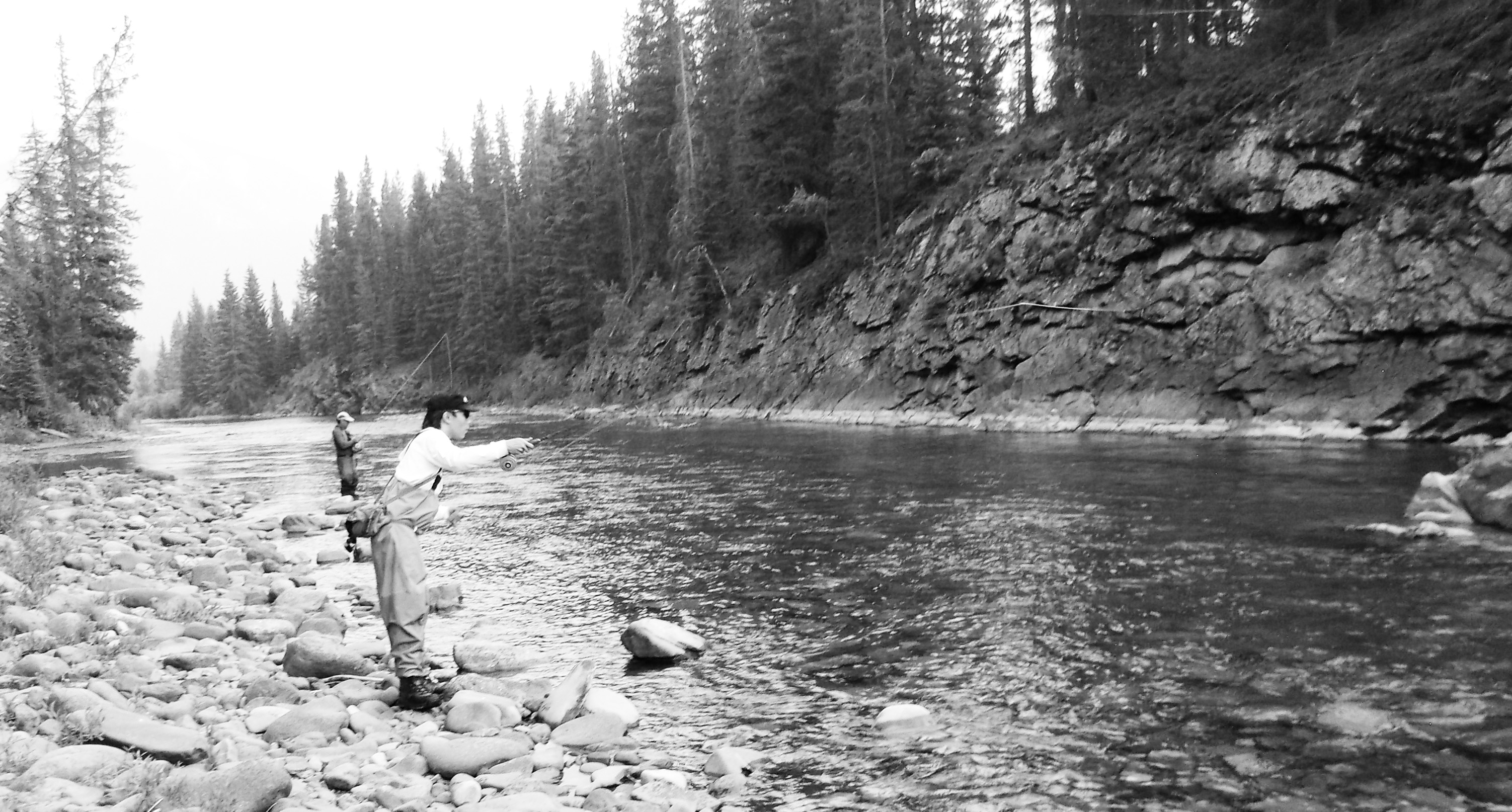
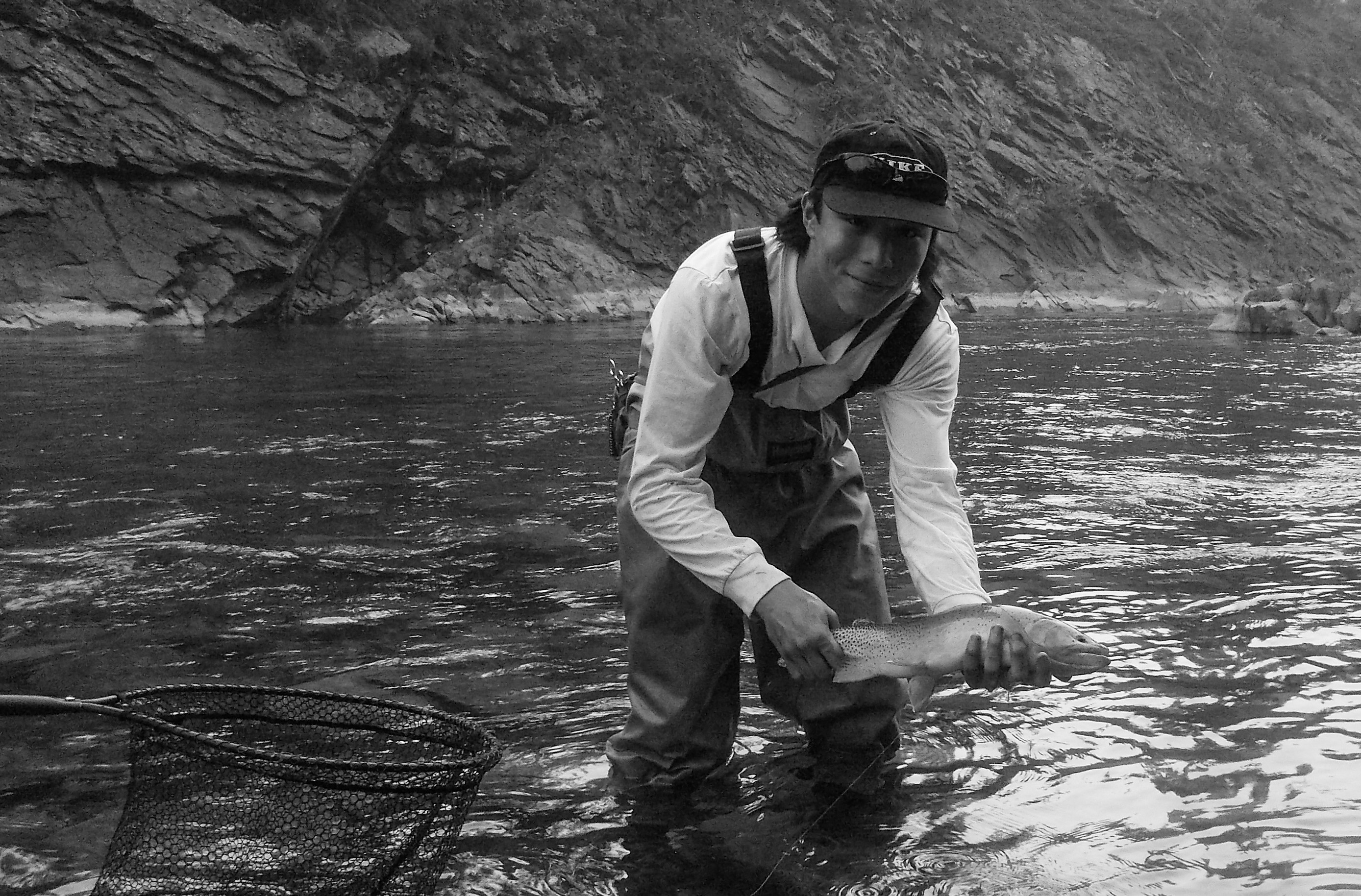
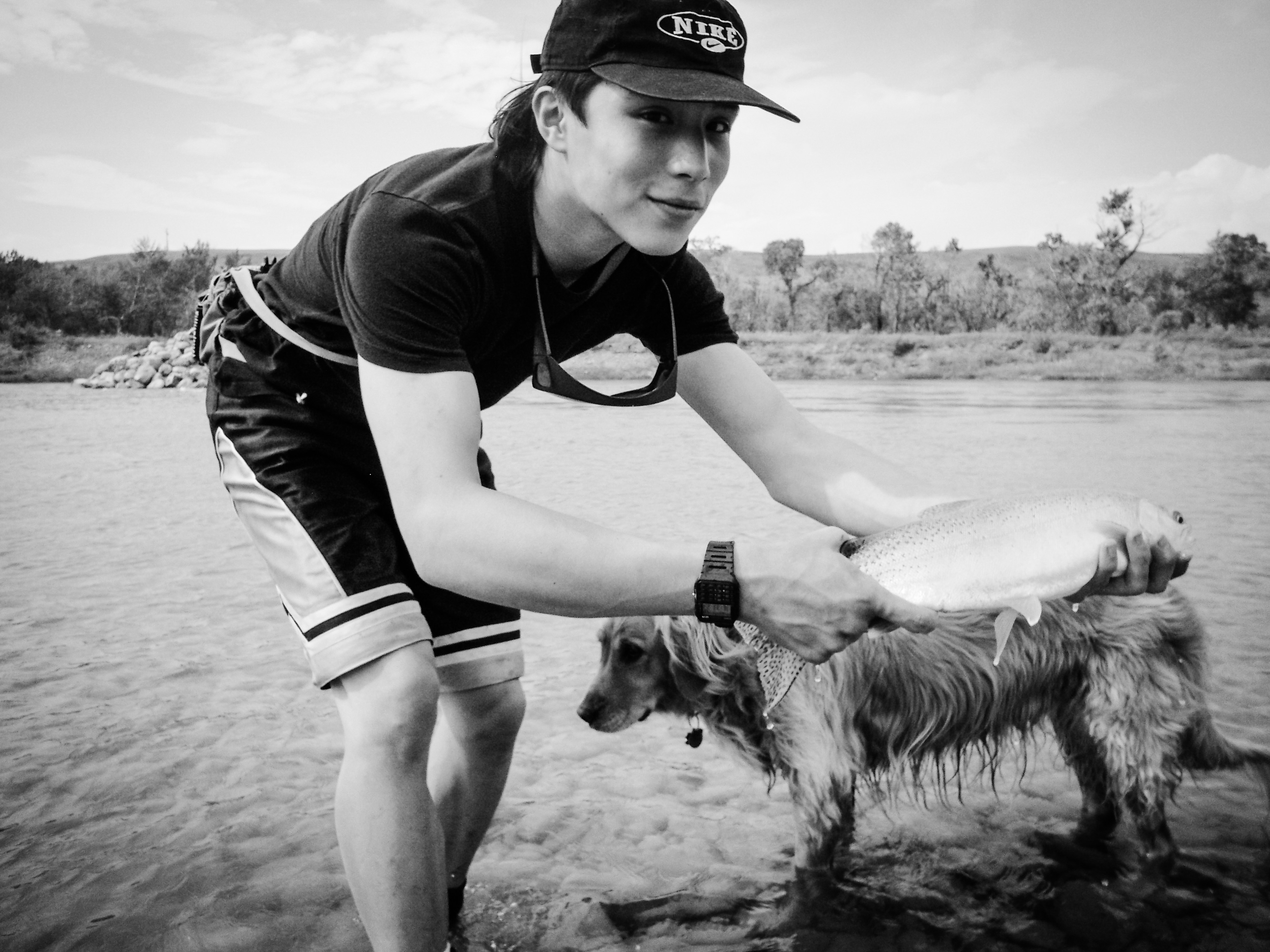
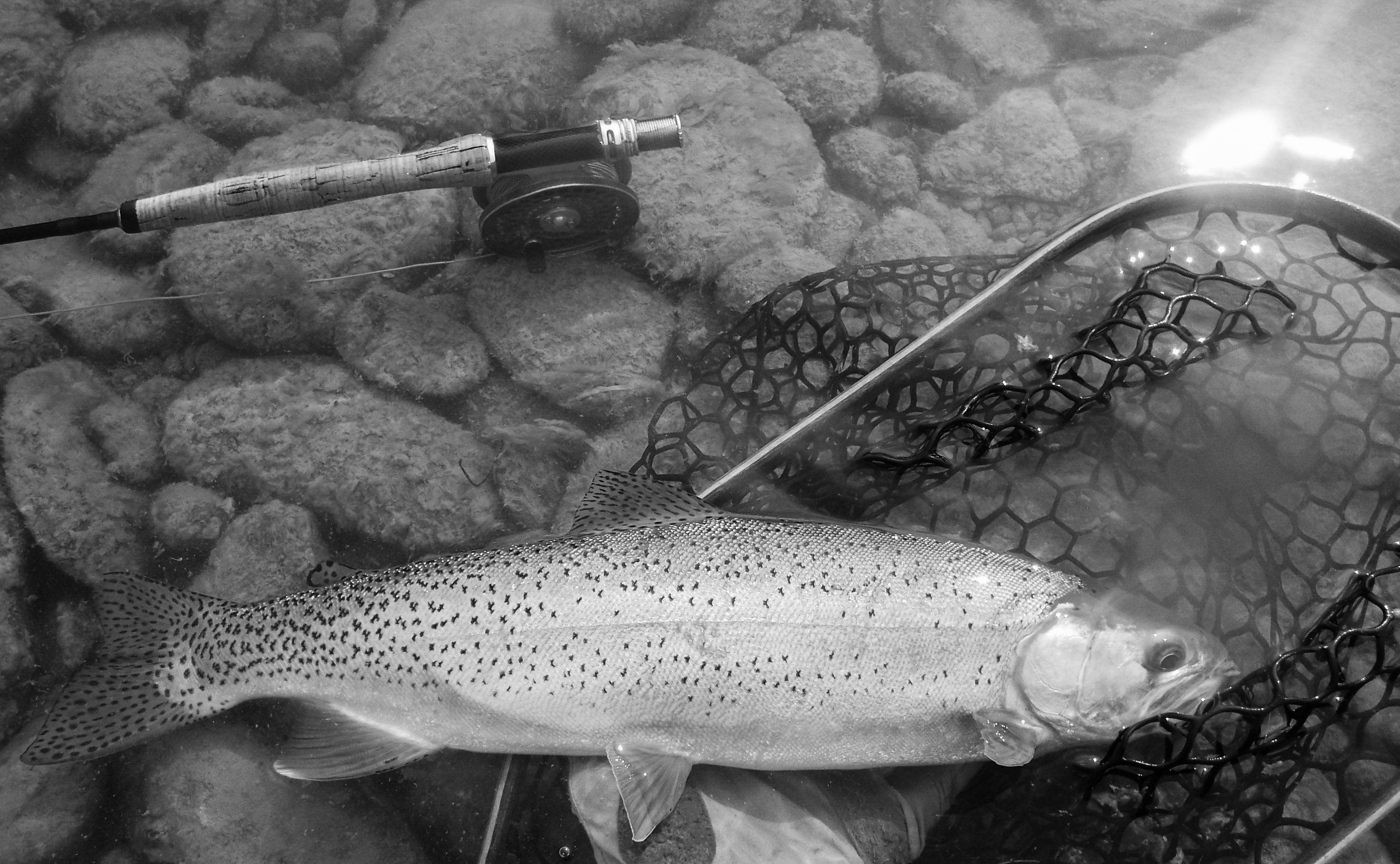
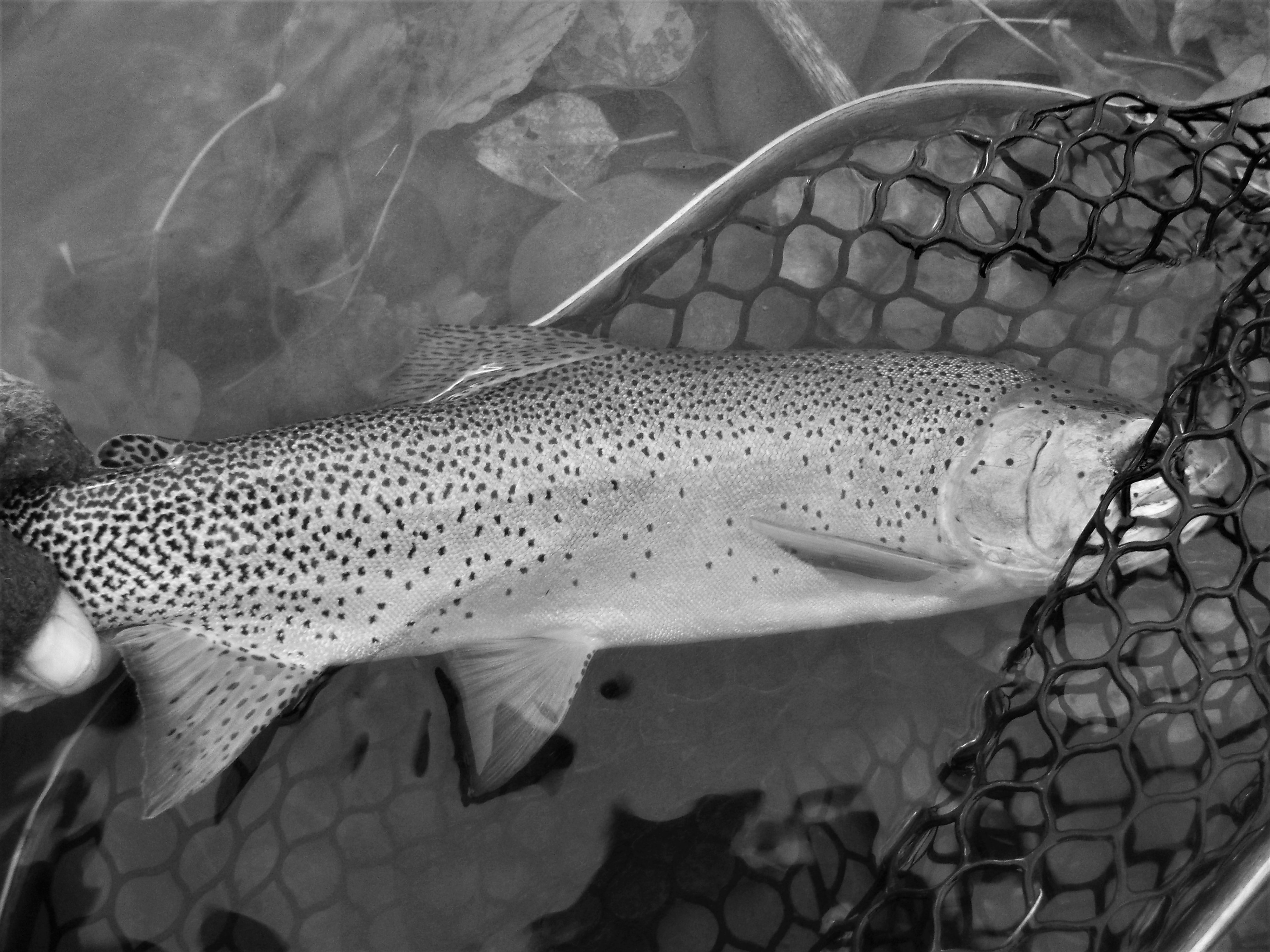
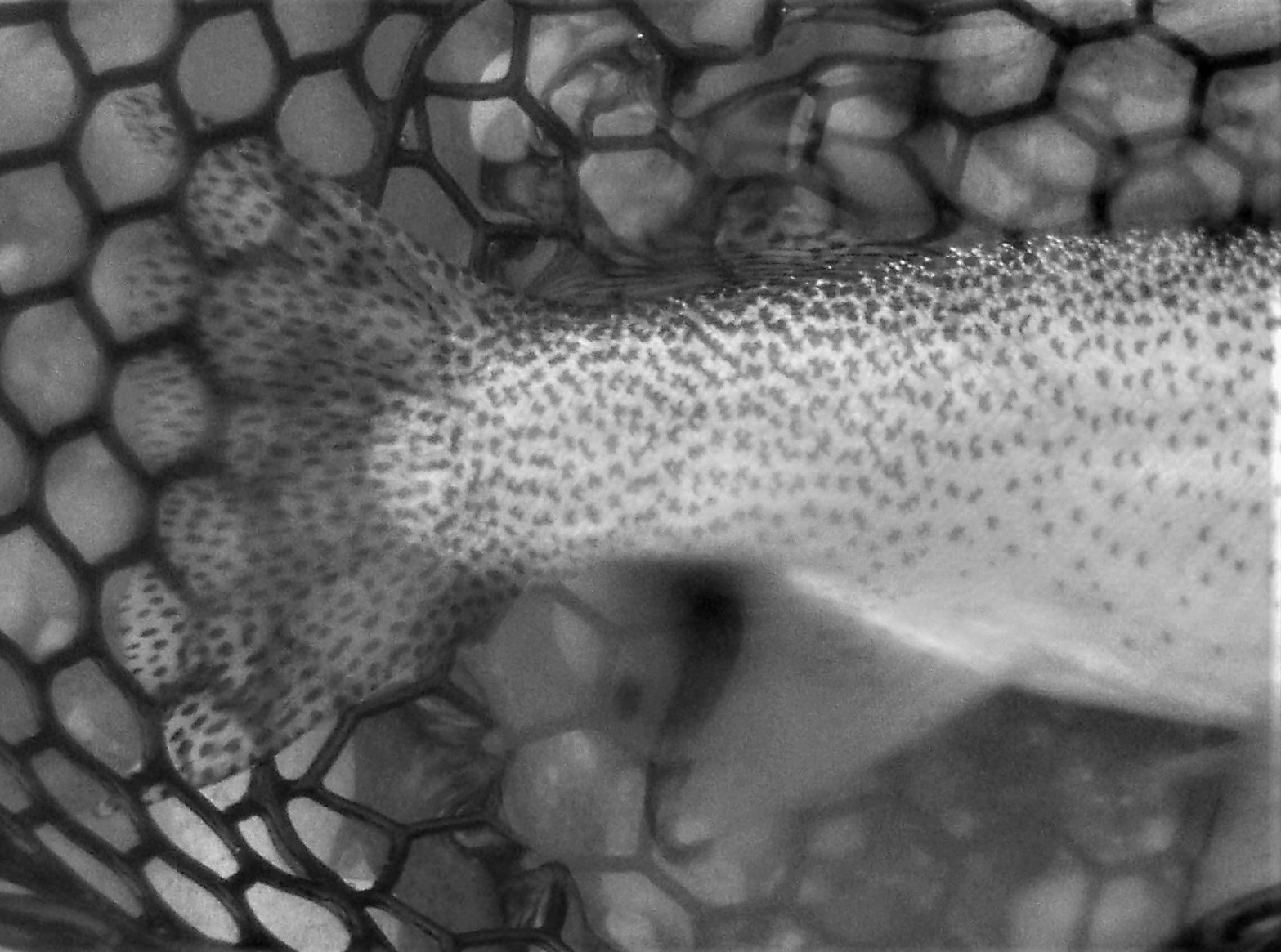
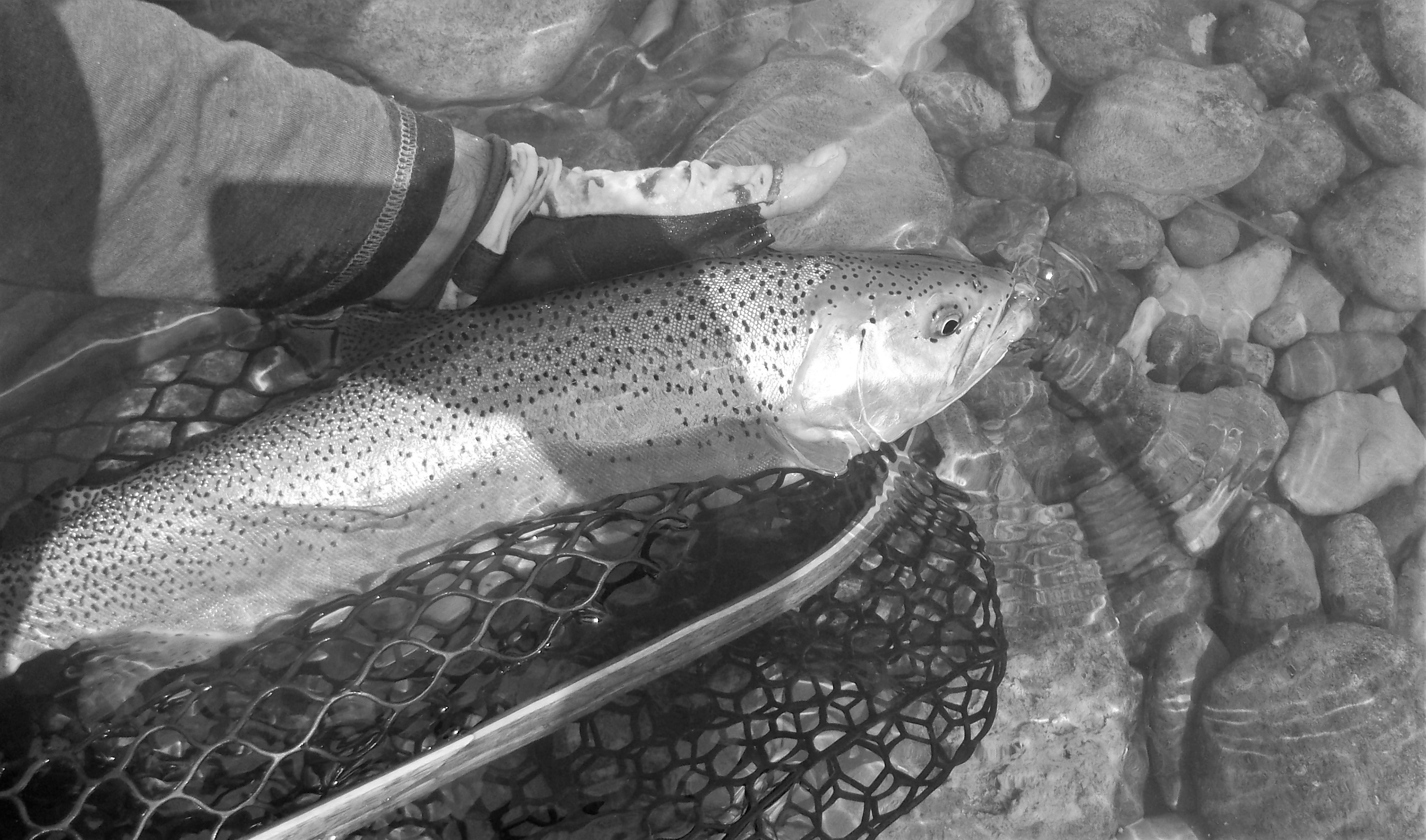
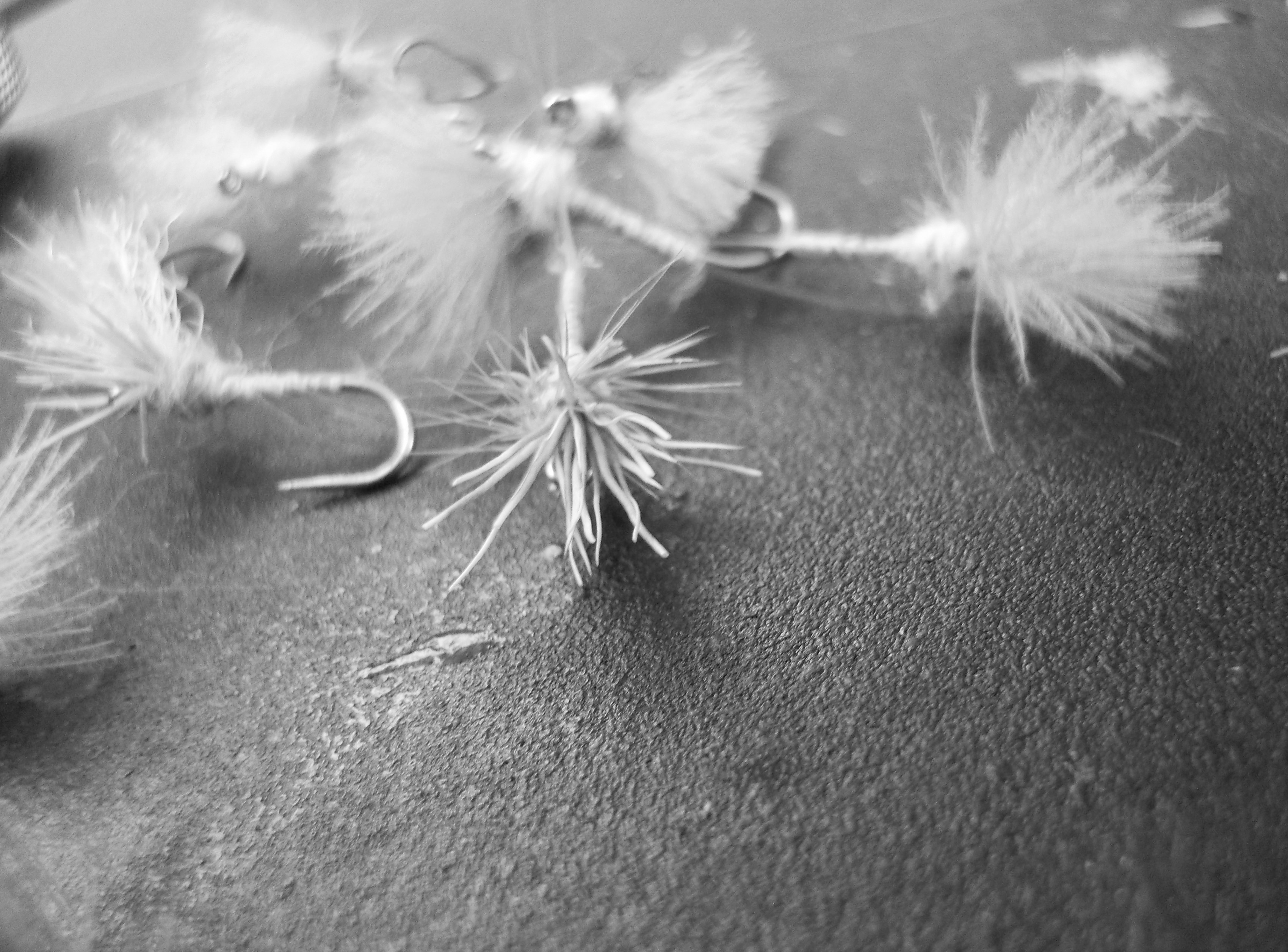
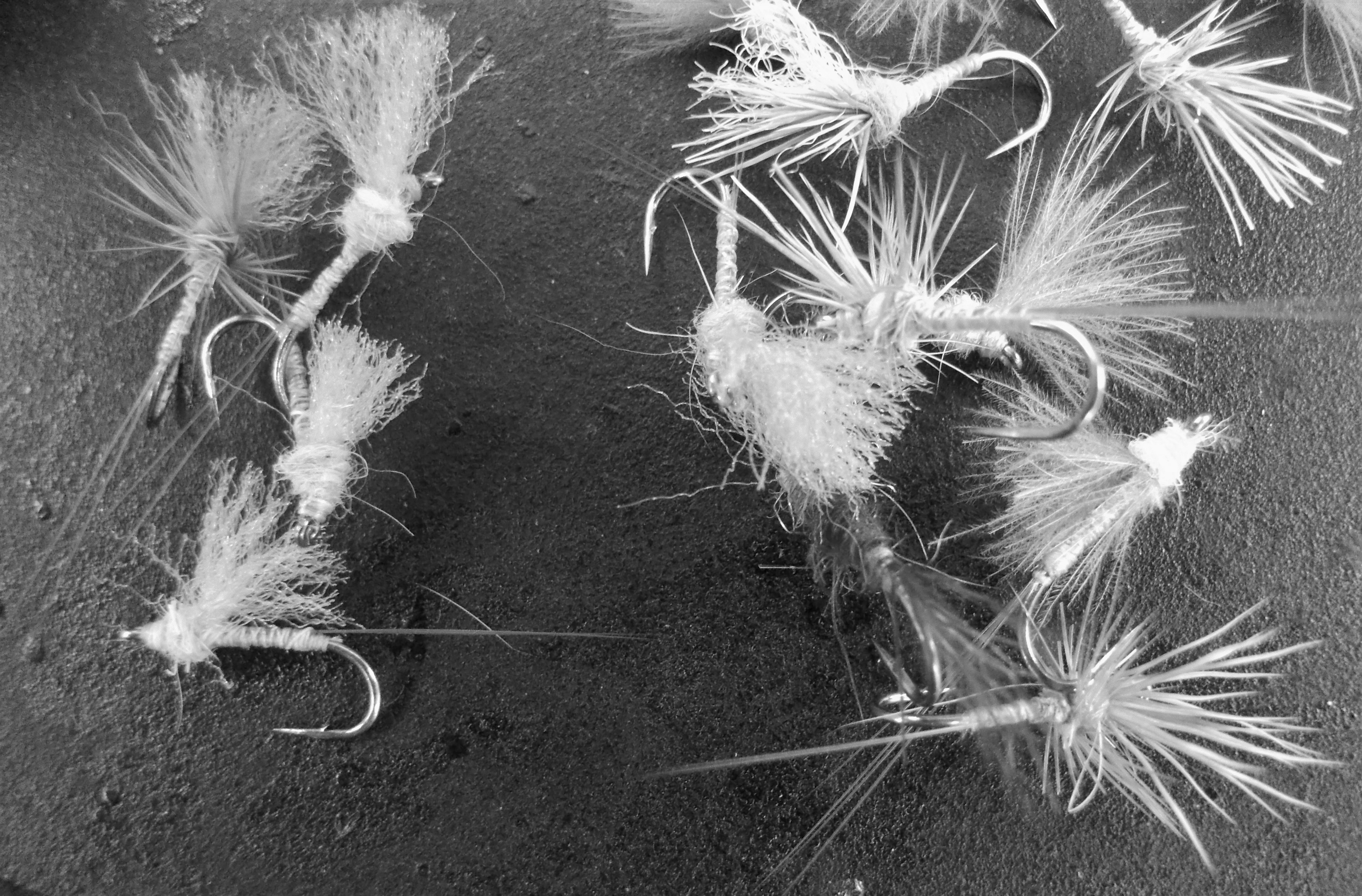
Here are some pictures of these fish caught (this and last summer) on small dries: size 16 and 18 pmd’s and one fish on a tiny beetle. All fish photographed on this blog have been released.


















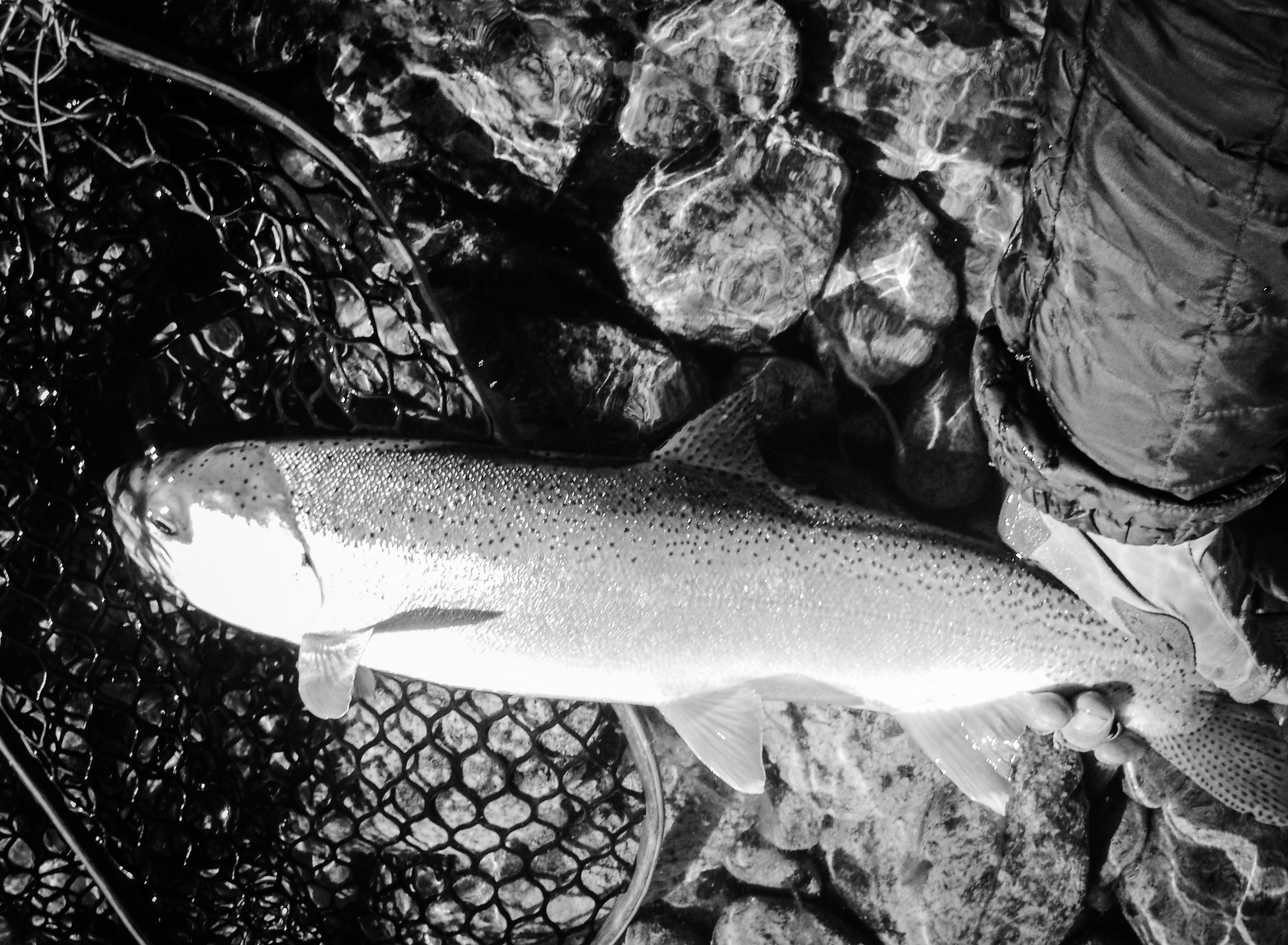

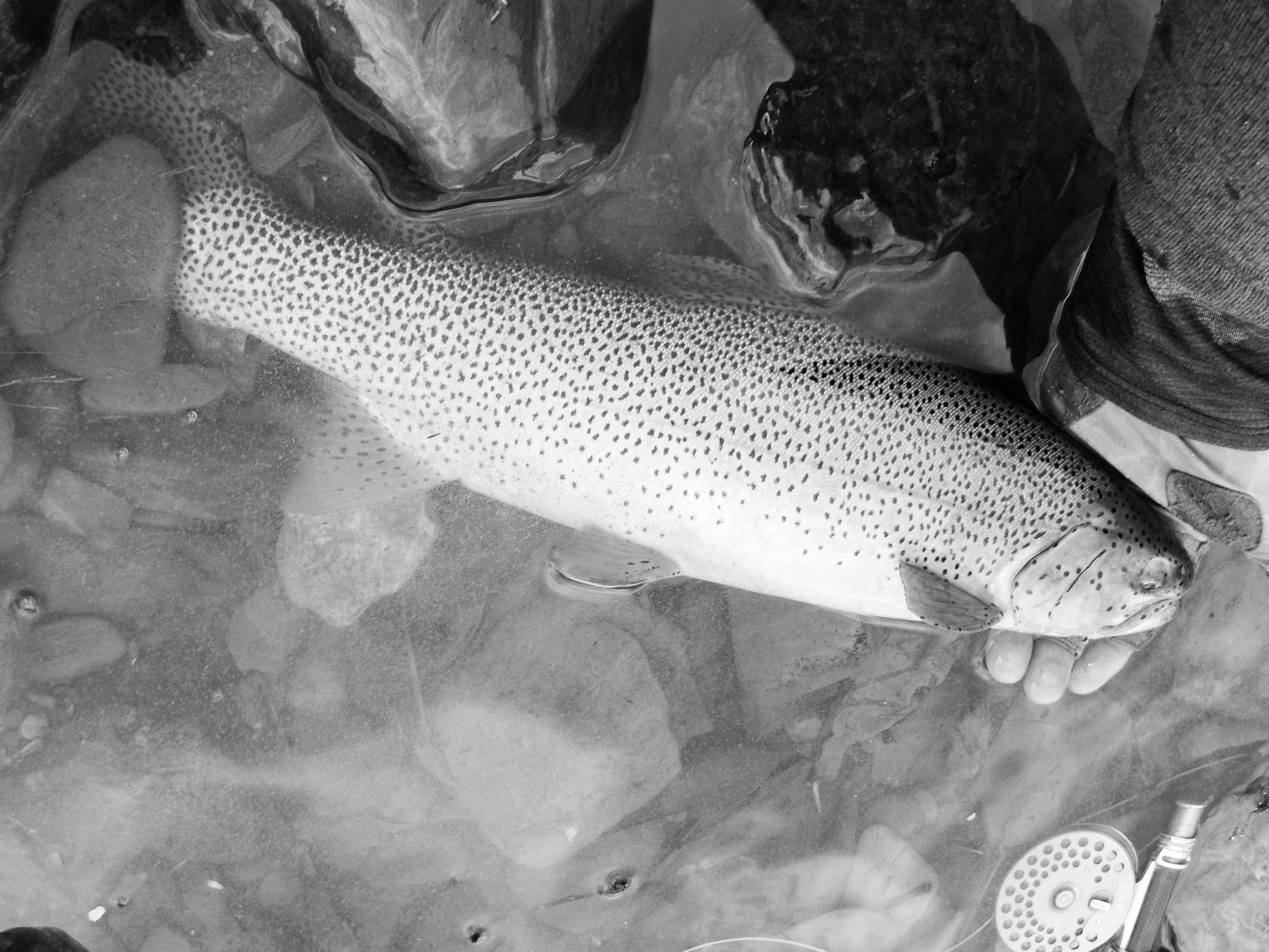


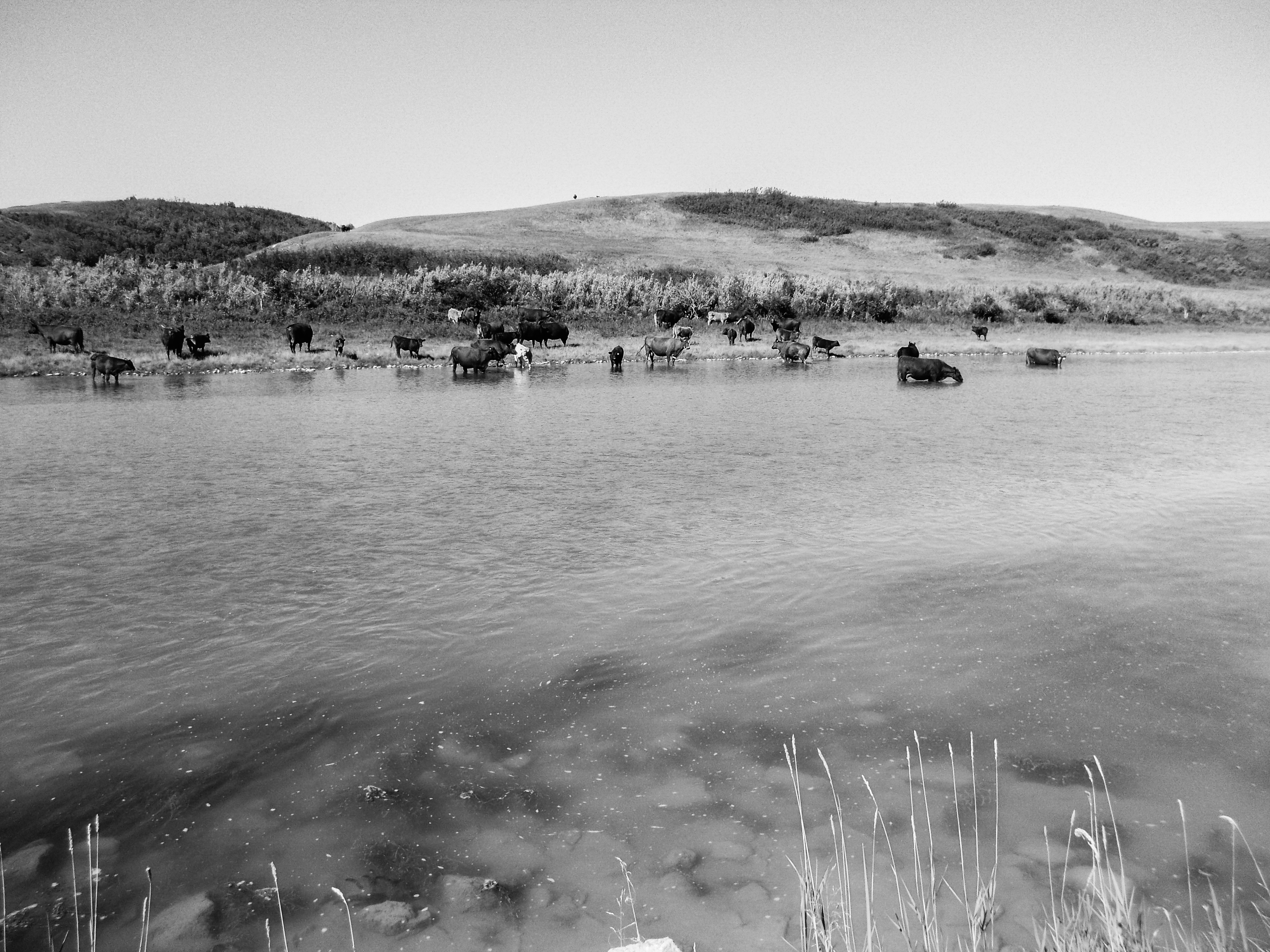
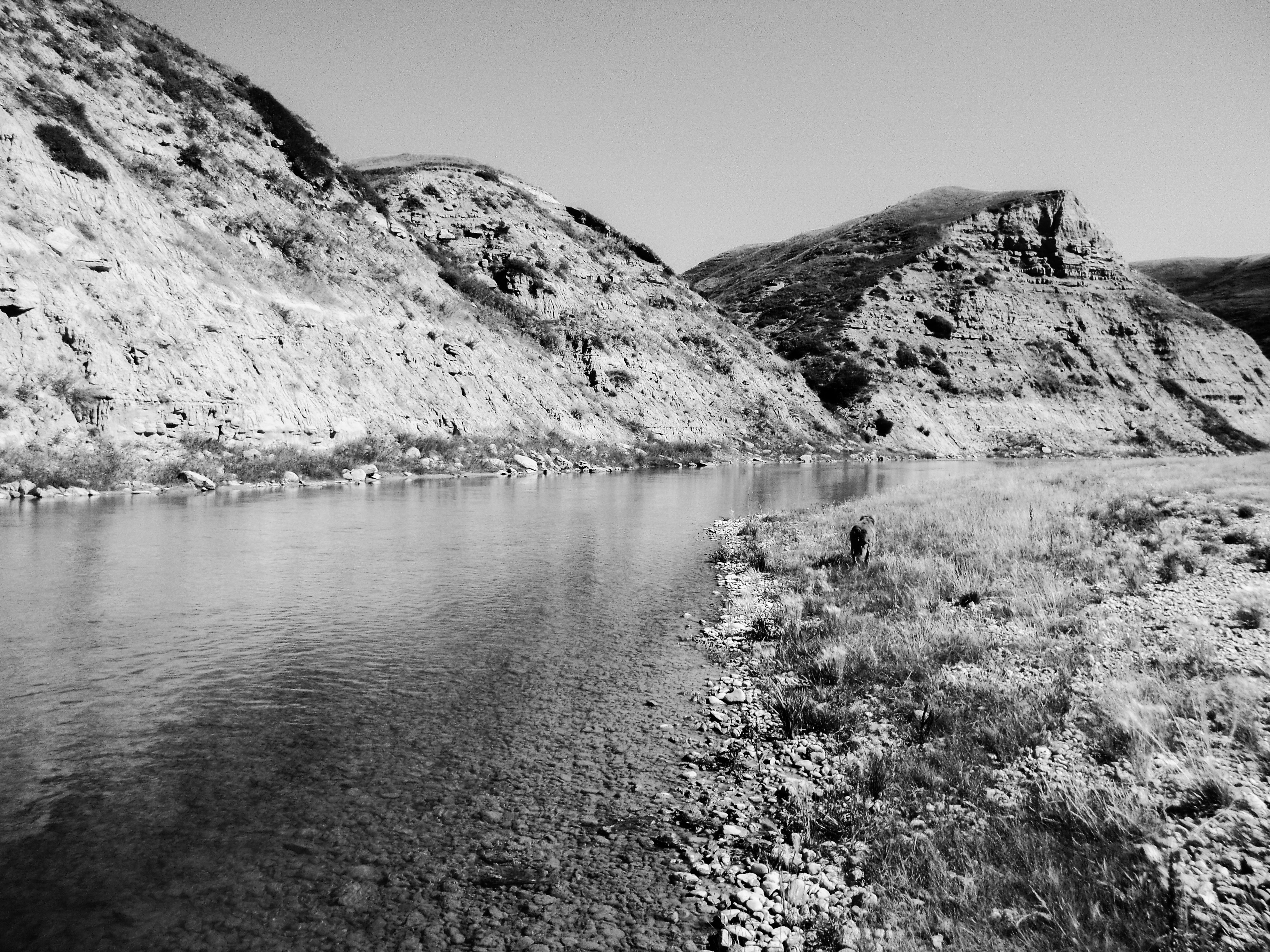
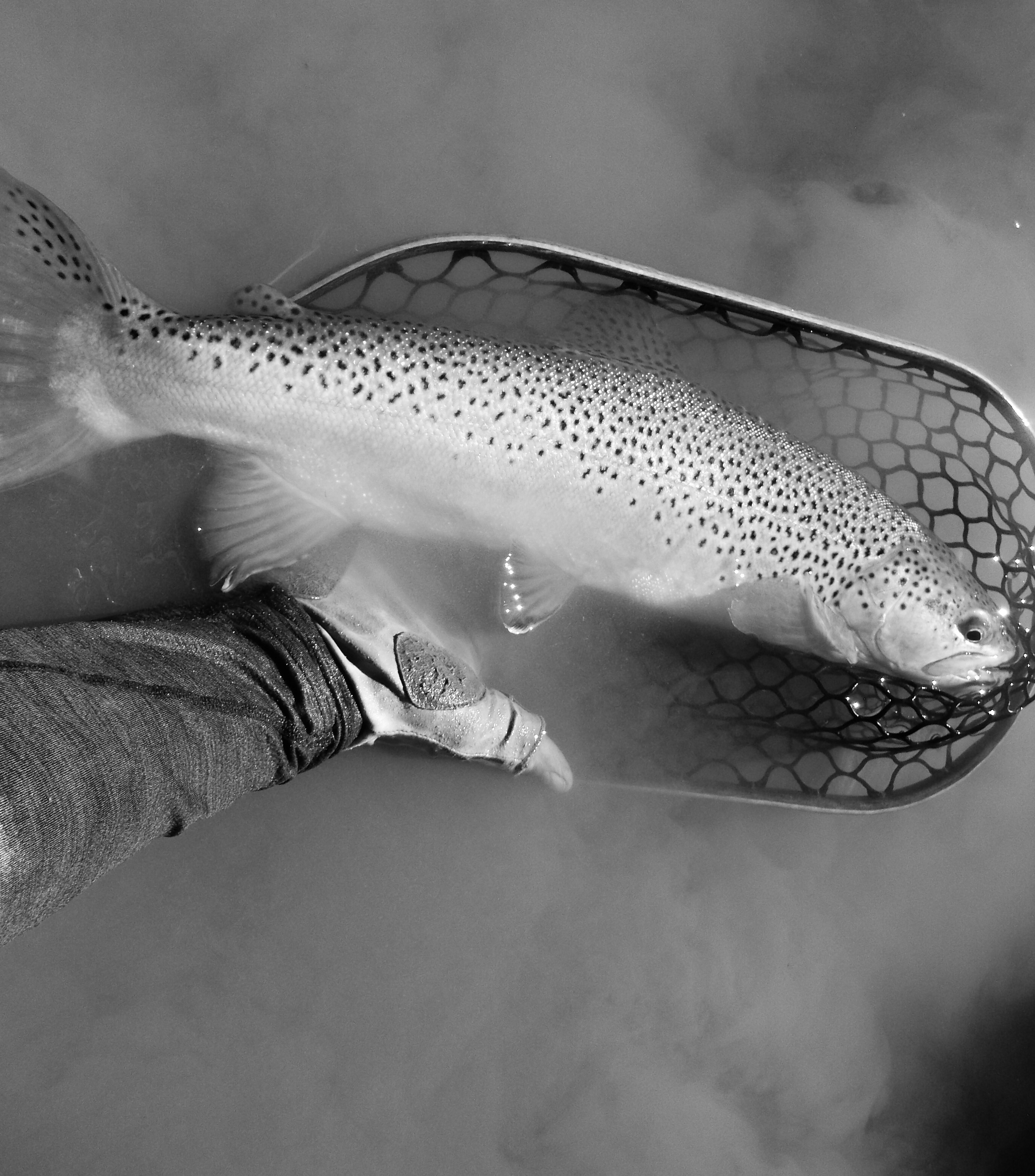
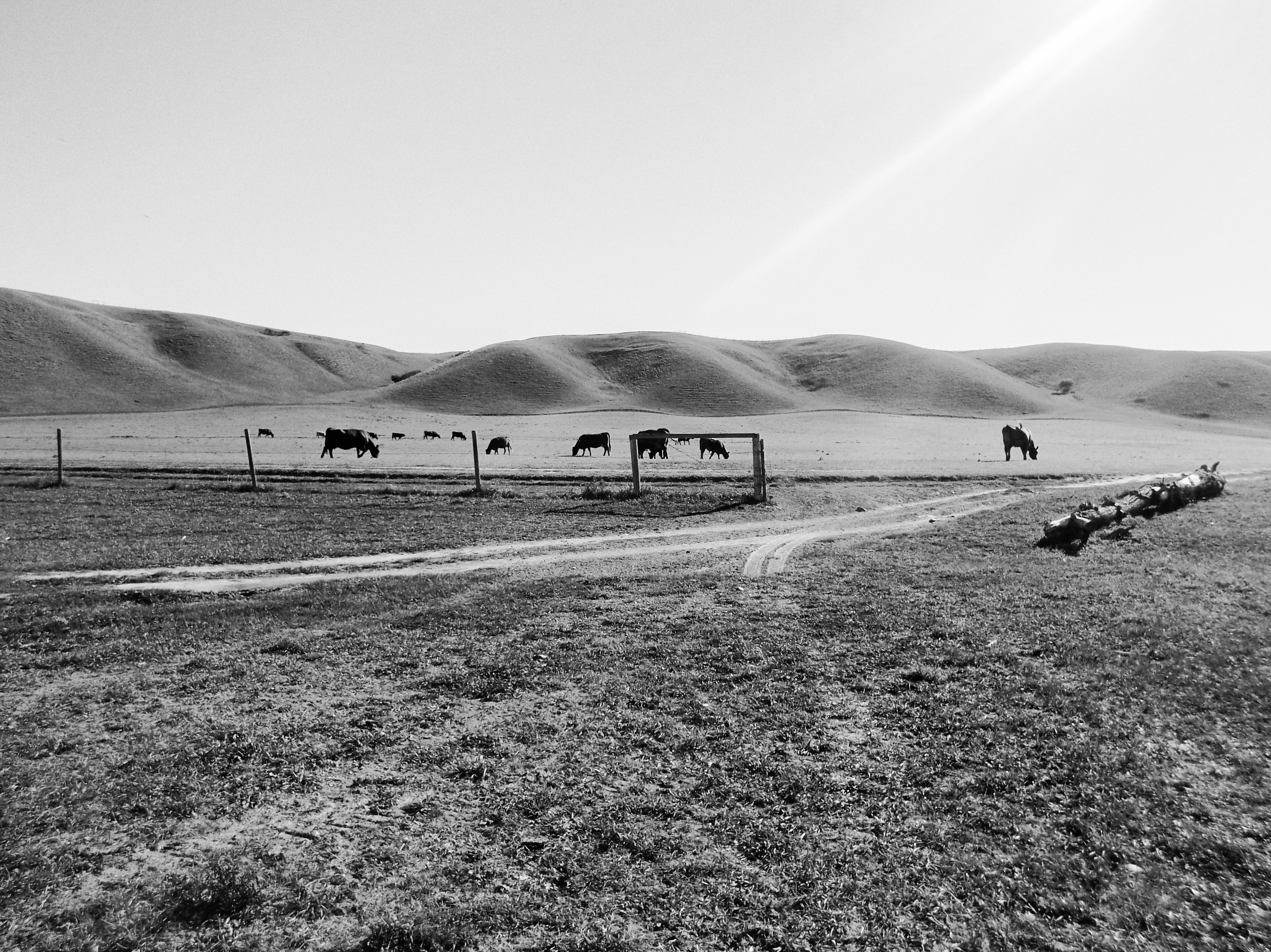













 trout on dries