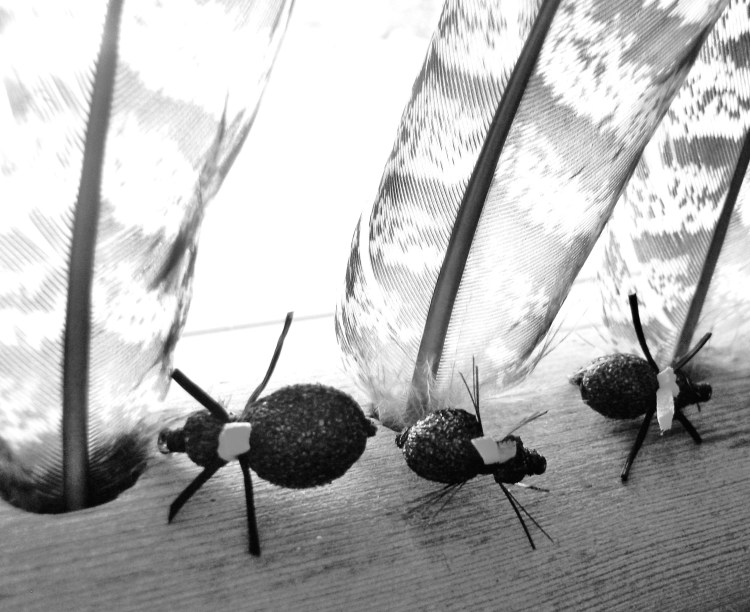


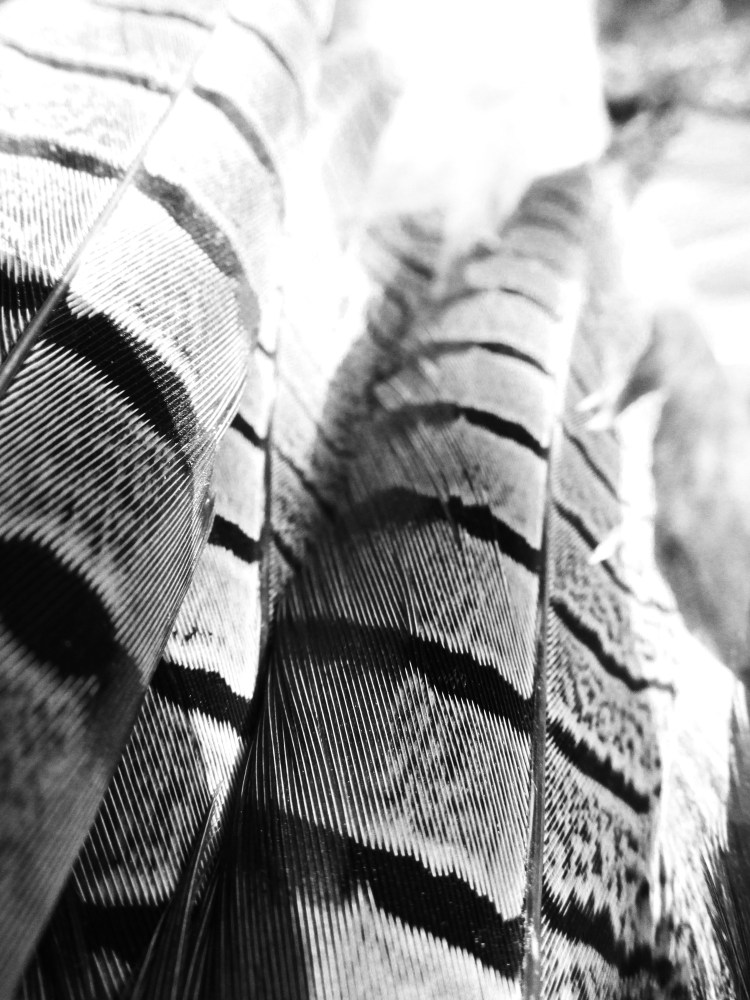
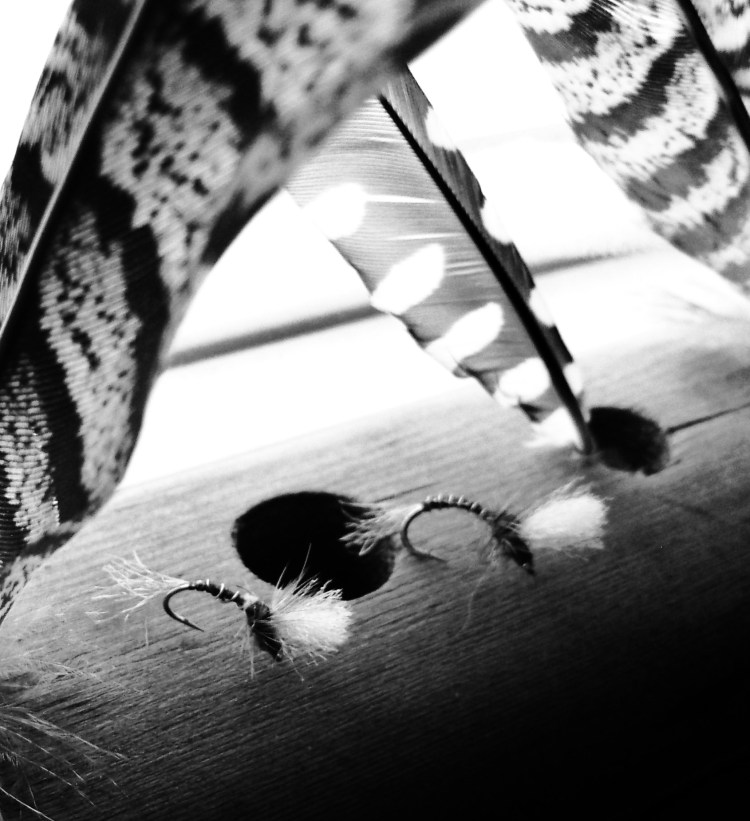
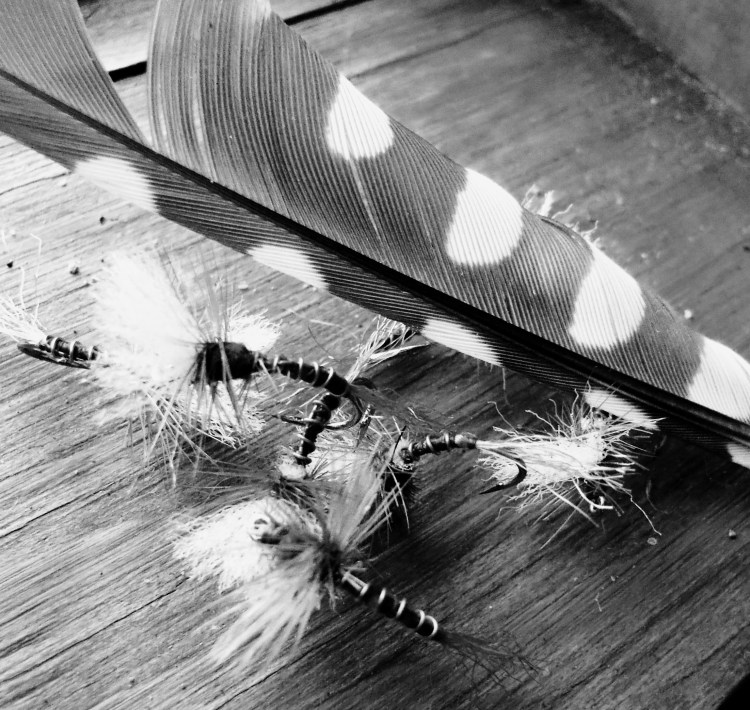

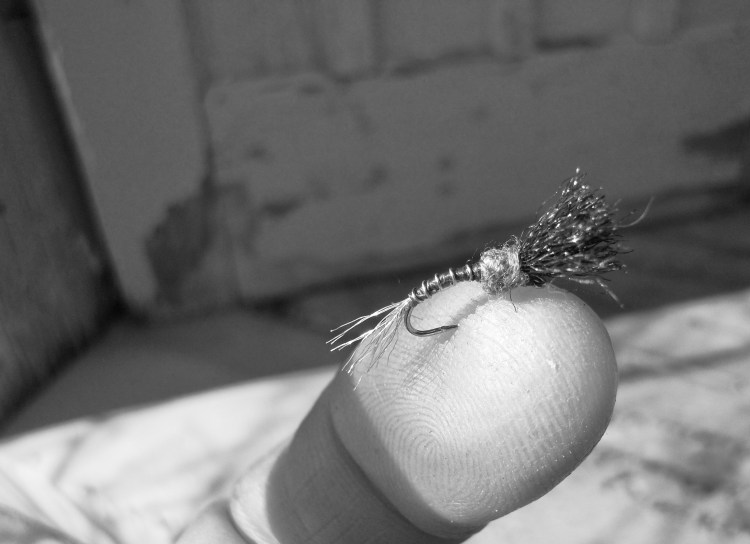
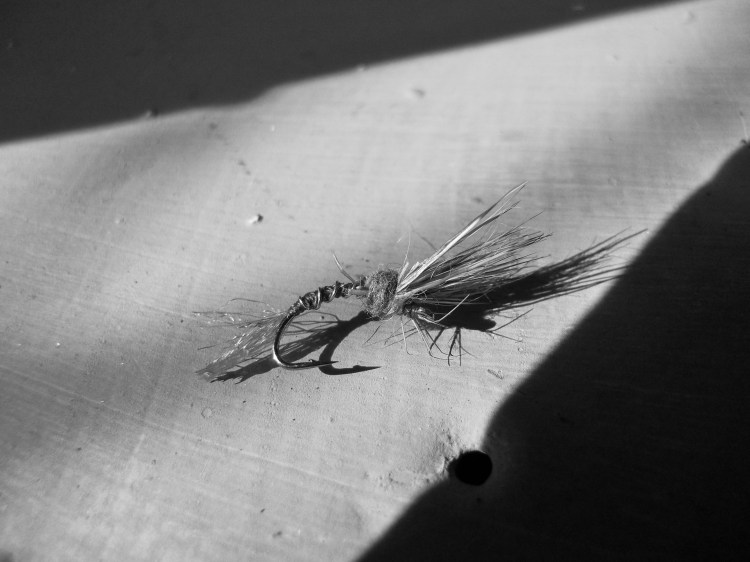
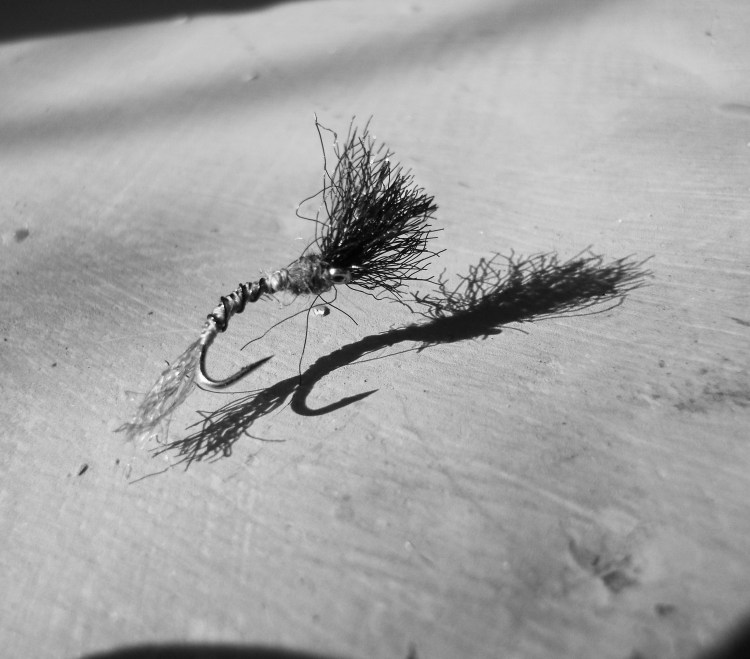
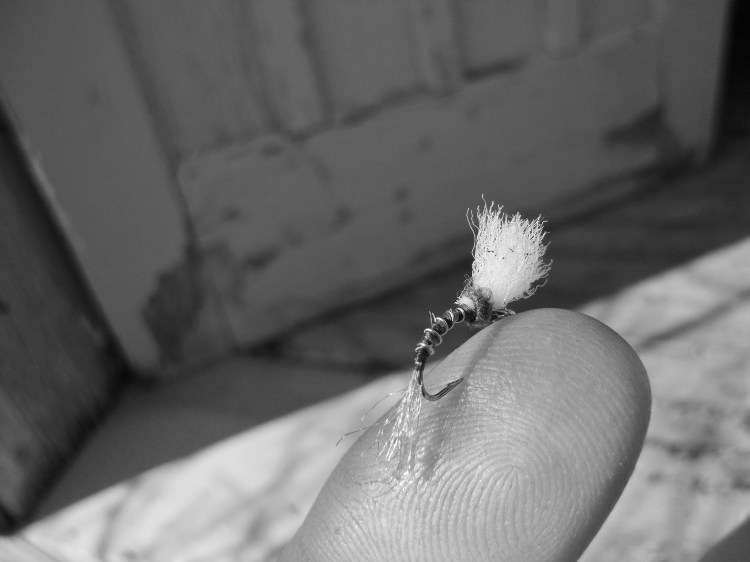
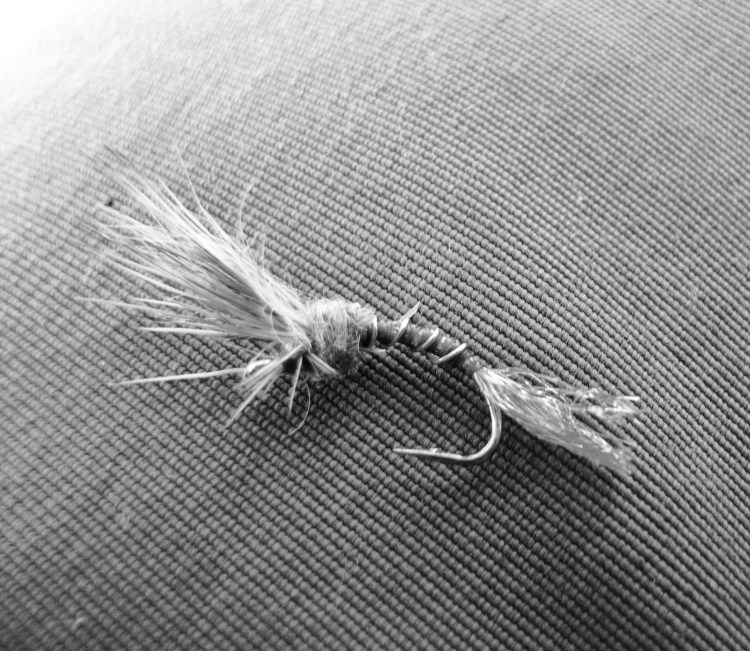
Some simple, durable, quick ties (size 18 flies) that often get the attention of trout on rivers nearby and afar. Tied on a hook that dangles: trailing shuck; some weight (wire) on body to hopefully tug it below the surface (saliva on shuck and body helps); exaggerated thorax dubbed; wing of polypro or deer hair, sometimes hackle used to keep top half (head) floating and most importantly visible. A white or black wing allows you to see the small fly in most light conditions. If I can see a small fly then I feel I can get it on the nose of a feeding fish, and then I at least have a chance. If I can’t see and follow the drift then I might as well be blindfolded! Deer hair and hackle is often less visible but can be seen if you can get close to a trout. The pattern can be fished as a dry/ emerger (mayfly hatch). I simply change body and thorax color and size depending on the season/hatch. The wing can be tied or clipped real sparse (less wing) for flat water, or CDC used. No fly works in all situations but some flies work in a lot of them.




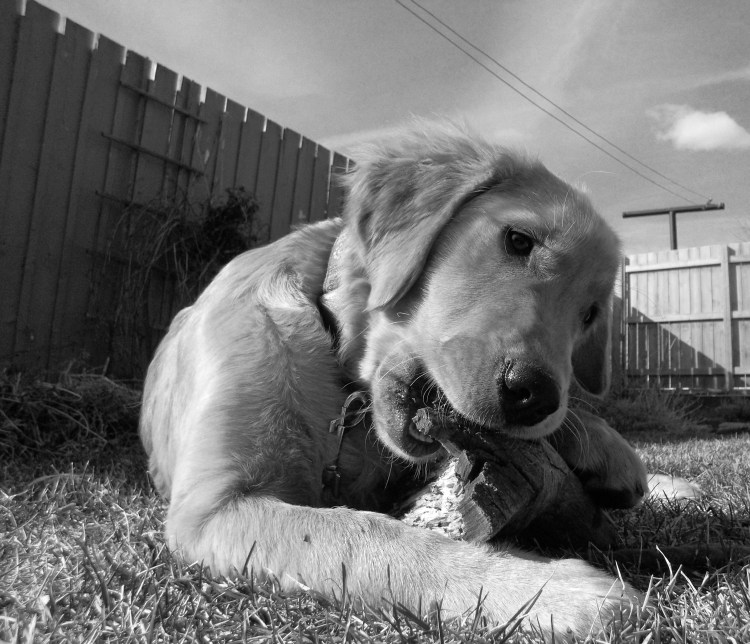
master fly tyer (abby) taking a break
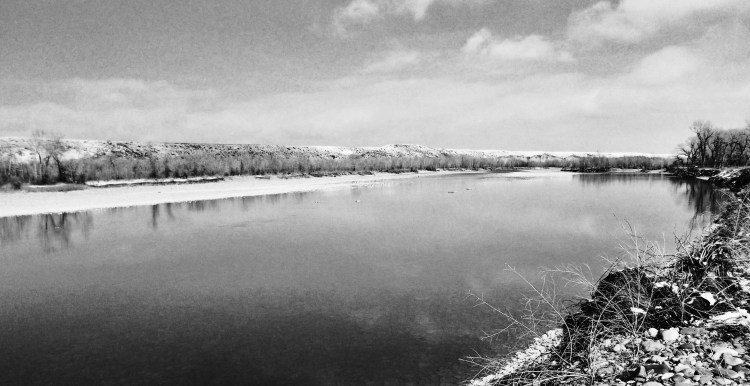
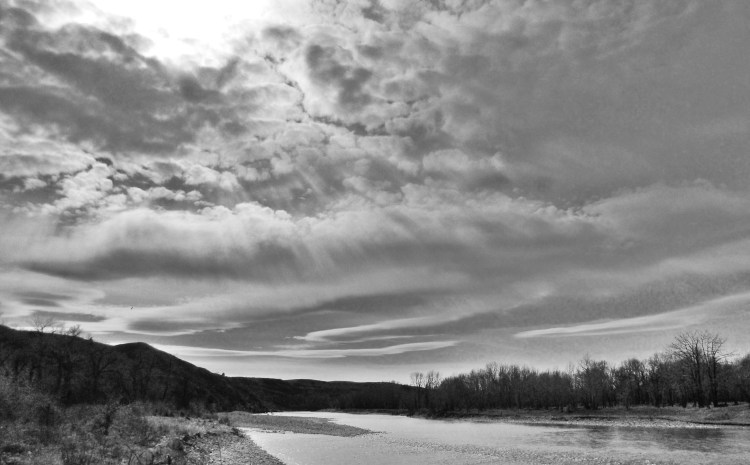
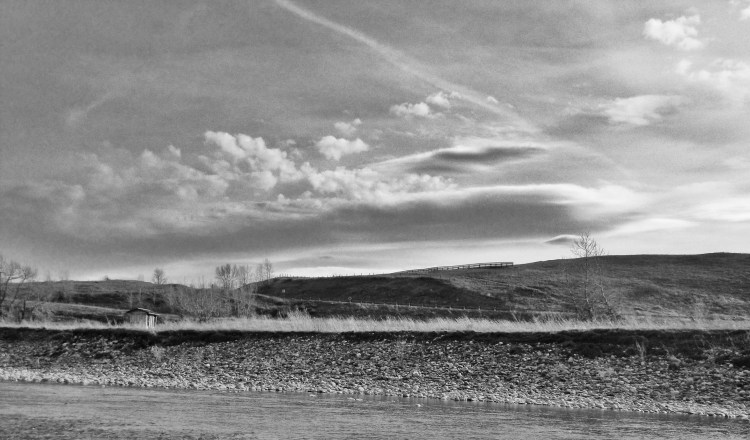
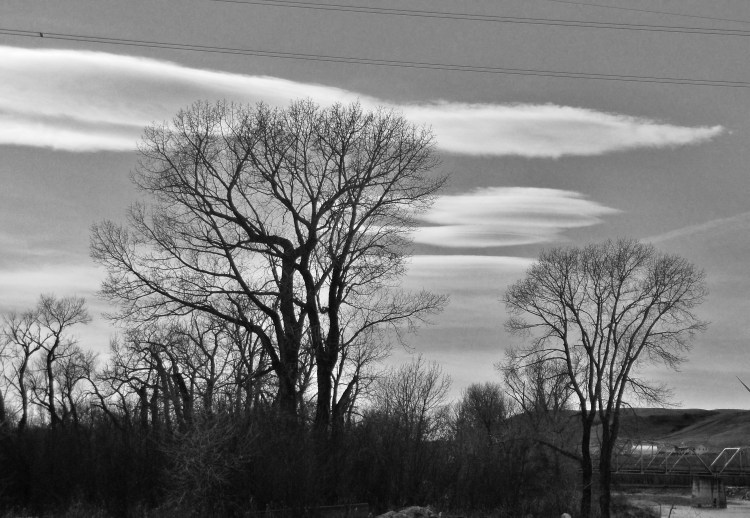
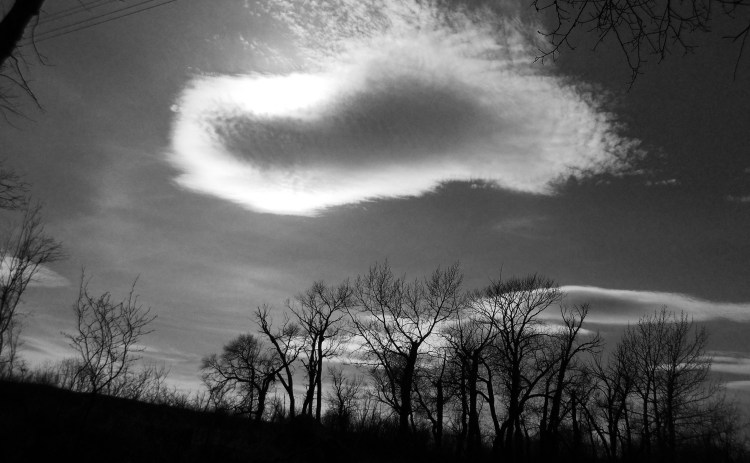
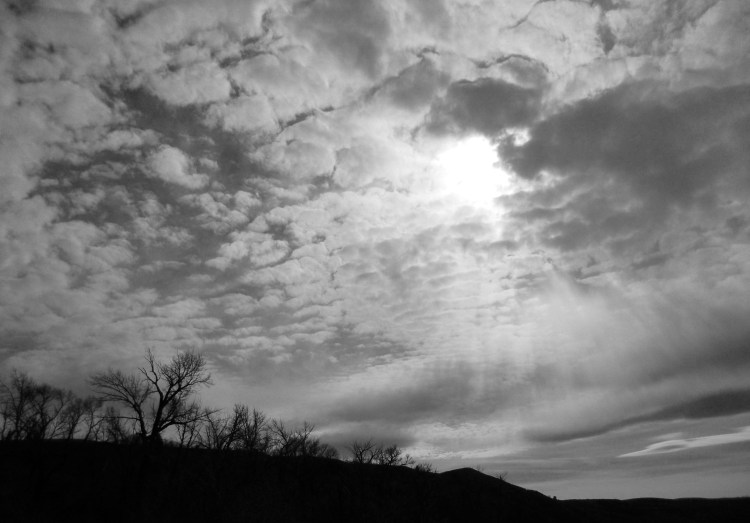
A few snaps while walking one of my favorite trout streams and looking for an early season midge hatch and trout. No trout spotted but some great clouds filled the ceiling of my big western room.
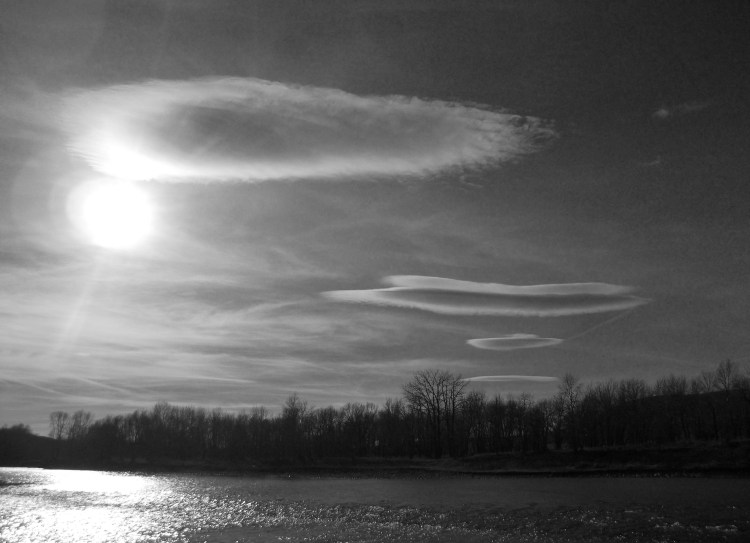
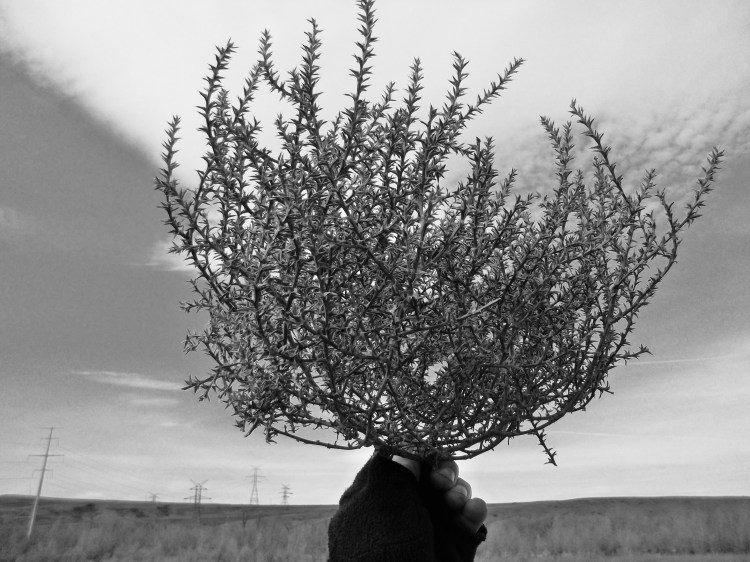
riverside tumbleweed

December was winter like. January and February weren’t. Now it’s early March and so far it continues to be mild. The next three months is when we get our wet weather and if it’s cool enough we get snow…often tons of it, especially at elevation. Right now we have no significant snow pack. Without it we will have low summer river flows and warm water by the end of July. Last year our trout streams were shut down for part of August due to water temperatures. Unless we get snow, we could be in the same situation again.
I’ve been living and fishing SW Alberta for 15 years now and the overall trend is less and less water in our incredible shrinking rivers.
Speaking of warm temperatures…here are a few photos from past seasons chasing Roosterfish on foot. I’m planning a late spring trip. The past three years I haven’t been able to get back to Baja. I’m looking forward to it as searching for and sight casting to Roosters on foot, although a long shot pursuit, is an amazing experience even if you don’t get a hook up. Watching a 30 lbs or larger Rooster chase your fly right up to your flip flops while you plead out loud “eat the fly” is well worth the price of admission. My hands always shake uncontrollably after such an event and it takes me time to settle down and process the believability of what I just witnessed.

mid (medio) sized rooster
Chasing Roosters on foot requires endurance, a good eye, a quick delivery (cast) and line speed, good bait (well tied flies), and some luck. Of course, finding active feeding fish, which means being in the right place at the right time, can make all the difference. This is easier said than done when on foot.

I believe nothing has contributed more to me getting a hook up than simply telling myself over and over when things are slow and doubt inevitably seeps in and takes over that “if I just hang in there and put in my time I will get a shot… I’ll get a chance”. That’s the mental side of it. It’s the part that requires persistence, patience, self-encouragement and some faith. I try to bring that to the Sea Of Cortez.

catholic church in town

pangas
Most people increase their fishing odds by driving a 4-wheeler (quad) up and down the beach, and Baja has many miles of sand which can be covered.

my roof top hang out in dunes
People on quads generally work in pairs with one person driving and the other “riding shotgun” and on the lookout for Roosters. You are more likely to find baitfish and feeding fish if you cover a lot of beach.

jack (toro)
Some people fish for them out of Pangas: small sea-worthy outboard motor boat. They cruise around searching for bait and signs of feeding fish or try to attract them with chum. Basically they have the whole Sea of Cortez available to them. Once they spot a feeding Rooster the captain (Pangero) keeps throwing bait at the fish in order to keep them around and eating, and the angler can get multiple casting opportunities. Sometimes they throw a hook-less teaser lure at the fish and reel it in fast so that the Rooster chases it in tight to the boat, so casting distances are short and easy.

rental car wheel flew off while driving the desert

I was once fishing a beach in an area called La Ventana. There was a Panga 100 yards out with clients on board. They were anglers from San Francisco. I knew this as they were lodging where I was. They were on some sort of guided group angling trip. I had spent most of the morning walking the beach and had seen nothing. Then mid afternoon I finally spotted a medium sized Rooster working a very small bait ball within casting range. It was my first opportunity of the day after several hours on foot. I started casting trying to pull the Rooster off of the bait ball and onto my fly. The pangero off shore spotted my activity, raced over at full throttle, and within seconds had his two anglers casting fervently to the fish while he threw bait. At one point he put his Panga between me and the feeding fish, basically blocking me and forcing me to simply stand there and watch his two clients cast to the Rooster I had located.

sun and sand blasted face

small rooster
I was more ticked off at the anglers than the Pangero as he was working: earning a living. The anglers were there for sport and in my mind should have know better… etiquette and all that. Well, they didn’t catch the rooster and I was happy about that. It disappeared and when all the frenetic casting ended, the anglers looked at me from their boat 20 yards off shore and nodded. With as much emotional maturity as I could muster I gave them the finger and told them to F-off. I think that with the wind, noisy surf and bright sun they thought I was saying hello, as they waved back to me. In order to avoid an angling war the next day I packed up and moved on to a beach further south in search of a little angling space. After all I was on vacation.

roosterfish

driving desert roads to beach
Baja; early summer; June; hot; walking in sand; hot; sore feet; windy; watching the surf; alert; watching; no roosters; change beach; still no roosters; hot; look for bait fish; change beach; no roosters; no roosters; no roosters; then roosters, one, two, three…here they come; opportunity; run, run, get fly in front of rooster; double haul; be quick, cast quick; pray it eats; roosters going, now gone; way down the beach; gone.
Walking in sand; hot; watching the surf; more may come; hope more come…

roosterfish caught on foot and released safely

IM000429.JPG


why I don’t go barefoot

flies


IM000463.JPG

sandstorm


IM000424.JPG

Some favorite photos from the past several years…
Favorite tree
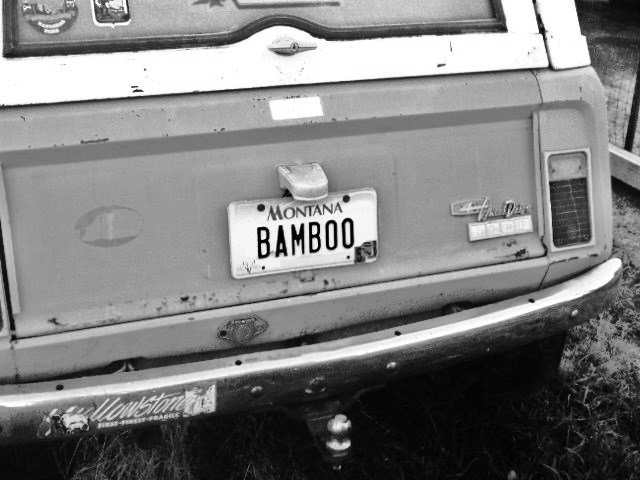
favorite license plate
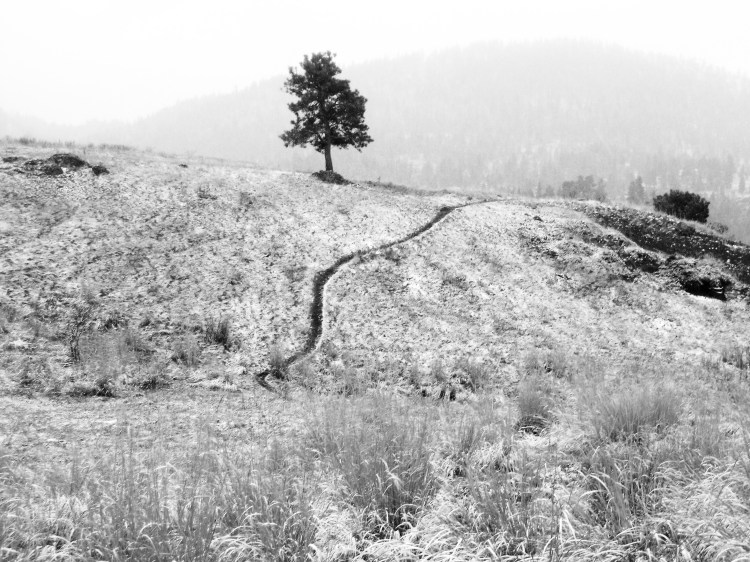
favorite river trail
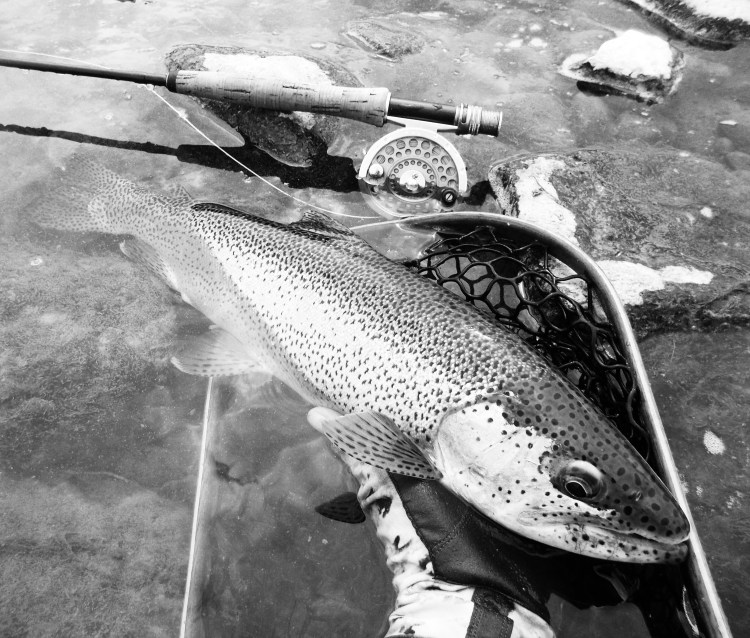
favorite trout on trico
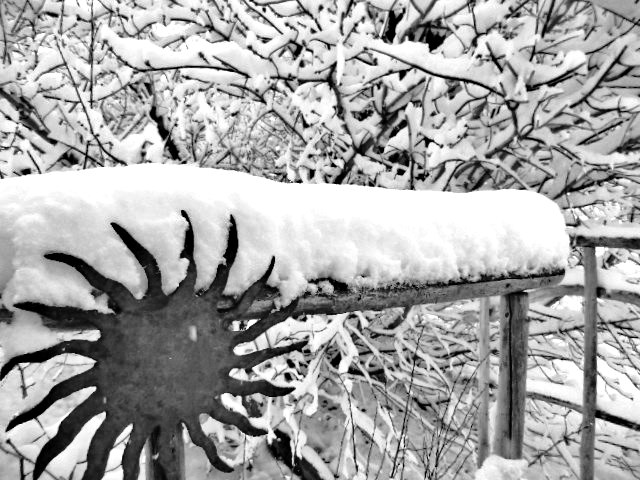
favorite sun
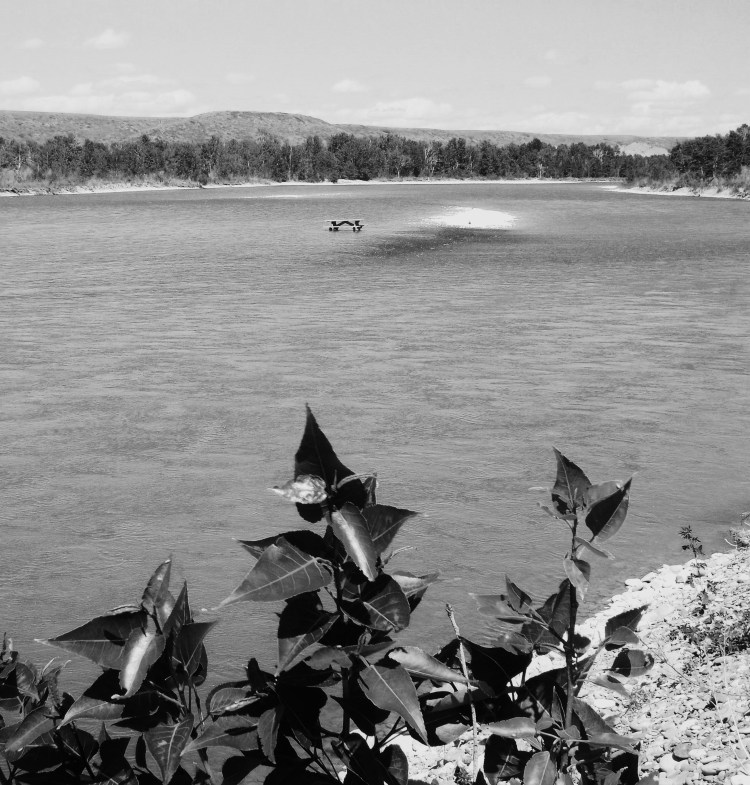
favorite picnic bench
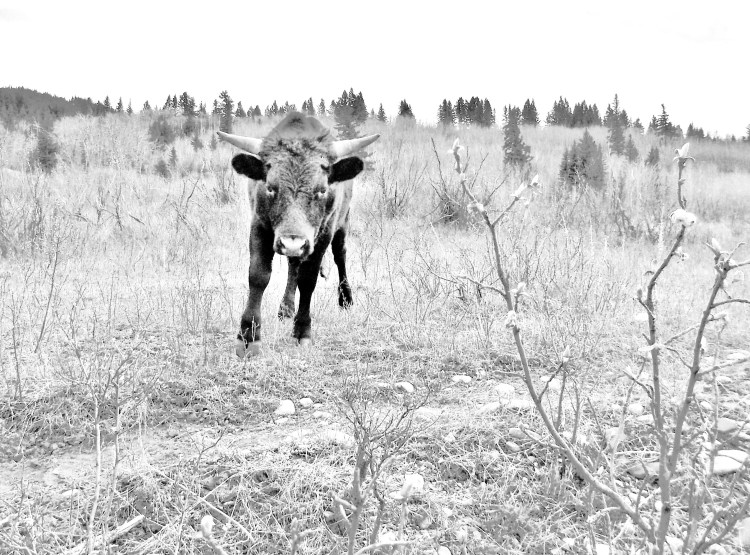
favorite riverkeeper
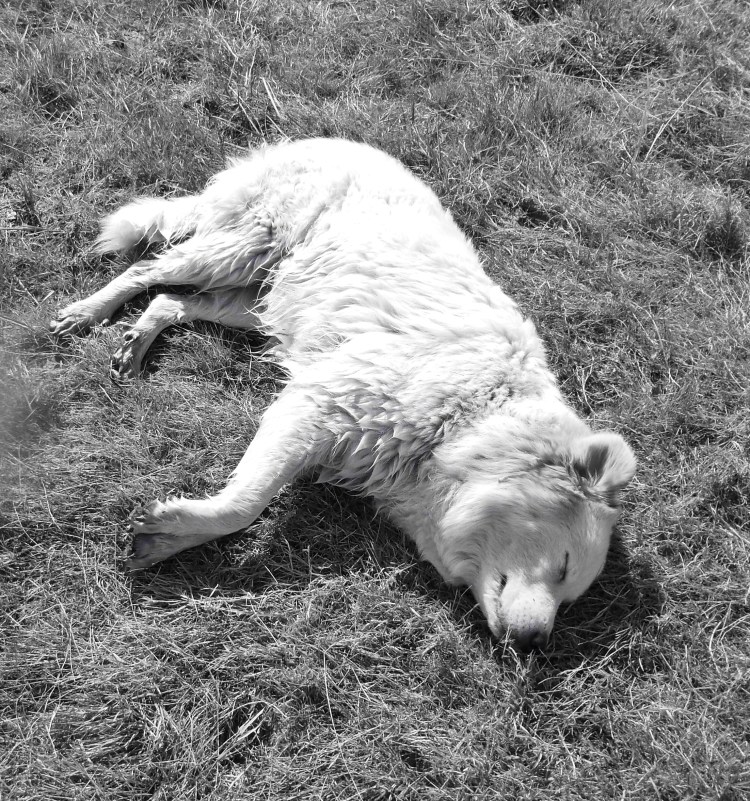
favorite sheep herder
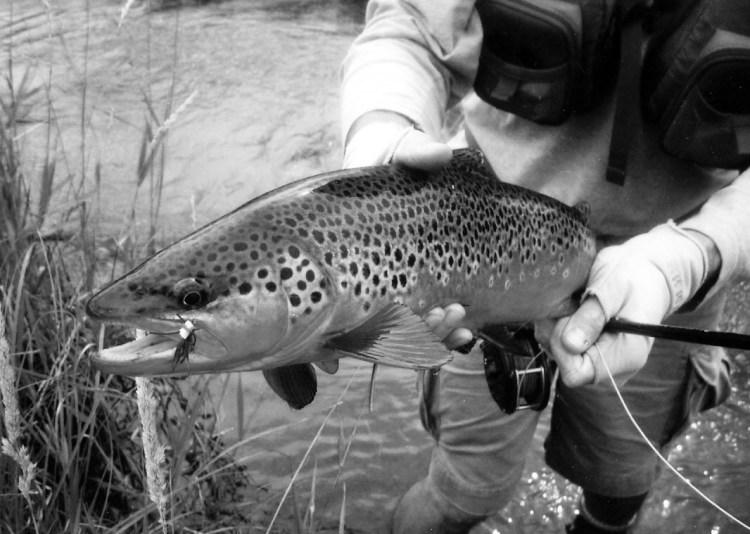
favorite brown on dry
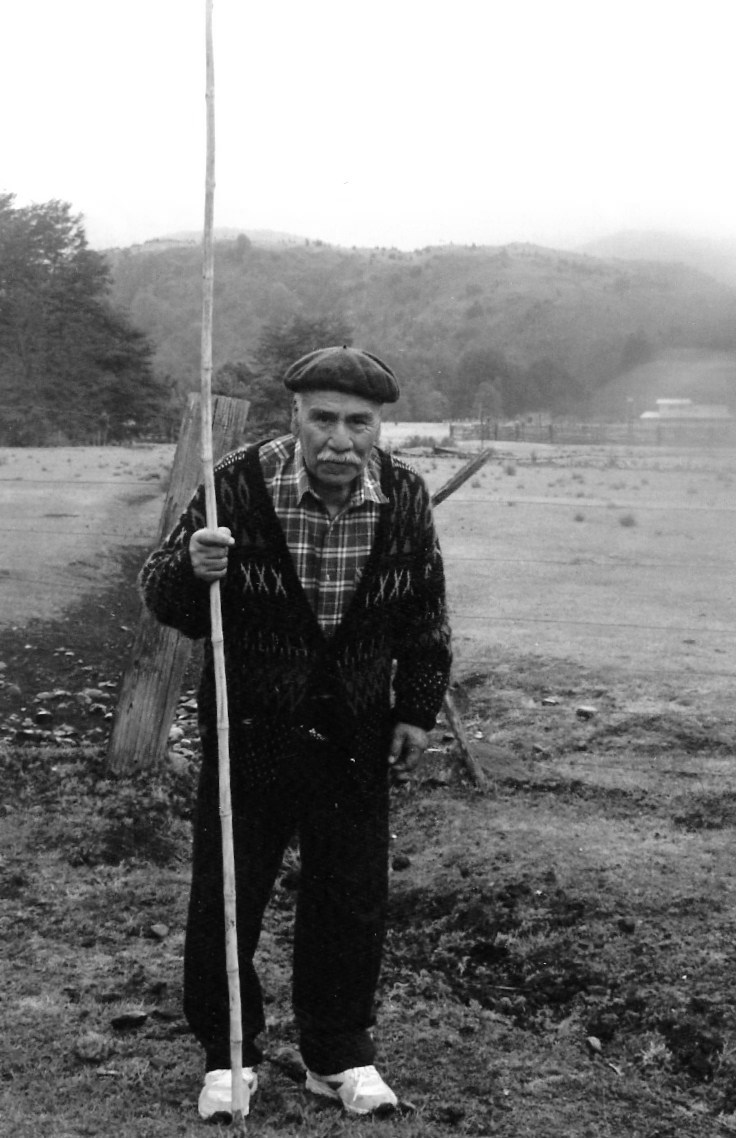
favorite patriarch of valley

favorite peanut shack
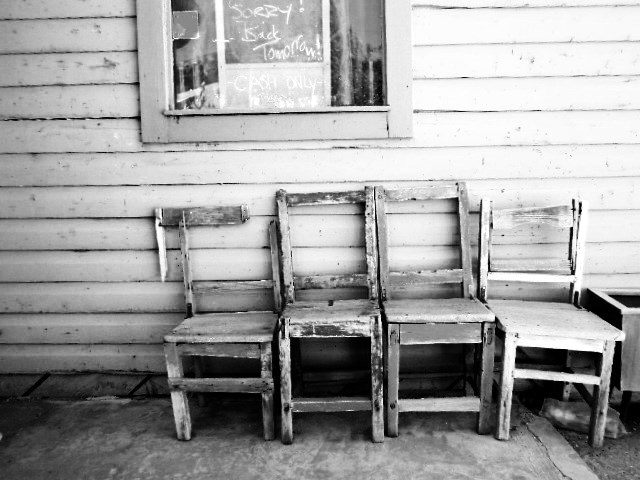
favorite porch

favorite reel
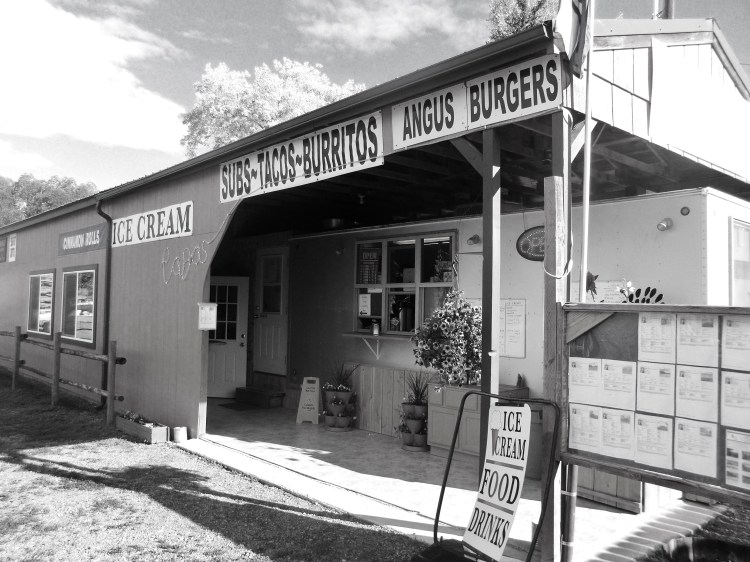
favorite riverside burrito place
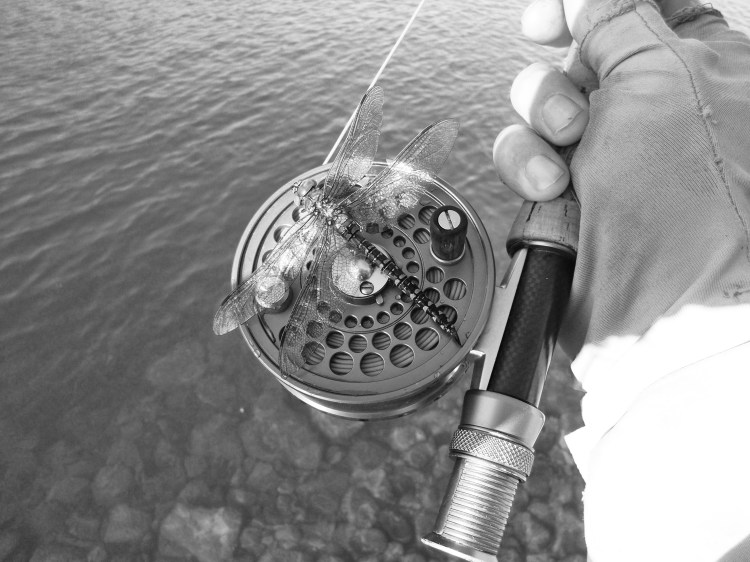
favorite bug shot
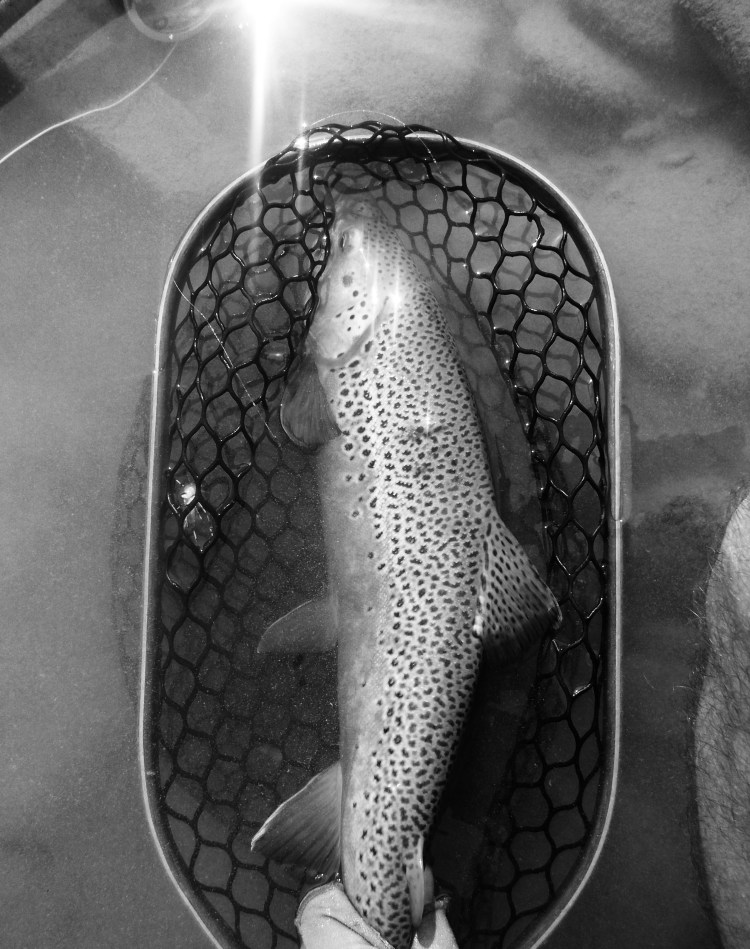
favorite net shot

favorite address
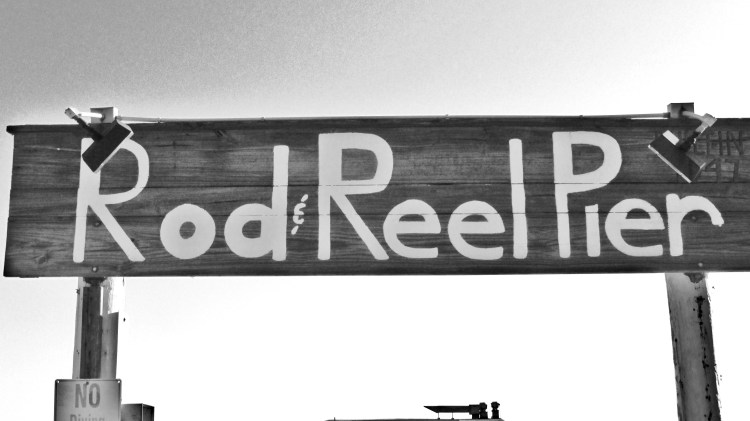
favorite pier
“I’m gonna win. There’s no way I’m goin’ down. I don’t go down for nobody”.
-1940’s Boxer, Jake LaMotta
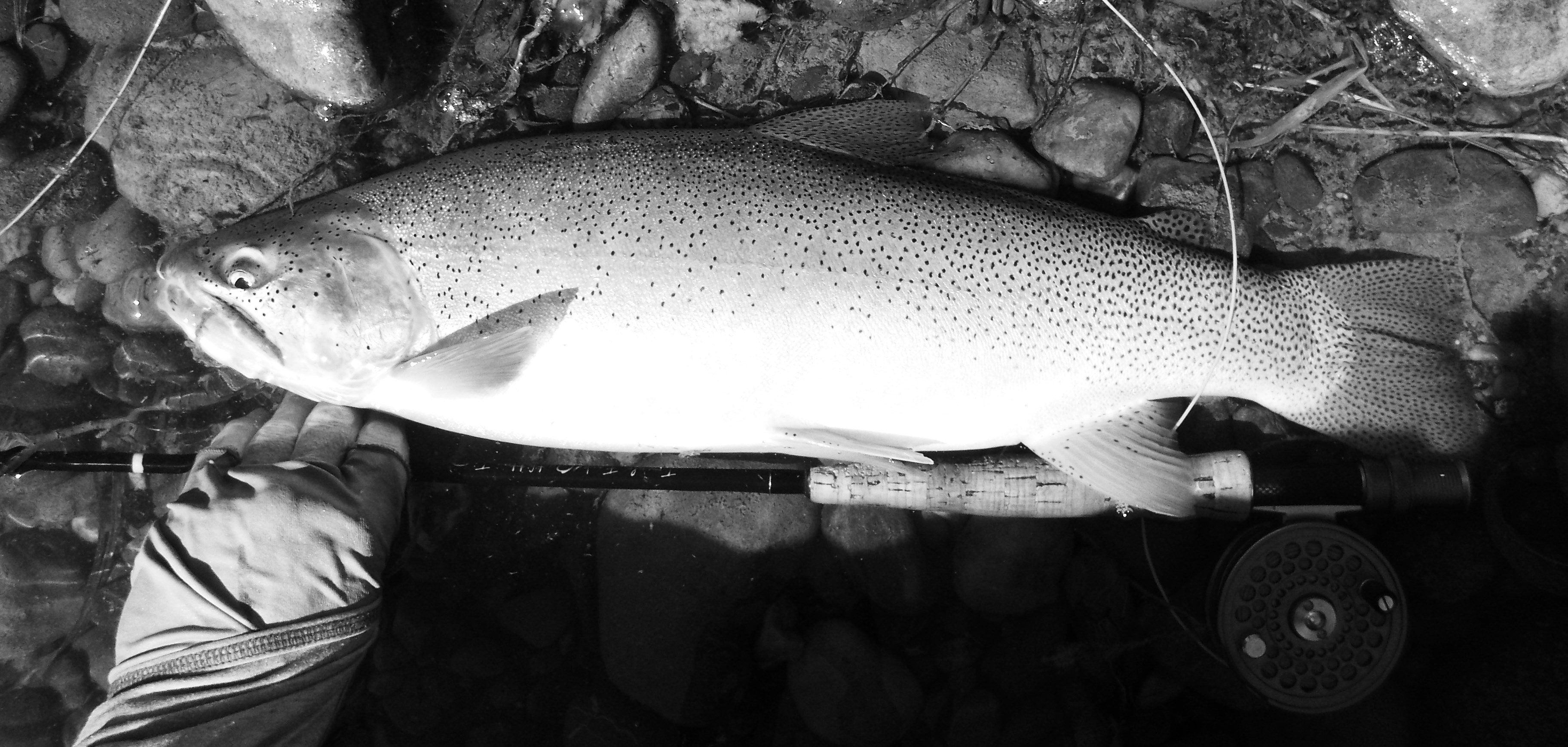
A local tailwater river that I frequently dry-fly on has a healthy population of sizeable rainbow trout. This is not surprising as they are the predominant trout species in my region. It also has a good population of brown trout. Also not surprising.
What is surprising is that in spite of this river section being a fair distance from the mountains and the water quality being far from pristine, it has some very healthy Cutthroat and the hybridized Cuttbow trout. These fish can be quite large but what is extraordinary is that they are especially robust. Hook into one on a broad section of the river and they race for the horizon, and can take you into your backing.
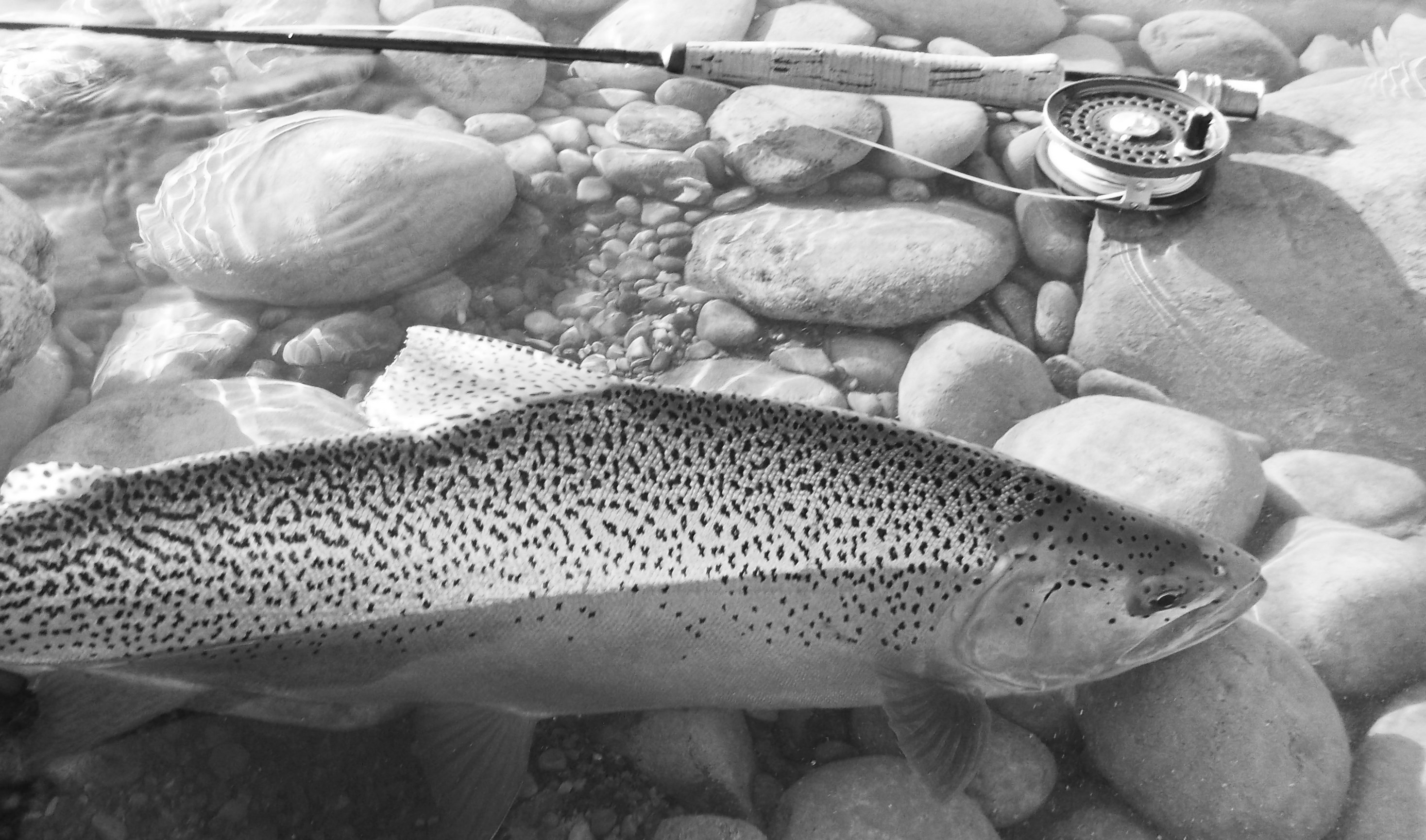
I go there when I expect a hatch and look for surface disturbances. It is “technical” water: whether it is rainbows, browns or cutthroat, or a hybridized version, you have to pay attention to what the fish are focused on (eating) and also their rise forms to figure out whether you fish on top, in the film, or have to go slightly subsurface. I sometimes get the subsurface feeders to tip up and take a dangling, klinkhammer style fly, or a helpless easy floating target such as a cripple pattern. Some people have success using soft hackles in this situation.

The river has very impressive rainbows and brown trout but I consider the cutthroat and their hybridized brethren to be the “Raging Bulls” of this neighbourhood. Think Jake LaMotta… they just don’t give up.
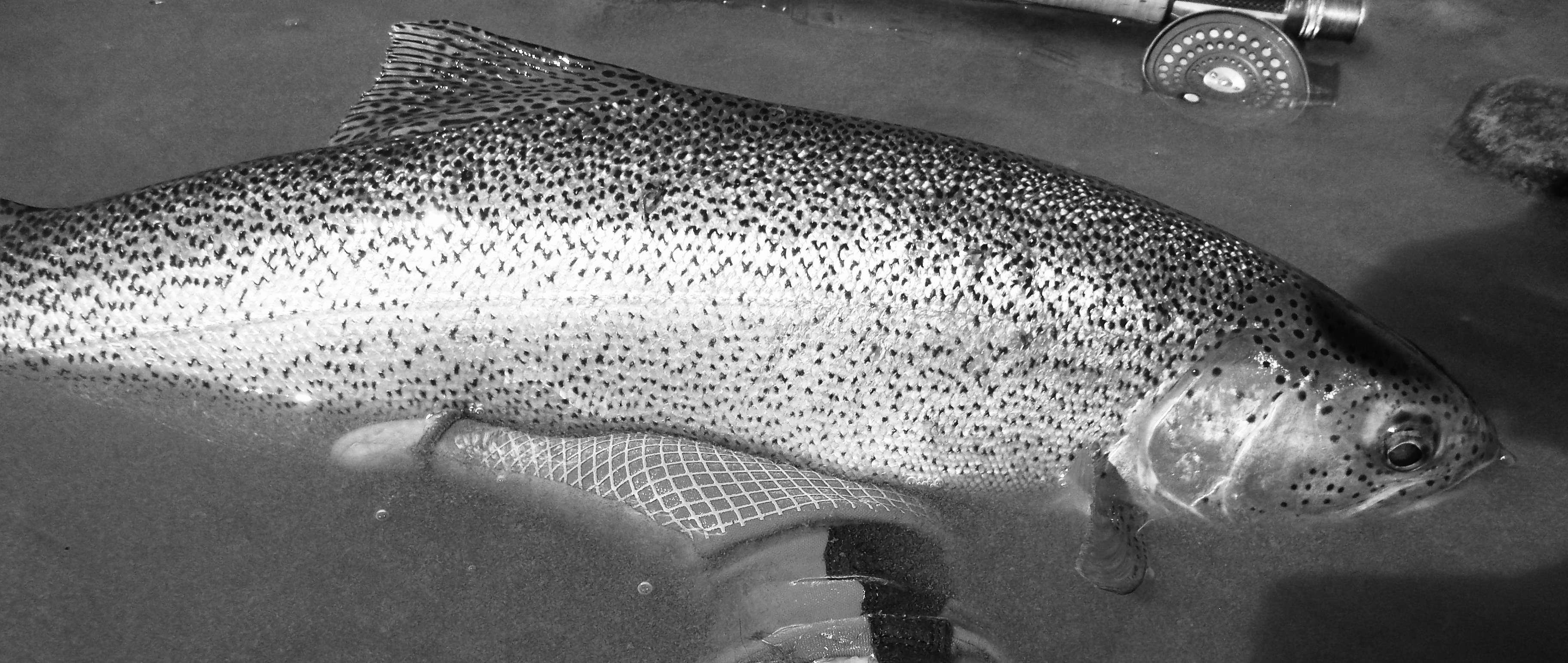
Here are some pictures of these fish caught (this and last summer) on small dries: size 16 and 18 pmd’s and one fish on a tiny beetle. All fish photographed on this blog have been released.

Some of my favorite sight fishing trout rivers run down in coulees out on the high dry plains. Here are some landscape photos from my last outing.
Coulee definition: Kind of a valley or drainage zone. The word comes from the French Canadian coulee, from the French word couler meaning “to flow”.


searching for trout, looking into the flow

looking up

still looking up


gull skull


beautiful trout dorsal fin

LOW WATER. FINALLY CLEAR WATER. No bugs. Still windy but not gale force like on the weekend. Sunny and some high clouds. In fact, beautiful clouds. I started seeing a few trout mid afternoon. The lighting was good but past prime time; the dimmer switch was being dialed down. Days are short in mid October. The first trout I missed. He ate but the hook didn’t set. I thought, “my one chance”. I soon spotted another but he bolted before I could exhale. Two strikes, one left! I then decided to walk a river section I call the Beach. It’s a perfect late day spot: the sun over your shoulder; shallow water; consistent light colored bottom. I see well there and it’s all about seeing. Trout sometimes prowl the shin deep water along the Beach. They inch up the river with the sun in their eyes, blind to an angler just upstream. I walked softly on the pebble edge, controlled my shadow and spotted one. A downstream cast…feed line. Slow current, slow drift, slow motion rise to the caddis imitation. Then four high speed runs. Two right across the river. The trout didn’t want to give up.

the beach


“You better cut that pizza in four pieces because I’m not hungry enough to eat six”
-Yogi Berra

river path
Sight fishing is generally not easy. You need the right conditions to be successful and rarely do all the stars align. When things do come together it can be quite memorable; it makes your season. Lately the sight fishing in my region has been real challenging. Of my three favorite tailwater rivers, two are off color and the third, every time I go there, is being wind beaten to a froth. The reservoirs that feed two of the three rivers are so low they are releasing cloudy/silt-laden water, and it is going to remain that way until next season. Too bad. The visibility on them is only about two feet. That’s a huge limitation when you’re trying to sight fish.

silt flow

brown trout
On Saturday I hiked a lot, covered a few rivers and did manage to locate one good fish in spite of the off color water. I couldn’t entice him to take on the surface. After several casts he moved off and disappeared. I returned the next day with a different strategy; Plan B. I showed up around the same time and found him subsurface feeding in the same area. Like us, trout have their feeding spots. This time I tried one pass overhead with a grasshopper pattern. Like the day before, no reaction. I tied on a small bead head nymph (fished subsurface) but had no success. I then tied on a larger heavier nymph and connected. As Yogi Berra said, “It ain’t over till it’s over”.

brown trout
It was a tough weekend. I covered a lot of water in high wind and connected with only one trout…but it was a good one.

cloudy water


road out of river valley
“He hits from both sides of the plate. He’s amphibious”
-Yogi Berra

