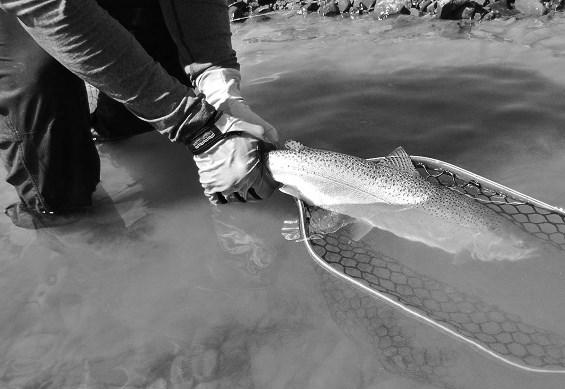
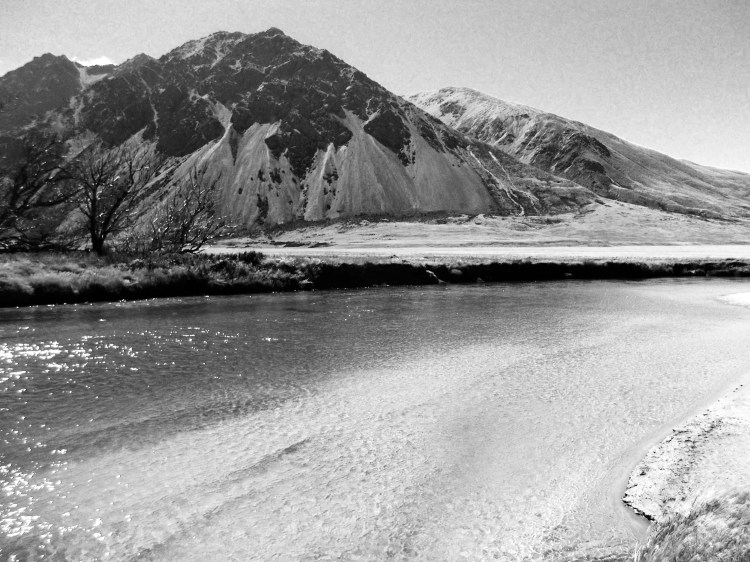
august, slow

” The horse I bet on was so slow, the jockey kept a diary of the trip”.

Henny Youngman

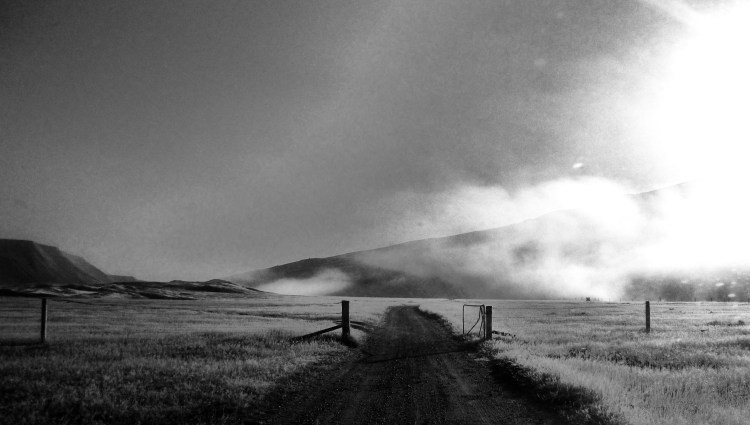
It’s late summer. Not much happening. Things are dry. No real rain in months. The grass crunches under foot. It’s almost the same sound as brittle snow in January. Forest fires are burning west of here. They have been burning a good part of the summer. The air has been smoky for weeks. Fresh, clear Rocky Mountain air is a myth.

smoke

smoke-filled sky

Hatches on my local rivers are weak. Eventually we will run out of Weak and then enter the Strong realm again as things cool and BWO’s (may fly) make an appearance.

clouds

hop2

Surface eating fish are hard to find during the day. You have to fish real late, on the edge of darkness, or real early. When the sun is up it means prospecting with terrestrial bugs: grasshoppers and beetles or their creative derivations.

hopa

bow

I missed a great fish the other day. Its rise was slow and it ate my impression even slower than slow. It lingered and I struck too fast pulling the grasshopper fly out of its mouth. I’ve been doing that a lot this year. Hmm…have to pause longer before I strike…got go slow.

Some photos from past couple of weekends.

brw1

cloudplain

rockbed

snoozing on firm mattress


brwdist


Canyon Trout

004

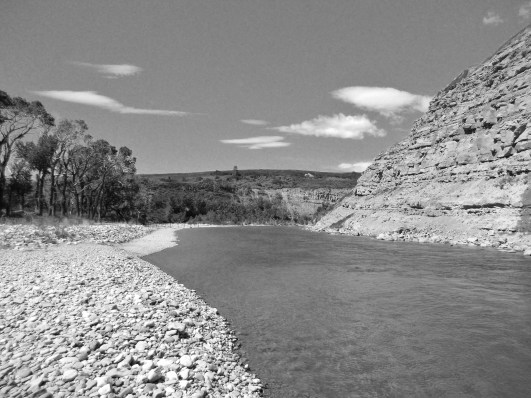
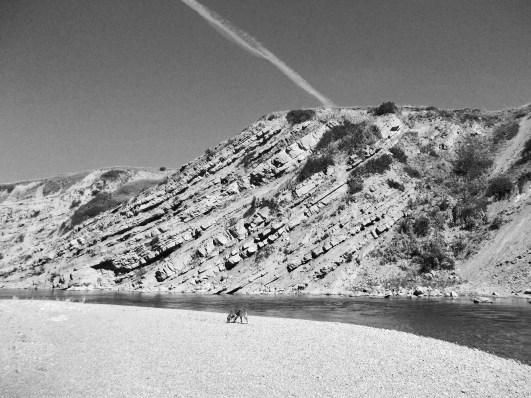
I went down into the canyon. It’s a fairly long walk. I haven’t been there in several years…beautiful place, eerie at times, especially when you’re alone. I took Abby with me.

posts

The angling was a bit slow. We are kind of between hatches: the Pmd’s are waning and the hoppers (not really a hatch) aren’t doing the “hop” yet. The canyon can be a good place for terrestrial fishing as bugs get blown off of the cliffs and fall into the river. The trout eventually clue in to this.

closeinf

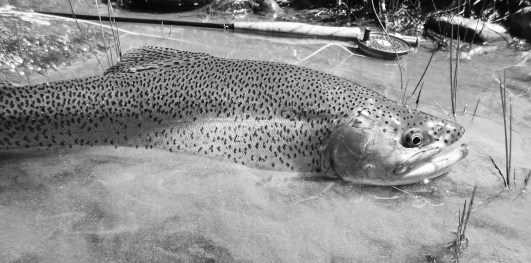
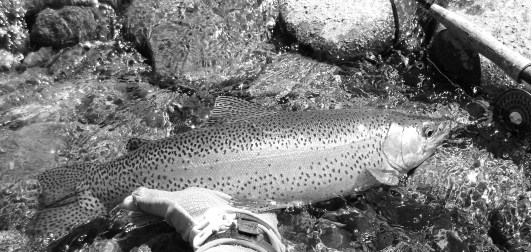
They weren’t looking up on the weekend, however, I did manage to fool a few fish in the shallows that were willing to rise: rainbows. I was on the hunt for brown trout. Some fish took a good look at my fly but were skeptical and turned away. I saw several nice ones on nymphs but they wouldn’t budge from the bottom. The good thing is there were fish around and I spotted some.

abbyhigh

Abby on the cliff

Sight-fishing in the canyon can be challenging as the light-coloured cliffs reflect sunlight  casting an intense glare on the water.

thumbf

I’ll go back when the grasshoppers are more prevalent (hopefully soon) and the fish are on the lookout for them and showing themselves by rising. Then my terrestrial fly impressions will be more productive.

abbycliff

009

shinyf

The Sock

“Keep calm and wear odd socks”

-David Spires

blurhead

rainbow caught on PMD by author

My fishing sock returned! I’ve missed it. We’ve been separated for 6 months. I accidentally left it in New Zealand in a rental car at Christchurch airport. My friend, Roman, found it when he thoroughly checked the hatchback of the rental before his return flight to Canada.

The sock travelled a great distance. It went from Crowsnest pass to South Island NZ, was worn daily on many great rivers, then travelled back to Canada with Roman to Ontario. There it stayed for several months, dry but very eager to wade and fish again.

The sock finally returned to its home, the Crowsnest Pass, when Roman came out for an angling trip, with his two boys, Christian and Daniel.

It’s a well-travelled neoprene Simms sock. Now ready for duty on my local streams. It has been reunited with the other one. A sort of balance has been resorted and all seems right with the world!

Here’s a photo of the international jet-setting sock looking happy to be home again…

sock

This past week I had the opportunity to fish with some friends: Joe, Roman, Rick, Christian, Daniel and our four-legged tag along, Abby. All good angling mates. Fishing at times was tough but at the end of the week we all caught some fish….and a few great ones I must say. All were taken on dries, mostly sight-fishing. The weather was good…summertime in SW Alberta.

Some memories from one week in July:

-Joe’s favorite line, “Hey Bobby, I’ve got another one on”. One of his browns and a rainbow were the prizes of the week.

bigbow

rainbow on a PMD dry fly


bigbr

brown on PMD dry

-The boys, Christian and Daniel, double hauling into the wind. Both great casters. They picked up some nice ones and ended their trip with a multiple fish day on a cutthroat stream. Their favorite lines: “Hey Bob can you pull my fly line through the rod tip” and “My fly is stuck in a bush, can you un-hook it for me”.  Some of their fish…

cbtrout

brown on dry


danielbow

electric cuttbow on beetle


boyzcutt3

cutthroat on drake dry

Other memorable events: Rick casting from a seated position on the river; and the boys repeatedly asking their father, ” Can you untangle this”…

rivcross

river crossing


bull trout

Roman and Christian chasing a bull trout


groupshot

the group working a pool


abbywire

abby


hardday

long day


bobbrw

brown on beetle

bobbow

rainbow on dry fly

I hope to have the chance to fish with them again next summer…in the meantime I’m going to put on that happy sock and wade a local river.


Local Trout Water and Dog

With only a light breeze on Sunday I checked out my local tail-water river. Spring in SW Alberta has been slow in coming. Nothing new. I’ve been itching to get out as there is a ton of snow in the mountains and when the temperature finally heats-up and it begins to rain, a serious run-off will occur and it could last awhile….possibly a couple of months. So, the opportunity is now to sight fish (and hopefully the next couple of weekends) as the water is low and fairly clear.

abby34 (1)

abby


There were some bugs on the river: midges were the most numerous type; then some Skwala stoneflies; and just a few BWO mayflies. I saw very few rising fish. It was a slow day. However, I managed what looked like a Cuttbow (hybrid) on a dry…a nice one, and missed a good brown trout at the end of day.

cutbow1

river

Next weekend should be a bit better as hatches intensify. The BWO’s will get the fish looking up and rising.

cut2

DIY Fly Fishing New Zealand: A Blank Canvas & Paint

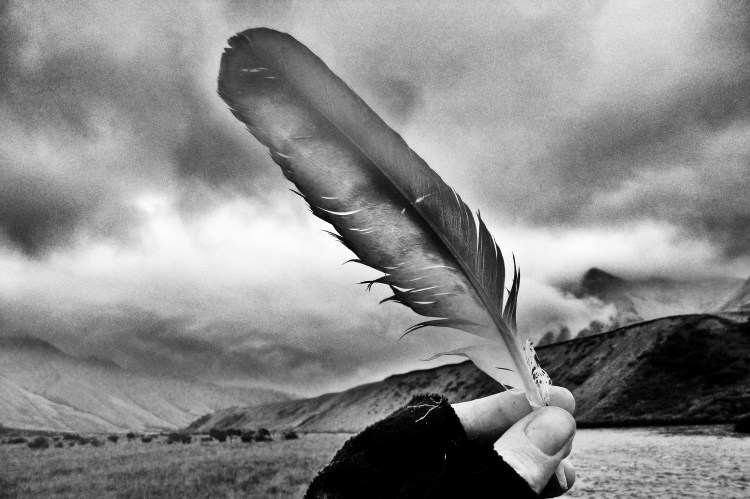
nz feather

WHILE IN NEW ZEALAND ALL OF MY DAYS were consumed with slowly and deliberately walking the stable banks of rivers in search of brown trout. My preference was always to cover these sections while walking upstream (sneaking up behind the fish)…for obvious reasons. Sometimes, however, due to the position of the sun (lighting and glare), I searched while walking downstream. This meant covering the water even slower, being more cautious and also trying to spot trout from a greater distance as I was much more visible/exposed. I located many trout this way. Once one was spotted I’d try to mark the location mentally, then leave the river’s edge/bank and circle around behind the trout so as not to disturb it. Then I’d cast upstream to it. Often this ended up being a blind cast or one with a bit of guess-work involved due to river glare. It all depended on the time of day; the height of the sun. And most trout spotted weren’t rising and therefore not showing off their exact location which made things even more challenging.

Sometimes instead of fighting glare I decided to gingerly walk back upstream and when the river depth allowed, I’d cross it and approach the bank fish from an upstream position, often wading mid-river. From this vantage the fish would still be very visible due to the light. Then I’d cast “Down and Across” to it. This meant staying some distance on the approach, using a long leader, and keeping myself and fly line low. If the fish committed to my impression then I ‘d sweep the rod parallel to the water either to my left or right, in order to set the hook, depending on my orientation to it, with the objective that the hook, often a fairly small one, would catch the corner of the trout’s mouth. Although I didn’t keep stats, my hook-up rate/ percentage seemed significantly better this way than at any other angle/approach. More importantly, with good light I was always able to watch the trout’s behavior and reaction (feedback) to my fly. I wasn’t blind due to glare. I wasn’t casting my leader over a fish I couldn’t see, or see very well, or risk having it (leader) land heavily, especially when trying to punch the fly into difficult wind or making an extra long cast. The method (down and across) meant the trout saw the “fly first” (no leader) as it tracked right to its nose. It’s a well-known technique often used on rivers that receive a lot of angling pressure. It works at home and it worked in NZ.

DSCN3980

If the light provided good visibility to approach a fish from behind, then I’d always selected that option. It was my first choice as there was less of a chance of being spotted and therefore frightening a fish. If there was a lot of glare and/or wind in my face, I’d get above the trout and go with a “Down and Across” presentation. I caught some beauties this way on several challenging, heavily fished South Island rivers.

DSCN4060

Every day on a river is like a blank canvas. Although there are some basic angling tenets to live by, in the end you get to choose how you apply the paint. Down and across can be a great brush stroke.

nz reel pic

paintbrush(foreground), canvas(background)

DSCN3979

morning: waiting for sunlight to illuminate the river

nz head cradle

DSCN4033

nz me fighting

coaxing a brown trout, photo by roman

r net pic

roman with rainbow

DSCN4005

good light for trout spotting

coulee trout

I’ve been fly fishing the SW corner of Alberta for sixteen years. Although the region has many fine rivers and streams, in the last several seasons I’ve been focusing on just a few rivers that are some distance from the mountains out on the prairies. Fish numbers aren’t real high in these flows but they hold some remarkable, challenging trout. With scarcity comes value.
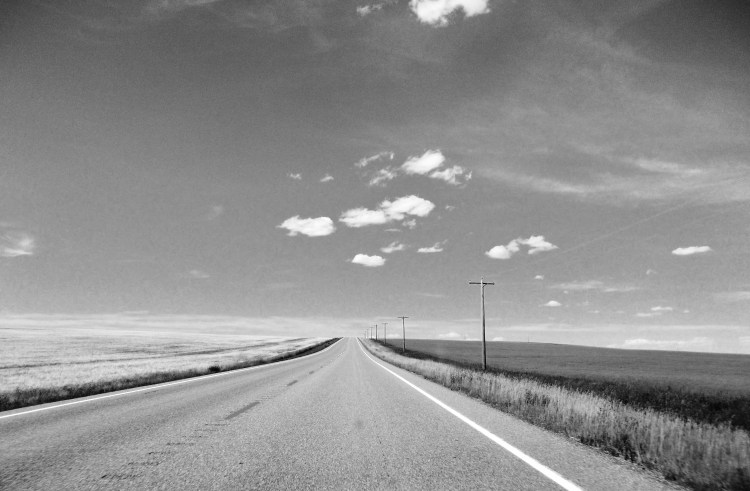
pin27

prairie road


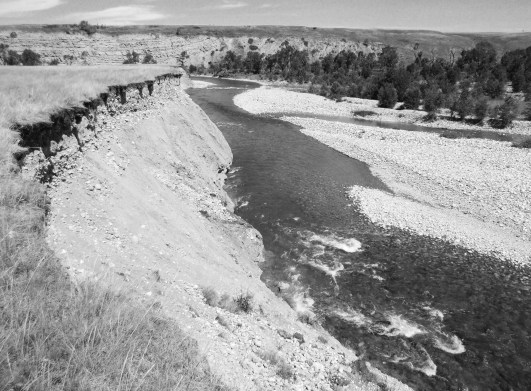
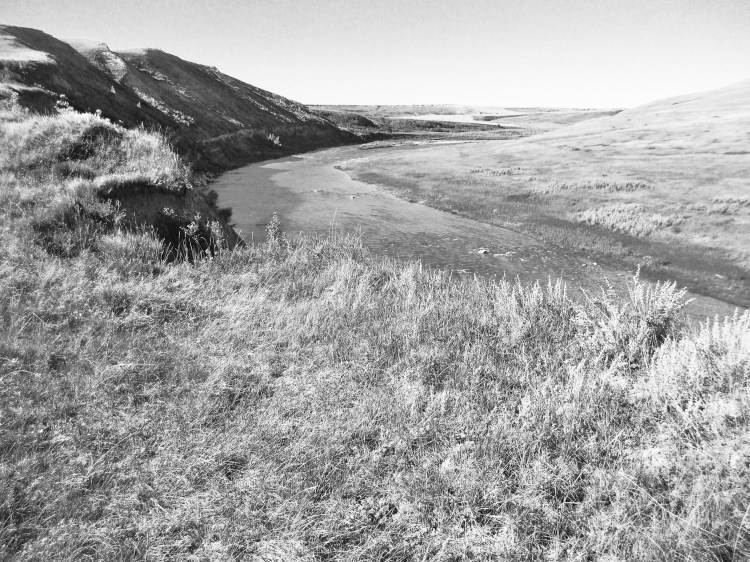
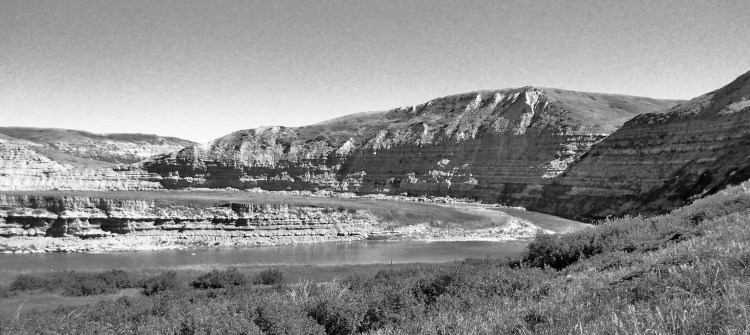
The rivers run through rolling grassland terrain, often down in valleys and canyons. It’s Coulee country and for most of the summer sun drenched, windy in the afternoons, and very arid. From a nearby prairie road, which runs straight like an arrow seemingly to the horizon, you wouldn’t think that there is a river anywhere. If someone told you there was, you certainly wouldn’t think it contained some well conditioned trout.
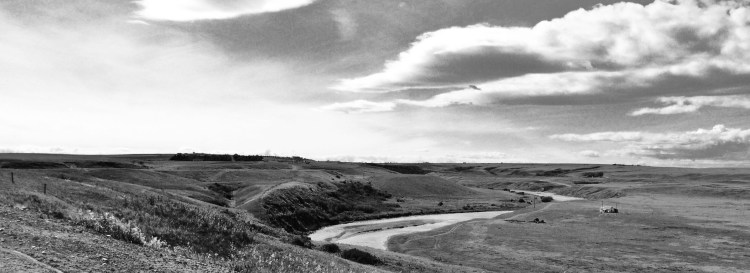
slowgo17

The region has few trees. The ones that do make a stand tend to be stunted by the harsh, dry conditions. The openness of the terrain makes the fly fishing extra challenging as there is nowhere for an angler to hide. The blinding summer sun can be your friend or foe. It all depends on how you use it. It helps you spot fish but also makes you very visible. You’ve got to be strategic about where you stand; where you position yourself.
slogo12

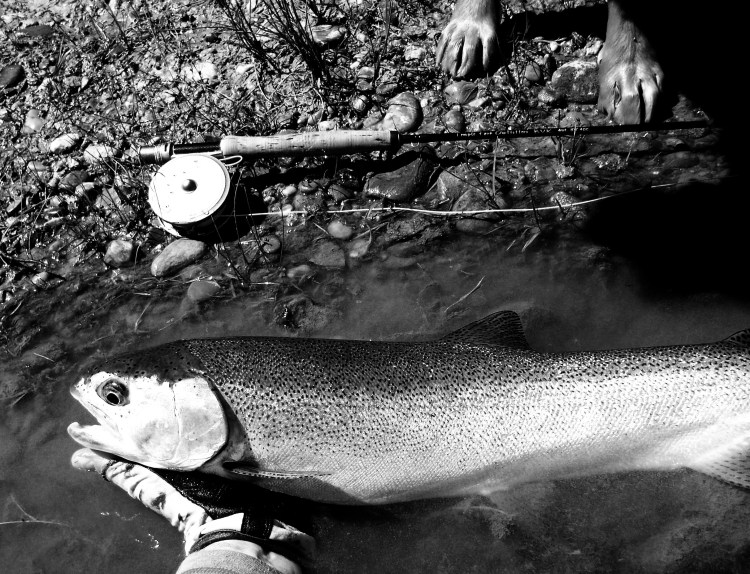
The coulee shadows, only available early and late in the day, can help you stay stealthy. You can hide in them. The rest of the time you need to use the sun to your advantage. I’m always checking my shadow in relation to the water and when possible try to position myself between the sun and a fish that I’ve located. Sight-fishing is all about the interaction between light and water.
slolow

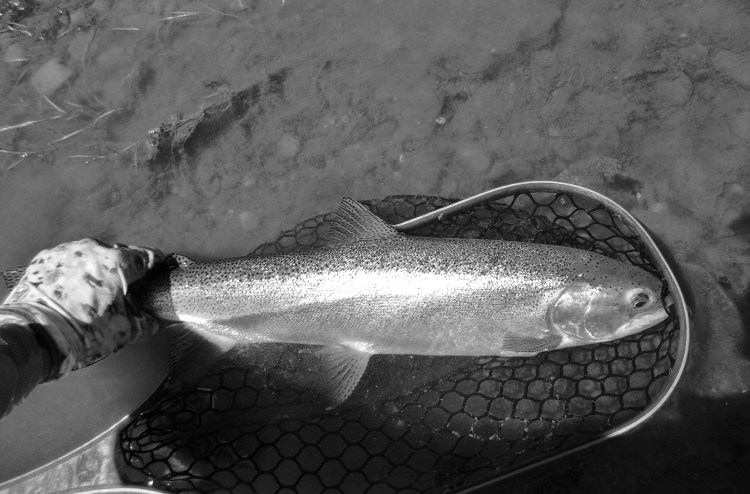
When the sun is at its zenith it’s best if possible to approach a trout from behind or from well upstream to avoid being noticed. If you want to get in tight to a fish you often have to crouch or crawl. My stream-side mantra is “stay low and go slow”. Any movement is easily detected in the great wide open and trout will quickly bolt to the safety of darker water. Spook a trout and you’ve missed a chance, and on some days you don’t get too many. The catch percentages in the coulees often aren’t real high. In fact on many days they are quite low. Remember with scarcity comes value…
slowgo8

Clouds may roll in and turn the river surface a silvery grey and therefore impenetrable to the human eye. This makes spotting trout almost impossible. The wind can turn gale force and challenge any weakness in your casting mechanics. A fly embedded in your cheek or ear lets you know who’s in charge. The swoop or shadow of an osprey or hawk over the water will make a trout you have been carefully watching flee. On some days you’ll feel you are being plotted against. You know it’s irrational to think this way… but you will. The old, ancient part of the brain will challenge and override the newer well-developed rational part. You’ll try to talk yourself out of this kind of superstitious, magical thinking but when everything seems to be going wrong and you can’t find or fool a single trout, you’ll succumb to it. You’ll feel jinxed.
pin25

The rivers can have hatches and this can make things easier. When they don’t, or when they are stifled by the wind, you look for prowling/cycling fish. They often cruise the shallows searching where leftover flies and terrestrial bugs have collected. These fish are large, confident creatures but they still remain wary. They’re like coyotes who leave the hills at night in search of an easy meal in the back allies of a village. They have their territory and their daily routes. Watch their prowling patterns and where they choose to stall and feed, and it will pay dividends on an outing, or the next one. Spot a fish at one of these discovered locations on another day and you’ll feel a sense of mastery: that you are learning to read the river and the trout that inhabit it. It’s a feeling that is even better than catching.
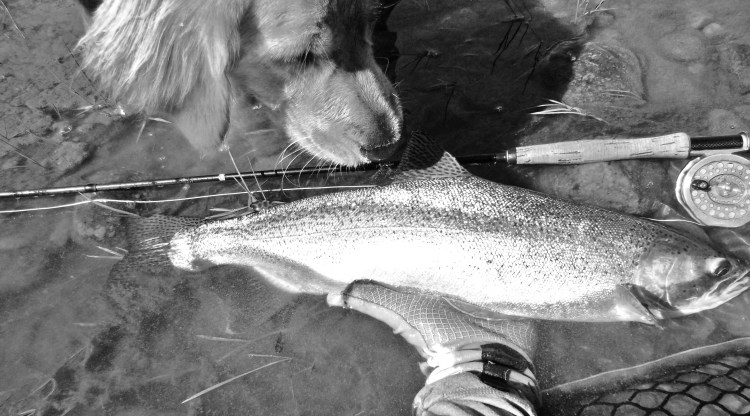
slowgo6

In certain spots you can climb the coulees. Up high you can scan a lot of water and locate feeding trout. At elevation hawks often dive and buzz your head at incredible speed. Sometimes they come so close I think they are going to clip the top of my fly rod off with the efficiency of a ceiling fan.
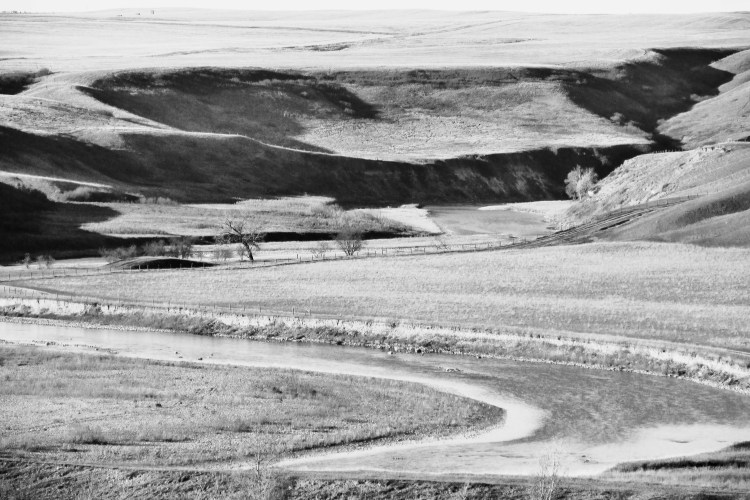
pin-24

When you can’t use height to your benefit you stand stationary at a good pool, again using the sun to your advantage for maximum visibility, and watch for movement. Fishing with your eyes takes concentration and patience. You have to manage yourself well in order to be successful. Fish like you’d imagine Obama would fish, not his successor. You’ve got to resist the impulse/ temptation to flog the water by repetitive casting. The old fishing books call it ” hoarding your casts”. It’s hard to do as most of us learned to fish on rivers that required casting over and over in order to make a connection. When sight-fishing you’ve got to do the opposite.
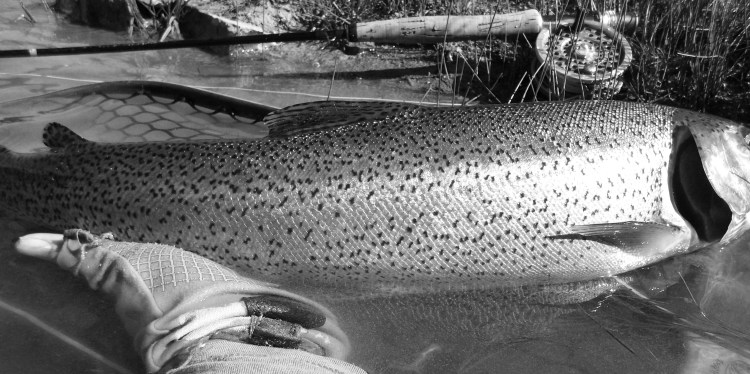
slolow1

These rivers summon all of your angling skills. Finding trout on foot in this demanding environment and then tricking them with a dry fly is in my mind one of the ultimate fly fishing challenges.
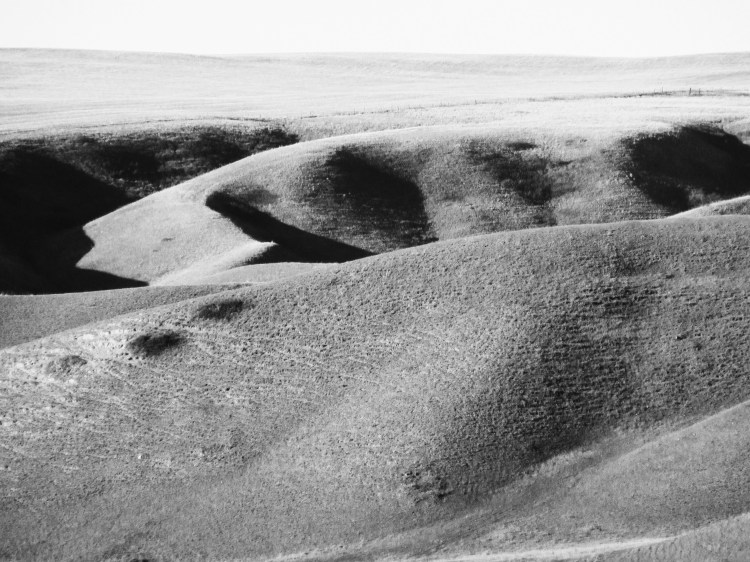
pin2-2

slowgo15

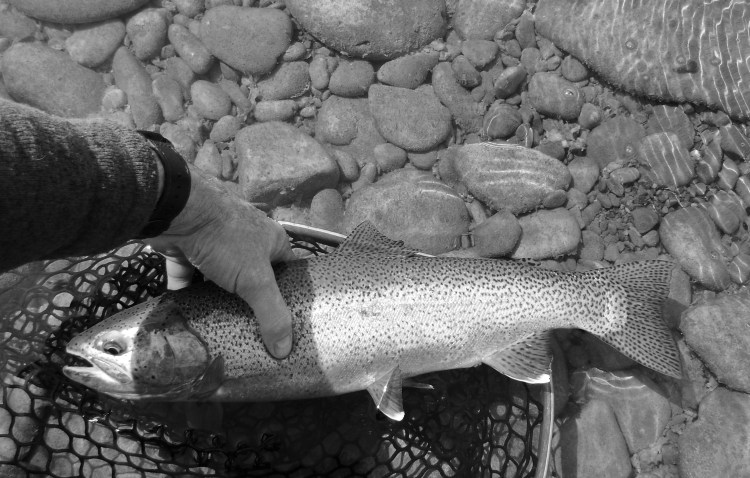
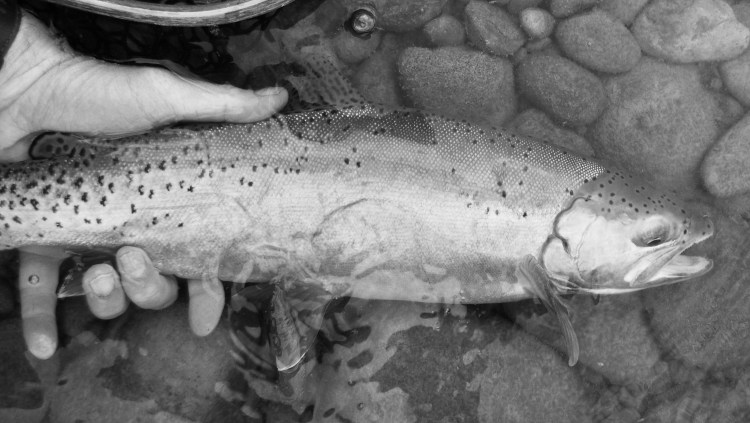
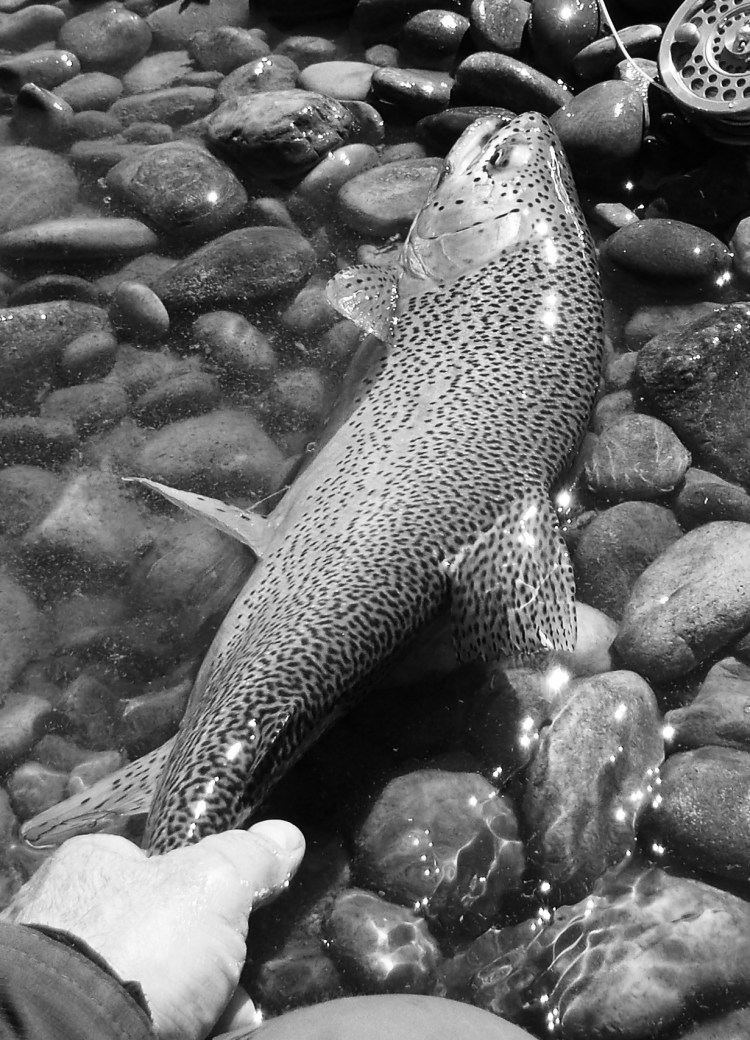
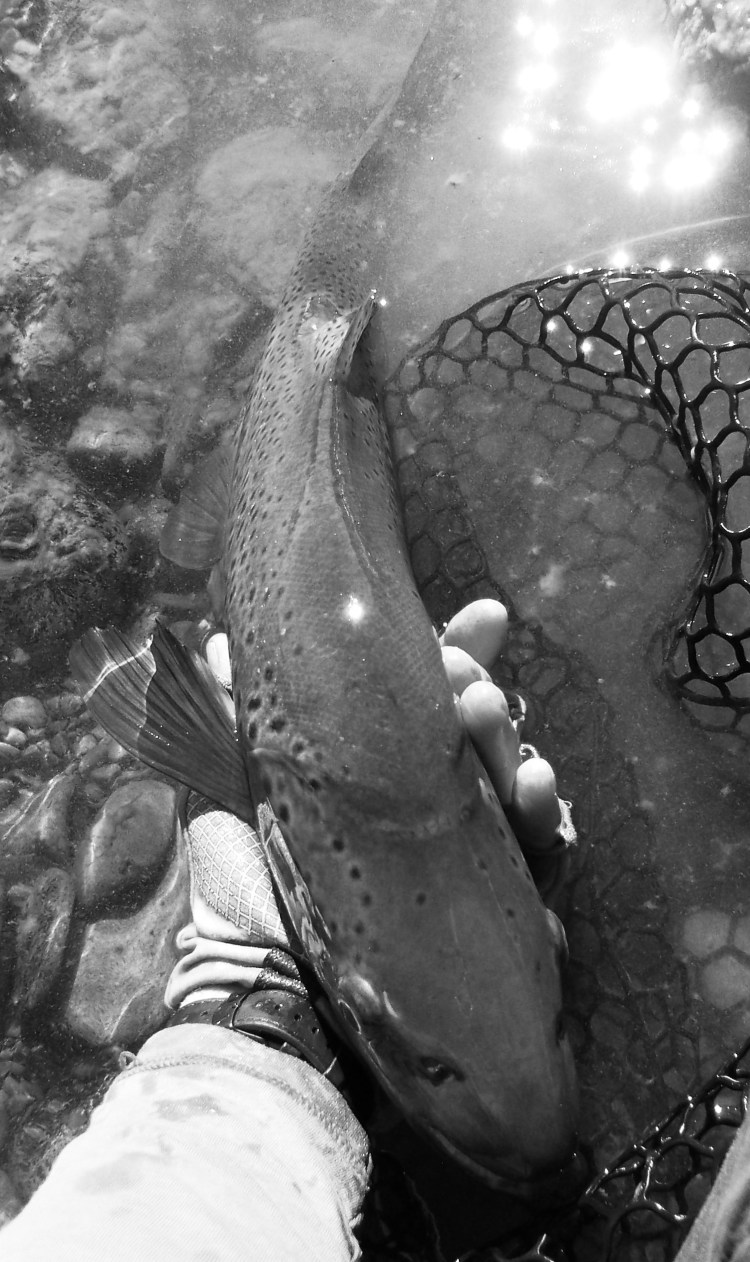
Above are some trout caught and released while sight-fishing with dries this past season.


Cumulus Nebulous

My Oh My! October was a tough month. The most challenging one I can remember. Usually it is an outstanding time to be on the river. Some of the best fishing of the year. No such luck this Autumn. There were few BIG blue winged olives around. It was mainly just the small guys: size 20, 22, and smaller…the size of mosquitoes…no, miniature mosquitoes.

storm

Finding rising fish was also a challenge. I searched and searched. I drove from favorite river to river. My local water simply didn’t produce. It was hard to find a target.

abby

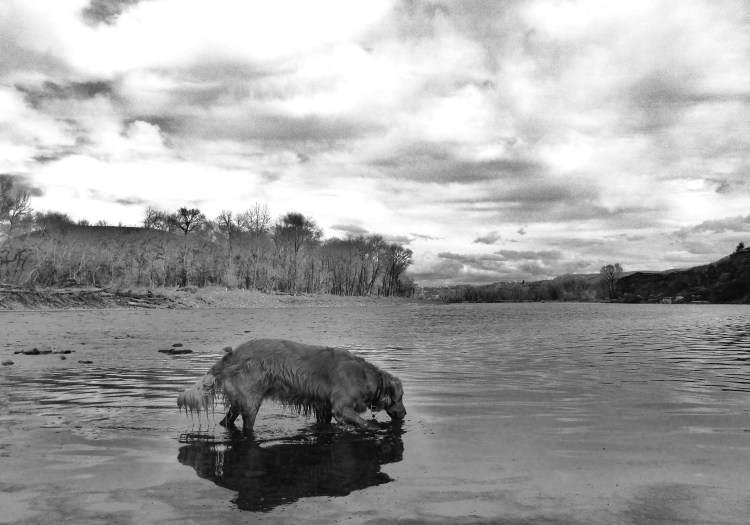
abby on home water

sidechan

calm morning on side channel

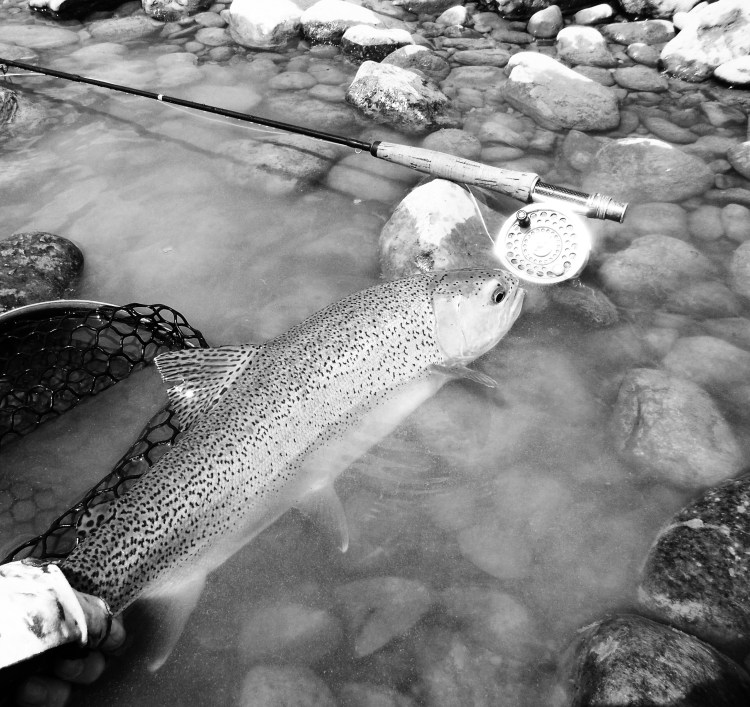
So I headed to the Missouri river (the Mo). I usually fish it in late October early November. Often it serves up a sensational BIG olive hatch around the time the World Series is on. However, like my local water, the Mo was tough going. Just the mini olives were out and not that many of them. Finding surface feeders was like trying to get a rally going in the World Series. Hits were few and far between. It was a low score game. I kind of suspected it was going to be a challenge as the fishing reports from the banks of the Mo weren’t clear. They were cloudy. They were nebulous…they were cumulus nebulous!
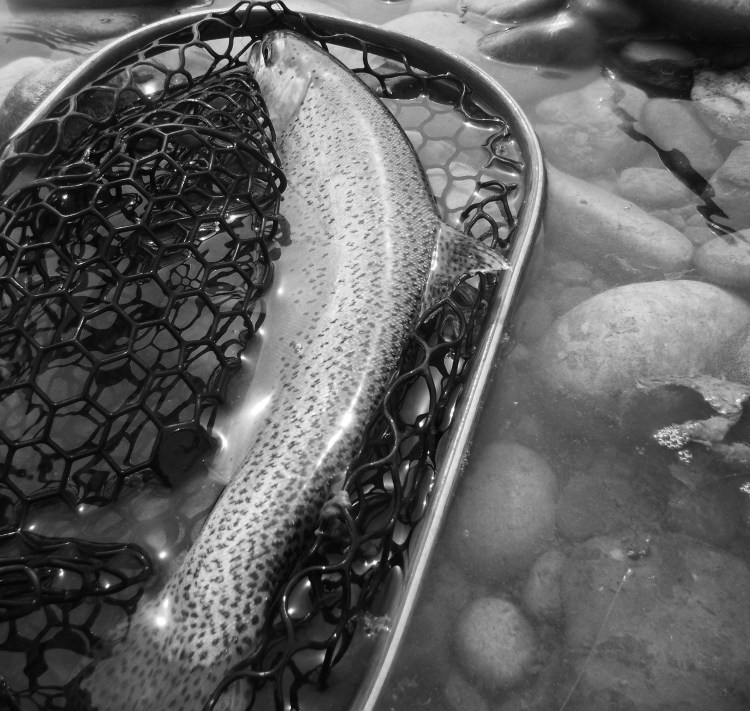
handfin

So, I walked around a lot, took some photos and persevered. I lowered my expectations. With the fast ball pitcher on the mound throwing at 100 mph I didn’t try to hit it out of the park. I shortened my swing and just tried to make contact. I eventually caught a few good rainbows on tiny dries; a simple little hackle pattern, clipped on the bottom to ride low…a half hackle. A photo of it turned out blurry. As I said October has been a tough month.

Looks like the season is done. Someone’s dimming the lights but I’m not ready to go home. I’m going to have to book a winter angling trip somewhere…

path-1

beautiful anglers path

025

037

longshot

cattle

moth

track

railway path along the Missouri

slimback

shop

early morning craig, montana

deerprint

riverside deer prints

sidechan2

another side channel

landscape, dog and rainbow

The elements have been conspiring against the dry fly angler. The wind has been nasty. This past weekend it was howling. And the bugs…where have they gone? Maybe they’ve blown east to Saskatchewan or Manitoba , or even further, maybe Quebec. That’s where they’ve gone. They’re in Quebec. The blue winged olive may flies are congregating in some street side café, speaking French and discussing political affairs, and wondering what the hell is going on south of the border!

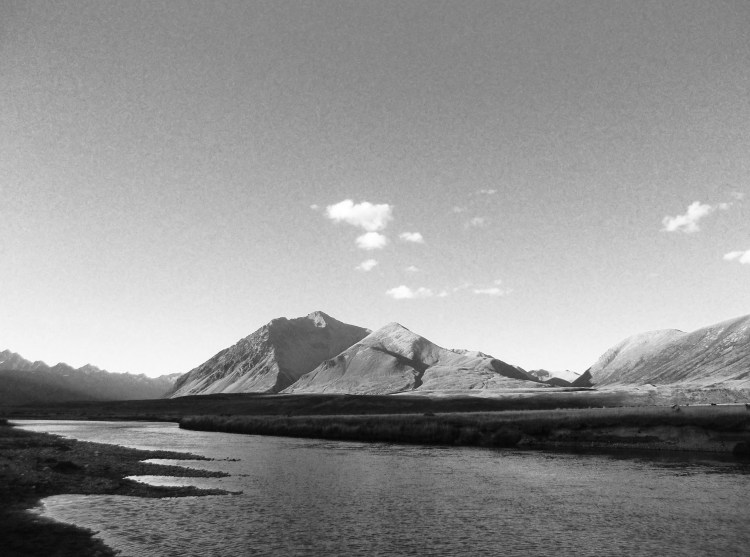
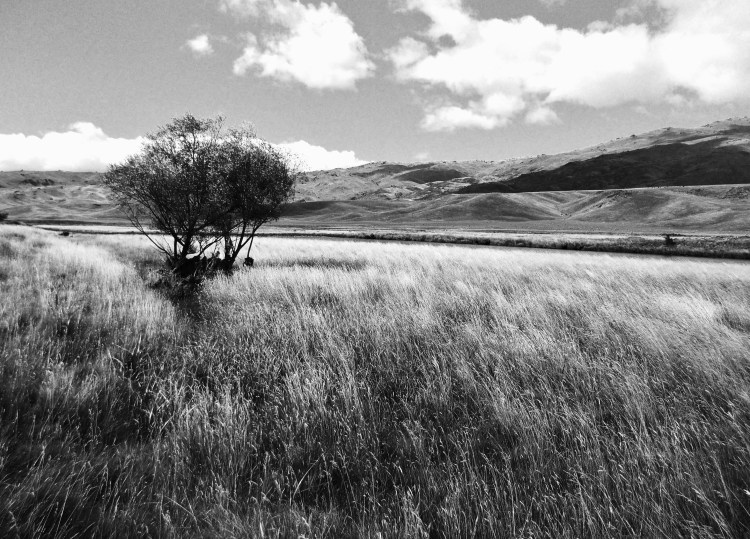
Some SW Alberta landscape photos, dog and a rainbow.

puddle

abbydist-2

abbydist-1

hillstree

post-1

post-2

abby