In the past several years I’ve felt there has been a decrease in hatches (bug life) on many rivers in my region, SW Alberta. Last year it was very noticeable on some of my favorite tailwater rivers which usually have an excess of small mayflies and caddis which hatch all summer long often well into the Fall. People on various fly fishing forums have noticed the same. What has also been observable is that many of the trout I’ve been catching in recent years seem “leaner”; much less robust and energetic.
I’ve attached a brief article and video below called, “no fly zones” regarding bug life decline. Check it out. It is from a fly fishing perspective but there are numerous non-angling articles on this worldwide phenomenon in publications like the Guardian: etc. Google “bug apocalypse”.
Here’s a nice brown trout I caught on a tailwater river where bug life was especially poor last season. It was cycling in the sunny shallows and I caught it on a size 14 black ant. It was more slender than trout I’ve caught at this location in past seasons…lack of bug life?: tough winter?; lower flows?; warmer water?; additional variables?; all of the above?…
Flows are low for this time of year on a local tailwater river and water clarity, for now at least, is excellent. Usually it is high and off-color in late May. I took advantage of the good river conditions and a forecast that called for cloud cover and minimal wind, hoping for a good hatch of Blue Winged Olives. The hatch was good. Fish were up. I casted emerger patterns mainly size 18: fly body breaking the surface and a wing (white or black depending on surface glare) simply for a bit of flotation at eye of fly and for visibility. A few photos of Rainbow trout.
Crustaceans. I saw a variety of them on a recent DIY saltwater fly fishing trip in late November. The sand I was wading was a whiteish-tan color. Many of the small crabs I spotted matched the sand bottom (coloration) in order to blend in. Creatures in nature tend to camouflage.
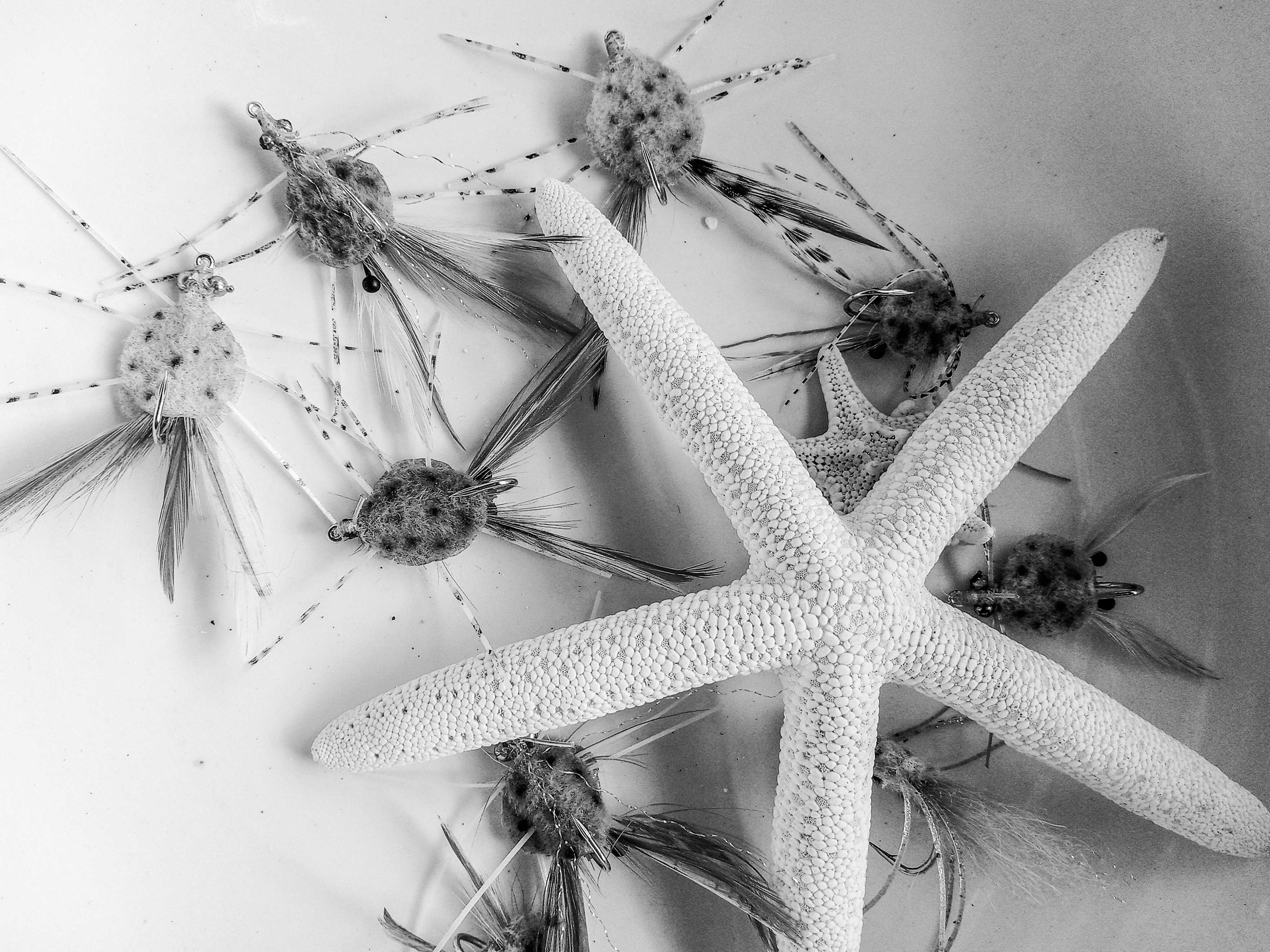
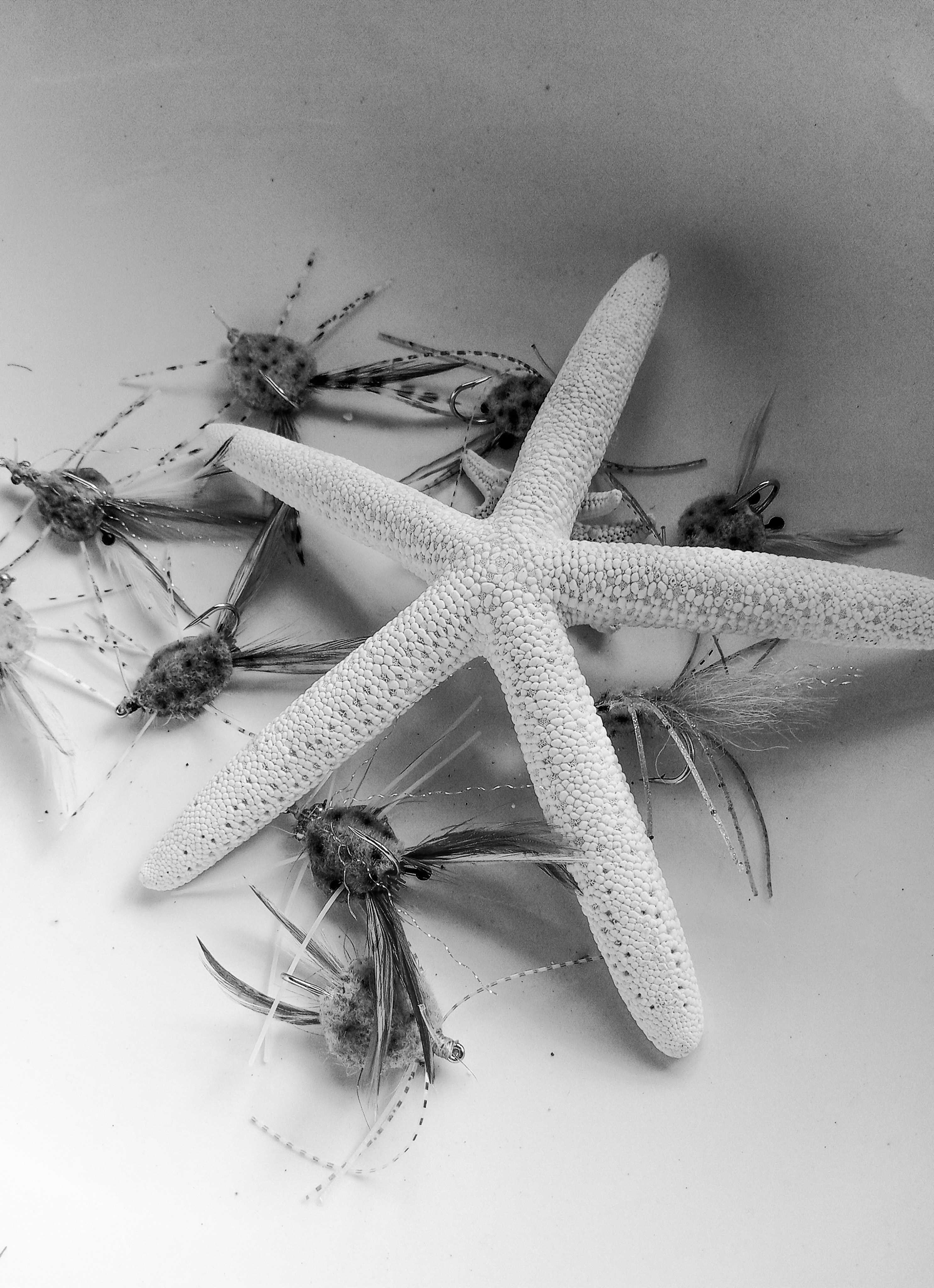
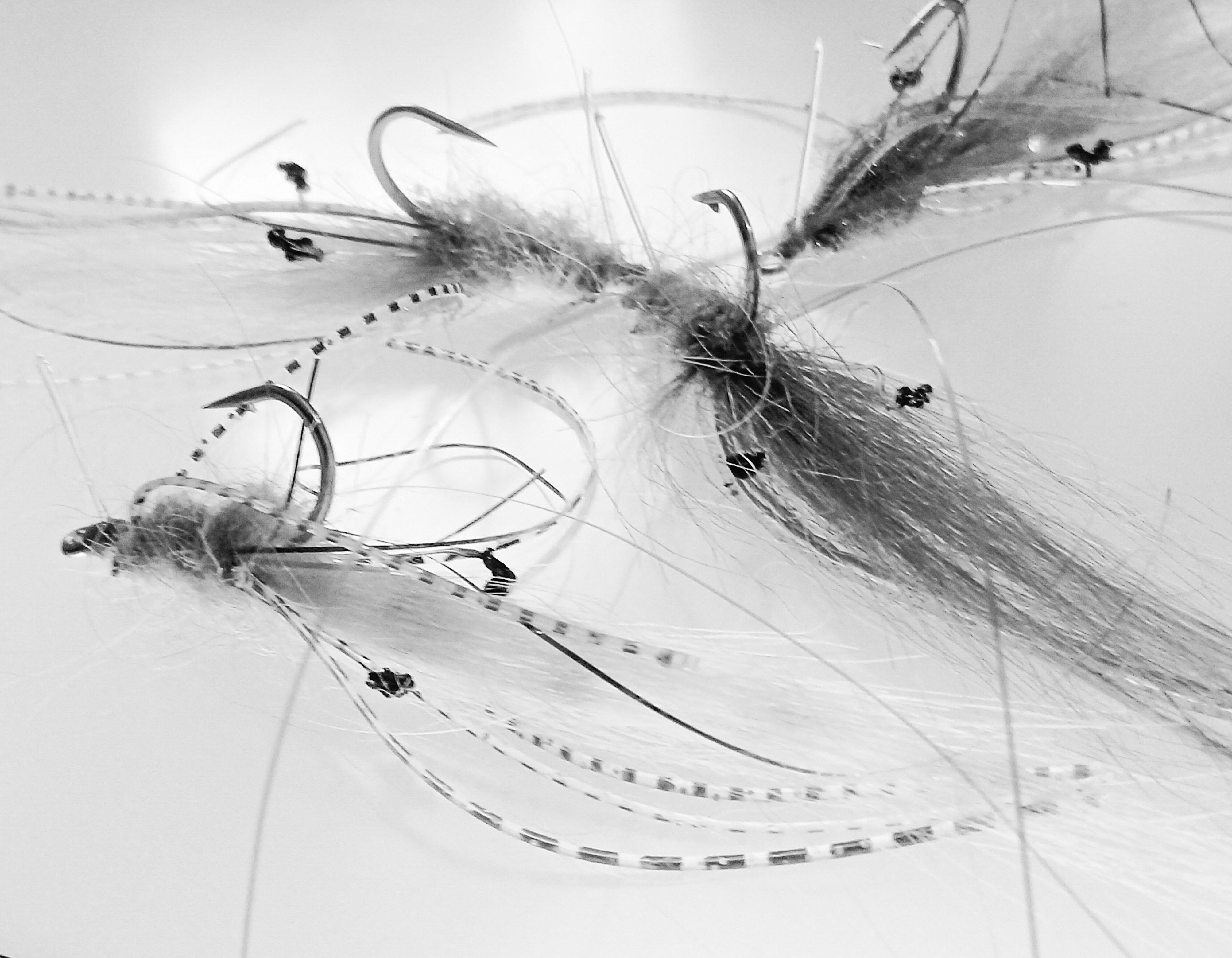
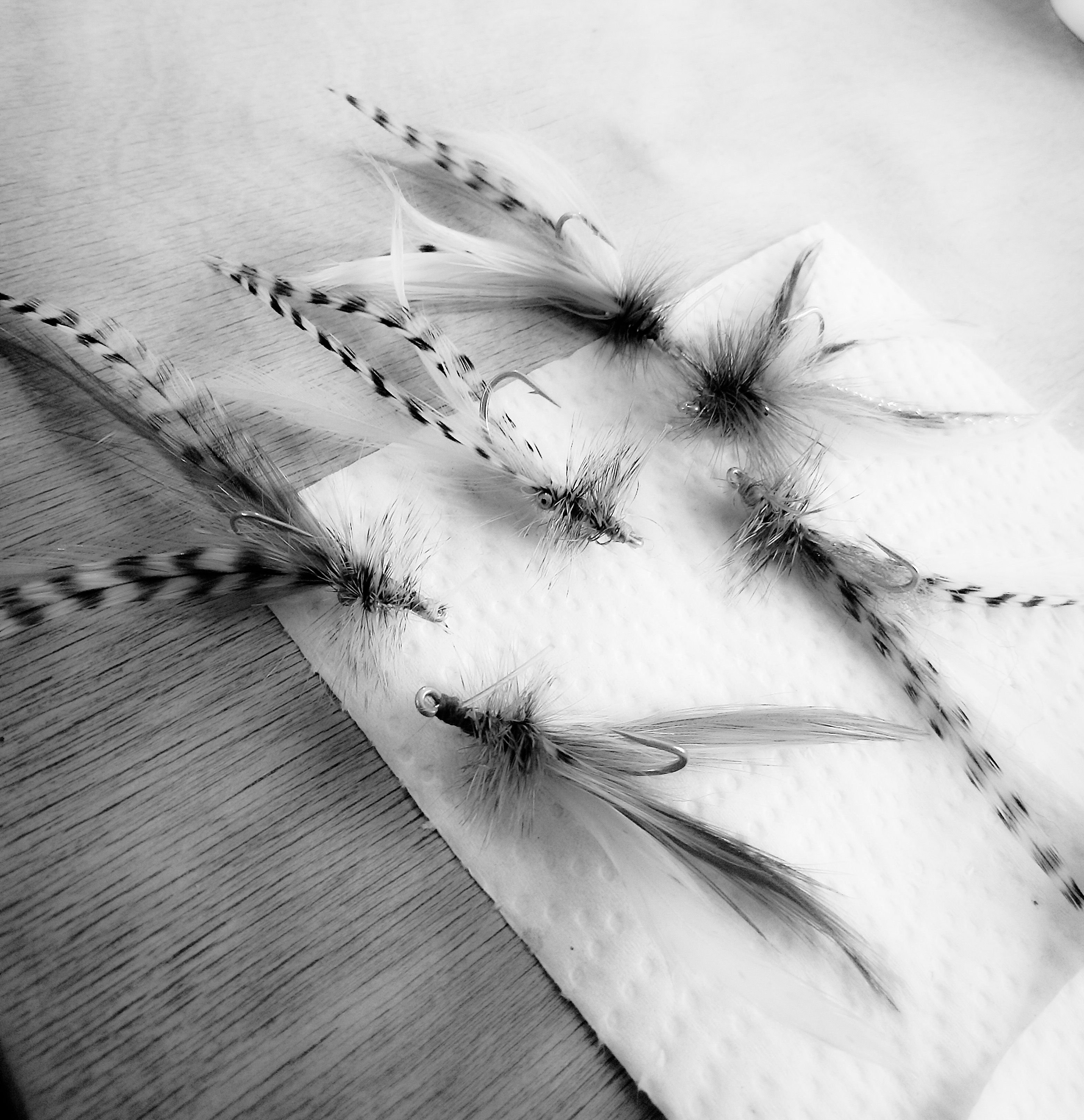
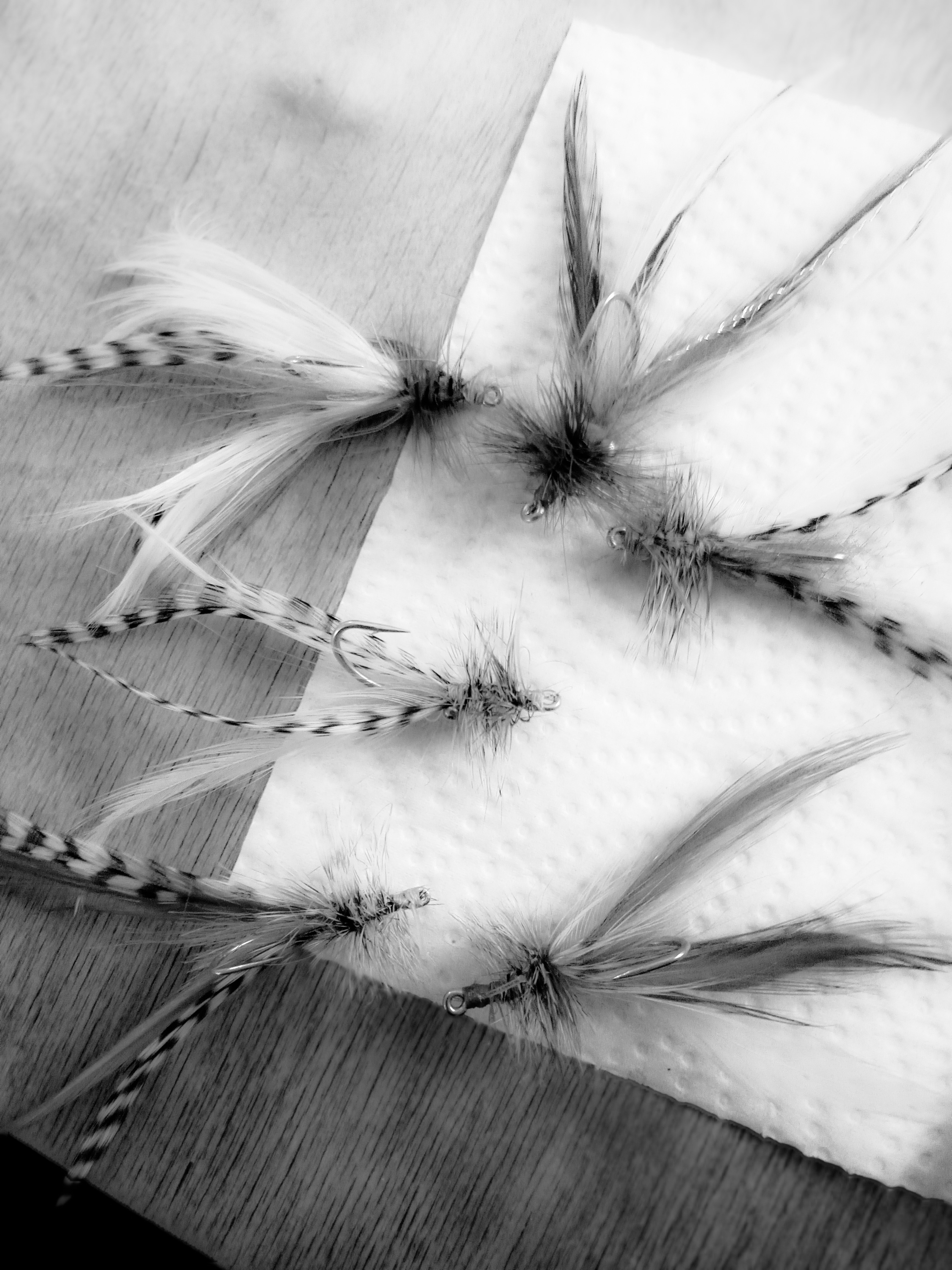
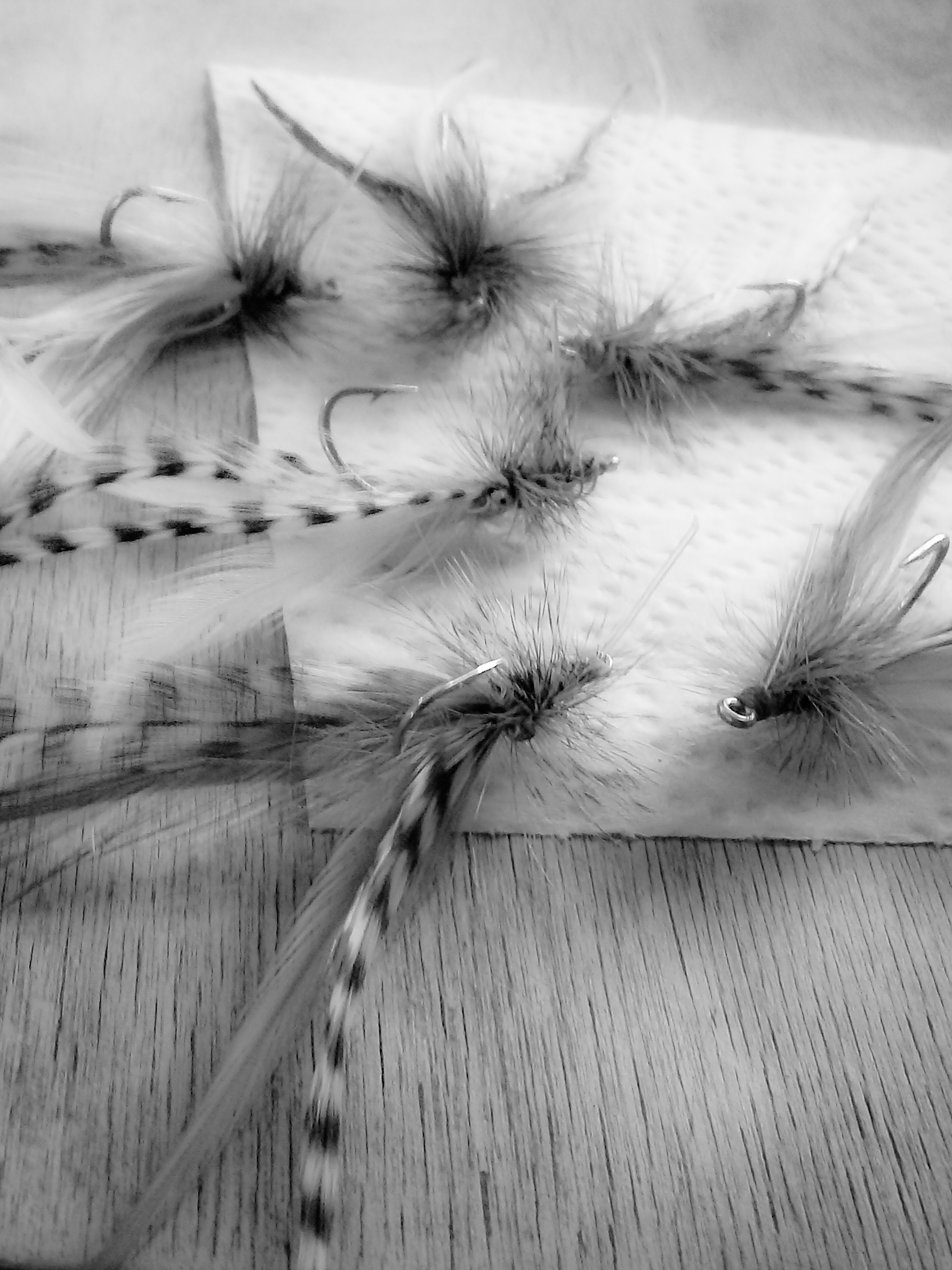
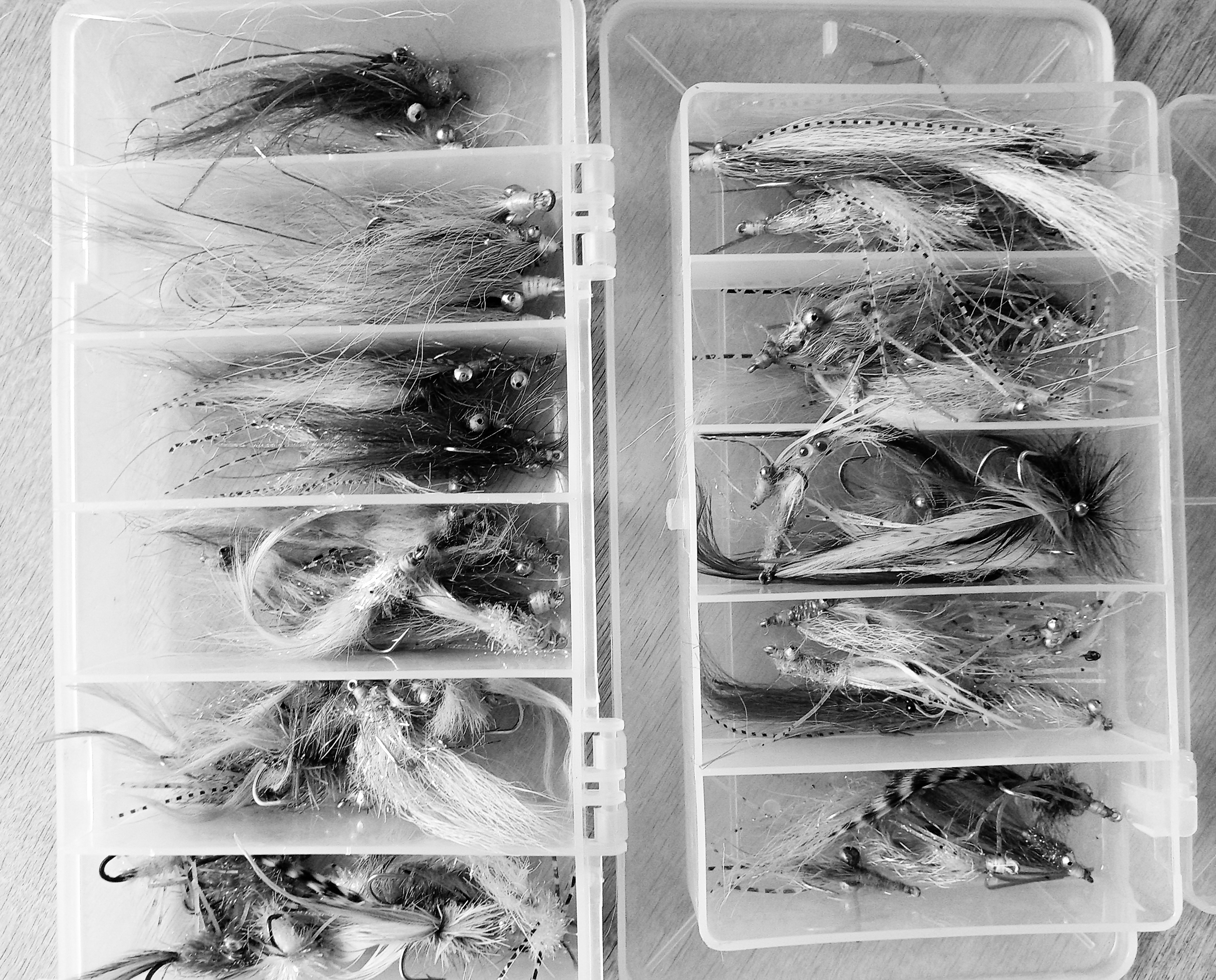
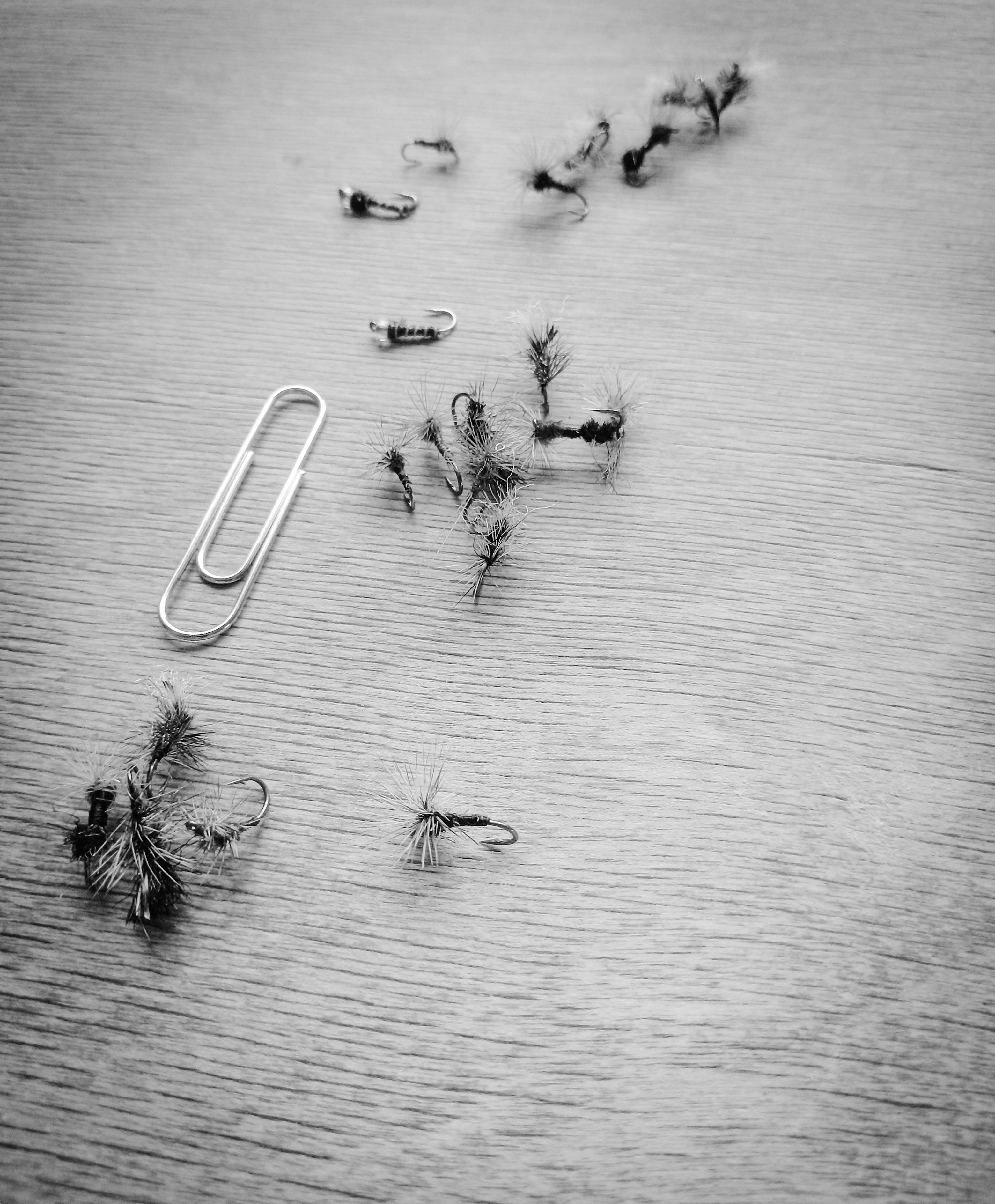
Below are some pale size 2 and 4 crustaceans flies tied with a tan/sand colored Furry Foam and weighted lightly (bead chain) for hopefully a soft landing in ultra-shallow water. I used a dime (coin) to cut out the body /shell shape. Although crab shells aren’t perfectly round, if Redfish can differentiate between a round and an oval shell then I’ll have to tip my angling cap to them!
There are many crab fly recipes out there. They range from super realistic to wildly impressionistic patterns. I picked and copied a simple recipe that required minimal materials, matched my novice saltwater tying skills and modified it a little to make it my own. I’ll have to cast the impressions on a future trip to see how they sink and perform when tugged along the bottom, and also to check-out their durability.
Ultimately it is the Redfish who will decide whether the crab recipe is a visually appetizing one, or not…
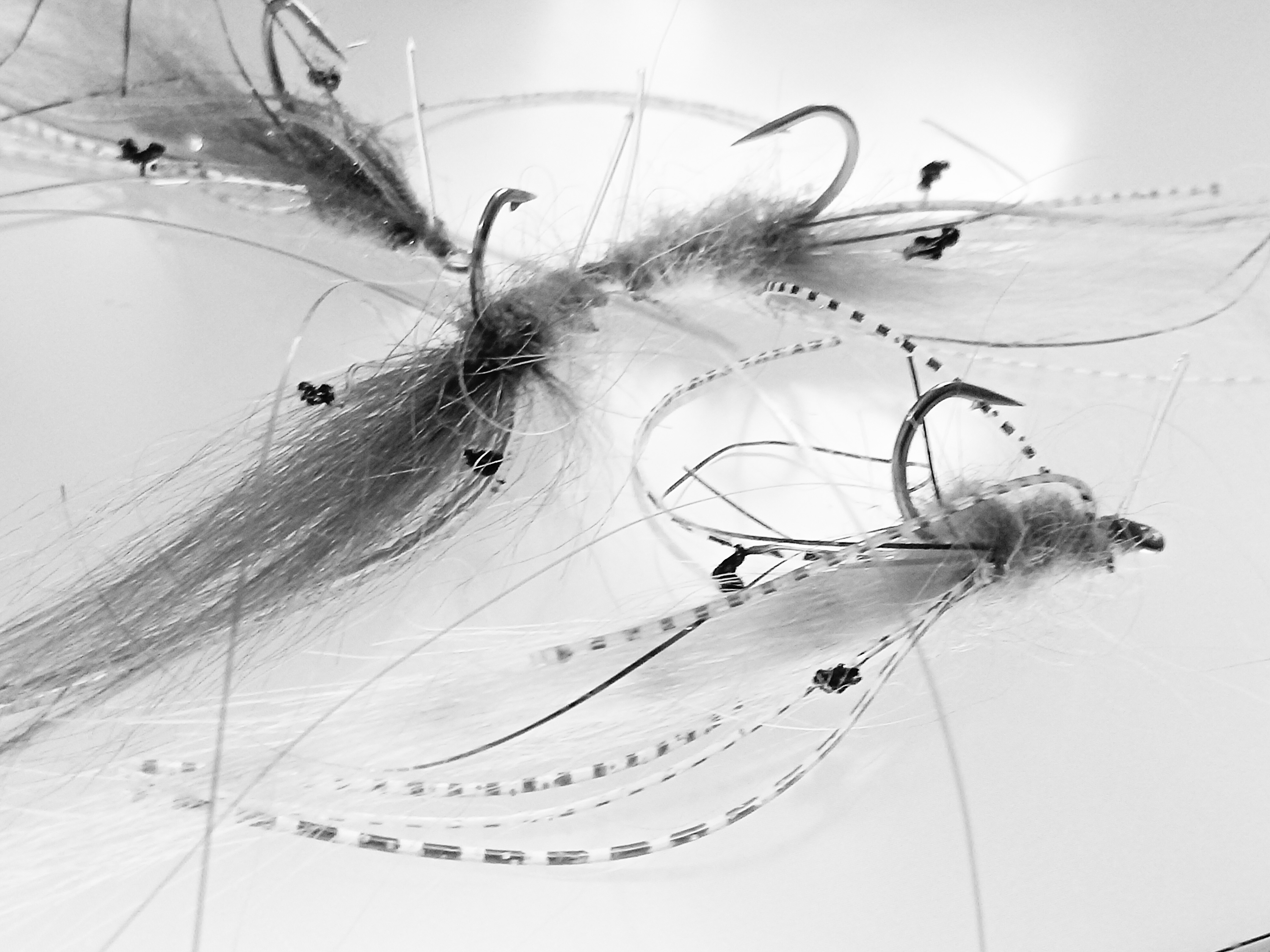
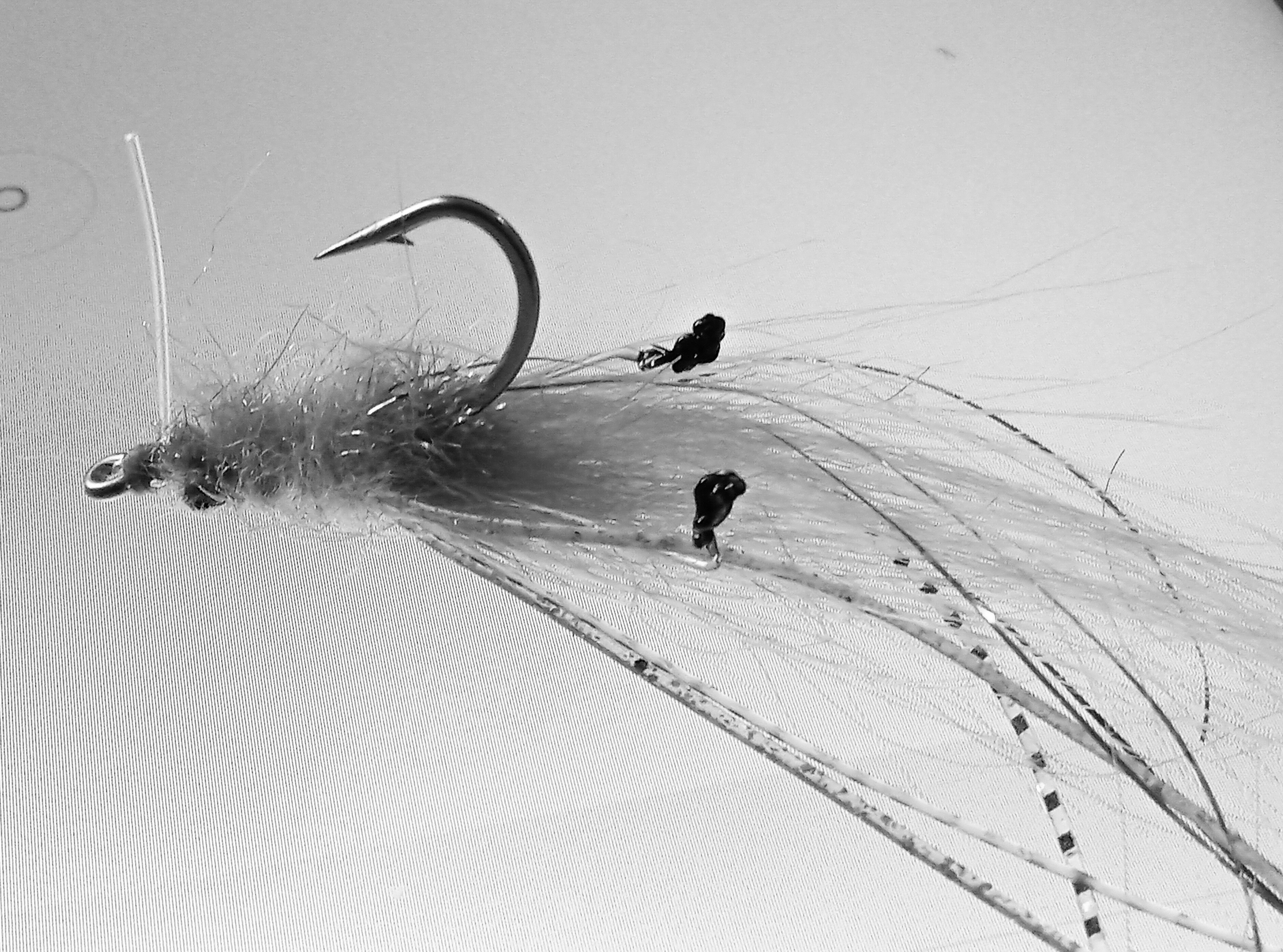
Light-weight fly pattern (Seaducer style) for spooky redfish (or other species) in shallow, clear water. Feathers splayed crab-like. Hackle near eye of hook for soft-landing and illusion of bulk…
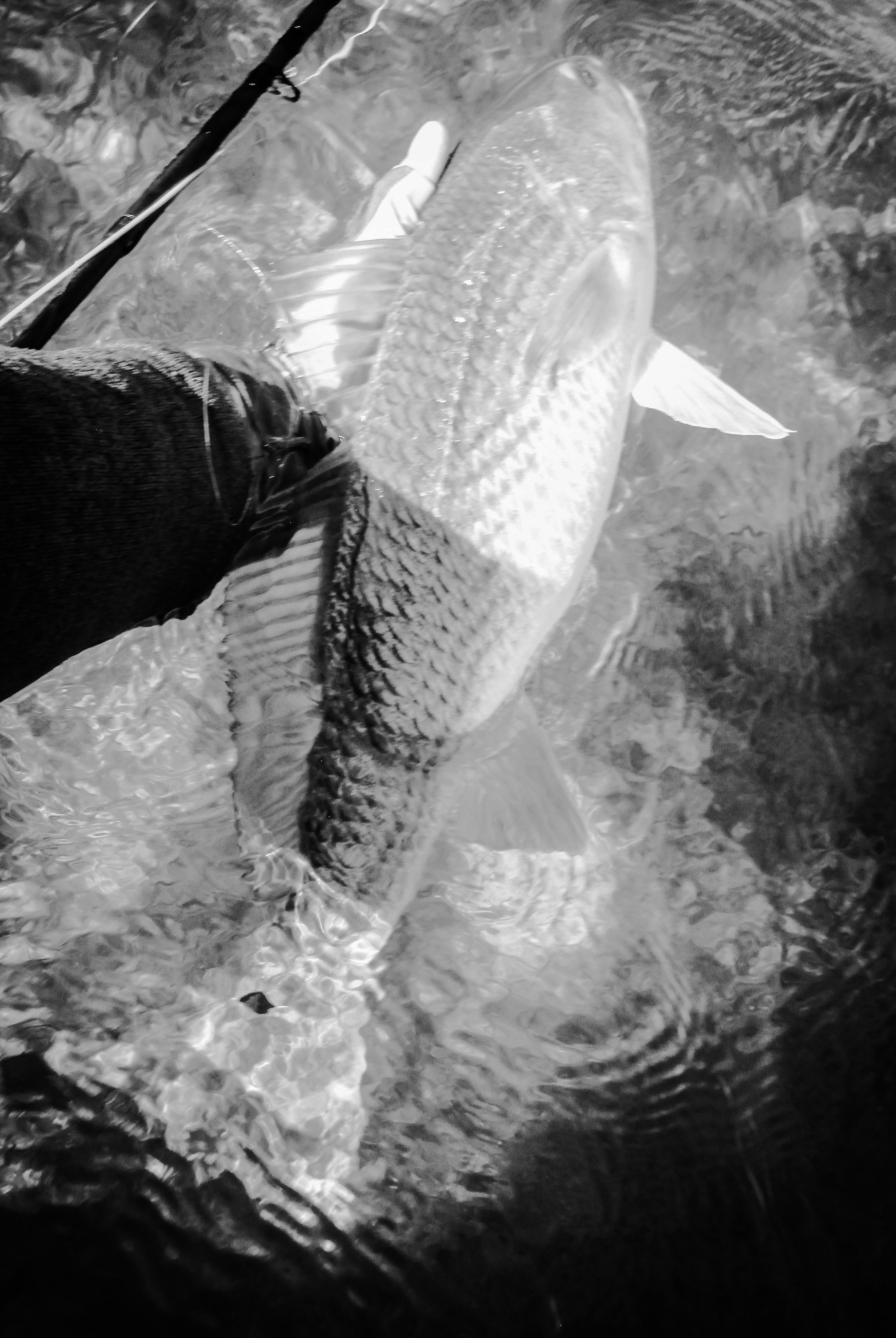
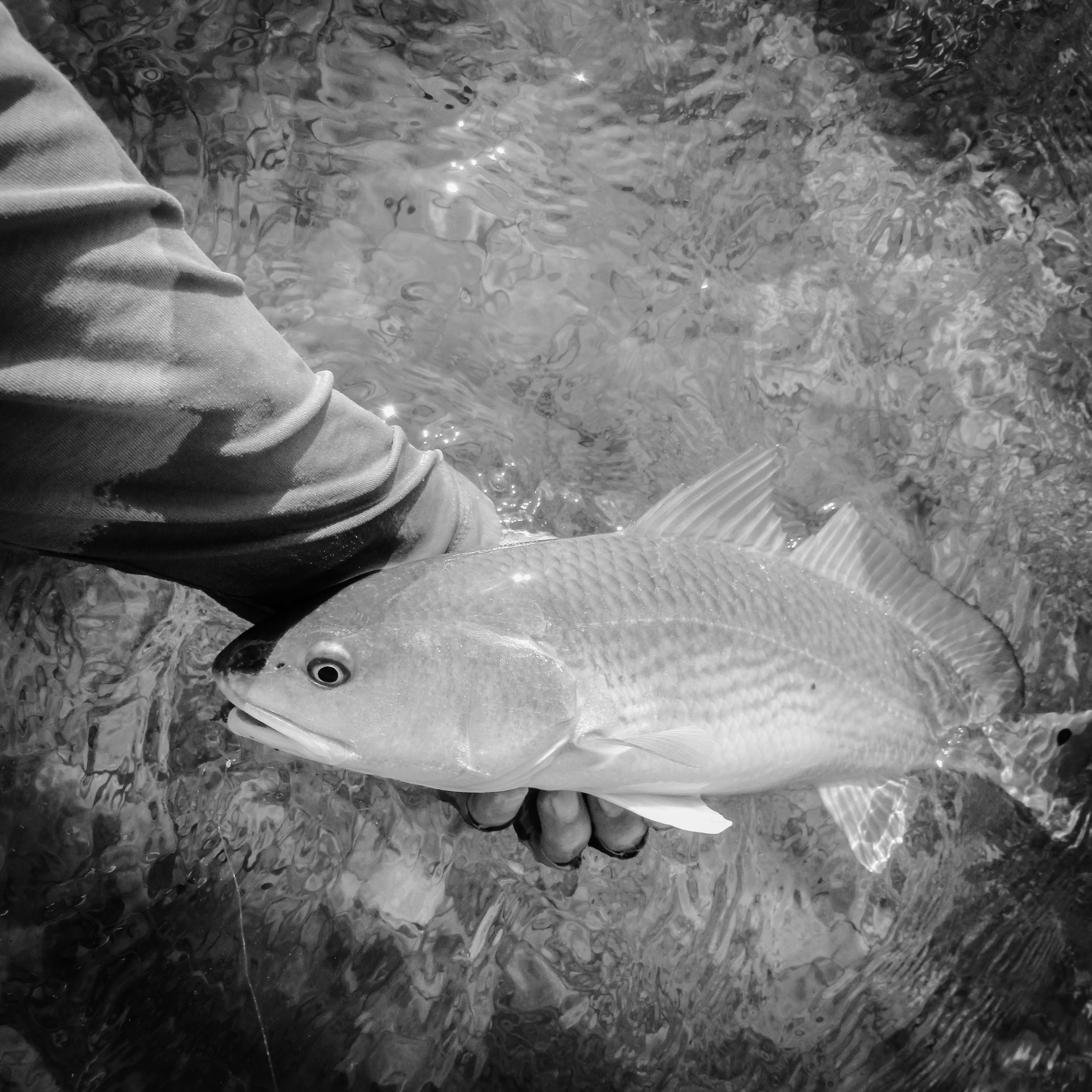
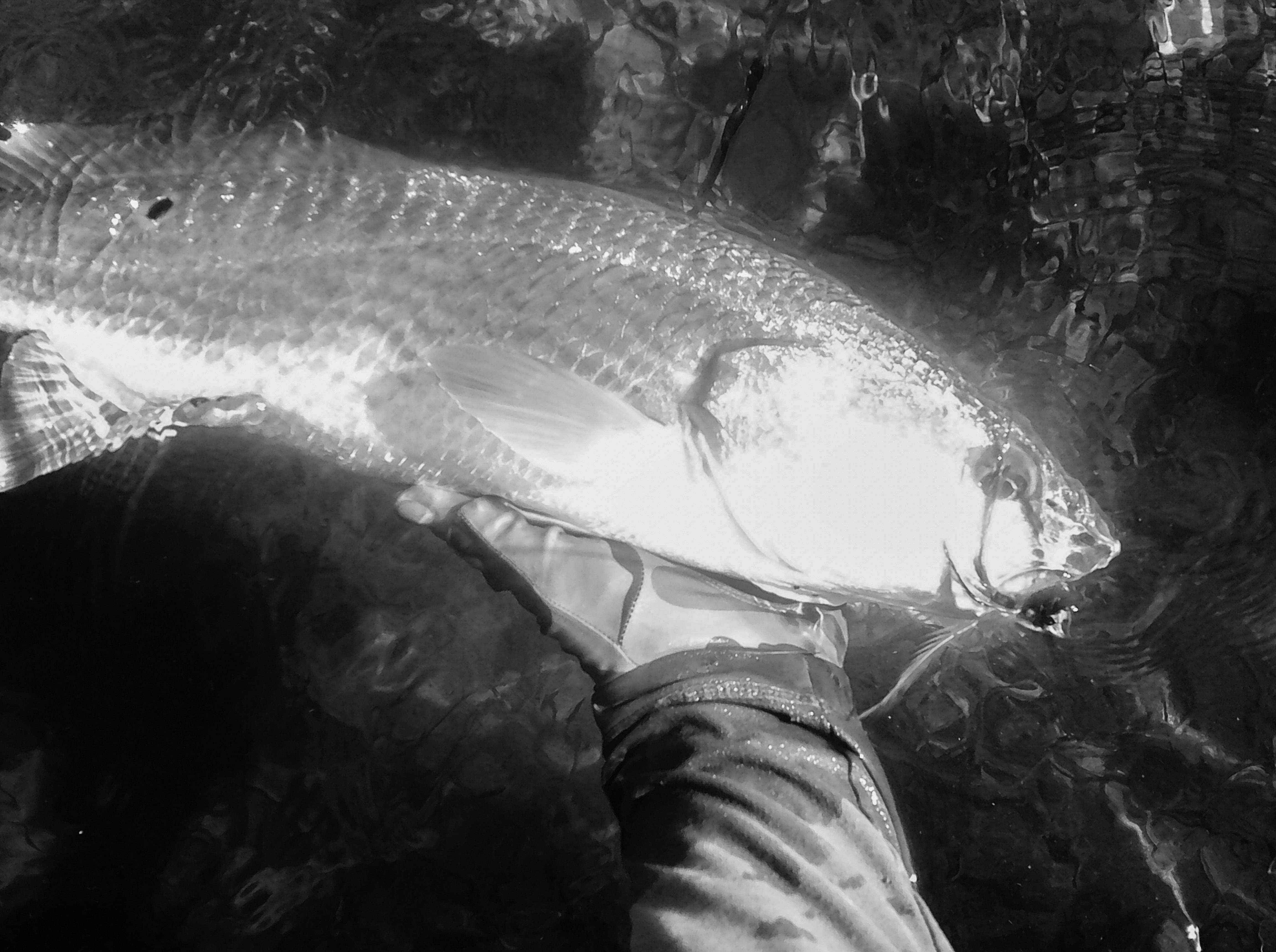
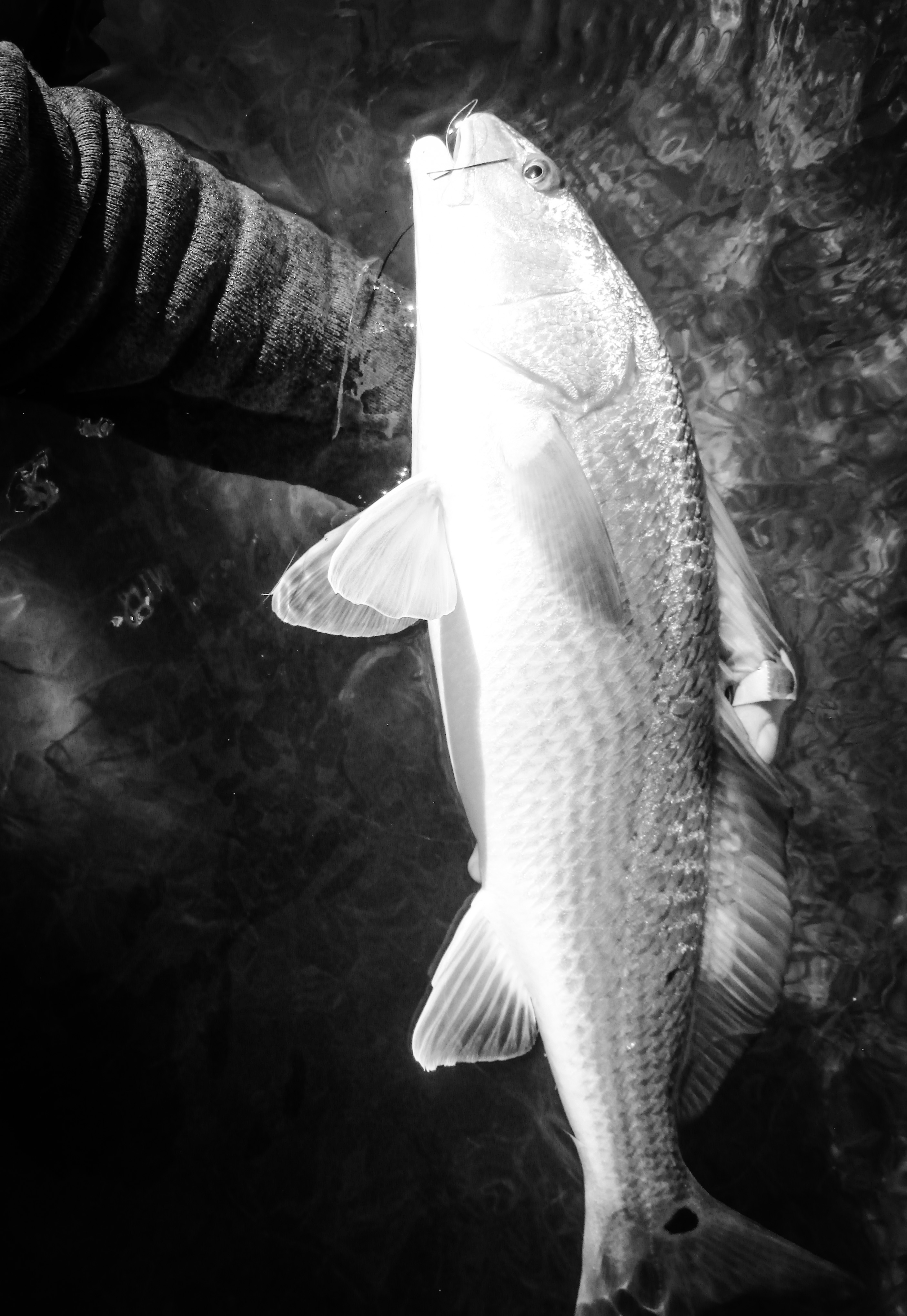
THERE’S A REDFISH JUST 20 FEET TO MY LEFT. I ALMOST walked by him. How come I didn’t see him earlier? Surface glare! He’s in a foot of water. Stationary. That’s rare. Most are prowling. Most are on the move. He hasn’t noticed me even though I’m close. Maybe I should slowly back away before casting. Then again, he might notice me if I do that. Movement is always risky in the skinny water. No, I’ll stay in place and ever so slowly crouch down and side arm a cast 4 or 5 feet away from him. There. He heard the plop of the fly (maybe too much weight on it) and noticed the cast (fly line). He’s moving away. Accelerating. Now gone. Too bad. He was a good one. Mid to upper 20’s in inches. A missed opportunity and I’m not getting many. Two or three quality shots on a good day. Some days none. Yesterday was a “none” day. The day before I spotted only one. It’s a tough angling gig out here on the Sand.
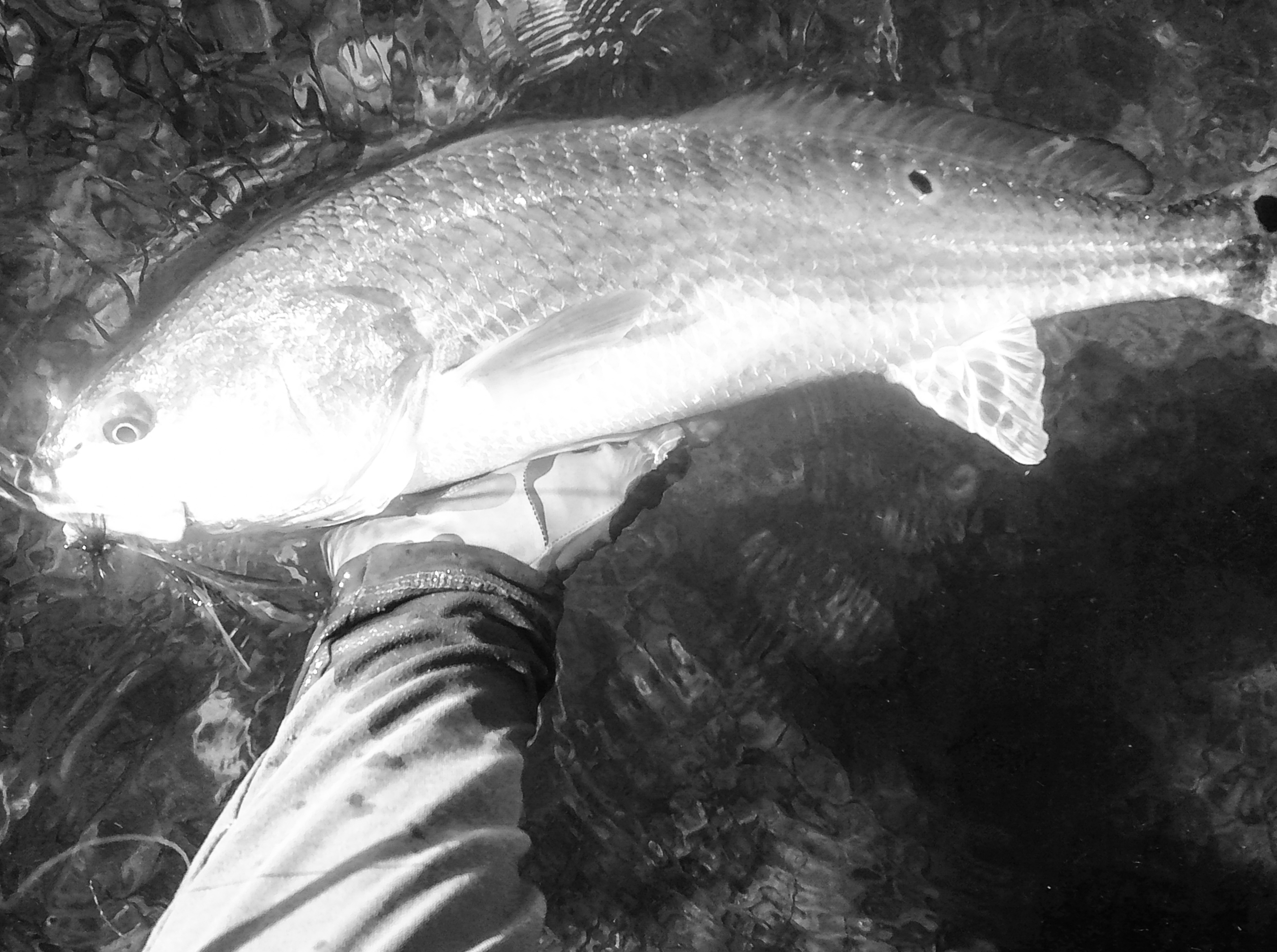
redfish
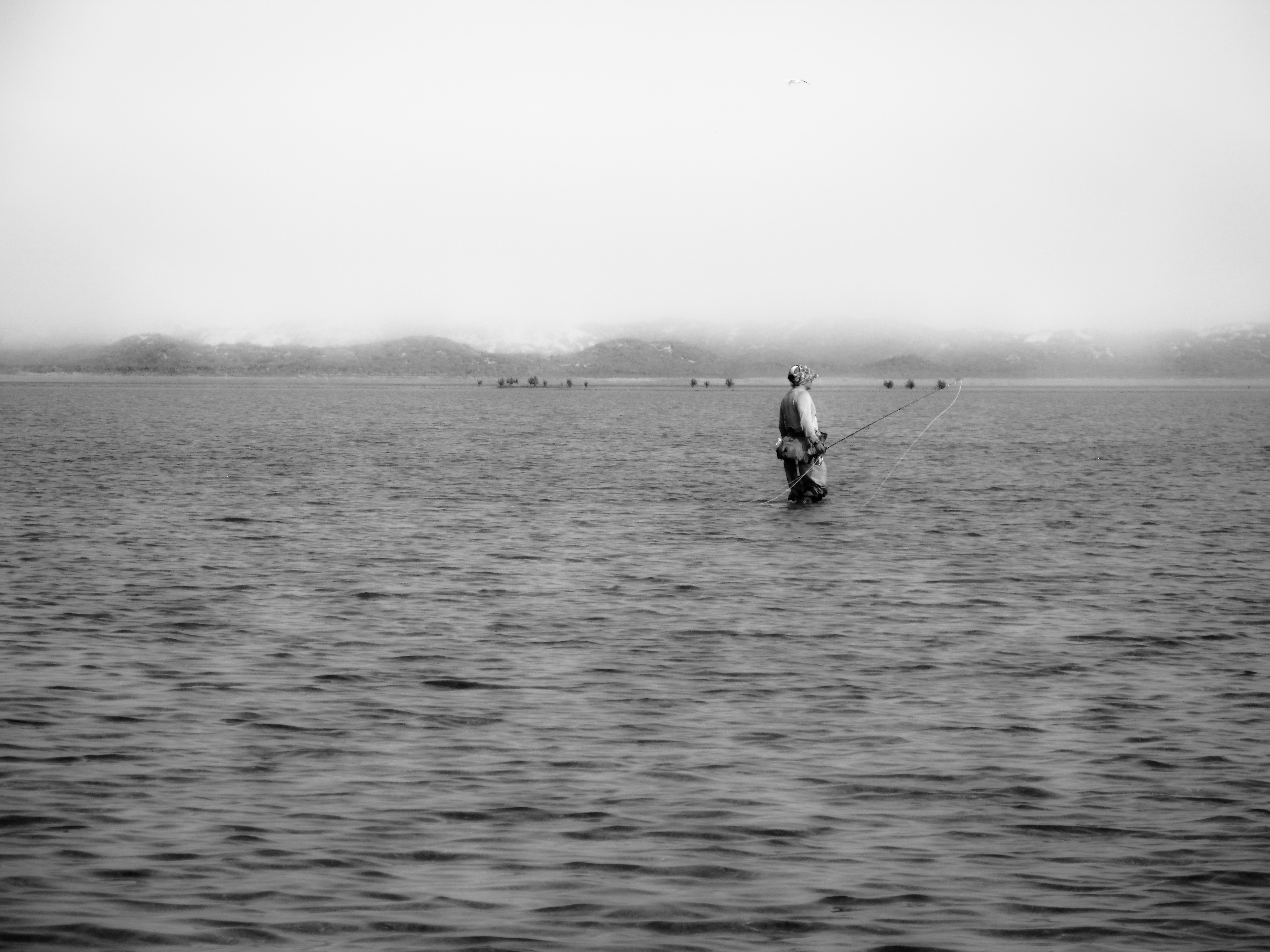
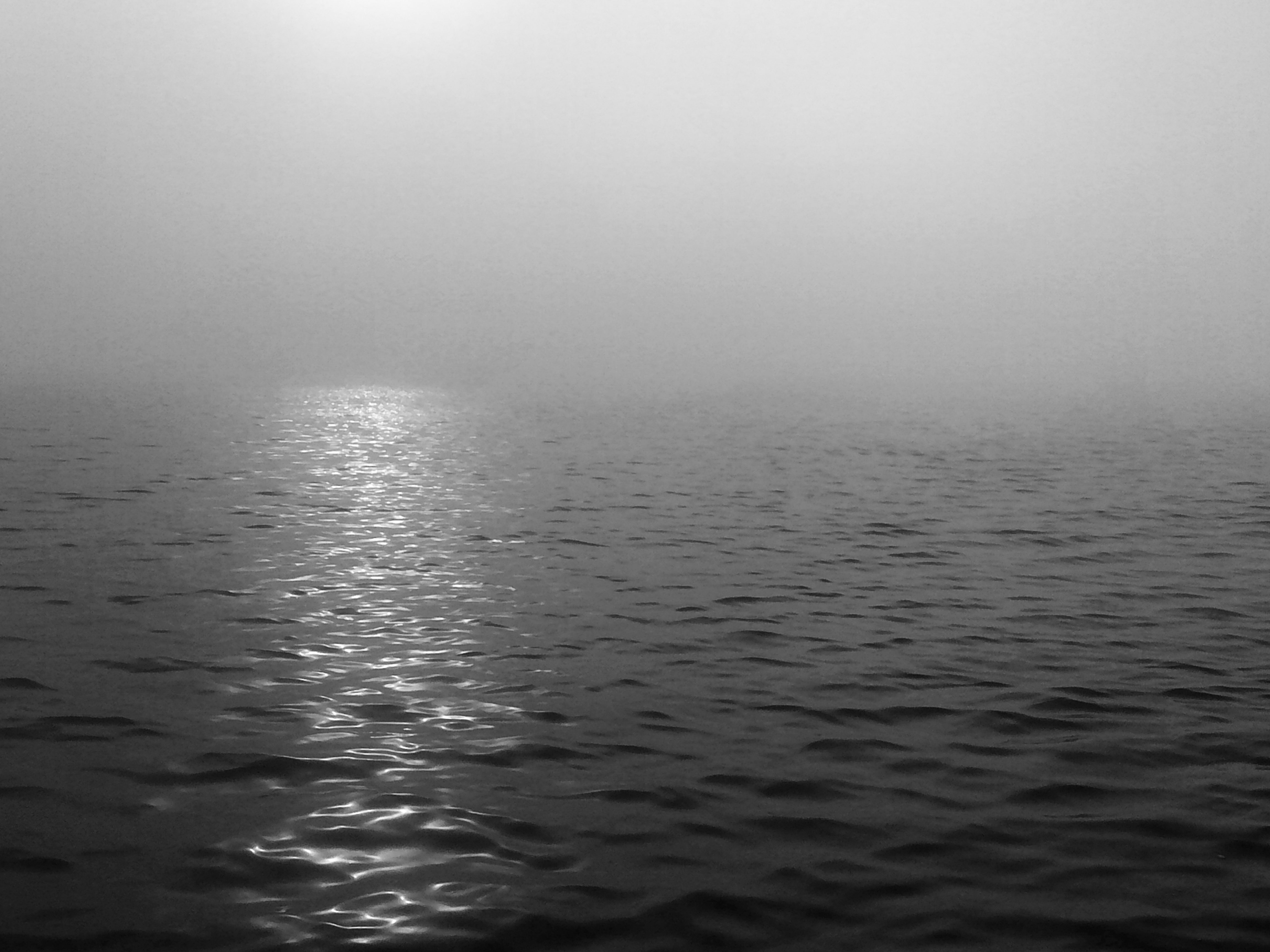
The sand flats that I’m fishing are only shin to knee deep, that’s it. Walk several hundred yards out from shore and it’s the same. In the shallow water the Redfish are generally on high alert and usually prowling (moving). I go slow, try to minimize my wading wake, constantly scan the water, try and use whatever light there is to my advantage, constantly fight glare, and hopefully spot one before it sees me. Spotting one from far off heading my way is better than seeing one up close as I get time to prepare, position myself and cast from a safe distance so they don’t detect my presence. Fishing blind is useless out here. I have to see them to catch them. And many things inhibit my ability to see: low light, low and high cloud glare, a wind ruffled surface, sometimes dense morning fog that seems to take forever to burn-off or blow away, and short Autumn days where the sun arcs low on the horizon.
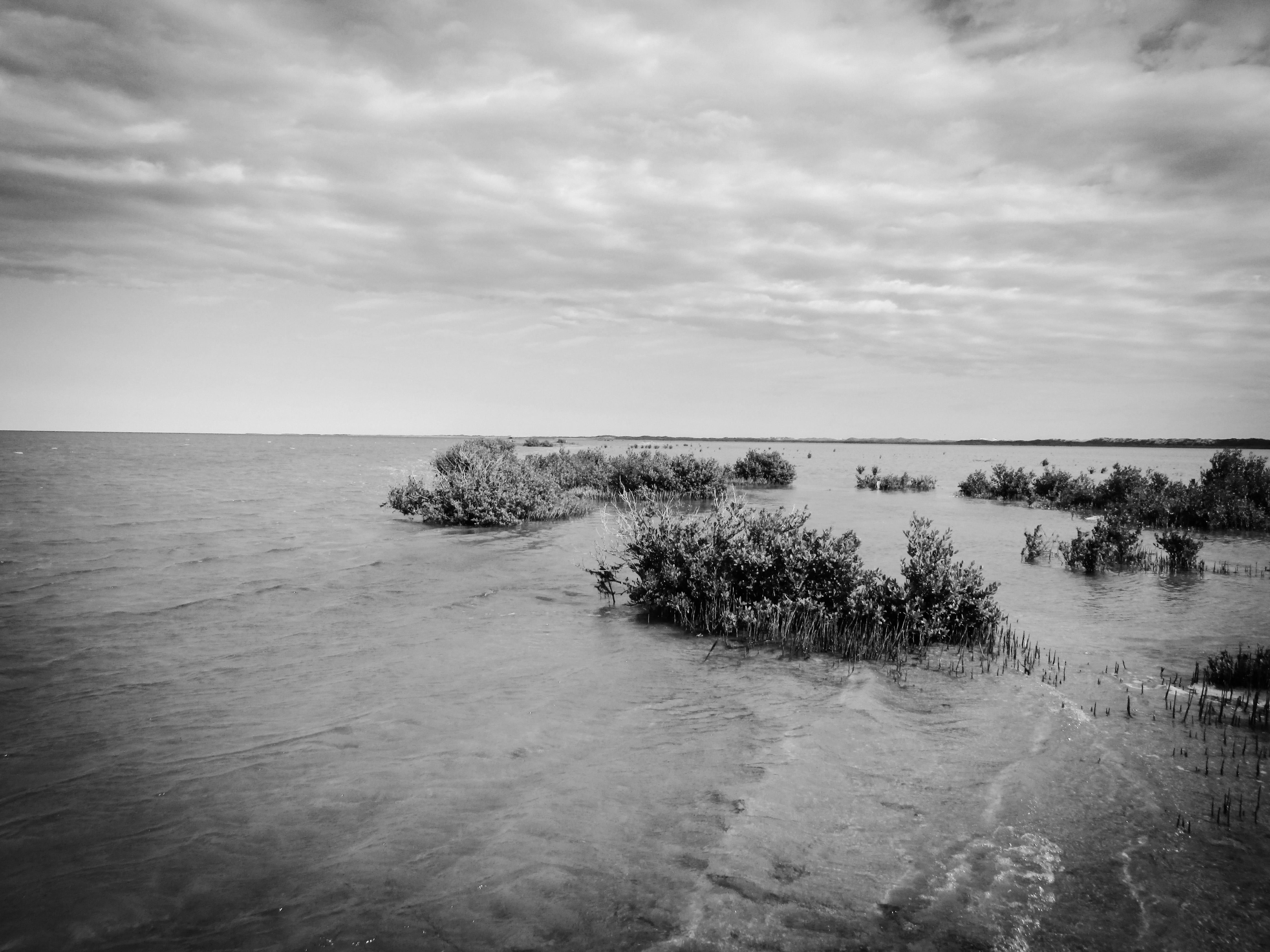
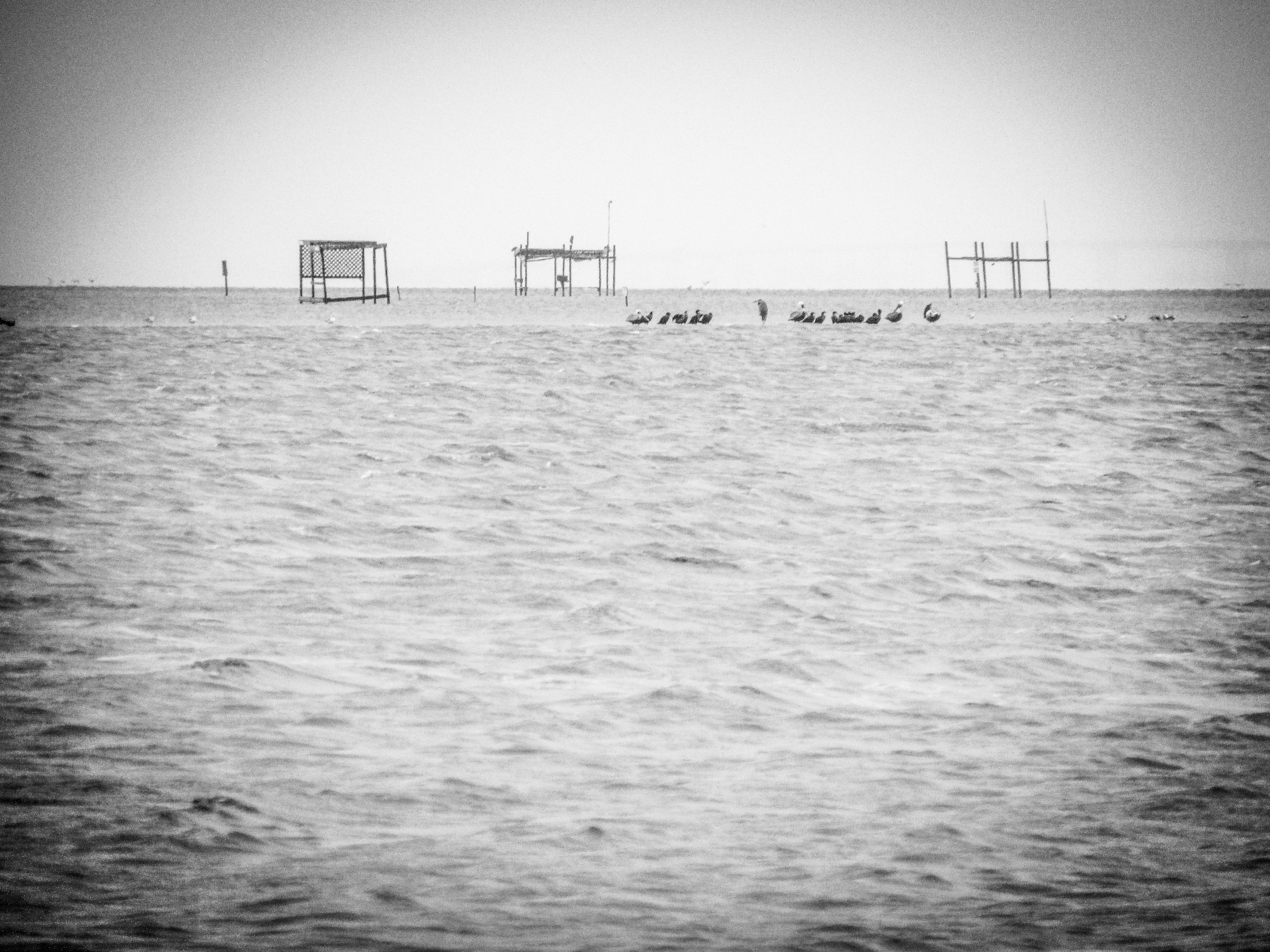
shoreline in distance
Clear, full sun days with no wind are perfect but I rarely get both at the same time. The wind tends to be daily, strong and persistent. A perfect day is a rarity. Maybe a perfect day doesn’t exist. When it is mostly sunny, 11 am to 3:30 pm is my best sight-fishing opportunity. That’s when the sand flats become illuminated. That’s when the Redfish contrast well against the pale bottom. Sometimes I can see them from a long way off…50 yards or more.
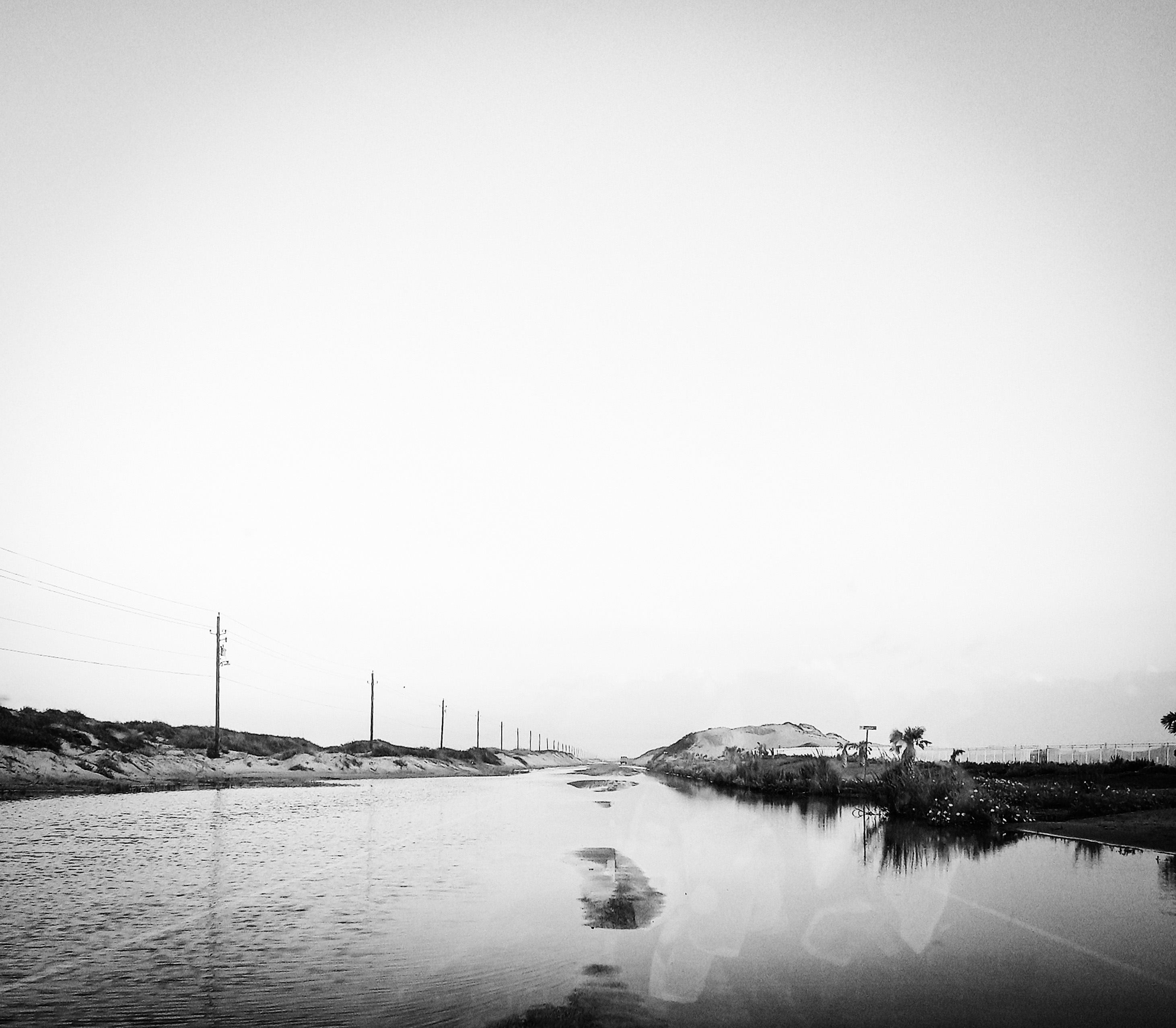
barrier island road flooded
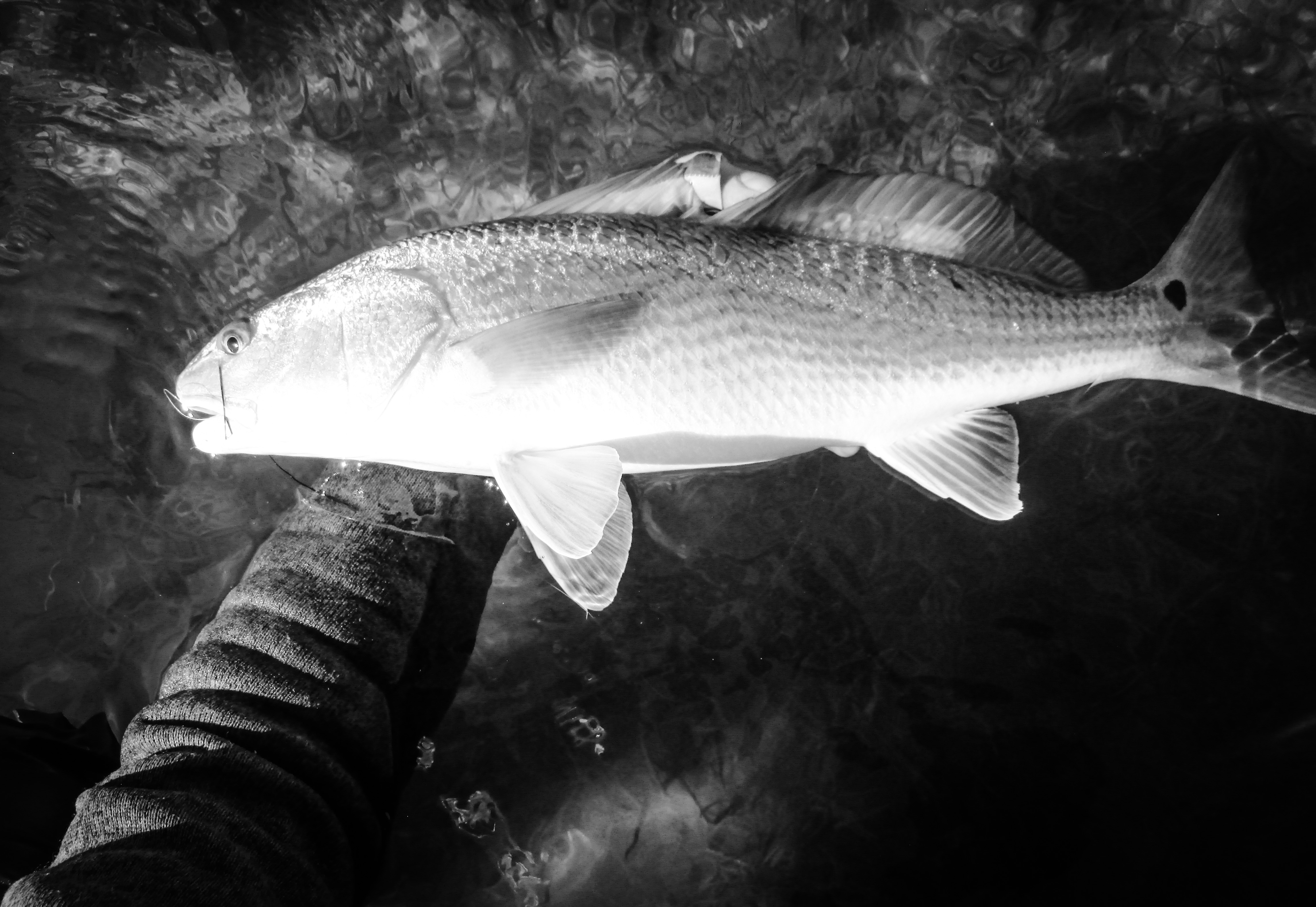
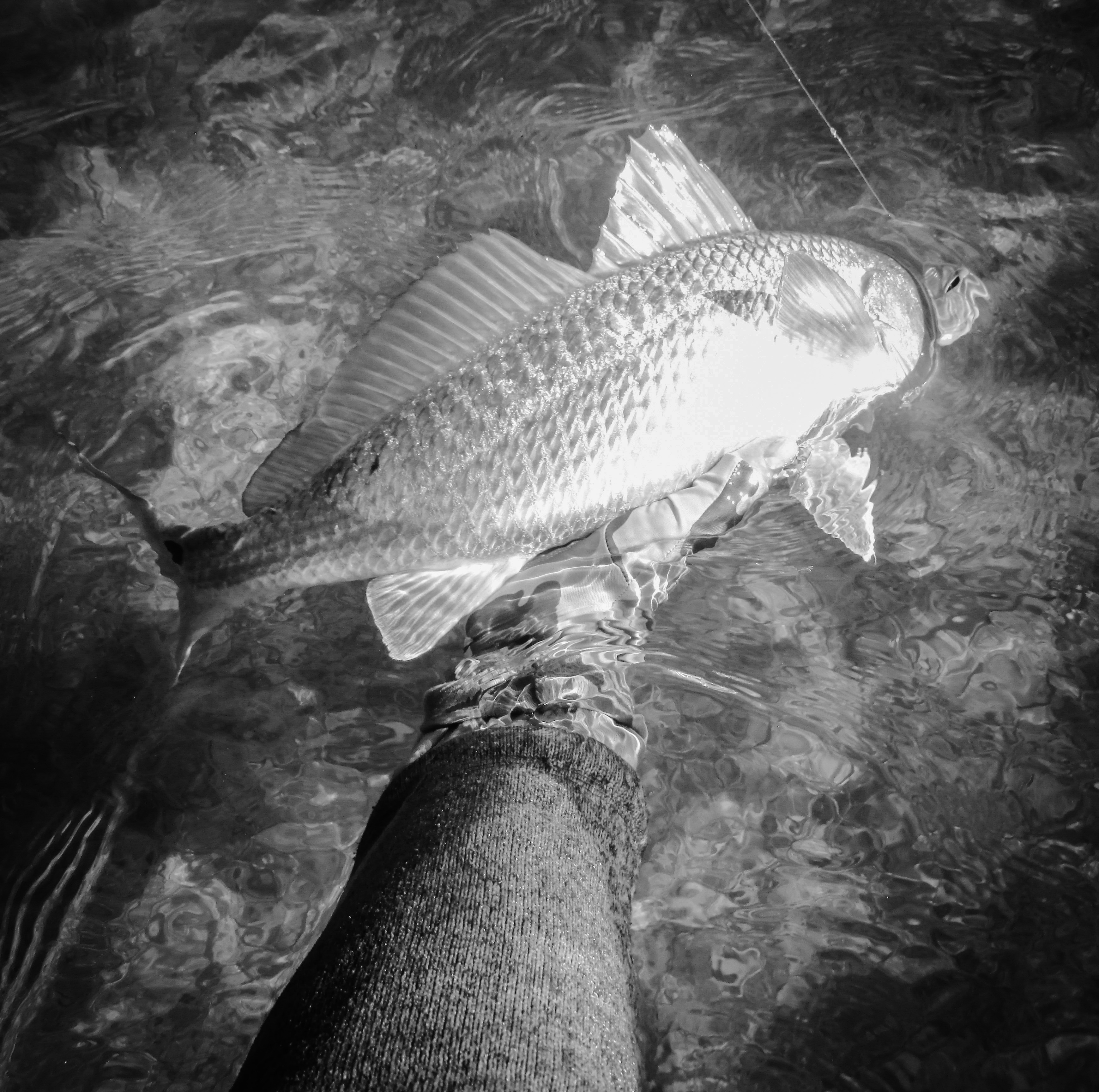
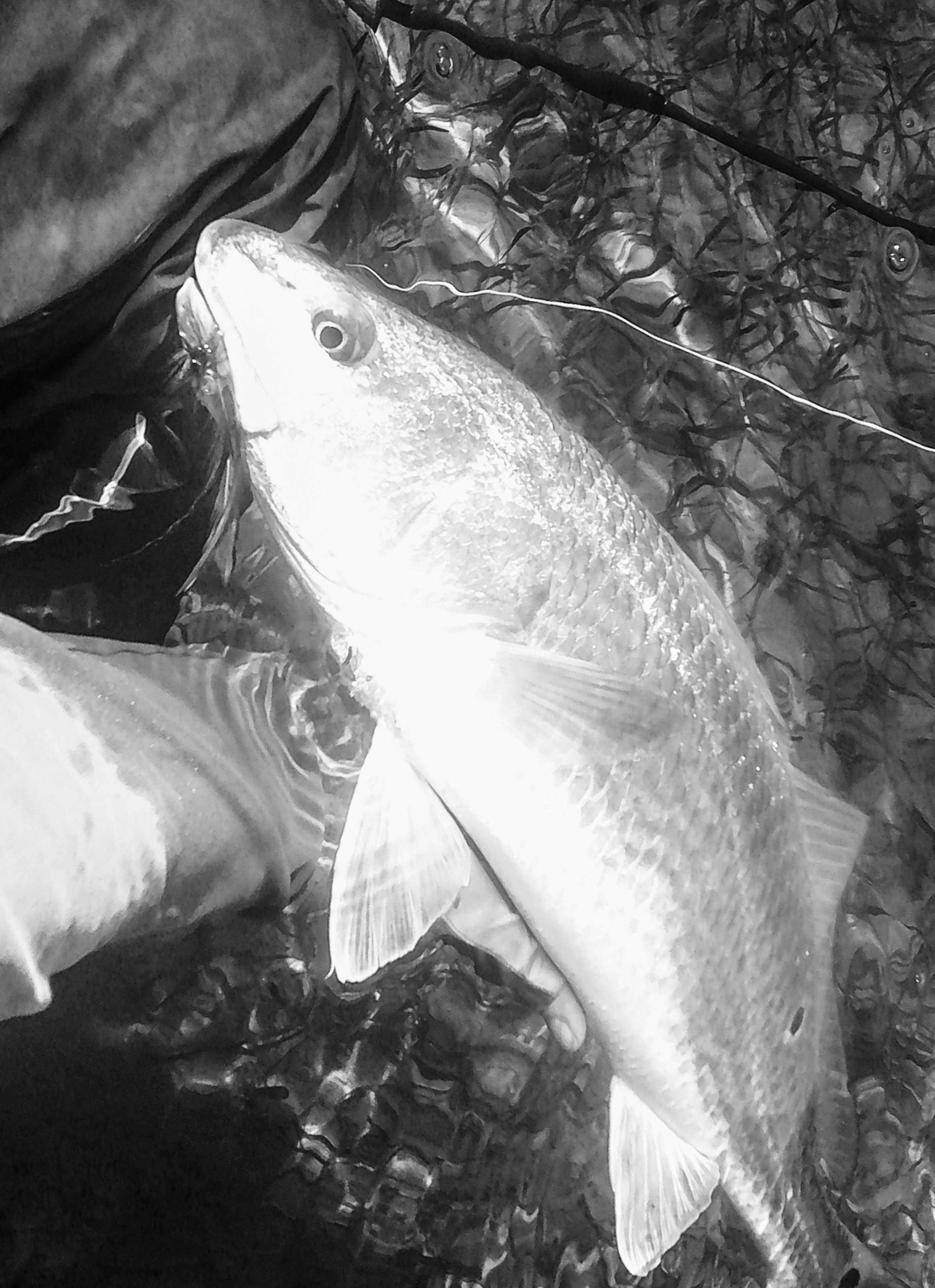
redfish
When the light is poor I often only spot one at 20 feet or so, maybe even less. Often they see me first at that range and bolt. Sometimes at that short distance they don’t notice me, so I crouch and I use a roll/flip cast and plop the fly near them and strip. A few have followed my impression almost to the rod tip. So close I end up stripping my leader butt section through the top guides. They follow, see me then flee.
hiking tidal flats to bay
Roman (friend) scanning the water, sand dunes in distance
On the Sand I’ve seen no surface disturbances to give them away. No schools feeding and nervous water to wade to. There are schools of mullet but nothing charging them. I’ve seen smaller baitfish but again nothing aggressively pursuing them. I’ve seen no tails protruding from the water. There’s no real significant structure where they hang out: few troughs, etc. They either show up to feed, or don’t. I usually see them in the afternoon. Of course that could simply be because the light is generally more idyllic for spotting then. They are usually on the hunt when covering the sand; usually moving but on occasion stationary. I’ve seen a few in one spot digging in the sand for prey…lug worms, crustaceans. Those fish are my best chance; the stationary ones; their heads down.
morning fog, intense glare
I came here for the low shin deep clear water, the light sand bottom and the sight fishing possibilities, and of course the challenge. Angling as demanding as anywhere. I drive to the tidal flats as close to the bay as I can get then hike in the rest of the way, always watching the morning sky and light, hoping for that perfect day. Once on the water the search begins; the hunt for Redfish. I’ve seen some in the 30 inch range and had two large ones eat my impression this trip but with no hook-up. Fly casting to a thirty inch Redfish in one foot of clear water…imagine that!
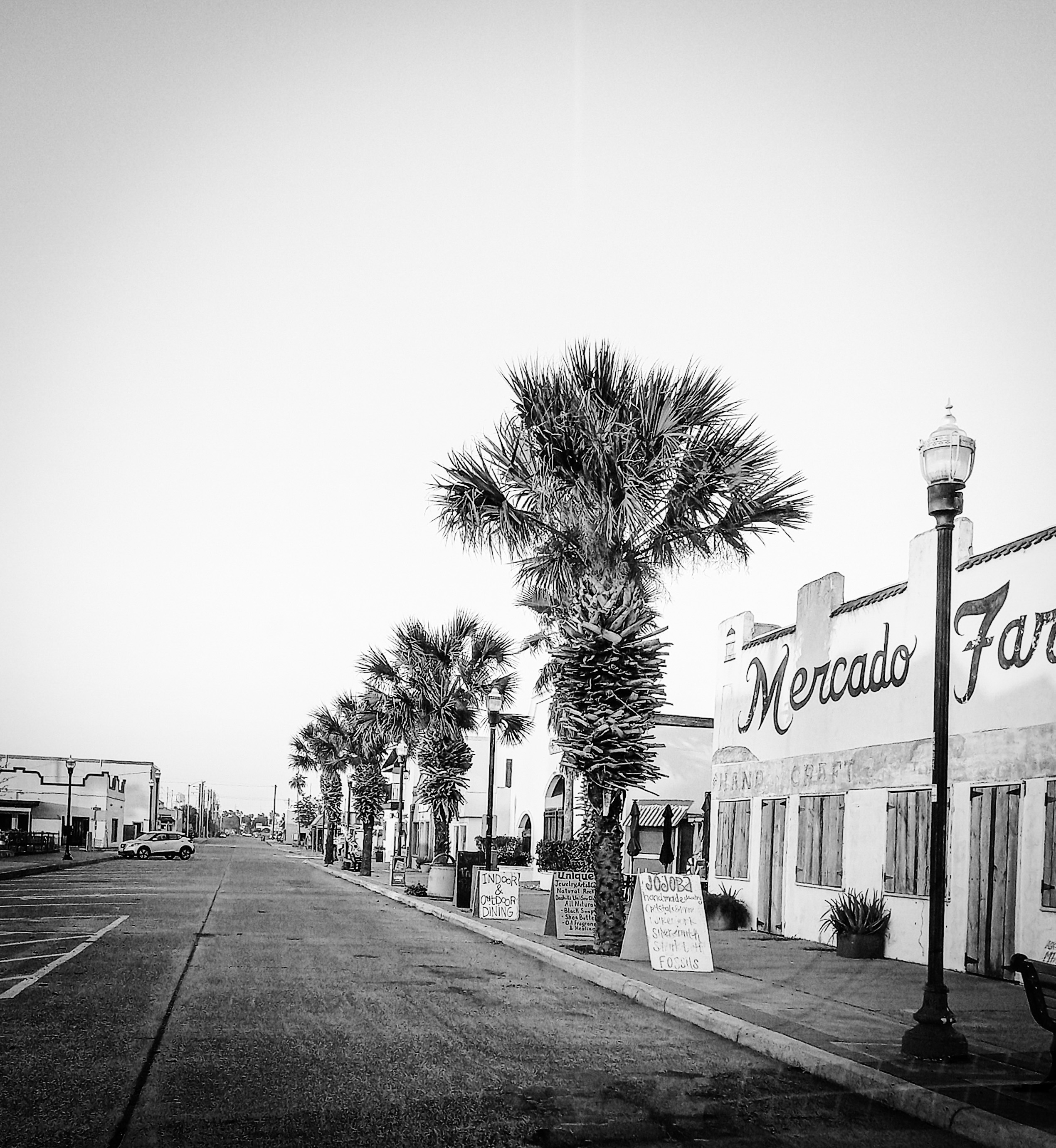
mainland port town
some mangroves on edge of bay and tidal flat (a bit of structure)
” If a year was tucked inside a clock, then Autumn would be the magic hour.”
Victoria Erickson
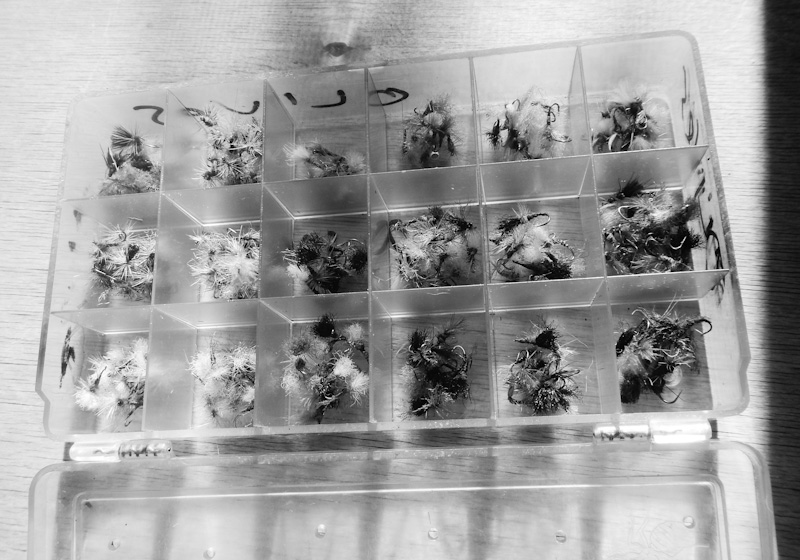
FEW BLUE WINGED OLIVES SO FAR this fall. Consistent with the whole season as hatches in general have been poor. I continue to walk local Cutthroat streams. I’m still finding some late season afternoon rising fish. The searching and sight-fishing in the full sun has been spectacular due to rivers being ultra low and clear. The big stuff (flies) in the slow shallow stretches rarely get a response. I’ve had much more success with small fly impressions such as midges, tiny parachute patterns, hackle-stackers, small emergers and ants. Size 18 flies generally. In the low, slow water the trout are on guard and fairly selective. They carefully inspect all that passes overhead. Rises are slow motion events fully witnessed in the Autumn golden light. Dry fly fishing doesn’t get any better.
Dark in the morning. Dark earlier in the evening. Days are shortening. Fading light…
The brief afternoon light provides opportunity to locate a good trout. It’s your chance to sight-fish; your chance for one on a dry fly.
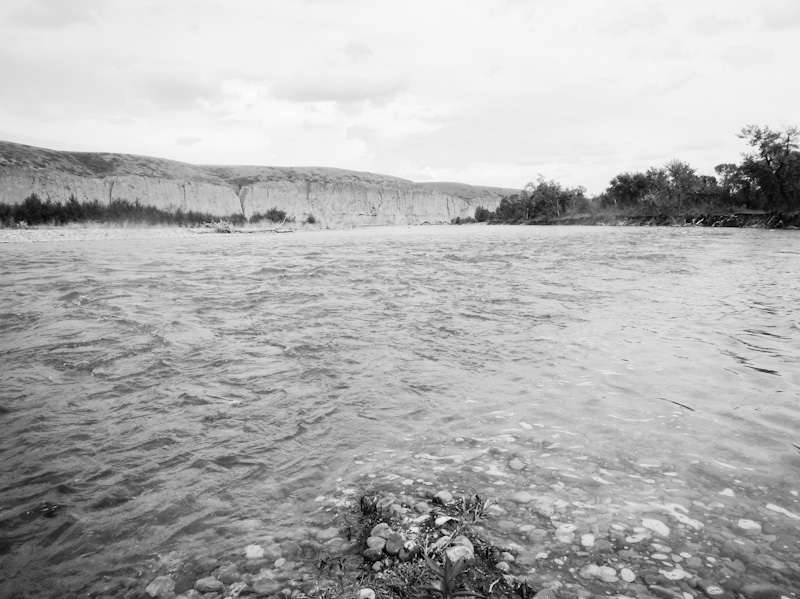
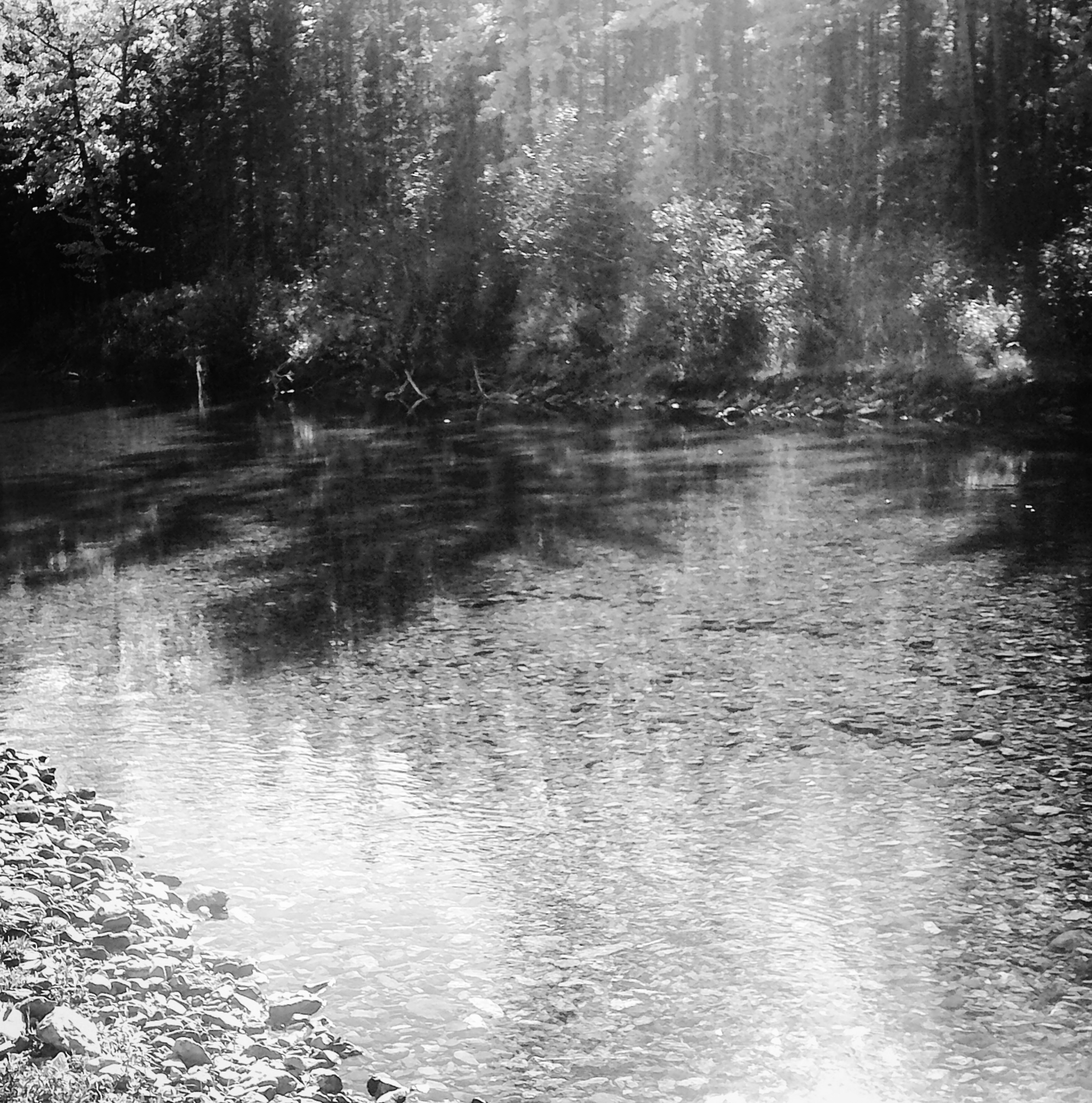
I have been hiking a few very low, clear Cutthroat rivers the past couple of weeks; walking the long distances between pools where there is very little holding water and therefore trout. I always pause in these sections when I see see a small area of slightly darker water, or what seems to be a slight depression in the river bed. A spot that is just a little deeper than the rest. Often it’s just two or three feet of slow moving water. Sometimes less.
Recently I paused and watched one of these spots after noticing a slight surface disturbance. The afternoon sun felt good and I knelt down on the sand and pebble rock and took a moment to absorb the heat, as I had been wet wading the ice-cold river for awhile. As I watched and warmed-up, a rise occurred. The fish displaced very little water. A small one. It was eating the few afternoon Blue Winged Olives that were riding the slow, shallow flow. I watched for awhile then noticed, just slightly beyond, another fish rise. It displaced more water. A better fish.
I side-arm cast to it down and across from my kneeling position and the trout slowly surfaced in full light and ate my small Olive impression.
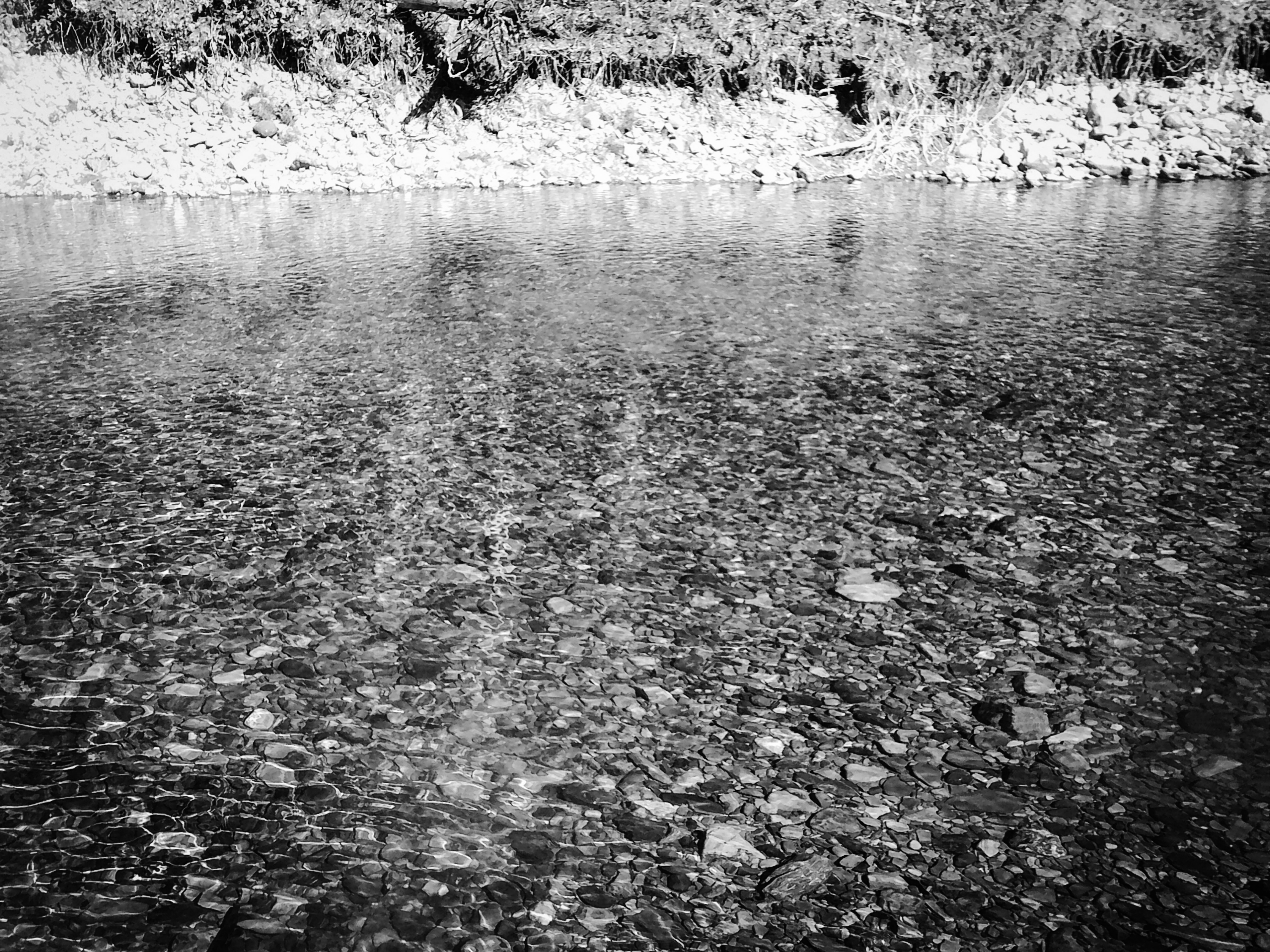
low,slow…clear
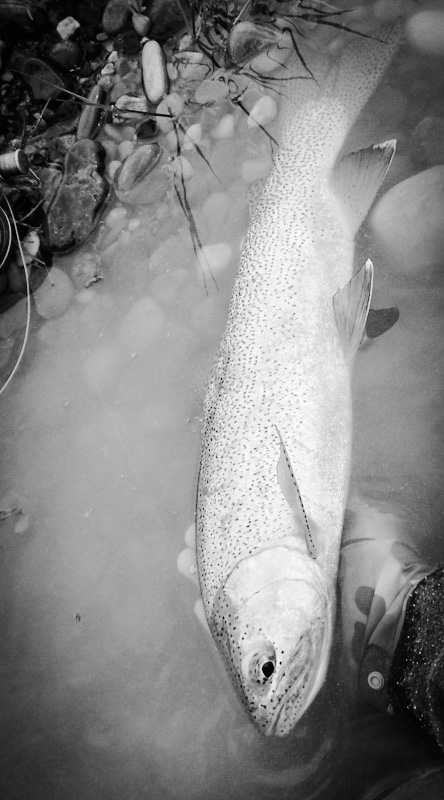
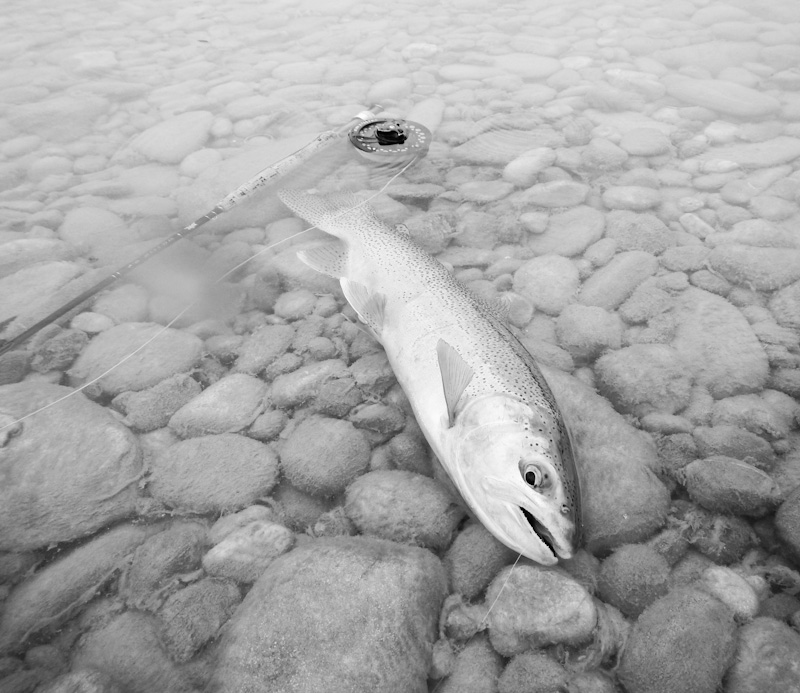
It is a given that in low water conditions that Cutthroat trout, and trout in general, are going to be in the deep pools on a river. Catching them there is always an achievement especially late in the season after they have been fished-over for three plus months. However, finding a good one in between pools in the shallowest of water is for me much more special. It’s the location. A few trout found in the scarcest of water the past few weeks…
Long leaders, fine tippet and relatively small flies.


















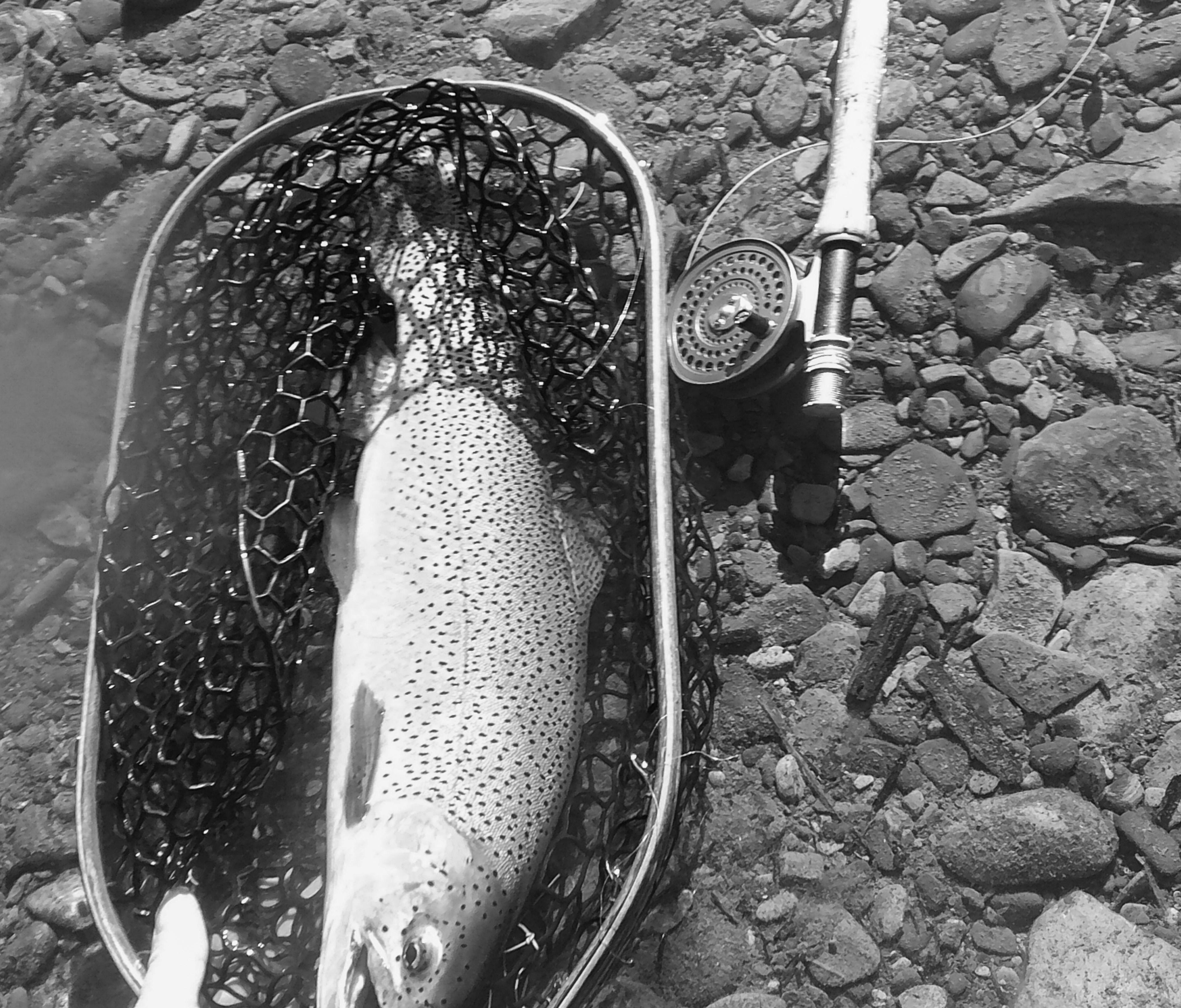

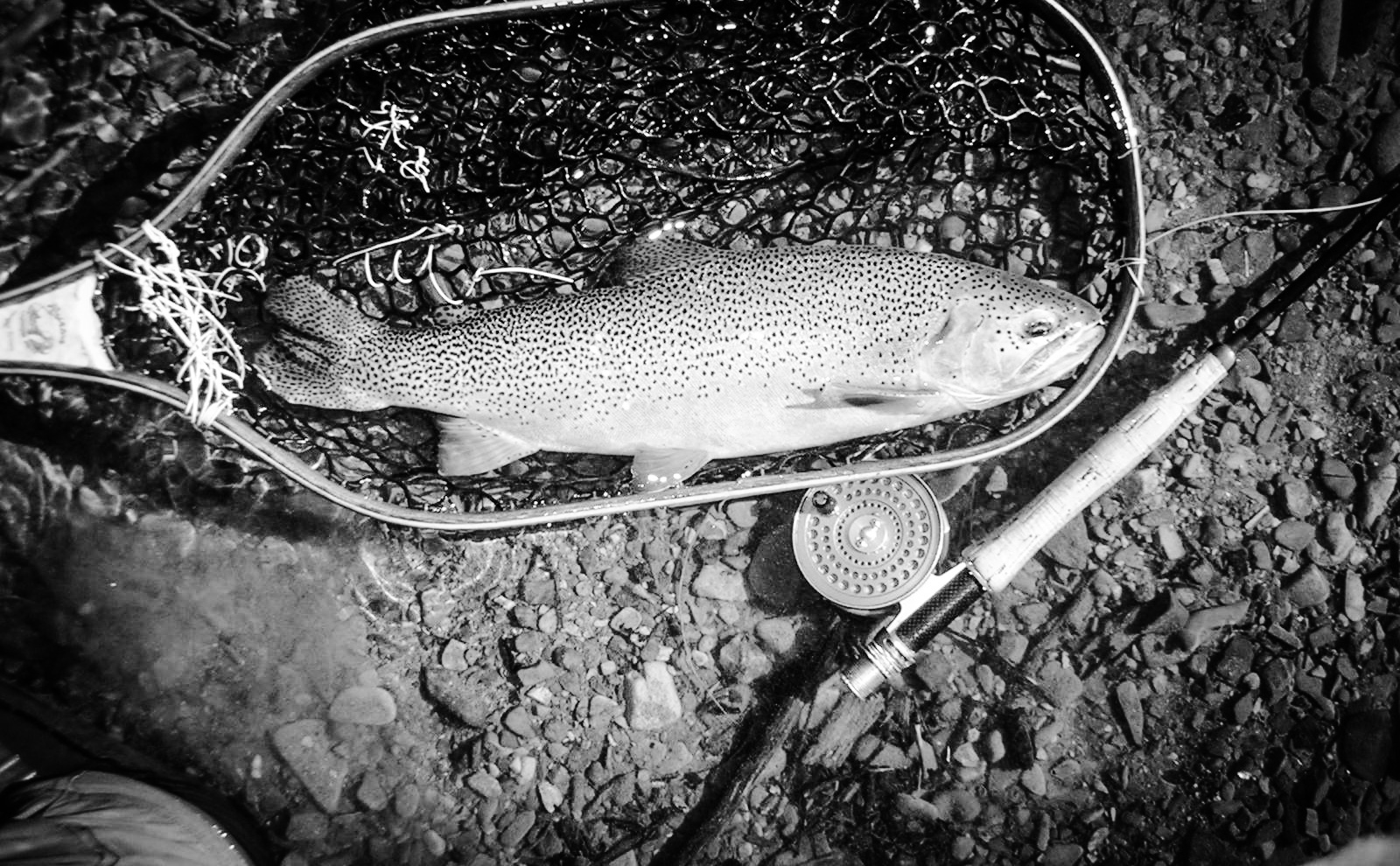
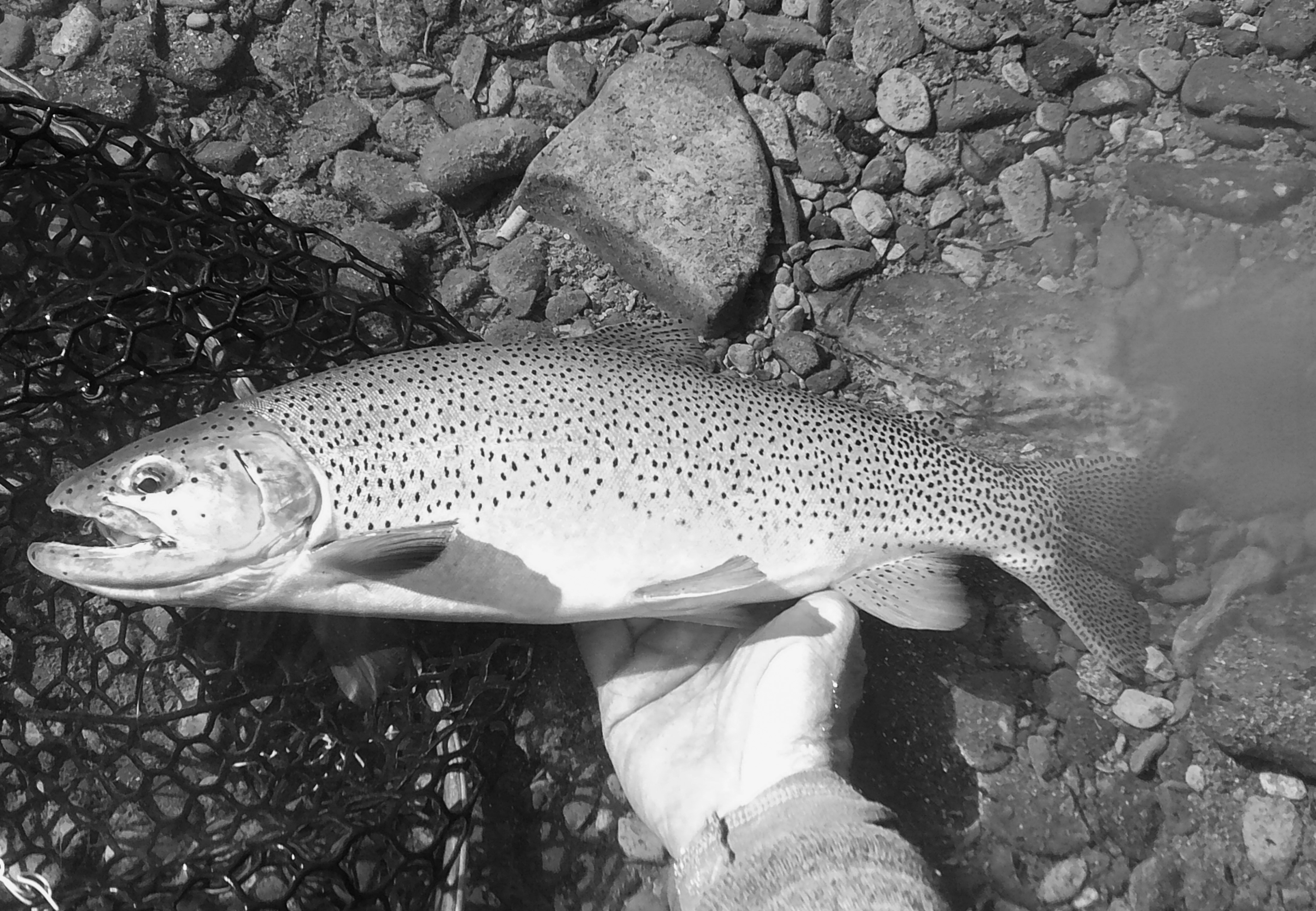

 trout on dries