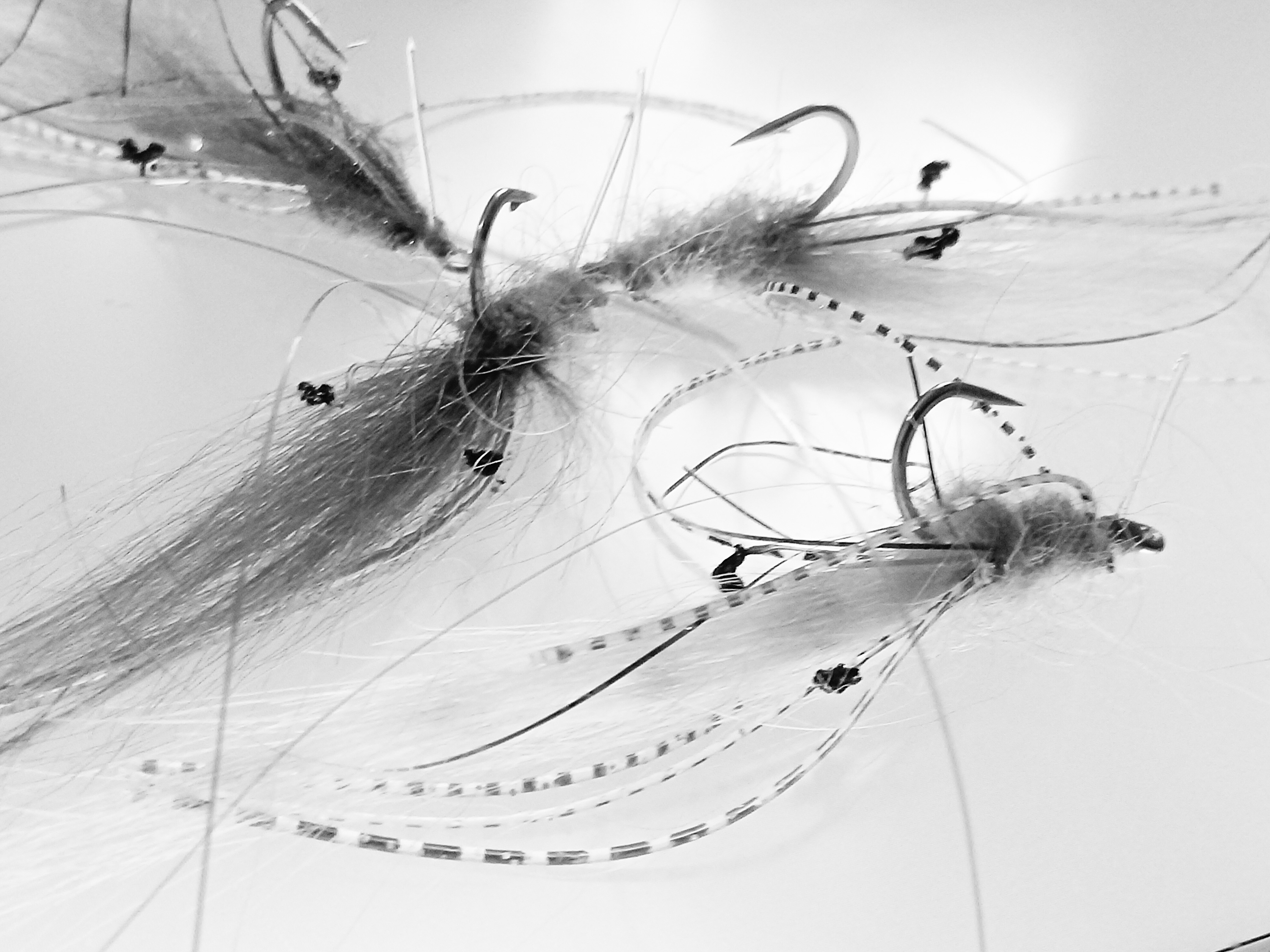
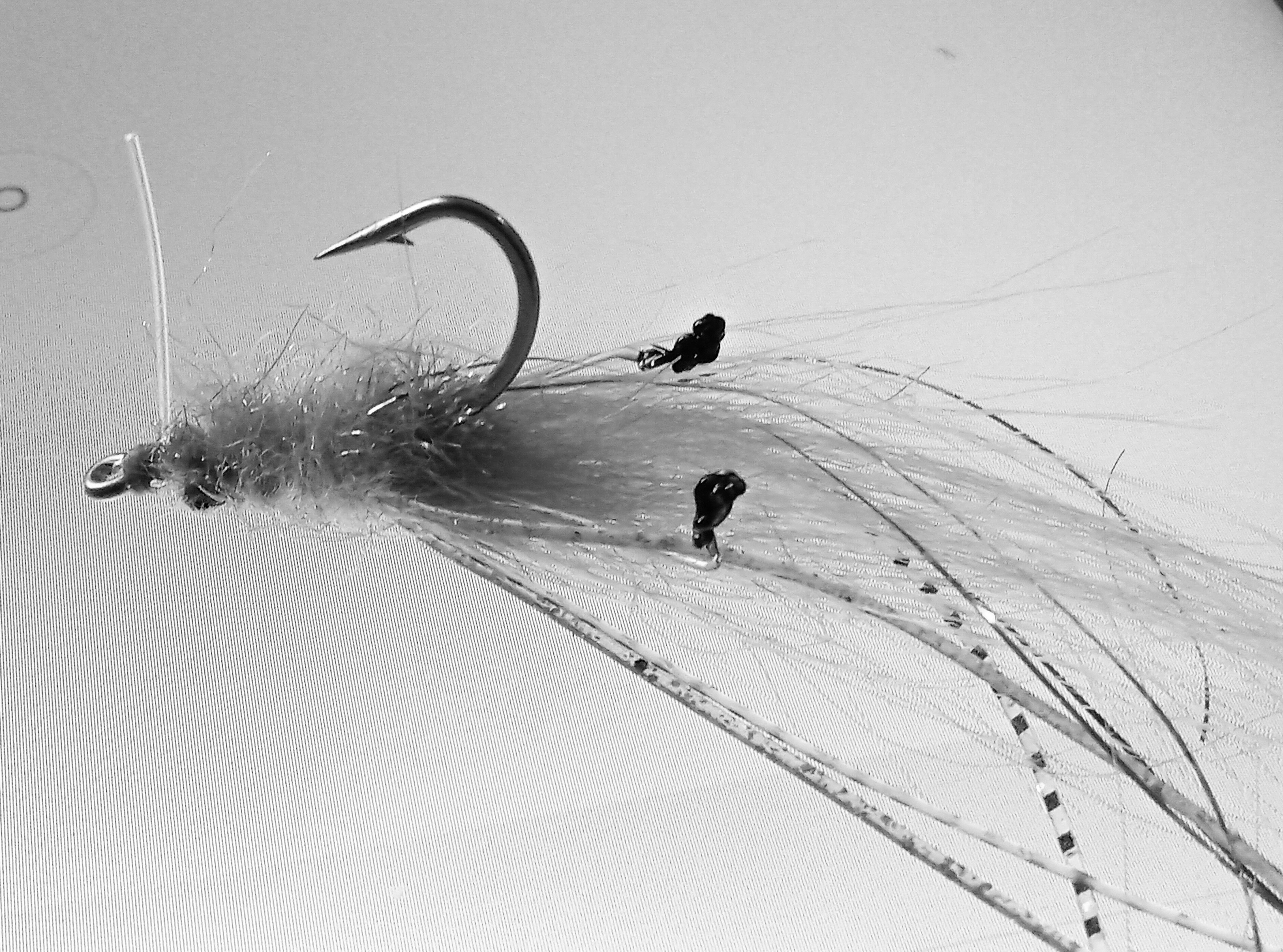
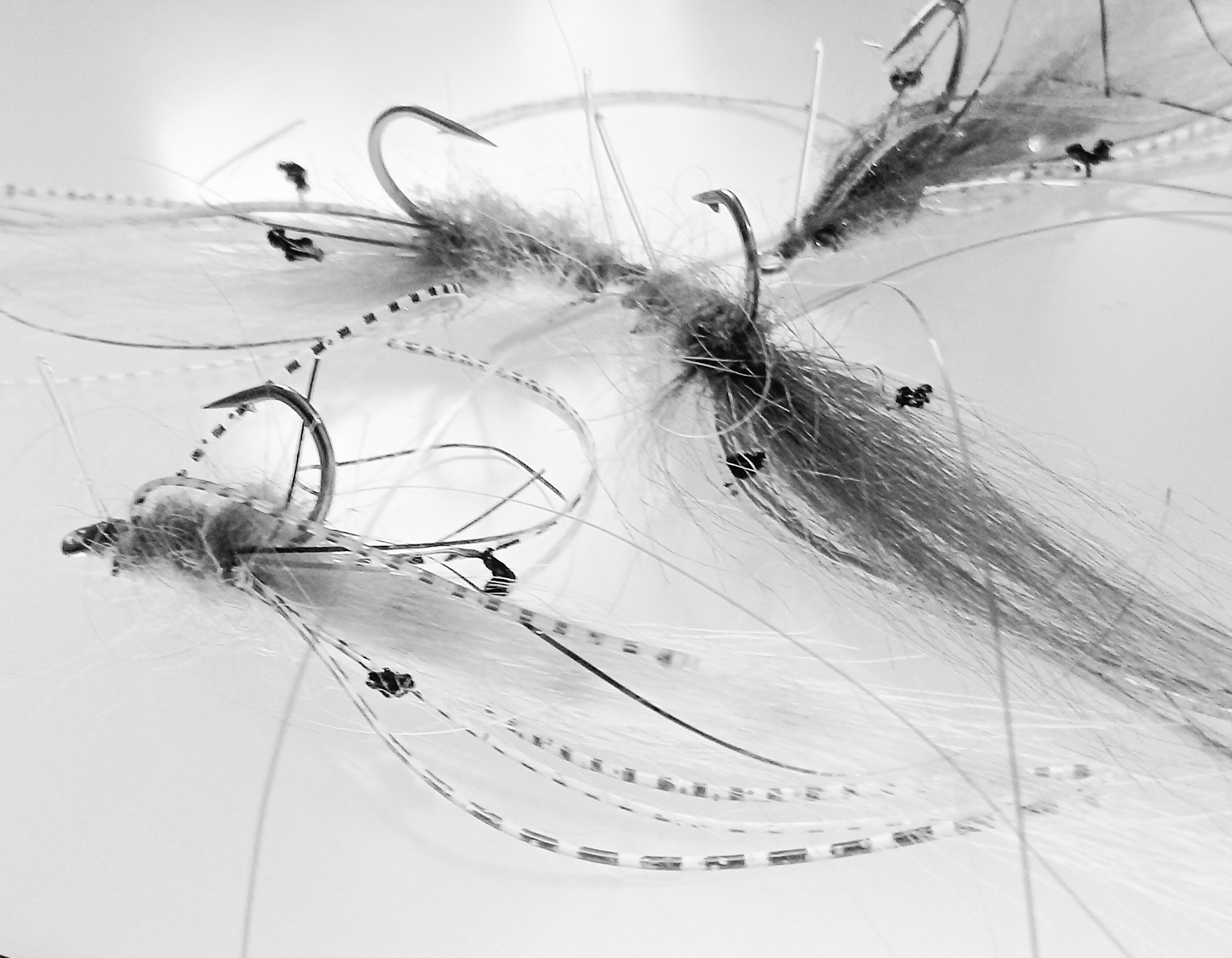
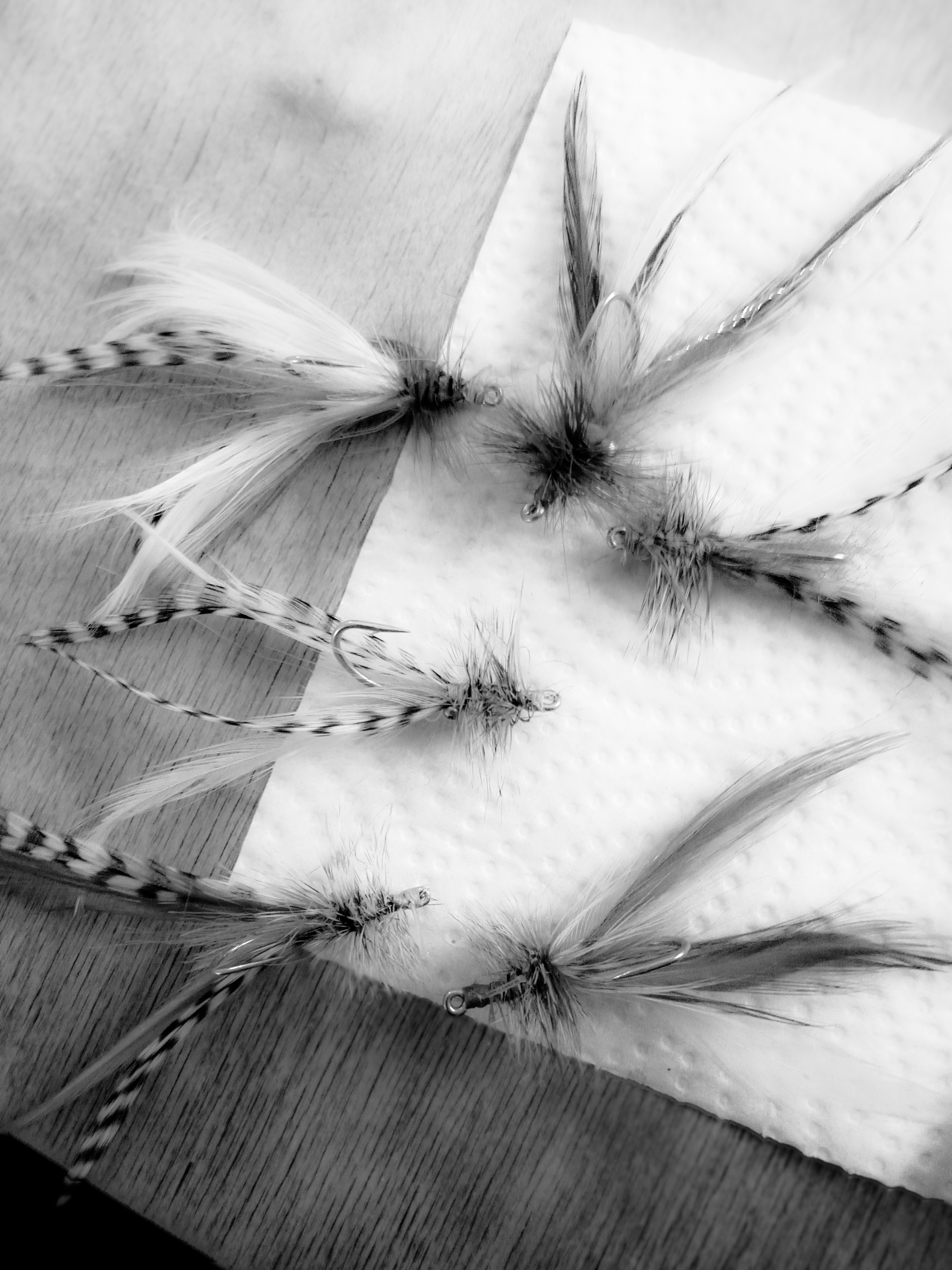
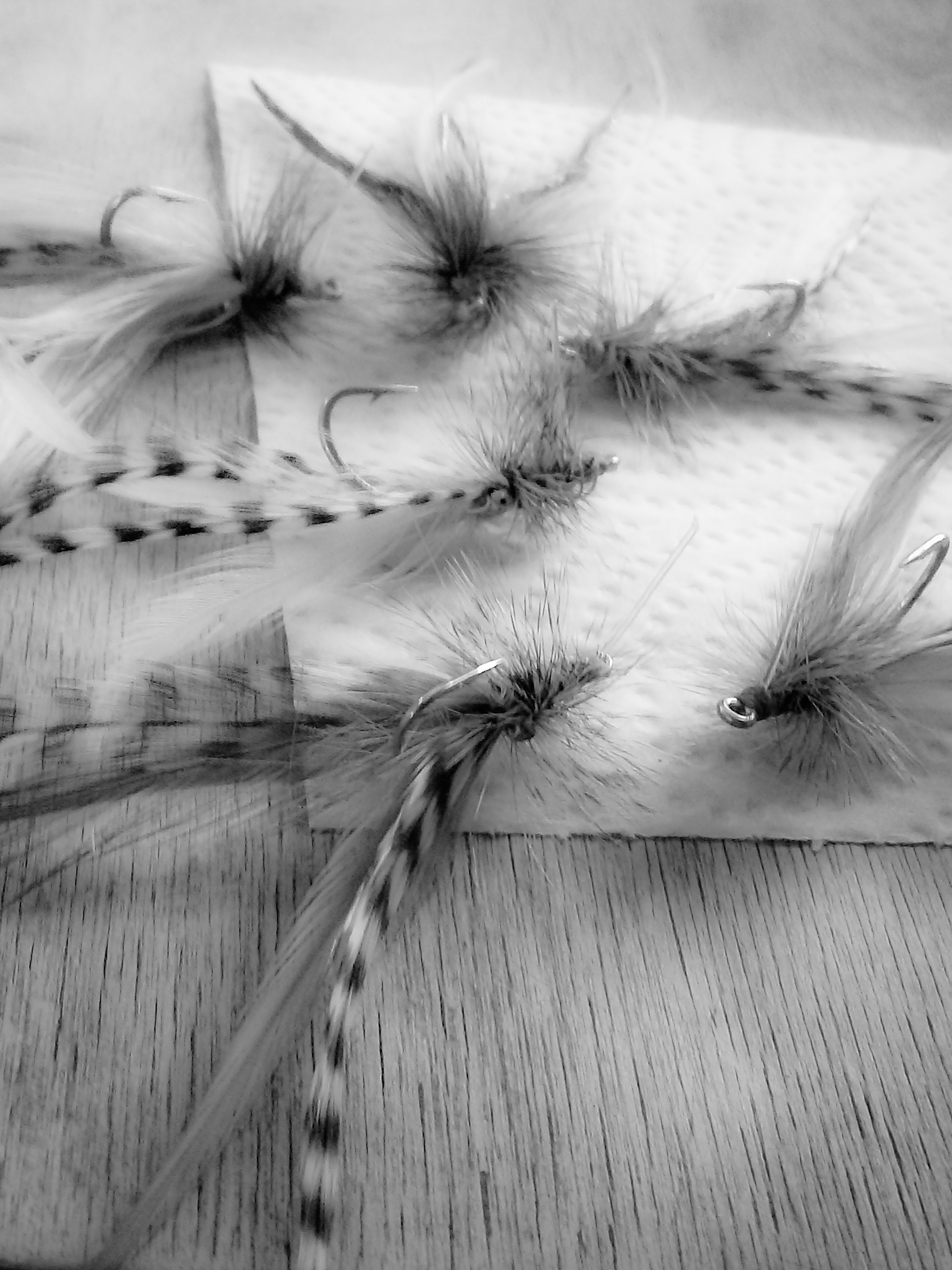
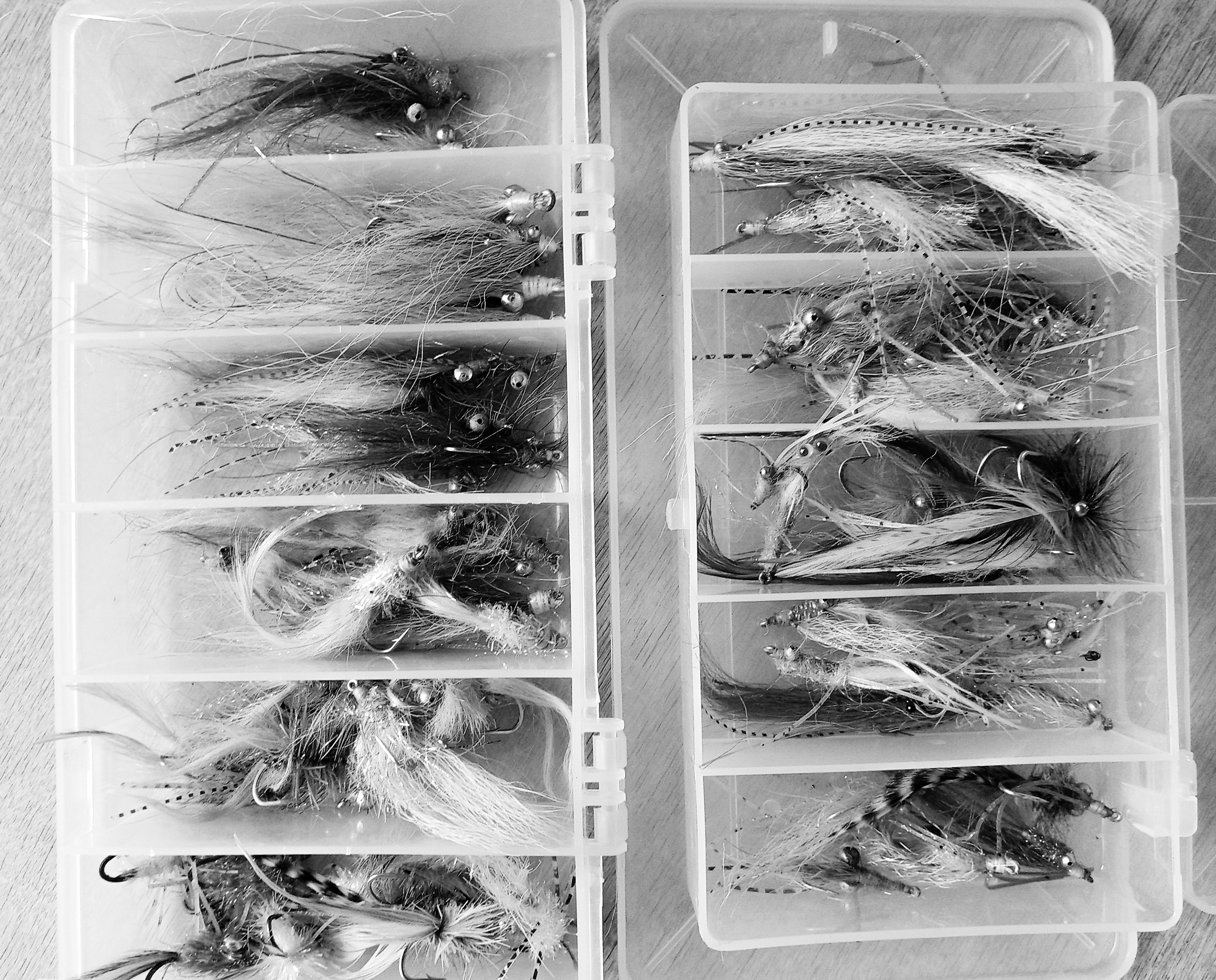
Light-weight fly pattern (Seaducer style) for spooky redfish (or other species) in shallow, clear water. Feathers splayed crab-like. Hackle near eye of hook for soft-landing and illusion of bulk…

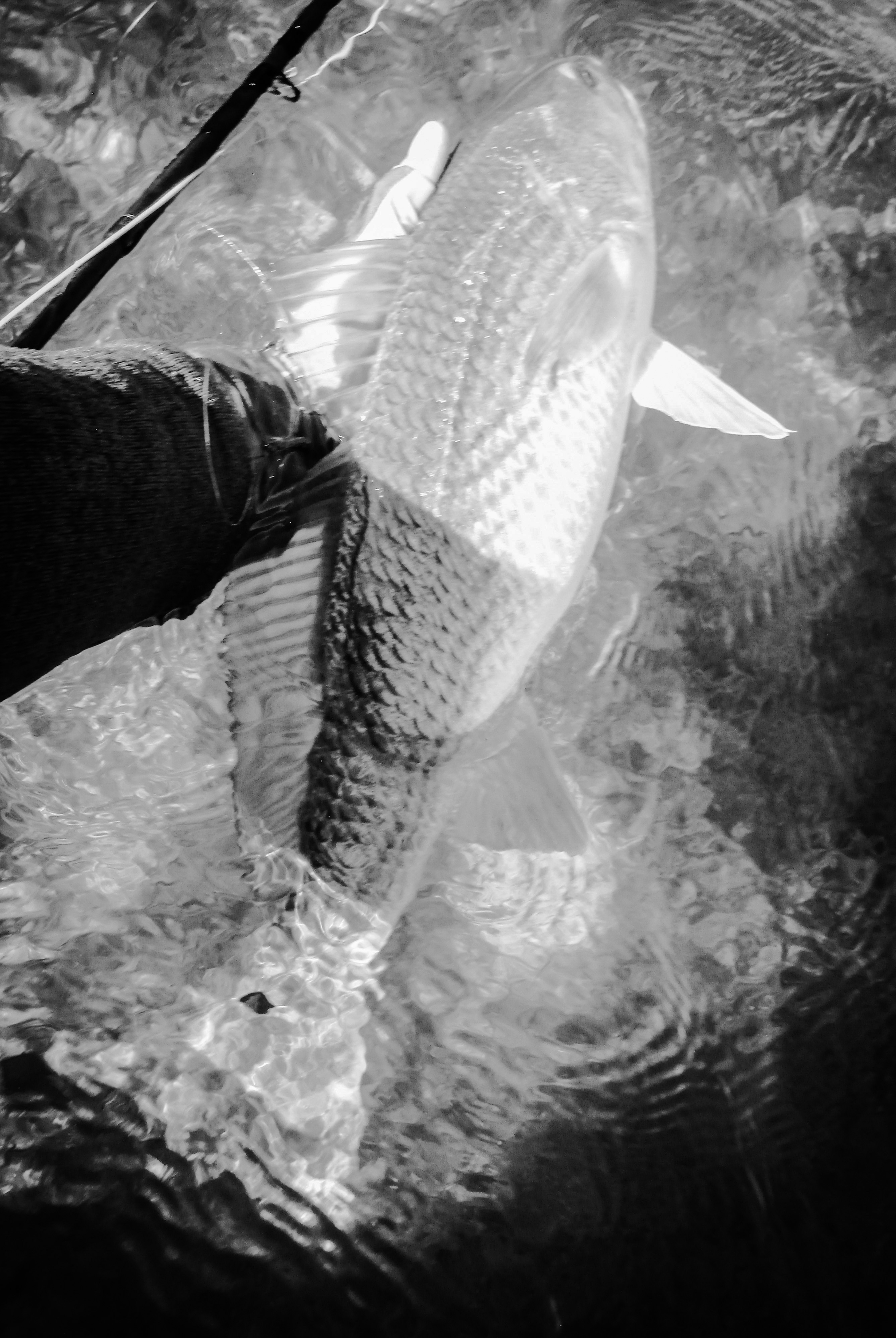
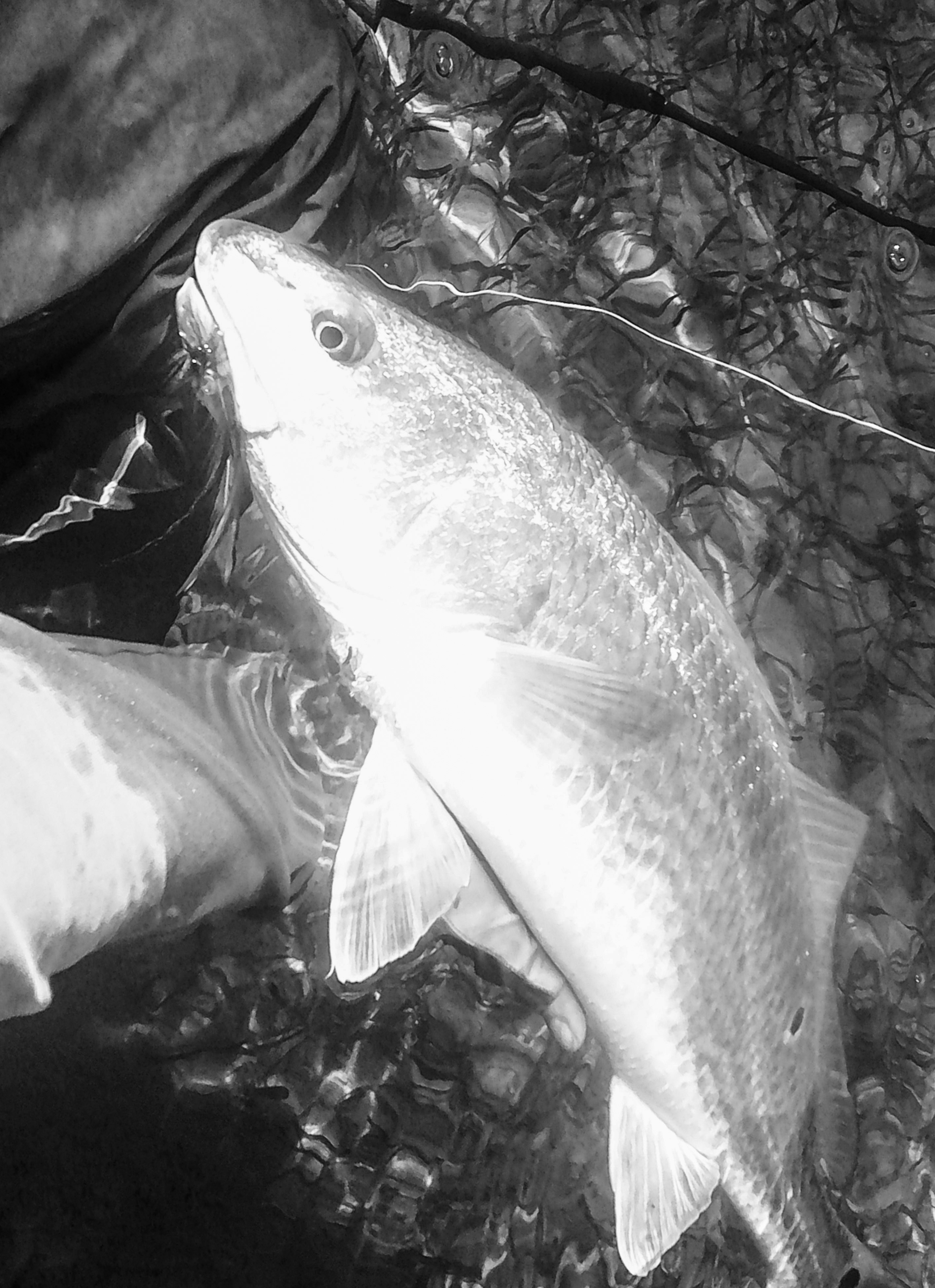
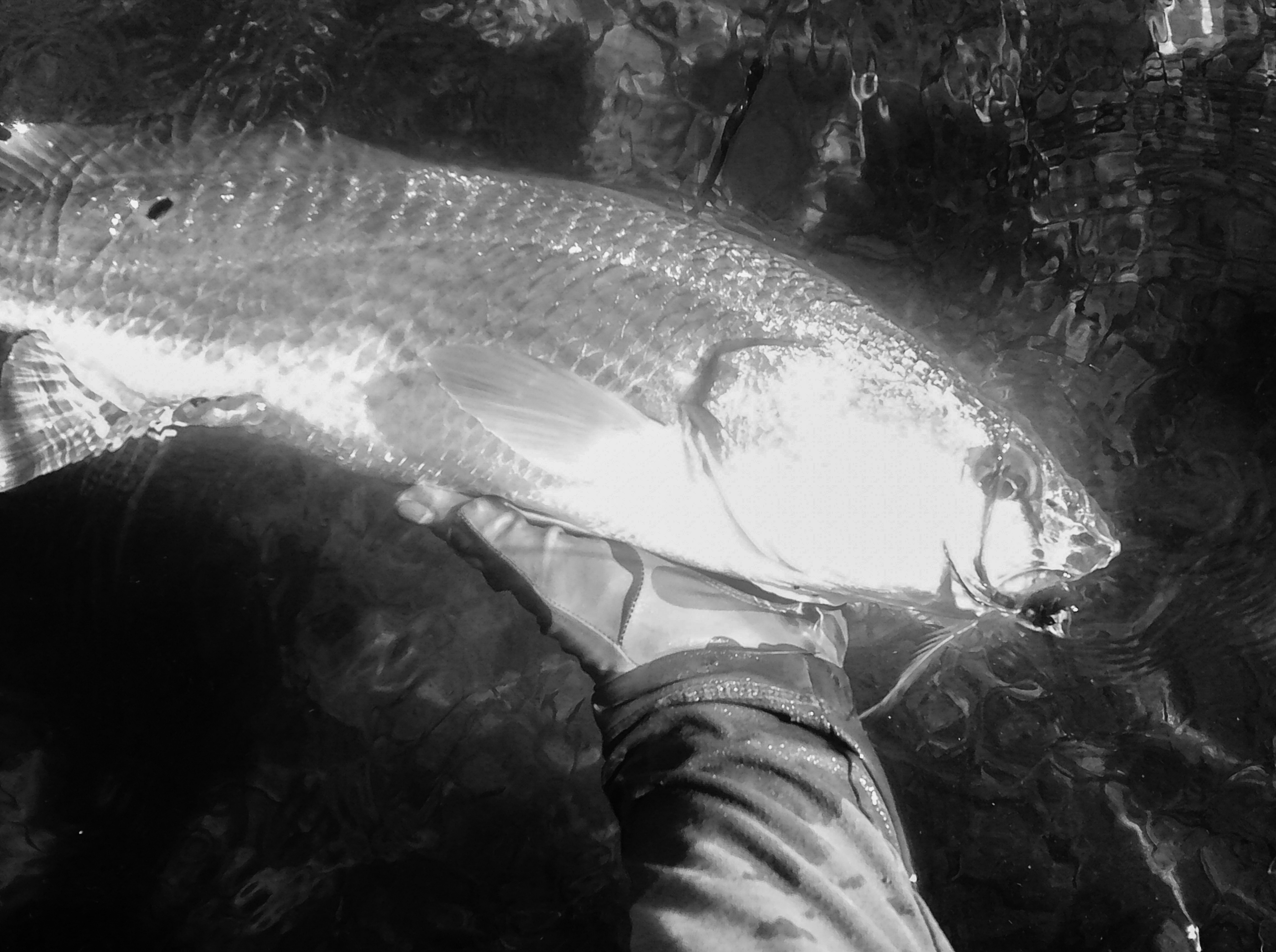
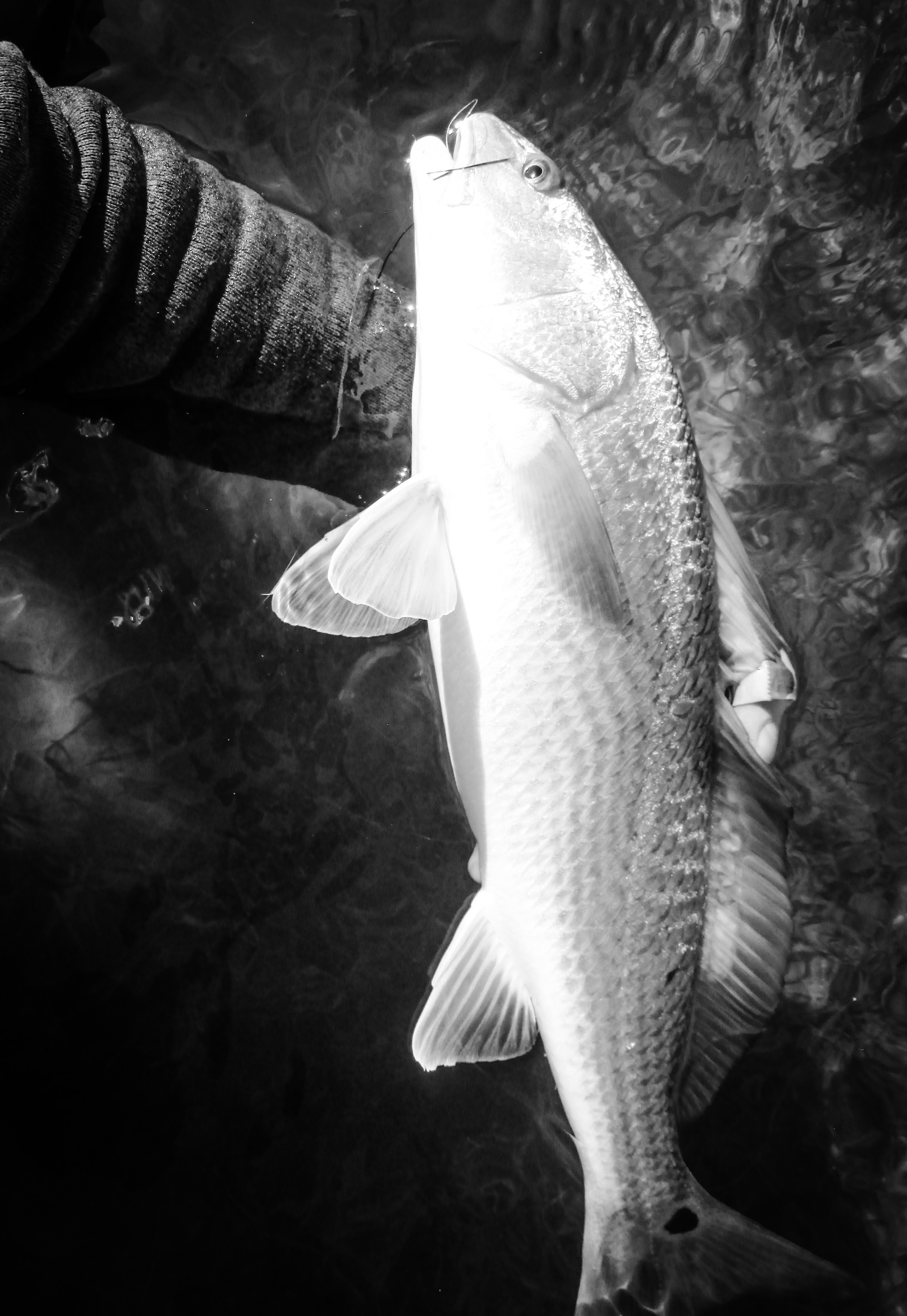
THERE’S A REDFISH JUST 20 FEET TO MY LEFT. I ALMOST walked by him. How come I didn’t see him earlier? Surface glare! He’s in a foot of water. Stationary. That’s rare. Most are prowling. Most are on the move. He hasn’t noticed me even though I’m close. Maybe I should slowly back away before casting. Then again, he might notice me if I do that. Movement is always risky in the skinny water. No, I’ll stay in place and ever so slowly crouch down and side arm a cast 4 or 5 feet away from him. There. He heard the plop of the fly (maybe too much weight on it) and noticed the cast (fly line). He’s moving away. Accelerating. Now gone. Too bad. He was a good one. Mid to upper 20’s in inches. A missed opportunity and I’m not getting many. Two or three quality shots on a good day. Some days none. Yesterday was a “none” day. The day before I spotted only one. It’s a tough angling gig out here on the Sand.
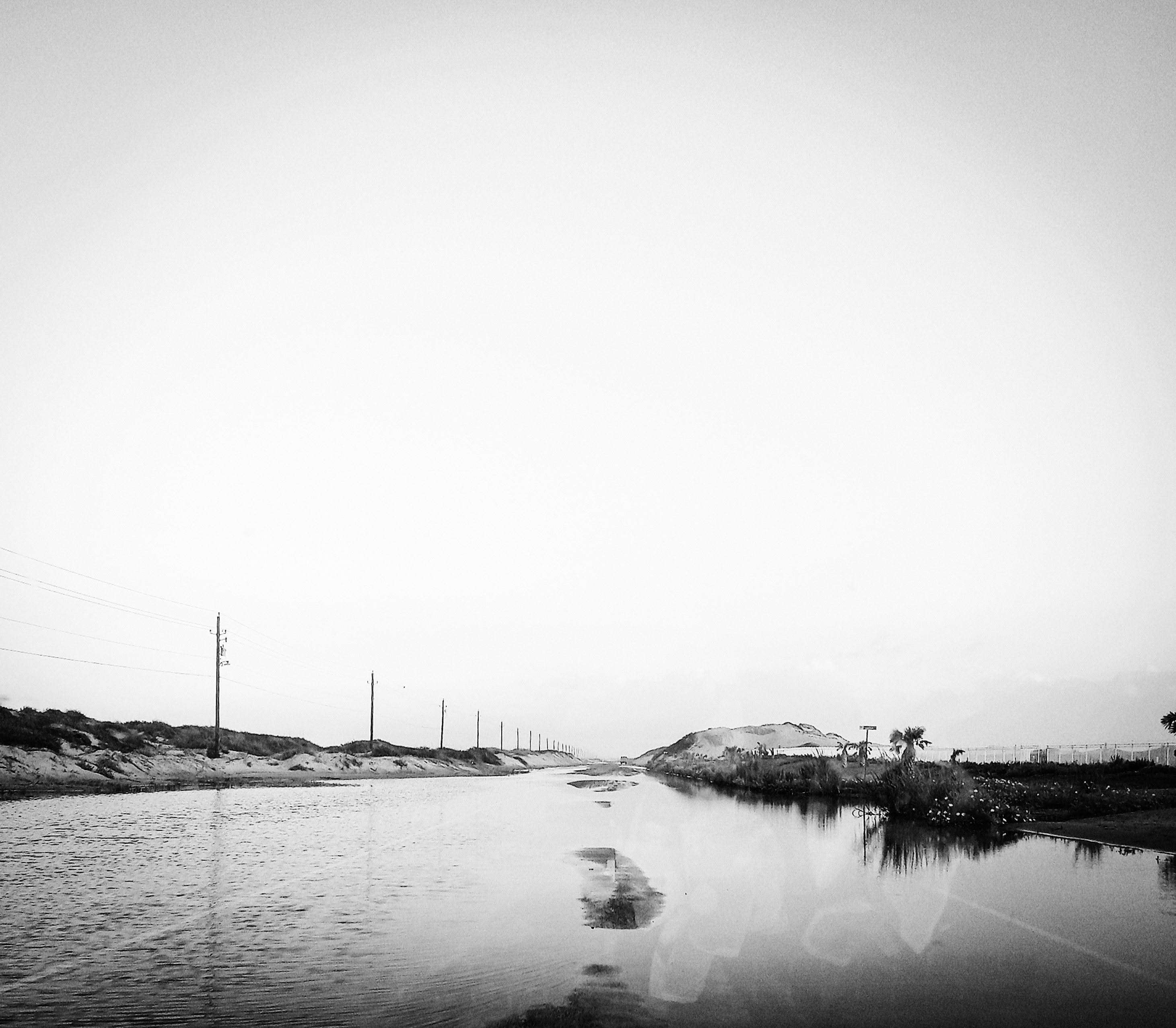
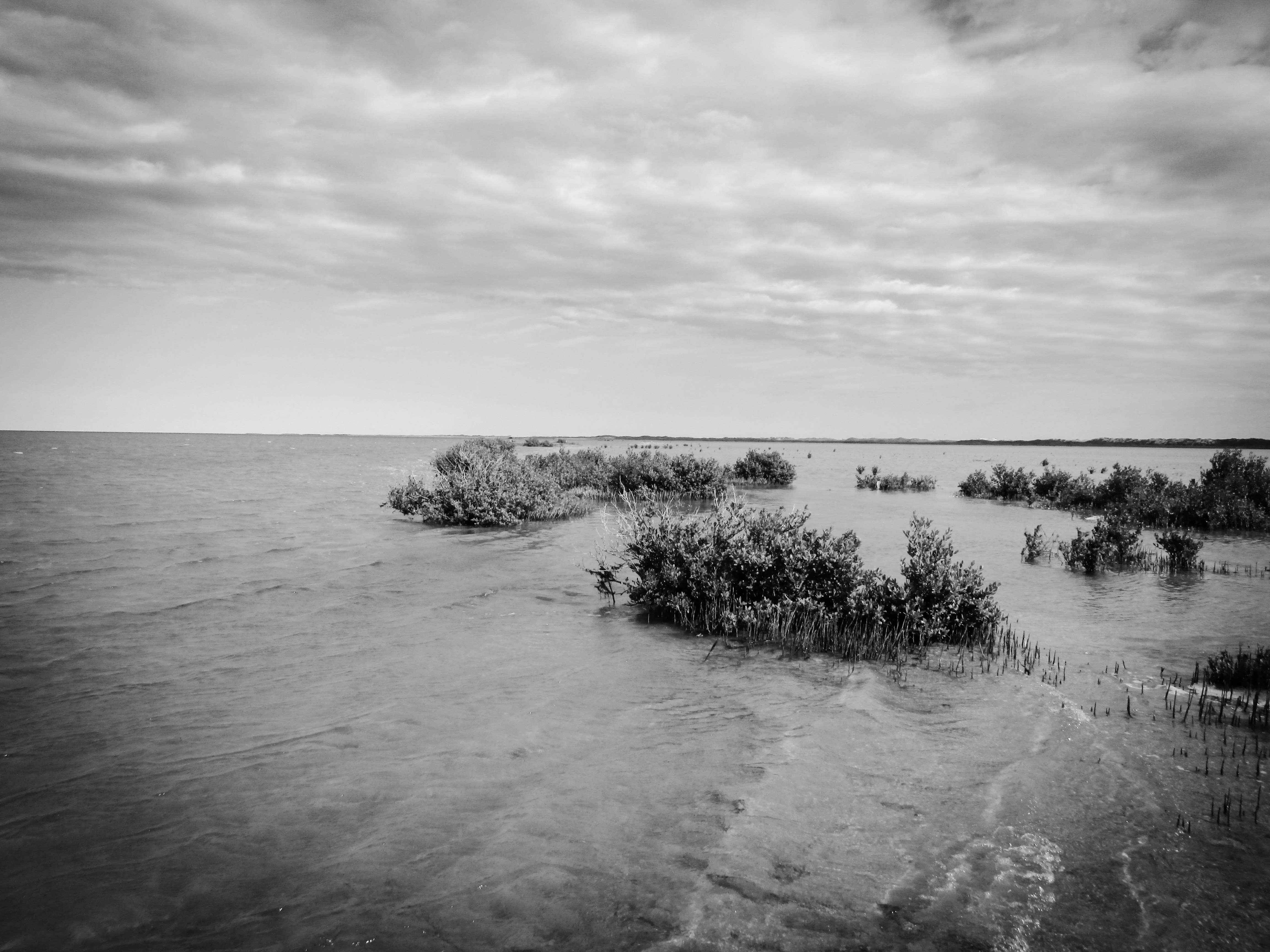
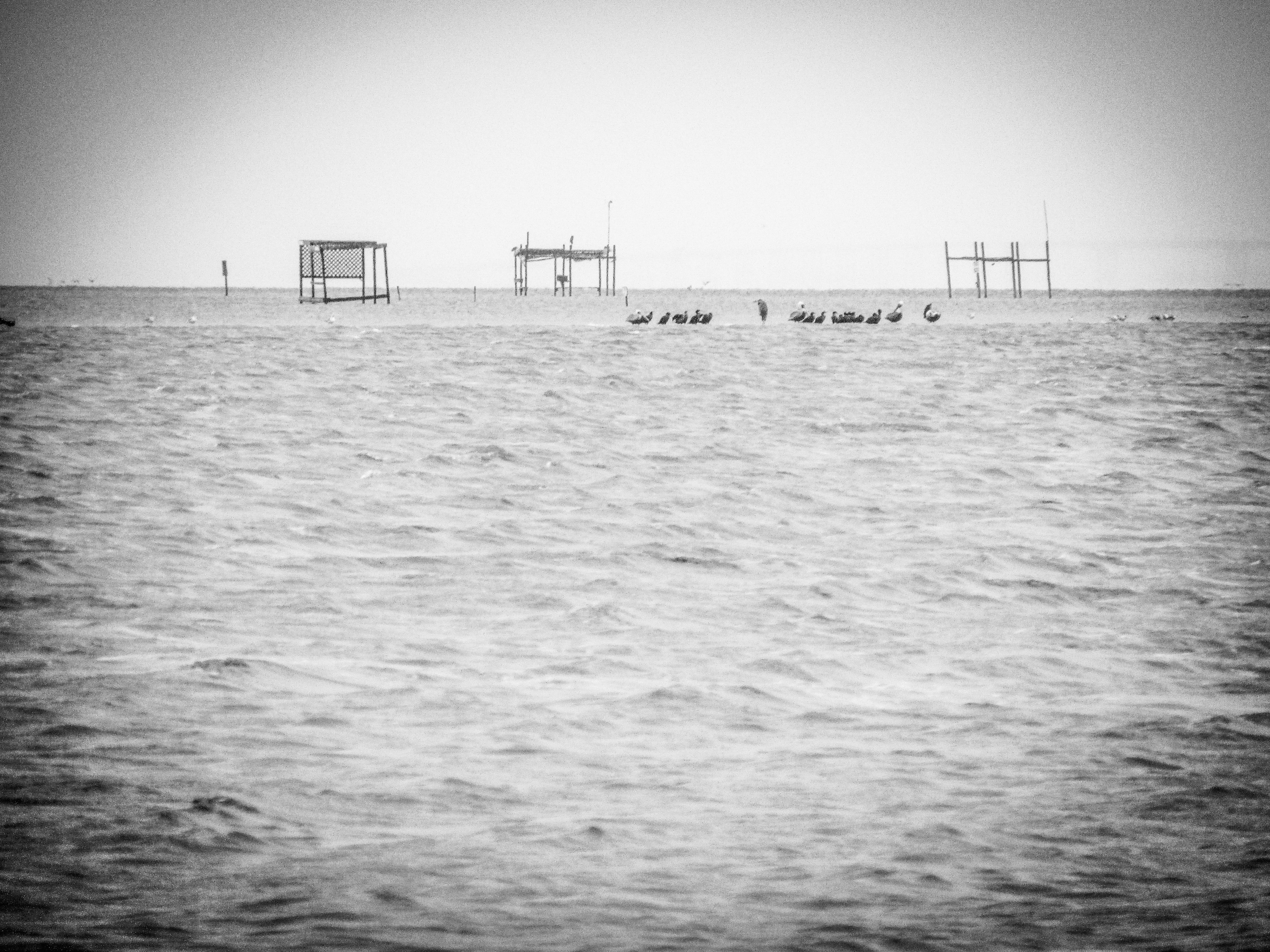
The sand flats that I’m fishing are only shin to knee deep, that’s it. Walk several hundred yards out from shore and it’s the same. In the shallow water the Redfish are generally on high alert and usually prowling (moving). I go slow, try to minimize my wading wake, constantly scan the water, try and use whatever light there is to my advantage, constantly fight glare, and hopefully spot one before it sees me. Spotting one from far off heading my way is better than seeing one up close as I get time to prepare, position myself and cast from a safe distance so they don’t detect my presence. Fishing blind is useless out here. I have to see them to catch them. And many things inhibit my ability to see: low light, low and high cloud glare, a wind ruffled surface, sometimes dense morning fog that seems to take forever to burn-off or blow away, and short Autumn days where the sun arcs low on the horizon.

Clear, full sun days with no wind are perfect but I rarely get both at the same time. The wind tends to be daily, strong and persistent. A perfect day is a rarity. Maybe a perfect day doesn’t exist. When it is mostly sunny, 11 am to 3:30 pm is my best sight-fishing opportunity. That’s when the sand flats become illuminated. That’s when the Redfish contrast well against the pale bottom. Sometimes I can see them from a long way off…50 yards or more.
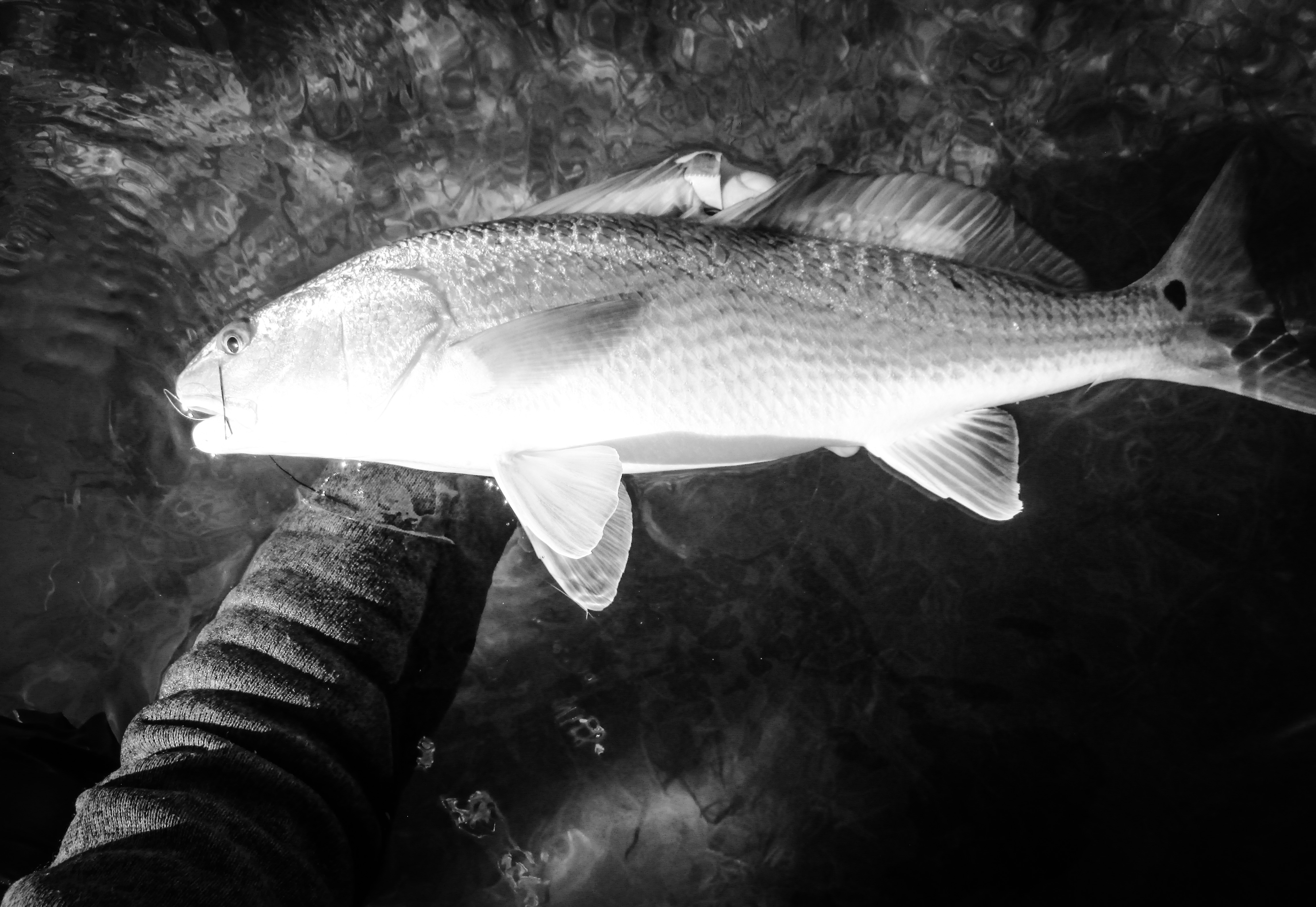
When the light is poor I often only spot one at 20 feet or so, maybe even less. Often they see me first at that range and bolt. Sometimes at that short distance they don’t notice me, so I crouch and I use a roll/flip cast and plop the fly near them and strip. A few have followed my impression almost to the rod tip. So close I end up stripping my leader butt section through the top guides. They follow, see me then flee.

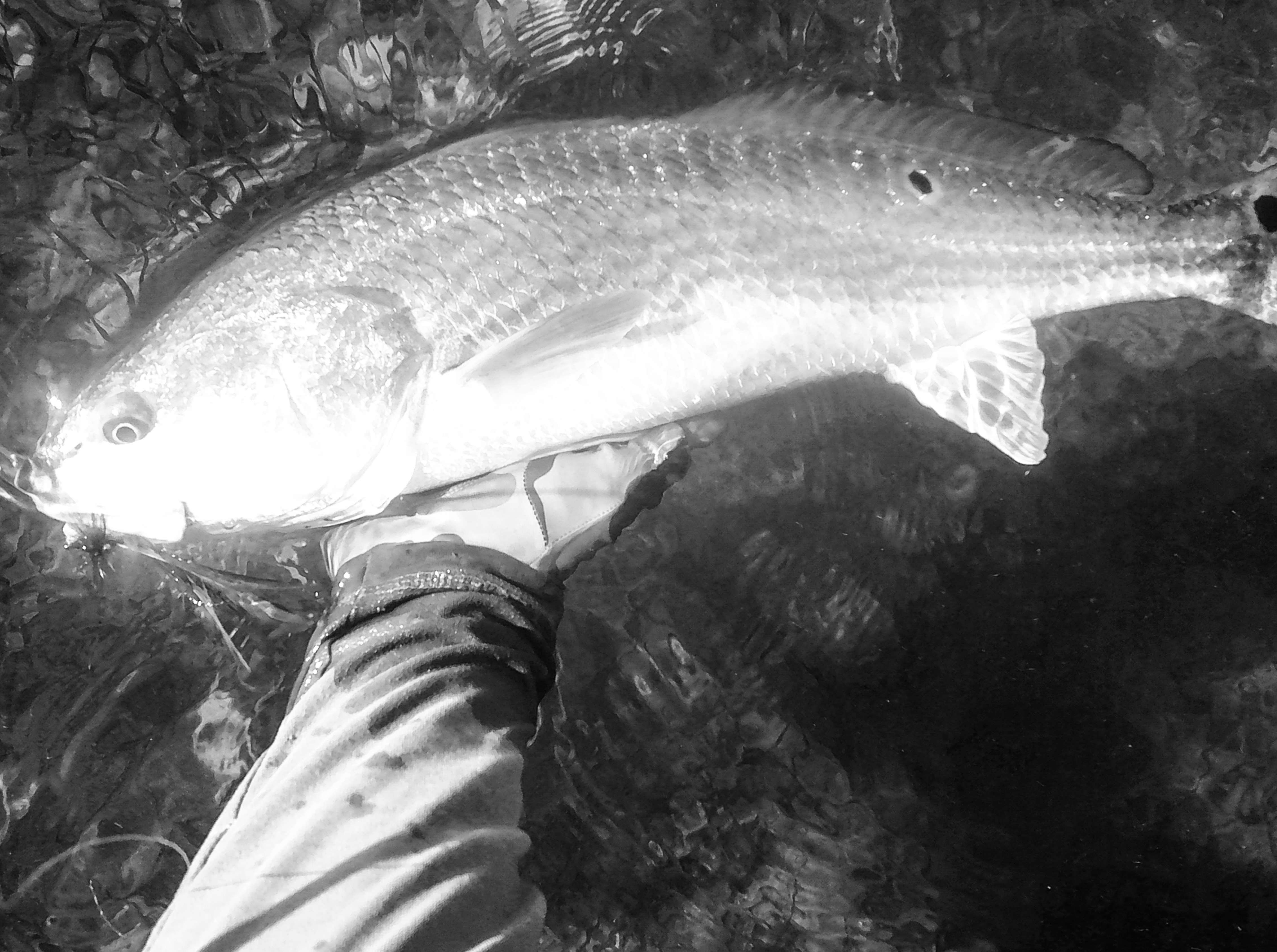
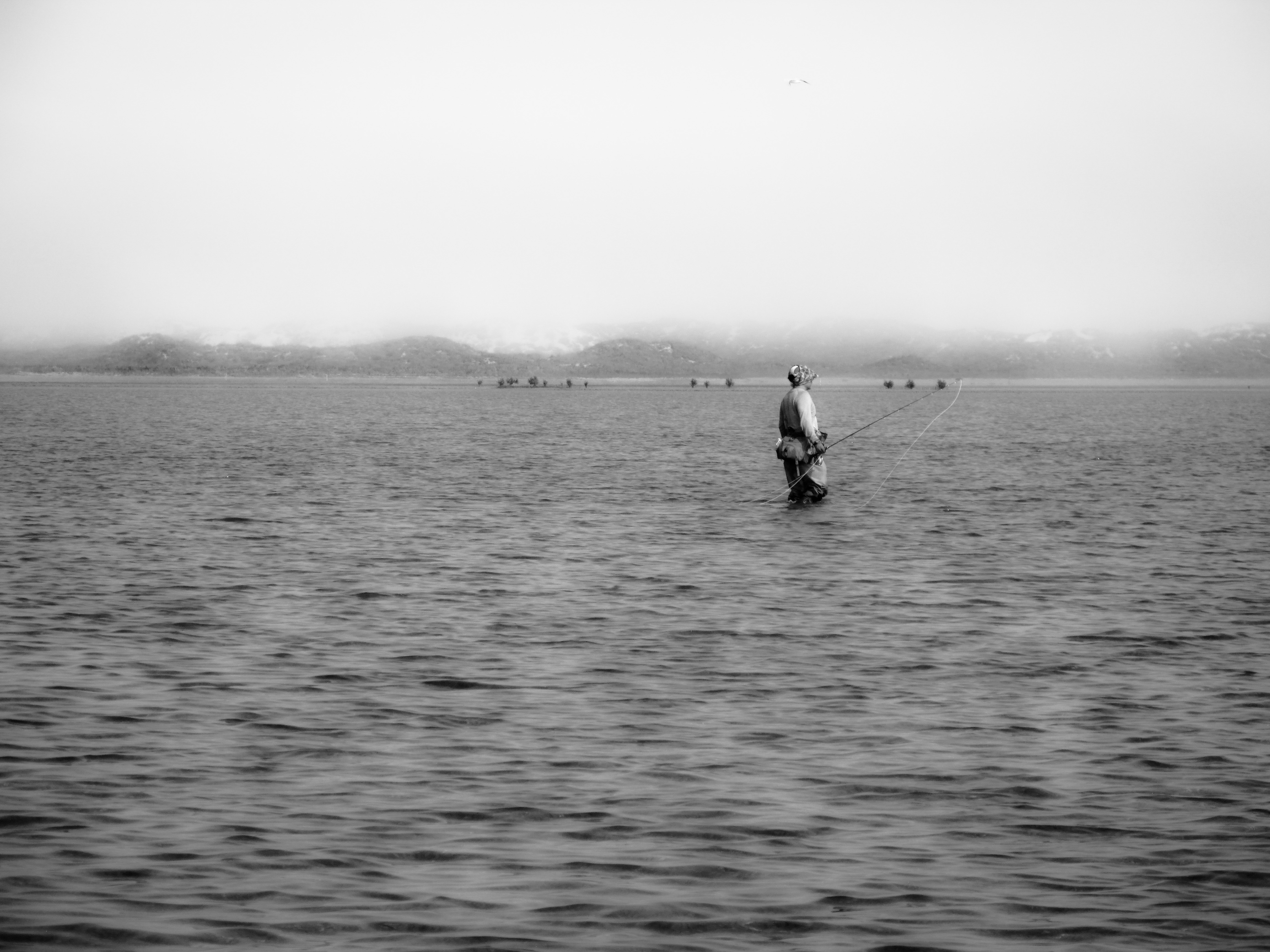
On the Sand I’ve seen no surface disturbances to give them away. No schools feeding and nervous water to wade to. There are schools of mullet but nothing charging them. I’ve seen smaller baitfish but again nothing aggressively pursuing them. I’ve seen no tails protruding from the water. There’s no real significant structure where they hang out: few troughs, etc. They either show up to feed, or don’t. I usually see them in the afternoon. Of course that could simply be because the light is generally more idyllic for spotting then. They are usually on the hunt when covering the sand; usually moving but on occasion stationary. I’ve seen a few in one spot digging in the sand for prey…lug worms, crustaceans. Those fish are my best chance; the stationary ones; their heads down.
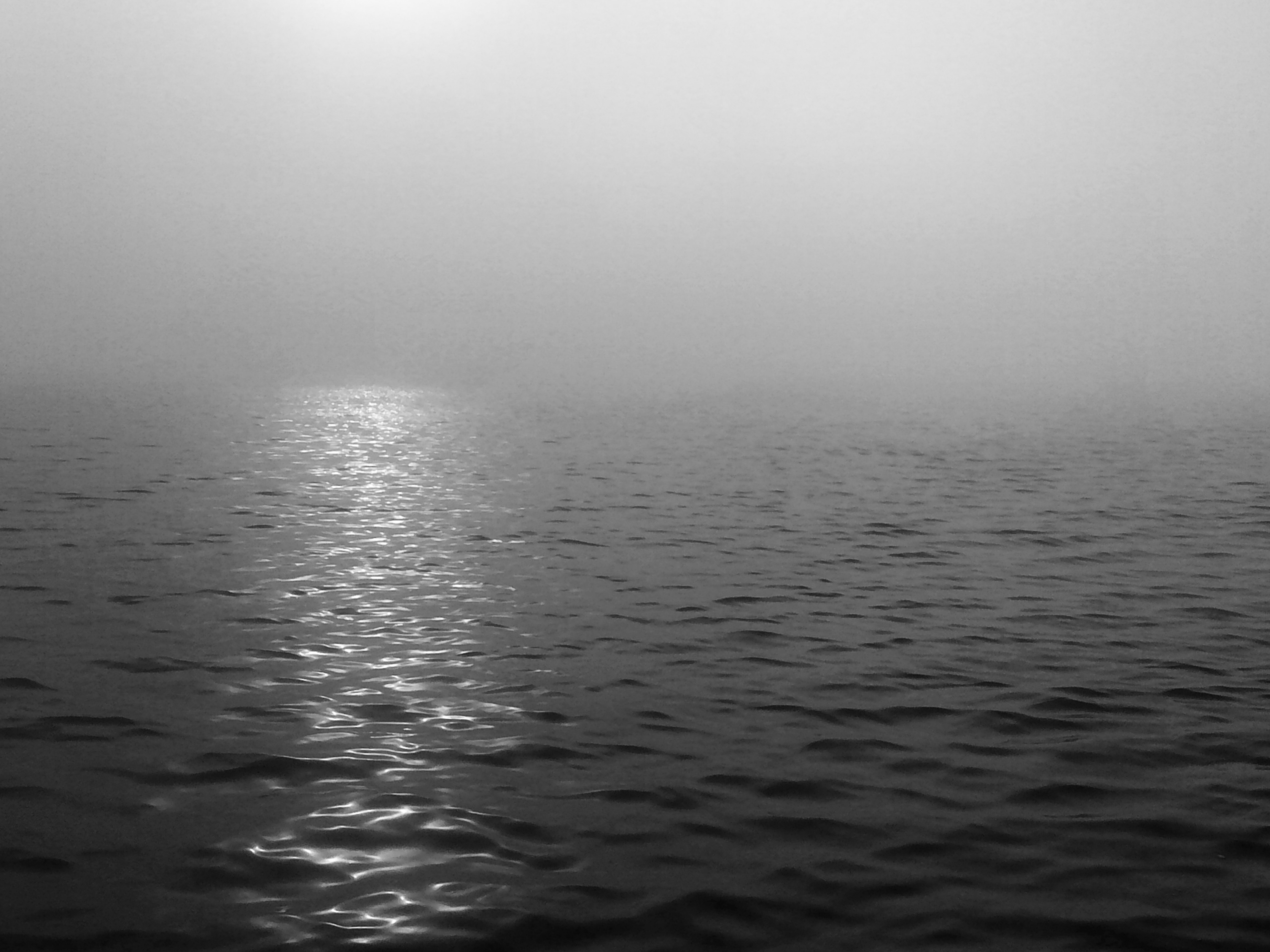
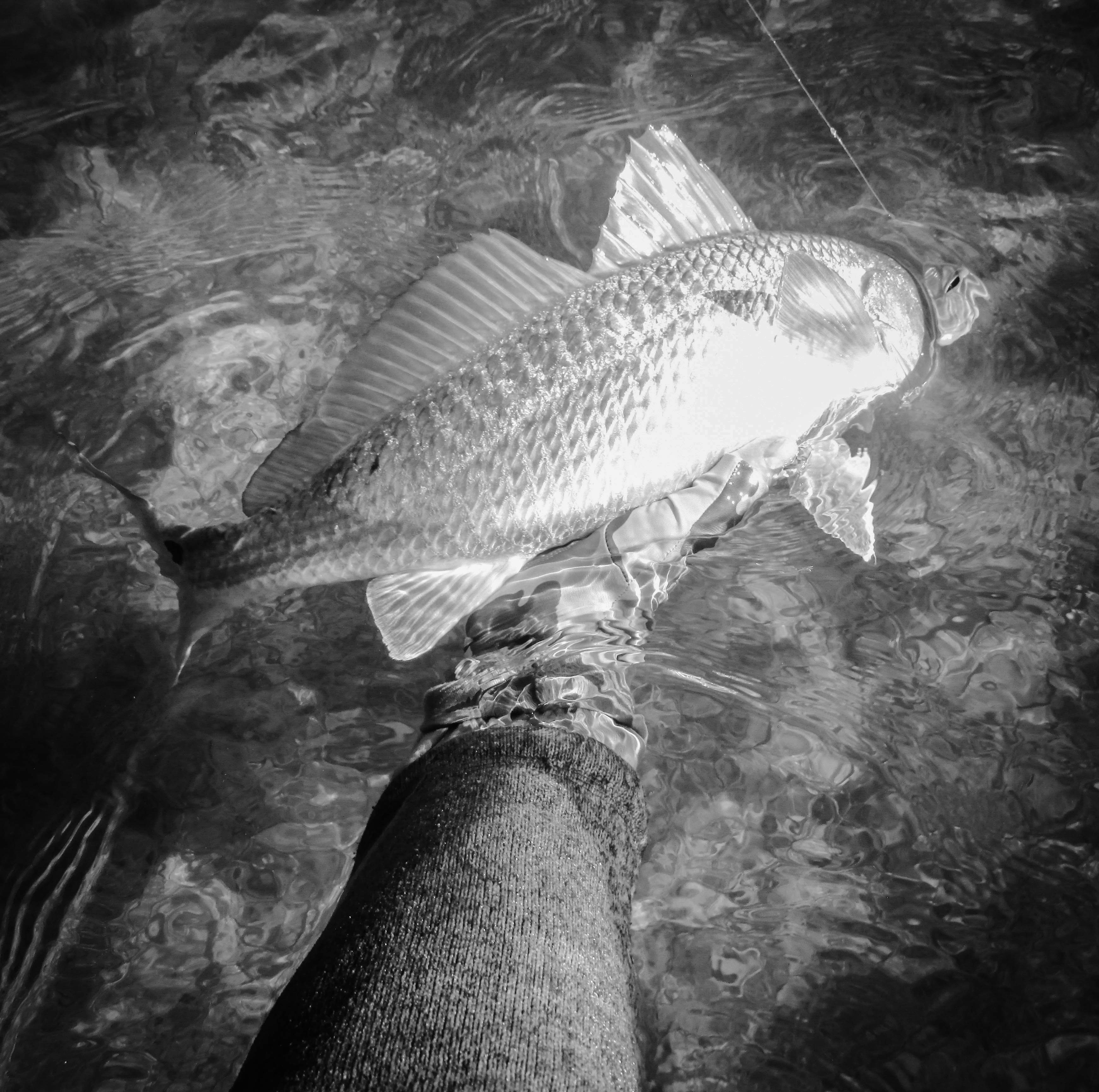
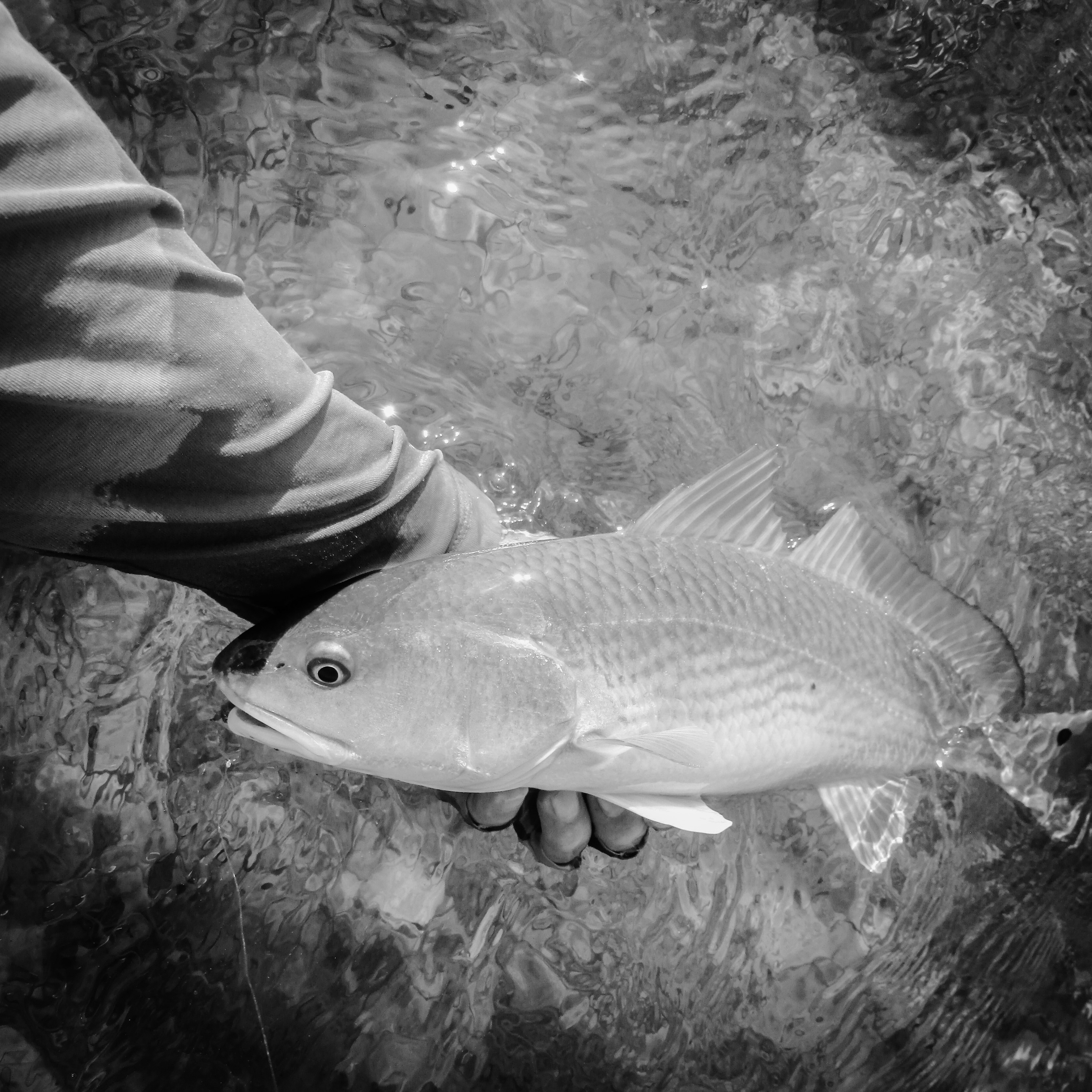
I came here for the low shin deep clear water, the light sand bottom and the sight fishing possibilities, and of course the challenge. Angling as demanding as anywhere. I drive to the tidal flats as close to the bay as I can get then hike in the rest of the way, always watching the morning sky and light, hoping for that perfect day. Once on the water the search begins; the hunt for Redfish. I’ve seen some in the 30 inch range and had two large ones eat my impression this trip but with no hook-up. Fly casting to a thirty inch Redfish in one foot of clear water…imagine that!


” If a year was tucked inside a clock, then Autumn would be the magic hour.”
Victoria Erickson
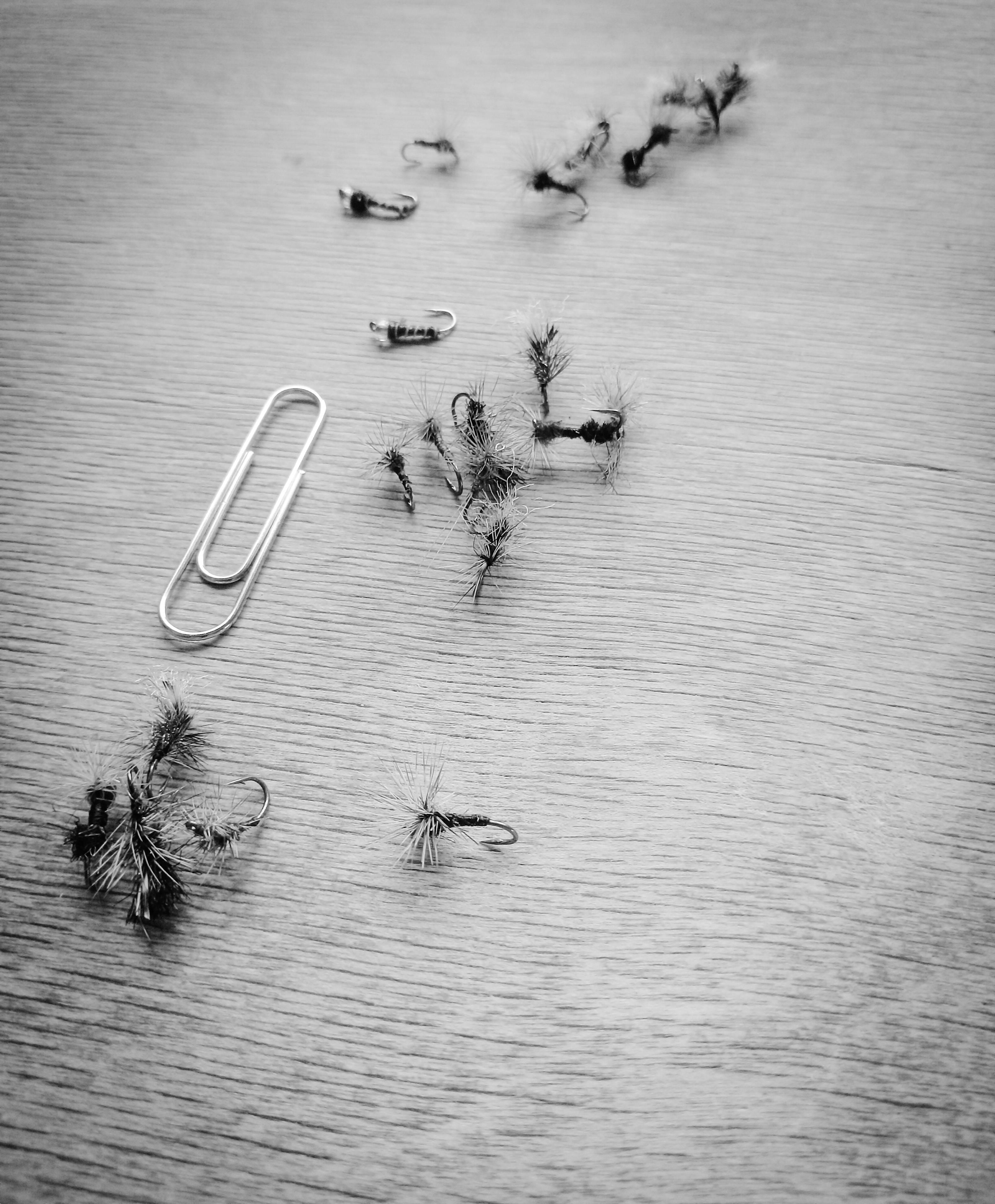
FEW BLUE WINGED OLIVES SO FAR this fall. Consistent with the whole season as hatches in general have been poor. I continue to walk local Cutthroat streams. I’m still finding some late season afternoon rising fish. The searching and sight-fishing in the full sun has been spectacular due to rivers being ultra low and clear. The big stuff (flies) in the slow shallow stretches rarely get a response. I’ve had much more success with small fly impressions such as midges, tiny parachute patterns, hackle-stackers, small emergers and ants. Size 18 flies generally. In the low, slow water the trout are on guard and fairly selective. They carefully inspect all that passes overhead. Rises are slow motion events fully witnessed in the Autumn golden light. Dry fly fishing doesn’t get any better.



Dark in the morning. Dark earlier in the evening. Days are shortening. Fading light…
The brief afternoon light provides opportunity to locate a good trout. It’s your chance to sight-fish; your chance for one on a dry fly.
I have been hiking a few very low, clear Cutthroat rivers the past couple of weeks; walking the long distances between pools where there is very little holding water and therefore trout. I always pause in these sections when I see see a small area of slightly darker water, or what seems to be a slight depression in the river bed. A spot that is just a little deeper than the rest. Often it’s just two or three feet of slow moving water. Sometimes less.

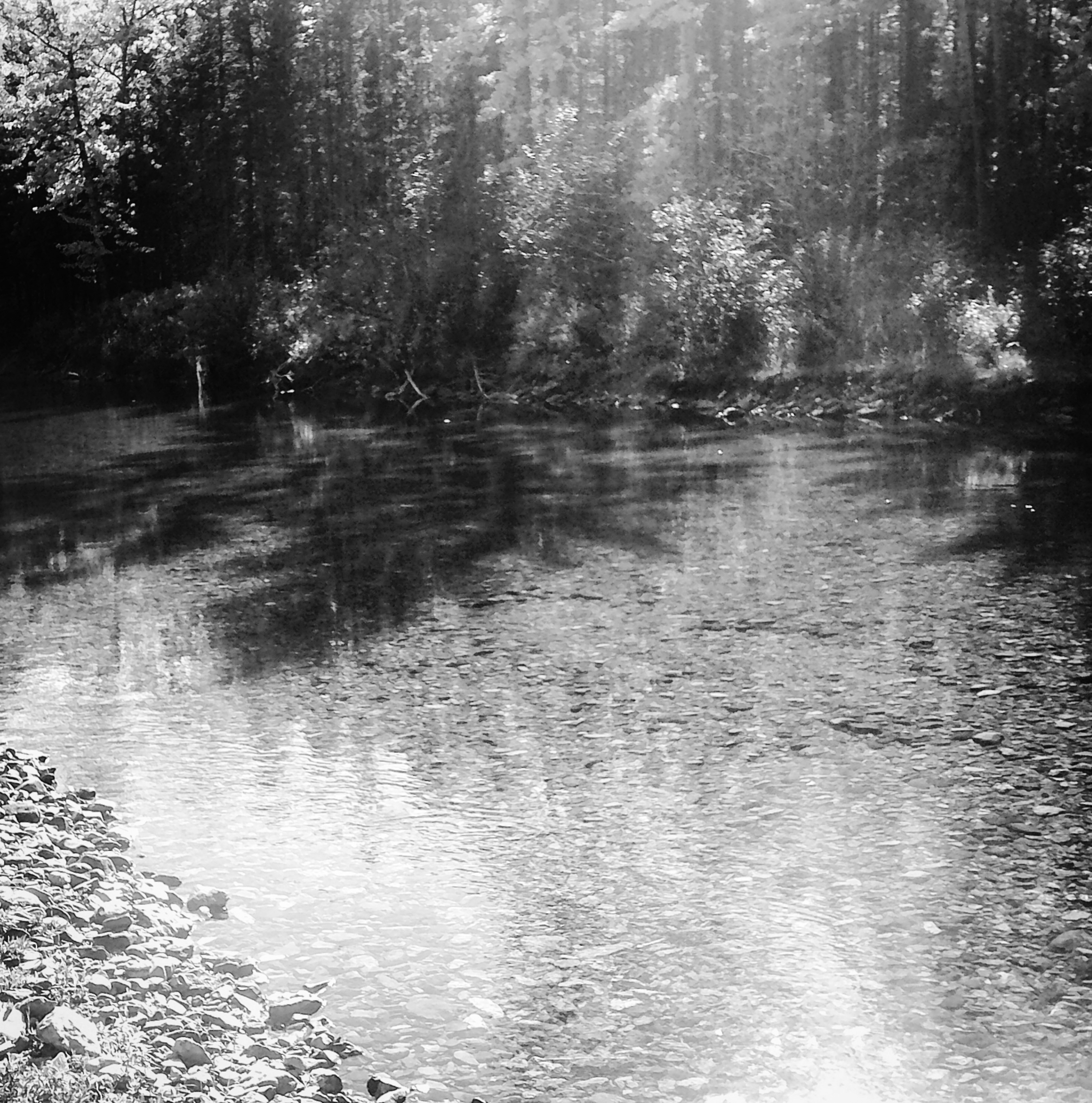
Recently I paused and watched one of these spots after noticing a slight surface disturbance. The afternoon sun felt good and I knelt down on the sand and pebble rock and took a moment to absorb the heat, as I had been wet wading the ice-cold river for awhile. As I watched and warmed-up, a rise occurred. The fish displaced very little water. A small one. It was eating the few afternoon Blue Winged Olives that were riding the slow, shallow flow. I watched for awhile then noticed, just slightly beyond, another fish rise. It displaced more water. A better fish.

I side-arm cast to it down and across from my kneeling position and the trout slowly surfaced in full light and ate my small Olive impression.
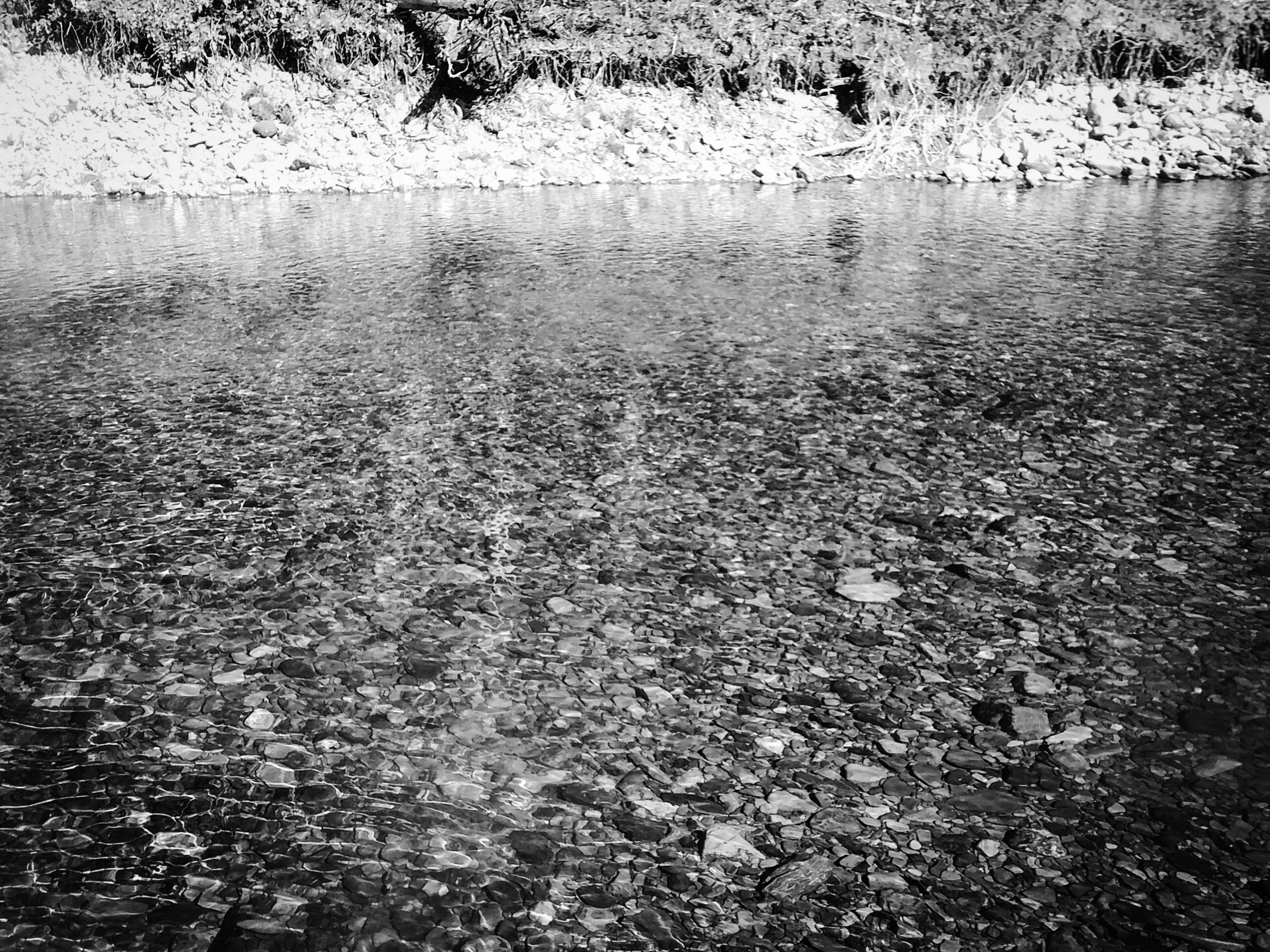
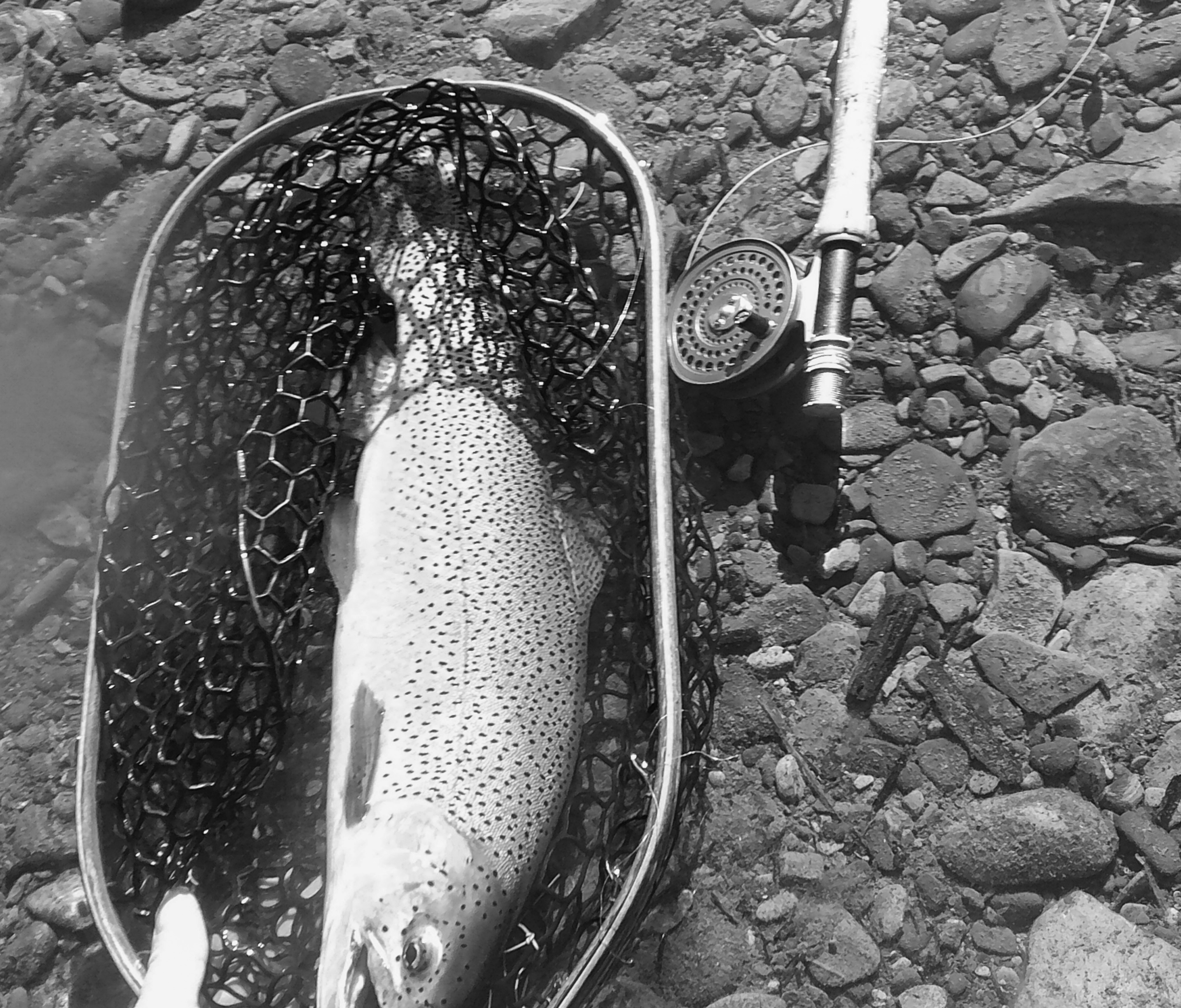
It is a given that in low water conditions that Cutthroat trout, and trout in general, are going to be in the deep pools on a river. Catching them there is always an achievement especially late in the season after they have been fished-over for three plus months. However, finding a good one in between pools in the shallowest of water is for me much more special. It’s the location. A few trout found in the scarcest of water the past few weeks…
Long leaders, fine tippet and relatively small flies.

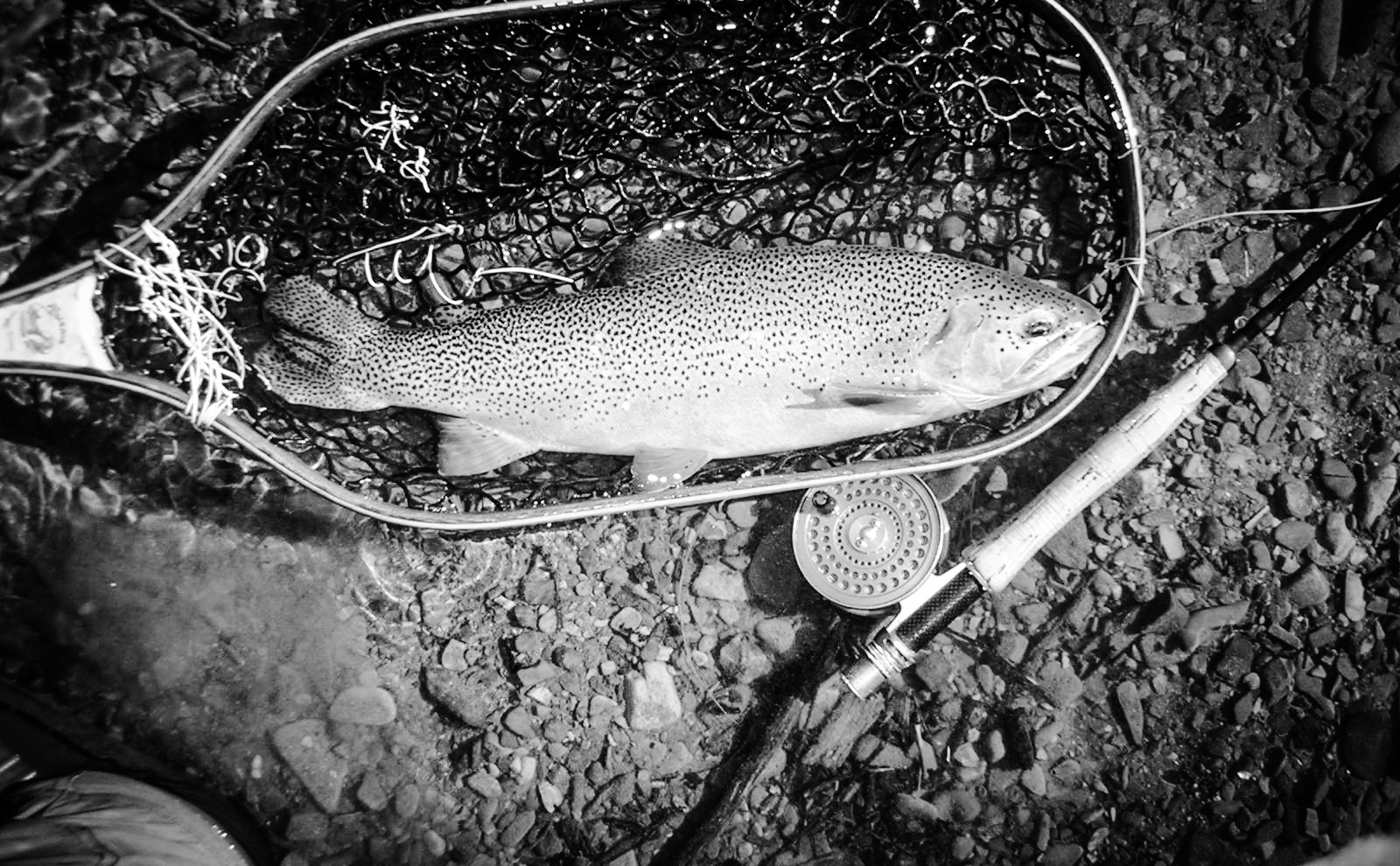
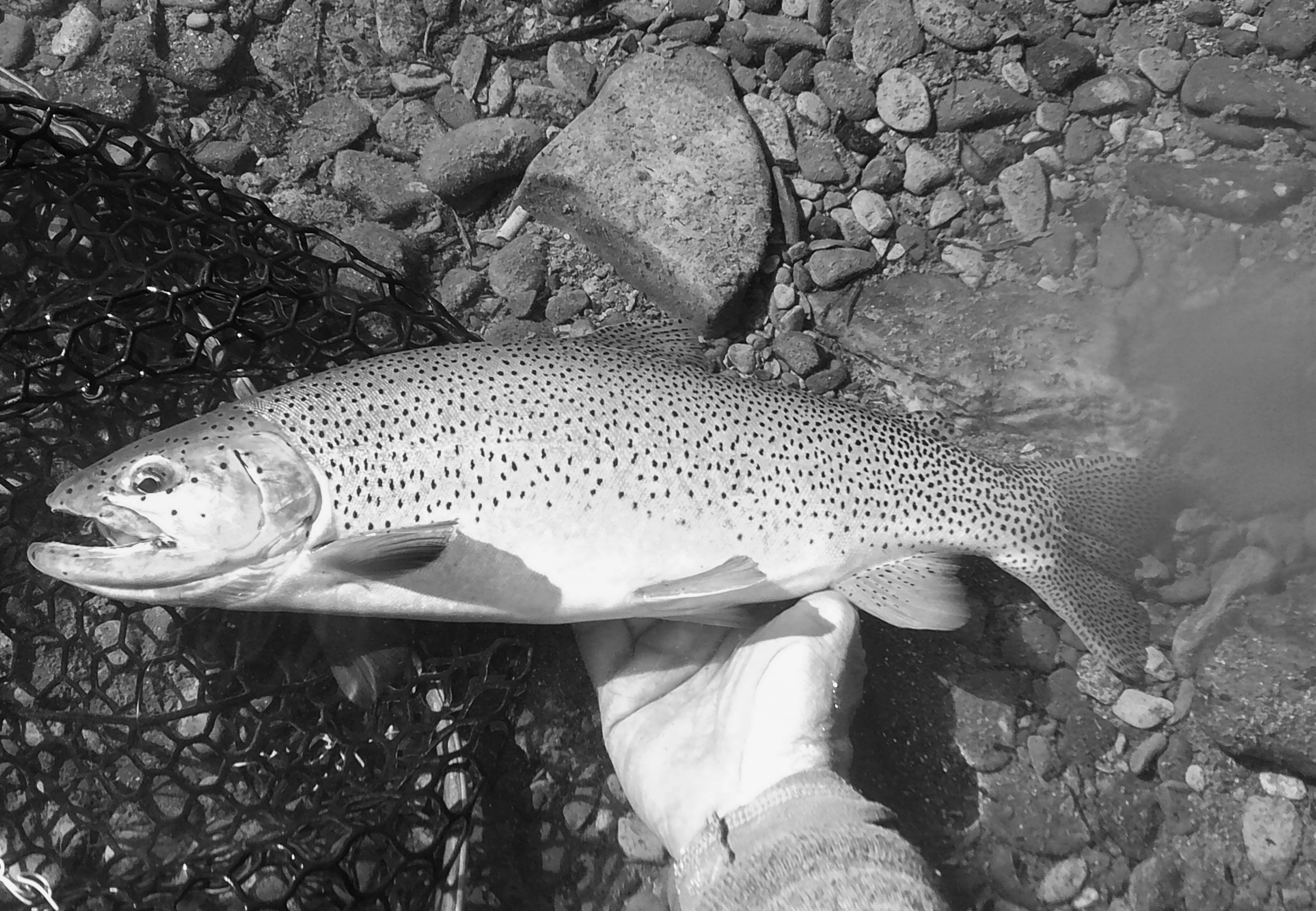


SEPTEMBER. SIGHT-FISHING. IT CAN BE CHALLENGING WHEN there is a smoke filled sky and some high clouds. When the ceiling above me is thick and casting a significant glare on the water’s surface. A glare that’s often blinding at river level. On one of my favorite rivers I reduce glare by climbing its high banks and cliffs. Up high I can see into the water and spot trout when they move into the shallows.

The trout in this particular river often leave the deeper water of a pool in the afternoon and cruise the shallows where land-based bugs get blown, or where insects that have hatched collect. They creep along the river’s edge searching for food. The big confident fish don’t mind the shallows, even in mid-day light. Although confident they remain cautious in the skinny water. And they are always in close proximity to deeper water. That’s their escape route if they sense threat.

Up high you can observe a trout’s feeding behavior. You begin to realize that it has a route that it cycles through. A repetitive hunting path. They often travel along river’s edge then circle back downstream through the deep pool water, then re-enter the shallows and creep upstream along the edge/bank again. As long as there’s an occasional reward (food item) they’ll repeat the cycle. Sometimes they deviate slightly. They’ll travel higher up in the pool or start their cycle lower down closer to the tail of the pool. If they are not finding a lot of food they might cross over to the other side of the river/pool and feed in a similar fashion along that edge. They generally stick to one pool. It is their home; their neighborhood. And the biggest fish seem to pick the river’s largest pools. A river’s nuances…

Sun angle, wind, and river temperature can change a trout’s feeding location in a particular pool, and other variables like a strong hatch or the presence of predators. Things can change as the day unfolds. It is never static. You have to be observant. You have to pay attention.

Sometimes I’ll walk for hours along the river’s banks or up high before I find a trout in the shallows. Sometimes I don’t see any. When I do locate one I’ll try and get a read on its hunting route; its cycling pattern. Then I’ll quickly make a presentation plan and from my elevated perch work my way down to the river’s edge. It all seems easy from up high but once you are at river level it changes. A trout often becomes much harder to spot, especially when there is glare. It’s easy to lose sight of it. When that happens I try to remain patient and still. I crouch and keep watching the water. I’m looking for any shadowy movement. It is probably around. It’s usually closer than I think. Trout on a cycling path don’t move fast. They just inch along.

When I locate a trout at river level I don’t want to “hit it on the head” in the shallows with my chosen fly, especially if I’m casting a terrestrial pattern that has some bulk/weight. It might bolt if I do. I try to cast just slightly upstream and off to the right or left of the fish, let it notice the “plop” and then hopefully watch it move over and investigate.


My fly choice has to be convincing. If it rejects it, it will glide back to the deep. That might be it for the day. Gone! If it decides to eat, it is often a slow motion take so I’ll have to be equally slow with the hook set. I match “slow with slow”. A hook-up in an a large pool often means I’ll probably hear the tick, tick, tick of my backing knot as it passes through the rod guides.

It’s engaging, visual angling and always exciting. The more you understand the nuances of a particular river the richer your angling experience.

Some photos …the drive, the river, some trout…


“WELL THAT FLY DIDN’T WORK and he’s still rising. Change fly! Let’s go smaller. Nope, no response. Try again. Wow, same response. Change fly! Let’s try an ant. Nice cast. He’s looking. Closing in. Nope. He rejected it the last second. Wow, tough fish. Throw the ant again. Hmm. No go. Change fly! Let’s tie on a Klink/Emerger. No response to that. Change fly! I see some Drakes in the flow but the fish is ignoring most of them… but not all. Try this CDC version. Nope, he didn’t even move over to take a look. Toss it again. Change fly! I have a Drake Emerger pattern. Let’s try that. No luck. Maybe we need to rest the fish. Let’s go upstream. We’ll come back later. Hopefully he’ll still be rising then…wow, picky Cutthroat. Hard to walk away. Look at him still feeding. Some naturals passing overhead. He only rises to some; not others. Passing on the Duns, sometimes…maybe he’s mainly cueing in on Emergers. Well he just took a Dun but then let several others drift overhead. He ignores some, then eats the odd one. Yikes, challenging trout…we will come back.”
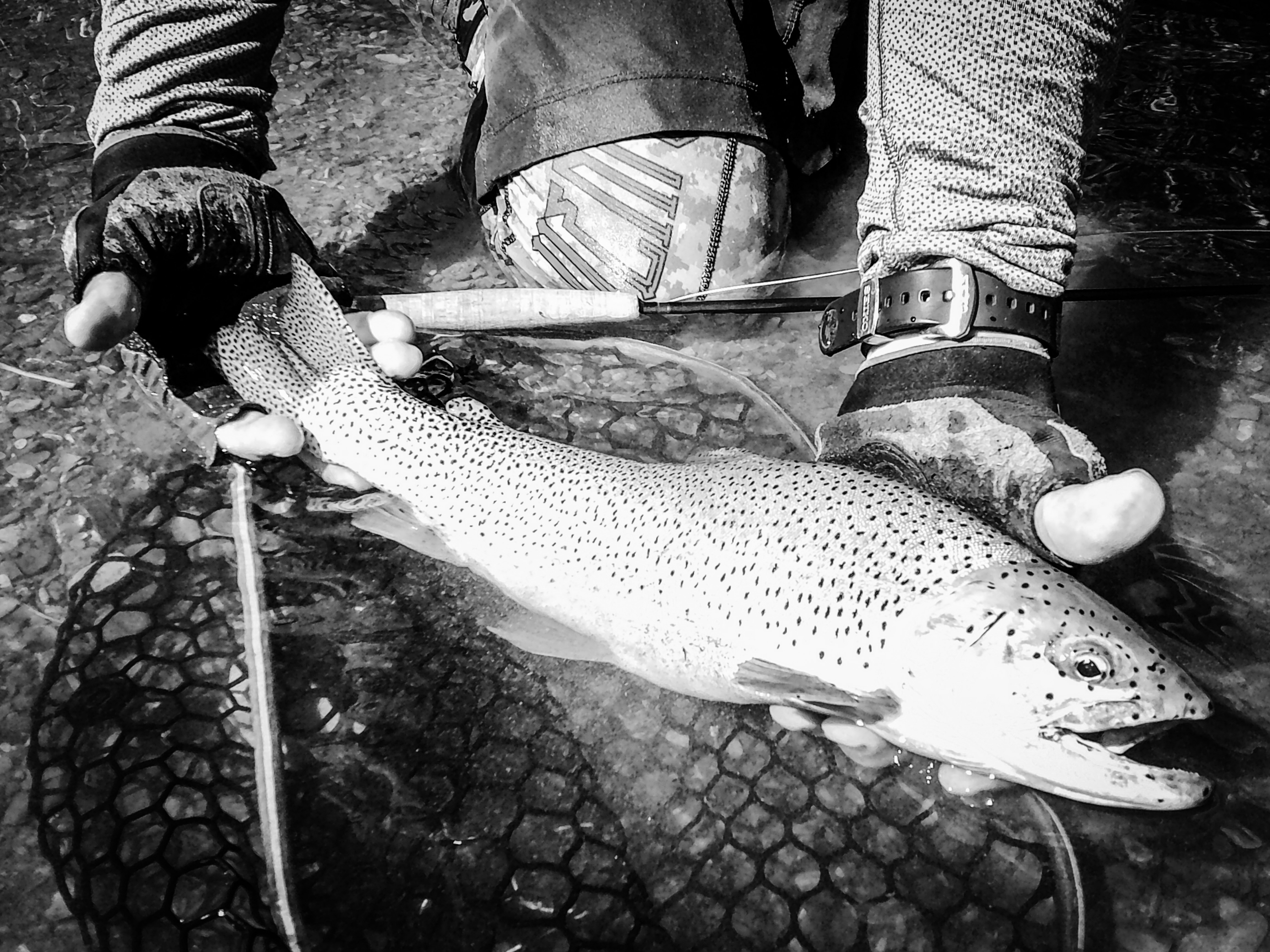
Cutthroats. Simply beautiful. Some say they are easy to catch. Sometimes that’s true. Sometimes, however, they are as challenging as any other trout. It depends on the river. It depends on how much food is in the flow. It depends on angling pressure. It depends on water clarity. It depends…
Late season low water can make things extra challenging. You have to try and stay out of sight; and don’t move too fast; and don’t drag that dry fly; and don’t do this, or that, or they’ll disappear. They’ll go hide in a log-jam. Remember, Cutthroats have been around for several million years. They’ve survived. They’re always on alert…
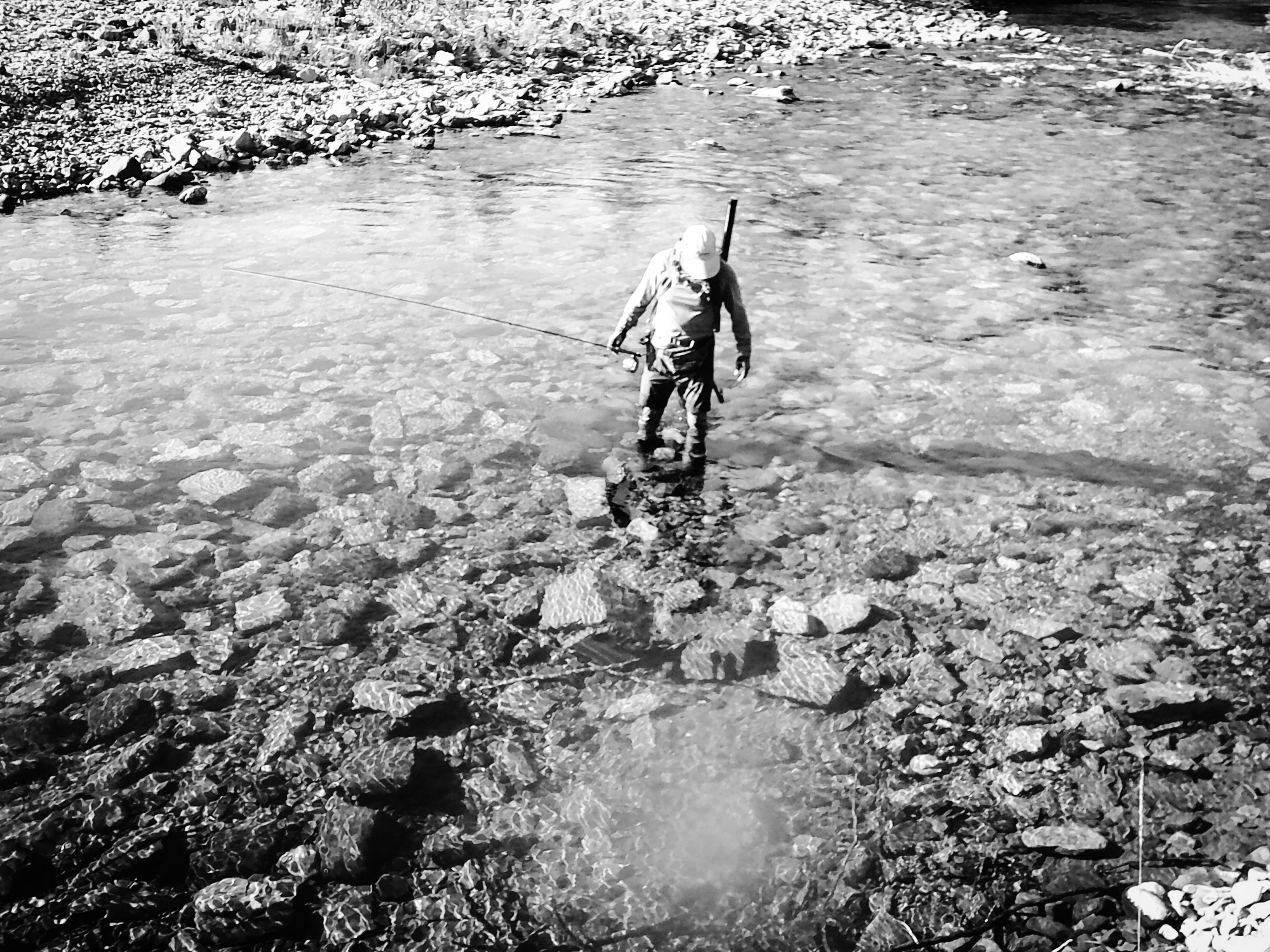
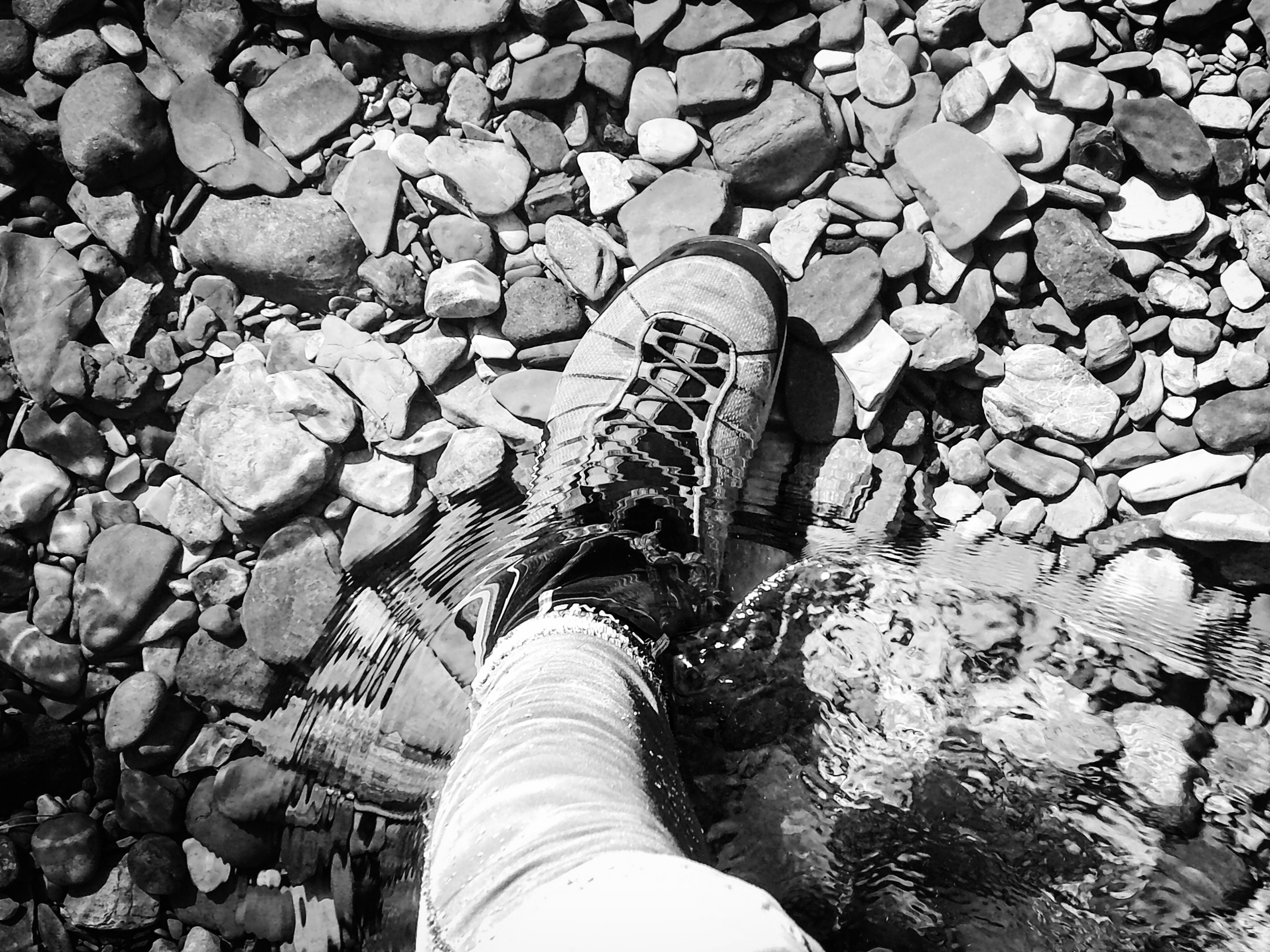
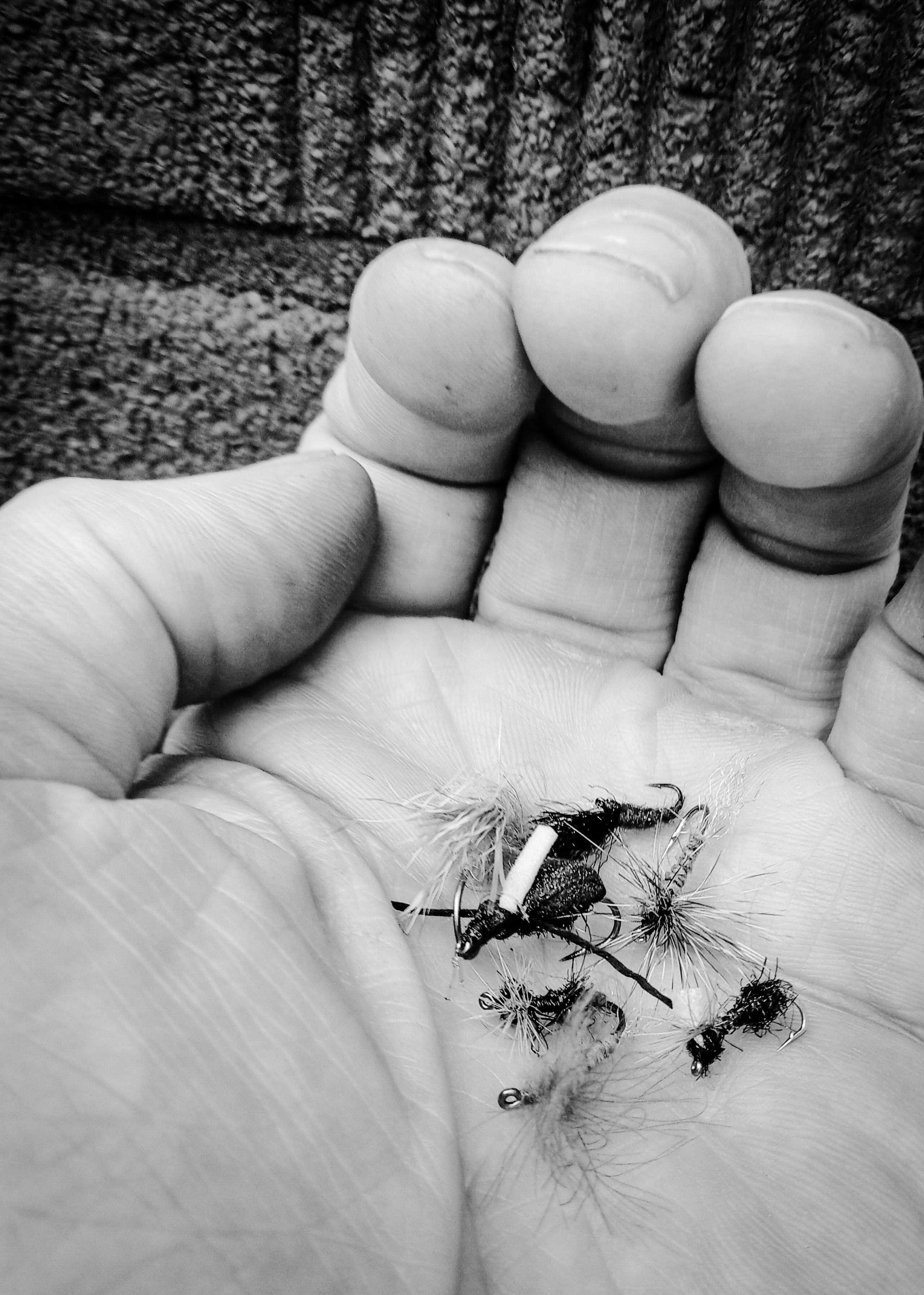
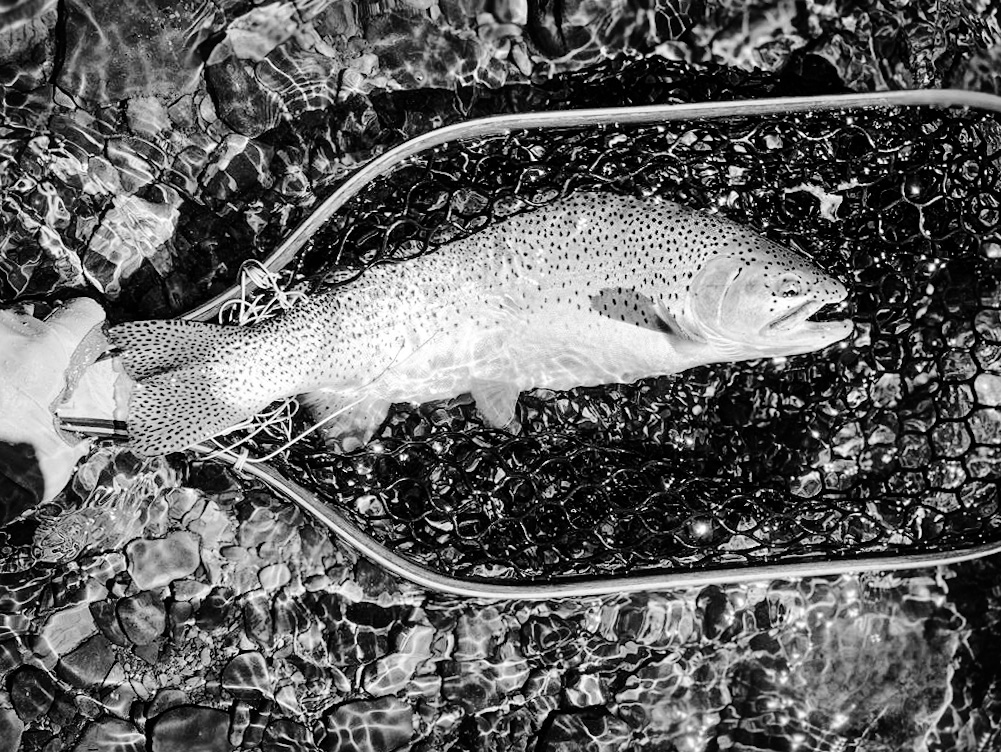
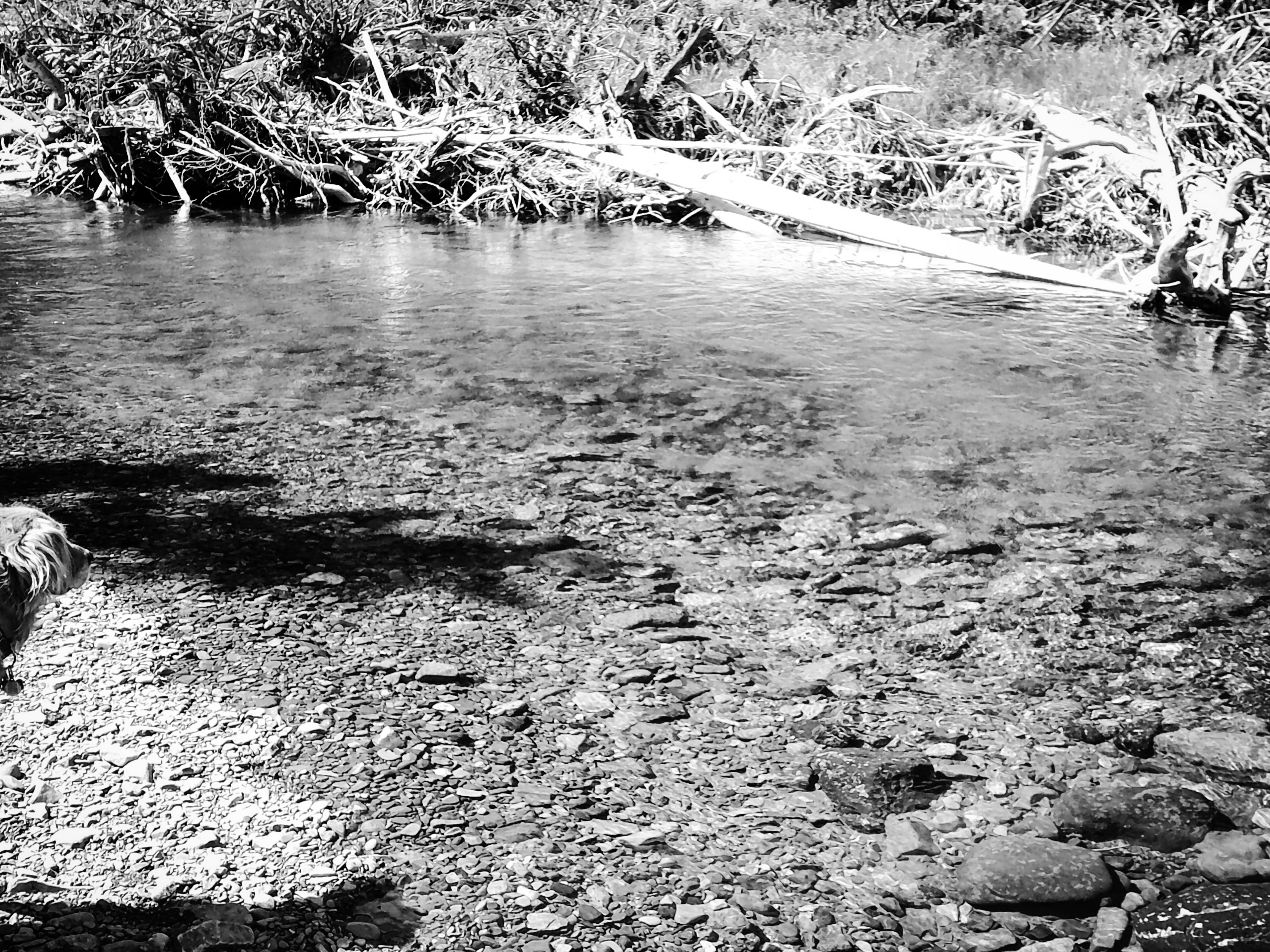
I recently spent four days fishing with a good friend, Roman, on different sections of one stream. A clear, pristine cutthroat stream. We pulled-up fish in the faster water on dry flies and came across several fish rising occasionally in slow water. The slow, flat water fish often required multiple fly changes in order to be fooled and a few tough customers couldn’t be enticed. With our fly selection we went big, we went small, we went slim, we went chubby, we tried low-riding patterns, emergers, terrestrials of varying sizes, a nymph dropper, lighter tippet…We caught many but a few couldn’t be fooled.

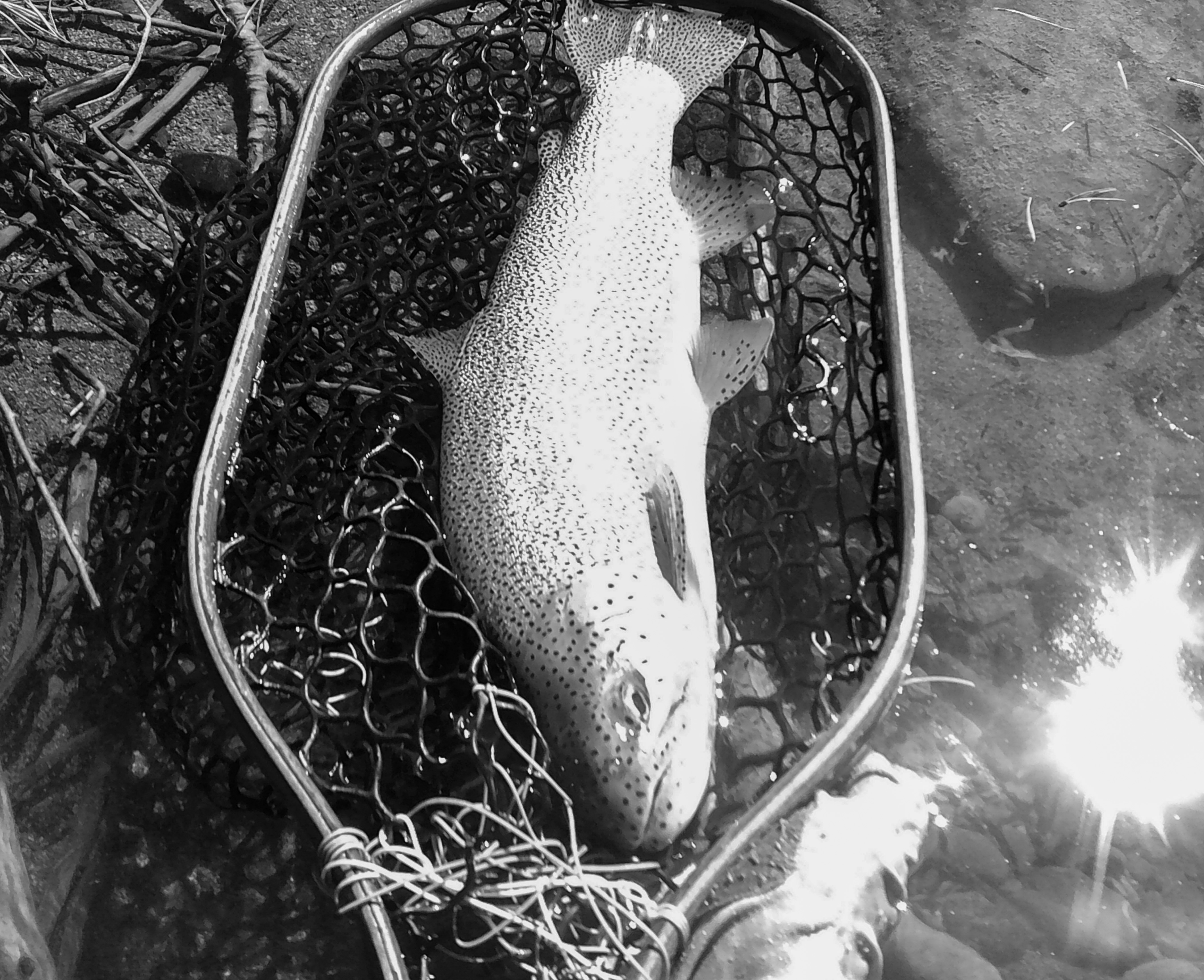
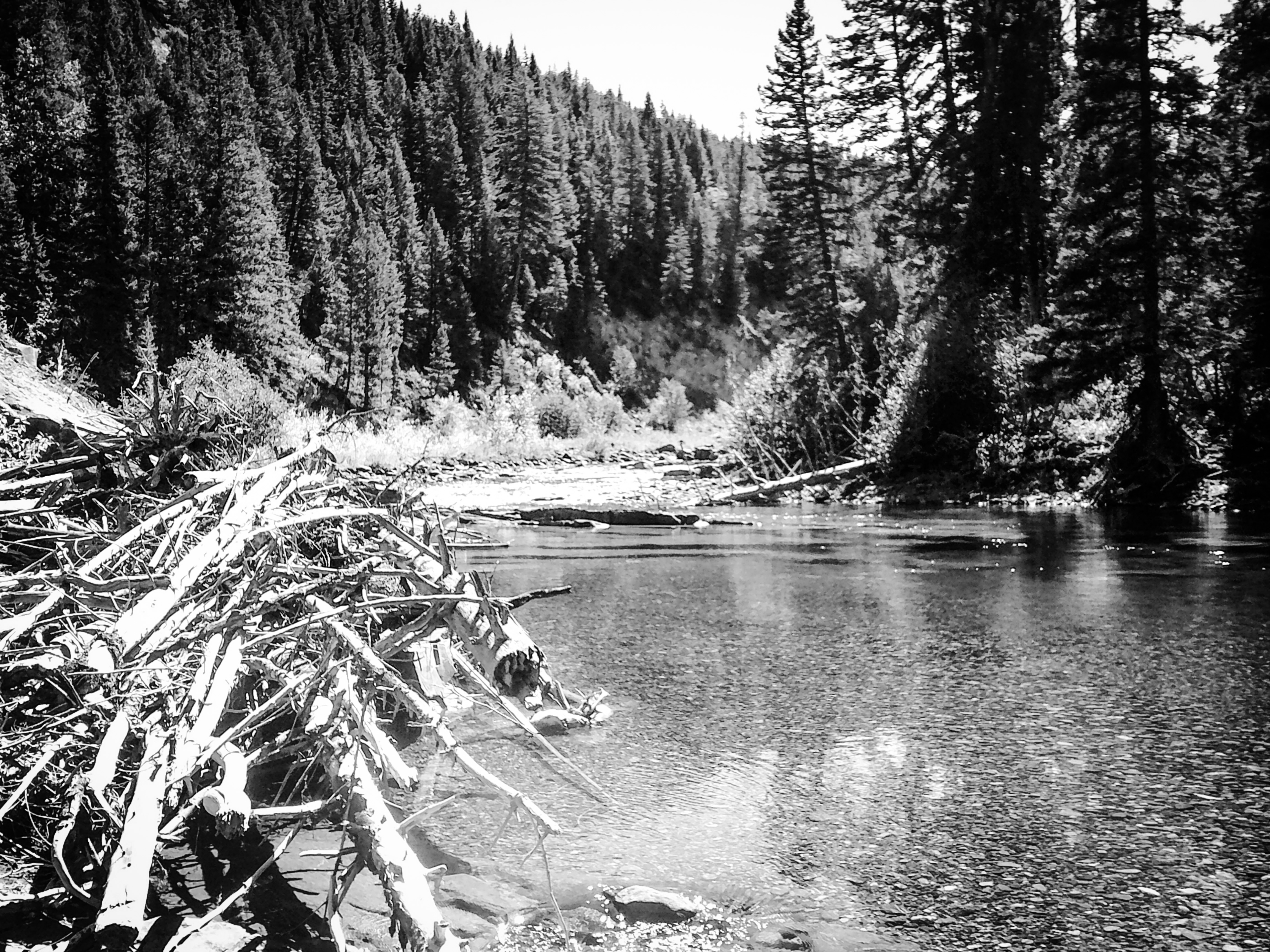
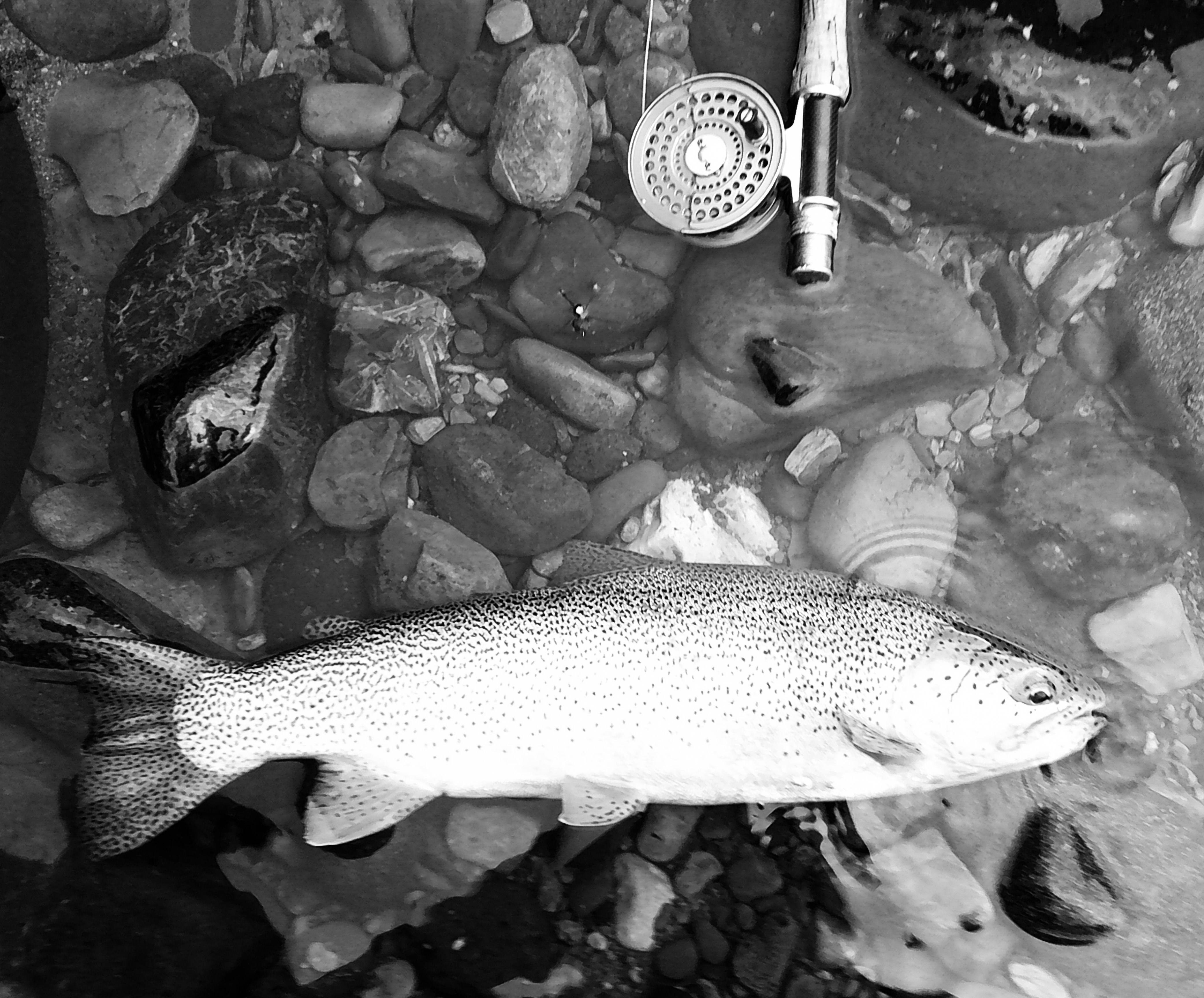
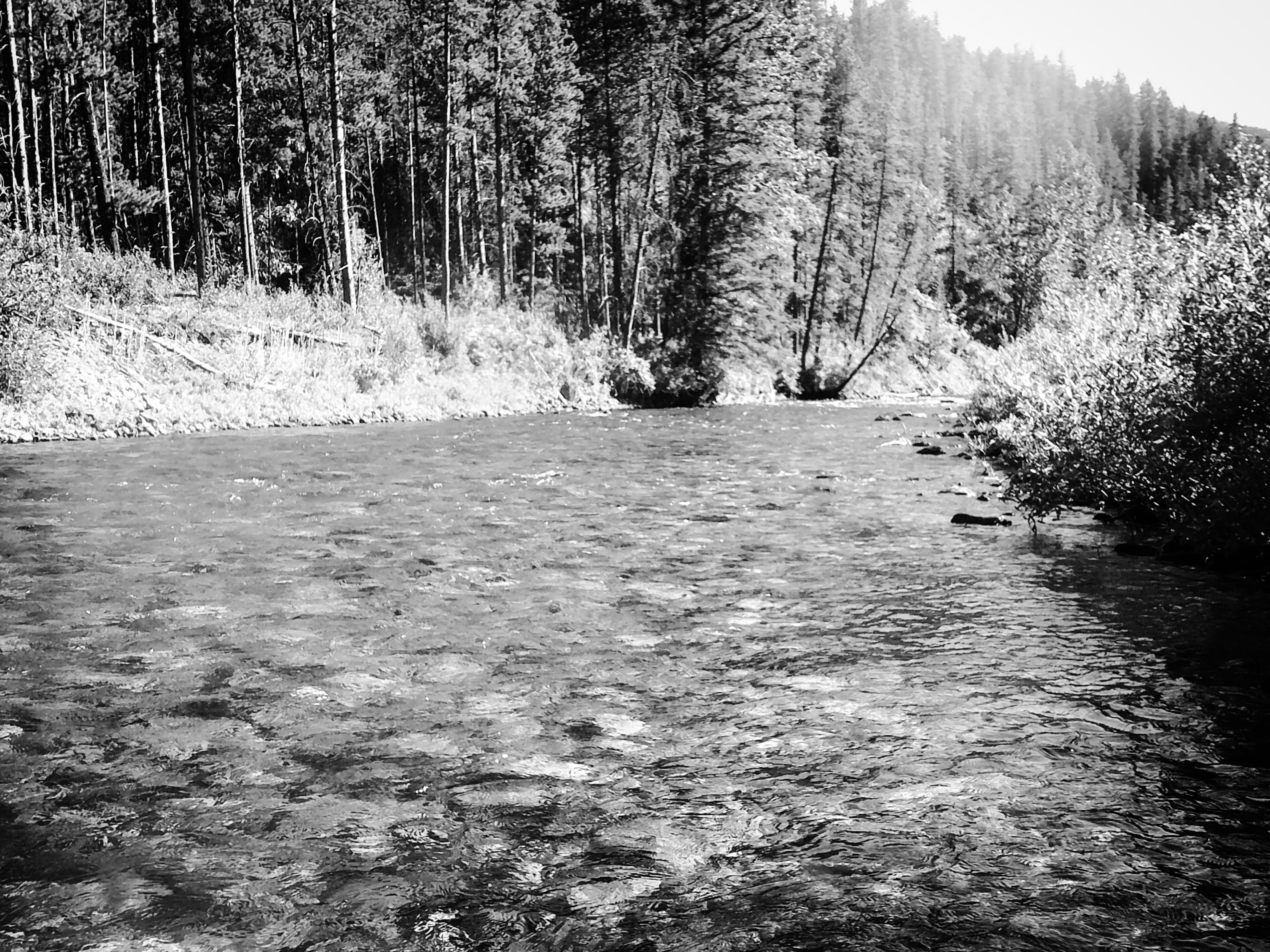
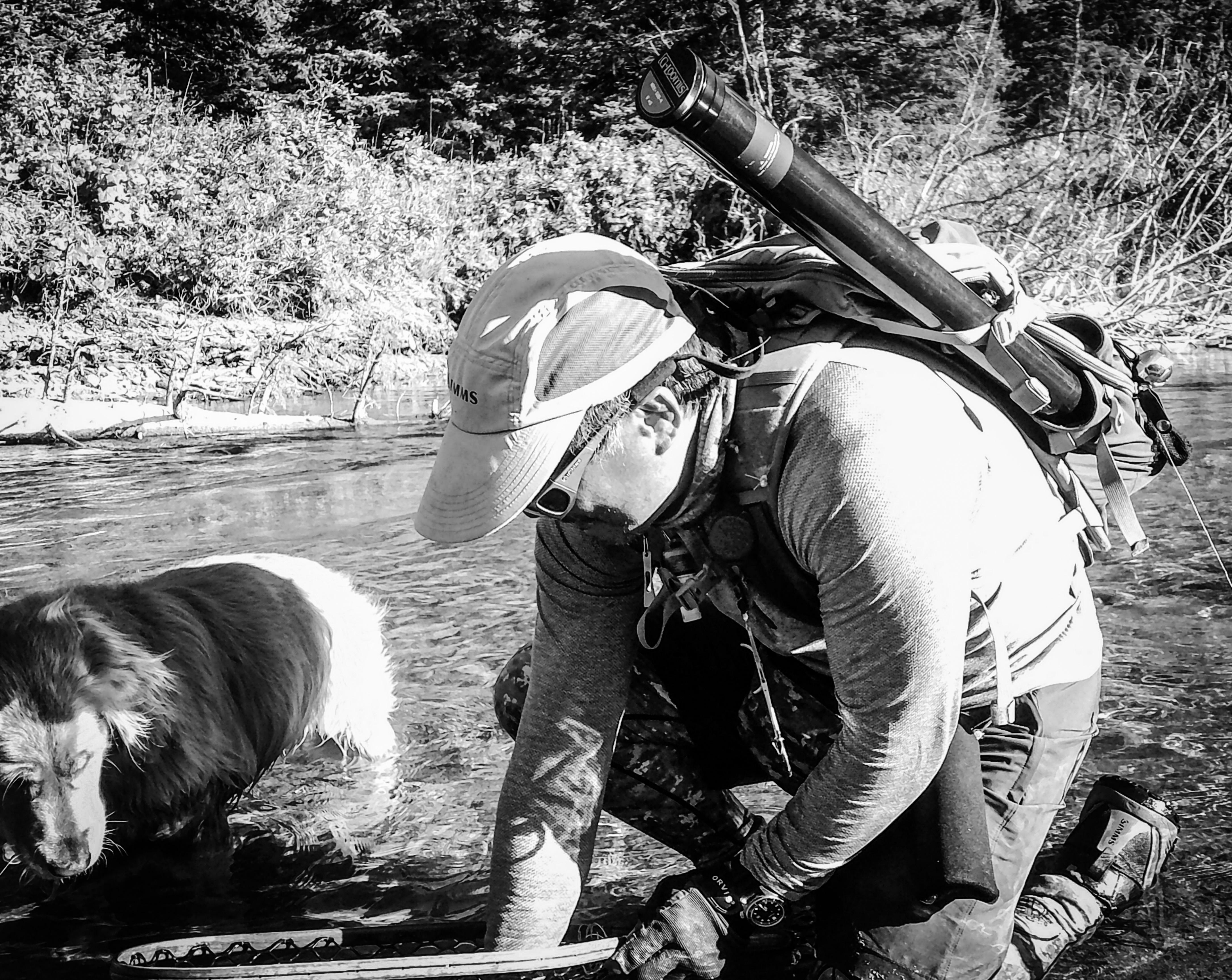
Some say Cutthroats are easy. Sometimes that’s true. Sometimes, however, they are as hard and challenging as any other trout. Here are some photos from our four days of walking clear water in pursuit of this beautiful trout. All Cutthroats were taken on dries. All released…
.







Early August. There is smoke in the air some days. Fires are burning west and southwest of us. Seems that’s a given every Summer. The ground is dry. Rivers are low. The wind is warm. Cloths dry quickly outdoors on the line. My dog is panting a lot. I add a bit of powdered Gatorade to my water bottles when I head out for a day of angling due to the heat.
The Cutthroat streams are fishing well. I need to visit them more often. They are cool and clear, and the trout willing. The tailwater rivers that I frequent have been challenging. Generally poor hatches in comparison to past seasons and therefore often not a lot of opportunity at least until the end of the day, sometimes not even then. If you spot a good trout you want to make it count as there might not be another chance.
I’ve had several fine fish eat my small impressions lately but no hook up. A tiny hook can catch or sometimes simply slip out of a big mouth. That’s all part of the small fly game. Hopefully things will balance out by the end of the angling season.
The past few weeks I’ve walked a number of rivers. Here are some photos. I’m still getting accustomed to a new camera and at times experiencing some framing problems…


The third week of July. Hot. Summer has finally arrived. It took forever to get here. I took a brief road trip to a river out on the Plains. Very few bugs were on the water. Usually insect life is much more prolific at this time of year. Often Pmd’s pop all summer long. And waves of caddis. Not this year. Finding fish was challenging in the somewhat lifeless, bugless looking water. A couple of trout were eventually spotted after hiking and watching several pools in the bright light. One was a brown trout which surprisingly surfaced in shallow moving water to a size 18 emerger pattern in full mid-day sun.


Some photos from the half day outing. Several windshield shots of the road trip to and from the river…


“Imitation is the sincerest form of flattery”
RAIN. A LOT OF IT in the past two days. The rivers were starting to drop but now they are pumped-up again. High fast water. Most rivers can’t be crossed.

When the forecast calls for heavy skies and rain I always try to head to one of my favorite rivers, especially if it’s not going to be too windy. My best brown trout of the year usually come in these conditions. They show-up in low light as long as there are insects around. You just have to be there and watch the water, even high water.

On both days I got drenched and my soaked camera started malfunctioning. It’s waterproof but old and has many cracks in it and the battery/SD card door doesn’t always close properly. Water got inside. On the way home I was able to dry the SD card on the car dashboard with the heat on high. I managed to save it. The camera, however, I could not. Time for a new one.

There were mayflies around: olives and a few pmd’s. I prospected the slow shallows with a beetle pattern early in the day. Then I fished a size 18 Mole fly when I started seeing some surface disturbances. It’s a simple shuttlecock style pattern by Charlie Craven, a professional fly tyer. He ties his with a CDC wing. Due to the heavy rain I tied mine with polypropylene and some with deer hair, or a combination of both.
A blogger/angler I follow (Jim) often fishes the Mole pattern and that’s were I first took notice of it. I pay attention to his fly selections as he visits some of the most challenging tailwater rivers and spring creeks anywhere and consistently catches impressive trout on dry flies. Check him out at: http://jims-wanderings.blogspot.com

When my casts were on target trout ate the Mole fly without hesitation.

Here are some photos. Some are blurry due to the conditions.


