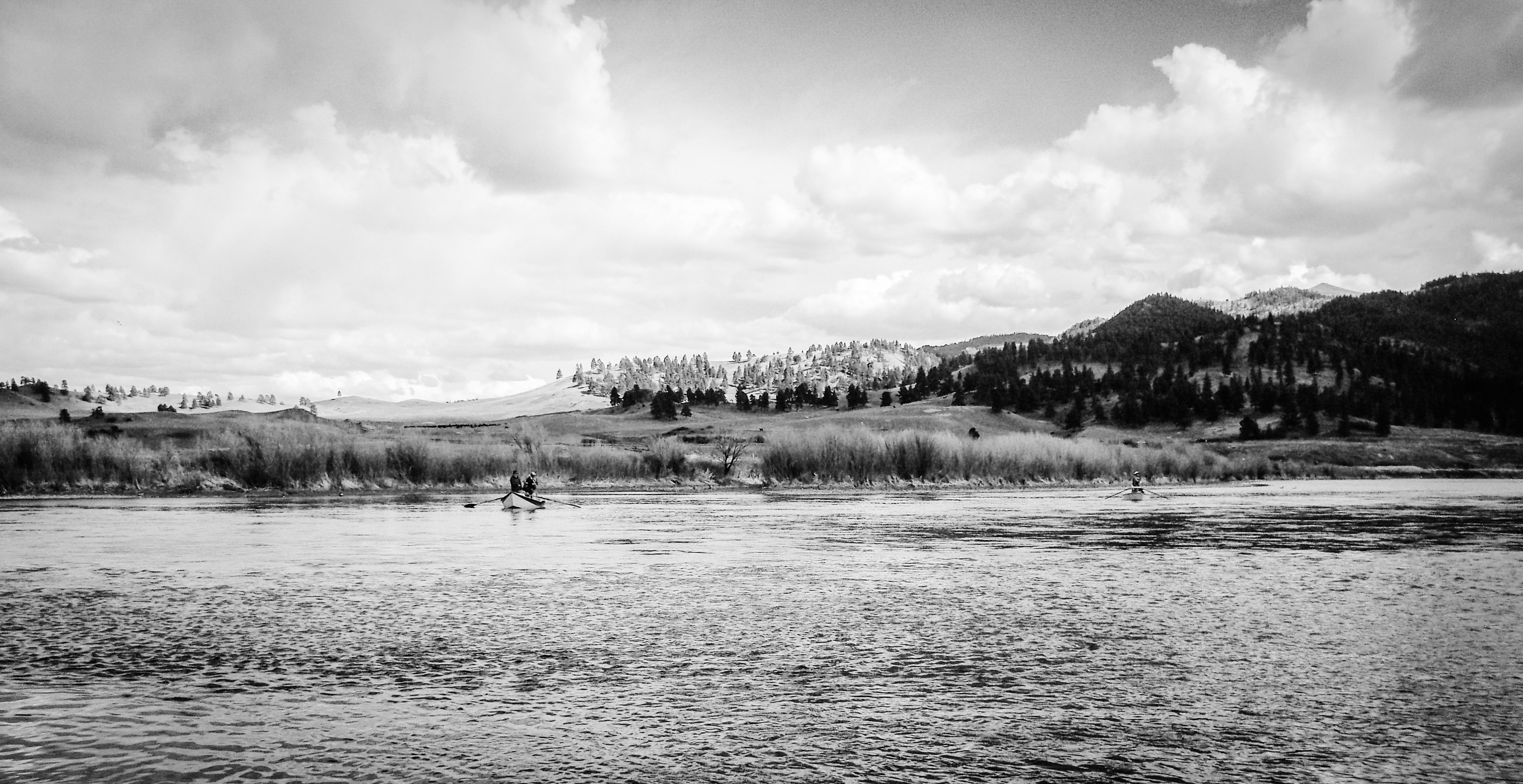
Most local rivers are still high but subsiding. We are in the tail end of run off. I visited two rivers recently. One that was low (controlled flow) and one fairly fast and high. I walked a lot and found a few nice fish rising. Hatches are starting. I saw some pmds mid-afternoon when things warmed-up; some small (yellow and lime sallies) and larger caddis; a few small western green drakes (flavs); some golden stones…
It was much warmer three hours south of home. Almost Summer-like for a day or two. Even some classic warm weather thunderstorms. It was also greener. There were blossoms. There were Pale Morning Duns (pmd’s) on the river I was on; another sign of approaching summer. There were Olives. There were Midges. There were Callibaetis in a slow (lake like) section of the river that I spent too much time on. In the evening there were shimmering clouds of size 22, Olive colored mayflies, that behaved like Tricos. Tiny olive spinners? I don’t know. After a long day I was too tired to inspect them closely. Suffice it to say, there were plenty of bugs around from morning until nightfall.
slow flat water, always challenging
rainbow
The Pmd’s were small, size 18, but much easier to spot than the Midges and Olives, especially when sunlight touches them and they illuminate.
pmd box
cotton candy series pmds for riffled water
I’ve learnt more about dry fly fishing and trout behavior on this river and one back at home in Alberta, the Crowsnest River, than anywhere else. It’s the combination of prolific insect life, many rising fish, and clear water that allows you to observe the reaction of every single trout targeted. You cast, watch and learn. You are constantly getting feedback. The amount of feedback condensed into a single day on this type of water is like a whole season of learning on some other, less insect rich, rivers.
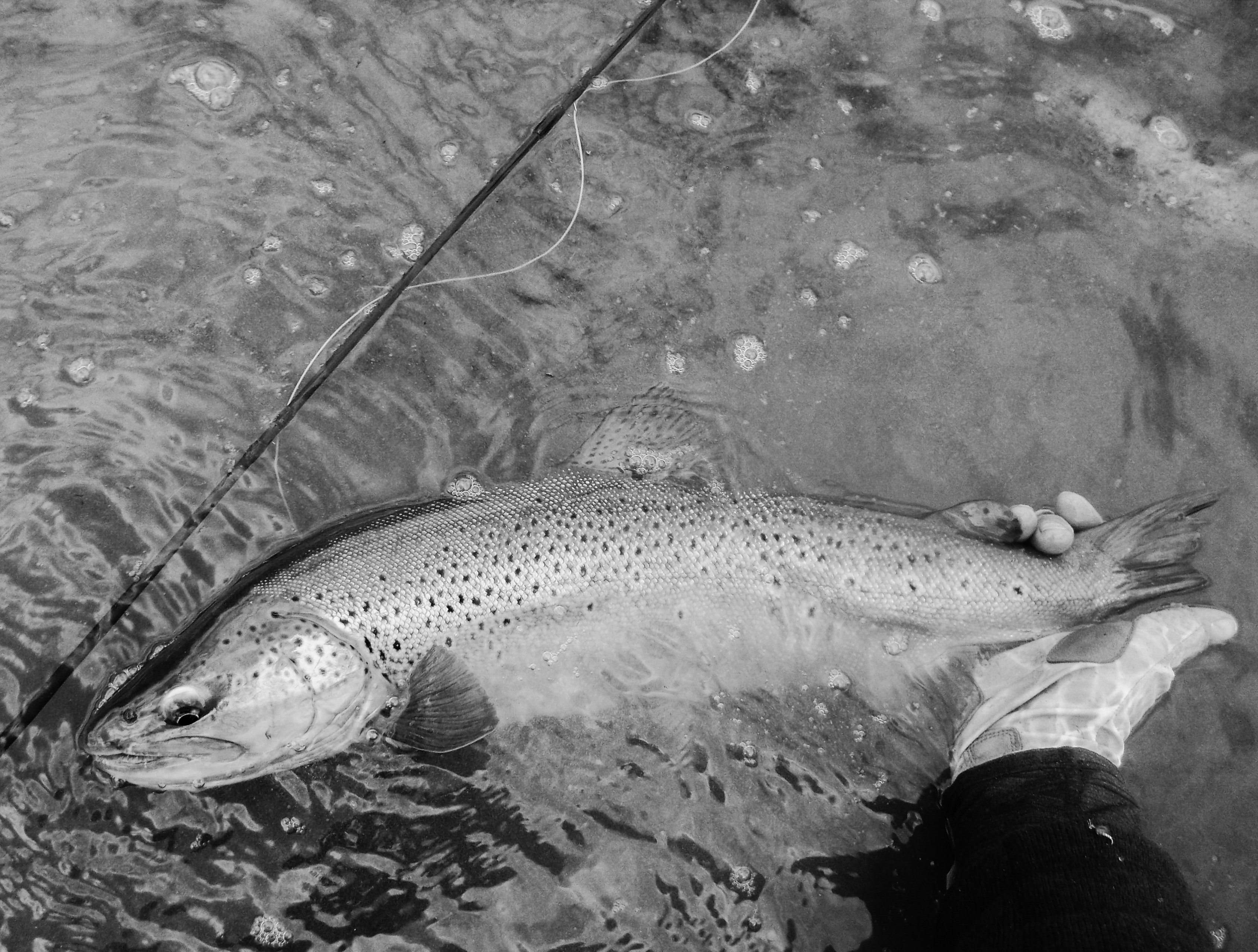
brown trout
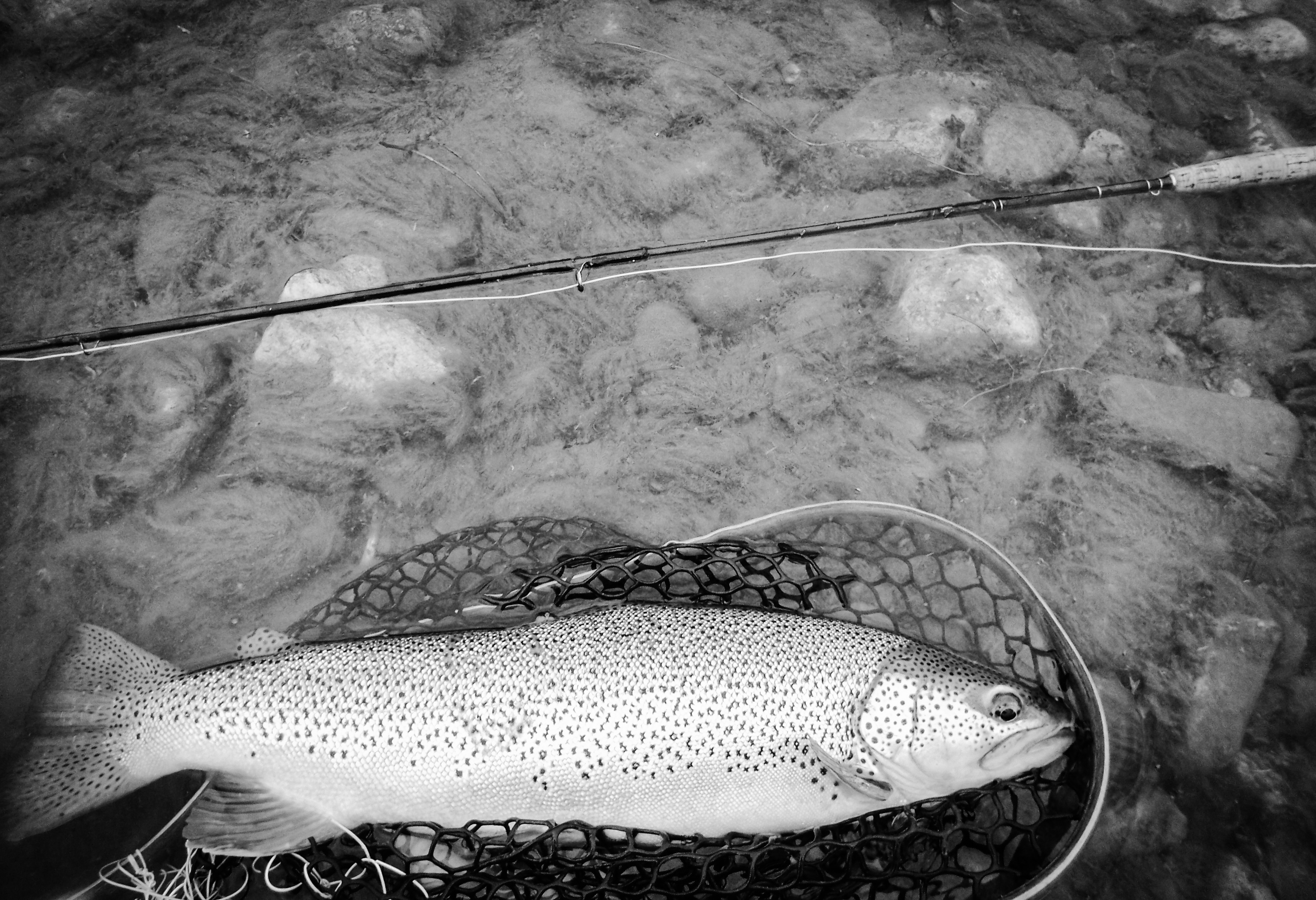
rainbow
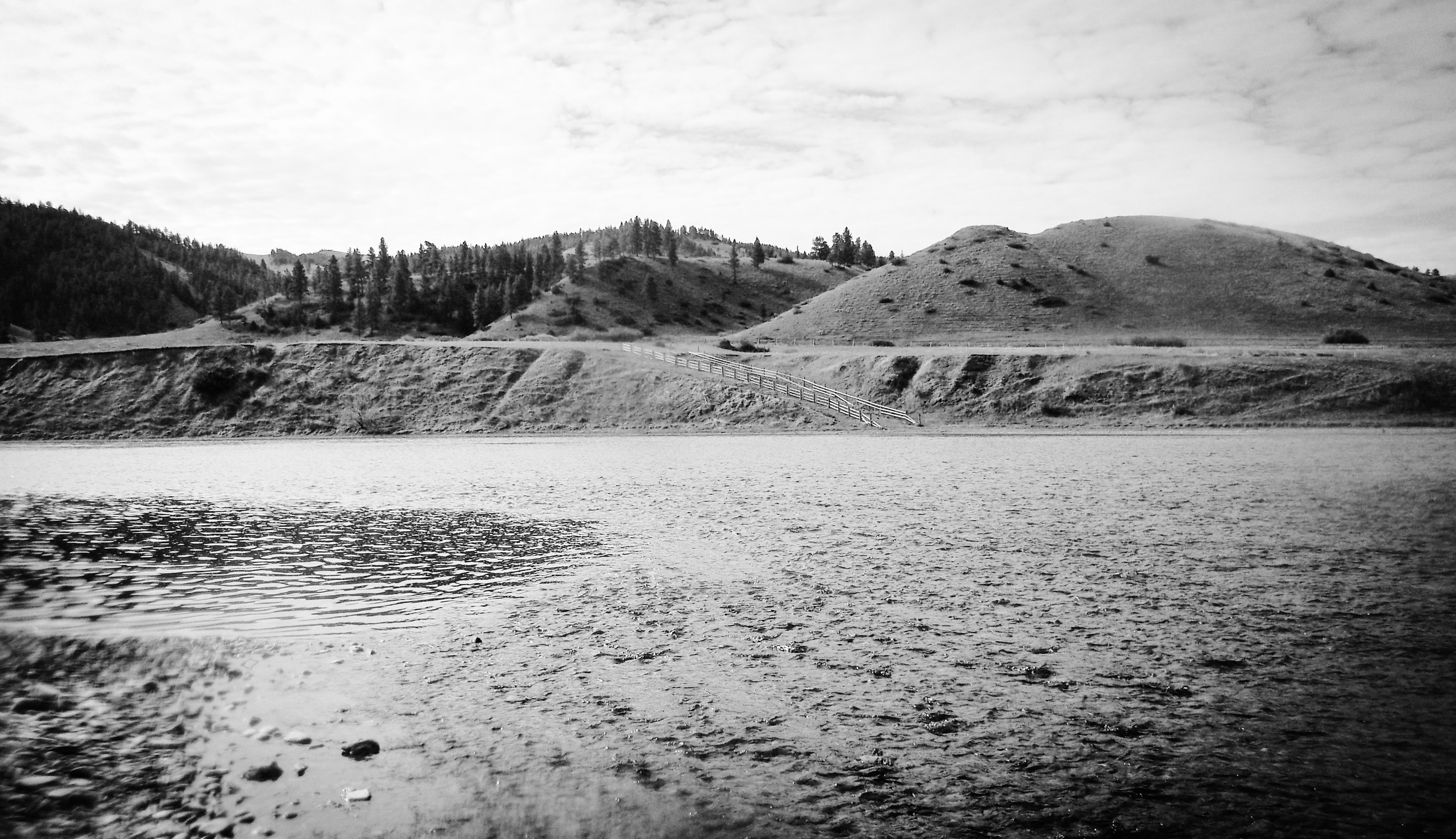
river in distance
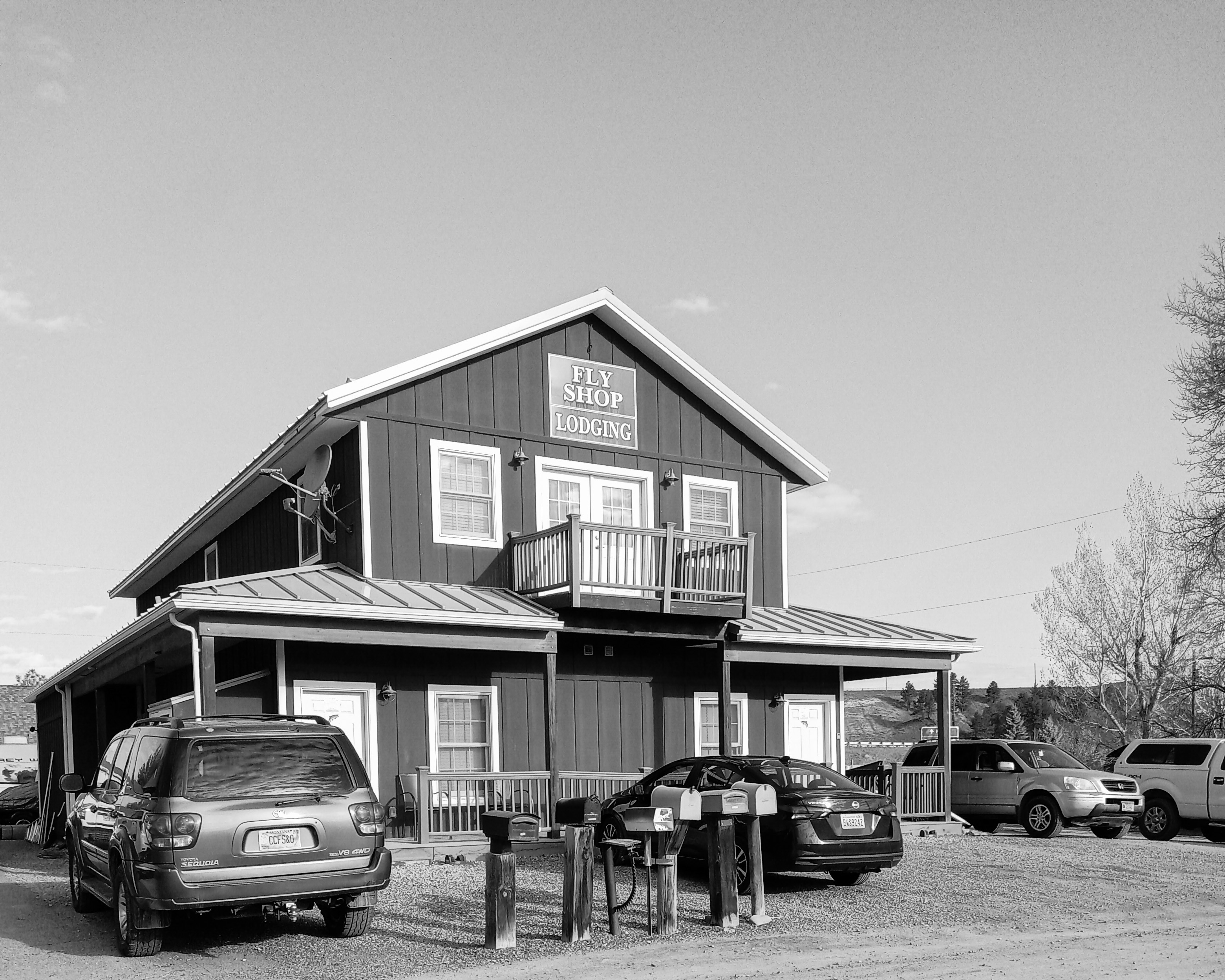
I camped near Wolf Creek. In the mornings I visited the On the Fly Coffee cabana for a breakfast burrito and a coffee. Then I went to the aptly named Wolf Creek Angler Fly Shop. It’s a great little shop. In the past I’ve stayed in some of their cabins. It’s decent lodging and a reasonable price for the region. The Shop changed hands several years ago. Author Neale Streeks used to guide there and might have been a co-owner. If my memory serves me correctly it was called Montana River Outfitters then. One of his books, Small fly Adventures in the West– Angling for Larger Trout, is an excellent resource for fishing tailwater rivers. I read it from cover to cover several times over 20 years ago when I first started visiting the river having mainly fished small freestone rivers in the east. I still refer to it today. It made me a better angler on tailwater rivers, spring creeks and other rich rivers, which I gravitate towards whenever I get the chance.
wolf creek eatery, tavern
don’t mess with shotgun annie
Here are more scenes from Wolf Creek and this road trip….
SOME IMAGES FROM ANOTHER BRIEF ROAD TRIP SOUTH. I focused on a river section where I’ve had some of the best small dry fly fishing that I’ve experienced anywhere. It’s a shallow flat water section on a large river. In the Spring and Fall often there are midges in the morning, olives in the afternoon, then sometimes midges again late in the day. Insect life, a fairly calm day and low light conditions can bring out some fine brown trout. I hit it right on this road trip. On most days the weather was cooperative, and the small hooks (size 18 and 20) and fine tippet held.
flat water
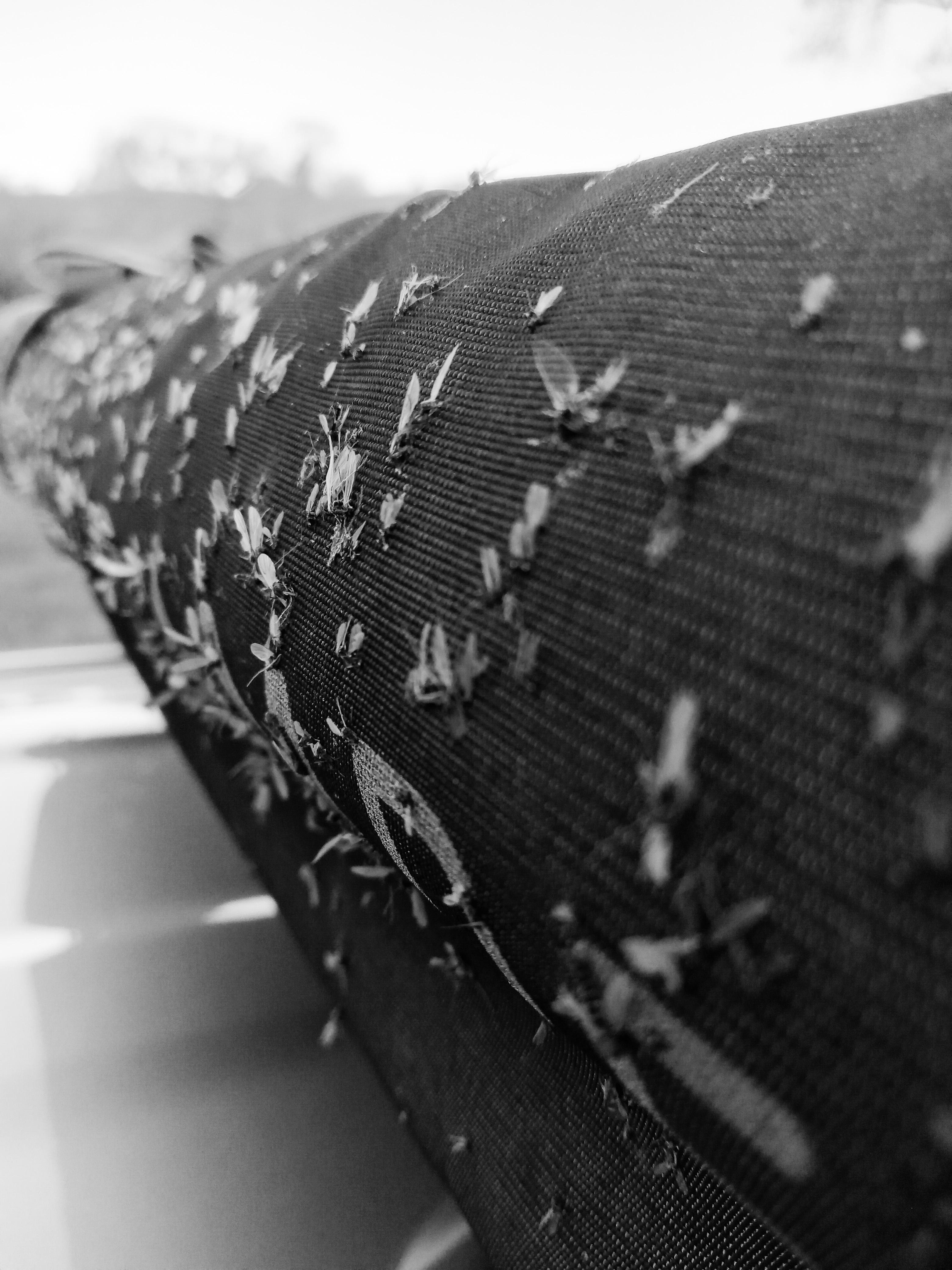
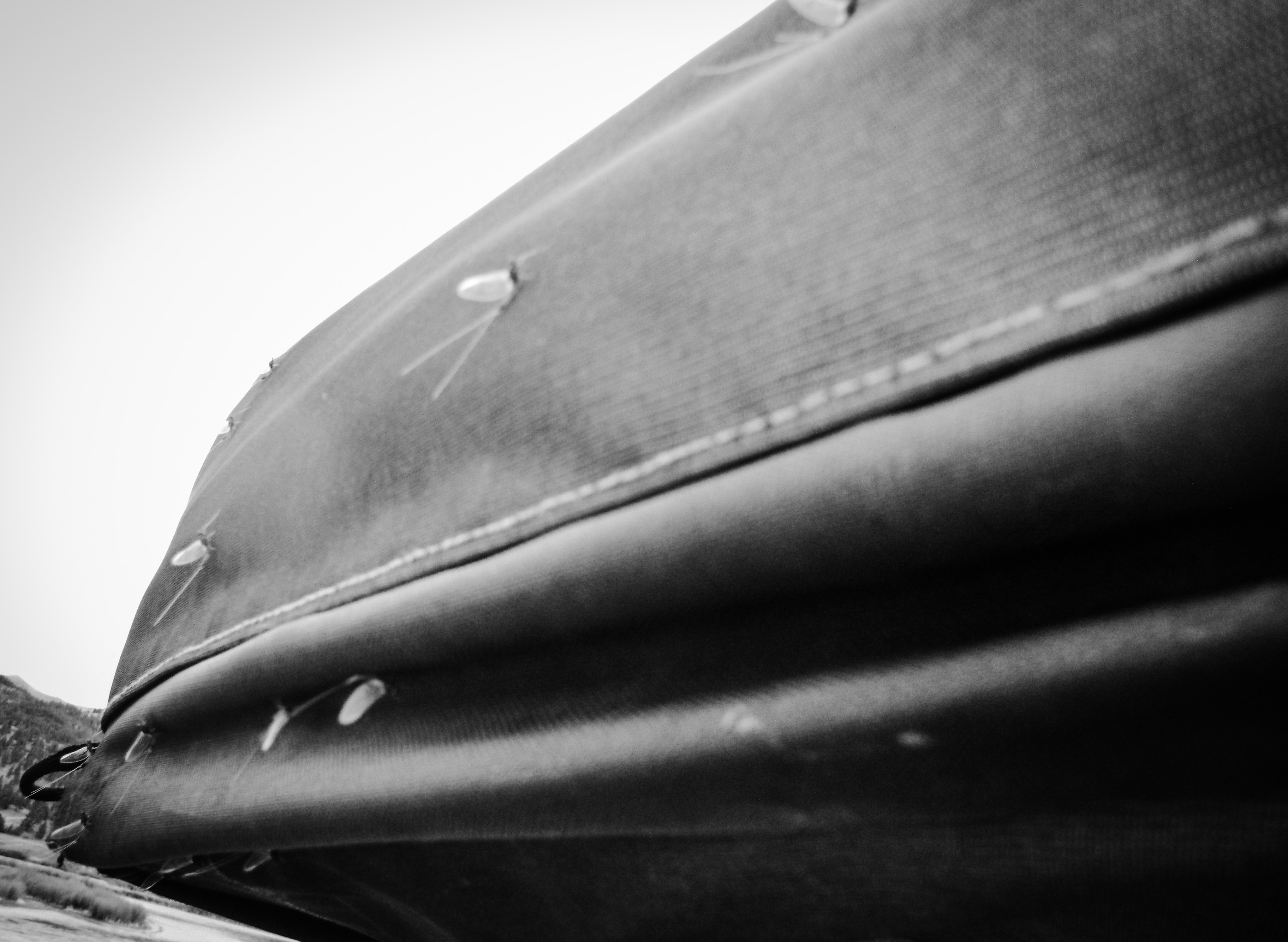
midges on tent, riverside
olive spinners
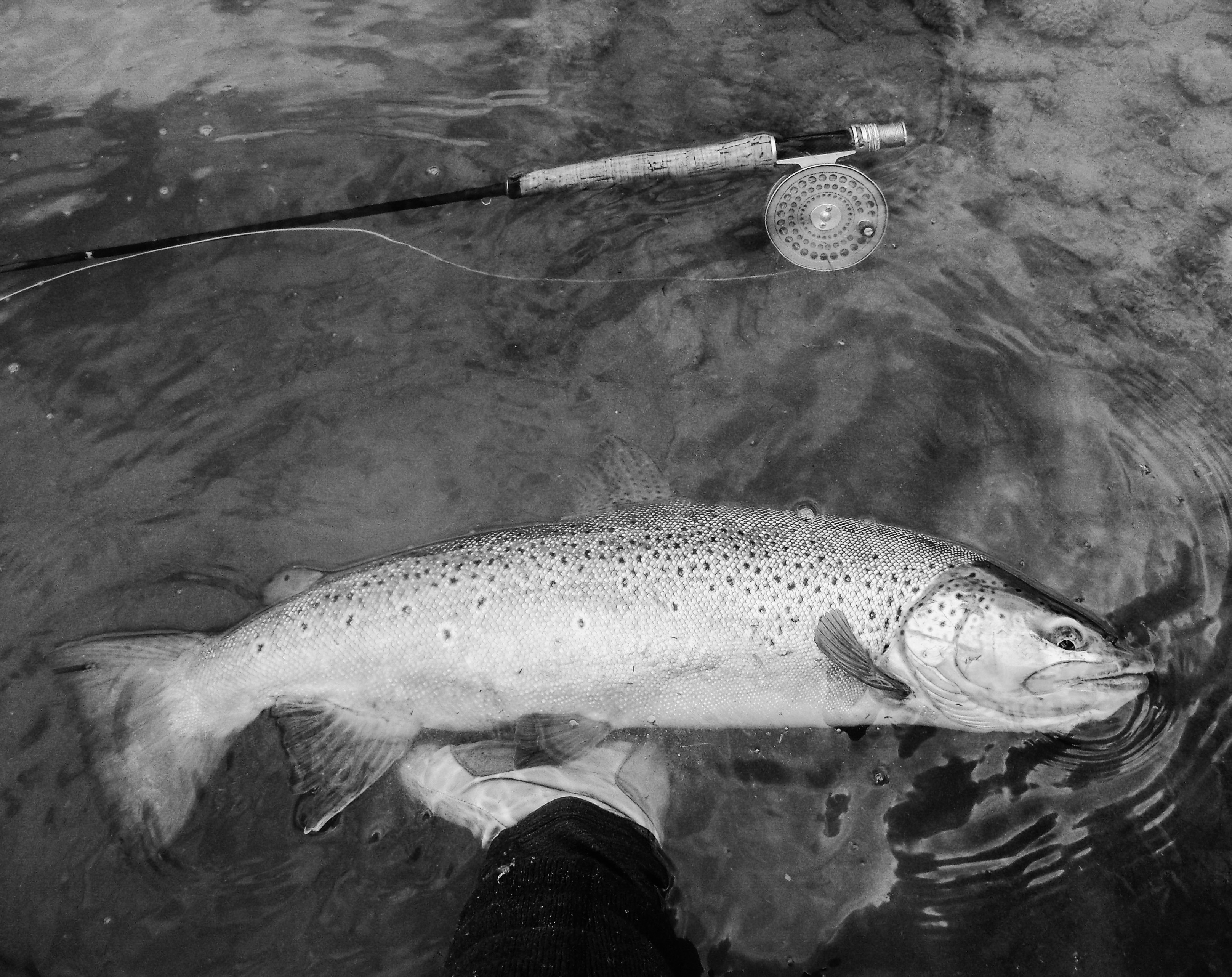
brown trout
brown trout
size 18, bwo fly, hacklestacker
size 20 midge dry, fooled largest brown trout
brown trout
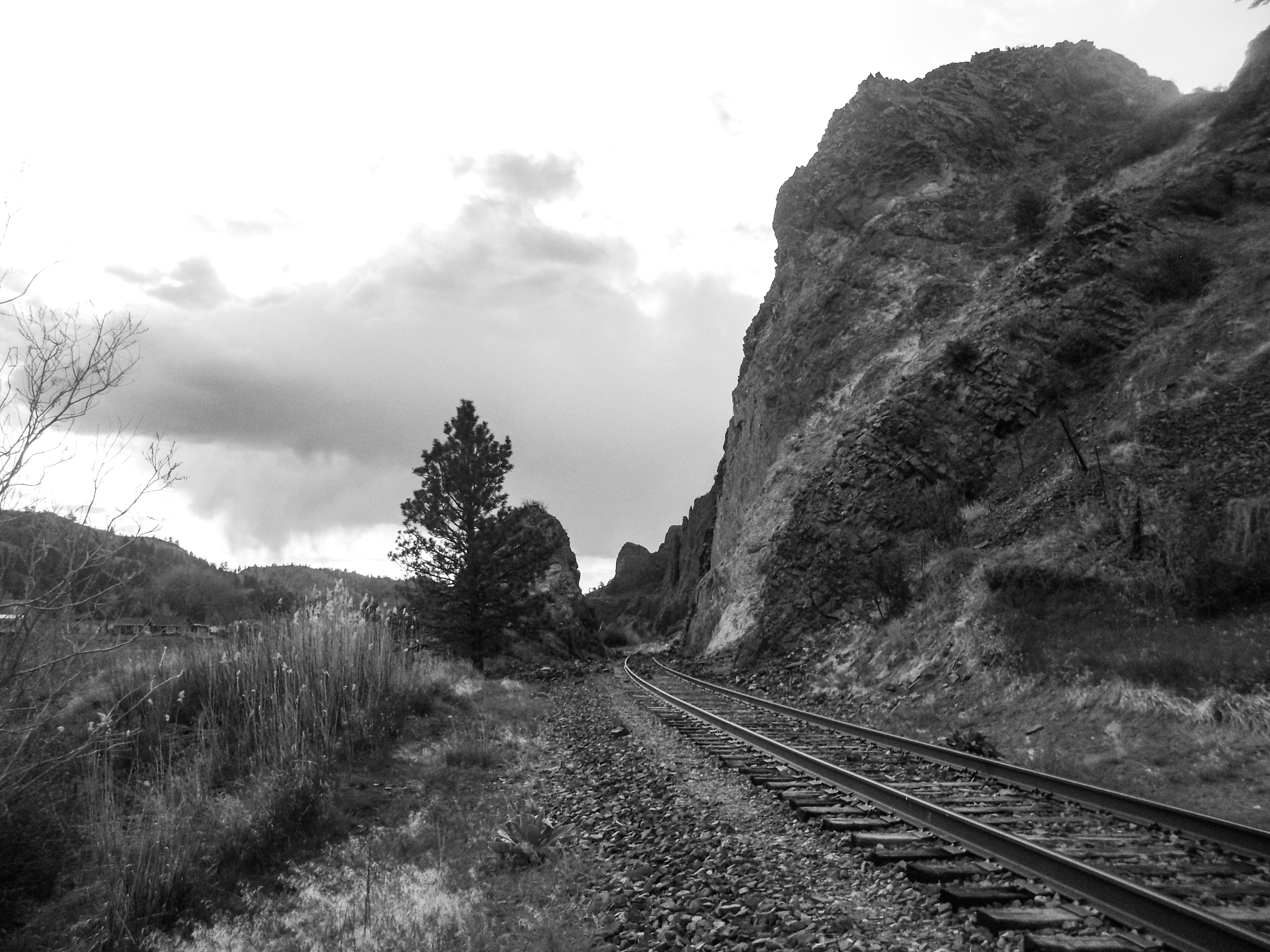
unused railway tracks great path to river sections
” ALL OTHER COLORS are reflections of light, except black. Black is the absence of light”.
I recently spent a few days fishing a large wide tailwater river. Most of the time the water’s surface was a silvery-grey due to glare. It looked like the element: Mercury. Many trout were feeding on tiny BWO emergers and bulging in the riffles. The wind was also constantly blowing which further ruffled the river’s surface. All of these conditions (glare, riffles, wind blown water) made seeing a small size 18 fly impossible, even when relatively short casts were made. Deer hair winged emerger patterns and comparaduns didn’t show-up. Same with a parachute pattern tied with a white post. Hackled flies also pulled a Houdini on me (vanished). Hi Vis orange post flies also couldn’t be seen. Hi Vis ended up being No Vis!
The secret to success on the insect rich river that I was on is to consistently place your fly right in front of a selected feeding trout as there are thousands of naturals (insects) drifting towards it and the fish isn’t going to move any distance to eat your fly. Your impression has to be right on target. It is all about accuracy. And in order to be on target you need to see your fly.
The only fly that showed up in the aforementioned challenging conditions was one with a black post or a black wing. And I found that the flies that I had tied with a very exaggerated, robust tuft of black obviously showed best in the silvery-grey, ruffled water.
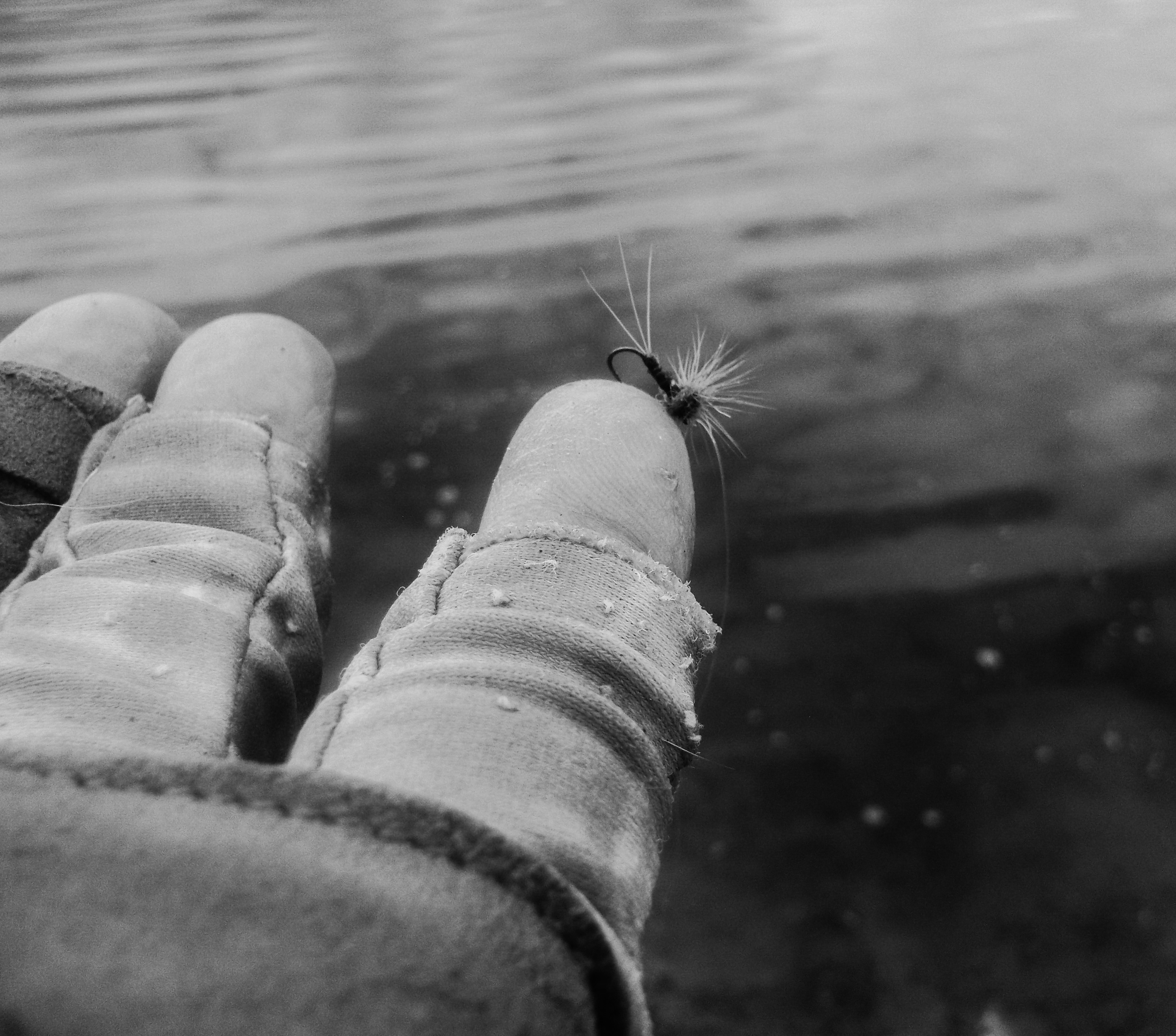
Many of my favorite trout rivers are wide and flow in open terrain under a big western sky. These conditions give birth to glare which is a serious hinderance to seeing a small fly. One third of the flies in my boxes have black material incorporated onto them in the form of a post, a wing, etc. In the flies below (photo) I used black polypropylene. In some other flies I’ll use black cdc or comparadun deer hair which has been dyed black. The key is something dark; a dark beacon.
Sometimes you can see your fly better by changing your positioning to a fish on a river. However, this is not always possible. Some people fish a two fly rig with one fly being much larger than what is hatching. The large fly is used as a sight and strike indicator to help an angler spot or at least hone in on the approximate location of the small fly. Even large flies, however, tossed some distance on silvery-grey wide open water tend to disappear. Also two fly rigs in windy conditions often get tangled, at least mine do. I always prefer casting a single fly. I simply cast and fish better with one fly.
Trout that are feeding aggressively on a dense hatch don’t seem to notice the color of a post or wing. The size of the fly, its attitude/positioning in the water (on top, in the film, or dangling below) and a natural drift (presentation) are much more important, as is casting accuracy and being a stealthy angler. You want the body color of the fly to be somewhat similar to the naturals but the wing color is less important.
Black polypropylene is inexpensive and with one package you will be able to tie hundreds of flies.
Here are some small size 18 parachutes tied with a black post…
Cold at home. In fact snow hit the ground. So I headed south across the border to a Trout Town on a wide tailwater river. The weather was slightly better but still behind schedule for May. Most days it was fairly cool. My dog’s water bowl was frozen most mornings.
I camped in a section called Mid-Canyon to try an avoid the ever present wind. The dry fly fishing was for the most part poor. I rarely saw a head/nose break the surface in spite of some good hatches. Most surface disturbances were trout displacing water when feeding on emergers an inch or two below: BWO’s. I still managed to catch several on dries: Klinkhammers and Parachutes while sight fishing.
There were no sipping trout on the banks or even in collector areas, or on the flats. And there were few fish feeding in some of my favorite side channels. The water was as low as I have ever seen it. That’s a ongoing condition out West. There was high wind and a lot of sun. Not the best conditions to find large rising trout.
side channel
Trout would bulge (emerger feeding) in the riffles when clouds rolled in, then disappeared when direct sun light returned. It was a yo yo (fish up, fish down) event on days with a mix of sun and cloud. Fun to watch as it became so predictable.
SPRING. It has been slow in coming. Insect activity has also been slow to develop. Hatches have been weak. I haven’t been able to check river temperatures as my thermometer was tucked in a shirt pocket and went through a Wash and Spin cycle. It’s certainly clean now and shiny looking but unfortunately it is stuck at 10c. Not a bad temperature but inaccurate at this time of year. The water is much colder. Warmer weather and water will bring out the bugs and trout.
On cloudy days I’ve seen some midges, some Olives (size 18), March Browns (size12) on one river, and a few Skwala stoneflies. There simply hasn’t been enough bugs to get a lot of the bigger fish “looking up” on the tailwater rivers that I’ve spent some time on. The window of opportunity in my region for quality Spring dry fly angling is brief as just when the fish start to rise, mountain runoff ( high water) begins to threaten. Hopefully a few good days will come. Here are some photos from recent outings. Some early season trout caught on dries…..the start of a new season.
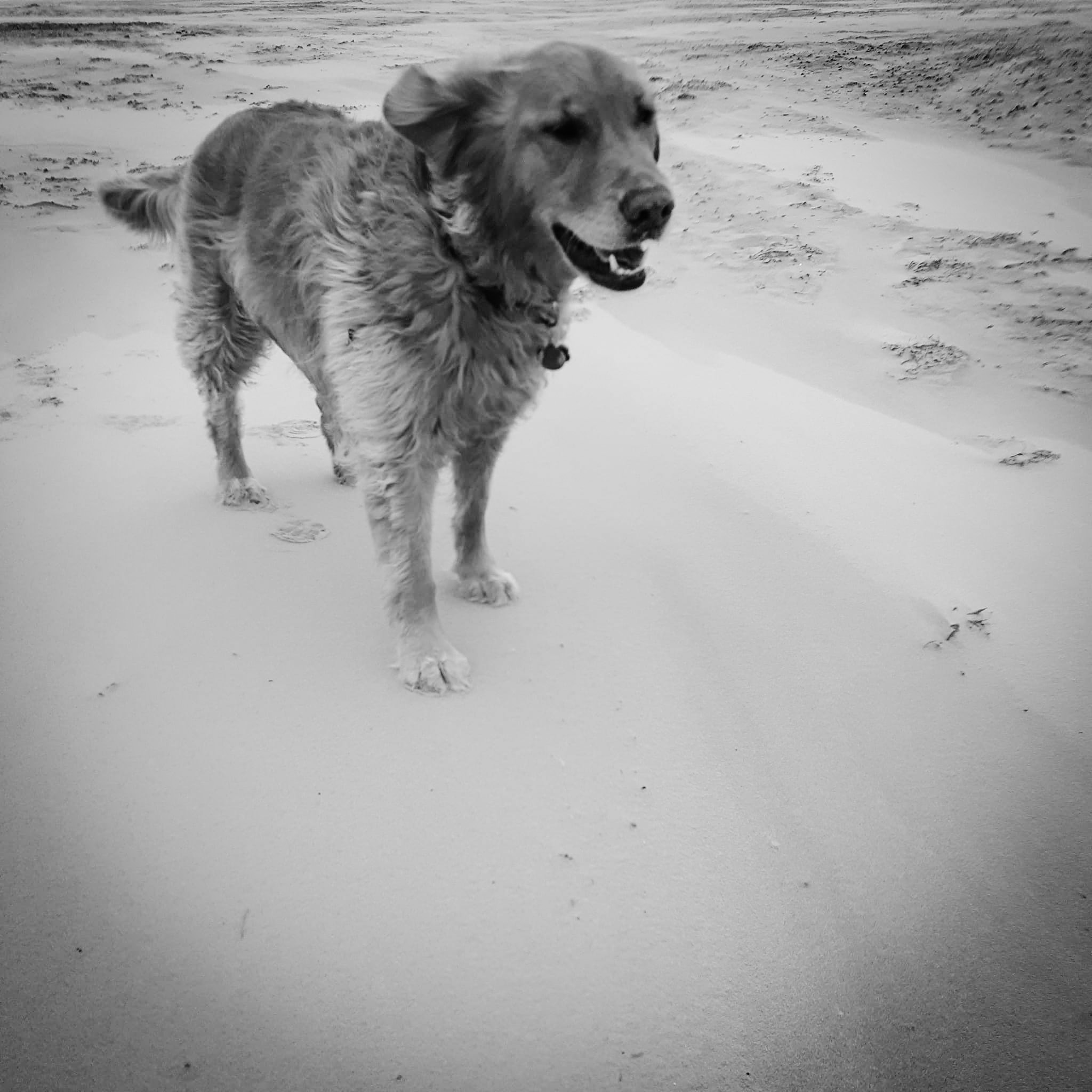
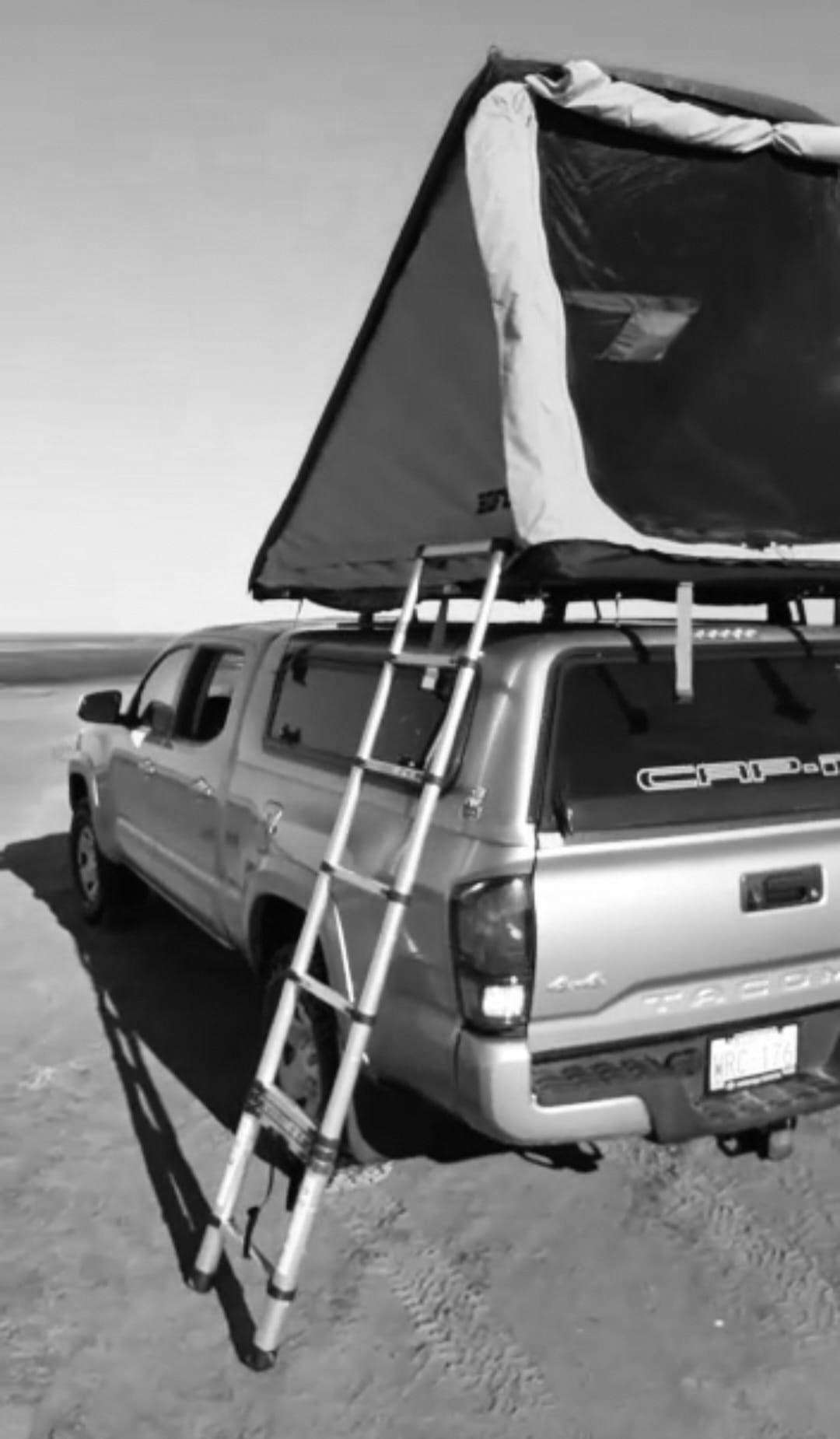
Each night I listen to the surf. I’m camping a mere 60 yards away. Sand dunes separate us. Fireflies hover over the dunes and sea grass on warm nights. I haven’t seen them since I was a child. We used to capture them and place them in clear glass jars. That was a long time ago. They still fascinate me. There is also a chorus of Crickets on warm nights. A soothing sound. Then there’s howling Coyotes during storms which there have been many since I arrived. The Coyotes travel and scavenge the dunes. I saw three together the other day after an violent nighttime storm where the temperature dropped to freezing. They were wet and miserable looking. They eyed me as I drove by. They were big and lean. As big, maybe bigger, than my retriever. I wouldn’t have survived the storm without shelter. Hypothermia would have taken me. They survived. Resilient creatures.
sand flats
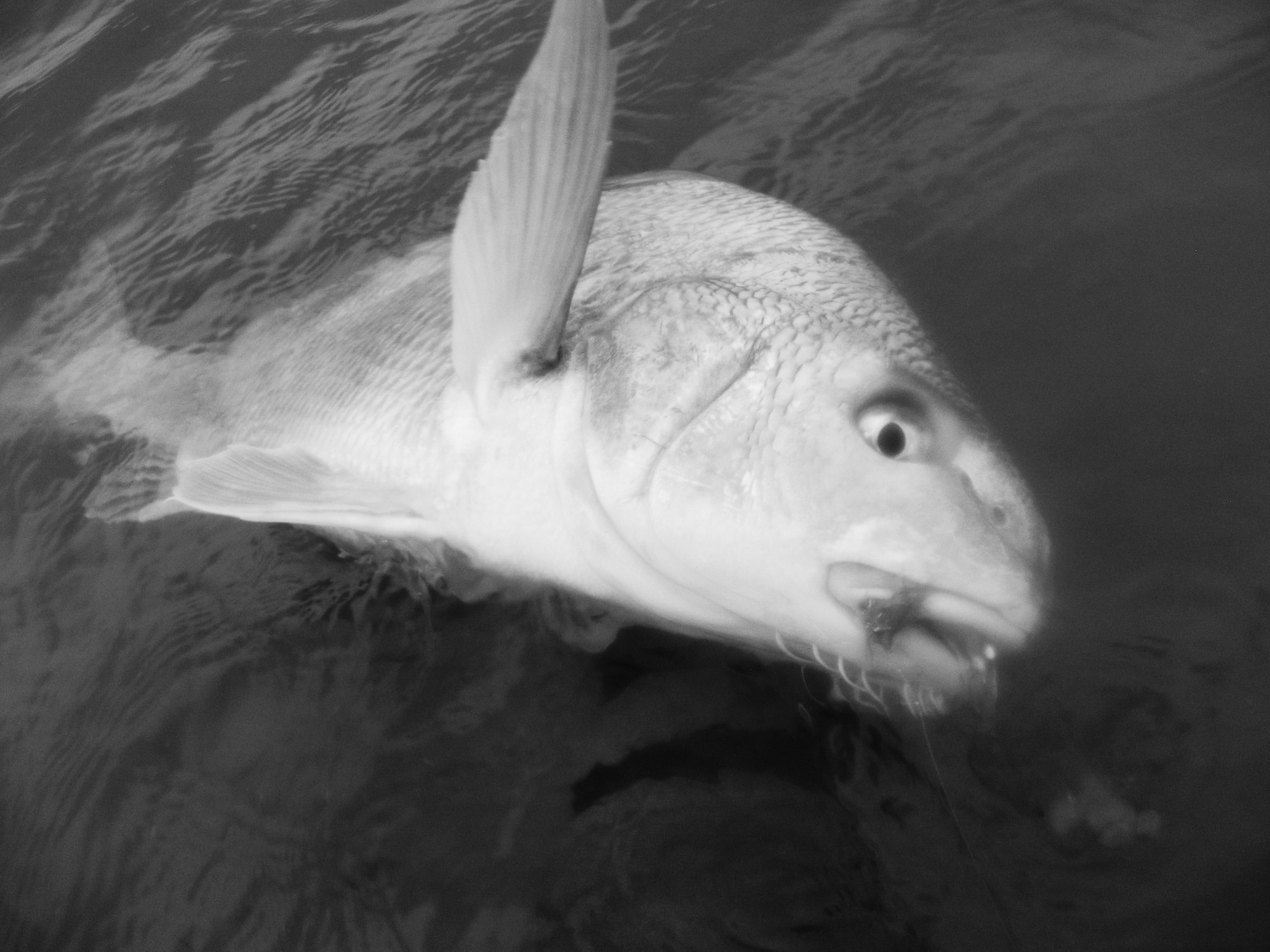
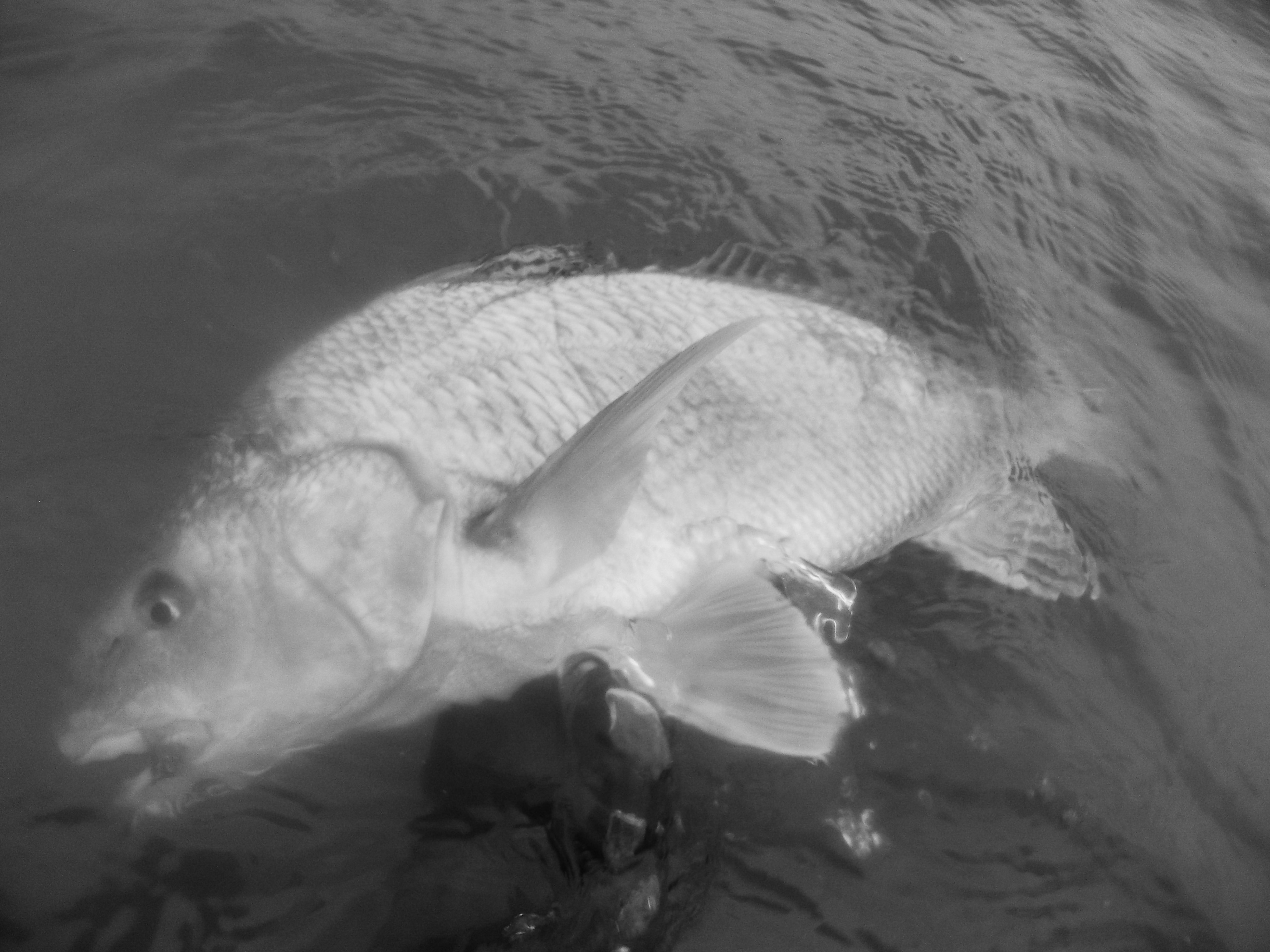
beautiful redfish, caught and released on 5wt
I’m on a barrier island along the Gulf of Mexico. I made the long journey here to fly fish the shallow bayside sand flats for Redfish. The conditions were ideal when I arrived. It was summerlike and calm. I walked the sand flats and spotted a few fish. Some close and some tailing in the distance. Then the weather changed. A series of cold fronts passed through, along with heavy rain and high wind. The storms bent the island Palm trees, flooded low areas and caused Power outages. In between storms there have been some fair days and heat but it is short lived.
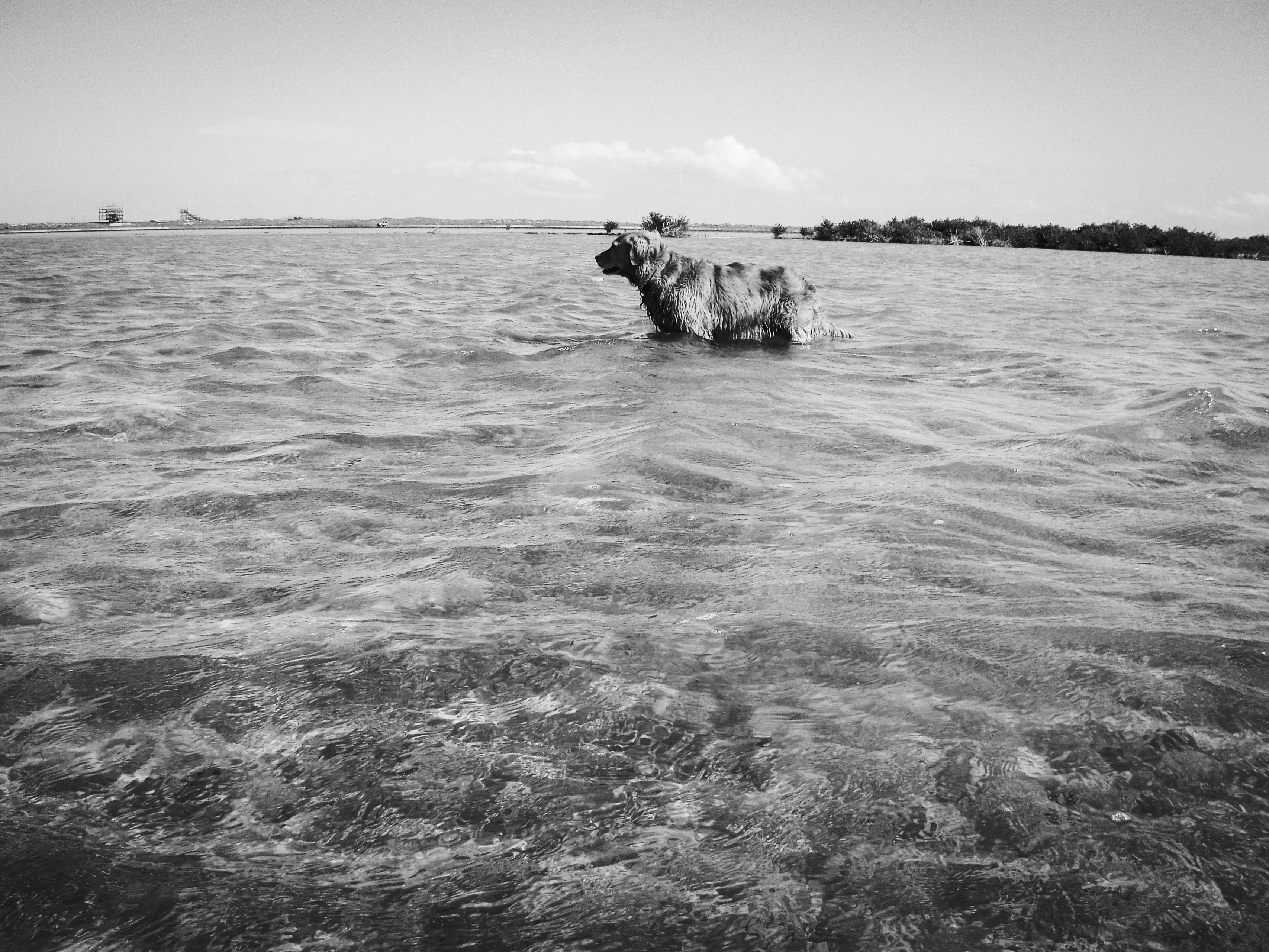
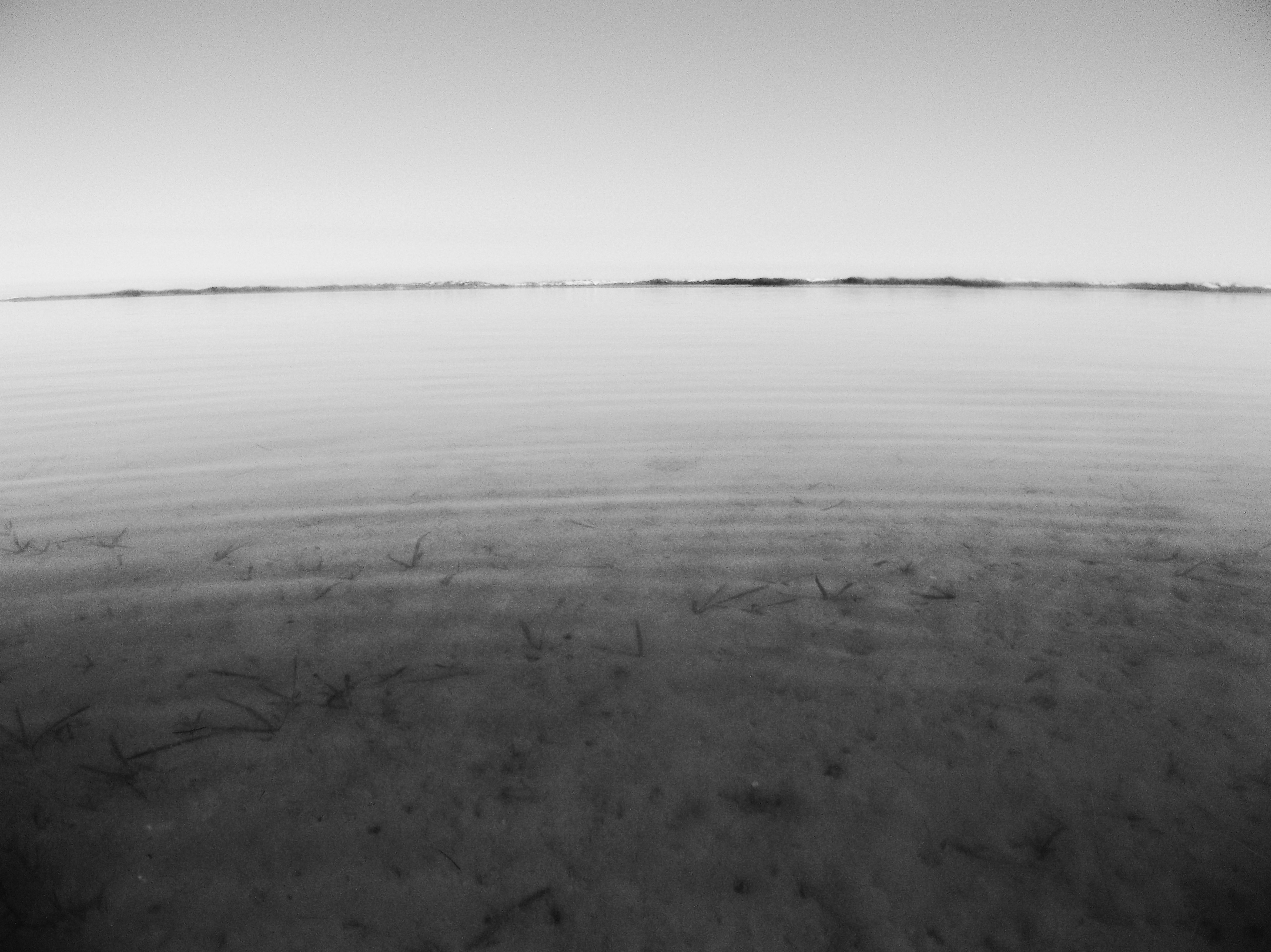
bay was always clear
I’ve been patiently waiting for the weather to stabilize. I’ve been waiting for it to heat up so that the shallow saltwater bay/ Laguna warms. But it’s not happening. I saw Redfish (Red Drum) when the water temperature was in the high 60s, low 70s F. The bay is presently ranging from 43F to 59F. It’s too cold. I go out every day in all conditions and search but the fish have left the sand for deeper more comfortable temperatures. I’ve walked several areas often venturing out a half mile or so but there is no sign of them. I came upon some Black Drum when the cool weather first struck but they also appear to have fled the shallows. A number of consecutive warm weather days are needed to boost the bay temperature and bring the fish back but that’s not happening. The sand flats have become lifeless.
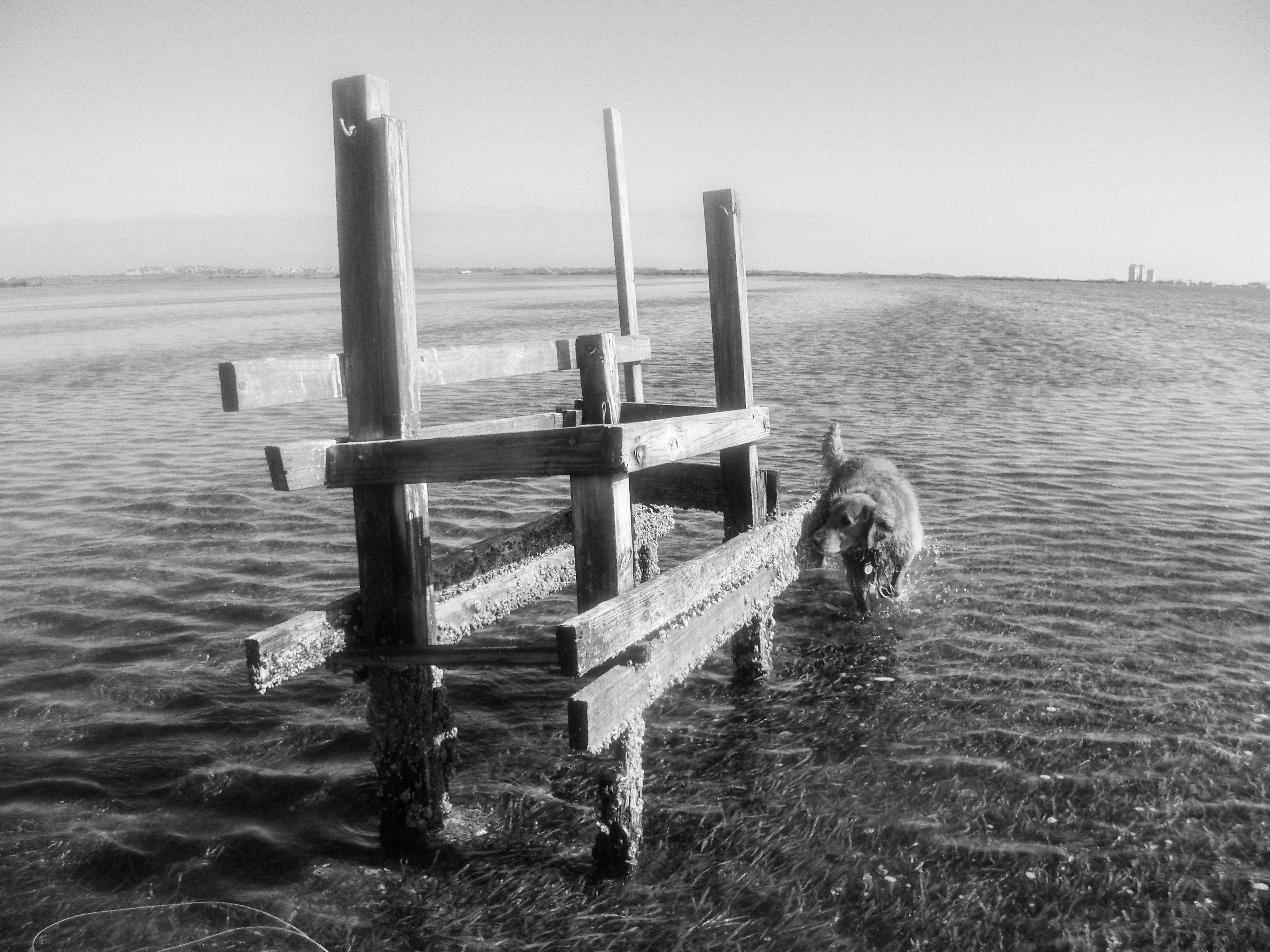
structure far out on flats I called the “chair”
standing on the “chair” watching the flats
I have a few remaining days left before I drive home. I don’t think the Redfish will return before I leave. There is disappointment in that I haven’t seen a fish in awhile and I have to remind myself that early on when the conditions were favorable, I spotted and caught several wonderful saltwater fish in the shallowest of water on a fly rod. On those first few days I witnessed what the sand flats have to offer. I witnessed their potential.
Tonight I’ll listen to the surf and the Crickets, and watch for Fireflies. Maybe I’ll even hear the call of a Coyote.
I’ll return to the barrier island along the Gulf coast and walk the sand flats again…
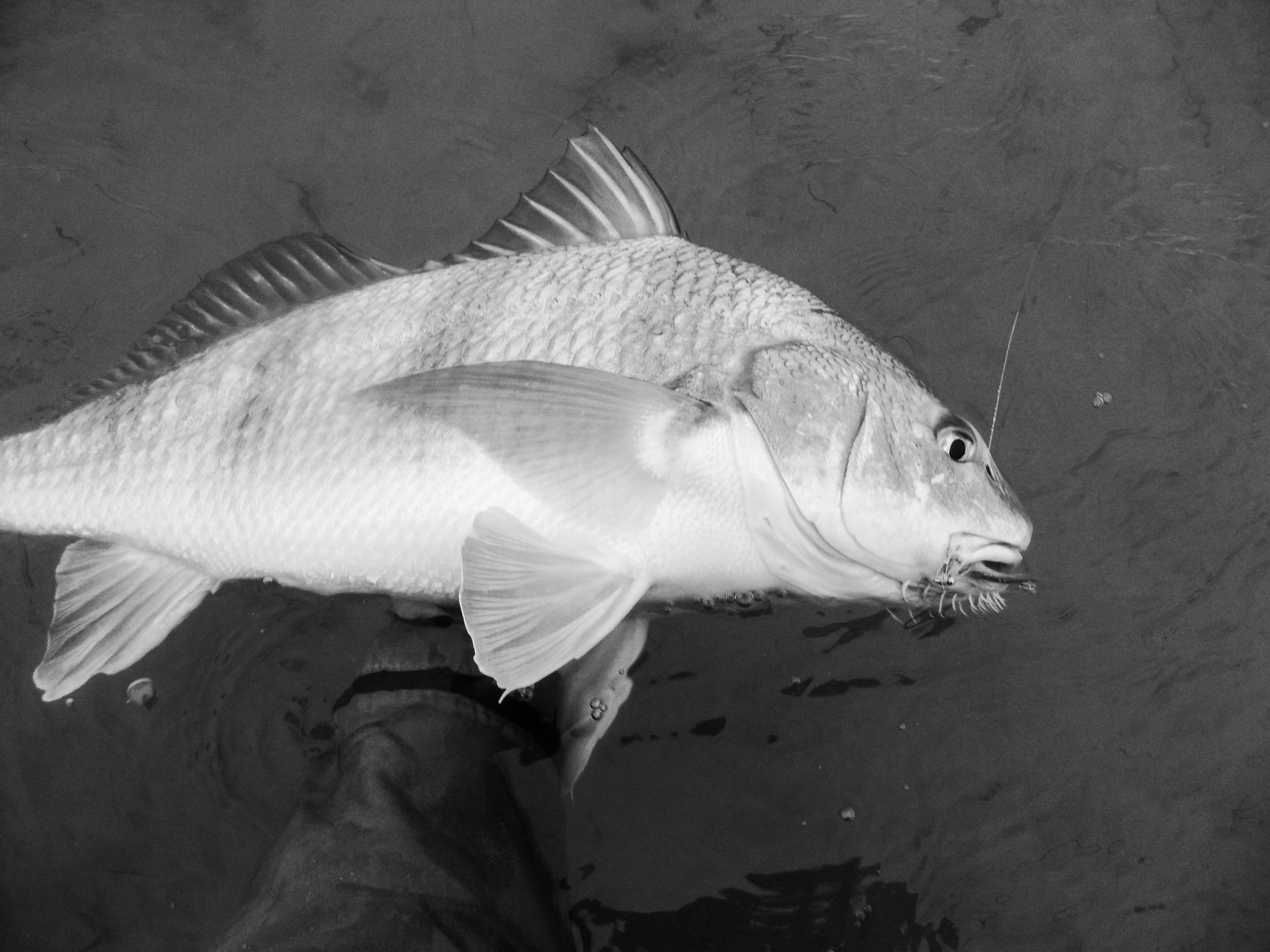
large black drum
smaller drum
can’t drink saltwater, floating water bowl out on flats
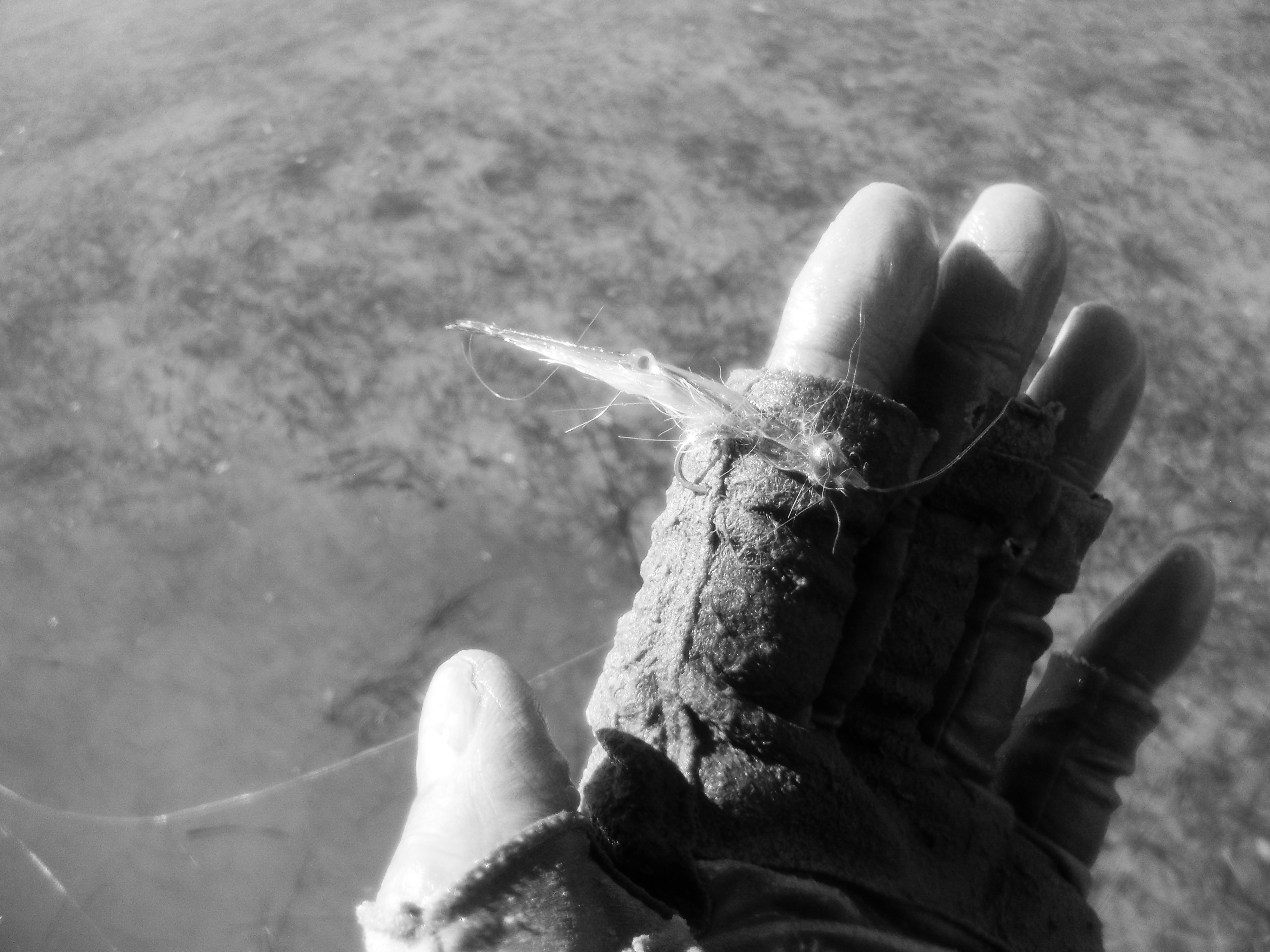
A streamer pattern. I only tie them when I’m planning a saltwater trip and such trips are infrequent/rare, and therefore I’m not very good at it. Most of my limited saltwater experience has been spent sight-fishing the Sea of Cortez for Roosterfish on foot. I made four trips several years ago. Each trip of two weeks duration. That adds up to about two months experience pursuing Roosters which are the most challenging species I have ever cast a fly to and the most physically demanding and thrilling angling that I have ever done. Although I learned a lot about the Sea of Cortez and Roosterfish while walking the sand dunes and surf line of Baja, my time there in the grand scheme of things was brief. If North American Borders stay open I’d like to return, pick-up where I left-off, learn more and hopefully get the opportunity to entice a large roosterfish to take a fly that I tied. I’ve been practicing tying streamers on 3/0 and 4/0 hooks. Here’s one tied during the Winter Solstice that I’m pleased with…
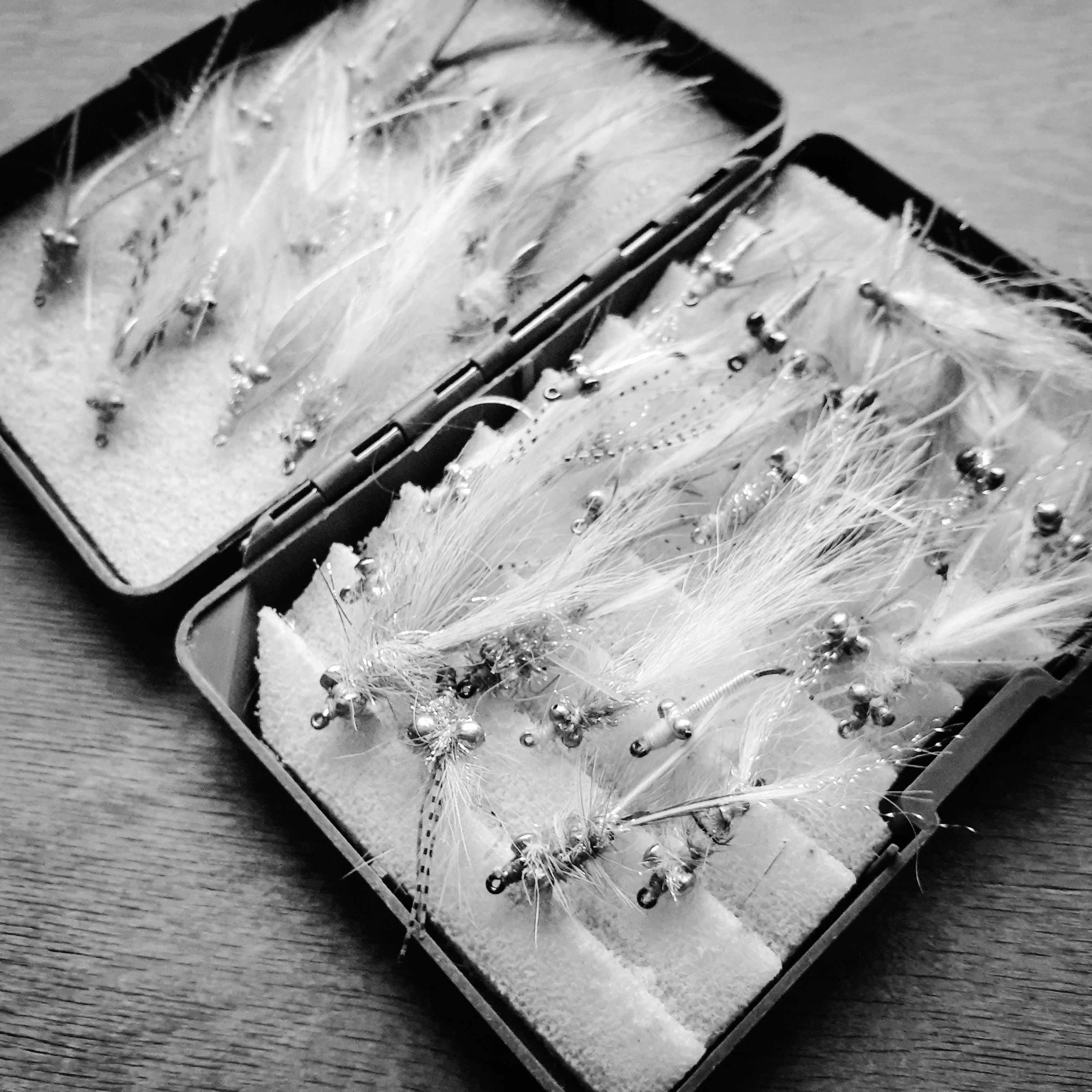
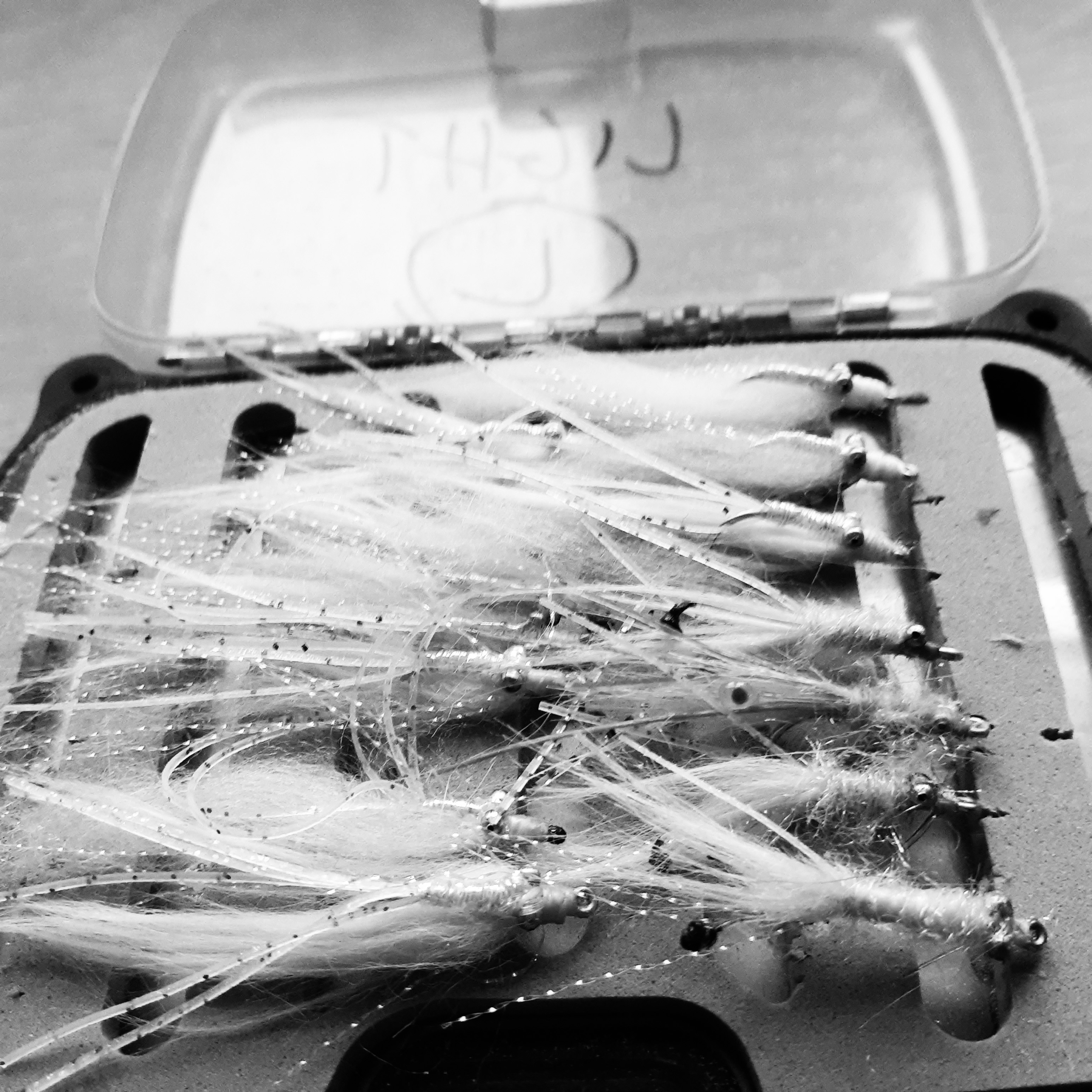
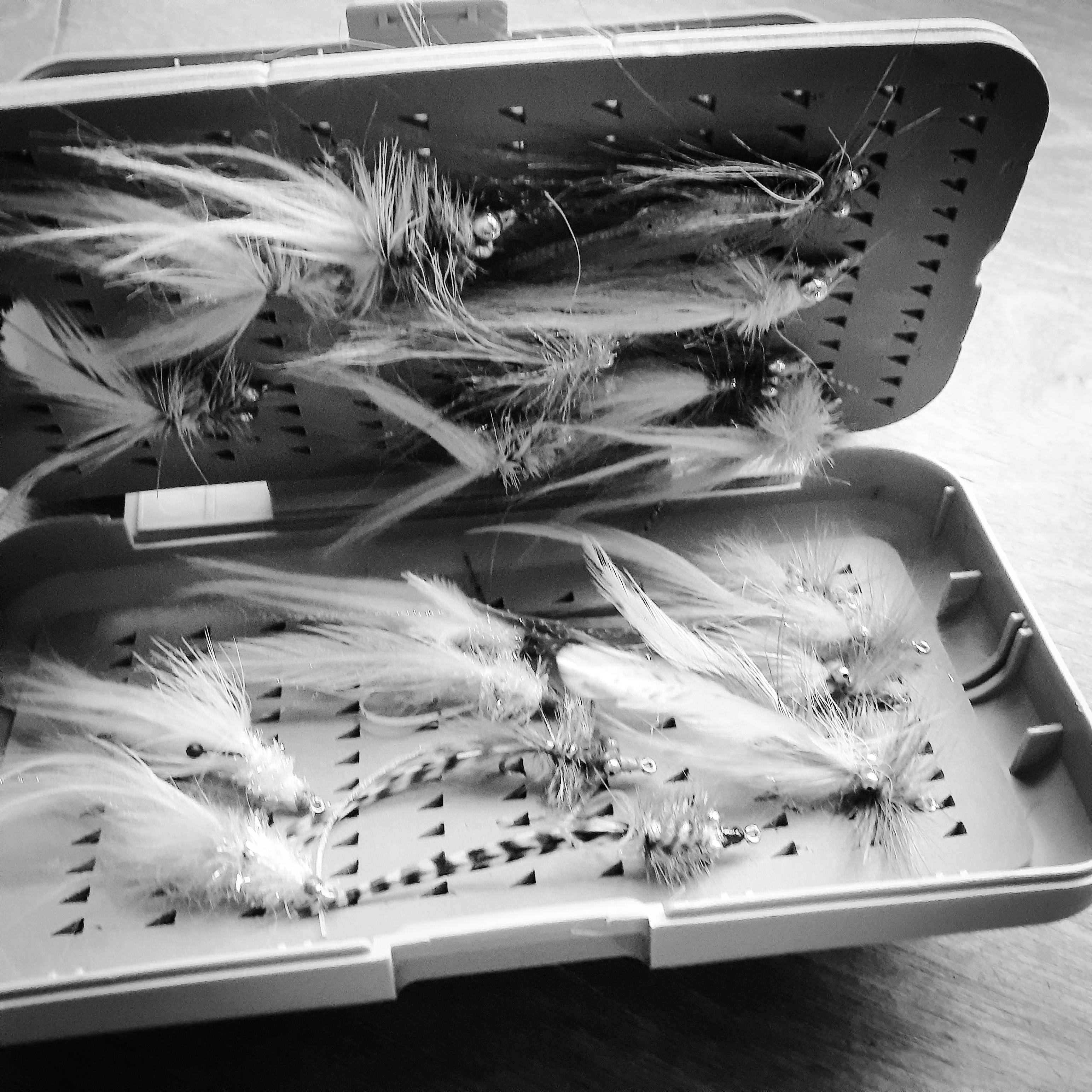
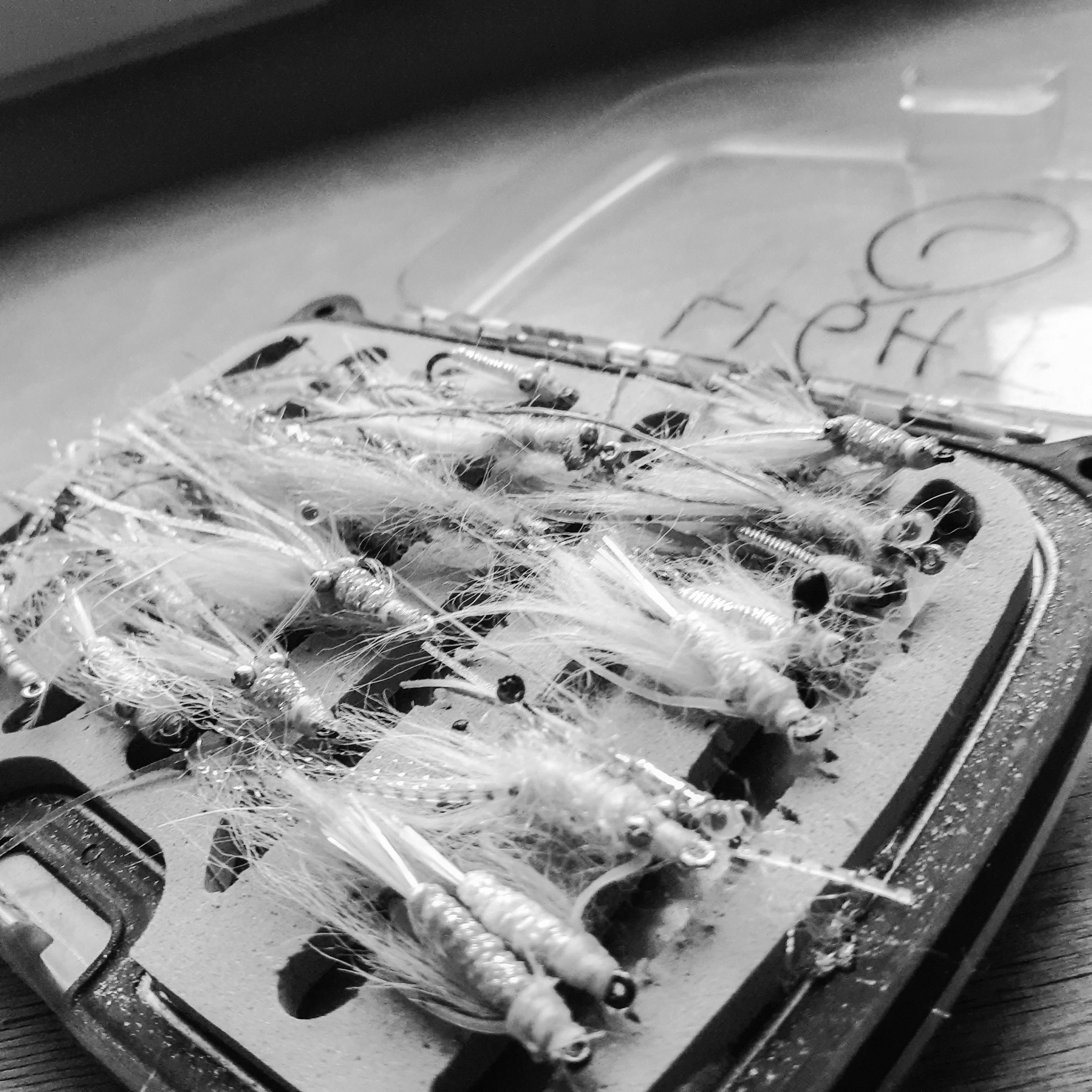
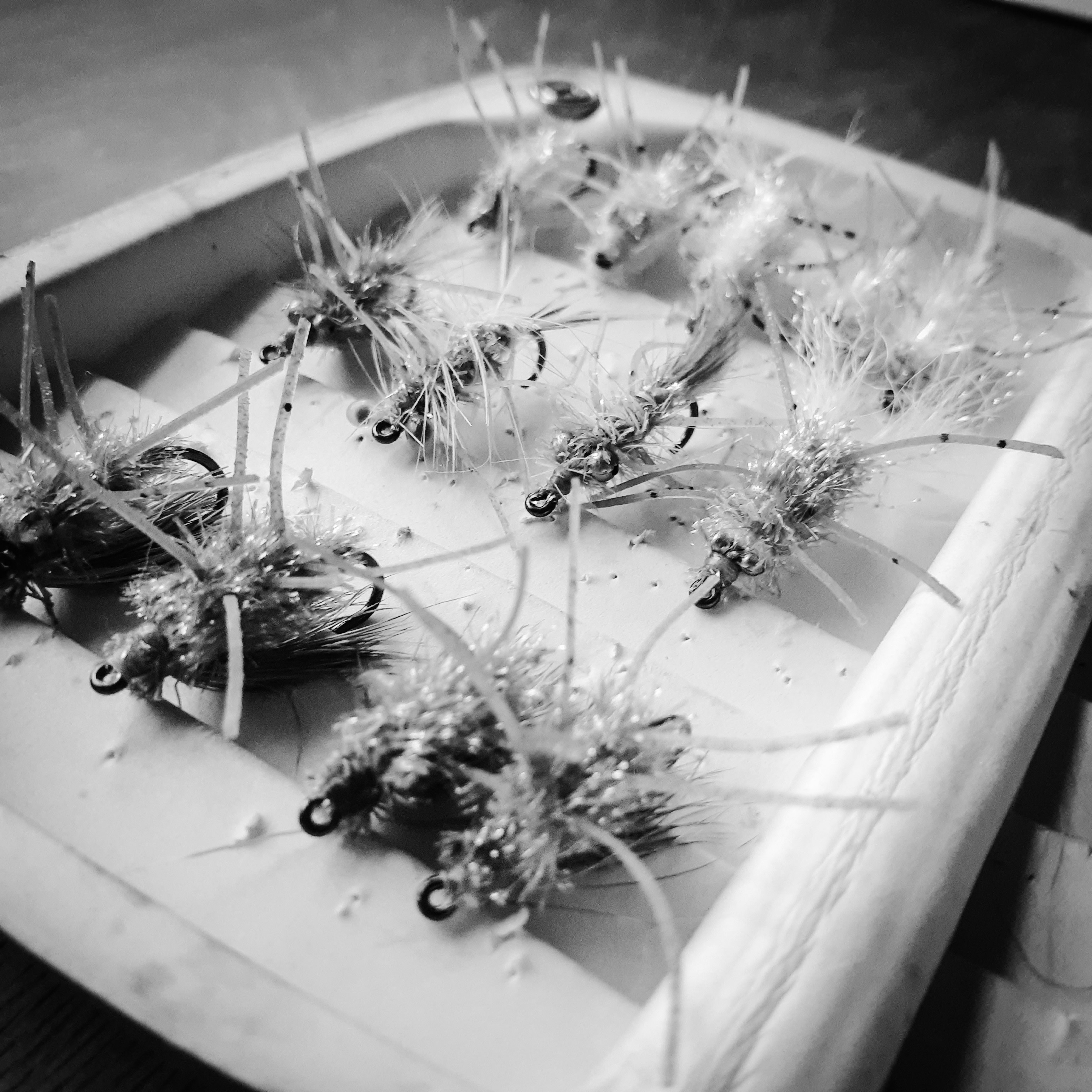
Flies for saltwater. Mainly shallow water patterns for sight-fishing on foot. Patterns borrowed from others; some modified. Most are tied light to land quietly in slight water. A few are tied heavier in order to drop to the bottom quickly when needed…
Shadows are long mid-afternoon. Transition time (Autumn) tends to be swift at latitude 49 degrees. It roars in. There are more leaves on the water than mayflies. The Brown trout are on redds. Dry fly angling is almost non-existent on the rivers I frequent. Maybe there are a few more good days left? Maybe. Probably just wishful thinking.
Shadows are lengthening; shadows created by light…