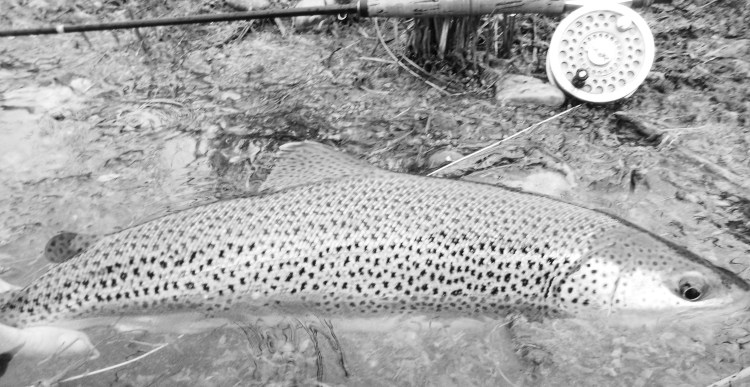
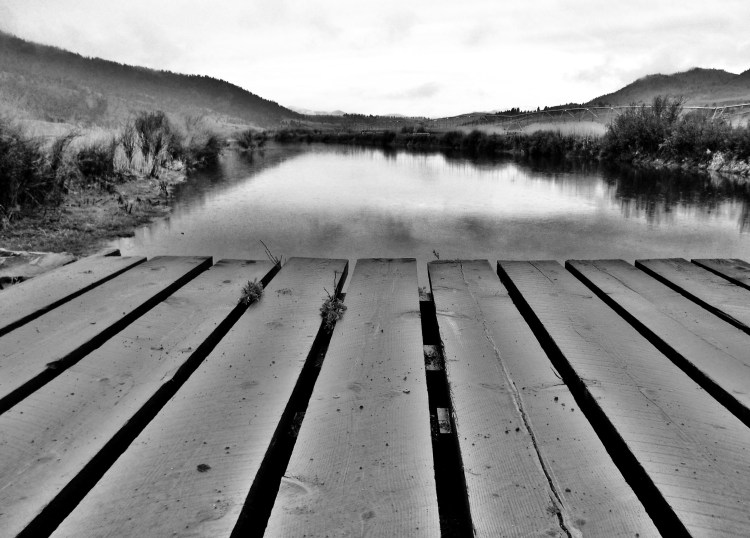
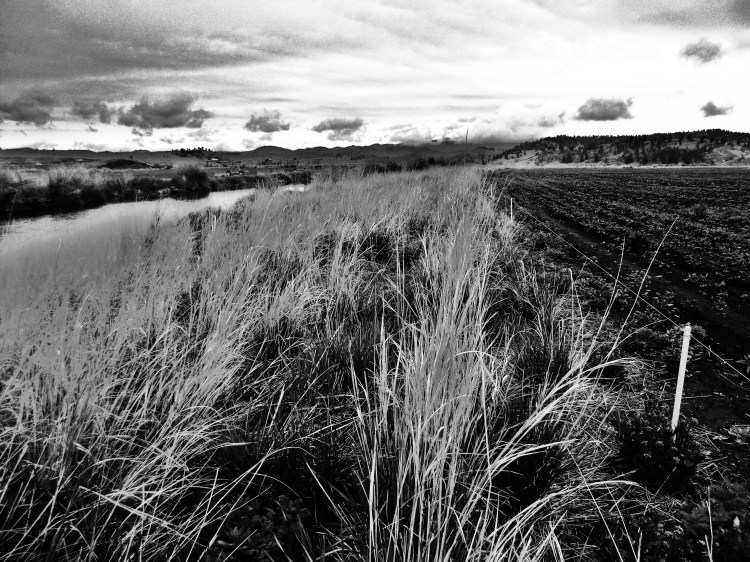
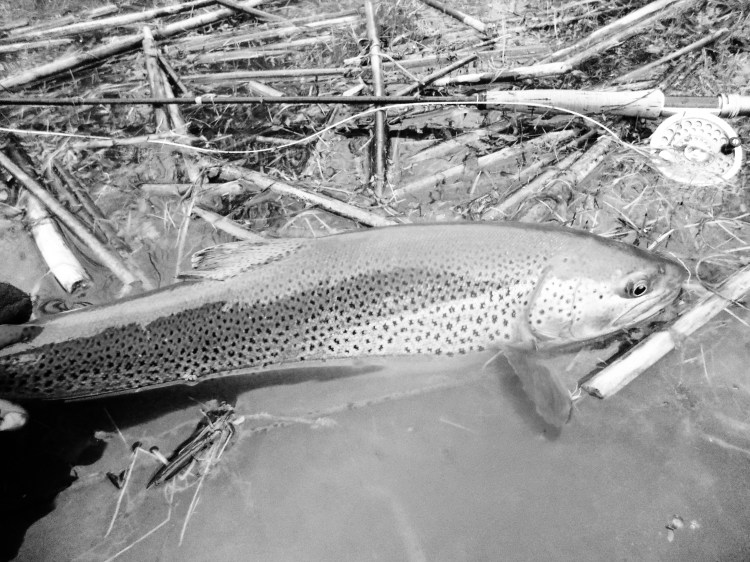
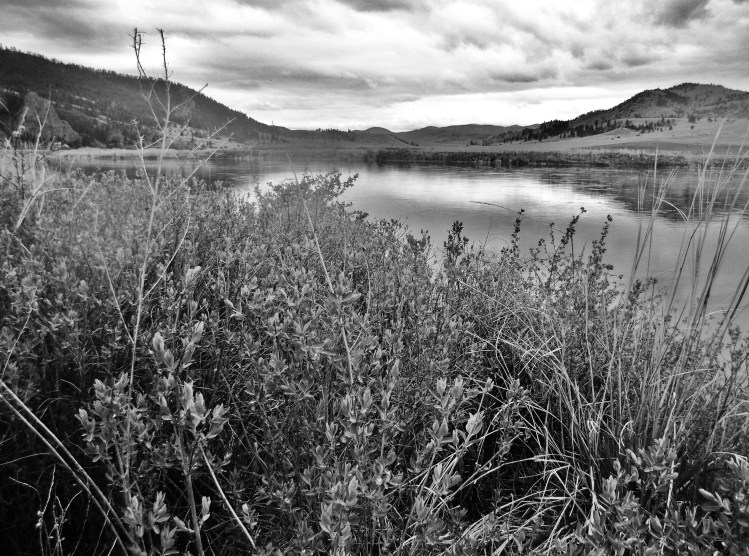
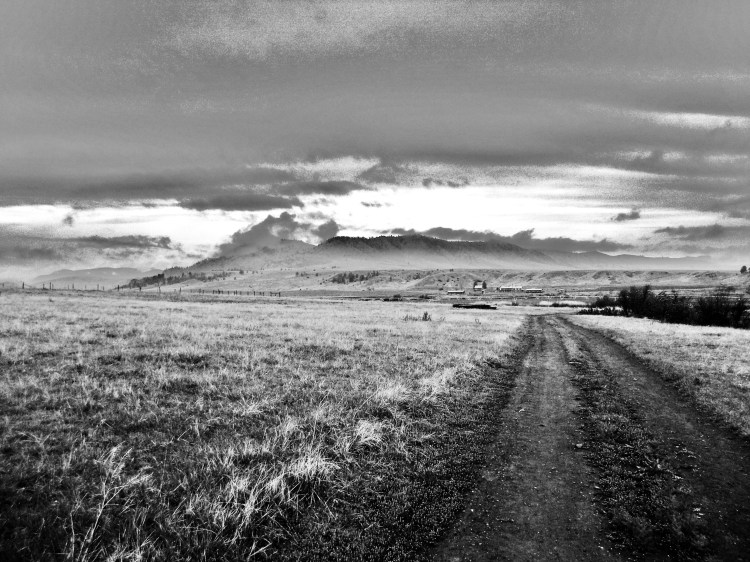
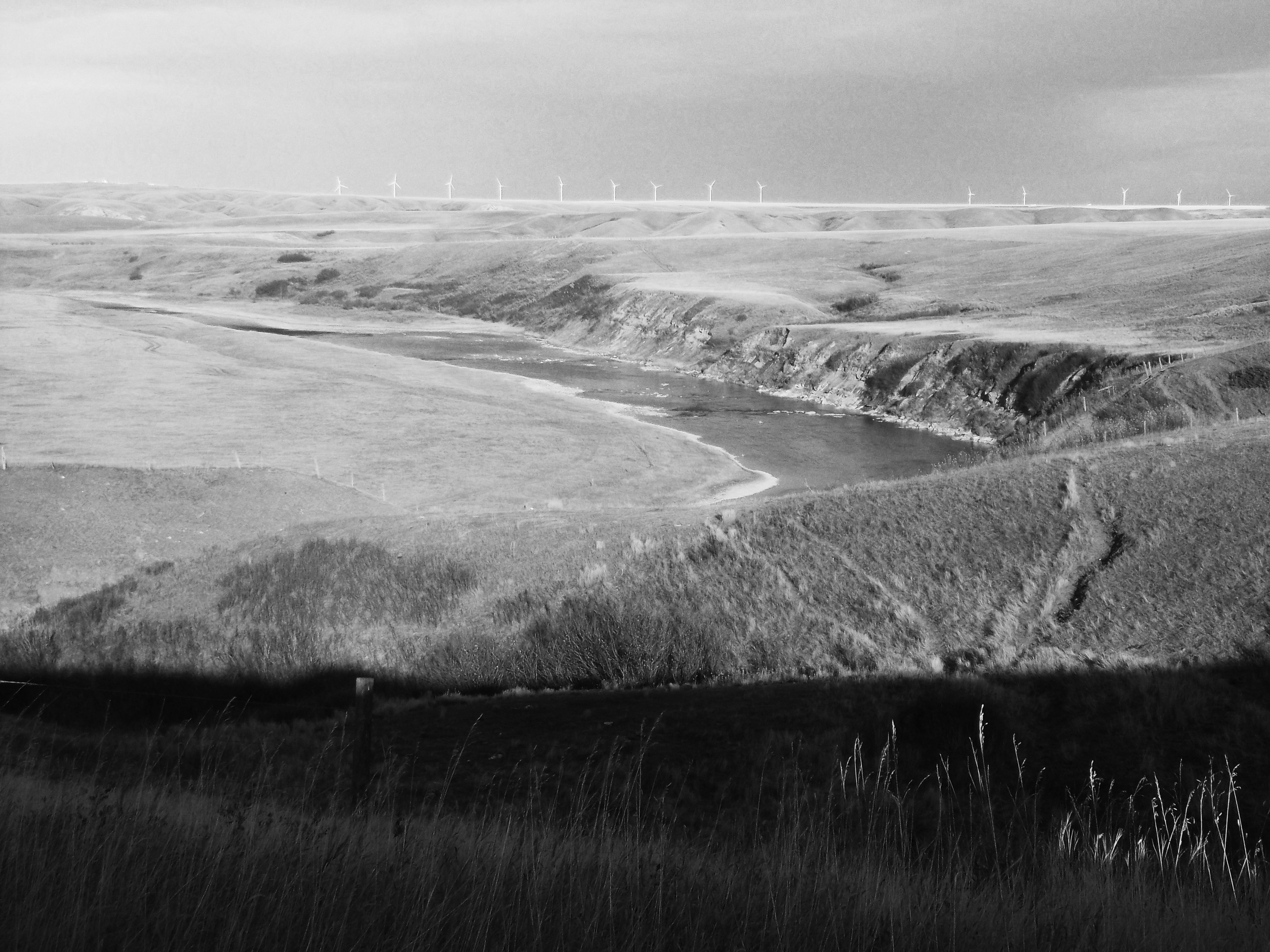
It was all clouds above. Alone in the river valley. In the middle of the foothills; middle of nowhere. A storm was coming. Then a fin broke the water. Just one. A rainbow.
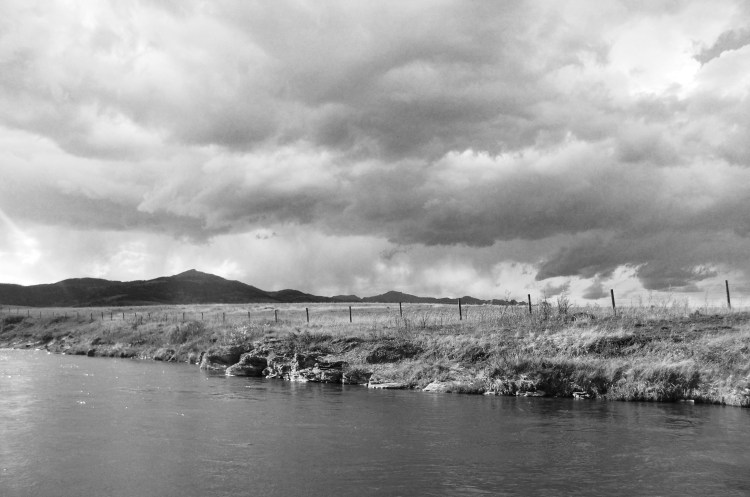
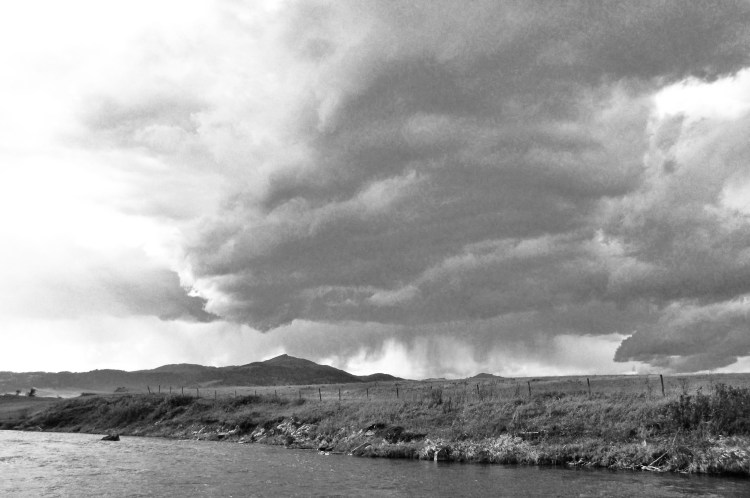


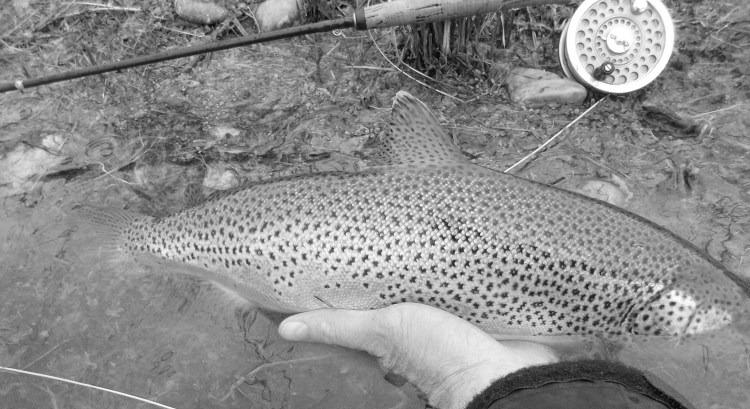
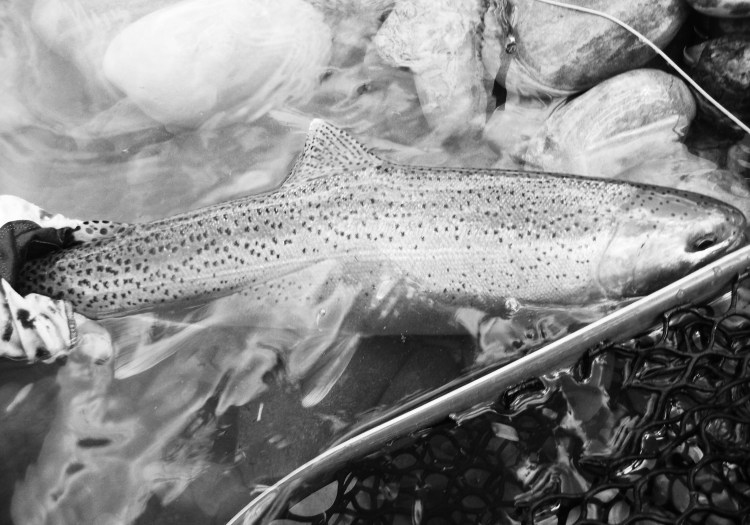
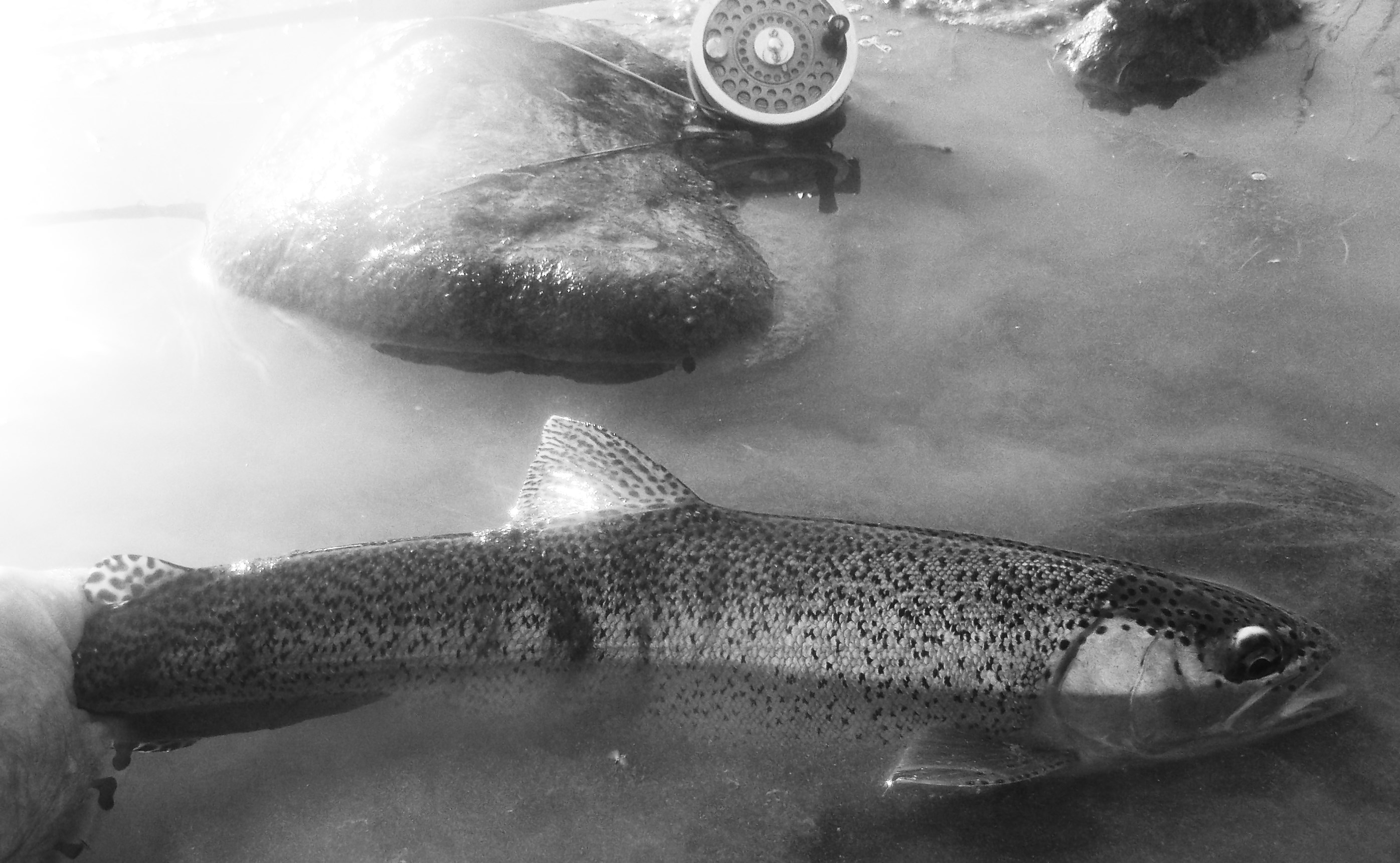
rainbow trout on dry fly
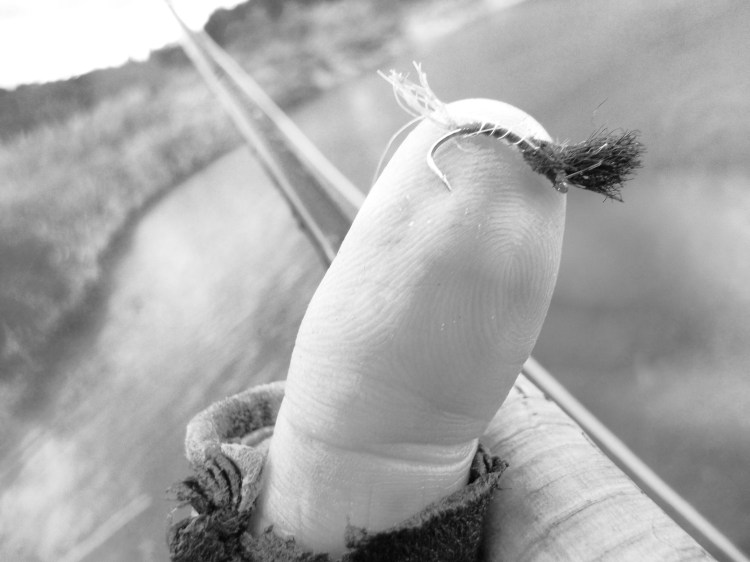
the rainbow bent the hook
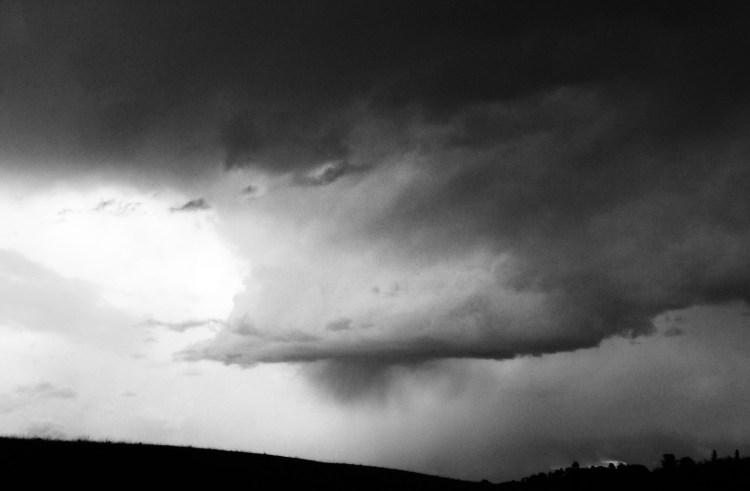
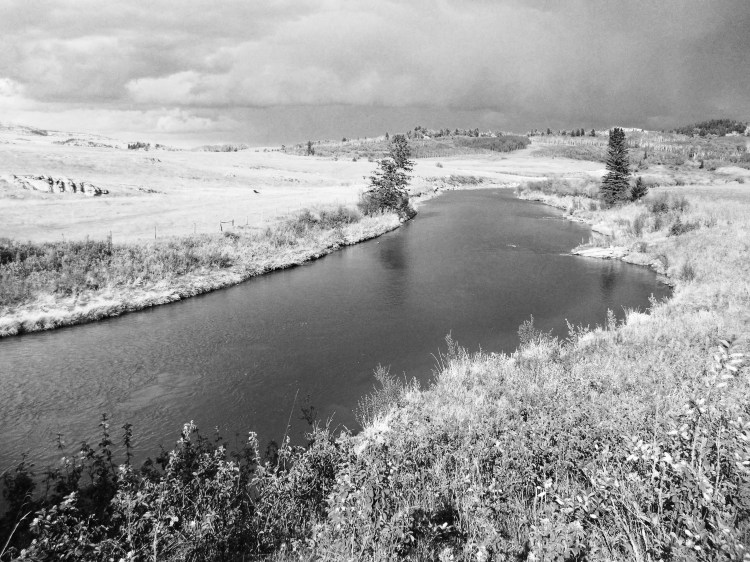
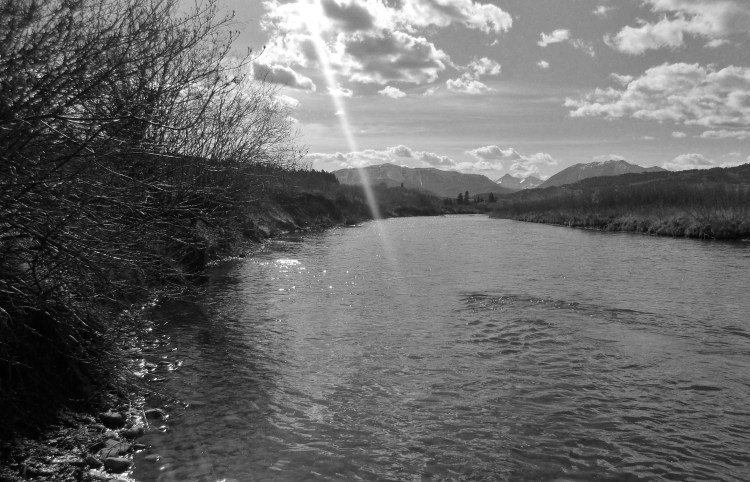
crowsnest river

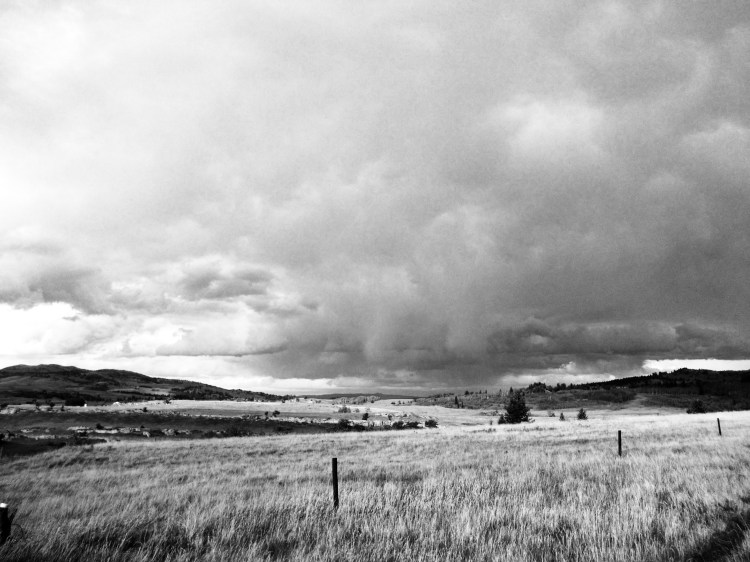
It was all clouds above. Alone in the river valley. In the middle of the foothills; middle of nowhere. A storm was coming. Then a fin broke the water. Just one. A rainbow.
rainbow trout on dry fly
the rainbow bent the hook
crowsnest river
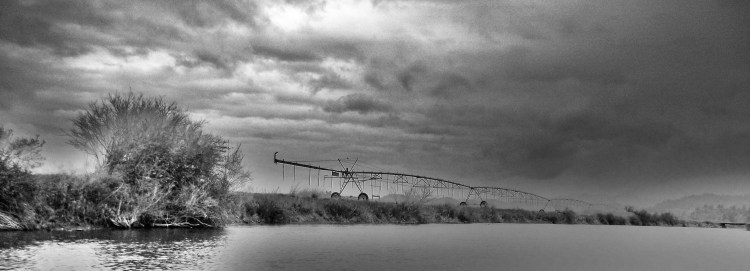
With the cloudy, drizzly and calm weather predicted for the weekend I drove to the Missouri (M0) river anticipating a hatch of BWO’s. And presto, just like that, the little May Fly appeared. In spite of their teeming numbers a lot of the flat water sections I frequent year after year were void of rising trout. It was hard to believe the fish weren’t sipping on the tiny flies collecting in the more gentle/quiet areas of the river. They should have been on them like kids on candy!
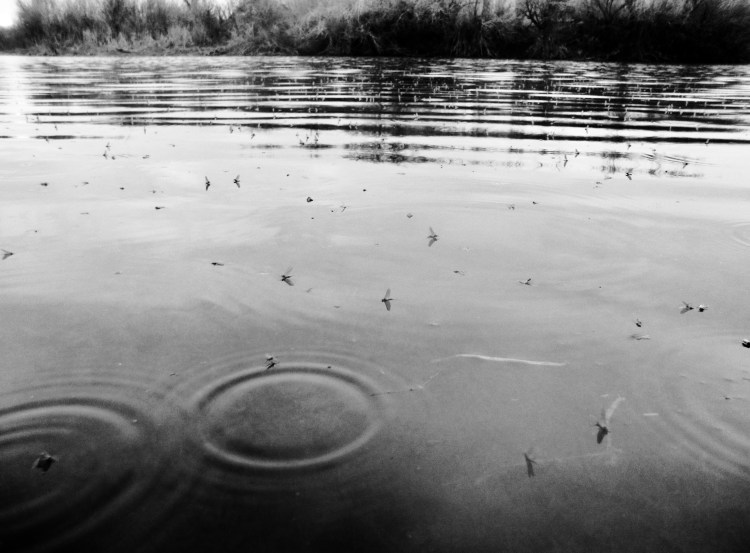
blue winged olives and perfect raindrop circles
I watched and waited but little happened. So eventually I went for a walk and hunted, and found some good fish in the Mo’s broad riffles, or more specifically, at the tail end of these sections where the riffles started to flatten out/expire.
brown trout caught on dry fly
Most trout in these spots were focusing on emergers. This is usually the case. I saw many anglers wading right through these sections, never noticing the sometimes quite intense feeding and multiple fish. I’ve done the same in the past. It’s very easy to miss these fish with the grey glare that exists on such a wide river. Riffles also camouflage/mask any sort of surface disturbance made by trout. It can make spotting more challenging. Experience has taught me that if I just stand still and watch (when bugs are around) often I’ll see signs of feeding trout: bulging water or boils, or other subtle, and sometimes not so subtle, surface disturbances. Listening carefully can also save the day as some trout will break the surface and the odd one will occasionally eat on top. I often hear them before I see them. Once you catch that sound, you can then intensify your visual search.
Although most fish were caught in the riffles and some tail-out spots on large pools, early in the day and then late I picked up a few good fish eating duns on the more enjoyable classic flat water sections. Most trout were caught on a Klinkhammer (body dangling below surface) style fly: dry/emerger. The best brown refused all my surface offerings and was hooked sight nymphing. The nice thing about this time of year is that if you see a fish moving water there is a chance it might be a brown trout as many of the river’s rainbows are still spawning in feeder creeks, and thus are absent. I catch some of my nicest browns in the Spring. Some rainbows were around as the photos show.
The Mo is an incredible sight fishing river. I hope to return in May or June… and Catch that Sound!
I stayed overnight at Wolf Creek Angler, in Wolf Creek (great name for a town). Basic lodging and manageable price. They also have an excellent little fly shop.
brown trout caught sight fishing with nymph

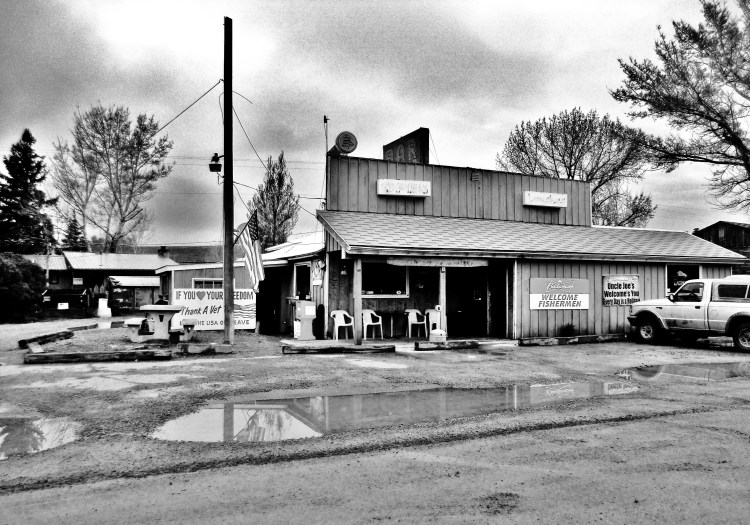
Joe’s bar
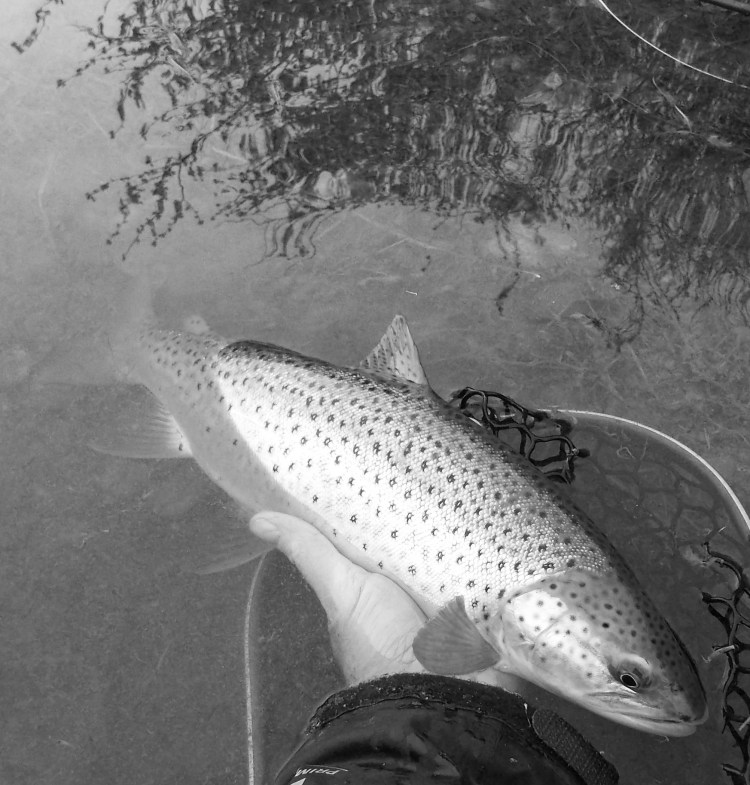
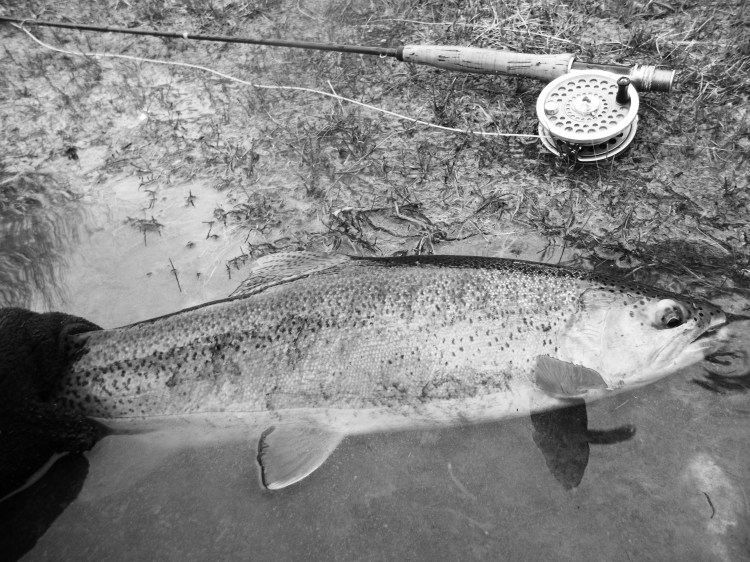
rainbow on dry fly
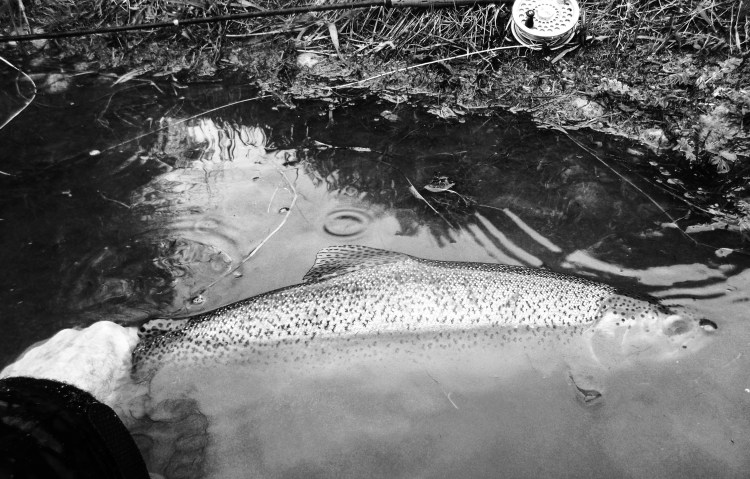
AN encounter with two young boys while walking my dog:
Hey, look at that dog! Mister can we pet your dog?
– Sure. She’s young so she might be a bit hyper at first and jump a little but she’ll be ok.
She won’t bite?
-No, she’s friendly.
What kind is she?
-She’s a retriever, a Golden Retriever.
How old?
-Just six months…still a puppy.
I have a Lab, a black one….called Bruiser.
-Labs are great dogs. Kind of like a retriever in temperament.
What’s your dog’s name?
-Abby
Hi Abby…thanks for letting us pet her.
_No problem.
Hey Mister you know why they call them a “Golden” retriever?
-No why?
Cause they’re worth the “Price of Gold” ! (smiling with hand outreached in front of his face rubbing his thumb together with his finger tips).
-Hey, I like that. I’ll remember that. See ya.
Here are some riverside photos from past weekend:

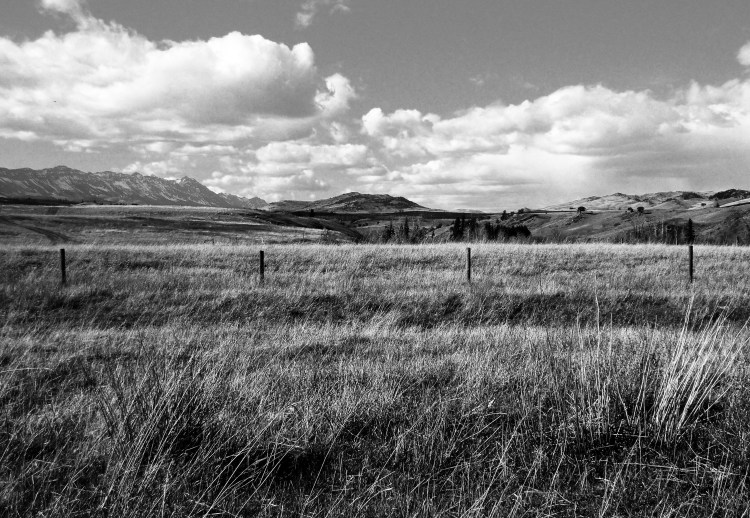

rainbow on dry

skwala stonefly and crude impression

same trout
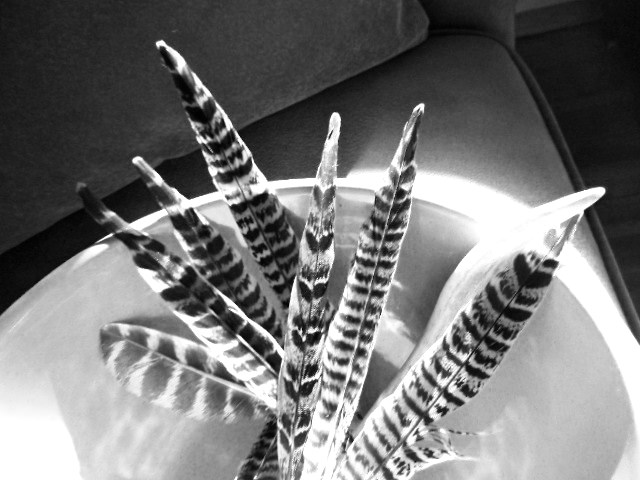
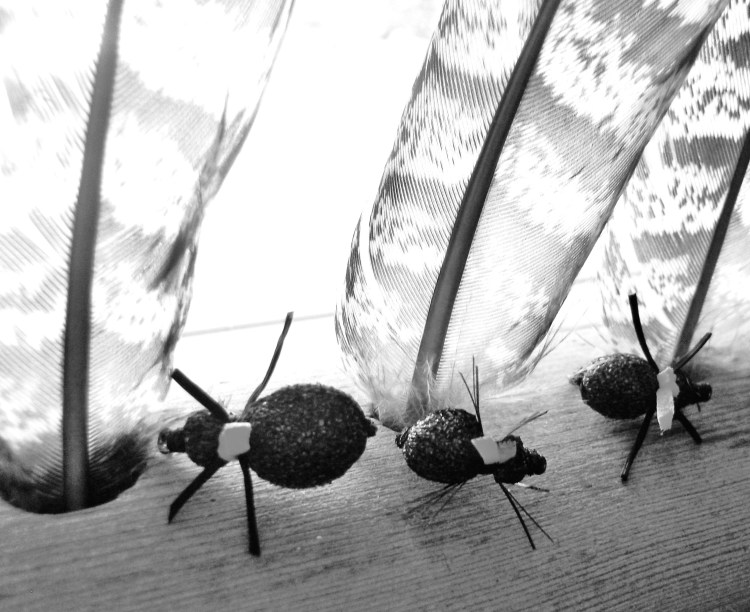
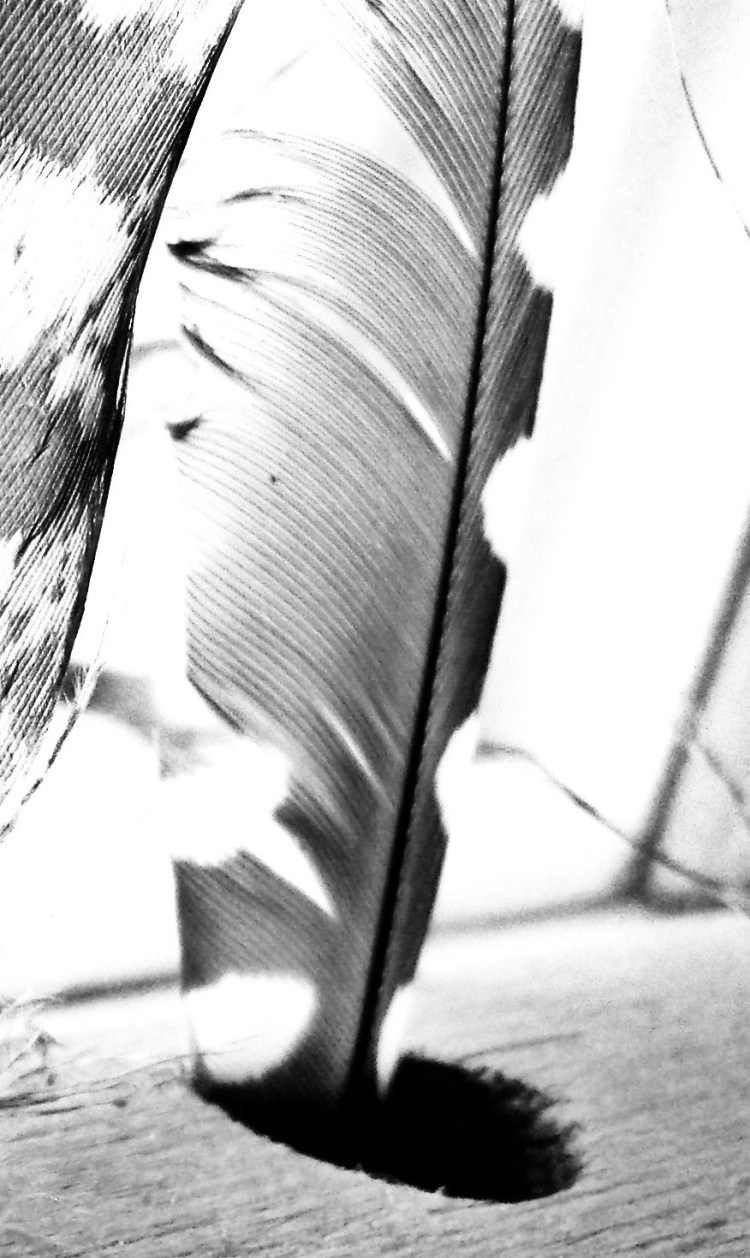
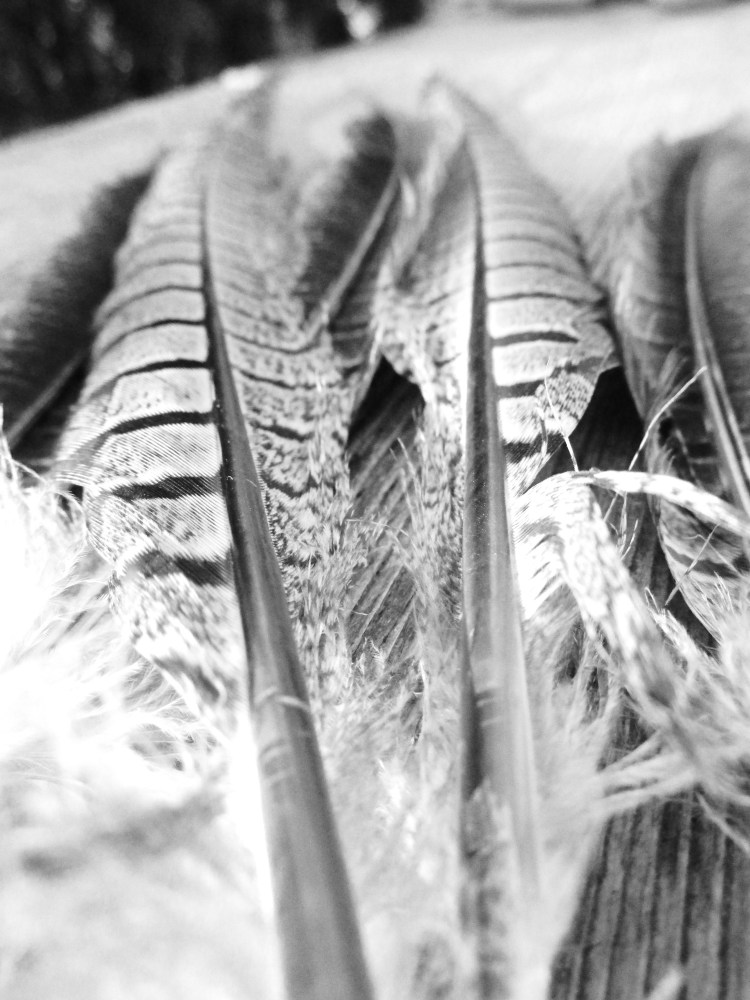


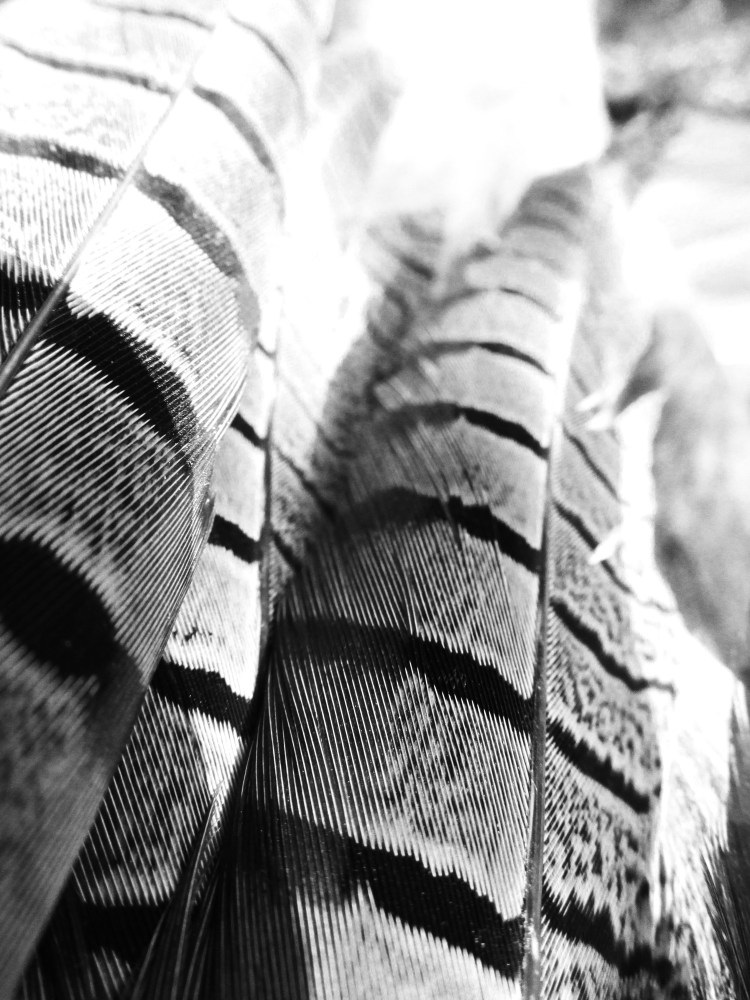
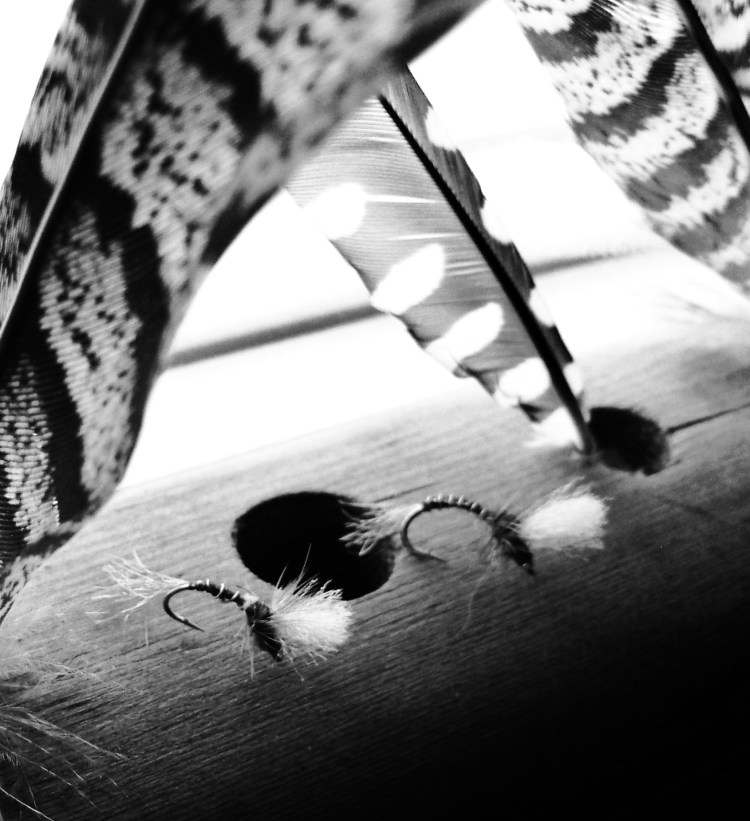
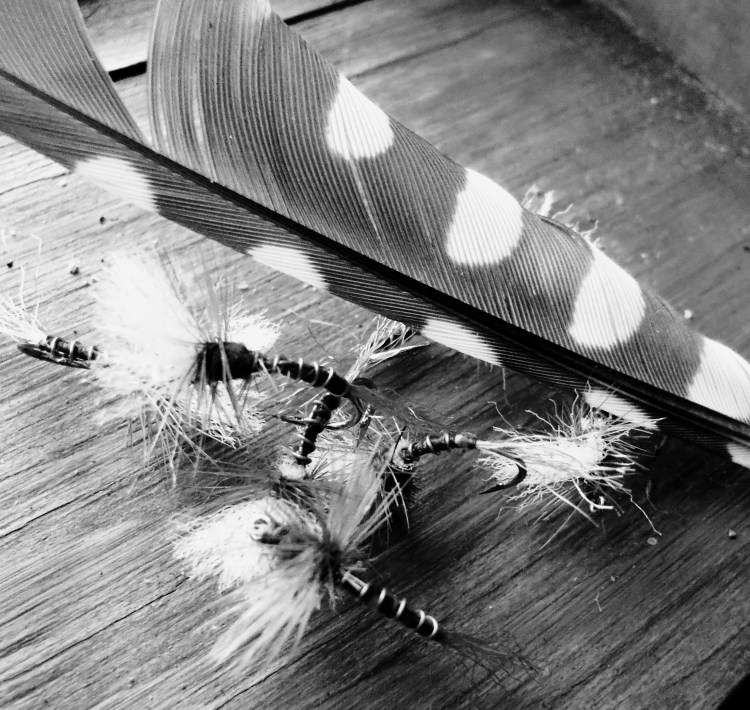

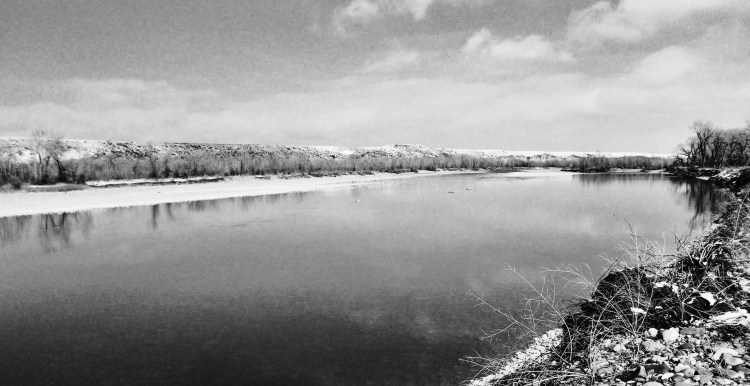
Some simple, durable, quick ties (size 18 flies) that often get the attention of trout on rivers nearby and afar. Tied on a hook that dangles: trailing shuck; some weight (wire) on body to hopefully tug it below the surface (saliva on shuck and body helps); exaggerated thorax dubbed; wing of polypro or deer hair, sometimes hackle used to keep top half (head) floating and most importantly visible. A white or black wing allows you to see the small fly in most light conditions. If I can see a small fly then I feel I can get it on the nose of a feeding fish, and then I at least have a chance. If I can’t see and follow the drift then I might as well be blindfolded! Deer hair and hackle is often less visible but can be seen if you can get close to a trout. The pattern can be fished as a dry/ emerger (mayfly hatch). I simply change body and thorax color and size depending on the season/hatch. The wing can be tied or clipped real sparse (less wing) for flat water, or CDC used. No fly works in all situations but some flies work in a lot of them.
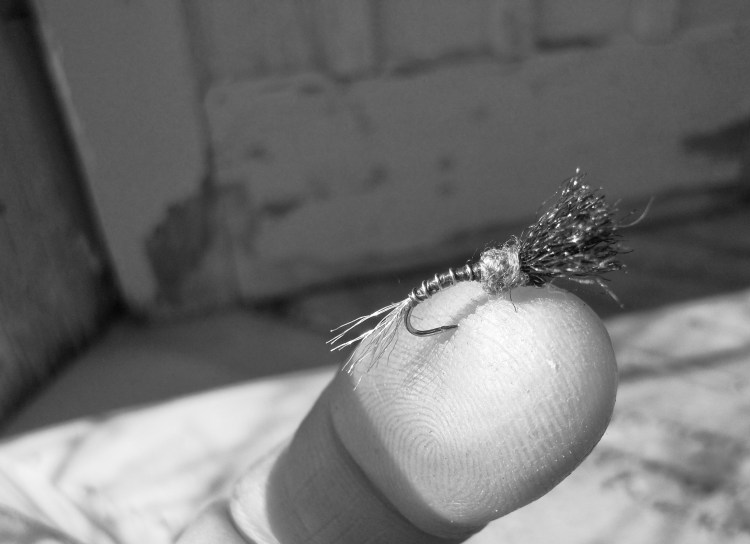
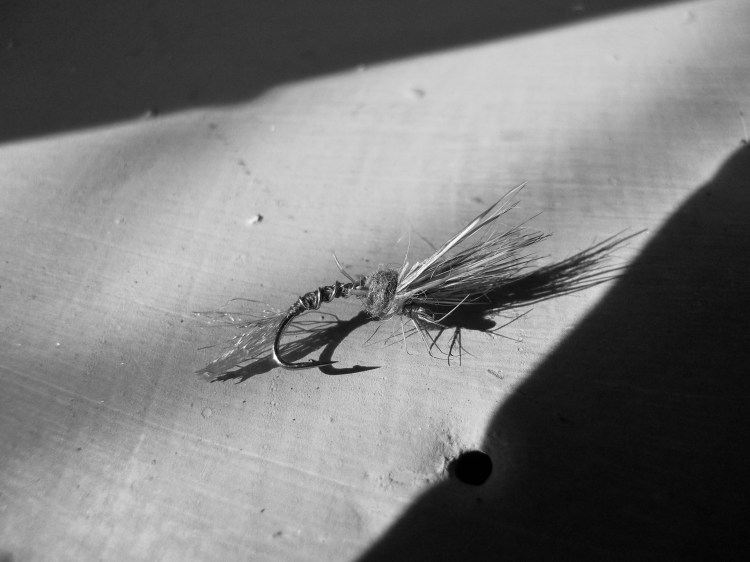
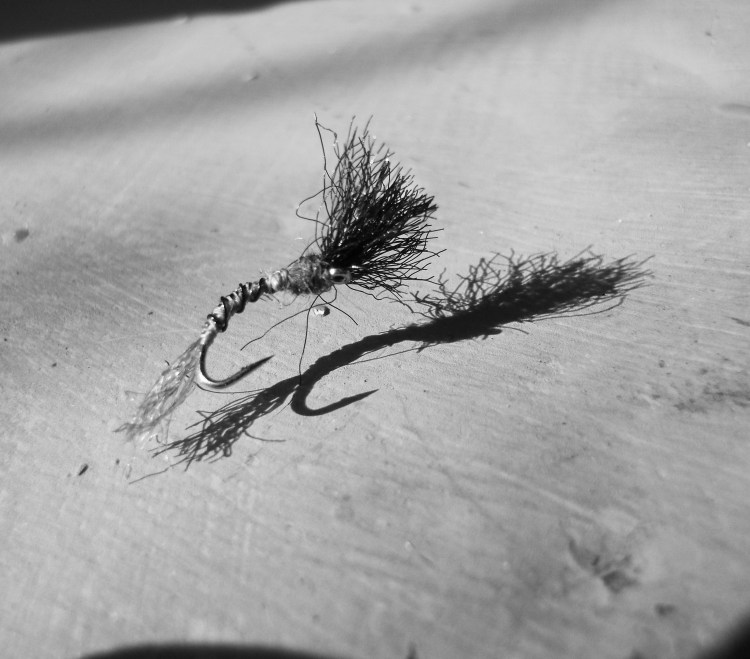


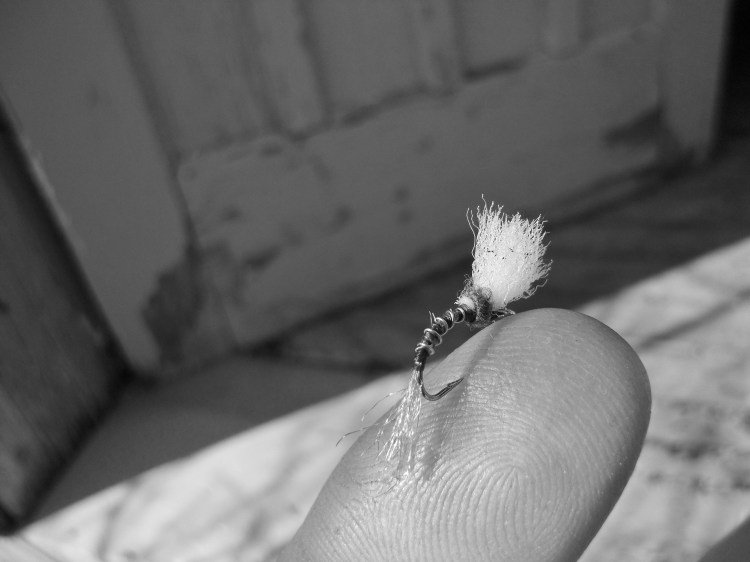

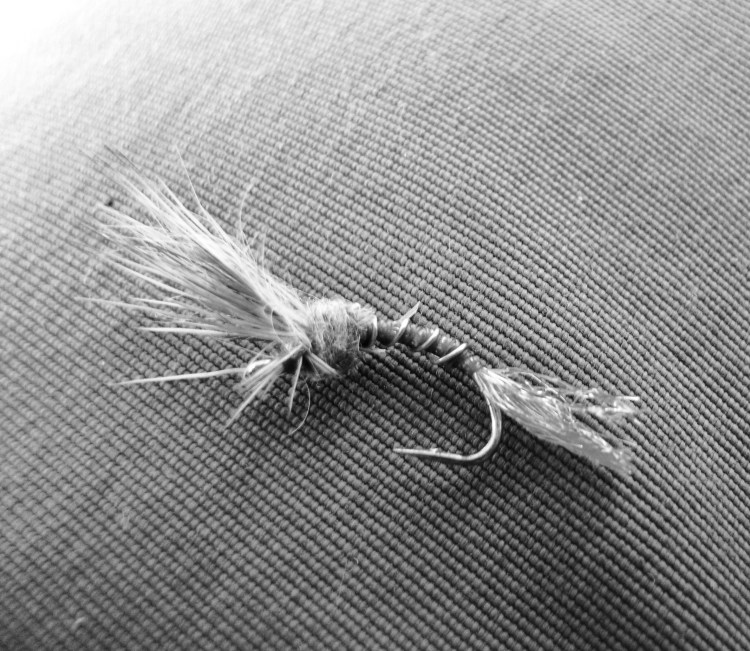

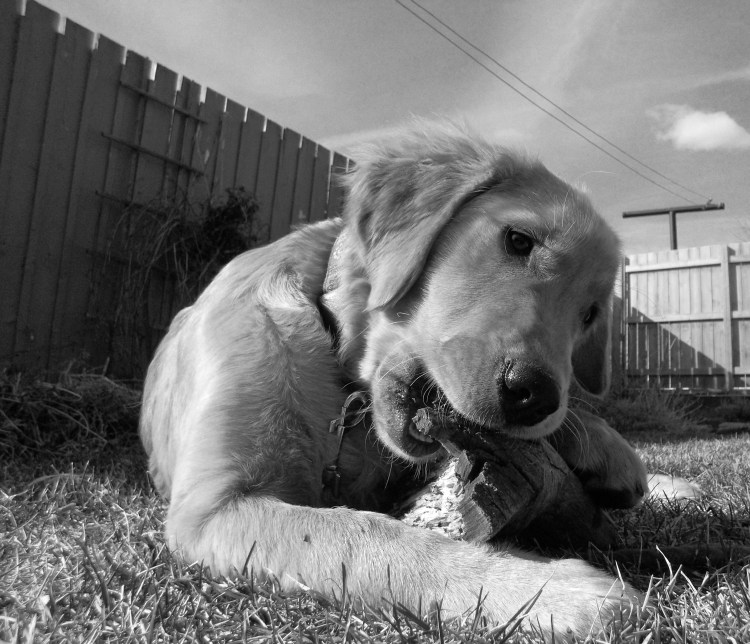
master fly tyer (abby) taking a break
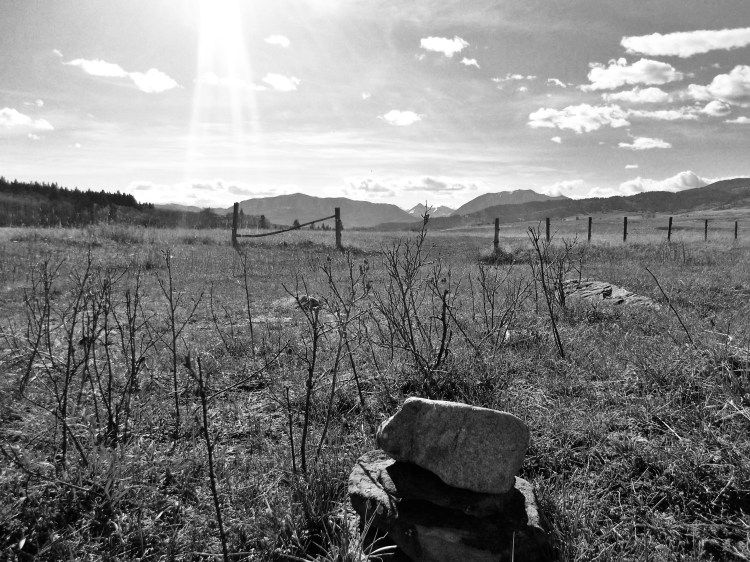
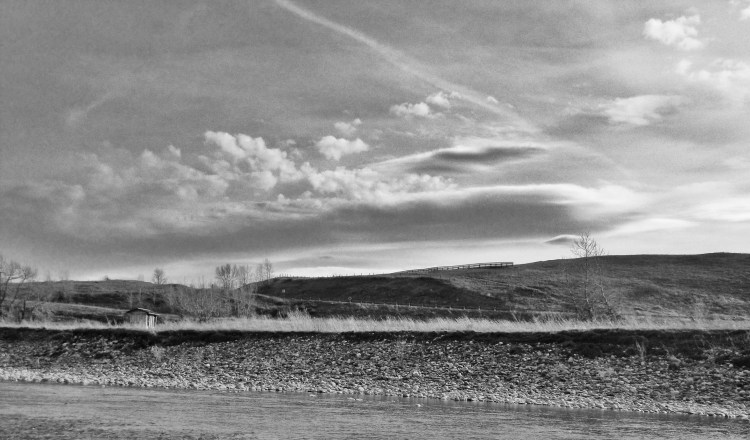
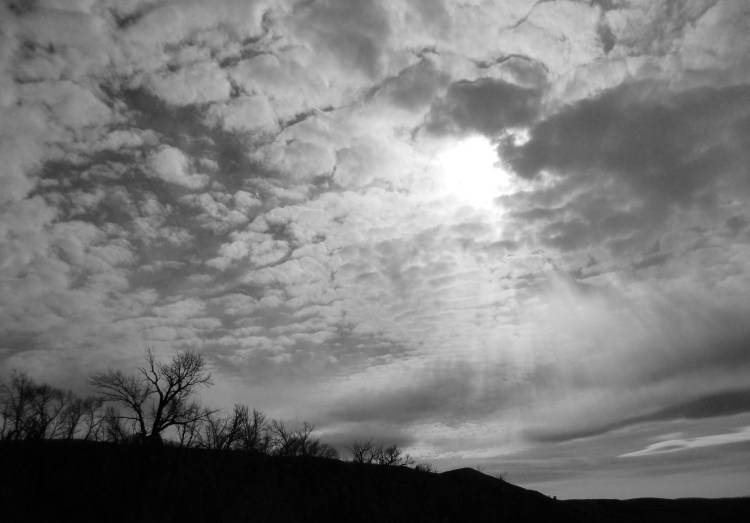
A few snaps while walking one of my favorite trout streams and looking for an early season midge hatch and trout. No trout spotted but some great clouds filled the ceiling of my big western room.
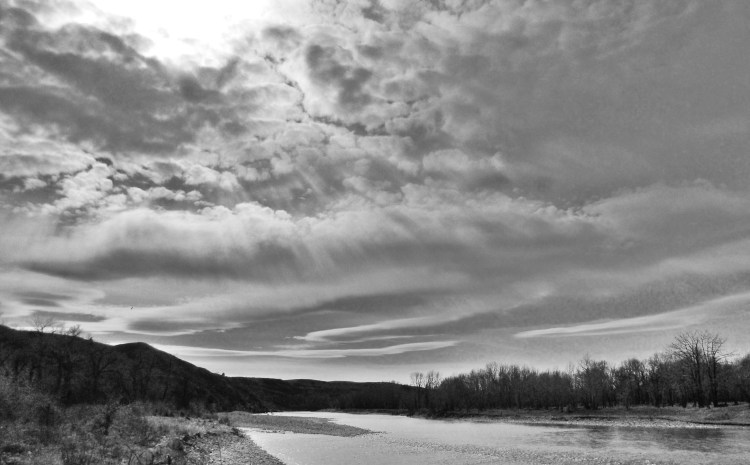
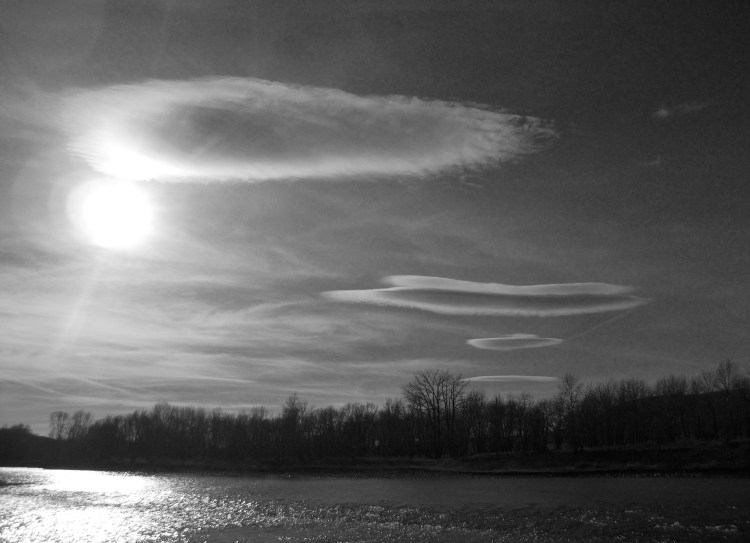
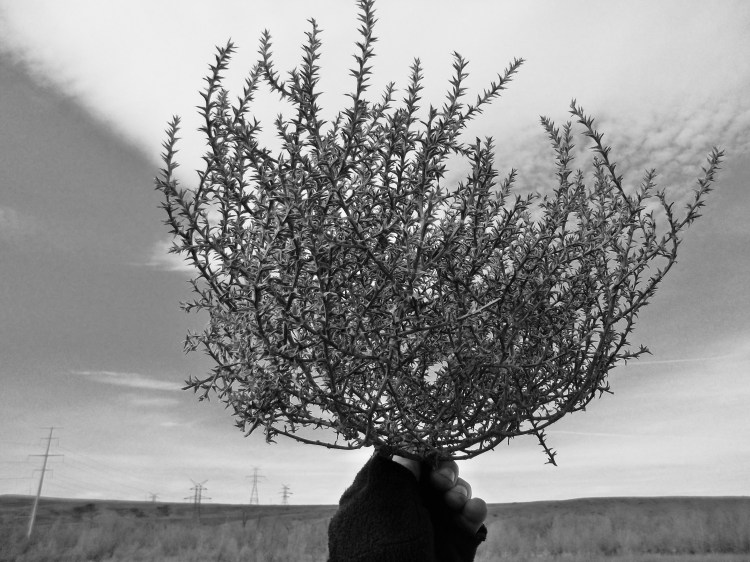
riverside tumbleweed
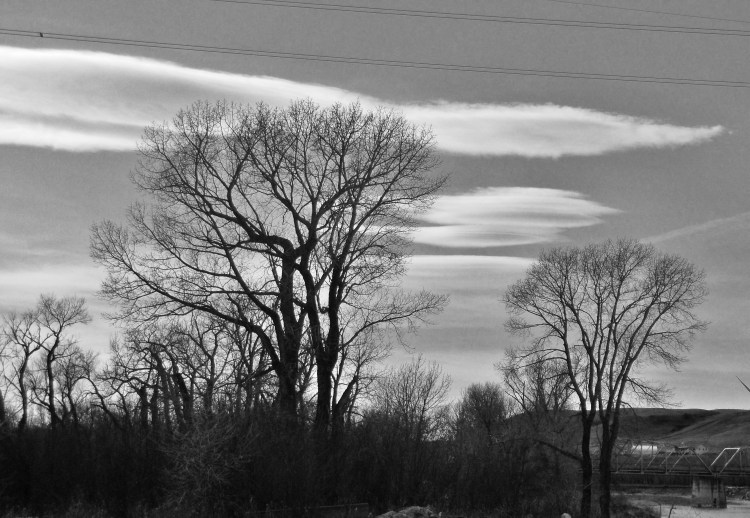
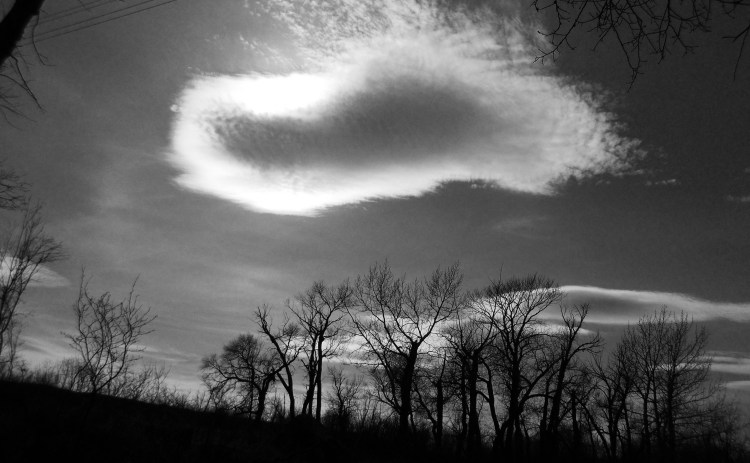

Some favorite photos from the past several years…
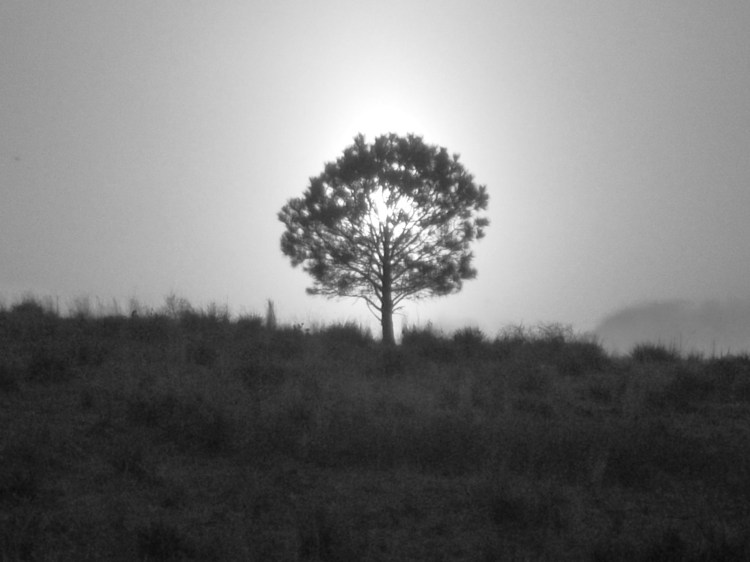
Favorite tree
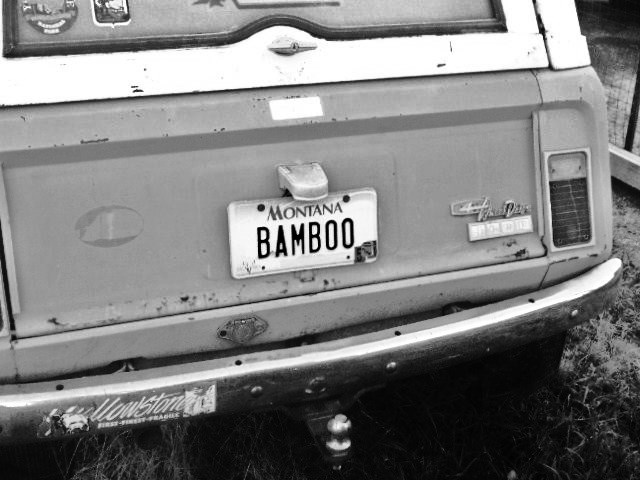
favorite license plate
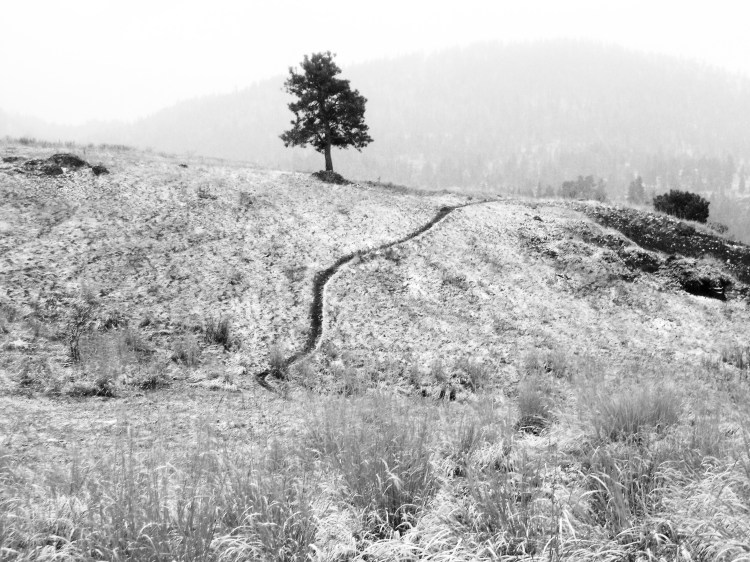
favorite river trail
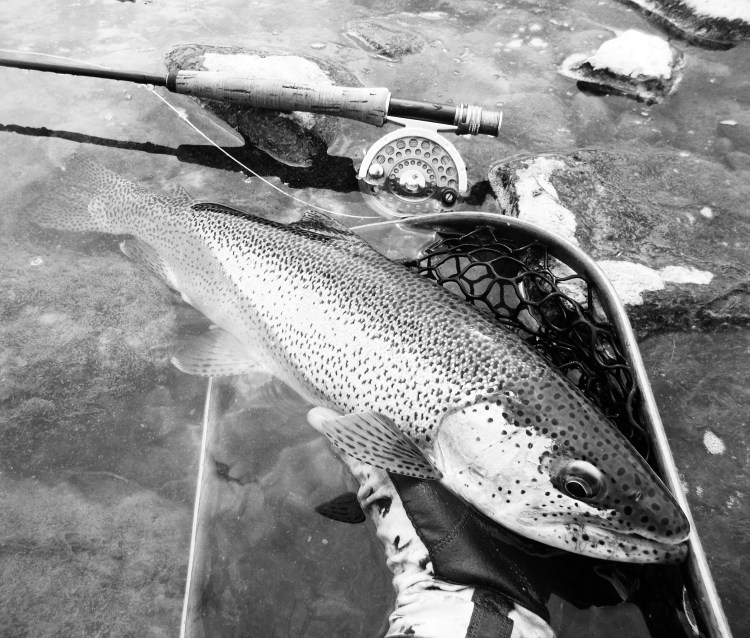
favorite trout on trico
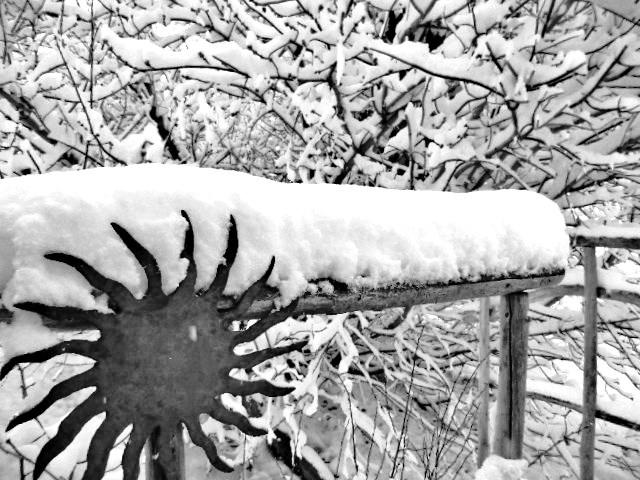
favorite sun
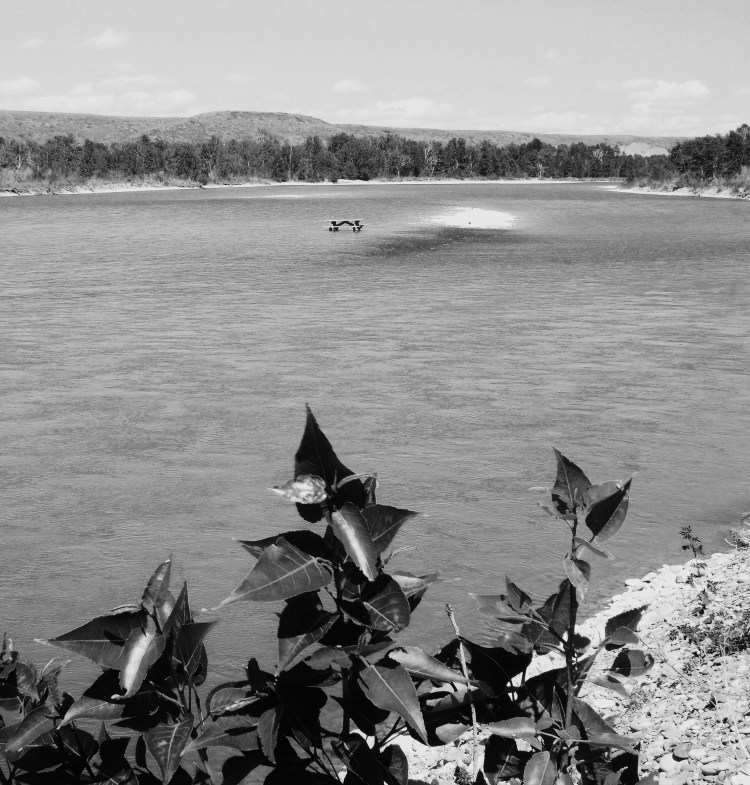
favorite picnic bench
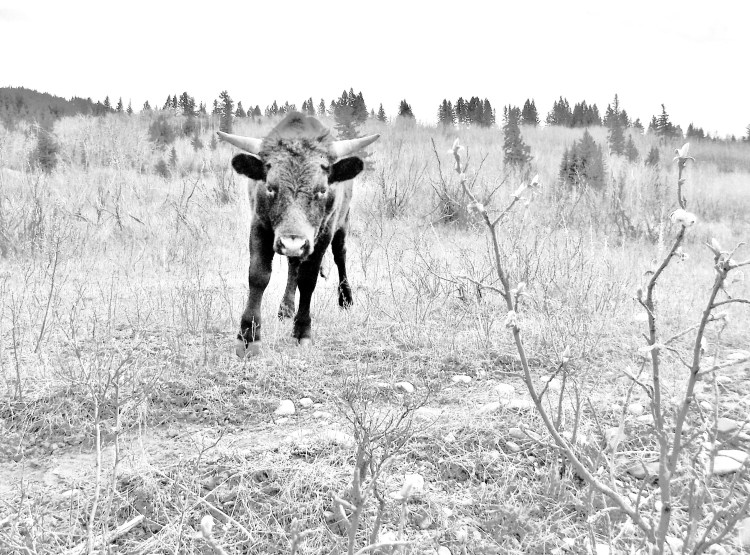
favorite riverkeeper
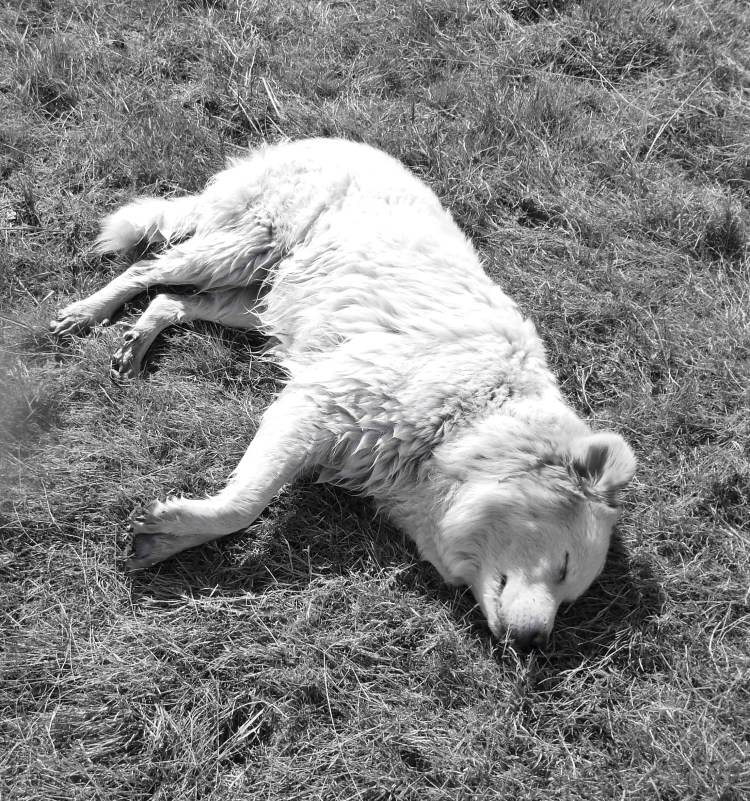
favorite sheep herder
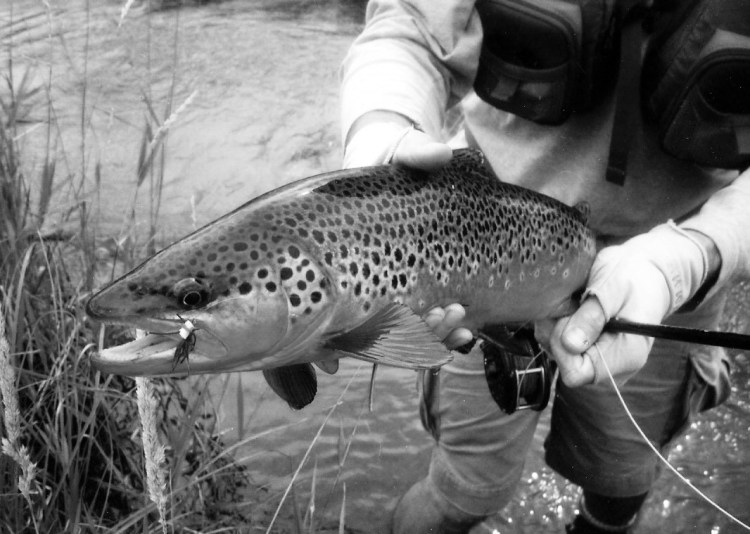
favorite brown on dry
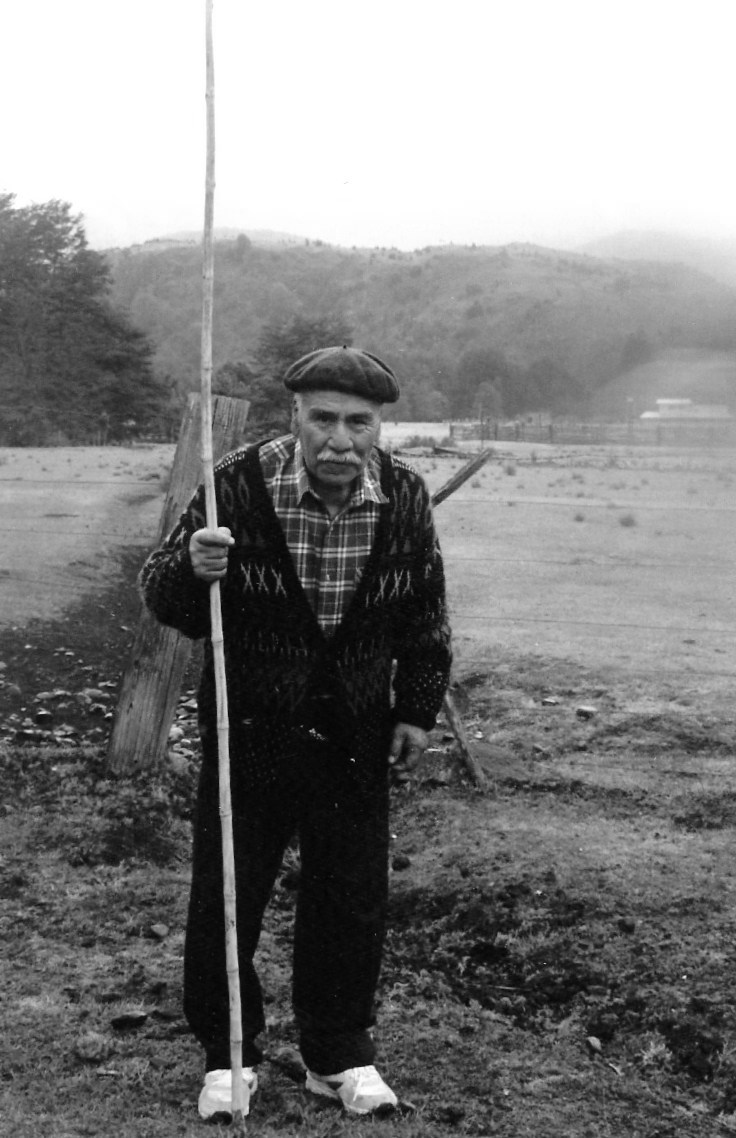
favorite patriarch of valley

favorite peanut shack
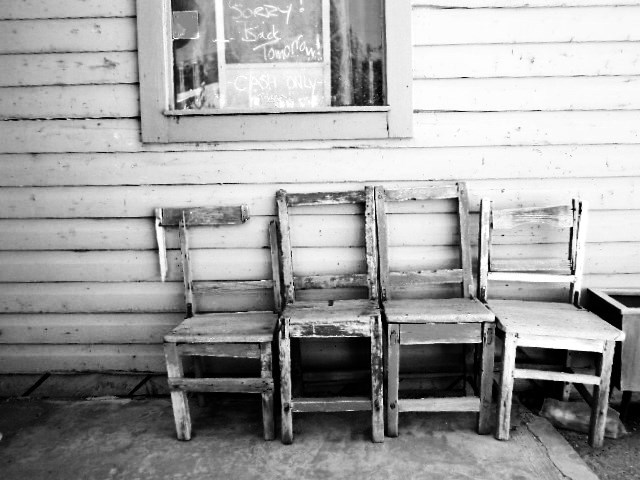
favorite porch

favorite reel
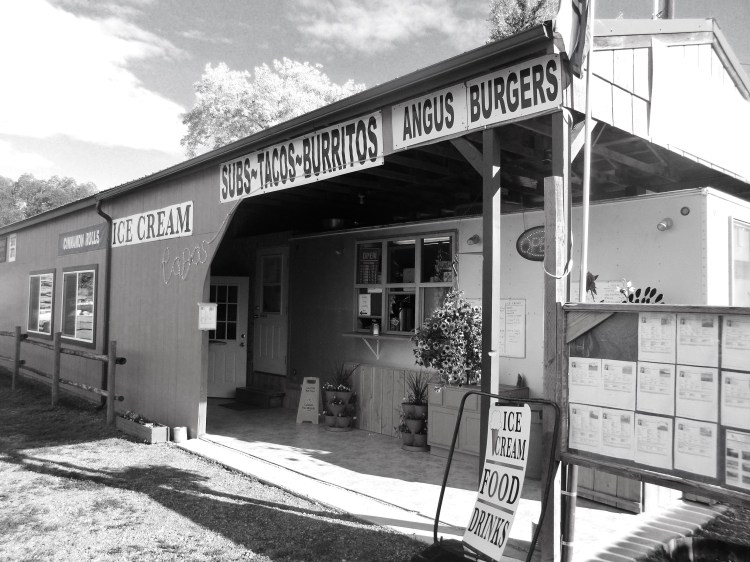
favorite riverside burrito place
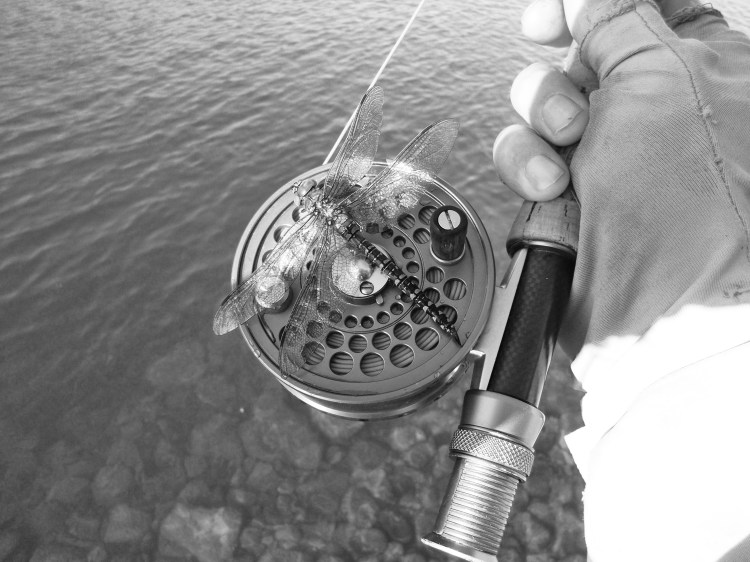
favorite bug shot
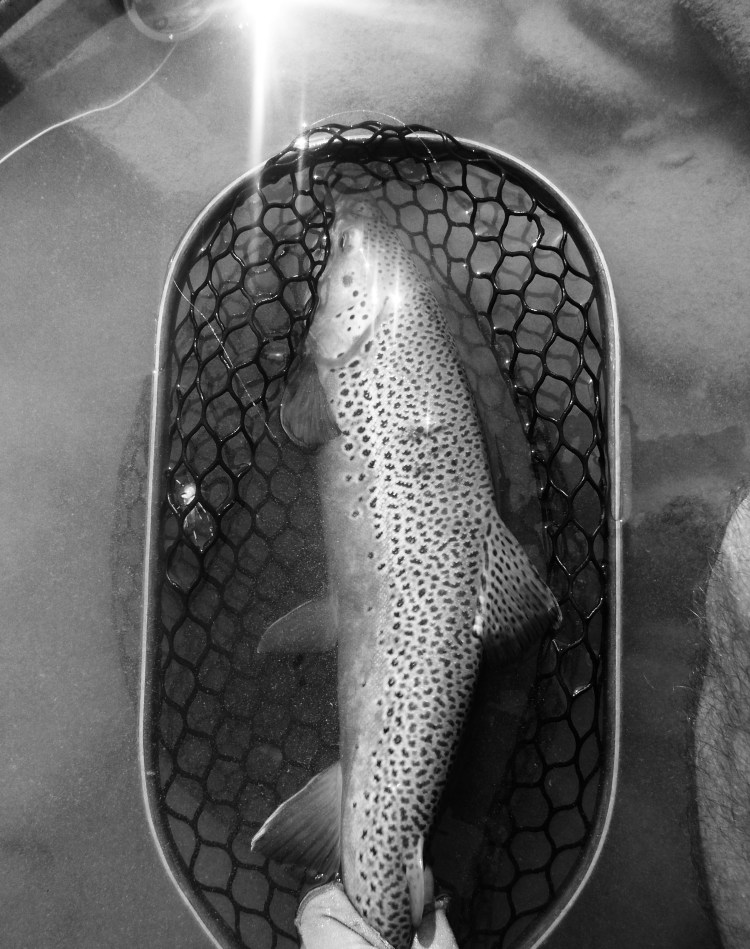
favorite net shot

favorite address
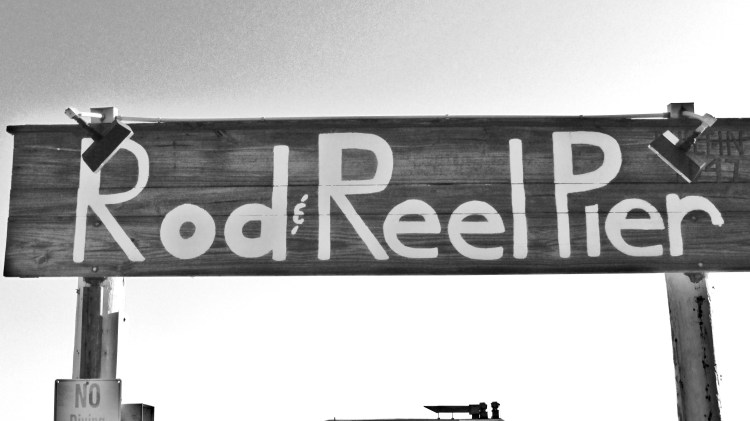
favorite pier
“I’m gonna win. There’s no way I’m goin’ down. I don’t go down for nobody”.
-1940’s Boxer, Jake LaMotta
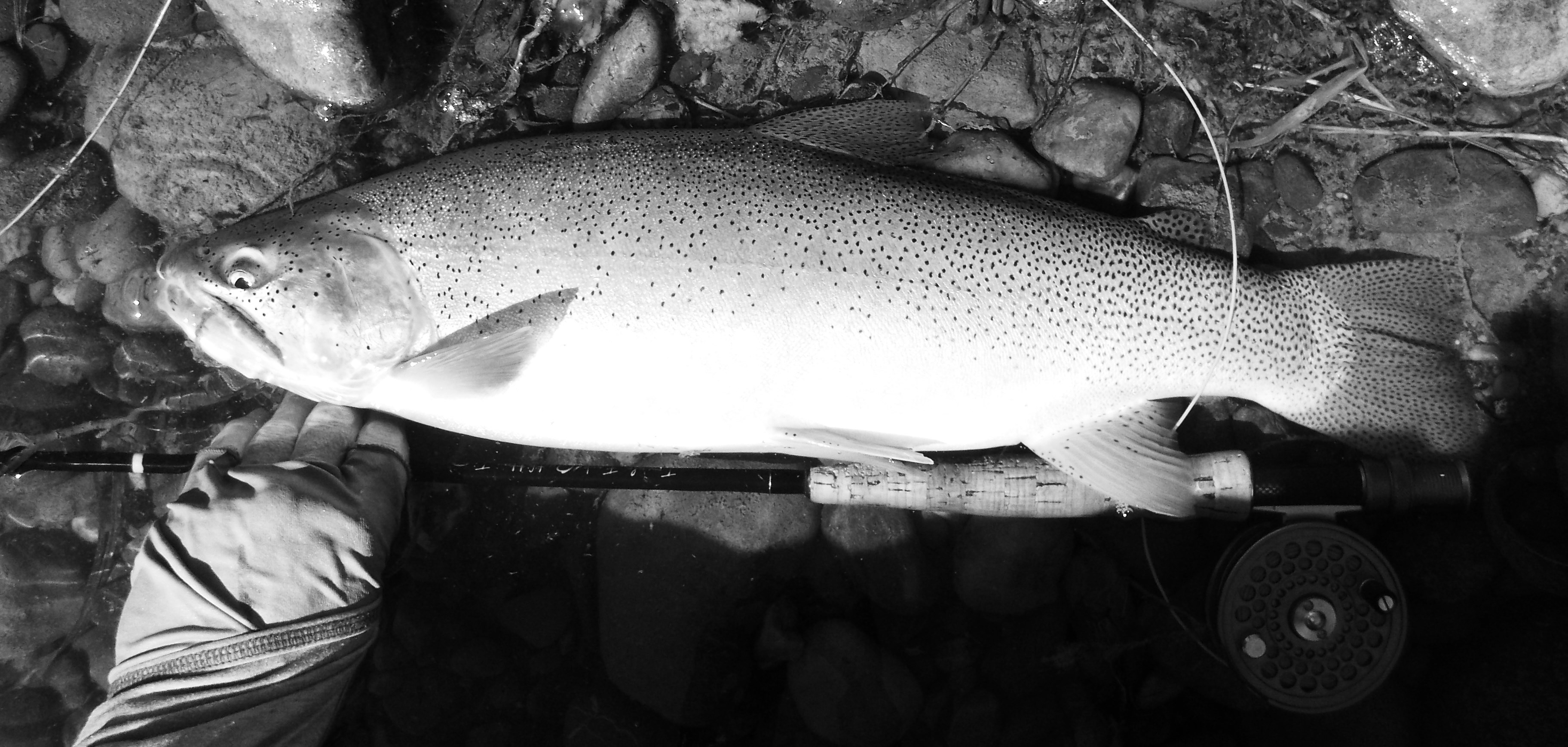
A local tailwater river that I frequently dry-fly on has a healthy population of sizeable rainbow trout. This is not surprising as they are the predominant trout species in my region. It also has a good population of brown trout. Also not surprising.
What is surprising is that in spite of this river section being a fair distance from the mountains and the water quality being far from pristine, it has some very healthy Cutthroat and the hybridized Cuttbow trout. These fish can be quite large but what is extraordinary is that they are especially robust. Hook into one on a broad section of the river and they race for the horizon, and can take you into your backing.
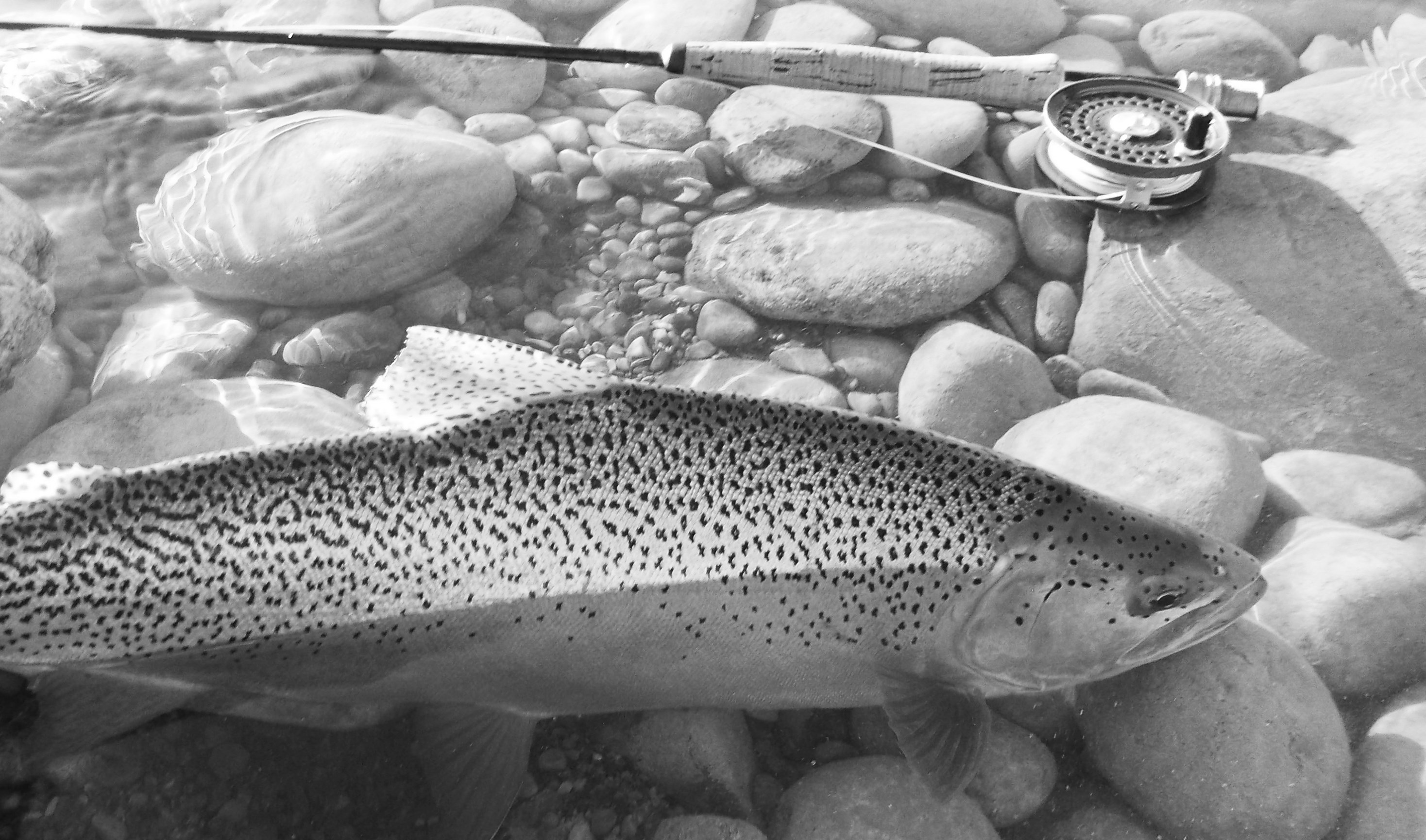
I go there when I expect a hatch and look for surface disturbances. It is “technical” water: whether it is rainbows, browns or cutthroat, or a hybridized version, you have to pay attention to what the fish are focused on (eating) and also their rise forms to figure out whether you fish on top, in the film, or have to go slightly subsurface. I sometimes get the subsurface feeders to tip up and take a dangling, klinkhammer style fly, or a helpless easy floating target such as a cripple pattern. Some people have success using soft hackles in this situation.

The river has very impressive rainbows and brown trout but I consider the cutthroat and their hybridized brethren to be the “Raging Bulls” of this neighbourhood. Think Jake LaMotta… they just don’t give up.
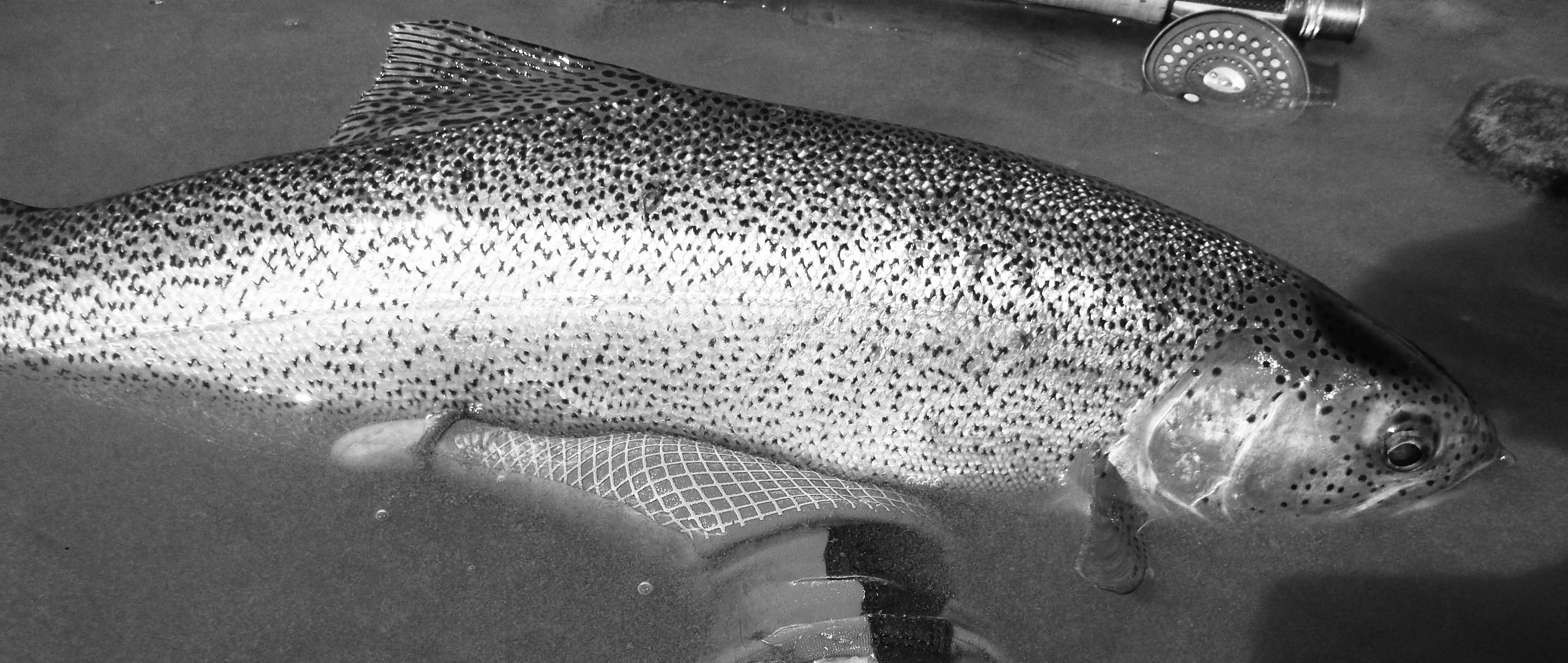
Here are some pictures of these fish caught (this and last summer) on small dries: size 16 and 18 pmd’s and one fish on a tiny beetle. All fish photographed on this blog have been released.

“And Fall, when yeller harvest moon and the hills growin’ brown and golden under a sinkin’ sun.”
Roy Bean
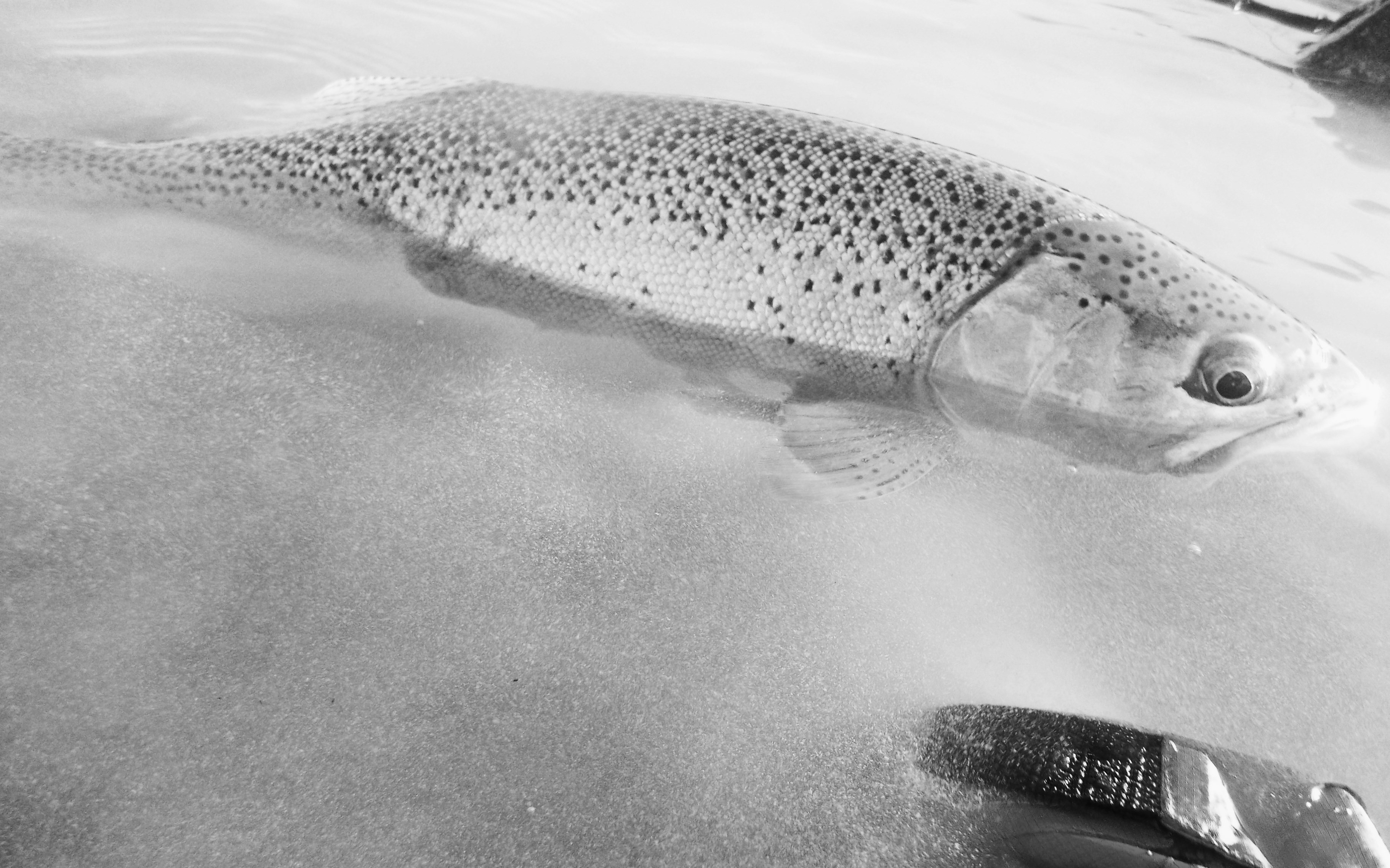
wild rainbow trout
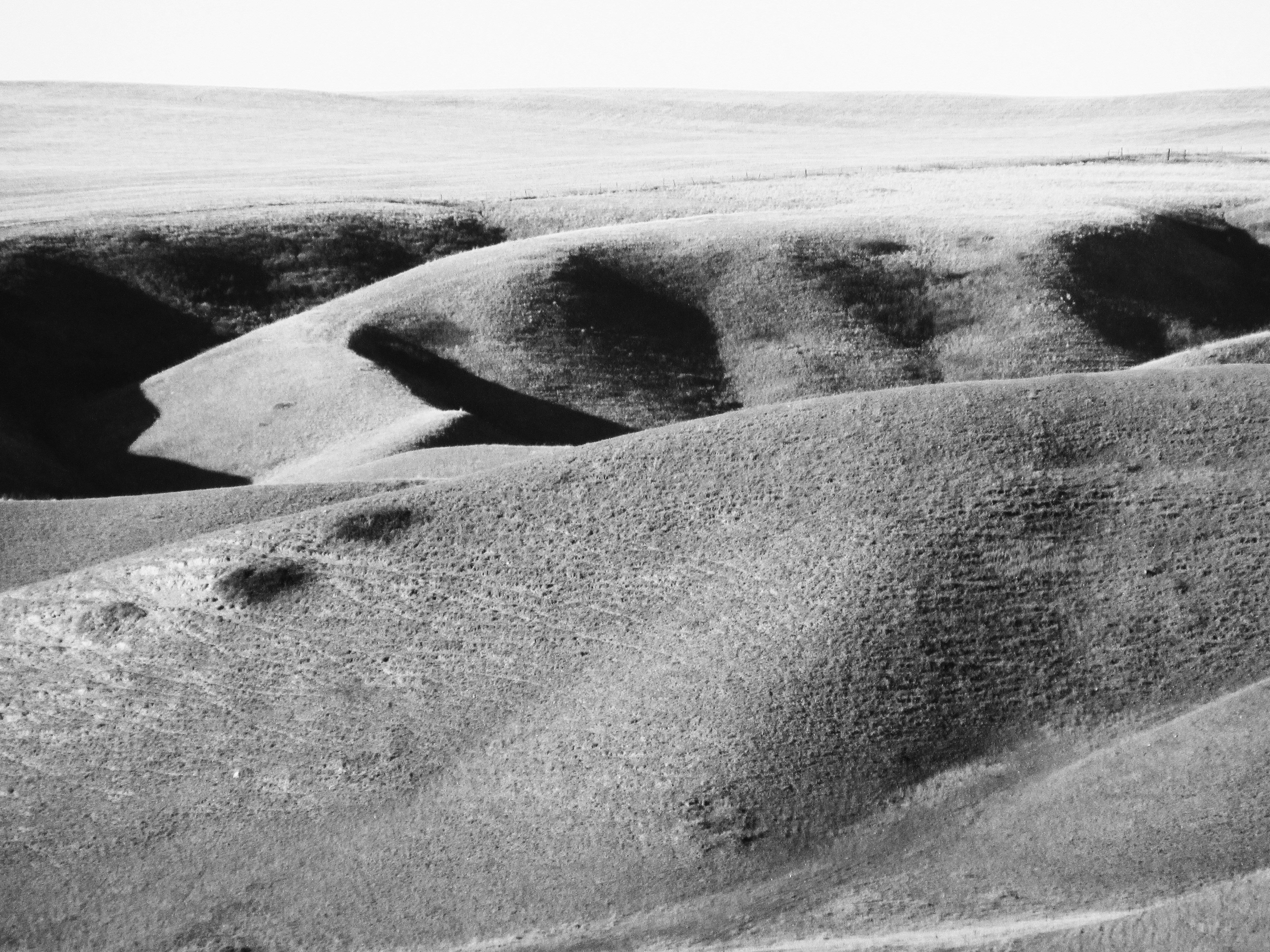
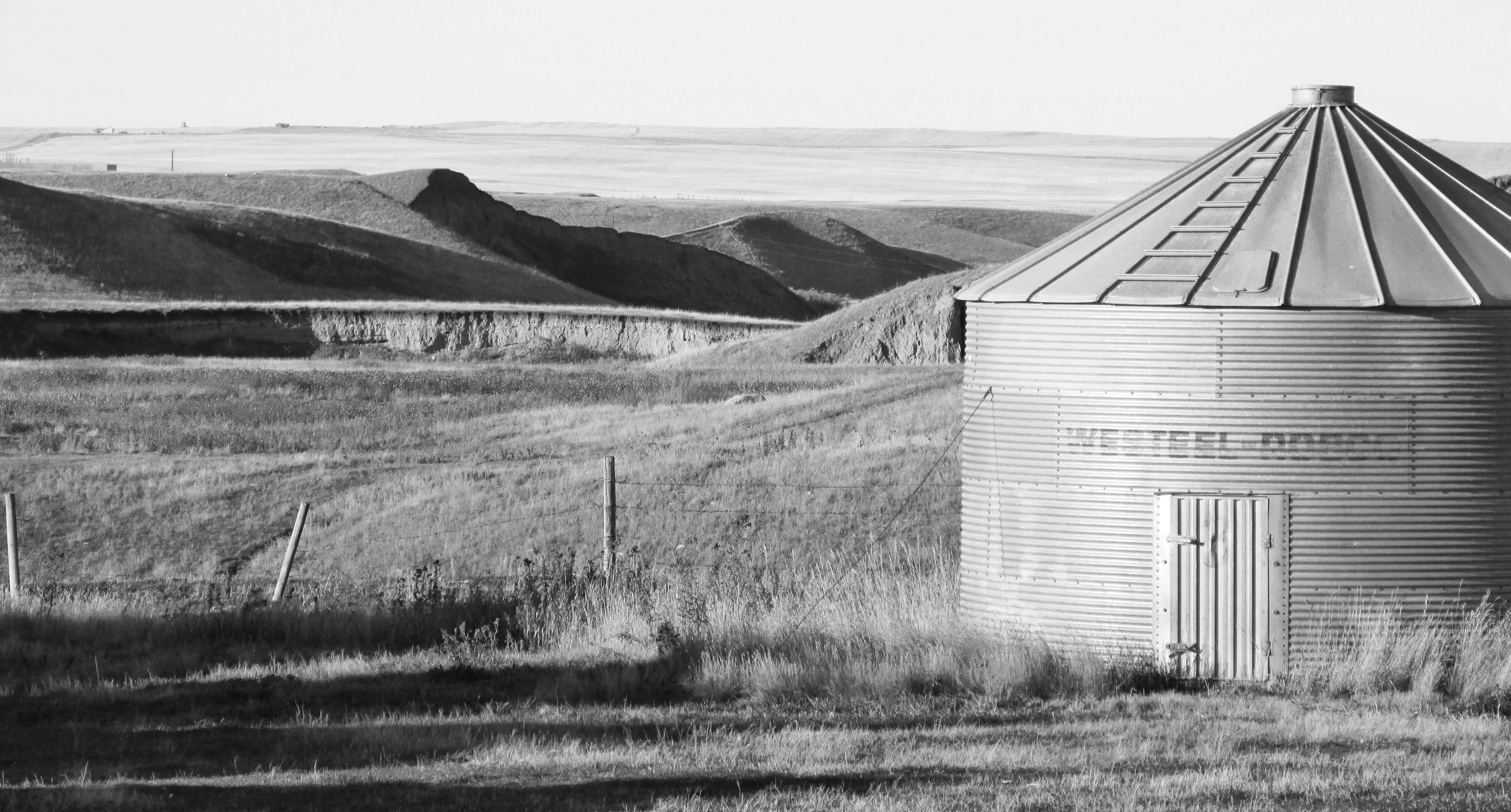
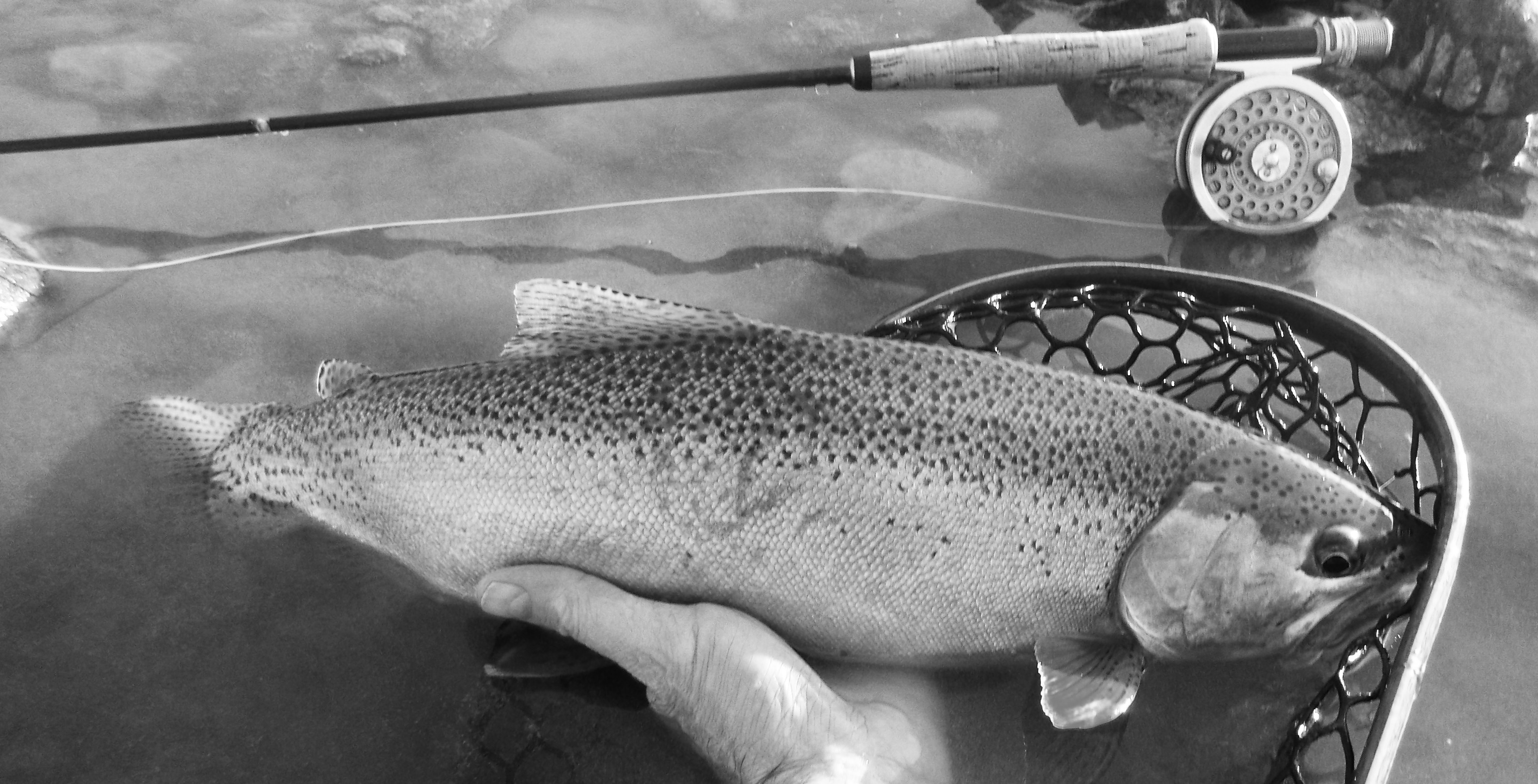
wild rainbow trout
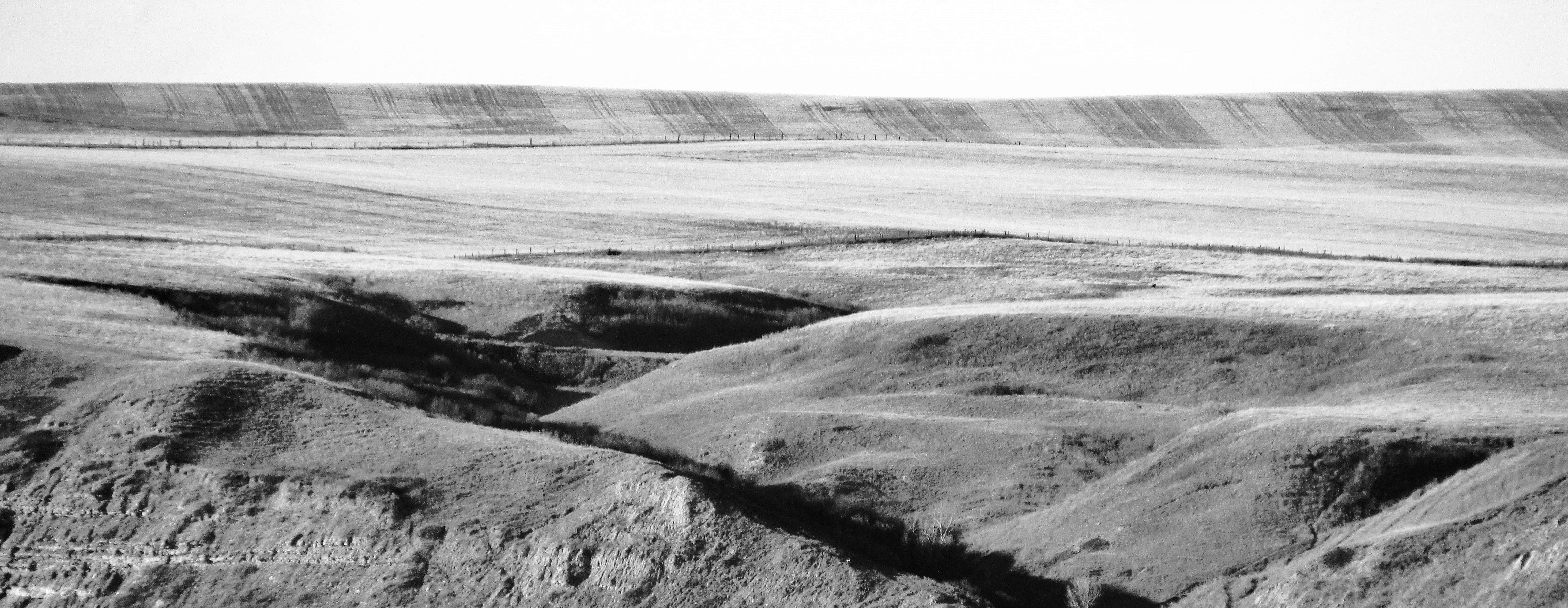
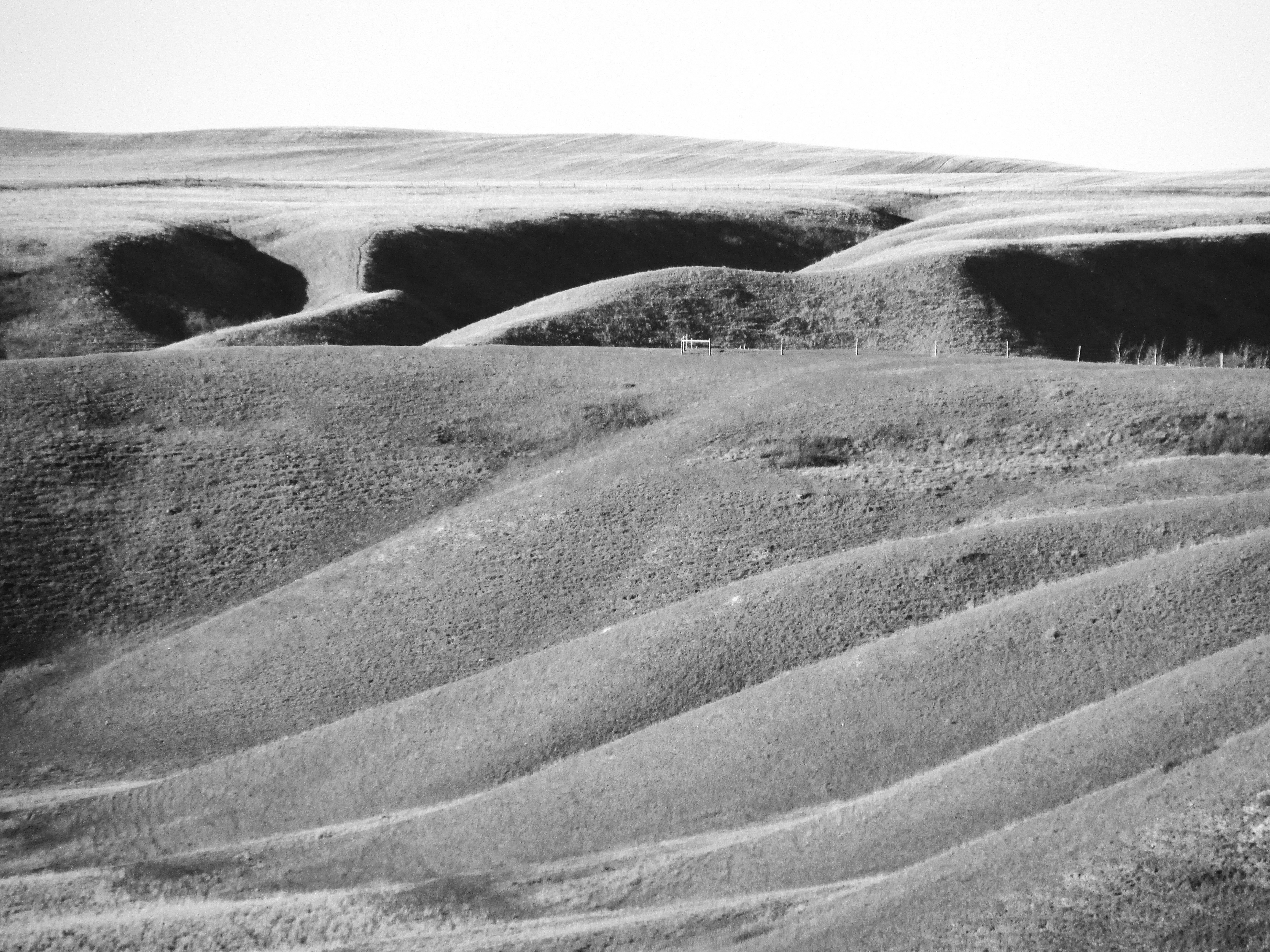
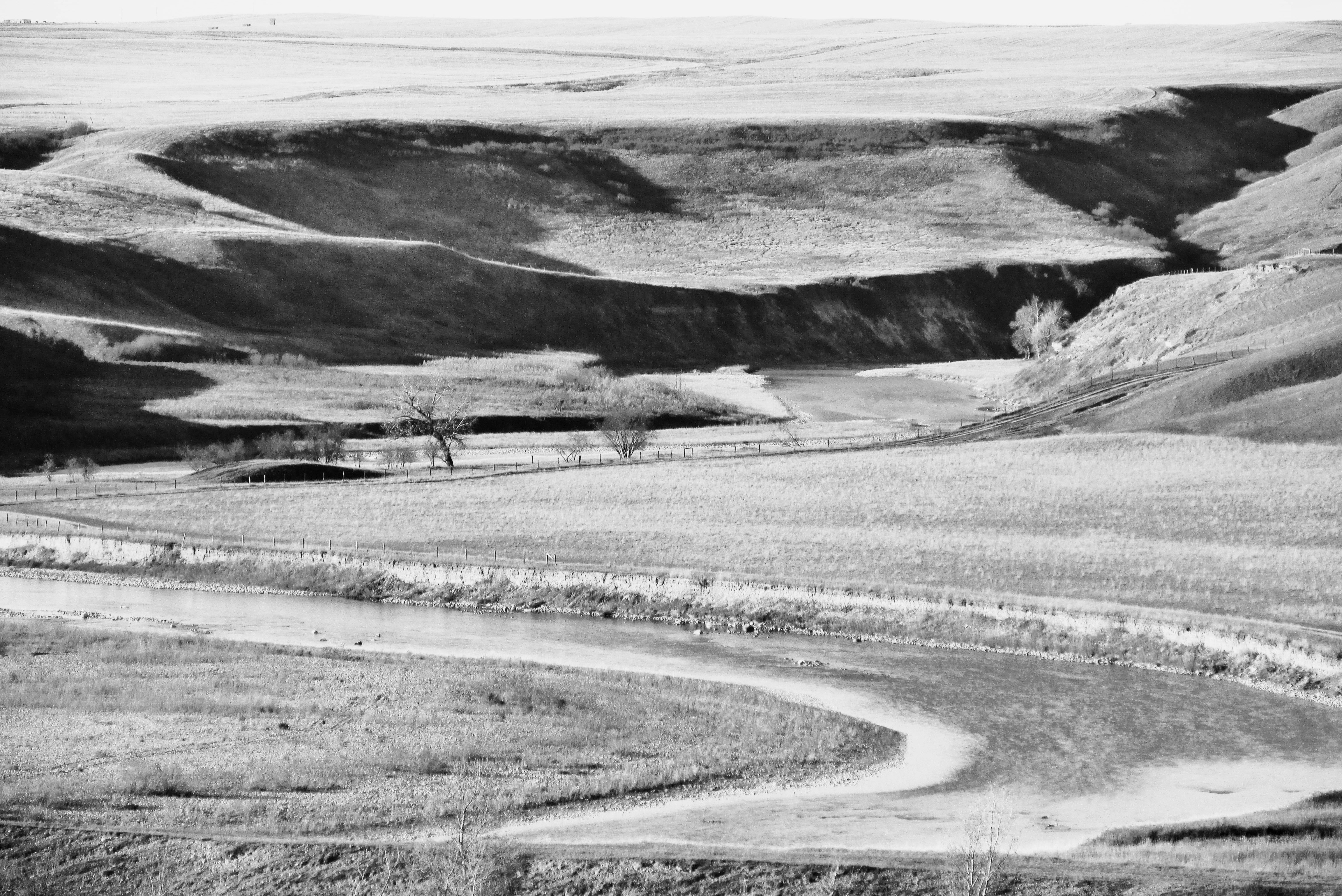
I’m a fortunate angler to live along the Continental Divide. If I don’t like the river and weather conditions on one side of the Rockies, I can drive fast and cross over in one hour or less and check out the situation on the other side. The east slope and the west slope are like night and day. They are completely different environments and sometimes have contrasting weather patterns. The Alberta east slope is dry, more wide open and breezy, and the British Columbia (BC) west slope is wetter, therefore has more vegetation (trees) and is usually less windy.
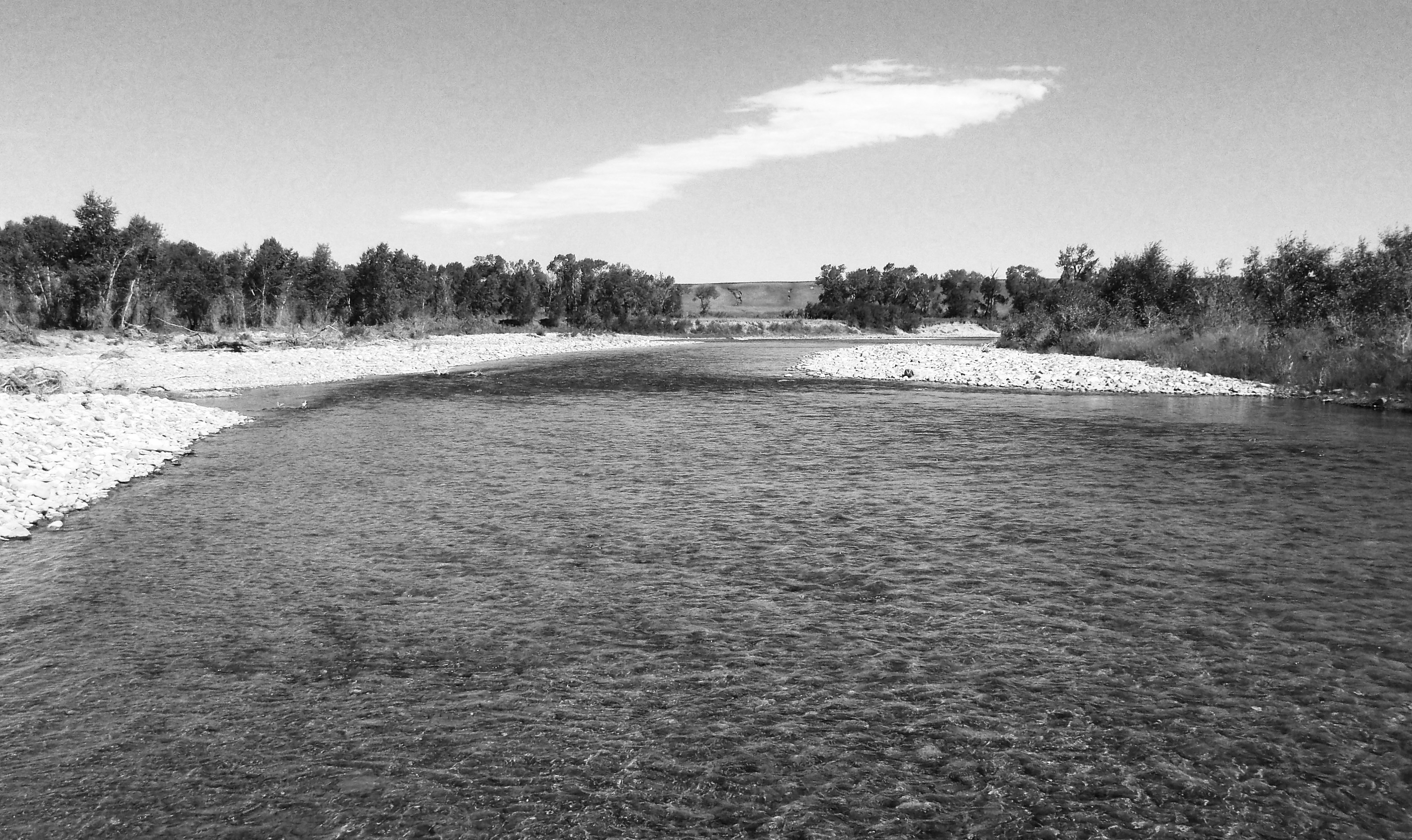
east slope river
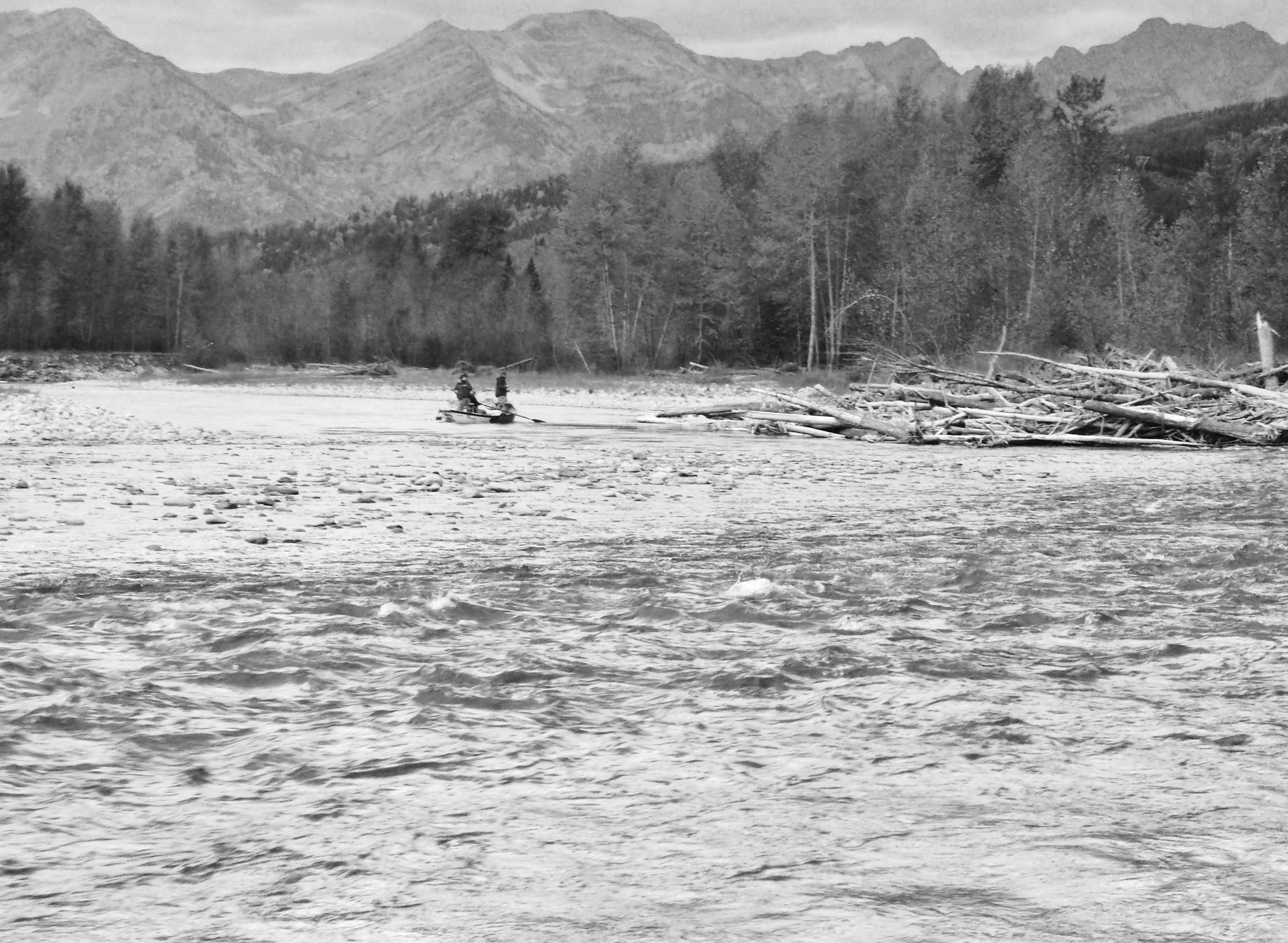
west slope, elk river
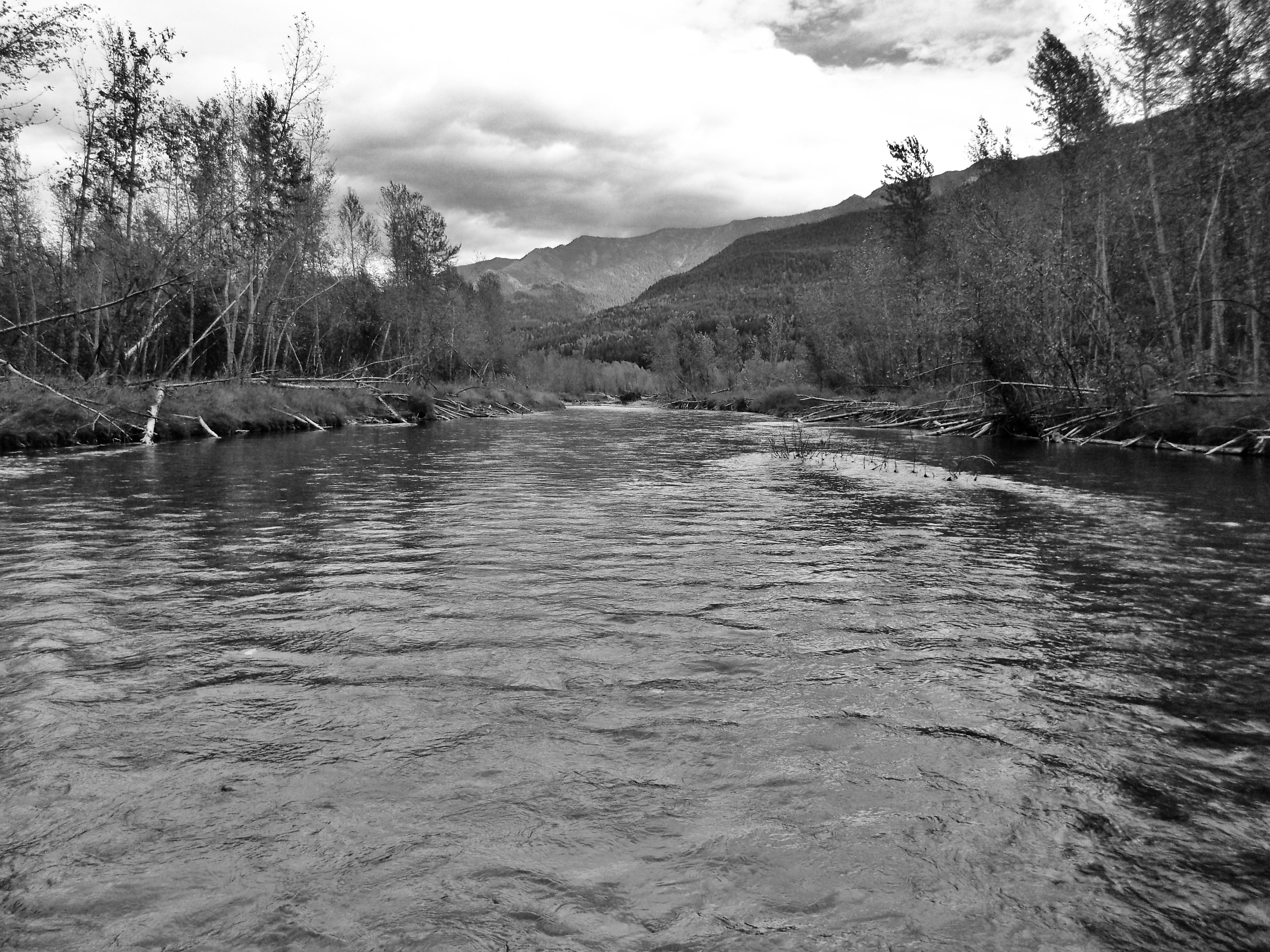
west slope, elk river side channel
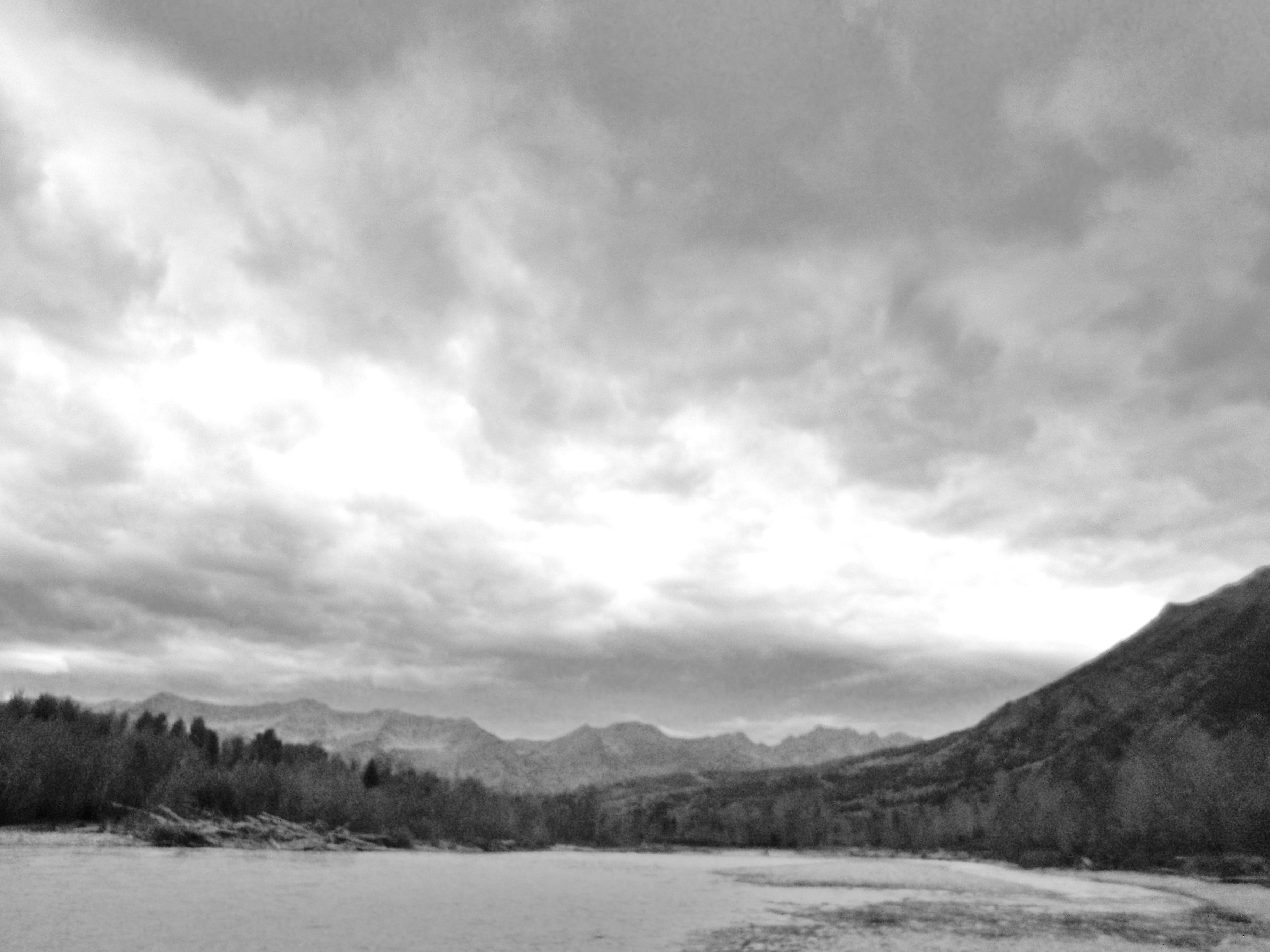
elk river
I crossed into BC this weekend as there were 100km an hour wind warnings in my region of Alberta. I fished the Elk river. With the predicted relative calm and overcast sky I was hoping for a Blue Winged Olive hatch. There was a very brief one late afternoon and I eventually found some rising cutthroat trout. An early trout was caught on a cricket pattern and afternoon rising fish on a size 20 Olive pattern: natural color deer hair wing tied forward, a turn or two of medium dun hackle clipped on the bottom, grey thorax dubbed and grey body, amber trailing shuck on a Klinkhammer style hook that allows the body to dangle. Sounds kind of complicated but I’m sure any fly tied the right size would have worked. Here are a few weekend pictures of the east slope, the west slope and some BC cutthroat.
The skin of a cutthroat feels just like a brook trout…silky smooth.
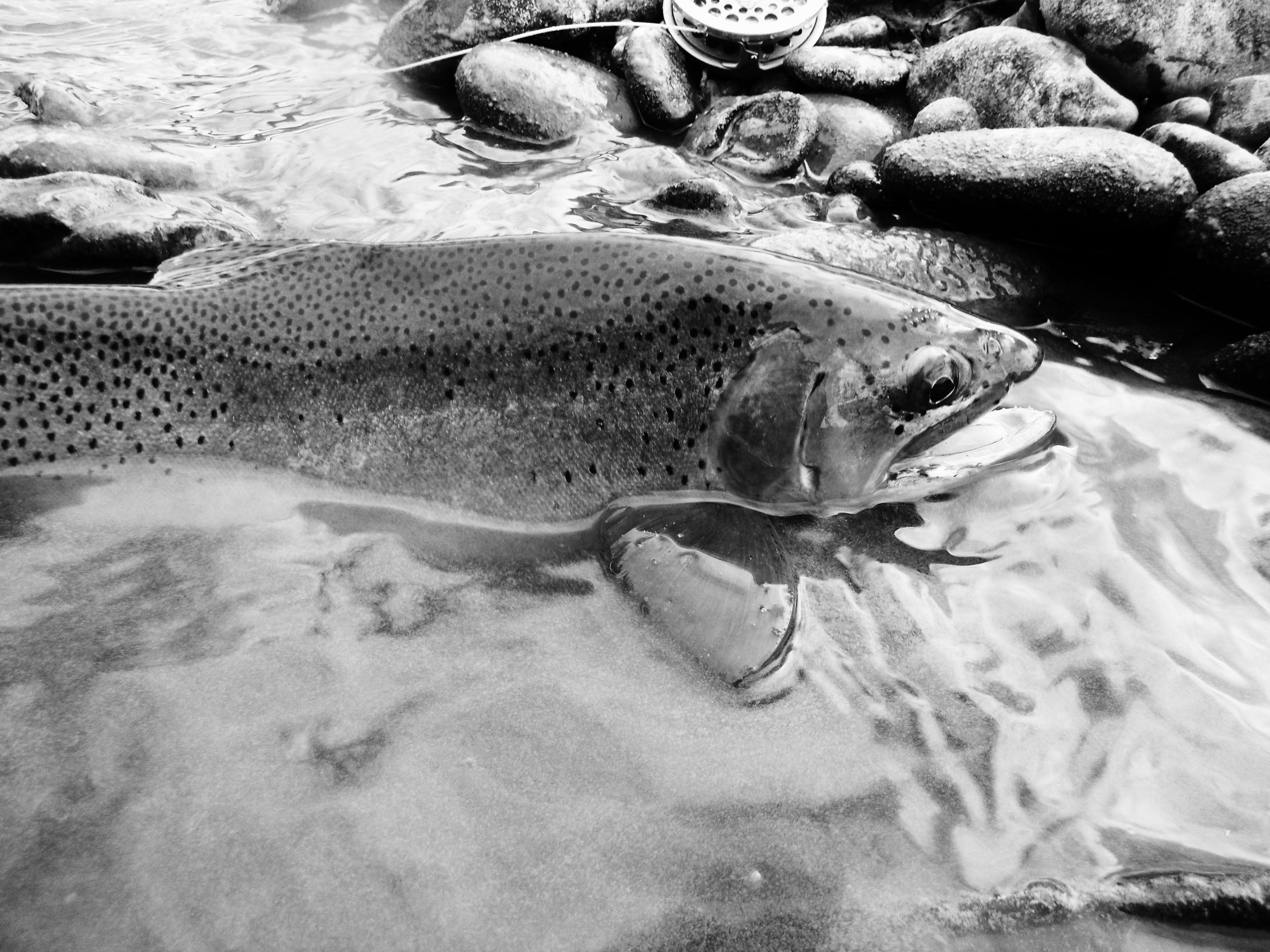
west slope cutthroat
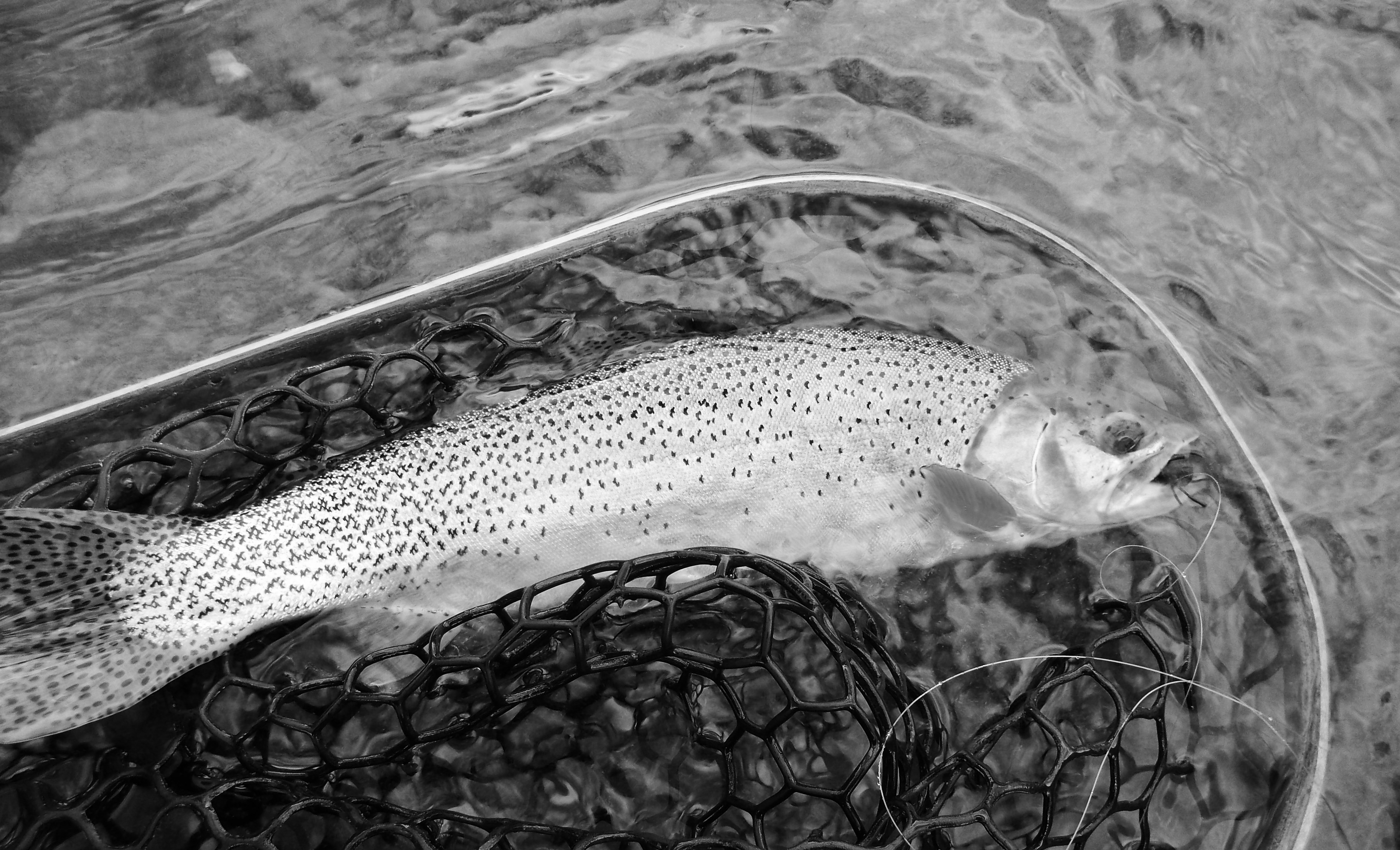
west slope cutthroat
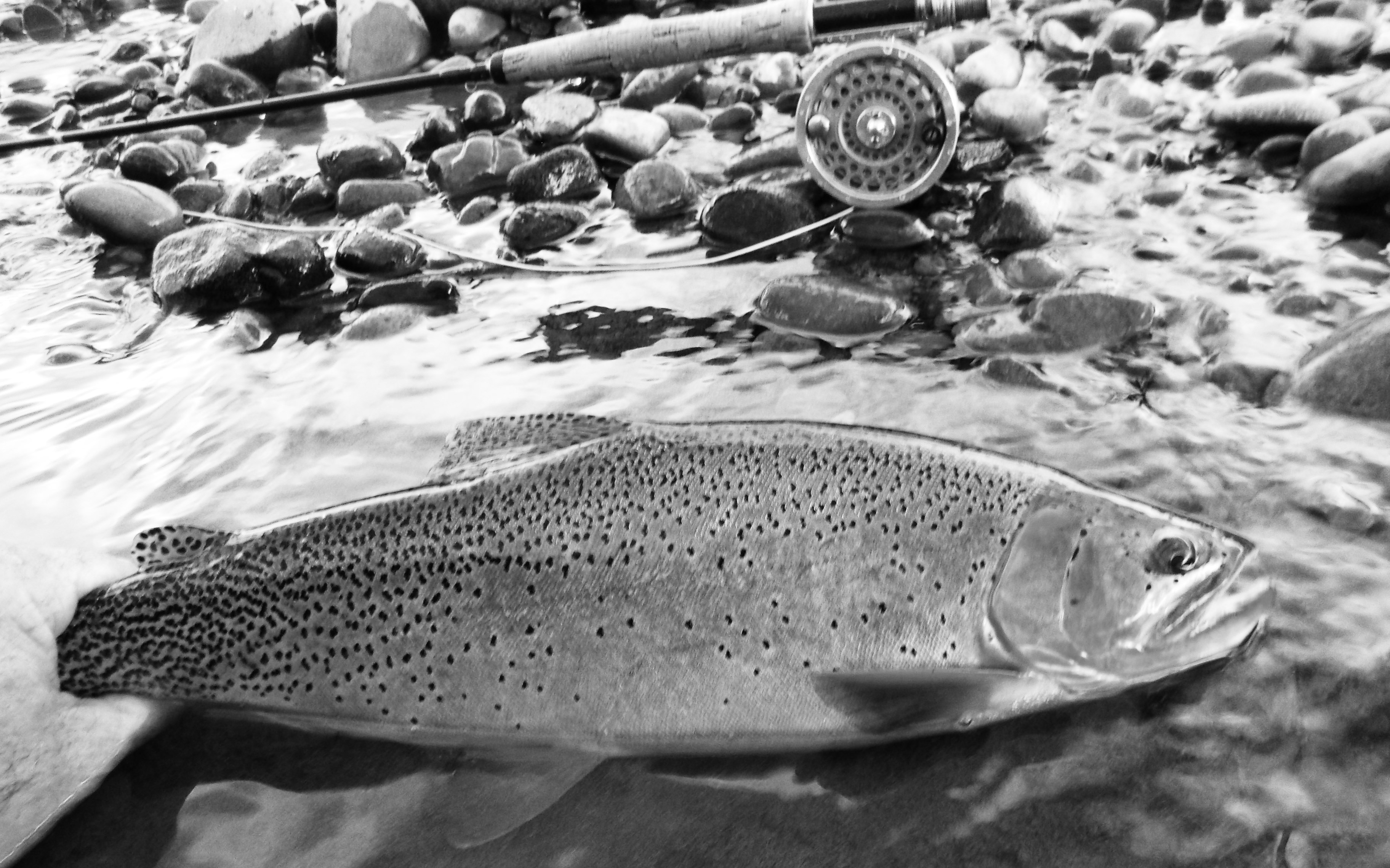
west slope cutthroat
 trout on dries