the ponds

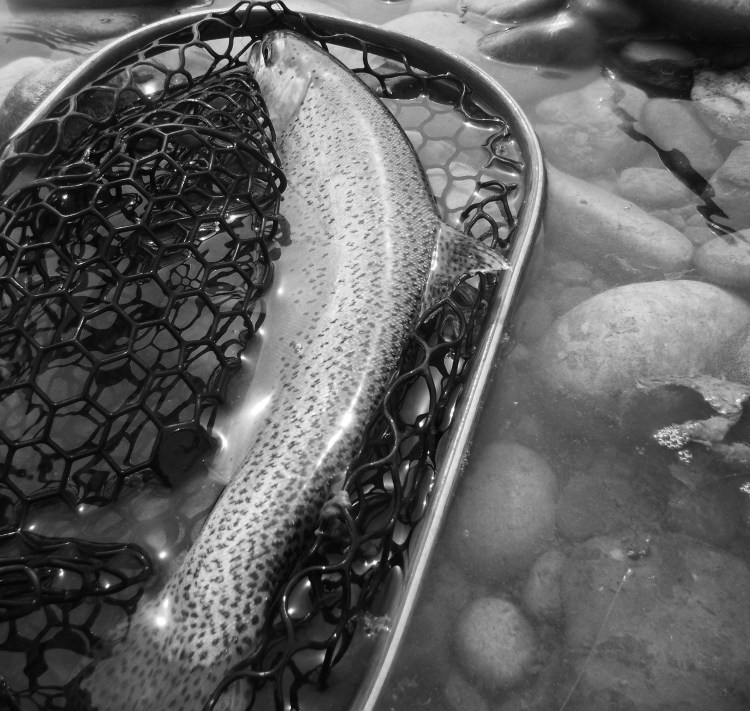
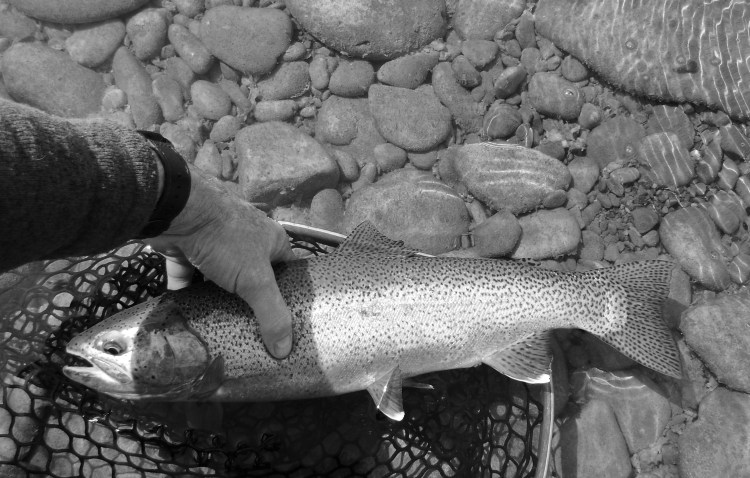
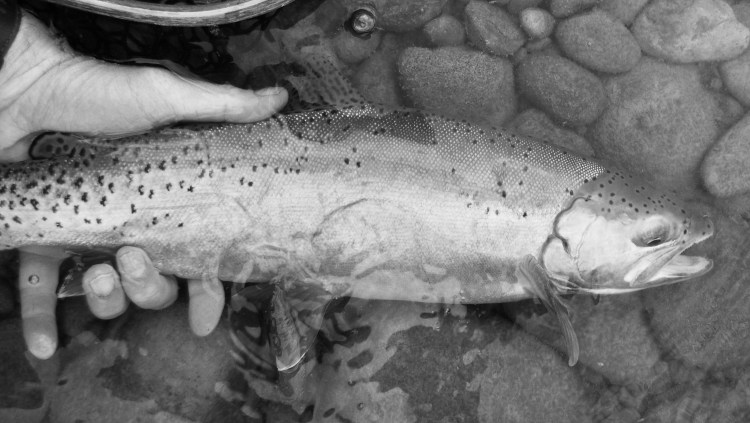
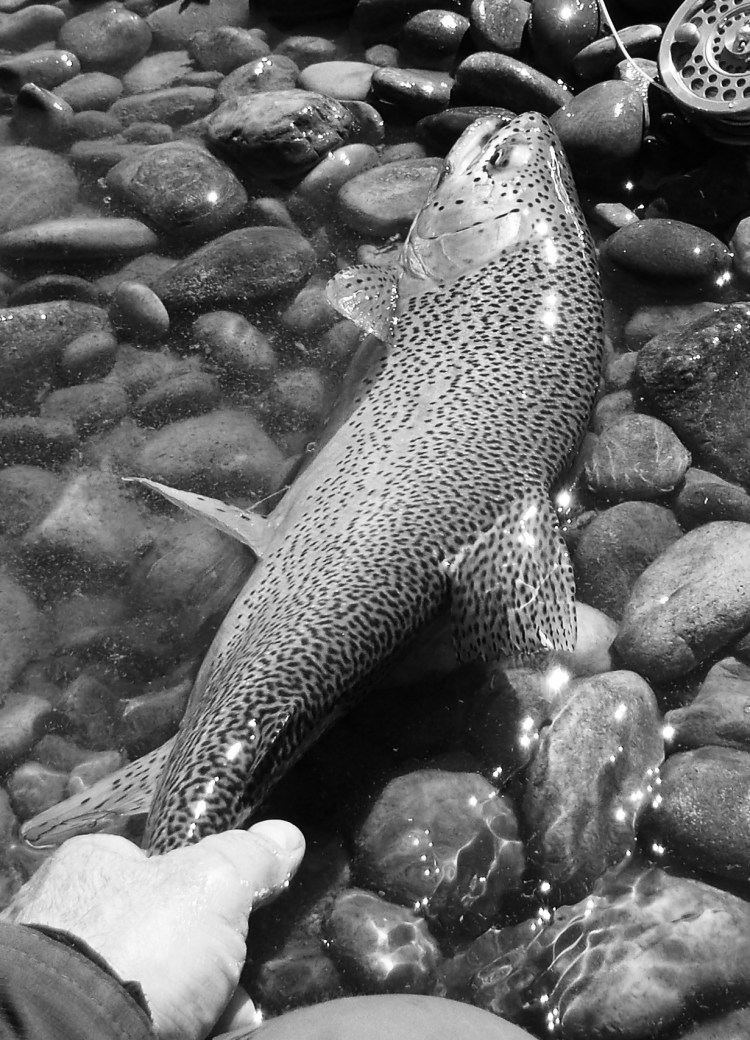
The rivers are high and dirty (run-off) so we fished the ponds which were low and clear. It was all sight-fishing with the predominantly blue sky above. We caught some on small terrestrials but did better targeting cruising trout with tiny nymphs. It was mesmerizing to watch them carefully inspect our minuscule offerings as we quietly encouraged them to eat. Most refused. A few were fooled. The ponds…

DSCN4906

photo by roman

DSCN4921 (2)

DSCN49022

DSCN4923 (2)

DSCN4909 (2)

trout released, photo by roman

DSCN4920 (2)

clear water

DSCN4904

photo by roman

DSCN4919 (2)

DSCN4911

DSCN4917 (2)

DSCN4924


DSCN4916 (2)

DSCN4913

Fly Fishing NZ, Gita and Brown Trout


pomardriv

HERDERS

They appear out of the mist in a small beat-up truck that has metal cage like kennels bolted to the flat-bed. A man and woman jump out and flip the latches on the cages. Several dogs, all Border Collies, bolt through the doors like thoroughbreds at the start of the Derby. The woman makes sharp whistling sounds and the dogs immediately respond. They push the sheep herd in the wanted direction. It’s a well rehearsed, beautiful choreography. Everybody knows their moves, even the sheep. The man and woman make eye contact with me and nod. They see me for what I am, an angler. I nod back. I’m probably on their property; their large sheep station; their ranch. They have thick woolen hats on. She’s in a bulky sweater. He’s in a tattered work jacket. It’s early in the day, cool and drizzly yet like all herders I’ve seen here in NZ, they are in shorts and high Wellington type boots. Their foot wear, like their truck, has seen a lot of miles. They head off on foot with the dogs and sheep leaving a trail in the wet grass, and disappear over a hill. I go down to the river. As I walk I keep hearing whistling in the distance. I’m on a high country station somewhere in Central Otago. I feel I’ve been here before even though I know I have not.

sheep

rdplateau

high plateau road to river

abovebwn

nz trout are thick, brown caught on dry-fly

THE CAMPGROUND

I’m up early checking and getting my gear together; my morning ritual. It’s still dark but the campground is alive. Touring cyclists are going through their own preparations: tinkering with their road bikes, their specialized shoes and cycling packs. They are as excited about the day ahead as I am. Some are already on the road. I can see bicycle lights strobing in the distant dark.

A fellow camper drops by. I can tell he’s an angler by his outfit: shorts over synthetic long-johns. It’s kind of the official uniform here for people who chase trout. His name is Remi and he is from France. He fly fishes NZ three months a year and has done so for several seasons. He asks me how the fishing has been. I reply, “slow for me”. He says it’s been, “slow” for him too and that other anglers are reporting the same.

Remi feels we are here “too late” in the season. He also feels there are “too many anglers” around. I tell him I was here last year at the same time and the fishing was excellent. He says, “the same time?” I reply, “the exact same time”. He looks puzzled

mornfogtfree

sriffle

romraindist

heavy clouds

Remi and I talk about NZ rivers and trout. He’s a great resource given all the time he spends here. Then I head out to fish. Light is starting to flood the valley and I want my last day to be a full one. I’ve run out of food and first head for a local coffee shop that opens at 8:30 am most days. Sometimes it opens at 9:00 am. That’s small town NZ…open late, close early. I grab a couple of muffins, a large flat white (coffee) and a thick chicken sandwich. I’ve still have three large Smitten apples in the bottom of my backpack and a liter of water, so I should be good for a full day.

GITA

The muffins are gone in an instant and I think about what Remi said, “We are here too late…there are too many anglers around”. I didn’t want to hear that. I already feel jinxed on this trip and my angling confidence is low. Just before I arrived in NZ tropical storm Gita blew through and with it came heavy rain, high and dirty rivers. And the trout seem to be “off”. Many we have come across in the shallows seem to have lock-jaw and are inactive. Spotting fish has also been challenging with the heavy skies. Those that are feeding seem to be down deep and on nymphs; very tiny nymphs. When the water starts to clear and optimism returns we get another deluge. At times on this trip I’ve felt like hanging up my wading boots. I’m taking the weather personally which of course is irrational. But anglers are like farmers…much of our success or failure is dependent on what is going on above, in the sky.

boots


rdplatshadow

road to river

dirtwater

fast dirty water

romnosglas

roman’s streamer brown

streamerbwn

another streamer brown, photo by roman

romfat

another pic of roman’s thick streamer brown

LAST DAY

The morning is still cold as I arrive at the river after visiting the coffee shop. I wet wade through a side-channel on the way to the main flow. It’s bright outside but there is high thin white cloud that is casting a milky glare on the river. I can still see through the surface but not a great distance. I feel I’ll be able to spot a fish in the shallows or one tight to the bank if I go slow and search carefully. Wishful thinking? I don’t know. In spite of walking 7 to 15 km a day on river stones and through thick clumpy Tussock grass for the last twelve days, with little sight-fishing success, I still have the energy and the desire to find a great fish. There are few things in life that I have this much resolve and patience for. I still have today. I have 8 more hours ahead of me. I’m going to put in my time and search.

It’s already windy which means this afternoon it could really blow and make angling and trout spotting tough. Morning might be my best shot; my best chance. At the first river pool and run that I come across I spot a large trout lying in the shallows. I’m shocked. Luck like this just hasn’t happened on this trip. It’s not moving much. It’s decision time: small nymph or little terrestrial dry? My hands shake at the sight of the impressive trout. I decide to go with what I’d toss at home. I cast and the beetle drifts a little, and I mean just a little (a few inches), to its left. No response. I cast again and this time it passes slightly to its right. Again, no response. After 2 or 3 more casts I get it right, the fly lands dead ahead of the fish and tracks right to its nose. His very large head tilts up and eats. What?!!! I can’t believe it. I set the hook, it holds and I eventually land it. When I take the trout out of the net to get a photo it lies motionless. I admire it for a moment and then without warning it bolts. I lunge with the net but it’s gone…no picture…I can’t believe what just happened.

I try to compose myself and continue on upstream and within 10 minutes spot another large fish on a bank in shallow water. Another chance. It rises to the fly, I land it and this time get a few photos. Then a little later I locate another great one on a bank. It also surfaces but the hook doesn’t set and it disappears into deep water and doesn’t return. I’m OK with that. I’m getting chances. More opportunity sight-fishing with a dry-fly in the last few hours than I’ve had in the past twelve days.

van

cargo van (home) my second week

The wind picks-up and then starts to howl and spotting fish becomes almost impossible by mid day. A bit of wind riffle on the water can actually help you see better. Too much, and it’s like someone has pulled down the window blinds. I persevere, spook one and then don’t see any more all afternoon. I return to my vehicle at 5 pm. I’ve walked all day and searched the water well. I’ve seen no other anglers. My best day angling of the trip. The door finally opened today. I had been standing there knocking on it all week and then it happened; it opened, just for half a day, but it opened. There was opportunity…two wonderful trout spotted and caught on dries. It’s why I came here.

bestfishdry

last day brown caught sight-fishing with dry-fly


bigbwnangle

same last day brown

REVIEW

Roman and I threw streamers when the water was dirty and big dries when the sky and water started to clear. When the rivers finally settled we had some opportunity to sight-fish. We probably caught less than a dozen trout but they were good ones. Quality over quantity. It is what fly fishing in NZ is really about. Here are more photos of rivers, landscape and trout. Some of the fish pictures below are of the same trout featured above but taken at different angles.

DSCN4771

bwnblurtop

fast river brown taken on dry

rommidstrm

DSCN4778

tropical

trout country?

calmwater

morning mist,  full day ahead

bowlong

rainbow on cicada prospecting

oreti

angler access, river over 1 mile away in distance

nevsmall

small stream, bright day welcomed

pomarivleft

love sight-fishing this river and landscape

bwnbackmit

sight-fished brown, photo captures unbelievable girth

DSCN4821

riffles and wind, wide open terrain

rno2fish

roman, brown on dry

DSCN4760

mid-sized brown on cicada dry, photo by roman

bwn3finge

brown on cicada on bank

calmtree

some good weather

streamerclose

streamer brown, photo by roman

mussrom (1)

field mushrooms

DSCN4803

dropping down from high plateau to river valley in morning fog


DSCN4761

cicada bwn

brown on cicada prospecting, photo by roman

DSCN4775

3treesnev

clear day

DSCN4772

handbwn

photo by roman

DIY Fly Fishing New Zealand: High Plateau

For three days in a row I drove the dirt switchback road all the way up to the high  plateau. That’s where the river was. I’d get up early. My campground breakfast: peanut butter on crackers, a banana and a lot of water. I’d always wake up parched. I never hydrate enough when I fish. Sometimes I even forget to eat.

z4

The car thermometer registered 2 or 3C in the mornings. Once in town I’d grab a large coffee, or two, for the drive. Then it was the slow climb up the switchback leaving the fruit trees and vineyards of the valley behind.

yes

In the morning there was always some fog or cloud at elevation and the temperature would drop. Prehistoric looking rock monoliths would appear and startle me as I made my way through the mist. I imagined Sherlock Holmes on the Moors in The Hound of Baskervilles, and a huge dog with glowing eyes on the hunt. I also imagined William Wallace and his clan on foot in the Highlands disappearing into the fog, eluding the English who were also on the hunt.

z1

After the summit it was a short steep drop with hairpin curves descending to the river. I kept my hands clutched to the wheel. It was low gear, foot riding the brake pedal all the way down…coffee sloshing and spilling. By the time I got to the crossing and pulled-over it was around 8:30 or 9:00 am and sub-zero, usually around  -4C. Cold. When I exited the car I immediately regretted not bringing waders on my trip.” Stupid is as stupid does”.

By then the top of the hills far to the west were just starting to catch the morning light. I’d watch the glow with envy. I’d have to wait some time before it travelled all the way to me and brought warmth. I was early. Too early. I’m always too early when I go fishing.

z6

I wrestled my wading boots on over heavy wool socks. They were still wet from fishing the previous day and stiff with the cold. On my first few steps I walked like Herman Munster. It was like I had cinder blocks on my feet. As I moved back and forth they loosened up a bit. I got the rest of my gear together. Fingerless fleece gloves made the task bearable in the cold. I checked and double checked to make sure I had everything. I didn’t want to have to come back to the car because of a forgotten item. I wanted a full day on the river. I wanted as much time as the light would offer. I’d be covering a lot of water and wanted to go in only one direction until late afternoon. Until the waning light would remind me it was time to turn around and boogaloo back.

Morning frost turned my boot tops icy white as I crossed a field on the way to the water. Grass hoppers, cicadas and other terrestrial bugs were sluggish, some seemingly in a deep sleep. I knew that would change. The sun would bring some of them back to life and trout would be on the look out for them.

z5

Briskly walking the river banks warmed me and then river crossings would make me cold again. Upstream I went, feet frozen, reading and memorizing the water as I travelled.

Then the sunlight finally reached the river. I embraced its warmth. It was like nourishment. With the sun’s energy I knew things would come alive. With the light flooding the river I was now able to sight-fish. I could begin my search in earnest. My search for Brown trout.

z2

Not much had been written about this river on the high plateau, or at least I couldn’t find much. Several years ago I did come across one good story which caught my attention and stayed with me. It was written by a fly fishing guide. He described the region as wide open, barren, inhospitable and prone to hostile weather, and said the river was moderate in size. For an angler walk-wading, mid-sized water is always welcomed as it is easy to negotiate and locate fish in. The author reported the river did not hold many trout but had some good ones, even a few trophies, and said it fished best at the beginning of the season. Here I was standing on its banks near the END of the season. Wrong time? I didn’t know. I felt there had to be some trout around. And they had to eat!?

z7

I could tell the river had been fished over all summer long. The path alongside it was well warned by wading boots and sheep hooves. With a six month fishing season and a lot of angling pressure, I knew the trout here would be on high alert. With the wide open (no place to hide) terrain I’d have to take my time and be stealthy. I didn’t want to scare the few trout that I might come across. Things were going to be challenging…

By the afternoon the temperature had climbed and I was comfortable. I walked and watched. When I could, I climbed riverside hills and searched from elevation. I continued to make my way upstream. Then it happened. I spotted one.

z

For three days I fished different sections of the river. Eventually I hit a gorge and it was time for me to stop. I never saw any one. The place was silent. Silent except for the comforting sound of the natural world. Every full day I’d get 2 maybe 3 chances at great trout. I think I averaged 1 or 2 to the net per day, all on dry flies. Although I caught some larger fish in a river further north and saw more of them in a famous river south, the trout in this river were the hottest, most spirited of my trip. I brought my energy and determination to the river every sub-zero morning and these Brown trout more than matched/equalled it. I frequently saw the backing on my fishing reel. Many months later I still keep thinking about two very memorable trout that out-dueled me.

zzz

In a region described as inhospitable, I felt at home. In a region described as barren, I found a great river and some amazing trout. The high plateau…best place I’ve ever fished.

zz


zzzzz


brutal

I had the week off and decided to get out-of-town. It’s something I haven’t done since March. It was a quick trip down to Sun Valley, Idaho. A 12 hour drive for a family vacation along with some fishing on Silver Creek. I’ve waded this beautiful spring creek before and connected with some of its challenging trout.

The air was thick with smoke all the way to south central Idaho. Several towns we passed through on HWY 93 were on evacuation alert. It was burning in BC when we left. It was burning in Montana as we raced through. It was also burning in parts of Idaho when we arrived. Did I forgot to mention that things were burning?! Sun Valley was Smoke Valley for most of the week.

smoke


reel

no visible life

I fished downstream of the famous Silver Creek Preserve section as understandably  “no pets” are allowed on the hallowed water. There were few bugs on the lower section; few rises; inconsistent rises…one here, and then one there 10 minutes later. Brutal.

abbyw

excellent wading, no wake


abbysit

One morning a brief Trico hatch occurred (once the smoke cleared) which I appreciated but very few good fish broke the surface. Just a lot of little guys. Guppies. Brutal.

oxsmoke

the oxbow in smoke

oxbow1

oxbow, clearing sky

I searched the banks for signs of life: water displacement, any indication of a good one prowling or sipping, or gulping a terrestrial bug or anything. I watched and watched while baking my brain in the intense heat. In desperation I even fished blind, covering water with grasshoppers, beetles, crickets, damsel flies…brutal.

irrig

cloud

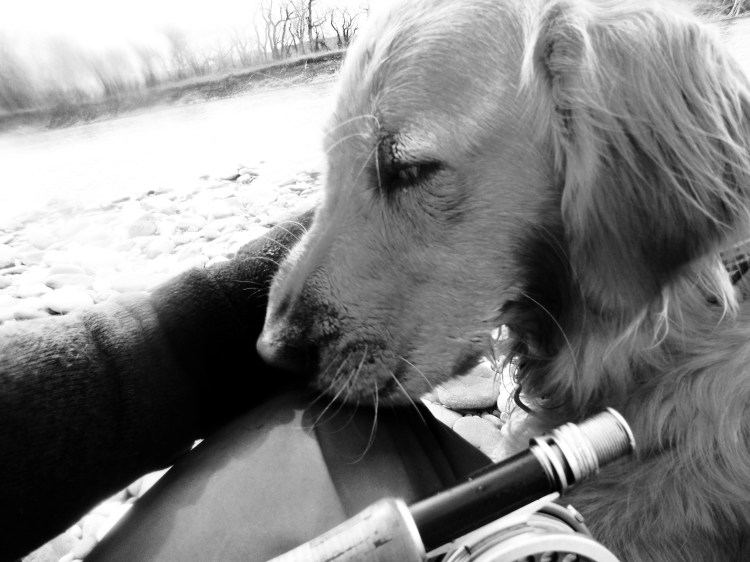
Eventually I just had to accept the situation: that the fishing was poor and probably wouldn’t change during my brief visit. Things got easier after that (but not the fishing). At the end of the trip Smoke Valley cleared and beautiful Sun Valley returned. Our lungs breathed easier. My retriever stopped sneezing. I spent more time exploring the quaint town of Hailey, where we were staying, and a little less on the creek. I must say that if I had to pick one western town/region to drop into for three months every summer, and that was close to great fishing, this would be the spot.

rays

I caught several fish on the creek but managed only one good one in 4 days fishing. It was a brown trout, which was occasionally rising. It was one of the few good fish that I spotted. It took a small beetle. It was the prize of the week, and even more significant than it normally would have been, given how few opportunities there were to cast to large rising fish.

006 (2)

We took a different route on the way home, driving interstate highways at a good clip after spraying our vehicle down with flame retardant (just kidding). Several areas we passed through were very smoky. Once we hit the Canadian border the smoke intensified. There was a fire racing through Waterton National Park. At home ashes were raining from the sky. Brutal.


Local Trout Water and Dog

With only a light breeze on Sunday I checked out my local tail-water river. Spring in SW Alberta has been slow in coming. Nothing new. I’ve been itching to get out as there is a ton of snow in the mountains and when the temperature finally heats-up and it begins to rain, a serious run-off will occur and it could last awhile….possibly a couple of months. So, the opportunity is now to sight fish (and hopefully the next couple of weekends) as the water is low and fairly clear.

abby34 (1)

abby


There were some bugs on the river: midges were the most numerous type; then some Skwala stoneflies; and just a few BWO mayflies. I saw very few rising fish. It was a slow day. However, I managed what looked like a Cuttbow (hybrid) on a dry…a nice one, and missed a good brown trout at the end of day.

cutbow1

river

Next weekend should be a bit better as hatches intensify. The BWO’s will get the fish looking up and rising.

cut2

DIY Fly Fishing New Zealand – Chasing Light

THE BEGINNING

All journeys begin in your head. They start with a thought. You imagine what it would be like to go somewhere and you begin to process it. Sometimes you do that for a while then let it rest. Then later on it resurfaces. The thought returns. Sometimes this goes on for a long while and other adventures/ journeys end up occurring instead. Then that particular thought returns.

nz ah big bend

Several years ago I ordered a few books on fly fishing New Zealand (NZ), South Island. Every winter I’d pull them out and read another chapter, look at another road or topo map, highlighted some rivers, search the internet and imagine what it would be like to go there. Then I’d check the cost, look at my insufficient budget and promptly plan a less expensive angling adventure instead. Something closer and more manageable like springtime Rooster fishing in Baja, or a week or two just south of the border dry-fly fishing Silver Creek in Idaho or the Missouri river in Montana….all wonderful destinations in their own right.

nz me distance

author along river, photo by roman

When I thought about a trip to NZ I first felt I’d have to go for a month, nothing less. Well life being what it is, I could never manage to string together thirty days. Finally I came to the conclusion that if I waited for the opportunity to spend a whole month there, it just might never happen. So I managed to put together two weeks and a few travelling days. It would be 13 angling days total in NZ. Not a lot of time but I felt possibly enough to shake off jet lag, orient myself, find my wading legs and get in synch with a few rivers. I felt that if  I could do that and if the weather cooperated, I may have a chance to fool a few amazing NZ trout with dry flies, and hey, maybe even a trophy.

I picked late February, early March as summer in the southern hemisphere would be coming to an end and transitioning into Fall. I hoped less anglers would be around as the prime time season would be winding down; I hoped that water levels would be like they are at home at that time of year: generally low and clear; I hoped for sun so I could sight fish; I hoped the trout would be looking up and willing to eat some of the terrestrial flies that I planned to tie and fish; I hoped for a shot at some special fish. I hoped for a lot.

nz roman dist

THE MIDDLE

I met a friend, Roman, the first week I was there. He had already been there for several days and had warned me from a distance to, “Bring your A game”. He had been catching but reported the angling was extremely challenging. Our time overlapped for a week and then I fished solo for my remaing week.

While Roman was in NZ he bungee jumped, climbed into a bi-plane, and sped our rental car around like a professional rally driver, leaving a good portion of the front bumper  somewhere up on Rainbow Station road. He fished with equal enthusiasm and caught some great trout. On two occasions I was fortunate enough to be close by and photographed some of the ones he caught. His featured rainbow and brown trout below were some of the best of the week. His confidence fly: a yellow humpy. He was a great angling and travelling pal.

nz car window 3

nz bungee

nz r biplane

r big bow

r big bwn

r fighting

roman: fish on!

r fish on

roman with fish off of bank


It is much easier to sight fish when it is sunny so on my second week I tried to stay flexible and mobile. I watched the weather reports and went where the conditions were predicted to be most favorable. I chased the light…

ah flat

nz head shot

I also chased open terrain. It’s simply where I enjoy fly fishing the most.

nz ah side chan

nz curvetail top

brown trout

nz spring c

In the clear low water conditions the fish tended to be in and around the pools and along banks with some depth or those in close proximity to pools. I’d cover the shallow river sections quickly and then slowed down and was especially watchful in the prime areas. That’s where a good fish would be. If not, then it was onward and forward to the next promising pool. In NZ you have to cover ground. Often it is as much about walking as it is fishing.

DSCN4047

Spotting fish was all about maintaining concentration. Lose it and you’ll miss or spook fish. Scare a fish and you might not see another one for a long time. I scared my share, especially in low light conditions.

nz car window 1

nz frost gras

great bank, early frost

nz n willow


nz great bank

a great bank

nz hand head

nz n long

nz slab

large bank brown

I caught all of my fish on dry flies, most of them being terrestrial patterns. Usually the smaller sizes were best. By the time we arrived in NZ the trout had been fished over by local and international anglers for 4 solid months. Also two out of the three rivers we fished were quite famous and therefore they probably receive additional angling pressure all season long. I found most trout to be quite selective and challenging. There were signs other anglers had been around but I rarely saw anyone during my 13 days there.

All trout caught were released.

nz girth net

nz ant

ant pattern

nz ah prints

others have fished here

nz beetle

beetle pattern

nz fly cicada

larger pattern: cicada

nz long brwn

Brown trout blend in well with any sort of river bottom and with bank shadows and coverage. Often they are difficult to spot. You have to go slow, watch, then watch more, and look for shape and any sort of movement.

nz camo

large brown in shallows after release, blending in

nz top shot

another released brown

nz n path (1)

subtle path, river to right

nz hand hook jaw

Once March arrived mornings were quite cold, especially on a river I fished on a high plateau. By mid day things always heated up, even the fishing.

nz frost

early morning frost and fog, heading for a river

nz me cold

cool march morning

nz bib mouth

nz ah long willows

nz me 34brown (1)

photo by roman

nz equip

all day fishing equipment

Holiday parks (campgrounds) were a bargain in a relatively expensive country. Here are some photos of small cabins I rented (below)…all parks had hot showers, some had a community kitchen and laundry facilities. Many of these units were booked by vacationers. Town Fish and Chip stands were also a great deal.

nz cabin 1

nz cabin2

nz coffee shop

small town coffee shop

nz me 34brown (2)

photo by roman

Other images…

nz shep jam

nz traffic jam

nz brut

had to beach this big brute

nz ah willows

nz n wind

in open terrain sometimes you have to deal with wind

nz big head

END – LAST DAY

It’s my 13th day here in NZ, my last day and it’s coming to an end. The light is waning. I’ve got this 8 pound plus brown trout feeding on some tiny Blue Winged Olives (BWO’s) riding a bubble line on the outer bend of a large perfect curve on the famous river that I’m on. I’ve read a lot about this river but no one ever mentioned any sort of hatch in their reports. Yet here is this oversized trout feeding on them. It’s windy. It’s cold. I’m wet and I have been out in it for 8 hours without waders. I have a full box of carefully designed BWO flies back in my car a one hour walk away. A lot of good they’re doing me in the bottom of my duffel bag! The big fish took a good look at a small ant pattern I tossed its way but rejected it. The ant has duped several picky fish on this trip.It also came close to eating an Adams like pattern but didn’t. I decide I’ve got to hike back to my car, heat up, organize my luggage and head for the Christchurch airport 4 hours away. I’ve simply run out of time. Leaving a fish like that feeding is sacrilegious but I’ve seen some great fish in the past two weeks and made some connections. I tie on a fairly big cicada pattern and toss it above the trout knowing what the end result will be – he’ll take off! The cicada passes over him, his feeding comes to an abrupt end and he disappears. Game over. Now I can go back to the car and get warm.

On the drive to Christchurch I’m thinking of my time in NZ: All the large, beautiful trout; seeing them rise; the clear rivers and majestic terrain; Roman taking off in the bi-plane; the outstanding brown trout he caught on the bank; great breakfasts at the Wrinkly Lamb; the Aussies talking about a river in the shadow of a high peak north of a big lake where they spotted many large skittish browns; a small fly shop owner talking about the same river and warning us about the Quick Sand around it; another angler looking bug-eyed while describing his experience the previous day on a small river two hours away where he and his guide spotted a 3 foot long brown trout cycling in a pool and how he cast to it and the fish ate but the fly didn’t set; I’m thinking about a Fish and Game officer telling me about a river two valleys south where big sea run browns return and how his friend fished it recently and spotted several but couldn’t get them to take. I’m thinking about all this and that I need to try to get back to the south island and Chase the Light. That’s what I’m thinking. And as I said at the beginning of this post, “All journeys start in your head; they start with a thought”.

nz car window 2

coulee trout

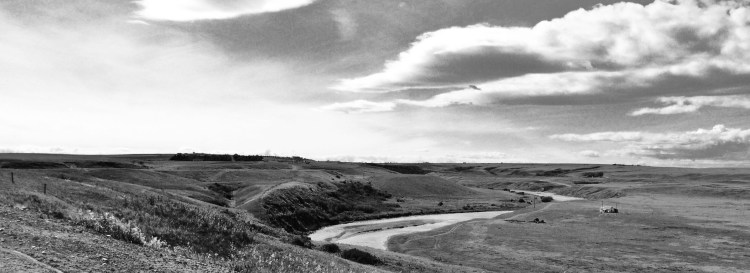
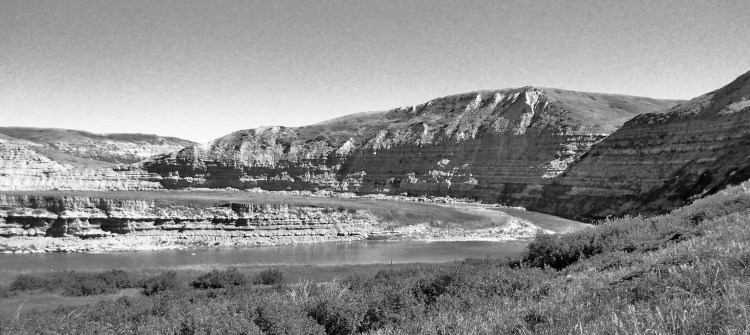
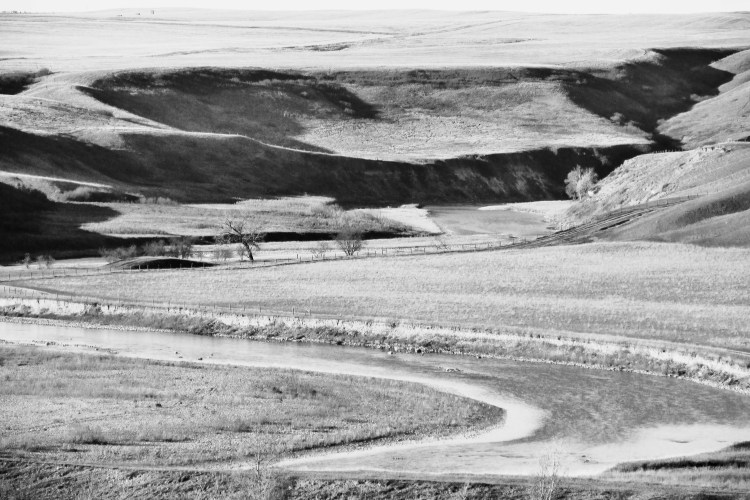
I’ve been fly fishing the SW corner of Alberta for sixteen years. Although the region has many fine rivers and streams, in the last several seasons I’ve been focusing on just a few rivers that are some distance from the mountains out on the prairies. Fish numbers aren’t real high in these flows but they hold some remarkable, challenging trout. With scarcity comes value.

pin27

prairie road


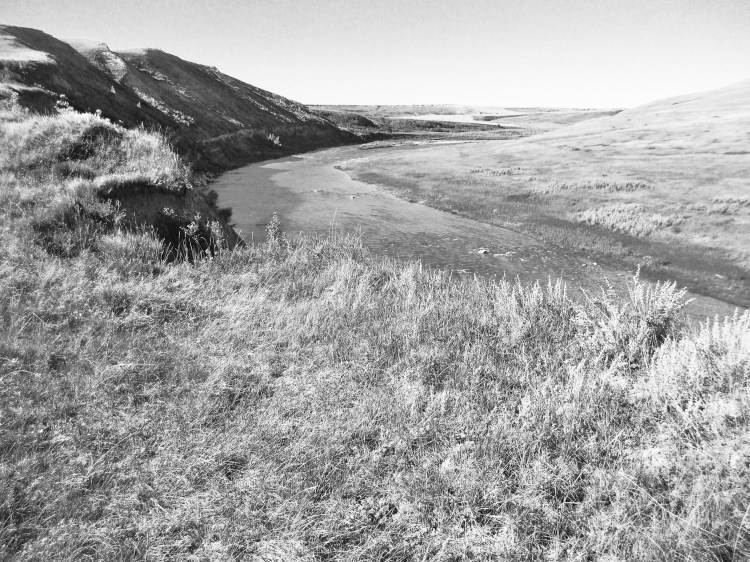
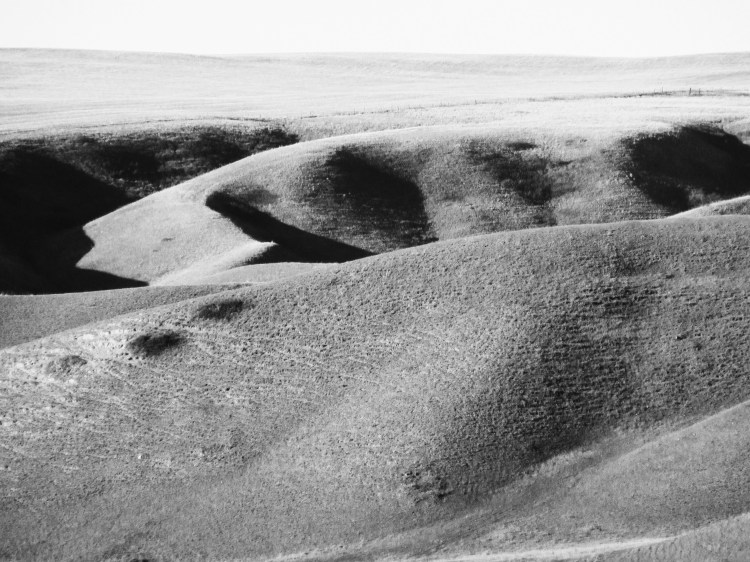
The rivers run through rolling grassland terrain, often down in valleys and canyons. It’s Coulee country and for most of the summer sun drenched, windy in the afternoons, and very arid. From a nearby prairie road, which runs straight like an arrow seemingly to the horizon, you wouldn’t think that there is a river anywhere. If someone told you there was, you certainly wouldn’t think it contained some well conditioned trout.

slowgo17

The region has few trees. The ones that do make a stand tend to be stunted by the harsh, dry conditions. The openness of the terrain makes the fly fishing extra challenging as there is nowhere for an angler to hide. The blinding summer sun can be your friend or foe. It all depends on how you use it. It helps you spot fish but also makes you very visible. You’ve got to be strategic about where you stand; where you position yourself.

slogo12

The coulee shadows, only available early and late in the day, can help you stay stealthy. You can hide in them. The rest of the time you need to use the sun to your advantage. I’m always checking my shadow in relation to the water and when possible try to position myself between the sun and a fish that I’ve located. Sight-fishing is all about the interaction between light and water.

slolow

When the sun is at its zenith it’s best if possible to approach a trout from behind or from well upstream to avoid being noticed. If you want to get in tight to a fish you often have to crouch or crawl. My stream-side mantra is “stay low and go slow”. Any movement is easily detected in the great wide open and trout will quickly bolt to the safety of darker water. Spook a trout and you’ve missed a chance, and on some days you don’t get too many. The catch percentages in the coulees often aren’t real high. In fact on many days they are quite low. Remember with scarcity comes value…

slowgo8

Clouds may roll in and turn the river surface a silvery grey and therefore impenetrable to the human eye. This makes spotting trout almost impossible. The wind can turn gale force and challenge any weakness in your casting mechanics. A fly embedded in your cheek or ear lets you know who’s in charge. The swoop or shadow of an osprey or hawk over the water will make a trout you have been carefully watching flee. On some days you’ll feel you are being plotted against. You know it’s irrational to think this way… but you will. The old, ancient part of the brain will challenge and override the newer well-developed rational part. You’ll try to talk yourself out of this kind of superstitious, magical thinking but when everything seems to be going wrong and you can’t find or fool a single trout, you’ll succumb to it. You’ll feel jinxed.

pin25

The rivers can have hatches and this can make things easier. When they don’t, or when they are stifled by the wind, you look for prowling/cycling fish. They often cruise the shallows searching where leftover flies and terrestrial bugs have collected. These fish are large, confident creatures but they still remain wary. They’re like coyotes who leave the hills at night in search of an easy meal in the back allies of a village. They have their territory and their daily routes. Watch their prowling patterns and where they choose to stall and feed, and it will pay dividends on an outing, or the next one. Spot a fish at one of these discovered locations on another day and you’ll feel a sense of mastery: that you are learning to read the river and the trout that inhabit it. It’s a feeling that is even better than catching.

slowgo6

In certain spots you can climb the coulees. Up high you can scan a lot of water and locate feeding trout. At elevation hawks often dive and buzz your head at incredible speed. Sometimes they come so close I think they are going to clip the top of my fly rod off with the efficiency of a ceiling fan.

pin-24

When you can’t use height to your benefit you stand stationary at a good pool, again using the sun to your advantage for maximum visibility, and watch for movement. Fishing with your eyes takes concentration and patience. You have to manage yourself well in order to be successful. Fish like you’d imagine Obama would fish, not his successor. You’ve got to resist the impulse/ temptation to flog the water by repetitive casting. The old fishing books call it ” hoarding your casts”. It’s hard to do as most of us learned to fish on rivers that required casting over and over in order to make a connection. When sight-fishing you’ve got to do the opposite.
slolow1

These rivers summon all of your angling skills. Finding trout on foot in this demanding environment and then tricking them with a dry fly is in my mind one of the ultimate fly fishing challenges.

pin2-2

slowgo15

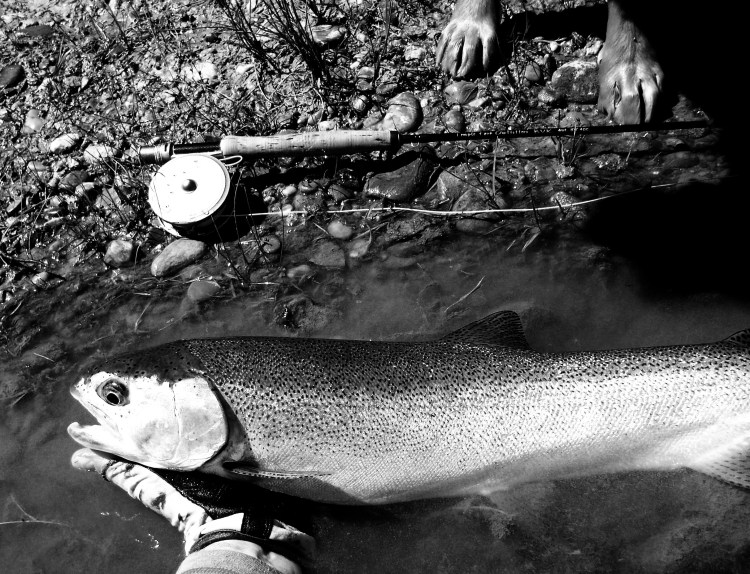
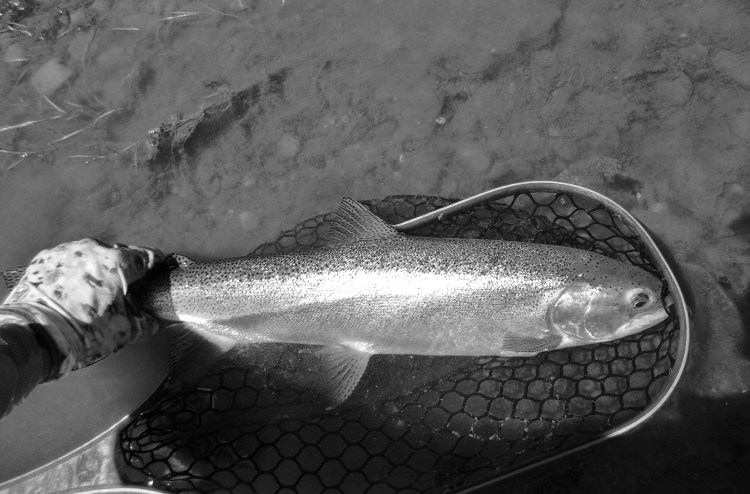
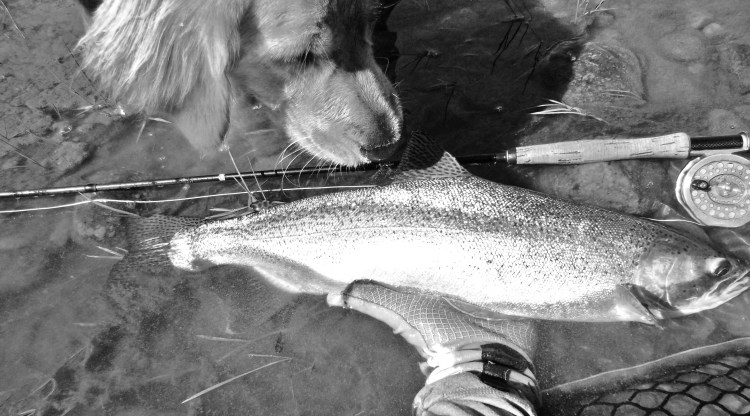
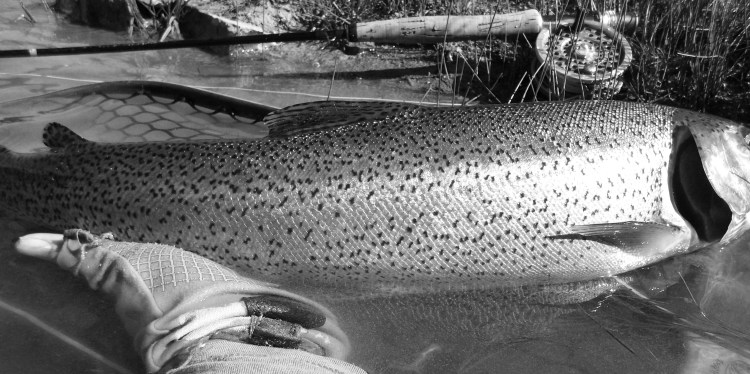
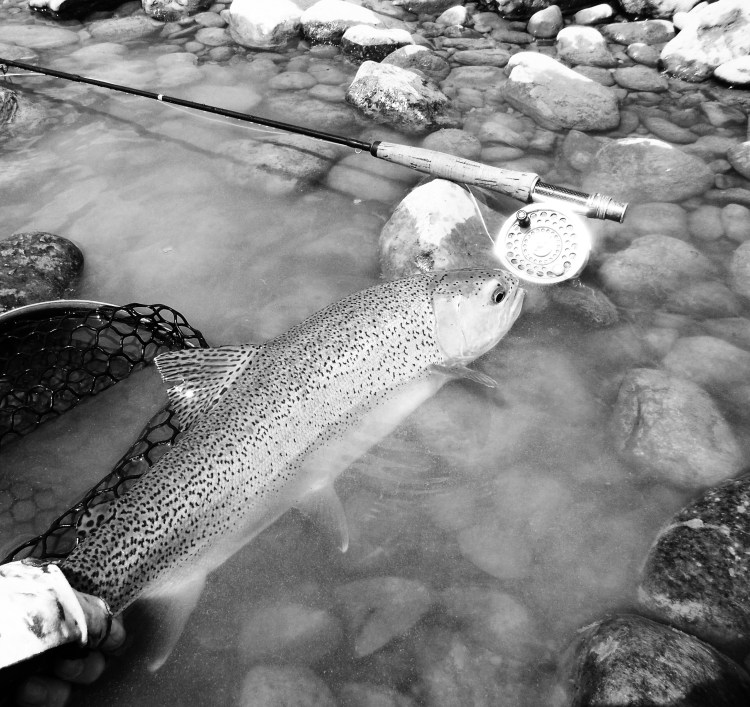
Above are some trout caught and released while sight-fishing with dries this past season.


Cumulus Nebulous

My Oh My! October was a tough month. The most challenging one I can remember. Usually it is an outstanding time to be on the river. Some of the best fishing of the year. No such luck this Autumn. There were few BIG blue winged olives around. It was mainly just the small guys: size 20, 22, and smaller…the size of mosquitoes…no, miniature mosquitoes.

storm

Finding rising fish was also a challenge. I searched and searched. I drove from favorite river to river. My local water simply didn’t produce. It was hard to find a target.

abby

abby on home water

sidechan

calm morning on side channel

So I headed to the Missouri river (the Mo). I usually fish it in late October early November. Often it serves up a sensational BIG olive hatch around the time the World Series is on. However, like my local water, the Mo was tough going. Just the mini olives were out and not that many of them. Finding surface feeders was like trying to get a rally going in the World Series. Hits were few and far between. It was a low score game. I kind of suspected it was going to be a challenge as the fishing reports from the banks of the Mo weren’t clear. They were cloudy. They were nebulous…they were cumulus nebulous!

handfin

So, I walked around a lot, took some photos and persevered. I lowered my expectations. With the fast ball pitcher on the mound throwing at 100 mph I didn’t try to hit it out of the park. I shortened my swing and just tried to make contact. I eventually caught a few good rainbows on tiny dries; a simple little hackle pattern, clipped on the bottom to ride low…a half hackle. A photo of it turned out blurry. As I said October has been a tough month.

Looks like the season is done. Someone’s dimming the lights but I’m not ready to go home. I’m going to have to book a winter angling trip somewhere…

path-1

beautiful anglers path

025

037

longshot

cattle

moth

track

railway path along the Missouri

slimback

shop

early morning craig, montana

deerprint

riverside deer prints

sidechan2

another side channel

Autumn, Rivers and Brown Trout

021

The wind last week was brutal, especially if you like fishing in open terrain as I do. I got lucky on a couple of days as a low front came in and it rained. Some blue winged olives and mahogany may flies made an appearance on my local tailwater, the Oldman river. Just about all of the fish were focused on emergers (eating just subsurface); few actually took on top. My standard dangling patterns weren’t very successful but I caught a few. I also connected with some fish in just inches of water on a terrestrial pattern I tie and call: the flat black ant.

Here some photos of old buildings taken on sunny days and brown trout caught when the weather turned bad and the fishing was good.

004-2

011

crowsnest river

010

ant

041

004

007

Enter a caption

abbywind

abby in the wind

014

009

012

ant pattern

033

oldman river

last

river valley old homestead